Category Archives: Famous Personalities of Kodagu / Coorg

Chase your dreams with a passion

Bangalore:

It’s important for youngsters to chase their dreams, but equally important to have a back-up plan, felt Indian cricketer Robin Uthapppa. Concurring with him was singer Vasundhara Das, but actor-director Pavan Kumar felt a back-up plan means you don’t chase your dream with passion.

They shared their thoughts at Headtable, a student leadership forum organized by Inexcel in association with Times NIE at Bishop Cotton Boys’ High School. Head boys and head girls from 226 city schools fired questions at panelists Robin Uthappa, activist Jasmeen Patheja, Pavan Kumar and entrepreneurs Shruti Shibulal and Pallav Nadhani.

Uthappa said several factors made him choose cricket as a career but passion was a driving force. Nadhani said as a 17-year-old, his passion for programming drove him to experiment and set up FusionCharts, a company that has earned the trust of US President Barack Obama.

For Shruti, success meant coming out from the shadow of her well-known father and establishing an identity for herself. For Patheja, on the other hand, it’s quantified by the public’s understanding about sexual harassment. She set up Blank Noise to bring about a change of attitude in both men and women. Pavan Kumar added that men must educate fellow men that harassment of women cannot be justified, and that each one should play a role towards this end.

The panelists added a brushstroke each to a blank canvas later completed as a work of art by Ranjana Ramchandran. The program was compered by Vasundhara Das and the discussion moderated by consultant Sam Selvakumar.
Quote hanger

Robin Uthappa

When you wake up, the first thing you think about is what you are passionate about.

When you have dream, tell the important people in your life – family, friends, and teachers – about it and they will help you achieve it.

It’s important to build a support system around you and they’ll push you in the direction of your dream.

Do your best. That way, even if you fail, rest assured you’ve given it your best shot, your everything.

Have a back-up plan, but that too must be something you enjoy doing. My back-up plan was to be a driver.

Pallav Nadhani

It’s important to find unconventional ways if one has to succeed in life.

The advantage of being young is that you can fluctuate between different goals. Experiment and figure out what you love doing best and then follow it up.

Luck is a combination of opportunity and sweat. If you work hard, luck will favour you.

When you’re young, your mistakes are forgiven and forgotten, so don’t be afraid to experiment.

Jasmeen Patheja

Everybody is a survivor because everybody has been a victim at some point in time.

Everyone has to fight battles based on their inner convictions. We must have a sense of purpose and follow it through.

Pavan Kumar

People may dissuade you from pursuing your passion, because they are concerned for you. Do not be discouraged or lose focus. Enjoy the experience of climbing to the top as it can be tough getting there.

Failure was my first girlfriend. If you embrace failure and learn from your mistakes, she will break up with you and push you to success.

Don’t be afraid of being different, laughed at or alone. Take it in your stride. However, be genuine. Don’t deliberately try to be different.

Shruti Shibulal

All of us at some time may have to give up one thing for another. We have to make choices depending on situations.

Give the present your all without worrying too much about what you will be doing in the future.

It’s true women have to work harder to prove themselves to be taken seriously. But once, you achieve that, you gain the respect of your peers.

Education is just a guideline, experiential learning is what will help you understand what you want to do.

Vasundhara Das

Negotiate with your parents when they don’t agree with your dreams.

Having a back-up plan empowers you to go all out in chasing your dream.

source: http://www.articles.timesofindia.indiatimes.com / Home> City> Bangalore / TNN / September 02nd, 2012
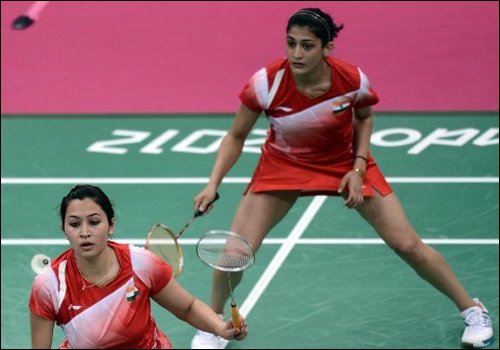
Jwala takes a sabbatical, Ashwini looks for a partner

New Delhi:
India’s famed badminton doubles exponent Jwala Gutta has decided to go on a sabbatical, telling her partner Ashwini Ponnappa to look out for a partner.

Photo: AFP

There is uncertainty over how long Jwala will be out from competitive badminton.

Jwala told IANS that it is indefinite, though she hopes to be back on court as early as in six months’ time.

What has heightened the curiosity is that Jwala has asked Ashwini to quickly find a new partner and carry on playing the doubles till her return

What might put speculation at rest is that Jwala at 29 feels she is good for one more Olympics, but she doesn’t want Ashwini to be hamstrung waiting for her.

“I will be back but don’t know when. I have taken time off as I want to come back fresh and fitter. I needed a break after playing continuously for 6-7 years. I have had a chat with Ashwini about it and she understands my position,” Jwala told IANS.

Ashwini, for the time being, will concentrate on mixed doubles with Tarun Kona and look out for a women’s doubles partner.

Jwala-Ashwini, the bronze medallists at the last World championships, are easily India’s most successful doubles team on the circuit, and would not like to give it up. Both hope to be back together.

Jwala thinks it is crucial for Ashwini to carry on in her absence even though it is going to be a tough task considering India’s bench strength.

“Having said that, she has just started playing and I would tell her to find another partner to continue playing in my absence. It will be tough for her as the second string is way below our level. It is time she started mentoring a junior player who is interested in playing doubles, like the way I did with her,” she said.

Ashwini is receptive to Jwala’s idea and says she would take a call after her mixed doubles commitments in China and Japan next month.

The options available to Ashwini are reigning national champions Pradnya Gadre and Prajakta Sawant.

“I can play with either of them but I have not given a serious thought to it. I will take the call once I am back from China and Japan,” 23-year-old Ashwini told IANS.

Talking about reunion with Jwala, Ashwini hopes the two will pair up again, though she is not looking too far ahead, not even till the 2016 Rio Olympics.

“I can’t really say anything about how long we are going to be together. We would take a call after Jwala’s return. As of now, my focus is on mixed doubles with Tarun,” Ashwini told IANS .

The Jwala-Ashwini pair, ranked 23rd in the world, was unlucky at the London Olympics where they failed to make the quarters despite faring better than those who made the cut.

“Who knows we might be there together at the next Olympics, but we are not really thinking about it. Personally, my next targets are to do well in the Commonwealth and Asian Games in 2014.”

Asked whether age will be a factor in deciding their future, Ashwini said: “Jwala is a gutsy character and she could play for as long as she is passionate about the game. I will be close to 27 and Jwala 33 by Rio. But as I said, Rio is a long way off. No one knows what is going to happen before that.”

What is going on in Jwala’s mind?

“I am not really a planner. I would want to play with Ashwini at Rio, but four years is a long time. I am not growing any younger. Probably, I would have wanted to quit after getting an Olympic medal in London but to try for it all over again, I need to come back highly motivated.”

source: http://www.sports.in.msn.com / MSN Sports / by IANS / Friday, August 31st, 2012

Fishing for compliments

At the Coorg table, you can immerse your tastebuds into a dark, tangy fish curry, with spice tones reminiscent of the famous pandi curry, but thinner and sharper. No coconut here — just ground onions, garlic and a few grains of raw rice as a thickener, a faint, pleasing bitterness from fenugreek seeds, dark roasted spices. Sharp, clear flavours emerge from the earthenware cooking pots. For a land locked, hill people, we eat a lot of fish in Coorg. The streams and rivers offered a generous supply of fresh water crabs and fish, like the sweet-fleshed bare meen.

Fishing trips had a touch of the theatrical — fire-lit or lamp-lit men, balancing along the mud embankments of the fields, or river-banks, to spear or trap fish. Bamboo traps were laid in cold, swift flowing streams. In season, the flooded paddy fields were full of crab and the prized, tiny koile meen.Fresh catch from the sea was just a day -trip away and, centuries of trade with the Malabar coast established a tradition of fresh and dried fish finding their way into Coorg homes, in sawdust-lined tin boxes, carried by Mapilah traders, to be haggled over in backyards. Salted fish was set aside for the monsoon months, or pickled in a thick layer of spices, immersed in baranis (earthenware jars).

To the fish and crustaceans of the sea and their own highland streams, the Coorgs brought their typical spice mixtures that added beguiling flavours. Whole mackerel, sardines, or slices of sweet-tasting river fish were lightly marinated in red chilli powder, turmeric and the indispensible kachampuli (Coorg vinegar), dipped in rice powder, and fried crisp on cast iron tawas. The contrast of the crunch of crisped exteriors, the lingering levels of spice in the firm flesh and a squeeze of lime was always perfect. There were plump morsels of pickled fish, and curries and pickles of prawns. Some days, an estate worker would come by with a catch of slender, flashing fish, a couple inches long, from the paddy fields. Fiddly to clean of the grit and mud, we spent ages rubbing slippery mounds with ash or salt for curry, or my favourite — clusters of koile meen, mixed with spices, for ‘cutlets.’

Fresh crab, caught in streams or fields were quick fried, or curried with finely ground coconut into a sour-spicy curry. Served with hot akki ottis and melted ghee. As we sat around a small, dining table, crunching crab claws and sucking out tender meat, my mother-in-law would explain which phases of the moon brought the crabs heavy with meat and, the knack of catching live crabs without receiving a painful pinch. I would nod enthusiastically, but left that particular task to the experts.

RECIPE
Coorg Fish Curry
Ingredients
* 1kg fish (seer works very well) cut into ½ inch thick steaks
Grind together to a fine paste
* 4 large onions
* 1 inch ginger
* 8 pods of garlic, peeled
* 1 ½ tsp jeera
Dry spices
* Red chilli powder to taste
* 2 tsp coriander powder
* 1 level tsp turmeric

For seasoning
* 1 tsp mustard seeds
* 2 green chillies
* 2 onions, sliced thin
* 8-10 curry leaves

For the roasted masala
* 1 tsp whole cumin (jeera)
* 1 tsp mustard seeds (rye)
* ¼ tsp fenugreek seeds
* ¼ tsp raw rice
* ½ tsp black peppercorns kachampuli, or malt vinegar

Slow roast the above spices separately on a hot tawa until they release their aromas and change colour. Allow them to cool, and crush to a powder, separately, and then mix.
* Salt to taste
* ½ cup oil
* 2 cups hot water

Method
Wash and dry the fish fillets or steaks.
Mix the kachampuli (or malt vinegar), the turmeric, chilli powder, salt into the fish, and set aside.
Heat the oil in a deep pan, or kadai, add the mustard seeds. When they begin to splutter, add the curry leaves, the sliced onions and the green chillies, and fry gently until softened.
Add the coriander powder, chilli powder, and ground paste of onions. Cook slowly, until the raw smell disappears.
Add 2 cups hot water, or more according to gravy required, and when simmering add the fish, and cook uncovered, until almost done.
Add the dry roasted, powdered spices, and simmer until done.
Optional — you can thicken the curry with a small amount of tamarind paste too.

– The writer is an anthropologist and independent author based in the city, who delves in to food, wine, travel and heritage. She is also behind A Gourmet’s Table In Coorg (http://coorg.com), a blog exploring the fascinating traditions of Coorg cuisine, food lore and special meals.

source: http://www.DeccanChronicle.com / Home> Channels> LifeStyle> Dine o Mite / by Kaveri Ponnapa, DC / September 06th, 2012

Serving the Kodava cause


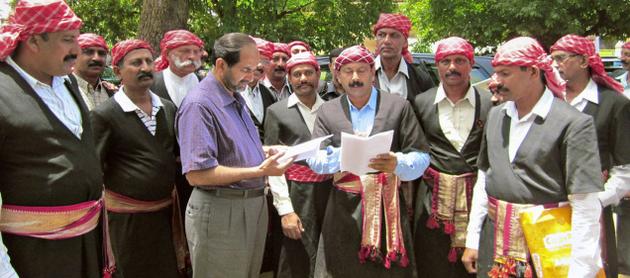
File photos of (left) CNC members led by N.U. Nachappa presenting a memorandum to the Kodagu district administration representative and (right) Kodavas staging a protest to highlight their demands.— / Photos: Nanda kumar, Sampath Kumar G.P./ The Hindu

Will the two-decade-old struggle of the Codava National Council (CNC), demanding an autonomous Kodava homeland, succeed? This is a debatable point. The CNC led by its president, Nandineravanda U. Nachappa, initially was demanding a separate Statehood, but later scaled it down to seek an autonomous homeland. Mr. Nachappa has been able to keep the organisation alive and make its presence felt, both at the State and the national level, by organising protests, demonstrations and other conspicuous events.

The main demand of the CNC is a full-fledged Kodava Autonomous Region, encompassing the 45 ancient traditional ‘naads’ (‘nad’ is a group of villages), on a par with the Darjeeling Gorkhaland Territorial Administration.

Mr. Nachappa says that the Central Government must accord ethno-linguistic tribal minority status to the Kodavas under the Constitution and extend reservation facilities in the fields of education, economic and employment. It should also ensure Constitutional special guarantee for the land tenures and customary personal laws of the Kodavas without any interference, on the lines of Jammu and Kashmir and Northeast States of India under Articles 370 and 371 of the Constitution.

The Government must facilitate the CNC to establish a Central University to propagate “Kodavalogy” on the lines of North-Eastern Hill University, Aligarh Muslim University and Banaras Hindu University, Mr. Nachappa demands. Kodava language must be included in the VIII Schedule to the Constitution and implemented as one of the three administrative languages in Kodagu.

The exemption under the Indian Arms Act to hold firearms to the ‘Kodava by race’ people should continue without any hindrance, Mr. Nachappa argues. In the same manner, the land rights being enjoyed by the Kodava people, thanks to privileges such as ‘Jamma’, must stay, he demands.

The CNC opposes the Dilip Singh Bhuria report submitted to the Centre that wanted Virajpet taluk to be declared as a Scheduled Area for the benefit of tribal people who live in that taluk. Mr. Nachappa argues that it would adversely affect the Kodava people, whose roots could be traced to Virajpet taluk and parts of Madikeri taluk.

Submitting memoranda

Memoranda are being submitted to the State and the Central Governments time and again by the CNC to further its cause. The Central and the State Government authorities too have been acknowledging them. But, there are many who look at its struggle sceptically. The movement lacked political support and the backing of the entire populace of Kodagu, they say. They also term it as an unpopular movement which does not cover populace other than a group of Kodava people in the district. But Mr. Nachappa maintains a hard stand, stating that cause of the struggle was important and it was achievable irrespective of numbers or backing by the majority.

He says that the struggle was totally peaceful and well within the bounds of the Constitutional framework. The CNC had also forged alliances with 13 other like-minded organisations across the country to achieve its goals in the past, including the Darjeeling Gorkha Hill Council and the Jharkhand Mukti Morcha.

The CNC claims credit for a series of development works that were initiated in Kodagu in the last one-and-a-half decades, including roads and bridges, plus release of special grants. It also says that the credit for the proposed move of the State Government to write to the Centre recommending establishment of a Central University in Kodagu, should go to the organisation.

Guests

Mr. Nachappa’s effort to rope in the support of political leaders and heads of other organisations is worth a mention here. During the previous Annual Day celebrations of the CNC in Madikeri, the AICC general secretary, Oscar Fernandes, Additional Advocate-General of Haryana and Supreme Court advocate, Brijesh Kalappa, and Karnataka High Court advocate, M.T. Nanaiah, were the guests. Gorkha leader Dawa Pakhrin, JMM leader Shibu Soren, and intellectuals Balveer Arora and T.K. Oommen, among others, have been guests in the past.

Mr. Nachappa has reiterated the demand of the CNC to establish the proposed Central University at the ‘Kodava Kund’ (Kodava Hill), a location identified by the CNC near Kakkabe.

The CNC delegations have submitted memoranda to the State Governors and met the Chief Ministers of Karnataka several times in the past.

Census

The CNC has been appealing to the Kodagu Deputy Commissioner to direct the caste census enumerators to enlist the Kodava people separately under the columns of the ‘Kodava’ caste, and not as ‘Kodagaru’ or ‘Kodaga’ or ‘Coorgi’ in the census sheets. This move would enable the minority Kodava people to assert their identity and uphold the dignity of the community whose people had been serving the nation admirably well in various fields, it felt. Some success was achieved in this regard in Kodagu.

To bolster its base, the CNC has been organising ‘Ain Mane’ (ancestral home) programmes in select Kodava families since a few years. It has been coming up with ‘human chain’ programmes in the entire district, mainly targeting the areas dominated by the Kodava populace.

Other causes

The CNC, apart from taking up the causes of the Kodava people, has also been observing World Indigenous Peoples Day, World Minorities Day, and ‘Black Day’ on November 1, coinciding with Kannada Rajyotsava.

Mr. Nachappa argues that ‘Kannada Nadu’ could not be complete without the creation of an autonomous homeland within the State of Karnataka.

Mr. Nachappa, who has not groomed a deputy so far in his nearly two-decade existence, has preferred to change the nomenclatures of his organisation several times. What appeared to be a broad-based organisation encompassing a few other communities as well in the beginning has come to patronise only Kodavas in the recent times. The ‘Kodagu Praja Vedike’ which took birth only to counter the CNC has now fizzled out.

Mr. Nachappa hopes that the Kodava Autonomous Region would become a reality along with Telangana.

Jeevan Chinnappa

A full-fledged Kodava Autonomous Region, a Central University to propagate ‘Kodavalogy’, special land rights… the CNC has a whole list of demands

source: http://www.TheHindu.com / Home> Features> District Plus / by Jeevan Chinnappa / September 08th, 2012

Jacky loves to romance with Angelina Jolie


Mumbai:
After grabbing a great response from ‘ FALTU’, Jacky Bhagnani is thrilled about his upcoming flick ‘ Ajab Gazabb Love’. The actor admires his co-star Nidhi Subbaiah for her tremendous performance in the movie. The actor who had done three films with every fresh faces stated that he would love to romance Angelina Jolie.

Jacky stated that, “I would want to romance Angelina Jolie also, but I have just done three films till now and I am happy romacing Nidhi in this film.”

He also added that he is also a fresh face of the B-town and doesn’t mind romancing any actress.

The actor said, “Off-screen rapport is very important with an actress to make the movie look realistic. People want to see real friendship even if it’s a filmy film.”

source: http://www.aajkiakhbar.com / Home> Entertainment . by Abhayank Tiwari / Thursday, August 31st, 2012

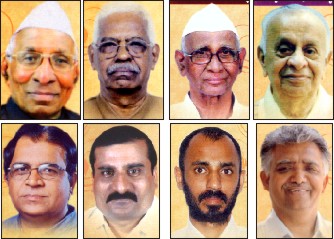
State Govt. to honour eight veteran journalists

TSR Memorial & Mohare Hanumantharaya awards to be presented

Caption: Shivasharanappa Vali, Ranganatha Rao, M.B. Desai, Nagaraja, Narayana Karantha, K.V. Paramesh, Ramesh Kuttappa, Ravindra Bhat

Bangalore, Aug. 25
The State Government will be honouring journalists by presenting the TSR Memorial and Mohare Hanumantharaya, Development and Environmental Journalism awards for the years 2010 and 2011 at Ravindra Kalakshetra here on Aug. 27 at 11 am.

G.N. Ranganath Rao and Garudanagiri Nagaraj will be honoured with TSR Memorial Award for 2010 and 2011 respectively. Shivasharanappa Vali (2010) and M.B. Desai (2011) will be given the Mohare Hanumantharaya Journalism Award while K.V. Paramesh (2010) and Ravindra Bhat Ainakai (2011) will receive Development Journalism Awards. Narayana Karanth Peraje (2010) and Ajjamada Ramesh Kuttappa (2011) will be given Environmental awards by the government.

Chief Minister Jagadish Shettar will present TSR and Mohare Hanumantharaya awards while Dy.CMs K.S. Eshwarappa and R .Ashok will present Development Journalism and Environmental Journalism awards respectively.

MP Ananthkumar and Justice G.P. Shivaprakash, retired High Court Judge & President of Journalism Award Selection Committee will be the chief guests.

Chikpet MLA Dr.D. Hemachandra Sagar will preside.

Late T.S. Ramachandra Rao (TSR), as the Editor of Prajavani, was famous for his column Choobaana. The government is presenting an award in his name since 1993 which includes Rs. 1 lakh cash prize. Till now, 18 journalists have received this award.

TSR award recipients: G.N. Ranganatha Rao entered journalism field by joining Tayinadu as a Sub-Editor. He also served in Samyukta Karnataka. He worked in Prajavani for 34 years and has authored 30 books.

Garudanagiri Nagaraja joined the movement for a responsible government against Mysore State when he was a student and was imprisoned. He received progressive farmer award also. He first served in Janavani, Praja-matha and later in Kannada Prabha. He has also served as the President of Karnataka Newspaper Academy.

Late Mohare Hanumantharaya was a freedom fighter from Bijapur district. After working as the Sub-Editor and Editor of Karnataka Vaibhava weekly in Bijapur, he joined Samyukta Karnataka as Editor and later became its Managing Editor. He started Kannada’s first digest Kasturi in 1956.

Mohare Hanumantharaya award recipients: Shivasharanappa Vali of Bidar district was involved in freedom movement, journalism, social work, educational, religious and political activities. He worked in Delhi’s Hindustan Samachar for 10 years and later in ‘Uttara Karnataka’ daily.

Mohan Basavaraja Desai: He started a Kannada weekly Darshana and later converted it into a daily Loka Darshana in border district of Belgaum. He has served as an Editor for 50 years in Kannada journalism.

Development journalism: K.V. Paramesh – Entering journalism field through Kodagu’s Shakti daily newspaper, he also served as Mysore Centre Head of E-TV Kannada, Bangalore Senior Reporter & Head of Political Division of Suvarna 24×7 and also in Samyukta Karnataka. His contributions include reports on Nagarahole forest fire, H.D. Kote taluk forest conditions, smuggling and sale of minor girls of Girijana tribes in Mysore district etc.

Ravindra Bhat Ainakai joined Samyukta Karnataka in 1990 and later served in Kannadamma of Belgaum, Aragini, Abhimani and Ee Sanje papers, for three years in Udayavani and later as Mysore Branch Chief of Prajavani. His columns have been published in book form titled Baduku Marada Mele, apart from other books Hejjenu, ‘Moorane Kivi’ etc.

Environmental journalism: Narayana Karantha Peraje – He has been serving in Dakshina Kannada’s monthly Adike since 22 years. He is well-known for his columns in Sudha, Taranga, Udayavani, Hosadigantha, Kannada Prabha etc. He is the author of more than 10 books including ‘Tala Tapasvi.’

Ajjamada Ramesh Kuttappa – Entering journalism through Kodagu’s Veeranadu paper, he later worked in DK’s Kannada Janantaranga and as Senior Reporter in Vijaya Karnataka for 11 years. At present, he is the Kodagu Reporter of Vijayavani. He has penned many articles on Kodagu’s environment, developmental works in forest, Nagarahole forest’s condition etc.

source: http://www.StarofMysore.com / General News / August 25th, 2012

The reluctant Vegetarians


For the better part of my teens, I was vegetarian by choice. Not dramatic, under normal circumstances, but since I am a Coorg, it led to many interesting situations. Most often, when we visited relatives, my announcement was met with loud cries of shock and protest, followed by expressions of sorrow and disbelief. An aunt even questioned my suitability for marriage, vegetarian that I was.

My grandmother would ask me, every day of the holidays, out of deep concern and affection, “What shall I make for you?” and exclaim, triumphantly, “Potatoes!” Somehow, the vast number of vegetarian dishes on her extravagant table remained invisible to her. I soon grew accustomed to the sound of an omelette being hastily and violently beaten up in the kitchen, wherever I went, as compensation for all the meat I was going to miss. I could never figure out what all the fuss was about, because we had such a wonderful vegetarian repertoire of the freshest flavours possible, most of it sourced from the kitchen gardens attached to every home.

As it was, there were golden curries of pumpkins, cubed and cooked with tender skin still on (kumbala curry), faintly sweet and garlicky. From the back garden came deliciously fat, creamy double beans (avare), which were curried with ground coconut. Kuru curry was thinner, and ran to the edges of your plate, carrying a lovely contrast between fresh green shells and terracotta coloured local French beans. There were lively, stir-fried greens, like kake thoppe, or chonde keere thoppe.

The leaves were garden fresh, and all it took was an onion and a few green chilies to make a stir-fry, perfect in its simplicity. Tiger striped Mangalore cucumbers were fried soft and velvety, and given a fillip with a little jaggery. And I would wait for the day when a pale, thin curry of ash gourd in curd appeared on the table. Delicate flavours, tender cubes of ash gourd and a mound of rice — it was all the lunch I needed that day. Comfort food meant thoge, a homely blend of vegetables cooked in a thin base of toovar dal.

In season came a parade of delicacies: wild mushrooms, tender bamboo shoots and enticing little mangoes that were made into a hot and sweet curry with a touch of jaggery. A large glass bowl on my grandmother’s table alternated between plain, solid curd and a selection of pachadis, made with cucumbers, the famous Coorg bitter oranges or sweet mangoes. And there was much more. Of course, things have changed. Going vegetarian is popular now, but we still hesitate, doubting ourselves. Take me for instance — my mother-in-law suddenly turned vegetarian; when she came to stay for several months, I rushed out and bought a huge tome on vegetarian cooking and, abandoning this entire legacy, cooked for her from its pages.

The writer is an anthropologist and independent author based in the city, who delves in to food, wine, travel and heritage. She is also behind A Gourmet’s Table In Coorg (http://coorg.com), her blog that explores the fascinating traditions of Coorg cuisine, food lore and special meals.

source: http://www.DeccanChronicle.com / Home> Channels> Lifestyle> Dine o mite / by Kaveri Ponnapa, DC / August 03rd, 2012

Actress Nidhi Subbaiah gets H-category MUDA site for excelling in sports

Mysore, Aug. 9
Kannada film actress Nidhi Subbaiah, hailing from Kodagu and a resident of Mysore, is among the 74 beneficiaries of H-category MUDA sites given to achievers in various fields.

Interestingly, the upcoming actress Nidhi has been allotted the site not for her performance in cinemas but for her achievement in the field of sports.

Before making her entry into the world of cinema, Nidhi had made her mark in international- level as a sports person by winning gold medals at National- level sports meets in sailing while she was studying II PUC in Mysore. She also has the credit of winning three gold medals in a calendar year at the sports meet in sailing events at Vishakapatnam in Andhra Pradesh and at Chilka Lake in Orissa.

Besides being a sports person of repute, Nidhi was also a Naval NCC cadet who won the best cadet award in the year 2004 before submitting an application to MUDA for allotment of a site in 2005.

The proud daughter of Bollachanda B. Subbaiah and Jhansi, Nidhi has been allotted a 30×40 site at Lal Bahadur Shastry Nagar under H-category in recognition of her contribution in the field of sports. [Presently, B.B. Subbaiah is the Hon. Secretary of Sree Cauvery Educational Institutions, Kuvempunagar].

Nidhi, who developed a flair for modeling while studying engineering at SJCE in Mysore, took to modeling before making her entry into the celluloid world.

She has featured in as many as eight TV advertisements including the one for the promotion of ‘Fair & Lovely’.

source: http://www.StarofMysore.com / Home> General News / August 09th, 2012

Namma item queens


Sandalwood is now going the Bollywood way. This time, it’s actresses performing in just single songs without being part of the film. Leading actresses are agreeing to do a single song for a film even if they are not acting in it. Bhumika recently did a number in the flick Godfather. Nikita Thukral was in Snehitharu in a similar manner.

Actress Harshika Poonacha who did such a role in Murli meets Meera says, “In one way, it’s like you work for fewer days. Doing such a role, gives the actress more exposure. The song becomes a sensational hit. More often than not, the song is a bigger hit than the movie. Having such songs in a movie is a good thing but should be portrayed well.”

Actresses in the South are not yet comfortable with the idea of being labelled as item girls. Director Kavitha Lankesh says, “An item number kind of song in a film is a very good marketing strategy and adds value to a film and boosts it. The actresses are apprehensive about being called item girls. The actress has to be that much more renowned to rake in the moolah for the producer.” To this, actress Sharmila Mandre adds, “Earlier, when a popular girl was in an item song, she was stereotyped. The heroine would only do films. Such songs prove to be successful overnight and many watch the film simply because of that song.”

But such special performances definitely pay the actresses more than doing a full film. Harshika says, “After shooting for a fewer days, the pay is as good, if not better than signing a full-time film.” But the actresses particularly count on the mileage and the exposure this special performance gives. Harshika, who is open to doing such songs provided she is not tagged an item girl, says, “When an actress does a number like this, she even helps with the promotion of the film. As a heroine, you get better mileage and the song is beautiful. The song eventually gets promoted more than the film.”

These actresses know what they want and insist on not signing a role unless it is a promising song. She says, “Unless the song will be ‘the sensation’ of that time, I don’t want to take up the offer. I was approached in Kannada but I wasn’t convinced.”

source: http://www.DeccanChronicle.com / Home> Channels> Showbiz> Sandalwood / by Khushali P. Madhwani, DC / August 07th, 2012

‘Tiger Ashok Kumar’ retires


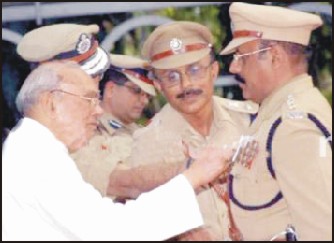
Caption: A file photo of Governor H.R. Bhardwaj presenting President’s Medal to ACP B.B. Ashok Kumar.
Mysore, Aug. 2

ACP B.B. Ashok Kumar, nicknamed Tiger Ashok Kumar for his valorous feats, retired on Tuesday.

He earned the epithet of Tiger when he was PSI at Ulsoor Police Station, B’lore for chasing and catching chain-snatchers.

He won the President’s Medal thrice and CM’s medal once. Other Police officers who won the President’s Medal thrice are Shankar Bidari, Gopal Halsur and G.A. Bawa.

Biddanda Ashok Kumar, hails from Parane village in Kodagu.

He was a terror for criminals and is credited with 18 encounters. While being a part of STF to nab Veerappan, Ashok Kumar had slain 13 accomplices of the brigand and shot down three notorious anti-social elements.

His promotion to DCP was challenged by some at KAT. It is said that even though KAT favoured Ashok Kumar, he was deprived owing to petty politics.

Finally, when the order for promotion came last month, some petitioned against it at High Court. The court’s verdict was expected on the very day he was to retire. Ironically, the court deferred the verdict to a further date.

source: http://www.StarofMysore.com / General News / August 02nd, 2012