Category Archives: Famous Personalities of Kodagu / Coorg

Meet on Achievements of Gokak in Madikeri

It will be held at the Patrika Bhavan on June 23

Kodagu District Kannada Sahitya Parishat, in association with the V.K. Gokak National Trust, Haveri, is organising a one-day programme on the life and literary achievements of V.K. Gokak, a Jnanpith award winner, on the Patrika Bhavan premises here on June 23.

The programme will be inaugurated by the former president of Kannada Sahitya Parishat, Bangalore, Chandrashekar Patil (Champa), the president of the parishat, T.P. Ramesh, told presspersons here on Friday.

Many writers and intellectuals did not believe that Gokak would provide justice to Kannada when the Gokak Commission was set up by the State Government during R. Gundu Rao’s regime. However, when the reports came out on according top priority to Kannada as a medium of education everyone was surprised, he said.

The Gokak movement went on successfully in Kodagu for one and half months where Kannada activists staged dharnas in front of the Deputy Commissioner’s office here, organised a Kodagu bandh and took out torchlight parades, apart from programmes in the taluks, Mr. Ramesh said.

He recalled the incident of Kannada activists courting arrest for waving black flags during the visit of the then Chief Minister, late R. Gundu Rao, demanding the implementation of the Gokak report.

Mr. Ramesh would preside over the inaugural function while Taltaje Vasanth Kumar from Uppinangadi would deliver the main speech.

An elocution competition would be conducted on the Gokak movement in the State involving pre-university students, teachers training college students and ITI students on June 20 at the Patrika Bhavan, Mr. Ramesh said.

On the same day, a folk song competition would be conducted for SSLC students.

Teachers from schools would be involved in an essay competition on the life and literary achievements of Gokak.

They would have to submit the essays to the president of the Kodagu District Kannada Sahitya Parishat, Madikeri, before June 22, Mr. Ramesh said.

M. Ramakrishna, professor from Bharati College, Mandya, would deliver the valedictory address at 3 p.m. the same day.

Writer N. Mahabaleshwar Bhat would preside over the function. The president of the Madikeri unit of the parishat, K.T. Baby Mathew, and the honorary secretary of the district unit, Bharati Ramesh, were present.

source: http://www.thehindu.com / Staff Correspondent / National / Karnataka / Madikeri / June 19th, 2010


First Woman IFS Officer Muthamma Passes Away

C B Muthamma, the first woman Indian Foreign Service (IFS) officer, died here on Wednesday. She was 85. 

She passed away in a private hospital where she was undergoing treatment, her family members said.

Chonira Belliappa Muthamma was born Jan 24, 1924, in Kodagu. In a career that began in 1949, she served as ambassador and high commissioner to a number of countries. She retired in 1982.

Muthamma had fought against gender bias in the foreign service and had taken the Indian government to court in 1979 for bypassing her for the coveted foreign secretary’s post.

Though the Supreme Court dismissed the petition, it noted that there was truth in Muthamma’s contention that there was gender discrimination in the foreign office.

Muthamma brought out in the form of a book essays she had written over the years. Titled ‘Slain by the System – India’s Real Crisis’, it was published in 2003.

She had also co-authored a book on Kodava cuisine.


source: http://www.bangaloremirror.com / IANS / Thursday  Oct 15th, 2009

Biography of Robin Uthappa

Read Biography of Robin UthappaRobin Venu Uthappa, born 11 November 1985 in Kodagu,Karnataka is an Indian cricketer. His father is Venu Uthappa, an international hockey referee and mother Roselyn is a home maker hails from Kozhikode. He made his One-Day International debut in the seventh and final match of the English tour of India in April 2006. He had a successful debut, making 86 as an opening batsman before being run out. It was the highest score for anyIndian debutant in a limited overs match.
Uthappa first came to the public’s attention when he made 66 for India B against India A in the Challenger Trophy in 2005. The following year, in the same tournament, Uthappa made matchwinning 93-ball 100 against the same team which propelled him in the big league. Previously, he had been a member of the India under-19 team that won the Asia Cup. Once a wicketkeeper-batsman, his List A batting average of near 40 with a strike rate of approximately 90 has made him regarded as something of a limited overs cricket specialist.

He was recalled to the ODI side in January 2007 for the series againstthe West Indies where he smashed a 70 from just 41 balls.

He was selected in the 15-member squad of the Indian Cricket team for the 2007 Cricket World Cup held in the West Indies in March-April 2007. He played in all 3 group games, but only scored 30 runs in total as India suffered a shock defeat to Bangladesh and a loss to Sri Lanka resulting in the team not qualifying for the Super 8 stage.

In the sixth ODI of the NatWest Series 2007-2008, he scored a sensational 47 of 33 balls to take India to a thrilling victory, keepingIndian hopes alive in the 7 match series that they were trailing 2-3 before the match. Used to batting as an opener, in this match he came in at the unfamiliar position of no 7. When he came at the crease India were 5 down for 234 after 40.2 overs, still needing 83 from less than 10 overs. After Dhoni got out in the 47th over with the Indian score at 294, Uthappa kept a cool head to take India to the target with two balls to spare in a remarkable victory.

Uthappa also scored a crucial 50 against Pakistan in the 20-20 World Cup in South Africa, when India were tottering at 36/4. India subsequently won the match in bowl out 3-0.

He is known for his trademark ‘walking slam-bang’ shot.

Uthappa played for Karnataka institute of cricket (KIOC) – under the guidance of Irfan Sait who runs the cricket camp.

source: http://www.yasni.com


Keeki Thammaiah

Keeki Thammaiah obituary

Keeki Thammaiah 

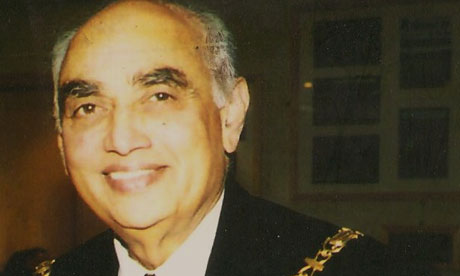
The trappings of office were relished by Keeki Thammaiah as they echoed his native Karnataka ceremonial attire

My friend the lawyer, educationist and local politician Keeki Thammaiah, who has died of a heart attack aged 76, became the first Asian mayor of Harrow, north-west London, in 2000.

He came to politics relatively late when elected as a Labour councillor in 1994. As mayor, he demonstrated his skill in working with people across the divide of politics, race and class. He relished the ceremonials – the robes and chains – not only because of his innate respect for the office but also because he felt comfortable with these trappings. Their lavishness echoed the ceremonial attire of his native Coorg in Karnataka, south India, particularly that of the traditional kupya chaleworn by Coorg men – long black tunics with red and gold brocaded cummerbunds from which intricately worked swords in gold and silver were slung.

Keeki came from an affluent landowning family, and after qualifying as a lawyer served as an advocate in the courts of justice in Bangalore. He arrived in Britain in 1964, drawn by the vibrancy of its contemporary culture (listening to the Beatles for the first time was clearly a defining experience), as well as its legal traditions. He taught business law at institutions including Westminster College for a number of years.

Keeki and Naila, his wife of 40 years, kept an open house, and visiting Indians – dignitaries, students and tourists – enjoyed the warmth of their hospitality. A champion of Karnataka culture, with its rich tradition of Kannada literature and performing arts, Keeki supported initiatives that helped younger generations living in Britain to engage with this culture. On the day before his death, he and Naila had hosted a reception to launch an initiative to promote Karnataka and its artistic heritage.

He is survived by Naila, his son, Ponnu, and two grandchildren, Adit and Alok.

source: http://www.guardian.co.uk / by Nima Poovaya-Smith / The Guardian / Thursday, May 19th, 2011

Zulfi Syed to get Hitched Next Year

Bυt the model-turned-actor is уеt to find hіѕ girl

Hіѕ humble, shy and a low-profile nature mаkеѕ hіm different from others. Bυt, all these qualities haven’t really hеƖреԁ model-turned-actor Zulfi Syed, who was last seen in the film Deshdrohi. Such an persona has not only kept hіm away from the limelight, but has also deterred hіѕ filmi career from taking οff. Tο this he ѕауѕ, “I know іt’s vital to market yourself well when you have so many competitors, but I аm very weak in my PR skills. I’ll do it when I come up with something really ехсеƖƖеnt.”

Film buffs have not seen hіm since Deshdrohi. Qυеѕtіοn hіm whу, and he аnѕwеrѕ candidly, “I didn’t do any film after Deshdrohi because nothing fаѕсіnаtіnɡ came my way. In view οf thе fact thаt I believe in quality work, I thουɡht іt’s better to concentrate on modelling and fashion shows rаthеr than opting for something that ԁοеѕ not have substance.” Earlier Zulfi had revealed that he would be ‘doing an action movie soon,’ but that has not happened. Clearing the air, the actor ѕауѕ, “Thе scripting administer is going οn, and I аm just waiting for it to complete. I mау ѕtаrt shooting soon.”

FаѕсіnаtіnɡƖу, in hіѕ time in the industry, Zulfi has also managed to maintain a sqeauky сƖеаn persona. “If you have to survive, you have to do quality work. Whаt matters are the scripts and quality of the films. Controversies give you your five minutes of fame, but people will commence to see you in a different persona,” he states.

Thе actor was in the limelight in the reality ѕhοw Bigg Boss Season 2. Qυеѕtіοn hіm if he is game for another such ѕhοw, and he ѕауѕ, “I would Ɩіkе to be part of an adventure ѕhοw. I had an offer tοο, but couldn’t do it as I was busy with my restaurant business, which I аm looking to expand. Thеу will serve road food from all over the world.” Sο, is Zulfi a good cook tοο? “I have a degree in hotel management, I аm a good chef and a big foodie tοο,” he quips.

Along with hіѕ work, thеrе’s something еƖѕе on hіѕ priority list. “I рƖοt to get married in 2012. Bυt, I’m still in search of a girl who is homely and is a good cook tοο.”

source: http://www.whatisnew.in / Jun 16th, 2011 / by Elina Priyadarshini Nayak (Bombay Times) Jun 17th, 2011

Kodava Goes Filmi

Kodava goes filmi

He’s a Bengalurean who now calls Mumbai his home. Meet Kodava hottie Gulshan Devaiah who has taken Bollywood by storm with his performances in Shaitan and Dum Maaro Dum. Well-spoken, funny and passionate, Gulshan plays KC, a wild child whose parents don’t know his true colours in Shaitan. “He’s always living life on the edge. He loves women, flirts and sleeps around with them. But inside, he’s a very insecure person.”

But Gulshan’s the complete opposite of KC when it comes to women. “When I was in PUC, I’d have a bunch of girls waiting for me. I was incredibly shy and needed a lot of courage to talk to them. I’m also a non-violent guy who thinks fights are emotionally draining. I just like sitting at home and being by myself.”

Gulshan was born and brought up in Bengaluru. “I studied at Cluny Convent and then at St Joseph’s PUC. I wasn’t particularly good at studies and even failed my second PUC! I also lived in a rough neighbourhood where people would randomly get beaten up. Once, I got beaten up by a guy who used to like a girl that I would chat with!” he laughs.

But what saved him was the fashion world. He went onto study fashion at NIFT. “I worked in the fashion business for 10 years. I taught fashion at a college, started a business and even freelanced.” However, Gulshan gave it all up to follow his childhood dream — acting. He wasn’t new to acting when he entered B-Town. This drama enthusiast started doing theatre at a very young age. “I would come up with my own acts for school functions. I even did a lot miming and solo acts (which was called ‘mono acting’ back then!). I did semi-professional theatre with a Kannada troupe. I’ve been active in amateur English theatre since 2000,” says Gulshan who is now busy with his play Butter and Mashed Banana.

While there have been talks about Shiv and Neil puckering up in Shaitan, Gulshan laughs, “Mine’s the real kiss and nobody’s talking about it! It’s a proper Hollywood type one!”

The Bengaluru boy adds. “I miss my mom and dad a lot. When I visit Bengaluru, I miss India Coffee House in its original place. The atmosphere and dosas — were just awesome!”

source: http://www.deccanchronicle.com / Tabloid / Jun 21st, 2011


That Hungry Look


No, no, no, no no. Big Boss Season-2  housemate Zulfi Syed does not have a crush on Sambhavna Seth, insists his family. But yes, he must be missing his mother’s biryani and handi sweets made in Mysore.

His family is watching the reality show closely here in Bangalore. “He doesn’t have any such crush,” said Sharier Khan, Zulfi’s brother-in-law, “He is the sort of guy who stays away from controversies. But such things come up since the show is like that. Some inmates may be trying to vote him out.”

Missing home food

“He looks dull,” said Vihar, Zulfi’s brother, “As there are no better cooks in the Big Boss house, Zulfi misses homemade biryani. It is evident in his face.”

In keeping with the rules of the show, the family has not been in touch with him for the last 30 days. They appreciate Zulfi for not manipulating things as most do on the show. They say his nature in real life continues on TV too.

“At first we were surprised that he wanted to go on the show,” said Vihar. “We even  doubted his survival. But as the days pass, we are confident he will make it. He keeps away from gossip and talks when required. That will help him.”

“We pray for his success,” said Mahid Begum, Zulfi’s mother. “Though he believes in himself, luck counts. I hope he wins.”

Who’s that boy?

Zulfi Syed, one of the housemates in reality show Big Boss 2, is a Coorgi and comes from a family that fought for freedom. His grandfather was known as the Gandhi of Coorg. Zulfi is a super model and has featured in many videos and films including Chupke Se and Wajahh.

He is a primary contestant with  Sambhavna, Rahul Mahajan, Aalina and Raja in Bigg Boss. He is among nine contestants still in the race.


No, no, no, no no. Big Boss Season-2  housemate Zulfi Syed does not have a crush on Sambhavna Seth, insists his family. But yes, he must be missing his mother’s biryani and handi sweets made in Mysore.

His family is watching the reality show closely here in Bangalore. “He doesn’t have any such crush,” said Sharier Khan, Zulfi’s brother-in-law, “He is the sort of guy who stays away from controversies. But such things come up since the show is like that. Some inmates may be trying to vote him out.”

Missing home food

“He looks dull,” said Vihar, Zulfi’s brother, “As there are no better cooks in the Big Boss house, Zulfi misses homemade biryani. It is evident in his face.”

In keeping with the rules of the show, the family has not been in touch with him for the last 30 days. They appreciate Zulfi for not manipulating things as most do on the show. They say his nature in real life continues on TV too.

“At first we were surprised that he wanted to go on the show,” said Vihar. “We even  doubted his survival. But as the days pass, we are confident he will make it. He keeps away from gossip and talks when required. That will help him.”

“We pray for his success,” said Mahid Begum, Zulfi’s mother. “Though he believes in himself, luck counts. I hope he wins.”

Who’s that boy?

Zulfi Syed, one of the housemates in reality show Big Boss 2, is a Coorgi and comes from a family that fought for freedom. His grandfather was known as the Gandhi of Coorg. Zulfi is a super model and has featured in many videos and films including Chupke Se and Wajahh.

He is a primary contestant with  Sambhavna, Rahul Mahajan, Aalina and Raja in Bigg Boss. He is among nine contestants still in the race.

source: http://www.mid-day.com / by Chetan R / 2008.09.16

New Ray of Hope for Indian Tennis

There was more than one ray of hope on the horizon but Indian tennis in 2003 continued to look upto the old Messiah for deliverence.

Rohan Bopanna announced his arrival on the big stage with a courageous performance in the Davis Cup play-off; Prakash Amritraj, the son of the legendary Vijay Amritraj, left a blazing trail on his way to the top of Indian rankings; and Sania Mirza with her historic Wimbledon crown marked the changing face of women’s game in the country.

Yet, the entire nation looked upto one man, the ‘Miracle Man’ of Indian tennis, to bring salvation. Leander Paes at 30 rejuvenated his own sagging career with two grand slam titles with Martina Navratilova but without his magical inspiration India stumbled for the fourth consecutive time at the play off stage of the Davis Cup.

The brain cyst that laid him down in the middle of the season brought out those fighting qualities in the man who had time and again pulled off miraculous victories for the country in the past, overcoming a series of adversities in his colourful career.

And the mass outpouring of love for Paes one saw when a billion voices prayed for his recovery was something unheard of in recent history of mankind.

Paes did eventually come out of the hospital but his absence from the World Group qualifying tie proved to be a major handicap for India who lost 5-0 to the Netherlands.

Nevertheless, India did unearth a hero in defeat at Zwolle. In one of the longest matches in Cup history since tie-break was introduced, Rohan Bopanna almost pulled the rug from under the feet of Martin Verkerk. Stretching a top-20 player to five sets was in itself an achievement.

And, ranked in the 400s, had Bopanna pulled it off – he lost the decider 12/10 – it would have been a truly ‘Leanderian’ achievement.

In a country of few sporting achievements, what Bopanna did that September evening was akin to a 15-year old Sachin Tendulkar taking Abdul Qadir to the cleaners. To be sure, the wiry 23-year old lad from Coorg, Karnataka, was not exactly playing in his maiden Davis Cup tie.

When he entered the cauldron that was Eisselhallen, Bopanna had two wins under his belt, but those had come in a more friendly environment of grass surface at home. More importantly, he had looked a slaughtered lamb in his defeat against Australia when he made his debut in a similar play-off last season.

In Zwolle, the Dutch had assembled their best team, and it was on fast hard courts away from home. But in the more than four hours he spent on court that Friday, Bopanna had won many a heart with his fighting performance.

In the end, it did not matter that he did not win – none expected him to – but the bold manner in which he put his best foot forward and cut down the ego of the home team to size augured well for Indian tennis.

After Bopanna’s marathon performance, Prakash Amritraj lost in straight sets to Sjeng Schalken and although Bhupathi and Bopanna started promisingly in the doubles rubber, the Indians were actually running for cover over the next two days.

Amritraj did nothing earth-shattering that day but well before his first match in Indian colours, the 19-year old US-born had truly established himself as the number one Indian player on the circuit.

“Having a famous surname does not help you win matches, does it,” Amritraj had said smiling after losing in a Challenger event in India in April. Behind that smile was hidden attributes that helped him zoom from the 1000s to top-300 in ATP rankings.

Attributes handed down to him from his famous father – not the media savvyness but a strong work ethic and dedication to the game. He returned to the same dusty courts two months later for the Satellite circuit when he truly ‘came, saw and conquered’ the competition and the hearts.

For a player whose bread and butter was serve and volley, Amritraj’s rapid rise was a fantastic achievement in every sense. If anything, it presented a pleasant contrast to the eyes weary of the baseline slugfests.

And besides blowing away the myth that successful fathers don’t foster successful sons, it also assured the Indian fans that the sport had other talents to look up to besides the ageing Paes and Bhupathi.

source: http://www.mid-day.com / 2003-12-24


Sahithya Sammelan Chief Dr. Padmashekar Speaks her Heart –

“Understand subject for creation of good literature”

‘
Dr Padmashekhar who has been elected as the president of eighth district Kannada Sahithya Sammelan basically hails from Kodagu. At present she is the HoD of Jainism and Prakruth Study Centre of Mysore University.
Dr Padmashekhar 

The sammelan will be held on March 30 and 31. In an interview with Deccan Herald, she spoke on the growth of Kannada language, literature, need for conserving land and water in Kodagu.


* How do you feel being elected as the president of Sahithya Sammelan?


I felt happy. In spite of having worked in the literary field for long, I had to wait for so long to get the love of the people of my land.

* What do you feel on the growth of literary activities in Kodagu?

It is not satisfactory. Kodagu district has failed to get a permanent position to get interest in literature and reading habit.
All the written documents are not literature. Better understanding of a subject is essential for the creation of a good literature. Such a good literature has not been created in Kodagu so far.

* What is your opinion on the growth of literature in Kodagu?

Literature is a continuous process. The children should be made to develop interest in literature from childhood.

* In the backdrop of increase in love for English, how far Kannada sahithya sammelan have helped in the growth of the language?

More and more Kannada literary meets should be organised in border areas. The sammelan should be held in those places wherever the language has been affected. There is a need to create an awareness on Kannada. The fact that Kannadigas are liberal and not cowards should be made known to the people through such meets. We all should believe in unity. The united Karnataka was created due to the struggle by our forefathers. No one should come in the way of the unity of the state.

* Do you feel that Kannada has not developed in Kodagu owing to the British rule and migrants from outside the State?

Kodagu is a land with multi-culture. Kannada has not been affected in the land. Kannada language can digest any challenges.

The Kannada speaking people in Kodagu have not declined. Though people from Kerala have settled down in Kodagu, there was no strife between the languages. However, now we are worried over Kodagu property. Kodagu land and Cauvery river is the lifeline of the district. If our land is sold to the outsiders, then we may lose our relation with the land. Now the land and Cauvery has become a property. If this situation continues, what can we save for our future generation? What will happen to the primitives?

* How did you develop interest in Jain literature?

Kuvempu’s ‘Chitrangada’ motivated me to study Kannada. All the girls should read it. By reading Pampa, Ranna, I developed interest in Jain literature. In fact, even my research topic was on Jain literature.

source: http://www.deccanherald.com / Madikeri / DHNS / Mar 29th

K C CARIAPPA is the ‘Coorg Person of the Year’

Air Marshal K C Cariappa (retd), an environmentalist who took on the powerful timber lobby in Kodagu district of Karnataka is the ‘Coorg Person of the Year, 2009’.
K C CariappaAir Marshal Cariappa, son of Field Marshal K M Cariappa, topped a poll conducted by www.coorgtourisminfo.com, the first news portal of Kodagu, to select the Coorg Person of the Year. The others who were in the reckoning for the title, include another hardcore environmentalist and President of the Coorg Wildlife Society, Col C P Muthanna (retd) and New York-based novelist Sarita Mandanna, who has been given the largest advance by Penguin India ever paid to a debut novelist for her novel ‘Tiger Hills,’ set in Kodagu. 

Taking a pro-active role, Air Marshal Cariappa went beyond the ‘call of duty’ and approached the Supreme Court of India to restrain the timber mafia, backed by the Kodagu district administration and sundry politicians to prevent the formation of a road across the Pushpagiri Wildlife Sanctuary in Kodagu in the ecologically sensitive Western Ghats.

Following a public interest litigation filed by Air Marshal Cariappa, the Apex Court directed the Central Empowered Committee (CEC) to make an on the spot study of the situation and file a report. In a blatant violation of the law, the Kodagu district administration, backed by the two Kodagu MLAs, and supported by local villagers attempted to lay a road through the Pushpagiri reserve forest, amid opposition from Karnataka forest officials.

The controversial road is a seven km stretch between Madikeri and Subramanya near Mangalore in Dakshina Kannada district. Over 400 villagers from Galibeedu near Madikeri, deployed earthmovers to make the road. Their contention was that the road would shorten the distance between Kodagu and Subramanya.

In a mockery of justice, the villagers were provided ‘police protection’ to form the road by the district administration, headed by the then Deputy Commissioner Baldev Krishna. The top district officials, including the Superintendent of Police, went to the extent of publicly humiliating forest official Anil Rathan who protested against the road being formed through the reserve forest.

Air Marshal Cariappa was commissioned into the Indian Air Force in 1957 and he was shot down in the 1965 India-Pakistan war while carrying out attacks on enemy positions and taken Prisoner of War (POW). When President Ayub Khan of Pakistan, an old buddy of Field Marshal Cariappa, offered to release his son forthwith, the later famous said: “They (other POWs) are all my sons, look after all of them.”

After retirement from the Air Force in 1996, Air Marshal Cariappa has been living at Madikeri in Kodagu. He has been taking a keen interest in environment and was the President of the Coorg Wildlife Society for four years. Two years ago, Air Marshal Cariappa wrote the biography of his father, which brought out his literary talent as a writer.

Dr Jagadeesh Subbaiah Moodera, of the Massachusetts Institute of Technology (MIT), and winner of Oliver E. Buckley Prize, was the Coorg Person of the Year, 2008.
The past winners of Coorg Person of the Year include cricketer Robin Uthappa, researcher Dr Boverianda Nanjamma Chinnappa, and novelist Kaveri Poonacha Nambisan.


source: http://www.deccanherald.com / Madikeri / DHNS / Dec 31st