Two years ago, a lady from Kodagu, the land of warriors, came to Mysuru to witness a circus with her family members. She was very much inspired by a person who hit the target by aiming the gun backwards.
After going back to her native Tavalageri village in Virajpet taluk, she literally took up the air rifle to try what that person in the circus company did. Initially, it was not a successful mission as she was missing the target many times. However, after rigorous practice, she achieved success by hitting the bull’s eye with ease.
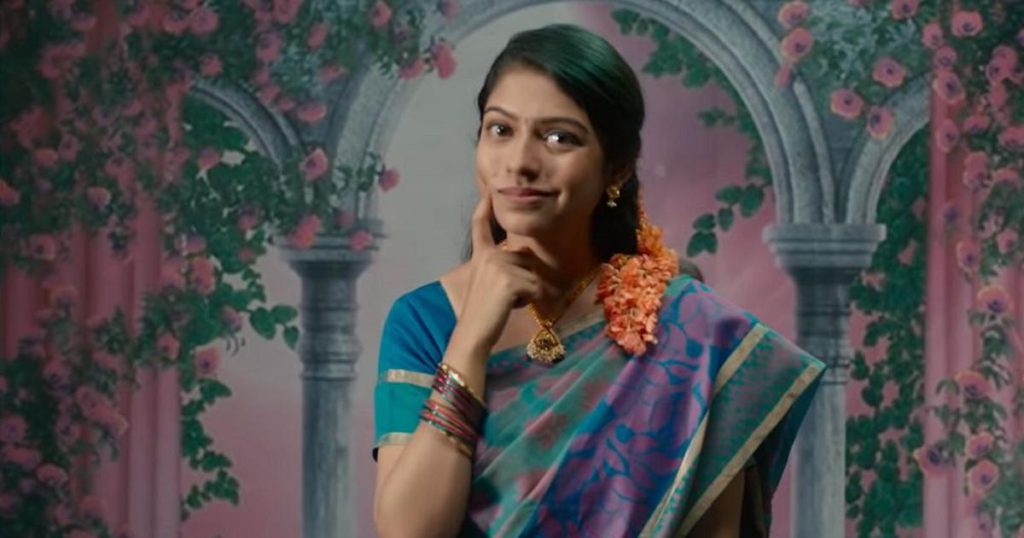
This is the story of Kallichanda Deena Uthappa, a Kodavathi, who is now a talk of the town for her rare talent. “Guns are not strange to Kodavathis. What started for fun has now become my hobby,” Deena said with the air rifle on her shoulder.
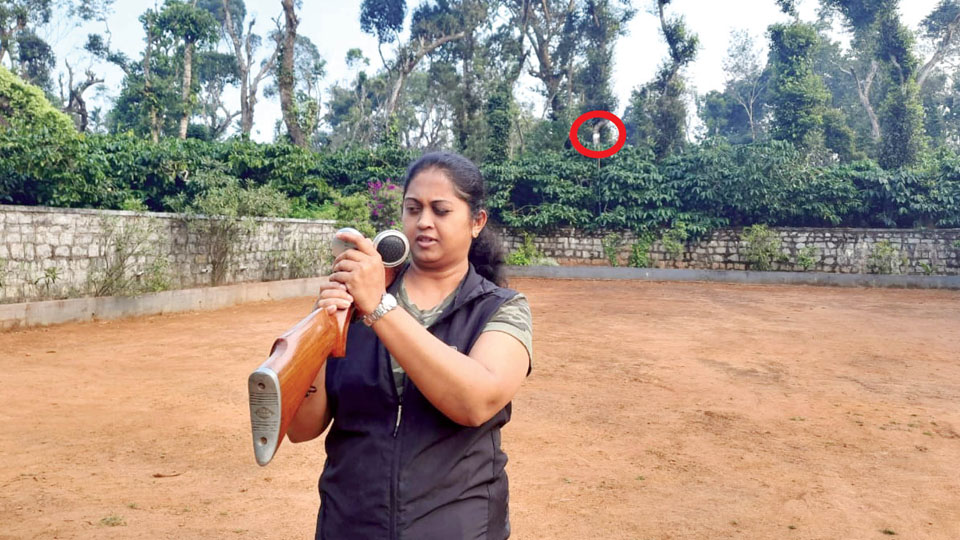
Now, with a rifle placed on the shoulder and pointed backwards at the target, looking at the mirror and bang, the pellet from the air rifle hits right at the target.
While most people are unable to aim the correct way, she effortlessly shoots the target by firing the rifle backwards by ease.
She developed interest in guns since childhood and had participated in coconut shooting competitions during festivals.
“I first saw backward shooting when I went to Bombay Circus during Mysuru Dasara and thought of trying the same when I went back home. Though I started shooting backwards for fun about two years back, I took it seriously six months ago and succeeded. I have now taken it as a hobby,” the 40-year-old said.
Deena practices inside the compound of her house by tying a balloon on a tree at a distance of 35 to 40 ft. Then she will hold a small mirror in her left hand and the air rifle barrel pointing towards the target. Looking at the image of the target in the mirror, she pulls the trigger with her right hand thumb and the next is the pellet hitting the target. “I use the air rifle as it does not flinch. Moreover, it is safe,” she adds.
An Arts Graduate from Cauvery Women’s College at Virajpet, Deena is a multi-faceted personality, who is also a master in handicrafts and has a credit of directing a short film in Kodava language as part of campaign for a multi-speciality hospital in Kodagu.
Kodavas and guns
Kodava community has a long history with guns and historians say that their culture is intrinsically linked with firearms. They (Kodavas) worship guns with other traditional weapons during Kailpodh (Kail Murtha) festival. Kailpodh is a festival similar to Ayudha Puja, where weapons — Guns, Odikathi and Peechekathi — are worshipped. Shooting competitions are a custom during Kailpodh, during which women too participate.
Huttari (Harvest festival) begins with a gun shot in the rice fields. Kodavas also use the gun for the two most important ceremonies of their lives — birth and death. The arrival or a departure of the soul is signalled with gunshots.
Daughter of Kavadichanda Gappu Ganapathi and Kavadichanda Kitty Kaveramma (Mundachadira – Mythadi), Deena is married to Sudhish Uthappa. The couple has two children — Tanvi Uthappa and Dhruv Kariappa.
Thag’rdhi: First Kodava silent short movie
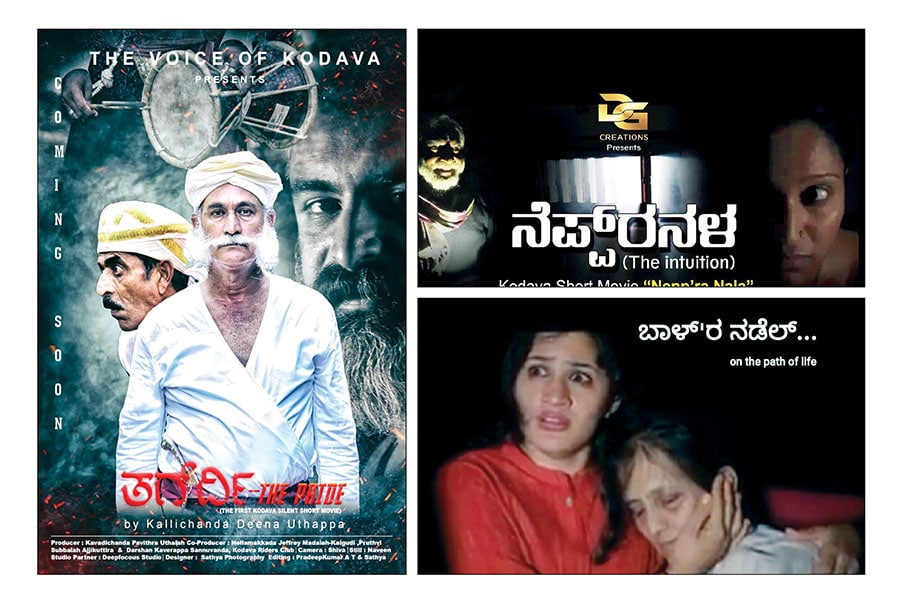
Deena has another feather in her cap of having directed “Thag’rdhi,” the first Kodava silent short movie released in June 2020 under the banner of VOICE of Kodava.
This movie inspired each and every soul of the community. It uplifted the thought that true power lies in the hands of the people to safeguard their culture and pride. Though it was a speechless movie, it communicated many things. She has also directed “Balra Nadel” (Co-directed by Gana Somanna Thadiyangada) and “Nepp’ra Nala” which showcased Kodava culture and tradition. Her films have received widespread appreciation.
source: http://www.starofmysore.com / Star of Mysore / Home> Sports / November 10th, 2020
Chairman of Government Land Protection Committee for maintaining the status quo until the joint survey on lands was done
Former Speaker and Government Land Protection Committee Chairman K.G. Bopaiah on Saturday told the Kodagu forest authorities not to cause any inconvenience to farmers of the district until the joint survey of lands categorised in ‘C’ and ‘D’ class was done.
Speaking at the taluk KDP meeting in Madikeri, the MLA said he had received complaints that small farmers cultivating coffee in “Paisari” lands since many decades are now facing hurdles in pursuing their profession. “Such complaints should not persist. We should imagine the plight of such farmers in Bhagamandala, Sampaje, Kalooru, Birunani, and other places which had been hit by successive floods.”
During the meeting, Veena Achaiah, MLC, said many paddy fields in Makkandur, K Nidugani and Madhe gram panchayat limits had been affected in the 2018 floods and added that sand, mud and uprooted trees had collected in the lands. A special package should be announced for these places and in the interest of farmers but no effort has been made in this connection yet.
On the occasion, Mr Bopaiah told the Kodagu ZP engineers to take up works on priority and complete the bridge construction work in Korangala and Chirangala. Bridges in these two villages had collapsed in heavy rains in August this year.
source: http://www.thehindu.com / The Hindu / Home> News> States> Karnataka / by Special Correspondent / Mysuru – November 07th, 2020
MP Pratap Simha speaks during a District Development Coordination and Monitoring Committee meeting in Madikeri.
MP Pratap Simha directed officials to ensure that each household is supplied with piped water connection under the Jal Jeevan Mission in rural areas.
Chairing a District Development Coordination and Monitoring Committee meeting at ZP Hall on Wednesday, he said Prime Minister Narendra Modi has envisaged piped water connection to every household in the country.
He sought information on how many families were supplied with water under the scheme. Replying to this, officials from ZP drinking water and sanitation department said that there are plans to supply water to 46,276 households.
The MP said that he has appealed to Jayadeva Hospital Director Dr Manjunath on the necessary facilities for the designated Covid hospital and medical college in the district.
He further directed officials to construct solid waste management units in Gram Panchayat jurisdiction and segregate wet and dry waste. The wet waste should be converted to manure.
All those who have registered under Mahatma Gandhi National Rural Employment Guarantee Scheme should be guaranteed with employment. The scheme should be used for the construction of toilets, sheep shed, concrete road and others, he said.
Stating that there is no shortage of funds under MGNREGS, he said that the scheme should benefit the rural people.
Measures should be initiated to improve the pass percentage in SSLC. When Dakshina Kannada district is in the second position in SSLC result, why is Kodagu in the 18th position? he asked.
DDPI Machado said that last year, the district was in 22nd position and this year it has reached 18th position.
The MP said that concrete roads should be laid under Pradhan Mantri Gram Sadak Yojana. A few works will be initiated by MLA K G Bopaiah in Virajpet on November 12.
Member Kolleera Gopi Chinnappa and Somwarpet Taluk Panchayat President Pushpa highlighted the issue of the pathetic condition of roads in Virajpet and Somwarpet taluk.
CESC engineer Somashekar said that electricity connections have been provided to 3,700 families under Saubhagya scheme in the district. The work on providing connections to 400 families is pending.
Member Kolleera Chinnappa alleged that Saubhagya scheme has not seen much progress in the district. The frequent disruption in power supply at Balele is inconveniencing the people.
Deputy Commissioner Annies Kanmani Joy, Zilla Panchayat President B A Harish and others were present.
source: http://www.deccanherald.com / Deccan Herald / Home> State> Mangaluru / by DHNS, Madikeri / November 04th, 2020
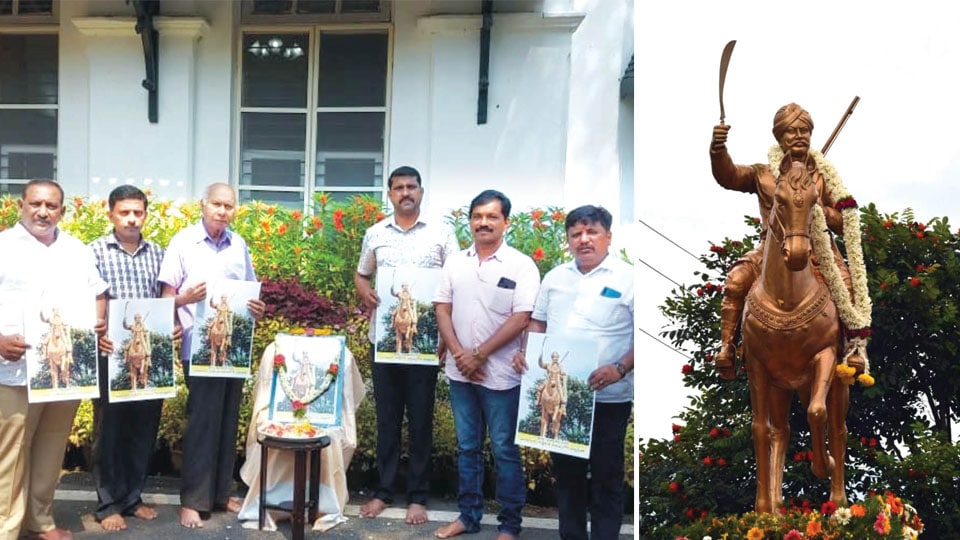
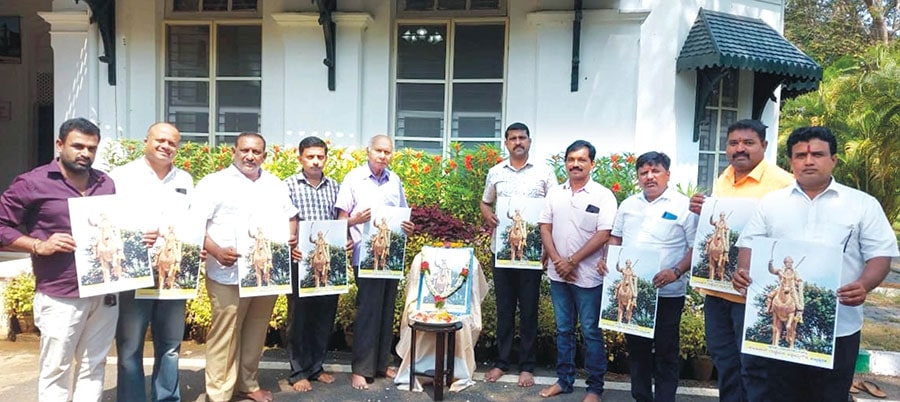
Nammuru Nammoru Samaja Seva Trust, Mysuru, observed Martyred Freedom Fighter SubedarGuddemane Appaiah Gowda Memorial Day at an event held at Jaladarshini Guest House recently.
Veteran writer Dr. C.P. Krishnakumar (CPK) inaugurated the programme by showering petals on the portrait of Appaiah Gowda.
Speaking on the occasion, CPK said that the year 1857 is a very significant year in the history of freedom struggle. Pointing out that the 1857 Sepoy Mutiny was the first major battle in the fight for the country’s independence from the Britishers, he said that we have read about great freedom warriors such as Mangal Pandey and Tatya Tope who laid down their lives.
Noting that the first independence revolution took place in 1837, 20 years before the sepoy mutiny of 1857, the veteran writer said that many great freedom fighters such as Tipu Sultan, Rani Chennamma, Sangolli Rayanna, Parampara of Kodagu, Kalyanaswamy, Guddemane Appaiah Gowda, Kedambadi Ramegowda and Kudiya brothers had laid down their lives much earlier fighting the Britishers.
Recalling that the people of Kodagu revolted when the Britishers divided the then Coorg State into Kasaragod, Puttur and Sullia and brought them under Madras Province, he said that warriors from Kodagu such as Nanjaiah, Kedambadi Ramegowda and Guddemane Appaiah Gowda are an inspiration for generations to come.
Noting that Appaiah Gowda led the ‘Katukai battle’ (Amara Sullia Dange) against the British in 1837, Dr. CPK said that he was one of the greatest heroes Kodagu has produced. Stating that Appaiah Gowda was a symbol of patriotism, self-respect and pride of Kodagu, he said that Appaiah Gowda, who was hanged by the British in front of Madikeri Fort in 1837 for leading protests against colonial power, did not want outsiders to have a say in the affairs of Kodagu.
He urged the Government to set up an Authority for sensitising the public on the sacrifices made by Appaiah Gowda and all other great freedom fighters of the times and on the significance of Amara Sullia Dange (Sullia rebellion).
Trust President Satish Gowda, Vice-President Kumar Gowda, Gen. Secretary A. Ravi, Dist. Vokkaliga Assn. Vice-President Gururaj, Director Ravi, Dentist Lokesh and others were present.
source: http://www.starofmysore.com / Star of Mysore / Home> News / November 03rd, 2020
Alert ex-GP President in Kodagu makes Mysuru youths return to Madikeri to pick up their trash
Thanks the tourists for responding positively
Madikeri:
A vigilant Kodava has made the entire Kodagu District proud by making a group of tourists from Mysuru, who had thrown garbage on roadside, to come back and pick it up. His appeal through social media not only got a tremendous response from people but also sent a message loud and clear that ‘You cannot take everyone, everyplace and everything for granted.’
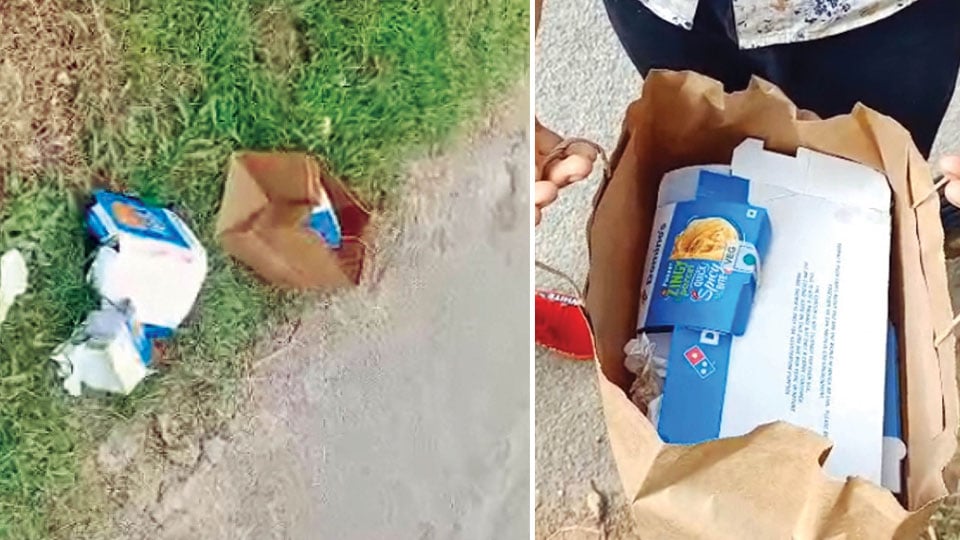
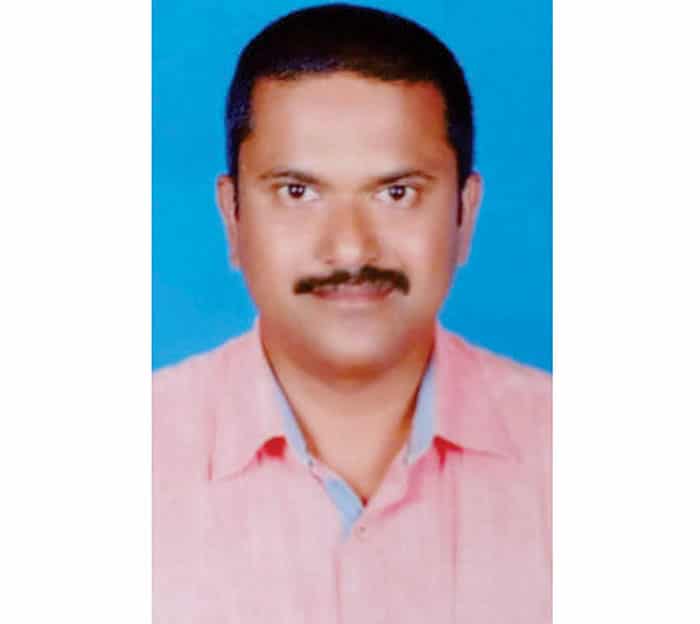
The ‘hero’ of this incident is Madetira Thimmaiah, a former President of Kadagadaalu Gram Panchayat in Madikeri taluk. On Friday, Thimmaiah while travelling in his four-wheeler saw the empty Pizza packets and the paper bag thrown on roadside near Kodagu Vidyalaya junction. He stopped his vehicle, checked the bag and found the bill which had the mobile number of the customer.
Without wasting time, he video-recorded the strewn garbage on his mobile phone and put it on the social media platform. When he called the mobile number mentioned in the bill, he was told that it was Chirag of Mysuru who along with his friends came to Madikeri.
Thimmaiah, ex-GP President
Chirag reportedly told Thimmaiah that he had bought the pizza from a Pizza Shop in Madikeri, and had disposed the trash on roadside. When Thimmaiah asked Chirag to come and pick up the garbage, the latter told him that he was almost near Mysuru and it would take another three hours for him to come back.
However, the former GP President did not budge and said he would wait for three hours failing which a Police complaint will be lodged.
Meanwhile, Thimmaiah appealed to the citizens of Kodagu to call up that mobile phone number to ask him to come back and collect the garbage, which received overwhelming response.
After three hours, Chirag and his friends, not only came back but also tendered an apology for their ‘negligence.’ However, the embarrassed youths appealed Thimmaiah not to film their faces to which the former obliged. The youths collected the empty packets and promised to dispose the same at their house bins.
Later, Thimmaiah put another video on social media of Chirag holding the empty packets in the paper bag and carrying with him. Thanking the people of Kodagu for supporting his campaign to keep the hilly district green and clean, Thimmaiah also appealed one and all to join hands in the Swachh Bharat Abhiyan.
source: http://www.starofmysore.com / Star of Mysore / Home> News / October 31st, 2020
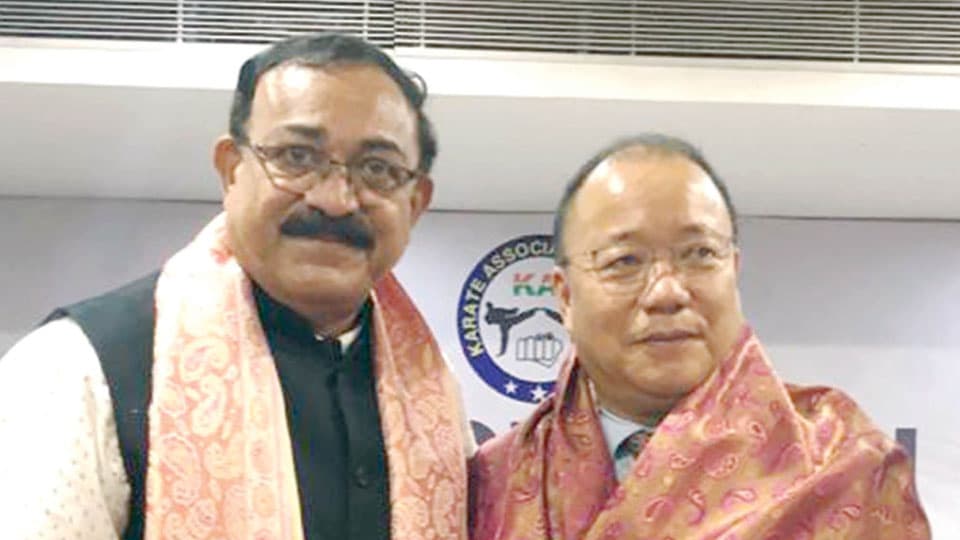
Noted Karate Master Cheppudira Arun Machaiah has been elected as the Vice-President of National Karate Association.
Arun Machaiah was declared elected in the presence of Retired Judge of Assam High Court Justice B.P. Borkotoki at the Association’s National Council Meeting held under the joint aegis of Union Ministry of Sports and Indian Olympic Association, at Guwahati in Assam recently.
Arun, who became the first national champion in 1977, did his higher training in Karate at Singapore. He has won medals in the heavy weight category in the World and Asian Karate Championships held between 1989 and 1993 at Indonesia, Japan, Malaysia, Australia, China, Mexico, Nepal etc.
A seventh degree Black Belt holder of World Karate Federation (WKF), he is an International Referee. He has won many awards, including the prestigious Best Sportsperson Award of the Government of Karnataka in 1994. His term of office as the Vice-President of the Association will end in 2024.
source: http://www.starofmysore.com / Star of Mysore / Home> Sports / October 29th, 2020
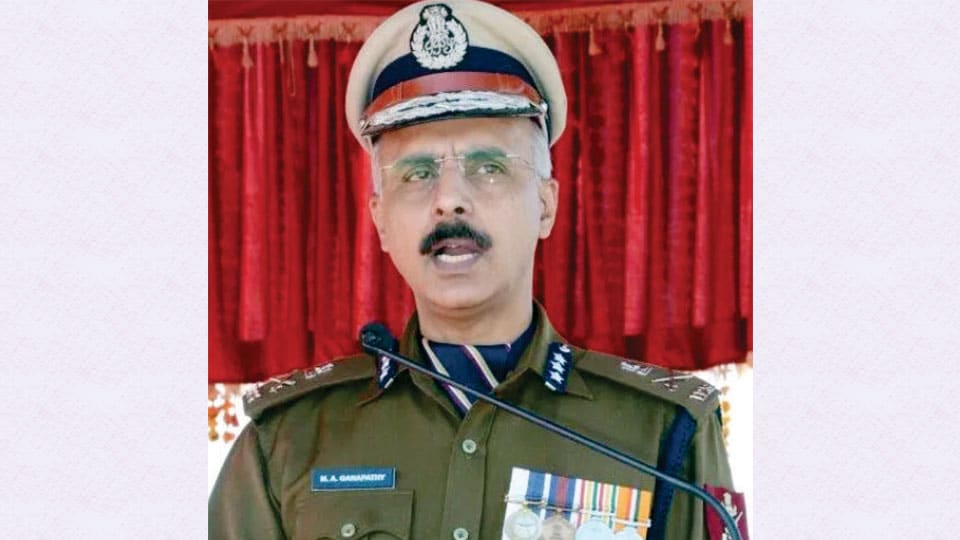
Kodagu-born Maneyapanda Appaiah Ganapathy, IPS, has been appointed as the Director General (DG) of the Bureau of Civil Aviation Security (BCAS).
The 1986 batch, Uttarakhand cadre IPS Officer, is currently CISF Special Director-General and Head of the Airport sector.
PM Modi-headed Appointments Committee of Cabinet recently approved the Aviation Ministry’s proposal to appoint Ganapathy as DG BCAS till his superannuation on Feb. 29, 2024, or until further orders, whichever earlier.
Ganapathy has been awarded the President’s Medal for meritorious service and he was later decorated with the President’s Medal for distinguished service.
He completed his primary and secondary education at Ponnampet in Kodagu and graduated from the Madras Christian College, Tambaram. He studied his Post-Graduation at JNU New Delhi.
He is the son of Maneyapanda Appaiah (Vittala lawyer) and Premalatha, retired teacher, of Kunda in Virajpet taluk. Ganapathy is married to Sandhya and they have a son.
“Given his experience as heading Aviation security sector of CISF, Ganapathy is the right person for the position of DG BCAS,” said a senior official.
The post of DG fell vacant after Rakesh Asthana, a Gujarat cadre 1984 batch IPS Officer, was appointed as the DG, Border Security Force (BSF) in August this year. Asthana is also holding additional charge of DG, Narcotics Control Bureau (NCB).
source: http://www.starofmysore.com / Star of Mysore / Home> News / October 15th, 2020
With heavy downpour, landslides and floods ravaging Kodagu district for the past couple of years, Madikeri MLA M.P. Appachu Ranjan said that the Centre will be appealed for constructing flood walls along River Cauvery for preventing floods.
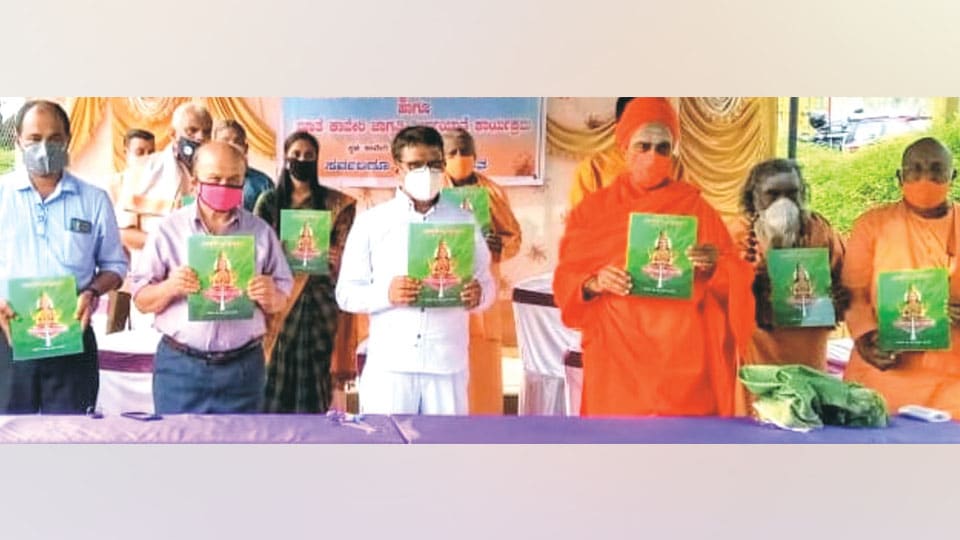
He was speaking after releasing ‘Namami Cauvery’ volume at a programme jointly organised by Cauvery River Swachhata Andolana and Cauvery Maha Arathi Balaga at Kushalnagar recently.
Asserting that all efforts will be made for stopping Cauvery floods in the future, Appachu Ranjan said that Swachhata Andolana activities have resulted in 60 percent cleansing of River Cauvery so far, which is a noteworthy achievement.
Senior Journalist J. Rajendra said that lack of hygienity was haunting the entire world.
Stressing on the need for everyone to practice cleanliness, he warned against fighting for pride in respect of Talacauvery.
Highlighting that it is important for maintaining the sanctity of River Cauvery, which is the lifeline for crores of people in the Southern States, he wanted the Government to constitute a District-level Committee for Talacauvery, Bhagamandala.
Cautioning against political meddling in the forming of Temple Committees, Rajendra bemoaned the apathetic attitude of officials in responding to the plight of the people in the wake of natural disasters.
Earlier, Kirikodli Mutt Seer Sri Sadashiva Swamiji, who spoke after inaugurating the programme, said that rivers are getting polluted because of lack of a hygienic and scientific sense among the people.
Observing that it is important for everyone to have an understanding on the ways of preserving nature, he said that it is vital that wastes are not dumped to the rivers and such unsensible acts will only destroy their sanctity and serenity.
Senior Priest Krishnamurthy Bhat, Pourakarmikas Ganesh and Purushottam, ‘Namami Cauvery’ Editorial Board Members H.T. Anil, B.C. Dinesh, Vinod and B.M. Latish were felicitated on the occasion.
M.N. Chandramohan delivered the keynote address. Zilla Panchayat (ZP) Member Manjula, Kushalnagar Development Authority Chairman M.M. Charan, Members V.D. Pundarikaksha and Vaishak, Town Panchayat Members Jayavardhan and Amrutraj, Kushalnagar BJP President V.N. Umashankar and others were present.
source: http://www.starofmysore.com / Star of Mysore / Home> News / October 28th, 2020
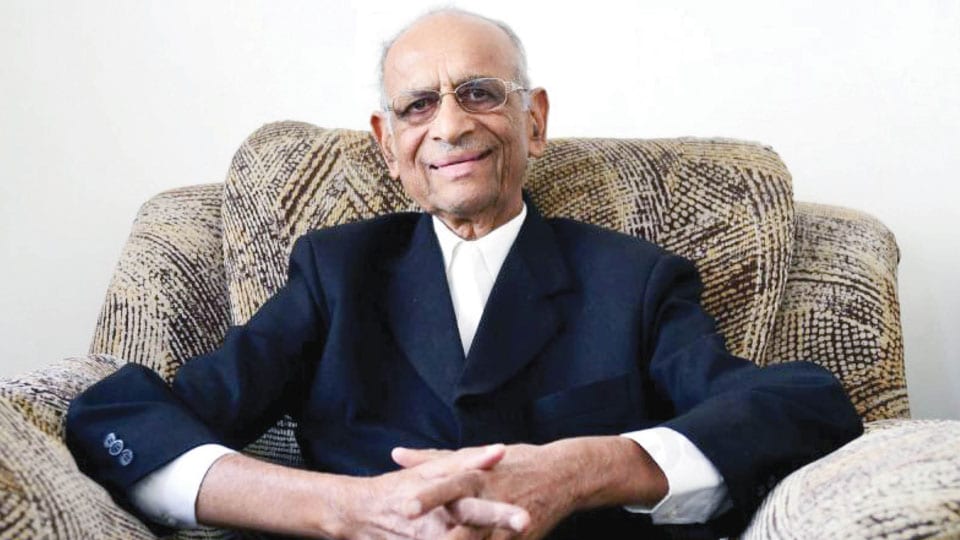
I first heard of and saw A.K. Subbaiah when I was in the first year BA at Madikeri First Grade College (Kodagu). I was staying in the upper hostel close to the College and I guess he too was in the hostel doing his BSc. He was a senior student in age compared to others like me. He had come to the College after quitting his job as a Second Division clerk in the Department (Health) where he served for a few years. We students learnt that he had lost his father, when he was an infant, due to a fall from a tree and despite hardship he pursued education.
In the year 1958-59 (I think) there was a student strike demanding proper water supply, good quality food in the hostel, against corruption etc., etc. In retrospect, I realise the demands were frivolous and a lame excuse to go on a strike to embarrass the Principal for whatever reason.
The leadership of this strike and a protest march from the College to the Police Parade ground nearby was not individually identified. However, a few vocal students, displaying bravado, like me, to impress the fellow students, including girl students, got the students on to the road, holding a couple of National Flags and shouting slogans. The march began. When the Police came on the scene one student got panicky and was shouting, “I can’t hold this flag.” I, in my enthusiasm, took that flag and marched on hoping I would get a chance to speak. After all, I had just lost the College election. It was for the first time I learnt of election rigging!
Be that as it may, about 150 students gathered at the Police ground and one NCC Under-Officer began to speak. I think M.C. Nanaiah, a very good student-speaker of Communist orientation, then began to speak — in the same way he does even today — without giving us a road-map. It was then some vocal students were raring to speak, but from nowhere A.K. Subbaiah, a tall-lanky man appeared and began to speak like a sudden, lashing of summer rains. There was sound, there was force and there was flow. We were held spell-bound. He himself declared that no need for any speech, not even vote of thanks and ‘ordered’ the gathering to disperse. A motley crowd simply obeyed and our ‘great college strike’ ended for good.
It was only later, some of us were rusticated from the hostel, including me, and some removed from the College, among them were A.K. Subbaiah and a couple of my friends. I went to Bengaluru after passing BA in Madikeri while A.K. Subbaiah came to Sarada Vilas College, Mysore, where after BSc he did his Law. I came to know that he was practicing Law in Virajpet, Kodagu and also joined politics, first I think Socialist Party and then Jan Sangh. He was a successful lawyer on the criminal side and was making a name.
It must be at this time he got married from a good family, his father-in-law also famous as Chiyakpoovanda Bheemaiah lawyer (whom I knew later) who worked in UN, New York for some years. Thereon, as I know, A.K. Subbaiah joined Jan Sangh. Being a tall and very fluent, powerful public speaker he soon got elected to the Karnataka Legislative Council (1966). He had played a major role in influencing local Kodavas and other Hindus as supporters of RSS and Jan Sangh. I used to hear about his progress, so also of another Kodava politician M.C. Nanaiah, another powerful speaker both in English, Kannada and Kodava, whenever I came to Mysore to visit my parents and brothers from Mumbai and Pune.
A.K. Subbaiah came from a rich family in Kodagu known as Ajjikuttira though he himself was poor. It was like saying ‘India is a rich country where poor people live.’ The Ajjikuttira family in South Kodagu was also into politics and some like Chinnappa played a role in freedom movement. A.N. Somaiah was an MLC (Janata Party) and now we have his one son A.S. Bopanna as the Supreme Court Judge. There was also a Minister from that family in the Karnataka Ministry. But among all these famous people from the family it was only A.K. Subbaiah who made big news and was known all over Karnataka and political circles. No wonder News Media described him as ‘Suddimaduva Subbaiah’ (Subbaiah, the news-maker). And indeed he was that.