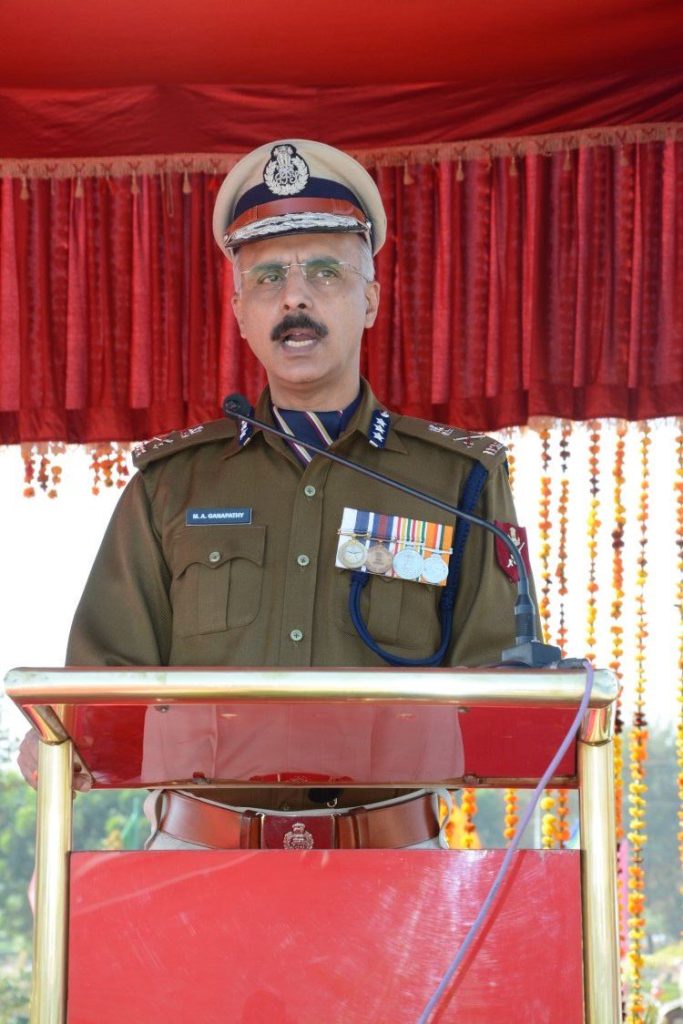
The Appointments Committee of the Cabinet has approved the appointment of Ganapathy, IPS, to the post of Director General, BCAS, for a tenure up to his superannuation on February 29, 2024, the order said.
Senior IPS officer M A Ganapathy has been appointed as the Director General of Bureau of Civil Aviation Security (BCAS), according to a Personnel Ministry order issued on Tuesday. He is a 1986 batch IPS officer of Uttarakhand cadre.
The Appointments Committee of the Cabinet has approved the appointment of Ganapathy, IPS, to the post of Director General, BCAS, for a tenure up to his superannuation on February 29, 2024, the order said. The post of BCAS chief fell vacant after Rakesh Asthana was appointed as the Director General of Border Security Force in August.
source: http://www.news18.com / News18 India / Home> India / by PTI / New Delhi, October 06th, 2020
The film won the best short film award in the Karnataka competition section of the Bengaluru International Short Film Festival 2020
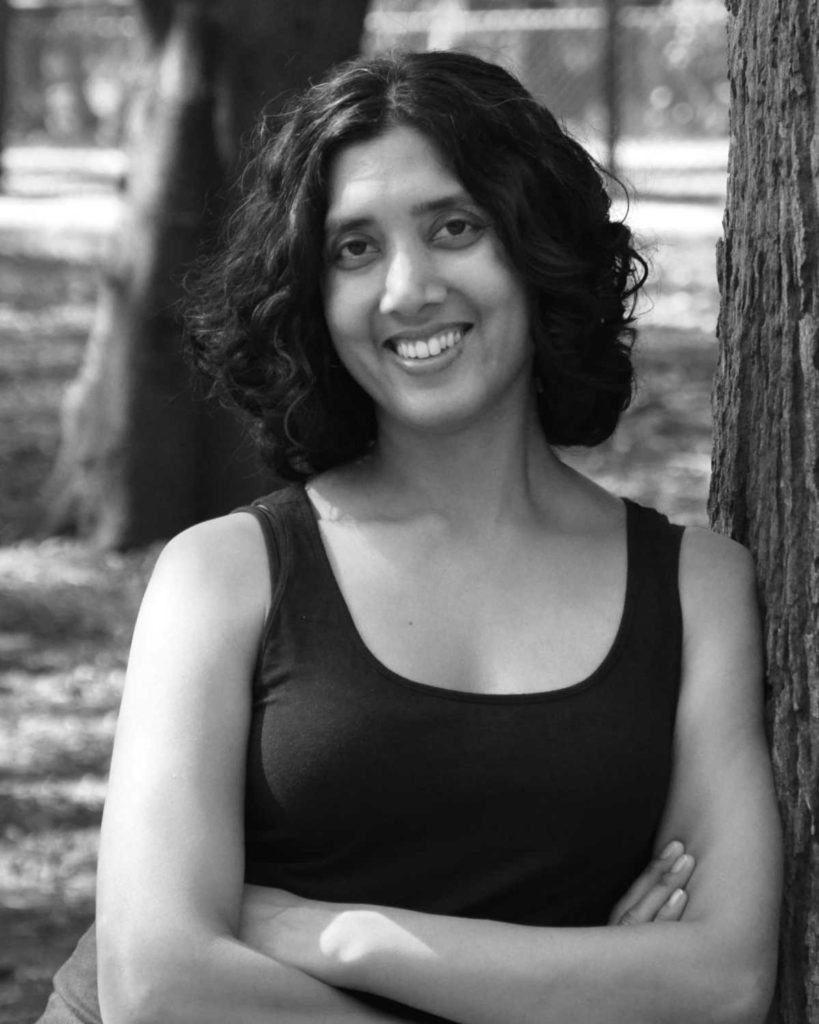
Set in Kodagu or Coorg, Karnataka, Priya Belliappa’s short film explores the lives of migrant labourers who come from across the country to work on coffee plantations.
A young man from a poor family in Kodagu, Kalappa (Avinash Muddappa) is one of the many educated unemployed Indians vying for just a handful of jobs. Despite having a doctorate, he finds that life in the city is not as lucrative as he had imagined and decides to join the workers on the coffee estates.
He meets Tabu (Geetanjali Thapa), a migrant worker from Assam who has travelled over 2,000 miles from her home to find a means of livelihood in the estates. But her name has not been included in the updated draft of the National Register of Citizens (NRC).
The film was conceptualised by Belliappa when she saw the influx of people travelling from Assam to work on the estates for a couple of months during the coffee season. The lives of the labourers who uproot themselves and their entire family for a few months for work made her curious, and the political and economic issues in the country formed the backdrop against which her story plays out.
Belliappa said, “The film is questioning a lot of things and these are questions that I do not have answers to but they nag me.”
The layered film questions lines and borders that define country, religion, language and caste; lines that become blurred in the struggle of life.
Speaking about how much of the film was shaped by the debates around the NRC and Citizenship Amendment Act (CAA), she said, “The film was shot before the NRC and CAA became a national debate. It was not a topic that everyone really knew about. If you look at the larger picture [in the film], it’s about belonging…I also put in the idea that boundaries and borders are imaginary lines for states or districts, and you sit back and you think about questions of humanity.”
The character of the young man too is a reflection of the status of youth in the country, who are increasingly finding themselves with a bagful of degrees but no jobs and was shaped by a newspaper article that reported that people who with a PhD degree were standing in line for a peon’s job. The filmmaker wondered, “It really hit me hard because everything grows up thinking that if they get a certain education, they are guaranteed a certain job…but we look at what is the education system today where you cannot assure somebody who has done a PhD a job…Everybody needs a certain income to survive, but if it [education] cannot guarantee you a job, what is it that one needs?”
The short film format allowed the filmmaker to delve into certain spaces with greater creative freedom and she said, “The reason that I made this into a short film was that I did not want to be bogged down by the commercial aspects of it. When you make a feature film, you need to think much more about economic aspects like what is going to happen to the film, how are you going to get the money back…So I chose to go with a short as it would give me a certain creative freedom to explore this subject in the way that I wanted using the silences and the spaces that I create. In a short film, you can use your creative freedom with a lot fewer restrictions as opposed to a feature.”
The film won the Best Short Film Award in the Karnataka competition section of the Bengaluru International Short Film Festival (BISFF) 2020. Responding to the recognition that the film has received the filmmaker said, “As a creative person, I want there to be a conversation [about this] and I hope that it reaches as many people as possible…if somebody thinks about this [the film], it’s good enough for me.”
She added, “The world over, there is a conversation about migrants moving, working…and we need to address it.”
Belliappa is planning to develop Frayed Lines into a feature.
source: http://www.cinestaan.com / Cinestaan / Home> Interview / by Sukhpreet Kahlon / New Delhi – October 08th, 2020
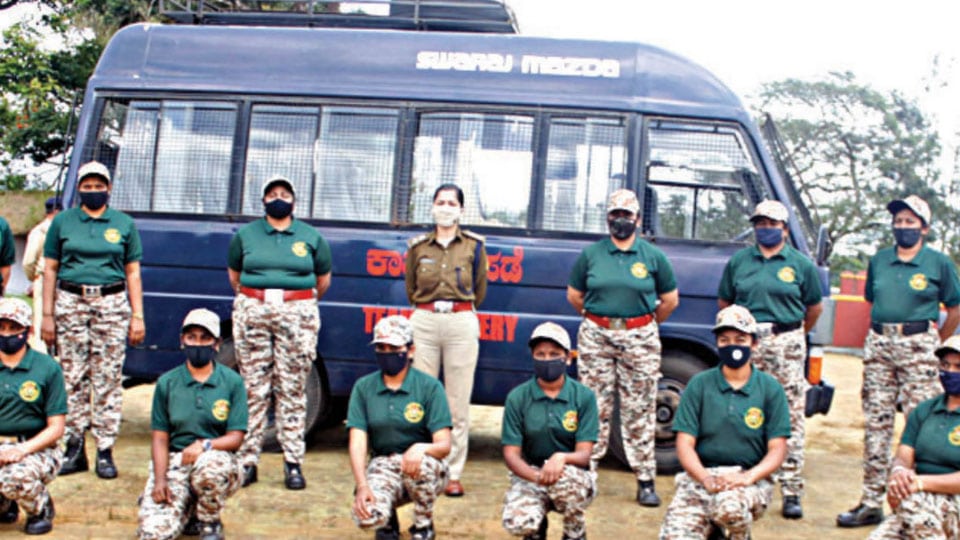
‘Cauvery Pade’ (Cauvery Force), an all-women Police team to tackle crimes against women and children in Kodagu district, was launched by Kodagu SP Kshama Mishra here on Thursday last.
Speaking on the occasion, Kshama Mishra said that the team will have two Assistant Sub-Inspectors (ASIs) and 16 other Police personnel.
“The Force will act against atrocities and crimes against children, girls and women. The Force will make regular rounds around schools and colleges, accommodations where there are more number of women and other women-dominated places and will act against anyone found behaving in an obscene or indecent way and harassing or stalking women,” she said.
Continuing, the SP said that ‘Cauvery Pade’ has been formed on the lines of ‘Abbakka Pade’ in Udupi, ‘Obavva Pade’ in Chitradurga and ‘Chamundi Pade’ in Mysuru. The patrol team will make rounds from 8 am to 6 pm in the limits of all prominent Police Stations of the district, focussing on schools and colleges for ensuring the safety of girl students.
The members of the public can call 100 in case of trouble or distress, she said and added that the mobile numbers of all the eighteen personnel attached to this women Police team, will be announced soon as the higher authorities issue them.
source: http://www.starofmysore.com / Star of Mysore / Home> News / October 06th, 2020
For the first time Kodagu coffee growers, who formed a farmer producer company, Biota Coorg FPC, have exported their crop directly to a roaster in Europe.
IB Bopanna, one of the founding directors of Biota Coorg
After suffering 50-70 per cent crop loss due to excessive rainfall and landslides over the last three years, small, mid-sized and large coffee growers in Kodagu district of Karnataka, who pooled in their coffees under Biota Coorg, are set to receive a 15-20 per cent premium, on an average.
Incorporated in January, Biota Coorg made its first direct export shipment of bulk branded coffees to a large roaster in Europe last week. A container consisting of 320 bags (60 kgs/per bag) of Robusta Cherry AB sourced from 75 of its members was shipped from Mangaluru port on September 30. The company plans to ship 10 more containers to different roasters across Europe, of which two containers are scheduled to be shipped in October and the rest by December. In addition, since its inception, Biota Coorg has directly sold Arabica coffees to local roasters and local cafes at a premium. The 10 founding directors of Biota Coorg, collectively have over 100 years of domain expertise in coffee growing and allied areas including exports of agri commodities, global marketing of coffees, agro-forestry, plantation management, organisation development and coffee quality enhancement through cupping.
Unique flavour
Grown under the shade of multiple species of endemic rainforest trees at an elevation of 3,000– 4,000 feet above sea level, Coorg coffees have distinct fruity notes because of the wild figs, citrus fruits that grow in the rainforests and caramel notes from the leaf litter-enriched soil. Because of the higher elevation, Robusta coffees from Kodagu take a longer time to mature and ripen, thereby resulting in a softer cup.
“The objective of incorporating Biota is to market and put Coorg Coffee on the world map by elevating its quality based on the region’s ecology and biodiversity,” IB Bopanna, one of the founding directors of Biota Coorg and former Senior Global Director- Coffee, The Coca-Cola Company, Atlanta, USA, told BusinessLine.
“Earlier growers were selling their coffee in bulk with little differentiation to local traders, at prevailing market prices. We are a cohort of 75 members (in our first year of operation) who have committed to superior on-farm harvesting and post harvesting standards that will command a premium in the international and domestic markets. We are committed to uphold the legacy of the region’s biodiversity by adhering to an audited standard in addition to RFA (Rainforest Alliance) certification, which we have applied for. All the coffee we procure is 100 per cent traceable. Every grower’s coffee is segregated, processed at the Tata Coffee facility in Kodagu, cupped and prepared specially to fit the requirement of high quality roasts, blends and brands.”
Community initiative
MB Ganapathy, former Chairman of KPA, said: “There are many large coffee growers who export their coffees in their individual capacities however, the majority who are small growers are dependent on the local traders to sell their coffee. Biota Coorg is a great community initiative that will benefit small coffee growers who can join hands and realise better prices for their produce by following quality practices set by Biota that will adhere to international standards of roasters.”
Bose Mandanna, a large grower and Biota member, said: “The advantage for international roasters is that they are ensured of a consistent supply of quality coffees from Biota. We have received a standard of good agricultural practices from Biota which we strictly follow including the use of chemicals and labour. We harvest the coffee at the right time, pulp it on the same day, wash it clean and dry it to the correct moisture levels, after which it is inspected by a Biota representative, who then further processes it in the curing works.”
source: http://www.thehindubusinessline.com / Business Line / Home> AgriBusiness / by Sangeetha Chengappa / Bengaluru / October 05th, 2020
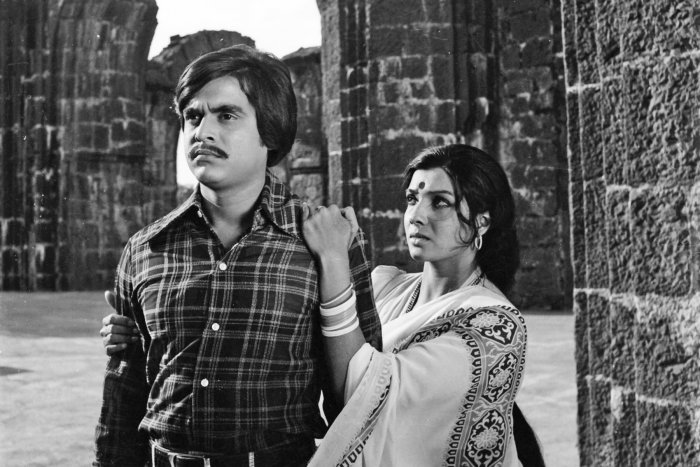
Puttanna Kanagal cast Jagadish as the lead in ‘Phalitamsha’ even though he had no prior experience in acting.
After the first few days of shoot of Phalitamsha, he wanted to give up
Filmmaker Jai Jagadish had no background in films or interest in it during his childhood. He belonged to a family, where his father, a farmer, insisted on Jagadish becoming a double graduate.
Puttanna Kanagal cast Jagadish as the lead in ‘Phalitamsha’ even though he had no prior experience in acting. Filmmaker Jai Jagadish had no background in films or interest…
Childhood and films
Hailing from Somwarpet taluk, Kodagu, he belonged to a family of coffee, pepper, cardamom and paddy growers. “My family consisted of five daughters and two sons. My father was a farmer.”
The filmmaker studied at the government school nearby. “I was a naughty child and uncontrollable, so I was sent to study in Sri Ramakrishna Vidyashala, Mysuru.” Jagadish’s father insisted on him becoming a double graduate. He did his BA from St. Philomena’s College, Mysuru.
Jagadish never acted in a drama, and never thought of acting in films. “Cinema was not my cup of coffee. My friend, Manjappa, a college leader from Maharaja’s College asked me if I would act in a Puttanna Kanagal’s film, if he got me the role. I was amused by the idea and I challenged him to find me a role,” he says.
Jagadish had read in film magazines that no actor had been finalised for ‘Phalitamsha’. In a couple of days, he got a call for the role, against four heroines. “I said I wasn’t going to act in it. My friends tried to convince me. I told them that I had other intentions and want to start my own business,” he says.
Even so, he went to Bengaluru, to meet Puttanna Kanagal. “I was asked if I knew anything about acting and I immediately responded that I didn’t. My looks and physique came in my favour, I was offered the role. I was shocked.”
Jagadish was told to leave to Badami and join the shoot immediately, but he insisted on informing his family. “I made a lightning call to my father. I knew he wouldn’t agree, and as expected after I called and explained, expletives followed. In the corner of mind, I knew I shouldn’t let go off the opportunity so I went for it,” he says.
After a few days of shoot, he wanted to give up. “I had only one lungi and a toothbrush on me and I decided to flee from the sets. Kitty, Kanagal’s wife’s brother, saw me from a distance and asked me what I was doing, he told me to rethink and give best shot at acting,” Jagadish says.
Jagadish’s first film released in a grand manner but didn’t do well. “In ‘Phalitamsha’, some shots were taken at the flying training school, Jakkur. The principal of the school, Patil, was impressed by me and I spoke about my interest in flying. A year later, I met him on M G Road and he told me to meet him at the school next day,” he says.
Jagadish was asked to do some medical checkups and joined the school. He studied for almost two-and-a-half years, while he waited for acting roles. “S Siddalingaiah called me and asked me to play the role of Vishnuvardhan’s brother’s role in ‘Biligiriya Banadalli’,” he says.
The role with dark shades, created a new turn in his career. “Directors were looking for a young villain, which led me to many other films.”
He was soon seen in films like ‘Bandana’, ‘Paduvarahalli Pandavaru’, ‘Daranimandala’ and ‘Parajitha’
He has worked with different actors like Vishnuvardhan, Srinath, Rajkumar (in Guri), Puneeth Rajkumar. Ravi Chandran. “I’ve worked with maximum films with Vishuvardhan, he was my favourite hero and a good friend. I’ve acted with films in Ambareesh to…
Planter now
Jai Jagadish has an estate in Kodagu, and he calls himself a planter and farmer now. “This is my work now. I have decided to stay away from filmmaking as I won’t be able to withstand the losses now,” he says.
Demonetisation soaked the spirit of filmmaking off him. “Most people decided to not invest into films. After ‘Yaana’ that was directed by my wife and starred daughters Vainidhi, Vaibhavi and Vaisiri, didn’t do as expected in the box office, I decided to stay awayfrom production,” he adds.
source: http://www.deccanherald.com / Deccan Herald / Home> Entertainment> Entertainment News / by Tini Sara Anien / DHNS / October 04th, 2020
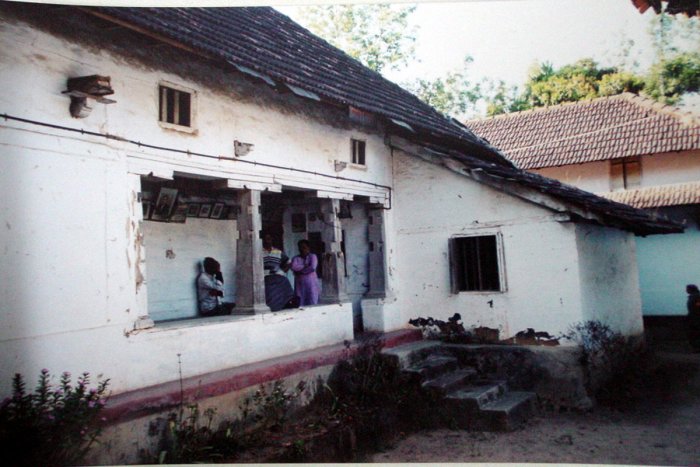
Ancient abode: The ancestral house of Mukkatira Ipanna, the sharpshooter, in Nalvathoklu village in Kodagu. Photo by Boverianda Chinnappa
Mukkatira Aiyappa of Bonda village in Kodagu had three sons: Muddayya, Ipanna and Bopayya. Muddayya became a Munshi (clerk) in the Diwan Kacheri (minister’s office). Linga Raja II was the ruler of Kodagu at that time. With his first queen, a lady from the Chowrira family, he had a son Chikka Vira Raja. His second queen, Palanganda Devaki, was his Pattada Rani (chief queen). They had two daughters Muddammaji and Devammaji.
In 1816, Linga Raja was on a hunt in Murnad, Kodagu. He was accompanied by Muddayya when they came across Ipanna. Linga Raja challenged him to shoot a bird off a bison’s back as he was a famed sharpshooter. The bison was at a long distance and a gunhad to be used. Ipanna shot it and impressed the Raja who summoned him to the court the next day.
The next day, Ipanna went to the court dressed in a white Kuppya (traditional coat). The Raja asked him the significance of the colour of his costume. Without any hesitation, he replied that a Kodava normally wore a white Kuppya on two occasions — in his wedding and then during his funeral. Those days, rarely one spoke boldly in front of the Raja. But the Raja was not displeased. Instead he surprised all by saying that he would get his elder daughter Muddammaji married to Ipanna.
Ipanna was converted into a Lingayat, since the Raja was one. Ipanna was given a new name, Chenna Basavappa. Muddammaji and Chenna Basavappa were married and gifted a farm. But Muddammaji fell sick frequently. So, this farm was exchanged with another farm which belonged to the Raja’s relatives in Appangala. However, Muddammaji died within two years after her marriage. The Raja then got his younger daughter Devammaji married to Chenna Basavappa in 1819.
In 1820, Linga Raja died. His queen Devaki committed suicide by consuming diamond dust. Chikka Vira Raja became the Raja. Chenna Basavappa and a few others were discontent with his rule. So they schemed to have him ousted. They failed in their in their endeavour and Chikka Vira Raja came to know of it. Chenna Basavappa and Devammaji were kept under house arrest.
In 1832, Chikka Vira Raja planned to have Chenna Basavappa executed. Devammaji and Chenna Basavappa learnt of this. On Shivarathri, they drugged the guards and escaped from Appangala on horseback. They crossed the borders of Kodagu and reached Mysore , where they headed to the house of the British Resident Casamajor and sought refuge. Meanwhile, the couple’s one-and-a-half-year-old son fell into the hands of the Raja’s men and was handed over to the Raja whose queen took care of him.
Muddayya was an intelligent and respected man. He had been promoted to become the Raja’s Khas Munshi (chief accountant). A favourite of the Raja, he was deemed to be a future Diwan. When Chikka Vira Raja first heard of Chenna Basavappa’s escape he got angry with Muddayya who was his elder brother. He then beat him up. His Diwan, Kunta Basava, got Muddayya executed. But, in truth, Muddayya was not aware of his brother’s plans.
Chikka Vira Raja demanded that the two fugitives should be handed over to him. But Casamajor forwarded this matter to the British East India Company Government. In 1833, the Government declared that the couple should not be surrendered to the Raja. Chenna Basavappa and Devammaji were moved to Bangalore and were given a pension. Chikka Vira Raja schemed with Nanda Lal Bharthi, a merchant from Mysore, to have Chenna Basavappa murdered. But these attempts failed.
In 1834, the Company invaded Kodagu. The Raja surrendered to the British and was exiled. Chenna Basavappa and Devammaji returned to Kodagu. Their Appangala farm was returned to them. Chenna Basavappa assumed the title of ‘Arasu’ (king). He petitioned the Company to provide him with one of the other palaces of the Raja. He also wanted the former Raja’s farm at Nanjarajapatna and be placed in charge of the Gaddige (the Rajas’ mausoleum). But the Company didn’t agree to this. Chenna Basavappa died in 1868.
source: http://www.deccanherald.com / Deccan Herald / Home> Spectrum> Spectrum Statescan / b y Mookonda Kushalappa / July 06th, 2019
Linga Raja I was the king of Kodagu and a subordinate ally of Nawab Hyder Ali of Mysore. In 1780, the king passed away, leaving his first son, the 16-year-old Dodda Veerarajendra as heir to the throne. Hyder Ali saw this as the perfect time to bring Kodagu under his complete control.
So, he moved the king’s family members from the Madikeri Fort in Kodagu to Gorur Fort in Hassan. Displeased with the king’s removal, Kodagu rose in rebellion against Hyder.
Elsewhere, the second Anglo-Mysore war was raging on. In 1782, Hyder died and his son Tipu Sultan succeeded him. Linga Raja’s family was shifted and imprisoned at Periyapatna Fort in Mysore. In December 1788, Dodda Veerarajendra, his wife, daughter, brothers Linga Raja II (aka Lingarajendra) and Appaji Raja and other family members managed to escape from their confinement.
According to scholar H Moegling (in 1855) ‘some faithful Coorg friends assisted him (the king) and conducted him safely’. Historians I M Muthanna and D N Krishnaiah identified these friends as Kulletira Ponnanna, Pattacheruvanda Boluka, Appaneravanda Achaiah, Ketolira Achuvanna and others. They disguised themselves as oil-vendors and reached Periyapatna, where they were able to release the royal family.
The people of Kodagu declared Dodda Veerarajendra their king but the new raja and his family had no place to stay. The Mysore Sultan still held the Madikeri Fort. The king first stayed at Kurchi where he made a temporary, makeshift residence.
One day, when the king was away, bandits from Wayanad attacked Kurchi; they killed the queen, looted the ornaments and burnt down the place.
D N Krishnaiah writes that with the king living near poverty, Ketolira Achuvanna recommended his own native village — Yavakapadi near Kakkabe — as a suitable place for the raja to stay till the war was over. Back then, Kakkabe was a remote location, surrounded by mountains and jungles. Achuvanna accommodated the raja in his own ancestral house until a new palace was built.
A farmland of the Puliyanda family was found to be the most secure site for a palace; hidden by natural barriers from all sides, it was relatively inaccessible to invaders.
Four brothers of a family living there were asked to vacate the place, with the promise of compensation. Everyone complied, save for the youngest brother Karichcha.
When the palace’s construction began, Karichcha troubled the construction workers during the day and hid in the forest at night. Displeased with this, the raja got him captured and put to death
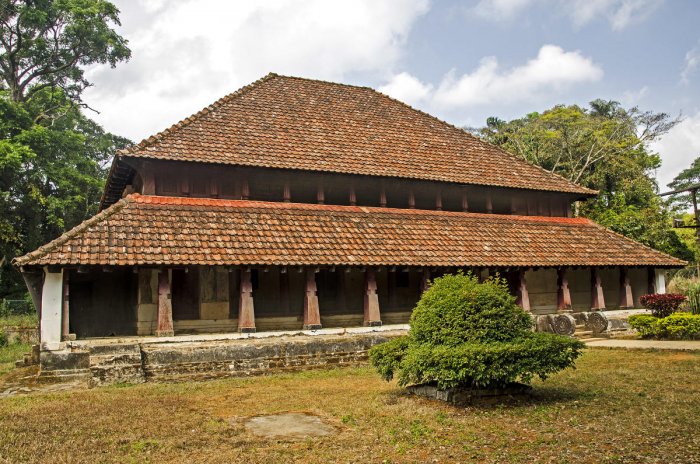
The palace eventually came up at the place and is called ‘Naalnaad aramane’ or Nalknad aramane, after the name of the region. The palace was relatively simple: a two-storey building with a thatched roof, built in the native Ainmane tradition.
The descendants of Achuvanna and his two brothers became the Aramane thakka (palace chamberlains); they were the hereditary chieftains in-charge of the Naalnaad palace. Meanwhile, Kodagu became free of Tipu’s rule in 1792. For Dodda Veerarajendra, life had come full circle, as he gained possession of his father’s old residence.
source: http://www.deccanherald.com / Deccan Herald / Home> Spectrum / by Mookonda Kushalappa / October 03rd, 2020
Young Kannada beauty Rashmika Mandanna is in fine form as her previous two films Sarileru Neekevvaru and Bheeshma minted big bucks at the box office. Consequently, she is bagging big offers in Tollywood and she will next be seen in Allu Arjun’s ‘Pushpa’.
Interestingly, Rashmika is in pole position to sign for Acharya as well. The makers have reportedly arranged a look test featuring Ram Charan and Rashmika Mandanna early next month. They will be taking the final call on whether to bring her on board or not based on the output. She is consideration for Ram Charan’s love interest role in the film.
If Rashmika bags Acharya offer, she will be turning super busy with two projects starring mega heroes. These films could well provide Rashmika with the ticket to the elite league of actresses and she would be hoping to make the most of it.
Rashmika is already in Hyderabad and she is raring to get back to sets. Both Acharya and Pushpa will be hitting the floors very soon and the young actress is likely to work on them simultaneously if things fall into place.
source: http://www.telugubulletin.com / Telugu Bullettin / Home> Movie News / by TB Cinema / Hyderabad – September 26th, 2020
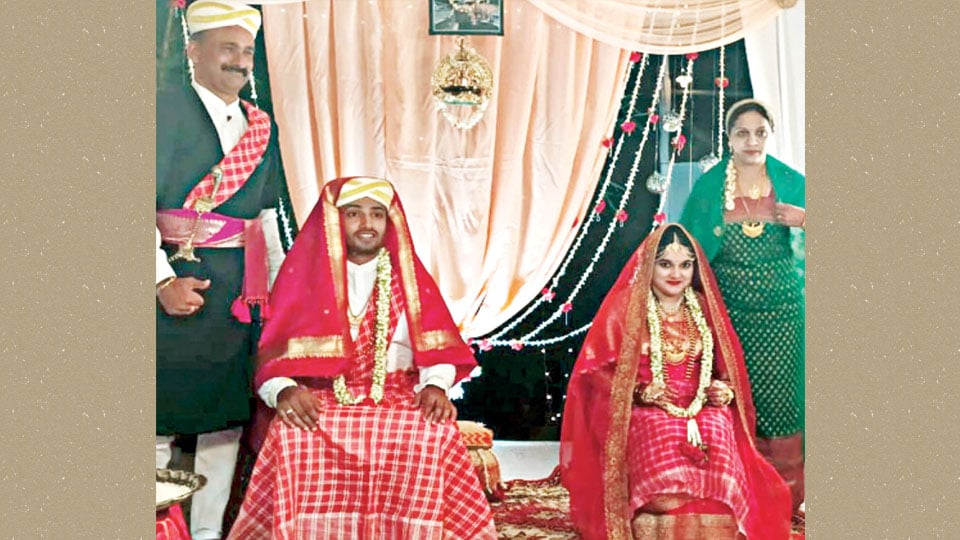
International hockey player Sannuvanda K. Uthappa, son of Sannuvanda Vasanth Kushalappa and Niraj of Devarapura, tied the nuptial knot with Sanjana, daughter of Puttichanda Uthappa and Leela of Bollarimad, at The Yellow Bamboo Resort in Balaji, South Kodagu, yesterday.
Only family members of the couple and close relatives were part of the simple ceremony (Dampathi Muhurtha) held last evening.
source: http://www.starofmysore.com / Star of Mysore / Home> Sports / September 28th, 2020
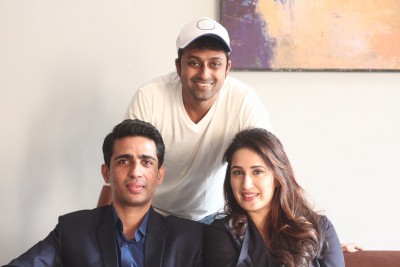
Gulshan Devaiah and Sagarika Ghatge star in the upcoming mystery drama Footfairy, and the trailer of the film promises murder, brutal thrills and psychotic obsession.
“The narrative takes the viewer on a journey to experience how an obsession can make one cross the line, just to get a sense of satisfaction. The movie’s take of psychotic obsession leading to crime is exciting,” Devaiah said.
Directed by the Kanishk Varma the film revolves around Vivaan Deshmukh, a CBI officer and his lady love, Devika. Vivaan sets out in pursuit of a serial killer who strikes and kills women driven by an absurd obsession for feet.
The &pictures original film is all set to hit television screens on October 24.
Source: IANS
WELCOME. If you like what you see "SUBSCRIBE via EMAIL" to receive FREE regular UPDATES.
Read More »