Category Archives: Famous Personalities of Kodagu / Coorg

Three kodavas KP Appanna rule Ranji team

SHIMOGA:
They are not exactly the three musketeers and may not totally go by the ‘All for one, one for all’ motto, given that their being together is not always in their hands. But, like Arthos, Porthos and Aramis, their surnames too have similar twangs, in these cases ending with the letter ‘A’.

Meet Robin Uthappa, NC Aiyappa and KP Appanna, the Karnataka Ranji Trophy team’s Kodava representatives, who have in recent times taken the shade off, albeit only to an extent, from the ever popular Kodava sport, hockey.

Mobbed by fans in the ongoing match against Uttar Pradesh in Shimoga, Uthappa, the leader of the pack, was quite emotional when quizzed on this sudden Kodava influence in the game of cricket. “It is great to be in a team with three Kodavas, and going by the crowd here (in Shimoga), and their vocal support, I can only imagine what it would be like to play a match in Coorg,” Uthappa said.

This, however, is not the first such instance. In fact, as many as four Coorgs played in a one-day game for Karnataka, this same trio being joined by Shyam Ponnappa, who is now a junior selector. “Oh, that was fun too, and I remember being quite kicked about it,” said Uthappa.

The hard-hitting batsman,who was part of the Indian World T20 winning squad back in 2007, however, insisted that this was no indication that hockey is taking a backseat, a sentiment shared by Aiyappa. “I don’t thing that’s the case. Hockey is still in Kodava blood,” said Uthappa. “The thing is Kodavas pick up things fast, more so sport. In fact, I don’t know any Kodavawho hasn’t played a sport. Perhaps the difference now is that people see cricket offering a better career comparatively and so more kids are taking to it,” he added. “Hockey is still the national sport and a lot of people in Coorg still play it. But, yes, you can see a lot more kids play cricket there these days,” said pacer Aiyappa, who made a comeback this season.

And that’s not something that’s restricted to Coorg. The Punjab cricket team that was in Bangalore last week, featured as many as seven Singhs in the squad, leading a wag to remark that perhaps the hockey team had been sent by mistake. That doubt was soon cleared up when Punjab took the first innings honours over Karnataka in the drawn game.

Cricket is certainly the dominant sport now and the presence of Uthappa, Aiyappa and Appanna is telling proof. More power to the Kodavas.

source: http://www.articles.timesofindia.indiatimes.com / Home> Collections / by Satish Vishwanathan, TNN

Helping Hands. Touch of joy to less privileged

There is always a steady stream of visitors at the Spastics Society of Karnataka. On Friday, a privileged bunch dropped in, bringing joy to the special children at the Society.

Nine members of the Indian national hockey team, accompanied by coach Michael Nobbs, medical doctor Lt Col BK Nayak and selector AB Subbaiah, delighted the excited kids, who jumped up in happiness.

“It’s brilliant if you can put a smile on the faces of these kids,” said an emotion-choked Nobbs, who initiated the visit arranged by Hemophilia Federation (India) vice-president Vikash Goyal. “Every moment of their life is a such a huge struggle. Most of these kids haven’t done anything wrong in their life, yet they have to undergo such a painful ordeal. We just spent 10 minutes in every classroom, probably less than a minute with every kid, but their joy was incomparable.

“Some of them watch TV, and could thus identify a couple of the Indian players. The next time they see us play on TV, they will be saying ‘These people came and visited us.’ Most of us are so privileged and yet we keep complaining about the smallest of worries. The players too sometimes feel they haven’t got their due. This visit will make a world of difference to their thinking.”

The group spent two hours touring the facility, interacting with several kids. It was obvious that most of the players were deeply moved by the plight of these children for whom life has been a struggle since birth.

“I am just lost for words,” said a teary-eyed Indian captain Bharat Chetri. “You really feel for the kids and for their parents. Apart from the continuous pain of watching their kid suffer, their parents also have to work doubly hard to raise them. Hats off to them,” added Chetri, easily the most popular man with the kids alongside local player VR Raghunath.

Such visits are being planned by Nobbs on a regular basis. A few days before the Champions Challenge last month, the entire team had met patients at Pune’s Paraplegic Rehabilitation Centre, which houses several war veterans.

“We will be doing this regularly,” observed a humbled Nobbs. “As humans, we need to give back to the society in whatever way possible. I heard about how Vikash Goyal lost his 12-year-old son a couple of years ago to haemophilia. It is really heart-breaking. We just did our bit in the smallest manner possible.”

source: http://www.deccanherald.com / Home> Sports / DHNS / Bangalore, December 16th, 2011

Coming in the line of hunters, he became a frontline warrior of forests

In Coorg, where men once loved hunting, K M Chinnappa broke the tradition by turning his gun to protect the forests. Anita Pratap captures the spirit of the man, and Mahesh Bhat his image

By Anita Pratap and Mahesh Bhat

Hunting was a way of life in the verdant forests and foothills of the Western Ghats in Karnataka’s Coorg area. It was an integral part of tradition, folklore, manhood, sport, food and commerce.

From poor, forest-dwelling tribesmen to the flamboyant royalty and courtiers in bustling Mysore, everyone loved hunting. But one man stood tall to end this way of life. His name is K.M.Chinnappa.
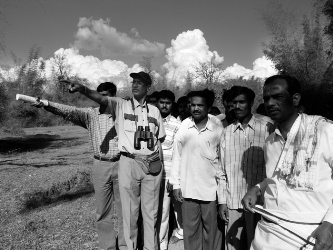
K M Chinnappa was the Range Forest Officer of Nagarahole for over two decades and was single-handedly responsible for making it one of the finest national Parks of India

Born in 1941 in Kumtur village near Nagarhole to a soldier who fought in the First World War, Chinnappa spent his youth roaming the forests of his ancestral land, listening to birds, watching the cavalcade of animals in their habitat, absorbing the every day miracles of the rich eco-system.

An enduring love for nature was thus born in him. Like his father, he too would become a mustachioed soldier. But with a difference. He would become a gun-toting, frontline warrior of the forests, dedicated to protecting wild life. Says he simply: “Wildlife is the purpose of my life.’

In 1967, he joined the Nagarhole National Park as a forester. The park was in ruins. Hunting had taken its toll. There were hardly any deer left, forget tigers and other big game. To cultivate rice, villagers had encroached on the swamps – the beloved play-ground of the elephants.

Tribesmen lived in clusters deep within the park to collect forest produce, ranging from honey to berries. Livestock herders grazed their cattle on the park’s grasslands. Hunters preyed on animals and birds.
Poachers hunted tigers for their skin; elephants for their tusks. Timber logging was a thriving mafia business. Sandalwood smugglers roamed with abandon.

The destroyers of Nagarhole’s environment used a range of weapons – hunters shotguns, tribesmen used snares and livestock herders used poison. Wild life protection laws were weak and the Forest Department concentrated on logging, misguidedly uprooting the diversity of natural vegetation to replace them with the monocultures of teak.

Rued Chinnappa: “If this devastation continued, I was dead certain that there would be no wild life left in Nagarhole in 30 years.”

He became a one-man army to reverse this process. And he succeeded. In less than a quarter of a century, Nagarhole revived, expanding from a 250 sq km part to 640 sq kms.

The poachers have retreated, the encroachers have gone and the hunters are virtually extinct, restoring Nagarhole to its rightful inhabitants – tigers, panthers, leopards, sloth bears, jackals, wild boars, porcupines, hares, langur and varieties of deer.

In the bad old days, tigers had to roam 200 sq kms before they could find prey. Now they can find it within 12 sq kms. The elephants are back where they belong: in the lush swamps and bamboo groves. The trick? Explains Chinnappa: “All you have to do is to stop human interference. Just leave the forests alone and they will regenerate themselves”.

Chinnappa was the right man at the right time. In 1972, in the wake of a groundswell of opinion generated by several leading Indian conservationists, then Prime Minister Indira Gandhi took a slew of measures to protect the environment.

Several laws were enacted and sanctuaries in Kanha, Corbett, Ranthambore, Bandipur and Nagarhole among others were pulled back from the brink of destruction.

Forest departments had new direction, muscle and teeth. Still, keeping the humans out of the forests was not easy. Chinnappa paid a high personal price to fulfil his mission to safeguard Nagarhole. He was arrested, jailed, transferred. His home was burned down. But he has no regrets. Says he with his characteristic robust optimism: “What’s the use of just going to office. I led a colourful life.”

To protect wild life, Chinnappa had to take on a range of human beings who lived on the wild side of life. He captured a large number of poachers and smugglers and filed court cases against them. But they were all acquitted in no time and were back to their wicked ways.

He realized he would have to terrorize them, make it really dangerous for them to hunt and poach. He took up the gun and did not hesitate to shoot. He recalls: “No body used high-calibre guns. I had only a 12 bore rifle. And I used only buckshot. But at that time, it was enough.”

He remembers the legend of a tribesman whom the locals nicknamed “parari Thimma” – vanishing Thimma. He was a notorious poacher who nimbly eluded forest guards. Chinnappa began tracking him and one day shot at him. And then he vanished forever!

Chinnappa became the local legend. Supporters hailed him as a hero, the phantom of the jungles. Poachers called him “The Devil” who stalked their hunting grounds.

Chinnappa used his immense knowledge of forest trails, tracking spoor, jungle craft, fabled night vision and stealth maneuvers to ambush the poachers and hunters. Guided by moonlight, he silently crept upon the forest brigands and opened fire. And the old way of life began to end.

But not without resistance. In no time, the threatened “vested interests” – profiteering poachers, unscrupulous smugglers, wealthy hunters, criminals, mafia operators and politicians all ganged up against Chinnappa.

In 1993 after voluntarily retiring from Karnataka Forest department, Chinnappa started Nagarahole Wildlife Conservation Education project reaching out to the local students, youth and the public.

Even the villagers rose in revolt. For Chinnappa, life took a curious turn. On the one hand, the regeneration of Nagarhole won high praise. He bagged the Karnataka Chief Minister’s Gold Medal in 1983, received an award from the Wildlife Conservation Society and foreign environmentalists showered glowing tributes in books and magazines.

His spartan way of life, incorruptibility and military discipline became legendary. Says Ullas Karanth, a leading wildlife biologist: “Chinnappa is a man of integrity. He is tough, efficient and incredibly courageous in the face of grave physical danger. His accomplishments in Nagarhole are undoubtedly a major milestone in the history of Indian wildlife conservation.”

He was admired and respected by his peers. But some of the locals feared and hated him. In 1988, one of Chinnappa’s guards publicly shot a local coffee planter who had killed and eaten his pet samba deer.

The dispute spun out of control and soon local poachers instigated a public agitation, accusing Chinnappa of masterminding the murder. Bowing to political pressure, Chinnappa was arrested and jailed for 12 days. Eventually he was cleared of all charges and reinstated

But vested interests continued to persecute him. He was implicated in the killing of a poacher in 1992 and a riot erupted. A frenzied mob ransacked the Forest Department’s buildings, burnt vehicles, assaulted staff, set fire to large swathes of forest land and set ablaze Chinnappa’s ancestral home.

Once again, he was cleared of all charges, but this time, Chinnappa decided to quit. He could understand why the poachers, smugglers and politicians ganged up against him. But the fact that they could enlist the support of villagers had a profound impact on him.

He realized he needed to move to another plane of conservation: education. He had to make the locals realize the practical and moral imperative to protect their environment. It was not merely the job of foresters. It was a collective responsibility.

And so in 1993 he retired prematurely from the Forest Department and started his NGO, the Nagarhole Wildlife Conservation Education Project to educate the local people and especially the children on the need to protect the environment.

His motto was simple: “Without humans, the forest will flourish. Without forests, we humans cannot flourish.” Through forest camps, discussions and slide shows, he opens the doors to a magical kingdom of flora and fauna, encouraging children to take delight in observing nature instead of hunting animals.

His mission also involves fighting legal cases. As President of Bangalore-based NGO, “Wildlife First”, Chinnappa and a group of conservationists documented the ecological devastation caused by the iron ore mine operators in Kudremukh. In retaliation, they were slapped with 12 criminal cases.

Says Bittu Sehgal, editor of environment magazine, ’Sanctuary’: “Law suits are filed by those who have money or power on their side to prevent public minded citizens from ‘interfering’.” The cases dragged on for years and wound up in the Supreme Court, which ordered the closure of the mines in December 2005.

Chinnappa’s accomplishments are all the more laudable because they were won against the stiffest odds. He endured setbacks, difficulties, threats, attacks, vilification, arrests and court cases.

But, remarkably, he has emerged unscathed, his innocence, courage, dedication, honour and optimism intact. He is completely devoid of bitterness. He chooses to forget the troublemakers who made life so difficult for him and his loyal wife Radha, but remembers fondly the senior officers and lowly guards who stood by him.

Through all his trials and tribulations, one thing remained undiminished: his sheer will to save the forests. With deep conviction he says: “If you have the will, you can do wonders.”

Today, Chinnappa derives enormous satisfaction from the guns – the yesteryear symbol of manhood – that lie rusting in many a Coorgi home. Cheering the end of that bygone era are the sights and sounds of a promising new life, symbolized by the swaying foliage and barking deer.

(Extract from the book ‘Unsung’ by Anita Pratap and Mahesh Bhat)

source: http://www.theweekender.com / Home> Causes> Gun Reversal /vol. 2, issue. 50 / 16-22 December, 2011

Suzlons environment campaign PALS crosses one million members

Launched about four months ago by Suzlon the Pure Air Lovers Society (PALS), registered over one million members. Suzlon is claiming that PALS is among the fastest growing campaigns of its kind in the country, exceeding an average of over 9,000 registrations per day.

PALS is a movement to emphasise the importance of clean air, while helping to educate people on how to live a more environmentally responsible life. The PALS campaign website provides innovative informational and educational tools for engagement with the campaign.

The website hosts tools like the PUC check reminder, carbon calculator, carpooling information, list of green vendors among others.

The campaign, launched in Mumbai, has expanded across 86 cities, with New Delhi now leading registrations, followed by Mumbai and Bangalore.

Commenting on the campaign, Suzlon Group’s global head of brand Dharini Mishra said, “This has been a hugely successful campaign. In the beginning we saw participation from 18-24 years-old age group, but we have seen broad based interest and participation spreading into the 25-34 year old bracket.

Interestingly, people who went to graduate school are over-represented at PALS and this is skewed towards metros in the country. We are confident that registration with PALS is only going to grow and this will fuel a more conscientious and empowered people”.

PALS is supported by likes of Milind Soman, Anil Dharker, Gerson da Cunda, RJ Malishka and Nikhil Chinappa among otheres. PALS first initiative GaadiBandh focused on educating people on the importance of turning off vehicles at signals thereby helping to reduce pollution emissions from idling vehicles in Pune.

PALS is a movement to emphasise the importance of clean air, while helping to educate people on how to live a more environmentally responsible life. The PALS campaign website provides innovative informational and educational tools for engagement with the campaign.

The website hosts tools like the PUC check reminder, carbon calculator, carpooling information, list of green vendors among others.

The campaign, launched in Mumbai, has expanded across 86 cities, with New Delhi now leading registrations, followed by Mumbai and Bangalore.

Commenting on the campaign, Suzlon Group’s global head of brand Dharini Mishra said, “This has been a hugely successful campaign. In the beginning we saw participation from 18-24 years-old age group, but we have seen broad based interest and participation spreading into the 25-34 year old bracket.

Interestingly, people who went to graduate school are over-represented at PALS and this is skewed towards metros in the country. We are confident that registration with PALS is only going to grow and this will fuel a more conscientious and empowered people”.

PALS is supported by likes of Milind Soman, Anil Dharker, Gerson da Cunda, RJ Malishka and Nikhil Chinappa among otheres. PALS first initiative GaadiBandh focused on educating people on the importance of turning off vehicles at signals thereby helping to reduce pollution emissions from idling vehicles in Pune

source: http;//www.articels.economictimes.indiatimes.com / News> News by Industry / by Mitul Thakkar, ET Bureau / December 13th, 2011

Zafar nominated convenor

Former India hockey captain Zafar Iqbal was nominated convenor of an ad hoc committee of the Arjuna Awardees Association on Monday.

“We decided to step down to pave way for new faces”, said outgoing President Bishan Singh Bedi.

The ad hoc committee will decide the date and process of election of office bearers.

The committee: Rajyavardhan Singh Rathore, Anwar Sultan, Moraad Ali Khan and Ashok Pandit (shooting); Ashwini Nachappa and Bhim Singh (athletics); Zafar Iqbal and Jagbir Singh (hockey) ; Chetan Chauhan (cricket); Khajan Singh and Arti Pradhan (swimming); Kunjarani Devi and Jyotsna Mukherjee Dutta (weightlifting); Bhuvneshwari Kumari (squash); Damyanti Tambe (badminton), Rajkumar Sangwan (boxing); Khushi Ram and Dalel Singh (basketball); Rajender Singh (powerlifting); Subash Verma (wrestling); Ramesh Singh , Ram Mehar Singh and Ashan Kumar (kabaddi), Amit Luthra (golf); Manjit Dua (table tennis) and Sanjeeva Kumar Singh (archery).

source: http://www.thehindu.com / Sports> Other Sports / New Delhi / December 13th, 2011

Tiger Hills by Sarita Mandanna


I picked up this book for a lark(like I pick up most books these days). Some of the books I pick up like this end up very disappointing. This one on the other hand, was anything but disappointing.

It was riveting. The story of Devi, a girl born in Coorg in late 1800s. Devi is a wilful child with her mind of her own, unlike other girls at that time. She decides at the age of 10 that she would marry the Tiger Killer, Machu, her best friend Devanna’s cousin. Devanna, on the other hand grows up, desperately in love with Devi, who is completely unaware of his feelings. Devanna is a very intelligent child and is mentored by the local Reverend. He shares a love for Botany with the Reverend, and both of them spend a lot of time together finding specimens in the rich Coorg forests. His dedication towards biology pushes him into a medical school education, which turns the tide for everyone involved.

The way their lives turn out, weaved in with what is happening in Coorg at that time, makes for a fascinating read. The beauty, traditions, and the culture of the place is brought out beautifully by the author. The book transports you to the Coorg that Devi lived in. From the older times when Coorg was untouched by outside influences, to when Eurpoean influences gets the locals to change their names from Kalamma to Kitty, just as Nari Malai gets changed to Tiger Hills.

The story is fast paced, with shocking twists and turns, making us empathize with the characters at so many levels, even when they end up doing things which are not quite right.. A story of love, unrequited and requited, a story of the things people do when consumed by emotions, a story of how normal lives can change in an instant.

A book that gripped me through it. I would not call it a fast read, but a book which refuses to let go, even after you turn the last page.

source: http://www.wordsndreamz.wordpress.com / posted December 10th, 2011

Unique Jana Gana Mana Honour for K M Chinnappa

MADIKERI :

Madikeri: Kodagu has added one more feather in its cap as K M Chinnappa, environmentalist and former forest officer, was documented by ‘Jana Gana Mana’ team in celebration of 100 years of the national anthem of India penned by Ravindranath Tagore. As per the information available with Express, the team has selected many stalwarts in various walks of life for their achievements. Chinnappa was chosen for his service in the field of conservation of nature.

The film titled ‘Bharatha Bhaghya Vidhatha’ produced by Pancham Nishad Creative Private Limited, Mumbai, and the team headed by Ruchika Tiku, interviewed Chinnappa in his nativetown and amidst the forest he loves.Chinnappa is the only one selected from Karnataka.

Ruchika told Express that the institution aimed to highlight the nine values of Compassion, Honesty, Discipline, Courage Secularism, Passion and Vision, Peace and Harmony, Knowledge and Creativity, Positive Health and Environment.

Pancham Nishad is one of the leading organisations in the country focusing on the promotion of Indian music and culture through live concerts and other media since a decade. The documentary will aims at giving a positive message to the youth and to inspire them.

source: http://www.ibnlive.in. com / Karnataka / Posted on December 10th, 2011 / Express News Service, The New Indian Express

Designer Arati Monappa’s 10 rules of style for homes


Arati Monappa, designer and owner of Serenity reveals her 10 rules of style.

1. There are two categories of people who have antiques — those who have inherited them and those who buy them because they are genuinely interested and have read up about them. It’s important to keep a piece from the past, that has been handed down from generation to generation. Especially because, antiques today are so expensive. So, if you’ve inherited any antique, keep it.

2. There are so many ways you can put your heirlooms to use. For instance, if you have a very old pashmina shawl, one that’s not good to be used by you, you may use it as a drape over your sofa. It enhances the furniture piece and two, becomes a talking point.

3. Antique pieces blend very easily into today’s modern homes. You may have a technology driven home, stocked with plasma TVs and other hi-tech gadgets and still add antique pieces like old copper or brass lamps or wood carvings. These pieces give character and personality to an otherwise stainless steel, shiny, impersonal house.

4. Talking about care for copper pieces, I use a powder called Pitambari. You just rub the powder over the item to make it gleam. There are more solid means of preserving these pieces too, like applying a coat of lacquer. For old wooden pieces, you may apply a coat of MRF’s wood coat polish. Or you may simply use a brush to remove the dust and rub linseed oil on it.

5.Antiques are undervalued. I see people throwing out items like old copper pots or beautifully woven baskets and replacing them with plastic mugs and plastic bags. There is a need for a certain education about the value of the old heirlooms. Not because of their value, but mainly because, plastic can’t be recycled and is not good for the environment. By buying plastic, you are adding to the junk.

6. There are quite a few old valuables that young couples interested in doing up their homes could buy. They could go for a lovely ceramic pottery piece or pick up old lamps. An old lamp in the corner is enough to add character to the living room. Old textiles are another option. For instance, your grandmother’s old woven sari could make for a beautiful framed piece of art, in the hall.

7. My store Serenity, is a good example of how you can bring the old into the new. We’ve re-used old glass panes, doors and grills for the interiors. So, even if its a modern five- year-oldbuilding, it’s got all these old elements like granite pillars, attangadi tiles for the floor, old mirrors and more.

8. Bangalore has quite a few places where you could go hunting for antiques. There’s Thar Gallery in Indiranagar. I believe Raintree carries a range of old furniture. Then of course, you have Russell Market, where you still have little shops where you can pick up an interesting salvaged piece.

9. I like to spend money on carpets and artworks. I think these two are very important in a home and add a whole new character to it. A painting doesn’t have to be expensive. It could also mean indigenous art like a mithila, madhubani or warli art.

10. I am very fond of carpets for the intricacy of their weaves. I am partial to porcelain and ceramic too. I like my teacups and teapots!

source: http://www.dnaindia.com / Home> Lifestyle> Report / by Mahalakshmi Prabhakaran / Place:Bangalore, Agency:DNA / Thursday, December 01st, 2011

New President for ‘Coorg Homestay Association’

Mysore, Nov. 26:

The 6th Annual General Body meeting of Coorg Home Stays Association was held on Nov. 22 at Porcupine Castle in Pollibetta, Kodagu.

Outgoing President N. Dilip Chengappa handed over charge to the new President K.M. Karumbaiah and his team.

The other office-bearers are Vice-President: B. Nalini Achaiah; Secretary : P.U. Preetham; Joint Secretary: C. Savitha Appanna; Treasurer : D.S. Prem. The Committee Members are: P.M. Prabhu Uthaya, C. Madan Somanna, Shamvil, C. Kalpana Muthanna, C.N. Narendra, B. Vijoo Chengappa, K.T.Sagar and P. Hem Madappa.

Outgoing Secretary Madan Somanna read out the Annual Report. The AGM discussed issues pertaining to Unregistered Home Stays, Tax and floating of a State-level Home Stay Association.

source: http://www.starofmysore.com / General News / November 26th, 2011

Prof. K.C.Belliappa is CAUVERY EDUCATION COUNCIL Chairman

Mysore, Nov. 26:

The Education Council of Sree Cauvery Educational Institutions, Kuve-mpunagar, has been reconstituted with Prof. Kambeyanda C. Belliappa, Retired Vice-Chancellor, Rajiv Gandhi Central University, as Chairman.

The other officer-bearers are Moovera K. Kuttappa, Vice-Chairman, Bollachanda B. Subbaiah-Hon. Secretary and Kodira Jyothi Poonacha-Hon. Treasurer.

Prof. Theethira K. Ganapathy, Prof. Cheniyapanda Accamma Chengappa, Prof. Nadikerianda Yashoda Kalappa, Prof. Pandanda K. Somaiah, Ponjanda Lovely Appaiah, Poyyetira S. Ganapathy, Mullengada M. Kuttappa, Mechanda M. Karumbaiah, Puchimada K. Somaiah and Konganda Dilip Biddappa have been nominated as members of Educational Council.

Ballachanda N. Devaiah will continue as Donor Representative in the Education Council, according to press release from the Hon. Secretary of Mysore Kodava Samaja Kekada M. Belliappa.

source: http://www.starofmysore.com / General News / November 26th, 2011