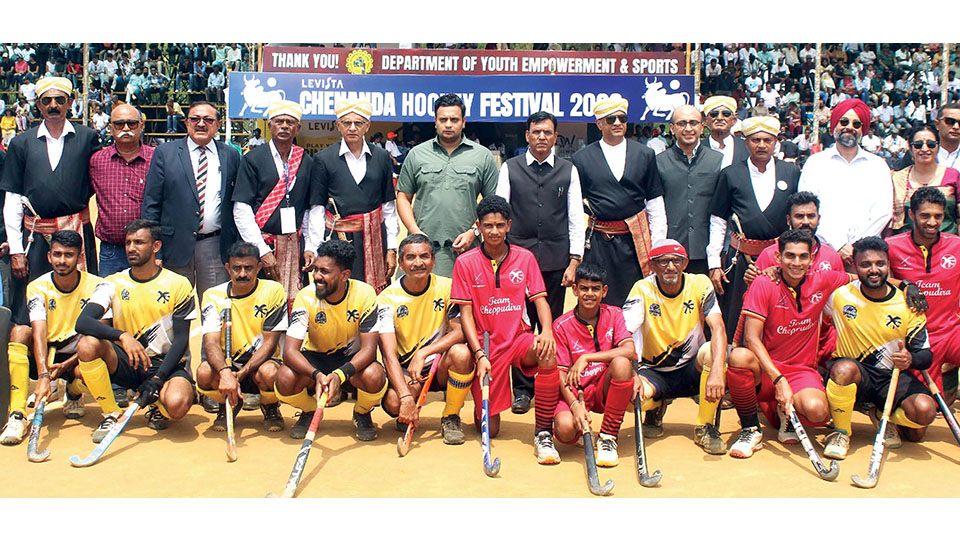
Amid loud cheers from a packed crowd of over 25,000, the Kulletira family team clinched the ‘Chenanda Cup’ at the 26th Kodava Family Hockey Tournament defeating the Cheppudira family 3–1 yesterday.
The final of the month-long Kodava Family Hockey Festival was held yesterday at General Thimmaiah Stadium in Cheriyaparambu near Napoklu. With this win, Kulletira lifted their fourth title in the prestigious tournament.
The summit clash saw an evenly fought first half, with Cheppudira earning several penalty corners but failing to convert them. Both teams scored once in the third quarter to keep the contest open. However, Kulletira took control in the final quarter, striking twice to seal the victory.
Roshan Lokesh, Avaneesh Mandappa and Shubham Chettiyappa scored a goal each for Kulletira, while Vachan Chinnappa netted the lone goal for Cheppudira.
The winning Kulletira family team was awarded Rs. 3 lakh and a silver rolling trophy. Runners-up Cheppudira family received Rs. 2 lakh and a trophy, while Paradanda family, who finished third, received Rs. 1 lakh.
The festival concluded with the ceremonial handover of the flag to the Ajjikuttira family, who will host the 27th edition in 2027. The Chenanda family, organisers of this year’s event, handed over the flag.
Mandaviya assures support
Union Minister for Youth Affairs and Sports Mansukh Mandaviya, who was the chief guest, assured financial support to promote sports, stating that such assistance is the Government’s responsibility and not charity.
He said he had long heard about the Kodava community’s passion for hockey and was glad to witness it first hand. Referring to the International Olympic Committee’s vision of sports as a unifying force, he noted that the Kodava community had upheld this spirit for generations.
“This land has produced 18 Olympians. It is the duty of both the Centre and the State to nurture Kodagu’s sporting talent,” he said. He added that sports should remain free from politics and promised to promote shooting in the region by identifying and training young talent.
Mysuru-Kodagu MP Yaduveer Krishnadatta Chamaraja Wadiyar said the festival reflects the growing sporting culture in the country. Highlighting Kodagu’s contribution to Indian sports, he said the family hockey tradition inspires youth, encourages women’s participation and strengthens national unity.
He urged the Centre to set up a shooting academy in Kodagu under the Khelo India scheme.
Virajpet MLA A.S. Ponnanna termed the festival a model initiative for the district. He said work on an 11-acre sports training centre at V. Badaga village in Virajpet has already begun with State support and appealed to the Centre for assistance in building a stadium.
Kodagu Hockey Academy, President Pandanda K. Bopanna, retired Justice Ajjikuttira S. Bopanna, SLN Coffee CEO Saheed Singh, Dr. Santosh Uthappa of Narayana Hospital, Sports Authority of Karnataka Vice-Chairman Cheppudira Arun Machaiah and others were present.
source: http://www.starofmysore.com / Star of Mysore / Home> Sports / May 03rd, 2026
Ganesh BM, an electrical contractor and philanthropist, is helping the poor lead more comfortable lives by building houses and providing free electricity connections.
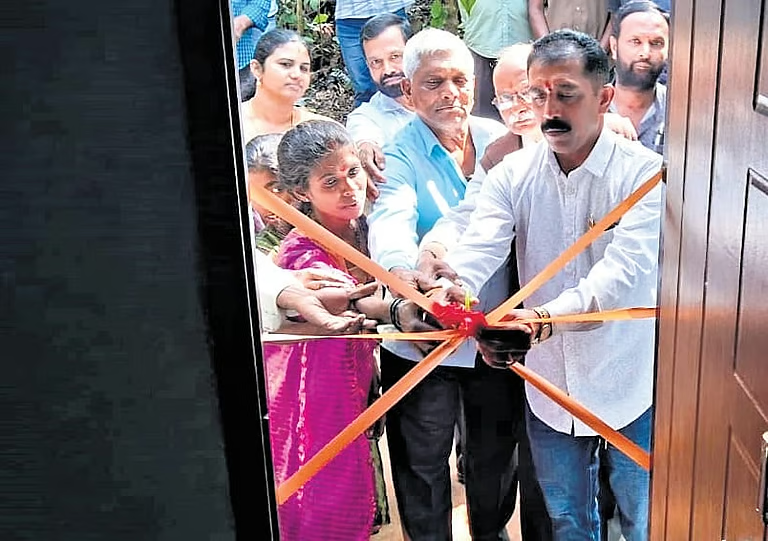
Ganesh BM inaugurates Shankru and Vasanthi’s new house
Madikeri :
When we exit this world, we don’t take with us the assets we earned in this lifetime. So instead of concentrating on gaining more and more assets, keep what is required to lead a decent life and donate the rest to the needy,” is the mantra Ganesh BM lives by. A resident of Arji panchayat in Kodagu, Ganesh is an electrical contractor and a philanthropist who has donated houses to the poor.
Recently, Ganesh celebrated his 50th birthday and instead of a lavish celebration, he cut a cake with a poor family to whom he gifted a two-bedroom house. “Hard work and determination helped me earn a decent living. I was born in a poor family and lived in a straw hut for the longest time. However, I am now in a well-to-do position and have the urge to help the needy,” he shared.
Lighting up homes
In 2000, Ganesh won the Betoli Gram Panchayat (now known as Arji panchayat) election by five votes. “During this time, I travelled across the panchayat limits and learnt about the living conditions of the people. I was re-elected to the panchayat in 2005 and served as vice-president. I then became a Taluk Panchayat member,” recalled Ganesh.
It was then that he came across a girl from a financially weak background who had scored 95 per cent in the SSLC examination. Her story went viral as she studied under an oil lamp, as the hut she lived in did not have electricity connection. “Her story inspired me and I enabled free electricity connection to her house,” he recalled.
Meanwhile, in 2023, during a routine panchayat survey, Ganesh was introduced to a tribe called Kala. “No one in the panchayat limits lived in such a pitiable condition as Kala and his family. I wanted to make a difference in his life and promised to build him a house,” he shared.
He constructed a four-bedroom house for Kala and the keys were handed over to the family on January 22, 2024, to coincide with the inauguration of the Ayodhya Ram Mandir. “I wanted to the day to have a special memory, so I handed over the keys on the day the Ram Mandir was inaugurated,” he added.
After
In April 2024, Ganesh was alerted about a family which had lost their house. “I am the taluk president for the Billava Community Association, and I was told that the house of a poor woman from the community had collapsed. I decided to build her a house,” he shared. He built a four-bedroom house for Kamala and her family, who had lost their shelter. He spent up to Rs 2.5 lakh each on the two houses.
After these donations, Ganesh was approached by many from financially weak families who sought his help. A total of five families from the panchayat limits reached out to him, seeking help for electricity connections to their houses. “I helped them get electricity connection free of cost,” he explained.
A birthday gift
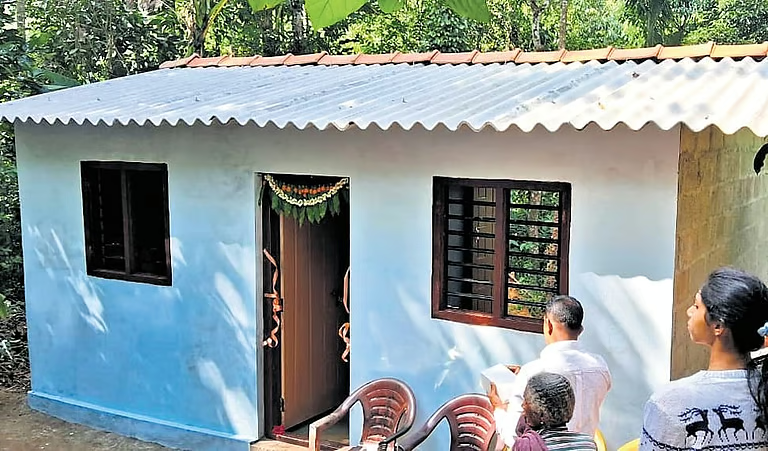
To mark his 50th birthday celebration, Ganesh built a two-bedroom house for Shankru and Vasanthi’s family. “I was visiting the Theremekadu paisari area for some work when I met Shankru and his family. They were living in a straw hut that was nearing collapse. I assured them I would build them a house,” he said.
While the couple was living on paisari land, they received the rights for the land a few years ago. Spending Rs 1.60 lakh, Ganesh built a house on the land and handed over the keys to the house on his birthday. “A rich person looks forward to earning more assets, but we all have to leave this world behind one day. When you are alive, keep what is necessary and help those in need,” concluded Ganesh.
source: http://www.newindianexpress.com / The New Indian Express / Home> Bengaluru / by Pragna GR / January 12th, 2025
General Thimayya Museum at Madikeri, is one of the most visited attractions at Coorg. The museum houses images of the General, documents, weapons and other items, that the late illustrious General was associated with.
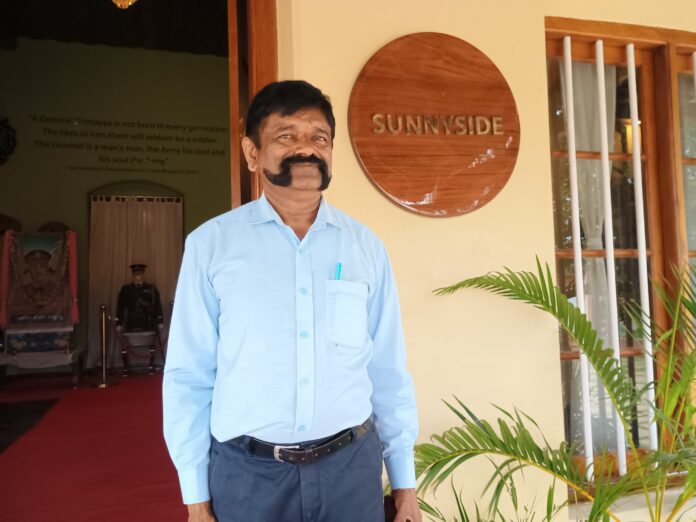
Gowdanda Thimmaiah at General Thimayya Museum
General Thimayya Museum at Madikeri, is one of the most visited attractions at Coorg. The museum houses images of the General, documents, weapons and other items, that the late illustrious General was associated with.
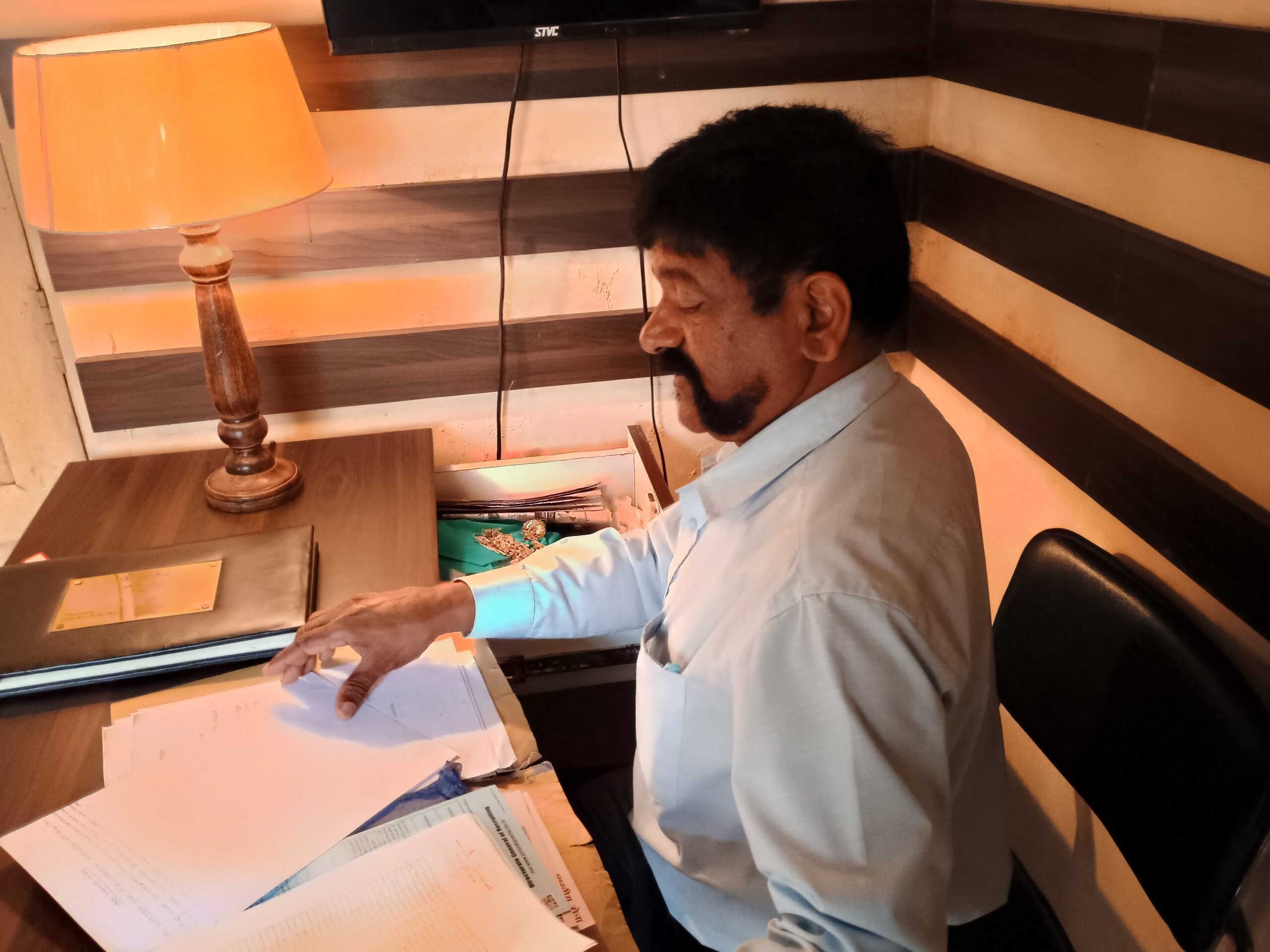
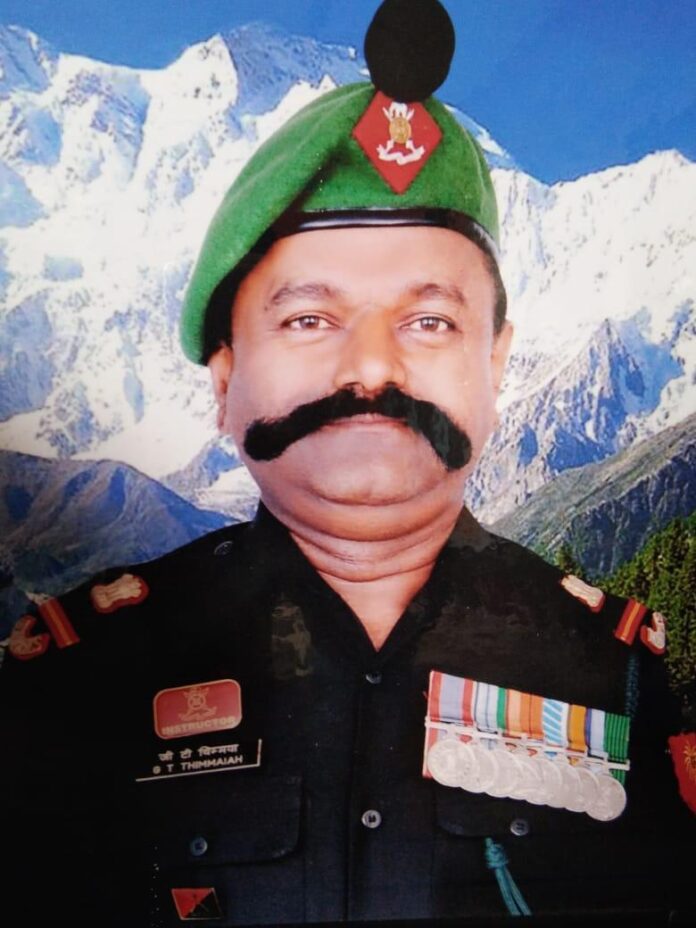
Subedar Major (Retd) Gowdanda Thimmaiah proudly wearing his medals.
Gowdanda Thimmaiah joined the Indian Army (8th Madras Regiment) in November 1987, and has seen multiple postings throughout India and also in Bhutan.
Thimmaiah has actively participated the following Indian Military campaigns:
1. Operation Rhino – Counter Insurgency operation in Assam (1990) 2. Operation Rakshak – Counter Insurgency operation in Kashmir (1990) 3. Operation Vijay – Kargil War in Kashmir (1999) 4. Operation Parakram – Military Mobilization on the border with Pakistan (2001)
The most challenging operation, Thimmaiah remembered was during his participation in counter insurgency operation in Kashmir. The militancy in Kashmir was at its peak and I have been witness to many casualties. If I recall correctly, from my battalion itself – around 10 to 15 casualties. It was tough to witness so many casualties of my brother soldiers, but we were not the be swayed by emotions and we were up for the challenge and ready to fight it out., he recalled.
The following is a list of medals that Gowdanda Thimmaiah has been awarded:
1. OPERATION VIJAY MEDAL 2. SAINYA SEVA MEDAL 3. SPECIAL SERVICE MEDAL(SURAKSHA) 4. HIGH ALTITUDE MEDAL 5. SAINYA SEVA MEDAL (ASSAM) 6. 9 YEARS LONG SERVICE MEDAL 7. 20 YEARS LONG SERVICE MEDAL 8. 50 YEARS INDEPENDENCE MEDAL
Gowdanda Thimmaiah retired from the Indian Army after serving 28 years and 28 days, with his character being judged by his superiors as exemplary.
Today, this illustrious soldier mans the museum of one of the most famous Generals of Indian Army. To quote Field Marshal Cariappa: “An officer is nothing without the soldiers”.
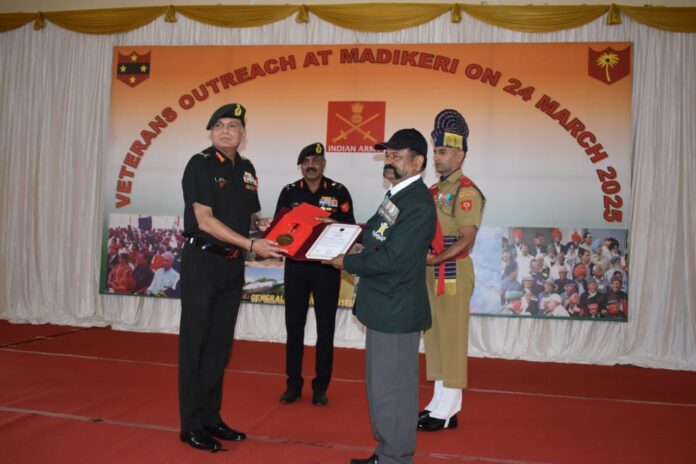
Lt General Dhiraj Seth presenting the certificate and medallion to Gowdanda Thimmiah
On the 24th of March, 2025, Lt General Dhiraj Seth (PVSM, AVSM) – Army Commander Southern Command, while on his visit to General Thimayya Museum, took note of Thimmaiah’s work as a curator and his dedication towards the museum.
General Dhiraj Seth, presented Thimmaiah with a commendation certificate and VETERAN HONOR MEDALLION in recognition of his contribution, post retirement.
True to the concept that a soldier never retires, Thimmaiah is also involved in every activity at Surlabbi village. The family is the Deva Thakka for the ancient temple and the Gowdanda family have the privilege of leading the sacred dance that takes place every year.
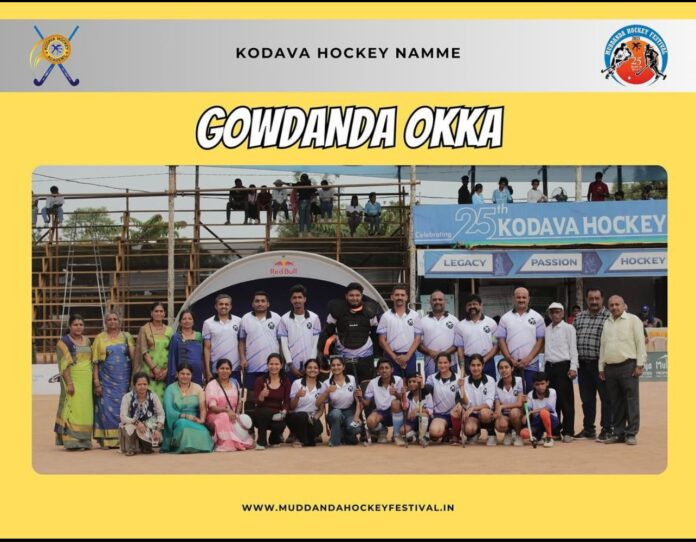
A hardworking farmer, beekeeper and sportsman. He played for the family in the ongoing Muddanda Hockey Namme, with his two accomplished daughters. One has recently completed her Aeronautical Engineering degree and the other is qualifying as a Dentist. His wife is currently serving in the Health Department as Taluk Nursing Supervisor at Madikeri.
Like Gowdanda Thimmaiah, in Kodagu – there are many such gallant soldiers. And all would have a story to tell. A story worth listening to and sharing. A story of serving the Indian Army and Nation with grit and determination.
source: http://www.clnews.in / CoffeeLand News / Home> Articles / by A S Aiyappa / April 19th, 2025
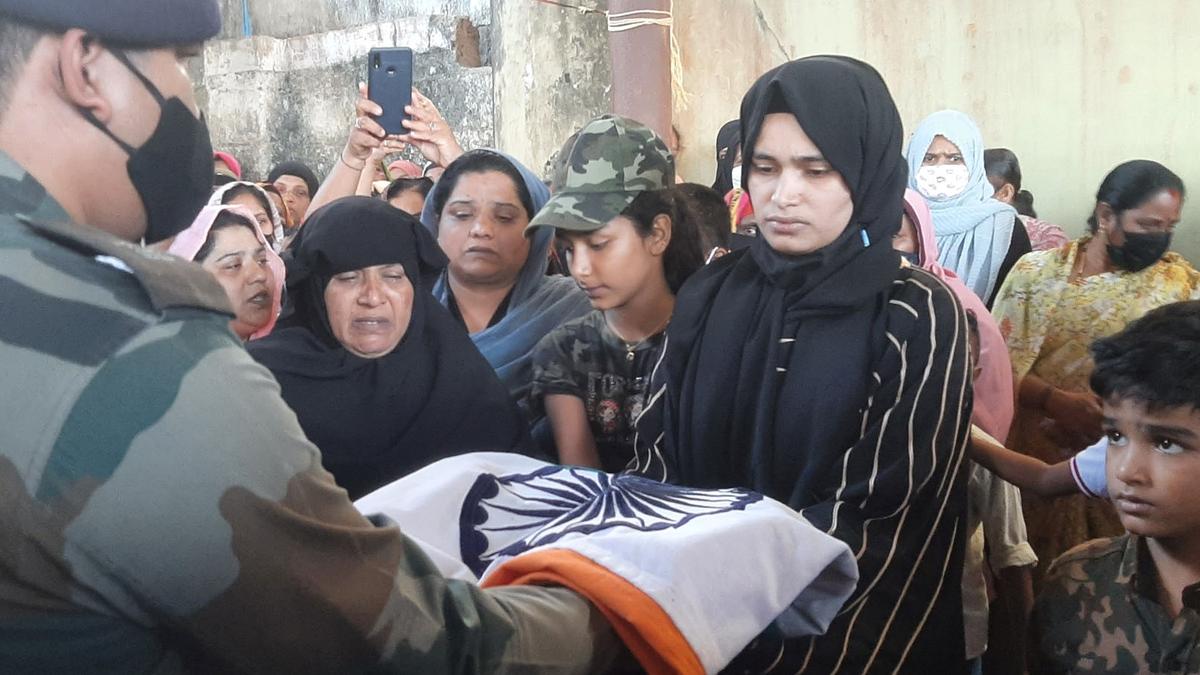
Army personnel handing over the tricolour to the wife of Hawaldar Althaf Ahmed, who died in Kashmir on February 22. | Photo Credit: Special Arrangemen
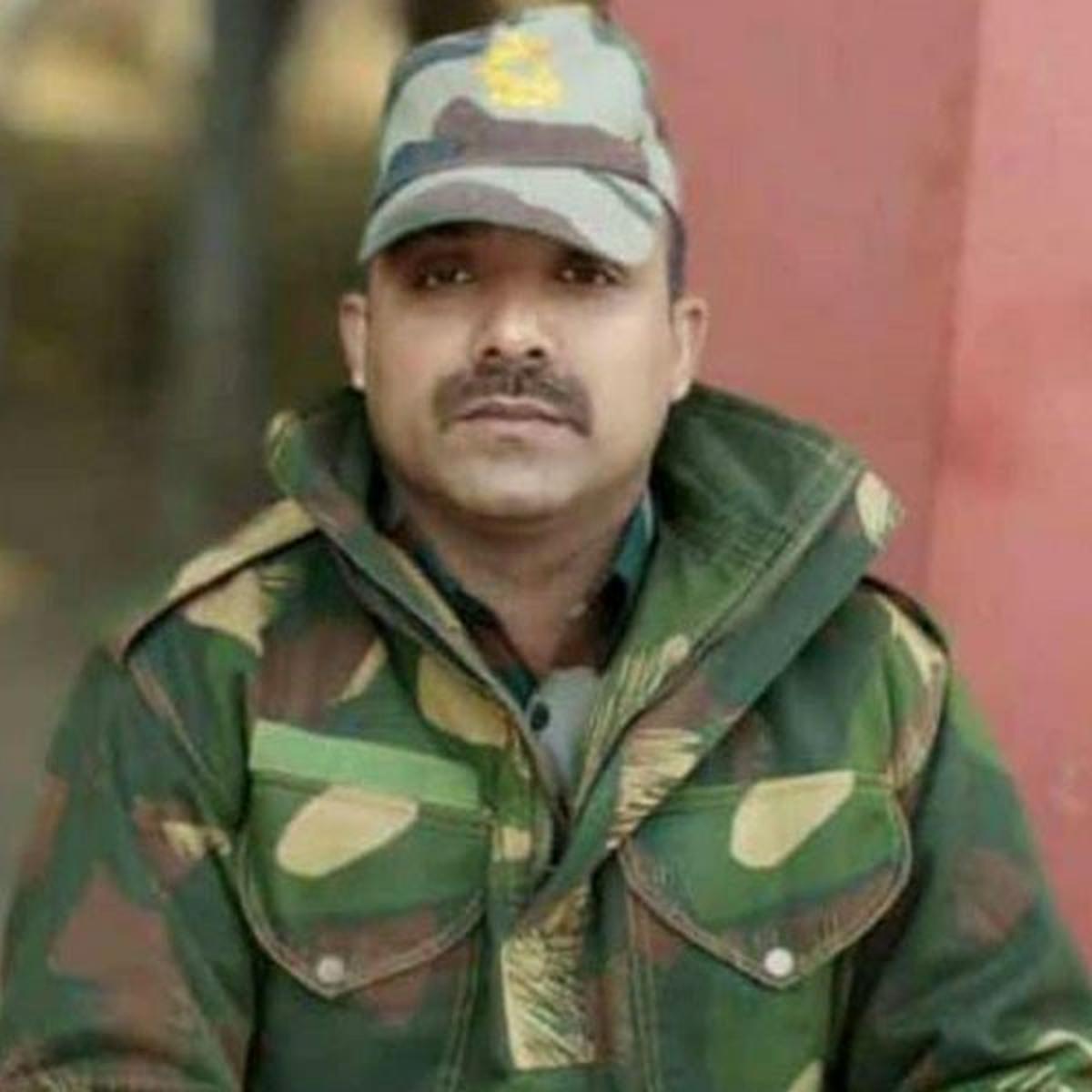
Althaf Ahmed | Photo Credit: Special Arrangement
The last rites of 37-year-old Indian Army Hawildar Althaf Ahmed, who died in a blizzard while on duty in Kashmir, were performed in his native in Meenupete in Kodagu district’s Virajpet taluk with state honours on Saturday.
The body of Althaf Ahmed, who had died on February 22, arrived in his native in Kodagu early on Saturday as its departure by air from Srinagar was delayed owing to bad weather. The body was kept at Eidgah Maidan in Meenupete for the public to pay their last respects before it was laid to rest at the burial ground as per Islamic rituals.
Virajpet MLA K.G. Bopaiah, MLCs Suja Kushalappa and Veena Achaiah, besides Deputy Commissioner B.C. Satish, Kodagu Superintendent of Police M.A. Aiyappa and other senior officials of the district administration were among the large number of people, who paid their last respects.
According to sources, Althaf Ahmed grew up in Meenupete and completed his SSLC in St Anne’s School in Virajpet and Pre University Education at the Virajpet Government Junior College. He later joined the Army Ordnance Corps (AOC) regiment. He had been serving the Army in various places since the last 19 years.
While guarding the border in Kashmir, Althaf Ahmed was caught in a blizzard on February 22 and died.
After the ceremonial gun salute during the funeral of the martyred solider, Army personnel handed over handed over the tricolour that draped Althaf Ahmed’s body and his uniform to his wife and two children. He leaves behind his mother, wife, a son and a daughter.
source: http://www.thehindu.com / The Hindu / Home> News> India> Karnataka / by Special Correspondent / February 26th, 2022
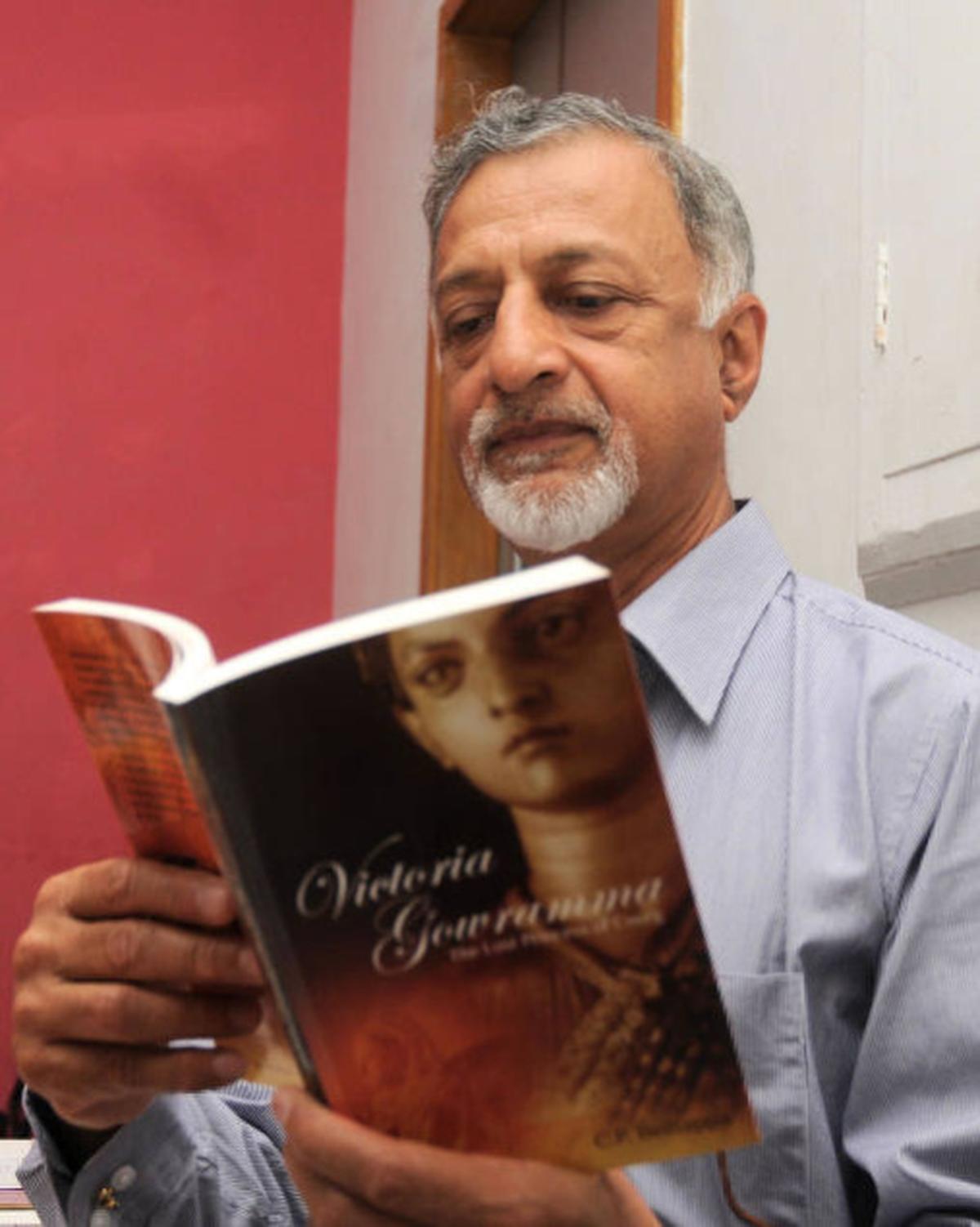
C.P. Belliappa’s A Slice of History: `Victoria Gowramma : The Lost Princess of Coorg’, brings to life the tragic tale of the princess from Coorg
A Slice of History: C.P.Belliappa’s `Victoria Gowramma : The Lost Princess of Coorg’. Photo: M. Vedhan
In a quiet corner of the Brompton Cemetery in London lies a 19th Century grave partially covered by undergrowth. The graceful stone cross above it is slightly broken, but the epitaph composed by Queen Victoria can still be read: “Sacred to the memory of the Princess Victoria Gouramma (sic), daughter of the ex-Raja of Coorg…”
That’s where the strange and tragic tale of Victoria Gowramma, the princess from Coorg who was raised Christian and became Queen Victoria’s goddaughter, ended in 1864. But, her story has come to light again in all its fascinating detail, thanks to C.P. Belliappa’s rigorously researched book “Victoria Gowramma: The Lost Princess of Coorg”, which was recently launched in the city.
“Historical writings on Coorg — mostly gazetteers by the British who lived there during the 19th Century — mention the story of Gowramma and her father, the exiled Raja Veerarajendra, in a paragraph or two,” says Belliappa, author of “Tale of a Tiger’s Tail & Other Yarns from Coorg” and “Nuggets from Coorg History”. “But the details were never there, and I got more and more inquisitive.”
Accidental discovery
His big break came when he accidentally stumbled upon three books written in the 19th Century by people who knew both the Raja and his daughter.
“I was able to download them — for free! — from www.archive.org, where old books are digitised and uploaded,” he says. “They were authentic, first-hand accounts, and comprised 75 per cent of the information I needed.”
The rest he found from the digital archives of The Times, London — reports of court functions and events that contained all sorts of interesting titbits of information. .
“Victoria Gowramma…” traces the intriguing series of events surrounding the princess’ journey to England with her father in 1852, and her difficult and often lonely life there subsequently. The various threads include the exiled Raja’s attempts to reclaim the wealth the British took from him (his reason for taking Gowramma to England in the first place), and the grand plans by Queen Victoria to match-make between Gowramma and another young royal convert to Christianity, Maharaja Duleep Singh of Punjab.
“Queen Victoria believed that if two royals converted to Christianity were married, and their children were born Christian, it would encourage more of their subjects to convert,” says Belliappa. “What’s interesting is that although the plan didn’t work, the Queen continued to be fond of Gowramma to the very end.”
Power dynamics
The book, then, is more than just a portrait of a princess; it gives you a glimpse into the political and religious power dynamics of the time. With its wealth of primary sources, it’s a solid historical work, though Belliappa admits that he was very tempted to go the historical fiction route. “I gave it a lot of thought, and decided finally that the facts themselves were so sensational that they didn’t need fictionalising,” he says.
Since the book’s release in England last year, the author has uncovered even more interesting nuggets of information — for instance, after a bit of detective work, he’s discovered that direct descendants of Gowramma live on to this day in Australia. “I have enough material to add at least an epilogue in future editions of the book,” he says. “It’s been a very exciting time.”
source: http://www.thehindu.com / The Hindu / Home> Books / by Divya Kumari / March 04th, 2011
Padma Shri awardee Rani Machaiah, an exponent of the Ummathat folk dance of Kodagu, was chosen as the Coorg Person of the Year 2023 by a news and tourism portal.
According to the author and editor of the portal www.coorgtourisminfo.com P.T. Bopanna, Ms. Rani Machaiah’s selection was made on the basis of a poll conducted through the portal.
It may be mentioned here that the portal had chosen actor Rashmika Mandanna as the Coorg Person of the Year 2022.
In a statement here on Ms. Rani Machaiah’s selection for the year 2023, Mr. Bopanna said the Ummathat folk dance exponent was leading her troupe since 1984 and had trained thousands of students in the folk dance tradition in Kodagu.
Rani Machaiah had been presented with Padma Shri by President Droupadi Murmu in 2023. “Rani is known for teaching and popularising Ummathat, a traditional form of Kodagu danced by women dressed in red brocade saris draped in Kodava style and wearing traditional Kodava jewellery. They dance gracefully in circles around a lit pedestal lamp to the rhythm of hand-held brass cymbals, which they beat as they dance to the accompaniment of folk songs sung by two or more women. The dance is devoted to Goddess Kaveri (the river which takes its birth in Kodagu and is considered as their mother goddess by Kodavas). It is performed mostly during the harvest festival Puthari,” said a statement issued by Mr. Bopanna.
source: http://www.thehindu.com / The Hindu / Home> News> India> Karnataka / by The Hindu Bureau / January 04th, 2024
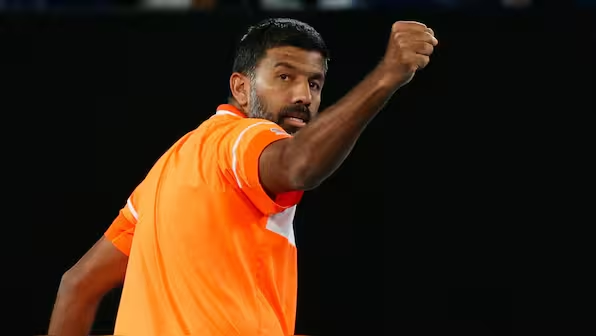
Indian tennis legend Rohan Bopanna reflects on his journey in the sport from a late start in Coorg to Grand Slam success and becoming World No.1 in doubles at the age of 43.
Rohan Bopanna officially retired from tennis in November 2025 at the age of 45. Image: Reuters
In an interview with ATP Tour last year after his retirement announcement, Rohan Bopanna had this to say when asked about his career – “I think my career is a story of patience, discipline and self-belief.”
He wasn’t exaggerating. Ask any sports psychologist worth his or her salt and they will tell you that Rohan Bopanna’s tennis career can be a case study in those three simple and yet absolutely invaluable qualities – patience, discipline and self-belief. After all, he went from almost quitting the sport in 2021 to enjoying the best phase of his career in which he won the Australian Open men’s doubles title in 2024 and became the oldest man to climb to the very pinnacle of the ATP doubles rankings.
With Bopanna bringing the curtain down on his tennis career last year, Indian tennis bid adieu to the last of the “Fab-Four” who conquered the Grand Slams. A look back at his incredible journey in which he truly peaked past the age of 35 and continued to play at the highest level despite “no cartilage” in his knees due to “severe long-term wear and tear”, makes for fascinating reading.
The tennis journey, for Rohan, began later than most others who take up the sport professionally. Studies have shown that most tennis pros pick up the sport between the ages of four and seven. Rohan was 11 when he started playing tennis – an age when most of his peers were already mastering tactical and technical skills. Most coaches will tell you that it is very, very difficult for someone to start playing tennis at 11 and then go on to become a professional player on the Tour. It takes significant talent, training, investment and also mental toughness. In his case it was the challenges that drove him to excel.
“I started playing tennis relatively late at age 11, though sports were always central to my life in Coorg. Initially driven by curiosity and competition, I quickly fell in love with the individual challenge of being on court and figuring things out on my own,” Bopanna told Firstpost in an exclusive interview.
Rohan Bopanna won the Australian Open men’s doubles title in 2024 at the age of 44. Image: Reuters
Bopanna on forming Indo-Pak Express with Aisam
Bopanna was born and grew up in picturesque Coorg. Dubbed “the Scotland of India”, Coorg is of course famous for its coffee plantations, moss-covered hills and stunning Western Ghats landscapes. What it is not known for are tennis academies. His father played a pivotal role in helping him pursue his passion, including building a tennis court on their coffee plantation estate in Coorg. That gave him the wings he needed to fly. He moved to an academy in Pune when he was 14 and had to go through quite the grind. Though he turned professional in 2003 and played both singles and doubles (reached a world ranking of 213 in singles in 2007), it wasn’t until 2010 that he really understood the path he needed to exclusively follow – the path of the doubles game. In 2010 Bopanna reached the final of the US Open men’s doubles with Aisam-ul-Haq Qureshi, the other half of the famous “Indo-Pak Express”. And that was what convinced Bopanna that he needed to focus on the doubles game.
“Reaching the 2010 US Open final with Aisam was a major turning point. It gave me the clarity that I could compete consistently at the highest level in doubles. I decided to commit fully to the format to maximize my strengths,” Bopanna further told Firstpost.
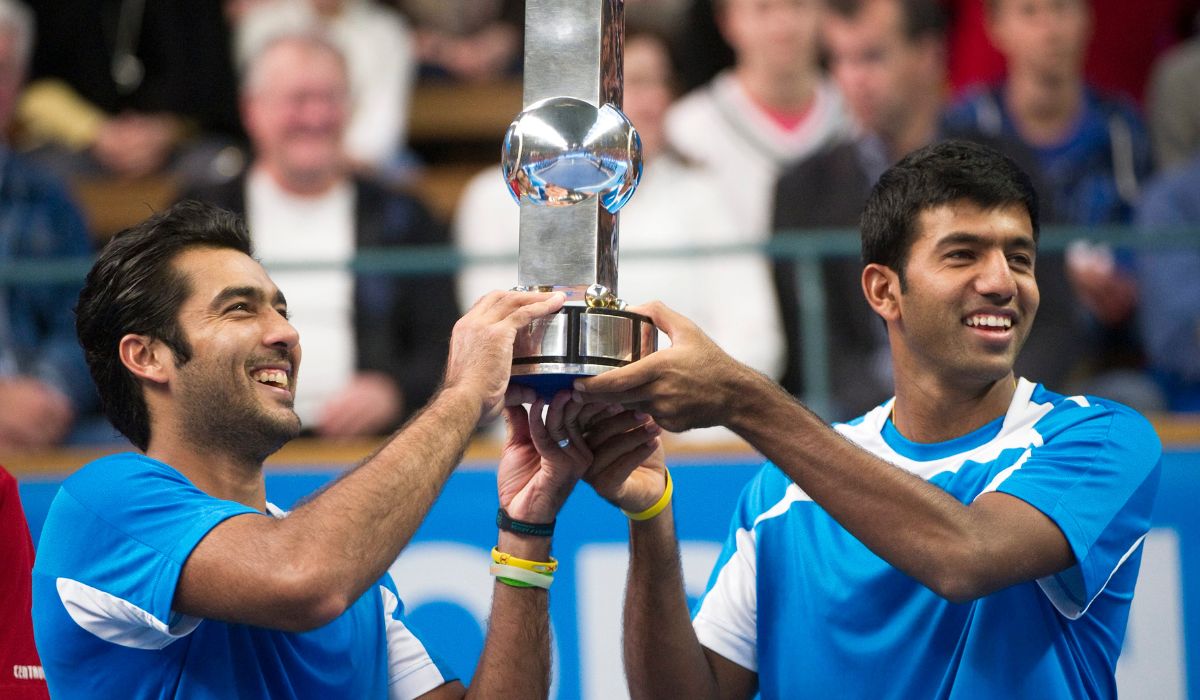
The Indo-Pak Express followed up that US Open success with the 2011 Paris Masters title. The duo in fact, went on to win titles on all three surfaces (grass, clay and hard) and the list includes the 2011 Stockholm Open, the 2011 Halle Open, the 2010 South Africa Tennis Open, and the 2014 Dubai Tennis Championships. Bopanna and Aisam subsequently also reunited in 2021 after a seven-year split. Overall, across doubles and mixed doubles (in which he won the 2017 French Open title) the list of Bopanna’s tennis partners makes for very impressive reading. It includes Mahesh Bhupathi (played with him in the 2012 London Olympics), Leander Paes (played with him in the 2016 Rio Olympics), Divij Sharan (won the 2018 Asian Games men’s doubles gold medal with him), Edouard Roger-Vasselin (reached the 2013 Wimbledon semi-finals with him), Matthew Ebden (won the 2024 Australian Open with him), Aisam, along with Ivan Dodig, Denis Shapovalov, Pablo Cuevas, Florin Mergea, and N Sriram Balaji. In the mixed doubles he played alongside the likes of Gabriela Dabrowski (won the 2017 French Open title with her), Sania Mirza (reached the 2023 Australian Open final and the semi-finals of the 2016 Rio Olympics), Timea Babos (reached the 2018 Australian Open final) and Rutuja Bhosale (won the 2022 Asian Games mixed doubles gold medal with her).
Aisam-Ul-Haq Qureshi of Pakistan and a young Rohan Bopanna celebrate a win in 2011. Image: Reuters
“I shared a natural chemistry with Mahesh Bhupathi and Aisam-ul-Haq Qureshi that translated into great results. In mixed doubles, playing with Sania Mirza was special because our deep friendship built a foundation of trust on the big stages,” Bopanna further shared with Firstpost.
Notably, Rohan and Aisam launched the “Stop War, Start Tennis” peace campaign and were conferred with the 2010 Arthur Ashe Humanitarian of the Year award for promoting peace through tennis.
When Bopanna came close to quitting tennis
Like any other professional sports career, Bopanna’s too, saw some real dark lows. He came very close to quitting the sport twice – once in 2019 and then again in 2021. The first was after he discovered that he had “no cartilage” left in his knees, which of course severely affected his mobility and left him in a lot of pain. Bopanna in fact has gone on record in the past to say that he was having two to three painkillers a day. What really helped was Iyengar yoga – something he began practising during the Covid pandemic, doing one and half hour sessions, four times a week. The second really low phase was when he just wasn’t managing to win matches post Covid. The “hard quarantine” he was under in Melbourne was beginning to take its toll. After the Covid lockdowns were lifted and he went back to pro tennis, Bopanna lost his opening seven tour-level matches, going five months without a win. The then 41-year-old seriously contemplated retirement at the time. It is famously documented how a conversation with his wife, Supriya, who asked him to treat this as “a new challenge rather than a limitation” made him change his mind. What followed was the best phase of his career. It was then that Bopanna, as he told ATPTour.com- “started playing my best tennis.”
“Tennis has made me mentally resilient, teaching me to stay grounded through both success and failure. Beyond the court, I am grateful for the global community I’ve built; I have friends in nearly 50 countries who offer a perspective on the world that goes far beyond the tour,” Bopanna further told Firstpost.
Anyone who has tracked Bopanna’s career will, of course, be curious to know just how it felt to have that incredible second wind, where he found himself as the oldest first-time world number one in men’s doubles, at 43 – something that he ensured for himself when he and Ebden beat Argentina’s Maximo Gonzalez and Andres Molteni in straight sets at the 2024 Australian Open. So, what did that mean to him? I had to ask him that.
“Reaching World No. 1 was special because it represented longevity and the belief that age is not a limitation if you take care of your body and stay hungry for success,” was Rohan’s answer – something that can well be a mantra for youngsters who are just picking up the sport.
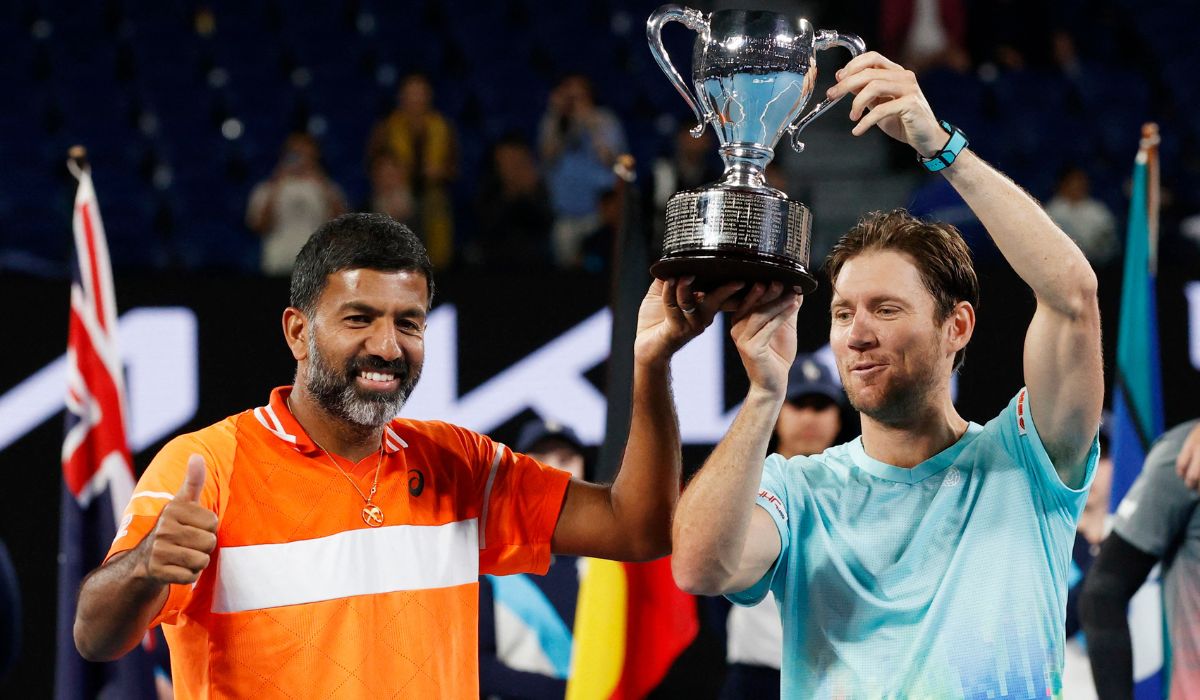
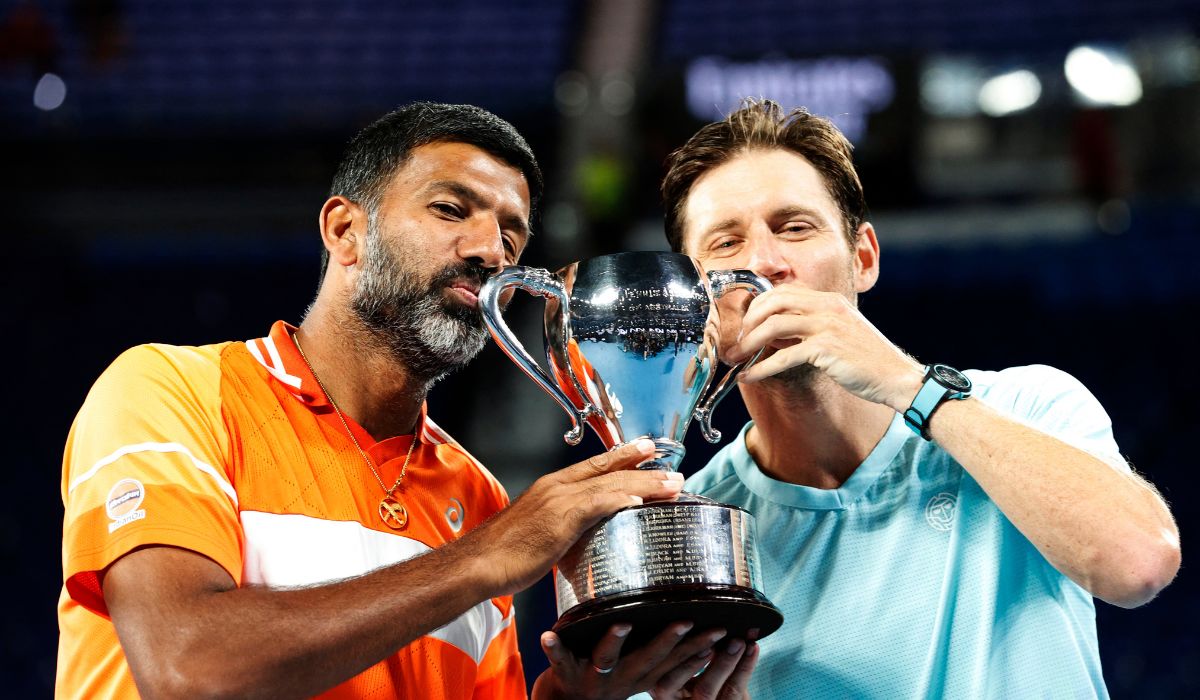
Of course, Bopanna and Ebden didn’t just stop there – they went on to win the whole thing, beating Simone Bolelli and Andrea Vavassori in the final. He was 43 years, 10 months, and 24 days old. This was a significant achievement for Bopanna, who in 17 previous appearances at the Australian Open had never progressed beyond the third round in the men’s doubles draw. It was also yet another indicator of just how successful the late blooming phase, if one can call it that, was for one of Indian tennis’ biggest legends. The cherry on the cake (though technically the announcement was made one day before the final) was Bops being conferred with India’s fourth-highest civilian honour – the Padma Shri. He had come a long way from deciding to focus on the doubles game in 2010. A few smart decisions yielded great returns in ensuring that he continued to remain a force to be reckoned with well into his 40s.
“The 2010 US Open gave me the initial belief. The second turning point came much later when I invested in a full-time physio. Prioritizing recovery and smarter scheduling allowed me to extend my career and play my best tennis into my 40s,” Bopanna further told Firstpost.
Bopanna reveals his sweetest victory
Apart from his achievements on the Tour, Bopanna has served Indian tennis diligently over many, many years. Apart from winning two Asian Games gold medals – one each in the men’s doubles and mixed doubles – he has represented the country in three editions of the Olympics (2012, 2016, 2024) and also played Davis Cup for India over two decades – from 2002 to 2023, collecting the Arjuna Award (2018) and of course the Padma Shri (2024).
So, I asked him – “You have two Grand Slam titles under your belt, but you also have two Asian Games gold medals and won multiple Davis Cup matches. Looking back at your career, if you had to pick the sweetest victory of them all, which one would it be?”
This is Bopanna, who famously told the chair umpire that a ball that had been ruled out when struck by his opponents in a crucial phase of the final of the 2023 US Open men’s doubles had actually touched his elbow. No one saw that happen and the point had already been awarded to Bopanna and Ebden. So, I was of course expecting an honest answer.
“The Australian Open title is a career highlight as the culmination of years of effort. However, representing India in the Davis Cup or Asian Games always carries a unique emotional value,” the two-time Grand Slam champion said.
Bopanna and Australia’s Matthew Ebden celebrate the men’s doubles final win at Australian Open. Image: Reuters
Post retirement, Bopanna’s biggest focus now is to help Indian tennis as best as possible. The Rohan Bopanna tennis academy is doing some great work, targeting structured coaching pathways for youngsters that fuels holistic development and high-performance training and mentorship. And you can bet that three of the core personal values being taught there are – patience, discipline and self-belief.
source: http://www.firstpost.com / FirstPost. / Home / by Akaash Dasgupta / April 27th, 2026
While trekking up mountains is a passion for many, a youth from Kodagu has taken that passion to an extraordinary level by climbing the district’s highest peak a hundred times.
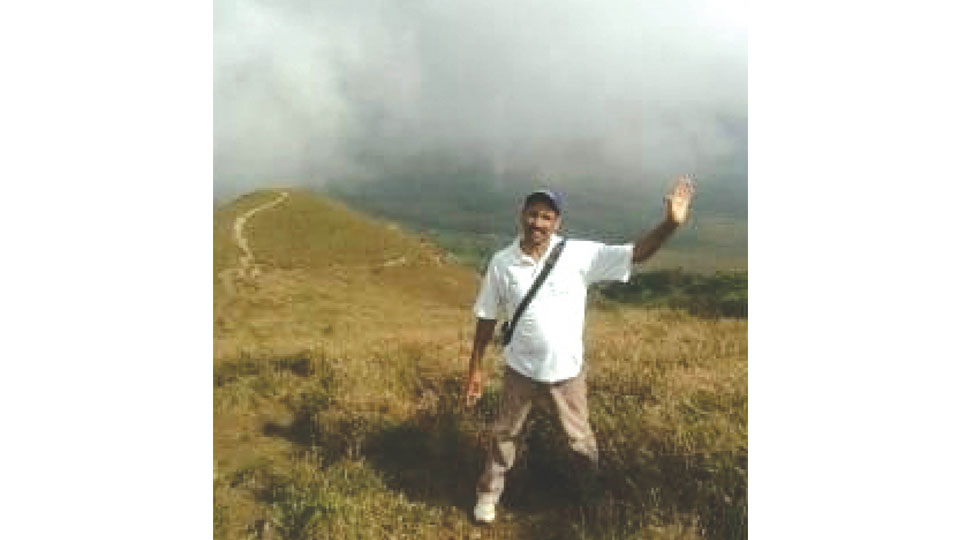
Areyada Girish Thimmaiah from Paadi village near Napoklu has achieved the rare feat of scaling Thadiyandamol, the tallest mountain in Kodagu, 100 times.
Rising to a height of 1,748 metres above sea level in the Western Ghats, Thadiyandamol is considered one of the most challenging treks in the region. Climbing it even once requires endurance and determination. Doing it a hundred times is a remarkable accomplishment.
Girish’s fascination with the mountain dates back to the early 1990s. Around 1994, when foreign tourists frequently visited Kodagu to trek to Thadiyandamol, their enthusiasm inspired him to take up the challenge. What began as curiosity soon turned into a lifelong passion.
However, the journey was not without setbacks. A few years ago, Girish had to stop trekking altogether after undergoing spinal surgery.
“Climbing up is easier, but descending is far more difficult. Perhaps the strain during the descent worsened my back pain,” he recalled.
The trek to Thadiyandamol is also known for its wildlife encounters. Trekkers often come across herds of elephants, darting deer, tiger tracks and droppings, and the forest’s sharp scent.
“To keep wild animals away, we shout, clap and make noise while trekking. At times, it feels like life itself is at risk, but that is what makes the experience so thrilling,” Girish said.
Girish is the son of Areyada Ponnappa Ganapathi and Lakshmi Subbavva. He completed his education at Maharaja’s Junior College under the University of Mysore.
source: http://www.starofmysore.com / Star of Mysore / Home> News / April 03rd, 2026
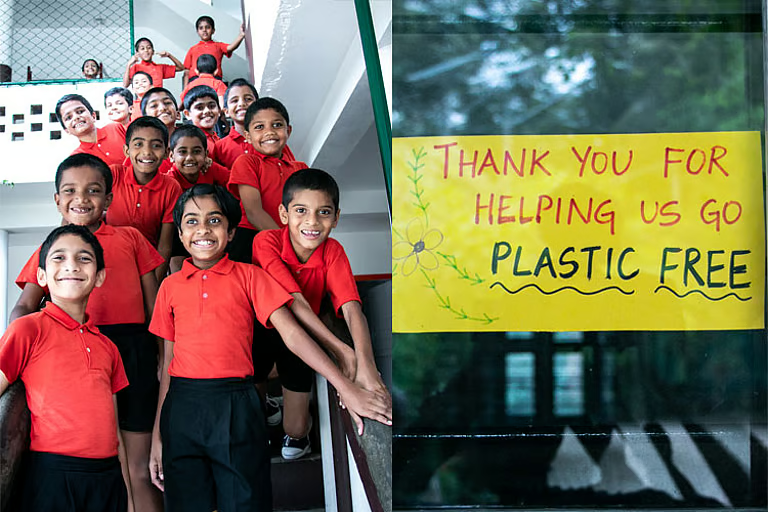
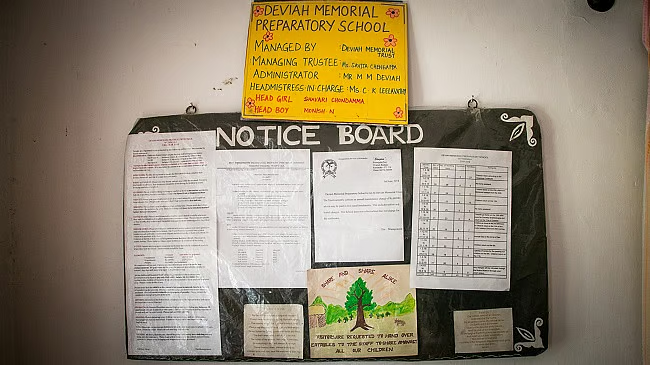
Deviah Memorial Preparatory (DMP) School is one of the few schools in Karnataka to teach garbology, the study of a community or culture by analysing its waste.
Our waste, our responsibility: A Kodagu school is teaching its students garbology
Multiple hands shoot up in the air, almost instinctively, when the teacher asks the question, “What are the ten categories of waste?”
Subaiah, a scrawny Class 4 student, begins answering the question even before he is prompted. “Paper waste, plastic waste, glass waste, metal waste, construction waste, mixed waste, recyclable waste…”
At this point, Shavari, a Class 5 student standing next to him, cuts in to add, “Hazardous waste, organic waste and e-waste,” to the dismay of the boy.
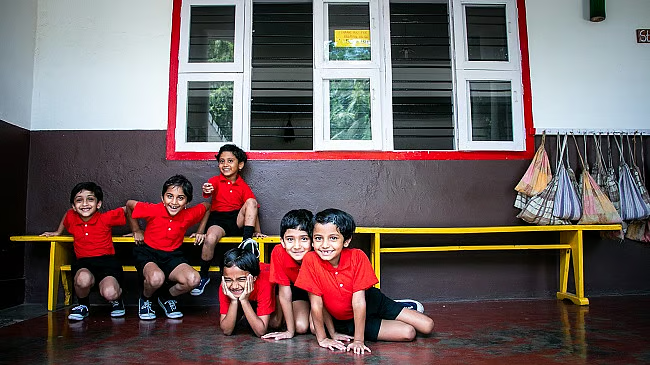
Inside the Deviah Memorial Preparatory (DMP) School in Kodagu district of Karnataka, this is now a routine after the school introduced Garbology lessons for the students of classes four and five in 2017.
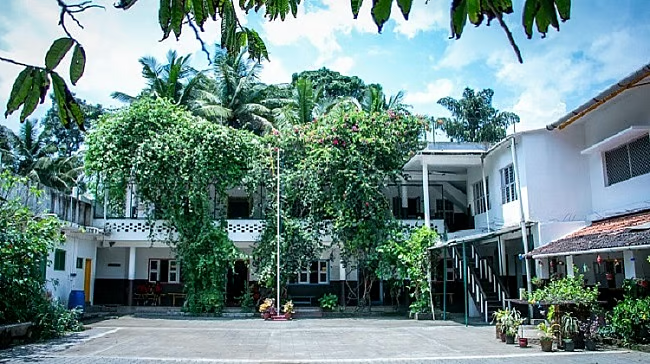
Tucked away just off the Mysuru-Virajpet road in Bittangala village, DMP is one of the few schools in Karnataka to teach garbology – the study of a community or culture by analysing its waste.
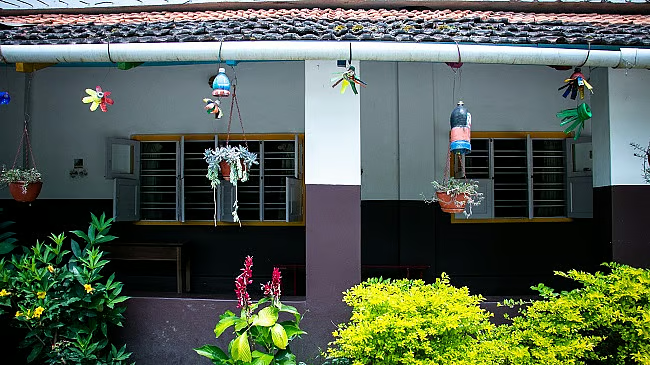
Crafts made out of recycled materials hanging in the school premises
The school was founded by Mundachadira Gangu Deviah in 1981 and is one of the oldest residential schools in Kodagu district. According to MM Deviah, the administrator of the school, the staff has always placed importance on protecting the environment. In the school, there is an almost zero-tolerance policy towards plastic.
“We don’t even allow parents to send items to their children in plastic covers. There have been times when we have returned parcels sent to the school which contain chocolates wrapped in plastic,” Deviah says.
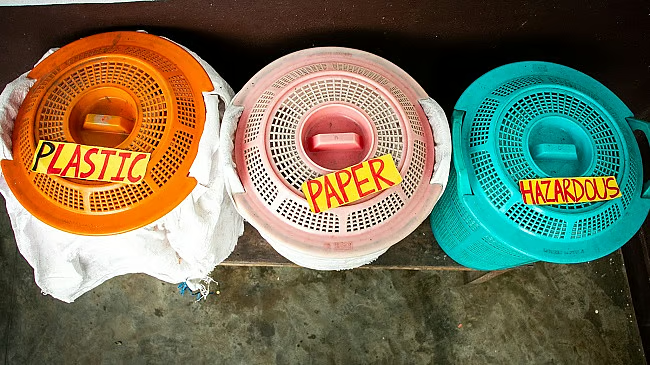
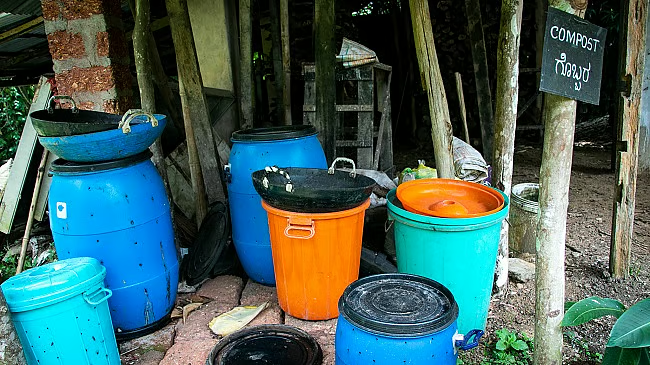
Separate dustbins at the school
The school hopes to set an example to its students by managing the waste created in its own premises effectively. The school building is filled crafts made out of upcycled and recycled plastic. The school maintains separate dustbins for plastic, paper and hazardous waste. The students and teachers grow fruits and vegetables in a field close to the school which is used to cook most of the food prepared by the school. A soapnut liquid is used in place of handwash while natural loofahs are used to scrub the body instead of plastic ones. Kitchen waste generated in the school is also turned into compost and the school is planning to make invitations for their annual day programme using recycled newspaper.
“Even before we began garbology lessons, students were introduced to the idea of reducing and managing waste,” explains Nina Chengappa, a teacher at the school.
Deviah Memorial Preparatory School, Kodagu
In 2017, garbology was introduced in the class 4 and 5 syllabus. The classes for the subject are held every Tuesday and they are based on material provided by Wasteless, non-profit social enterprise that focuses on innovative education for sustainable waste management. Students are taught about waste management, the different grades of plastic, how much waste is generated in the production of paper, among other topics.
Composting at the school
“We conduct the sessions in such a way that the theory and practical classes go hand in hand. For instance, we teach the students about a land dump and then we take them to a land dump the following week so that they can actually see it. It is not enough that the students visualise it, they need to experience it. But, they are not asked to handle the waste, of course,” says Pavan Aiyappa, the garbology teacher at the school.
According to Pavan, the lessons are designed to create a sense of responsibility among students about managing waste. “The idea is that if the students understand the harmful effects of not managing waste, they will understand it is their responsibility to manage it. We want to teach them that garbage is their own responsibility,” says Pavan.
The lessons are not only changing the attitude of students towards waste but it is also giving the teachers plenty to think about. “One of the students suggested to us that the school should stop serving biscuits wrapped in plastic during tea break and instead give fresh fruits since it creates less waste. We realised then that the message is reaching the students,” says Nina.
The students in the school are also changing the attitudes of their family members. They have also enacted plays and recited songs in other schools in the district about managing waste responsibly. “The students are telling their family members not to litter, people listen when children tell them something and that becomes a habit over time and this leads to right choices. The students also perform plays in other schools to spread the word of reducing waste. They have performed in six government schools so far reaching an audience of around 800 students,” adds Pavan.
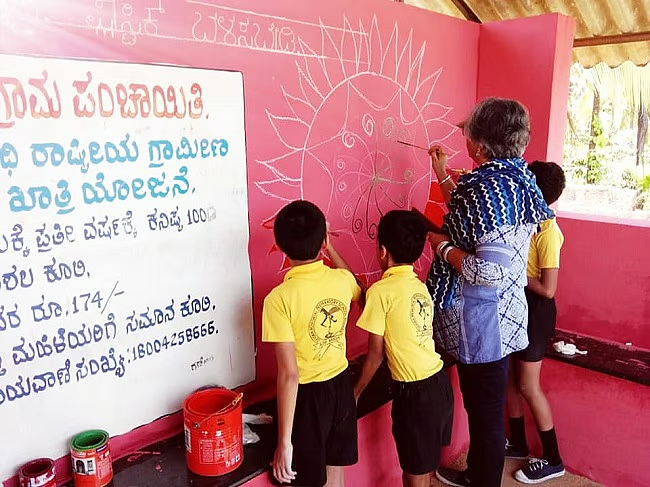
The students cleaned and re-painted a bus-stand on the main road in Bittangala on September 15, World Clean-up Day. They hope to lead by example and spread the message of taking responsibility for the waste created.
“We want to tell students that the waste we create is our responsibility,” says Deviah, before adding, “Even before we started garbology lessons, we used to teach the students here to love nature because we don’t destroy what we love.”
Photographs by: Dhruv Khanna
source: http://www.thenewsminute.com / The NEWS Minute / Home> Karnataka / by Prajwal Bhat / Photos by Dhruv Khanna / October 05th, 2018
As a part of its commitment in honouring the legacy of the framers of the Constitution of India, The Constitution Museum & The Rights and Freedoms Academy, O.P. Jindal Global University commemorates the 115th Birth Anniversary of Shri C.M. Poonacha by curating an exhibition in his memory. Shri Poonacha, a Member of the Constituent Assembly, served independent India as the Chief Minister of Coorg, the Union Minister of Railways and as the Governor of Madhya Pradesh and later Odisha.
The exhibition displays original photographs capturing various moments of Shri Poonacha’s life, epistles, books, constitutional and other official documents, and other memorabilia belonging to Shri Poonacha. The exhibition also features a historically significant ampoule containing the ashes of Mahatma Gandhi, which Shri Poonacha received and kept in reverence throughout his life.
In the Constituent Assembly Shri Poonacha made impactful contributions in the Provincial Constitution Committee and the Committee on Chief Commissioners’ Provinces. In the Assembly Debates, Sri Poonacha articulated the significance of the Coorg Province in the emerging federal structure of India. He also advocated for a measured degree of autonomy to the provinces, emphasizing the importance of preserving the cultural and political identity of Coorg while remaining firmly anchored in the unity of India.
Inaugurating the exhibition, Prof. (Dr.) C. Raj Kumar, Vice Chancellor, O.P. Jindal Global University stated that, “The Constitution Museum and the Rights and Freedoms Academy—India’s first museum dedicated to the constitution—remain deeply committed to honouring the legacies of each of the 300 members of the Constituent Assembly. Entering the fourth quarter of the century leading up to 100 years of Indian Independence, we carry a moral responsibility to contribute to nation-building. Through these exhibitions, we strive to continually remind the people of India about the dreams of a bygone generation—their unwavering dedication to the nation and profound commitment to justice and liberty. In doing so, the Constitution Museum at JGU fulfils its purpose as vital educational space for cultivating constitutional morality”. In April 2025, the Museum hosted a similar exhibition in memory of Shri R. Sankar, the member of the Constituent Assembly from Travancore-Cochin. The present exhibition will remain open for the public from 15th to 18th October 2025.
The exhibition commenced, with an engaging panel discussion titled “C.M. Poonacha: A Constitutional Exemplar: In the Words of His Children” which set the tone for an insightful exploration of Shri Poonacha’s legacy.
Speaking in the panel discussion inaugurating the exhibition, and remembering their father’s legacy, Mr. C.P. Belliappa, son of Shri Poonacha, and Mrs. Vijaya Muthanna and Dr. Kaveri Nambisan, daughters of Shri Poonacha, observed that “Our father upheld constitutional values in all aspects of life. He was a man of principles who never compromised his ethics for his personal gains—he left his education to participate in the national movement heeding to Mahatma Gandhi’s call. Throughout his life he remained a true Gandhian—he believed in the power of satyagraha, ahimsa, and social upliftment of masses. He held Coorg close to his heart yet not forgetting his primary allegiance to the nation”.
The exhibition will close on the 18th October 2025.
(Disclaimer: The above press release comes to you under an arrangement with O.P. Jindal Global University and PTI takes no editorial responsibility for the same.). PTI PWR
This is an auto-published feed from PTI with no editorial input from The Wire.
source: http://www.thewire.in / The Wire / Home> English / by PTI PRNEWS / October 16th,2025
WELCOME. If you like what you see "SUBSCRIBE via EMAIL" to receive FREE regular UPDATES.
Read More »