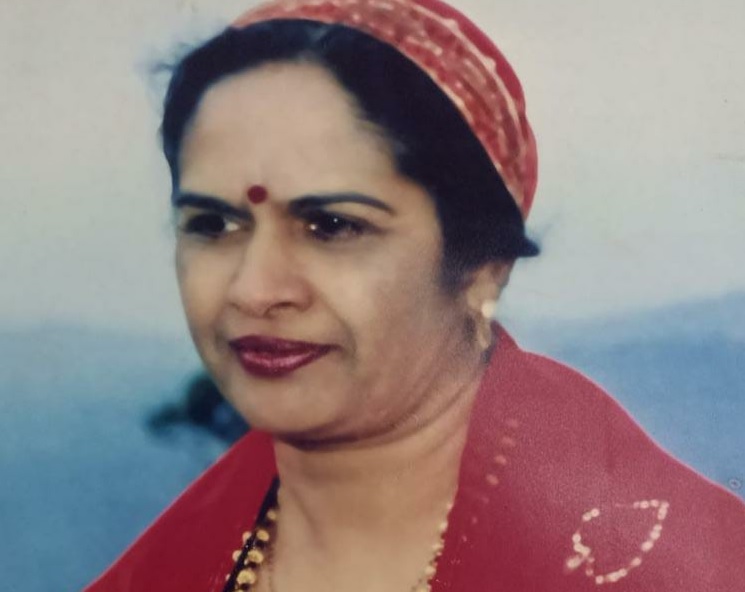
Rani’s entire career has been dedicated to preserving and promoting the folk dance form, Ummathat, of the Kodava tradition.
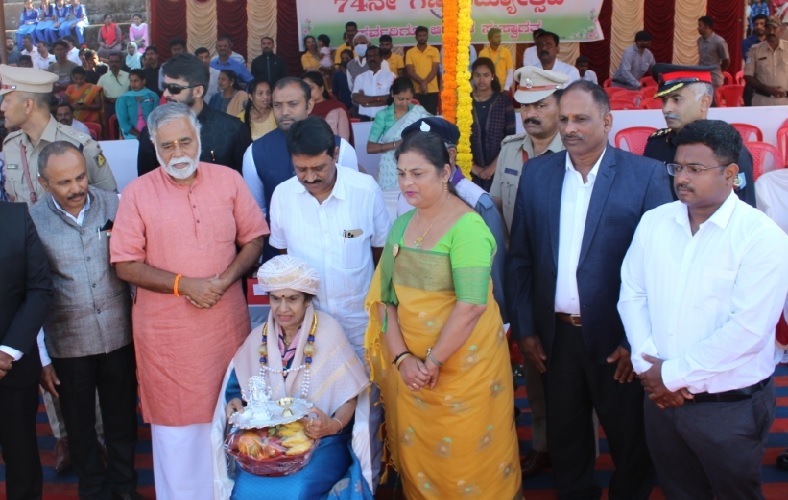
Rani Machaiah (seated) was felicitated at a function in Madikeri on Thursday 26 Jan (supplied)
The news came as mellifluous as the song that accompanies Ummathat, the traditional dance form of Kodagu.
Rani Machaiah — better known as Ummathat Ki Rani — was at her home in Madikeri when she received the news of the nation honouring her with Padma Shri.
Congratulatory calls have been flooding her from relatives, friends, well-wishers, and most importantly, from her large number of students since Wednesday, 25 January.
“A train of thoughts crossed my mind,” the 79-year-old shared her experience with South First. “I have worked for around 50 years, promoting this traditional dance form.”
She has been leading Ummathat since 1984 and she had trained over 10,000 students.
Rani recalled taking her students to different states to showcase the dance form. “Ummathat is performed by a troupe of 20 — two will be singing and the other eighteen will dance to narrate a story,” she explained.
“This dance form is similar to the traditional ones of every other state,” she added.
Creating masters
Rani doesn’t dance anymore. But she still teaches students to master the art form. She had trained several batches of students.
Padma Shri Rani Machaiah. (Supplied)
“Once they get married, they leave and a new batch joins. Girls of any age can join the troupe,” Rani said.
Her students had performed in Lakshadweep, Goa, Chhattisgarh, Himachal Pradesh, Jammu and Kashmir, Haryana, Mizoram, Odisha, Punjab, Maharashtra, Madhya Pradesh, and several places across Karnataka.
“We get invitations from various places and institutions from all over the country and we perform our traditional Ummathat there,” Rani, who has dedicated herself to preserving and promoting the traditional dance form, said.
Rani was born in 1943 in Siddapura in the Kodagu district. Her husband, the late Machaiah, was an advocate, who passed away when she was 65.
Her son, Sathish Machaiah, 55, is a software engineer in Bengaluru. Rani’s daughter, Saritha Devaiah, is a homemaker in Kodagu. Her husband Devaiah owns a plantation.
When asked about her inspiration to take up Ummathat, Rani said it was personal interest.
Now, a lipi
Rani is the chairperson of Kaveri Kalavrunda Sangha, an organisation she founded. She is the recipient of the Rajyotsava Award and many other honours.
She was a former president of Karnataka Kodava Sahitya Academy and at present, she is encouraging groups of Kodavas working on designing a lipi — alphabet or script — for the Kodava language to preserve its literature since the language doesn’t have a lipi now (traditionally, Kodavas use the Thirke script, which is an abugida).
“It will look somewhat similar to Kannada and it will have phonetics and extra words that are used in the Kodava language in Kannada lipi,” Rani said.
source: http://www.thesouthfirst.com / South First / Home> Karnataka / by Bellie Thomas / January 27th, 2023
In 1997, Pandanda M Kuttappa, a retired bank employee, wanted to channelise this hockey craze to unite Kodavas and explore the potential of the talent in the region.
Members of different families get ready for Kodava Family Hockey Festival at Napoklu in Kodagu district of Karnataka. | Photo Credit: H S Manjunath
It was a sunny Saturday morning when this reporter reached the General Thimmayya stadium at Napoklu village in Kodagu district. The men, women and children gathered at the stadium were eager to showcase their hockeyplaying talent.
More than 3,000 hockey talents from Kodava community (with a population of around 1.5 lakh) converge in a Kodagu village during the summer months to vie for the coveted family hockey title. This time it was the turn of the Appachettolanda family to host the hockey festival at Napoklu from March 18 to April 9.
Ask a Kodava, he/she proudly says that it is a festival, and does not call it as a tournament. So the organisers have aptly named it as hockey ‘namme’ (festival in Kodava language).
It is better to know a bit about Kodavas. A majority of people from Kodava community live in Kodagu district of Karnataka.
When you interact with Kodavas, they take pride in their representation in the armed forces — which include the personalities such as Field Marshall KM Cariappa and General KS Thimmayya — and in sports, especially in hockey.
There are more than 800 families of Kodavas with each having a unique name. Of them, 336 families are participating in this year’s hockey festival. The size of the families ranges from 100 to 400 people.
Interacting with businessline on the sidelines of the event, Pandanda Bopanna, President of the Kodava Hockey Academy, says “Hockey is in the blood of a Kodava.”
History of Kodava family hockey so far
chart
Festival objectives
In 1997, Pandanda M Kuttappa, a retired bank employee, wanted to channelise this hockey craze to unite Kodavas and explore the potential of the talent in the region. Kuttappa and his brother Pandanda Kashi Ponnappa started a family-led hockey festival in Kodagu keeping four objectives in mind.
According to Pandanda Bopanna (Kuttappa’s son), the first objective was to bring harmony within the Kodava community and families. Though many Kodavas were participating in national and internation hockey matches, they were not seen playing in their homeland.
The second objective of Kuttappa was to give an opportunity for local Kodavas to witness in real-time the game of their national and international players.
Pandanda Bopanna, President of the Kodava Hockey Academy | Photo Credit: H S Manjunath
Thirdly, Kuttappa wanted to provide a platform for youngsters in the community to showcase their talent, and take a step forward in their sporting career. Fourthly, the event also acted as a matrimonial platform and ended up in marriages in many cases.
Invests retirement benefit
Bopanna says that his father had invested his retirement benefits for hosting the first edition of the family hockey festival.
The first edition of the event, hosted by the Pandanda family, was named as Pandanda cup, and it saw the participation of 60 family teams. (The event was not organised in 2019 due to the 2018 Kodagu floods and landslides. Covid forced the organisers to refrain from hosting the event in 2020, 2021 and 2022.)
On the record participation of 336 teams this year, Bopanna says nowhere in the world would any hockey festival or tournament be played with such a large number of teams and players in one location.
Gender, age no bar
Gender and age are not a bar in this event. Men, women, and children can be the members of a team.
The only condition is that they should be from the same family. Women have the option to represent the family they are married to, or their paternal family. This year’s participation includes people in the age group of 6 to 84 years.
Highlighting her experience, Shivachaliyanda Dechakka, a 10th standard student from a sports hostel, says her family team won the first match, and lost the second one. She says it was a good experience for her to play with seniors.
While many teams have at least one woman representation, there are a few without them. In fact, the Kethira family had representation of five women, including the goalkeeper, in their team of 11.
Aman Poonacha from Palanganda family, an 8th standard student from Bengaluru, says he made his first entry as a player in his family team in a match on Saturday. However, he was not happy with his performance.
Confluence of youth and experience Several stars from Indian hockey make it a point to be the representative of their families in the family cup.
KK Poonacha of Koothanda family, a former international player and former coach of Indian women’s team, who had just finished a match earlier on Saturday, says that he has been attending the family hockey cup matches since 1998, and his family team has won the cup in four editions.
KK Poonacha of Koothanda family, a former international player and former coach of Indian women’s team | Photo Credit: H S Manjunath
Showing the five stars on his family hockey jersey, Ajay Ayyappa of Palanganda family, who works in the Department of Central Excise and GST in Bengaluru, says that he makes it a point to attend the hockey festival every year, and adds that his brother Amar Aiyamma, a former Indian player, will be playing in the next matches.
According to Pandanda Bopanna, former Indian team players such as Nithin Thimmaiah of Mekerira family, Pradhan Somaiah of Pudiyokkada family, PL Thimmanna of Puliyanda family, PU Bopanna of Pullangada family, and the former India Junior player KP Somaiah of Kuppand family are participating in the matches this year.
A boy is seen practising hockey at Napoklu. | Photo Credit: H S Manjunath
Terming this hockey festival as a good platform for beginners, KK Poonacha says they will get to play with the experienced players of national and international repute. This will be a good scouting ground for hockey talent also.
Stating that youngsters are motivated to play when they witness players of national and international repute, Ajay Ayyappa says it is like giving life to hockey again through this hockey festival, as people at the grassroots level are playing less these days.
Behind the scene
Appachettolanda Manu Muthappa, coordinator of the Appachettolanda Hockey Festival, says that his family has around 180 members, and they are actively participating in the smooth conduct of this event.
On resource mobilisation for organising the event, he says contribution of the amount from the family members and support from the public and corporates help them generate resources for the event. The State government has also been helping with funds for the event for some years.
A special gallery has been set up at the venue at a cost of around ₹35-40 lakh, and it can accommodate up to 25,000 people.
Appachettolanda Manu Muthappa, coordinator of the Appachettolanda Hockey Festival | Photo Credit: H S Manjunath
Deepak Chengappa of Nayakanda family, who is the Tournament Director, says that 21 matches are being conducted every day. The event has five jury members. Around 200 members, including the technical teams of Hockey Coorg and the whole Appachettolanda family, are helping him in the smooth operation of the event.
The event has four national referees, and 15 state referees. With an intention to encourage youngsters to take up refereeing as a profession, nine degree students are undergoing training here, he adds.
‘Encourage talent’
Kishor Cariappa from the Ammatanda family says that even though a lot of promising players take part in the Kodava Hockey Festival, their talent goes unnoticed once the tournament is over.
“Steps should be taken by Hockey Karnataka and Hockey India to hand-pick potential talent and start grooming them. Even though 336 teams took part this year, Hockey India officials were conspicuous by their absence. Organisers should make efforts to invite hockey think tanks in India to the event,” he adds.
Kishor Cariappa feels that the Karnataka government can help build two hockey venues with stands for Kodagu Hockey Festival in south and north Kodagu so that organising committees don’t have to spend lakhs of rupees on curating pitches every year.
Do you know who hosted the event?
chart 02
Future plans
Pandanda Bopanna says that three families have been finalised to host the next three editions of the hockey festival.
“We are encouraging other families who have not hosted so far to come forward and host. It is an opportunity to gain experience. It is not easy to host such a big event. It gives the family time to bond and also gives their youngsters a chance of hosting an event,” he adds.
source: http://www.thehindubusinessline.com / Business Line / Home> News> Sports / by A J Vinayak / April 04th, 2023
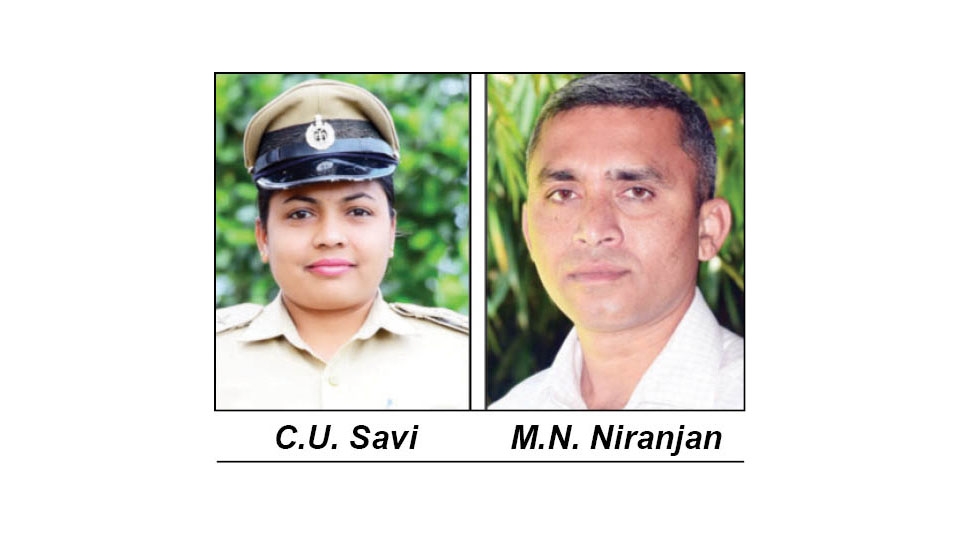
Two Police personnel from Kodagu have been selected for the Chief Minister’s Medal for their exemplary service in the Department.
They are Madikeri Division’s CID Forest Mobile Squad Sub-Inspector C.U. Savi and District Crime Detection Unit Head Constable M.N. Niranjan.
Savi has been serving in the Police Department since 13 years and has served at many places including Nanjangud and Bylakuppe and is presently serving in Madikeri Division. She is a native of Kolakeri.
M.N. Niranjan is a resident of Ashokapura in Madikeri and is serving in the Police Department since 22 years.
He had served in various Police Stations including Madikeri Rural Police Station and is presently serving at District Crime Detection Unit.
source: http://www.starofmysore.com / Star of Mysore / Home> News / April 03rd, 2023
Community welcomes Government’s long-pending decision
Madikeri:
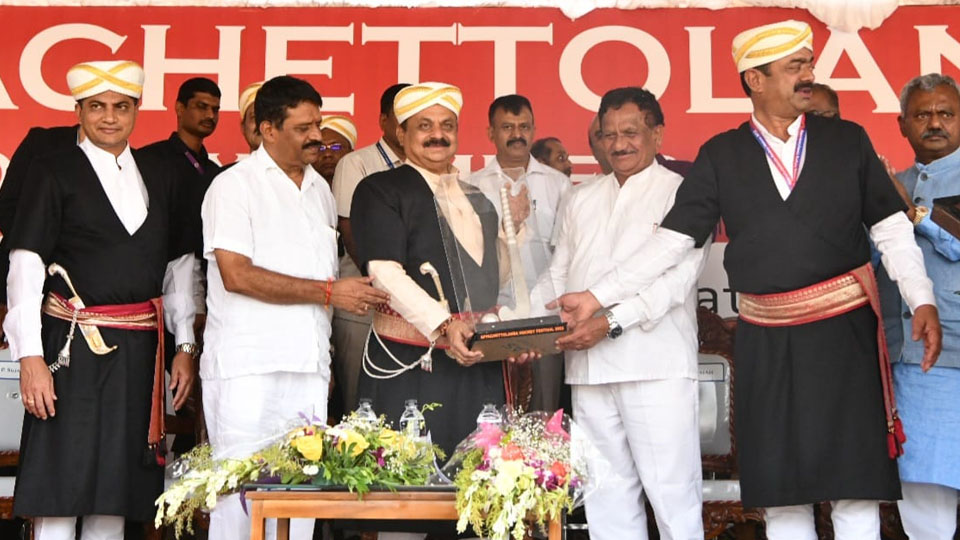
The State Government yesterday notified the constitution of the Karnataka State Kodava Development Corporation. This comes just days after Chief Minister Basavaraj Bommai made an announcement in Kodagu during the inauguration of the Appachattolanda Hockey Festival that the Corporation will soon be constituted.
The notification stated that the newly constituted Corporation will strive for the comprehensive development of the Kodava community.
Virajpet MLA K.G. Bopaiah has thanked the Chief Minister for constituting the Corporation. “I had personally led a large delegation and met the Chief Minister underlining the importance of constituting a Board or a Corporation for the development of the community. Though this was a long-pending demand, the Chief Minister has notified it now,” he said.
People of Kodagu are thankful to the Government as the Corporation will exclusively strive for the development of the unique culture and distinct customs of Kodavas, he added.
The Kodava Development Corporation was one of the main and long-pending demands of the Kodava community. Expressing his happiness over the constitution of the Corporation, Kokkalemada Manju Chinnappa of the United Kodava Organisation, who was the force behind the demand, told Star of Mysore this morning that it is a huge victory for the community.
“Kodavas have played a crucial role in taking the State forward and reaching newer heights. We have unique tradition, customs, heritage and culture that needs to be protected and the Corporation is a huge step in this regard. The community has played a vital role in the country’s defence sector and sports field, earning national and international accolades, he added.
Though there are notable achievements from the community, Kodavas have remained politically weak when compared to many other communities in Karnataka.
“The State Government has finally honoured the genuine demand of a political and cultural minority. It is a well-deserved gift for the distinct community and the complete credit goes to CM Basavaraj Bommai, former CM B.S. Yediyurappa, MLA K.G. Bopaiah, former MLC Veena Achaiah, Congress leader and former Advocate General A.S. Ponnanna, other MLAs, MLCs and largely the community,” Manju Chinnappa added.
source: http://www.starofmysore.com / Star of Mysore / Home> News / March 21st, 2023
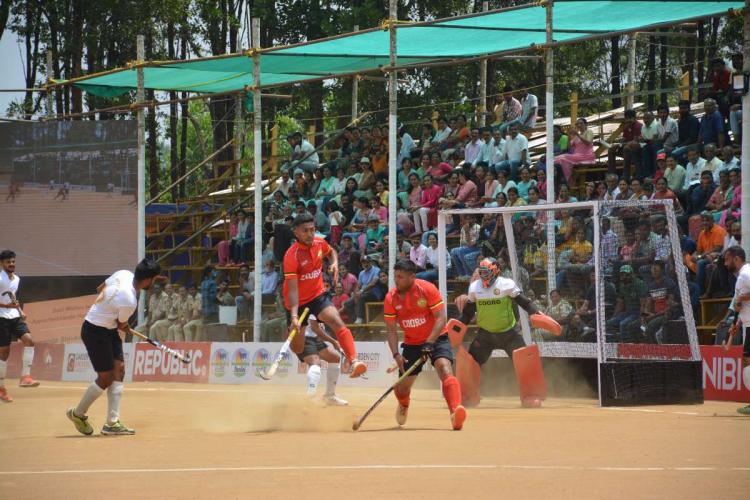
The Kodava hockey festival is a vibrant, month-long celebration held between March and April. The festival exudes the ambience and excitement of a mela with its draped festoons, welcome arches, and numerous stalls.
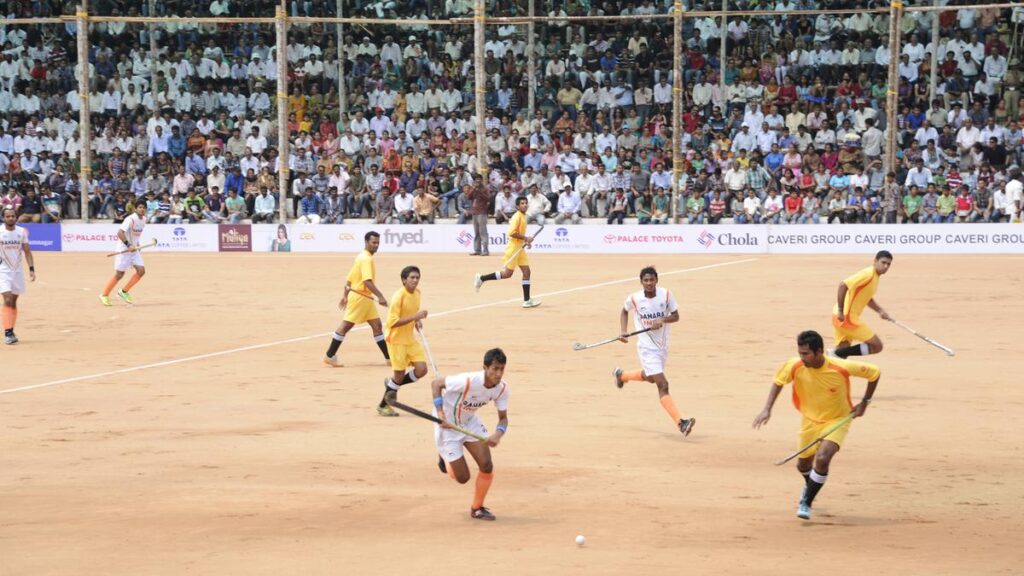
Come summer, and it’s hockey festival time in Kodagu. When schools close for summer vacation and coffee plantations take a break, Kodava families from around the world head home to participate in the Kodava Hockey Namme (festival) held in Kodagu (Coorg). It is time for Kodavas to battle with their hockey sticks at this tournament held in their home turf. With hundreds of families participating, the tournament is recognized as one of the largest field hockey tournaments in the world and finds a mention in the Limca Book of Records.
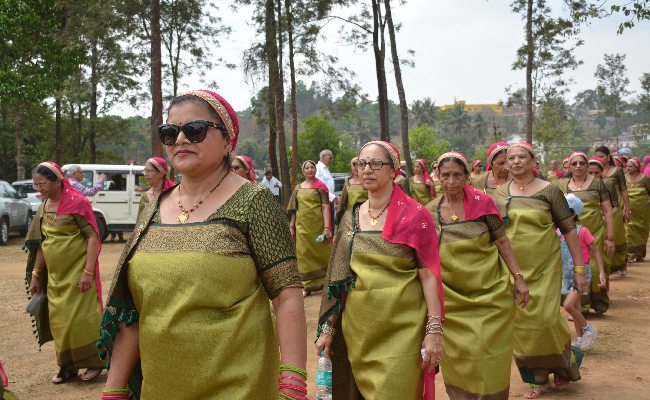
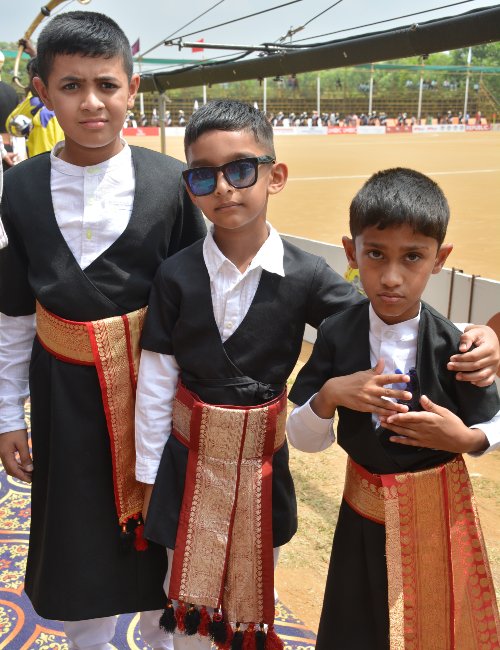
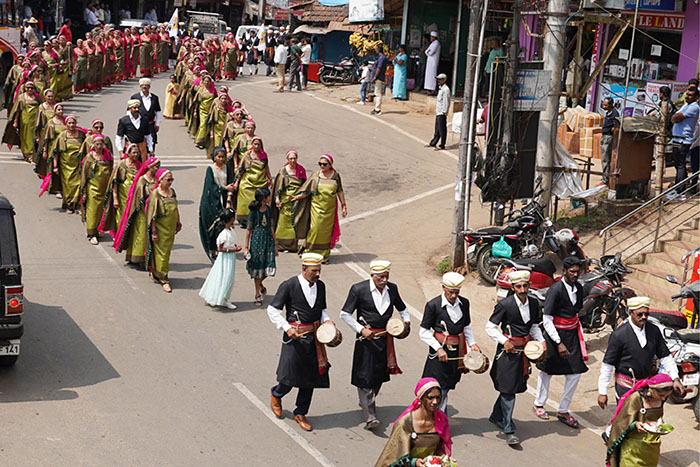
The Kodava hockey festival is a vibrant, month-long celebration held between March and April. The festival exudes the ambience and excitement of a mela with its draped festoons, welcome arches, and numerous stalls selling everything from automobiles to food. It is also an occasion for the Kodavas to dress up in traditional attire and participate in the procession and cultural programmes. Dancing and music add to the fun and frolic. One has to be here during the festival to experience the fierce pride of Kodavas in their glorious heritage, which they jealously guard.
Procession of Kodava women in their traditional attire
The genesis of the hockey festival can be traced back to 1997. It was the brainchild of late Pandanda Kuttappa, a former banker and State league referee. He is said to have conceptualised the festival after realising the deterioration in the standards of hockey played in the district. He hit upon the idea for a tournament among the families in order to encourage more youngsters to take up the sport.
The first editions of the festival were held in the village of Karada with 60 families competing. The festival has no permanent venue, something organisers are striving to achieve, and the festival has been held across the district in previous years.
Kodava children flaunt their traditional dress
The tournament started with the dual purpose of paying rich tribute to the sport in the region, and bringing together players in thousands in order to identify the best talents for the country. Over the years, more than 50 Kodavas have represented India in international hockey, earning their district the title of ‘Cradle of Indian hockey’. Hockey is to Kodagu what cricket is to India. It is common to find hockey sticks in every home.
This annual festival is hosted by a different family each year and will be known by the name of the host family. A family may not host the event more than once. Families apply to the Kodava Hockey Academy expressing interest and are allotted the tournament after evaluation. In a lifetime, a Kodava will only get to see their family host the cup once. For the 800-odd families in Kodagu, it has become a matter of pride and honour to host this iconic tournament. This is one of the reasons why family members from far and near take leave and arrive in droves to participate in the much- awaited festival games.
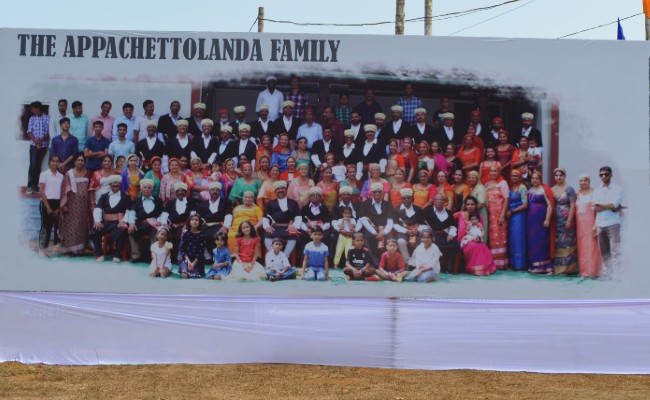
Appachettolanda, the host family of the 23rd edition of the Kodava Hockey Festival
The hockey festival has accomplished what perhaps nothing else could have — uniting distant families. It is the time for annual family reunions in their ancestral homes. What makes this festival distinctive is that it remains a family-oriented event, which has morphed into a major sporting event and festival in the country. Besides uniting warring relatives and families torn by strife, the hockey event is also a platform for community members to discuss and transact trade and business, besides scouting for marital alliances.
After a hiatus of four years due to floods and the pandemic, this year the hockey festival kickstarted with renewed vigour and energy. “This year (the 23rd edition) the Appachettolanda family is organising the event under the aegis of Kodava Hockey Academy. The festival is held at an estimated cost of Rs 1.5 crores, raised through contributions from the families, a grant from the Karnataka Government, and through sponsorships. More than 350 teams will participate in the festival this time. While the winning team will be given a cash prize of Rs 3 lakh, the runner-up will get Rs 2 lakh, and the teams that came third and fourth will get Rs 1 lakh each,” said Manu Muthappa, convener, Appachettolanda Hockey Festival.
pix05
An interesting feature of the festival is that both men women take part in the matches and there is no restriction on age. The only rule for forming a team is that all members must be from the same family and can include children and grown-ups from both genders. Young boys and girls, fathers, mothers, uncles, professionals, and even former Olympian heroes are all players. The women have the choice of playing for their in-laws’ team or their parents’ team. There have been instances when three generations of players have played together in a single match.
The festival is also ideal for talent spotting. Sometimes, officials from the Sports Authority of India arrive here to select players who are then offered training and equipment. Some of them have gone on to become state and national players. Plans are afoot to set up a hockey stadium to offer more facilities to budding players from the district. It is heartening that there is a growing interest among the younger generation in the hockey festival. But there is a need for more stadiums and turfs to facilitate more players to practise regularly.
Schedule of the hockey festival: General Thimmaiah Stadium, Napoklu, from March 18 to April 10.
Misty Woods Resort is an ideal place to stay to cover the hockey festival as it is within driving distance from the venue.
All pics by Susheela Nair.
Susheela Nair is an independent food, travel and lifestyle writer and photographer contributing articles, content and images to several national publications besides organising seminars and photo exhibitions. Her writings span a wide spectrum which also includes travel portals and guide books, brochures and coffee table books.
source: http://www.thenewsminute.com / The News Minute / Home> Features> Sports & Culture / by Susheela Nair / March 27th, 2023
The work to develop the first biodiversity park of the state was launched in Harangi, by laying the foundation stone on Friday.
Legislator Appachu Ranjan, who conducted the ‘bhoomipooja’ for the biodiversity park work, said, “India is the biggest exporter of medicinal herbs. The new park will help us.”
He said that a medicinal herbal park will also be opened in Bhagamandala soon.
“Medicinal plants are needed to cure diseases. Also, the environment will be healthy if there is enough greenery,” he pointed out.
Karnataka Biodiversity Board chairperson Napanda Ravi Kalappa, who presided over the ceremony in Harangi, said that a master plan of building a model medicinal garden in the district was readied by the Board. The park is also being launch to conserve the richness of the flora of Kodagu, he added.
“The Karnataka Biodiversity Board intends to establish similar parks in every panchayat of Kodagu. The Coorg Mandarin used to be an exclusive plant to Kodagu, but is virtually not to be found anywhere now. Research is now being conducted to promote this species,” Kalappa said.
Bopanna thus surpassed Daniel Nestor of Canada, who had claimed the 2015 Cincinnati Masters to become the oldest champion at the age of 42.
Matthew Ebden, of Australia, left, and teammate Rohan Bopanna, of India, hold up the men’s doubles winner’s trophy at the BNP Paribas Open tennis tournament.(Photo |AP)
Indian Wells :
India’s Rohan Bopanna became the oldest ATP Masters 1000 champion when he and his Australian partner Matt Ebden claimed the men’s doubles crown at the BNP Paribas Open here.
The 43-year-old Bopanna and Ebden, 35, defeated top-seeded Wesley Koolhof of the Netherlands and Neil Skupski of Britain 6-3, 2-6, 10-8 in the final on Saturday.
“Truly special. It’s called Tennis Paradise for a reason,” said Bopanna, who was playing in his 10th ATP Masters 1000 final.
“I’ve been, over the years, coming here and seeing all these guys win for so many years. I’m really happy that Matt and I were able to do this and get this title here.
“It’s been some tough matches, close matches. Today we played against one of the best teams out there. Really happy that we got the trophy.”
Bopanna thus surpassed Daniel Nestor of Canada, who had claimed the 2015 Cincinnati Masters to become the oldest champion at the age of 42.
“I spoke to Danny Nestor and I told him sorry I’m going to beat his record,” he joked.
“Winning the title, that stays with me, so really happy with that. ” It was the 43-year-old’s fifth Masters 1000 doubles title and first since he won in Monte Carlo in 2017.
This was the third final of the year for the Indo-Australian duo.
He now holds 24 tour-level trophies in his cabinet.
The Indo-Australian pair stunned defending and two-time desert titlists John Isner and Jack Sock in the semi-finals, while getting the better off Canadian singles stars Felix Auger-Aliassime and Denis Shapovalov in the quarters.
Bopanna and Ebden had defeated Rafael Matos and David Vega Hernandez in their opening match.
A former World No.3, Bopanna jumped four places to No.11 in the Pepperstone ATP Live Doubles Rankings.
source: http://www.newindianexpress.com / The New Indian Express / Home> Sports> Tennis / by PTI / March 19th, 2023
Bommai inaugurates Appachattolanda Cup Kodava Hockey Festival at Napoklu
Madikeri:
Chief Minister Basavaraj Bommai said that Kodava Development Corporation, a long-pending demand of the people of the district, will be a reality soon.
“I will issue an order on the setting up of the Kodava Development Corporation at the earliest,” he said after inaugurating the Kodava family hockey tournament hosted by the Appachattolanda family at General Thimayya Stadium in Cheriyaparambu of Napoklu last evening.
“Kodavas are physically strong and protect the nation. The Government is committed to the welfare and growth of the Kodava community and the Kodava Community Development Corporation that will strive exclusively for the overall development of the unique Kodava community has been a long-pending demand from the community and steps would be taken to realise it,” he added.
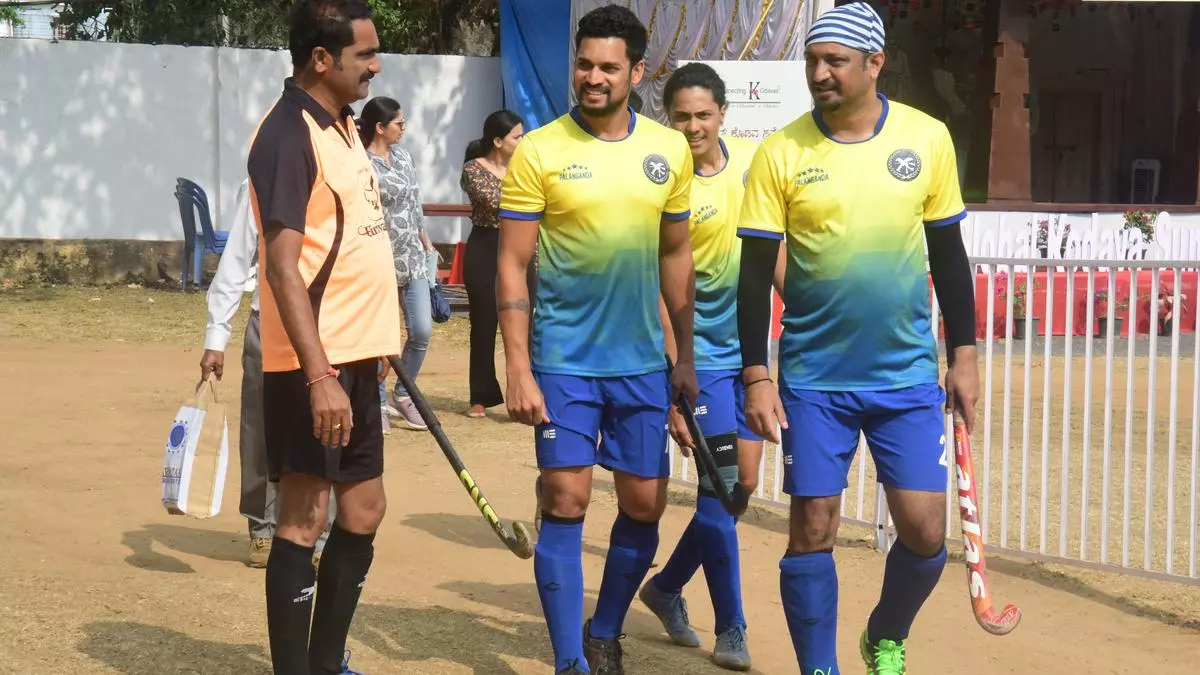
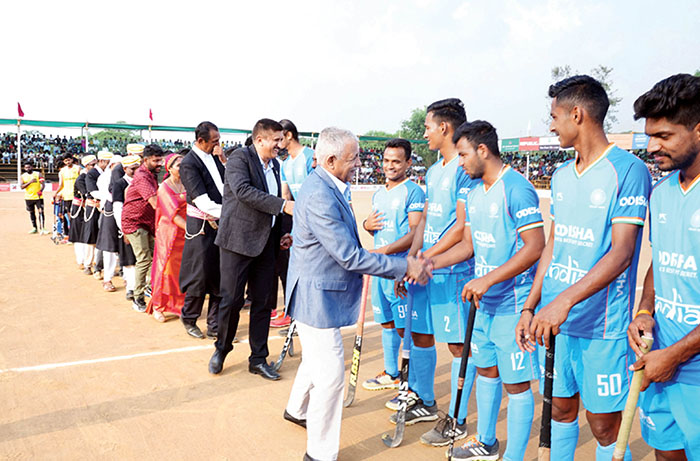
Picture shows former Indian Team hockey coaches M.P. Ganesh and A.B. Subbaiah greeting the players.
Heaping praises on the concept of a family hockey tournament, the CM said that the concept is wonderful and unique and brings Kodava families under one roof. “Kodava families are well-knit families. At a time when relationships are waning, the tourney has helped bring together families. Families should be united and relationships should bring together the people,” he said. “This is a special tournament as it is organised by the Kodava families. These families enjoy a good relationship, and family bond and the heritage of the Kodava community is being promoted through the game of hockey. The culture, tradition, and practices of the Kodavas unite all. Their attire and food are special,” he added.
“It is happy to note that this tournament is going on for the last 23 years. Families must unite and relationships must prosper. This is the culture of India. This kind of tournament is not seen anywhere in the world. Hence, the State Government has released Rs. 1 crore for the tournament,” Bommai said.
The hockey festival is being held from Mar. 18 to Apr. 9 on three grounds and a record 336 families or teams have registered for it. This is the 23rd edition of the event which had a four-year break from 2018 onwards owing to natural calamities in the district followed by the COVID-19 pandemic.
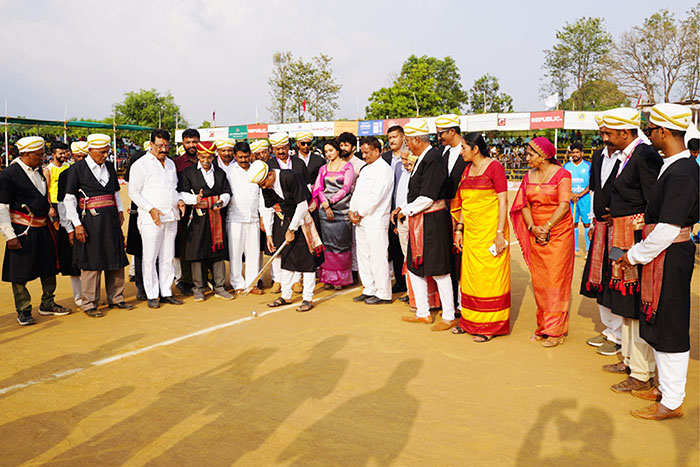
Earlier, the tournament began with a grand procession. Besides this year’s participants, the family teams which have participated in the tournament in the previous years also took part in the procession. Heads of the family teams gave the green signal for the hockey festival by firing 23 rounds of gunshots in the air.
The idea of a family tournament to bring together different Kodava families was conceived by the late Pandanda Kuttappa, popular as Kuttani, and the first edition was held in 1997 and has since then grown into a major event. The first exhibition match was held between the 37th Coorg Field Regiment and Kodava Academy-11. The second exhibition match was held between Indian Junior Hockey team and Karnataka team consisting of Olympian players from Kodagu.
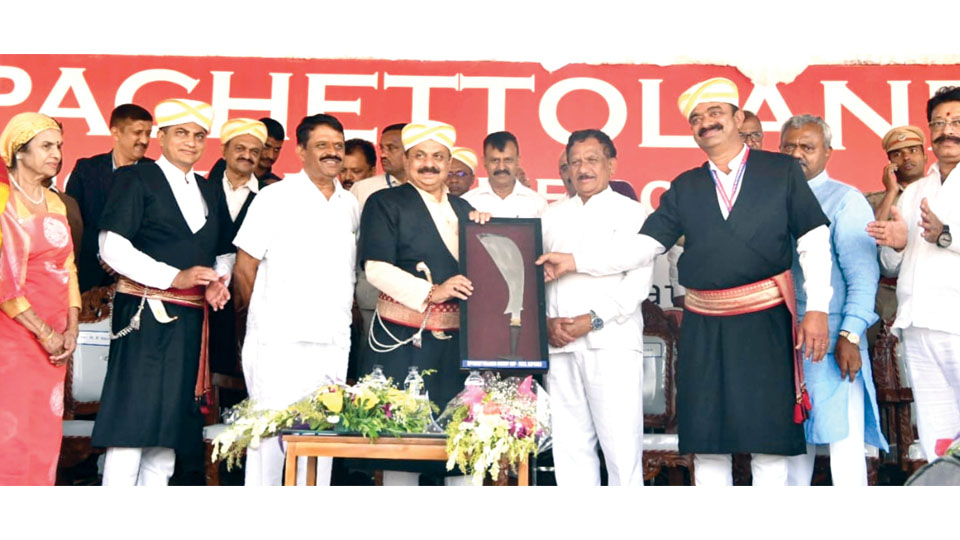
The CM was felicitated by handing over a silver hockey stick and silver ‘odikathi’ on the occasion. Bommai was dressed in Kodava attire, complete with ‘Kupiya-chele’, ‘peechekathi’ and ‘mandethuni’. Several cultural programmes were performed.
Minister S.T. Somashekar, MLAs K.G. Bopaiah, Appachu Ranjan, MP Pratap Simha, MLC Suja Kushalappa, former MLC Veena Achaiah, DC Dr. B.C. Satish, SP Ramarajan, ZP CEO Akash, ADC Nanjundegowda, CCF B. Niranjan Murthy, Kodava Hockey Academy Director Cheeyanda Satya, Hockey Festival Convener Appachattolanda Manu Muthappa, Appachattolanda family Pattedara Erappa, ex-Advocate General and Congress leader A.S. Ponnanna, Bangalore Kodava Samaja President M.T. Nanaiah, Padmashri Rani Machaiah, former hockey coaches M.P. Ganesh and A.B. Subbaiah were present.
source: http://www.starofmysore.com / Star of Mysore / Home> News / March 19th, 2023
The Kodava community in the hilly district conducts the inter-family hockey tournament every year where players from over 200 families participate.
The annual Kodava hockey festival has no bar on age or gender. The only rule of forming a team is that all members must be from the same family. | Photo Credit: File photo
Napoklu, a small town 21 km away from district headquarters Madikeri, is all set to host what is termed the world’s largest field-hockey tournament, as the annual Kodava hockey festival will be held from March 18 to April 9 after a four-year gap.
The town has only three mud grounds. On Thursday, workers were seen preparing the grounds for the tournament, while temporary bleachers were up on all sides of the ground where 30,000 spectators can be accommodated, said Navin, a member of the festival organising committee, while overseeing preparations at the Napoklu General Thimayya Ground.
“In all, three grounds will be utilised for the hockey tournament and they will also be used as a backup in case it rains,” he said. Multiple galleries, lighting, speakers, and display boards have been set up on the ground. An estimated ₹1.5 crore have been spent to organise the event by the family.
The Kodava community in the hilly district conducts the inter-family hockey tournament every year where Kodava players from over 200 families come together to play. From 2018, the hockey festival was not held due to large-scale devastation caused by heavy rainfall and the COVID-19 pandemic.
The sporting event has no bar on age or gender. The only rule of forming a team is that all members must be from the same family.
This year, the Appachettolanda family is organising the tournament under the aegis of Kodava Hockey Academy. “From every family, young boys and girls, men, women, and professionals, and former hockey players who have represented the State or country, will be part of the family team. Through this event, we are bringing all the Kodavas together. Most of the community members who are outside the district working in various professions come to Kodagu to be part of the sporting event like a festival,” said Appachettolanda Manu Muthappa, president of the Hockey Festival Committee.
The late Pandanda Kuttappa conceived the idea of the Kodava family hockey tournament, which morphed into a major sporting event and festival in the country. “Mr. Kuttappa started the Kodava Family Hockey Tournament in 1997 and was organised by the Pandanda family first in a belief that tapping the inherent love among the Kodavas for hockey could help bring the families and the community together,” Mr. Muthappa noted.
The tournament also emerged as a platform for the community members to discuss trade and business interests besides scouting for marital alliances, according to Maletira Srinivas, secretary of Kodava Hockey Academy. “In the first tournament which was held in 1997, nearly 60 teams took part. The format of the tournament was such that every year, one of the Kodava families had to host the event. Now, over 200 families participate where 3,000 players play hockey,” Mr. Srinivas said.
“Starting with the first tournament, the numbers have increased, reaching a high of 281 in 2003, where this event became the world’s largest hockey tournament. Lasting three weeks, it is a single-elimination tournament and concludes on April 9,” he added.
CM to inaugurate
The Kodava Hockey Namme (festival) is hosted by a different family each year and named after it. Families apply to the Kodava Hockey Academy expressing interest and are allotted the tournament after evaluation. There is no permanent venue; the festival has been held across the district in previous years.
On March 18, Chief Minister Basavaraj Bommai will inaugurate the festival, which will open with an exhibition match between India Junior XI and Karnataka Men’s XI. The organisers said the festival is held at an estimated cost of ₹ 1.5 crore all raised through funds. While the winning team of the festival this year will be given a cash prize of ₹3 lakh, the runners-up will get ₹2 lakh, and the second runner-up will get ₹1 lakh.
source: http://www.thehindu.com / The Hindu / Home> News> India> Karnataka / by Darshan Devaiah B P / March 17th, 2023
Ponnappa, 33-year-old former World Championship bronze medallist, has formed a new partnership in women’s doubles with 19-year-old Tanisha Crasto.
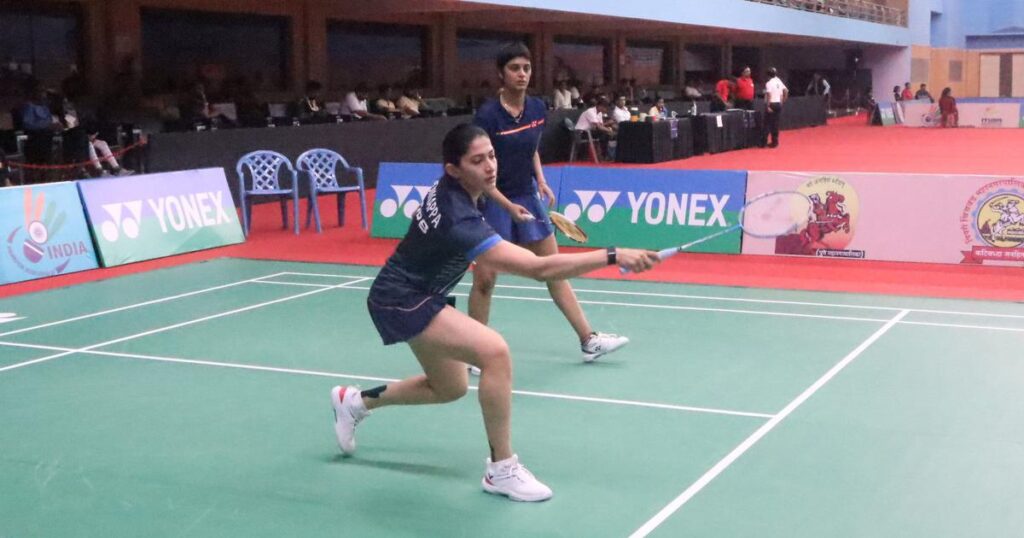
Ashwini Ponnappa along with her new partner Tanisha Crasto in Pune | Senior Badminton National Championships
Through the course of her career, Ashwini Ponnappa has been part of many firsts in women’s doubles for Indian badminton. Ponnappa and Jwala Gutta, became the first Indian women to win a badminton BWF World Championship medal (bronze in 2011). She has won gold, silver and bronze medals at the Commonwealth Games and also the women’s team bronze medal at the Incheon Asian Games in 2014. She has been part of Uber Cup bronze medal-winning squads.
But now the 33-year-old, a veteran of the sport in India, finds herself in the nascent stage of a women’s doubles partnership. In December, she made the decision to pair up with 19-year-old Tanisha Crasto for women’s doubles.
The change sees the once world No 10 women’s doubles player now find herself ranked 141 as a pair with Crasto, albeit they’ve played just two international competitions together – a quarterfinal finish at the Super 500 event in Indonesia in January, followed by a first round exit at the Thailand Open Super 300.
A third event was the quarterfinal finish at the 84th Senior National Championships, at the Balewadi Sports Complex in Pune on Sunday as they put up a good fight before losing against the in-form top-seed pairing of Gayatri Gopichand and Treesa Jolly.
It’s a long way back to the top, but in an interview with Scroll in Pune she asserted she’s looking forward to climbing back up the ladder, while also exploring a new role in commentary.
Excerpts from the interview:
How has the new partnership been working for you?
It’s good. Tanisha is young, she’s very energetic. It’s nice to play with that energy. We haven’t really had many tournaments together, we’ve played two and this is the third. But I’m excited to be here at the Nationals, it’s been a while since I played at this competition.
Earlier you had Jwala Gutta as a partner who was senior to you, then N Sikki Reddy who was not much dissimilar in terms of age. Now you have a partner who is 19. Are you also playing the role of mentor?
You could say that. I would say there’s a vast difference from when I started playing with Jwala to the youngsters now. They’ve all been playing international tournaments from when they were 17 or 18. They’ve all been there, done that. The doubles game has changed and the approach has changed. There’s not a lot of mentoring, she is good in mixed doubles and she’s done well there. Women’s doubles is a little different, but it’s good to have someone who moves into the net. She has that energy and speed on the court.
With age have you changed your approach to the game?
Of course. It’s inevitable for that to happen. I can’t be compared to a 19-year-old in terms of fitness and energy on court. I definitely have to be smarter on court towards the game in order to make sure that I can physically take the toll that badminton has on the body. I have to be very mindful of my training and how I approach the game.
Is it about the warmups and cooldowns getting longer now for you?
Yeah. Probably. But I’ve always been someone who had a longer duration for warmup. But cooldown definitely still needs to get better.
Recently we saw a different side to you – as a commentator. How was that experience?
I happened to be at the tournament and they asked me if I’d like to give it a shot. I felt no harm in doing that, although I feel that it’s not my cup of tea in terms of how I speak. I’d love to get better at it.
But I loved the experience. It was fun being on the other side of the TV. Watching players play you see things differently. You see patterns which you otherwise don’t look out for unless you’re getting ready for a match. That was interesting for me.
I sat for five matches during the Thailand Open, it was interesting for me to watch patterns match out of match. Like if one side was slower or faster, how players dealt with it. You understand that the player who is actually smarter on that day in dealing with the conditions has the upper hand. So that was very interesting that way.
Do you feel there were more expectations when you’re in the commentary box? Since people know here’s someone who has played at the highest level, is there an expectation for some insight which you’d not get otherwise?
Yeah, I am supposed to be the expert. The colour commentary part of it. It does get tricky because, that’s what I meant that it’s not my cup of tea. Not in a bad way, but being articulate about what I see, I’m not a journalist, I’m don’t have the lingo for it. So sometimes I feel, ‘what am I saying?’ Sometimes it’s so repetitive. But it was nice. Although I was a bit nervous, it was an enjoyable experience.
Is that something you’re looking to pursue later on?
Maybe later. Honestly, I don’t know. Right now, I’m definitely focusing on the game. But if I get these opportunities in between to commentate, I’ll definitely give it a shot.
What are the kind of things you and Tanisha have to do off-court just to get the chemistry going to gel on-court? And what are the targets?
This was our third tournament together. We’ve sent out entries for tournaments where we haven’t got an entry. But Tanisha will be playing in mixed doubles (with Ishaan Bhatnagar) in those tournaments. We haven’t had so much time in general to build the partnership because it is brand new, we just started. There’s still a long way to go, we still need that bonding time.
Is that, perhaps the target?
I would say the first target is to get an entry.
You mentioned the doubles game has changed. How?
Over the years the whole approach has changed. When Jwala and I were playing, we were kind of like the path-breakers in a way for doubles. There wasn’t a lot before us. Nobody we could look up to, nobody who had ever won. We had a lot of firsts together. But the game-changer has been that youngsters have been given a lot of exposure to tournaments. They’ve been playing tournaments since they are 17 – that was unheard of back then. We didn’t even have those tournaments in India.
Right now we have four international tournaments in India. You’re giving youngsters an opportunity to get that hunger at a very young age because you’re giving them a taste of what international badminton is. Also, everyone is going out, everyone is sponsored. That’s changed.
That’s why you see a lot of youngsters playing and taking it up. Otherwise, our generation, people in the past, they trained a lot, but never played tournaments. I wouldn’t say you didn’t have that talent back then, you just didn’t know. They were just training, they didn’t have the exposure, no push to go out. That has changed, and that’s why we see a rise in a lot of doubles players playing and doing well.
It’s because they’ve been pushed from a young age, getting out to participate, get that exposure, start training at a young age. These girls are 19. At that time, at 19, nobody was really encouraged to go out.
Yet you’ve remained relevant throughout this. What’s been the changes you’ve had to make in the way you approach the game to continue playing at the highest level?
I would say, I still need to get to the top. I have, in the past. But currently I’m starting from scratch. Ground zero. It’s challenging because you’ve been there and you’re coming back all the way down. It’s a reset.
source: http://www.scroll.in / Scroll.in / Home> Badminton / by Shahid Judge / February 27th, 2023
WELCOME. If you like what you see "SUBSCRIBE via EMAIL" to receive FREE regular UPDATES.
Read More »