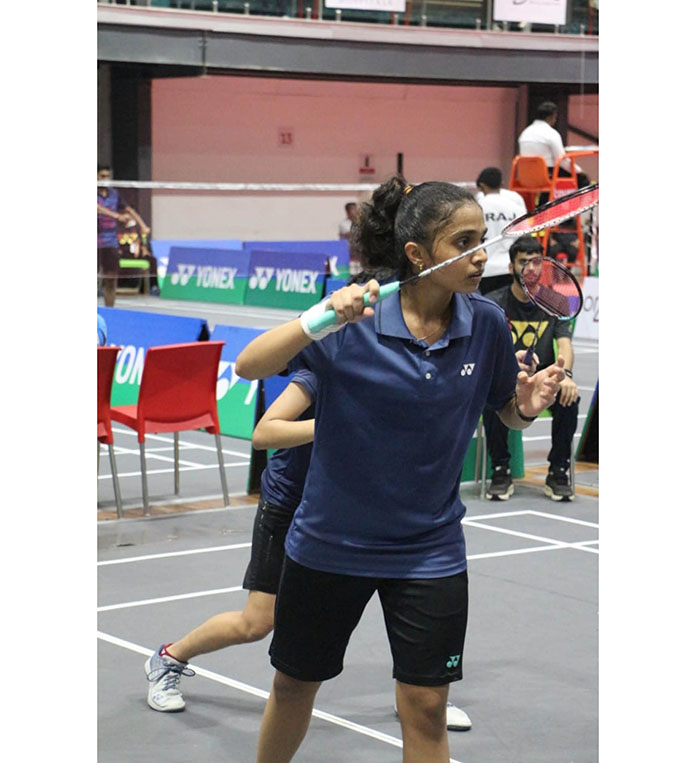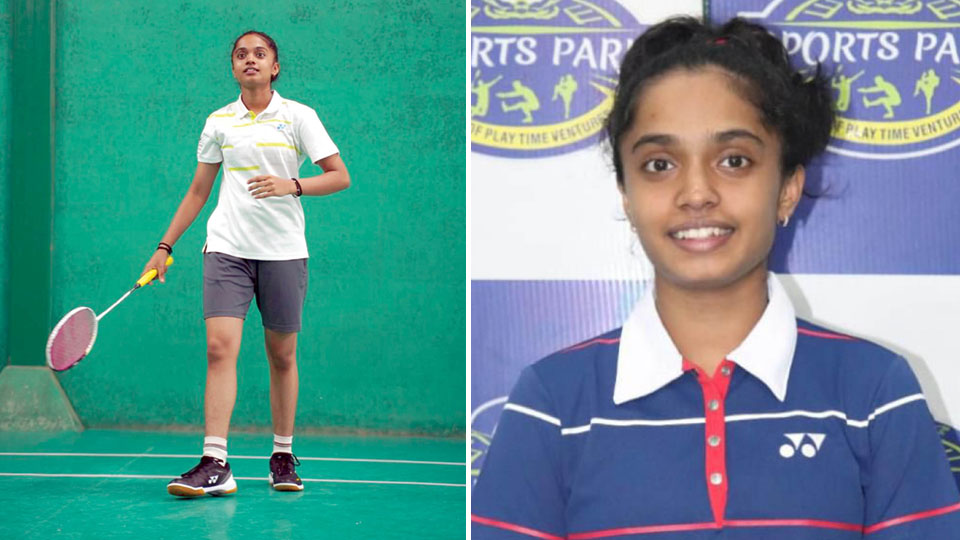
Thirty-eight-year-old squash champion Joshna Chinappa’s win at the National Doubles Championships shows she’s still in fine form.
Q. You recently won the women’s final at the National Doubles Championships alongside Anahat Singh. Do you have a long-term plan with this pairing?
Anahat and I were casually discussing the doubles and decided to play together. We will be playing the Asian Doubles Championships in Malaysia in June. She is a solid player, so it makes it easier and more fun.
Q. How have you modified your game with age?
I have a deep appreciation and respect for my body and what it has done over the past three decades for me to be able to play squash professionally. I definitely have to put in more work in terms of how I prepare for a game with my strength training, fitness, diet, etc.
Q. You’ve been playing squash for three decades now. How has the game evolved over the years?
The game has definitely gotten a lot more intense physically and you have so many different players with amazing skill to add to that physicality. There are so many tournaments happening all around the world and in India.
Q. What do you make of the next generation of Indian players?
There are a good crop of young players doing well at the junior and professional level. It’s so good to see about 6-7 of them playing the big PSA events consistently. I hope more juniors make the switch to go pro because that’s where the real test is.
source: http://www.indiatoday.in / India Today / Home> News> Leisure / by Pratibha Joy / June 10th, 2025
Using this app, people can update the last location where they spotted a wild elephant, and through an AI-based system, the movement of the elephant will be traced.
The siren system is being installed across 12 conflict zones in Virajpet limits. (Photo | Express)
Madikeri :
A new initiative to prevent untoward incidents related to wildlife movement is being undertaken on a trial basis in Kodagu. Funded by a private company, the early warning system has been installed by Support for Network and Extension Help Agency (SNEHA), an NGO.
An early warning system in the form of a siren to alert residents about wildlife movement within a one-kilometre radius has been installed by SNEHA on a trial basis in wildlife conflict regions across Virajpet in Kodagu.
The NGO is currently in the process of installing 12 such sirens across the conflict zones of Badaga Banangala and surrounding areas. While the initiative is currently at a trial stage, SNEHA plans to expand it further by introducing automated alert systems.
“This initiative is being carried out by SNEHA in Odisha and Kodagu regions. We are looking at developing the system further to ensure an automated alert system,” explained Ramaswamy Krishnan, the Executive Director of SNEHA.
He said the NGO has developed a mobile application called SNEHA Kalpvaig Elephant Tracker, which is being uploaded online to become accessible to all.
Using this app, people can update the last location where they spotted a wild elephant, and through an AI-based system, the movement of the elephant will be traced.
Further, based on the location of the elephant, a siren will be triggered to alert residents within a one-kilometre radius.
“The users who have this application can learn about the movement of the elephant, and this application is linked with the siren system. We have also placed about four camera traps in conflict zones, and these cameras are being monitored by the staff at the office to activate the siren manually,” he explained.
The cameras click pictures every minute, and these photographs are reviewed by the appointed staff, who can activate the siren if an elephant is detected within the designated area.
“We want to make this an automated system, and we are devising plans where the cameras can automatically detect wildlife movement,” he confirmed. When the sirens are activated, a voice alert message is also sent through the mobile application simultaneously.
The alert system is currently being implemented in Kodagu on a trial basis, with the NGO having formed a tracking team to monitor wildlife movements.
A total of 12 sirens have been installed across conflict zones in the Virajpet limits. The initiative is being funded by Sucden Coffee Pvt Ltd and is being implemented in collaboration with the Forest Department.
source: http://www.newindianexpress.com / The New Indian Express / Home> Karnataka / by Prajna GR / May 30th, 2025
Codanda Devika Cariapa was recently conferred the prestigious Times of India About Her Award for the Best Children’s Author (Non-Fiction) 2024 at a grand ceremony in New Delhi.
She won the award for her book, ‘A Children’s History of India in 100 Objects’ published by Penguin Random House India. The award sees over seven thousand entries across five categories with only four books making it to the final shortlist.
The book is a compilation of information and depictions of 100 objects that have significant relevance in Indian history from prehistoric times to modern-day India. The emphasis has been to capture India’s diversity through concise and descriptive texts and beautiful illustrations.
Devika Cariapa has been the recipient of multiple literary awards for Children’s Literature including the Sahitya Akademi Bal Sahitya Puraskar, the Neev Book Award and The Hindu-Young World Award.
She is the daughter of Lt Gen Biddanda Chengappa Nanda and Mrs Leela Nanda and wife of Gp Capt Codanda Chitrajit Cariapa.
source: http://www.clnews.in / CoffeeLand News / Home> General / by CLN News Desk / April 12th, 2024
While the literary world applauded in London, back home in Kodagu, her win was met with joy, disbelief, and a bit of solitude.
Deepa Bhasthi won the International Booker Prize for her translation of Kannada author Banu Mushtaq’s Heart Lamp short story collection, in London on May 20, 2025. | Photo Credit: Deepa Bhasthi/Instagram
While Karnataka’s Kodagu-born writer Deepa Bhasthi celebrates a historic International Booker Prize win in London, her husband Chettira Sujan Nanaiah is celebrating in his own quiet way — on a farm, with five pet dogs, and congratulatory phone calls at their peaceful home in Madikeri.
On Tuesday night, Ms. Bhasthi, along with writer-activist Banu Mushtaq, was awarded the prestigious GBP 50,000 International Booker Prize for her translation of the latter’s short story collection, Heart Lamp. While the literary world applauded her in London, back home in Kodagu, the win was met with joy, disbelief, and a bit of solitude.
Speaking to The Hindu over the phone on Wednesday morning, Sujan Nanaiah — an artist-turned-farmer — shared his happiness. “She’s still in shock and joy. We spoke briefly in the morning. I couldn’t be there with her due to other commitments, but I’m extremely happy and proud,” he said.
Quiet life in Madikeri
The couple, who moved to their native Madikeri during the COVID-19 pandemic, have been living a quiet life on their farm surrounded by lush greenery. “It’s a simple life. We grow our own food, look after our pets, and enjoy being close to nature,” he said.
Mr. Nanaiah, who studied fine arts at Karnataka Chitrakala Parishath in Bengaluru, first met Ms. Bhasthi seven years ago at an art exhibition where he was a participant. What began as a friendship evolved into marriage and a shared life in Kodagu.
As calls poured in from family and friends, Mr. Nanaiah was busy tending to farm duties and looking after their pets. “I didn’t expect her to win, but I’m thrilled for her and the recognition it brings to Kannada literature,” he said, adding that he was the one who shared the good news with Bhasthi’s parents on May 21 morning. “They were emotional and proud. It’s a big moment for our family,” he added.
Born and raised in Madikeri, Ms. Bhasthi studied at Kodagu Vidyalaya before moving to Mangaluru for a degree in Mass Communication. She worked with print publications in Bengaluru before transitioning to freelance writing and literary translation.
Mr. Nanaiah said that Deepa’s return to Kodagu is expected around May 26, though her schedule is still uncertain. For now, as she enjoys her moment on the international stage, her immensely proud husband continues to hold fort at their serene Madikeri farmhouse.
source: http://www.thehindu.com / The Hindu / Home> News> Karnataka / by Darshan Devaiah B P / May 22nd, 2025
Karisma Aiyappa (centre) was crowned ‘Mrs. Bharat California 2025’ by Mydream TV USA at an event held at California recently.
Karisma, a HR/logistics professional in Silicon Valley, is a former State-level athlete and a passionate dancer.
Picture above shows Karisma walking the ramp in the traditional Kodava attire
A native of South Kodagu and daughter of Poilengada P. Machamma and late Alemanda Aiyappa, residents of Kuvempunagar in Mysuru, Karisma is married to Abhishek, an employee of Microsoft, Bay Area, California, USA.
Karisma’s participation in various Coorg events in the USA showcases her commitment to her heritage.
source: http://www.starofmysore.com / Star of Mysore / Home> Photo News / May 13th, 2025
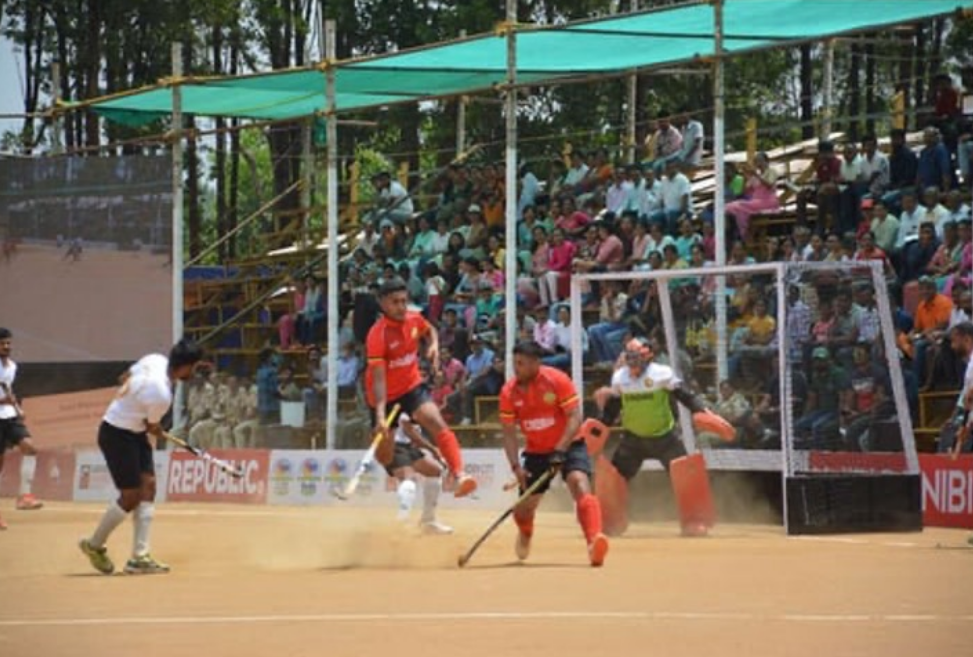
In the lush hills of Kodagu, a remarkable sporting and cultural phenomenon has reached a new milestone. The 25th edition of the Kodava Hockey Festival — hosted this year by the Kundyolanda family — has officially entered the Guinness World Records as the largest field hockey tournament, boasting an astonishing 3,640 players across over 360 family teams.
This year’s month-long edition ran across three grounds and finished late April.
What began as a dream in 1997 by the late Pandanda Kuttappa, a former hockey referee and State Bank of India employee, has transformed into an unparalleled spectacle of sport and community.
His vision was simple yet profound: unite the globally dispersed Kodava community through hockey — a sport embedded deep in their identity. Kodagu, often called the “cradle of Indian hockey,” has produced over 50 national players and seven Olympians, making the festival a natural extension of local pride.
“This festival is about more than just winning or losing,” Pandanda K. Bopanna, president of the Kodava Hockey Academy and son of the founder, told The Hindu newspaper.
“It’s about keeping our culture alive, connecting generations, and celebrating our heritage.”
This year’s silver jubilee celebrations were extra special. According to the official Guinness World Records entry, the event was recognised for having the most field hockey players in a tournament, overtaking all previous records.
“We have a rich tradition of serving the Armed forces. The British were already playing hockey and they found that the Kodavas had taken to the sport well. With a little bit of encouragement, the sport caught on,” says Navin Poonacha Kanganda, who has promoted the festival in the digital space, told Red Bull a few years ago.
A women’s tournament featuring 30 teams was introduced for the first time, symbolising the progressive spirit of the Kodava community. The festival torch — akin to the Olympic flame — was ceremoniously carried to the ancestral Ainmanes of past host families, reinforcing the powerful links between tradition and sport.
The Deccan Herald captured the festival’s atmosphere, describing the grounds as “a place where hockey sticks clash as fiercely as family pride, amid a carnival of Kodava culture.”
Traditional Kodava attire, food stalls, cultural performances, cyclothons, and shooting competitions lend the event the feel of a grand village fair — with hockey at its heart.
From humble beginnings in the small village of Karada with just 60 teams, the festival has grown into a massive undertaking requiring three specially-prepared mud fields, an effort largely borne by the host families.
“Despite international recognition, the festival struggles with basic sports infrastructure,” Bopanna noted. “The government must do more — a permanent hockey stadium in Kodagu would honour the festival’s contribution to Indian hockey.”
For the Kodavas, the festival is more than a sporting event.
As Ajjinikanda Mahesh Nachaiah, president of the Karnataka Kodava Sahitya Academy, put it: “It’s a reunion, a business hub, a marriage bureau, and a cultural festival all rolled into one.”
The clatter of sticks and laughter of reunited families echo a truth that Pandanda Kuttappa knew all along: hockey, for the Kodavas, is life itself.
source: http://www.thehockeypaper.co.uk / The Hockey Paper / Home> Features / by Hockey Paper Staff / May 06th, 2025
Chenanda to host 26th edition of Family Hockey Tournament at Napoklu in 2026
Madikeri:
The Mandepanda family was declared the winner of the Muddanda Hockey Festival 2025 held at Field Marshal K.M. Cariappa College Grounds, Madikeri, after heavy rain interrupted their final against the Chendanda family yesterday.
Mandepanda was leading 1-0 when a downpour forced the match to be abandoned just over 12 minutes into play. Later, the organisers issued a statement confirming Mandepanda as the champions of the Silver Jubilee edition of the Kodava Family Hockey Festival.
Amidst overcast skies and thunderous cheers from the crowd, the much-anticipated final had begun with high energy. Chendanda earned the first penalty corner early on, but Olympian Nikin Thimmaiah failed to convert the opportunity.
Mandepanda responded with sharp counterattacks, securing their first penalty corner, which Gautam successfully converted to give Mandepanda a crucial 1-0 lead in the first quarter.
Rain began to intensify during the second quarter as Chendanda pushed hard for an equaliser. Despite earning back-to-back penalty corners, they failed to break through Mandepanda’s defence. As lightning flashed and thunder rolled, torrential rain forced a suspension of play.
Relentless downpour left the field waterlogged. After about half an hour of efforts to clear the standing water, the match briefly resumed. Chendanda came close to scoring, but Mandepanda’s young goalkeeper Dhyan Bopanna made a brilliant save to preserve his team’s lead.
Moments later, the rain returned with greater intensity, turning the ground into a virtual stream. With further play impossible, officials from the Kodava Hockey Academy, referees and team managers declared Mandepanda the winners.
Despite being soaked twice over, the spirit of the crowd remained unbroken. Spectators packed into gallery corners, cheering, clapping and even dancing in the rain. However, disappointment lingered among fans and organisers alike, as many had hoped for a full and thrilling conclusion to the Silver Jubilee tournament. Earlier, in the third-place match, Nellamakkada defeated Kuppanda (Kaikeri) 2-1 to claim third spot.
The Kambiranda family that won the Muddanda Cup Women’s Hockey Festival 2025.
VIP speeches delay action
The final was marred by significant delays and drew heavy criticism from spectators. Many expressed frustration over poor planning and coordination, blaming the organisers for nearly four-hour delay in starting the final.
Originally scheduled to begin at 11 am, the final was postponed due to an extended inaugural ceremony where several Ministers and elected representatives delivered prolonged speeches, pushing the start time to around 2 pm.
Home Minister Dr. Parameshwara addressing the gathering.
Mere minutes after play commenced, heavy rain lashed Madikeri, leading to the abandonment of the match. “When a match is scheduled for 11 am, starting it at 2.30 pm is simply unacceptable — especially with rain forecasts and spectators waiting, hungry and eager, to watch the finals,” many said.
“Are we here to watch hockey or to listen to endless speeches?” one frustrated fan remarked. Spectators further noted that in professional tournaments, VIPs attend to witness the sport, not to hold the mic and deliver lengthy lectures, disregarding the value of spectators’ time.
Among the speakers were Home Minister Dr. G. Parameshwara, Urban Development Minister Byrathi Suresh, Higher Education Minister Dr. M.C. Sudhakar, Health Minister Dinesh Gundu Rao, Mysuru-Kodagu MP Yaduveer Krishnadatta Chamaraja Wadiyar, Virajpet MLA and CM’s Legal Advisor Ajjikuttira S. Ponnanna, Madikeri MLA Dr. Mantar Gowda, MLC Mandepanda Suja Kushalappa, Kodava Hockey Academy President Pandanda Bopanna and Muddanda Hockey Festival Committee President Muddanda Rashin Subbaiah.
Just minutes after the final match between the Mandepanda and Chendanda began, heavy rains lashed Madikeri, leading to waterlogged grounds.
World Wide Book of Records recognition
The Silver Jubilee Muddanda Cup set a new record with 396 men’s teams comprising 5,544 players competing in 397 matches, alongside 58 women’s teams with 464 players competing in 57 matches during the five-a-side tournament.
The festival was officially entered into the World Wide Book of Records, with Sindhuja, a representative from the record book, announcing the recognition at the closing ceremony and presenting the certificate to the Muddanda family.
The 26th Kodava Family Hockey Festival will be hosted by Chenanda family at Napoklu in 2026. The family ceremoniously accepted leadership during a flag procession held on the Muddanda Cup Grounds.
source: http://www.starofmysore.com / Star of Mysore / Home> News> Sports / April 28th, 2025
Another Mysurean Drithi Bopanna, pursuing M.Sc., in Global Business Management at Rennes School of Business, France, has been selected as a scholarship delegate for United Nation Organisation’s Annual “Change the World” Conference to be held at the UN Headquarters, New York City, in March 2019.
An alumnus of St. Joseph’s Central School and Sapient College, Vijayanagar, Drithi is the daughter of late Puliyanda Nithin Bopanna and Dr.Sujatha Bopanna, Dean of Studies, De Paul Degree College, Mysuru.
About the conference
The “Change the World Model United Nations (CWMUN)” is an annual international meeting attended by 2,500 students from all over the world, where they debate the major issues of international political agenda.
RAdm IB Uthaiah, took over as the Director General, Warship Design Bureau, New Delhi, from RAdm Bimal Kumar.
Commissioned into the Indian Navy in Nov 1987, RAdm IB Uthaiah is an alumnus of the Naval College of Engineering, INS Shivaji, Lonavala, and holds an M. Tech and M. Phil degree in addition. In a career spanning over 35 years, he has served the Indian Navy in various capacities; with appointments at the Warship Design Bureau, Training Academies, Naval Dockyard (Vzg), all Naval Commands and the Naval Headquarters.
On being elevated to Flag Rank, the officer has tenanted appointments as Additional Director General (Technical), Project Seabird; Admiral Superintendent, Naval Dockyard, Visakhapatnam, and Chief Staff Officer (Technical), at the Headquarters, Eastern Naval Command, prior taking over his current assignment.
source: http://www.aviation-defence-universe.com / Aviation & Defence Universe / Home> Navy / February 01st, 2023
This summer was bitter for many homes in Kodagu. Their wells almost dried up before the monsoon broke. But 47-year-old Suraj Ajjikuttira in south Kodagu didn’t have to worry.
His recharge well, probably the first one in hilly Kodagu, ensured that his open well had ample water during the dry season.
Buoyed by his success, Ajjikuttira made it his mission to spread his knowledge of harvesting rain through videos, workshops and meetings. People can even phone and ask him. As a result, awareness is spreading and the recharge well is increasing in popularity. Kodagu now has at least 40 to 50 recharge wells.
Ajjikuttira’s interest in rainwater harvesting began two decades ago, when his 50-foot well, dug in 1979, started going dry. By 2002 he thought he had no option but to dig a bore well for drinking water. Then, fortuitously, he participated in a seminar on rainwater harvesting in Mysore. He picked up the nuances of groundwater recharge very quickly.
Ajjikuttira went home determined to apply his newly acquired knowledge by recharging his bore well. He dug a 10-foot-deep mini well around it. After filling up the mini well with aggregate matter, he diverted run-off from the nearby area into his bore well. The next year itself, the water level in his bore well rose considerably.
“That convinced me about the efficacy of groundwater recharge,” reminisces Ajjikuttira. He doubled his efforts and started a serious attempt to catch all the rainwater he could on his estate. He turned his attention to rainwater falling on his roof, on the vast frontage of his home and the adjoining coffee-drying yard or ‘kana’.
Earlier, all this water used to disappear into a drain. Ajjikuttira now ensured that all run-off got collected at one spot and then flowed out. A leaf separator was attached at the exit point to prevent leaves from clogging this stream of water.
The usual custom is to make a rain pit for such run-off to percolate. But, in this case, the water that was flowing was excessive. After racking his brains, Ajjikuttira dug a recharge well, five feet in diameter, to catch this water. He placed concrete rings along the inner walls of the well 12 feet deep, to prevent its walls from collapsing. The diameter was then reduced. Another six to eight feet were dug and filled with stones to firm up the second stage of the recharge well.
Suraj Ajjikuttira near a large tank which now collects rainwater
Consequently, rainwater collected from about 1,500 square feet of space goes straight into Ajjikuttira’s recharge well and is fully absorbed there. “At the most we get one inch of rain per day. I have designed the recharge well in such a way that even this one inch of water is captured,” he explains. The water that is percolating is estimated to be around two lakh litres.
Ajjikuttira’s well was 42 feet deep when his father got it dug in 1979. In 1994, when the well dried up, it was deepened by another eight feet and eight rings were fixed on its walls. After that the well never dried up. Even during the 2016 drought, Ajjikuttira’s well had eight feet of water. Last year, when wells dried up in Kodagu, Ajjikuttira’s well had 11 feet of water.
The recharge well is a new concept invented in Chennai in the 1990s. Later, the idea was embraced by residents of Bengaluru. The city now probably has around 50,000 recharge wells. The sole purpose of the recharge well is to recharge groundwater. The well can be very small in diameter, as low as three feet.
COFFEE AND RAIN
Kodagu district’s main crop is coffee. Coffee plants are rain-fed. The first showers or ‘blossom showers’, received in February and March, are very important for coffee farmers. If it doesn’t rain at this time, farmers have to pump up water from tanks and sprinkle or irrigate the plants.
After the blossom showers are over, coffee plants require a second spell of irrigation within 15 to 20 days. These showers are called ‘back-up’ showers. If the rains fail to arrive then farmers who still have water do a second round of sprinkling.
The water in Ajjikuttira’s tank was hardly sufficient for even one round of irrigation. About 200 metres away from his tank is a huge seven-acre tank called Katibetta Kere. This water body belongs to the revenue department. It has a catchment of around 500 acres. But the tank’s bund had breached in one area and it wasn’t retaining water. Ajjikuttira built a check dam with sand bags in the catchment area so that the tank would retain water and help his own tank absorb some water.
Katibetta Kere is at a higher elevation than Ajjikuttira’s irrigation tank. Subsequently, the department built a concrete check dam for Katibetta Kere. Recalls a happy Ajjikuttira, “Since then, this tank has enhanced water availability in my own tank. Now, even if we do three rounds of irrigation, the tank still has water.”
Rainfall figures differ across Kodagu district. Ajjikuttira’s place receives 54 inches — coffee planters still measure rain in inches — whereas not-so-distant Virajapet gets 70 inches. Wetlands here are dwindling and so is forest cover. Due to various reasons, water availability is worsening in the district. Unfortunately, awareness about rainwater harvesting and groundwater recharge is abysmally low.
Once Ajjikuttira succeeded in augmenting water availability in his estate, he started spreading the idea of water harvesting. In the last 15 years, he has conducted more than 300 awareness sessions on rainwater harvesting in schools, government departments, workshops for citizens and so on.
“In most Kodagu estates, the house is located at a higher level. In the past, the yard for drying coffee beans and paddy used to be built near the paddy fields in a lower area. But due to security reasons the yard is now constructed close to the house. So the typical house would have a large area in front with a drying yard close to it. This entire stretch is either built with concrete or lined with interlocking tiles. So a huge amount of clean water flows on this surface,” says Ajjikuttira.
“We need a structure that can hold this run-off and make it percolate fast. I experimented with the recharge well. Although it is expensive, it does the job efficiently.”
Ajjikuttira is approached by people on the phone or in person for guidance in harvesting rainwater. “If we make arrangements to catch all the run-off from the front area and the drying yard, summer rains alone will ensure the well doesn’t dry up,” he says confidently. A recharge well costs approximately Rs 60,000-70,000.
Ajjikuttira carries out a simple test to check whether the bore well can be artificially recharged. A few barrels of water are kept nearby and poured into the bore well one after another. If the bore well overflows, it indicates that it won’t absorb water and recharge. The idea is then abandoned.
SPREADING AWARENESS
Ajjikuttira has put together a three-part video to spread knowledge on rainwater harvesting in Kodagu. Uploaded on YouTube, it tells people how to use rainwater directly, how to recharge defunct and working bore wells and how to use a recharge well for groundwater recharge.
After taking advice from Ajjikuttira, Tej Thammaiah Ajjikuttira constructed a recharge well 10 feet in diameter and 22 feet deep last year. The well is a big one because Thammaiah’s bungalow, front yard and ‘kana’ spread to about a hectare. The well has cost him Rs 130,000.
Thammaiah’s open well, 60 feet deep, didn’t dry up completely. But by the end of summer it would have only four to five feet of water. Last summer it had 30 feet of water because he followed in Ajjikuttira’s footsteps.
Rakshith of Sulagodu is another estate owner who sought Ajjikuttira’s advice. He has an open well which is 100 feet deep. It used to dry up in summer and he found it difficult even to provide water to his labourers. He built a recharge well which cost him Rs 70,000. Two years later his water woes are over.
“Now I have water up to 25 feet,” he says. “By the end of summer, water levels recede by seven to eight feet. I don’t have to worry about drinking water for many decades to come.”
Soil in Kodagu collapses very easily. Ajjikuttira has noticed that many people dig a recharge pit quite close to the well. “This is highly risky. Many wells have collapsed because pits were dug very close to them. It’s always better to locate the pits about 15 or 20 feet away,” he warns.
He points out that each estate is endowed with expansive areas from where water can be easily harvested. “The shifting of the drying yard from lower areas near paddy fields to the area adjoining the house in an elevated area has also caused water scarcity in open wells. This is because we cement all these areas and never permit water to percolate.” Planters who have realised this are taking corrective measures to allow for percolation.
Coffee estates require huge quantities of water for irrigation to induce flower blossoming. “There are several earthen tanks or keres in Kodagu. You can see these tanks on Google earth. But, unlike the old days, tanks are dug unscientifically. The selection of the site should be such that we can divert streams of water into it. Many new tanks don’t have this.”
Another important groundwater recharge structure in these estates is a legacy of British planters called ‘thottilu gundi’ or cradle pits, so called because of the shape. Thottilu gundis were systematically and periodically dug and cleaned amidst rows of coffee. They would convert surface run-off from the hills into sub-soil seepage that would reach the tank after many months. “Due to the high cost of labour and poor labour availability, many of us have bid goodbye to digging of this very useful system,” laments Ajjikuttira.
Contact Suraj Ajjikuttira at 9901012970
source: http://www.civilsocietyonline.com / Civil Society / Home> Environment / by Shree Padre, Kodagu / August 29th, 2019 (updated December 03rd, 2020)
WELCOME. If you like what you see "SUBSCRIBE via EMAIL" to receive FREE regular UPDATES.
Read More »