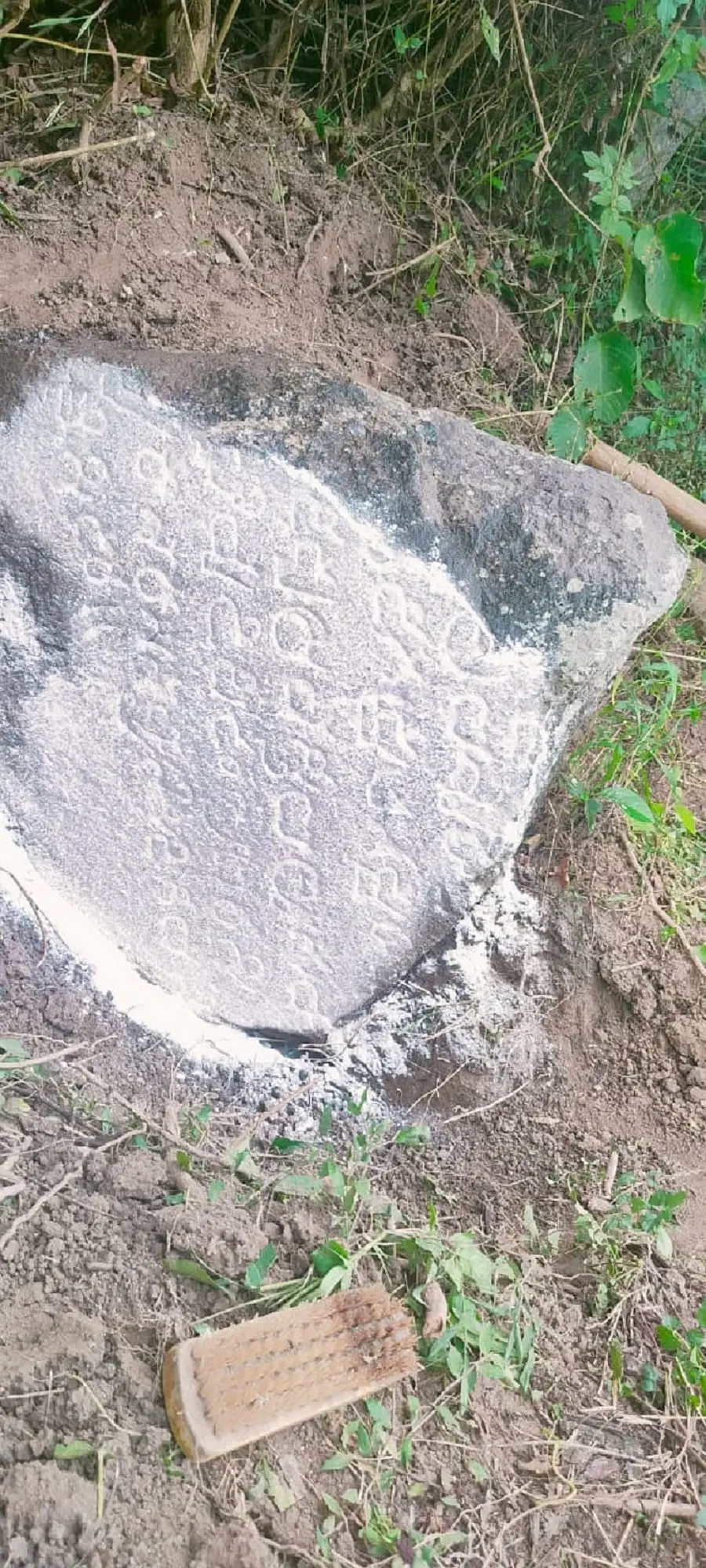
The discovery of the inscriptions by Archaeology, Museums and Heritage department curator B P Rekha during a survey that started in 2023 is considered to be the largest one in Kodagu after B L Rice.
A rare ‘Nishidhi’ inscription found in Kodagu. Credit: Special Arrangement
Madikeri:
The transcription of newly found stone slab inscriptions in Karnataka’s Kodagu district has now been completed.
The discovery of the inscriptions by Archaeology, Museums and Heritage department curator B P Rekha during a survey that started in 2023 is considered to be the largest one in Kodagu after B L Rice.
B L Rice had published the transcription of the 114 stone slab inscriptions he had found in Kodagu in the ‘Epigraphia Karnataka’ in 1886.
B P Rekha recently found 69 inscriptions.
H M Nagarajarao, an expert of inscriptions from Mysuru has prepared the transcription of the inscriptions, revealing interesting details.
For instance, in an inscription found in Niluvagilu village dating back to the 9th century AD, a mention has been made about Vasanthi temple, which is not to be found today.
In another inscription found in Edavare village dating back to the 9th century, speaks about a person called Vendi who ascended to the heaven. He was titled ‘the Brahma of Kaliyuga’, the inscription mentions.
A person called Kanakasenaiah had installed a ‘Nishidhi’ inscription at Kalthmadu in Virajpet, in memory of his Guru.
There are several inscriptions pertaining to Jainism.
An inscription is cleaned and smeared with a chemical for copying the text.Credit: Special Arrangement
An inscription unearthed in Shirangala dating back to 11-12 th century AD mentions the name ‘Sirivangala’ which could be the ancient name of the region. Also, there are mentions of River Cauvery and persons named Siriyamma and Kava Gowda.
Some of the inscriptions even date back to 8th century AD.
An inscription related to Rajendra Chola has been found in Seegehosuru, which highlights the fact that the empire of the ruler extended till Kodagu.
An inscription has been found in Mrityunjaya temple, which mentions the place ‘Vangala’. Another rare inscription from Basavanahalli has a mention of Badiva of Kongalva. It is the rarest available inscription about the Kongalvas.
B P Rekha said that the transcription of 69 inscriptions is complete. A detailed study of these will shed more light on history.
source: http://www.deccanherald.com / Deccan Herald / Home> India> Karnataka / by K S Girish / November 01st, 2024
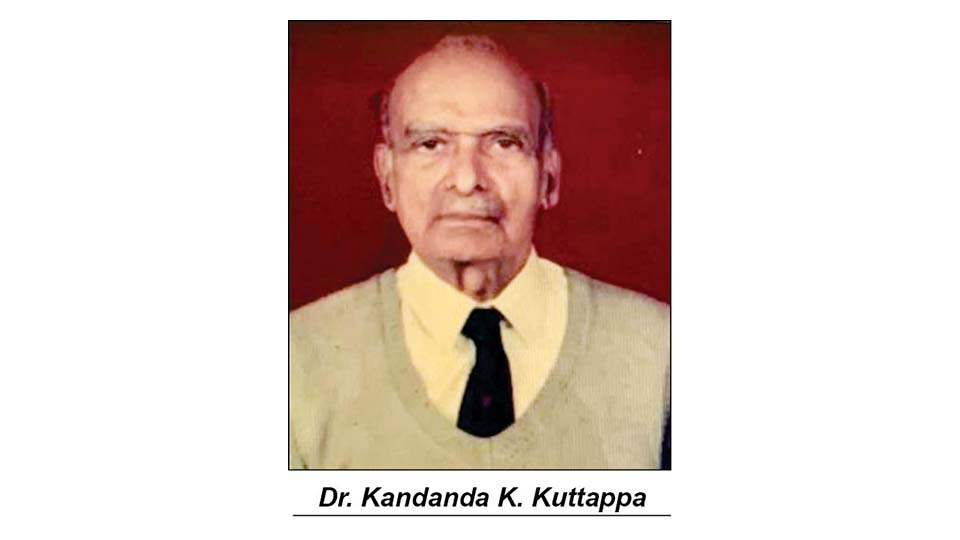
Dr. Kandanda K. Kuttappa (97), a World War II veteran and a resident of No. 952, 8th A Main, 10th Cross, Vijayanagar 1st Stage, passed away here yesterday morning. His wife Shanthi Kuttappa (87) had passed away on Sunday morning (Jan. 22).
He leaves behind his son Lt. Col. Ravi Ayappa, daughter Meera Madappa, daughter-in-law Lekha Ayappa, son-in-law Arvind, grandchildren, great grandchild and a host of relatives and friends.
Profile:
Dr. K.K. Kuttappa had served in Royal Army Service Corps (RASC) in Burma during 1941-45 after which he obtained his Ph.D in Psychology from Mysore University and served as a Psychologist in Services Selection Board (SSB) for almost three decades before retiring from SSB, Bengaluru, in 1983.
He had also served as a Professor at Armed Forces Medical College (AFMC) in Pune. Having known Gen. K.S. Thimayya personally in Burma and being a great admirer of the General, he had collected a lot of material on his life and had personally initiated the shifting of his grave to the Army Service Corps (ASC) Centre in coordination with HQ Southern Command. Dr. Kuttappa was also a social worker.
Last rites were held at Chirashanthidhama in Gokulam yesterday afternoon, according to family sources.
As a tribute to the departed soul, wreaths were laid by the representatives of the Chief of Army Staff and the Director General of NCC, New Delhi.
source: http://www.starofmysore.com / Star of Mysore / Home> News / January 24th, 2023
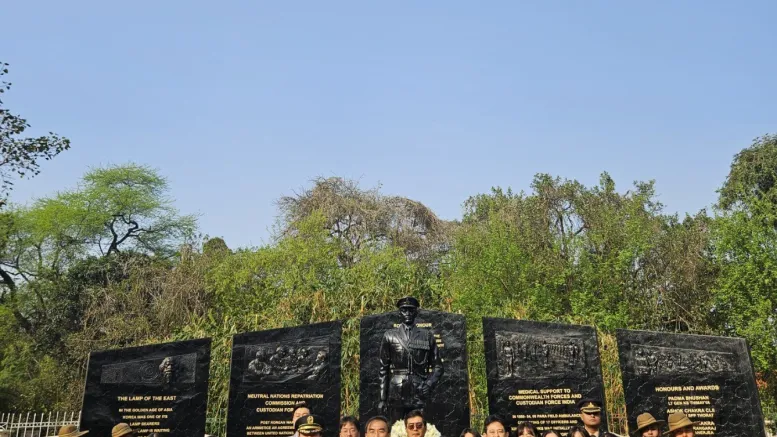
Lee Seong-ho, the Ambassador of South Korea in India, and other top diplomats on Friday visited the Indo-Korean Friendship Park in Delhi Cantonment, fondly recalling the contribution of Indian forces during the Korean War of 1950-53.
During their visit to the park, a symbol of strong ties between India and South Korea, the officials also paid tribute to late General K S Thimayya, a celebrated soldier who led the Indian contingent as Chairman of Neutral Nations Repatriation Commission (NNRC) in Korea headed by India.
“Ambassador Lee Seong-ho and his team visited the Indo-Korean Friendship Park on the 21st of February and paid homage to General Thimayya, who headed a UN unit dealing with the repatriation of prisoners after the Korean War,” the South Korean Embassy in India posted on X.
“We also recalled that India sent the largest number of medical personnel during the Korean War. Remembering the enduring friendship between Korea and India, the Korean Embassy will do our best to further develop our Special Strategic Partnership.” the post further added.
India’s First Indo-Korean Friendship Park was jointly inaugurated by Defence Minister Rajnath Singh and his Korean counterpart Suh Wook in March 2021.
The park, spotlighting India’s contributions as part of 21 countries which participated in Korean war 1950-53 under the aegis of the United Nations, was developed in joint consultation with India’s Ministry of Defence, Government of India, Indian Army, Delhi Cantonment Board, Embassy of Korea and Korean War Veterans Association of India.
Spread across a green area of six acres, the park has an imposing handshake artifact standing tall at the entrance bearing flags of India and South Korea besides a larger than life statue of General Thimayya.
South Koreans still remember General Thimayya, who was awarded a Padma Bhushan for his service in Korea, with gratitude and affection. General Thimayya also served as the Chairman of the Neutral Nations Repatriation Commission (NNRC) after the armistice and contributed to resolving the humanitarian issues arising out of the War.
India played an important role in the Korean peninsula after Korea’s independence in 1945, sending an army medical unit – the 60th Parachute Field Ambulance comprising 627 medical personnel, commanded by Lt. Col. A.G. Rangaraj – during the Korean War as part of the UN Command. The unit treated about 220,000 patients. During the Korean War (1950-53), both warring sides accepted a UN resolution sponsored by India and the ceasefire was declared on July 27, 1953.
India-South Korea diplomatic relations were elevated to a ‘Special Strategic Partnership’ in 2015 during the State Visit of Prime Minister Narendra Modi to Seoul.
Source: IANS
source: http://www.socianews.xyz / Social News XYZ / Home> Diplomacy / by Gopi / February 21st, 2025
This ‘journey by foot’ (kaal nadp) was called ‘Kodavaame Balo’ (‘May the Kodava way of living live on’). The participants walked through several towns over six days (from February 2 to 7).
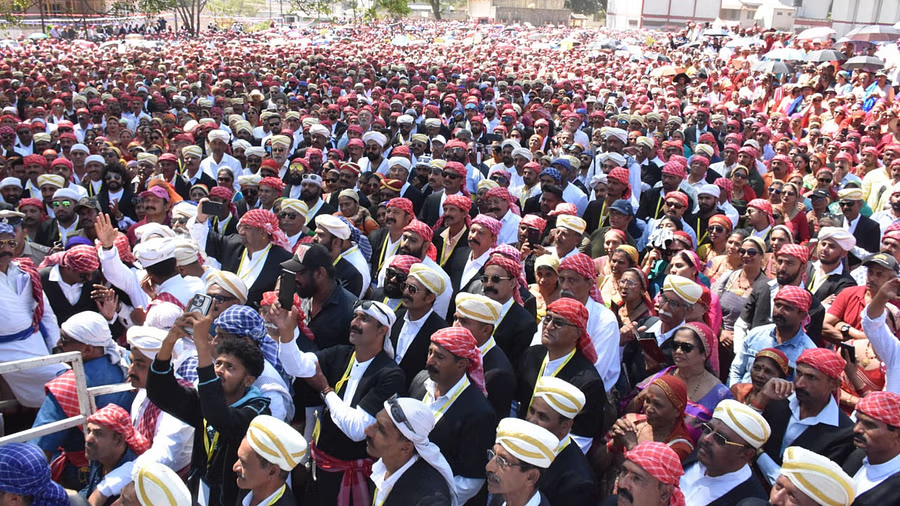
Thousands of people at the march in Madikeri. / DH Photo by Rangaswamy / Credit: Special Arrangement
In the hills of Kodagu, a six-day walk was conducted, by Kodavas and other native Kodava speakers (Bhashikas), spanning 82 kilometres. Kodava is an endonym used by the natives of Kodagu, who were otherwise called ‘Kodaga’ in Kannada or ‘Coorg’ in English, and has two usages. One is for the language and culture followed by Kodagu’s indigenes and the other is for the most populous community among these people. Twenty one different communities speak the Kodava language.
People dressed in colourful attire walked from the southernmost town of Kodagu (Kutta) to the district headquarters (Madikeri). The men wore kuppya chele (a wraparound kurta and cummerbund) and mande vastra (head dresses). The women wore kodavathi podiya, sarees draped in the Kodava fashion. An incident at the Kattemad temple, where Kodavas in traditional dresses were denied entry, was the catalyst for the event.
This ‘journey by foot’ (kaal nadp) was called ‘Kodavaame Balo’ (‘May the Kodava way of living live on’). The participants walked through several towns over six days (from February 2 to 7). Lunch was provided by samajas (associations) along the route. At each village, the Kodavas and Kodava speakers such as the Ammas, Heggades, Kembattis and others, joined the procession from their homes. The Kodagu Muslims came out to greet and support the procession during the march.
The crowd was the largest on the final day. The main procession from South Kodagu covered 8.5 km from Kaggod until the Mand ground in Madikeri. Among those who walked from Kaggod was 82-year-old Maha Vir Chakra awardee Lt Col Puttichanda S Ganapathi.
Ajjinikanda Mahesh Nachaiah, president of the Karnataka Kodava Sahitya Akademi, walked along with me during the last day. He said, “A worldwide message has been sent that a community’s culture is their right which should not be hindered or opposed by others. An awareness has been created and this march will be remembered for years to come by our children and their generation.”
Historical and current significance
Even before the reign of the Haleri rajas (1600-1834), Kodava paddy agriculturists were living in Kodavu, now called Kodagu. They were employed in the army and the government. Some other castes employed in different professions also lived in Kodagu under the rajas. They spoke the same language and more or less followed the same culture.
During the 18th-century Anglo-Mysore Wars, Kodagu’s population was decimated. Many either died during the warfare or were deported as prisoners.
In 1834, the British took over Kodagu, renamed it Coorg, and made it a province. In 1947, it became part of independent India and, in 1950, it was one of the 28 states of the Indian Union. In 1956, Kodagu (Coorg) was merged with Karnataka.
The Kodavas speak a distinct Dravidian language. They worship their ancestors, nature, weapons and village deities such as Mahadeva, Povvadi and Ayyappa.
Kodagu lies between Kannada, Tulu, Tamil and Malayalam-speaking regions. Hence, along with the Kodagu distinctness, we see influences from these communities and cultures.
Key Demands
Bollajira Aiyappa, President of Codava Makkada Coota, who walked for two days, said, “This is the first time in history that all the Kodava and Kodava-speaking organisations came together. In the future as well, everybody should come together like this to solve problems.”
The event culminated with the President of the Akhila Kodava Samaja presenting the memorandum to the Deputy Commissioner, followed by lunch. On the final day, the organisers counted more than 30,000 lunch plates.
The main demand of the marchers was for the government to protect the Kodava identity, culture and constitutional rights.
source: http://www.deccanherald.com / Deccan Herald / Home> India> Karnataka / by Mookanda Kushalappa / February 13th, 2025
Not many know that the birth place of Karnataka Milk Federation is a small town called Kudige in Kodagu district. The Hindu travels back to the roots of India’s second largest milk co-op.
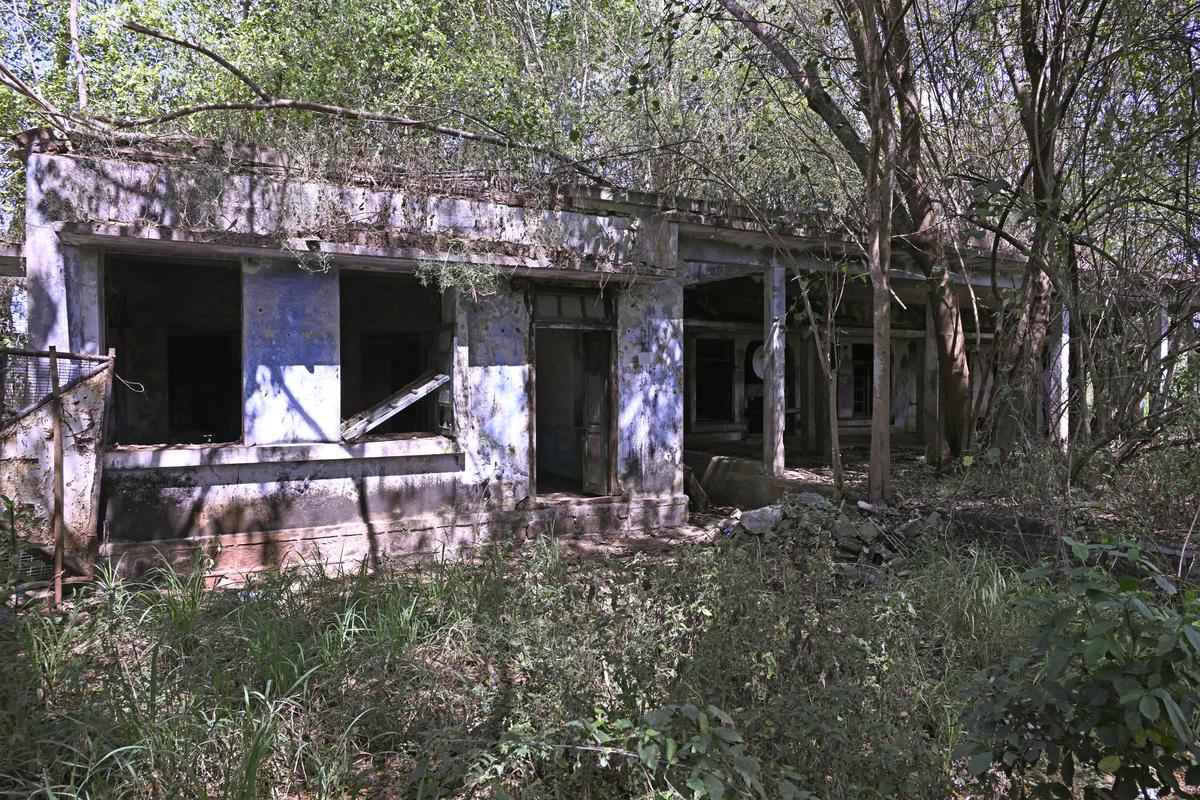
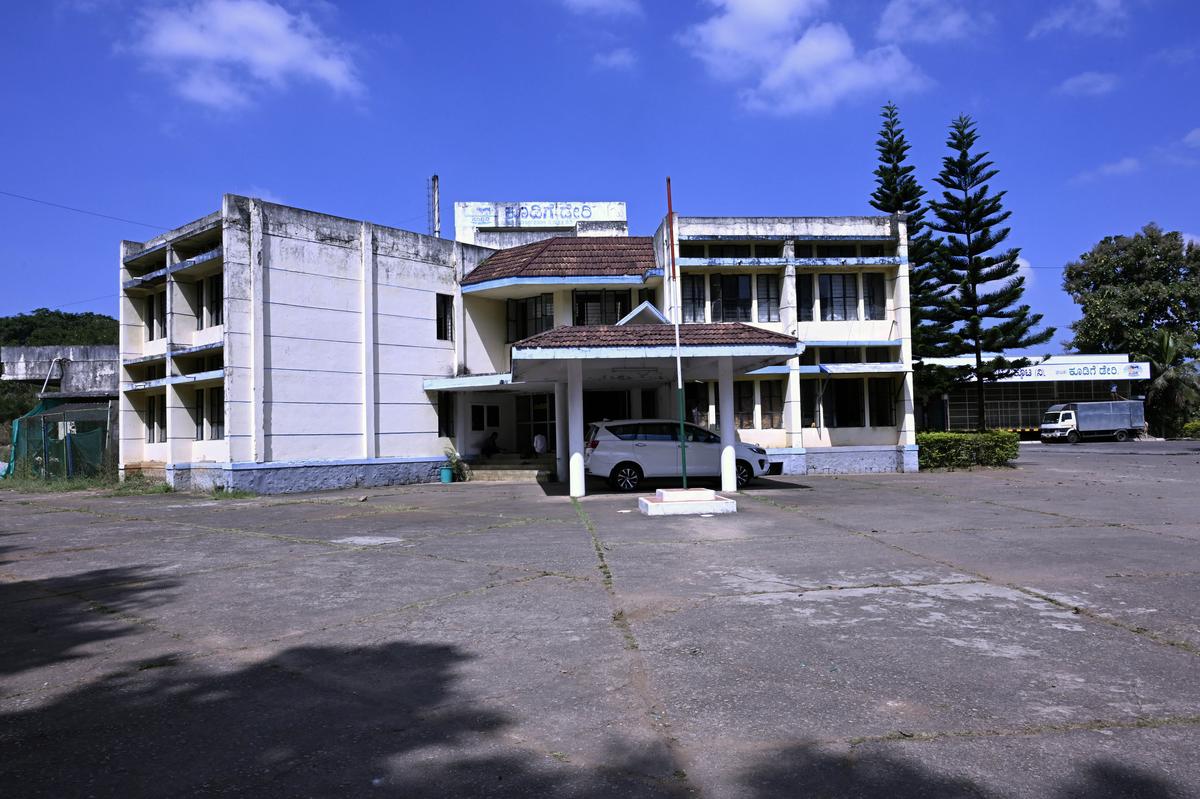
The old dairy facility at Kudige in Kodagu, the birthplace of Karnataka’s first dairy cooperative, long before the rise of the Nandini as a brand. | Photo Credit: K. BHAGYA PRAKASH
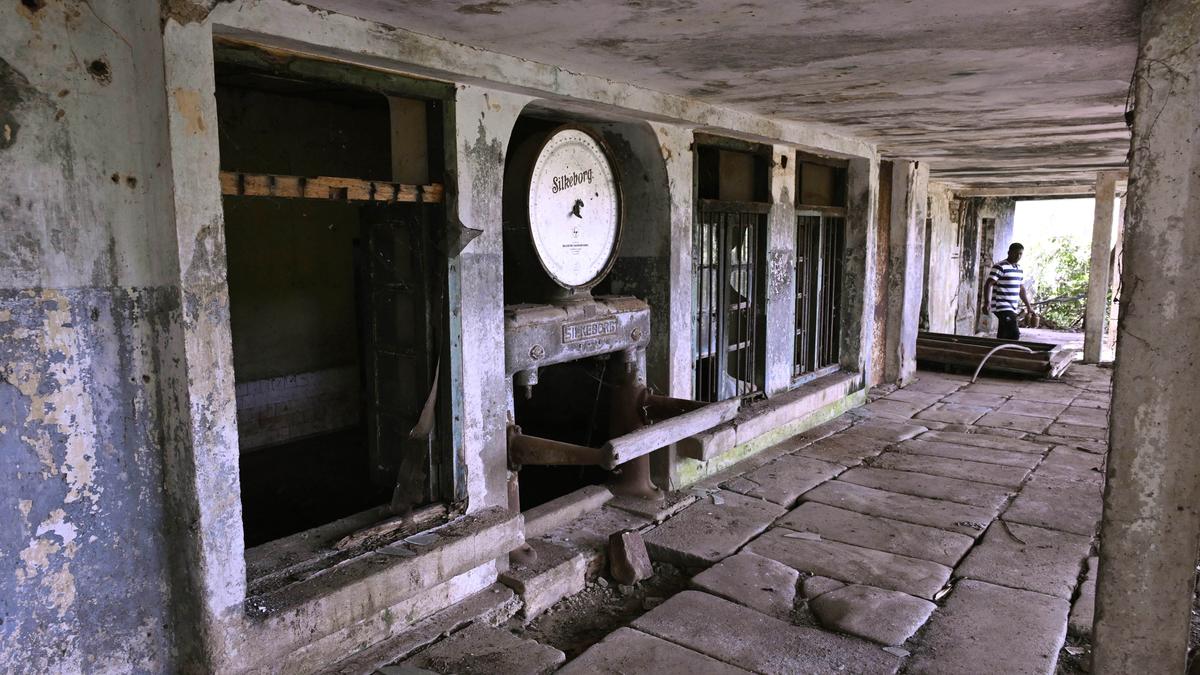
In the quiet town of Kudige in Kodagu, an old dairy facility stands as a reminder of the humble beginnings of what would become one of India’s most iconic dairy brands, Karnataka Milk Federation’s (KMF) Nandini. Once a bustling cooperative hub where fresh milk was collected from local farmers, the site now lies in decay, with weathered walls, rusting equipment, empty crates, and broken foundation stones.
This reporter visited Kudige, the birthplace of Karnataka’s first dairy cooperative, long before the rise of the Nandini as a brand, and found that while the original building was in a dilapidated state, a modern, fully operational dairy facility now thrives 500 metres away.
Global recognition
Karnataka’s Nandini milk brand has grown into a globally recognised name, engaged in a range of activities from sponsoring Scotland and Ireland’s cricket teams during the ICC Men’s T20 World Cup last year to constantly launching new products to diversify its business. It has been exploring new markets across the country, competing with Amul, India’s largest dairy producer. However, the roots of this success story trace back to a modest beginning in Kudige back in 1955. The story of this humble origin has largely remained obscured.
Malavika, a long-time resident of Kudige, explained the historical significance of the site, guiding this reporter through the derelict structure. “I have been working here in the Animal Husbandry Department for the past 20 years. My father also worked in this dairy. Now that operations have shifted to the new building, the old one has fallen into disrepair,” she explained.
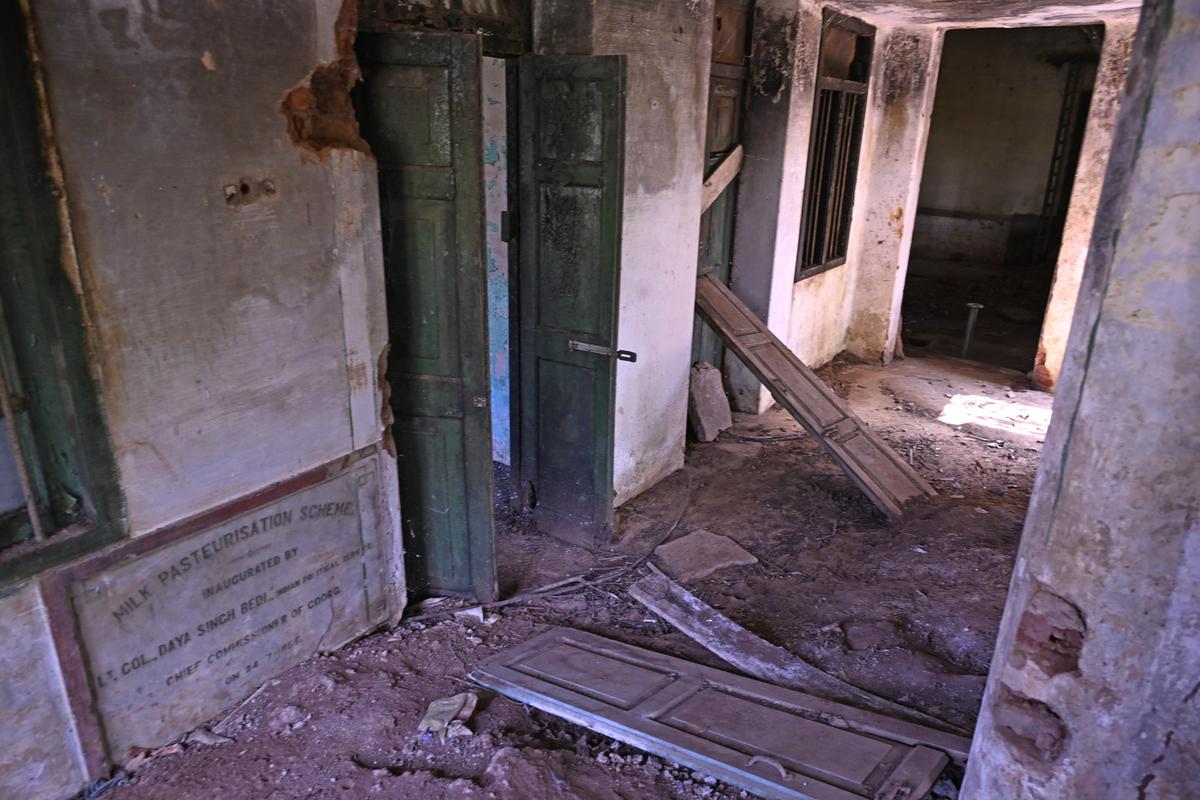
Inside the old dairy building, the inauguration plaque remains surprisingly intact. It bears the inscription, “Milk Pasteurisation Scheme inaugurated by Lieutenant-Colonel Daya Singh Bedi, then Chief Commissioner of Coorg, on 24 July 1955.”
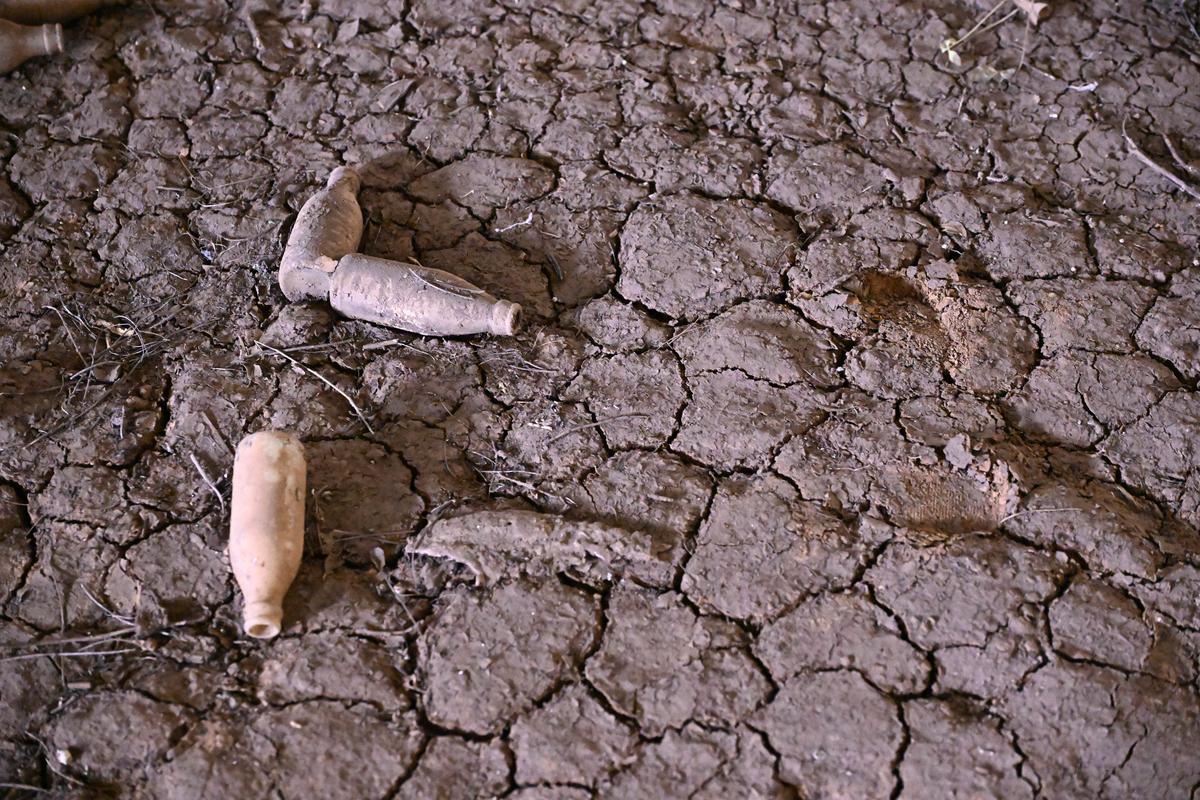
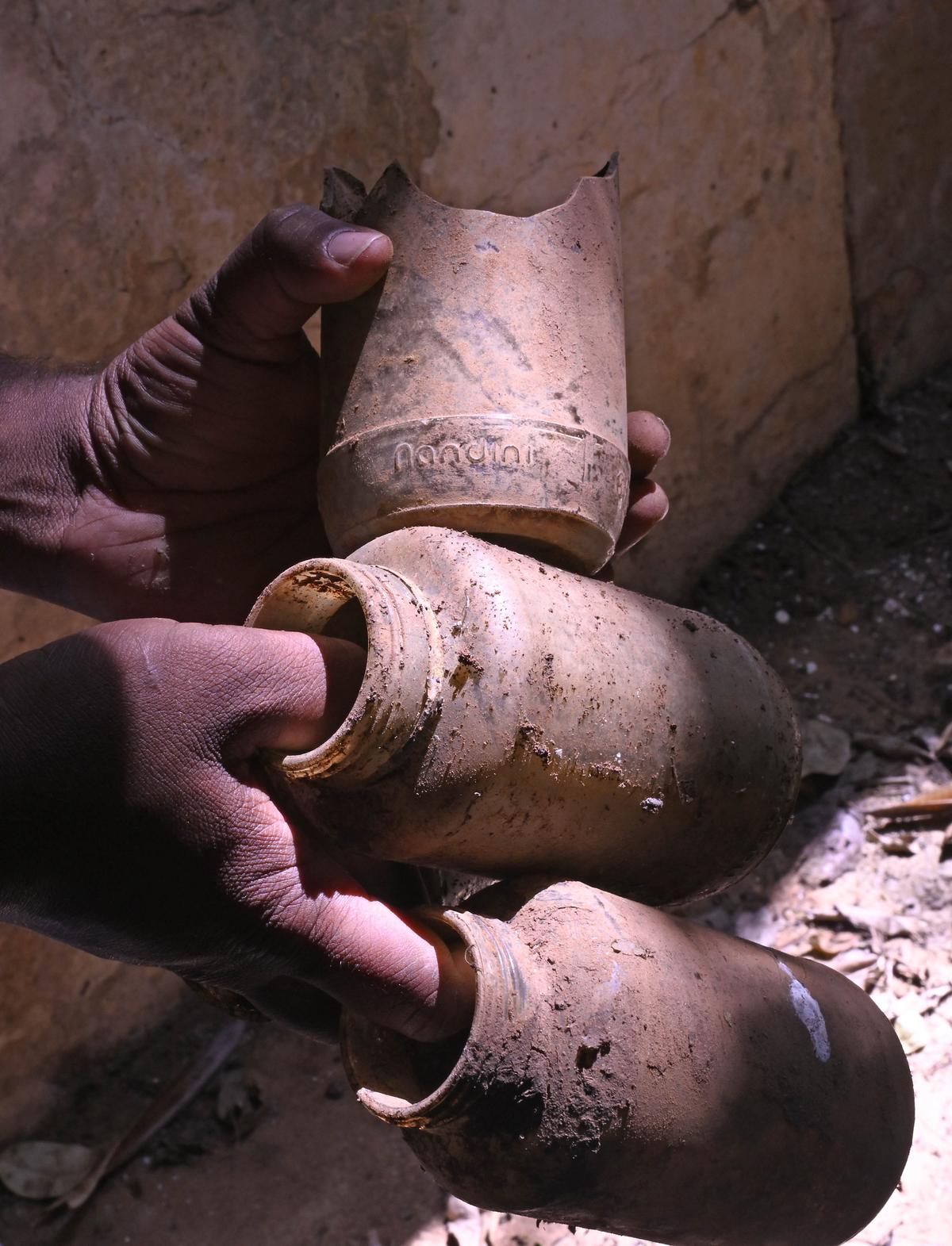
Malavika guided us through the premises, showing an old weighing machine, various dairy processing machinery, and even glass bottles that were once used to distribute milk. “From this dairy, milk was supplied to different parts of Kodagu, which was then a separate state called Coorg. My father often spoke about how local farmers would bring their milk here, which was then processed and distributed,” she recalled.
Despite its historical importance, the old dairy building at Kudige in Kodagu has been left in a neglected state. | Photo Credit: K. BHAGYA PRAKASH
Landmark neglected
Despite its historical importance, the old dairy building has been left in a neglected state. The site, currently under the control of the Hassan Cooperative Milk Producers Union (a part of KMF), has not received adequate maintenance. Local residents have raised concerns about its deteriorating condition.
Rudrappa K., a local farmer, expressed his disappointment. “The government should recognise the importance of this building and convert it into a museum or heritage site to showcase how the milk cooperative movement led to the creation of a successful brand like Nandini. Right now, the structure is in terrible condition. People throw garbage inside, and some even trespass into the premises. The authorities, either the government or KMF, should step in and restore this building,” he urged.
The transformation
Speaking to The Hindu, A.S. Premnath, former Managing Director of KMF, highlighted the historical significance of Kudige in Karnataka’s dairy industry.
“Not many people know that KMF had its origins in Kudige. The first dairy cooperative was established here in 1955. KMF itself was founded in 1974 as the Karnataka Dairy Development Corporation (KDDC) under a World Bank-funded project. It was later renamed Karnataka Milk Federation in 1984,” he explained.
KMF currently operates 15 milk unions across Karnataka, sourcing milk from Primary Dairy Cooperative Societies and distributing it to urban and rural consumers. The federation has approximately 28 lakh dairy farmer members across the State.
As Premnath points out, Kodagu is traditionally known for commercial crops like coffee, oranges, and cardamom, but not for dairy farming. This is probably why not many remember that it was also home to Karnataka’s first commissioned dairy plant. “The Kudige dairy was established in 1955. Later, in 1974, an integrated project was launched to restructure the State’s dairy industry on cooperative principles, laying the foundation for a new era of dairy development. With World Bank assistance, a dairy development project was initiated in 1975, initially covering Mysuru, Hassan, Tumakuru, and Bengaluru districts,” he said.
Premnath, who worked at KMF for nearly 40 years, was himself born and raised in Kudige. His father also worked at the dairy. “I have seen the journey of this Kudige from my childhood. The growth of KMF and Nandini is an incredible success story that started in this small village. I still remember how ghee was produced using firewood to boil the milk. ‘Coorg Ghee’ was a sought-after product back then, just like Coorg Coffee and Coorg Honey,” he reminisced.
The inauguration plaque that still remains intact. It bears the inscription, “Milk Pasteurisation Scheme inaugurated by Lieutenant-Colonel Daya Singh Bedi, then Chief Commissioner of Coorg, on 24 July 1955.” | Photo Credit: K. BHAGYA PRAKASH
Growth and expansion
In 2024, KMF recorded a 14% increase in milk procurement and a 10% rise in sales of milk and dairy products. As it continues to compete with other milk brands in South and West India, KMF has also expanded its presence in Delhi to further extend its footprint.
Of the nearly one crore litres of milk procured daily, KMF sells around 65 lakh litres as liquid milk, including UHT Goodlife and curd. About eight lakh litres are converted into milk powder for the Ksheera Bhagya scheme, which supplies milk to schoolchildren, while six lakh litres are used for producing milk-based products like ice creams and sweets.
KMF Chairman Bheema Naik spoke about the cooperative’s structure and its impact. “The Amul model of dairy cooperatives was introduced in Karnataka in 1974-75 with financial support from the World Bank, as well as Operation Flood II and III. The three-tier Anand Pattern structure — village-level dairy cooperative societies, district-level milk unions, and the state-level federation —ensures sustainable dairy farming. KMF is among the few cooperatives that have successfully transformed dairying from a secondary occupation into a full-fledged industry,” he said.
Milk bottles still found at the old dairy facility at Kudige in Kodagu. | Photo Credit: K. BHAGYA PRAKASH
Political controversies
Despite its cooperative structure, KMF has every now and then found itself entangled in the ups and downs of Karnataka’s politics, particularly during elections and milk price revisions. Ahead of the 2023 Karnataka State Legislative Assembly elections, a controversy erupted when the then-ruling BJP government allowed Amul to sell its products in Karnataka. This sparked allegations that Union Home and Cooperation Minister Amit Shah was attempting to merge KMF’s Nandini brand with Amul.
The move triggered widespread protests across Karnataka, with slogans like #SaveNandini and #GoBackAmul trending on social media. Protestors took to the streets, fearing that Nandini’s identity and autonomy were under threat. However, despite these challenges, Nandini remains a strong, homegrown brand that has significantly shaped Karnataka’s and India’s dairy industry, experts in the sector say.
The love for Nandini in Karnataka transcends business, holding deep cultural significance. Kannada cinema legend Dr. Rajkumar served as Nandini’s brand ambassador, free of charge, and even featured in the brand’s first and only television commercial in 1996. His son, Puneeth Rajkumar, later continued the legacy, signing an agreement with KMF in December 2009, again without any fee.
From a small village in Kodagu, Nandini has grown to become the second-largest milk cooperative federation in India. Reflecting on this remarkable journey, Premnath attributed KMF’s success to unwavering consumer loyalty, and the dedication of lakhs of farmers. “The strength of Nandini lies in its cooperative spirit and consumer trust. The farmers who contribute to KMF have made it what it is today,” he said.
Milk bottles still found at the old dairy facility at Kudige in Kodagu. | Photo Credit: K. BHAGYA PRAKASH
Challenges mount too
While the dairy brand has seen remarkable success, challenges persist as milk unions urge the State government to increase retail prices to ensure better remuneration to the dairy farmers. The farmers have been demanding a hike in incentives, even as KMF faces a glut in milk production.
In June last year, the KMF raised milk prices by ₹2 per litre and added 50 ml to every 500 ml packet. However, KMF officials argue that this increment is insufficient. The federation is facing mounting financial losses from an unsold stockpile of skimmed milk powder (SMP), adding to the strain on the dairy sector.
Amid this surplus, many of Karnataka’s 15 milk unions have reduced procurement prices by ₹2 per litre, triggering discontent among farmers. Currently, most unions pay ₹32.5 per litre to farmers, but in districts such as Kolar, Mandya, and Ballari, the rate has dropped to ₹30. Dairy farmers are also frustrated that the government’s ₹5 per litre incentive, introduced under the Ksheeradhaare scheme, has remained unchanged for over a decade despite increasing production costs.
The Ksheeradhaare scheme was launched in 2008 with a ₹2 per litre incentive, which was later increased to ₹4 per litre in 2013 and ₹5 per litre in 2016. However, since then, there has been no further revision, even as expenses for feed and maintenance have risen significantly. Adding to their woes, the State government has not disbursed these incentives for more than 10 months, leaving farmers struggling financially.
Farmers’ leader Kurubur Shanthakumar criticised the government, alleging that apart from withholding incentives, farmers are also being paid ₹1 less per litre for their milk. “There are approximately 38 lakh dairy farmers in Karnataka, and over 90% of them are women. The government speaks about women’s empowerment, yet it fails to ensure timely payment of their incentives,” he said. He further emphasised that the success of the Nandini brand is due to the efforts of farmers, and therefore, they deserve to be adequately compensated.
The new building of Karnataka Milk Federation at Kudige in Kodagu. | Photo Credit: K. BHAGYA PRAKASH
Consumers chose brand name ‘Nandini’
Interestingly, the name ‘Nandini’ was not chosen by officials at the Karnataka Milk Federation (KMF) but was suggested by the consumers who would go on to support and cherish the brand. According to A.S. Premnath, former Managing Director of KMF, in 1983, KMF decided to introduce a corporate brand identity for its milk and dairy products to strengthen its presence in the market. As part of this initiative, it reached out to consumers, inviting them to suggest a name for the brand. “The response was overwhelming, with a large number of consumers recommending the name ‘Nandini.’ Given the strong public preference for this name, KMF officially adopted ‘Nandini’ as the brand name for its dairy products,” Premnath said.
source: http://www.thehindu.com / The Hindu / Home> News> India> Karnataka / by Darshan Devaiah B.P / February 07th, 2025
Some section of Kodava community have also urged the state government to ban the movie in Karnataka.
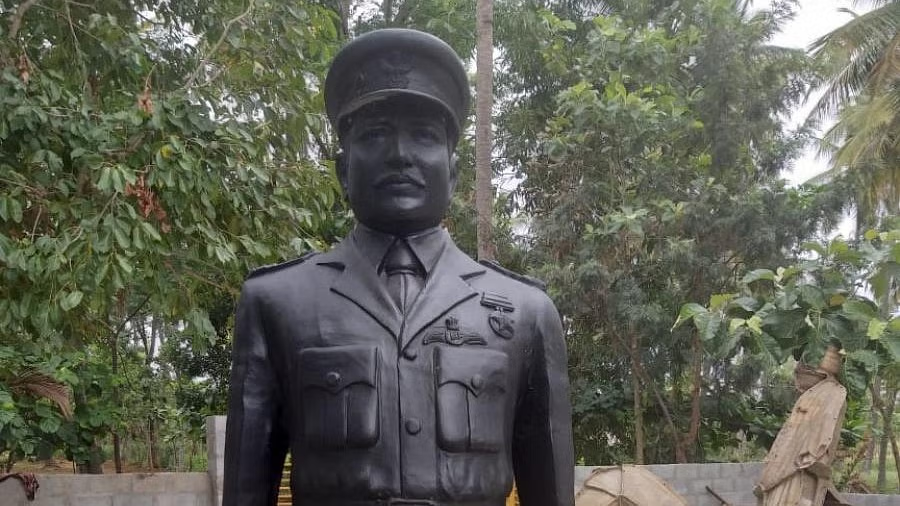
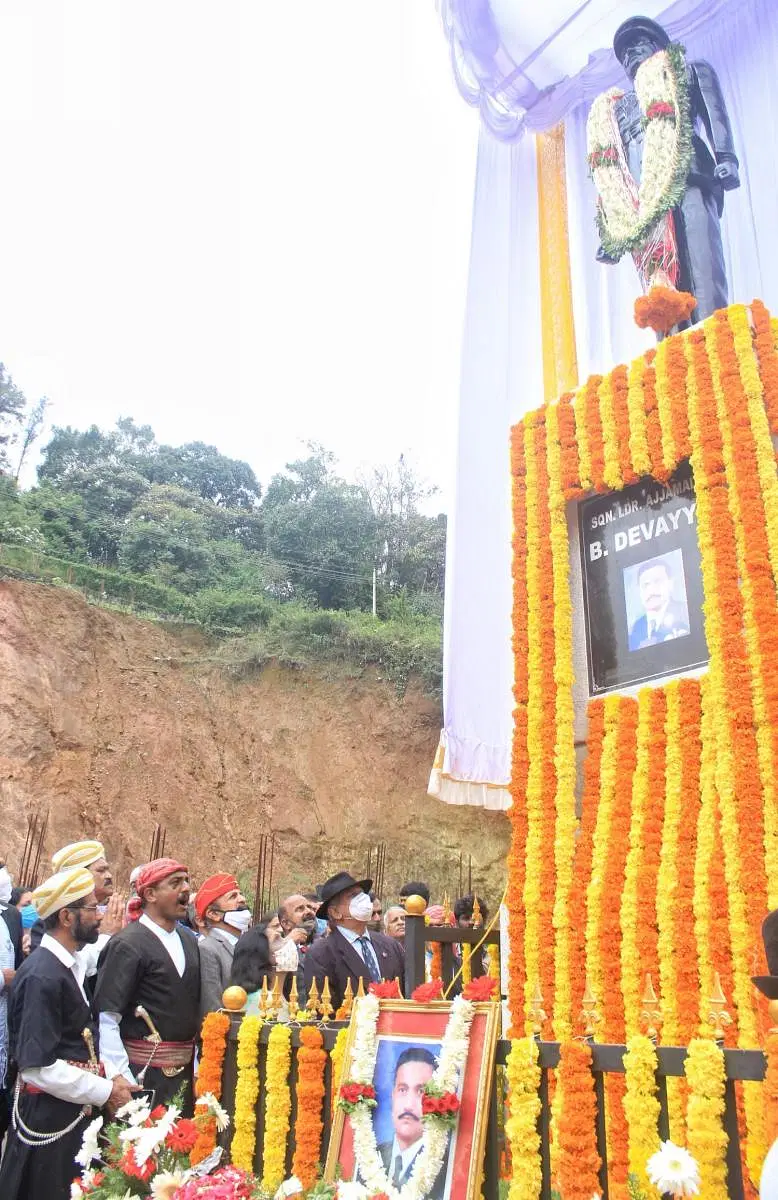
The bronze statue of Squadron Leader Ajjamada B Devayya
Madikeri:
The issue of portraying the character of Maha Vir Chakra awardee Squadron Leader Ajjamada B Devayya, as a Tamilian in the Hindi movie ‘Sky Force’, directed by Sandeep Kewlani has drawn the ire of people from Kodagu.
The move by the filmmakers has been criticised on social media. Tweeting about Ajjamada B Devayya, the people opined that even though the movie is based on him, his character has been misrepresented.
Some have also urged the state government to ban the movie in Karnataka.
The film was released on January 24 and is said to be inspired by the life of Ajjamada B Devayya and by his role in destroying a Pak aircraft during the Indo-Pak war in 1965. He was martyred during the fight.
Speaking to DH, Codava Makkada Coota president and publisher Bollajira B Aiyappa said that the real name of the patriot should have been used for the lead character in the film. Even though the character’s name is changed, the identity of him being Kodava should have been shown. The change of his identity as a Tamilian has hurt the sentiments of Kodavas. Kodagu has given Field Marshals, Generals and Squadron leaders to the country, he said.
Ajjamada B Devayya./ File Photo
“The movie makers had come to Kodagu to collect information about A B Devayya. The opening and closing credits of the movie have made a mention about the story being based on A B Devayya’s life, he said.
He further stated that a book has been published about Ajjamada B Devayya – ‘1965 ra Yuddha Hagu Kodagina Mahavira’.
The Coota has been observing his commemoration on September 7 every year at A B Devayya Circle in Madikeri where the statue is situated. The statue is erected and is being maintained by Codava Makkada Coota, Aiyappa added.
source: http://www.deccanherald.com / Deccan Herald / Home> India> Karnataka / by Ashwani Kumar N K R / January 30th, 2025
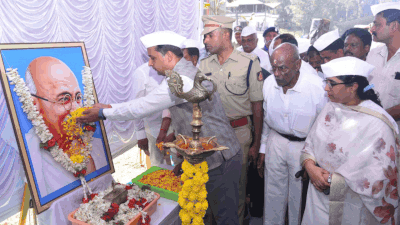
Sarvodaya Day was observed in Madikeri by the district administration, Kannada and Culture Department, Municipal Council, and Sarvodaya Samiti on Thursday.
The ashes of Mahatma Gandhi, which were kept in the district treasury of the city’s District Administration Building, were taken out to allow people to pay their homage.
Led by the district administration and Sarvodaya Samiti members, the ashes of Gandhi were taken out through the main road of Mangeria Muthanna and General Thimayya Circle and placed at Gandhi Mantapa in the Gandhi Maidan.
The reserve police force also paid tribute to Gandhi by firing three rounds and observing silence.
A religious prayer was part of the event where messages were read by heads of different religions.
After the state tributes and a moment of silence, Gandhi’s ashes were taken back to the district treasury in a procession.
DC Venkat Raja, SP K Ramarajan, and Sarvodaya Samiti President Ambekallu Kushalappa were present.
source: http://www.timesofindia.indiatimes.com / The Times of India / Home> News> City News> Mysuru News / by G Rajendra / TNN / January 30th, 2025
Jammada Preeth Appaiah, a resident of Bannimantap in city, won a silver medal in the Senior Master’s Women’s Category at the 2nd Nagraj Rao Jagdale Shooting Contest and Championship-2025.
The event was held from Jan. 12 to 26 at the Sports Authority of India Shooting Range in Bengaluru, which the Karnataka State Rifle Association organised to promote Sports Shooting in Karnataka State and to have a State Ranking. Preeth won the medal in (A-103) .177 Open Sight10 M Air Rifle Senior Master’s Women’s (NR) Category.
Preeth Appaiah is a Mysuru Sports Shooting Academy (MSSA) student. In 2023, she achieved a remarkable feat by climbing Mount Kilimanjaro, the highest mountain peak in Africa. Preeth is the wife of advocate Jammada M. Aiyanna.
source: http://www.starofmysore.com / Star of Mysore / Home> Sports / January 18th, 2025
A philanthropist from Kodagu has set an inspiring example by celebrating his 50th birthday in a truly noble way — by gifting homes to the homeless.
Ganesh, a resident of Arji panchayat in Kodagu, marked his milestone birthday by cutting a cake with homeless individuals and gifting them houses.
“No one is permanent in this world. We cannot take anything with us when we leave. Instead of accumulating property and wealth, we should keep only what is necessary and donate the rest,” said Ganesh.
An electrical contractor by profession, Ganesh was born into a poor family and, through hard work, made a living for himself. He understands the struggles of the homeless and has always wanted to help those in need.
“I won the Betoli grama panchayat elections in 2000 by a margin of just five votes, and during my tenure, I became acquainted with the lives of the people. I was re-elected in 2005 and served as vice-president before later becoming a taluk panchayat member. During this time, I met a girl who scored 95% in SSLC but came from a financially poor background. Her hut had no electricity. The video of her studying under an oil lamp went viral on social media, and her story inspired me. I provided a free electricity connection to her family’s hut,” recalled Ganesh.
In 2023, during a panchayat survey, Ganesh came across a woman named Kala from the tribal community, living in poor conditions. He noticed that none of the families in the area were living in decent homes. Moved by their situation, he vowed to help them and assured them of new houses.
He built a four-room house for Kala’s family and handed over the keys to them on January 22, 2024, during the inauguration of the Rama Mandir in Ayodhya, hoping it would be a day they would always remember.
In April 2024, while serving as the taluk president of the Billava community association, Ganesh learned of a woman whose house had collapsed. He immediately arranged for a new house to be built for her as well.
Now, many more families have approached Ganesh seeking housing. As part of his 50th birthday celebrations, Ganesh donated two houses to Shankar and Vasanti. Additionally, he has provided electricity connections to five families through the panchayat.
“I visited the Theremekadu Paisari area for some work and met Shankar’s family, who were living in a hut about to collapse. I promised them a new house and built one at a cost of Rs 1.6 lac, handing over the keys to them,” said Ganesh.
source: http://www.daijiworld.com / Daijiworld / Home> Top Stories / by Daijiworld Media Network – Madikeri (MS) / January 12th, 2025
Retired IAS officer, Rathi Vinay Jha, has been selected as Coorg Person of the Year 2024 in a poll conducted by a news and tourism portal, www.coorgtourisminfo.com.
With her roots in Kodagu district in Karnataka, Ms. Rathi Vinay Jha, a former Union Tourism Secretary, had initiated several projects to “conserve Kodava culture and the martial traditions of the comunity, known for its contributions to the nation in the areas of defence and sports,” author P.T. Bopanna, who runs the portal pointed out.
He said Ms. Rathi was instrumental in setting up the virtual museum of Kodava heritage and culture, the project known as Sandooka — a treasure trove of information.
“The virtual museum is an interactive online space, brought together through material contributed by the Kodava community. Sandooka will be a living museum of Kodava culture and will be useful for future generations of Kodavas.”
“It was at the instance of Ms. Rathi, a model of Kodava ainmane (ancestral house) was inaugurated this October in Dakshinachitra Museum near Chennai,” Mr. Bopanna said.
Dakshinachitra is home to 18 traditional houses that depict the unique culture of South India. The ainmane project involved dismantling a structure built in 1852 in Kodagu and was transported to Dakshinachitra Museum, said Mr. Bopanna.
source: http://www.thehindu.com / The Hindu / Home> News> India> Karnataka / by The Hindu Bureau / January 01st, 2025
WELCOME. If you like what you see "SUBSCRIBE via EMAIL" to receive FREE regular UPDATES.
Read More »