The Annual Theerthodbhava at Talacauvery will occur on Oct. 17 (Thursday) at 7.40 am in the auspicious Tula Lagna as per the Hindu almanac on Tula Sankramana Day.
On this day, it is believed that Goddess Cauvery comes in the form of a fountain-head where water gushes up from Brahmakundike in front of the Kalyani at the predetermined time.
The authorities of Sri Bhagandeshwara-Talacauvery Temple have announced the date of this year’s Theerthodbhava. The temple authorities are gearing up for this important occasion.
On the occasion of Theerthodbhava, rituals such as rice being poured to ‘Pathaya’ (Tula Lagna) of Sri Bhagandeshwara Swamy Temple at Bhagamandala will be held as per tradition on Sept. 26 at 8.35 am.
Oct. 4 (10.21 am): ‘Ajna Muhurtha’ will be held at ‘Vruschika Lagna’; Oct.14 (1.35 am): Placing of ‘Akshaya Patra’ (Dhanur Lagna); 04.15 pm, offering boxes will be placed (Kumbha Lagna).
source: http://www.starofmysore.com / Star of Mysore / Home> News / September 15th, 2024
Busy working on high-budget Telugu period-drama “Rudhramadevi”, southern actress Aditi Chengappa is simultaneously working on multi-lingual film “X”.
Busy working on high-budget Telugu period-drama “Rudhramadevi”, southern actress Aditi Chengappa is simultaneously working on multi-lingual film “X” and says she agreed to do the indie movie because she prefers “quality over quantity”
“X” is being directed by eleven filmmakers – Abhinav Shiv Tiwari, Anu Menon, Hemant Gaba, Pratim D. Gupta, Q, Raja Sen, Rajshree Ojha, Sandeep Mohan, Sudhish Kamath, Suparn Verma and Gautham Vasudev Menon. She is wowed by the creativity brought forth by the independent filmmakers to the project.
“I think what makes independent filmmakers brilliant is their creativity and resourcefulness. It is far more challenging, and I have a lot of respect for them. The crew seemed more like a group of my friends. We had a fantastic time shooting, no ego, no fuss, just hardworking and enthusiastic filmmaking.
Despite knowing “X” is an independent project and might have a limited release, Aditi signed the film because for her “it’s always been quality over quantity”.
“I’m aware that it may not have a wide release, however what satisfies me is that I’m part of a very classy and intelligent filmmaking process, honestly a dream come true.”
Aditi, who has starred in southern films such as “Konjam Koffee Konjam Kadhal” and “Takita Takita”, is cast opposite Rajat Kapoor in “X”.
“It was a pleasure working with Rajat, who is so talented and respected and yet down to earth. I was nervous initially, but he broke the ice and made things comfortable with his great sense of humoUr on the sets,” Aditi said.
She further added: “I admire his presence of mind in every moment. His attention to details in each performance and situation is impeccable.”
Aditi, who calls this exercise of collaborating and working “a unique concept”, has been shooting for her part for over the past few days. The part featuring her is being directed by Sudhish Kamath.
“X”, being produced by Manish Mundra, is slated to release later this year.
source: http://www.newindianexpress.com / The New Indian Express / Home> Telugu / by IANS / August 29th, 2013
Model and actress, Shubra Aiyappa, who abandoned formal education at 18 to pursue her passion of acting, feels that the right environment is crucial for one to be able to chase what their heart desires. In a conversation with us, she talks about her upbringing and emphasises the need for balancing boundary setting with being sociable.
Excerpts:
“I excel at getting people to open up. My fascination lies in understanding emotions rather than actions, delving into the nuances of individuals,” says Shubra, talking about how most people she meets feel at-ease confiding in her. “My friends say I could have been a therapist, if not an artiste,” she adds.
Giving context to this nature of hers, she explains how all of her life’s learnings have been experiential. “Whatever I have learned in life has been through books and experiences. Stories inspired me and helped me do better in life. I hope to create a space where people can be open and vulnerable. When people share their stories with me, I just hope that those who’re listening find learnings and inspiration to keep going from it, because life will always hand you failures along with successes, and it all boils down to how you confront your testing times.”
‘I’m grateful to my parents for letting me carve my own path in life’
I come from a simple South Indian family. I took part in a modelling contest which I never thought I’d win but when I did, I told my parents that I will be discontinuing my formal education, and they agreed. I think I flourished because they let me carve my own path.
source: http://www.msn.com / further acknowledgement: The Times of India / by Devika V Menon / December 17th, 2023
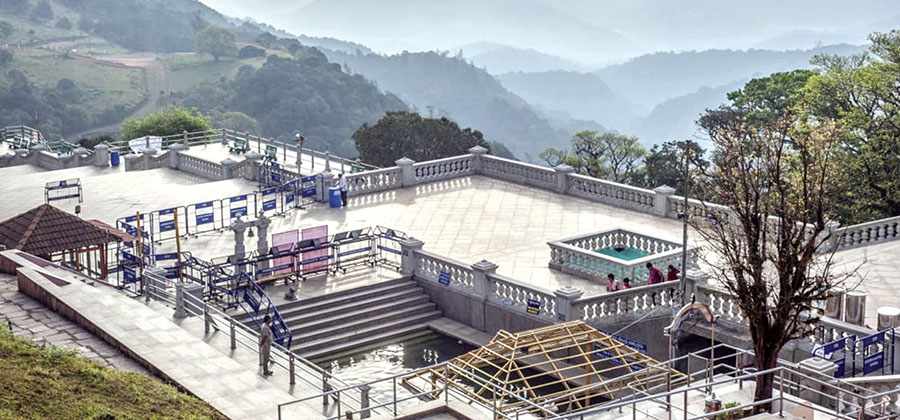
A fountain is also situated in the Raja Seat’s garden.
Paddy plains between the coffee and cardamom plantations, vehicles, and the settlements on the adjacent hill are other attractions of the Raja Seat.
Raja Seat is one of the most famous tourist hotspots in the Madikeri town of Kodagu, Karnataka. According to the Local 18 Karnataka, there is a pleasant atmosphere in Raja Seat, the whole day. This culturally significant site has been constructed on the border of Madikeri town.
After the British rule had ended, the coffins of the natives were moved to different places and a garden was developed there. A moat (deep and wide trench around the rampart of a fortified place (such as a castle) that is usually filled with water) and a garden are situated on both sides of this tourist attraction. Features like the tall mountain peaks and the trees growing on the slopes between them add to the charm of the Raja Seat.
Paddy plains between the coffee and cardamom plantations, vehicles, and the settlements on the adjacent hill are other attractions of the Raja Seat. If you visit this site early morning, you will witness the paddy field covered with a dense fog. The trees on the hills are covered with a mist (a cloud made of very small drops of water in the air just above the ground, that makes it difficult to see).
A fountain is also situated in the Raja Seat’s garden. Ziplining sports are a major source of attraction as well for the children and elders. Zip lining is an action-filled recreational activity that involves riding a steel cable on a protective seat or a belt. In this sport, the people have to ride between two points and generally on a valley that exhibits spectacular scenery. There is also a play park for the younger children. An interesting fact related to Raja Seat is that it was once a British colony.
Raja Seat was known as the place where the King and Queen enjoyed the view of the sunset during the time of King Chikka Virarajendra. During British rule, a grand pavilion with four arches was built here using cement and tiles.
Visiting Hours – Monday to Sunday 9 am to 5 pm
source: http://www.news18.com / News18 / Home> News> India / by Newsdesk, Local18, Bengaluru / July 29th, 2024
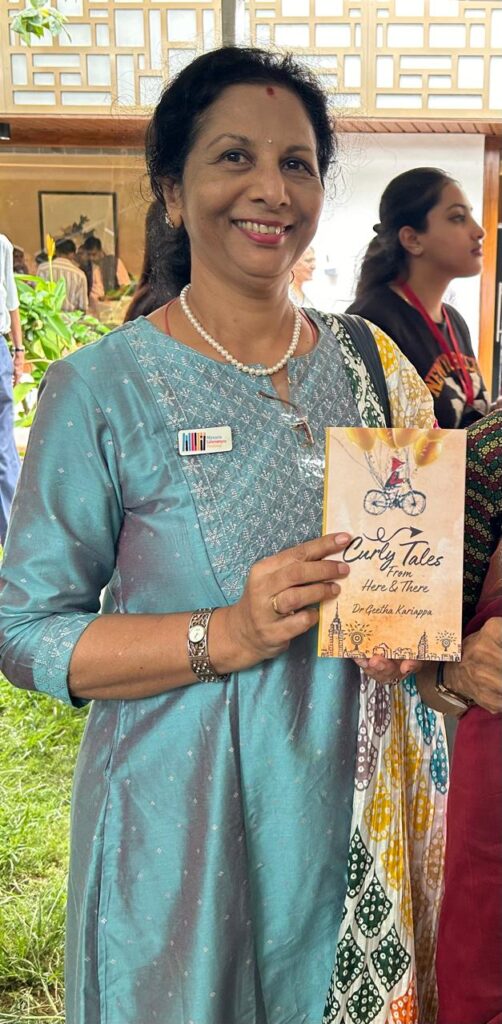
Dr Geetha Kariappa is a professor of English and a published author of four best-seller novels on Amazon. Her stories straddle Kodagu and its lifestyle as she weaves narratives which examine the condition of man and woman in a conventional society, with a humanistic perspective. She has penned numerous poems, short stories and articles in national and international journals.
This poem was inspired by the story of ‘Girl with the Diary’ written by Dr Geetha Kariappa, which narrates the saga of bravery and integrity of a teenager Kia who honours the dying wish of a mystery lady. She sets out on a precarious journey of discovery, as she is drawn into a web of intriguing clues, hinting at a long-forgotten crime, into the mist-clad land of Coorg. The exciting story takes her into the charming town of Madikeri and the coffee estate, Devkunj. It narrates the tale of the undying love of a man, a woman and his land.
“An excerpt from the novel, “Girl with the Diary”
The 100-acre estate was spread out before us in a sea of coffee blossoms. The fragrant land, heady with perfume, steaming gently in the sun, hugged the swell and curve of the land. A stately bungalow stood at the head of the winding gravel drive. Nearby were paddy wetlands with paddy and a few acres with native ginger. The undulating swathes of coffee bushes in well-manicured grooves interspersed with neat rows of shade trees, orange, jackfruit and silver oak, created a charming appearance of a jungle, securing its borders. Pepper vines twined about the trunk of shade trees which arched over cardamom, almond and vanilla bushes. The glittering estate pond lay at a short distance from where frogs croaked from the damp grass and winged insects skimmed over the coffee blooms. At the horizon, the bluish mist of the mountains, crested with clouds, looked picturesque.”
Travel note: The town of Madikeri nestled in the Brahmagiri hills of Western ghats in Karnataka, originally known as Muddurajanakeri, translates into “the city of Mudduraja,”, while paying homage to the Haleri kings who once ruled these lands. This picturesque hill station stands proudly among the world’s eight most remarkable centres of biological diversity. UNESCO recognises its ecological importance, and the town is a designated World Heritage Site. Madikeri is a hot travel destination because of its cool climate and resemblance to the Scottish countryside.
MADIKERI, IN MEMORY
In the core of Coorg, where Western Ghats cradle the sky,
Rests Madikeri, whose charm we cannot deny.
Sung by poets in nostalgic ragas,
Of misty hills soaked in yearning stanzas,
Where every syllable is a nostalgic saga.
Just as the monsoon arrives in the plains,
Madikeri, you wear the bridal veil of rains.
Clouds caress your coffee blossoms,
coaxing them into white celestial blooms.
Mist twirls with the mountains, and rivers swell in volumes.
In this watery symphony, your beauty eternally booms.
Madikeri, you perch on verdant hills,
like sentinels defending rugged sills.
Your winding roads like ballads,
Keep unearthing hidden waterfalls.
The moist air- fragrant coffee and eucalyptus,
hold out the sacred contract of paradise.
When the sun rises, spilling gold over rooftops,
ignites Madikeri, of charming landscapes.
This mist-kissed charm remains a poet’s muse,
Sparking the mindscape, waiting for poetries to bloom.
At the head of winding gravel, a colonial bungalow stands,
Its veranda, a sanctuary for weary souls.
Devkunj—an estate cradled in emerald arms,
Houses within, an angel of secret and balms.
The undulating coffee bushes,
Clustered in ivory blooms like uplifting hymns,
And Sandalwood, Teak bow to her gracious whims,
As she steps forth, with graceful limbs.
In the garden, a child dances with mud pies,
encompassing the valley with her dimpled smiles.
Rubber ducks sail in a pool, and paper boats get adrift,
A puppy chases its tail, and chicks run abreast.
Mother Angel bends to kiss the curly locks,
Her love, unmeasured, boundless, all pain blocks.
Her eyes, holding profound stories of storms,
Those were weathered, and now only becalms.
His gaze of reverence, of remembrance,
Of her quiet strength and youthful stance,
Of her love, blooming, riveting like rare fragrance.
She is the heartbeat, the keeper of Devkunj,
She, the symbol, the nurturing spirit of motherhood,
tending to man, child and his fertile land.
Walking in his dreams through whispering wood,
Where the cicadas hum, and the silver oaks stand guard.
Here, time slows, and the tree in melancholy, sighs.
Where the land conspires, papery leaves rustle,
whispering of brave lore of kings and queens,
as it unfurls dreams and of true love applauds.
source: http://www.interviewtimes.net / Interview Times / Home> National> National Times> Odisha> The Leading Story / by Subhechcha Ganguly / July 08th, 2024
Tollywood’s young hero, Kiran Abbavaram, is set to marry his girlfriend, Rahasya Gorak, on August 22.
After dating for several years, the couple is finalizing their plans to marry in the presence of their family and friends after getting engaged recently.
Kiran and Rahasya first met through their debut movie, Raja Vaaru Rani Vaaru, and have been dating for seven years. Both worked as software engineers and entered the industry through short films.
The couple will marry on August 22 in Coorg, where Rahasya’s family resides. Both families will attend the wedding, but there are no reports of celebrities attending.
source: http://www.sakshipost.com / Sakshi Post / Home> Entertainment> Tollywood / August 19th, 2024
Sneha Medappa Maruvanda grew up in India, and Dr. Mark Ross Edelstein, in Virginia. But in getting to know one another, they discovered their backgrounds were strikingly similar.
Don Mears Photography
By the time Sneha Medappa Maruvanda met Dr. Mark Ross Edelstein in person, she feared they might not have anything left to say to each other.
“I was having a bit of a panic attack about meeting,” said Ms. Medappa Maruvanda, 30, who matched with Dr. Edelstein on Bumble in November 2019, and soon became engaged in a two-week-long conversation with him on the app. He was living in Philadelphia, and she in Bala Cynwyd, Penn., a suburb of the city.
“We had over talked,” she said. “He was telling me about his heroes when he was four, how a teacher was very mean to him.”
Another concern, said Dr. Edelstein: “Both of us were a little bit worried about our cultural background differences.” He was raised by Jewish parents in Richmond, Va. Ms. Medappa Maruvanda grew up in a Hindu family and was born in Coorg, a rural district in the Indian state of Karnataka, before moving to Bengaluru, formerly Bangalore, as a young girl.
But when they met up that December at a Cuban restaurant in Philadelphia, neither was at a loss for words. As for their cultures, it quickly became clear that they might not be as different as they had seemed.
“Our backgrounds are very similar in terms of sense of community and family, so I think that made it a lot easier to bridge that cultural gap,” said Dr. Edelstein, 32.
A graduate of the University of Virginia, where he received a bachelor’s degree in sociology and bioethics, Dr. Edelstein earned a medical degree from the Virginia Commonwealth University School of Medicine. He is currently in his fifth year of residency training for interventional radiology at Temple University Hospital in Philadelphia.
Ms. Medappa Maruvanda received a bachelor’s degree in industrial engineering and management from Rashtreeya Vidyalaya College of Engineering in India, then earned a master’s degree in industrial and systems engineering at Rutgers University in New Jersey. She is now a project manager in the Wayne, Pa., office of Johnson Matthey, a multinational chemicals and technology company.
After the couple’s first date, Dr. Edelstein texted his sister, who had asked if he was in love. His reply: “Maybe.”
“I was like ‘Yeah, but that’s insane at this point, one date,’” Dr. Edelstein added. “But I was definitely struck by her.”
Don Mears Photography
Later in December, after their third date, the pair became an official couple. Weeks later, when Dr. Edelstein’s parents visited Philadelphia in January 2020, he told them that he knew Ms. Medappa Maruvanda was the one.
“I’d never met someone so selfless and just truly kind,” Dr. Edelstein said. “It’s never been so easy to be myself around another person.”
Ms. Medappa Maruvanda said her feelings for Dr. Edelstein were solidified six months later, in July 2020, when he met some of her cousins and began asking them questions in Kodava thakk, the language spoken in Coorg.
“I had no idea that he had been Googling this language. And it’s not an easy one to learn because there aren’t many of us,” Ms. Medappa Maruvanda said. “It was just this moment of complete shock to me that he put so much effort into wanting to connect with my cousins.”
On Jan. 15, 2021, Dr. Edelstein proposed to Ms. Medappa Maruvanda in the living room of her apartment in Bala Cynwyd, where the two now live together. A year later, the couple was wed at Main Street Station in Richmond on Jan. 22. Rabbi Jake Rubin, the director of Hillel at University of Virginia, officiated.
At the ceremony, the ketubah was read in English and Hebrew by Mr. Rubin, and in Kodava thakk by Ms. Medappa Maruvanda’s mother. The Seven Blessings were read by Ms. Medappa Maruvanda’s sister and two cousins, and Dr. Edelstein’s brother, sister and two uncles. Afterward, the couple’s 160 vaccinated guests enjoyed a cocktail hour with Indian hors d’oeuvres and music.
In April, the newlyweds plan to travel to Bengaluru for a second wedding celebration. In the meantime, the bride said, “I am most excited by having the monotony of a relationship. I want to do mundane things with Mark. I’m excited to have our own little life together.”
A version of this article appears in print on Feb. 13, 2022, Section ST, Page 13 of the New York edition with the headline: Finding Common Ground in Different Cultures.
source: http://www.nytimes.com / The New York Times / Home> Sytle> Mini-Vows / by Kristej Bayrakdarian / February 11th, 2022
Beauty and personal care brand Pilgrim has named actress Rashmika Mandanna as its new brand ambassador for its hair care product range. Harnessing Mandanna’s pan-India popularity, the brand has launched a new campaign titled ‘The Secret is in the Mix’
Rashmika Mandanna for Pilgrim – Pilgrim
“I’ve always believed that haircare goes beyond just using the right ingredients- it’s about how they’re brought together,” said Rashmika Mandanna in a press release. “This campaign is truly special because it highlights that while trends come and go, the real magic lies in how ingredients are expertly combined to deliver results. Pilgrim’s haircare products masterfully blend natural and active ingredients, making them truly transformative. I look forward to a great association with Pilgrim and can’t wait to share these remarkable hair care secrets with everyone.”
Chosen for her popularity amongst young Indian audiences, Mandanna will help Pilgrim to further build upon its Gen Z customer base. The new campaign shows a herd of consumers following the latest viral trends and juxtaposes this with Pilgrim’s products, which Mandanna presents as having a superior mix of ingredients.
“As Pilgrim continues to grow and take its next big leap, Rashmika is the perfect person to represent the spirit of our brand and lead us into this new era,” said Pilgrim’s co-founder Gagandeep Makker. “This partnership is a significant milestone as we continue to innovate and provide exceptional solutions to our dynamic consumers, and we look forward to scaling new heights together. Our hair care range has received tremendous love, with products like the Hair Growth Serum and Patuá & Keratin Smoothening Shampoo becoming game-changers in the market. Today’s young audience is always searching for innovative solutions for healthy and silky hair, and Rashmika embodies this quest perfectly. We are thrilled to welcome her to the Pilgrim family.”
source: http://www.in.fashionnetwork.in / Fashion Network / Home> India> News> People / August 13th, 2024
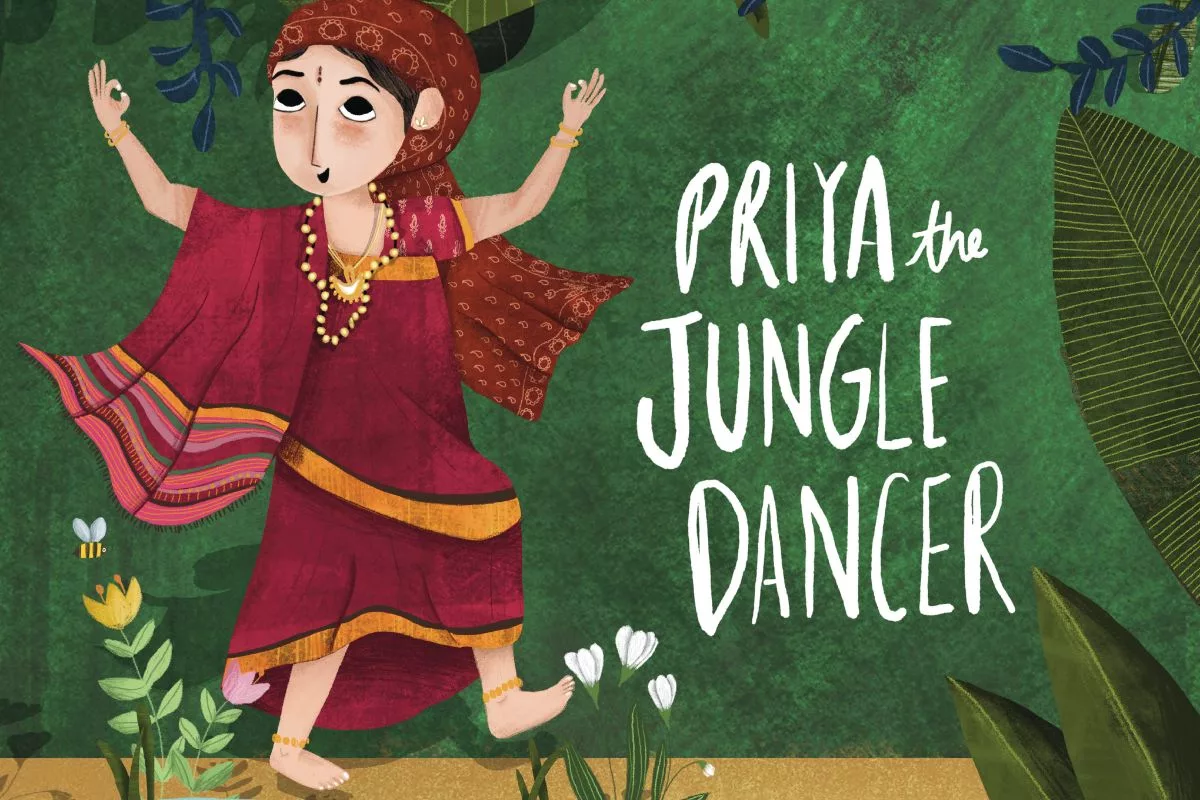
“Priya the Jungle Dancer” by Sathya Achia and illustrated by Janan Abir is a story that explores the unbreakable bond and love between children and their grandparents.
“Priya the Jungle Dancer” by Sathya Achia and illustrated by Janan Abir is a story that explores the unbreakable bond and love between children and their grandparents.
It also introduces the readers to the nature-loving culture of the Kodava community of the Coorg region in Karnataka. Their love for nature gets manifested through their folk music and dances like “Ummathat” in which women wearing colorful dresses and jewelry honor River Kaveri for helping them sustain life.
This way the book teaches young readers numerous lessons about familial bonds, appreciating nature, and being brave in tough situations like Priya, the protagonist.
The story starts with Priya rehearsing for her dance performance through a video call with her grandparents (Thatha and Thaye) who live overseas in a village near a Jungle in India. Her grandparents are assisting her in learning some graceful and enthralling dance moves which are inspired by their experienced observation of the jungle around them.
The author describes the dance steps by using various evocative similes which create an enigmatic imagery of the free-flowing nature in the minds of the reader. As ‘Thatha’ (grandfather) topples his tabla, he sings along to his little granddaughter to dance like the fierce monsoon rains, remain strong like a palm tree in a storm, and be determined like a growing lotus. This way, they remind Priya that she is an inherent jungle dancer and does not have to feel scared or hesitant about her performance.
The story evocatively portrays how customs and values are passed across generations. The heartwarming story is drawn from the childhood experience of the author who shared a close bond with her own Thatha and Thaye.
Though her grandparents lived oceans apart, she shared a strong and endearing relationship with them. Adding to the charm of the story are the beautiful illustrations that take the reader along in Priya’s dance endeavor. The illustrations deserve appreciation for giving attention to the minutest details, particularly in showcasing Priya’s traditional costume. The use of childhood pictures of the author also adds to the story’s fascinating nature, making it a more realistic and authentic experience for the readers.
The story in short acts as a gentle reminder to young children to explore one’s roots by interacting with their grandparents who are nothing less than a treasure full of experiences.
The book is priced at Rs399 and is published by Adidev Press.
source: http://www.thestatesman.com / The Statesman / Home> Features / by Shreya Bansal, New Delhi / July 08th, 2024
During the monsoon season, Kodagu’s unique culinary traditions involve dishes prepared with local ingredients like bamboo shoots and Justicia Wynaadensis leaves, reflecting a rich heritage aimed at maintaining health and body temperature.
The chilly weather and hard work in the farmlands demand that one stay healthy, leading to unique dishes being prepared during this period in ancestral times.Photo | Express
Madikeri :
Known to be an agricultural district, farming activities engulf Kodagu during the monsoon months. The chilly weather and hard work in the farmlands demand that one stay healthy, leading to unique dishes being prepared during this period in ancestral times. The indigenous cuisine acts as a natural nutrient supplement, helping the natives maintain body temperature during the chilly and moist weather. While agricultural activities have seen a gradual decline across the district in the recent past, the ancestral fare still make up a large part of the monsoon diet in Kodagu.
The district has a special vibe during the monsoon, and a stroll down any town road introduces one to unique items being sold on the streets. Natives from interior parts of the village turn street vendors and source natural resources available in plenty across the estates and forest fringes of the district, which they sell locally.
The wares vary from the traditionally made bamboo skep (to help clothes dry using charcoal heater) by the roadside in Madikeri, to natural products — a line of women wearing raincoats selling bamboo shoots, colocasia leaves, crabs, bracken fieldheads and leaves known as Justicia Wynaadensis or ‘maddu thoppu’ during the monsoon months from June to August. These locally sourced items make up for unique dishes that are prepared in all Kodava houses, and are now also being followed by all communities in the district.
“July 15 to August 15 is ‘Kakkada’ month in the Kodava calendar,” explained Ulliyada Dati Poovaiah, ex-president of Kodava Sahitya Academy. This month is synonymous with ‘Ashada’ month for Kannadigas, which is considered inauspicious. As the ancestors were busy with field work during this month, no auspicious events were hosted. Extreme weather conditions with heavy rainfall and gusty winds also stopped people from moving out of the safety of their houses, leading to ‘Kakkada’ month being considered inauspicious for any public or private gatherings.
“Kodagu used to receive the highest rainfall during ‘Kakkada’, yet people had to be involved in paddy cultivation for a living. Nevertheless, to ensure that one stayed healthy during the extreme weather conditions, special dishes found their way to the plate. All the dishes prepared during this month maintain body temperature, even as they keep other diseases, including pneumonia, at bay,” explained Dati.
Bamboo shoots are the highlight of the monsoon season and are sourced from within estates.Photo | Express
Bamboo delight
Bamboo shoots are the highlight of the monsoon season and are sourced from within estates. Bamboo shoot curry makes up a large part of the monsoon diet, even as indigenous mushrooms with high protein content take over banquet tables in Kodava houses. “The special dishes prepared during the monsoon ensured one’s good health. This ancestral ritual is now being followed every year with Kodava organizations hosting ‘Kakkada’ food fests to continue the ritual,” shared Kannanda Kavitha Bolappa, president of Madikeri Kodava Samaja Women’s Wing. She explained that all naturally available produce, including black nightshade leaves, Senna Alata aka ringworm leaves, raw mangoes and other veggies grown in the backyard along with country chicken, formed the ingredients of a rich diet during monsoon.
The highlight of the month’s special cuisine is the dishes prepared from Justicia Wynaadensis leaves that are popularly known as the ‘maddu thoppu’ (medicinal leaves). Kodavas, and today residents from other communities, believe that the Justicia Wynaadensis plants that grow in abundance across the district, attain their highest medicinal value on the 18th day of the Kakkada month. ‘Kakkada Padinet’ (padinet translating to 18th day) is celebrated and sweet dishes are prepared using the juice extracted from the Justicia Wynaadensis leaves. Besides this, mushroom, country chicken, bamboo shoots, freshwater fish, raw mango curry and other indigenous veggies are prepared for this special day.
“Earlier, farm work including cultivation and harvesting was done by owners of the land. Each family helped the others in cultivating the land. Entire stretches of farmland used to be cultivated by land owners, with help from other land owners, and after the farm work was done, a banquet would to be arranged. It largely included items that ensured balance of body temperature and good health during the chilly months,” explained Dati.
What started as a requirement has continued as a tradition, with residents from all other communities indulging in a rich diet with unique dishes prepared during monsoons in Kodagu.
source: http://www.newindianexpress.com / The New Indian Express / Home> Good News / by Prajna GR / August 11th, 2024
WELCOME. If you like what you see "SUBSCRIBE via EMAIL" to receive FREE regular UPDATES.
Read More »