Category Archives: Arts, Culture & Entertainment

Nikhil Chinappa’s magical night in Bangalore

The weekend started with a bang for all the revellers who stepped out into the nippy Bangalore evening, dressed in their best for a night on the town.

Nikhil Chinappa took over the console at Bling, The Zuri Whitefield, weaving his magic over all the people who thronged the nightclub and tripped non-stop on some funky commercial numbers.

As it was a ladies’ night, the girls were given complimentary vodka shots, which went down very well! BT spotted Rohit Barker, Tuhin Mehta and Priti Chand, among others thoroughly enjoying the evening.

source: http://www.articles.timesofindia.indiatimes.com / Parties> Bangalore> Home> Collection / TNN / November 27th, 2011

Art Phillips Exits Welk Music/Vanguard


On The Loose

After an 11-year run, ART PHILLIPS has exited the WELK MUSIC GROUP — which includes VANGUARD AND SUGAR HILL RECORD — as VP/Promotion & Artist Development. Several others have also exited the company due to downsizing.

KEVIN WELK, President of the WELK MUSIC GROUP said, “It has been an honor to work with ART over the years as he has been a large part of our success at VANGUARD and SUGAR HILL RECORDS with artists such as NICKLE CREEK, JOHN HIATT, MATT NATHANSON and MINDY SMITH, amongst others. We all will miss his insight and professionalism that we have come so accustomed to over the years.”

“It has been my great pleasure to have been part of WELK MUSIC GROUP’s promotion team for the past 11 years. I’ve been fortunate to work with some of the greatest, most talented people in the business” PHILLIPS said. “We have all been working through the great upheavals rocking the industry for some time now, and change may be the only common denominator we can expect. To have had 36 amazing years in this biz may just be my best record yet!”

PHILLIPS’ career includes MD/Air Personality at KILO/COLORADO SPRINGS for eight years; seven years as Album Network Music Director; five years as VP Promotion at Hollywood Records; five years as VP Promotion at RCA Records and his stint at WELK.
PHILLIPS is ready for next opportunity and can be reached at (310) 614-2404, or at Arthur.Boxman@gmail.com.

Meanwhile, AYAPPA BIDDANDA, Director of Radio Promotion, will fulfill any needs of Triple A radio in addition to his current responsibilities at WELK for the foreseeable future. He can be reached at (310) 829-9355 ext.157 or ayappa@vanguardrecords.com.

source: http://www.allaccess.com / November 29th, 2011

Talacauvery

About 48 kms from Madikeri, in the ranges of Kodanda, this spot is where the holy river Cauvery has her founts. The legend has it that Lopamudra, the daughter of Lord Brahma, the creator, was given in marriage to the mythical sage Agasthya, by her foster fathers, another mythical sage, Kabhir Muni. Sorrowed by the marriage, Lopamudra turned herself into water and sought asylum in the ‘Kunda’ or the mountain cauldron. It is believed by the faithful that she dwells in the ‘Kunda’ in which an amazing phenomenon occurs on the 17th of October every year without fail. The placid waters of the pond turn vibrant in the form of a bubbling spring on the day, bearing testimony to the belief. There is also a larger pool nearby in which a dip is considered sacred.

A flight of rock cut steps meanders up the sacred Brahmagiri Hill, on the top of which a beautiful temple is dedicated to Goddess Cauvery where the Goddess is worshipped with alacrity. This region also has puranic references. The ‘Pandava Brothers’ of the great epic ‘The Mahabharatha’ are said to have sojourned here. The hill offers a wonderful view of sylvan beauty.

source: http://www.folksden.com / November 28th, 2011

New President for ‘Coorg Homestay Association’

Mysore, Nov. 26:

The 6th Annual General Body meeting of Coorg Home Stays Association was held on Nov. 22 at Porcupine Castle in Pollibetta, Kodagu.

Outgoing President N. Dilip Chengappa handed over charge to the new President K.M. Karumbaiah and his team.

The other office-bearers are Vice-President: B. Nalini Achaiah; Secretary : P.U. Preetham; Joint Secretary: C. Savitha Appanna; Treasurer : D.S. Prem. The Committee Members are: P.M. Prabhu Uthaya, C. Madan Somanna, Shamvil, C. Kalpana Muthanna, C.N. Narendra, B. Vijoo Chengappa, K.T.Sagar and P. Hem Madappa.

Outgoing Secretary Madan Somanna read out the Annual Report. The AGM discussed issues pertaining to Unregistered Home Stays, Tax and floating of a State-level Home Stay Association.

source: http://www.starofmysore.com / General News / November 26th, 2011

CNC welcomes move to set up central varsity

The Codava National Council (CNC), spearheading the movement for creation of an autonomous Kodava homeland for Kodagu, on Sunday, welcomed the proposed move of the State Government to write to the Centre recommending establishment of a Central University to Kodagu.

CNC president N.U. Nachappa said in a statement on Sunday that the credit of the decision should go to the CNC, which had been submitting memorandums to the Centre and the State Government through the Kodagu district administration over the issue for many years now.

Mr. Nachappa quoted a report appearing in a section of the press in Bangalore on November 17 which said that following the proposal made by the CNC for a separate Central University dedicated to the study of Kodava ethnic culture, the Karnataka State Higher Education Council had resolved on November 16 to write to the Centre recommending the establishment of a Kodagu Central University, similar to the one in Gulbarga. However, Minister for Higher Education V.S. Acharya had said it would not deal with Kodava studies only. “We do not want to restrict it to just one subject. We will write to the Centre for a Central University in Kodagu region,” Mr. Nachappa said quoting the report.

He said the CNC was happy to know that the State Government was taking the lead in forwarding the recommendations made by the Deputy Commissioner, Kodagu, based on the several memorandums submitted by CNC, seeking the establishment of Central Kodava University and World Kodavology Study Centre. ‘The CNC is grateful to Mr. Acharya for having considered our legitimate claim with judicious perspective’, he said.

Census

Mr. Nachappa appealed to the Kodagu Deputy Commissioner to direct the caste census enumerators to enlist the Kodava people separately under the columns of the ‘Kodava’ caste, and not as ‘Kodagaru’ or ‘Kodaga’ or ‘Coorgi’ in the census sheets. The census was set to begin in the last week of this month.

Kodava Day

The CNC would be observing the annual ‘Codava National Day’ on November 24 at the Gandhi grounds in Madikeri, Mr. Nachappa said. It would mark the 20th year of the struggle of the CNC. The CNC would reiterate its stand on the creation of an autonomous Kodava homeland.

source: http://www.thehindu.com / National> Karnataka> Mysore, November, 22nd, 2011 / by Staff Correspondent

The healthy choice

Some simple steps that can help provide 
affordable, quality health care anywhere in India
By Dr Kavery Nambisan
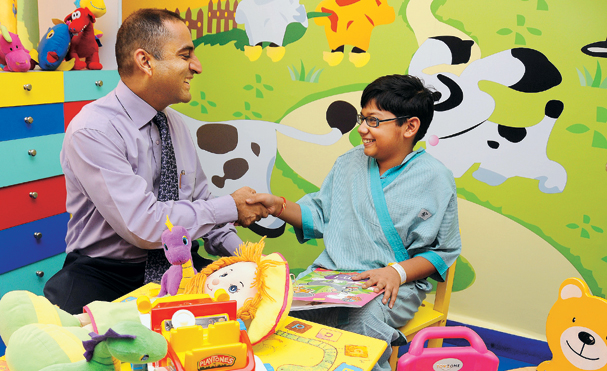
Healing bond: Dr Anupam Sibal with a patient at Indraprastha Apollo Hospitals, Delhi. Among the essential qualities of a doctor is the ability to empathise / Photo: Arvind Jain

Medical care in our country is like a patchwork quilt: a few small segments sewn with lovely silk while the rest are frayed and falling apart. Millions of Indians are deprived of basic medical facilities because they are too expensive. Well-to-do Indians have the right to be healthy. The rest simply suffer or die. We like to boast about the richness of our culture and about the billionaires who figure prominently in the news but when it comes to human development, we are paupers.
The imbalance in health care, the dreadful state of most government hospitals and the exorbitant fees charged by private doctors are common knowledge. How shall we redress these?

Like several of my colleagues, I have spent most of my surgical career working in rural areas, in south and north India. In many such places, being the only qualified surgeon, I had to handle all types of cases. Rural folk are hard-pressed for money and cannot spend too much on any illness. My experience and that of my colleagues shows that quality medical care that is affordable can be given anywhere in India (or any other country) by following a few essential steps.

As medical students we spend five and a half years learning the art and science of medicine. But we are not sensitised to the unique nature of a profession that has to deal with pain and suffering all the time. Mere moral lectures will not do. One way to sensitise young minds is by introducing humanities into the medical curriculum as is being done in many countries. It will help produce more rounded personalities, better equipped to take on the high-pressure job of a doctor while retaining human values.

For a young doctor, there are riches to be had from working with an experienced senior, especially in a hospital where the resources are not plentiful. He will learn to adapt and innovate, use his clinical judgment and will not be easily tempted to do too many investigative procedures like blood tests, X-rays and scans. He will be an all-round doctor rather than one with narrow experience. We certainly need specialists and super-specialists for the treatment of certain problems but for the majority of ailments, an efficient MBBS doctor is all you need. He can learn multiple skills by working with a senior who is willing to pass on his experience and knowledge.

A surgeon working in a small town or village should be able to do a hernia repair, mend a broken forearm, manage prostate trouble or do a caesarean section. He should be able to handle common medical problems like chest infections, skin allergies, diabetes, angina and high blood pressure. A multi-skilled doctor can handle 85-90 per cent of all patients walking in or wheeled into the hospital.
Doctors must have the ability to empathise. This quality can be developed by any doctor who is able to put herself in the patient’s place. She is then more likely to come up with the right mode of treatment.

A part of this process is telling the patient why he fell ill, explaining the disease and teaching ways of preventing future problems. This is an essential part of a doctor’s job but is totally neglected for two reasons: patients never ask questions like “What caused this illness?”, “What exactly is diabetes/blood pressure/eczema?” or “How do I protect myself in future?” Most of us prefer to fall sick and then be cured after suffering the pain and agony. This is silly, because learning how to prevent future problems is far better for health. Instead we are grateful when the doctor gives a few minutes of her precious time to prescribe medicines.

We doctors like to think that we have too much to do and little time to talk to patients. By readjusting our priorities and the way we work, it can be done. The rewards are tremendous, for both patient and doctor.
Small, well-run hospitals are much more efficient than large ones. It may make good business sense to have 1,000- and 2,000-bed mega-centres with hundreds of doctors and thousands of paramedics, and the main objective of making a profit. This usually results in diminished quality of care. The ideal in-patient capacity for a rural or a small-town hospital is 60 beds. In a city, it could go up to 100 or, because of multiple speciality departments, 200. In such hospitals, the doctors, nurses and other staff get to know each other. They meet and talk every day, not just as medical professionals but also as ordinary human beings. This makes it easier for them to work as a team and it boosts their morale. They are less stressed and more caring. For the patient, a well-managed small hospital with efficient doctors and staff is a real boon.

A good hospital will say ‘no’ to unnecessary gadgets. A hospital should have only those machines which are in regular use, with the exception of certain life-saving emergency equipment which are essential. Before any new purchase is made, its usefulness and running expenditure must be carefully looked into. Some hospitals buy equipment the way a fashion-crazy youngster blindly follows the latest style, without stopping to consider if it will suit her. The running expenses for rarely used equipment will be very high, and patients will be made to go through needless investigations in order to recover the money.
Most illnesses require fairly simple treatment and very little in the form of investigations and tests. An efficient doctor and nurse can do far more than any gadget. In many peripheral hospitals, seriously ill patients (like those who have suffered a heart attack or undergone major surgery) are being cared for perfectly well by giving intensive nursing care without the use of a multitude of gadgets. When more sophisticated methods are absolutely essential, such patients can be referred to a higher, multi-speciality centre. This will be psychologically better for the patient, and the medical bills will be a fraction of what one would pay in a fully-equipped ICU.

Choices such as these—of keeping the treatment simple and effective at all times—have to be made by those who run small hospitals. Any patient who cannot be treated without sophisticated gadgetry and/or by super-specialists should be referred to the appropriate centre at the earliest. In the vast majority of cases, this is not necessary.
For a doctor (or nurse or any hospital staff), there is no greater joy than that of seeing a patient cured and happy before going home. If more doctors can come together with this purpose in mind, we can do much more for the health of our nation than by blindly applying our knowledge. The knowledge is very important. But without genuine caring, it is at best cosmetic. And from experience, I know that a good living can be honestly made without chasing money.

Can doctors fulfil the real needs of patients? We need to make the right choices. The rest is simple.

Nambisan is a surgeon and novelist. Her most recent novel, The Story That Must Not Be Told, is shortlisted for the DSC South Asian Literary Prize.

source: http://www.week.manoramaonline.com / Cover Story / THE WEEK / Saturday, November 19th, 2011


You never know what the future holds

Says model Dayana Erappa, who bagged the title of ˜Miss Photogenicâ™ at the ˜Miss India 2011™ pageant

Like many young girls, even Dayana Erappa, a Bangalore model, dreamt of taking part in the ‘Miss India’ pageant.

Her grooming started when she entered college and her principal saw the potential she had in the glamour world. Before she knew it, Dayana was on her way to take part in the ‘Miss India 2011’ pageant. She even won the title of ‘Miss Photogenic’ at the pageant.

Speaking to Metrolife during the ‘Beyu Fashion Show’ held recently, the model expressed how she would have loved to bag the crown. “Not winning the contest was a little disappointing. But I am happy about the ‘Miss Photogenic’ title. At the end of the day, it’s the experience that counts. For a young girl like me, it was a huge thing to work with some of the biggest names in the industry,” she says.

The grooming and expert advice she picked up from the pageant are things that she applies during her work. At the same time, Dayana says that there is no denying the heavy competition that surrounds her. “It’s all about how each one perceives it. There are so many newcomers entering the modelling industry every year but if we start worrying about that, it will kill the fun part of the job. I feel we, as models, must stick to giving our best, that is to show the hard work of the designers in the best way possible,” adds Dayana, who dreams of walking the ramp for Roberto Cavalli.

Apart from modelling, Dayana is also interested in acting. So getting into the film industry is definitely a part of her agenda. Ask her who she would like to be cast opposite and she gives a list of names. “But I would love to act with Suriya and Vikram.

They are my all-time favourites. I do plan to act but not right now. My concentration is on modelling. But you never know what the future holds,” she signs off.

source: http://www.deccanherald.com / by Megha Shenoy / Home> Supplements> Metrolife> Beauty Speak / Friday, November 18th, 2011

Dash of creativity gives secondhand stuff the edge

In keeping with Bangalore’s ongoing celebration of all things recycled, the Flea Market at Jaaga fit the bill.

The event was organised by Second to None, a group that encourages people to buy and sell used products.

The flea market organised in Bangalore by the NGO Second to None encouraged people to buy and sell used products. Photo Ashwini N. The Hindu
“The idea behind the flea market was to provide a space for people to sell and buy secondhand material without going to the trouble of marketing or advertising. With different choices, customers buy items at a lower price than a new one, and which are in just as good a condition,” explains Anu Gummaraju, a founders of the organisation with Reena Chengappa and Shilpa Kamath.

The atmosphere was informal, yet the event created awareness among visitors about the simplicity of turning ‘waste to wealth’. Angad Gummaraju, a 14-year-old, took great pleasure in teaching kids — and grown-ups — how to make jewellery boxes and lamp holders in fifteen minutes through origami.

How did he learn to make these trendy accessories? “YouTube,” he quips, demonstrating just how easy it is to be ecofriendly and resourceful while having fun.

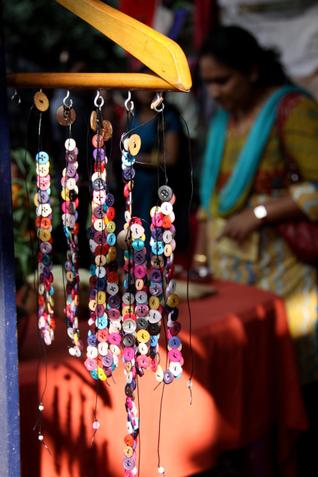
About thirty participants were seen exhibiting their wares at the stalls. Belaku, an NGO, had brought in bags, notebooks and trendy jewellery made out of recycled paper by disadvantaged village women.

Papier-mache artiste Rabi Ratnakar’s lamps and vases were a crowd-puller. “These are completely safe and extremely kid friendly,” he says.

Taantra Cakes sold preservative-free cupcakes. “This makes them more durable. The taste of the cakes gets better and they are healthier even without refrigeration,” explains Taantra Cakes owner Chaitali Singh.

Old books, clothes, bags, even photographs, found space in shoppers’ bags. Second to None is hoping to make every third Sunday ‘flea market Sunday’ so that more people can participate in the “recyclathon”.

source: http://www.thehindu.com /by Madhavi Shivaprasad / News> Cities> Bangalore / November 17th, 2011

CM inaugurated Centenary Celebration of Kodava samaja

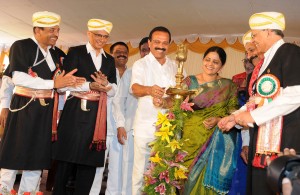
Chief Minister D V Sadananda gowda inaugurated Centenary Celebration of Kodava samaja. Speaker KG Bopayya, High Court Judge Bopanna, M C Nanayya MLC, Dati Sadananda Gowda seen in Picture.

Chief Minister D V Sadanada Gowda inagurated Centenary Celebration of Kodavasamaja.Speaker K G Bopayya, High Court Judge Bopanna, M C Nanayya MLC, Dati Sadananda Gowda seen in Picture

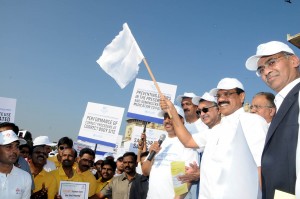
Chief Minister D V Sadananda Gowda Flaged off of Marathon Run by Quality Control in Health Management. Rajiv Gandhi University of Medical Sciences Vice Chancellor Dr Sheeprakash seen in Picture

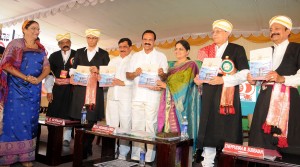
Chief Minister D V Sadanada Gowda Released Smarana Sanchike for Centenary Celebration of Kodavasamaja.Speaker K G Bopayya,High Court Judge Bopanna,M C Nanayya MLC,Dati Sadananda Gowda seen in Picture

source: http://www.sandanandagowda.com / Sunday, November 13th, 2011

Kodavas of Coorg: Bold, beautiful and brainy

That its men are brave and the women beautiful is an oft-remarked blanket statement about Coorg. The British called it the Scotland of India when they fell in love with this cool nook in the Western Ghats and its warm people.

The Kodavas or Coorgis are an ethnic minority. But unlike other minority communities, the Kodavas are largely privileged. In fact, a pleasant colonial hangover stays with the people who enjoy a good life with evening drinks, golf, and hockey.

Although a Hindu community on paper, their language, customs, and traditions are distinct.“Easily one of the most martial cultures in the country, these are a people who ritually worship their guns and swords. Interestingly, till a few decades ago, the birth of a male child was marked with a gun shot, announcing to the world the arrival of a warrior,” writes Pattamada Sundar Muthanna in a coffee table book on Coorg tourism, brought out by journalist PT Bopanna.

Thanks to the outstanding contributions of this community to the country’s defence sector, Coorg is also called the Land of Generals.Field Marshal Kodandera ‘Kipper’ Madappa Cariappa, the first Indian Chief of Army Staff of the Indian Army, was a Kodava. General KS Thimmayya was another brave soldier, who led the army during crucial conflicts with China and brought laurels to his homeland in the hills.

“The people’s right to carry arms was originally granted by the Kodagu kings, who did not maintain a standing army, but called on the people to fight when an invasion threatened. This right was formalised by the British when they exempted the Coorgis from the Arms Act. Today the Coorgis and a few other communities have the right to own guns without having to go through the process of getting a licence,” said Muthanna.

Characteristically, Kodava weddings are not exempted from the martial element either. The bridegroom, wearing his smart traditional costume— the knee-length kupya (similar to the Scottish kilt )—would chop banana trees with their carved daggers called pichekathi and odi kathi, symbolically to portray the duels he fought for the bride. The pichekathis are a part of the groom’s wedding gear, stylishly tucked into the cotton cummerbunds that hold their wraparound cloaks together. The ceremonies are tribal in nature more than Hindu, and are devoid of any Brahminical rituals. There is no chanting of mantras and slokas, and family elders direct it.

Like the Scots, Kodavas too stress upon their clan lineage. Their surnames indicate their clan, and inter-clan marriage is forbidden. Another distinguishing characteristic of this community is the high status given to women. According to the Gazette of Coorg, compiled by G Richter, published in 1870, “Young persons under 16 years of age are not married in Coorg. Exceptions from this rule are very rare. It is to be hoped that the Coorgis will ever be preserved from the misery of child marriages.” Dowry is forbidden, and widow remarriage is encouraged. Probably owing to the cool climate and the secluded terrain, the Kodava community is known for its liberalised outlook to alcohol consumption.

“Alcohol is offered to gods and ancestors during ceremonies. Children who have come of age enjoy a drink or two with parents,” said Muthanna.

A main festival in the Kodava calendar is called Puthari. It is an annual fest to celebrate the first harvest of paddy. Under full moonlight, stalks of paddy are cut and joyous gunshots mark the occasion.

The Kodava language is a mix of its geographical neighbours with many surprises thrown in. Malayalam, Tulu, and Kannada influences can be easily spotted, but the language is also unique as its people.

source: http://www.anhourago.in / DNA www.dnaindia.com / Home> Bangalore> Report / by Malavika Velayankkal / Sunday, Nov 13th, 2011