Category Archives: Arts, Culture & Entertainment

Centenary celebration of B`lore Kodava Samaja from Nov. 11 to 13

Mysore, Nov. 9:
The centenary celebrations of Kodava Samaja, Bangalore, will be held from Nov. 11 to 13.

Day One: Pooja rituals and cultural programmes will be held at the Samaja`s premises in Vasanth Nagar, Bangalore, on Nov. 11 at 4 pm. Mallengada N. Dada Belliappa, President, Federation of Kodava Samajas, Bollera Jaji Mandanna, former President, Kodava Samaja Bangalore, Kodira M. Appaiah, former President, Kodava Samaja, Bangalore and Berera M. Shambu Aiyanna, former President, Kodava Samaja, Bangalore, will be the chief guests. Cheppudira M. Thilak Subbaiah, President, Kodava Samaja Bangalore, will preside.

Day Two:
On Nov. 12, at 10 am, the stage programme will be held at the White Petals in Palace Ground, Bangalore. Governor H.R. Bhardwaj will be the guest of honour. Central Social Welfare Board Chairman Iychettira Prema Cariappa, Hatti Gold Mines Managing Director Avaremadanda K. Monnappa, Bangalore City Deputy Commissioner Muruanda K. Aiyappa and Brigadier Kodandera Arjun Muthanna will be the chief guests.

Day Three: The following day (Nov. 13) at 8.30 am, main function will be held at White Petals, Palace Ground Bangalore with Chief Minister D.V. Sadananda Gowda, Assembly Speaker Kombarana G. Bopaiah, MLC Meriyanda C. Nanaiah, MLA Mandepanda Appachu Ranjan and High Court Judge Ajjikuttira S. Bopanna as the chief guests.

Free bus from Mysore

Mysore Kodava Samaja has arranged a a free bus service from city to Bangalore on Nov. 13. The Kodava members intending to attend the function on that day may contact their area`s Association President or the Samaja Secretary.

The bus will leave the Samaja at 6 am.

source: http://www.mysoretrendz.com / source here: http://www.starofmysore.com

What is the need for post-party party and why you are not invited?

How do you know that a trend has caught on? It’s when the lowest common denominator, namely us, starts following it. Recently, a friend had an after party for her birthday party which incidentally was at Delhi’s swanky nightclub The Love Hotel at Ai, owned by the man who probably single-handedly fanned the after-party culture in the capital, AD Singh. It was Singh’s and actor Arjun Rampal’s co-owned nightclub brand Lap, Rampal’s Chasing Ganesha along with Jaypee Sports International ( JPSI) that powered the F1 after parties, which took five months to plan. “Large sporting events have visitors from all over the world and good after parties offer a chance for everyone to let their hair down,” Singh explains the raison d’etre of after parties.


If F1 put India on the world map, the after parties showed that Indians can throw a mean party. Even Lady Gaga went a little gaga, tweeting her pic with Rampal and pal SRK. And everyone from Bollywood glam to fashion biggies to society majors walked the red carpet to the F1 after party. “It’s a status symbol to be part of the after-party guest list. While the event is open to everyone who can buy the tickets, the after party is an exclusive privilege. And that’s what makes them coveted,” says Harmeet Bajaj, director of Smokehouse Room, a new nightclub in Delhi by Impresario – a group where Bajaj partners with Shiv Karan Singh and Riyaz Amlaani.

Gatecrashers are always a big problem at such events. “One gentleman pretended he was Mark Weber (the F1 driver) to get in,” Singh says. The after-party culture started with fashion weeks. The fash frat has always been known for it’s proclivity to partying and when it became a business event, the need was felt for a forum to let their hair down. Bajaj says: “The week has a very formal format where you sit on benches and watch show after show. Designers felt the need to socialise informally.” And after party was born. Soon, IPL started its ‘infamous’ after-match parties and now every sport and society event has one, even wedding receptions.

The Guest List
Who’s invited is the single-most important factor about an after party. Bangalore-based image consultant and fashion choreographer Prasad Bidapa who managed the after-match parties – all 30 of them – for IPL4 along with DNA Networks, says the after-party culture feeds on the “we are a children few” mentality referring to the feeling of privilege it brings to be part of the A list. “It creates a feeling of endless excitement too,” he comments.

But most after-match parties during IPL drew a lot of flak for not giving time for the cricketers to rest. In fact, even MS Dhoni had commented that too many “after parties are taking a toll on our energy levels”. While South African cheerleader Gabriella Pasqualotto has another story about the energy levels. In her tell-all blog on behind the scenes at the IPL the 22-year-old had said that: “The music pumps, the drinks flow and the cricketers come and go… But the real fun happens in the VIP rooms where the players and night owls can cause scandal!” After parties by very nature are more risque.

“If sport meets glamour sparks will fly unless you grew up in a convent,” says Bidapa. But not only sparks but even liquor -and the best one at that – flies off the shelf. “An after party has to have the best of decor, food and definitely liquor to live up to its guest list,” says Utkarsh Bansal of P3party.com and organiser of a many farmhouse and private after parties in Delhi. Bansal has seen a literal 100% surge in the demand for an after party from the friendly BYOB (Bring Your Own Booze) get togethers to the real heavyweight parties that require a velvet rope at the entrance. The high demands he has
noticed are for liquor, decor and now foreign hostesses.

We Like to Party

The unwritten rule for IPL parties is that the top stars need to show up. Reportedly, sponsors demand that stars turn up at least for a photo op and they do oblige. For smaller players of IPL, it’s a platform to network – after all, they also know that they won’t be getting an in into this world post the season. “After parties are the best networking platform there is. It’s the right mix of people – from fashion to films to bureaucrats and industrialists,” says Bajaj, enough contacts to fill your Rolodex.

The entertainment quotient at an after party is fairly minimal – maybe a ten-minute fashion show or a stand-up comedy routine. “It’s the whole feeling of living vicariously that this culture feeds on, it’s the same way I would read a piece on Maureen Wadia’s house,” Bidapa says and adds that an after party is now planned as a part of the whole event. It’s a media-created event which feeds the Page 3 and growing number of news and lifestyle TV. Bajaj says people have a guest list that’s divided into A lists, B lists and C lists. And everyone wants to be in the first one.

source: http://www.economictimes.indiatimes.com / by Nupur Amarnath / ET Bureau / Nov 06th, 2011

Thal and puttu

Community cuisine has entered the food scene in a big way, with restaurants promoting traditional flavours to attract customers.
After international cuisines — Chinese, Thai, Mexican or Italian — have dug their heels into the country’s metros, it is now the turn of community cuisines to capture the imagination of the eating-out population.

And instead of the usual State-centric fare like the Gujarati thali or the Kerala sadya, it is Bohri, Coorgi, Mudaliar, Kayastha cuisines that are in the limelight.

“Community cuisines capture the culture, tradition, geography, history and the quirks that regional influences bestow on the taste,” says Rajkamal Chopra, Executive Chef at WelcomHotel Sheraton. He and his team have been researching traditional cuisine in different communities, and flying in specialised chefs to promote those regional dishes.

Take South India’s Mudaliar community, which was one of the first to be showcased. Traditional kal chattis (mud pots) and vadakam (a mixture of onion, garlic and other spices) were used for that distinctive flavour of the community’s famous fish dish, Meen Kozhambu. For vegetarians, Vazhaipoo Vadai — vadas made using banana flower, Bengal gram and coconut — and yam dish Karnakazhangu Varuval were chosen. The non-vegetarians were treated to traditionally spiced lamb, Attu Kaal Kozhambu, and a host of other dishes.

To recreate the Dawoodi Bohra kitchen, Chef Ismail Khan was flown in from Mumbai. With the community’s roots in Yemen, the cuisine has many Arabic and West Asian influences. Bohra khichda (a delicacy made from mutton, wheat and pulses), kheema khichdi (minced meat pulao), Lagan ni seekh (layered minced meat made with onions, bread and topped with eggs), kheema samosa, mutton kaari-chawal (spiced coconut milk-based stew served with fragrant basmati rice topped with fried onions) were some of the specialities.

For the vegetarians, Dal Chawal-Palida was the main dish. Toor dal sauted with onions and tomatoes accompanies the basmatic rice and Palida is made from the stock of the cooked toor dal, along with either drumstick, bottle-gourd or sweet potato.

SHARING THE THAAL

Before adopting modern dining methods, Bohras would eat together from a large, round plate or thaal which was served with all the dishes placed on the shining platter. The diners – eight to a thaal– sit on the floor, and the circular thaal signifies that all are equal before Allah. This practice is followed even today during marriages and other celebrations. The thaal is placed on a round, elevated metal ring called the tarana, and each meal begins with a grain of salt, which is believed to clear the taste buds and allow better relishing of the flavours. The first, though not the only, item is a sweet and during feasts it is common to have as many as three desserts. No one can leave the thaal till every member has finished; else it is considered disrespectful not only to the rest of the diners but also the food.

The Bohras have many traditional sweets. Malida (sweet made with wheat and jaggery), Lacchka (cracked wheat halwa, usually made on the first day of the Bohra calendar), and Kalamdo (rice mixed with yoghurt, cream and sugar). Sancha ni ice cream (hand-cranked ice-cream) is a coveted dessert for special occasions.

Bohras also make a variety of soups to accompany the rice dishes. Some are cold, such as Kacchi Sarki (made with toor dal and garnished with cucumber, tomatoes, spring onions and beaten yoghurt), while the hot soups include Sarka (made from toor dal, groundnut and coconut).

PUTTU PARADISE

The Coorgi community too is known for its love of food and boasts a vast choice of traditional dishes. Largely rice eaters, they love a fragrant local variety — sannakki.

Rice dishes here come in multitude forms. Breakfast means an assortment of puttus (steam-cooked dishes). While Kerala puttus are of two-three types, the Coorgi ones include Kadambuttu (ball-shaped puttus), Thaliya puttu (flat puttus steamed on plates), Paaputtu (cooked with milk and shredded coconut), Nooputtu (noodle-like thread puttu), Od puttu (baked on a flat mud pan), Nuch puttu (made of broken rice), Madd puttu (made using a medicinal leaf), and Koovale puttu (made with ripe bananas or jackfruit and steamed in folded Koovale leaves or banana leaves). Wow, now isn’t that a massive variety of breakfast options?

Coorgis are essentially non-vegetarian. Pork is a hot favourite, cooked as Pandi curry and served with rice. Meat, chicken and fish are the other musts which are usually fried, roasted, grilled or made into curry. Meat and fish are also pickled by salting, smoking and drying, or turned into spicy chutneys that accompany rice. Just like in Mizoram, here too dried meat and fish are used during the long monsoon season, when people are mostly homebound.
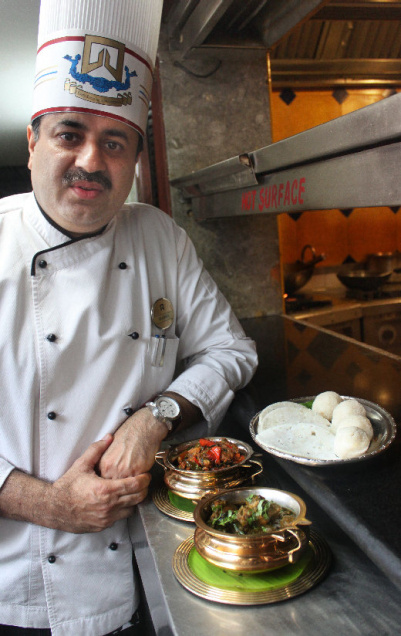

Chef Raj Kamal with Coorgi food

Coorg’s vegetable dishes largely owe to the abundance of forests in this fertile region. Baimbale curry is prepared from tender bamboo shoots, Kumm curry from wild mushrooms, Chekke curry from unripe jackfruit, Chekke Kuru curry from jackfruit seeds, Baale Kaamb curry from the stem of the banana plant, Kemb curry from the leaves of the colocasia plant, and Maange curry from raw mangoes. The basic ingredients in any traditional Coorg curry include coconut, ground with onion, garlic and a selection of spices.

NUTTY DELIGHTS

Food from the Kayastha community, on the other hand, is characterised by the generous use of ingredients such as almonds, cashew, and saffron. Rich as it may be seem, its reputation for being the most secular food in the country has given it high acceptance among foodies. Specialities of the Mathur community, this cuisine consists of dishes such as Badam Pasande (flat pieces of lamb cooked in an almond gravy), Takey Paise (besan rounds, that are fried and then curried), Yakhni Pulao, Kacche Kheeme Ke Kofte and Shammi Kebabs stuffed with mint and onions. The cuisine typically consists of red meats, an assortment of masalas, and lentils.

WelcomHotel Sheraton in the Capital, in fact, has made community cuisines its USP. While its Dakshin restaurant has been showcasing cuisine from South India, Bay Watch, its buffet square, has been experimenting with food from the North, East and West of the country. Delhi’s Rajdhani restaurant too prides itself on its community cuisines from the West.

A recent innovation is the use of SMS alerts for community cuisines. Often enough, messages pour in offering doorstep delivery of Kashmiri Muslim fare or Chettiar specialities. “And this is going to take the popularity of community cuisine to the next step,” says a die-hard foodie.

source: http://www.thehindubusinessline.com / by Preeti Mehra

India’s first ever camp-out music festival ‘Storm’


BANGALORE:

Liquidspace Entertainment has introduced India’s first ever camp-out music festival ‘Storm’ which will be held on 11-12 November in the hills of ‘Coorg’ in Karnataka.

The two-day music festival will showcase an eclectic mix of 37 artistes from across the globe performing on two different stages. The fest will include electronic band, artistes and DJs like Indian Ocean, Leslie Lewis, The Raghu Dixit Project, Swarathma, Richard Durand, Faridkot, Thomas Gold, Pearl, Nikhil Chinapa, Soulmate and others.

Storm – India’s first eco-conscious music festival is one of the unique initative undertaken to explore unseen territory, landscape through a full scale camp out music festival, in the hills. The fest with the support of artiste managers Submerge and The Syndicate aspires to encourage responsible tourism through its initiative against the usage of plastic and strictly adheres to a ‘No Drug’ policy.

Storm in association with Karnataka Tourism, MTV Roots, Timescity.com and Radio One, promises to stir up the urge to enjoy the music along with adventure and camping experience. The concept is a brainchild of Sachin (Director of Liquid Space Entertainment) and avin Uthappa (MD, Liquid Space Entertainment).

Speaking about the concept of Storm LiquidSpace Entertainment MD Lavin Uthappa said, “With a strong conviction towards preserving the environment, team-Storm takes the concept of responsible Tourism experience to a new level. This initiative is also to strongly address a few of present global concerns and doing our bit to prevent environmental degradation through innovative strategies and technology. Its a complete experience for all age groups, young or the old with multiple stages, food corners, a flea market, an adventure zone and camping area where each individual at the festival enjoy music, nature, food and adventure.”

The event has generated significant hype through social networking sites like Twitter and Facebook.


DJs at Storm Festival, Coorg 2011:

International DJ Line-up:

Richard Durand + Julie Thompson LIVE, Thomas Gold, Sied Van Riel, Anil Chawla & Dale Anderson, DJ SAN

Domestic DJ Line-up:

Breed, Pearl, Arjun Vagale (Jalebee Cartel DJ set), Sanjay Dutta, Clement, Vachan Chinnappa , Tuhin, Wayne Beck, Absolute, Chubby, Vishnu, Kay Mikado, Sekhar, Kalypso, Vilas & the Official Storm DJ – Swing

Bands at Storm Festival, Coorg 2011:

Indian Ocean, The Raghu Dixit Project, Lesle Lewis, Swarathma, Soulmate, Faridkot, Ankur & The Ghalat Family, Yodhakaa, Astitva, Agam, Aurko, Rishi inc, La Pongal, Airport, Projekt Square.

source: http://www.radioandmusic.com / by RnM team / Home> Editorial> News / November 01st, 2011

Dubare Camp to host ‘ELEPHANT UTSAV’ on Oct 31st

Kushalnagar:
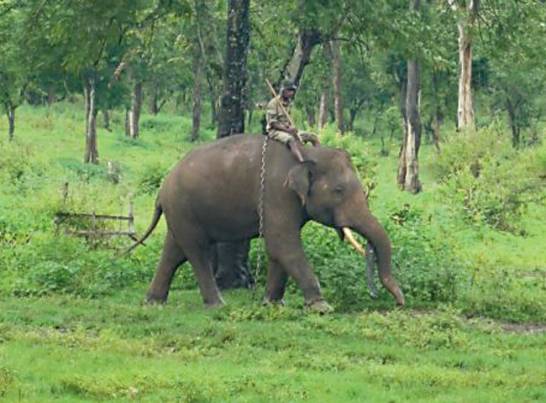
– Marking the 57th Wildlife Week an ‘Elephant Utsav’ has been organised by the District Forest Department and Wildlife Division on Oct. 31 at Dubare Elephant Camp.

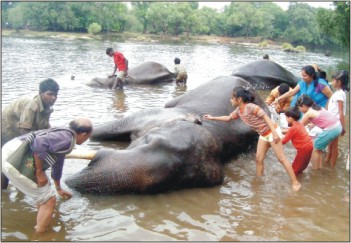
Briefing about the Utsav here yesterday, Kushalnagar Range Forest Officer M.M. Achappa said “the programme to be held from 9 am to 12 noon that day will feature various games for the tamed elephants housed in the camp. The elegantly decorated elephants will also participate in an eating competition. On the lines of Dasara, the elephants will be bathed in river Cauvery and after feeding will be caparisoned and decorated.”

Continuing Achappa said “the mahouts have been strenuously training the elephants in running race, football, eating sugarcane, obedience to masters, rescuing the injured mahouts and Kavadis from forest, group activities and a variety of other items which will surely enthral the tourists. The sprawling ground in front of the old Ins-pection Bungalow in Dubare has been readied for the Utsav which is aimed to subdue the elephant-human conflict and also bring in awareness on preservation of wildlife among the people.”

As part of the Utsav competitions have been arranged in quiz, extempore speech, painting and singing with special relevance to environment, forest and wildlife for students of schools and colleges in Somwarpet.

Madikeri DCF K.S. Anand, Wildlife DFO Motappa and Somwarpet ACF Prasanna Kumar are also expected to participate in the Utsav, according to sources.

source: http://www.starofmysore.com / General News / October 29th, 2011

Coorg is serenity and beauty personified


When three women who have been friends for a decade decide to take their first trip together, we had to make it spectacular; and Coorg was the star of our spectacle.

We set off on a train to Bengaluru and on reaching the station, we unwittingly got into a ‘No English, no Hindi, only Kannada’ auto rickshaw to the Satellite Bus stand. From there, a super clean, very on time KSRTC bus took us to Kushalnagar, which is about 225 km from Bengaluru in four hours.

It was a fantastic drive on superb, pothole free roads. Kushalnagar is a bustling little town with warm and friendly people. There are many hotels which are quite close to the bus stop and also conveniently priced for us budget travellers.

Two places you should definitely visit from here are Bylekuppe and Dubare Forest reserve. Bylekuppe is a Tibetan settlement which houses a beautiful monas-tery. It is such a calming experience to see the monks dressed in maroon and yellow sit down to prayer in the large hall with the gleaming golden Buddhas.

From there we went to Dubare, which was a paradise for the animal lover in me.The high point of the reserve is the elephant interaction programme. You can roll up your sleeves and get dirty as you bathe an elephant, while cavorting around in the Kaveri flowing at your feet and then feed them huge globes of food and finally as a reward for your hard work, get up on the Jumbos and experience the jungle as they see it. It’s a memory that will be etched in your heart forever.

The next day, still talking animatedly about the elephants, we boarded a bus to Madikeri. About 35 km away from Kushalnagar, it is a gentle climb up a hill. Once we got there we were joined by a fourth team member; the rain, who was our constant companion from then on! Undeterred, we whipped out our umbrellas, zipped on our raincoats and headed out to see the Abby falls.

The mighty Kaveri in all her fury, cascading down steep rocks, to become the glorious Abby falls. We could not take our eyes off her, and try as we might, we could not take a picture that did justice to her splendour.

There are many other to-dos in Madikeri that tourist guides will give you but I suggest you slow down, walk through the narrow winding streets of Madikeri, breathe in the fresh mountain air and
experience nature at her pristine best.

Writer is a travel enthusiast

source: http://www.deccanchronicle.com / by Dwithiya. R / Home> Channels> Lifestyle> Wanderlust / October 18th, 2011

Tracking the carb-free dinner trend

Sidhartha Mallya follows this mantra as do Hollywood’s first family — Angelina Jolie and Brad Pitt. The mantra of carb-free dinners is what we are getting at. Chef Vvivek Salunkhe of Skyye Bar, UB City reveals, “Sidhartha Mallya almost always orders for grilled chicken whenever he comes here. And while he eats a lot of grilled chicken, he absolutely avoids rice.” Celebrities aside, have fitness-conscious Bangaloreans taken a fancy to a carb-free dinner plan to watch the pounds? It is a categorical yes from popular chefs in the city. Chef Naren Thimmaiah of the Gateway Hotel attributes this trend of diet-consciousness to greater awareness.

He says, “Earlier, healthy food was synonymous with bland, un-fried, tasteless food, a reason why people didn’t take to it much. Those days dieting was a fad” he says and reckons that today, “with greater awareness, people have realised that following a healthy diet is essential.” Offering an instance, he says “While earlier, one didn’t know about the logic behind fasting, today easy access to information gives one the scientific reasons behind it,” he says. As a mindful eater, the chef reveals his eating rule: heavy breakfast, normal lunch and very light dinner.” He explains: “While daytime metabolism and being active in the day ensure that your breakfast gets digested quickly, lower metabolism at night justifies going for a light dinner.”

Other Bangaloreans might be prescribing to a similar logic. For instance, Chef Nimish Bhatia of The Lalit Ashok is seeing a perceptible change in the eating pattern of Bangaloreans. He says, “The preference for carb-free dinners is growing to a certain extent. Diners today want low-carb, high-protein dishes, for both lunch and dinner.” “They are eating shorter meals over the day. The portion-size is getting smaller,” is another observation of his. And if the chef is to be believed, it is the soup and salad section in the buffet that’s getting popular. And what’s more, diners avoid bread and thick soups, opting instead for the clearer varieties!

Customising menus
For most of the leading hotels and restaurants,changing dietary preferences of the clientele means changing the menus to suit their needs. Here, the hotels seem to have gone one step ahead. As Chef Naren Thimmaiah says, “Around 90 to 95 per cent of our clientele are 25- 35 years old business travellers who travel for 18 or 20 days a month. Now, while they may be aware of the need to eat healthy et al, time constraints don’t give them the privilege to do so.” That’s a reason why the hotel’s adopted the ‘Active food’ concept. The Active food concept focuses on the ingredients that go into a dish, instead of the cooking style. Foods that are low on starch, high on anti-oxidants and foods that have low glycemic levels go into making a dish.

Skyye’s Vvivek Salunkhe might not exactly have diet-conscious diners streaming in. He points out: “Most of the people who come to Skyye bar have had their drinks and are already high on carbs. I haven’t come across a single guest who asks for help with a no-carb menu.” While that may be the case, Vvivek says that while designing the menu, he consciously decided to have more grilled, low-fat, steamed items. So, while you won’t find French fries in the menu, steamed peanuts and corn in olive oil with cayenne-pepper will certainly be on offer.

Incidentally, supermodel Elle McPherson too credits her flat board abs to following a carb-free dinner. Some food for thought, that?

Recipes for a Carb-free dinner

Mediterranean grilled vegetable platter

Ingredients
(Serves 4)
Zucchini – 200 gm
Yellow squash – 200 gm
Red pepper – 100 gm
Green pepper – 100 gm
Yellow pepper – 100 gm
Mushroom – 100 gm
Egg plant -200 gm
Cherry tomato – 100 gm
Broccoli – 200 gm
Olive oil – 30 ml
Basil shredded – 20 gm
Garlic -30 gm
Balsamic vinegar – 20ml
Salt – to taste
Pepper – 10 gm
Pesto sauce – 30 gm
Basil leaves – few

Method
1. Cut zucchini, yellow squash and eggplant in to thick slices, peppers in to triangles and broccoli in to florets
2. Marinate all the vegetables with basil, garlic, balsamic, salt, pepper and olive oil
3. Grill on a hot griddle till cooked
4. Arrange in a plate and serve garnished with pesto drizzles and basil leaves

Poached fish with spinach & tomato mushroom broth

Ingredients
(Serves 4)
Mushroom – 250 gm
Leeks white and light green parts sliced – 50 gm
Chopped onion – 30 gm
Chopped ginger – 10 gm
Garlic finely chopped – 20 gm
Tomato blanched and chopped – 50 gm
Olive oil – 25 ml
Vegetable stock – 750 ml
Salt – to taste
Poached Fish
Fish fillet (90 gm each)
Ginger julienne – 40 gm
Carrot julienne – 40 gm
Celery julienne – 40 gm
Salt – to taste
Pepper – 5 gm
Lime juice – 10 ml
Spinach base
Olive oil – 15 ml
Garlic – 15 gm
Spinach leaves (cleaned) – 100 gm
Salt – to taste
Dill sprig (for garnish)

Method
1.Trim and discard mushroom stems. Slice caps and set aside.
2. In a large saucepan sautés leek, onion, garlic ginger with little oil. Cook, stirring frequently, for about 5 minutes or until very soft. Add mushrooms and tomato to the stock. Bring to a gentle boil, season with salt, reduce the heat and simmer for 15 minutes.
3. Marinate the fish with salt, pepper and juliennes of ginger carrot and celery and pour little broth and poach till done.
4. Sauté garlic in olive oil, add spinach, sauté till wilted .Drain the excess water season with salt.
5. Arrange the fish in deep dish over spinach and pour more mushroom broth over the fish garnish with julienne vegetables from the fish.

Recipe courtesy – The Gateway Hotel
source: http://www.dnaindia.com / Home> Lifestyle> Report / by Mahalakshmi Prabhakaran / Bangalore / DNA / Tuesday, October 11th, 2011

City Lad Wins NATYA SAMMOHANA Title

Mysore:

Chinmaya M. Hegde, a II PU student of Vijaya Vittala PU College in city, has been conferred the title Natya Sammohana in the senior category for his outstanding performance in the National-level Bharatanatya competition organised by Gurudev Academy of Fine Arts at Jaganmohan Palace recently.

He has been selected for student scholarship awards constituted by Department of Kannada and Culture for 2011-12. He is the disciple of Guru Dr. Vasundhara Doreswamy.

Karthik Shenoy of Virajpet has bagged ‘Natya Varshini’ title in the junior category while Gnana Aital of Mangalore bagged ‘Natya Mandara’ title in the sub-junior category.

The following are the consolation prize winners:

Sub-junior category: Anagha Acharya (First) of Teerthahalli;  Bhoomi Ramachandra (Second) of Kodagu; J. Lara (Third) of Hassan.

Second Division: Aditi N. Maiya (First) of Shimoga; Sonu Anthony (Second) of Bangalore.

Junior Category: K. Manasi (First) of Dharwad; Nidhi K. Rao (Second) of Sirsi; Jahnavi (Third) of Mysore; Sharada (Fourth) of Periyakulam.

Second Division: Ruthika (First) of Mangalore; Nivedita Aravind (Second) of Bangalore; B.V. Bhavyasri (Third) of Mandya.

Senior Category: Aishwarya Malagi (First) of Bangalore; Disha J. Maraguli (Second) of Mysore; Swati Ramachandra Bhat (Third) of Uttara Kannada.

Prizes were presented at the valedictory held later in the evening. Academy Chairperson Vyjayanthi Kashi, Director Dr. Chetana Radhakrishna, Manager P.M. Radhakrishna and others were present.

source: http://www.starofmysore.com / General / October 11th, 2011


Karagas take off in Madikeri

MADIKERI:

Madikeri Dasara commenced on Wednesday according to its tradition, with four historical karagas taking off in a procession after various poojas were performed near Pampinkere.

The festival is celebrated by the people as janothsava, which has a history of over 100 years. The nine-day celebrations is beautified by four karagas and 10 mantaps depicting the killing of demons by gods/goddess.

Each mantap comprises of idols with a height of eight to 15 feet, which is set up at the front of a lighting board. The cost of building a mantap may touch Rs 3 to 5 lakh.

The procession of these mantaps attracts lakh of devotees and viewers on the night on October 6, the Vijayadashami Day. Each of these mantap depicts historical stories from the Hindu mythology. The idols in the mantap are given movements to match the story.

From Wednesday four karagas from the four Mariamma temples in town will move in a procession in different areas accompanied by traditional dancers and visitors.

A team of Volaga, a type of band in Kodagu, also accompanies the karagas. The priests who take up the karagas are dressed in yellow coloured ‘kacche’ and have shaved heads. They also hold a knife in one hand and a wooden stick called the ‘bettha’ in the other.

The Dasara committee has organized cultural programmes on all nine days starting Wednesday. Programmes will be held at the Kaveri Kalakshetra on the first six days the festival, while programmes will be conducted at Gandhi Maidan for the other days.
On October 9, Vijayadashami Day, there will an orchestra from 9pm till 6am. The programme will conclude with a prize distribution ceremony for the three best mantaps. The state government has sanctioned Rs 50 lakh for Madikeri Dasara.

source: http://www.timesofindia.indiatimes.com / Home> City > Mysore / TNN / September 28th, 2011