Nine journalists from Mysuru among 123 in State receive the honour
Bengaluru:
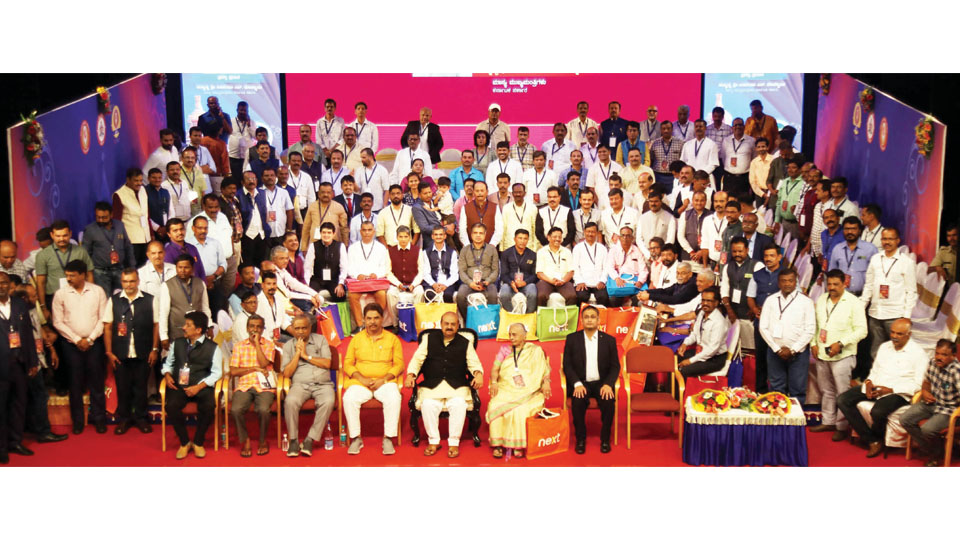
Chief Minister Basavaraj Bommai has presented Karnataka Media Academy Awards to 123 journalists including nine from Mysuru, for the years 2019 to 2022, in a ceremony organised at Ravindra Kalakshetra here yesterday.
Andolana Award given for best district newspaper and instituted by Andolana Daily of Mysuru, was bestowed on ‘Nrupathunga’ Daily of Kalaburagi for the year 2019, ‘Navika’ of Shivamogga for the year 2020, ‘Sanje Darpana’ of Hubballi for the year 2021 and ‘Jayakirana’ of Mangaluru for the year 2022.
Mysuru Digantha Award given for best stories on human issues was given to Bagalkot’s Chandrashekar More of ‘Udayavani’ for his report titled ‘Maneyalle Eeji Samagri Tandevu’ for the year 2019, ‘Prajavani’ Mangaluru reporter Pradeesh H. Marody for his report titled ‘Keluttilla Male Makkala Alalu’ for the year 2020, T.N. Padmanabh of ‘Vijaya Karnataka’, Ramanagar for his report titled ‘Pusthaka Hidyuva Kaige Hasuvina Hagga’ for the year 2021 and V.R. Shivakumar of ‘Vijayavani,’ Hunsur for his report titled ‘Jopadiyalle Jeevana Bandi’ and Deepak Sagar of ‘Vijayavani,’ Shivamogga for his report titled ‘Kaggadalli Mulugida Meghaane Vanavasigalu’ jointly for the year 2022.
Executive Editor of ‘Mysuru Digantha’ Ghanavantha Malali was present on the occasion.
Special Awards were conferred on K.N. Tilak Kumar of ‘Deccan Herald’ for the year 2019, Vijay Sankeshwar of ‘Vijayavani’ for the year 2020, H.R. Ranganath of ‘Public TV’ for 2021 and economic expert Susheela Subramanyam for the year 2022.
Annual awards for the year 2019 were given to R. Manoj of ‘Kasturi TV,’ Chamarajanagar district, Sudarshan Chinnangihalli, ‘Vijaya Karnataka’ and H.V. Kiran, ‘TV9,’ Hassan, Kenche Gowda, ‘Vijaya Karnataka,’ Mandya and Anantha Shayana, ‘Shakti,’ Kodagu.
Annual awards for the year 2020 were given to Dharnesh Bookanakere, ‘Digvijaya News’ and senior journalist D.L. Lingaraju, Mandya, Nagesh Panathale, ‘Vijaya Karnataka’ and senior journalist Mahesh Machaiah, Kodagu, B.R. Udaykumar, ‘The New Indian Express’ and G. Prakash, ‘Vijaya Karnataka,’ Hassan and Mullur Raju, ‘Vijayavani,’ Mysuru.
Annual Awards for the year 2021 were given to A.M. Suresh of ‘Udayavani,’ Mysuru, Mohan, ‘Vishwavani’ and Mullur Shivaprasad, ‘Andolana,’ Nanjangud, K.P. Nagaraj, ‘Public TV’ and Shankar Bennur, ‘The Hindu.’
Annual Awards for the year 2022 were given to K.B. Ramesh Nayak, ‘Andolana,’ Chamarajanagar, Ravi Nakalgod, ‘Hello Hassan,’ Hassan and Somashekar Keragodu of ‘Kemmugilu,’ Mandya.
President of Karnataka Media Academy K. Sadashiva Shenoy delivered the welcome address.
N. Manjunath Prasad, Principal Secretary of the Department of Information and Public Relations and Dr. P.S. Harsha, Commissioner, Department of Information and Public Relations, were present during the awards presentation ceremony.
source: http://www.starofmysore.com / Star of Mysore / Home> News / March 14th, 2023
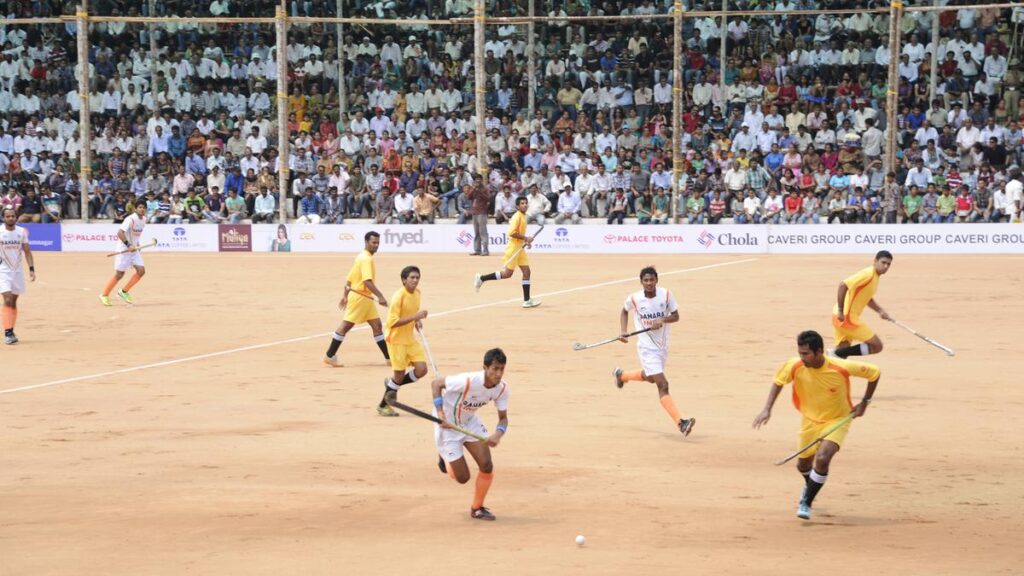
The Kodava community in the hilly district conducts the inter-family hockey tournament every year where players from over 200 families participate.
The annual Kodava hockey festival has no bar on age or gender. The only rule of forming a team is that all members must be from the same family. | Photo Credit: File photo
Napoklu, a small town 21 km away from district headquarters Madikeri, is all set to host what is termed the world’s largest field-hockey tournament, as the annual Kodava hockey festival will be held from March 18 to April 9 after a four-year gap.
The town has only three mud grounds. On Thursday, workers were seen preparing the grounds for the tournament, while temporary bleachers were up on all sides of the ground where 30,000 spectators can be accommodated, said Navin, a member of the festival organising committee, while overseeing preparations at the Napoklu General Thimayya Ground.
“In all, three grounds will be utilised for the hockey tournament and they will also be used as a backup in case it rains,” he said. Multiple galleries, lighting, speakers, and display boards have been set up on the ground. An estimated ₹1.5 crore have been spent to organise the event by the family.
The Kodava community in the hilly district conducts the inter-family hockey tournament every year where Kodava players from over 200 families come together to play. From 2018, the hockey festival was not held due to large-scale devastation caused by heavy rainfall and the COVID-19 pandemic.
The sporting event has no bar on age or gender. The only rule of forming a team is that all members must be from the same family.
This year, the Appachettolanda family is organising the tournament under the aegis of Kodava Hockey Academy. “From every family, young boys and girls, men, women, and professionals, and former hockey players who have represented the State or country, will be part of the family team. Through this event, we are bringing all the Kodavas together. Most of the community members who are outside the district working in various professions come to Kodagu to be part of the sporting event like a festival,” said Appachettolanda Manu Muthappa, president of the Hockey Festival Committee.
The late Pandanda Kuttappa conceived the idea of the Kodava family hockey tournament, which morphed into a major sporting event and festival in the country. “Mr. Kuttappa started the Kodava Family Hockey Tournament in 1997 and was organised by the Pandanda family first in a belief that tapping the inherent love among the Kodavas for hockey could help bring the families and the community together,” Mr. Muthappa noted.
The tournament also emerged as a platform for the community members to discuss trade and business interests besides scouting for marital alliances, according to Maletira Srinivas, secretary of Kodava Hockey Academy. “In the first tournament which was held in 1997, nearly 60 teams took part. The format of the tournament was such that every year, one of the Kodava families had to host the event. Now, over 200 families participate where 3,000 players play hockey,” Mr. Srinivas said.
“Starting with the first tournament, the numbers have increased, reaching a high of 281 in 2003, where this event became the world’s largest hockey tournament. Lasting three weeks, it is a single-elimination tournament and concludes on April 9,” he added.
CM to inaugurate
The Kodava Hockey Namme (festival) is hosted by a different family each year and named after it. Families apply to the Kodava Hockey Academy expressing interest and are allotted the tournament after evaluation. There is no permanent venue; the festival has been held across the district in previous years.
On March 18, Chief Minister Basavaraj Bommai will inaugurate the festival, which will open with an exhibition match between India Junior XI and Karnataka Men’s XI. The organisers said the festival is held at an estimated cost of ₹ 1.5 crore all raised through funds. While the winning team of the festival this year will be given a cash prize of ₹3 lakh, the runners-up will get ₹2 lakh, and the second runner-up will get ₹1 lakh.
source: http://www.thehindu.com / The Hindu / Home> News> India> Karnataka / by Darshan Devaiah B P / March 17th, 2023
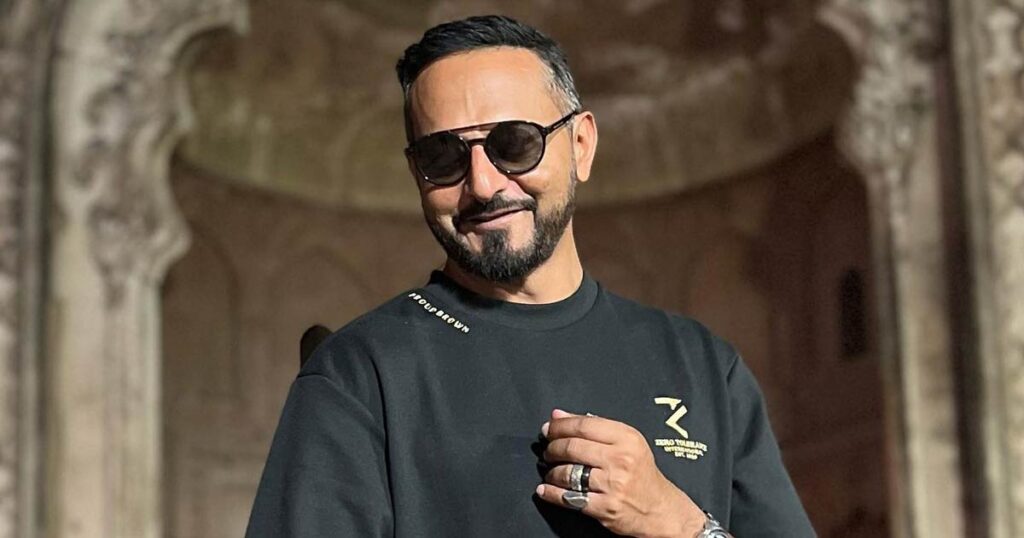
Vh1 Supersonic curator Nikhil Chinapa said that it is not important to emphasise on international names to have a well-curated artist line-up,
Nikhil Chinapa on Supersonic: Curated artiste lineup matters more than global celebs(Photo Credit –Instagram)
Host, DJ and Vh1 Supersonic curator Nikhil Chinapa said that it is not important to emphasise on international names; but having said that, curating a lineup with artistes one doesn’t normally get to witness, is a part of the plan for his music festival.
The event will see the who’s who of the music world such as American rapper Tyga, English singer Anne-Marie and Nigerian singer-songwriter CKay among many others.
About how important is it to add international names, Chinapa told IANS: “It’s not. Having a well-curated artist lineup doesn’t require an emphasis on international names. That said, curating a lineup with artists you don’t normally get to witness, is a part of our plan. This includes Indian artists who haven’t been to Pune as well as international talent visiting India.”
Nikhil Chinapa is one of the most prominent faces in the music world. He is credited with popularising Electronic Dance Music (EDM) among the Indian youth. He is also known as the Father of Indian Dance Music for his various contributions towards revolutionising the outlook of Dance Music in the country.
Talking about his favourite hotspots where he’s performed and the best venues for performance in the country, Nikhil Chinapa said: “It depends on what we call ‘the room’ – which is more than the venue, it’s also the people, the vibe, the sound system etc. The best rooms are the ones where people come for music, as opposed to selfies. I’m not hating on selfies in a club though… or wait, maybe I am – but just a little bit!”
What is that one thing that is missing in the music scene in India? The 49-year-old, who has been instrumental in popularising DJing as a profession, answered: “Quality music journalism and significantly fewer selectors (music curators, playlist geeks, culture visionaries) than what I would expect a music population as large as ours to have.”
source: http://www.koimoi.com / koimoi.com / Home> Television & Web / by IANS / February 24th, 2023
Giving his childhood memories the form of the written word, author Nitin Kushalappa puts the spotlight on south India’s folklore in his latest book meant for all age groups .
Chennai :
It was during his school days that the English translation of Pattole Palame, a compilation of folklore, released, mesmerising author Nitin Kushalappa MP. “After school, I would visit Gangaram’s, take the book from the shelf, read it for a while and place it back when it was time for me to leave. I did this until I was able to collect some pocket money over several months, from the change I could spare from bus fare tickets and tea snacks. With this money, I bought the book at Gangaram’s finally,” he shares.
It was this and perhaps several other stories he had heard from his grandparents and relatives that made Nitin take a liking towards folklore. He began reading, writing and seeking more of it. A compilation of his years of living with folklores is Dakshin – South Indian Myths and Fables Retold. The book on moral stories has 15 retellings of regional folk tales from the southern states. There is the story of Bala Nagamma, the Moon Prince, the cat and the fly and other famous regional tales, which might be lesser-known to English readers.
Each chapter ends on a moral note. Nitin says that there were more than 15 stories he had written for the book and the themes ranged from love and religion to spirituality and death, which was dropped keeping in mind the audience.
Nitin calls himself a “random reader” and this book was a long time in the making. With a day job as an engineer, he makes time for his passion. “I do enjoy reading, writing and studying. I did my writing work during the weekends or when I was free. I have had to make some sacrifices, and cut down on time with family and friends. My latest book brought out the child in me and with it many of my childhood memories,” he shares.
Excerpts follow: Can you tell us about your childhood with your grandparents, the kind of stories you listened to? My grandfather was in the army. He told us stories about Coorg and tales that he heard in the army. My mother and my uncles were also storytellers, and our other relatives had stories to tell too.
Both sides of my family had many books in their houses. I spent a lot of my time in these home libraries. I read comics, fiction, non-fiction and various other genres. Some of the Indian comics, especially Amar Chitra Katha, were based on mythology and folklore.
At home, my parents deliberately didn’t allow us to have satellite television. This was to ensure that we read books. Hence, books were what entertained us. There was only Doordarshan for us. Once in a while, when we visited friends or relatives, I remember watching television at their places.
Some of our school teachers were great storytellers. I remember one primary school teacher, Mrs Leo in particular. I spent a lot of time in our school library. I began writing as a kid. I would write down stories that I heard and read. As I grew up, I somehow didn’t discard these notes.
What was the idea behind Dakshin? Some years ago, I was reading AK Ramanujan’s books on Indian folklore. I liked the methods he used while recording and narrating the stories. I was also reading folklore from Europe, North America, Bhutan, Bihar, Marwar, Punjab and other regions, besides mythical stories and fables.
There is one particular song called Govina Haadu. It is a popular Kannada song which was taught to children. I learnt it in my school textbook. Nearly everybody in Karnataka knows this song. I have heard several people quote lines from this song. There is something about this song which makes people emotional or nostalgic. I had translated this song word by word, and kept it aside for some years.
I was also working on my own retellings of the translated songs in Pattole Palame, a compilation of folk songs. I tried searching for different versions in different villages of Coorg, and in other books.
A few years ago, my book agent Suhail Mathur of The Bookbakers and I were chatting online about potential book projects. There was a requirement to write a book of regional folklore. I was supposed to choose a region or a state. My first choice was to write either on Kodagu (Coorg) or Karnataka. But I found that there was not much material on South Indian folklore itself. So I finally decided to write on folklore from south India and the Deccan. Suhail thought it was a good idea and encouraged me to continue working on this. That is when I grew more focussed.
How do you think these lesser-known regional tales can be made more popular? While preparing for this book, a careful decision was to be made about each story — whether it was worth including or not and how similar or different it was from the original version or the different versions of the tale. We tend to learn more of English and less of our own mother tongues. This has got to do with English becoming the common ground for conversation among people from different languages. If a native speaker doesn’t learn their mother tongue, there is hardly any chance that somebody else will learn it. This way, due to disuse, a language gets lost.
Every language has its stories. Unfortunately, they remain within the language. With globalisation, languages are quickly disappearing. The Kodava language, also called Coorgi, Coorg or Kodagu, is an endangered language. When a language disappears, the knowledge that was associated with it also disappears. A lifestyle and culture which goes with the language vanishes as well. Translations are unable to completely capture the essence of a story in its original language.
How do you want this book to make an impact? These days the visual media has taken up space from the print media. Not many people read books. In the past, parents and caretakers would tell children stories to make them eat and sleep. These days, we tend to allow them to watch YouTube and other videos on smartphones and television. Visual media leaves less room for imagination. Children get addicted to devices and tend to lose out on their creative skills. I hope the habit of reading books makes a comeback. Most successful storytellers are often not authors but script writers. We cannot stop the march of globalisation and progress. Also, I hope filmmakers would make more movies on folklore in our country.
Why is Coorg often a central subject in your books? I was born in Coorg and brought up in Bengaluru. My entire education was in Bengaluru. My younger sister and I would spend our vacations in Coorg. I would write on various topics. Around ten years ago, I began a blog. I also wrote to the newspapers. I noticed that my articles on Coorg found more acceptance than my other articles. This must be because a number of people consider me to be an expert on matters pertaining to Coorg. So, I continued to write a lot on Coorg.
The lessons from each of the stories in the book are plenty, yet you mention only one or two at the end of each chapter. Was it with the intention of making parents and children draw their own interpretation? To be frank, I initially had long paragraphs on the lessons learnt. The editor Arpita Nath wisely recommended just a couple of lines for each moral lesson and made cuts wherever required. The children and their parents can then go back to the story and discuss it in detail among themselves and understand the lessons better.
What’s in the pipeline? I hope to write more books for children and for other audiences as well. There is another book in the pipeline, this time for older audiences. The manuscript is complete. I have sent it to my book agents Suhail Mathur and The Bookbakers.
Book: Dakshin – South Indian Myths and Fables Retold Publisher: Puffin Books /Pages: 236 / Price Rs.299
source: http://www.newindianexpress.com / The New Indian Express / Home> Cities> Chennai / by Anushree Madhavan / Express News Service / February 27th, 2023
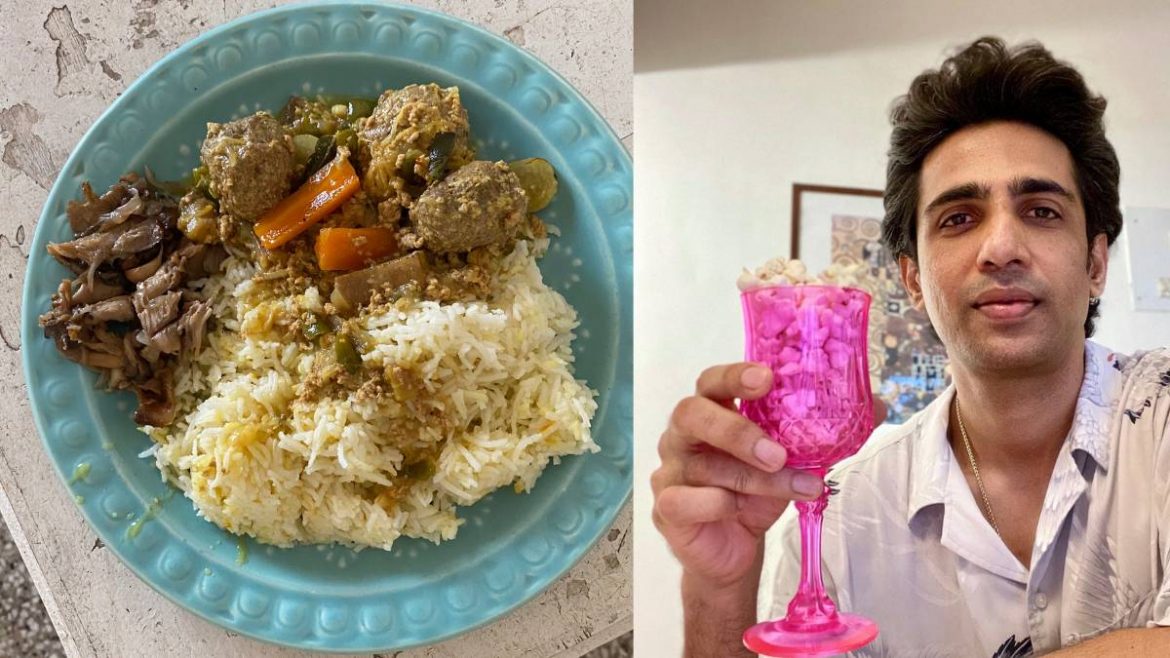
What keeps us updated better than social media apps? Be it a piece of national news, Hollywood gossip or a local incident, social media will be the fastest source of information. The latest piece of interesting info that caught our attention is that Gulshan Devaiah can cook and how! The Hunterrr fame, known for his impressionable acting skills is quite active on Twitter. You can find him giving insight into his days often. This time he posted a picture of a beautifully spread plate with a lot of elements on it. While the food on that plate looked pretty tempting, the caption is what impressed us the most!
Take a look at the plate and the caption yourself!
Gulshan Devaiah Impressed Twitteratis With His Culinary Skills
“SuperGullu”@gulshandevaiah
One meal a day :
Meatball with carrots, white Radish & raw plantain.
Sautéed Mushrooms in garlic butter sauce.
Saffron rice.
3 pears, 6 pieces of ripe jackfruit before this plate.
Finished it off with coconut water & 3 pcs of Royce Nama chocolate
hell yeah!! I can cook
· 5:37 PM / Feb 23, 2023
Hell yeah! He can cook and how! The beautifully set plate explains the reason behind his excitement. Starting with a list of all that we can see on his plate, he talks about his one meal a day. With a portion of saffron rice accompanied by meatballs with white radish, carrot and raw plantain, you can also find sauteed mushrooms on his plate.
His caption also mentions had 3 pears and 6 pieces of ripe jackfruit before having this hearty meal. To finish off this meal, he had some coconut water and 3 pieces of Royce Nama chocolate.
Here’s What The Fans Had To Say About It
Twitteratis were just as impressed with his cooking as we are! While some of them complimented him on his culinary skills, many of them expressed their interest in his movies.
Some also had a question if he consumes only one meal a day! Here are some of the comments.
While it is unclear if this is his only meal for the day, we can certainly appreciate the effort put into making his meal complete.
We recommend Pandi Curry, Koli Curry and Baimbale Curry.
Hyatt Centric rolls out special brunch menu
Chef Gaurav Ramakrishnan introduced a special Coorg cuisine brunch at The Bengaluru Brasseri recently. The special brunch includes dishes like Pandi Curry, Kadambuttu, Kummu Curry, Akki Roti, and more. We started off our brunch with Murgh Lasooni Tikka and Indonesian Grilled Fish. The former is a delicacy marinated in yoghurt and a few seasonings while the latter was flavourful and a bit on the spicier side.
We then decided to check out their special brunch dishes. We started off with boiled rice and Pandi Curry. Boiled rice with pandi curry is like a staple diet in the Coorg region. The pandi curry was made using chilli powder, green chillies, masalas, and Kachumpuli (a dark-coloured vinegar). The delicacy was flavourful and complemented the rice very well.
Kadambuttu
We went for another round of boiled rice, but this time along with the Koli Curry. This Coorgi-style chicken curry was cooked with grated coconut, tamarind paste, green chillies, and red chilli powder. The dish was more on the spicier side but we loved having it with the steamed rice.
Next, we tried the Akki Roti with Baimbale Curry. The curry was made with bamboo shoots along with cumin and mustard. The base of the curry was cooked using coconut paste. The dish was delicious and left us craving more.
Koli Curry
Our brunch came to a close with a couple of desserts – Thambuttu and Kaavale Puttu. The former was made with mashed banana pulp and roasted broken rice along with grated coconut while the latter had ripe jackfruit pulp, ghee and cardamom. This dessert was steamed and served in banana leaves.
If you are looking for a place to try out special Coorg delicacies, the special brunch at The Bengaluru Brasseri is one you should definitely look at.
When Karnataka is on the cusp of Assembly polls, Social Welfare Department and Backward Classes Minister Kota Srinivasa Poojari has stated that Rs. 5 crore will be released for the development of ‘Ain Mane’ (ancestral houses) in Kodagu and also, Rs.25 lakh will be released for the genealogical study of 18 Kodava language natives.
The Minister was speaking after inaugurating ‘Othorme Koota’ (get-together) and an exhibition at a gathering of 18 Kodava-speaking groups organised by the Kodagu Heggade Community Organisation and Kodava-Speaking Communities Association recently at Kodagu Heggade Community Hall in Bittangala. The issue of ‘Ain Mane’ is an emotional one for Kodavas and the community has been critical of successive State Governments for doing nothing to protect the ancient tradition and ancestral houses. Dejected by lack of Government grants, many families have contributed money, resources and time on their own to restore many ‘Ain Manes’ at their native villages.
Even the genealogical study by the Mysuru-based Karnataka State Tribal Research Institute (KSTRI) in 2016 has come in for intense criticism for a ‘biased and unscientific survey’ and there is a demand for a fresh order to conduct a comprehensive, unbiased, judicious and a meticulous ethnographic study.
“At the Government level, we can give reservations through genealogical analysis to the most unrecognisable ethnic groups. I will discuss with Chief Minister Basavaraj Bommai and release Rs. 25 lakh for the study. It will be entrusted either to the University of Mysore or Hampi University. Later, reservation will be announced for the communities that are economically weaker in Kodagu,” the Minister assured.
He also said that implementing the Sadashiva Commission Report on internal reservation will be taken up with the CM. Virajpet MLA K.G. Bopaiah has made a request at the Government level to release Rs. 5 crore for the development of ‘Ain Mane,’ Poojari said and added that five acres of Government land will also be allotted to construct a community hall.
Former State Advocate General and Congress leader Ajjikuttira S. Ponnanna said that though the Government has been planning to study Kodava genealogy for over six years, it has been of no use. “The study of genealogy, reservation, and political reservation is subject to legal struggle under the Constitution,” he noted, asking the Government to take concrete and concerted measures to uplift marginalised communities in Kodagu.
State BJP President Nalin Kumar Kateel inaugurated the book stalls and said that Kodava community is facing a stark reality of dwindling numbers and a rapid decrease in geographical areas owned and occupied by them. He criticised the Congress Governments for neglecting the marginalised communities.
MLA Kombarana G. Bopaiah, MLC Mandepanda Suja Kushalappa, head of History Department of Hampi University Tambanda Vijay Poonacha, President of Kodava-Speaking Communities Association Dr. Mechira Subhash Nanaiah, former Karnataka Western Ghats Conservation Task Force Chairman Shantheyanda Ravi Kushalappa and others were present.
source: http://www.starofmysore.com / Star of Mysore / Home> News / February 24th, 2023
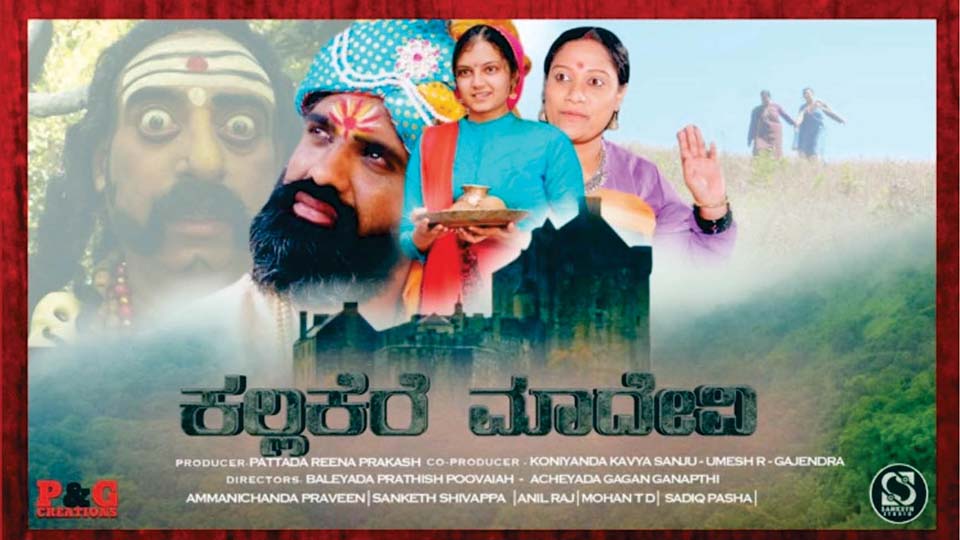
The most-awaited Kodava feature film ‘Kallakere-Maadevi’ will be screened at Kodava Samaja in Vijayanagar I Stage, Mysuru, on Feb. 25 and 26 (Saturday and Sunday).
This first-ever mythological movie, which has seen 36 shows in Kodagu (Kokeri, Virajpet and Napokulu), is produced by Pattada Reena Prakash under the banner of P&G Creations and directed by Baleyada Pratish Poovaiah and Acheyada Gagan Ganapathy; Story, script and dialogue by Ammanichanda Praveen Chengappa.
There will be four shows on both days at 11 am, 2 pm, 5 pm and 7 pm. Tickets are available at the Samaja premises. For details contact Mob: 96326-06913 or 98806-00240.
source: http://www.starofmysore.com / Star of Mysore / Home> News / February 24th, 2023
Minister for Social Welfare Kota Srinivas Poojary speaking at a programme in Bittangala village of Virajpet in Kodagu district on Sunday. | Photo Credit: Special Arrangement
Minister for Social Welfare Kota Srinivas Poojary said the BJP government in the State was in favour of implementing the Sadashiva Commission report on internal reservation.
According to a statement here, Mr. Poojary made clear the government’s stand on internal reservation while speaking at a programme in Bittangala village of Virajpet in Kodagu district on Sunday.
Mr Poojary said he will hold another round of discussion with Chief Minister Basavaraj Bommai on the issue while stating that there was a need for the government to give voice to the voiceless sections of the society.
The Sadashiva Commission has looked into the decades-old demand for internal reservation of the 101 castes that comprised the Scheduled Castes.
Even though internal reservation has become a complicated issue, Mr. Poojary said the government was in favour of ensuring social justice to the communities that had been deprived of government benefits.
The government will be ordering a study on genealogy of all native Kodava communities at a cost of ₹25 lakh and the task will be entrusted to either the Karnataka State Tribal Research Institute in Mysuru or the Kannada University in Hampi.
Also, Mr Poojary said the government will be releasing a grant of ₹5 crore for the development of ‘Ainmane’ or ancestral houses of the native Kodagu community that play an important role in preserving the architectural heritage of Kodavas and the community’s culture.
The BJP government’s emphasis on language and culture becomes clear when people working for the good of the society even behind the scenes in rural areas are recognised for the prestigious Padma awards, Mr. Poojary said.
Earlier, speaking on the occasion, Professor of History from Kannada University in Hampi Vijay Poonacha Thambanda said the government should ensure political and social justice to all communities speaking Kodava language by bringing in internal reservation.
Apart from demanding the inclusion of Kodava language in the 8 th Schedule, he sought the post of Chairperson in the Kodava Sahitya Academy for persons from smaller communities that spoke the Kodava language.
Dakshina Kannada MP Nalin Kumar Kateel and BJP MLA K.G. Bopaiah also spoke on the occasion.
source: http://www.thehindu.com / The Hindu / Home> News> India / by The Hindu Bureau / February 19th, 2023
Two more cases have been booked against violators who were trying to shift garbage from Kerala.
Madikeri :
The forest and wildlife in Kodagu are facing serious threat due to illegal dumping of truckloads of waste arriving from Kerala. The forest fringes on NH-275 are also under threat from littering caused due to lack of public awareness and proper facilities for tourists.
The Makutta Reserve Forest and the Bramhagiri Wildlife Forest, which line the Karnataka-Kerala border, are gradually turning into an open dumping yard for waste.
Foresters during a cleanliness drive in Kodagu | Express
It was only after some alert residents from the district, including members of the Kodagu Seva Kendra, flagged the issue that the authorities started collecting waste from the forest fringes and burning it. The forest department has also increased checks at the Makutta check-post. Recently, a truck driver and a cleaner, who were allegedly transporting 15 sacks of plastic waste from Kerala, to dump in the Makutta forest area were nabbed by the foresters and booked under the Wildlife Protection Act. Two more cases have been booked against violators who were trying to shift garbage from Kerala.
“Foresters will conduct daily patrolling across the reserve forest area to prevent travellers from littering,” said Dechamma, Range Forest Officer (RFO) of Makutta forest.
Residents unhappy with burning of plastic waste
However, residents are unhappy with the foresters for their unscientific management of waste. They have voiced concern over burning of plastic waste inside the forest limits which can be hazardous to health. Further, hundreds of tourists take the Makutta route to reach Kannur International Airport and it has become difficult for the foresters to prevent littering, despite several awareness signboards being put up on the fringes.
Dechamma said that tree branches are being placed along the roadside to curb parking in the area. Meanwhile, the forest fringes lining the NH-275 on Kushalnagar-Madikeri Road are facing threat for which lack of public awareness is being cited as a reason. Foresters say they conduct cleanliness drives across the forest fringes once a month and collect truckloads of garbage.
source: http://www.newindianexpress.com / The New Indian Express / Home> States> Karnataka / by Express News Service / February 19th, 2023
WELCOME. If you like what you see "SUBSCRIBE via EMAIL" to receive FREE regular UPDATES.
Read More »