Two years ago, a lady from Kodagu, the land of warriors, came to Mysuru to witness a circus with her family members. She was very much inspired by a person who hit the target by aiming the gun backwards.
After going back to her native Tavalageri village in Virajpet taluk, she literally took up the air rifle to try what that person in the circus company did. Initially, it was not a successful mission as she was missing the target many times. However, after rigorous practice, she achieved success by hitting the bull’s eye with ease.
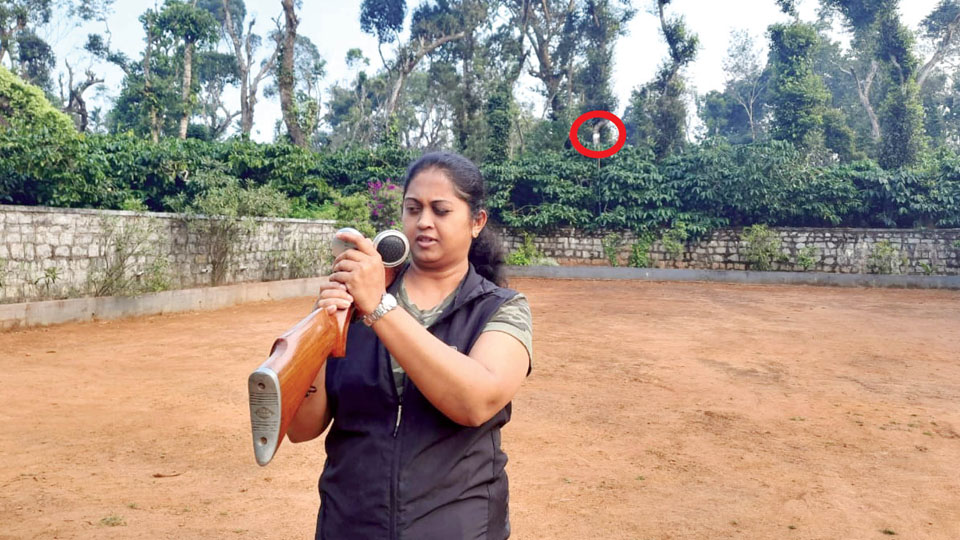
This is the story of Kallichanda Deena Uthappa, a Kodavathi, who is now a talk of the town for her rare talent. “Guns are not strange to Kodavathis. What started for fun has now become my hobby,” Deena said with the air rifle on her shoulder.
Now, with a rifle placed on the shoulder and pointed backwards at the target, looking at the mirror and bang, the pellet from the air rifle hits right at the target.
While most people are unable to aim the correct way, she effortlessly shoots the target by firing the rifle backwards by ease.
She developed interest in guns since childhood and had participated in coconut shooting competitions during festivals.
“I first saw backward shooting when I went to Bombay Circus during Mysuru Dasara and thought of trying the same when I went back home. Though I started shooting backwards for fun about two years back, I took it seriously six months ago and succeeded. I have now taken it as a hobby,” the 40-year-old said.
Deena practices inside the compound of her house by tying a balloon on a tree at a distance of 35 to 40 ft. Then she will hold a small mirror in her left hand and the air rifle barrel pointing towards the target. Looking at the image of the target in the mirror, she pulls the trigger with her right hand thumb and the next is the pellet hitting the target. “I use the air rifle as it does not flinch. Moreover, it is safe,” she adds.
An Arts Graduate from Cauvery Women’s College at Virajpet, Deena is a multi-faceted personality, who is also a master in handicrafts and has a credit of directing a short film in Kodava language as part of campaign for a multi-speciality hospital in Kodagu.
Kodavas and guns
Kodava community has a long history with guns and historians say that their culture is intrinsically linked with firearms. They (Kodavas) worship guns with other traditional weapons during Kailpodh (Kail Murtha) festival. Kailpodh is a festival similar to Ayudha Puja, where weapons — Guns, Odikathi and Peechekathi — are worshipped. Shooting competitions are a custom during Kailpodh, during which women too participate.
Huttari (Harvest festival) begins with a gun shot in the rice fields. Kodavas also use the gun for the two most important ceremonies of their lives — birth and death. The arrival or a departure of the soul is signalled with gunshots.
Daughter of Kavadichanda Gappu Ganapathi and Kavadichanda Kitty Kaveramma (Mundachadira – Mythadi), Deena is married to Sudhish Uthappa. The couple has two children — Tanvi Uthappa and Dhruv Kariappa.
Thag’rdhi: First Kodava silent short movie
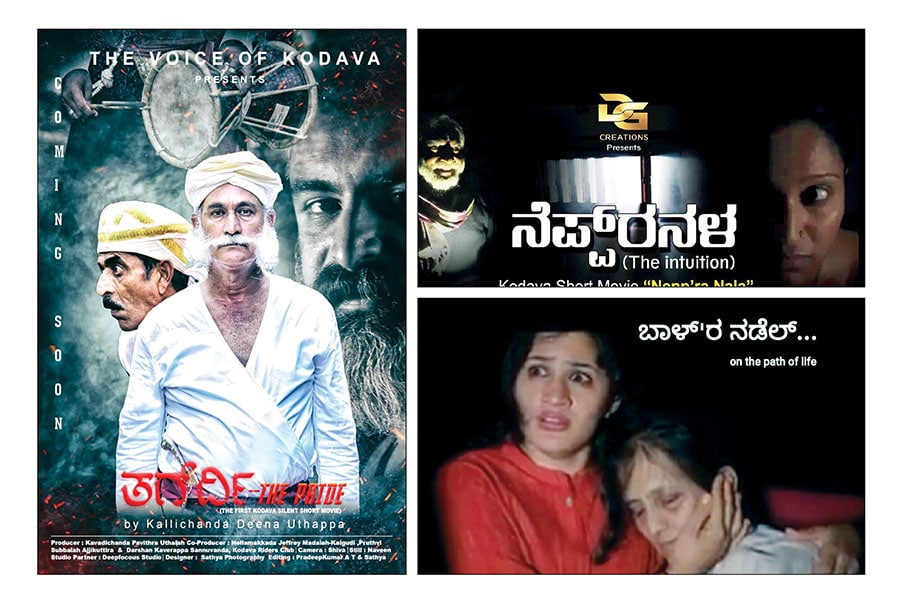
Deena has another feather in her cap of having directed “Thag’rdhi,” the first Kodava silent short movie released in June 2020 under the banner of VOICE of Kodava.
This movie inspired each and every soul of the community. It uplifted the thought that true power lies in the hands of the people to safeguard their culture and pride. Though it was a speechless movie, it communicated many things. She has also directed “Balra Nadel” (Co-directed by Gana Somanna Thadiyangada) and “Nepp’ra Nala” which showcased Kodava culture and tradition. Her films have received widespread appreciation.
source: http://www.starofmysore.com / Star of Mysore / Home> Sports / November 10th, 2020
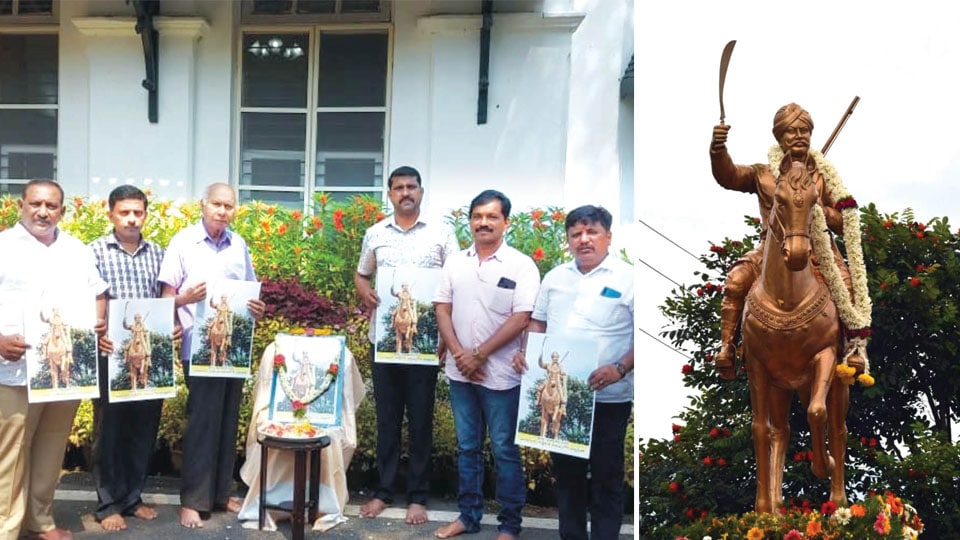
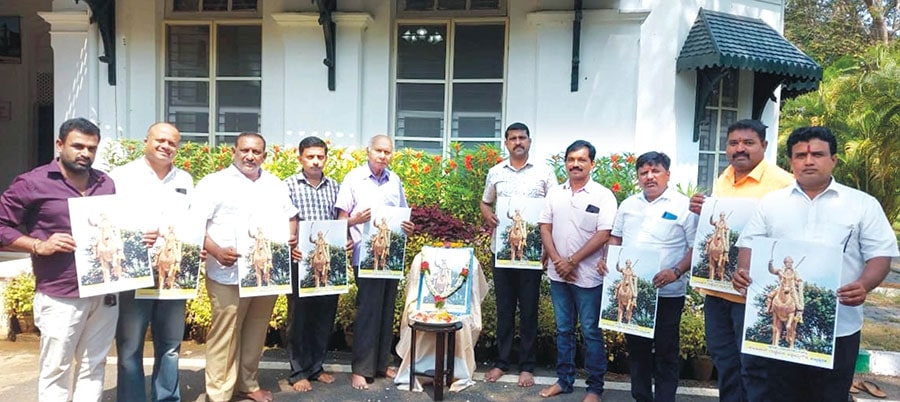
Nammuru Nammoru Samaja Seva Trust, Mysuru, observed Martyred Freedom Fighter SubedarGuddemane Appaiah Gowda Memorial Day at an event held at Jaladarshini Guest House recently.
Veteran writer Dr. C.P. Krishnakumar (CPK) inaugurated the programme by showering petals on the portrait of Appaiah Gowda.
Speaking on the occasion, CPK said that the year 1857 is a very significant year in the history of freedom struggle. Pointing out that the 1857 Sepoy Mutiny was the first major battle in the fight for the country’s independence from the Britishers, he said that we have read about great freedom warriors such as Mangal Pandey and Tatya Tope who laid down their lives.
Noting that the first independence revolution took place in 1837, 20 years before the sepoy mutiny of 1857, the veteran writer said that many great freedom fighters such as Tipu Sultan, Rani Chennamma, Sangolli Rayanna, Parampara of Kodagu, Kalyanaswamy, Guddemane Appaiah Gowda, Kedambadi Ramegowda and Kudiya brothers had laid down their lives much earlier fighting the Britishers.
Recalling that the people of Kodagu revolted when the Britishers divided the then Coorg State into Kasaragod, Puttur and Sullia and brought them under Madras Province, he said that warriors from Kodagu such as Nanjaiah, Kedambadi Ramegowda and Guddemane Appaiah Gowda are an inspiration for generations to come.
Noting that Appaiah Gowda led the ‘Katukai battle’ (Amara Sullia Dange) against the British in 1837, Dr. CPK said that he was one of the greatest heroes Kodagu has produced. Stating that Appaiah Gowda was a symbol of patriotism, self-respect and pride of Kodagu, he said that Appaiah Gowda, who was hanged by the British in front of Madikeri Fort in 1837 for leading protests against colonial power, did not want outsiders to have a say in the affairs of Kodagu.
He urged the Government to set up an Authority for sensitising the public on the sacrifices made by Appaiah Gowda and all other great freedom fighters of the times and on the significance of Amara Sullia Dange (Sullia rebellion).
Trust President Satish Gowda, Vice-President Kumar Gowda, Gen. Secretary A. Ravi, Dist. Vokkaliga Assn. Vice-President Gururaj, Director Ravi, Dentist Lokesh and others were present.
source: http://www.starofmysore.com / Star of Mysore / Home> News / November 03rd, 2020
Alert ex-GP President in Kodagu makes Mysuru youths return to Madikeri to pick up their trash
Thanks the tourists for responding positively
Madikeri:
A vigilant Kodava has made the entire Kodagu District proud by making a group of tourists from Mysuru, who had thrown garbage on roadside, to come back and pick it up. His appeal through social media not only got a tremendous response from people but also sent a message loud and clear that ‘You cannot take everyone, everyplace and everything for granted.’
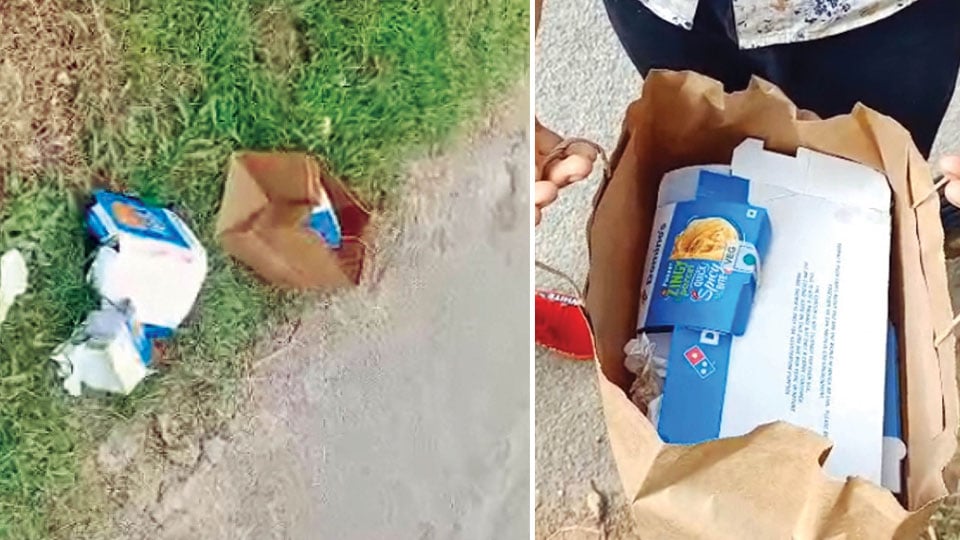
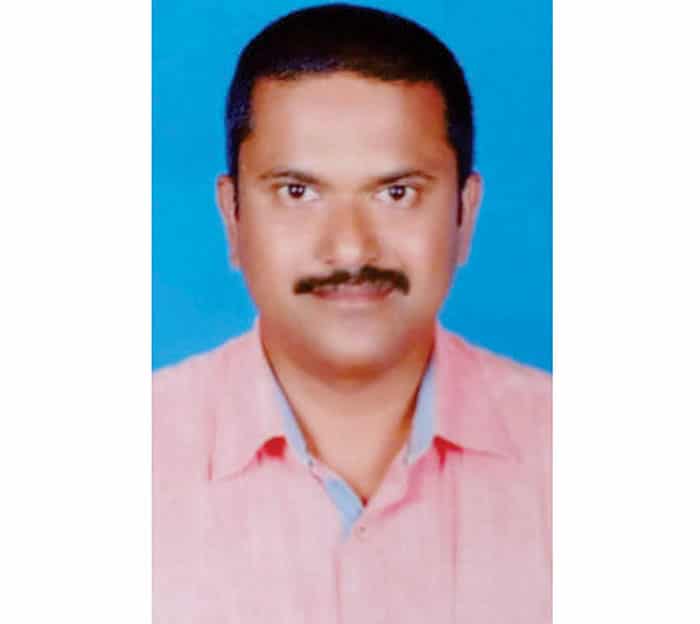
The ‘hero’ of this incident is Madetira Thimmaiah, a former President of Kadagadaalu Gram Panchayat in Madikeri taluk. On Friday, Thimmaiah while travelling in his four-wheeler saw the empty Pizza packets and the paper bag thrown on roadside near Kodagu Vidyalaya junction. He stopped his vehicle, checked the bag and found the bill which had the mobile number of the customer.
Without wasting time, he video-recorded the strewn garbage on his mobile phone and put it on the social media platform. When he called the mobile number mentioned in the bill, he was told that it was Chirag of Mysuru who along with his friends came to Madikeri.
Thimmaiah, ex-GP President
Chirag reportedly told Thimmaiah that he had bought the pizza from a Pizza Shop in Madikeri, and had disposed the trash on roadside. When Thimmaiah asked Chirag to come and pick up the garbage, the latter told him that he was almost near Mysuru and it would take another three hours for him to come back.
However, the former GP President did not budge and said he would wait for three hours failing which a Police complaint will be lodged.
Meanwhile, Thimmaiah appealed to the citizens of Kodagu to call up that mobile phone number to ask him to come back and collect the garbage, which received overwhelming response.
After three hours, Chirag and his friends, not only came back but also tendered an apology for their ‘negligence.’ However, the embarrassed youths appealed Thimmaiah not to film their faces to which the former obliged. The youths collected the empty packets and promised to dispose the same at their house bins.
Later, Thimmaiah put another video on social media of Chirag holding the empty packets in the paper bag and carrying with him. Thanking the people of Kodagu for supporting his campaign to keep the hilly district green and clean, Thimmaiah also appealed one and all to join hands in the Swachh Bharat Abhiyan.
source: http://www.starofmysore.com / Star of Mysore / Home> News / October 31st, 2020
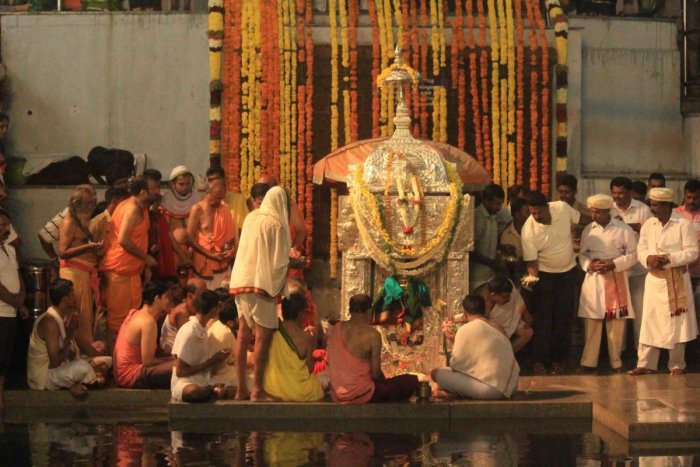
This year, Tulasankramana festival in Kodagu is likely to see fewer pilgrims due to the COVID-19 restrictions.
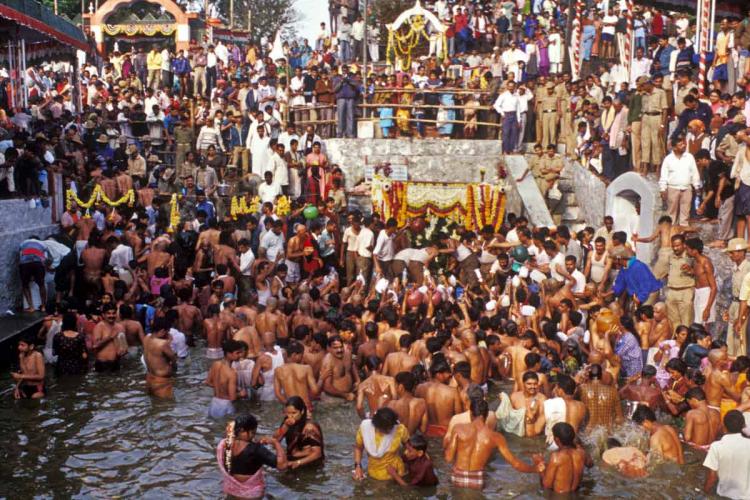
Come October and goddess Cauvery will appear in the form of a sudden upsurge of water in a small tank to give darshan to pilgrims who come to seek her blessings, bathe in her waters, and carry back bottles of holy water from Talacauvery, the source of the river in Kodagu district of Karnataka. Unlike the usual practice, this year, scores of devotees from Kodagu and places adjoining the state will not be able to throng the verdant slopes of Brahmagiri hills to participate in the annual celebrations of Tulasankramana. Due to COVID-19, there will be restricted entry of devotees besides the mandatory masks, physical distancing and COVID-19 test negative certificate. The district administration will have checkpoints 8 kilometres from the venue, where devotees would be screened for temperature and other symptoms.
It is believed that every year, on October 17, the river goddess renews herself with a fresh thirtha, signified by a gurgling sound in the brahmakundike, in the tiny two-and-a half-feet square of an enclosed area in the surrounding pool and then fills up the bigger tank or the pushkarni at the shrine. Known as theerthoudbhava (when water gushes from the spring), this event takes place with clock-like precision at a predetermined time, predicted precisely each year by priests on the basis of planetary configurations and astrological calculations. This year, theerthoudbhava (spouting of the holy spring) is scheduled at 07.03 am on October 17. Kodavas, an ethno-lingual tribe from Kodagu, believe that at that particular moment, all the wells in Coorg come to life.
How Tulasankramana is celebrated
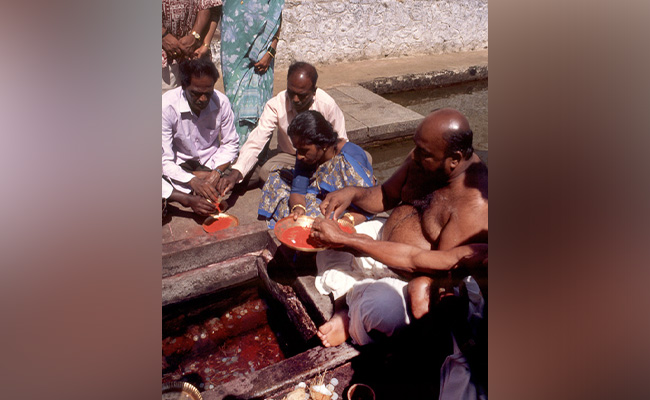
Tulasankramana festival is celebrated with much festivity and fervour all over Kodagu. A puja is offered to the river goddess at the tank as a prelude to the ushering in of the Cauvery. Coconuts adorned with jewels and flowers and small bowls of kumkum (vermillion) floating down the tank in memory of Cauvery, the presiding deity of the landscape, is an unforgettable sight.
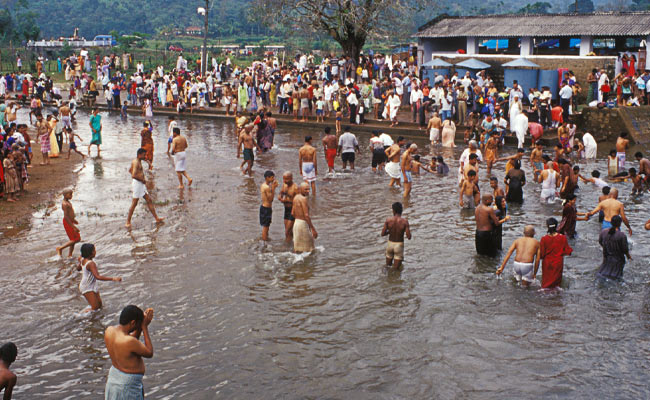
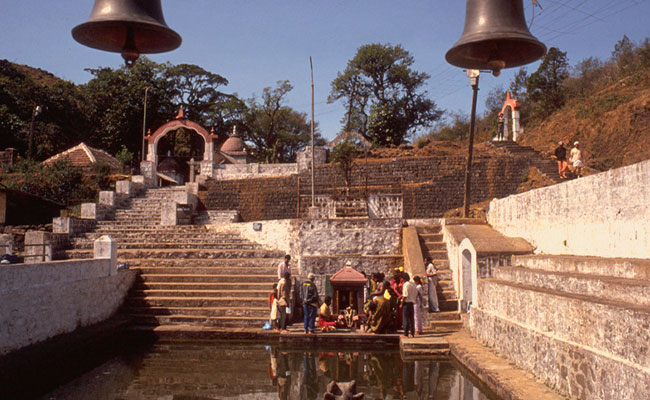
Besides this small tank, there is a large tank where the devotees take their holy dip amid the chanting of Sanskrit shlokas eulogising Cauvery. After the puja, they wade in knee-deep water for a grab of the tirtha (sacred water) – in cans and bottles. The initial spurt of water is strong and is said to possess curative powers. It is believed that it bequeaths life to a dying man and helps him attain moksha (emancipation). This sacred water forms part and parcel of every household in Coorg. After the puja, devotees visit the smaller shrines dedicated to Ishwara and Ganapathy, dotting the expanse of the hill above the pool.
Kundike, the small tank
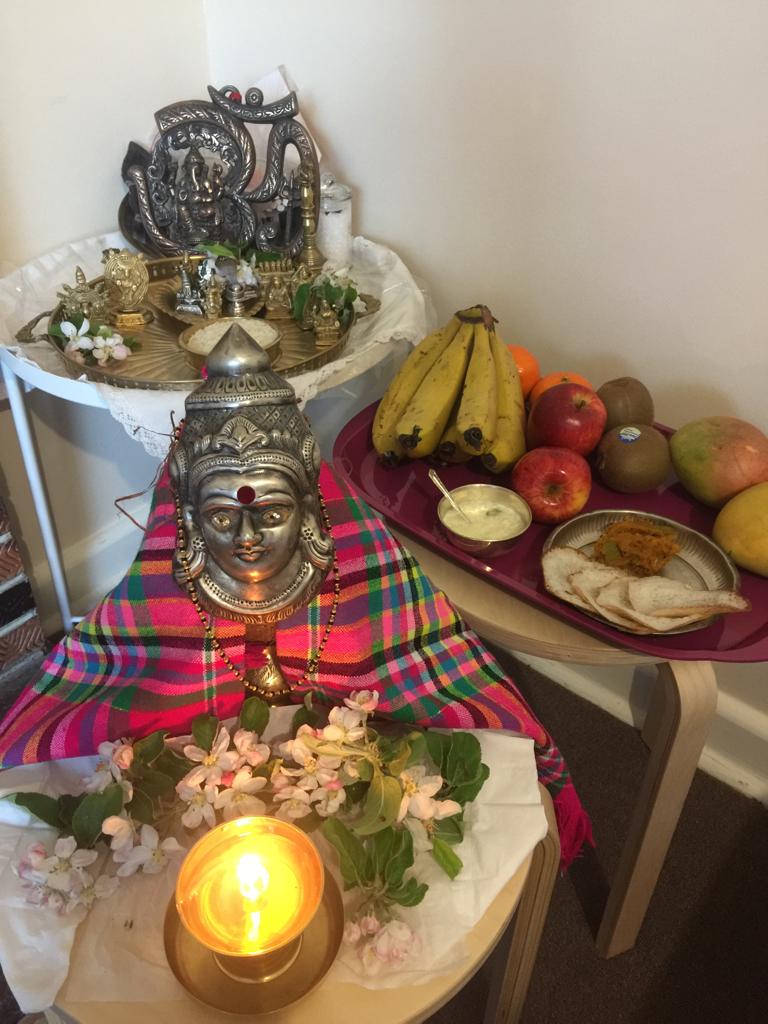
Tulasankramana is a time for rejoicing for the Kodavas. Split bamboo is planted in cultivated lands and paddy fields, decorated by a garland of specified forest creeper to signify that they are devotees of Cauvery. Homes are all spruced up and sprinkled with holy water before sunrise, as the goddess is believed to visit every home during this period. Vegetable carvings of goddess Cauvery are decked with flowers and installed in each home for a period of three days. A small lamp is lit by its side and family prays with another offering of rice. A tray containing some rice, betel leaves and nuts is placed near it. The Kodavas venerate and worship river Cauvery and it continues to be a strong religious binding force.
The legends behind Tulasankramana
A number of legends are woven around the goddess. According to a popular legend, she was the daughter of Brahma, the god of creation, but was brought up by the great saint Kavera. Agasthya, the learned sage, was enamoured by her charm when he came to visit her foster father. He proposed to her and she agreed, on one condition. She pledged that if he were ever unfaithful to her, she would go away, become a river and serve her people. Once he broke the promise and she transformed into a river. Agasthya tried to stall her, grabbed her by the sari, pushing back the pleats in the process. (No wonder the women of Coorg wear the sari with pleats folded at the back!) She rushed away and disappeared underground for a while, surging again as the mighty river, gushing down a rocky mountainside.
At this site, a small shrine was built signifying the birth of the river. When the Kodavas, her devotees pleaded with her to remain her protective goddess, she assured them that she would continue to take care of them and would visit her birthplace, Talacauvery and regain her freshness every year during ‘Tulasankramana.’ The Cauvery is a venerable river, considered as one of the seven sacred ones — Sapta Sindhu — by the Hindus.
Bhagamandala, the confluence of three rivers
From Talacauvery, the river mysteriously disappears for a distance of seven kilometres, to re-emerge at Bhagamandala, a customary stop for all pilgrims proceeding to Talacauvery. To the people of Kodagu, the Talavauvery pilgrimage is not complete without a holy dip at the Triveni Sangama, the confluence where Cauvery meets river Kannike and the legendary underground river Sujyothi.
Larger pool at Talacauvery
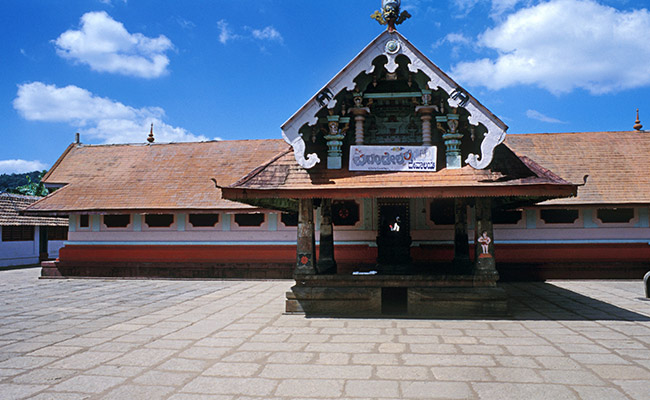
People bathe at this stunning spot and the Kodavas offer pindadana — an offering to ancestors after tonsuring their heads. A short distance away from the confluence is the cluster of three impressive temples, the main temple being that of the Kerala-style Bhagandeswara temple. Located in a central courtyard, the temples flaunt elegant, exquisitely carved pillars and wooden ceilings. There are also sloping red painted roofs supported by gilded snake-heads and a variety of musical instruments strung from the rafters around the courtyard.
Kerala style Bhagandeswara temple at Bhagamandala
Cauvery: Lifeline for Karnataka, Tamil Nadu
It is believed that the munificence of river Cauvery is venerated and revered as a mother, a life-giving force, symbolising the largesse and abundance of woman, of her spirit of grieving and nurturing, of struggle and survival. Right from its place of origin at the magnificent foothills of the Brahmagiri Hills in Kodagu, till it plunges into the Bay of Bengal at Poompuhar in Tamil Nadu, snaking its way for 765 km, it has no parallel. It serves as the lifeline of the states of Tamil Nadu and Karnataka. The Cauvery has remained a strong religious binding force and provides water for drinking, irrigation and hydroelectricity along its course. The presence of the river Cauvery is as endemic to Coorg as is coffee. Without it, life in the region would be difficult if not impossible.
Susheela Nair is an independent food, travel and lifestyle writer and a photographer.
source: http://www.thenewsminute.com / The News Minute / Home> Features> Festival / October 16th, 2020
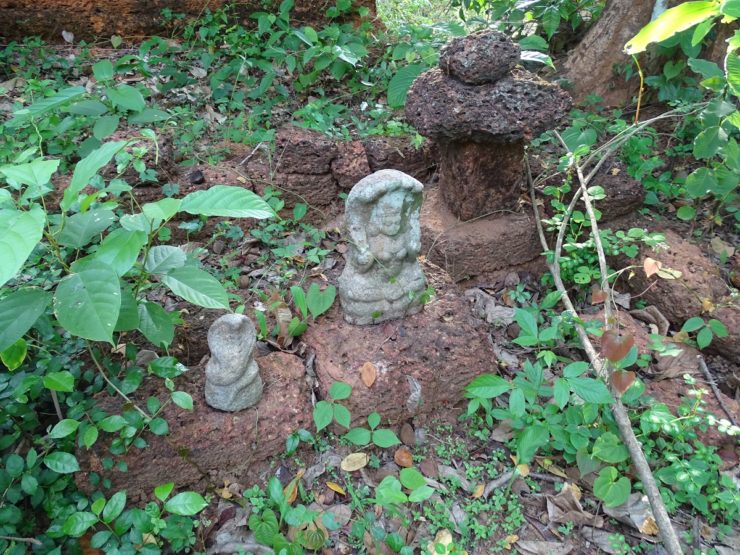
A sarpakaavu, or traditional sacred space for snakes, in Kerala. Photo: Manoj Karingamadathil/Wikimedia Commons CC BY SA 3.0
Underlying cultural and religious beliefs in serpent deities has played a role in protecting iconic animals such as snakes and other species dwelling inside the Western Ghats’ sacred groves. But these beliefs are eroding among youth and economic pressures are eating into the groves, threatening their very existence. Experts call for greater state government protection to preserve the groves’ legacy for the benefit of posterity.
For millennia, local communities in India have maintained sacred groves where they managed natural resources and many of these are tied to their cultural and religious beliefs. In the Western Ghats, such groves are relatively undisturbed patches of evergreen forests that sometimes have a pond, stream, or well that ensures perennial water supply. Often located outside of protected areas, sacred groves are rich in biodiversity, housing many threatened and endemic species of plants and animals. In many cases, these fragments are the only relict forests that remain outside the protected area system.
The mountain chain of the Western Ghats along the western coast of India is older than the Himalayan mountains; in 2012, 39 sites in the region were inscribed on the World Heritage Sites list by the United Nations Educational, Scientific and Cultural Organisation (UNESCO). While India boasts the highest number of sacred forests globally, with estimates suggesting at least 100,000, the Western Ghats is endowed with a large concentration. Although many are undocumented, Kodagu district in the southern state of Karnataka alone was estimated to have 1,200 sacred groves.
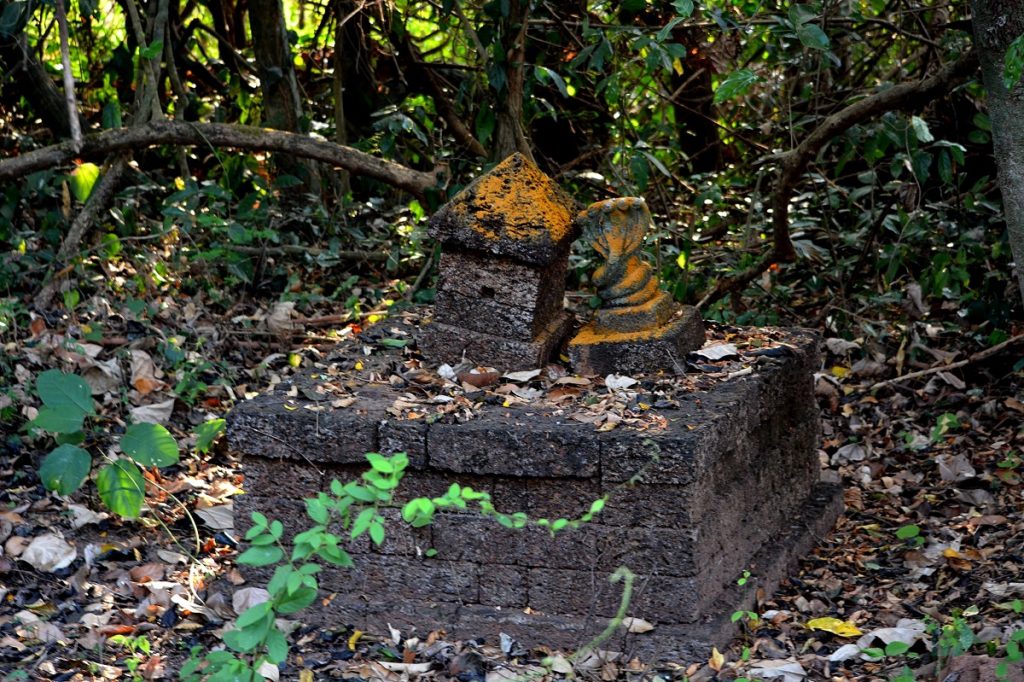
Many of these verdant groves are associated with gods and are named after deities. The worshipping of serpent gods known as nāga plays a central role in many groves in Kerala known as sarpakaavu in Malayalam (snake garden or grove), and often house idols of serpent deities.
Worshipping involves unique rituals that are performed in sarpakaavu and temples with serpent deities. One common ritual involves pouring a preparation of water, milk, rice powder, and turmeric on the deities and devotees call this offering as ‘Noorum palum’, said Dileepkumar R., director of Indriyam Biologics Pvt. Ltd., Jayakumari Kunjamma, senior research fellow at the University of Kerala who has also authored a book on snake worship in Kerala, and Divya S. chief scientific officer of Indriyam Biologics Pvt. Ltd.
Sacred groves: a refuge for snakes
In a study published last year, researchers surveyed visitors of 30 sacred groves in Kannur and Kasaragod districts in the state of Kerala and Kodagu (Coorg) in Karnataka. They found that visitors were less likely to harm snakes inside the groves than outside. And, a large proportion of visitors who did not harm snakes even outside of the groves worshipped snake deities.
Felix Yuan, the lead author of the study and doctoral student at the University of Hong Kong had expected a “fair number of people would not harm snakes inside the groves” given the role of snake deities in the region, but he was surprised by the results. An overwhelming 96% of the visitors surveyed showed pacifist attitudes towards snakes encountered inside the groves, whereas only 60% had the same reaction outside of the groves. The reverence towards snake deities and pacifism towards snakes pervaded all the sacred groves regardless of whether they had idols of snake deities present or not.
“The broader implications of this study lie in the intricacies of the relationships between sacred natural sites and local communities,” explained Yuan, “where the reverence for a specific plant or animal can potentially result in its protection despite the ongoing degradation of other ‘natural’ qualities of these sites.”
Visitors tend to live in harmony with snakes inside the groves (sarpakaavu). Dileepkumar, who frequently visited sarpakaavu in Kerala since childhood, said that if people spotted snakes, they would not touch the creatures, leaving them to slither around the groves freely.
V.C. Balakrishnan, who has also grown up in Kerala, had on some occasions, encountered snakes in the sarpakaavu. “I will just wait for them to pass by,” he said.
Serpent god worship and the role of taboos
At the heart of the conservation of snakes in the groves lie taboos, which are essentially an interplay of devotion and fear, according to U. Prashanth Ballullaya, co-author of the study and a doctoral student at the Central University of Kerala. Local communities believe that their ancestors created the sarpakaavus to provide shelter to snakes, he said, adding that snakes, especially cobras, were considered divine.
Fear also plays a prominent role. Harming snakes is a sin, Ballulaya gleaned from the surveys. If anyone harms snakes inside the groves, they will be cursed and more snakes will emerge, said some visitors. One of the repercussions of killing snakes according to traditional beliefs is that the family could be deprived of progeny and hence there is a cultural practice of worshipping the habitats of snakes among communities in the Western Ghats, explained T.V. Ramachandra, professor at the Indian Institute of Science (IISc), Bengaluru. “Later, gradual transitions to worshiping idols with snake inscriptions happened and eventually, temples with concrete structures replaced these,” he said.
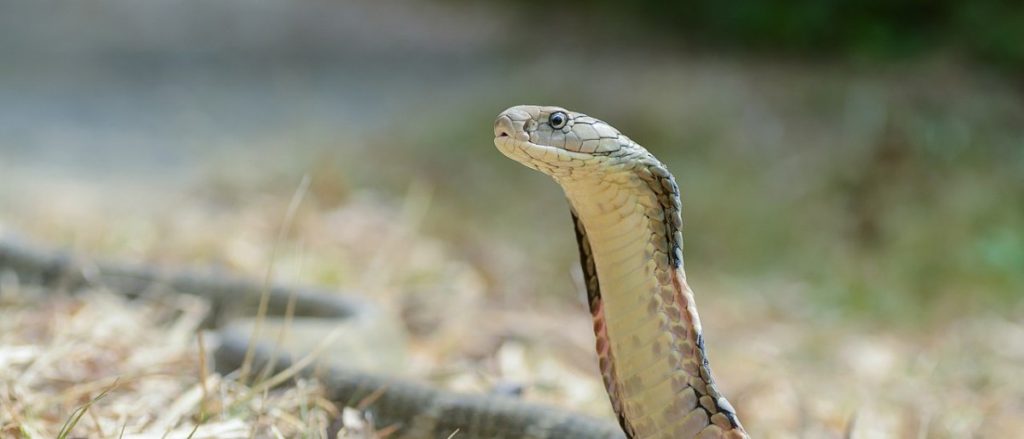
A king cobra. Credit: Rushenb/Wikimedia Commons, CC BY-SA 4.0
Shonil Bhagwat, professor at the Open University, United Kingdom, said “a ‘healthy’ fear of wild animals is good because that discourages people from going to parts of sacred groves, naturally creating ‘no go’ areas.” He believes that “these so-called ‘fences of fear’ can help protect biodiversity within sacred groves by simply keeping people out of the groves, or at least some parts of the groves.”
Communities in the rural highlands of the Western Ghats in Kodagu and adjoining urban lowlands in Kasaragod were surveyed and the results were published in 2019. Researchers found that both urban and rural communities did not abuse the groves by cutting trees, dumping waste, hunting small animals, taking soil and foliage, and damaging termite mounds. And those with nāga deities, who are not only highly revered but also feared, were rarely abused.
The protection of snakes was extended to other taxa as well. Palatty Allesh Sinu, assistant professor at the Central University of Kerala and co-author of the community perception study was surprised to learn that “even taking a leaf from the sacred groves is considered a taboo or abuse of the land.” Believers told him that “the organic matter is food for insects, which is food for frogs and snakes!” Because of this snake-centric food chain, Sinu and his team were forbidden from collecting insects from the groves.
Rural communities had stronger cultural and religious beliefs than their urban counterparts, who valued groves also for their environmental benefits. Although the reasons for this are difficult to answer, said Sinu, one farmer told him “our agriculture, economy and lives are bound to these forests around us … When there was no access to a temple, these forests and local deities living inside the forest were the resort for us. When the upper castes have direct access to Gods, the backward caste people did not have.”
Erosion of beliefs
Community-preserved sacred groves in the Western Ghats are facing mounting pressures over the past decades. Many are shrinking in size or have disappeared altogether. At the time of its formation in 1956, Kerala boasted more than 10,000 sacred groves, but in 2015, only around 1200 remained, according to a report prepared by the Kerala State Assembly Committee on Forest, Environment, and Tourism. A global Nature study published in May reported that reptilian phylogenetic diversity in the Western Ghats is under very high levels of human disturbance.
“Earlier thesarpakaavu was a symbol of divinity and sanctity and it was with only utmost reverence that one was allowed to enter its premises,” said Dileepkumar, Kunjamma and Divya. “People were afraid to touch the trees let alone cut them. But the scenario has almost completely changed with the term ‘sarpakaavu’ being reduced to a mere social terminology. The infuriating demand for more land to accommodate the growing population coupled with the placid attitude of today’s generation has diminished the values of biodiversity and conservation,” they rued, adding that most people view the groves as wastelands, which could be used for construction.
Researchers have observed that youths are losing interest in sacred grove traditions. The loss of oral traditions that narrated stories behind the groves has been cited as one factor. Bhagwat believes that awareness of sacred groves and nature conservation should start early. “If children are introduced to the creepy crawlies that live in sacred groves and maintain a healthy forest ecosystem, they will learn to like this real, everyday nature that is found in landscapes where people farm, live and work,” he said.
V.C. Balakrishnan, who is the secretary of the NGO Society for Environmental Education in Kerala (SEEK), also stresses the role of educating youth to ensure the protection of the groves. SEEK, he explains, holds many camps on the importance of the sacred groves and biodiversity.
On 25 September, Dileepkumar R. joined forces with a group of snake experts and developers and launched a mobile app called SnakeHub, which is dedicated to education and conservation. Currently, the app is a social responsibility initiative of Indriyam Biologics Pvt. Ltd., a Department of Scientific and Industrial Research recognised medical startup working on snakebite management and mitigation, but the group plan to register a society and keep it as an independently functioning body under the organisation. With 114 snake species, Kerala is the top three states in India in terms of species number (after Tamil Nadu, which has the highest, followed by West Bengal) and more than half of these are endemic to the Western Ghats, said Vivek Sharma, head of SnakeHub App.
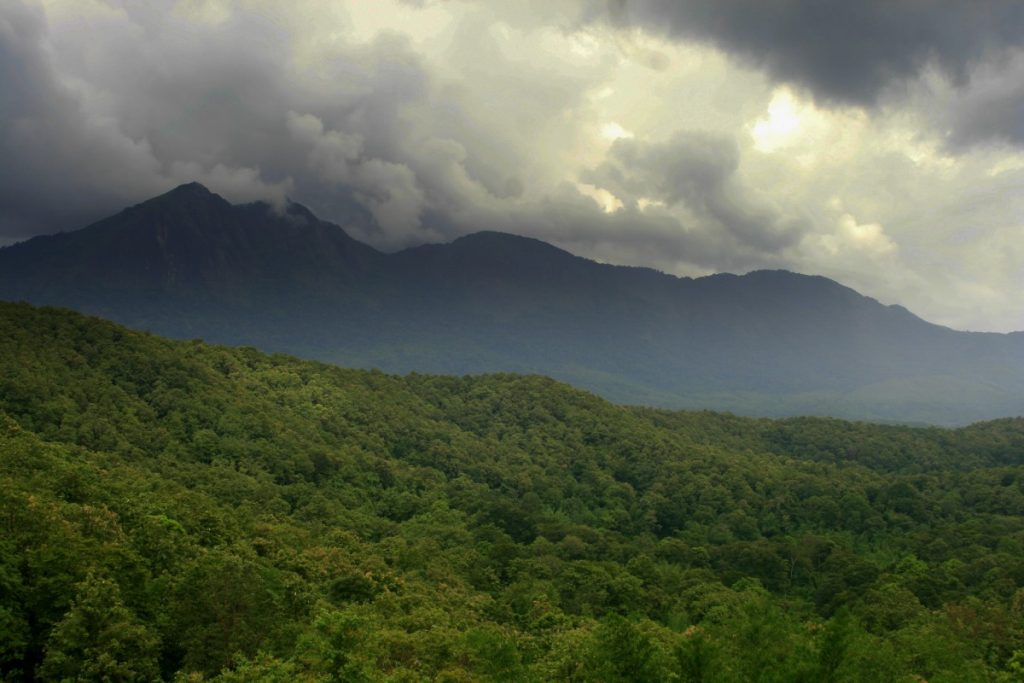
A part of the Western Ghats. dotcompals/Flickr, CC BY 2.0
In both English and Malayalam, the app is the first on snakes in the state of Kerala. Apart from providing biological and ecological information on all of the species, the app also covers snakebites including a list of hospitals equipped to treat bites. “Snakebite is an important objective in our work and based on requirements, we will add facilities to provide snakebite-related solutions and education materials,” said Sharma.
Their goal is to expand the scope of the app to the rest of India in other regional languages to cater to rural communities. India accounts for almost half of the total number of annual deaths from snake bites worldwide. Earlier this year, a study estimated that over the last 20 years, 1.2 million people died from snake bites nationwide. Most of the deaths occurred in rural areas and farmers were most at risk especially during the monsoon season.
“Sanskritisation” and commercialisation
Over the years, there has been a trend towards “Sankritisation” of the groves, which involves the conversion of animistic deities in the sacred groves to mainstream Hindu gods and goddesses, explained Bhagwat. This phenomenon, he said, paves the way for cement structures such as temples and other buildings to be constructed in the groves, which compromises the conservation value of the groves because natural features such as trees disappear. “The only way to solve this problem is to make the custodians of sacred groves aware that trees are important to protect biodiversity within the groves,” Bhagwat said.
“The sacred groves are losing their sanctity and some of the groves are becoming temples for commercial purposes,” said Balakrishnan, explaining that the owner can earn an income through money offered to the deities.
es are taking over in urban areas and even creeping into the hinterlands. According to Sinu, some sacred groves are under the direct control of the state while others are privately owned. “Sadly, both want to generate money out of it,” he lamented. “Selling the land is a way,” he said. “So, they first relocate the deities including snake god through a ceremonial ritual and free the land.” Many owners are in the process of relocating deities, noted Sinu, adding that the ceremony is a costly affair amounting to about Rs 4 lakh (Rs 400,000).
Ramachandra of IISc echoes these concerns. Cemented buildings have become commercial spots, he said, revealing that many sacred groves that are under the revenue department have undergone large-scale conversion to other land uses such as villas and resorts in Kodagu. He attributes these conversions to a lack of knowledge among the bureaucracy of the ecological and hydrological significance of the groves, which has sustained the livelihood of communities in the region for centuries.
Dileepkumar, Kunjamma and Divya believe that people fail to realise that their exploitation of the groves could pave the way for their own doom. “With the sacred groves being deconstructed, the snakes that were taking refuge in the grove vegetation enter into human colonies leading to a conflict between snakes and humans thereby posing a threat to both snakes and humans alike,” they warned.
A sarpakaavu in Kerala. Photo: Manoj K/Wikimedia Commons CC BY SA 3.0
How to protect the sacred groves?
Apart from cultural beliefs, the coexistence of snakes and humans hinges on the preservation of the ancient sacred groves of the Western Ghats.
Experts believe that state governments must play a greater role in protecting the sacred groves of the Western Ghats. Earlier this year, the Kerala state government launched a program “Pachathuruthu” to cultivate ‘green islands’ in degraded land in a bid to preserve biodiversity. For the initiative, “they are planting trees that can give shade, shelter, and food for birds and other animals,” Sinu said. “We have over 1500 sacred groves in Kerala along the west coast. Why not declare them as natural sanctuaries?”
Ramachandra proposes that the Karnataka and Kerala Forest Department should assign heritage status to all the sacred groves of the Western Ghats under section 37(1) of the Biological Diversity Act 2002. Such a move, he argues, will ensure the conservation of these ecologically fragile regions.
Conservation of the groves should be initiated at both the community and government level, according to Dileepkumar, Kunjamma and Divya. “Snake groves are an inherent part of Kerala culture and conserving them must be our obligation. For implementing the conservation strategies initiated by the government, a special task force must be employed to ensure the protection and maintaining the status quo of the snake groves.”
Balakrishnan said that the forest department had funded building fences around the sacred groves a few years ago. “These sacred groves are to be protected surely because they are rich in biodiversity and they are the wealth of our future generations.”
This article was first published on Mongabay India .
source: http://www.science.thewire.in / The Wire, Science / Home> Science> Environment / October 29th, 2020
With heavy downpour, landslides and floods ravaging Kodagu district for the past couple of years, Madikeri MLA M.P. Appachu Ranjan said that the Centre will be appealed for constructing flood walls along River Cauvery for preventing floods.
He was speaking after releasing ‘Namami Cauvery’ volume at a programme jointly organised by Cauvery River Swachhata Andolana and Cauvery Maha Arathi Balaga at Kushalnagar recently.
Asserting that all efforts will be made for stopping Cauvery floods in the future, Appachu Ranjan said that Swachhata Andolana activities have resulted in 60 percent cleansing of River Cauvery so far, which is a noteworthy achievement.
Senior Journalist J. Rajendra said that lack of hygienity was haunting the entire world.
Stressing on the need for everyone to practice cleanliness, he warned against fighting for pride in respect of Talacauvery.
Highlighting that it is important for maintaining the sanctity of River Cauvery, which is the lifeline for crores of people in the Southern States, he wanted the Government to constitute a District-level Committee for Talacauvery, Bhagamandala.
Cautioning against political meddling in the forming of Temple Committees, Rajendra bemoaned the apathetic attitude of officials in responding to the plight of the people in the wake of natural disasters.
Earlier, Kirikodli Mutt Seer Sri Sadashiva Swamiji, who spoke after inaugurating the programme, said that rivers are getting polluted because of lack of a hygienic and scientific sense among the people.
Observing that it is important for everyone to have an understanding on the ways of preserving nature, he said that it is vital that wastes are not dumped to the rivers and such unsensible acts will only destroy their sanctity and serenity.
Senior Priest Krishnamurthy Bhat, Pourakarmikas Ganesh and Purushottam, ‘Namami Cauvery’ Editorial Board Members H.T. Anil, B.C. Dinesh, Vinod and B.M. Latish were felicitated on the occasion.
M.N. Chandramohan delivered the keynote address. Zilla Panchayat (ZP) Member Manjula, Kushalnagar Development Authority Chairman M.M. Charan, Members V.D. Pundarikaksha and Vaishak, Town Panchayat Members Jayavardhan and Amrutraj, Kushalnagar BJP President V.N. Umashankar and others were present.
source: http://www.starofmysore.com / Star of Mysore / Home> News / October 28th, 2020
The Tamara Coorg has been announced the winner in the “Rural Accommodation Category” at the recent Skål International Sustainable Tourism award 2020. The prestigious award function was part of the 19th Edition, with 23 countries competing where winners were chosen from 9 different categories at the virtual General Assembly of Skål Clubs Delegates held through Zoom.
The Skål International Sustainable Tourism Awards are geared towards enhancing the visibility and grant recognition to entities from the Travel and Tourism industry. The selection has been made based on the pillars of sustainability of the Responsible Tourism Institute and the winner offered a one-year free Biosphere Certification in one of their available categories.
Shruti Shibulal, CEO and Director, Tamara Leisure Experiences Pvt. Ltd, said “At Tamara Leisure Experiences, our core ethos has always been based on a foundation of workplace ethics and sustainable business practices. To that end, every Tamara property is designed, built and operated with a conscious emphasis on environment and community. This award is an encouraging recognition of our effort and strengthen even more our commitment to responsible hospitality.”
Tamara is deeply committed to responsible tourism, respecting and supporting local culture and practices and intruding on the surrounding natural environment as little as possible. To this end, all Tamara properties are constructed with care and respect for the environment, aiming to create the experience of a Sustainable Good Life for every guest
The Tamara Coorg is a luxury experience nestled in the heart of the hills, where you can rediscover the joy of being in nature; where your quest for serenity ends. The Tamara Coorg spans 180 acres where you will experience nature and luxury at its best as you wake up to the breath-taking view and the calming silence of the hills, disturbed only by the chirping birds and the rustle of leaves. The unique nature-based experiences at The Tamara Coorg includes Forest Therapy, Trekking, Plantation Tours, Blossom to Brew, Bird Watching amongst others.
The exquisite cottages at The Tamara Coorg are designed to provide guests with a rustic, luxurious space to unwind, and enjoy an unmatched view of the hills in the distance, while suspended in nature. Relaxation gets even better at the award-winning spa and wellness centre, The Elevation Spa. It offers signature spa treatments, while the fitness centre includes a steam & sauna, a state-of-the-art fitness center, and a Yoga Temple.
source: http://www.voyagerworld.in / Voyager World / Home> Hospitality / by VW Bureau / October 28th, 2020
Priests offer prayers at Brahma Kundike prior to theerthodbhava at Talakaveri. DH File Photo
Kaveri Sankramana, an auspicious festival of Kodavas, is celebrated on the first day of Tula or Tholyar month of the Hindu calendar which generally falls in mid-October. This festival celebrates the birth of River Kaveri at Talakaveri located on Brahmagiri hills in Kodagu.
The most wonderful aspect of this festival is the theerthodbhava. At a particular time (corresponding to the sun entering and transiting into the Tula Rasi or Libra sign), water starts gushing out of the Brahma Kundike or the fountain head and flows into the pond at Talakaveri. This holy water called theertha is collected by people and is preserved at every Kodava home until the next Sankramana, as it is believed that if this holy water is fed to the dying, they will attain salvation.
From the pond, the river flows underground and re-emerges at some distance from the temple.
People from Kodagu as well as from different regions of the state and elsewhere gather at the holy site to witness this spectacle. It is a common belief that taking a dip in the temple pond washes away one’s sins.
This year too, people plan to go to Talakaveri to witness the theerthodbhava at 7:03 am while taking all necessary precautions. Kodava men in traditional kupiya chele and women in Kodava saree will pay obeisance to Goddess Kaveri, who is the chief deity and mother goddess of Kodavas.
Those who cannot make it to Talakaveri, also worship at other pilgrim centers situated on the banks of River Kaveri such as Bhagamandala, Harishachandra, Balamuri and Guyya.
Kodavas perform Kani Pooja at their homes to worship Goddess Kaveri. Photo credit: Karthachira Nisha Shyam
The next day, Kodavas perform Kani Pooja at their homes to worship Goddess Kaveri. Married women draped in silk sarees wrap a coconut in red silk, and deck it with beautiful flowers and traditional gold ornaments. The adorned coconut symbolises Goddess Kaveri and is placed on a tray containing three betel leaves and three areca nuts. An oil lamp called taliyakki bolcha is lit next to it and all the family members worship the goddess by sprinkling rice grains (akshata) on the coconut.
An essential component of this festival is the preparation of dosa and pumpkin curry which is also offered to the gods.
Traditionally, bothh posts (made from a tree, locally called bothh) are installed in front of the house, cow sheds, paddy fields, and coffee estates. Dosa, jaggery and small coconut pieces are placed on these posts, only to be eaten by mischievous children when no one is watching.
According to folklore, people placed these tree posts to mark their properties when Pandavas after losing their kingdom to Kauravas had visited Kodagu and had asked Goddess Kaveri to give them some land.
However, it is said that the main reason for placing these stumps is to protect the growing paddy and other crops by scaring away birds and repelling insects. Some also say that it wards away evil spirits and ensures a bumper harvest.
source: http://www.deccanherald.com / Deccan Herald / Home> Spectrum> Spectrum Statescan / by Dhanyata M Poovaiah / October 16th, 2020
A t2 chat with the actor, who started his career with a bang in Shaitan, spending 10 years in films and why he enjoys being a ‘troll’
” I am definitely not over the moon in terms of how my career has panned out since 2011. It could have been a lot better, I wish it was a lot better….it’s not. But it’s okay…..it’s not terrible . A lot of it is sometimes luck, you know….. I am not regretful of the decisions I made…. I wish i had got some better opportunities, but those did’nt happen “. Sourced by The Telegraph
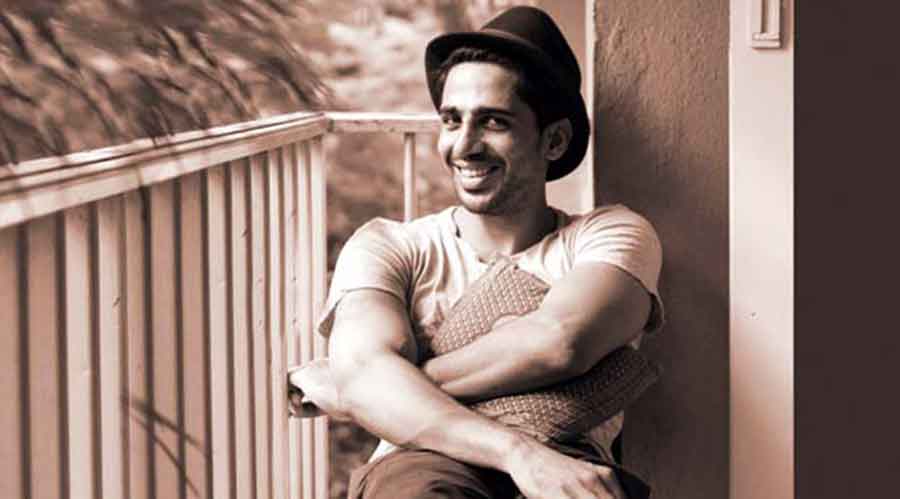
It’s been almost a decade for Gulshan Devaiah in films and the actor has a thriller called Footfairy, that focuses on a serial killer with a foot fetish, releasing on October 24 on &Pictures, in a direct-to-TV-release. t2 chatted with the 42-year-old actor, who started his career with a bang in Shaitan, on spending 10 years in films and why he enjoys being a “troll”.
Footfairy looks like a bonafide Bollywood thriller after a long time. And it’s releasing first on TV…
News channels were providing entertainment all these days, so now it’s time for entertainment channels to do that! (Laughs) I don’t know how the buzz for a film is created, but I did see comments on the trailer like, ‘Gulshan Sir, underrated actor’ and things like that. I don’t pay much attention to stuff like this, but it feels nice that even after 10 years in the film industry, people still like me.
Have you evolved into this sense of detachment or was it always there?
No, I wasn’t always like that. I have suffered very badly because of too much attachment to the result of my films (laughs). During my theatre days, I was a process-oriented actor, but somewhere I lost track a little bit. I am not saying that if a film of mine does badly, I don’t get affected at all. Mard Ko Dard Nahi Hota had a very bad theatrical release due to various circumstances. That did upset me a little bit, but I was better equipped as compared to early on in my career where I had little or no understanding of how the business of cinema works. I am older and wiser now and, therefore, more detached.
What made you sign on Footfairy? We’ve heard you are a big thriller fan…
I am a David Fincher fan, who has made some landmark thrillers. What jumped out at me in the case of Footfairy was the ending. I liked the kind of referencing that Kanishk Varma, who is the writer-director on this film, had put into the script. He’s also a fan of the genre, and many people, incidents, films and books have inspired this story.
When we had spoken after Mard Ko Dard Nahi Hota, you had said that you have a problem with films going directly to digital. Do you still feel the same, especially given how things have changed, and your own film is releasing on TV first?
I have made my peace with it, to a large extent. At that point of time, as a lover of the art form of cinema, I was a bit concerned with the advent of OTT platforms, that the cinematic experience is going to suffer. But I slowly began to understand that both the mediums will thrive and coexist. There’s a lot that they can learn from each other. The box-office medium can be both rigid and ruthless, and this is a viable alternative.
We are also operating in special circumstances where the traditional exhibition model is not going to work anywhere. So one has to innovate. And I feel that through Footfairy, &Pictures has come up with a great way of getting a new release directly into people’s homes. Which means that TV can also emerge as a medium, along with movie theatres and digital platforms, and the three can compete in a healthy way.
Having said that, I love the cinema experience. I have grown up watching films in theatres and I won’t let go of that. Movie theatres in Mumbai still haven’t opened, but once they do and if Tenet releases, you will find me in a theatre, even if I have to land up in a PPE suit! (Laughs)
It’s been almost a decade for you in films. Are you happy with the choices you’ve made, given the last time we had spoken you had said that the opportunities are opening up but they aren’t consistent…
I am definitely not over the moon in terms of how my career has panned out since 2011. It could have been a lot better, I wish it was a lot better… it’s not. But it’s okay… it’s not terrible. A lot of it is sometimes luck, you know.
If any one of my films had made a lot of money, that would have put me in a different place… that would have empowered me as an actor. I’ve done some good films, worked with some great people, I’ve had a variety of experiences, most of them really good. I have no reason to complain, and I am upbeat with what’s going to come up. I just did some work with (directors) Raj & DK and once they are ready to shoot, I have to go back to Rajasthan and finish shooting for my web series Fallen, which is directed by Reema Kagti (and co-stars Sonakshi Sinha, Vijay Varma and Sohum Shah).
I am not regretful of the decisions I made… I wish I had got some better opportunities, but those didn’t happen.
Screengrab from the trailer of Footfairy. Sourced by The Telegraph
One thing that happened in the lockdown is that you’ve really exploded on Twitter over the last few months…
(Laughs) I think I’ve just found my way of authentic expression. I always try and be authentic, in my work and in how I express myself. There’s also a certain sense of humour that I want to hold on to. Which, in a way, is helping me cope with a lot of the nonsense that’s been going around. Especially over the last few months, urban society has been sadly exposed, there’s been a lot of decay. I can’t do anything about it, but I tried to let it affect me less by holding on to the sense of humour that I have. I am quite happy being a troll on Twitter… most of the time I am trolling people! (Laughs)
Film-maker Vivek Agnihotri has already branded you his favourite troll!
(Laughs) He has no option! We do like each other, we made a film together (Hate Story) and I have respect for him for the professional relationship we’ve had. But mostly he says things to which I have an opposing opinion and I have to figure out how to respond to that. I think I have found my calling with him and our relationship has transitioned from director-actor to nuisance value and troll! (Laughs) He is a bit of a nuisance value.
source: http://www.telegraphindia.com / The Telegraph Online / Home> Entertainment / by Priyanka Roy / October 21st, 2020
KBG’s ‘Nostalgically Speaking-8’ write-up on Prof. G.T. Narayana Rao in SOM dated Sept.6, 2020, has prompted me to write about my association with him since 1975. He joined our team of Ganabharathi as Committee Member in 1980 when I was the Vice-President.
Guddehittalu Thimmappaiah Narayana Rao, GTN as he was popularly called, after his early education in Madikeri and Mangalore passed MA in Mathematics at Madras (1947). Lecturer in Madikeri College (1953-63) was his first appointment. After a three-year stint in Government College in Bangalore he came to Mysore in 1969 to settle down. He was absolutely simple in his dress, wearing white pant and bush shirt and chappals, going on a cycle or by walk wherever he had to go but equally forthright in speaking his mind out. He was a role model to some of us who were much younger to him.
GTN took the mantle of collecting funds for the construction of Veene Seshanna Bhavana on Adichunchanagiri road. His slogan was ‘Jagannatha’s Rath has to be drawn by all’ and believed in ‘No great work has ever suffered for want of funds.’ He never hesitated to ask any stranger for funds and he even carried a receipt book in his bag to give it readily. His involvement was so much as he did not spare some of the shop owners on Sayyaji Rao and Dhanvanthri Roads.
I fondly remember him barging into my clinic even during busy hours just to tell me a ‘vismaya’ (miracle in his words) that he collected a few hundred rupees. The major donation of Rs. 1 lakh he got was from Dr. Veerendra Heggade of Dharmasthala who was his student in a Bangalore College.
As the estimated cost of construction was Rs.12 lakh he had to make a couple of trips to Bombay. Once he was invited by the Bombay University to deliver a lecture on Science subjects offering him the flight and hotel charges. He politely refused to accept it and travelled in Gandhi class and stayed for a few days in his friend’s house asking the organisers to make that amount as a donation to Ganabharathi!
His love for Karnatak music started while he was in Madras and it continued till his end in 2008. His reviews on music were unbiased and forthright, sometimes quite open and critical too.
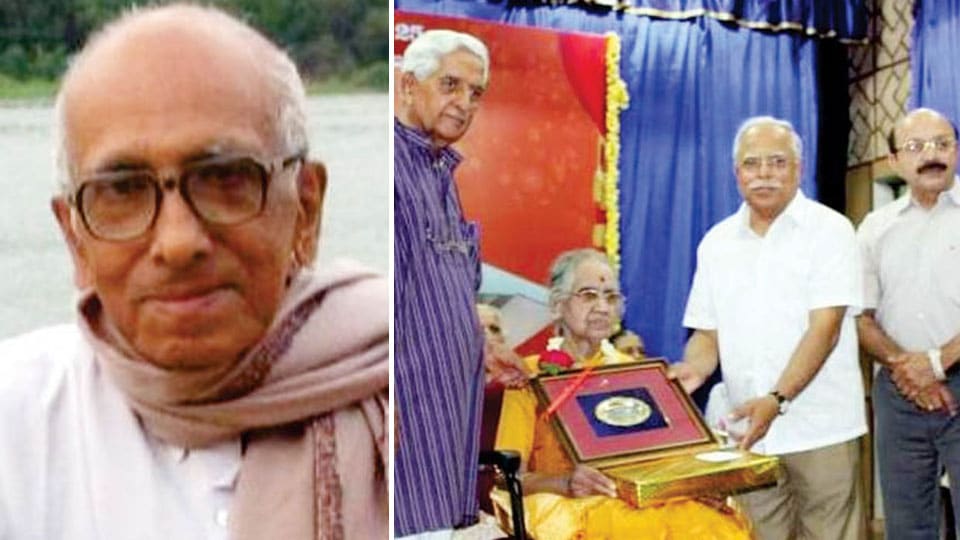
Ganabharathi on the occasion of Veene Seshanna Bhavan’s Silver Jubilee in 2016 posthumously honoured GTN with a Silver Plaque which was received by his wife Lakshmi Devi Rao. It is also gratifying to note that a memorial music concert is instituted in his memory in Ganabharathi. His admirers have contributed handsomely to this fund.
Being an avid student of Science he always used to quote Einstein’s popular saying ‘Science without religion is lame and Religion without science is blind’. He has written several books on science including Nobel Laureates Einstein and Chandrashekar. One of his books in Kannada ‘Vijnanada Moolatatvagalu’ has won an award also. After becoming the President of Ganabharathi in 2011, I am proud to say that I am following his footsteps in collecting funds for the development of the institution.
I would like to conclude with GTN’s yet another selfless service for a cause. With his intense commitment to the improvement of art and culture in Mysuru he had provided free of cost a place in his house for the noted Dance Master late Muralidhara Rao to conduct his classes.
– Dr. C.G. Narasimhan, Mysuru, 9.10.2020
source:http://www.starofmysore.com / Star of Mysore / Home> Voice of the Reader / by Dr C G Narasimhan / October 22nd, 2020
WELCOME. If you like what you see "SUBSCRIBE via EMAIL" to receive FREE regular UPDATES.
Read More »