Karisma Aiyappa (centre) was crowned ‘Mrs. Bharat California 2025’ by Mydream TV USA at an event held at California recently.
Karisma, a HR/logistics professional in Silicon Valley, is a former State-level athlete and a passionate dancer.
Picture above shows Karisma walking the ramp in the traditional Kodava attire
A native of South Kodagu and daughter of Poilengada P. Machamma and late Alemanda Aiyappa, residents of Kuvempunagar in Mysuru, Karisma is married to Abhishek, an employee of Microsoft, Bay Area, California, USA.
Karisma’s participation in various Coorg events in the USA showcases her commitment to her heritage.
source: http://www.starofmysore.com / Star of Mysore / Home> Photo News / May 13th, 2025
Described as a fantasy drama, Kaalanaagini is directed by Vishruth Naik
Kaalanaagini, starring Harshika Poonacha has wrapped up shooting, and is nearing release. The first look poster was released by Ashwini Puneeth Rajkumar.
Described as a fantasy drama, Kaalanaagini is directed by Vishruth Naik and produced by Rakshitha Gowda under the Madhura Movies banner. Madhu Mariswamy serves as project head.
The first look poster of Kaalanaagini sees Harshika in the shape of snake. The film is touted to be blend of emotion, action, and suspense, with the team currently focused on building anticipation with the final phase of promotion, before eyeing a June release.
Along with Harshika Poonacha, Arjun Vedanta also plays a prominent role in the film. The supporting cast includes well-known names such as Avinash, Sharath Lohithaswa, Ugram Manju, and Vijay Chendoor.
On the technical team, cinematography is handled by Arun Suresh, while music is composed by Sathish Babu. MN Vishwa takes charge of editing, with stunt choreography by Narsimha, dance choreography by Dhankumar, and VFX by Laksved Sangamesh.
source: http://www.cinemaexpress.com / Cinema Express / Home> News / by A Sharadhaa / May 01st, 2025
Shree Kaveri Kodagu Mahila Sangha conducts annual cultural contests
Mysuru:
Shree Kaveri Kodagu Mahila Sangha, Mysuru, conducted its annual cultural competitions on Apr. 13 at Kodagu Sahakara Sangha premises in Jayalakshmipuram.
Inaugurating the programme by lighting the traditional lamp, Kodagu Model School (Vidyashankar Layout, Sathagalli, Mysuru) Education Council Chairperson Chowrira Seethamma Kalaiah, who was the chief guest, spoke on preserving Kodava land, language, their unique attire, customs and traditions which are the real assets of Kodava community, whose population is dwindling alarmingly of late. Calling upon the parents and elders to impart knowledge on culture and tradition to their children, she felt for an urgent need to create awareness among youths on Kodava culture (Kodavame).
Kollira Bollamma Kuttappa, President, Kodagu Mahila Sangha, welcomed and presided.
K. Kavya Kuttappa, Vice-President; K. Bhavani Belliappa, Secretary; M. Jaya Muthappa, Treasurer; A. Tara Somaiah and P. Vimala Poonacha, Joint Secretaries; K. Pushpa Machaiah and K. Pushpa Nanaiah, Organising Secretaries and P. Lovely Appaiah, Kodagu Mahila Sangha Advisor, were present.
Mysuru Kodava Samaja President Ponjanda A. Ganapathy, former Samaja Presidents Moovera K. Kuttappa, Kekada M. Belliappa and Kattera A. Kariappa and Kodagu Sahakara Sangha President Chambanda Nanjamma were the special invitees.
The Sangha members and their children actively participated in singing, dance, pick-and-speak and drawing competitions.
Kaliyanda Renu Muthamma (Kodava songs, Pick & Speak), Anusha Kumar (Dance), Vidyashree (Singing) and Mukkaty Muthappa (Drawing) were the judges. The event concluded with prize distribution by Machanda Jaya Muthappa. Kodandera Pushpa Machaiah proposed a vote of thanks.
source: http://www.starofmysore.com / Star of Mysore / Home> News / April 24th, 2025
The state-level ‘Literary and Cultural Fest’ programme, along with book releases, a survey presentation, and a poetry meet, will be held jointly by Samartha Kannadigaru (NOM) Kodagu district and the late Chandrashekar Rao Memorial Trust, Mumbai, on Saturday, May 3, at the Red Bricks Satkaar building in Madikeri.
The event will be presided over by Shridevi Chandrashekhar Rao, founder of the late Chandrashekar Rao Memorial Trust. Former president of Kodagu District Kannada Sahitya Parishat, T P Ramesh, will inaugurate the ‘Literary and Cultural Fest’ and launch the event.
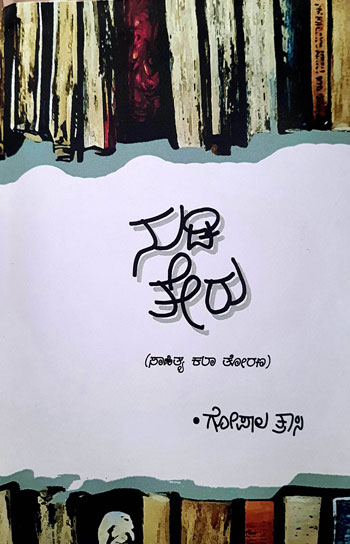
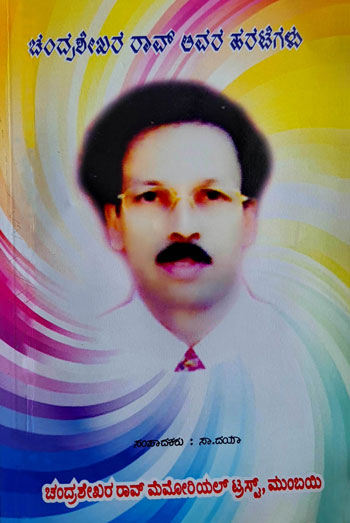
K Pratap, vice-president of Chandrashekar Rao Trust, will be present. Senior announcer of Akashvani Madikeri, Subraya Sampaje, will unveil two books: ‘Nuditeru’, a literary and artistic work authored by Mumbai-based writer and theatre artist Gopal Trasi, and ‘Harategalu’, a compilation of writings by the late Chandrashekar Rao, edited by writer and theatre artiste S Daya.
Dr G P Kusuma, a writer from Mumbai, will introduce the book Harategalu, and writer Shwetha M U from Mandya will introduce Nudisiri. Following this, Pushpa Krishnananda Shet and Muneer Ahmed will be felicitated.
A poetry gathering titled ‘Kavi-Kavyakalarava’ will be held under the presidency of Gopal Trasi and inaugurated by Smitha Amritraj Sampaje. Poets Girish Kiggalu, Milan Bharath, Hemanth Parera, Kripa Devaraj, Ramya Murnadu, Ranjith Kavalapara, Dr G P Kusuma, Vinod Moodagadde, Saroja Amati, Santosh Kudekkal, Leela Dayananda, Harish Kiggalu, Sunita Kushalnagar, Kumuda Shetty, Sangeeta Raviraj, Janet I J, Harish Leela, and others will participate.
As part of the cultural celebration, group dances will be performed by the Shivam Dance Team from Murnadu and Janani and team from Madikeri. Members of the Janapada Parishat Madikeri taluk unit will present folk singing performances.
The founders and organizers of Samartha Kannadigaru, including Lingaesh Hunasuru (Founder), Jayalakshi K (Chief Coordinator), and the team of coordinators, along with office bearers of the Chandrashekar Rao Trust, have invited art and literature enthusiasts to participate in the event.
source: http://www.daijiworld.com / Daijiworld.com / Home> Daijiworld Media Network – Madikeri / April 26th,2025
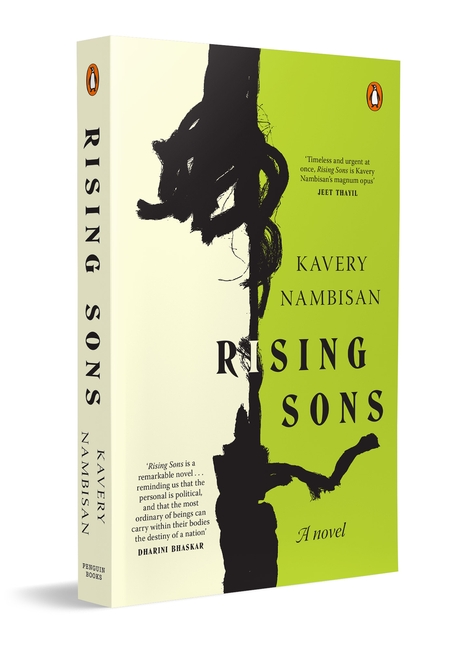
‘Rising Sons’ takes us a hundred years back in time to a small village in the southern part of the country.
pix: penguin.co.in
Book: RISING SONS: A NOVEL
Published by: Penguin /Price: Rs 599 / Author: Kavery Nambisan
Kavery Nambisan, a surgeon by profession, has also achieved significant accolades for her writings. She began her career as a children’s author and steadily moved ahead, penning novels like The Scent of Pepper and The Story That Must Not Be Told that have gained her recognition. Rising Sons is her eighth novel. It takes us a hundred years back in time to a small village in the southern part of the country. It is a story that is immersed in the history that shaped our nation.
The general plot seems deceptively simple. It maps the lives of Devaraya’s family members, including his own, and would seem, on the surface, to be a basic coming-of-age story. Devaraya’s statement, “I have two boys and one-and-a-half girls”, opens the narrative and after a few pages it is revealed that the “half girl” is his adopted daughter, Chinni. His wife, Gowru, whom he collected from the Bhoodevi Anatha Ashram in Mysore, had been “orphaned” along with Bhagya when both their fathers were charged with theft and subsequently imprisoned. Their mothers followed their husbands, leaving the bewildered young girls alone. Chinni was Bhagya’s daughter. Devaraya, priding himself in his high Brahmin ancestry, scorned Bhagya who married the Malayali, Dharma, from the fishing community. He took a high-handed pleasure in arranging an abode for Bhagya in his village, Kesarugattu, where he had established himself as an honourable miller and a fair moneylender. He also held a proud position at a Mysore bank and visited his home fortnightly. Devaraya’s other children, the eldest, a boy named Nanju, another boy, Anna, and a daughter, Bhavani, were all overcome by the “darkness” Devaraya brought with him when he visited. The small village strictly adhered to the boundaries set by caste and Chinni’s inclusion in the Brahmin household after the unfortunate fate that befell her parents wagged tongues and incensed minds.
Devaraya was resolute in the education of his boys. Nanju was dutifully sent to the Putter Government High School (for boys) to complete his matriculation. Growing into a deeply thoughtful and keen young man, Nanju seemed to offer to his family a steadfast reputation. But the evils of caste divisions found the family. The revelation of the bitter truth of Devaraya’s childhood and his struggle to find a place for himself in the cruel rural society affected Nanju profoundly. Unable to bear the burden of his caste’s truth, he disappears from the pages of the book. Anna is more stoic in his handling of the shame. Beginning to trace his brother’s footsteps into higher education, Anna found himself getting involved in the struggle for national freedom. Inspired by the ideas of swaraj and the iron determination of the frail Gandhi, Anna and his friends rise above the aspersions of caste and delve into the newly-emerging political scenario. Anna becomes a successful Congressman and finds a life of glamour befitting his new role. Bhavani has long since been married off and is dismissed from the predominant plot line.
What of Chinni, then? Chinni retains the zeal and the sharpness of her rebellious parents. She reads and avidly follows the swadeshi movement. The little hints in the narrative about her relationship with Anna get buried under stories of sermons, speeches, rebellion and illegal pamphlets. Ironically, it is Devaraya’s “half” daughter who ultimately assumes full responsibility for him and his ageing wife.
Nambisan’s own childhood experiences in the warmth of her home colour the pages. Memories of home-cooked food, midnight adventures, and lasting friendships fill the lives of the growing children. The language lovingly encases the softness of these tender moments, moments that fleetingly haunt the characters in their busy adulthood.
In order to rise, one must fall. The novel is more about the poignant falls of fathers and brothers and sisters than about the consequent rise of sons and brothers. Nambisan deftly spins a tale that rushes us through the fast-changing nation at the brink of independence. In the rush, the author does not neglect her characters or her story. Rising Sons rises from amidst the bitter fall of its characters as an epic saga. The tale sits in the history of the country like a glowing ember, a showcase of how lives are changed, or remain unchanged, through the passage of time.
source: http://www.telegraphindia.com / The Telegraph Online / Home> Books / by Tayana Chaterjee / pix: by penguin.co.in / April 04th, 2025
Virajpet MLA AS Ponanna said, on Kodava’s gun rights, that they do not need a license to possess guns as the gun culture has been passed on from generations.
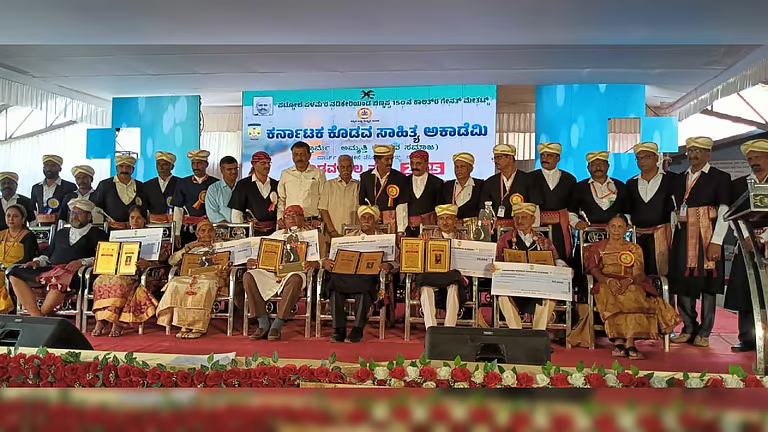
Awards were honoured to several achievers from the community and the fest witnessed participation from several dignitaries. Photo | Express
Madikeri :
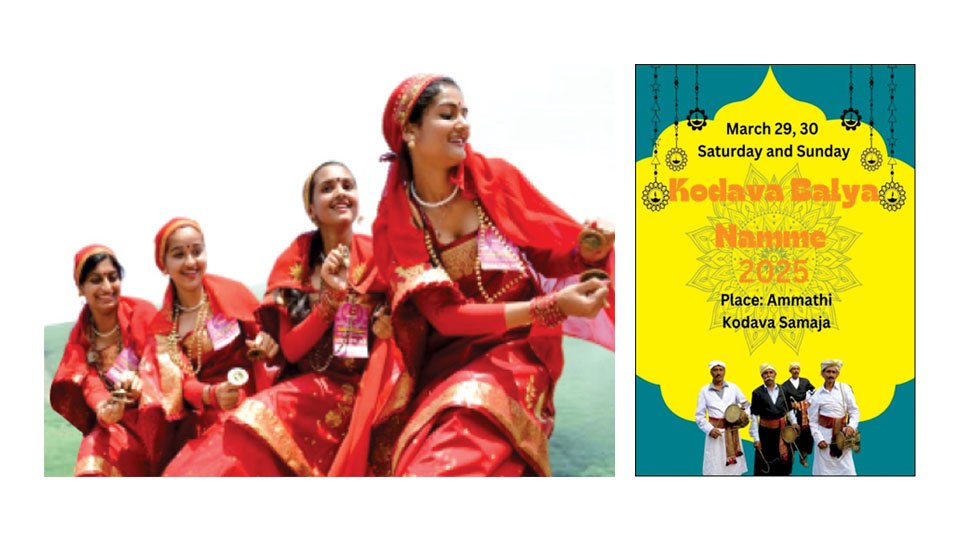
The two-day ‘Kodava Ballya Namme’ festival organised by the Karnataka Kodava Sahitya Academy at the Ammathi Kodava Samaja highlighted the need to protect Kodava culture and rituals. The event emphasised the need to protect the Kodava language, rights and livelihood.
The Kodava Samaja wore a festive look as hundreds from the community, dressed in the traditional Kodava attire, took part in the event. The programme began with a ritualistic procession.
The formal function was inaugurated by Virajpet MLA AS Ponanna. “It is commendable that the Kodava Sahitya Academy has contributed to the development of Kodava language and literature by organising the ‘Ballya Namme’. Efforts will be made to provide government support to promote the Academy. The contribution made by the Kodava community to the country is immense. In this regard, it is imperative to work hard for the survival of the community and everyone should be responsible for the protection of the language, country and race,” opined Ponanna.
He explained that using a gun as part of the festivities is the community’s culture. “We do not need a license to possess guns as the gun culture has been passed on from generations,” he added. He called on the community to promote the culture without hating other communities or cultures.
The need to promote the Kodava language for the preservation of the community’s culture was highlighted by K Subramani, the president of the Federation of the Kodava Samajas.
During the cultural seminar hosted as part of the fest, speaker M Rekha Prakash said that the increased influence from the west is affecting the culture of the community. She called on the parents to instill respect for the culture and language among the children.
The close relation between Kodava culture and agriculture was explained by progressive farmer S Ganesh Thimmaiah. He urged the growers and farmers to implement organic farming and avoid chemical fertilisers to help lead a healthy living. He highlighted the need to take up animal husbandry, bee keeping and fishery to earn good profits. He urged the parents to take children to the farmlands and introduce paddy cultivation to them.
Several programmes that promoted the community’s culture were hosted as part of the event. Awards were honoured to several achievers from the community and the fest witnessed participation from several dignitaries.
source: http://www.newindianexpress.com / The New Indian Express / Home> Karnataka / by Express News Service / March 31st, 2025
Kodava Sahitya Akademi to host ‘Kodava Balya Namme’ at Ammathi on Mar. 29, 30
The Karnataka Kodava Sahitya Akademi in association with Kannada and Culture Department and Ammathi Kodava Samaja will be hosting the ‘Kodava Balya Namme,’ a lively celebration that highlights the rich heritage of Kodava folk music and dance at the Kodava Samaja premises in Ammathi on Mar. 29 and 30.
Parade of Colours and Tradition
The event will kick off with a colourful parade, featuring ceremonial attire, vaalaga and dudikott music and dance. The tone for a weekend of excitement and cultural revelry will be set by this procession.
Stage for Folk Artistes
The ‘Kodava Balya Namme’ will feature a range of cultural competitions, including folk singing and dancing. Talented troupes of folk singers and dancers from across Karnataka will come together for the Namme, to display their talents and vie with one another for top honours on a shared platform. The Akademi’s dedication to preserving and promoting Kodava culture is demonstrated by this event.
Literary Delights
Book lovers will be excited to know that the festival will also include book releases, showcasing the literary accomplishments of Kodava authors. Also, poetry recitations will provide the celebrations with cultural elegance and refinement.
Exhibition and Seminary Sessions
An exhibition of heritage artefacts will provide a glimpse into Kodava history and customs. There will be discussion sessions, featuring expert panels and thought-provoking themes pertaining to the Kodava culture and identity, as well.
Celebrating Successes
Additionally, the Akademi will honour the achievements of successful individuals who have made significant impacts in their respective domains. These deserving people will get honorary prizes in recognition of their contributions.
Music and Dance Extravaganza
The strains of folk music and the vivid colours of ceremonial attire will fill the Samaja over the course of two days. A variety of acts, such as folk songs, dances and other cultural presentations, will be included in the competitions.
Cultural Events and Performances
The initial parade will be inaugurated in the morning on the 29th of March in Ammathi and will be from Hosur junction to the Kodava Samaja. Later, there will be a release of newly published books. Various song and dance competitions will be inaugurated the same day. That day there will also be a heritage items exhibition, a discussion session and a poetry recitation session.
The next morning there will be another discussion session. The final event of the second day is the distribution of the Akademi’s honorary prizes to achievers and for new books.
Join the Festivities
Various dignitaries, such as State Ministers, the Mysuru-Kodagu MP, MLAs and MLC and the DC, and accomplished individuals have been invited as guests. Former Presidents of the Kodava Sahitya Akademi, the Presidents of the various Kodava Samajas and the Kodava Bhasika (speakers) organisations have also been invited.
Regardless of whether you are a culture enthusiast, a music lover, or simply looking for a unique experience, this event is sure to be a memorable celebration of Kodava heritage.
The ‘Kodava Balya Namme’ promises to be unforgettable with music, dance, literature and cultural richness. Mark your calendars for March 29th and 30th and immerse yourself in the celebrations at Ammathi Kodava Samaja in Kodagu. Kodava Sahitya Akademi to host ‘Kodava Balya Namme’ at Ammathi on Mar. 29, 30.
source: http://www.starofmysore.com / Star of Mysore / Home> Feature Articles / by Mookonda Nitin Kushalappa / March 28th, 2025
This NGO is helping participants understand areas of mental health like communication, empathy, inter-personal relationships and more.
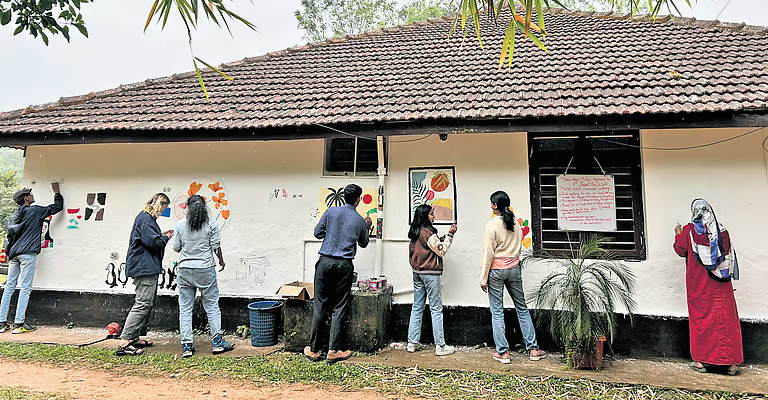
As part of the annual mental health awareness campaign, participants paint the walls of The Wheel Cafe in Madikeri
Bengaluru :
Every alternate Sunday morning, a group of individuals gather in the tranquil embrace of Cubbon Park, Bengaluru, for a unique mental health session called ‘Sundays for Mental Health’, organised by a Kodagu-based NGO Mind and Matter.
As the gentle breeze sets the stage, participants attend the event not just to meet, but to connect. Through a variety of carefully curated games, activities, paintings, etc, the NGO assist the participants to understand areas of different mental health such as communication, empathy, inter-personal relationships and more. In case someone comes up to them with a serious problem, the NGO refers it to mental health professionals.
Venkatesh, a chartered accountant who attended the event on Sunday, said, “There’s unmistakable warmth here. It helped me a lot. The session has given me a chance to look into my soul. It helped me understand myself much better.”
Another participant, Somnath, said, “This is my second campaign with Mind and Matters, and I understood how to look at the same situation from a different perspective.”
In a world where problems related to mental health often take a backseat, Mind and Matter stands as a beacon of hope, offering support to individuals in need. The NGO has stepped into the fray with free programmes which it organises in Bengaluru, Mysuru and Kodagu, and plans to expand to cities like Chennai, Delhi and Mumbai as well. It aims to break the stigma around mental health with a short yet moderate plan under expert guidance, a holistic approach and compassionate care.
Trustee and founder of Mind and Matter Deepika Appaiah said, “We work with schools, colleges, parents and teachers. Our initiative has impacted about 13,000 children and over 700 parents and teachers. Our organisation is run by volunteers, so we invite people to join us and provide them training from the Department of Psychiatric Social Work, Nimhans, in Bengaluru.
As of now, we have 150 volunteers.” From housewives to working professionals, the numbers joining the initiative are only growing. Registered in 2021, Mind and Matter has collaborated with Nimhans and is witnessing a spike in enrolment.
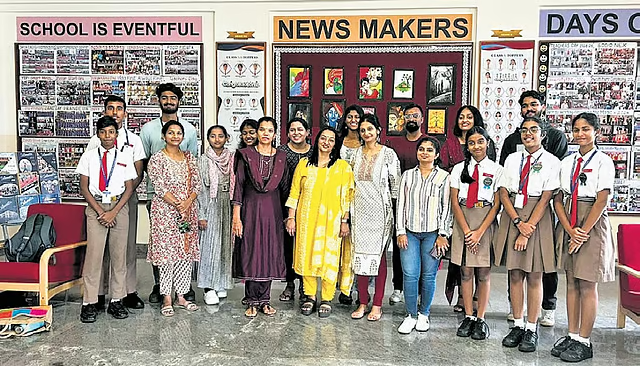
Mental health programme in schools in Mysuru
Dr Aravind Raj, Department of Psychiatric Social Work of Nimhans, and one of the pioneers of the initiative, said, “Mental health professionals are often confined to hospitals, where stigma deters people from seeking help. It is one of the reasons to take mental health initiatives outside hospitals.” He stressed the need for more awareness campaigns in society.
Mental health includes different methods of handling situations: understanding one’s potential, dealing with stress in a positive way, being productive and contributing to society. “Our motto is to promote all these among people, so their vulnerability to developing mental disorders comes down,” he said.
According to several reports, it has been identified that rural residents have inadequate mental health knowledge, tied to entrenched stigma and low literacy. In urban areas, people are grappling with work stress, especially Bengaluru’s techies. Dr Raj said Mind and Matter wants to penetrate that area and make them recognise the importance of mental well-being. “We also train Anganwadi workers and teachers and provide care in rural areas,” he added.
Mental illness affects 8% of population
According to the 2015–2016 National Mental Health Survey (NMHS), conducted by Nimhans and considered one of the best benchmarks, 8 per cent of Karnataka’s population, which is 1 out of 12 people, suffers from mental illnesses and requires care. Dr Raj and Appaiah say this is primarily because of a lack of awareness.
“The kind of transformation I have witnessed in people drives me to continue this work. Over time, I understood after attending the programmes we organise, that people feel it is okay to ask for help,” she noted. “If the initiative had never worked, people wouldn’t come back to us. More importantly, there is no monetary benefit involved, which means it has personally impacted me,” Appaiah said, a smile on her face. “I believe my family is my biggest support, and thank my entire team for their contribution.”
While the NGO is run for a noble cause, Appaiah says that sometimes, it is difficult to continue the initiative on such a large scale if there isn’t enough financial support. Appaiah, who also runs a café in Coorg, said it provides support. “We don’t go out to ask for donations. People who have worked with us donate money. The café is an extension of whatever we do here. However, now we are trying to collect funds from corporates or through CSR activities,” she said. Dr Raj also stressed that resource management is important.
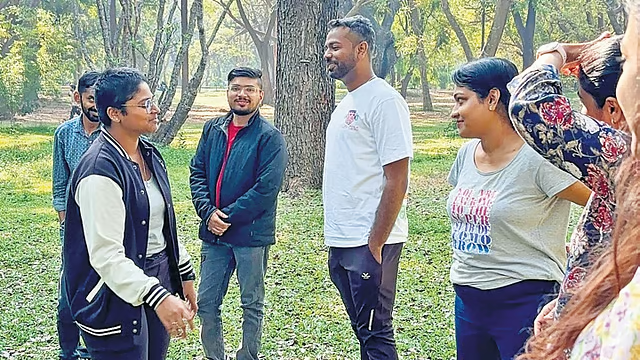
A group of youngsters chit-chat after the Sundays for Mental Health programme in Cubbon Park, in Bengaluru / Photo | Express
source: http://www.newindianexpress.com / The New Indian Express / Home> Bengaluru / by Saptarshi C / March 03rd, 2025
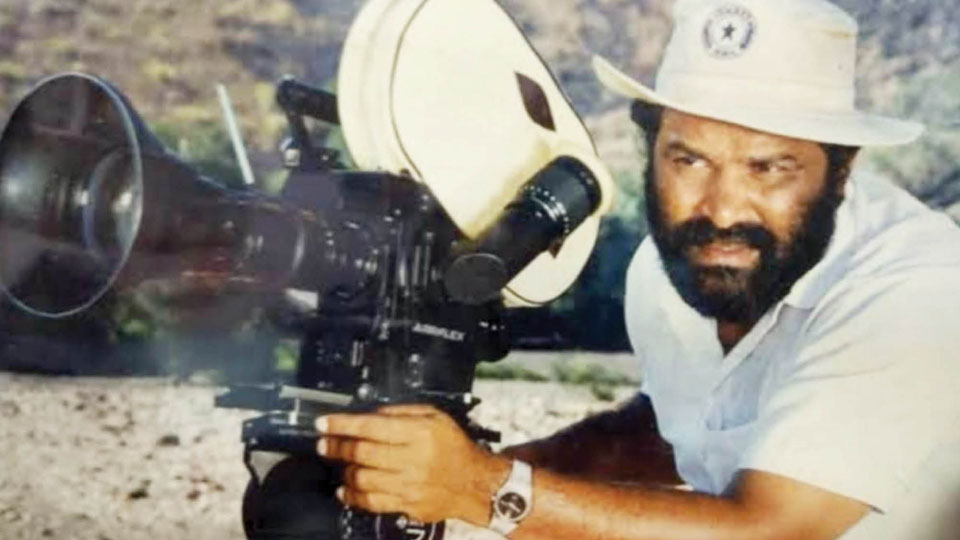
Noted film director Apadanda T. Raghu (A.T. Raghu) passed away at his R.T. Nagar residence, here yesterday. He was 76.
Raghu is survived by his wife Leela Raghu (Palengada), son Bijoy Ganapathy, daughter Binu Sachin (Bayavanda) and a host of relatives and friends. Last rites were held at Hebbal Crematorium in Bengaluru today afternoon, according to family sources.
Raghu’s journey in film industry began with the movie ‘Nyaya Neethi Dharma’ released in 1980. He has directed a total of 55 films in Kannada, Malayalam, Hindi and Kodava languages. Among the popular movies directed by him include ‘Kattu Rani’ (Malayalam – 1985), ‘Ajay Vijay’ (Kannada – 1990), ‘Mandyada Gandu’ (Kannada – 1994). He also directed a Hindi movie titled ‘Meri Adalat’ starring Tamil superstar Rajnikanth.
A native of Bettathur village in Kodagu district, Raghu also served as the Member of Kodava Sahitya Academy between 2014 and 2017. He has produced and directed Kodava language serials such as ‘Ainmane,’ ‘Pombolcha,’ ‘Thamane,’ ‘Gejje Thand,’ ‘Jamma Bhoomi’ and ‘Nanga Kodava’ which were telecast on DD Chandana.
His contributions to movie industry earned him several recognitions including the prestigious Puttanna Kanagal Award, Rajyotsava Award, Kodava Sahitya Academy Award, Kalasagara Sangeetha Nrithya Nataka Academy Award, Bangalore Doordarshan Chandana Award for Cinema, Bangalore Kodava Samaja Centenary Celebration award, among others.
source: http://www.starofmysore.com / Star of Mysore / Home> News / March 21st, 2025
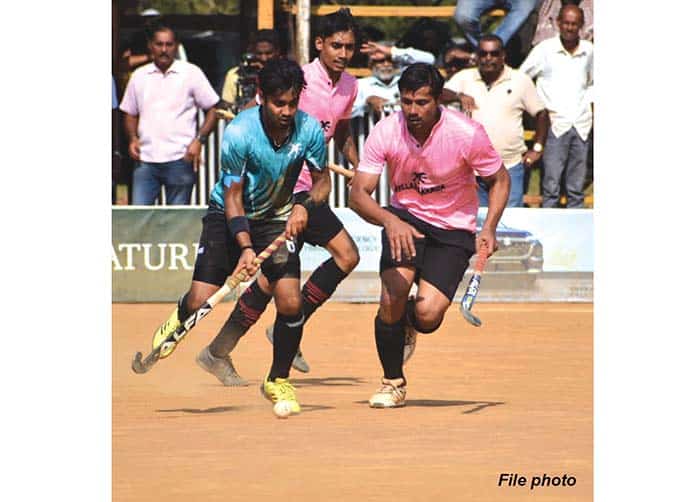
The Kodava Family Hockey Namme (Festival) celebrates its 25th edition this year, with the Muddanda Cup Hockey Tournament set to begin on Mar. 28 and continue until Apr. 27.
Matches will be played across three different grounds, with 370 teams already registered for the competition.
Addressing the media in Madikeri yesterday, Kodagu Hockey Academy President Pandanda K. Bopanna noted that while 360 teams participated in last year’s Kundyolanda Hockey Fest, this year’s registrations have already reached 370, with a few more days left for additional entries.
He announced that the inaugural ceremony will feature an exhibition match between Kodagu Hockey Academy XI and Karnataka XI.
Tournament Director Badakada Deena Poovaiah and Coordinator Muddanda Roy Thammaiah will oversee the event.
Cheppudira Cariappa will serve as the main commentator, assisted by Maletira Srinivas, while Kecchettira Prasanna will be in charge of match coordination. The inauguration will also include a special felicitation ceremony honouring the Kundyolanda family, which achieved a Guinness World Record last year.
Umpire training
Hockey Academy Working President Mekerira Ravi Pemmaiah revealed that a training programme for hockey umpires will be conducted on Mar. 19 and 20 at Cauvery College, Virajpet, urging young hockey enthusiasts to participate.
Academy Vice-President Kukkera Jaya Chinnappa stated that several dignitaries, including Virajpet MLA and Chief Minister’s Legal Advisor A.S. Ponnanna, Madikeri MLA Dr. Manthar Gowda, Mysuru-Kodagu MP Yaduveer Krishnadatta Chamaraja Wadiyar, MLC M.P. Suja Kushalappa, Rajya Sabha MP Ajay Maken, Kodagu Deputy Commissioner Vekatraja, and Kodagu SP K. Ramrajan, will attend the grand opening ceremony.
Kreeda Jyothi
Muddanda Hockey Festival Chairman Muddanda Rashin Subbaiah confirmed that matches will take place at Field Marshal K.M. Cariappa College Grounds and the Police Parade Grounds. As part of the festival’s silver jubilee celebrations, a special ‘Kreeda Jyothi’ (Sports Torch) marathon will be held, visiting the Ainmanes (ancestral homes) of Kodava families.
The marathon will commence at 8 am on Mar. 25 from the Ainmane of the Pandanda family in Karada village, the pioneers of the Kodava Family Hockey Festival.
It will pass through eight Ainmanes in Ponnampet and surrounding areas before concluding on Mar. 28. On the inaugural day, a rally carrying the sports torch will proceed from General Thimayya Circle to Field Marshal K.M. Cariappa College Grounds, flagged off by MLA A.S. Ponnanna.
To commemorate 25 years of the festival, a women’s hockey tournament has been introduced as part of the Muddanda Hockey Festival. So far, 30 women’s teams have registered, and more entries are expected before the Apr. 10 deadline.
The women’s matches will be played at the Police Parade Grounds in Madikeri. Star Indian hockey players Lalremsiami Hmarzote from the women’s national team and Indian men’s team captain Harmanpreet Singh will visit Madikeri during the tournament.
Matrimonial meet
The festival will also feature a thand-bendhu (matrimonial meet) and a quiz competition at the venue. A special cyclothon is scheduled for Apr. 26, and DJ music will entertain spectators from the pre-quarterfinal stage through the final.
An open ‘Maja Run’ from Field Marshal K.M. Cariappa Circle has also been planned as part of the celebrations. Parking arrangements have been made for 2,000 vehicles, and Bengaluru-based Vandana Trust will assist in waste management throughout the month-long event.
Additionally, a shooting competition will be held on Apr. 20 at Ground No. 2, featuring three categories: 50-metre .22 rifle shooting, 30-metre 12-bore gun shooting, and 15-metre air rifle egg shooting. A traditional coconut shooting competition will also be organised.
Muddanda Family President Muddanda B. Devaiah urged members of the Kodava community to participate in large numbers in the rally from General Thimayya Circle to Field Marshal K.M. Cariappa College Grounds, marking a significant milestone in the history of the Kodava Family Hockey Festival.
source: http://www.starofmysore.com / Star of Mysore / Home> Sports / March 16th, 2025
WELCOME. If you like what you see "SUBSCRIBE via EMAIL" to receive FREE regular UPDATES.
Read More »