The Ibnii Spa and Resort in Coorg, Karnataka, weigh the food wasted by customers and makes them pay for it at the time of checkout.
The guests have to pay Rs 100 for every 10 gram of food wasted by them. | Image: Unsplash | Photo Credit: Representative Image
Bengaluru:
Food waste is definitely not a good taste. A luxury resort in Karnataka came up with an ingenious way to decrease the wastage of food by its guests. The Ibnii Spa Resort started charging its customers for wasting food.
The resort which is located in the hills of Coorg, Karnataka, has come down from 14 waste bins to just one since the initiative was implemented.
The composting unit of the resort used to be overworked with 14 huge garbage bins of leftover food daily. The resort decided to decrease the quantity of waste by informing guests that they could place their orders any number of times.
However, when the wastage of food did not stop, the resort came up with the unique idea of making the guests pay for the food they ordered but did not eat.
How much do the guests pay for wasting food?
The idea was simple. At the end of every meal, all the leftover food is weighed on a weighing machine in front of the guests. At the time of checkout, the guests are told how much food they wasted during their stay. They have to pay Rs 100 for every 10 gram of food wasted by them. The amount is to be dropped in a donation box which goes to a not-for-profit organisation that feeds children at an orphanage in Madikeri.
How have the guests reacted to the initiative?
The initiative which was started six months ago has made a huge impact on the conscience of the guests. “We have seen a drastic decrease in the quantity of food waste. From fourteen waste bins every day, we now only need one,” Shreya Krishnan, CSR adviser at The Ibnii, told Deccan Chronicle. The guests have appreciated the resort’s efforts to reduce food wastage.
How much food do we waste?
One-third of the food produced in the world for human consumption every year gets lost or wasted, according to the Food and Agricultural Organisation of the United Nations.
Not only is wasting food doing wrong to the farmers who grow the crop and to the chefs who cook the dishes but it is also unfair to those people who can’t afford two meals in a day and impacts the environment too.
source: http://www.timesnownews.com / TimesNowNews.com / Home> News> Buzz / by Saumya Agrawal / February 21st, 2020
Rashmika Mandanna who tasted biggest hit of her career with Sarileru Neekevvaru this year will next be seen opposite Nithin in Bheeshma hitting the screens in five days.
Rashmika assures that Bheeshma is thoroughly entertaining. “You can expect lots of fun in the film. When I was dubbing, I had great time. This film is going to be super fun.”
About the judgement factor, the actress reveals, “Firstly, script should excite me. I strongly believe that, audience needs to have fun or get emotional while watching a film.”
Rashmika’s character name in the film is Chaithra and she works at Bheeshma organic company. Then, who’s Bheeshma in the film. “Anant Nag is Bheeshma. Nithin is also Bheeshma. But, I can’t divulge much on this now.”
Recently, IT raids were conducted on Rashmika’s house. She, however, clarifies saying the officials found nothing. “My father is a businessman. We have coffee estates in Coorg. When IT officials conducted raids, they found nothing.”
Rashmika also informs that she will be seen in a completely new avatar in Allu Arjun and Sukumar’s film that will start rolling from next month.
source: http://www.gulte.com / Gulte.com / Home> Movie News / February 16th, 2020
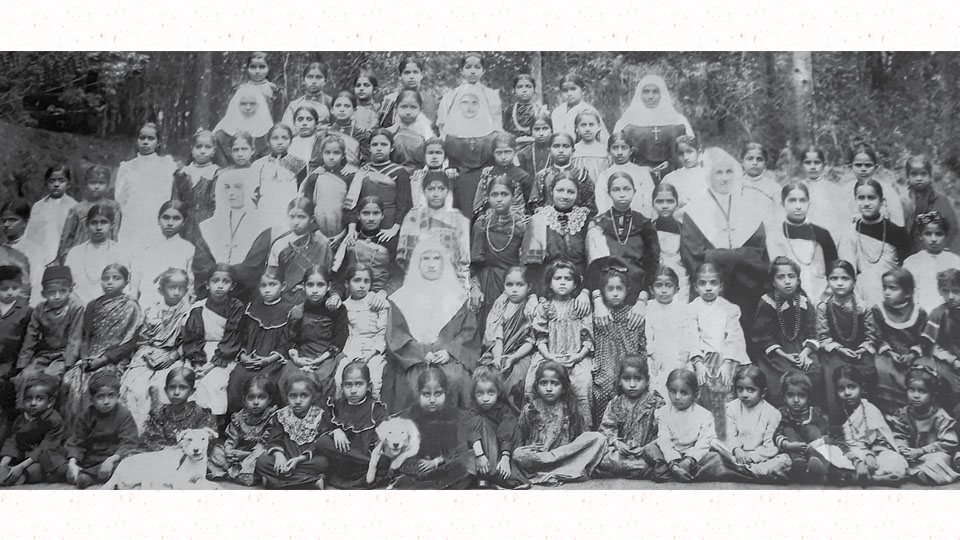
Educational institutions were first started in Kodagu after the British takeover in 1834. People took to education most enthusiastically. In 1909, St. Joseph’s Convent was founded by Catholic nuns in Madikeri. It was primarily for girls, but boys were allowed till 7th standard. I recently came across a remarkable group photograph taken in 1911, of the students at the time, along with the European nuns who ran the school. The school catered to both boarders and day-scholars.
This school offered better quality education to children of those locals who aspired to see their chldren well prepared to take advantage of lucrative jobs and career opportunities under the colonial dispensation. This school saw generations of students, especially women, pursue higher education and excel at a time when women were not much involved outside the traditional family responsibilities.
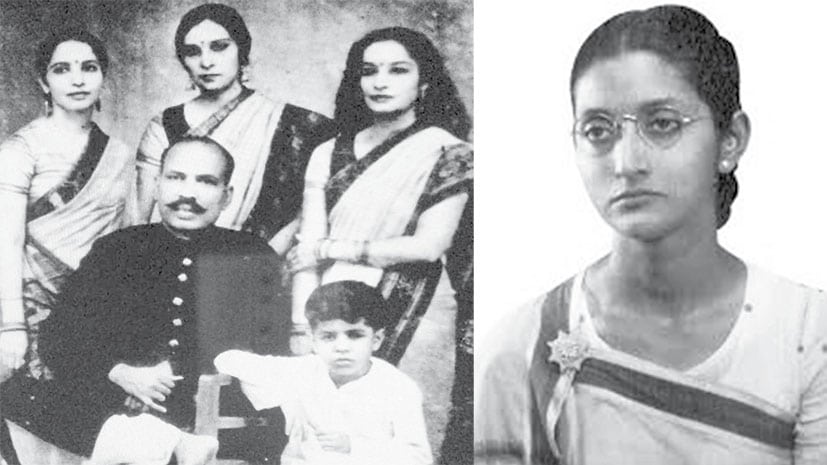
One family in this frame, frozen in time, has members who went on to become famous during the 1930s to 1950s. They are the seven daughters and one son of the first lawyer from Kodagu — Codanda D. Poovaiah. After school, six of his daughters pursued higher education outside Kodagu. The sisters excelled in various fields and soon came to be known as the ‘Poovaiah Sisters of Coorg.’ One of them, Rohini, was the first lady from Kodagu to acquire a degree. She later became the Principal of Crosswaithe College, a well-known institution in Allahabad. She was familiar with the Nehru family and had a brief role in the education of a young Indira Gandhi. She was awarded the Padma Shri in 1973. Another sister, Ashlesha, was one of the first lady doctors from Kodagu. Yet another sister, Swati, did her Nursing degree and later went on a scholarship to Columbia University in 1948 for further studies.
Three of the Poovaiah sisters with their dance guru Jailal. / Picture right shows Chonira B Muthamma, first lady IFS Officer.
The three younger sisters — Sita, Chitra and Lata — became renowned Kathak dancers and were much sought-after not only for their performances all over India, but also to direct dances in Hindi movies. All sisters took part in the freedom movement. Chitra and Lata defied prohibitory orders during the ‘Quit India’ movement. They were jailed for 2 weeks. Sita went on to earn a Ph.D in Arts from Bombay University and became the first Kodava lady to get a Doctorate degree. My father, C.M. Poonacha, was a freedom fighter and knew the family well. I had the privilege of being invited to their home on Malabar Hill in Bombay in 1968. Except for Ashlesha, all the sisters were spinsters.
On a personal note, my wife’s grandmother is one of the little girls sitting in the front row. She later married Pemmanda K. Monnappa who had the unique distinction of being the Inspector General of Police (IGP) in three Southern States. He was the Police Chief who headed the Government action in quelling the Razakars revolt in Hyderabad. He was the first IGP (equivalent to DGP now), of the newly formed Karnataka State in 1956.
My sister’s future father-in-law is one of the little boys sitting in the front row. Interestingly, his future mother-in-law is also in the same frame! This iconic, over a century-old photograph, has many stories to tell.
Over the years several girls who had their early education in this school went on the achieve in various fields. Konganda Accamma, who passed out of this school in the 1920s, joined Lady Hardinge Medical College in New Delhi. She was one of the first Kodava women to earn a MBBS degree. She headed the Vanivilas Women and Children’s Hospital for several years.
One of the most distinguished alumna of this school is C.B. Muthamma, who was the first woman to qualify for the Indian Foreign Service in 1949. She also has the distinction of being the first lady Ambassador from the IFS cadre. Muthamma had to face gender discrimination while in service. She fought against the Government and went to the Supreme Court in 1979. The Apex Court passed a judgement in her favour which paved the way for other women civil servants from being discriminated against. She authored a book titled ‘Slain by the System’ in 2003. Muthamma’s classmate was Jajie Mandanna, who was an MLC and a well-known consumer activist. I am told they fiercely fought for the top rank in their class!
St. Joseph’s is now a co-ed school and continues to provide quality education.
___________________
About the author:
C. P. Belliappa, born in 1946, is a Chemical Engineer. He is currently settled in Coorg. He is known for his writings on issues pertaining to Coorg. Four of his books — Tale of A Tiger’s Tail & other Yarns from Coorg, Nuggets from Coorg History, Victoria Gowramma: The Lost Princess of Coorg, and Tongue of the Slip, have been published by Rupa Publications. He currently serves as President, Coorg Institute of Technology, Ponnampet, South Kodagu.
source: http://www.starofmysore.com / Star of Mysore / Home> Feature Articles / February 16th, 2020
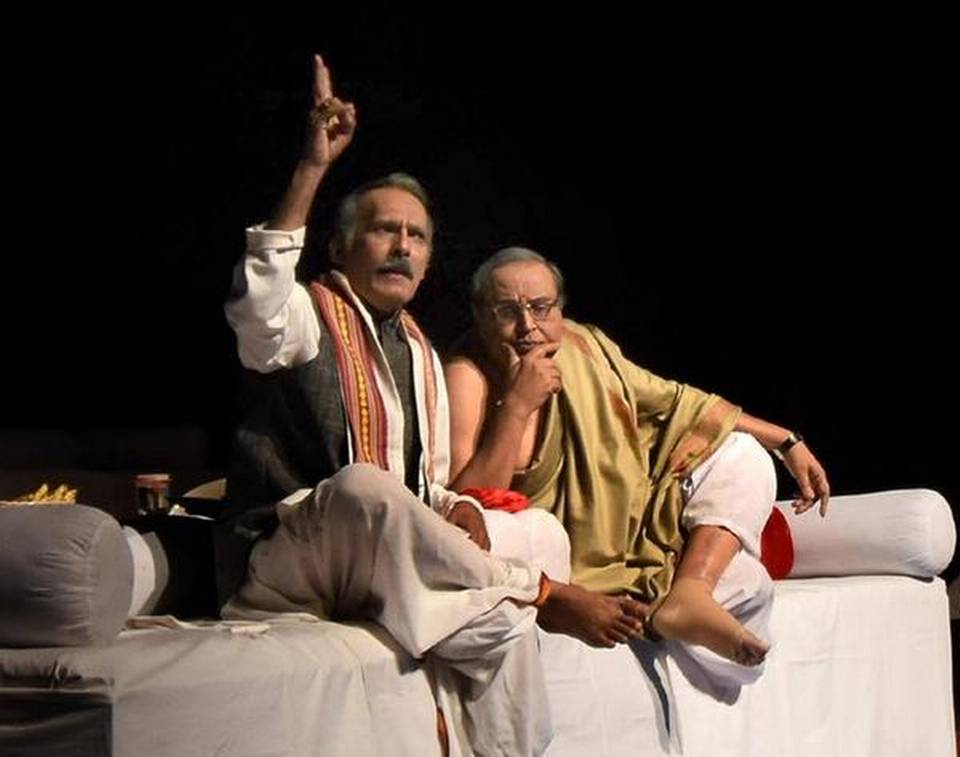
Mukhyamantri Chandru and another artiste staging the play ‘Mukhyamantri’ at Bahuroopi in Mysuru on Sunday.
Bahuroopi productions are seeing packed audiences as all roads are leading to the national theatre festival being hosted by Rangayana, the State’s premier repertory.
Mukhyamantri, with ‘Mukhyamantri’ Chandru in the lead role, and Manteswamy Kathaprasanga received overwhelming response with theatre buffs watching the plays on Sunday evening with great excitement. The venues of the both the plays were jam-packed.
Sangeeth Bari, a Marathi dance-drama, was another performance that kept the audience fastened to their seats. The production, directed by Savitri Medhatul, chronicled the evolution of Lavani, the folk art. Oedipus, the Bengali play, was another production staged on Sunday, which was also well received.
The theatre festival had been receiving more footfall with each passing day. Bahuroopi concludes on February 19.
“As many as 500 people and about 400 people could not get to see Mukhyamantri and Manteswamy Kathaprasanga plays, respectively, as the auditoriums were packed. Many watched the plays standing at the corners,” said Addanda C. Cariappa, Director, Rangayana, Mysuru.
People were heard asking the organisers whether Mukhyamantri can be staged once again in Bahuroopi. The epic play saw its 701st show here on Sunday. It is inching towards creating a new record.
However, Mr. Cariappa said: “It’s not possible in Bahuroopi since all plays had been scheduled till February 19. May be, after Bahuroopi, we can try to bring the play once again to Rangayana.”
Other events
Not just plays, all other events – Janapada Utsava and exhibitions – are witnessing a huge response. Every visitor has something catering to his or her interests at the festival, he said, adding that all venues are witnessing packed shows and are unable to meet the demand for more seats.
The handicrafts and book expo has some special displays with the aim of offering something new and fresh to the visitors. A stall has exhibited Ilkal saris, weaved in the distant Ilkal in North Karnataka, that has wide acceptance because of its fabric, design and heritage.
Manjula Hosapete, the exhibitor, has brought all types of Ilkal saris so that everyone gets their picking. “The sari has many admirers in Mysuru and therefore we have come here with good stock,” she adds.
Likewise, there are paintings, organic products, khadi items and much more at the expo.
Members of Kodava Samaj, Mysuru, presented “Ummattat” and “Bolakat” as part of Janapada Utsava at Bahuroopi on Sunday.
An artist from Mysuru has created a Warli painting with images of Mahatma Gandhi, like him spinning the charaka, his marches and so on. S. Anusuya Rangaswamy has brought the painting to the festival since it is themed on Gandhi – Gandhi Patha.
source: http://www.thehindu.com / The Hindu/ Home> News> States> Karnataka / by Special Correspondent / Myrusu – February 17th, 2020
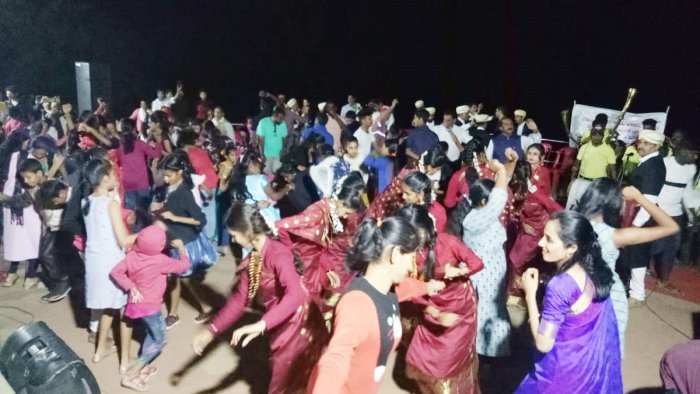
People dancing to the tune of the traditional ‘Kodava Valaga’, during the fruit and flower show at Raja Seat. DH Photo
Hundreds of visitors thronged the Raja Seat in Madikeri on Saturday and Sunday, for the fruit and flower show.
The four-day-long fruit and flower show organised by the district administration and the department of horticulture, began on Friday.
On Sunday, the localities and tourists who gathered in the venue, danced to the tunes of traditional ‘Kodava Valaga’ during the cultural programmes organised by Karnataka Kodava Sahitya Academy. ‘Arebhashe Kolata’ and ‘Sobhane Pada’ enthralled the audience.
Selfie zones set up at various parts of Raja Seat, were the centre of attraction among youth during the flower fest. Photo frames were designed with flowers for the purpose.
Open street
The police department restricted the movement of vehicles from M M Circle till Kundurumotte junction, from 6 pm to 10 pm on the evenings of the fruit and flower show. Raja Seat was made completely free from vehicular movements and the stalls featuring various snacks were opened on the road, reminding the ‘Open Street Festival’ organised during the Pravasi Utsav held in Kodagu last year. Traditional Kodava snacks were also sold in the stalls.
Students were provided with a chance to watch the fruit and flower show free of cost. A lot of students witnessed the show on Saturday and Sunday. Most of them were accompanied by their teachers.
The people also visited the stalls set by the departments of agriculture, horticulture, animal husbandry, fisheries and various other departments.
‘Mamateya Marukatte’
Various items such as children’s toys, unused clothes, stationery items, and electronic items in the working condition, were featured at ‘Mamateya Marukatte’ stall set up by Green City Forum and Madikeri City Municipal Council. The items were collected at Kaveri Kalakshetra.
The amount collected from the sale of these items were provided to the civic workers and stree shakti groups. Most of the items have been sold, said Satya, a member of Green City Forum.
source: http://www.deccanherald.com / Deccan Herald / Home> State> Mangaluru / by DHNS, Madikeri / February 10th, 2020
The annual fruit and flower show which began at Raja Seat in Madikeri on Friday has been attracting tourists and nature lovers in large numbers.
The traditional ‘Ainmane’ house made out of flowers, is the main attraction in the fruit and flower show in Raja Seat, Madikeri.
Artifacts featuring Virat Kohli, Wing Commander Abhinandan, Kuvempu, Atal Bihari Vajpayee, Narendra Modi, B S Yediyurappa, A P J Abdul Kalam, Mahatma Gandhi, Siddaganga seer, Dr B R Ambedkar, Field Marshal K M Cariappa, General Thimmaiah and Pejavara seer— all carved out of watermelons, mesmerise visitors, at the entrance of Raja Seat.
6,000 flower pots
A total of 6,000 flower pots have been arranged in the park. Flowers exhibiting a wide spectrum of colours and species, arranged in artistic patterns, have been providing a visual treat.
Raja Seat, which had lost its sheen owing to lack of flower-bearing plants, is now wearing a refreshed look.
The main attraction, however, is the traditional ‘Ainmane’ (house), designed with lakhs of flowers. A lot of visitors were seen taking selfies in front of the Ainmane.
Rocket
The heart made out of roses, rocket launching station of ISRO, coffee pot and the cup, Mickey Mouse, Swami Vivekananda and other artefacts made out of flowers are making the people spellbound.
Cultural programmes will be held in the evenings, as a part of the fruit and the flower show. Food festival is being held in Gandhi Maidan. People have been relishing their taste buds with sugarcane juice from Mandya and other delicacies. Stalls have been put up by the Horticulture Department and private nurseries, featuring the sale of various flower-bearing plants.
MLA’s praise
Speaking after inaugurating the fruit and flower show, Madikeri MLA Appachu Ranjan called upon the people to come to Raja Seat in large numbers to see the show.
The show is being organised by the Department of Horticulture at a cost of Rs 20 lakh. Cultural programmes are being organised by the Department of Kannada and Culture and Karnataka Kodava Sahitya Academy, he said.
Deputy Commissioner Annies Kanmani Joy said it has been a tradition to organise fruit and flower show in the month of January or February every year. The show will be on till Monday.MLC Veena Acchaiah, MLC Sunil Subramani, Kodagu Zilla Panchayat President B A Harish, Vice President Lokeshwari Gopal, Hopcoms President Biddatanda Ramesh Changappa and Horticulture department Deputy Director Chandrashekhar were present.
source: http://www.deccanherald.com / Deccan Herald / Home> State> Mangaluru / by DHNS, Madikeri / February 07th, 2020
Kodagu Deputy Commissioner Annies Kanmani Joy inspect
The event at Raja Seat in Madikeri will be held from February 7 to 10
This year’s flower show in the sprawling garden of Raja Seat in Madikeri from February 7 to 10 will be plastic-free. The organisers have banned visitors from carrying plastic inside the show, which is expected to attract a lot of locals and tourists.
The organisers have urged the visitors not to carry plastic carry bags and bottles.
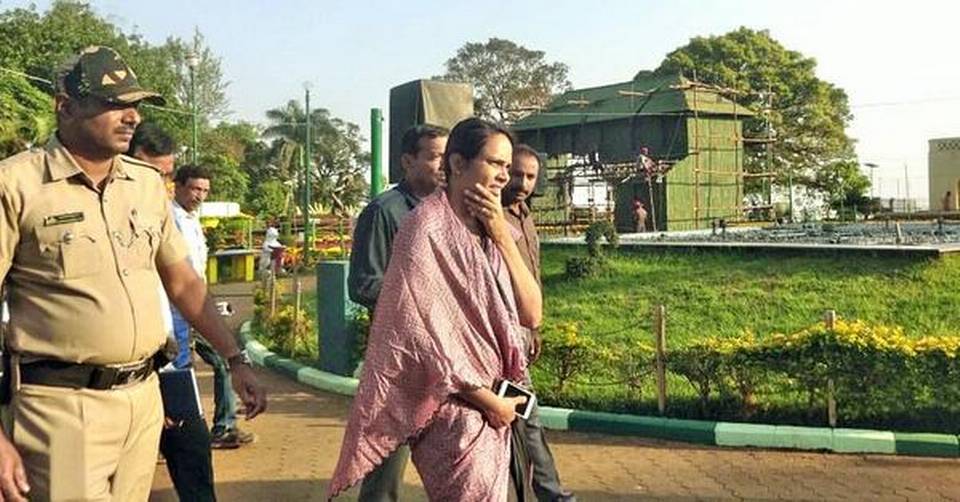
Kodagu Deputy Commissioner Annies Kanmani Joy on Wednesday inspected the arrangements for the show and later held a meeting with officials of the Departments of Horticulture and Tourism.
The Departments of Kannada and Culture, Kodava Sahitya Academy and other academies and cultural institutions will be presenting cultural shows on each day.
While the show is free for schoolchildren if they come wearing their uniform or with a letter issued by the heads of their schools, the entry fee for others would be ₹10, said Deputy Director of Horticulture Chandrashekar.
He requested the Police department to make arrangements for the parking of visitors’ vehicles and barricades at the venue.
Police Inspector K.B. Belliappa said temporary parking can be arranged at the old private bus-stand in view of the show from 5 p.m. to 9 p.m. and private buses can operate from the APMC premises until the flower show gets over.
Ms Joy told the officials to ensure convenience to the public and communicate information well in advance in case of changes in the arrangements.
Tourism officials urged the Deputy Commissioner to allow food stalls at the venue for the convenience of visitors.
The appeal was considered and those willing to set up food stalls will be getting space at the venue for free, a release said. Interested persons can call Tourism Department Assistant Director on 94480 04466 or 08272-228580 for information on establishing stalls and other details.
source: http://www.thehindu.com / The Hindu / Home> News> States> Karnataka / by Special Correspondent / Mysuru – February 05th, 2020
First off is the Amazon Prime Video series ‘Afsos’, in which he plays a suicidal writer who is simply unable to die.
Gulshan Devaiah
Gulshan Devaiah moved to Mumbai from Bangalore more than a decade ago to become a “good leading man who’s also a good actor, or even a great and legendary leading man, who’s a great and legendary actor”. Will he get there, as he hopes?
Devaiah’s latest effort is Amazon Prime Video’s series Afsos, which is out on February 7. Written by Dibya Chatterjee and Anirban Dasgupta, Afsos follows Devaiah’s Nakul, a clinically depressed writer who hires an assassin (Heeba Shah) to kill him after 11 failed suicide attempts. Things go awry when Nakul wants to abort the mission after developing feelings for his therapist (Anjali Patil).
“Sometimes, you suffer more in your imagination than reality,” the 41-year-old actor said about Nakul. The insecure, middle-class writer is similar to his sexually obsessed character Mandar Ponkshe in Harshvardhan Kulkarni’s Hunterrr (2015). Both are what he calls the “average Ramu”. Devaiah added, “What made Mandar special was him sleeping around to feel good about himself. What makes Nakul special are the circumstances he gets into for his glum outlook on life.”
Afsos (2020).
Devaiah is coming straight off from praise for his role of a village strongman-turned-alpha zombie in Dibakar Banerjee’s installment in Netflix’s anthology horror film Ghost Stories. Despite being in the movies since 2011, the 10-minute role, of which nine minutes are spent under unrecognisable make-up, has earned him some of the best reviews of his career. Devaiah had no expectations from the film and wasn’t sure he would be recognised at all, but he now wonders why the role has drawn so much attention.
“Perhaps, though everything seems very sudden, what I had been doing for so many years created a positive impression in people’s minds, so the effect was cumulative,” he said. “I would keep getting messages from my audience, that I am underrated and underutilised. Perhaps, with Ghost Stories, people thought I have got what I deserve.”
Off the top of his head, Devaiah remembers Karan Johar and Reema Kagti praising him for his ghoulish act. At least one of those handshakes materialised in a role: Devaiah is playing a policeman in Kagti’s Rajasthan-set web series Fallen, alongside Sohum Shah and Sonakshi Sinha.
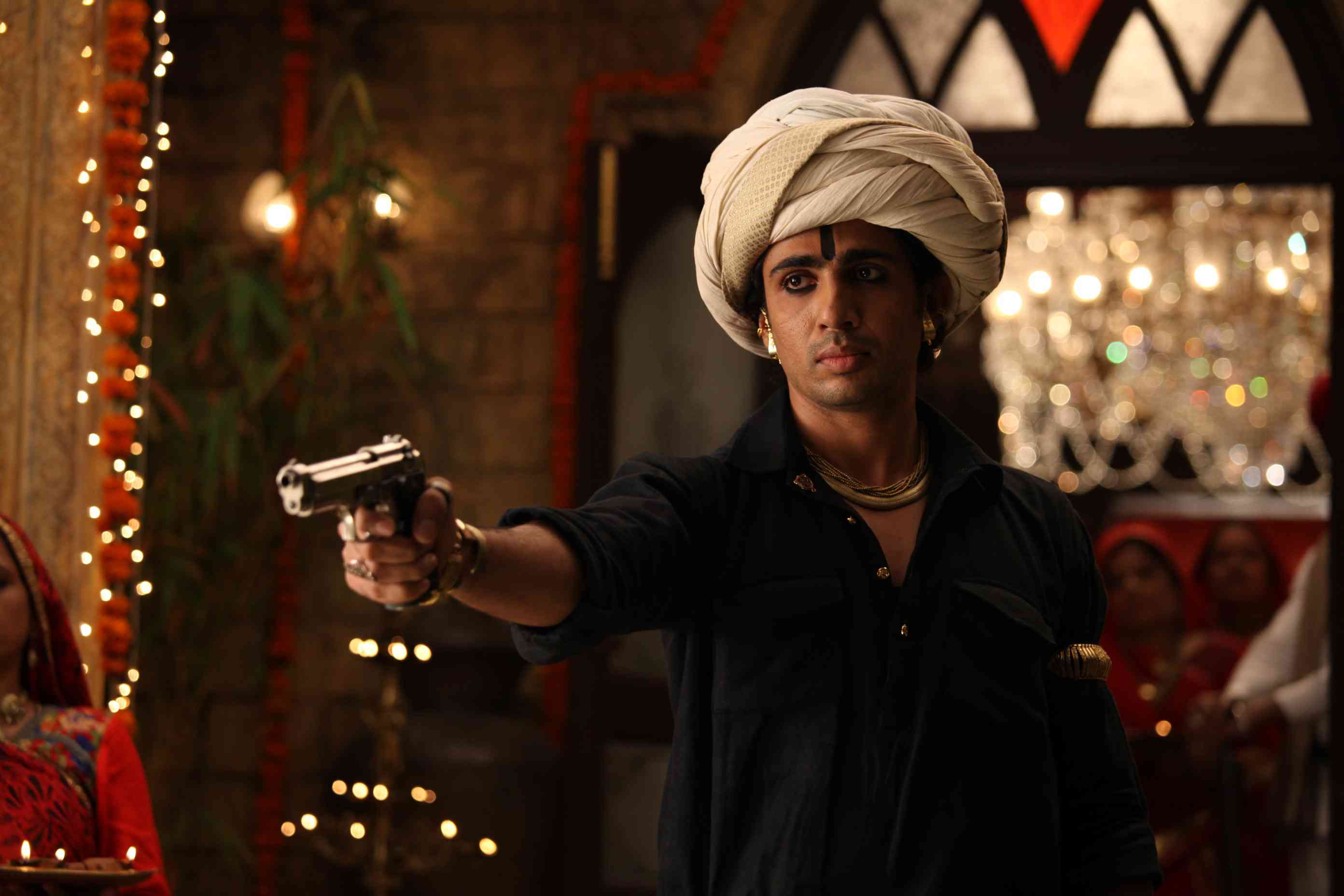
Gulshan Devaiah in Ghost Stories (2020). Courtesy Netflix.
Devaiah’s career began with morally grey or outright negative roles in low-to-mid-budget productions such as That Girl in Yellow Boots (2011), Dum Maaro Dum (2011), Shaitan (2011), and Hate Story (2012). He played similar roles in commercial projects such as Goliyon Ki Raasleela Ram-Leela (2013) and Commando 3 (2019).
In between, he played diverse characters, including the double role of a don and a martial arts teacher in Vasan Bala’s Mard Ko Dard Nahi Hota (2018) and a serial womaniser in Hunterrr, a role that his fans still keep talking about.
Despite leading-man ambitions and an impressive resume, he didn’t quite hit the sweet star-actor spot. Devaiah attributes this to being clueless about converting the attention he received “between 2011 and 2013” to “hustle”.
“The only thing I knew to do was good work,” Devaiah said. “The others after me were better at hustling like Ayushmann Khurrana, Vicky Kaushal, Rajkummar Rao. I am learning from them.”
Is being good not good enough? “Idealism has its place but you also have to be practical,” Devaiah explained. “I don’t want to be dragged down thinking I am so good and hardworking but I didn’t get the chances I deserve. I see disappointment and disillusionment in veteran actors who’ve been around for 30-40 years. I constantly think about what am I not doing, where am I missing out. Sometimes, in an interview, I might have the right answers, but not the right attitude. That might be enough for someone to not choose me for a role. I keep these things in mind.”
Gulshan Devaiah as Jimmy and Karate Mani in Mard Ko Dard Nahi Hota (2019).
Unlike his Afsos character, Devaiah is neither overtly bogged down by missed opportunities nor is he chasing big-banner productions. Most of his films have been made on limited budgets.
“Small banner, big banner is secondary for me,” Devaiah said. “My goal in life is to do roles through which I can challenge myself, surprise audiences. I don’t look for validation from a big director or big production house. The legacy I want to leave behind is of me being a versatile actor. Hunterrr or Mard were not big banner projects. But the connection I made with the audience with those roles is what I aim for.”
Some of Devaiah’s projects have either not been released or have gone straight to streaming platforms, which are not the best places for small movies to find audiences. There’s still no release date for Bala’s eight-year-old Peddlers. Kanishk Varma’s Hindi-Marathi bilingual thriller Daav/Haadsa, which stars Devaiah as a policeman, remains in the cans. The much-delayed Cabaret went straight to Zee5, while CandyFlip was released on Netflix.
But he cannot pick films based on the ability or willingness of their makers to release them, Devaiah said. He cited the example of Tarun Mansukhani’s Drive. “Did anyone expect a Dharma film to go straight to OTT?” he said. “Shit happens man, I can’t worry about it. I can’t even put it in my contract that the film must be released. I can only tackle things I have control of, like my film choices or performances.”
Gulshan Devaiah in Goliyon Ki Raasleela Ram-Leela (2013). Courtesy Bhansali Productions/Eros International.
Besides Fallen, Devaiah has nothing on his plate that he can talk about except a thriller Hinterland, announced long ago but yet to be shot. The film, also starring Manoj Bajpayee, “is about a man chasing another man, and how the system is rigged in a way that a conflict between two parties helps a third party”, he said.
Devaiah prefers to work on one project at a time. “Be it a three-day shoot or a 300-day shoot, if I can, I only eat, sleep, think one thing at a time,” he said. “I would say my work ethic of putting 100% attention to something is my biggest strength.”
Many acclaimed roles, a few commercial successes, and yet his best role didn’t even make a blip on the radar. “Hunterrr is the only brand value I have actually,” he said. “People were attracted to the nostalgia of the film. Everyone had one friend, brother, or cousin, who was like Mandar. Everyone, post-puberty, tried the sort of things Mandar did in the film. I definitely related to the things happening in his life, if not him exactly. Many women told me that they also related to the events in the film.”
Chori Chori, Hunterrr (2015).
source: http://www.scroll.in / Scroll.in / Home> The Reel> On the Actor’s Trail / by Devarshi Ghosh / February 05th, 2020
UCLA’s Center for the Art of Performance (CAP UCLA) presents Fly Higher: Charlie Parker At 100 on Thursday, March 26 at 8 p.m. at Royce Hall. Tickets starting at $28 are available now at cap.ucla.edu, 310-825-2101 and the Royce Hall box office.
Charlie “Bird” Parker was a legendary Grammy Award-winning jazz saxophonist who, with Dizzy Gillespie, invented bebop. This year marks the 100th year since the legend’s birth and therefore is cause for celebration. Acclaimed co-musical directors Rudresh Mahanthappa and Terri Lyne Carrington honor Charlie Parker’s centennial year by showcasing his uncompromising musical joy, humor and beauty, mining his deep repertoire and showcasing new, modern compositions.
Hailed by Pitchfork as “jaw-dropping” and saxophonist of the year for seven years running in Downbeat, Rudresh Mahanthappa is a 21st-century voice of jazz. Since his emergence in the late ’90s, Mahanthappa harnesses the power of the horn to create a rhythmic urgency and showcases an astonishing facility. In addition to creating Fly Higher with Carrington, Mahanthappa is the Director of Jazz at Princeton University.
Carrington returns to the Royce Hall stage for the second CAP UCLA season in a row. A three-time Grammy Award-winning drummer, Carrington has performed on over 100 recordings and just released Waiting Game this past November with her band Social Science. Last year, Carrington was acknowledged for her contributions to jazz with the Doris Duke Artist Award. Fly Higher is no exception as a significant contribution.
This performance concludes CAP UCLA’s Jazz series for the 2019-20 season. For more shows, please visit cap.ucla.edu/calendar.
CAP UCLA presents
Fly Higher: Charlie Parker at 100
Thursday, March 26 at 8 p.m.
Royce Hall, UCLA
10745 Dickson Court, Los Angeles, CA 90095
Program:
Fly Higher: Charlie Parker at 100 celebrates one of the most innovative and influential artists in modern musical history and examines his impact on pop, hip hop, rap, rock and jazz. Rather than imitating the original, Fly Higher strives to forward the art form by developing new perspectives on tradition.
Credits:
Fly Higher: Charlie Parker At 100 features:
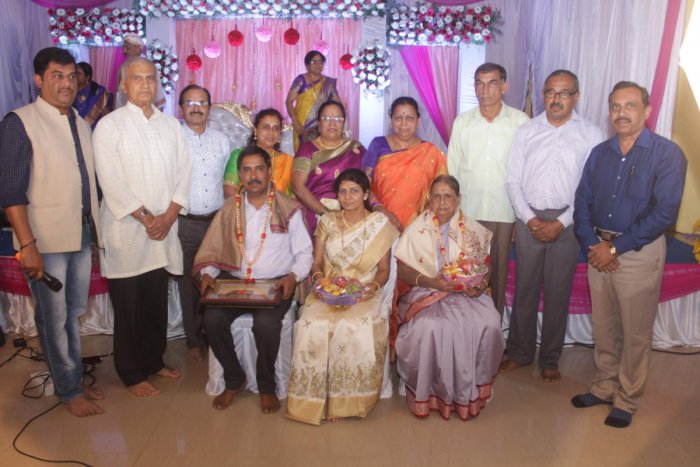
Capt (retd) G S Rajaram, his wife and mother were felicitated during a marriage function at Omkara Sadana in Madikeri on Sunday.
Setting an example, family members and friends of an ex-serviceman felicitated him during a marriage programme held in Madikeri on Sunday.
Captain (retd) G S Rajaram, son of Satyanarayana and Indira, is an ex-serviceman who served in the Indian Army for 30 years. He worked in various parts of the country.
After attaining superannuation recently, he had returned to his native village.
The gesture by Rajaram’s relatives has gathered huge appreciation by the people and the video of the felicitation given to him during the marriage function is being circulated on social media.
The marriage function of Nikhil Bhat and Soumyashree was held in Omkara Sadana in Madikeri. The groom’s mother is the sister of Rajaram.
The ex-serviceman, along with his wife G R Savitha and mother Indira, were felicitated by former DGP Timmappaiah Madiwal and entrepreneur S G Srinivas, in the presence of relatives and friends.
Speaking on the occasion, Capt (retd) G S Rajaram said that his 30 years service to the Indian Army has been an accomplishment. The soldiers think more about their country than their family.
Major (retd) Venkatagiri and ex-serviceman Kiggalu Girish were present.
source: http://www.deccanherald.com / Deccan Herald / Home> State> Mangaluru / by Adithya K A / DHNS, Madikeri / February 02nd, 2020
WELCOME. If you like what you see "SUBSCRIBE via EMAIL" to receive FREE regular UPDATES.
Read More »