Category Archives: Arts, Culture & Entertainment

Arms Act Exemption To Kodavas: Stakeholders Urged To Present Facts Before Court, Government

StakeholdersKF03sept2019

Union Home Ministry seeks opinion from Kodagu DC

Madikeri:

The filing of writ petition in Karnataka High Court by Captain (retd.) Yaladalu K. Chethan, who has questioned the exemption to Kodavas and Jamma land holders in Kodagu district from obtaining a licence to possess firearms under Section 3 and 4 of the Indian Arms Act, 1959, has resulted in several Kodava organisations coming together to put up a united front to fight for their rights and resist attempts from vested interests to snatch away that privilege.

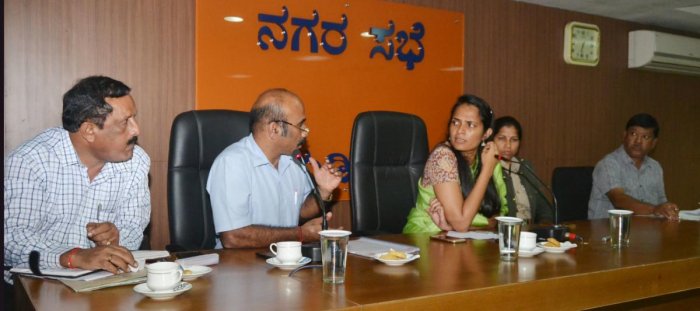
Among the organisations that are pressing for Kodava rights is Nelaji Farmers Club who has urged the Kodava community leaders, Kodava Samajas and other stakeholders to provide proper information to the Government and the Courts in this regard. Even Napoklu Kodava Samaja has criticised the filing of the writ petition and has extended its support to Codava National Council that is fighting a relentless battle to safeguard the gun rights.

On its part, Ministry of Home Affairs (MHA) told the High Court recently that the exemption granted since 1963 to certain class of people in Kodagu district from obtaining licence to possess and carry firearms under the provisions of the Arms Act, 1959, is being reviewed along with the review of the entire Arms Act to amend the old enactment.

Assistant Solicitor General of India C. Shashikantha informed the Court that MHA has constituted a Committee to review and suggested amendments to Arms Act, and the process had been initiated to secure the views of stakeholders with regard to exemption granted to a class of people in Kodagu district.

Addressing a press conference in Madikeri on Tuesday, Nelaji Farmers Club President M.K. Nanjappa said that Kodavas have been using the gun as an item of worship and a gun is a symbol of culture, tradition and is a part of a Kodava attire.

“A gun is linked to the life of a Kodava from birth and till death, and its cultural influence is one of the reasons why the British gave the community an exemption to possess firearms. When a child is born in the Kodava community, four gunshots are fired to let residents of the village know of the birth.”

“In villages in Kodagu, houses are spread out far apart and as a community we get together when a baby is born. Hearing the gun shots, residents know that a birth has taken place and they try and help in any way they can,” said Nanjappa.

Similarly, when someone dies, two gunshots are fired so that residents can rush to help the families in distress. “We take pride in our association with guns and they are not misused,” he said and added that the Courts and the Government must be informed about the exclusive rights of Kodavas so that the right stays.

“After the First War of Indian Independence in 1857, the British introduced the Disarming Act, which outlawed the use of weapons in Coorg. But in 1861, an exemption was granted for a class of people in Coorg to possess firearms, for the first time by Mark Cubbon, the then Chief Commissioner of Coorg,” Nanjappa explained.

“In 1878, the British drafted a law, which later came to be known as the Indian Arms Act, in which the exemption granted to the people of Coorg was extended to two groups of people — a person of Coorg (Kodava) race and a Jamma tenure holder. These rights are unique and Kodavas never misused this. The Kodagu District Administration must inform the facts to the Court and see to it that the rights are safeguarded,” Nanjappa demanded.

Club Secretary Sachin Ganapathy, Directors Viju Appaiah and Naveen Nachappa were present in the press conference.

Meanwhile, Kodagu Deputy Commissioner Annies Kanmani Joy has stated that the District Administration has received a notification from the Ministry of Home Affairs seeking opinion on this issue. “We have sought some time due to the floods and landslides relief work in the district to carry out the consultation,” she said.

Background of the case

Y.K. Chethan, son of Yaladalu D. Keshavananda filed a Writ Petition in the High Court on Jan.8, 2018. In his petition, (WP No. 1386/2018), Chethan, a resident of R.T. Nagar in Bengaluru, claimed that the continuation of the exemption, granted to some class of persons by the British Government in pre-Independent India in furtherance of their divide-and-rule policy, was unconstitutional, as it was based on irrational, fictitious and discriminatory grounds, such as race and ancestral land tenure.

He claimed that the exemption granted to Jamma land holders and for the members of Kodava race under Section 3 and 4 of Indian Arms Act differentiates between communities living in a society and promotes disharmony.

The original petition (a Public Interest Litigation) was filed by Chethan in 2015 and the High Court had disposed it and asked the petitioner to submit a representation on his grievance about exemption to the Union Home Ministry. On its part, the Ministry had told the Court that the exemption provided to Kodavas was as per law. Not stopping at this, Chethan filed another Writ Petition in the High Court in 2018, questioning the arms exemption.

source: http://www.starofmysore.com / Star of Mysore / Home> News / August 31st, 2019

‘Kail Muhurtha’ observed with religious fervour

Puja was offered to the guns, ‘Peeche Katti’ and agricultural equipment during the 25th annual ‘Kail Muhurtha’ observed by Codava National Council at the Junior College ground in Madikeri on Sunday.

The 25th annual ‘Kail Muhurtha’ was observed by Codava National Council (CNC) at the Junior College Ground in Madikeri on Sunday.

Puja was offered to agricultural equipment, ‘Thok’ (gun) and ‘Peeche Katthi (sickle) on the occasion.

Later, a procession was taken out from Junior College road via Chowki, old bus stand, Kodava Samaja, T G Circle and Sudarshana Circle till Capital Village.

Speaking during a formal programme at Capital Village Auditorium later, CNC President N U Nachappa said that the Kodavas and Jamma landholders enjoy the special privilege of possession of guns, as per Sections 3 and 4 of the Indian Arms Act 1959.

“But, attempts are being made to snatch the special right from Kodavas,” he added.

He also mentioned that the gunshots are an integral part of Kodava rituals.

N U Nachappa further went on to urge the Central government to grant political autonomous status to Kodagu, to add Kodava tribe to the scheduled list of Indian Constitution and to grant permission to continue the right to own guns as per the law.

Kodava Samaja, Napoklu President Manu Muttappa and Kodava Samaja President Mandira Nanda were present.

source: http://www.deccanherald.com / Deccan Herald / Home> States> Mangaluru / by Adithya K A / DH News Service, Madikeri / September 01st, 2019

Yet Again, Kodavas Forced To Defend Their Right To Carry What They Literally Worship – Their Guns

Snapshot
They worship the gun. It’s part of their identity. Never have the Kodavas misused their privilege to carry it. And yet, once again, they find themselves fighting to preserve their right.

______________________________________________________

Each year on 3 September, the Kodava community adorns its traditional attire, brings out the weapons which are otherwise kept at the altar in the ‘puja room’, burnishes them and offers puja to the kovi (gun) on the occasion of Kailpodh.

“This is like the ayudha puja of the Kodavas,” says N U Nachappa of the National Codava Council (NCC), as he talks about the preparations for this year’s Kailpodh.

The weapons are placed upright near the thokkbolcha (suspended lamp) with the climbing lily flower (thokk poo) placed upon the nozzle of the gun after which the river deity of the land, Kaveramma, is invoked.

Post lunch on Kailpodh, the senior-most Kodava, Kodavukar (chief of the clan) picks up the kovi which has been worshipped in the morning, and holds it in his hands, and recites aloud in Kodava takk: “Narino pandino battebutt panang, shatturana enangate, shatturu enanchengi, batte ketti pannang, mitturuk toneyayi nil, raayang miniyate, devara mareyate (Be it a tiger or a boar, go face it upfront, never incite an enemy, but if an enemy attacks, fight back unapologetically, stand up for a friend, and never nurture feelings against the ruler, never forget the almighty)”.

“The last words reiterate loud and clear that never shall a Kodava wield his kovi either against the ruler or the one governing and never is he to forget the almighty. Initiated this way, every young Kodava is handed over the gun as not just a right but also a huge responsibility,” explains Kokkalemada Manju Chinappa.

The prayers are followed by target-shooting (suspended coconuts), which was earlier a tradition where the Kodava set out with his loaded rifle to hunt down a wild boar.

While the floods ensured a low-key celebration last year, this year the NCC, one of the organisations representing Kodava interests, is geared up not just to worship the gun but also to state it clearly that the Kodava will not let go of his right to wield the gun without a licence, “for it is a part of who we are. It is an integral part of our cultural fabric and existence,” says Nachappa.

Kodava women also take pride in inheriting the gun. “Given that among Kodavas both men and women have an equal say, the gun isn’t just a man’s weapon. It is so much a part of my identity and who I am,” says a young Kodavathi Kshipra Cariappa, reminiscing how her dad initiated her into using the gun right and responsibly.

“Every Kodava child grows up watching, worshipping and wielding the gun with as much awe as pride,” adds Cariappa.

Cariappa, whose tryst with the gun began as a six-year-old helping her dad clean the gun for Kailpodh, looks forward to initiating her toddler daughter into it during their annual visits to Kodagu.

“We don’t have the gun here in Australia but we worship the kathi on Kailpodh,” says Cariappa as she prepares for the annual celebration away from Kodava land in Melbourne.

The privilege to own a gun was in the news once again recently in the context of a review of the Arms Act. A writ petition had been filed in the Karnataka High Court questioning the exemption granted by the government of India to the people from Kodagu under the provisions of the Indian Arms Act, 1959.

This petition was dismissed on 13 August by the high court after the Centre informed the court of the formation of a committee under the Ministry of Home Affairs for a review of the Arms Act, including the granting of exemption to people of Kodagu. The court has asked the Centre to take a decision in eight weeks.

The ministry on its part has sought comments and views on the said exemption from all the stakeholders “keeping in view the law and order situation in the region, and culture and sentimental issues of the said race”.

One of the views opposed to the privilege is that race and ancestral land tenure aren’t grounds to grant such a right.

The petition, originally filed in 2015, had been disposed even then with the court asking the petitioner to have his grievance addressed by the Home Ministry, which had told the court that the exemption provided was as per law.

While local politics and the demographic changes in the region are said to have triggered the current debate, what is at stake here is the cultural trait of an ethno-linguistic group whose numbers are already dwindling.

Exemption And Its History

The ‘exemption’ debate goes back to the late nineteenth century. After the rebellion of 1857, when the Disarming Act of February 1861 came into being, the then commissioner applauded the loyalty of this group of warriors and declared that the Disarming Act would not be “applicable to the gallant people of Coorg”.

The promulgation of Mark Cubban of 1861 read — “In consideration of the exalted honour, loyalty and intrepidity, characteristics of this little Nation of warriors and in recollection of its conspicuous services in aid of the British Govt, it is my pleasing Duty to notify hereby, for general information, in virtue of the power vested in me by the Govt of India, that the provisions of the act, commonly called disarming Act are not applicable to the gallant people of Coorg”.

But this too was not a privilege that the British accorded de novo but was a mere recognition of the existing customs and traditions of the natives of the region.

While the Indian Arms Rule 1951 continued to grant them the privilege, the Arms Rules 1962 had initially abolished this right. Statutory orders that were then issued in 1970 conferred these back.

The Kodavas thereby had to only avail an exemption certificate and a clarification by the Additional Secretary of the Karnataka government which stated that “every person of Kodagu race and Jamma tenure holder in Coorg is exempted from the provisions of section 3 and 4 of the arms act…”

Reminiscing the words of Sardar Vallabhbhai Patel in Parliament in 1948, that “he expects no danger from Codavas since they have proved themselves to be exceptionally law abiding people and that any other group of people except Codavas would certainly misuse the privilege given to any such groups,” Nachappa reiterates the legitimacy of the special rights.

And it is not just the Kodavas by race. The ‘traditional inhabitants’ of the land, around 22 communities, have this exemption.

The Kodavas And His Kovi

The Kodavas, who are ancestor worshippers, are said to see the guns as representing those that lived earlier, and hence hold them in equal reverence. The kovi is an integral part of all their rituals right from the birth of a child to the final journey. The birth of a child is marked by the firing of two shots while the death of a Kodava is announced with one.

“It is my birth right. The moment I am born a Kodava or a Kodavathi, I inherit this right to hold my kovi. So can those who have the jamma rights,” asserts a young vocal Kodava Prathik Ponanna, of the Kodava Naad Brigade.

“This is just an attempt to rile up communities,” says journalist Santosh Thamaiah, whose recent book Samara Bhairavi documents the lives of soldiers from the region. “Kodavas are known to live life large, celebrating, earning and making merry and keeping to themselves. We have never been those to upset equations,” explains Thamaiah.

The Kodava relation with the arms has been an eternal one. They have a long history of having served various rulers in the region. Then, in the eighteenth century, they were the ones to engage Tipu Sultan in battles. This is when they signed a treaty with the British having braved the massacre of thousands of their brethren at the hands Tipu’s forces at Devat Paramb in Kodagu in 1785. They later went on to brave the British atrocities too. And their contribution to the armed forces in independent India is part of popular memory and culture.

Theirs is the pride of having given the country its first Indian commander-in-chief Field Marshal Kodandera Madappa Cariappa (who had also ensured the dropping of a similar proposal in 1964), and Padma Bhushan General Kodandera Subayya Thimayya of the Kumaon Regiment who was the only Indian to command an infantry brigade in the Second World War.

Ajjamada Boppayya Devayya, the only Indian Air Force officer to be posthumously awarded the Maha Vir Chakra, was also a Kodava. Those who took the baton from them have added to an illustrious list of sons who have served the nation.

An ideal legal regime is not the one which imposes equality. It is rather the one that delivers fairness. And that is all the Kodavas ask for.

source: http://www.swarajya.com / Swarajya / Home> Magazine / by Harsha Bhat / September 03rd, 2019

‘Cauvery Calling’ campaign to be flagged off on Sep 3

Chief Minister B S Yediyurappa releases the handbill on ‘Cauvery Koogu’ campaign.

Chief Minister B S Yediyurappa had a discussion with Isha Foundation’s Sadhguru Jaggi Vasudev on ‘Cauvery Calling’ campaign which will commence on September 3 from Talacauvery in Kodagu district.

The latter met the chief minister in Bengaluru on Thursday, in connection with the campaign, and sought coordination from the state government.

Responding positively to the request made by Sadhguru, the chief minister said that the state government will extend necessary cooperation.

Speaking on the occasion, Udupi-Chikmagalur M P Shobha Karandlaje lauded the ‘Cauvery Calling’ campaign led by Isha Foundation under the guidance of Sadhguru Jaggi Vasudev and called upon the people to join hands with the movement for a better tomorrow.

The ‘Cauvery Calling’ drive will be flagged off from Talacauvery, the birthplace of River Cauvery, on September 3, proceed through Thiruvaroor and will culminate in Chennai.

‘Cauvery Calling’ is a part of ‘Rally for Rivers’ campaign conceptualised and implemented by Isha Foundation.

The journey covers a distance of 1,500 km. Public awareness programmes will be held along the course of the campaign, stressing on the need to undertake steps to conserve River Cauvery.

Many celebrities, sportspersons, political figures and entrepreneurs have already associated themselves with the campaign, which has gathered an immense response from the general public, especially from the farmers.

The drive also focuses on planting saplings along river banks and improving the economy of farmers. ‘Cauvery Calling’ campaign will support farmers to plant 242 crore trees to rejuvenate River Cauvery.

source: http://www.deccanherald.com / Deccan Herald / Home> State> Mangaluru / by Adithya K A / DH News Service, Madikeri / August 29th, 2019

At home in the highlands

Unexpected wonders abound when immersed in the Coorg culture of southern India.

A thunderclap heralds the first, early rains of the monsoon season minutes after my arrival in the misty highlands of Coorg in southern India. From the deck of the Taj Madikeri Resort and Spa, cantilevered over a seemingly infinite valley, I have a dress-circle view of the approaching stormfront and rolling peaks silhouetted to the horizon. Swallows pirouette as front office manager Anant Marwah describes the coming wet season, when clouds billow into the open foyer and pass through the body like shivers. “You should see the monsoon — it’s amazing,” he says. “Mother Nature does most of the work here.”

Despite its name the resort is not, in fact, in Madikeri, the hill-station capital of Coorg district in Karnataka state. This is frustrating because I’d hoped to be staying in the heart of the land eulogised by Irish writer Dervla Murphy for its sacred forests and coffee-scented hills. But my disappointment is short-lived. The property, 1200m above sea level and 9km from Madikeri down a broken road flanked by rice paddies and the odd azure kingfisher, turns out to be a microcosm of Coorg culture.

A guestroom at the Taj Madikeri

Its 63 cottages and villas, carefully built over seven years to minimise disruption to the landscape, sit cloistered in 12ha of rainforest and coffee plantations. Constructed from recycled timbers and bricks made on-site from marsh soils (the quarry is now a pretty lake between the herb garden and main pool), the cottages’ external walls are coated in natural mud paint so as not to disturb wildlife. Pitched-roof interiors feature vast, screened windows over the semi-wilderness, fireplace snugs and fish-trap decorations woven by local tribal people. Barking deer stalk the grounds at night.

But it is the indigenous Kodava staff who give the hotel its strongest character and meaning. Colonel Pattamada Muthana, retired, commutes daily from Madikeri to the hotel’s onsite “conservatory”, a compact museum where he shares his people’s story with guests. Displays depict Coorgi dress, marriage rituals, faith and other traditions.

Dressed in camel corduroys, braces and impeccably polished boots, his kind face framed by specs and a faintly regimental moustache, Colonel Muthana explains how the Kodava view themselves as a distinct tribe, despite not being recognised as such by the Indian government.

“For some reason we were not scheduled, maybe because nobody knows our origin,” he suggests. But many Kodava suspect their ancestors were followers of Alexander the Great, who fled here after the Macedonian king’s failed bid to conquer India.

Guide Amaanda Pradhan Poovanna, known as Pradhan, picks up the Kodava creation story during a dawn hike to the top of Nishani Peak.

“It’s still believed we don’t belong to India, that we are descendants of Persians,” he explains as we pass by tiger pug marks, perhaps a week old, on the track.

The Kodava language, a hybrid of southern tongues and about 200 Persian words, and their distinctive features set them apart from other Indian peoples. “The ladies are fairer and they have blue eyes. The men have broader noses and curly hair, and most of them are from the warrior race.”

Coconut refreshment station at the end of a nature walk.

Kodava men often seek army careers. “If there are two sons, one will definitely be in the army,” Pradhan explains. “The other will be in sports. I am the only son, so my parents didn’t let me join the army. But I play hockey, for 15 years now.”

The cries of jungle fowl and yellow-throated bulbuls greet us as we emerge from a shola grove on to a grassy summit with a mesmerising sweep of highland scenery.

“What you are breathing is the purest oxygen, totally unpolluted,” he grins. I learn so much from Pradhan about life in Coorg (also known as Kodagu in post-colonial India), from the timing of the harvest calendar — cardamom in October, arabica coffee berries and rice in November-December, robusta berries in January, pepper in March — to the local diet of smoked boar meat and booze.

The Kodava are keen and resourceful drinkers, making wine out of everything from coffee to bird’s-eye chillies. “Without liquor and meat nothing happens in Coorg,” Pradhan assures me.

Privileged access and insights into local traditions are hallmarks of my 10-day, tailor-made swing through South India with Adventure World Travel. Even if I had been staying in the heart of Madikeri, I can’t imagine understanding the region as well as I do within the confines of the Taj resort.

Every aspect of the hotel is steeped in Coorgi culture, from ritual gudda baths of wood-heated local water rich in minerals and fragrant with lime leaves, to the seasonal and regional menus of executive chef Jose Thachil. Hel hails from neighbouring Kerala so is well versed in South India’s spice bounty of pepper, cloves, cardamom and kokum that has lured Roman, Greek and Arab traders to the Malabar Coast since ancient times. He prepares fish steamed in cardamom leaves and pork slow-braised in a cocktail of spices and laced with syrupy black kokum vinegar, a staple Kodava condiment so tart it makes the cheeks flinch.

On a nature walk through some of the resort’s 70ha green belt, Pradhan shares his ancestral knowledge of forest medicines.

Wild tobacco is used on the skin as a leech repellent during the monsoon. Peppercorns and basil are blended into a paste to “keep the throat clear”; Brahmi leaves are considered very good for children’s hair and memory. “If you eat one Brahmi leaf, one basil leaf and one neem leaf every morning, you will stay away from all the diseases,” he says.

There are thousands of wild elephants in these hills, though we see none. Leopards also prowl the highlands, and king cobras, the world’s largest venomous snake, come in XL sizes here. The biggest one discovered to date was 8m long.

A Malabar flying frog. Picture: Alamy

Above us, flying lizards, frogs and squirrels have adapted to life in the treetops. Frogs thrive in the annual six-month monsoon, from May to October. The Malabar gliding frog is just one of more than 40 species, which include dancing frogs and purple frogs. Mushrooms are abundant too, including a fluorescent green fungus that switches on and off like a light. Only four of the 400 types are edible and Kodava children are taught to tell them apart from an early age.

We trace the boundary of a sacred grove where a temple dedicated to the fearsome Kali, goddess of destruction, protects the wilderness from trespassers.

These devara kadu, or “forests of the gods”, were once common across India but succumbed gradually to agriculture and development. They persist in the south, particularly in Kerala and Coorg, where, says Pradhan, “we value the importance of the wildlife and forests because they give us food, oxygen and rainfall”. He opens my eyes to Coorg’s charmed surroundings. After dinners I sit outside my jungle house in the blackness as fireflies blink brightly all around me.

Insect orchestras with frog percussion sections serenade me to sleep each night. The sweet song of the Nilgiri coucal and the dirge of the tone-deaf Malabar whistling thrush wake me at sunrise.

On the last morning, bags packed and waiting for a jeep to collect me, I’m taking one last, deep draught of my surroundings when something crashes into the tangle of branches outside my windows. I step closer to see what it is and stand eye-to-eye with a Malabar pied hornbill. It looks as shocked as I do to find itself so close to such an exotic creature, and stays frozen in a bid to blend into its surroundings. This is not easy when you are a large black bird with an enormous yellow bill and casque, so we just stand there, staring at each other, in a fitting farewell to an adventure defined by unexpected wonders.

Kendall Hill was a guest of Adventure World Travel and Taj Madikeri Resort & Spa.

In the Know

Adventure World Travel tailors holidays, from flights to accommodation and experiences. Its 11-night South India itinerary from Chennai to Bangalore via Tanjore, Hyderabad, Bekal and Coorg includes stays at members of the luxury Taj Hotels group, breakfasts, internal flights, tours and activities, all transfers and sightseeing by minibus. From $7295 a person twin-share.

Singapore Airlines has excellent connections between eight Australian cities and South India, flying to Chennai, Bengaluru, Hyderabad and Kochi via Singapore.

• adventureworld.com.au

• tajhotels.com

• singaporeair.com
_______________________________________

source: http://www.theaustralian.com.au / The Weekend Australian / Home> Travel / by Kendall Hill / August 31st, 2019

Biddanda K. Subbaiah No More

BiddandaSubbaiahKF27aug2019

Madikeri:

Biddanda K. Subbaiah, fondly called as Jack Subbaiah, who was revered as a Guru by thousands of people in Kodagu and outside, passed away in Bengaluru last evening. He was 84. Subbaiah founded Soham Dhyana Yoga and owned Modur Estate near Madikeri. He was also the President of Kodagu Vidyalaya.

He propagated Advaitha philosophy and had many followers even in foreign countries and he used to stress on Dhyana Yoga. Oneness and unity with God was among his preaching and he criticised the common habit of praying for divine intervention for problems faced by human beings. Whenever problems bother a person, Jack used to say, “Time to Pass”. He used to advise people that like passing clouds, problems too will pass.

A distinct quality of Jack Subbaiah was that during Satsanga, he used to preach Hinduism, Islam, Christianity, Sikhism, Buddhism, Sufi philosophy Zen Buddhism, Kabala and Shaivism. He used to preach in a language that is understood by common man.

Apart from being a Guru, Jack was a good photographer, avid agriculturalist and had a deep interest in sports. Despite being a Guru, he lived the life of a common man and this character made him connect with the masses. He was way apart from other spiritual leaders who with a little spiritual knowledge lead a lavish life. Subbaiah leaves behind his wife, a son and two daughters. The mortal remains will be cremated on Aug. 27 in Bengaluru, said family sources.

source: http://www.starofmysore.com / Star of Mysore / Home> News / August 27th, 2019

Preparations for Madikeri Dasara kickstart

Members of Dasara Dashamantapa Samithi plant banni saplings near Banni Mantapa in Madikeri on Saturday.

The office-bearers of the Dasara Dashamantapa Committee in Madikeri have begun preparations for Dasara celebrations by planting a ‘Banni’ sapling near Banni Mantapa on Saturday.

As Dasara is fast approaching, members of Dashamantapa Samithi and Temple committee are engaging themselves in various activities. The members participated in various puja rituals after planting banni saplings.

On the day of Mahanavami, it is a tradition to offer puja to Banni tree. Unfortunately, due to heavy rain, Banni tree was uprooted. Accordingly, Banni sapling was planted under the leadership of Mantapa Samithi President C S Ranjith Kumar.

Ranjith Kumar said, “Dasara is observed traditionally in Madikeri. All preparations are being made for the Shobhayatre of Dashamantapa.”

He said necessary arrangements need to be made for the Dasara festival.

The deputy commissioner who is also the chairperson of the Dasara Utsava Committee should convene a meeting to make preparations for the festival.

The second meeting of Dashamantapa Samithi will be held at Kaveri Kalakshetra in Madikeri at 3.30 pm on August 27. The process to select working president, Dasara Utsav vice president and joint secretary of the committee for 2019-20 will be held.

Samithi office-bearers expressed displeasure at the failure of the state government to release Rs 50 lakh as promised last year for the Dasara Utsav. Owing to flood and natural calamity, Dasara was celebrated in a simple manner last year.

source: http://www.deccanherald.com / Deccan Herald / Home> State> Mangaluru / by Adithya K A / DH News Service / August 24th, 2019

‘Kail Muhurtha’ on September 1

Codava National Council (CNC) will organise the 25th annual ‘Kail Muhurtha’ at the Mand at Junior College Ground in Madikeri at 10.30 am on September 1.

CNC President N U Nachappa said that a puja will be offered to ‘Thok’ (gun), ‘Odi Katti’, ‘Peeche Katti’ and agricultural equipment on the occasion.

A procession will be taken out from Junior College Road to Capital Village, via Chowki – College road – SBI – Kohinoor Road – bus stand – GPO – Kodava Samaja – JT Circle route.

CNC members Kaliyanda Prakash, Katumaniyanda Umesh and Areyada Girish were present in the press meet.

source: http://www.deccanherald.com / Deccan Herald / Home> State> Mangaluru / by Adithya K A / DH News Service, Madikeri / August 27th, 2019