The authorities in Kodagu have declared a holiday for schools, anganwadis, and PU colleges in the district for two days – on May 29 and 30 – due to incessant rains.
Though schools were scheduled to reopen after summer vacations on May 29 and 30, it has been decided to declare a holiday due to heavy rains. The school authorities have to compensate for the closure by working on other holidays.
However, SSLC examination 2 will be held as scheduled, and there is no change in the timetable, the authorities added.
Meanwhile, the forest department has announced that the Dubare Elephant camp is closed for tourists due to incessant rains, till further orders.
source: http://www.thehindu.com / The Hindu / Home> News> India> Karnataka / by The Hindu Bureau / May 28th, 2025
Using this app, people can update the last location where they spotted a wild elephant, and through an AI-based system, the movement of the elephant will be traced.
The siren system is being installed across 12 conflict zones in Virajpet limits. (Photo | Express)
Madikeri :
A new initiative to prevent untoward incidents related to wildlife movement is being undertaken on a trial basis in Kodagu. Funded by a private company, the early warning system has been installed by Support for Network and Extension Help Agency (SNEHA), an NGO.
An early warning system in the form of a siren to alert residents about wildlife movement within a one-kilometre radius has been installed by SNEHA on a trial basis in wildlife conflict regions across Virajpet in Kodagu.
The NGO is currently in the process of installing 12 such sirens across the conflict zones of Badaga Banangala and surrounding areas. While the initiative is currently at a trial stage, SNEHA plans to expand it further by introducing automated alert systems.
“This initiative is being carried out by SNEHA in Odisha and Kodagu regions. We are looking at developing the system further to ensure an automated alert system,” explained Ramaswamy Krishnan, the Executive Director of SNEHA.
He said the NGO has developed a mobile application called SNEHA Kalpvaig Elephant Tracker, which is being uploaded online to become accessible to all.
Using this app, people can update the last location where they spotted a wild elephant, and through an AI-based system, the movement of the elephant will be traced.
Further, based on the location of the elephant, a siren will be triggered to alert residents within a one-kilometre radius.
“The users who have this application can learn about the movement of the elephant, and this application is linked with the siren system. We have also placed about four camera traps in conflict zones, and these cameras are being monitored by the staff at the office to activate the siren manually,” he explained.
The cameras click pictures every minute, and these photographs are reviewed by the appointed staff, who can activate the siren if an elephant is detected within the designated area.
“We want to make this an automated system, and we are devising plans where the cameras can automatically detect wildlife movement,” he confirmed. When the sirens are activated, a voice alert message is also sent through the mobile application simultaneously.
The alert system is currently being implemented in Kodagu on a trial basis, with the NGO having formed a tracking team to monitor wildlife movements.
A total of 12 sirens have been installed across conflict zones in the Virajpet limits. The initiative is being funded by Sucden Coffee Pvt Ltd and is being implemented in collaboration with the Forest Department.
source: http://www.newindianexpress.com / The New Indian Express / Home> Karnataka / by Prajna GR / May 30th, 2025
While the literary world applauded in London, back home in Kodagu, her win was met with joy, disbelief, and a bit of solitude.
Deepa Bhasthi won the International Booker Prize for her translation of Kannada author Banu Mushtaq’s Heart Lamp short story collection, in London on May 20, 2025. | Photo Credit: Deepa Bhasthi/Instagram
While Karnataka’s Kodagu-born writer Deepa Bhasthi celebrates a historic International Booker Prize win in London, her husband Chettira Sujan Nanaiah is celebrating in his own quiet way — on a farm, with five pet dogs, and congratulatory phone calls at their peaceful home in Madikeri.
On Tuesday night, Ms. Bhasthi, along with writer-activist Banu Mushtaq, was awarded the prestigious GBP 50,000 International Booker Prize for her translation of the latter’s short story collection, Heart Lamp. While the literary world applauded her in London, back home in Kodagu, the win was met with joy, disbelief, and a bit of solitude.
Speaking to The Hindu over the phone on Wednesday morning, Sujan Nanaiah — an artist-turned-farmer — shared his happiness. “She’s still in shock and joy. We spoke briefly in the morning. I couldn’t be there with her due to other commitments, but I’m extremely happy and proud,” he said.
Quiet life in Madikeri
The couple, who moved to their native Madikeri during the COVID-19 pandemic, have been living a quiet life on their farm surrounded by lush greenery. “It’s a simple life. We grow our own food, look after our pets, and enjoy being close to nature,” he said.
Mr. Nanaiah, who studied fine arts at Karnataka Chitrakala Parishath in Bengaluru, first met Ms. Bhasthi seven years ago at an art exhibition where he was a participant. What began as a friendship evolved into marriage and a shared life in Kodagu.
As calls poured in from family and friends, Mr. Nanaiah was busy tending to farm duties and looking after their pets. “I didn’t expect her to win, but I’m thrilled for her and the recognition it brings to Kannada literature,” he said, adding that he was the one who shared the good news with Bhasthi’s parents on May 21 morning. “They were emotional and proud. It’s a big moment for our family,” he added.
Born and raised in Madikeri, Ms. Bhasthi studied at Kodagu Vidyalaya before moving to Mangaluru for a degree in Mass Communication. She worked with print publications in Bengaluru before transitioning to freelance writing and literary translation.
Mr. Nanaiah said that Deepa’s return to Kodagu is expected around May 26, though her schedule is still uncertain. For now, as she enjoys her moment on the international stage, her immensely proud husband continues to hold fort at their serene Madikeri farmhouse.
source: http://www.thehindu.com / The Hindu / Home> News> Karnataka / by Darshan Devaiah B P / May 22nd, 2025
Looking for a peaceful escape from the busy city life of Bangalore? June is the perfect time to take a weekend trip and enjoy the calm beauty of South India. One of the best weekend getaways near Bangalore in June 2025 is Coorg. Also known as Kodagu, Coorg is often called the “Scotland of India” because of its green hills, coffee plantations, cool weather, and peaceful atmosphere. It’s just around 250 km from Bangalore and is ideal for a short break with family, friends, or even solo.
Let’s explore why Coorg is the perfect weekend getaway this June.
Green landscapes and fresh air In June, Coorg becomes even more beautiful. The monsoon begins, and the rains make everything green and fresh. The smell of wet soil, the sound of birds, and the misty hills create a peaceful mood. If you are someone who loves nature, you will enjoy every moment here. The scenic drives through winding roads covered with thick forests and coffee plantations are a treat to the eyes. You can stop at many places on the way for pictures or just to breathe in the clean air.
Popular places to visit in Coorg
Coorg has something for everyone. Here are some must-visit spots:
Abbey Falls – A stunning waterfall hidden in the forest, Abbey Falls is a great place for nature lovers and photographers. The short walk through coffee plantations to reach the falls is a lovely experience.
Raja’s Seat – This viewpoint offers a beautiful view of the hills and valleys, especially at sunset. It’s a peaceful place to sit and enjoy the fresh breeze.
Madikeri Fort – For history lovers, Madikeri Fort gives a glimpse into Coorg’s past. It also has a museum inside with interesting displays.
Dubare Elephant Camp – If you’re traveling with kids or love animals, this camp is a fun place. You can watch elephants being bathed and fed and even take part in some activities.
Talacauvery – This is the birthplace of the river Cauvery. It is also a holy site and offers beautiful views from the hilltop.
Local food and coffee Coorg is also known for its tasty local food. Try dishes like Pandi Curry (pork curry), Kadumbuttu (rice dumplings), and Noolputtu (rice noodles). These are full of local flavors and are best enjoyed at homestays or small local restaurants.
And of course, don’t miss the coffee. Coorg produces some of the best coffee in India. You can visit a coffee plantation, learn how coffee is grown, and sip a fresh cup while enjoying the cool weather.
Where to stay
Coorg has many options for all kinds of travelers. From budget hotels to luxury resorts, and cozy homestays in the middle of coffee plantations, you will find a place that suits your needs. Staying in a homestay will also give you a chance to talk to locals, learn about their culture, and eat home-cooked food.
Perfect weekend itinerary
Here is a sample weekend plan for June 2025:
Day 1 (Saturday)
Leave Bangalore early in the morning
Reach Coorg by noon and check into your hotel or homestay
After lunch, visit Abbey Falls and Raja’s Seat Enjoy local dinner and relax
Day 2 (Sunday)
Visit Dubare Elephant Camp early in the morning
Head to Talacauvery and Madikeri Fort Try local food for lunch
Leave for Bangalore by late afternoon
Tips for travel in June
Carry an umbrella or raincoat, as it may rain suddenly
Wear comfortable walking shoes for sightseeing
Book your stay in advance as Coorg is popular during weekends
Try to leave early from Bangalore to avoid traffic
Why Coorg is perfect for June
June is the start of the rainy season, and Coorg looks like a green paradise. The weather is cool and perfect for walks, sightseeing, or simply relaxing with a hot cup of coffee. It’s close to Bangalore and easy to reach by road, which makes it a great weekend choice.
Whether you’re looking for nature, adventure, food, or just a peaceful time, Coorg gives you all. So, pack your bags and make your June weekend refreshing and unforgettable with a short trip to Coorg.
Get best deals on travel, receive travel tips and travel stories instantly Subscribe to Nativeplanet.
source: http://www.nativeplanet.com / Native Planet / Home> Travel Guide / by Neha Choubey / May 23rd, 2025
Coorg oranges, a unique citrus variety with a distinct sweet-sour taste, hold cultural, economic, and ecological significance. Despite challenges like declining production and pests, their Geographical Indication recognition offers hope for revival, making them a valuable crop for farmers in Coorg.
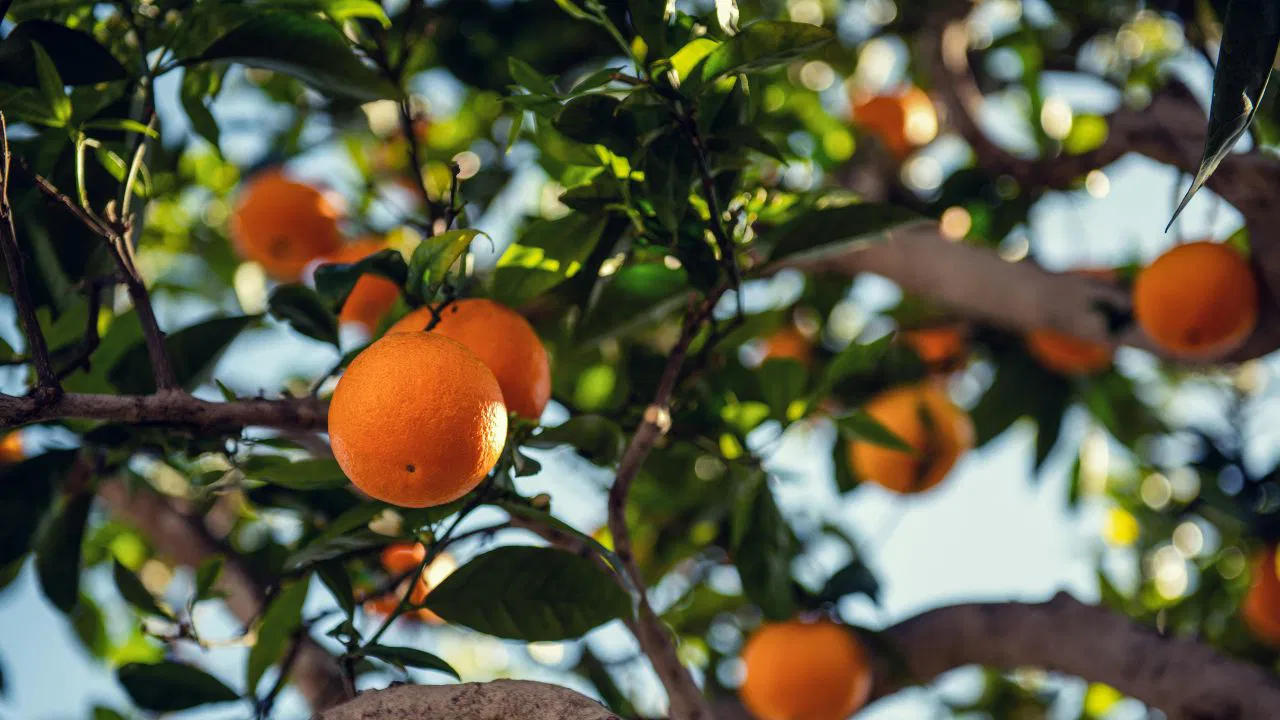
Coorg oranges are vulnerable to pest and disease infestations, such as citrus greening, fruit rot, and the damaging effects of citrus psyllids, which degrade fruit quality. (Image Credit- Pexels)
Coorg oranges, a distinctive variety of citrus fruit, are believed to be a man-made hybrid of mandarins (Citrus reticulata). With their greenish-yellow color, tight skin, and sweet-sour taste, these oranges are a significant part of the agricultural landscape in Coorg, Karnataka, India. Historically cultivated in the region, they have played a vital role in local culture, cuisine, and economic development. Although their production has declined over the years, efforts to preserve this unique citrus variety continue through Geographical Indication (GI) recognition and conservation initiatives.
Significance of Coorg Oranges
Coorg oranges hold deep cultural, economic, and ecological significance, symbolizing prosperity and tradition in the Kodava community. Historically cultivated for centuries, they play a vital role in local cuisine, festivals, and agricultural heritage. Economically, these oranges were once a major cash crop, sustaining local farmers and fueling agribusiness, while also contributing to Coorg’s eco-tourism appeal.
Known for their unique sweet-sour taste, Coorg oranges stand apart from conventional varieties with their resilient greenish-yellow skin and rich natural oils, which enhance their aromatic flavor and make them an integral part of the region’s biodiversity.
Coorg Oranges Cultivation
The cultivation of Coorg oranges requires a specific climate and soil conditions, making Coorg’s Western Ghats region an ideal environment for their growth. Their farming involves careful propagation, maintenance, and harvesting techniques.
Soil and Climate Requirements
Prefer well-drained loamy soil with adequate organic matter.
Thrive in the moderate temperatures and high humidity of Coorg.
Rainfall between 1,500 to 2,500 mm annually is ideal for their growth.
Propagation Methods
Primarily propagated through grafting, ensuring genetic consistency and quality.
Requires regular pruning to maintain productivity.
Proper spacing and irrigation enhance yield and fruit quality.
Harvesting Season
The oranges mature between November and January, marking the harvest period.
Farmers pick fruits when they are firm, full-sized, and greenish-yellow.
Post-harvest handling is crucial to maintain freshness and prevent spoilage.
Challenges
Coorg oranges, once historically significant, now face several challenges threatening their continued cultivation. The shift towards coffee plantations over the years has led to a decline in orange orchards, and poor maintenance practices have further reduced fruit yields.
Additionally, these oranges are vulnerable to pest and disease infestations, such as citrus greening, fruit rot, and the damaging effects of citrus psyllids, which degrade fruit quality. Climate change also plays a role, with erratic rainfall patterns disrupting the growth cycle and rising temperatures affecting flowering and fruit development.
On top of these environmental and agricultural issues, orange farmers also struggle with market and economic difficulties, including a lack of support, incentives, and increasing competition from other citrus varieties that impact demand.
Coorg oranges are not just a fruit—they are a symbol of Coorg’s rich agricultural heritage. Despite challenges such as declining production and pest issues, the GI recognition provides hope for revival. Their distinct flavor, nutritional benefits, and historical significance make them an essential part of Coorg’s identity. Conservation efforts and renewed interest in traditional farming practices may help ensure the survival of this remarkable citrus variety.
First published on: 03 May 2025, 17:28 IST
source: http://www.krishijagran.com / Krishi Jagran / Home> Agripedia / by Kirti Narwal / May 11th, 2025
A recent study by the Nature Conservation Foundation, in collaboration with owners and managers of agroforests in Hassan and Chikkamagaluru districts, demonstrates the potential of coffee agrosystems as refuge for biodiversity.
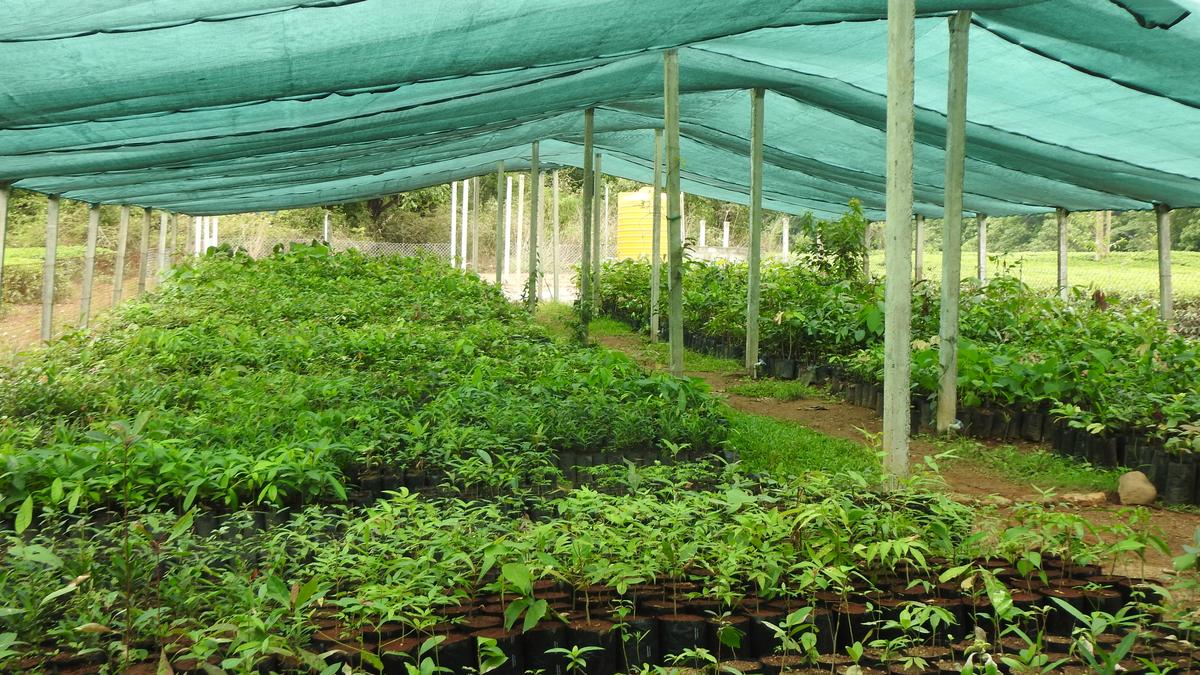
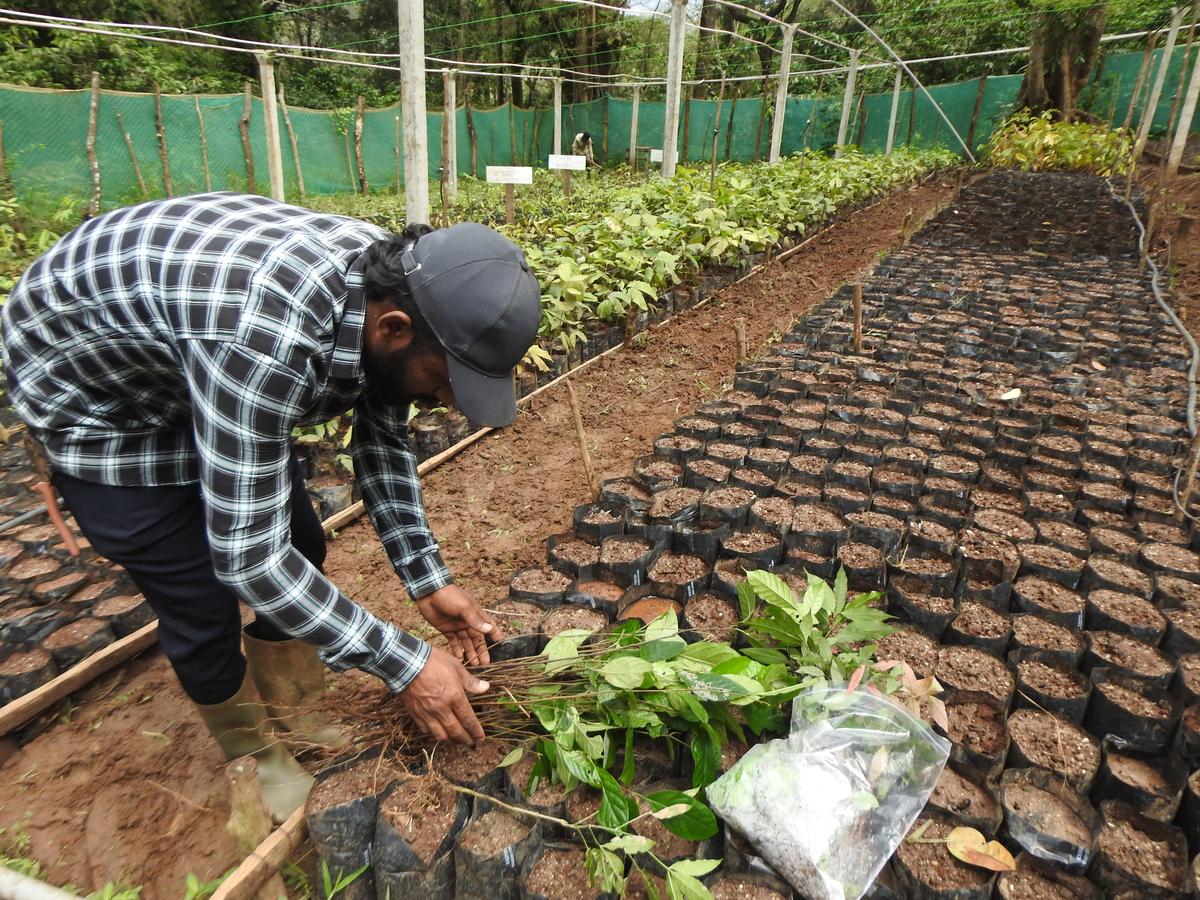
A restoration nursery in the Western Ghats, India. | Photo Credit: Vijay Kumar
In 2019, when the Narmada Estate, a coffee plantation in Karnataka’s Chikkamagaluru district, decided to go organic, it began diversifying the coffee-cropping system to reduce pests. “The reason something becomes a pest is because you have too much of the same thing,” explains Sohan Shetty, the estate’s general manager. “So, we needed to plant as many trees as possible.”
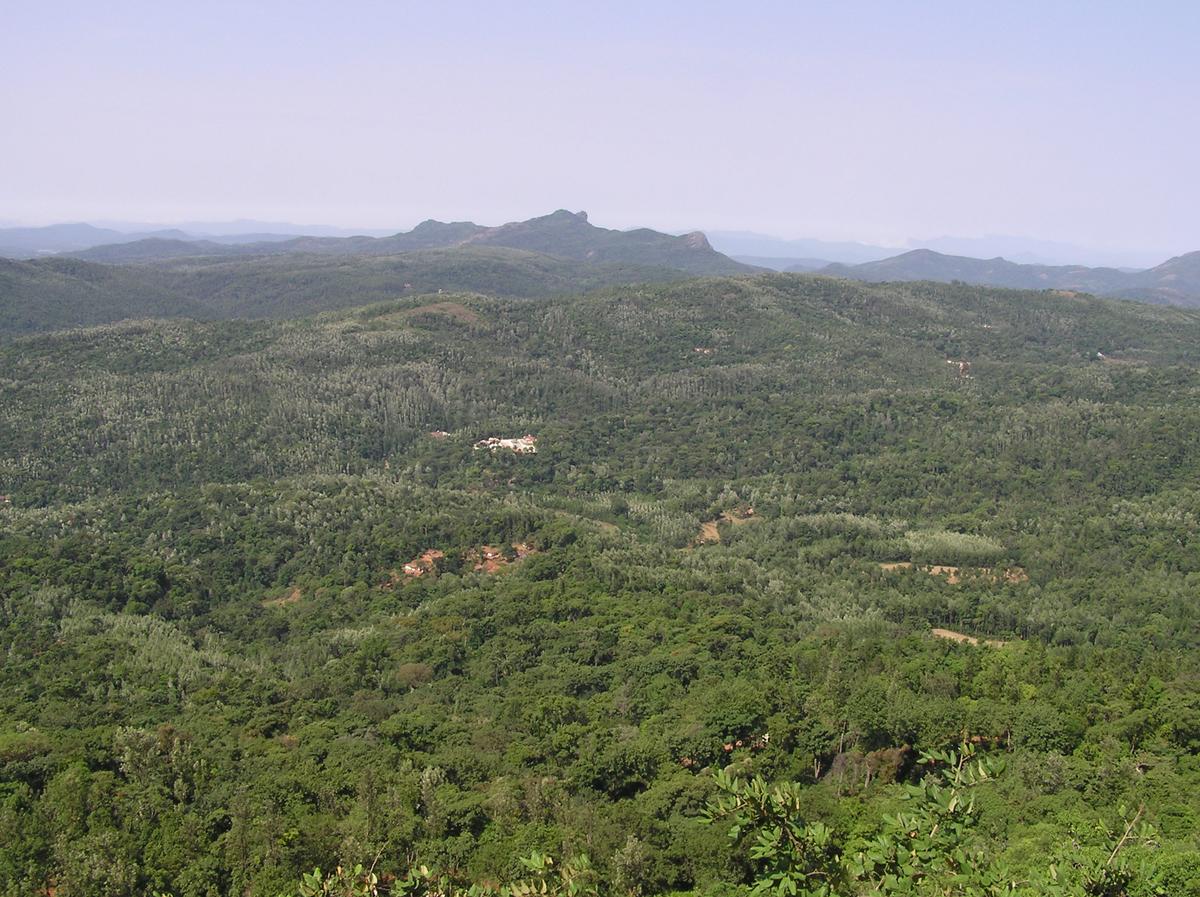
Shade coffee agroforests and pockets of remnant natural forest form a dense and continuous tree canopy in the Chikmagalur region of the Western Ghats, India. | Photo Credit: Anand Osuri
To find suitable plants to grow alongside organic coffee, he began scouting for the best-priced plant sources, including the Karnataka Forest Department’s nurseries and seed suppliers in Chikkaballapur. During his search, Shetty discovered that the Nature Conservation Foundation (NCF) had been actively restoring rainforests in Valparai, Tamil Nadu, for years, and so he reached out to them. “They were amazed at the scale with which I was thinking of starting nurseries and asked me what species I was working on.” So he shared with them the list of trees and seeds available with both the Forest Department and the seed supplier. “The botanist looked at it and said, a week later, that only three of these species are native to the Western Ghats,” he says. “That shook me. I realised that we are just planting trees for the sake of planting trees, but we are completely messing up the ecosystem.”
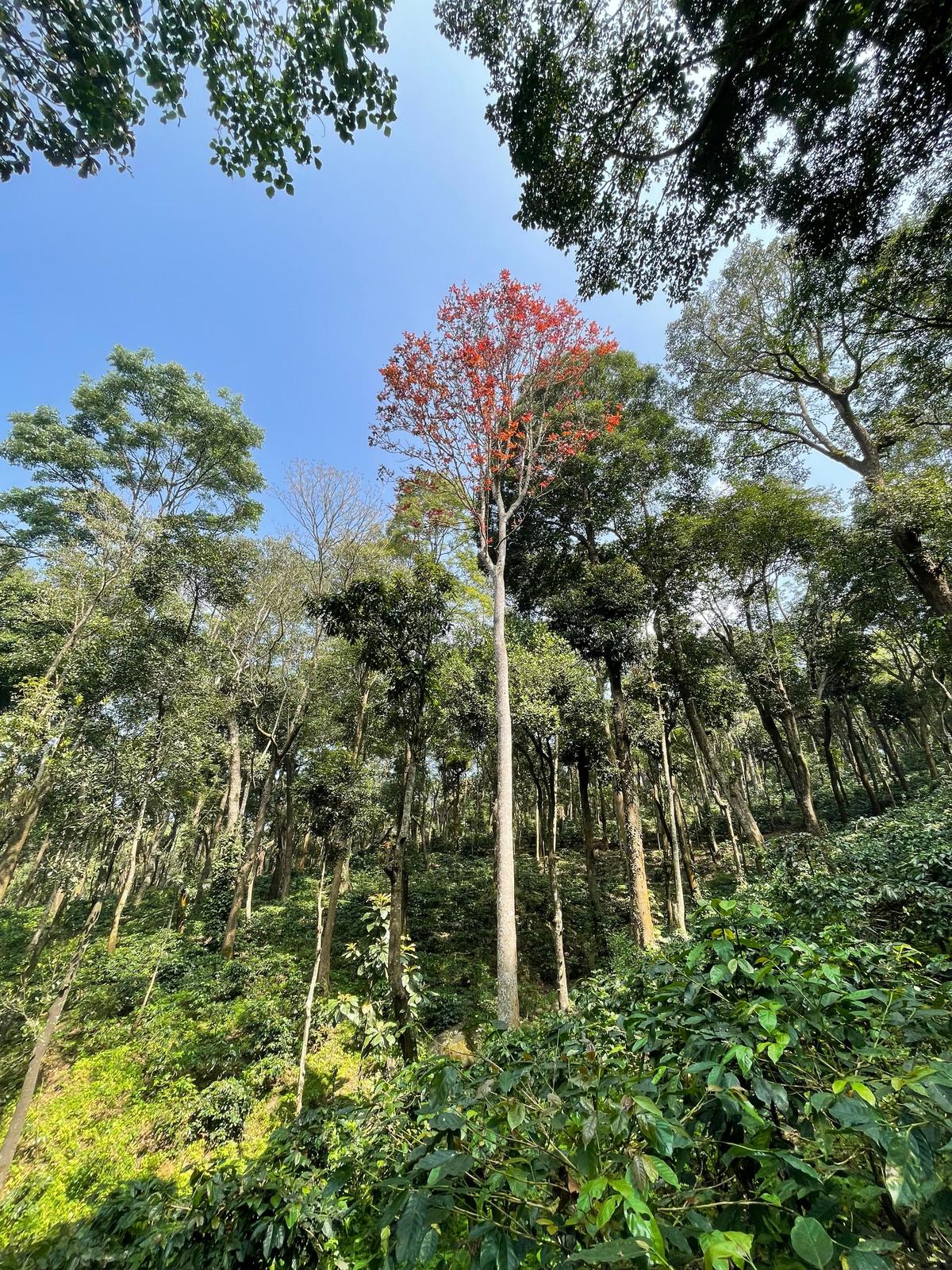
Shade trees in coffee agroforests can comprise a variety of species that are native to forests of the region. The species with fresh red leaves at the center of the image is Canarium strictum, which produces fleshy fruits that attract birds and a resin that is culturally and economically important. | Photo Credit: Vijay Karthick
In search of a better solution, he soon found himself visiting a nursery run by NCF on land allocated by the Kadamane Estates Company in Sakleshpur taluk, Hassan district, which had been set up in 2022. “It was quite impressive, 5000-odd plants of different varieties,” remembers Shetty, who, on seeing this, thought it would be a good idea to further collaborate with NCF. “By that time, I had set up a nursery with 1.2 lakh bags, which could accommodate that many saplings,” he says. “So, I told them that I was happy to grow plants for you. That is how the whole partnership began,” recalls Shetty, who, along with other owners and managers of agroforests in Hassan and Chikkamagaluru districts, was part of a study spearheaded by conservation scientists from the NCF titled Shade coffee agroforests as native plant sources for restoration.
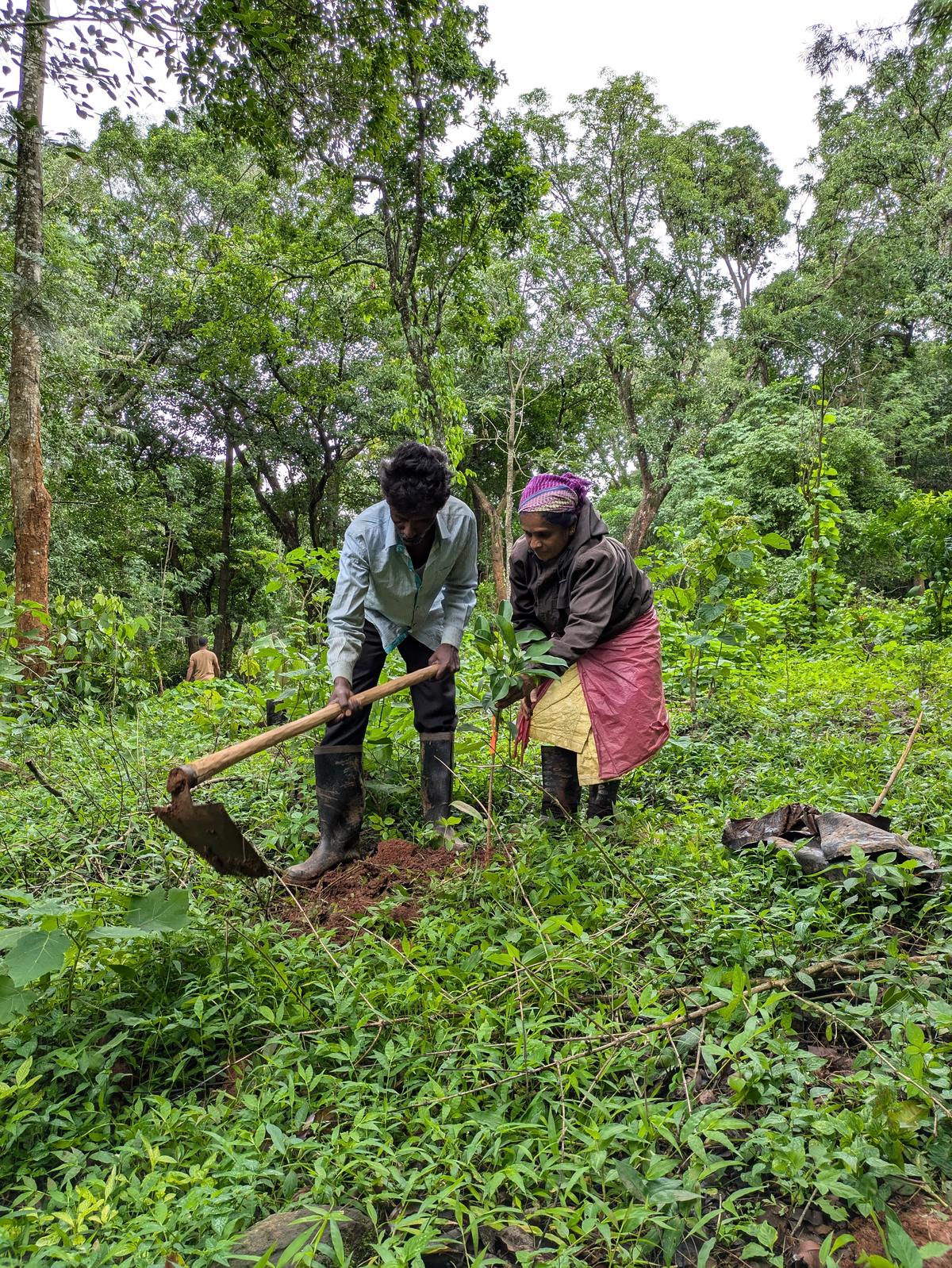
Planting trees as part of ecological restoration in a degraded forest in the Western Ghats, India. | Photo Credit: Vijay Kumar
Seed Harvesting
According to Anand Osuri, a scientist with NCF and the paper’s lead author, the study, which has just been published in the Journal of Applied Ecology, really took off in 2023. A year earlier, Vedika Dutta, also a co-author, had come to Osuri as a master’s student, wanting to study birds in coffee agroforests, with a focus on frugivorous or fruit-eating birds. “In the course of her work, we spent time in coffee estates, watching birds and the trees in which they foraged in these coffee plantations,” he says, adding that they were struck by the large numbers and wide variety of native tree seeds and seedlings on the coffee estate floor. “These seeds and seedlings were not just of the trees fruiting overhead, but also other species carried in from further afar by seed-dispersing birds and mammals.”
Around the same time, NCF was also thinking about a forest restoration project in the coffee-growing landscape of the hilly Malnad region by partnering with local residents and landowners. According to him, these landowners had different motivations to restore forests, ranging from an interest in conservation to entering carbon and biodiversity markets or attracting birds to their homestays. “There are a number of opportunities where interested landowners are keen to restore forests in areas where coffee is not being cultivated,” says Osuri, who has been participating in efforts to restore forests for nearly a decade and believes that the availability of diverse native plants, sourced locally and ethically, is critical to do so. “So, there was this restoration project that we were trying to develop, for which we needed to develop native plant nurseries, and the bird work was also going on.”
As part of the restoration project, researchers from NCF needed to collect seeds and seedlings that could be raised in nurseries. But “we didn’t want to be collecting lots of seeds from the forests themselves because that reduces the seed availability there, impacting the resources of animals, birds and insects,” says Osuri. “And so, we put both these pieces together to see if we could do more to harness the potential of coffee farms as a source of seeds for restoration.”
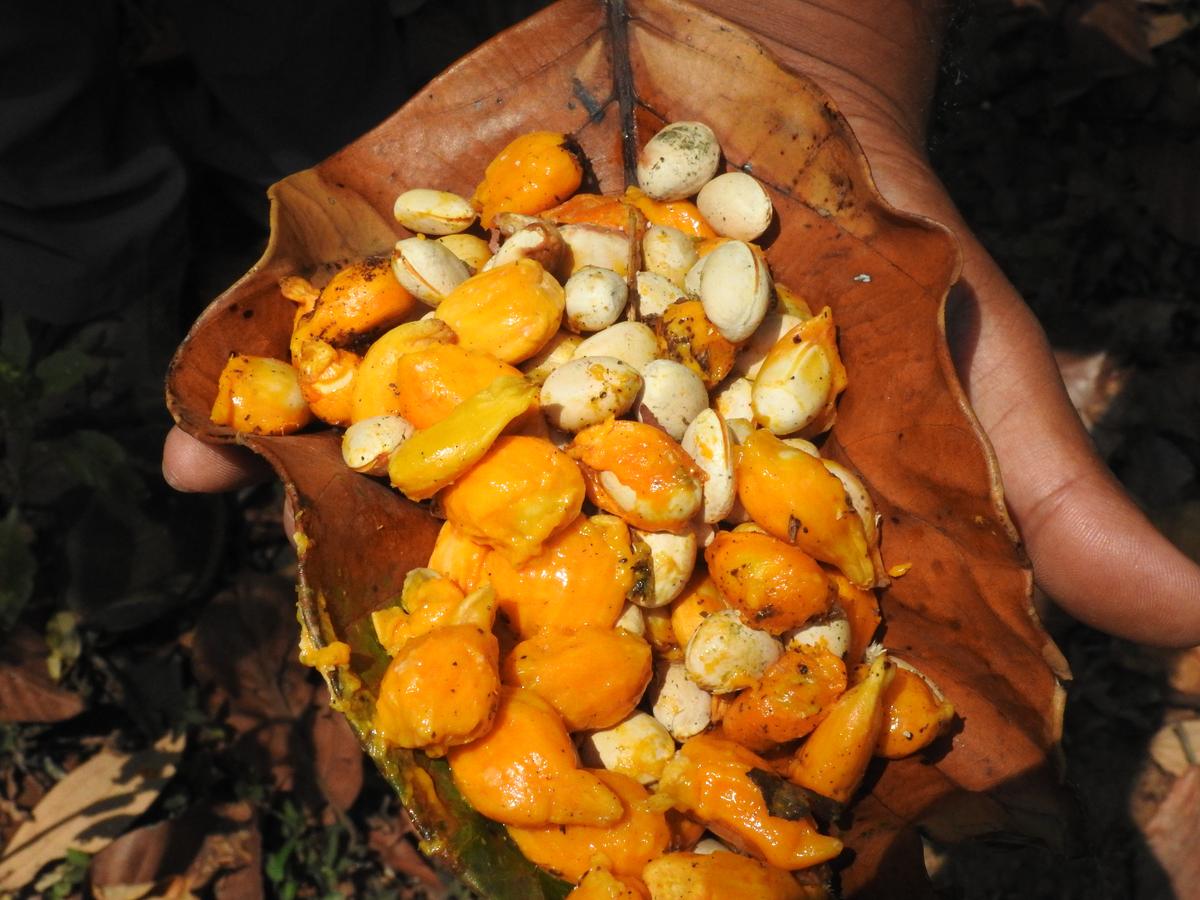
Seeds of Artocarpus hirsutus – a species that is endemic to the Western Ghats (found nowhere else on Earth) – during rescue from a coffee agroforest to a restoration nursery. | Photo Credit: Vedika Dutta
Why coffee
Coffee in India is largely shade-grown, making coffee plantations a potential “refuge for biodiversity,” says Osuri. “For a substantial set of native species important for restoration, we often find adults of those trees in the coffee estates.” However, most seeds that fall and germinate in coffee estates are weeded out because of the possibility of them competing with the coffee bushes for light and other resources, representing a loss for biodiversity conservation. “So, we thought we should make a more systematic effort to rescue their seeds and seedlings before they get weeded out
As part of the study, the team documented the diversity of native tree species found within the coffee estates, recording over 90 native tree species relevant for forest restoration in the region. Clarifying that the word “native”, in this instance, refers to “that particular eco-region of the Western Ghats, the wet evergreen rainforests” and not just plants “native to India,” he says that they were particularly interested in documenting species not only those native to the Western Ghats but also endemic to the region, those “found nowhere else on earth and some of which are classified by the IUCN as being threatened.”
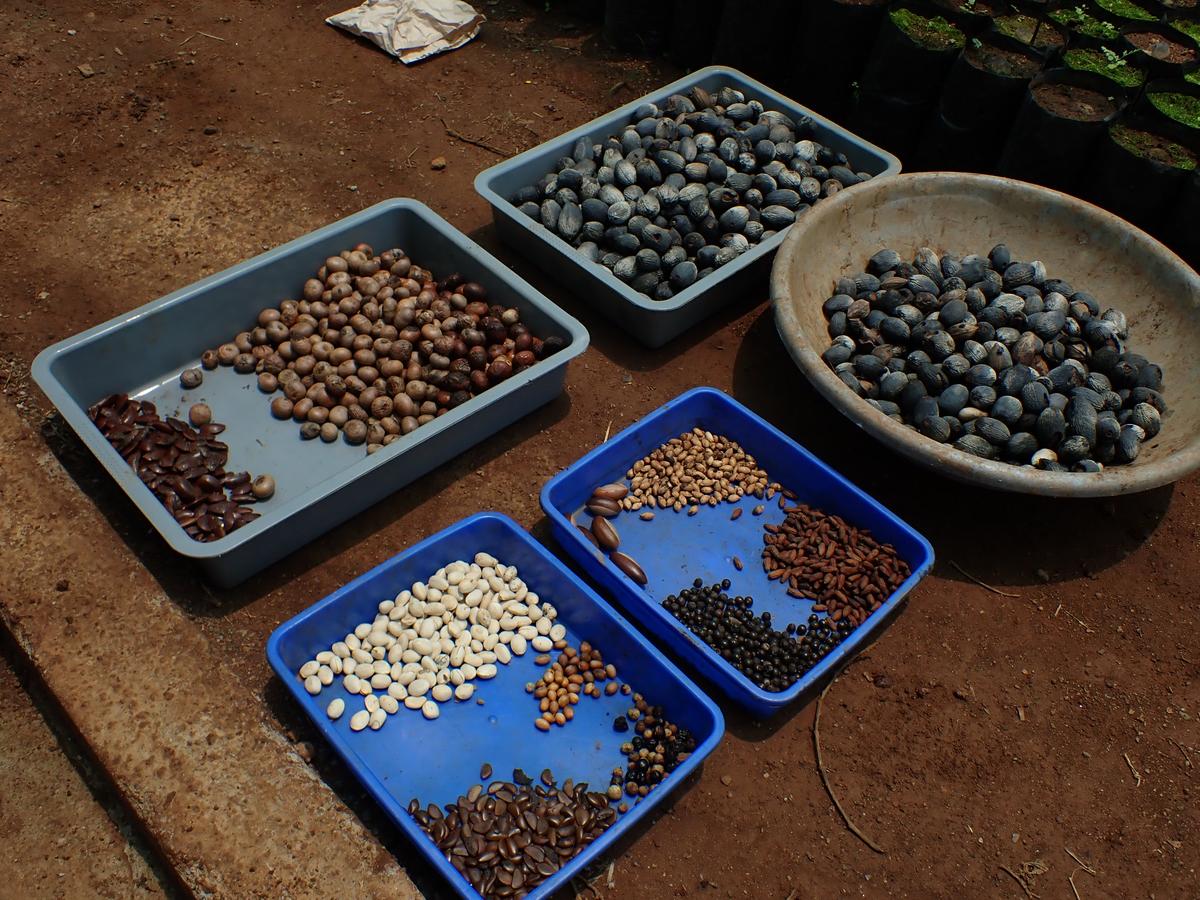
Seeds of multiple native tree species rescued from coffee agroforests prior to sowing at a restoration nursery. | Photo Credit: Vijay Kumar
The NCF team also connected with farmers who were “willing to give us permission to visit their farms, collect seeds, and also, in the monsoon season, collect small seedlings which were growing along the roadside.” Between 2023 and 2024, around 18,000 seeds and seedlings of 56 native tree species were rescued and are currently being raised in the two restoration nurseries established through collaborations between NCF and agroforest owners. “We are trying to encourage and enable people to take up such projects to plant the right native species in the right places.”
Currently, the restoration project is in a pilot stage with the NCF team focusing on two collaborative initiatives: expanding the network of seed source coffee farms and developing more native plant nurseries. “The idea we are proposing is that we should not just view coffee agroforests as refuges for biodiversity, but also acknowledge their potential to contribute to conservation in the wider landscape by being a source of native plants for restoration.”
Seedlings of multiple native tree species rescued from coffee agroforests prior to replanting at a restoration nursery. | Photo Credit: Vijay Kumar
Future potential
In Osuri’s opinion, more collaborations and experimentation are now needed. “A few more things will need to be worked out before one can talk about substantially scaling up, since, at the moment, one of the limiting factors is nursery resources,” he says. One potential partner, who can play a key role in expansion, he believes, is the Karnataka Forest Department. “We plan to discuss our findings with department officers to see if there is a workable model for this,” he says. “If we can develop models for connecting seed sources in coffee farms with nurseries of the forest department, then the scale and potential really go up because the department already has an excellent network of nurseries.”
Osuri also hopes to strengthen and scale up their efforts in the Malenadu region, since nearly 70% of India’s coffee production comes from the Malenadu region, mainly from the Baba Budan Hills in Chikkamagaluru to Kodagu in the south. ”This is also an important region for biodiversity conservation and restoration,” he says. His long-term goal is to continue to explore opportunities and collaborate with coffee farmers and landowners for restoration, experiment with different approaches to restoration, and contribute in any other way he can to biodiversity in the region, he says.“And we would love to connect and exchange learnings with others interested in exploring similar models in different landscapes.”
source: http://www.thehindu.com / The Hindu / Home> News> Cities> Bengaluru / by Preeti Zachariah / May 05th, 2025
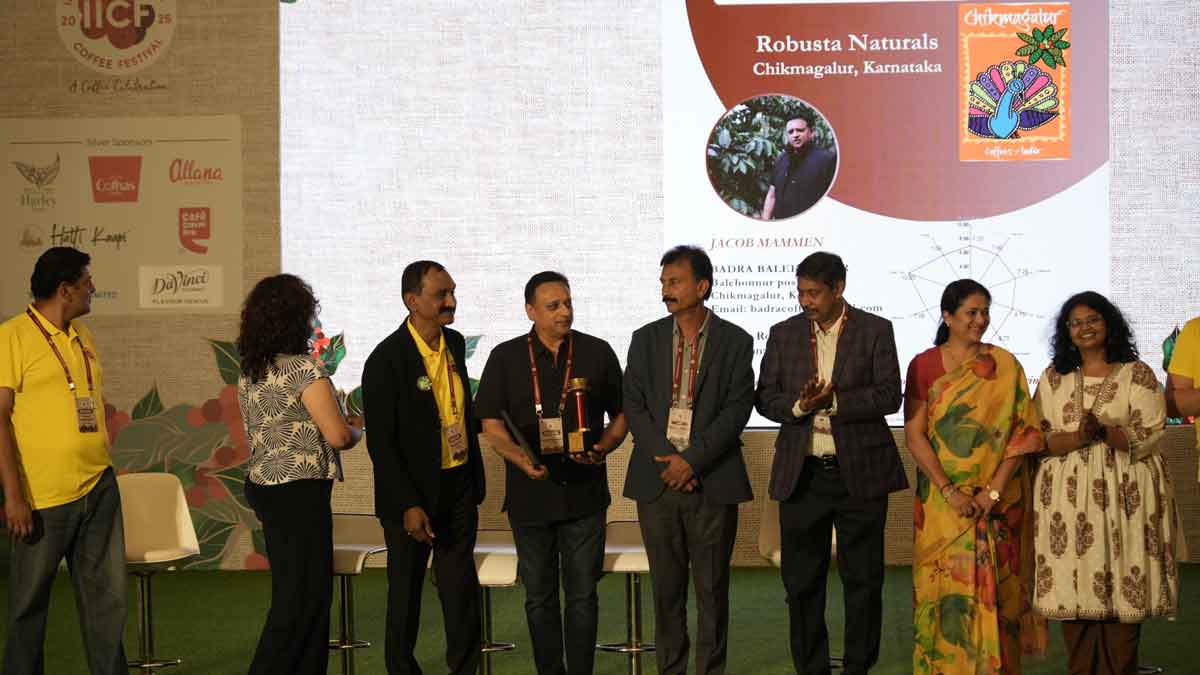
The award categories saw participation from different planters from all over the country. Badra Coffee also secured a second place in the ‘Robusta Washed’ category.
pix
Bengaluru-headquartered Badra Coffee has won the Flavour of India Fine Cup Award for Best Robusta Naturals from the Coffee Board of India. There were seven categories in Flavour of India and the company won the award in the Robusta Naturals category. The company also secured second place in the Robusta Washed category.
The award categories saw participation from different planters from all over the country who had submitted their coffee samples. These samples were tasted by Q graders and coffee professionals. The award was received by Jacob Mammen, managing director of Badra Estates.
Badra Coffee mainly sells to niche coffee roasters in Japan, South Korea, Thailand, Malaysia, Germany, Italy, the UK, Norway, Greece and the US and has launched four blends for the retail market. Three of them, Temple Mountain (Arabica), Misty Heights (single estate) and Kaapi Nirvana (filter), are pure coffees, while Dakshin Fusion is a filter coffee with chicory.
Badra Coffee has estates in Chikkamagaluru Karnataka. Mammen’s great-grandfather bought the estate from Brooke Bond Ltd. Three generations of the family have run Badra Estates and Industries Ltd, which was formed in 1943.
Mammen, a true believer in developing speciality coffee, has worked with reputable international buyers to improve the quality of Badra Coffee. “We call it relationship coffees,” he had told THE WEEK. “We interact with our buyers to understand their requirements of different flavour profiles, and then work on developing coffees that specifically suit them,” Mammen added.
Special attention is also given to manufacturing, which involves washed, semi-washed, and unwashed processes. The company has done different trials in fermentation and has been working with a German buyer who collaborates with the German government.
During the harvest, scientists from Germany visit the farm. They collect samples after many trials. The samples are then taken to their labs in Berlin where they isolate the beneficial microbes prevalent on different estates. These microbes are then used to tweak fermentation and produce a basket of flavours.
source: http://www.theweek.in / The Week / Home> Magazine> News> Business / by Abhinav Singh / April 28th, 2025
Chenanda to host 26th edition of Family Hockey Tournament at Napoklu in 2026
Madikeri:
The Mandepanda family was declared the winner of the Muddanda Hockey Festival 2025 held at Field Marshal K.M. Cariappa College Grounds, Madikeri, after heavy rain interrupted their final against the Chendanda family yesterday.
Mandepanda was leading 1-0 when a downpour forced the match to be abandoned just over 12 minutes into play. Later, the organisers issued a statement confirming Mandepanda as the champions of the Silver Jubilee edition of the Kodava Family Hockey Festival.
Amidst overcast skies and thunderous cheers from the crowd, the much-anticipated final had begun with high energy. Chendanda earned the first penalty corner early on, but Olympian Nikin Thimmaiah failed to convert the opportunity.
Mandepanda responded with sharp counterattacks, securing their first penalty corner, which Gautam successfully converted to give Mandepanda a crucial 1-0 lead in the first quarter.
Rain began to intensify during the second quarter as Chendanda pushed hard for an equaliser. Despite earning back-to-back penalty corners, they failed to break through Mandepanda’s defence. As lightning flashed and thunder rolled, torrential rain forced a suspension of play.
Relentless downpour left the field waterlogged. After about half an hour of efforts to clear the standing water, the match briefly resumed. Chendanda came close to scoring, but Mandepanda’s young goalkeeper Dhyan Bopanna made a brilliant save to preserve his team’s lead.
Moments later, the rain returned with greater intensity, turning the ground into a virtual stream. With further play impossible, officials from the Kodava Hockey Academy, referees and team managers declared Mandepanda the winners.
Despite being soaked twice over, the spirit of the crowd remained unbroken. Spectators packed into gallery corners, cheering, clapping and even dancing in the rain. However, disappointment lingered among fans and organisers alike, as many had hoped for a full and thrilling conclusion to the Silver Jubilee tournament. Earlier, in the third-place match, Nellamakkada defeated Kuppanda (Kaikeri) 2-1 to claim third spot.
The Kambiranda family that won the Muddanda Cup Women’s Hockey Festival 2025.
VIP speeches delay action
The final was marred by significant delays and drew heavy criticism from spectators. Many expressed frustration over poor planning and coordination, blaming the organisers for nearly four-hour delay in starting the final.
Originally scheduled to begin at 11 am, the final was postponed due to an extended inaugural ceremony where several Ministers and elected representatives delivered prolonged speeches, pushing the start time to around 2 pm.
Home Minister Dr. Parameshwara addressing the gathering.
Mere minutes after play commenced, heavy rain lashed Madikeri, leading to the abandonment of the match. “When a match is scheduled for 11 am, starting it at 2.30 pm is simply unacceptable — especially with rain forecasts and spectators waiting, hungry and eager, to watch the finals,” many said.
“Are we here to watch hockey or to listen to endless speeches?” one frustrated fan remarked. Spectators further noted that in professional tournaments, VIPs attend to witness the sport, not to hold the mic and deliver lengthy lectures, disregarding the value of spectators’ time.
Among the speakers were Home Minister Dr. G. Parameshwara, Urban Development Minister Byrathi Suresh, Higher Education Minister Dr. M.C. Sudhakar, Health Minister Dinesh Gundu Rao, Mysuru-Kodagu MP Yaduveer Krishnadatta Chamaraja Wadiyar, Virajpet MLA and CM’s Legal Advisor Ajjikuttira S. Ponnanna, Madikeri MLA Dr. Mantar Gowda, MLC Mandepanda Suja Kushalappa, Kodava Hockey Academy President Pandanda Bopanna and Muddanda Hockey Festival Committee President Muddanda Rashin Subbaiah.
Just minutes after the final match between the Mandepanda and Chendanda began, heavy rains lashed Madikeri, leading to waterlogged grounds.
World Wide Book of Records recognition
The Silver Jubilee Muddanda Cup set a new record with 396 men’s teams comprising 5,544 players competing in 397 matches, alongside 58 women’s teams with 464 players competing in 57 matches during the five-a-side tournament.
The festival was officially entered into the World Wide Book of Records, with Sindhuja, a representative from the record book, announcing the recognition at the closing ceremony and presenting the certificate to the Muddanda family.
The 26th Kodava Family Hockey Festival will be hosted by Chenanda family at Napoklu in 2026. The family ceremoniously accepted leadership during a flag procession held on the Muddanda Cup Grounds.
source: http://www.starofmysore.com / Star of Mysore / Home> News> Sports / April 28th, 2025
Bengaluru travel and hospitality companies have shifted itineraries to accommodate the holiday rush.
A Jayanagar-based travel company has switched from tempo travellers to mini buses to meet the high demand for trips within Karnataka this long weekend. Credit: MuddieTrails
With the Labour Day holiday falling on a Thursday (May 1), Bengalureans are turning the mid-week break into a long weekend by taking Friday off from work. Some are heading out on treks and road trips across Karnataka, while others are flying to destinations in other states or even abroad.
Harshitha Karunakar is off on a four-day vacation to Sri Lanka starting Thursday. She admits their schedule is “a bit packed for an international trip”, but the timing worked well for her family — her mother, a schoolteacher, is on summer break, and her retired father is free to join. “I applied for leave a month ago,” said the content writer. Their itinerary includes Buddhist temples, colonial landmarks, beaches, and sites linked to the ‘Ramayana’.
Former communications professional Brian Ammanna and his friends are limiting their road trip to three days. They are returning Saturday to avoid Sunday traffic. They will explore eateries in Mysuru before heading to Kodagu to unwind. Since most stays in Kodagu were expensive due to the long weekend rush, they booked one near Madikere, half an hour away.
Product manager Bharat Vijay and his mother Uma Devi, a field engineer assistant, are using the flexibility of remote work to start their trip on Wednesday. They will backpack through Kodagu, trekking up the Tadiandamol peak, and visiting monasteries and coffee estates.
Advocate Shamanth Surendra has settled for a day trip. Along with his biker friends and cousins, he plans to ride up to the Mallappa Konda hill — on the Karnataka-Tamil Nadu-Andhra border — and the Bolumalai Fort in Tamil Nadu.
But some like IT professional Preeti K had to drop her family travel plans. She said most “decent hotels and resorts” in places like Kodagu, Kotagiri and Wayanad are either sold out or charging twice or more due to the long weekend demand.
‘Enquiries up by 2.5 times’
Travel and hospitality companies have shifted itineraries to accommodate the holiday rush. Muddie Trails, Jayanagar, saw enquiries more than double and responded by increasing their group trips to Ooty, Kodaikanal, and Munnar from one to three each. “One trip will start Thursday night,” said operations manager Shirky Sreemath.
Plan The Unplanned, Hulimavu, has scheduled two treks for May 1 — to Makali Durga and Kaiwara, both within 80 km of Bengaluru. As of Tuesday, each had 8-10 enquiries, mostly from 21-to-35-year-olds, but no confirmed bookings. “Long weekend plans are usually last-minute, so we are hopeful the slots will be filled by Wednesday,” said founder Jatin Munvar.
Chazing Sunsets, Chickpet, had sold 11 of 15 slots for a four-day jungle trail by Monday. “Mostly families with young children are booking. It becomes a short summer vacation for them,” said founder Rohit Kumar.
Nomadic’s hostel in Kodagu, which can accommodate 16 visitors, is fully booked. “Some guests have even opted to sleep on extra mattresses. We have had to decline more requests,” said founder Sandeep T K. And their D D Hills campsite in Tumakuru, which holds twice as many, has only a few tents left. “All these bookings are from Bengaluru,” he added.
Those seeking a long vacation had factored in the May 1 break well in advance. Sreemath’s company, for instance, had secured 50-60% of its bookings to Arunachal Pradesh as early as January, anticipating the holiday. Of these, 70% of travellers are from Bengaluru. “Booking early helps avoid expensive flights,” he explained.
source: http://www.deccanherald.com / Deccan Herald / Home> India> Karnataka> Bengaluru / by Barkha Kumari / April 30th, 2025
The IBNII Coorg, an eco-luxury nature resort renowned for its seamless blend of opulence and sustainability, has unveiled its newest crown jewels palatial new suites:
Two resplendent Presidential Suites and two exquisitely appointed Honeymoon Villa Suites, offering an elevated escape for travellers seeking privacy, comfort, and immersive nature experiences. Designed to provide an intimate retreat, these newly added suites seamlessly combine Luxury with the untouched beauty of Coorg’s landscapes, these sanctuaries of serenity promise discerning travellers an elevated sojourn where privacy, indulgence, and nature converge in perfect harmony.
Cradled within the resort’s majestic 125-acre expanse of unspoiled verdure, the Presidential Suites and Honeymoon Villa Suites stand as the epitome of refined indulgence and serene seclusion. These sanctuaries have been masterfully conceived to offer an unparalleled confluence of grandeur and tranquillity amidst nature’s untouched splendour.
Dr. Sherry Sebastian, Managing Director, The IBNII Coorg, said, “Luxury at IBNII is about creating meaningful experiences while staying true to our environment. These new suites embody that vision—where guests can indulge in comfort without compromising on sustainability.”
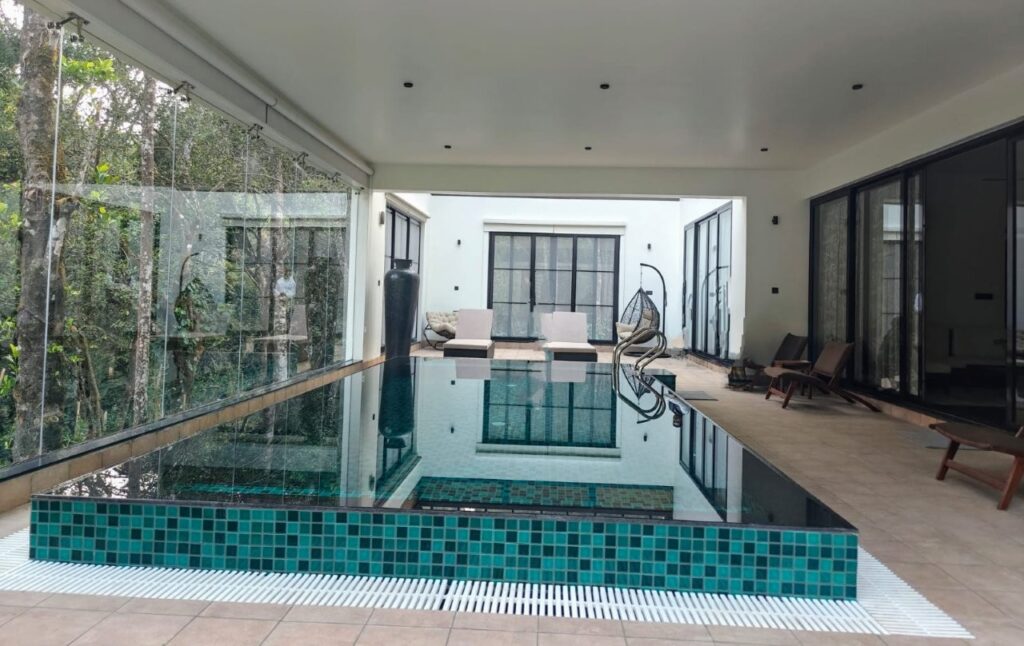
The two stately Presidential Suites, sprawling across an impressive 3,000 square feet, exude sophistication with their expansive dual-bedroom layout, each complemented by an opulent en-suite bath, a tastefully appointed living room, elegant bar counters, and a private indoor temperature-controlled swimming pool adorned with see-through glass walls that unveil panoramic views of the surrounding emerald foliage.
Exclusively designed for romantic interludes, the two Honeymoon Villa Suites span approximately 1,700 square feet and offer an intimate retreat with a lavishly proportioned bedroom, an indulgent en-suite bath, a plush living space, bespoke indoor massage beds, and a temperature-controlled swimming pool with an integrated jacuzzi — all encased within floor-to-ceiling glass walls that frame the poetic beauty of the forest beyond.
Each suite is a harmonious blend of artisanal craftsmanship and contemporary luxury, adorned with handcrafted wooden interiors, sweeping glass facades, and expansive private decks that dissolve the boundaries between the curated comforts of the indoors and the tranquil embrace of nature’s masterpiece.
Committed to sustainable hospitality, The IBNII Coorg has integrated eco-conscious practices into the design and construction of these suites. Locally sourced materials, energy-efficient systems, and minimal waste initiatives ensure that luxury coexists with responsibility.
Every detail of these suites is crafted to enhance the guest delight. From plush interiors reflecting the charm of Coorg’s natural surroundings to customised Wellness experiences, the new additions cater to travellers looking for a refined yet immersive stay. Guests can enjoy bespoke meal options prepared by IBNII’s chefs, personalised wellness therapies, and exclusive access to Ayurveda, yoga, and spa services for a truly rejuvenating escape.
As one of Coorg’s finest eco-luxury retreats, The IBNII Coorg continues to offer a perfect getaway for honeymooners, families, and discerning travellers. With an existing collection of 23 private pool villas, 12 wooden cottages, 8 Forest view cottages and a dedicated Aarogya wellness sanctuary spread over 60 acres, the resort remains a sought-after destination for those looking to reconnect with nature seeking Well – being to rediscover oneself and attain Self Realization steeped in 1.5 acres of Lush green clean air per person .
Located just 5.5 hours from Bangalore Airport and 2.5 hours from Mysuru railway station, The IBNII Coorg offers an unmatched blend of seclusion and accessibility.
source: http://www.kashmirvision.in / Kashmir Vision / Home> KV News / by Rayees Ahmed Kumar / October 11th, 2023
WELCOME. If you like what you see "SUBSCRIBE via EMAIL" to receive FREE regular UPDATES.
Read More »