Category Archives: Business & Economy

Coorg coffee to sail from Azhikkal port

Coffee exporters from Coorg are looking up to the newly-commissioned Azhikkal port to route their consignments as it offers savings in time and transportation costs.

“At present, we use Mangalore port for our exports, mainly to the European destinations,” said S.L.N. Vishwanath, the managing director of SVL Coffee Pvt Ltd, a major exporter from Kushal Nagar.

“Kannur port will help us cut costs as it is closer to the coffee-growing areas. We are also looking for easier transaction of business as the new port will be less congested, and hence we are keen on it,” he said.

Mr Vishwanath, along with ITC, exports 35,000 tonne of the total exports of 60,000 tonne from the region. “The port officials had contacted us with their proposal earlier and we had asked them to come back with solid proposals. If they can offer us better rates and efficiency of service, we will route our exports through Kannur.”

Kushal Nagar alone exports close to 4,000 containers of coffee and the major destinations are the European countries and the Gulf.

The exporters, however, demand that the port put in place infrastructure facilities such as electronic data interface which would facilitate seamless movement of cargo across ports.

Exporters in Kannur are also keen on the development as it would ensure that the port scale up its activities. The Kannur port, which the Central government had selected for development under the National Maritime Development Plan, received its first vessel on October 31 this year.

source: http://www.asianage.com / The Asian Age / Home> Business / by K.J.Jacob – Kochi / November 12th, 2014

Tap for information: Madikeri gets tourism kiosk

Mysuru :

If you are holidaying in Madikeri and want to know the must-see places or cuisine or its rich cultural fabric, just head to this touchscreen kiosk. All the information about the district is one tap away.

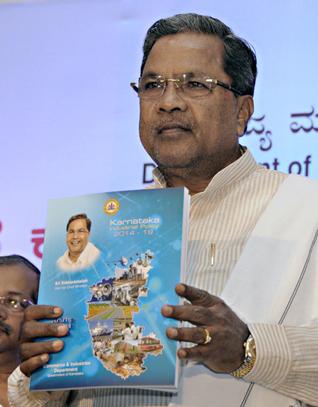
The kiosk, a near-replica of the official website, has information in English and Kannada in both text and video formats. Kodagu tourism department, the district administration and a Bangalore-based software company have developed the kiosk, which chief minister Siddaramaiah inaugurated at the newly built district office complex in Madikeri on Monday.

“Tourism department and the district administration should utilize IT resources to develop and boost tourism in this picturesque hill district,” the CM said.

Tourism department assistant director V Panish said the department has sent a proposal to the state government to extend this facility to all tourist destinations in Karnataka. “Using the kiosk, tourists can directly contact hotels, homestay facilities and other service providers,” he said.

The department also plans to set up Coorg House.

Tourism authorities claim that such facilities will bring a unique brand identity to Kodagu. “Information kiosk will guide tourists about the ongoing cultural events, history, coffee plantations, festivals and local cuisine.”

“The project aims to develop a fully operational web portal service in five phases in two years. Work is on to develop apps for cellphones, iPad and tablets covering all tourist destinations in Karnataka. The current Android mobile application focuses only on Kodagu. It allows users to contact home stay owners, local artists, resorts and tour operators. Using this app, tourists can also book hotels and tickets for various events,” Panish said.

Tourism department and the district administration will provide an enriched tourism experience to visitors. The web portal service will also create jobs for locals, he added.

The kiosk, a near-replica of the official website, has information in English and Kannada in both text and video formats. Tourism authorities claim that such facilities will bring a unique brand identity to Kodagu.

source: http://www.timesofindia.indiatimes.com / The Times of India / Home> City> Mysuru / by Maramkal Basavarajappa, TNN / November 08th, 2014

Union Forests Ministry approves Kushalnagar–Madikeri rail line survey

UnionForestsKF15nov2014
With this, Mysore–Madikeri project has taken a step forward

The Mysore–Madikeri railway line project has taken a step forward with the Ministry of Environment and Forests (MoEF) issuing clearance for the survey work between Kushalnagar and Madikeri.

Meeting
This was disclosed by Railway officials at the Divisional Railway Users’ Consultative Committee meeting here on Wednesday.

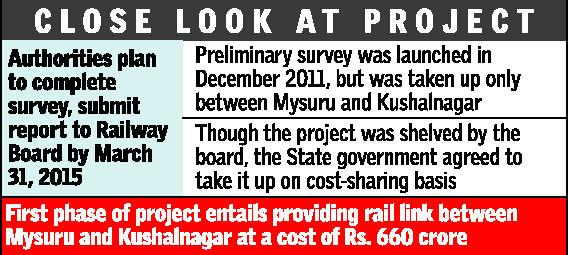
The environmental clearance was received last week and the authorities plan to complete the survey and submit the report to the Railway Board by March 31, 2015.

The preliminary engineering-cum-traffic survey for the railway line was launched in December 2011, but was taken up only between Mysuru and Kushalnagar and the partial survey report was submitted to the Railway Board. Though the project was shelved by the Railway Board on grounds of being commercially unviable, the State government has evinced interest in the project and has agreed to take it up on a cost-sharing basis, apart from providing land to the Railways.

The first phase of the project entails providing railway link between Mysuru and Kushalnagar at a cost of Rs. 660 crore. It will also connect Hunsur and Periyapatna.

Interestingly, the project was included in the Railway Budget 2010–11 under the ‘socially desirable rail connectivity’.

The first proposal for providing a rail link between Mysuru and Madikeri was mooted in 1881-82, according to the Mysore Gazetteer.

Another project

On the Shivamogga–Harihar railway line project, it was pointed out that the detailed survey for the new broad-gauge line had been completed. The 76-km project is expected to cost Rs. 832 crore and will be taken up on a cost-sharing basis between the Railways and the State government. Though the Railway authorities had sought 1,000 acres of land, it is yet to be acquired.

The work can commence, provided the State government hands over adequate land to take up the work on at least a 40-km stretch, according to the officials.

Divisional Railway Manager Rajkumar Lal, Senior Divisional Commercial Manager Anil Kumar, senior officials of different departments from the Railways, and stakeholders from various districts coming under the Mysore Railway Division were present.

source: http://www.thehindu.com / The Hindu / Home> News> National> Karnataka / by R. Krishna Kumar / Mysuru – November 06th, 2014

Best App in Asia award to Hyderabad entrepreneur

The Best App In Asia category of the digital winners 2014, Raghu Kanchustambham, explains about his application in Hyderabad on Wednesday. Photo: G. Ramakrishna / The Hindu

The app helps coffee growers to get instant returns for their produce. Livelihood 360 is also capable of estimating quantity of the produce in the fields and sell the crop at fair price.

The coffee farmers of Araku valley these days get instant returns for their produce. Gone are the days when they had to wait for nearly a month till the buyers completed the weighing process of the produce and release money through co-operative society. Thanks to a mobile application developed by Hyderabad-based entrepreneur, Raghu Kanchustambham, there is no waiting period.

The app dubbed as ‘Livelihood 360 (L360)’ was adjudged the Best App of Asia in the Telenor Digital Winners Conference, a global competition held in Oslo, Norway this month. The award came with a cash prize of Rs. 9,79,000, which will be utilised by the developer to further “scale up” the concept.

It all started when Mr. Raghu, who has a start-up ‘Concept Wave’, met the officials of Naandi Foundation, which was already working with the coffee farmers of Araku valley. “The basic premise was to utilise technology and reach to those people not having access to technology and internet. I visited Araku valley and spent time with them and learnt a lot about their lifestyle and livelihood,” he said.

Mr. Raghu said the previous system of remittance to coffee growers in Araku was taking about a month. The coffee growers would take their produce to a prescribed ‘adda’ where the truck drivers would collect and transport coffee beans to another location for weighing and valuing. “We gave the truck drivers an application that would quantify the yield and also determine the quality instantly. The drivers will immediately remit the amount on the spot to farmers,” he explained.

Livelihood 360 is also capable of estimating quantity of the produce in the fields and sell the crop at fair price. “We have already adopted this application among 12,000 coffee farmers in 650 villages of Araku. Between 40 and 50 truck drivers from Araku were given training on using the application on a feature phone and not a smart phone,” he explained.

source: http://www.thehindu.com / The Hindu / Home> News> Cities> Hyderabad / by M. Sai Gopal / Hyderabad – November 12th, 2014

Coffee in Coorg

Cottabetta Bungalow. Tata owns seven bungalows in Coorg, and every bungalow is set amidst a 1,000 acre plantation.

COTTABETTA BUNGALOW

SOUTH KODAGU, KARNATAKA

USP: Live the planter’s life

There is freshness in the crisp air caressing your face. Picture-postcard greenery fills your senses. Add to it a welcome shower. There is magic in Coorg, the coffee country.

SMELL THE BEANS At Cottabetta Bungalow. Photos: Special Arrangement

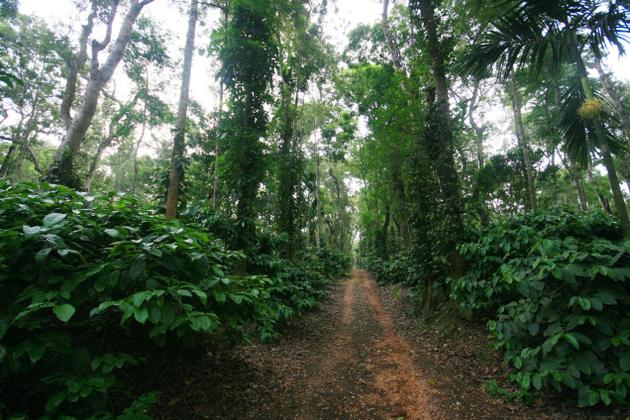
The escape to the Tata plantation coffee trails in Coorg during the monsoon turns out to be a bonanza. After a six-hour drive from Bangalore, past the Mysore Highway, Ranganathittu bird sanctuary, bamboo forests, cinnamon trees interspersed with teak trees on which pepper vines climb to great heights, and the ubiquitous coffee plantations, we reach Tata’s bungalow in Cottabetta (meaning cold mountain).

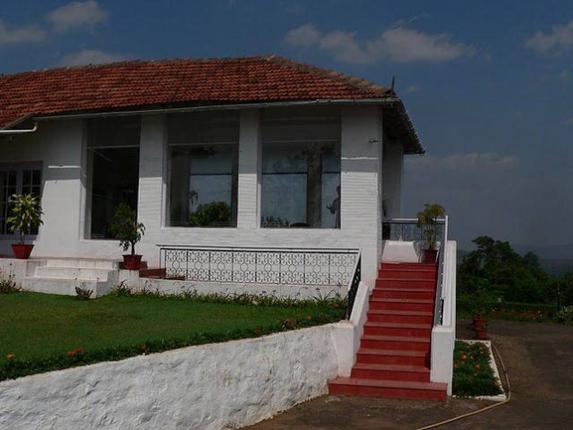
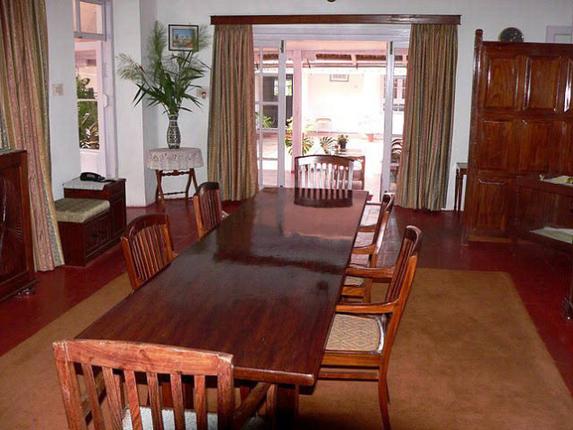
Tata owns seven bungalows in Coorg, and every bungalow is set amidst a 1,000 acre plantation. The three-bedroom and five-bedroom bungalows, occupied by the managers of Tata, have been converted into cottages, superior, luxury and heritage rooms and heritage suites. “The bungalows went vacant after the managers took VRS. As the butlers, cooks and gardeners continued working to maintain the bungalows, our management came up with the idea of homestays,” says K.C. Poovaiah, head of Plantation Trails, Tata Coffee.

Once occupied by British planters, the bungalows are more than 100 years old, but modified suitably for modern-day needs. Every bungalow is built on a higher elevation, overlooking the mountains and the plantations. Cottabetta is one of them. And, what a view! The majestic mountains open up — on the south is Kerala and to the North is Periyapatna, Kushal Nagar and the Madikeri hills.

Once occupied by British planters, the bungalows are more than 100 years old, but modified suitably for modern-day needs.

As you take in the picturesque landscape from the portico, a curved road amidst the Tithimathi forests catches your eye. “It is a part of the Mysore Road,” Poovaiah explains. “When the British planters used to drive down, they would dim and dip the headlights at this point to alert the cooks.”

I check into one of the luxury rooms — the decoration is minimal but it has the comfort of a home. However, the bathroom is lavish with a bath tub. And, there is a beautiful balcony to sit and soak in the silence.

Barbets, drongos, golden orioles, parakeets, red whiskered bulbuls, flower peckers and sunbirds flutter by and feast on the jamuns, guavas, chikkus, mangoes and gooseberries, the inter-crops supported by the plantations.

Our tour of the bungalows begin with Woshulli, known for the spectacular view it offers of the Durbeen (binoculars) Road snaking through the plantations. (Vishal Bhardwaj has shot here for his new film “Saat Khoon Maaf”, starring Neil Nitin Mukesh, Priyanka Chopra and John Abraham.)

At the manicured 25-acre, nine-hole golf course in Polibetta, it is monsoon magic again. As it buckets down, we take cover under the majestic ficus tree, watch the rain pour down in sheets and sprint back to the car.

Then, we set off to Surgi bungalow and the plantation trail at Taneerhulla and Woshulli plantations spread across a sprawling 1,340 acres. “We get tonnes of litchis every year,” says plantation guide M.K. Umesh, pointing to the giant litchi tree (planted by the British) at the bungalow.

Umesh peppers the trail with scary elephant stories, and we stop at intervals to touch and smell coffee beans, pepper and vanilla. The Robusta coffee bushes here are 130 years old. Back at the bungalow, biting into crisp, hot onion pakodas served by the courteous staff, sipping coffee and watching the mist-capped hills is just the perfect way to end a beautiful outing in the hills.

source: http://www.thehindu.com / The Hindu / Home> Features> Metroplus> Travel / by K. Jeshi / August 26th, 2010

MoEF gives clearance for Kushalnagar-Madikeri railway line survey

The Mysore-Madikeri railway line project has inched a step forward with the Ministry of Environment and Forests (MoEF) issuing clearance for the survey work between Kushalanagar and Madikeri.

This was disclosed by the railway officials at the Divisional level Rail Users Consultative Committee meeting on Wednesday. The environmental clearance was received last week and the authorities plan to complete the survey and submit the report to the Railway Board by March 31st, 2015.

The preliminary engineering-cum-traffic survey for the proposed railway line was launched in December 2011 but was taken up only between Mysore to Kushalnagar and the partial survey report was submitted to the Railway Board. Though the project was shelved by the Railway Board on grounds of commercial unviability, the State Government has evinced interest in the project and has agreed to take it up on a cost-sharing basis apart from providing land to the railways.

The first phase of the project entails providing railway link between Mysore and Kushanlagar at a cost of Rs.660 crore and would also connect Hunsur and Periyapatana.

Interestingly, the project was included in the Railway Budget 2010-11 under the socially desirable rail connectivity and the first proposal for providing a rail link between Mysore and Madikeri was mooted in 1881-82, according to the Mysore Gazetteer.

Divisional Railway Manager Mr. Rajkumar Lal, Senior Divisional Commercial Manager Mr.Anil Kumar, senior officials of different departments from the Railways, stakeholders from various districts coming under Mysore Railway Division were present.

source: http://www.thehindu.com / The Hindu / Home> News> National> Karnataka / by R. Krishna Kumar / Mysuru – November 05th, 2014

CM inaugurates new DC office complex at Madikeri

SiddaramaiahKF08nov2014

It has been constructed at a cost of Rs. 14.43 crore

Chief Minister Siddaramaiah on Monday promised the people of Kodagu that his government is committed to resolving their various issues.

Mr. Siddaramaiah was speaking after inaugurating the new Deputy Commissioner’s office complex constructed at a cost of Rs. 14.43 crore and laying the foundation stone for a slew of development projects, estimated to cost Rs. 32.39 crore.

The Chief Minister said that an action plan to clean the Cauvery river, which was increasingly being polluted, was in the offing. The action plan would be on the lines of Ganga Action Plan. He also assured the people that an overpass would be constructed at Bhagamandala to help people cross over during floods, which was a long-pending demand of local community.

Emphasising the importance of road connectivity, Mr. Siddaramaiah said, he would increase the allocation and grants for road repair work in the district. Referring to the controversy and lingering confusion over Jamma Bane land, Mr. Siddaramaiah said the government had amended the law and it would be enacted in due course.

On the man-elephant conflict, which is rampant in the region, the Chief Minister said the government had earmarked Rs. 212 crore in the budget for the purpose and would be utilised in areas where the conflict was high.

Referring to coffee growers’ problems, the Chief Minister said that the government had released compensation based on the Coffee Board’s report last year and would follow suit this year as well.

He referred to the Kasturirangan Report on Western Ghats conservation including Kodagu and other regions and said his government was committed to upholding the interests of local people.

The Chief Minister distributed benefits of various government programmes among the beneficiaries besides launching the virtual guide facility of the Tourism Department.

Review meeting
The Chief Minister conducted a district development review programme at the new complex and instructed the Revenue Department officials to issue Scheduled Tribe certificate to all Kurubas in Kodagu district. The government had already issued a directive to this effect and covers Jenu Kurubas, Betta Kurubas, Kadu Kurubas, Halumatha Kurubas, he said.

K.G. Bopaiah, Virajpet MLA, drew the attention of the Chief Minister to drinking water problem, power, housing and other related issues in the district. District in-charge Minister K.J. George, Revenue Minister V. Srinivas Prasad, PWD Minister H.C.Mahadevappa were among those present.

source: http://www.thehindu.com / The Hindu / Home> News> National> Karnataka / by Special Correspondent / Mysuru – November 04th, 2014

CM to open Dist. Adminstration Complex at Madikeri on Nov.3

MadikeriKF05nov2014
Madikeri :

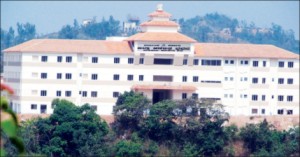
Chief Minister Siddharamaiah will inaugurate the new Kodagu District Administration Complex here on Nov. 3.

The CM will arrive from Bangalore by a helicopter and land at the Golf Ground Helipad, Madikeri at 12.25 pm, following which he will inaugurate the newly built District Administration complex constructed near the Gandhi Maidan at a cost of Rs. 14.45 crore. Several developmental programmes will be launched after which a progress review meeting will be held at 1.30 pm.

More than 20 government offices which were functioning from the Fort premises for decades, are all set to move to the new building.

The new structure is a 4 storeyed building (including the ground floor), featuring spacious rooms for functioning of the offices.

The Archaeology Department had served several notices to the District Administration, asking it to evacuate the government offices from the Fort premises. But as there were no alternate arrangement, the offices continued to function from the Fort premises.

Continued efforts by the District Administration and the people’s organisations have ultimately bore fruit with the new District Administration complex coming up at the sprawling 2.20 acre area of the central workshop at Gandhi Maidan in the town.

Once the location for the new structure was finalised, the State government released Rs. 3 crore in 2009. The construction contract was awarded to Bangalore-based Gadiraju construction company.

The District Administration complex, having a built up area of 90,000 sq.ft., facilitates vehicle parking and records store room in the ground floor.

The first-floor provides for housing 22 departments apart from separate rooms for the Lok Sabha MP and District in-Charge Minister.

The second-floor houses the Assistant Commissioner’s office and the office of the Sub-Divisional Magistrate.

The third-floor houses the DC office, the additional DC’s office, court hall and video conference hall.

Lift facility: The 4-storeyed building will have a lift facility for the benefit of public.

As students of St. Michael’s school, adjoining the District Administration complex, may find it difficult to walk freely on account of the heavy traffic density with most of the government offices all set to shift to the new complex, the authorities have taken up construction of a flyover running from the school to the Church, at a cost of about Rs. 10 lakh. MLC T. John has released Rs.10 lakh out of his Legislator’s fund for its construction.

In order to secure the building from natural disasters, the Karnataka Housing Board has sent a proposal of Rs.256 lakh to the government for construction of retaining wall at the eastern side of the building facing the Madikeri-Mangalore highway.

Experts feel that the construction of a retaining wall is vital from the geological point of view, for the protection of the structure from landslips, landslides etc.

The dreams of the people of Kodagu for a new complex has finally been realised with the new building all set for inauguration by the CM on Nov.3.

source: http://www.starofmysore.com / Star of Mysore / Home> General News / Friday, October 31st, 2014

A purposeless power-line via Kodagu to Kerala

‘A case of spending money to benefit contractor, bureaucracy and politicians’

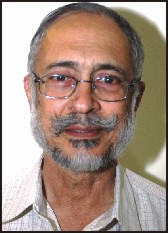
The following is the text of a talk delivered by Maj. Gen. S.G. Vombatkere (Retd.) at a meeting held at Kodava Samaja, Ponnampet, South Kodagu, on Tuesday, 21st Oct. 2014.
MajGenVombatkereKF02nov2014

by Maj. Gen. S.G. Vombatkere (Retd.)

Sri S. Gopal, dignitaries on the dais, Members of Kaveri Sene and Coorg Wildlife Society, and members of the august audience, I thank you for giving me this opportunity to say a few words about the 400 KV Double Circuit (D/C) HT line connecting Mysore with Kozhikode.

The 210-km 400 KV Double Circuit HT line connecting Mysore with Kozhikode is under construction by Power Grid Corporation of India Limited (PGCIL). It is said to be required to evacuate electric power generated by Kaiga Nuclear Power Station to supply North Kerala.

PGCIL claims that of 210-km, about 92-km in Kerala’s Wayanad District and about 63-km in Mysore District is completed, and 55-km through Kodagu District remains to be constructed. This “remaining” portion in Kodagu District is being opposed by the people of Kodagu, spearheaded by Kaveri Sene and Coorg Wildlife Society on grounds of environmental destruction that will adversely affect the Kaveri watershed which is the source of life-giving water to Karnataka and Tamil Nadu.

Also it will ruin coffee plantations due to tree-felling and intensify the human-animal conflict especially related to elephants, which is already claiming human lives in Kodagu. The objections of the Kodava people to this project are not new, but are several years old. I will speak on this issue and ask some questions concerning technical, environmental and governance matters.

Technical questions

Let us first examine whether this 400KV HT line is at all required. As on date, there are seven HT lines supplying power to Kerala, five from Tamil Nadu and two from Karnataka. These seven lines have a total capacity of 3,000 MW while the share of Kerala from the national grid is only 1,000 MW. Further, although the energy share of Kerala from the national grid is 9,350 Million Units (MU), Kerala is drawing about 11,350 MU from the existing seven HT lines. This shows that the existing seven HT lines are more than adequate for Kerala’s power needs from the national grid, and the proposed 400KV D/C HT line is not at all required.

Thus the question arises as to why PGCIL has constructed 155-km when the project is not necessary and also when the 55-km segment within Kodagu District is facing objections from the people of Kodagu. The environmental and social costs of the project have obviously not been taken into account.

Karnataka State officials have deposed before the National Green Tribunal (NGT), stating that the objections of Gram Sabhas are “belated,” “motivated” and are an “after-thought.” These statements are uncalled for, and show the dismissive attitude of officials towards simple people. The objections may be “belated” because village people did not get to know about the PGCIL project earlier. And if the village people are “motivated” in objecting to the project, their motivation is in preserving the environment which is a vital watershed for South India, saving their own coffee plantations which are their livelihood, and trying to mitigate the growing human-elephant conflicts. Thus, the question arises as to why our own officials have this attitude towards projects.

The 90-paise “disease”

The fact is that even though all officials are not corrupt, many officials are interested in getting large projects sanctioned and executed because a good portion of every rupee of public money spent does not go towards the project work but gets diverted into private pockets. When Rajiv Gandhi was the PM, he had estimated that 80-paise in the rupee went astray. Now, decades later 90-paise, possibly more, would be seen vanishing if an honest, transparent audit were to be made. When a project is estimated at Rs. X crores, X-crore 90-paise portions vanish. Some people indelicately refer to such standard practice as corruption. But if at least the project was a genuine requirement and was executed with quality and in time, one could still wink at the corrup… oops, sorry, the vanishing 90-paise. And this 400KV HT line is an unnecessary project as has been shown earlier.

Environment and Governance

The felling of trees in forest areas and in coffee plantations is harmful to the environment. PGCIL argues that felling a “mere” few thousand trees may not harm the environment. But this argument fails to address the cumulative effect of felling trees for different projects of roads, HT power lines, etc., in the Western Ghats which is an “eco-sensitive hot-spot” in India and even in the international context.

The Ministry of Environment, Forests and Wildlife (MoEFW) is busy giving clearances to any and every project and weakening the Environment Protection Act. When Article 48A of the Constitution reads, “The State shall endeavour to protect and improve the environment and to safeguard the forests and wildlife,” this attitude of MoEFW is condemnable.

The cumulative effect of this deforestation, especially in special regions like the Western Ghats and in particular Kodagu, is not at all a consideration for MoEFW, in the country’s mindless rush towards industrialisation at the cost of environmental destruction.

Kodagu District is special in two ways. One, its famed soldiers protect our country as a fundamental duty, in accordance with Article 51A(d), to defend the country. And two, its people are saving the source and vital watershed of Kaveri, and performing their fundamental constitutional duty “to protect and improve the natural environment including forests, lakes, rivers and wildlife” in accordance with Article 51A(g), doing what MoEFW should be doing but is actually doing the opposite. For all this, we all need to salute the people of Kodagu.

When the State, consisting of the Executive, the Legislative and the Judiciary, fails the People, the people have to resist and uphold the Constitution of India. In opposing this 400 KV Double Circuit HT line, we are performing our fundamental constitutional duty. Let us join together to do our duty!

Jai Hind!

source: http://www.starofmysore.com / Star of Mysore / Home> Feature Articles / Tuesday, October 28th, 2014
Coffee prices get a Brazilian boost

International coffee prices rose sharply this week, as fears resurfaced that Brazil’s crop could get adversely affected by a drought

A thin harvest may be bad news for Brazil but is good news for growers in other countries. Indian coffee producers are seeing firm crop trends in 2014-15. Photo: Bloomberg

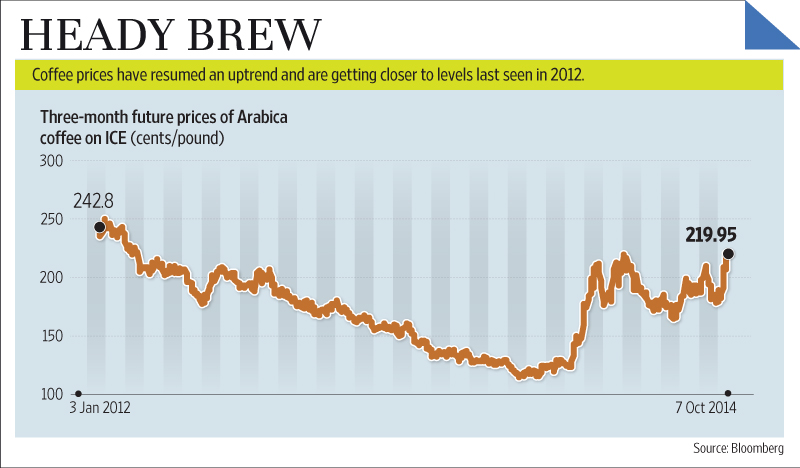
International coffee prices rose sharply this week, as fears resurfaced that Brazil’s crop could get adversely affected by a drought. This comes just a fortnight after Brazil’s agricultural organization Conab released its September estimate, which had assuaged market fears and even saw prices drop.

But on Monday, the three-month forward Arabica coffee contract rose by 9.2% intra-day, according to The Wall Street Journal, and closed the day with a gain of 6.9%. This marked a two-and-a-half-year high for this contract. On Tuesday, its level was unchanged. If the news on the weather from Brazil continues to support higher prices, then this uptrend could be sustained. But recent months have seen volatile price movements; so, there is risk of a reversal, too.

GraphKF15oct2014

The International Coffee Organization’s price data show the prices of all grades of Arabica coffee have moved up, in sync with Brazil. Though Brazil’s effect is felt more by the Arabica variety, even the lower Robusta grade has perked up in October. It has recovered losses sustained in September.

A thin harvest may be bad news for Brazil but is good news for growers in other countries. Indian coffee producers are seeing firm crop trends in 2014-15. The country’s coffee crop is estimated to increase by 13.2% to 344,750 tonnes. The Arabica crop is expected to increase by 3.2%, while Robusta, which is the main local crop, is expected to rise by 18.3%.

Thus, one can expect the plantation business of growers such as Tata Coffee Ltd and CCL Products India Ltd to post good results. But this uptrend poses a challenge for coffee marketers such as Nestlé India Ltd and Hindustan Unilever Ltd (HUL). Rising input costs will force them to hike prices, which can hurt volume growth.

source: http://www.livemint.com / Live Mint / Home> Money / by Ravi Ananthanarayanan / Tuesday – October 07th, 2014