Category Archives: Business & Economy

Tamara Coorg: Shruti Shibulal’s true calling

Shruti Shibulal, the daugher of Infosys co-founder SD Shibulal found her true calling at ‘Tamara Coorg’, away from the world of technology and consulting serivices, when she forayed into the hospitality world.

shrutishibulalKF25may2013
Shruti Shibulal – Does that surname ring a bell !!.

She is the daughter of Infosys co-founder SD Shibulal but has nothing to do with Infosys except a 0.6% stake in Infosys.

However, a job at Infosys was never an option because they had a clear policy to keep family members out of management.

That policy certainly turned out to be good for her because Shruti found her calling in a world far removed from technology and consulting services and into the world of hospitality.

She joined hands with well known chef Abhijit Saha and founded Avant Garde Hospitality which runs fine dining restaurants in Bangalore. She is now moving up the hospitality chain with Tamara, an eco-friendly luxury resort in the coffee plantation district of Coorg in Karnataka.

Shrutis’s 0.64 percent stake in Infosys technologies, the company her father co-founded is worth about Rs 900 crore today. 28 year old Shruti Shibulal is putting her money to work. Promoter of the recently launched luxury resort, the Tamara Coorg and daughter of Infosys co-founder and CEO SD Shibulal Shruti began her career with Merrill Lynch in the US in 2006.

However, she decided to head home and bite into the growing foods business and promoted Avant Garde Hospitality with one of India’s celebrated chefs Abhijit Saha. They gave Bangalore two premium restaurants Fava and Caperberry.

A few years down the road, Shruti felt the need to go back to school and after wrapping up at the Columbia Business School in 2012, she jumped right back into the hospitality world with Tamara Coorg.

Shruti Shibulal says it is something that you can really go in and make your own and it is exciting. “For me the challenge is one of the main drivers. I am passionate about this industry and I think it is a great time to be in it, she feels.

If you look at India the tourism industry, contributes Rs 1.7 trillion to the GDP. The industry provides more than 10 percent of the organized employment in the country, she adds.

She thinks hospitality is a great place to be in because one is able to contribute so much to the country and also that one is creating a social impact by creating employment. However, what is contradicting is that we only account for 0.64 percent of the world’s travellers coming into the country. So she feels there is scope to grow.

Tamara Coorg, built on a 170 acre functional coffee plantation takes up just 0.5 percent of the available space. It offers 30 luxury cottages and a multi-cuisine restaurant. It targets the international travellers who are not afraid to spend Rs 45,000 for a three night four days stay.

It is one of the few resorts built around the coffee plantation which allows the guests to brew the perfect cuppa.

Next on the menu for Tamara, is a spa block, a swimming pool, 26 more cottages and hopefully breaking even.

Shruti Shibulal says the occupancy levels are stabilizing. We are now getting to understand how operations work at different levels and are confident that with Phase II opening and our spa etc, we will be able to be very consistent in the kind of service that we guarantee for our guests. We expect to breakeven in about three to four years.

Moreover, she says, it takes time for a product like this unlike the restaurants to really establish and mature in any market. Ours is a new brand, with its pros and cons. We are not like any of the established brands in India.

Keeping all these pros and cons in mind, the team of 125 at the Tamara, look to tread slowly but surely. And as the second phase of expansion gains footing, Shruti is mindful of keeping the promise of luxury alive in all her offerings.

The ingredients used at Tamara’s restaurant are grown on-site and will now find shelf space at the Organic World, the brand’s first boutique store that will soon be launched in Bangalore.

Does this young entrepreneur use her entrepreneur dad as a sandwich board?

Answering that query, Shruti Shibulal says, we do not discuss a lot of our professional lives at the dinner table. We have a lot going on in each of our lives. We are very close family. “Of course, my dad has a lot of experience in business and in general, in growing a company and so it is great to go to him for advice now and then and it is a great resource for me,” she adds.

He also likes to send guests to my properties and it is great because we get some exposure in other places. But at the same time this is my project, this is my baby, this is not his baby and so it is really great to have that ownership over. I cannot say that my dad is sticking his fingers or anybody else in my family for that matter, she specifies.

This is ultimately my job and I need to be responsible for what happens on this property and in our company in general, and how we decide to move forward, she reiterates.

This spirit of ownership drives Shruti and the team at Tamara, to grow both organically and inorganically. Shruti has lined up Tamara Resorts at Kodaikanal and Alappuzha in South India and is looking to taste foreign waters over the next few years and explore bringing in private equity to fund future expense.

source: http://www.moneycontrol.com / Home> News> Business / CNBC Young Turks / May 25th, 2013

Bank plans to launch 80 branches

Kaveri Grameena Bank has drawn up an ambitious plan of opening 80 new branches in its area of operation to meet the obligations under financial inclusion and to expand its base.

The bank has also proposed to provide ATM facility to its customers through SBI network.

Arrangements are also afoot to provide facilities such as Real Time Gross Settlement (RTGS) to cater to the needs of the business community, said chairman D. Somashekara Sastry.

The bank covers Mysore, Mandya, Kodagu, Hassan, Chamarajnagar, Tumkur, Bangalore Rural, Bangalore Urban, Ramanagaram and Chikmagalur districts.

“The bank has been consistently showing good performance under the SHG linkage programme and the performance of the bank has been recognised by the NABARD regional office, Bangalore, which has awarded first prize under the RRB category for highest share of SHG business to overall business among RRBs in the State for the sixth consecutive year,” he said in a release here.

Appreciated

The Sampoorna Grama Concept, where the bank covered all the inhabitants by way of providing solar energy services, insurance facilities, Kisan credit card facilities , received appreciation from all quarters, including government agencies, Mr. Sastry stated.

source: http://www.thehindu.com / The Hindu / Home> National> Karnataka / by Staff Corrrespondent / Mysore, May 14th, 2013

Bringing the fruit of Himalayas to Ghats

‘The trick is to confuse the plant to think it is summer all along and make it bear apple through the year’
Though cheery and blithe in countenance, 74-year-old Chiranjit Parmar, a horticulture scientist from Himachal Pradesh, hopes to radically change the agricultural landscape of the region. After having observed the success of apple cultivation in Batu, Indonesia, Mr. Parmar wants to introduce the fruit, hitherto associated with cooler climes, in the tropical humidity of Karnataka.

“It is an experiment. And like all experiments, it can also fail,” he told the group of farmers who had assembled in the city on Saturday for his seminar on ‘Apple cultivation in Karnataka’.

The idea sounded incredulous to farmers who had travelled from as far away as Kodagu. Apple – whose mass cultivation is associated with regions on the foothills of the Himalayas such as Shimla and Kashmir — needs to have a chilly weather for it to bear fruit in the summer. How then was it supposed to survive in a region where temperatures rarely go below 12 degrees Celsius?

“The trick is to confuse the plant. The broad principle is that just after the sapling experiences chilling in Himachal or Kashmir, it is transported here. As there is not much of a temperature change here during winter, the plant thinks it is summer all along and bears fruit through the year,” Mr. Parmar told the befuddled farmers.

He illustrates this with a picture of cultivation in Indonesia, where, while half the apple orchard bears fruit, the other half is bare. “Crops can be regulated easily, as the leaves can be removed fully to stimulate winter. While in Himachal, we get six to seven tonnes of apple per hectare, in Indonesia, they get 65 tonnes and throughout the year,” he said.

So far, the experiment has seen small orchards set up in Tumkur, Somwarpet, Sringeri, and Uppinangadi – all through saplings sent by Mr. Parmar. In his first visit to the region, he said the results were encouraging, and in Tumkur, the plants were already bearing fruit within two years. “In Himachal, apple trees take five years to bear fruit. Here, it grows faster and incessantly into very tall trees as there is no crop fall or dormancy during winter,” he said.

Challenges

However, the tropical climate also brings with it a set of problems that is yet to be scientifically dealt with. For example, trees are susceptible to a variety of diseases and insect, while methods to reduce the tree height and grafting of trees needed to be worked out.


‘The trick is to confuse the apple tree to think it is always summer’

source: http://www.thehindu.com / The Hindu / Home> National> Karnataka / by Staff Correspondent / Mangalore – April 22nd, 2013

A new international fashion platform rolls out

The event saw actors and celebrities like Prajna, Surabhi, Harshika Poonacha, Bhuvan Ponannaa Ramesh, Aravind and Ajai Rao in attendance

Taking fashion and glamour into a whole new level, actress Harshika Poonacha and actor Bhuvaan Ponannaa launched their dream company — GlamGod Fashions and Events, which specialises in every aspect of fashion, modelling, films and glamour.

A huge bunch of actors and celebrities including actors Ramesh Aravind, Ajai Rao, Prajna, Surabhi, Indian idol winner Sriram, director AMR Ramesh were present during the launch.

Harshika was on top of the world, attired in a red dress along with celebrity director Bhuvaan Ponannaa, as both welcomed everyone with open arms and posed for the shutterbugs.

“While acting is still a part of me, I wanted to branch out and try out new things. The opportunity came my way when Bhuvaan told me about his plans of starting an international fashion agency,” says Harshika.

She added, “Through our company, we plan to promote young talent in fashion industry and films and give them a platform to showcase their art on an international platform using our tie-ups with agencies overseas. I remember when we entered the industry, both of us had no background in films and we took every day as it came. So I want to give something back. With this launch, I hope to do just that.”

The guests and her team surprised Harshika by getting a cake on her birthday. The actress played along when they smeared the cake on her face.

“It was the best birthday I ever had, not only because I could celebrate it with people whom I love, but also because I have entered a new phase of my life,” she said.

The evening also had an exclusive fashion show choreographed by Braveem Thamaya where international designer Reshma Kunhi showcased her spring summer collection.

The show saw models dressed in ethnic clothes like long kurtas, sherwanis and dhotis in bright summer colours along with Indo-western attires like kurtis, smart jackets and pants.

With only ten unique creations on the ramp, the audience were left craving for more. “Our main motto is to simplify fashion and provide opportunity to all the budding talents in the city and subsequently all over India.

The focus will not only be on clothes, but on hairstyle, make up, choreography and also on the quality of models. There is a huge demand for Indian models overseas and our company will bridge that gap.

All newcomers and freshers can sign up with our agency at no cost and the deserving will be selected and groomed for free and subsequently be used for commercial events and films all over the world,” said Bhuvaan Ponannaa, the director of the company.

The evening saw the celebrities let their hair down at Tango Calypso as they wished the best to both the directors and their team.

source: http://www.newindianexpress.com / The New Indian Express / Home> Cities> Bangalore / by Express Features – Bangalore / May 13th, 2013

Agarwood a boon for plantation owners

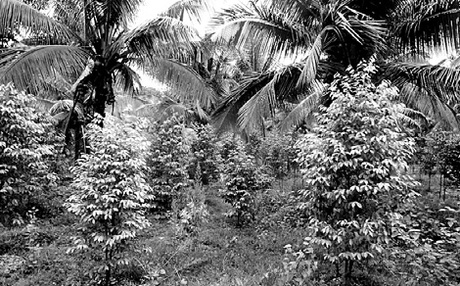
Agarwood trees grown in Dakshina Kannada | Express Photo

Plantation and coffee estate owners in Kodagu, Hassan, Chikmagalur and Dakshina Kannada finally have a reason to cheer despite the decreasing prices of their produce.

For the last five to six years, a wonder plant agarwood has replaced the conventional silver oak in many coffee estates bringing handsome dividends to growers.

Agarwood is a high value commercial crop which is in great demand in national and international markets.

The tree is used to make ittar (natural perfume oil) and perfume.

The outer part of the stem, which is of low quality is used to make incense sticks and in paper manufacturing industries.

An agarwood sapling is easy to grow as its maintenance is inexpensive and it gives yield in eight years.

Traditionally, almost all coffee growers in India plant silver oaks as an intercrop providing shade to other plants. Recently, coffee plantations in Western Ghats and Malnad region have started planting agarwood. The origin of the tree can be traced to the evergreen forests of Southeast Asia.

Agarwood was first introduced in South India by Vanadurgi Agarwood India Limited (VAIL) which was formed with its shares distributed among planters, promoters and Vanadurgi Flavours and Extracts (P) Limited.

The company is exclusively involved in the planting, processing and marketing of agarwood.

VAIL Managing Director K N Dharmendra Kumar told Express that the company has distributed more than one million agarwood saplings to 5,000 plus growers across eight districts in Malnad region.

The company has entered into a buy-back agreement with farmers to provide good seedlings, technical guidance, artificial inoculation, setting up of processing units and purchase of their inventories.

He said that 150 to 200 agarwood trees can be planted in one acre plot of coffee, arecanut or coconut plantation.

Anil Ponnappa, a progressive coffee planter in Madapura said he has planted 600 agarwood trees supplied by VAIL in his coffee estate. Another agarwood grower N Vishwanath in Sagar, Shimoga district said he has planted 15,000 saplings on his dry land a year ago. “Agarwood is a good alternative to other crops whose prices are falling these days,” he added.

Agarwood is costlier than sandalwood in the international market as it is in great demand in Gulf countries.

A sandalwood tree takes at least 25-30 years to fully grow while an agarwood takes tree takes only 8-15 years.

The inner stem (resinous) of agarwood is valued at `10,000 per kg while agarwood oil costs Rs 10 lakh per kg in the international market. Agarwood is priced according to the density of wood, resin, purity, aroma and colour.

source: http://www.newindianexpress.com / The New Indian Express / Home> States> Karnataka / by Coovercolly Indresh / ENS – Somwarpet / December 02nd, 2012

When fitness regimen sows seeds of entrepreneurship

Chennai:

Rohit Kuttappa was a budding bowler who played first division cricket in Chennai for over eight years. But a knee injury during six years ago led him to take up cycling as a part of the rehab programme which later sowed the seeds of an entrepreneur in him.

What started as a personal exercise became a group activity and later bloomed into a sports management company in 2009. “Initially, my brother, a college-mate and I used to cycle as a part of my fitness regime every weekend,“ recalls the 27 year-old who did his Master’s in economics from Loyola College in Chennai.

This attracted a lot of queries which later became a cycling group on Facebook called Chain Reaxion.

“But when the group of four grew to 150, we saw a business opportunity that could also activate people to take up cycling as a sport,“ reveals the first generation entrepreneur hail ing from a coffee planter family in Coorg.

“There was no motive to set up a structured business team and I had always wanted to do something with sports and when corporates as TI cycles approached us to host cycling events, we floated a fullfledged sports management firm,” adds the MD of CRX Sports Ventures.

Today, CRX hosts all major cycling events in the city including the 2013 Chennai Cycling event that saw about 4,700 people participating and even the 2012 International BMX tour of India that saw riders from across the globe joining.

Impelled by the success that came its way through the Internet and following queries from clients on helping them choose the right kind of bikes, CRX now has added two web portals to its portfolio — choosemybike.com and choosemybicycle.com.

“The idea is to promote a user-driven review portal which could also service corporates providing consumer insights,” says Rohit who completed his part-time MBA in marketing alongside.

Cricket and cycling apart, CRX is also focused on hockey and conducted the World’s largest hockey tournament in Coorg in 2012 that saw 220 local Kodava team taking part.

“It’s time to do something for our national game,” says Rohit who is now training for the first division league of Chennai Hockey Association.

source: http://www.deccanchronicle.com / Deccan Chronicle / Home> News> Business/Tech / by K. Sreedevi, DC / May 07th, 2013

Kodagu all set for V-day, security stepped up

There are 4.02 lakh voters in the district,

Kodagu district administration has made preparations for webcasting facilities in five selected booths in each of the two Assembly constituencies during the May 5 elections, Deputy Commissioner, N.V. Prasad has said.

Addressing presspersons at the Old Assembly Hall in Madikeri on Friday, Mr. Prasad said webcasting would be done on the day of mustering and de-mustering — at the St. Joseph High School in Madikeri and Government Junior College in Virajpet — as also the day of counting at the St. Joseph’s High School. Steps had been taken to deploy police, paramilitary forces, videographers and micro-election observes to the sensitive and hyper-sensitive polling booths in the two constituencies, Dr. Prasad, said.

Vehicles

As many as 71 buses, four mini-buses, 34 maxi-cabs, 80 jeeps, have been hired for election duty in the district. There are 87 vehicles in Madikeri constituency and 102 in Virajpet taluk.

There are 4.02 lakh voters in the district. In Madikeri there are 2.02 lakh voters —1, 00,235 men and 1, 01,839 women — and in Virajpet there are 2, 00,259 voters —1, 00,290 men and 99,969 women, Dr. Prasad said.

Steps have been taken to distribute voter slips to the voters through the booth-level officials. Those who had not received the slips could call the helpline located at the Deputy Commissioner’s office. Besides, voter facilitation centres would be opened on May 5 to distribute voter slips to those who have not received it, Dr. Prasad said.

Only two candidates of each political party would be allowed to set up booths at a distance of 200 meters from the polling booth on production of permission letters issued by the panchayat development officers and officers from the urban local bodies.

Sale of liquor has been banned in the district from 5 p.m. on May 3 to midnight of May 5 in all bars and restaurants, hotels, resorts, clubs as a precautionary measure, Dr. Prasad said.

Officials deputed for election duty could cast votes at the centre opened at the office of the Assembly Election Officer. If not, they could send the votes through post before 8 a.m. on May 8, the day of counting, to the counting centre at the St. Joseph’s High School, he said.

Counting

Dr. Prasad said that as many as 14 counting tables had been allocated to each of the Assembly segment. A supervisor, group ‘C’ employee, one Central government employee as the micro-observer and a counting agent representing the contesting candidates would be present. A media centre had been opened near the counting centre.

He appealed to the owners of the plantations, industrial units, shops and commercial establishments to give e a one-day leave to workers and employees on May 5 to facilitate voting. Police have made elaborate bandobast to maintain law and order during the elections by deploying more than 1,000 personnel and officers drawn from the paramilitary, district armed reserve, police. There will be special vigil at the booths identified as naxal-affected, he said.

Slips distributed to voters through the booth-level officials

source: http://www.deccanherald.com / Deccan Herald / Home> National> Karnataka / by Special Correspondent / Mysore – May 04th, 2013

For these migratory tribals, livelihood, not voting, counts

Thousands of tribals in HD Kote and Hunsur haadis are likely to ignore the May 5 Assembly election as they have temporarily migrated to Kodagu and Wayanad to work in coffee estates. It is unlikely that they will come back to vote as there is a strong feeling that their exercising franchise has helped little in bettering their lives.

There are 115 haadis in H D Kote and about 30 in Hunsur with a total population of about 30,000.

The tribals here are predominantly agricultural labourers and with the region facing severe drought and agricultural activities still to resume, there is hardly any job on offer for them. Even forests are almost shut for them and they are hardly able to lay their hands on minor forest produce.

With no other choice, a majority of young and middle-aged men and women have left in search of greener pastures, leaving elderly parents at home to take care of their children. The tribals say that despite them casting their votes in successive elections, not much has changed in their lives. “Moreover, it’s a matter of bread and butter. We cannot give up a day’s wages and come just for the sake of voting,” said Raja from D B Kuppe haadi.

While many tribals have shifted their base to coffee estates as early as December and will return on May, those located on the borders of Kerala and Kodagu travel to their work places daily. Tribals are preferred for weeding and tree pruning as they are experts in it and get wages ranging from `150 to 300 daily.

Srikanth of the Tribal Joint Action Forum said that the tribals’ long-pending demands like title deeds for their cultivating lands, places of worship and graveyards, better health facilities and quality teachers who can bridge language barriers of their children among others are still to be met.

Most importantly, the poor tribes are upset over a series of attacks on fellow tribes by forest staff while collecting minor forest produce and over the problems they face in burying dead bodies. Graveyards of tribal clans are located inside forests and they have to brave deep trenches to carry dead bodies for burial. However, he feels that most tribals may not stay away from voting as they are conscious about voting rights and will find their way to polling booths if they have encouraging employers. Sources in the district administration said they are trying their level best to convince tribals to vote by holding talks with community leaders.

source: http://www.newindianexpress.com / The New Indian Express / Home> States> Karnataka / by Vincent D’Souza – Mysore / April 30th, 2013

Slow pace of an older India

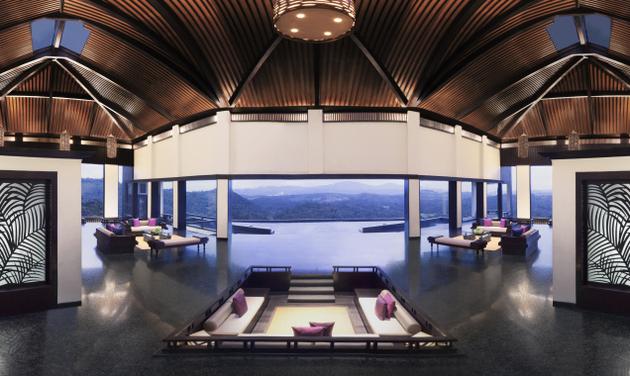
Panorama from reception area of Vivanta by Taj - Madikeri
Panorama from reception area of Vivanta by Taj – Madikeri

Forget the big cities, Stephen McClarence discovers the charm of small-town India in the Coorg district.

You’ve almost certainly had a phone conversation – however brief – with someone in Bangalore, the boom city of South India.

Fifteen years ago, it was a sleepy old-worldly place, green and gracious. So many people went to retire there that it was called the Pensioners’ Paradise. Now, thanks to its burgeoning call centres, it’s the most dazzlingly modern of India’s cities, full of high-rise office blocks, shopping malls, and aspirational, high-spending young people.

The greenness is in shorter supply these days. “What used to be here?” I once asked a man showing me round a techno-park boasting IBM and Microsoft. “Nothing was here,” he said. “Only forest.”

In just such a forest, four hours’ drive to the west, naturalist Sanjeev Kumar is taking a wry view of Bangalore’s headlong development. “When I was a boy there, we used to have to wait an hour for a bus,” he says. “Now a bus comes every five minutes, and we have to wait an hour in the traffic.”

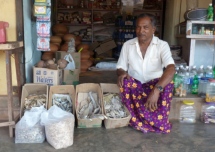
Kunihit Aya, grocer in Bekal

Butterflies flutter past like floating tissue paper as Sanjeev leads my wife and I on a forest walk. “Maybe we will see a Malabar whistling thrush,” he whispers. “I was once playing the flute and as soon as I stopped, it carried on with the same tune.” A bird starts singing high in a nearby tree. “No, no, that’s a barbet.”

We’re a few miles outside the small town of Madikeri, far from the main tourist routes. Goa, to the north, is a familiar destination for Brits; so is Kerala, to the south. But Madikeri, capital of a district called Coorg, is unknown to many Indians, never mind foreigners.

That’s likely to change. High in the hills at nearly 3,500ft, and surrounded by rubber and coffee plantations, it has a new luxury resort: Vivanta by Taj, Madikeri. More than 60 cottages and villas are dotted down a hillside, with electric buggies ferrying guests from one spectacular viewpoint to another. Vast panoramas of rainforest and misty blue mountains stretch all around.

As a retreat, a scenic eyrie, it could hardly be bettered, but for us Madikeri itself turns out to be as great a lure. It’s a perfectly ordinary small Indian town, and that’s its charm. The wheel of life turns considerably slower than in the cities; people have time to talk to each other and to strangers; we have a delightful couple of days exploring it.

Some 40 years ago, the great travel writer Dervla Murphy chronicled her two-month stay here in the engaging On a Shoestring to Coorg. She likened the area, once British India’s smallest province, to the Garden of Eden, a place where “a civilised harmony still exists between landscape and people.”

She explored Madikeri’s library, where “earnest-looking young men were sitting around large tables studying fat tomes, or consulting yellowed newspaper files.” Similar young men – perhaps the originals’ grandsons – are still here, still studying and consulting. The dusty shelves behind them buckle under the weight of the fat tomes. Upstairs, string-tied bundles of monsoon-ravaged documents are stacked high, like slag heaps of bureaucracy.

Next door, a yellow-distempered British church has become a museum. Religious sculptures from the 12th-century share space with a portrait of George V, a watchful stuffed leopard and a Victorian portable typewriter. Also a rusty trunk, labelled “Trunk”. The walls are still lined with colonial monuments: “Molly, for over 30 years the dearly loved and loyal, faithful and devoted wife and pal of Lt Col Sir Richard Burke, late Resident of Mysore”.

We’ve caught the town’s Friday market. The streets are full of traders selling garlic, honey, trainers, chillies, wall clocks, dried fish by the barrelful, sachets of rat poison. The traders are courteous, and curious about us. Many have the characteristic caramel-coloured complexions and aquiline noses of Coorg people, said to be descended from Greeks who got lost.

We buy coffee and aniseed from Mr Shoukath Ali’s spice stall, piled high but neat with cardamom, cinnamon, cashew nuts, cloves. “Dates from Iran,” says Mr Ali. “Figs from Afghanistan.” A tiny old man joins us, his face lined like runes: Mr Yusoof, Mr Ali’s landlord, still working at 85. He sits watching, shrewdly, and, as I take a photograph he darts forward to be in the picture, giggling.

We need to change money. “Be seated,” says the bank clerk, and a zen-like hour of paperwork stretches ahead. Ledgers are entered, forms are filled in, and I take them to another clerk who gives me a metal token, numbered 87, to keep until the cashier calls me over.

Raju Shah, a businessman clutching Token No 86, sighs about the laboriousness of it all, but it gives us a chance to talk. He recommends a restaurant and guides us to it. His wife, Dimple, invites us to call round.

The whole town feels pleasantly suspended in a gentler time, nowhere more so than at the 130-year-old North Coorg Club, where retired coffee planters and army and air force officers gather in the evening to play bridge and billiards. Little seems to have changed since Indian independence in 1947, when decades of club presidents called Mr Frazer, Mr Pritchard and Mr Humphries made way for Mr Chengappa.

Madikeri is how Bangalore used to be, we reflect as we drive to the call-centre city to catch a train north. On the way we have lunch at a pleasant roadside cafe called Prashanti. “‘Prashant’ means ‘place of peace’,” the owner explains. A Bollywood soap opera blasts at full volume from a TV in the corner. We’re suddenly back in the 21st- century.

Getting there

Cox & Kings (0845 154 8941, www.coxandkings.co.uk) has seven-night breaks from £1,695pp, including three nights at Vivanta by Taj, Coorg and four at Vivanta by Taj, Bekal, a wonderfully relaxing garden-village resort 50 miles away in Kerala. The price includes breakfasts, private transfers and international flights with Emirates.

Visit www.tajhotels.com for more information on the hotels.

Stephen McClarence travelled to London (for his flight) with East Midlands Trains. 0845 712 5678, www.eastmidlandstrains.co.uk

source: http://www.yorkshirepost.com / Yorkshire Post / Home> Lifestyle> Outdoors> Travel / by Stephen McClarence / April 29th, 2013

Vivanta by Taj – Madikeri: review

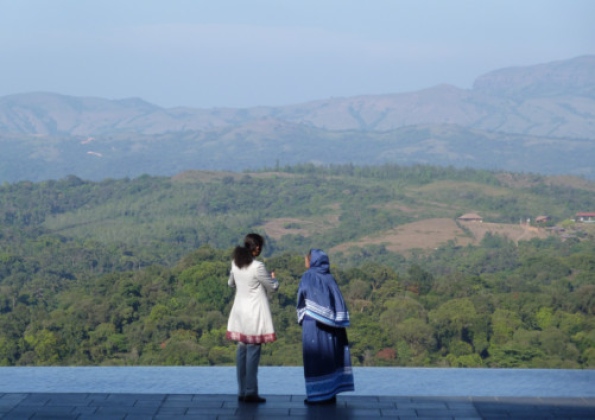
Breathtaking view of the valley below at Vivanta by Taj - Madikeri, Coorg / Business Line
Breathtaking view of the valley below at Vivanta by Taj – Madikeri, Coorg / Business Line

Nothing like a holiday in the hills to breathe in some fresh mountain air and get rid of your summer blues. And the Vivanta by Taj – Madikeri, at Coorg, provides the perfect escape.

Nestled in the Western Ghats in the south of Karnataka, close to the Kerala border, is the little mountain town of Coorg, formerly known as Kodagu. Other than being one of the main coffee plantations in south India, the hill town has been a favourite getaway thanks to its proximity to Bangalore and Mysore being one of the factors in its favour.

Describing Coorg would be like stringing together a bunch of clichés –from ‘rolling hills and misty mountains’, a view ‘to die for’ to ‘right in the lap of nature’ – and every one of these would hold true. The little town has been a great getaway option for ages and with the Taj property opening there, it’s a new luxury option for the discerning traveller.

Amazing view across the valley at Vivanta by Taj - Madikeri, Coorg / Business Line
Amazing view across the valley at Vivanta by Taj – Madikeri, Coorg / Business Line

ROOMS WITH A VIEW

The property, spread over a 180 acres, is about 4,000 feet above sea level and takes full advantage of the breathtaking views offered by its location. Three types of accommodation – the regular villas, the luxury bliss villas and the 9,000 square foot presidential villas – are on offer and each of them provide stunning views through full length French windows.

While the luxury villas and the presidential suite come with extra perks like a heated indoor pool with skylights, a separate dining room and living area, every villa has its own fireplace. It is pointless in summer, but I am told that it gets quite cold during the rainy season and the fireplace can be lit on request then. If you have ever had visions of warming yourself in front of a cosy fireplace, the stone and cement hearth here is right out of a story book.

The décor throughout the hotel is kept basic with dark, wood tones contrasted with white and other light earthy colours, creating a colour scheme that’s soothing and relaxing. Contrast this with the bright green from the rainforests surrounding the villas, and it is clear that the focus is completely on nature. Large clear glass windows run the length of the room, letting the amazing view take centre stage. If you’re lucky enough to get a valley view room, then you will wake up feeling like you’re (quite literally) on top of the world!

For dining options, there are a number of restaurants to choose from. If you’re feeling all healthy, Dew, the hotel’s wellness restaurant, is a must try. Tucked into a small corner of the lobby, a floor above the spa, the restaurant has a limited menu but each of the dishes has been designed to ensure a balance between health and flavour. If you’re looking for some indulgence a visit to Nellaki – the restaurant that serves traditional Coorgi cuisine is a must. Guests can indulge in some delicious pork curry (called Pandi curry) made in the traditional style with a spicy, peppery gravy, or even try out the Kodagu-style chicken biryani, which is quite unique. Mushrooms are a staple in Coorgi cuisine and the mushroom soup, with the unusual spice and dominant pepper, is a great option for vegetarians.

TO-DO LIST!

The best part of the property is probably the fact that you can never run out of things to do here. If you get bored of relaxing in your villa, there are a number of options ranging from nature walks and ziplining for the adventurous, to the well-equipped spa and pottery classes for those who want less strenuous activity.

Early birds can set out at 6:30 am for a walk through the Nishanibetta hills, which runs through the rainforests that cover most of Coorg. Early mornings are extremely pleasant in this area, even in summers, but the heat sets in quite harshly around midday, so the best time to go exploring would be early mornings and in the evenings around four, when another session of cycling and trekking is usually organised. Another fun thing to do is to try out the zip-lining through a small section of the rainforest, for a slightly elevated view (and some cheap thrills). The nature walk is a great way to experience nature first hand, and it’s a great place to dust off that camera and try out some photography skills. However, I would also recommend leaving your camera and phone behind and just getting the feel of what it’s like to live a simpler, tech-free life. My guide pointed out some exotic flora and fauna including rudraksh trees, cardamom and coffee plants, and I even got a whiff of some wild jasmine and eucalyptus. Make sure to carry some good walking shoes though, since it is hilly terrain and walking around requires some extra care.

For those less inclined to physical exertion – it is a holiday resort after all – there is still a lot to do. I tried my hand at pottery and while it was fun, it’s nowhere as effortless as Demi Moore made it look! Set aside some quality time to spend at the Jiva Spa, a must visit. Everything from their delicious detox tea to the jasmine-infused oil they use seemed to have an extremely relaxing effect that’s sure to stay with you throughout your stay. You can even head down to the conservatory where the friendly colonel will give you a quick lesson on the Kodava community and what makes them unique – a fascinating account for those who are curious about the history of the place. Other options include chilling at the pool with a gorgeous view of the valley, playing a game of virtual golf or trying your hand at cooking some Coorgi delicacies along with the resident chef.

Take a walk around, indulge at the spa, try out some delicious traditional Coorgi fare, get a good look at the beauty of the rainforests and generally breathe in some of the fresh mountain air and relax in your own luxurious villa – a trip to the Taj Madikeri is the perfect getaway from the city this summer.

source: http://www.thehindubusinessline.com / Business Line / Home> Smartbuy> Luxury & Fashion / by Elizabeth Mathew elizabeth. mathew@thehindu. co. in / April 24th, 2013