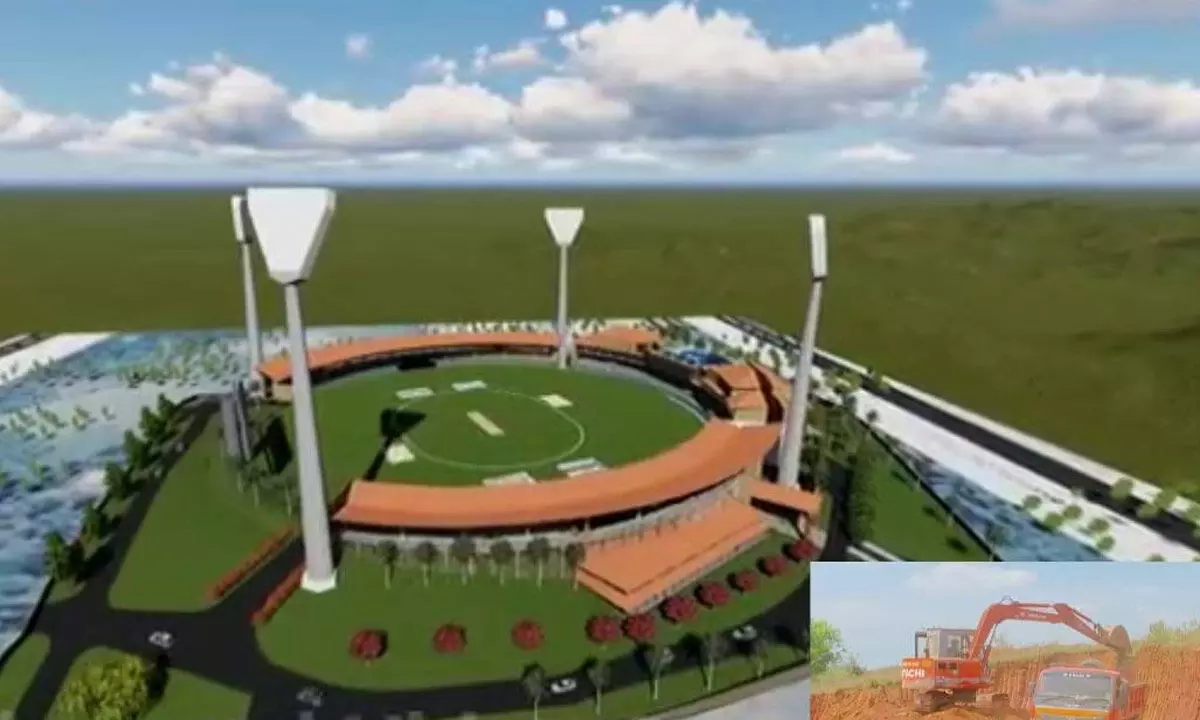
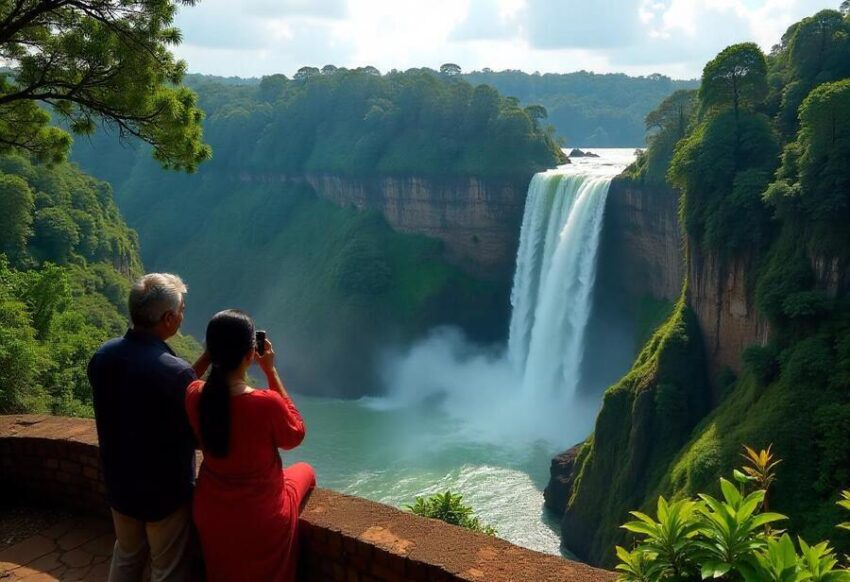
The design and layout of the ground will follow the model of the famous Dharamshala cricket stadium in Himachal Pradesh, though it will be slightly larger than Bengaluru’s Chinnaswamy Stadium
Madikeri:
After decades of persistent demand, the long-awaited dream of having a dedicated cricket ground in Kodagu district is finally being realized. Construction work has begun on an international cricket stadium near Palemadu village, situated in the scenic Madikeri taluk. This marks a significant milestone for the region, which has long yearned for a sporting facility capable of hosting major cricket events.
The Kodagu district administration has earmarked 12 acres of land for the construction of the stadium, with the project estimated to cost around Rs 50 crore. The design and layout of the ground will follow the model of the famous Dharamsala Cricket Stadium in Himachal Pradesh, though it will be slightly larger than Bengaluru’s Chinnaswamy Stadium. This ambitious project will involve leveling half of a nearby hill, a complex and costly process to create a world-class sporting venue.
The construction of this stadium has been met with both excitement and opposition. For years, there were protests against the proposed location, primarily due to the presence of a graveyard on the land. Local residents from Paisari village, in particular, were firm in their stance, demanding that no cricket ground should be built over the graveyard. Despite the protests, the project had to be put on hold for some time. However, the issue was eventually resolved when former District Collector Dr. BC Satish intervened and convened a meeting to find a solution. It was decided that one acre of land would be set aside for the cemetery, while the rest would be used for the cricket ground.
Though some residents still insisted on reserving two acres for the cemetery, the Karnataka State Cricket Association (KSCA) was determined to move forward with the project. Their resolve to build the ground regardless of the protests has finally borne fruit. With all hurdles cleared, construction work has now commenced, with heavy machinery such as JCB and Hitachi excavators already working to level the land.
The project is expected to be completed within the next four years, bringing a major sporting facility to the district.
A boon for local sports enthusiasts.
This stadium will be a game-changer for the region, providing a much-needed infrastructure for local sports enthusiasts and opening doors to higher levels of competition. Currently, Kodagu boasts an astro turf hockey stadium, but there has been a glaring absence of facilities capable of hosting even state-level sports events. The new cricket stadium will not only enhance the region’s sports infrastructure but also serve as a hub for aspiring athletes.
While the construction of the cricket stadium is a significant step forward, sports enthusiasts in the district are also calling for the development of other key sports facilities. In particular, there are increasing demands for the creation of an athletics stadium, similar in scope and scale to the upcoming cricket ground, to accommodate track-and-field events and other athletic competitions.
The lack of such facilities has been a hindrance to the growth of athletics in the region, and many believe that the creation of a dedicated athletics venue would be the next logical step in the district’s sporting evolution.
Once completed, the international cricket stadium is expected to attract attention from national and international teams, potentially putting Kodagu on the map as a major sporting destination. It could host not only first-class cricket matches but also training camps, junior cricket tournaments, and a variety of other sports events, providing ample opportunities for local players to showcase their talent. Moreover, the stadium will have a significant economic impact on the area, boosting tourism, creating employment opportunities, and contributing to the development of infrastructure such as hotels, transportation, and sports-related businesses. The local community is expected to benefit greatly from the influx of visitors and sports professionals.
As the work on the cricket ground progresses, the residents of Kodagu have a reason to celebrate, as they will soon have a venue that will foster local talent and bring national-level events to the region. However, the demand for more sports facilities remains strong, and local authorities will likely have to address the call for an athletics stadium and other sporting infrastructure to meet the growing needs of the district’s sports enthusiasts.
In the coming years, Kodagu’s landscape will be transformed into a thriving hub for sports, creating opportunities for youth, bringing pride to the community, and fostering the next generation of athletes. The international cricket stadium is just the beginning.
source: http://www.thehansindia.com / The Hans India / Home> News> State> Karnataka> Bengaluru / by The Hans India, Hans News Service / November 30th, 2024
In my previous article, I featured an Ethiopian coffee export company who ran her business based on trust. This is factored in two ways; dealing with her farmers and clientele. In this day and age, we can learn a thing or two by understanding the wisdom behind why some people do the things they do, treading a harder path and not resort to shortcuts. They are in it for the long term, not focused on the short term gains. I have nothing but high regard for individuals like Medina.
Continuing a similar conversation, I have been focusing on what exactly is happening at the farm level by getting in touch with the producer directly. In this article, I talk to the owner of a coffee estate farm based in India. Sumaira gives us an insight about how her family’s coffee estate started in the late 18th century, processing techniques employed on her farm, the specialty coffee movement in India, and much more.
source: Rasulpur Coffee Estates
Can you tell me a bit about yourself and Rasulpur Coffee Estates?
I am Sumaira, the owner of Rasulpur Coffee Estates & Roasters . We are located in the Rasulpur village, Coorg district, in the hot spots of the Western Ghats, India. My entrepreneurship journey has had its shares of ups and downs. I took up a career as an interior designer and worked as a business head for a furniture empire in India. Later on, I moved to the UAE and explored the real estate industry and the coffee sector. I envisioned starting up something of my own, being from a family of coffee planters and having the self-confidence and determination to start my own business. Something clicked the moment I realized how the coffee industry is growing day-by-day.
To add, I am a fifth generation coffee planter who introduced specialty coffee at our estate. We introduced better equipments and techniques, and new processing and fermentation methods which I’ll get into a little later. A laboratory is set up for roasting and cupping to create different roast profiles and new blends at our estate. We believe in helping and encouraging our coffee community, especially the neighboring small and marginal coffee growers to analyze their coffees, and improve their harvesting and processing methods to fetch a better price for their coffee.
The journey of Rasulpur Coffee Estates started in the late 18th century when our ancestors migrated to the Western Ghats of India i.e. Coorg at the time of the British rule, as their main occupation was trading in coffee and spices. They travelled to different parts of Coorg, as they developed a liking towards coffee estates and the greenery, purchased plenty of estates, learnt the methods of coffee cultivation, and started exporting coffee to foreign countries. England was one of the major countries to which coffee was exported to from our estates in that period with the help of the Coffee Board.
We named the estate and brand ‘Rasulpur Coffee’ after the village, Rasulpur, which is on the banks of the Kaveri river in Kodagu district is named after Mr. Rasul Khan, our first generation planter. He cleared the land, started cultivation, built dams for irrigation, made the place livable and initiated agricultural works. Looking at his abilities and progress, the government named this village after him.
In time, our second, third and fourth generation planters purchased more coffee plantations and improved the methods of cultivation, processing, and introduced pulping and irrigation. An R&D team was also set up and a variety of experiments are conducted to this day. The goal here is to enhance the quality of the crops, and advance the processing and post harvesting methods. Our coffee is featured in auctions, supplied for projects, sold locally and exported to wholesalers, cafes, and restaurants. We also ferment micro lots as per requirements from our roasters and young entrepreneurs who are venturing into the coffee industry.
What kind of processing is done on the farm?
Processing on our farm is done in three different ways along with few specialty processing methods, all of which change the sweetness, body and acidity of brewed coffee. These are natural/sun dried, washed, and honey processed.
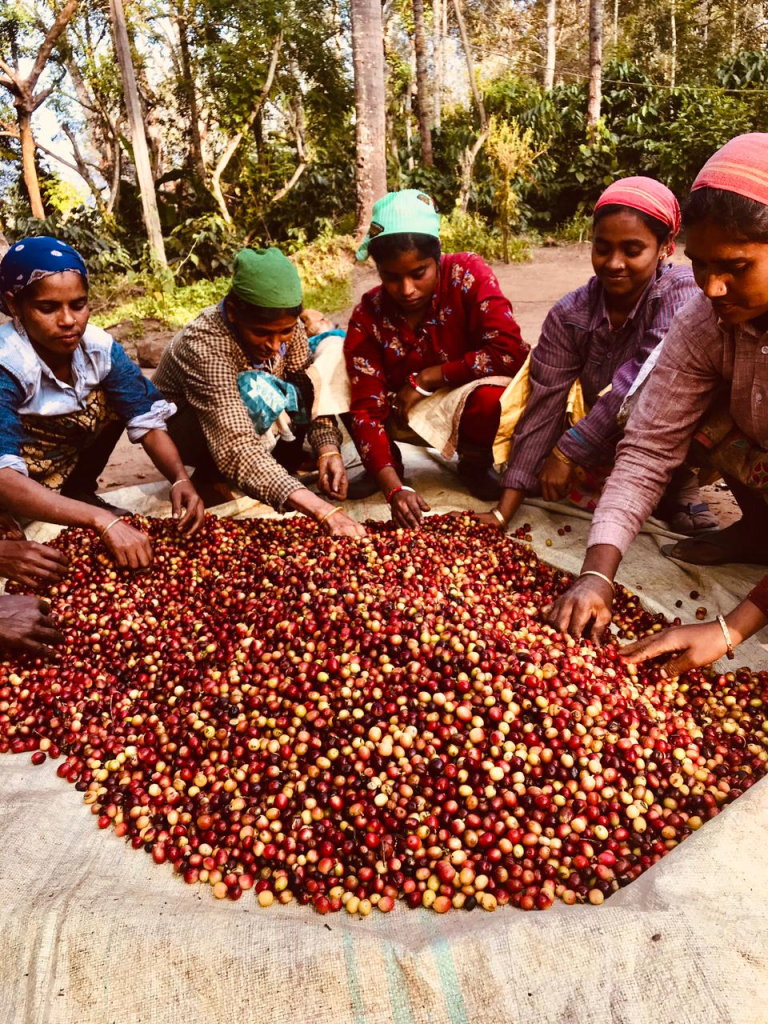
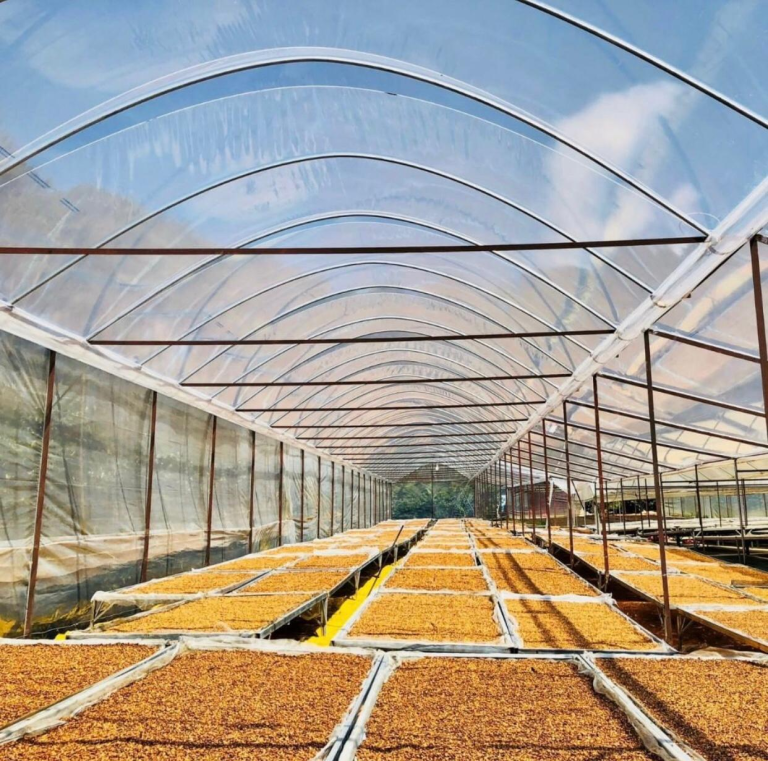
Natural/sun dried process. A natural processed coffee, also referred to as dry processed, is a traditional yet common way to process coffee today. Originating in Ethiopia, it involves drying out freshly picked coffee cherries with the seed still inside. To do this, we place the cherries on drying beds in the sun. These beds are either patios or raised drying tables. The cherries have to be rotated and turned to prevent mold, and takes about seven to eight days to ferment. During this time, the sugars and mucilage (the sticky substance that coats the seed) will latch onto the seeds, develop flavours and make them sweeter. Once the coffee is dry, a machine separates the pulp from the seed. Natural coffees are heavy bodied, and have deep, complex tasting notes. This development comes from the way the cherry ferments differently. Natural processed coffees can be difficult to replicate because of the inconsistencies in fermentation. However when done right, these coffees can also be some of the sweetest you’ll taste. It is juicy, syrupy and well worth the extra effort.
Washed process. Unlike natural, washed processed coffees are called the opposite, i.e. wet processed. In this scenario, machines called pulpers remove the seeds from the cherries before drying them. However, it is not just any cherry that gets the seed removal treatment. These cherries must have the perfect amount of ripeness to make sure they are sweet enough. To accomplish this, they go through a sorter and are segregated according to density. Once these pulpers remove the skin and pulp from the seeds, they are placed in tanks full of water. The water separates the rest of the mucilage and fruit caked onto the seed. Finally, the seeds are dried on the beds in the sun. Washed processed coffees have cleaner, and more crisp tasting notes when compared to natural processed coffees. The body of a brewed washed coffee is lighter. There is typically more brightness as well, because of a cleaner acidity that balances out the sweetness of the coffee. They are just as fruity as natural coffees, but the flavor notes are easier to differentiate.
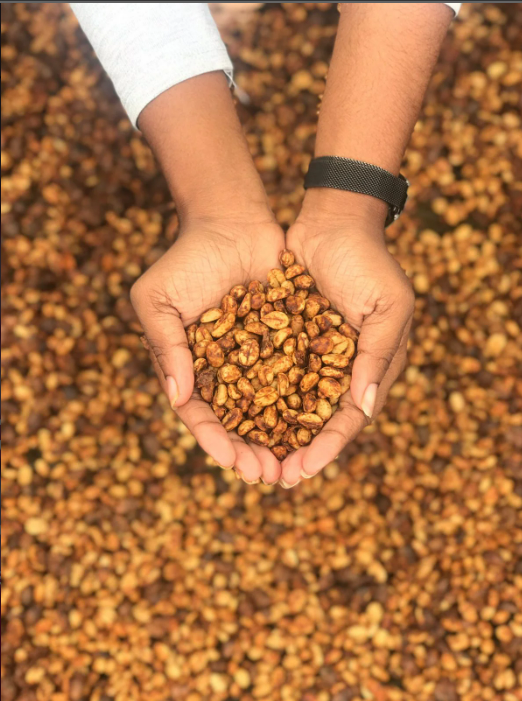
Honey processed. This method is a combination of both natural and washed. It is a rare and demanding method, and not as commonly practiced as the previous two. However, it produces a unique cup of coffee, with flavours similar to both of the previously described processing methods. During honey processing, a pulper removes the seed from the cherry before it undergoes a drying process. However, it does not go into washing tank to remove the mucilage. That mucilage, which is what the ‘honey’ refers to stays on the seed and is now dried in the sun. The amount of mucilage left behind determines the sweetness, and there are even machines to control the amount on the seed. Like natural process, the seeds are dried on beds. The flavor components of honey coffees are varied and complex. Like washed coffees, they have lighter body and are very syrupy and sweet. Acidity is present but more mellow when compared to washed coffees.
Specialty processing. This is an emerging field and we use unique methods like anaerobic, aerobic, natural fermented, and fruit fermented to name a few. We ferment our coffee in a temperature controlled environment, with or without oxygen, followed by controlled drying to bring out unique and funky flavors out of the coffee.
source: Rasulpur Coffee Estates
What is the current state of the specialty coffee industry in India?
The coffee culture in India has evolved over the past decades. The nostalgia-inducing coffee houses were popular meeting grounds until the 1980’s. In the 90’s, cafe culture took over the country and coffee became the trendy drink to try.
Cafes are becoming the primary hangouts for youngsters and coffee found an emerging and appreciative audience. In the past two decades, we have seen a surge of cafes all over the country. They have materialized as a central hub for meeting, whether casual or business, and also doubling up as co-working spaces.
The 2020 pandemic impacted the industry In multiple ways and its effects were manifold. Logistics of coffee exports are pretty bad even today. Traditional coffee plantation owners who supply heavily within India and export to Europe are left with excess stock of coffee that could no longer be shipped to international markets.
Coming to the Indian coffee space, in recent years, the spotlight is on specialty coffee. This movement is picking up speed with many brands and roasters setting up shop. Analysis gives us a deeper understanding on how speciality coffee has emerged as the current buzzword in coffee circles. Current generation and millennials have emerged as the major chunk of consumers of specialty coffee within India.
Increased awareness and interest about coffee augmented by growing exposure to worldwide trends due to rising international travel and social media saw many of them exploring specialty coffee and manual brewing techniques. Lockdowns put a halt to the possibility of exploring cafes and thus many coffee consumers in the country turned to home brewing.
Many retail specialty coffee brands saw skyrocketing sales in 2020 as consumers invested in manual brewing equipment ranging from French Press, Moka Pots, Chemex and Aeropress. The new generation of coffee consumers respect the people behind the product, want to better understand the ‘farm to cup’ journey and are willing to invest in educating themselves on all nuances of coffee.
A few years back, this was largely unheard of. Farmers were just one aspect of the coffee supply chain, but hardly ever found the spotlight on them. Now plantation owners are keen on sharing their stories and experiences, information on their crops and the work they put in to make that perfect cup of coffee.
One can safely say that specialty coffee will not just be a passing trend, but en route to becoming one of the mainstays of the Indian coffee space in the coming decade.
I think there is a lack of communication between the consumers and farmers. I know some of the consumers, including me, have started to pay attention to where exactly the coffee is coming and from which farm. What do you think can be done to fill this gap?
The missing ingredient is awareness. People need to be educated about Indian coffee. The new-generation farmers need to collaborate with the Coffee Board of India and conduct events to promote coffees originating from India within the country and internationally.
Joint efforts need to be made by all coffee enthusiasts to encourage the consumption of coffee by making people understand the benefits of drinking coffee. The government has to support and help promote farmers to come forward and establish their own brands.
Being honest and transparent ensures the consumers and clients knows about the past, present and the way you are going to build a future. Bringing credibility to the table builds trust factor for the brand with the consumers.
I know some of the issues the farmers are facing currently are the increasing production costs, what steps are you employing to change that? Have you increased the price of your coffee to reflect that?
Whether we like it or not, coffee is getting more expensive. It’s important to look at some of the reasons why this is happening, before you potentially do one of the following:
Buy less sustainable and ethical coffee because it’s cheaper or
Lay blame on the wrong people for higher prices.
There are many factors influencing the cost of coffee from climate change, disruptions to global shipping, consumer demand, and packaging cost. While the need to use more environmentally-friendly packaging for coffee cups and bags is real, so too is the cost for shops switching to compostable or recyclable materials. We have also witnessed fluctuating shortages of packaging stock forcing some companies to find more costly short term solutions to packaging which comes at a higher cost.
Lastly, coming to the cost of quality, producing coffee of higher quality simply costs more. Coffee must be cared, harvesting and processing is hard work. It requires time and physical effort if you want to achieve the highest quality standards. You can’t have it both ways.
source: Rasulpur Coffee Estates
What are your thoughts on transparency? Has it benefitted you in any way?
Yes, by ten-fold. Transparency has improved our overall trust factor in this industry. It solves many problems and even stops disasters before they happen. It expands relationships, increases productivity, strengthens innovation, and improved our revenue.
What is the future of specialty coffee?
By far, the most interesting and exciting coffee segment of the moment is specialty coffee. It is rapidly expanding in India and across the globe as consumers continue to seek out the best cup of coffee to enjoy.
When it comes to coffee quality, specialty coffee is the ‘cream of the crop’ and is likened to fine wines due to its distinctive characteristics and delicious flavour that can only be achieved under certain growing conditions.
In today’s market, specialty coffee has become an intricate science and a global phenomenon that is seeing rapid growth across all sectors. More estates are coming into this specialty game, that will give ‘Indian specialty coffee a lot of mileage.’
What do you do in terms of R&D on Rasulpur Estate
We are currently doing research on developing a hybrid plant which is resistant to white stem borer and leaf rust. These are the two biggest pests and diseases faced by all Arabica growers throughout the world. International Coffee Organization (ICO) is working with different countries to find a solution for this.
This R&D program has been ongoing for the past four years on a 40 year old, 30 ft tall, Arabica plant labelled by us as Rasulpur Arabica. So far, the results look promising and it is resistant to these diseases. We have propagated progenies of this plant by clonal cutting, seed and tissue culture, and cross-bred this plant with other varieties of Arabica.
source: Rasulpur Coffee Estates
About Rasulpur Coffee Estate
Rasulpur Coffee Estates & Roasters is based out of Rasulpur village in Coorg district in the hot spots of the Western Ghats, India. The Estate is run by Syeda Sumaira, a fifth generation coffee planter and entrepreneur.
Fun fact: Coffee farms are the best place to get first hand knowledge about the beverage, how it is grown, harvested and processed. Rasulpur Coffee Estates organizes coffee tours, get in touch with them to find out more.
source: http://www.fltrmagazine.com / FLTR / Home> Insight> People / by Naveed Syed / August 11th, 2022
The Government of India has issued the Plant Quarantine (Regulation of Import into India) (Sixteenth Amendment) Order, 2024. The notification was published on November 20, 2024 and has come into immediate effect. This amendment introduces special conditions for importing coffee beans into the country.
The amendment applies specifically to coffee beans (Coffea spp.) imported from any country for consumption or processing in India.
The aim is to prevent the entry of Coffee Berry Borers (Hypothenemus hampei and Sophranica ventralis), a destructive pest that can devastate coffee crops.
All imported coffee beans must now undergo fumigation with either Methyl Bromide or Phosphine to eliminate any potential Coffee Berry Borers.
The fumigation treatment details must be endorsed on the Phytosanitary Certificate issued by the exporting or re-exporting country.
This amendment helps to protect India’s coffee industry from invasive pests. Stricter import regulations ensure the quality and safety of imported coffee beans and minimize the risk of introducing harmful pests into the country’s agricultural ecosystem.
The ambitious project to construct a hanging bridge over the River Cauvery at Dubare Elephant Camp in Kodagu is poised to further transform this popular tourist destination.
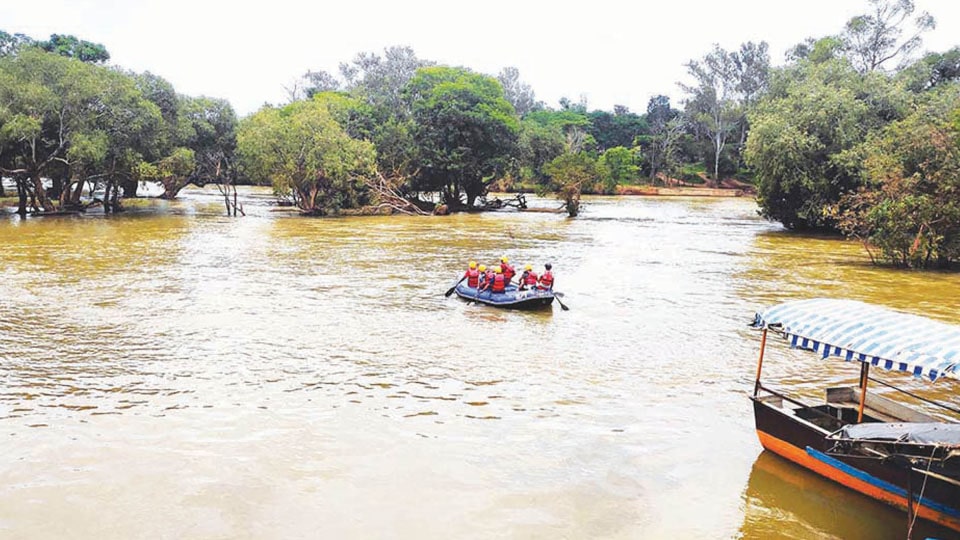
Dubare draws thousands of tourists each month and the addition of a hanging bridge connecting both riverbanks promises to be a significant attraction. Currently, one side of the river is managed by the Tourism Department, while the Forest Department oversees the opposite side, home to the renowned elephant camp.
Presently, tourists can only traverse the river via motorised boats. Due to the high demand for boat rides, many visitors risk crossing on slippery rocks — when the water level is low, leading to accidents and prompting criticism of the Forest Department.
The original hanging bridge plan envisioned a 110-metre structure supported by three columns — two at the ends and one in the centre — with an estimated cost of Rs. 3 crore.
Two poles instead of three
However, the new proposal extends the bridge length to 210 metres, supported by only two poles, eliminating the central column thanks to enhanced suspension wire technology. The revised design will be higher at the centre than at the ends for added stability.
This updated project is estimated to cost Rs. 6 crore. The bridge will have a walking width of 1.5 metres and will be constructed above last year’s flash flood level to ensure safety.
Hanging bridge expert Patanjali Bharadwaj has finalised the design, materials and total project cost, including labour. Unlike the previous proposal where land ownership was shared between the Tourism and Forest Departments, the new project will be built entirely on Forest Department land, streamlining the approval process.
Budget estimate of Rs. 6 crore
The design and location survey have been completed and submitted to the Public Works Department (PWD). A budget estimate of Rs. 6 crore has been forwarded to the Finance Department for final approval. Patanjali Bharadwaj has designed the bridge and calculated the material cost as per the PWD budget list and provided the cost estimate.
The State Government and the PWD have granted in-principle approval and the project has been included in the Forest Department’s Action Plan, receiving sanction from the Forest Minister.
Funding will come from the Kodagu Foundation, which pools entry fees collected at various parks, trekking spots and forest guest houses, supplemented by government funds.
The PWD will supervise the construction, with the tender process set to begin following financial clearance. If funding is timely, the bridge could be completed within six months, with an expected finish date in 2025.
Boating to be discontinued
Bhaskar, Deputy Conservator of Forests (DCF), Madikeri Circle, explained the project’s earlier challenges. “Previously, land issues stalled progress due to the split ownership between the Tourism and Forest Departments, complicating clearances under the Wildlife Act. This time, we selected land solely managed by the Forest Department, eliminating these administrative obstacles. We are committed to seeing the project through. Once operational, boating services will be discontinued, though river rafting will continue,” he said.
For context, Patanjali Bharadwaj is the son of Padma Shri awardee Girish Bharadwaj, known as the ‘Bridge Man’ for constructing over 100 suspension footbridges across India. Girish Bharadwaj founded ‘Rational Engineering Industries’ in 1975 in Sullia, Dakshina Kannada, now known as Ayasshilpa. Patanjali is continuing his father’s legacy with this new project.
Revenue boost
The Dubare Elephant Camp operates daily from 9 am to 11 am and 4 pm to 5.30 pm. Forest officials report that the site welcomes an average of 500 to 700 tourists daily and has four boats for river crossings.
“During festivals and weekends, when over 2,000 tourists visit daily, managing the crowds becomes difficult. Weight restrictions limit boat capacity, forcing many visitors to leave without experiencing the elephant camp. The hanging bridge will resolve these issues and is expected to boost revenue,” officials added.
source: http://www.starofmysore.com / Star of Mysore / Home> News / November 24th, 2024
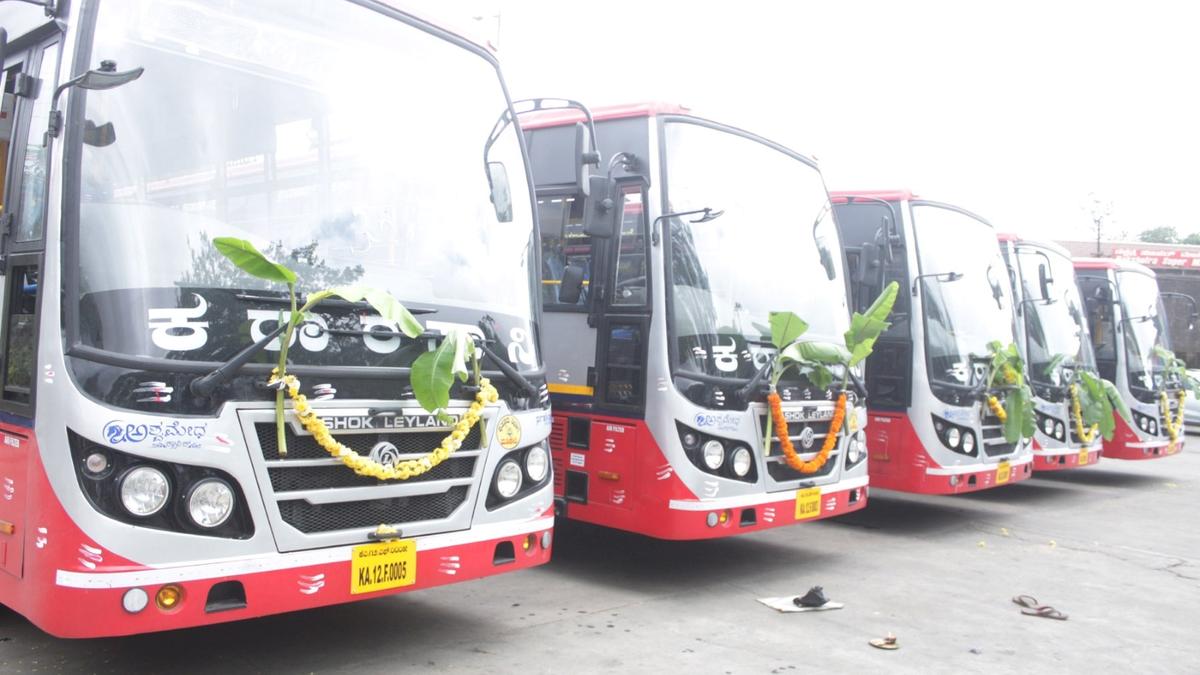
KSRTC buses with the registration of Madikeri RTO were added to the existing fleet of buses operated by the Madikeri depot on Thursday.
Five ‘Ashwamedha’ buses were the new buses with KA-12 vehicle registration that were flagged off in Madikeri by MLA Mantar Gowda.
The five buses will operate as Dasara special in view of the Navarathri celebrations. After Dasara, the buses will be operated in Kodagu district, said the MLA, after flagging off the buses at a function held in Madikeri.
The MLA said he had urged Minister for Transport Ramalinga Reddy for allocating buses with KA-12 registration (Madikeri RTO), during his recent visit to Shanivarasanthe in Kodagu district. Responding to the request, the Minister sanctioned the buses with the Madikeri registration, he said, while expressing happiness over the sanction of buses with Madikeri registration.
More KSRTC buses will ply in Kodagu in the coming days. Women can travel in the newly allotted buses as part of the Shakti scheme, he added.
The five buses have also got fancy registration numbers KA-12 F-01, F-02, F-03, F-04, F-05, the MLA said.
source: http://www.thehindu.com / The Hindu / Home> News> India> Karnataka / by The Hindu Bureau / October 10th, 2024
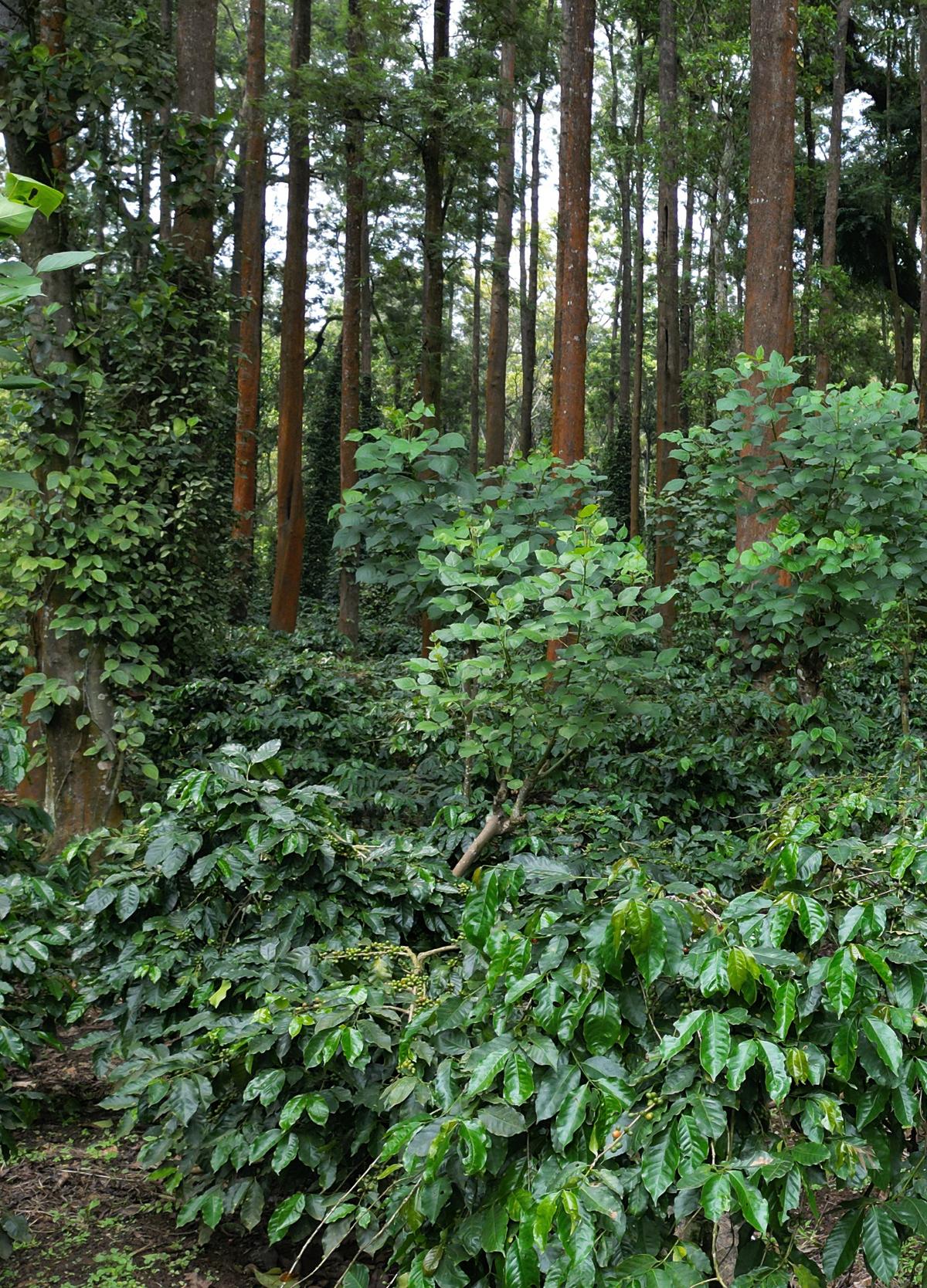
Shade-grown coffee at a Coffee estate in Kodagu district (Coorg), Karnataka. File | Photo Credit: Murali Kumar K.
India’s major plantation sectors such as rubber and coffee have heaved a sigh of relief as the EU Parliament has voted in favour of a proposal by the European Commission to delay the implementation of EU Deforestation Regulation (EUDR) allowing growers, exporters and traders additional time for compliance.
Accordingly, large coffee operators and exporters must meet EUDR regulations by December 30, 2025, while micro and small growers and traders have time until June 30, 2026 to comply, as against the earlier EU set mandatory due diligence procedures and compliance deadline of December 2024.
Being EUDR-compliant indicates a grower’s forest-based coffee produce is legal, and not sourced from any deforested land or unethically cultivated.
Notably, over 70% of Indian coffees are sold in EU countries, and therefore the compliance extension has direct implications on coffee players in India, although India was one among the few countries which grew coffee under two tier thick shade of native trees, say industry players. “Our coffee estates, in addition to coffee and shade trees has diverse flora and fauna. So Indian coffees are most sustainably grown.
In spite of that India opposed EUDR since the compliance does not incentivise sustainably grown coffees,” Coffee Board of India CEO and secretary K.G. Jagadeesha told The Hindu. “Now given that EUDR is a regulation already passed by EU, we have no option but to comply as 70% of Indian coffee exported is going to EU. Coffee Board is developing a platform for assisting coffee producers in India to comply with EUDR. We also welcome the EU decision to extend the deadline,” he added. However, the Coffee Board CEO said EUDR compliance burden on planters and growers would be huge as it required technological and financial resources which won’t be compensated.
Expressing similar concerns K.G. Rajeev, chairman, Karnataka Planters’ Association which represent over 70% of coffee growers in the country, said, ‘‘There are challenges in mobilisation of resources to invest by small and medium sized holdings to be EUDR compliant. Also there are elements of ambiguity. Strict enforcement without clarity on methodology to be implemented may not have desired results. All these may have adverse impact on productivity and profitability of the industry.”
According to Mr. Rajeev, EUDR is a regulation with requirements for due diligence and traceability, which needs lot of data to demonstrate compliance both on ground and documentation. He insisted that Indian coffee couldn’t be compared with coffees in any other geographies as it was predominantly grown under shade.
Coffee activities also encouraged preservation of existing forests which in turn provided habitat for variety of wildlife, avian populations and thus promoted natural biodiversity, he argued. Instead of putting the onus of compliance only on growers, industry institutions and government bodies should help in establishing compliance of regulations, he opined, adding, eco-friendly practices with improved soil health and carbon sequestration aligns with EUDR focus of protection of biodiversity and ecosystem.
Postponement of the implementation of the EU Deforestation Regulation is expected to buoy up the international market for rubber and related products in the short term, said Santosh Kumar, chairman of the Rubber Committee of the United Planters’ Association of Southern India.
“There were ambiguities and concerns in the market. Now that the EUDR will be implemented from 2026, the international market will have a positive impact in the short term,” he said. According to Rubber Board Executive Director M. Vasanthagesan, with the postponement of the regulation by an year, there is more time to prepare the rubber sector. The measures will continue, he added.
The board has entered into an agreement with Hyderabad-based TRST01 as its technology partner to issue due diligence certificates to rubber exporters. “We recently held a stakeholders meeting and will start registering the exporters. We plan to do it in phases, starting with select districts in Kerala. The small-scale exporters will pay an user-fee and register,” he said.
Industry sources said that of the annual production of about 8.5 lakh tonnes of natural rubber, only 4,000 tonnes are exported directly. However, exporters of rubber products will have to source from the growers who are compliant with the EUDR and so the impact will be on the growers.
source: http://www.thehindu.com / The Hindu / Home> Business> Industry / by Mini Tejaswi & M Soundariya Preetha / November 17th, 2024
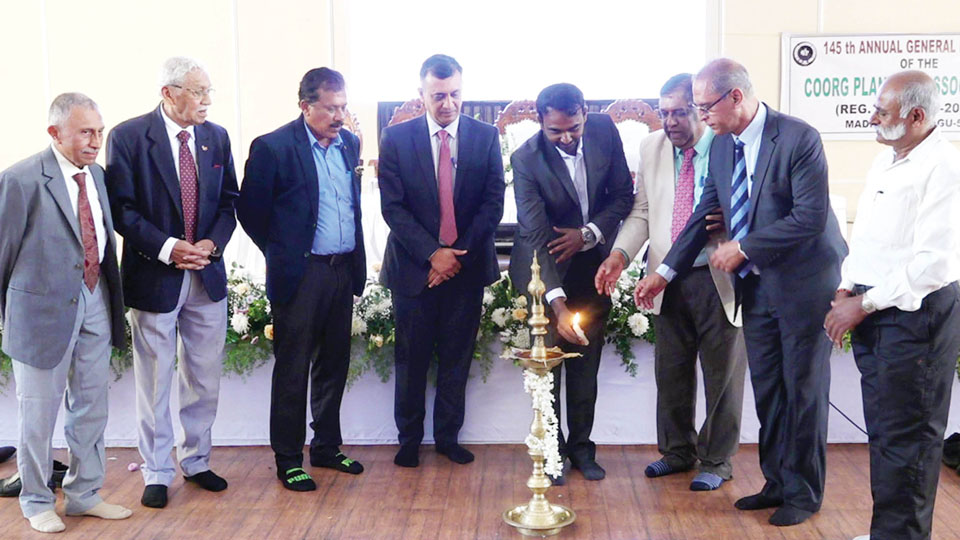
145th Annual General Meeting of the Coorg Planters’ Association held in Madikeri
Madikeri:
The Coffee Board has launched an ambitious initiative to elevate coffee quality across regions by forming community farmer groups at the hobli (village cluster) level. This initiative, announced by Coffee Board CEO and Secretary Dr. K.G. Jagadeesh during the 145th Annual General Meeting of the Coorg Planters’ Association in Madikeri recently, aims to gather insights into coffee quality and apply targeted improvements.
Dr. Jagadeesh highlighted that prioritising quality will ensure a robust future for Indian coffee. Under the initiative, community groups of 100 farmers will be established in each hobli, where collected coffee bean samples will undergo laboratory analysis to determine quality.
Should quality fall short, Coffee Board experts will provide growers with specific guidance on improvement measures, helping them achieve standards that could command higher prices in the international market.
In an effort to attract young talent to coffee farming, the Board also introduced a two-year Coffee Cultivation Diploma. Open to those who have completed the 10th Standard, the diploma programme offers formal training in cultivation and plantation management, addressing the current shortfall of trained supervisory and managerial staff in the industry.
Recognising the expanding demand for skilled café staff, the Board announced plans to offer Barista training for women, youth and enthusiasts. As an estimated 3,000 new coffee cafes are expected to open across India next year, this training will equip individuals to serve plantation visitors and tourists with high-quality coffee..
Tata Coffee Managing Director P.A. Mandanna stressed the importance of sustainable coffee farming, urging growers to embrace environmental, economic and social responsibility. He shared that Tata Coffee has implemented eco-friendly pulpers and rainwater harvesting systems across its estates, which has improved soil fertility and raised groundwater levels.
Experts, including Dr. Raja Vijay Kumar, British agricultural specialist Mark Trisney and K. Sudhindra offered practical demonstrations on various coffee cultivation techniques, providing valuable insights to growers.
Coorg Planters’ Association President A. Nanda Belliappa said that the Association continues to provide essential information to farmers and has actively raised their concerns with the Government.
Other prominent attendees included Association Secretary C.K. Belliappa, Vice-President A.A. Chengappa, Karnataka Coffee Planters’ Association President K.G. Rajeev Ganapathy, former Coffee Board Vice-Presidents N. Bose Mandanna and B.D. Manjunath, among other industry leaders.
The meeting also featured an exhibition and sale of agricultural equipment, drawing significant interest from participants.
This initiative marks a pivotal step by the Coffee Board and industry leaders in strengthening quality and sustainability in Indian coffee farming, aiming to bolster India’s position in the global coffee market.
source: http://www.starofmysore.com / Star of Mysore / Home> News / November 10th, 2024
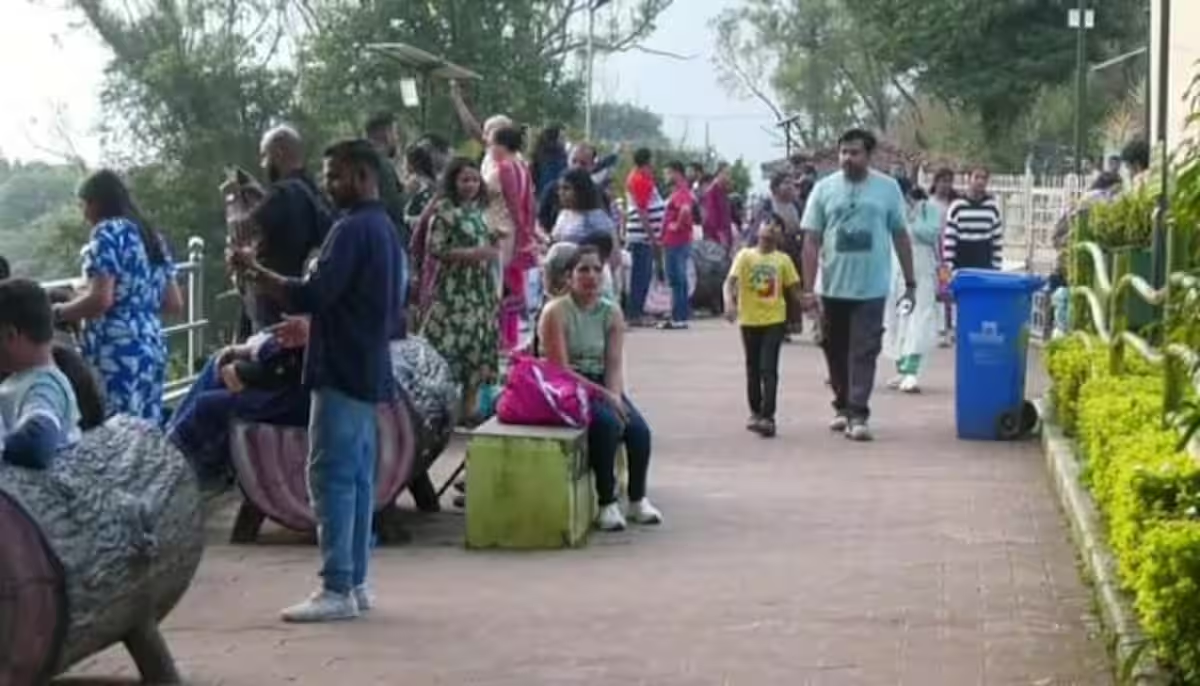
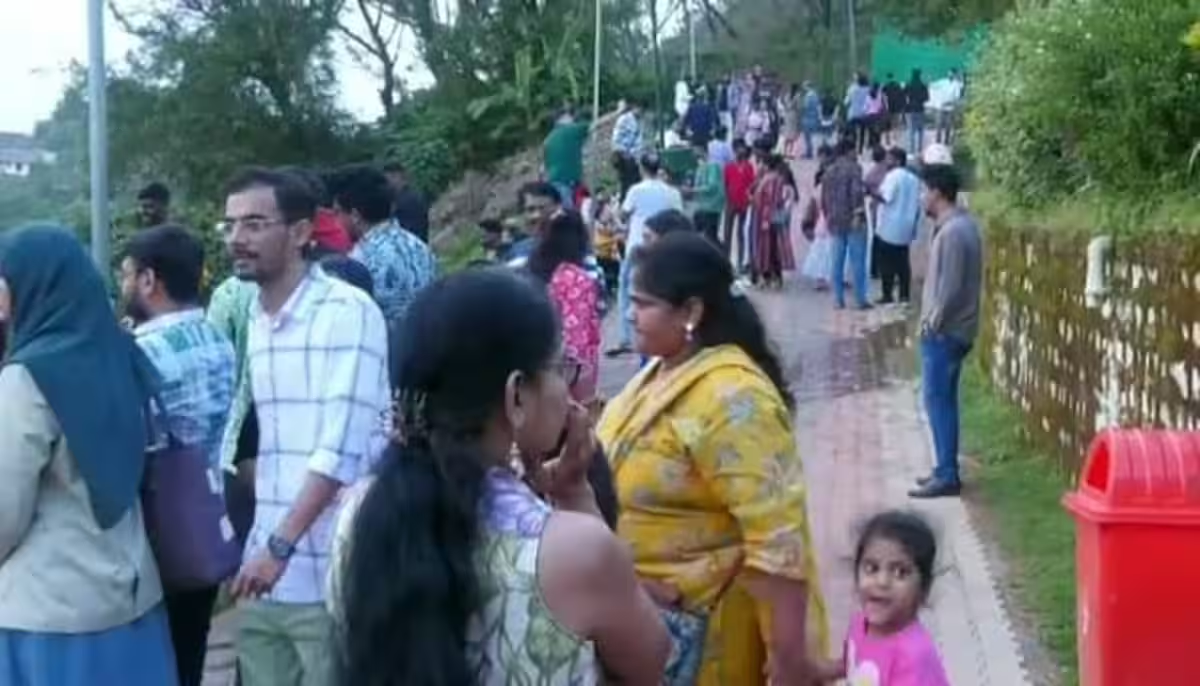
With a string of holidays including Deepavali and Kannada Rajyotsava weekend, the tourist-favorite district of Kodagu has seen a massive influx of visitors.
With four consecutive holidays, including Naraka Chaturdasi, Kannada Rajyotsava, Balipadyami, and Sunday, lakhs of tourists have flocked to Kodagu. Tourist spots and religious sites are bustling with visitors and devotees, creating a vibrant atmosphere in the region.
Tourists have thronged Raja’s Seat, the popular hilltop spot in Madikeri, where visitors are enjoying the panoramic views. Other attractions like Abbey Falls, Dubare, and Nisargadhama are also seeing a surge in footfall. The recent holy occasion of Cauvery Theerthodbhava has further drawn thousands of pilgrims to Talacauvery and Bhagamandala.
Heavy traffic congestion has been reported at major tourist spots and religious centres, including Raja’s Seat, Abbey Falls, and Talacauvery, posing challenges for the police in ensuring smooth traffic flow.
The month-long Kiru Sankramana period after the Theerthodbhava is seen as an auspicious time for a holy dip in the Cauvery River at Talacauvery. Thousands of devotees, including those from other districts and states, are visiting the sacred spot. The ongoing holidays have further increased the number of visitors, causing some local concern over difficulties in performing rituals peacefully.
source: http://www.newsable.asianetnews.com / Asianet Newsable / Home> English News> Karnataka / by Vinaykumar Patil / November 03rd, 2024
The work for the Ain Mane at Dakshinachitra Museum began in June 2023 and the same is ready to be inaugurated today.
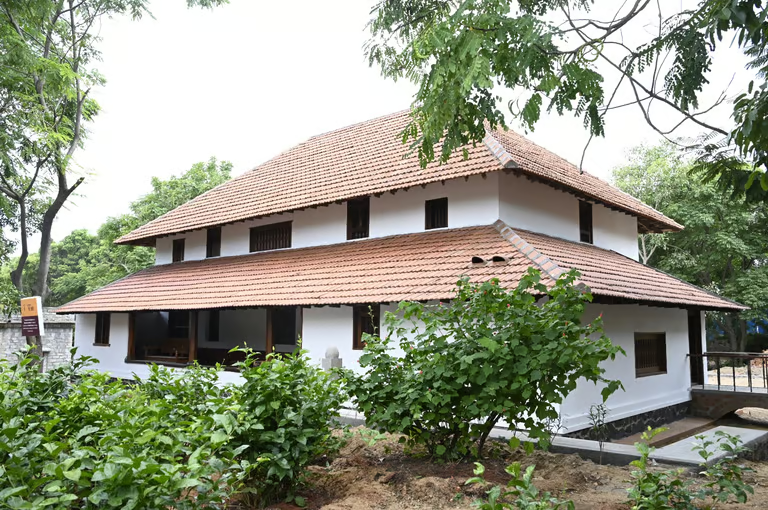
The Ain Mane established at the Dakshinachitra Museum in Chennai.(Photo | Express)
Madikeri :
The Kodava Ain Mane forms the epicenter of the culture of Kodava community. The Ain Mane aka ancestral house act as curators of the Kodava traditions and culture. With an aim to introduce these traditional edifices to the world, a model of the Ain Mane will now be inaugurated at the Dakshinachitra Museum in Chennai today.
Dakshinachitra is a cultural living museum of art, architecture, lifestyle, performing arts and craft. The museum is home to 18 traditional houses that depict the unique culture of South India. And as a 19th addition to the museum, a traditional Kodava Ain Mane has now been established at the center in Chennai and depicts the rich culture of the Kodava community.
“Our long search for an Ain Mane from Kodagu bore fruit in 2022. We acquired and dismantled the 1852 built Kodira family Ain Mane in Kodagu. The entire house was documented in detail and all the wooden elements were numbered, dismantled and transported to Dakshinachitra Museum in early 2023,” shared Rathi Vinay Jha, former secretary of the tourism department, member of the Sandooka Museum Trust and Life Trustee of Daskhinachitra Museum who headed the Kodava Ain Mane project. She was earlier involved in curating materials for the Sandooka Virtual Kodava museum.
The work for the Ain Mane at Dakshinachitra Museum began in June 2023 and the same is ready to be inaugurated today. The Ain Mane is lined with materials that exhibit the unique culture, traditions, rituals, folk culture, attire and cuisine of the Kodava community.
The project was supported by the CSR wing of Hyundai Motors and Mobis India Foundation. As confirmed by Rathi, a Kodava troupe from Kodagu will perform at Dakshinachitra today and tomorrow during the inaugural ceremony.
“The Dakshinachitra Museum managed by Madras Craft Foundation showcases ancestral homes from all the Southern States. The museum is 35 years old and they already have 18 such ancestral homes. The Kodava House will be the 19th such house. The Kodava house will showcase the culture and heritage of Kodavas and Kodagu,” she concluded.
source: http://www.newindianexpress.com / The New Indian Express / Home> Karnataka / by Pragna GR / October 22nd, 2024
The Karnataka State Tourism Development Corporation (KSTDC) has launched the ‘Connect Kodagu’ initiative in Madikeri, unveiling a comprehensive plan to elevate Kodagu as a prime example of sustainable tourism.
Through this initiative, KSTDC aims to promote eco-friendly travel practices, enhance visitor facilities, and preserve the natural beauty of the Kodagu district, a region renowned for its scenic landscapes and rich cultural heritage.
The program gathered local tourism organizations and district officials to discuss actionable steps to ensure a responsible tourism approach that aligns with the needs of both the environment and the visitors.
Among the key measures discussed were upgrades to tourist amenities, tighter control over unauthorized wine production, and collaborative efforts with health and law enforcement agencies to ensure quality standards for local products. KSTDC’s vision is to build a cohesive tourism ecosystem where environmental stewardship is balanced with visitor satisfaction, creating a memorable and responsible experience for all who visit Kodagu.
Kodagu’s popularity as a destination for solo travelers and wellness enthusiasts has been steadily growing, thanks to its peaceful ambiance and potential for health-oriented tourism. To add cultural depth to visitors’ experiences, the initiative includes plans to convert historic local homes into unique lodging options, drawing inspiration from similar projects in North India. Infrastructure enhancements were also highlighted, with the proposed addition of essential facilities such as restrooms and small retail outlets at intervals along key highways to support visitor needs.
As part of its forward-looking strategy, KSTDC and the Kodagu administration are set to release a coffee table book showcasing the district’s many attractions, from scenic spots to cultural landmarks. Additionally, a tourism app is under development, designed to provide tourists with easy access to information on local sites, activities, and services. The initiative has already garnered strong backing from regional tourism associations, which view ‘Connect Kodagu’ as a landmark effort to position Kodagu as a sustainable and culturally enriching destination in India.
Through the ‘Connect Kodagu’ initiative, KSTDC is setting a precedent in the tourism industry by not only addressing current challenges but also proactively planning for the future. By focusing on environmental preservation, cultural authenticity, and infrastructure development, KSTDC aims to create a tourism model that other regions in India could follow. This program underscores the importance of sustainable tourism in fostering economic growth while protecting the region’s ecological and cultural wealth.
source: http://www.travelandtourworld.com / Trave and Tour World / Home> India Travel News / October 29th, 2024
WELCOME. If you like what you see "SUBSCRIBE via EMAIL" to receive FREE regular UPDATES.
Read More »