The Karnataka Government has ordered the nomination of representatives from newly added villages to the Virajpet Town Municipal Council (TMC).
The appointments are set to take immediate effect, with prominent names being included as additional members to the Municipal body.
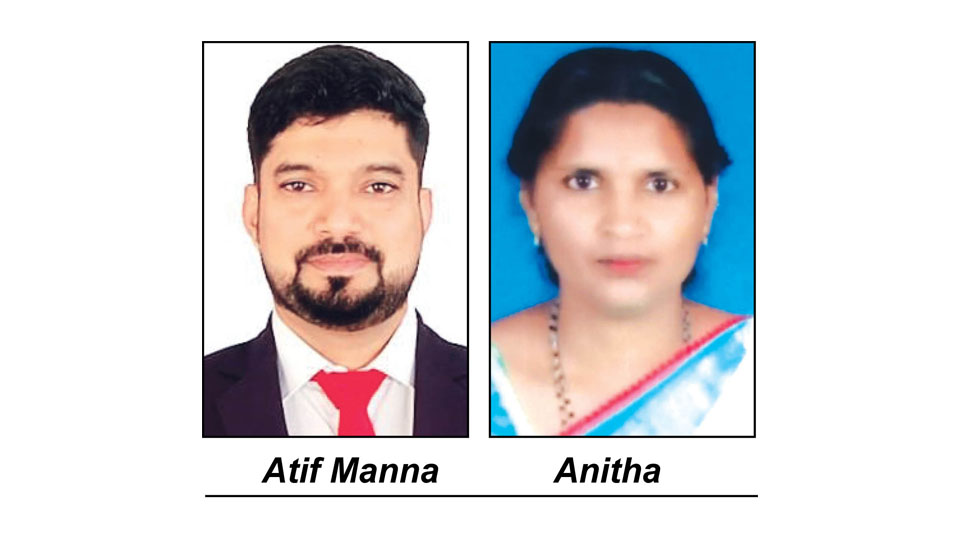
Among those nominated as Councillors is Atif Manna, son of late Shahul Hameed Manna, a former Councillor of Virajpet Town Municipality. Another appointee is H.B. Anitha, wife of Ahmed Wahid.
Atif Manna, who belongs to the Nawayathi community, brings with him a rich political legacy. His family has played a vital role in Virajpet’s governance for decades.
The first Nawayathi Councillor and President of Virajpet Municipality was late Janab Maani Hussain Saheb Bahadur, who served as the President for 11 years. His contributions to the region were recognised by the Coorg Government, which honoured him with the title ‘Bahadur.’
The family’s political involvement spans generations. Atif Manna’s grandfather, Meera Manna, was a Councillor for three terms and once served as Vice-President of the Municipality. His father, Shahul Hameed Manna, served two terms — once through an election and once by nomination.
Continuing this lineage, Atif Manna has now been nominated as the Councillor to represent the newly expanded areas of Virajpet TMC.
source: http://www.starofmysore.com / Star of Mysore / Home> News / October 25th, 2024
“Local markets are thriving with the growing demand and most of the farmers would be in a good position where they sell out every year and earn higher profits. They don’t have to sit on stock, they don’t have to wait for a trader to pick up any,” said Viggnesh V, a coffee industry consultant.
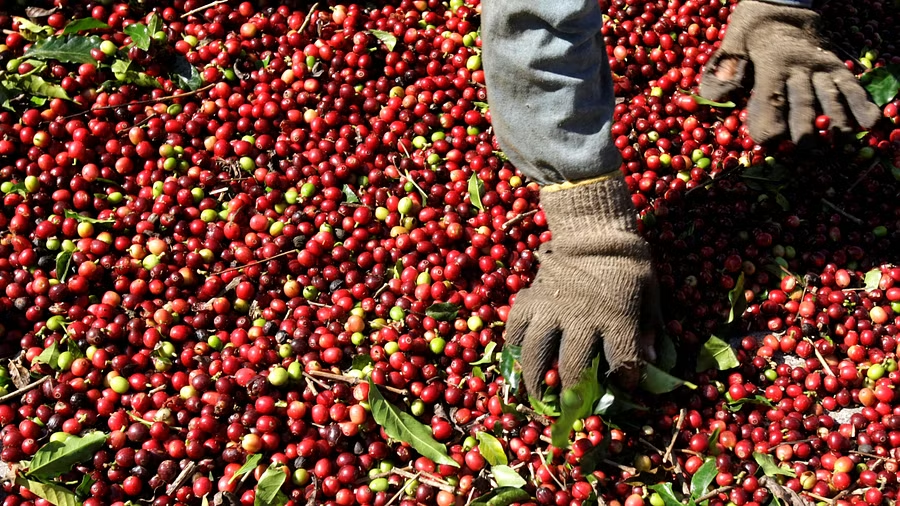
A worker selects arabica coffee beans at Conquista farm in Alfenas in the southern Brazilian city of Minas Gerais. Credit: Reuters photo
Bengaluru:
Extreme climate events leading to untimely rains, fires and droughts across South Asia and Latin America have fueled worries for the already surging coffee prices. This alongside Indian consumers’ rising preference towards coffee as a beverage has proven beneficial for the producers.
“Local markets are thriving with the growing demand and most of the farmers would be in a good position where they sell out every year and earn higher profits. They don’t have to sit on stock, they don’t have to wait for a trader to pick up any,” said Viggnesh V, a coffee industry consultant.
Prices will continue to rise in the foreseeable future, stakeholders and industry experts told DH.
“It is most likely to plateau at max after two years because at the point when it crosses a particular set, it will become completely unaffordable for anyone in the value chain,” Viggnesh said.
Coffee prices, mainly Arabica beans, have touched their highest prices in 13 years due to persistent supply disruptions. Prices are up roughly 40 per cent in 2024 as shortages of the cheaper robusta beans have evoked demand for the arabica variety favoured by specialty chains.
Global scenario
The rally in coffee prices has been gathering pace due to erratic climate in top producer Brazil. The sporadic rains and warmer temperatures have hurt the South American nation’s production.
Prices for the cheaper robusta variety, which is also produced by Brazil have also jumped. This, in turn, has left companies and consumers paying for pricier coffee, and retailers have been scrambling to secure beans.
Vietnam, the second largest producer of coffee is also facing excess rain coupled with farmers shifting to the production of Durian, a fruit widely popular in south Asia which is turning out to be more profitable than coffee.
Indian market expected to grow
The two main varieties of coffee manufactured in India are Arabica and Robusta. Arabica has more demand than robusta coffee due to its mild aromatic flavour. According to the Food and Agriculture Organization of India, about 70 per cent of the total coffee produced in India is exported. India ranks fifth in total coffee exports in the world.
Karnataka produces around 71 per cent of total coffee in India, a majority of which is Robusta. The rest of the production comes from Kerala, Tamil Nadu and the northeastern region. India produced 3,74,200 metric tonnes (MTs) in 2023-24, out of which Karnataka contributed 2,66,885 MT.
India’s coffee market was valued at $478 million in 2022 and is expected to reach $1.2 billion by 2032 at a compound annual growth rate (CAGR) of 9.87 per cent during the forecast period 2024-2033, according to data by Custom Market Insights.
However, several challenges cloud the optimistic future of coffee producers, shortage of labour being one of them. “Almost 65 per cent of our total cost on an estate is labour cost, which has increased steadily over the past few years. 70 per cent of Brazilian coffee crop is done mechanically because their areas are flat, whereas ours are on slopes with coffee trees which makes us highly dependent on labour,” said Jacob Mammen, managing director of Badra Estates located in Chikkamagaluru.
Climate change has been another headwind for coffee producers and experts suggest that it is here to stay. Sudden rain spells have in fact damaged the coffee crops or contributed to low quality.
Some industry insiders say the impact is minimal for now. Suhas Dwarkanath of Benki Coffee said, “To be honest, there have been difficulties in terms of water, temperatures, but it has not affected production majorly because it is not something new.”
However, data by the Coffee Board of India shows a marginal decline in coffee production in India. India produced 3,74,200 MTs in 2023-24 against 3,52,000 MT in 2022-23.
“Now that the middle class is growing and disposable income is increasing, India will become one of the biggest consumers of coffee in the next 3-5 years and the transition can already be seen,” added Benki’s Dwarkanath.
source: http://www.deccanherald.com / Deccan Herald / Home> Business / by Sonal Choudhary / October 21st, 2024
Supply issues drive prices higher, shipment volumes drop marginally.
Thanks to the surging trend in global Robusta prices, India’s coffee exports for the financial year ending March 2024 touched a new high in value terms.
Despite a marginal decline in the volumes, shipments were at a new record. In fact, financial year 2023-24 was the third consecutive year during which Indian coffee shipments registered a new record.
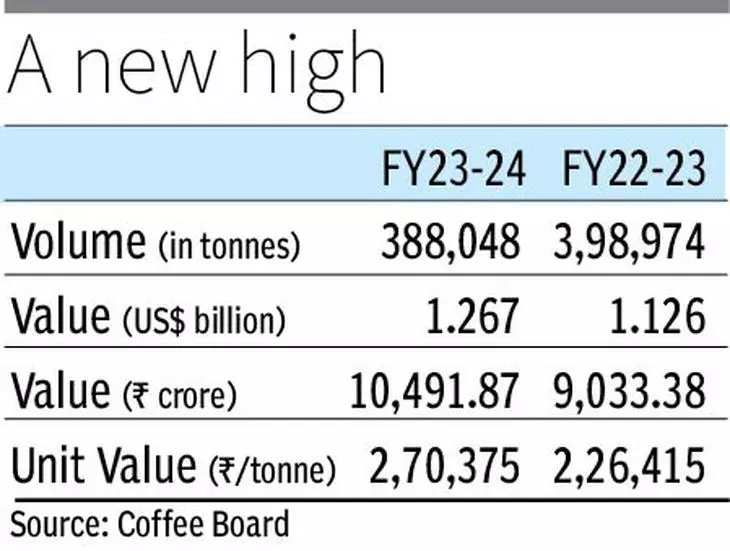
In dollar terms, Indian coffee shipments registered an increase of 12.5 per cent to $1.26 billion over $1.12 billion in the 2022-23 fiscal. Similarly in the rupee terms, exports were up 16 per cent at ₹10,491 crore over ₹9,033 crore.
In quantity terms, the exports saw a marginal decline of 2.5 per cent at 3.88 lakh tonnes over 3.98 lakh tonnes in 2022-23.
Supply issues
The global robusta prices are at a three-decade high on supply issues in the top producing countries such as Vietnam and Brazil. This has worked to the advantage of the Indian coffee sector, where robusta is the most widely-produced variety. As a result of high robusta prices, the per unit realisation for Indian exporters went up by about a fifth to ₹2.7 lakh per tonne during 2023-24 compared with ₹2.26 lakh in the previous financial year.
“A combination of factors such as the good market prices for Indian coffee, supply side disruptions in Brazil and Vietnam have helped push up the exports” said K G Jagadeesha, Secretary and CEO, Coffee Board. “Our export quantity in the last three years has increased principally from instant coffee,” he said.
India exports over about two-thirds of the around 3.5 lakh tonnes of coffee produced in the country. It also imports cheaper robusta coffee to re-export them after value addition.
Ramesh Rajah, President, Coffee Exporters Association, said, most of the increase in export value during financial year 2023-24 has come from the robustas. The demand is good and the shipments during the last two quarters of the financial year have been better than the earlier quarters.
Farmgate prices
Farmgate prices of robustas in India have overtaken the arabicas in the recent weeks, tracking the global uptrend. Robusta parchment prices are ruling at ₹14,000-14,500 per 50 kg bag, while the robusta cherry, the widely-produced coffee variety in the country, is ruling at ₹8,500-8,950. Arabica cherry coffee is hovering around ₹8,000-8,300 per bag, while Arabica parchment is ruling at around ₹13,900-14,300.
In fact, Indian robusta parchment AB is commanding a premium of $700-750 a tonne over the London terminal prices, while the premiums for robusta cherry is hovering around $350-400 per tonne.
Italy, Germany, Russia and UAE are among the major destinations for the Indian coffees. For the crop year 2023-24 starting October, the Coffee Board, in its post-blossom estimates, has projected a crop size of 3.74 lakh tonnes over the previous year’s final estimates of 3.52 lakh tonnes.
source: http://www.thehindubusinessline.com / Business Line, The Hindu / Home> Economy> Agri Business / by Vishwanath Kulkarni / April 02nd, 2024
Anitha Nanda Appanervanda, a 61-year-old coffee farmer from Coorg, Karnataka, stands as a symbol of determination, sustainability, and empowerment. Over the course of her 22-year journey, Anitha has not only established a successful coffee farm but has also transformed the lives of hundreds of women in her community, fostering a culture of eco-friendly farming practices.
A passion for farming rooted in childhood
Born and raised in Bengaluru, Anitha’s passion for farming took root in her childhood. Every school vacation, she would visit her grandfather’s coffee estate in Coorg, a place that quickly became her second home. The vast expanse of coffee plants, the rich biodiversity, and the sense of peace found in the hills left an indelible mark on her young mind. “From those early days, I knew I wanted to return to the hills and be part of coffee farming,” she fondly recalls. This deep connection to the land paved the way for her lifelong dedication to sustainable agriculture.
Her dream started to take shape after she married Nanda Belliappa, a fellow coffee farmer from Coorg. Together, they took over the family-owned Surya Kiran Estate, where Anitha embarked on her mission to blend her passion for farming with eco-friendly practices.
Despite her enthusiasm, the road to success was not easy. In the early years, Anitha and her husband faced numerous challenges. Coffee farming requires patience, and the couple struggled to produce good harvests from their robusta coffee plants. “It took almost 10 years before we saw good yields,” she shares, highlighting the perseverance and dedication it took to build the farm.
Their breakthrough came when they adopted intercropping techniques, blending coffee cultivation with black pepper. This method not only boosted productivity but also contributed to a more sustainable farming system. Today, they cultivate 110 acres of robusta and 40 acres of arabica coffee, a testament to their hard work and commitment to innovation in farming.
Anitha’s approach to farming is deeply rooted in her desire to protect the environment. Situated in the biodiversity-rich region of Coorg, her coffee estate is more than just a farm – it is a sanctuary for wildlife. Her coffee plants grow under the protective canopy of rainforest trees, a practice known as shade-grown coffee farming. This method helps maintain the natural balance of the ecosystem, providing shelter for birds, insects, and other wildlife.
“We must protect this land from climate change and global warming,” she asserts, emphasising the role that sustainable practices play in preserving the environment for future generations. Anitha’s farm has been awarded Rainforest Alliance Certification, recognising her dedication to eco-friendly farming.
While she remains deeply connected to traditional farming methods, Anitha is not afraid to embrace modern technology when it benefits the farm. She uses machines for irrigation and weeding, which helps reduce labour and improve efficiency. However, the core of her farming philosophy remains grounded in traditional practices that have been passed down through generations.
Anitha’s success is not just about coffee. She has diversified her farm by growing black pepper and areca nuts, a strategy that has made her farm more resilient and sustainable. This diversification has allowed her to reduce dependency on a single crop and has opened up new streams of income for her family.
Empowering women and building a community
Anitha’s contributions go far beyond her own farm. As an active member of Biota Coffee FPC and the secretary of the Codagu Women’s Coffee Awareness Body (CWCAB), she has empowered around 400 women in her community. This group, which was founded in 2002 during a time when coffee prices were low, has provided women with the support they need to embrace eco-friendly farming practices and achieve fair prices for their crops.
For Anitha, farming is not just a livelihood – it’s a community effort. Through CWCAB, she has helped women coffee farmers promote sustainable farming and spread awareness about the benefits of coffee. Each year, on International Coffee Day, they celebrate by giving away free coffee to locals and tourists, a gesture that symbolises their pride in the hard work that goes into every cup.
Anitha’s dedication to sustainable farming has not gone unnoticed. In 2020, she received a Certificate of Appreciation from the Indian Institute of Spices Research (ICAR-IISR) for her pioneering work in intercropping black pepper with coffee. “It was a proud moment,” she recalls, noting that it validated the years of effort she had poured into her farm.
Despite her success, Anitha continues to innovate and learn. She has recently taken up beekeeping, recognising the crucial role bees play in pollination and the overall health of her farm. This new venture is another example of her commitment to maintaining a healthy, balanced ecosystem.
Coffee Farming: A source of Income and Sustainability
Sustainable farming has proven to be both environmentally and financially rewarding for Anitha. She cultivates robusta coffee, which has been particularly profitable in recent years. Producing around 19-20 bags per acre, she earns Rs. 10,000 per bag, while her arabica parchment fetches a higher price at Rs. 16,000 per bag. This strong financial return is a direct result of her commitment to eco-friendly practices.
While she does use some fertilisers, Anitha avoids harmful chemicals, focusing instead on maintaining native trees and enhancing soil health. Her approach blends the best of traditional and modern farming methods, ensuring that her land remains fertile and productive for generations to come.
A legacy of passion and purpose
Anitha Nanda’s journey from city life to becoming a successful coffee farmer in Coorg is a testament to her passion for the land and her determination to create a better future for her community. Through her sustainable farming practices, she has not only preserved Coorg’s rich biodiversity but has also empowered hundreds of women to take control of their livelihoods.
For Anitha, coffee is not just a crop – it’s a legacy, a connection to her roots, and a vision for a sustainable future. Her story is a powerful reminder that with hard work, care for the environment, and a strong community, anything is possible.
source: http://www.theorganicmagazine.com / The Organic Magazine / Home / by Tanishq Verma
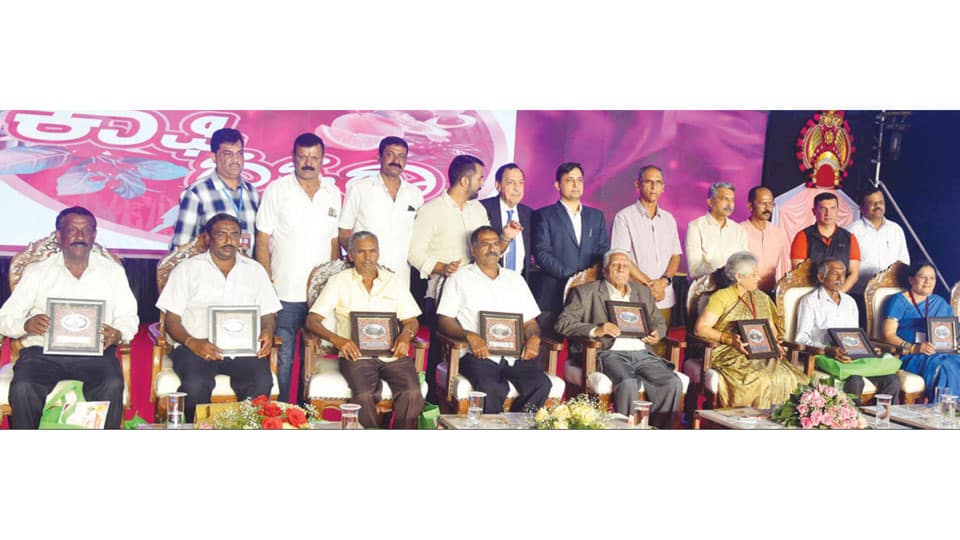
The first-ever ‘Coffee Dasara’ launched at Gandhi Maidan as part of the recently held Madikeri Dasara was a ground-breaking initiative to elevate the coffee industry and engage the farming community. This event raised awareness about the transformative changes in coffee cultivation and the various facilities available to growers.
Conceptualised by Dr. Manthar Gowda, MLA from Madikeri Constituency, the two-day event on Oct. 7 and 8 featured a diverse array of coffee enterprises and 34 departmental stalls, all dedicated to equipping growers in the district with essential information and resources.
Numerous organisations also participated, setting up stalls to offer supplementary materials and insights related to various agricultural products, including coffee, thereby fostering a spirit of collaboration and innovation in the agricultural sector.
Inaugurating the Coffee Dasara, Agriculture Minister Cheluvarayaswamy affirmed the Government’s commitment to standing by farmers to ensure the comprehensive development of all agricultural activities, particularly coffee cultivation, which serves as the backbone of Kodagu’s economy.
He noted that coffee cultivation does not fall under the purview of the Agriculture Department or the State Government. In various regions of the State, paddy cultivation is widespread, supported by reservoirs. However, water availability often decreases as crops mature, leading to difficulties for farmers, he said.
“To tackle this issue, the State Government has decided to create farm ponds (krishi honda) in command areas, which will aid farmers during water shortage. The Government plans to grant permission for the construction of 250 farm ponds in Kodagu district,” he assured.
Escaping modernisation
As the chief guest, Minister for Health and Family Welfare, Dinesh Gundu Rao, stressed that no region can escape the wave of modernisation. He underscored the need for balanced development while maintaining cultural roots.
Emphasising the promotion of coffee cultivation and industry, he advocated for the establishment of local coffee brands and raising awareness about domestic coffee consumption.
Virajpet MLA Ajjikuttira S. Ponnanna praised the focus on coffee cultivation during the Madikeri Dasara celebrations, expressing hope that importance of coffee would continue to be emphasised in future Dasara festivals, spreading its significance throughout State.
MLA Dr. Manthar Gowda highlighted the numerous challenges faced by coffee growers and called for support, urging Ministers not to permit the conversion of paddy fields into non-agricultural land to preserve Kodagu’s agricultural heritage.
South Indian filter coffee
Coffee Board Chairman Dinesh Devabrinda announced a plan ‘from farm to market,’ aimed at doubling coffee production over the next decade while maintaining quality.
He noted that the Government of India recognises the significance of coffee and has allocated Rs. 307 crore to the Coffee Board for the development of the coffee industry. Of this, Rs. 19 crore will be provided to coffee growers in Kodagu through various assistance schemes.
Currently, the average coffee consumption per Indian is 30 cups. If this figure can be increased to at least 60 cups, internal coffee consumption could rise from 2,50,000 tonnes to 3,50,000 tonnes, significantly benefiting farmers.
He emphasised that South Indian filter coffee is among the best globally, and the Coffee Board is actively working on initiatives to promote this filter coffee on a worldwide scale.
Kodagu Deputy Commissioner Venkata Raja, Assistant Commissioner Vinayak Narwade, former MLC Veena Achaiah, Secretary of Karnataka Planters’ Association K. Rajiv Ganapathy, President of the Coorg Planters’ Association Nanda Belliappa, General Secretary of the Women’s Coffee Awareness Society Anita Nanda, Coffee Board Member Taluru Kishore Kumar, Coffee Board member, Kodagu Congress President Dharmaraj Uthappa, former President Vinod Shivappa, General Secretary of the Madikeri Dasara Committee B.Y. Rajesh Yellappa and others were present.
source: http://www.starofmysore.com / Star of Mysore / Home> News / October 16th, 2024
Aimed at coffee enthusiasts, industry professionals, and the general public, IICF will feature speciality coffee stalls, equipment showcases, workshops, competitions, and entertainment.
The Specialty Coffee Association of India (SCAI), in collaboration with the Coffee Board of India, is set to launch the India International Coffee Festival (IICF) in October 2024. Built on the success of the 2023 World Coffee Conference in Bengaluru, which attracted over 2,400 delegates and more than 20,000 visitors, IICF aims to offer an even larger celebration of coffee culture.
The festival will span three major cities, Delhi, Mumbai, and Bengaluru, with preliminary events scheduled for Delhi (October 4-6), Mumbai (October 11-13), and Bengaluru (October 28-30). The grand finale will take place in Bengaluru from December 13-15, where India’s national coffee champion will be chosen to represent the country on a global stage.
Aimed at coffee enthusiasts, industry professionals, and the general public, IICF will feature speciality coffee stalls, equipment showcases, workshops, competitions, and entertainment. The event will also include prestigious contests such as the National Barista Championship, the Brewers Cup Championship, and Coffee in Good Spirits, combining coffee and mixology.
SCAI President DM Purnesh expressed excitement, stating, “It gives us immense joy and satisfaction to bring the largest coffee festival to India. The country with an ever growing coffee drinking audience is a very important market for us and India does play a major role in shaping the future of coffee culture. We hope to see connoisseurs and stakeholders coming and spending three fruitful days in these three leading cities of India. Let the festival be a meeting ground of ideas and exchange of creative skills.”
source: http://www.bwhotelier.com / BW Hotelier / Home> F & B / by BW Online Bureau / October 07th, 2024
“Set amidst verdant green coffee plantations in Coorg, the film is an ode to every coffee farmer, the backbone of the coffee industry.”
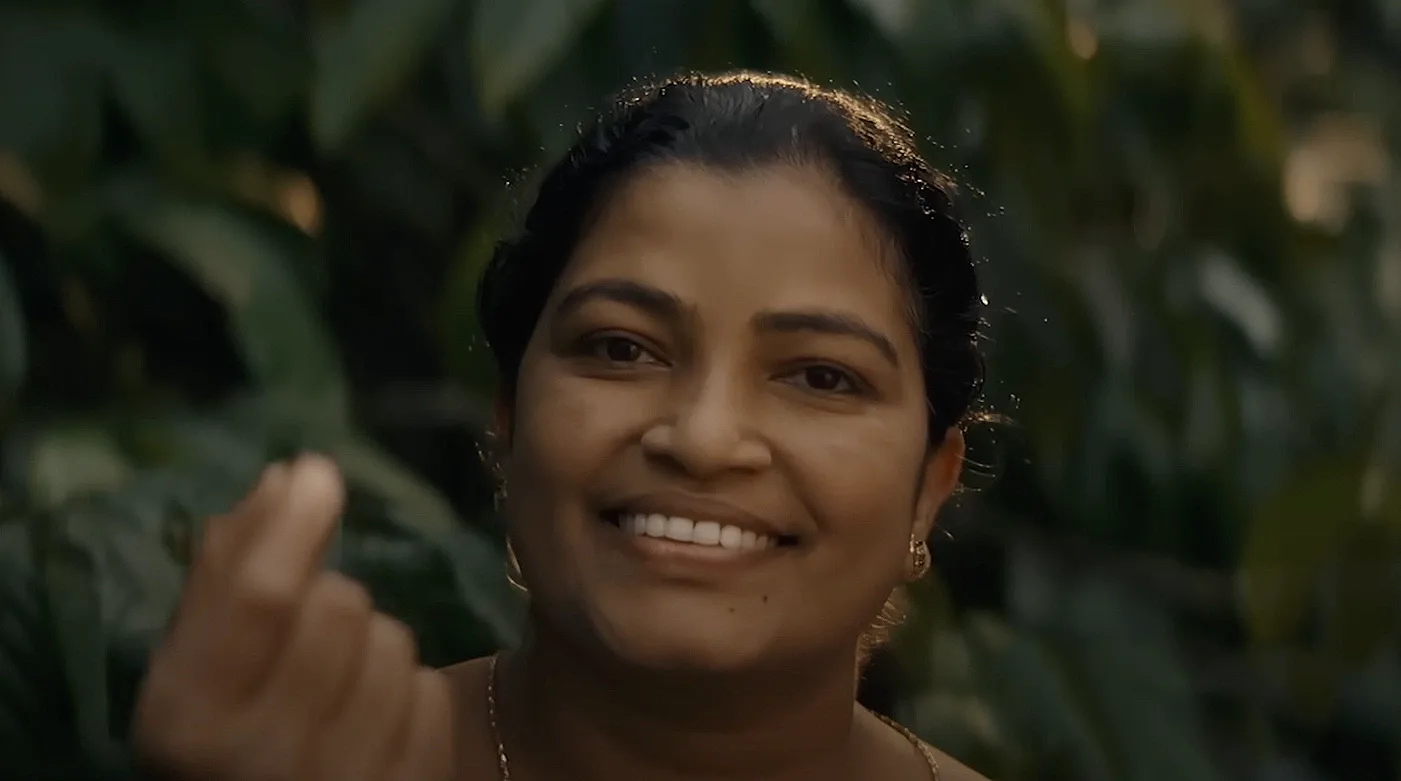
NESCAFÉ Sunrise together with Dentsu Creative Webchutney has launched a campaign to celebrate coffee farmers and honor their dedication and tireless efforts in growing coffee.
The campaign, which features a film directed by George K Antoney and produced by Kadhai Films, pays tribute to the love and commitment with which these farmers work in their fields while also highlighting the association with Nestlé agronomists.
Nestlé India works closely with around 5,000 coffee farmers in Karnataka, Tamil Nadu, and Kerala through the NESCAFÉ Plan.
The NESCAFÉ Plan, introduced in India in 2012 aims at developing good agricultural practices, sustainable management of landscapes, and enhancing biodiversity in coffee farms. It blends the valuable traditional knowledge of coffee cultivation with modern scientific practices to aid the sustainable growth of coffee in the region.
“Behind every delightful cup of Nescafé, there are coffee farmers whose hard work and dedication contribute to the exceptional taste of our coffee,” said Sunayan Mitra, Director, Coffee and Beverages business, Nestlé India.
“On International Coffee Day, we paid tribute to these remarkable farmers by sharing their stories on our jars and through this beautiful campaign crafted with love by our teams at Nestlé and Dentsu Creative Webchutney. The coffee farmers are the backbone of our NESCAFÉ Plan. This campaign is a homage to their perseverance and dedication, and I hope that it will be appreciated by our consumers.”
“This campaign is centered on the hard work of coffee farmers and the collaborative work between Nestlé India and the coffee farmers,” added Vidya Sankar, Senior Vice President, Dentsu Creative Webchutney.
“It also shines the spotlight on the contributions made by coffee farmers to our society and how they impact the consumer’s experience while they enjoy a delicious cup of Nescafé Sunrise. Set amidst verdant green coffee plantations in Coorg, the film is an ode to every coffee farmer, the backbone of the coffee industry.
Spotlight: Dentsu Creative India
source: http://www.brandinginasia.com / Branding in Asia / Home / by Editorial Staff / October 04th, 2024
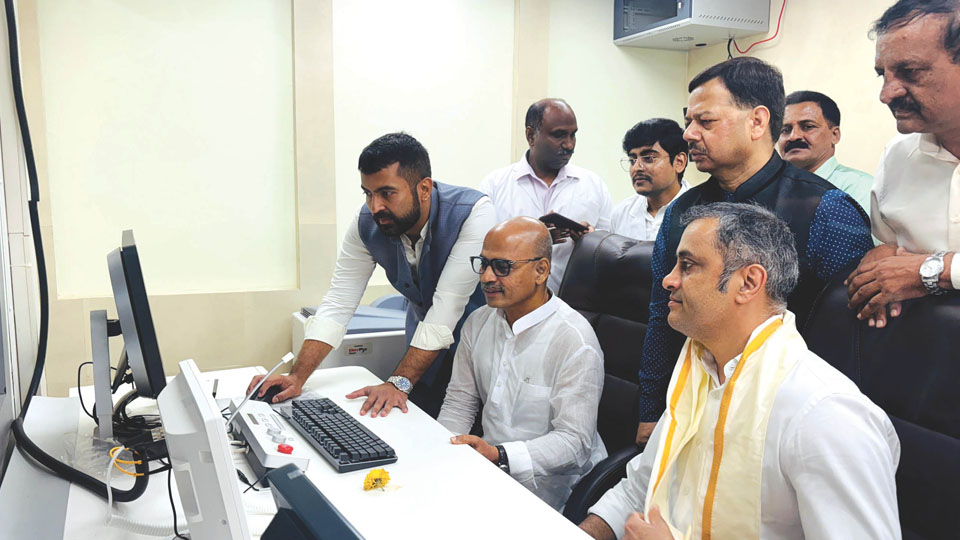
In a significant advancement for the healthcare needs of Kodagu District, an MRI (Magnetic Resonance Imaging) machine was inaugurated in Madikeri on Sunday, fulfilling a long-standing demand from the local community.
This state-of-the-art facility is now operational at the teaching hospital of the Kodagu Institute of Medical Sciences (KIMS).
Minister for Medical Education Dr. Sharan Prakash Patil inaugurated the facility, alongside Madikeri MLA Manthar Gowda and Virajpet MLA A.S. Ponnanna.
Previously, residents of Kodagu had to travel to Mysuru, Bengaluru or Mangaluru to access MRI services, as no such diagnostic facility was available in any Government or private medical centre within the district.
The introduction of the MRI scanning facility at the teaching hospital will enable patients to receive crucial diagnostics right in Madikeri, streamlining their access to necessary medical treatment based on the reports generated.
Minister Patil said that this installation will significantly enhance the ability of patients to undergo essential MRI diagnostic tests locally. He also assured the establishment of a cardiac centre at the District Hospital in Madikeri under a Public-Private Partnership (PPP) model, emphasising the need for improved healthcare facilities in the hilly terrain of Kodagu.
The MRI equipment, initially sanctioned for another location, was relocated to Madikeri due to persistent advocacy from MLA Manthar Gowda. Additionally, Minister Patil confirmed that a proposal for Rs. 60 crore has been submitted to the State Government for the construction of a new building at the District Hospital, which is expected to receive approval soon.
source: http://www.starofmysore.com / Star of Mysore / Home> News / October 03rd, 2024
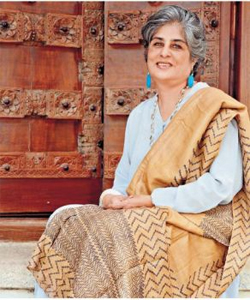
Thoroughly natural and instinctive is how one can identify Arati Monappa’s designs. With an experience of more than 20 years in the business of fabric and fashion designing, Arati Monappa is the probably one of the few designers who personally ensure that their products are natural and that their creations are purely energy efficient and eco-friendly ones.
Her Emergence as a Natural Designer
Arati Monappa started her career as a designer from Ahmedabad. The label Arati that came into the scene nearly 20 years back saw its birth in 1995. Arati had been working in collaboration with a team of craftsmen who specialized in handicrafts, right from designing fabrics for export as well as dyeing them. Arati’s flair for designing blended finely with the craftsmen’s handicraft resulting in the culmination of the brand Arati.
A Look at Her Metamorphosis
Before the designer label Arati shot into the scene, her works were primarily marketed under the brand name Melange, a leading chain of women’s ethnic apparels. After launching her label, the designer, who had been in touch with different groups of craftsmen, decided to involve them under her umbrella project. She did this in an effort to improve their living standards.
Arati, in association with the All India Artisans and Craftworkers Welfare Association, brought the terms and conditions on table keeping the welfare of the artisans as the primary motive behind their employment.
While on one side, the workers were employed to encourage their work and direct it in the right direction under her flagship, on the other hand, Arati ensured that the profits earned were being utilized for providing better living conditions, education to their children and making more equipments and basic infrastructure available to them that they’d be able to utilize for other clients as well.
Her Achievements Along the Way
The year 1996 witnessed Arati invading the domain of home furnishings. The crafting and designing procedures remained the same, but the labour required was intense. The designs were eye-catching, each one redefining uniqueness while serving as a fine example of exceptional handicraft in fabric.
This was followed by an exhibition of Arati’s sari designs by the Silk Export Promotion Council in Paris. Arati was no longer a national name; she had evolved into an international brand name many recognized with.
The next year, in 1998, Arati migrated from Ahmedabad to the business centre of the nation, Mumbai. Her unique designs became a rage and to maintain her distinct style, Arati completely avoided going fully commercial. Her designs were limited too, with only a few put up at exhibitions and rest made to order.
In the year 2000, Arati was awarded the Kingfisher Fashion Award along with a few others as one of the leading names in design from the southern peninsula. The designer also targeted the Lakme Fashion Week with her array of earthy palettes of red, blue, green and different shades of brown and black, the ramp sure beheld the magic of simplicity and originality fashion could be remoulded into just with someone’s ideas working in a fine balance with the fading handicraft.
The motifs, texture of fabrics and their arrangements on the cloth to reproduce something completely unique requires extreme imagination from Arati. Arati’s natural work with silks, motifs, coconut fibre and combs to get the designs and above all, her instincts to find that right blend of colour, fabric and pattern make her a class apart.
She currently works from her boutique, Serenity, which is based out of Bangalore. Arati still uses minimalistic advertisements to keep her costs low and utilize more funds for the welfare of all artisans and craftsmen.
source: http://www.karnataka.com / Karnataka.com / Home> Personalities / by Madur / November 04th, 2011
The company aims to expand to 35 stores across the country by the second quarter of next fiscal year.
First Coffee raised USD 1.2 million in a seed funding round led by Beenext. The round also saw participation from other leading investors such as Ashish Gupta (Helion Venture Partners), AngelList India, Ritesh Malik (Founder, Innov8), Sahil Malik (Founder, Da Milano), Chandini Purnesh (Owner, Harley Coffee Estate), Aman Arora (Co-Founder, Board – Keventers), Agastya Dalmia (Director, Keventers), Aman Bahel (Apex Group), Nakul Dev Chawla (Art Mumbai) and Shriram Nene.
The youth-oriented brand will deploy the funds to drive the company’s expansion and bring its premium speciality coffee experience to more locations across the country, as per a press release. First Coffee aims to expand its store presence in key urban areas across New Delhi and national capital region (NCR) and tier 1 cities in north India. First Coffee will focus mainly on small format quick service restaurant (QSR) outlets in high-footfall areas such as malls, corporate parks, high streets and metros.
The company is set to open 35 stores across the country by the second quarter of next fiscal year. The funds raised will also be used for hiring and amplifying marketing efforts.
“First Coffee is uniquely placed where they are not just selling a product but rather a coffee experience, blending tech, sustainability and coffee. Under the abled leadership of Sohrab and Shiv, industry veterans in the space of quick service restaurants, the brand is creating a new standard in India’s speciality coffee market,” commented Anirudh Garg, Partner at Beenext, on First Coffee and its offerings.
To enhance customer experience and streamline operations, First Coffee, founded by Sohrab Sitaram and Shiv Dhawan in 2024, claimed to integrate experiential big data with analysis powered by artificial intelligence, creating a technology-driven retail model. Using shade-grown coffee and eco-friendly methods like man-made lakes for irrigation and traditional insect traps, First Coffee ensured that its coffee is sustainably sourced while providing premium quality.
Shiv Dhawan, Co-founder of First Coffee, Spoke on the brand’s distinct positioning, “We are the first brand to bring true speciality coffee scoring 91 per cent on the Specialty Coffee Association (SCA) scale to the Indian market. At First Coffee, we’re not just serving coffee; we’re crafting a unique, premium experience while still catering to the fast-paced lifestyle of our customers. We’re committed to delivering exceptional coffee at a competitive price point, making world-class coffee accessible to everyone.”
source: http://www.bwdisrupt.com / BW Disrupt / Home> Invest News / by BW Online Bureau / September 26th, 2024
WELCOME. If you like what you see "SUBSCRIBE via EMAIL" to receive FREE regular UPDATES.
Read More »