Category Archives: Business & Economy

Rashmika Mandanna embraces her Kodagu heritage in elegant blue Coorgi silk sari

Rashmika Mandanna is no stranger to creating memorable fashion moments. Over the years, the South Indian star has cultivated a distinct style that sets her apart, effortlessly blending traditional and contemporary fashion. Her wardrobe is filled with everything from elegant lehengas to form-fitting evening wear. However, it’s her love for the simplicity and sophistication of saris that often steals the spotlight. Recently, Mandanna showcased her heritage with pride by donning a cobalt blue silk sari.

Rashmika Mandanna embraces her Kodagu heritage in elegant blue Coorgi silk sari© Provided by The Times of India

She wore this stunning silk sari for her best friend’s wedding in Kodagu, Karnataka. The sari, adorned with gold zari ornamentation, features intricate motifs such as circular butties and stars spread across the rich cobalt fabric, complemented by a statement border. This classic six-yard garment is not just a nod to her Coorgi roots but also a celebration of India’s diverse sari draping styles. Eschewing the Bengali and Gujarati drapes, Mandanna opted for the Coorgi or Kodagu drape, paying stylish homage to her hometown, Virajpet, in the Kodagu district. “Kodagu is where my heart and my history is at,” she expressed in a heartfelt post.

Rashmika Mandanna embraces her Kodagu heritage in elegant blue Coorgi silk sari© Provided by The Times of India

The traditional Coorgi sari drape is characterized by the pallu being neatly tucked over the shoulder, with the pleats tucked backward. According to mythology, this draping style originated from the story of Agasthya’s wife, Cauvery, who transformed into a river to serve the people. In an attempt to stop her, Agasthya pushed the pleats of her sari backward.

This isn’t the first time Mandanna has championed the Coorgi sari. In May 2022, she attended another close friend’s wedding in an olive green Shanti Banaras sari, also draped in the Coorgi style. This tussar georgette sari, bordered with tonal tassels, featured a blend of green and gold needlework, further emphasizing her love for traditional attire.

Rashmika Mandanna embraces her Kodagu heritage in elegant blue Coorgi silk sari© Provided by The Times of India

Later that year, Mandanna chose a glamorous midnight blue Nitika Gujral sari with antique zardozi work, once again embracing the Coorgi draping style. This unique drape not only highlighted her traditional roots but also offered a modern twist, giving the sari the illusion of a one-shoulder dress.

Rashmika Mandanna’s sartorial choices reflect her deep connection to her heritage and her ability to fuse tradition with modern elegance. Her consistent preference for the Coorgi drape showcases a stylish way to honor cultural roots while making a fashion statement. Through her thoughtful fashion selections, Mandanna continues to inspire and set trends, proving that traditional attire can be both timeless and trendy.

source: http://www.msn.com / Microsoft Start / Home> Entertainment / by The Times of India / Story by the TOI Lifestyle Desk / July 01st, 2024

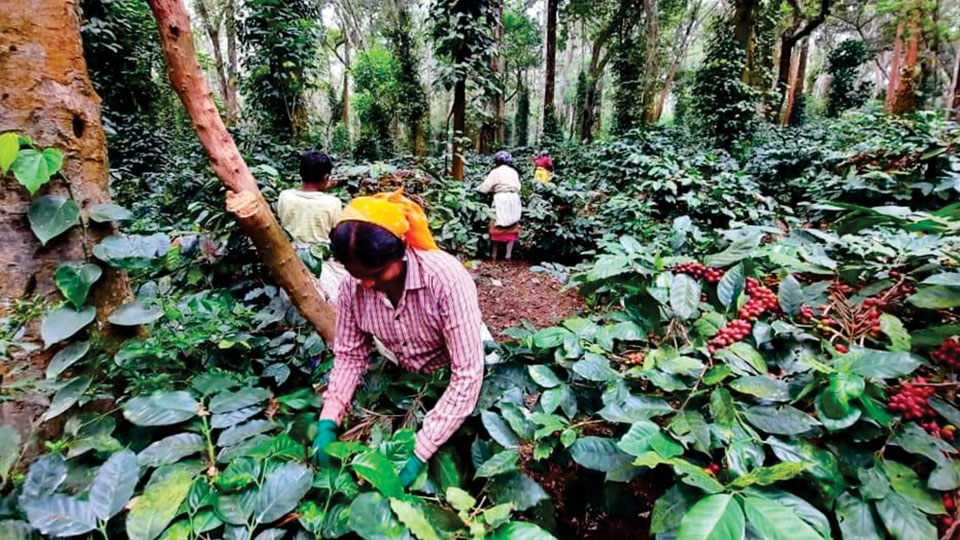
Transforming Lives: How Rani’s Coffee Plantation Became a Symbol of Empowerment

Meet Rani, a resilient woman from Heravanadu, a quaint village nestled in Kodagu’s Madikeri taluk, steeped in the rich history of Mysore’s royal legacy.

A century ago, Heravanadu’s origins were intertwined with the grandeur of Mysore’s royal legacy. The founding families arrived here at the behest of the Mysore king, tasked with caring for the royal horses. When the king eventually left, he granted them the very lands they had nurtured. Thus began the saga of Heravanadu’s small coffee planters and laborers.

Starting as laborers in the fields, they gradually transitioned to cultivating their own land, primarily focusing on coffee. Today, there are approximately 25 coffee farmers in the village, each owning plots of land ranging from 2023 square meters to 8094 square meters.

Rani HP embarked on her journey in Heravanadu as a young bride with hopes and dreams. However, tragedy struck when her husband expired, leaving her with the responsibility of raising their three children and only 8094 square meters of land.

Determined to secure a future for her family, Rani initially worked as a daily wage laborer. Seeking guidance, she turned to the Dharmasthala Sangha (SSG), where she received invaluable support from other women. With their assistance, Rani transformed her barren land into a flourishing coffee plantation over two decades of hard work and dedication.

As the coffee market evolved, so did Rani’s fortunes. From humble beginnings, she now commands a respectable price for her coffee beans, thanks to her expertise and perseverance. The turning point came when Anandana, The Coca-Cola India Foundation spearheading the Unnati coffee project in Coorg, and ISWAR, an NGO, recognized her dedication and offered support to Heravanadu.

Anandana, The Coca-Cola India Foundation, and ISWAR’s collaborative assistance were instrumental in providing specialized training, modern techniques in coffee plantations, and sustainable farming practices to Rani and her fellow farmers. As a result, Rani embodied the true essence of Coca-Cola India’s #SheTheDifference women empowerment campaign, which aims to uplift and empower rural women farmers and entrepreneurs like her.

Recognizing her leadership qualities, Rani was appointed as a board director for the Madikeri Highlands Farmers Producers Company Limited (FPO), launched by ISWAR in Coorg.

Rani’s story epitomizes the collective strength of Heravanadu’s community. With the unwavering support of her fellow villagers and her resilience, she transformed adversity into opportunity. Today, as she tends to her coffee plantation and manages her small coffee shop, Rani stands as an inspiration, showcasing how dedication and community support can lead to success.

Her legacy extends to her son, Raghu, who now manages her plantation and household. Inspired by his mother’s perseverance, Raghu actively participates in the affairs of the FPO, embodying the spirit of hard work and dedication passed down through generations.

source: http://www.businessnewsthisweek.com / Business News This Week / Home> Business / by Mansi )Praharaj / June 14th, 2024

How Smitha Kuttayya’s Kodava Dishes Bridge The Past And Present With Sustainability And Innovation

This pop-up at the Marriott had more than just the popular pandi curry or Coorgi pork curry. Drawing inspiration from yesteryear and her grandmothers’ kitchen in Coorg, home chef Smitha Kuttayya has made it her mission to keep Coorgi cooking traditions alive.   

In a world where fast food and standardised meals dominate, the value of traditional recipes and cooking methods with a focus on sustainability often seems overshadowed. Yet, for home chef Smitha Kuttayya, these traditions are more than just culinary practices; they are a bridge to the past, a way of preserving memories and cultural identity.

A native of Kodagu now residing in Chennai for 24 years, Chef Kuttayya has excelled in multiple roles throughout her career.

She is a celebrated Bharatanatyam dancer, a compelling writer, a dedicated teacher, an engaging storyteller, a successful entrepreneur, and a passionate home chef.

Each of these roles reflects her commitment to preserving her heritage while enriching her community with diverse talents. She has been a vibrant part of Chennai’s culinary landscape for over a decade and draws deep inspiration from her roots in Coorg and her grandmothers, who not only passed on their skills and recipes but also greatly influenced her passion for baking and cooking, which reflects in her brand, the Global Theeni.

Her journey from a humble baker to a champion of Coorg cuisine reflects a deep commitment to preserving culinary heritage while adapting to modern ecological needs. Drawing inspiration from yesteryear and her grandmothers’ kitchen in Coorg, Chef Kuttayya has made it her mission to keep these traditions alive. “In our family, cooking was always more than just a task—it was a form of storytelling,” she reflects. This storytelling aspect was evident in her recent Coorg cuisine pop-up at the Marriott Hotel Whitefield in Bengaluru, where Smitha Kuttayya showcased traditional Kodava dishes that included seasonal produce and were prepared adhering to sustainable practices.

Traditional Cuisines In A Modern World

Traditional recipes, she believes, are more than just instructions for making food; they are a tapestry of memories, methods, and values passed down through generations. “These recipes are a bridge to our past,” she says. “They connect us to our ancestors and their way of life, which is why they carry such unique and irreplaceable flavours.” This pop-up at the Marriott had more than just the popular pandi curry (Coorgi pork curry). The buffet had a wide array of dishes like the koli barthad (chicken fry), fish fry (mackarel marinated in spices and kachampuli vinegar), mutton pulav, Kodava chicken curry, and, of course, the pandi curry.

That’s not all. The vegetarians also had a wide selection of dishes that could confuse a Kodava too, as the community is well-known for their non-vegetarian fare. There was raw banana fry, which was made with the same marinade that was used for the fish fry. The baimbale curry or the bamboo shoot curry paired beautifully with the paaputtu (coarse rice semolina cake).

The seasonal kaad maange pajji, the bollari gravy (mangalore cucumber gravy), and the raw jackfruit pulav were a total hit among the diners. For her, maintaining traditional methods means adhering to the authentic ways of preparing and cooking dishes, even when modern shortcuts are available. “In Coorg cuisine, for instance, we don’t use tomatoes in our traditional recipes,” she explains. “We rely on natural souring agents like kachampuli (vinegar made from a fruit called Panapuli) or tamarind, which have been used for generations.”

Local Ingredients: The Heart Of Authenticity

Central to Chef Kuttayya’s approach is her unwavering commitment to local ingredients. For her, these ingredients, like wild mangoes, mushrooms, bamboo shoots, jackfruit, honey, jaggery, etc., are not merely components of a dish but symbols of a region’s cultural and ecological identity. “Local sourcing respects the origin and community, ensuring that what we prepare is a true reflection of our heritage,” she explains.

This philosophy aligns perfectly with her aim to offer an authentic culinary experience. In Chennai, where she has spent a significant part of her career, Chef Kuttayya found a unique demand for traditional Coorg cuisine. “Initially, people in Chennai didn’t have easy access to Coorg dishes like pandi curry, mange pajji, etc., unlike in Bangalore, where the Kodava presence is greater,” she notes. This gap led her to introduce Coorg dishes to a broader audience, not just the Coorg community but also Tamil locals eager to explore new flavours.

Seasonality And Innovation

A profound respect for seasonality guides Chef Kuttayya’s menu planning. She emphasises the use of ingredients at their seasonal peak to enhance flavour and ensure ecological balance. “Seasonal cooking supports local agriculture and ensures that what we eat is both delicious and sustainable,” she asserts. By aligning her cooking with the natural rhythms of the seasons, she fosters a deeper connection between the food and its source. “Most of our special ingredients are available only during the monsoon,” she explains. “We adapt our menu to make the most of these ingredients when they are freshest and most flavourful.”

Her wisdom of traditional cooking and baking with seasonal ingredients, intricately woven with sustainable practices, has evolved her style of cooking over the years. This time around, she presented a few dishes that could qualify as modern Kodava cuisine, like the coffee-infused chilly chicken dish, the monkey oranges and bird’s eye chilli sauce from her farm, or the coffee mayonnaise made with avocado and coffee, which was a pairing for one of the meat tarters. In her buffet, there was neer dose paired with organic jaggery and coconut, which is a classic combination. But during her pop-up tour at Marriott, she introduced neer dose alongside figs and bird’s eye chilli preserve that she prepared herself from the figs that grew plenty at her home.

While preserving tradition, Chef Kuttayya also embraces evolution in her culinary practices. She believes that traditional dishes can evolve while maintaining their core essence, making them appealing to contemporary tastes. “It’s about balancing tradition with innovation,” she notes. “You can introduce new flavours and techniques without losing the soul of the dish.” Her innovative takes include adapting traditional Coorg dishes with locally available ingredients when necessary. “Innovation doesn’t mean discarding tradition; it means enhancing it,” she asserts.

Sustainability In Tradition

The sustainable practices inherent in traditional cooking are another aspect that Chef Kuttayya values highly. “Traditional cooking relies on local, seasonal ingredients and minimal waste practices, showcasing a way of life that modern kitchens can learn from,” she states. This approach not only reduces the carbon footprint but also supports local agriculture and ecosystems, making it a model for sustainable cooking in today’s world. This dedication extends to her personal cooking practices as well.

“Every vegetable or meat that we use for cooking, I make sure it is completely utilised. Nothing goes to waste and if there is something that can’t be used, it always composts. That’s a farmer’s way. We barely use oil in our cooking. When it is meat, especially, it cooks in its own fat. I do not waste anything and there is no other way that I can do it. “I buy only organic ingredients and test everything myself. I don’t even delegate it to the help in the house,” she says with a smile.

“I’m very particular about my ingredients and the way I prepare my dishes,” she notes. “Whether it’s a pop-up event or a one-on-one cooking class, I ensure that the methods and ingredients reflect the true essence of traditional cuisine.” Her commitment to sustainability extends beyond the kitchen to her packaging choices. “I use only tin and tiffin boxes for packaging, avoiding plastic entirely; even the baking sheets I use are organic,” she says. “It may cost more, but it aligns with my values of sustainability and respect for the environment.

source: http://www.slurrp.com / Slurrp / Home> Article / by Meghana Dayananand / June 13th, 2024

The Honest Always Stand Alone: A tribute to power-bureaucrat CG Somaiah

During Rajiv Gandhi’s regime in 1980s, Delhi police commissioner Ved Marwah had a “security breach” as his car had reportedly intruded in the route of the visiting Russian Prime Minister. Then home minister Buta Singh almost made up his mind to suspend the senior cop, but it was one influential IAS who persuaded Singh not to punish Marwah. He was CG Somaiah who began his career as an assistant collector in Orissa only to rise up the ladder to become Comptroller and Auditor General of India.

CG Somaiah is no more. Somaiah died in Bangalore  on Monday following brief illness. Somaiah, 79, is survived by wife Indira, and one son and a daughter. Incidentally, his daughter Pria (In picture with her father) is married to Nikhil Alva, son of Congress leader and Uttarakhand Governor Margaret Alva.

As the home secretary of the country during Buta Singh’s regime, Somaiah played a key role not only in fighting Punjab terror, but was instrumental in clinching a deal with student leaders from Assam who were agitating against illegal Bangladeshi migrants. He also served as Central Vigilance Commissioner and had a six-year-long tenure as Comptroller and Auditor General of India

Only two months ago, Somaiah’s book titled, “The Honest Always Stand Alone”, was released in New Delhi  by former president APJ Abdul Kalam.

STANDING TALL Former President APJ Abdul Kalam releasing C.G.Somaiah’s “The Honest Always Stand Alone” / pix credit: The Hindu (July 21, 2010)

source: http://www.babusofindia.com / Babus of India / Home / posted by BOI Team / September 15th, 2010

Kerala students develop health-friendly ‘green coffee’ powder, receive FSSAI certification

Students from the Laurus Institute for Logistics in Kalamassery said, inspired by the popularity of green tea, they came out with green coffee powder, as part of a project at their institute.

Organic green coffee beans- representational image (iStock)

‘Green tea’ has been a favourite drink of health-conscious people for quite some time, but what about making ‘green coffee’ popular? A group of Kerala students has now developed a new variety of health-friendly green coffee powder.

Students from the Laurus Institute for Logistics in Kalamassery said, inspired by the popularity of green tea, they came out with green coffee powder, as part of a project at their institute. This new drink aims to cater to the growing demand for healthy options and capitalise on the increasing focus on health and wellness, they said.

Rich in antioxidants, green coffee boosts metabolism and helps reduce diabetes, cholesterol, blood pressure, and weight, the students claimed. They also received a certificate from the Food Safety and Standards Authority of India (FSSAI) for the product.

Despite the widespread popularity of green tea, the students admitted that developing a new brand of green coffee powder was a significant challenge.

Developing green coffee powder

It was the 2020 batch of the institute that recognised the benefits of green coffee. The 30-member batch split into different groups and explored various concepts before settling on green coffee.

A 10-member team was interested in making FMCG products, and they considered tea and coffee due to their global popularity. Abhijith MV, a member of the project team, said they unexpectedly discovered green coffee beans while they were in Palakkad seeking the best suppliers.

He said that although they sampled many other ready-made coffee powders, their focus remained on developing green coffee powder, which is not widely known.

The supplier mentioned that sun-dried green coffee pods were not in high demand, but the students were keen to learn about green coffee, Ajay Sankar, chairman of the institute, said.

“They brought the overlooked green coffee beans from Coorg and Palakkad to Kalamassery. In the second phase, they experimented by grinding the beans into different sizes,” Sankar said.

Multiple laboratory tests were conducted to determine the shelf life of the product, and finally, they decided to grind Arabica coffee beans into small granules and pack them.

The many health benefits

Despite its many health benefits, the taste of green coffee was not particularly appealing, which concerned the students, the institute said in a statement. Attempts to enhance the flavour with mint, cardamom, rose, and so on were abandoned as they reduced the shelf life of green coffee to six months, it said.

The students admitted that though ‘Laurus Nature’s Green Coffee’ was showcased to health clubs, gyms, medical shops, business groups and so on, their initial response was not positive. Eventually, customers were found by meeting each other personally and explaining the benefits of green coffee.

The students are now motivated by the fact that customers continue to buy it after experiencing the benefits from at least two packs, the chairman added.

Though the project was started by the 2020 batch, the green coffee project has been passed on to subsequent batches. Students continue to improve ‘Laurus Nature’s Green Coffee’ through ongoing research, he added.

(Disclaimer: The headline, subheads, and intro of this report along with the photos may have been reworked by South First. The rest of the content is from a syndicated feed, and has been edited for style.)

source: http://www.thesouthfirst.com / The South First / Home> Kerala / by PTI / May 27th, 2024

Club Mahindra Madikeri recognised as India’s ‘First Triple Net Zero’

The Indian Green Building Council (IGBC) recognised the resort, acknowledging the resort’s net zero energy, net zero water, and zero waste to landfill.

Club Mahindra Madikeri was recognised as India’s first triple net-zero-rated resort by the esteemed Indian Green Building Council. The triple net zero acknowledges net zero energy, net zero water, and zero waste to landfill. The rating sets a benchmark on par with international standards, thus making Club Mahindra Madikeri achieve a significant milestone in sustainable hospitality.

More about net zero certifications:

  • Net zero energy: This indicates the resort generates as much energy as it consumes. The resort makes optimum utilisation of solar energy and energy-efficient infrastructure, reducing its carbon footprint.
  • Net zero water: This is a remarkable achievement in water management. It promotes water conservation and security. Club Mahindra’s water conservation initiatives demonstrate its commitment to sustainable practices. Measures include rainwater harvesting, efficient irrigation systems, and water-saving fixtures.
  • Zero waste to landfill: TÜV SÜD certified the resort for net zero waste in FY23. Comprehensive waste management practices, including segregation at source, composting, recycling, and other measures, help Club Mahindra achieve this.

The resort nestled in the picturesque region of Coorg, Karnataka, is a beacon of luxury, comfort, and responsible tourism, thus contributing to preserving the planet. The resort blends seamlessly with its lush surroundings, supporting local plants and animals, covering a vast area of 126464.26 square metres, with buildings occupying just 22257.7 square metres. By incorporating dense vegetation, insulated roofs, and using local materials, the resort has reduced the surrounding temperature by approximately 3°C. The resort adopts several other energy-saving initiatives, such as motion sensor-controlled washrooms, regulated geysers, timer-controlled external lights, heat pumps, and BLDC fans, which have resulted in an impressive energy performance index of 74.4 kW per m² per year, surpassing the Bureau of Energy Efficiency’s benchmark of 313 kW per m² per year. Moreover, over 70% of the water is recycled and reused for operational purposes at the resort, further emphasising the resort’s commitment to sustainability.

Additionally, under the Mahindra Hariyali project, thousands of trees have been planted, enriching the region’s natural habitat and attracting diverse bird species. This initiative fosters a thriving ecosystem, enhancing the visitor experience with its biodiversity.

Julian Ayers, Chief Resort Officer of Mahindra Holidays and Resorts India Limited, said, “At Mahindra, we recognise the crucial importance of advocacy and partnerships in driving the swift shift towards a sustainable future. Our journey towards a greener future began in 2008. Since then, we’ve embraced a ‘Planet Positive’ approach to sustainability. We’re committed to making our operations eco-friendly, helping industries reduce their carbon footprint, and revitalising nature. Our unwavering commitment to habitat protection and biodiversity at Madikeri has earned us recognition and honour from the IGBC, reflecting our steadfast dedication. We embrace a global responsibility to safeguard diverse ecosystems and achieve carbon neutrality by 2040. As part of Mahindra Holidays’ sustainability journey, we’re committed to innovating and inspiring change within our operations and beyond.”

Mahindra Holidays is India’s first hospitality company to join the global campaign RE100 and EP100. To achieve its zero-energy goal, Club Mahindra implemented an 804-kW solar rooftop photovoltaic plant and solar carports in parking areas. In water conservation efforts, over 70% of water is recycled and reused, with natural streams diverted to a 380 kL capacity pond and 14 rainwater harvesting pits constructed within the resort premises. For zero waste, the resort utilises a bio-digester to convert food waste into biogas, reducing waste, and LPG costs.

With these remarkable achievements, Club Mahindra continues its steadfast journey towards sustainability and biodiversity conservation. By doing so, it provides its members with unparalleled access to some of the most breathtaking and exotic destinations both in India and across the globe.

source: http://www.hotelierindia.com / Hotelier India / Home> Operations / by Staff Writer – Hotelier India / June 07th, 2024

Five-Day Barista Training Workshop

The five-day Barista training workshop, organised by the Coffee Quality Division of Coffee Board of India in collaboration with CFTRI, Mysuru, will be held from June 24 to 28 at the BioNEST Incubation Centre at CFTRI premises in city.

Training in brewing coffee, cupping, manual brewing, signature beverage, introduction to green coffee etc., will be conducted.

Those who undergo the training successfully will be provided certificates.

For details and registration, call Mob: 94821-57878 or e-mail: baristatraining.coffeeboard@gmail.com

source: http://www.starofmysore.com / Star of Mysore / Home> In Briefs / June 04th, 2024

LS polls 2024: Kodagu records over 70% voter turnout

From nearly 6.30 am, voters started to queue outside their respective polling stations with much enthusiasm to practice their duty.

Voters from all sections of the society enthusiastically took part in the festival of democracy and cast their votes.Photo | EPS

Madikeri :

Smooth polling was recorded across Kodagu and the district recorded a voter turnout of 70.58% at 5pm.

Voters from all sections of the society enthusiastically took part in the festival of democracy and cast their votes. The district had special polling booths even as foresters guarded the booths located in wildlife conflict zones.

The minor glitches in EVMs were sorted out during the mock voting process held in all polling booths from 6 am to 7 am. From nearly 6.30 am, voters started to queue outside their respective polling stations with much enthusiasm to practice their duty.

A total of 23 special polling booths including Sakhi and Model booths were set up across the district. At Maldare, Nagarahole, Hebbale, Malambi, Heruru and CB Halli, tribal themed polling stations were set up to woo the increased population of tribes.

The tribes in large groups participated in the electoral process enthusiastically. The Sakhi polling stations were decked up in polling centers that had increased women voters even as Kodagu ADC Veena BN opted to vote from one of the Sakhi polling booths in Madikeri. Model polling centers with improved facilities also wooed the voters.

However, the officers on election duty at the interior village of Vanachal were made to suffer for some time due to the unavailability of drinking water.

Nevertheless, the voters of the center helped the officers and arranged for a drinking water facility. In Wildlife conflict zones including regions across Siddapura, Kushalnagar and Virajpet, a Range Forest Officer alongside a Rapid Response Team equipped with weapons were deployed to ensure the safety of the voters. Armed Forces from Gujarat guarded the naxal sensitive booths across the district including at Karike and Sampaje areas.

A tragic incident was, however, reported at a polling station in B Shettigeri of South Kodagu. Manohar (58), a traditional drummer who played the ‘chande’ instrument, died of a heart attack outside the polling station.

Sources confirmed that he waited in the queue and cast his vote. However, he collapsed outside the polling center after he suffered a heart attack and died.

MADIKERI: Smooth polling was recorded across Kodagu and the district recorded a voter turnout of 70.58% at 5pm.

Voters from all sections of the society enthusiastically took part in the festival of democracy and cast their votes. The district had special polling booths even as foresters guarded the booths located in wildlife conflict zones.

The minor glitches in EVMs were sorted out during the mock voting process held in all polling booths from 6 am to 7 am. From nearly 6.30 am, voters started to queue outside their respective polling stations with much enthusiasm to practice their duty.

A total of 23 special polling booths including Sakhi and Model booths were set up across the district. At Maldare, Nagarahole, Hebbale, Malambi, Heruru and CB Halli, tribal themed polling stations were set up to woo the increased population of tribes.

The tribes in large groups participated in the electoral process enthusiastically. The Sakhi polling stations were decked up in polling centers that had increased women voters even as Kodagu ADC Veena BN opted to vote from one of the Sakhi polling booths in Madikeri. Model polling centers with improved facilities also wooed the voters.

However, the officers on election duty at the interior village of Vanachal were made to suffer for some time due to the unavailability of drinking water.

Nevertheless, the voters of the center helped the officers and arranged for a drinking water facility. In Wildlife conflict zones including regions across Siddapura, Kushalnagar and Virajpet, a Range Forest Officer alongside a Rapid Response Team equipped with weapons were deployed to ensure the safety of the voters. Armed Forces from Gujarat guarded the naxal sensitive booths across the district including at Karike and Sampaje areas.

A tragic incident was, however, reported at a polling station in B Shettigeri of South Kodagu. Manohar (58), a traditional drummer who played the ‘chande’ instrument, died of a heart attack outside the polling station.

Sources confirmed that he waited in the queue and cast his vote. However, he collapsed outside the polling center after he suffered a heart attack and died.

Outside a polling centre in Madikeri, the officials forcefully shut down shops that were located within 200 meters from the St Michael School polling station. However, DC Venkat Raja intervened and withdrew the closing down order. He, however, cautioned the shopkeepers not to allow campaigning from political parties at the shops.

Venkat Raja, SP K Ramarajan and CEO Varnit Negi cast their votes at the taluk office in Madikeri and later visited the Raja Seat tourist spot to urge residents to go vote. While most of the tourist centers were open in the district, the Dubare Camp was shut for tourist visits as this was turned into a polling station for the tribal voters.

source: http://www.newindianexpress.com / The New Indian Express / Home> Karnataka / by Prajna GR / April 26th, 2024

Europe To Receive First EUDR-Ready Coffee Verified By Rainforest Alliance

India’s High Range Coffee Curing is poised to become the first farm verified by the Rainforest Alliance to ship EUDR–ready coffee beans to Europe later this month.

The coffee farm partnered with the Rainforest Alliance to meet the necessary compliance requirements of the regulation.

Established in 1995, High Range Coffee Curing is located in the Periyapatna and Kushalnagar Coorg districts, among 142 hectares of tropical forests, and is known for its quality beans.

The farm supplies coffee to leading global coffee brands, roasters and traders in India, including Nestle , Unilever, E-Com Commodities, Olam, Continental Coffee, Louis Dreyfus Company , Vidya Coffee and Allanasons.

EUDR-Ready Coffee

Zaidan M Saly, director of High Range Coffee Curing stated, “Implementing EUDR  [EU Deforestation Regulation] posed significant challenges for our team, but with the invaluable guidance from Rainforest Alliance representatives in our region, we overcame them and gained confidence in the process.

“Their expertise made the seemingly daunting task entirely feasible, facilitating a smooth and successful implementation, which now not only guarantees adherence to EUDR regulations but also sparked a revolution in our approach to traceability.”

Rainforest Alliance certification enables coffee and cocoa farmers to opt in for EUDR-aligned criteria.

This allows companies to source from these farms, track ingredients along their supply chains, and leverage farm data to demonstrate compliance with the regulation’s deforestation risk assessment and mitigation requirements by the deadline, at no additional cost.

‘Sustainable Practices’

Miguel Gamboa, coffee sector lead at the Rainforest Alliance stated, “The EUDR represents an important step forward to shift the global coffee sector towards more sustainable practices.

“Yet, many smallholder coffee farmers need support to align with the requirements, including traceability, deforestation risk mapping, local laws, and practical and technical guidance on key environmental practices.”

The Rainforest Alliance has urged the EU Commission not to dilute or delay the legislation or postpone its deadline in response to calls from some companies and governments.

It has also called on companies not to scale back purchases from smallholder coffee farmers, but rather support them in meeting the deadline of this legislation.

Gamboa added, “We are also piloting a deforestation risk assessment offering for companies buying non-certified coffee and cocoa, which we plan to roll out more widely later this year.

“With this offering, we aim to support more companies in their journey to compliance, but more importantly, to also reach non-certified farmers so their products can still be sold on the EU market.”

source: http://www.esmagazine.com / ESM, European Supermarket Magazine / Home> Supply Chain / by Dayeeta Das / May 06th, 2024

Rs 2.83 crore released to over 17,000 farmers under drought relief fund in Kodagu

The department had proposed for the release of Rs 8.38 crore as a drought relief fund to be distributed among the farmers of the district.

Image used for representational purposes only,(File photo | EPS)

Madikeri :

A total of 17,297 farmers across Kodagu have been distributed with the drought relief fund from the state. Sources confirmed that many other pending applications are still under scrutiny and will be disposed of shortly.

All five taluks in Kodagu were declared as drought-hit regions this year from the state and over 20,000 farmers from the district applied to avail compensation for the crop loss.

As per the applications received by the agriculture department, 7620.74 hectares of paddy farmland and 2170.36 hectares of maize farmland were affected by drought in total across all the taluks.

The department had proposed for the release of Rs 8.38 crore as a drought relief fund to be distributed among the farmers of the district.

However, applications of 17,297 farmers from the district have been approved so far in ten phases and they have been handed over the total drought relief fund of over Rs 2.83 crore.

Joint Director of the agricultural department, Somasundar confirmed that 17,297 farmers have received only part payment of the drought relief even as applications of 3,263 farmers are still under scrutiny and will be finalized shortly. While a few applications are pending due to technical errors, others are under verification process.

Over Rs 5.54 crore funds are still pending to be distributed to the farmers as per the memorandum submitted to the state from the department.

The Ponnampet taluk is the worst hit region in the district as over 3825 hectares of paddy land has been reportedly affected by drought. A total of 5155 farmers from the region applied for drought relief.

In Somwarpet taluk, 1161 hectares of paddy and 470 hectares of maize farmlands have been affected by drought even as over 7,000 farmers applied for the compensation.

1972 hectares of paddy field in Madikeri and 650 hectares in Virajpet were hit by drought even as 1700 hectares of maize farmland was hit by drought across Kushalnagar taluk.

DC Venkat Raja confirmed that Rs 2.83 crore funds have been so far released to farmers and this includes a minimum compensation amount of Rs 1,000 and a maximum compensation of Rs 2,000 to the affected farmers.

source: http://www.newindianexpress.com / The New Indian Express / Home> Karnataka / by Prajna G R / May 29th, 2024