Category Archives: Business & Economy

Flood, landslides: Scientists told to submit ground report on Kodagu’s Harangi Reservoir

A PIL has been filed regarding this and a court case is going on. Besides, the Harangi Project Division officials have now sought a ground report from scientist

Kodagu's Harangi Reservoir
Image used for representational purposes only. (Photo | Wikimedia Commons)

Madikeri : 

Water mismanagement in Harangi Reservoir in Kodagu has been allegedly causing frequent flooding in the low-lying areas of Kushalnagar and the sudden water release in 2018 was blamed for triggering landslides in the catchment areas. 

A PIL has been filed regarding this and a court case is going on. Besides, the Harangi Project Division officials have now sought a ground report from scientists. “A team of scientists from the National Institution of Hydrology was invited to submit a ground report on Harangi Reservoir and the Cauvery Catchment areas.

With the court case underway, we have been asked to submit a report of the ground situation,” confirmed KK Raghupati, Superintending Engineer of Harangi Project Circle.  The scientists visited the reservoir and the catchment areas across Hattiholey, Nandi Motte, and Thanthipala regions near Harangi and tested the soil and groundwater levels.

As Puttaswamy confirmed, the scientists had also visited the regions in June last year. “Last year, the soil content and groundwater level were checked before the monsoon. Now, the same reports are collected during monsoon. An expert report will be readied in a week or two to be submitted to the Minor Irrigation Department and the court,” said Puttaswamy.

source: http://www.newindianexpress.com / The New Indian Express / Home> States> Karnataka / by Pragna GR / Express News Service / August 09th, 2023

World Coffee Conference to take place in India in 2023

ico wcc bangalore 2023

The fifth edition of the World Coffee Conference is coming to India. The event is set to unite the global coffee industry on sustainable topics of discussion, including circular economy and regenerative agriculture. 

Since the 18th century, commercial coffee has been thriving in India. Over time, the country has evolved from a tea drinking nation to one with a strong coffee identity.

Coffee is traditionally cultivated in the Western Ghats, and is rapidly spreading to the areas of Andhra Pradesh and Odisha and the North East states. This year however, all eyes will be on Bangalore, the largest city of the southern Indian state of Karnataka, as it hosts one of the largest global events in the coffee sector.

For the first time since 2016, the International Coffee Organisation (ICO), a multilateral intergovernmental organisation for coffee, and its Members, will host the World Coffee Conference (WCC) from 25 to 28 September.

The event is foreseen in the International Coffee Agreement 2007 treaty, in which the organisation aims to host every four to five years. The WCC first took place in London, the United Kingdom, in 2001; followed by Salvador, Brazil in 2005; Guatemala City, Guatemala in 2010; and Addis Adaba, Ethiopia in 2016.

COVID-19 pressed pause on the last scheduled event, and now, the world is ready to unite in an Asian country for the first time.

“The renewed interest and commitment by India to organise this high-level event is exciting. It will not only be a forum to discuss critical topics for the global sector, but to be involved in a technologist exhibition, and technical workshops and a Growers’ Conclave run by the Coffee Board of India. We will see top-tier company representatives, government representatives, United Nations partners, and even Vietnam will be coming with more than 20 delegates. They see it as a huge opportunity to showcase the way they produce and trade coffee,” says ICO’s Head of Operations, Gerardo Patacconi.

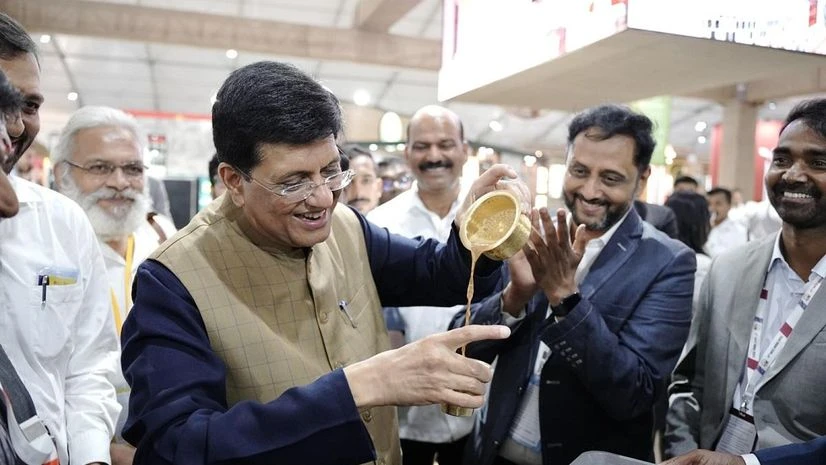
The iconic Bangalore Palace Grounds will be the host venue for the international conference and coffee technology fair. The Government of India will host the WCC 2023, chaired by the Indian Minister of Commerce and Industry, Shri Piyush Goyal.

The WCC will be held in conjunction with the G20 Summit under the country’s presidency. It will also integrate the 5th CEOs and Global Leaders Forum, and the 136th Session of the International Coffee Council.

All 75 ICO member countries are ready to attend the WCC, with the conference expected to attract more than 1500 registered delegates and 10,000 business visitors from across the globe.

WCC 2023 will bring together representatives from government, the private sector, development partners, as well as civil society and academia, coffee producers and importers, leading coffee associations, global coffee experts, roasters and more.

They will gather to discuss and debate on coffee market trends, technology, and best practices for building a circular coffee economy, regenerative agriculture, sustainability through consumption, innovation and access to finance, with the goal to collaborate towards building a sustainable coffee industry from bean to cup.

Guest speakers will present on this year’s event theme, ‘Circular Economy and Regenerative Agriculture,’ addressing market trends, challenges, best practices, technologies, and strategic and financial solutions to build a resilient and sustainable future for the coffee sector, and production issues surrounding sustainability and cultivation, living income, and climate change, in compliance with the Sustainable Development Goals and Environmental, Social and Governance practices.

“On 1 October 2022, the International Coffee Day, ICO members decided on this topic theme. The reason is that there is a growing interest and opportunity at the different levels of the supply chain on circularity. This year we are also launching the Coffee Development Report on circular economy, and we are also looking into how to move circularity into action,” Patacconi says.

“There is huge opportunity for increasing jobs and income through circularity, so transforming waste, whatever form that takes, into a business opportunity is important, as is the work we match with living income for livelihood and prosperity of farmers. There are scattered, good examples, but we need to bring them together so that everybody can have access to this knowledge.”

Patacconi notes there are three levels of outcomes expected from this year’s high-level discussions at the “Davos of Coffee”. First, is a high level of engagement of both policy makers and industry around the event themes, including opportunities to discuss trends in the coffee sector, and changing regulatory framework.

The second is to determine practical solutions in terms of technology that could be made available, and third, is about access to financial resources, knowledge, and markets.

“Through the ICO we really want to promote the creation of a centre for coffee circular economy, which we are now advancing with the help of our members. We are also joining the Lavazza Foundation and United Nations agencies such as UNIDO (United Nations Industrial Development Organization) and ITC (International Trade Centre) for the creation of Coffee Circular Economy Hub to share knowledge and help implement win-win solutions from coffee farms to cup,” Patacconi says.

While it’s important that policy makers are engaged in this year’s WCC, Dr KG Jagadeesha, CEO of the Coffee Board of India, says it’s crucial to have participation from producers.

“It’s extremely important for everyone across the value chain to attend, including consuming countries. This event is exclusively dedicated to growers, and we invite growers from different coffee growing nations such as Vietnam, Brazil, Central and South America, and African countries to attend,” he says.

The international community is also invited to visit India’s exotic coffee growing estates from 23 to 24 September to appreciate the unique qualities of its thick, shade-grown canopy coffee.

“India is currently the sixth largest grower of coffee and fifth largest exporter in the world. We have half a million families dependent on cultivating coffee in India. Two million people are directly or indirectly involved in coffee value chain, and the coffee sector in India, especially domestic coffee market, is expanding. The percentage of youth who are passionate, dynamic drinkers is expanding. They are highly qualified, and their tech-savvy connection to social media and influence is driving the market.”

For a traditional tea-drinking nation, which is low-cost and easy to prepare, Jagadeesha says the renewed uptake of coffee consumption is impressive and a sign of development because living incomes and standards have improved, thereby allowing the younger generation to afford the luxury of quality coffee.

“The evolution of coffee in India is not just about access to coffee chains, it’s about offering an experience for the youth to gather and connect in urban areas, a place to unite and exchange ideas,” Jagadeesha says. “Bangalore, in particular, is the Silicon Valley of India. It’s home to a lot of technology parks and I.T companies, as well as the highest number of technical colleges. It’s the place to be for coffee. It’s a cosmopolitan city with a significant proportion of foreign nationals, and a large number of coffee chains, including Blue Tokai, Koinonia Coffee Roasters, and Third Wave Coffee have all made their mark here.

“This is a city worth exploring for coffee, and a country that invites the world to its doorstep and share its excitement for the future of possibilities.”

For more information, click here. 

source: http://www.gcrmag.com / Global Coffee Report / Home> Profiles / by Dominic Morrell / August 08th, 2023

Bitter Coffee Prices: A worldwide bean shortage is making coffee lovers sweat espresso bullets

Synopsis

A shortage of coffee beans around the world, in particular due to weather problems in India and lack of supply from Brazil and Vietnam, has led to domestic market prices rising steeply. A well-known coffee trader in Pune, Gandhi’s Coffee, said he had to pass on a Rs50/kg price hike to customers.

Coffee istock

Be it the humbled pulses, vegetables or even exalted gourmet offerings, food prices are now steaming hot, singing consumers’ budgets and making policy decisions tougher for rate-setters while they perhaps sip on coffee. But halt, for even the world of coffee, that beloved elixir that often serves as the morning oracle, is now demanding a premium spot on the rate chart.

Hold onto your mugs, coffee enthusiasts, because it looks like your beloved brew is about to take you on a rollercoaster ride through the wild world of caffeine economics.

This increase in cost is attributed to a shortage of coffee beans on a global scale, particularly stemming from Brazil and Vietnam, coupled with unexpected rains affecting bean quality in India. This unfavorable situation has led to a surge in domestic market prices.

Coffee

Coffee traders, who usually acquire premium beans from Chikkamagaluru in Karnataka, have begun transferring this price escalation to their customers.

Latha Aravind, a resident of Mumbai’s Matunga, said that the cost of usual mixed coffee grounds – a blend of Robusta and Peaberry beans – has risen from around Rs 580/kg to about Rs 640 to Rs 650/kg.

“Prices have shot up and may keep rising,” she told Times of India.

Rajesh Gandhi, owner of Gandhi’s Coffee, a well-known coffee trading enterprise in Pune, said that he had to pass on a Rs 50/kg price hike to the end consumers, as Robusta beans have undergone an approximate 50% price surge, while Arabica beans area dearer by about 15%.

Ajit Raichur, a coffee trader from Kumardhara Traders, said that coffee prices are typically adjusted annually in January. However, this year witnessed an additional price hike of Rs 50/kg across all available bean varieties in July.

GM Dharmendra, a wholesale green coffee (raw beans) trader based in Bengaluru, said he lost 30% to 40% business over the last few months. “Many small coffee retailers in the area have shut shop or they are buying poor quality beans at cheaper rates. Many customers have shifted to instant coffee,” he added.

The coffee-growing region of Chikkamagaluru has borne the brunt of climate change impacts. Rohan Kuriyan, manager of Balanoor Plantations and Industries, reported a 20% decrease in yield due to untimely rainfall during blossom days, compared to the previous year. “The average cost of picking has also gone up. We ended up doing four rounds of selective harvesting instead of the usual two because of the uneven ripening of the cherries,” he added.

“With some positive news about better crop in Brazil, Arabica prices have started softening in the international markets. However, prices are expected to be a bit higher in the domestic market which is growing at double digits because of demand and less production,” Challa Srishant, MD of CCL Products (India) and member of the Coffee Board of India, said.

CCL Products, known for its ‘Continental’ coffee brand, has raised prices from Rs 280 to Rs 360 for a 200g jar within a year, with a further 10% increase planned for the next quarter. Observers in the industry have noted that the diminishing price gap between Arabica and Robusta has inclined consumers towards the smoother and sweeter profile of Arabica beans.

“For planters, operational costs have gone up – right from labour costs to fertilizer and pesticide costs. Coffee prices (Arabica) are a little lower now than they were last year but traders usually buy in bulk and therefore it appears like they are protecting their bottom line in case prices rise again,” Mahesh Shashidhar, chairman of Karnataka Planters’ Association said.

The harvesting season for Robusta beans is six-to-seven months away, and there is uncertainty about the next crop. Karnataka remains a dominant player, contributing 70% of India’s coffee production, while Kerala and Tamil Nadu also cultivate coffee. Industry stakeholders have collectively absorbed various price increases at different junctures. Although prices haven’t been adjusted yet, Amit Bhatta, founder of the specialty coffee brand Aeka Coffee, conceded that an additional 15% to 20% increase could prompt a shift of this burden onto the end consumers.

(with inputs from ToI)

source: http://www.economictimes.indiatimes.com / The Economic Times / Home> India> Business News > Industry> Cons Products> Food / ET Online / August 09th, 2023

Steeped in culture and packed with wonder: Our guide to witnessing Kodagu’s grace and hospitality

Set in the heart of Kodagu (now Coorg), The Tamara Coorg crafts a scenic getaway for the discerning traveller. Surrounded by nature’s bounty and soaked in tales of history, the property gives its guests a peek into the culture and the livelihood of the people in the region.

When it comes to an experiential holiday in the hills, Coorg is the first destination that comes to mind. Previously known as ‘Kodagu’, this hill station has bragging rights to misty mountains, sprawling coffee plantations, quaint monasteries, pepper vines, and a host of other scenic delights for the discerning traveller. 

The etymology of the words “Kodava” (referring to the indigenous people, language, and culture) and “Kodagu” (referring to the land) traces back to the root word ‘Koda’ of uncertain meaning. Some speculate it signifies ‘hills’ while others suggest it signifies ‘west.’ In 1956, Kodagu (now Coorg) was established as a district and became a part of the Karnataka state.

The Land of Coffee

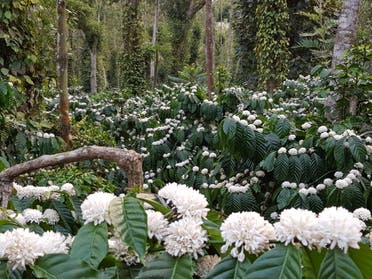
Kodagu thrives as the land of coffee, with the Robusta variety being its primary plantation crop. Notably, Kodagu alone contributes around 33% of India’s coffee production. The region is also renowned for its exquisite wild honey. Nestled within a 184-acre coffee estate, the Tamara Coorg resort stands as a testament to preserving the surrounding ecosystem, untouched by extensive development, making it a truly unique creation in this coffee-rich land.

The flora and fauna of Kodagu

Blessed with three wildlife sanctuaries—Brahmagiri, Talakaveri, and Pushpagiri—and the Nagarhole National Park (also known as the Rajiv Gandhi National Park), located within the Kodagu district, the region boasts an unparalleled wealth of flora and fauna, showcasing its remarkable biodiversity.

Kodava people

The Kodava people, also known as Kodavas, are the inhabitants of this land. They speak the Kodava language and traditionally identify as land-owning agriculturists, following a patrilineal social order deeply rooted in martial customs. Kodavas hold their ancestors and weaponry in high reverence, and uniquely, they are the only community in India permitted to carry firearms without a licence. Kodagu has also produced several notable hockey players.

Kodava festivities

Kodava festivities revolve around their agricultural practices and military traditions. The community celebrates three main festivals that are distinctive to their culture—Kail Podh, Kaveri Changrandi (Tula Sankramana), and Puthari. In recent times, under the rule of the Haleri Rajas, Kodavas have also embraced a few Hindu festivals, including Ugadi, Ayudha Puja, Dussehra, and Mahashivaratri.

Kodava trails at The Tamara Coorg

Embark on our immersive Kodava Cultural Tour and be transported to a bygone era steeped in tradition. Journey to a nearby village, where a guide will accompany you to an Ainmane, a quintessential ancestral home of the Kodava people.

Walk through the halls of the Ainmane, as it unveils its architectural marvels and treasured artefacts. Delve into the essence of Kodava heritage as you learn about their unique way of life.

Indulge in a tantalising Kodava meal that showcases the region’s authentic flavours and local ingredients. Carry with you cherished memories of the warmth and hospitality as you bid adieu to the Kodava people.

In and around Kodagu

Scouting for activities to partake in when in Kodagu? Here’s a list of destinations that are a stone’s throw from the city and are worth a visit:

  • Abbey Falls | Distance: 44 km
  • Talakaveri And Bhagamandala | Distance: 40 km
  • Bylakuppe | Distance: 76 km
  • Nalknad Palace | Distance: 7.5 km
  • Padi Igguthappa Temple | Distance: 9.2 km
  • Chelavara Falls | Distance: 13 km
  • Omkareshwara Temple | Distance: 38 km
  • Raja’s Seat and Nehru Mantap | Distance: 38 km
  • Madikeri Fort And Palace | Distance: 37 km

For more information about planning a Kodagu itinerary and booking a stay at the plush property of The Tamara Coorg, click here

source: http://www.cnntraveller.in / Conde Nast Traveller / Home> India> Hotels & Resorts / by The Tamara Coorg / August 04th, 2023

Uplift of Small Farmers drives this Bengaluru Coffee Start-up

Ex-banker Soomanna Mandepanda and his wife, Puja Soomanna set up their startup Humblebean in 2017 to ensure better prices and reach for small coffee farmers and improve every part of the value chain.

Uplift of small farmers drives this Bengaluru coffee startup

For former banker Soomanna Mandepanda, the motivation for setting up Humblebean was not just to sell the best coffees, but more importantly, uplift the small and medium Indian farmers who grow them. 

In the process, he is trying to bring about changes at almost each stage of the business — from cultivation and supply chain to research and education. 

Founded in 2017 by Soomanna and his wife and former Yahoo executive Puja Soomanna, Bengaluru-based Humblebean works on an omnichannel model: It ties up with small coffee farmers in south India, roasts and grounds supply, provides the beans to roasters, exports its products, operates brew bars, and has an online presence. 

A responsible way to grow coffee 

The coffee drinking experience has been gaining traction in India, with the market for the brew expected to record a compound annual growth rate of 7.2 percent during 2021-25, according to a January 2021 Statista report. 

Startups including Sleepy Owl, The Flying Squirrel, and Coffeeza, as well as shops such as Third Wave Coffee Roasters are making their presence felt in the market. 

India is the world’s sixth-largest producer of coffee and fifth in terms of exports; in fact, 70 percent of its production is exported, says a January 2021 report by the India Brand Equity Foundation. Yet, Soomanna says, “a lot of small and medium farmers and farms aren’t getting the kind of business and reach they should”. 

Soomanna would know: he spent most of his childhood on the coffee estates of Coorg and was a small farmer before moving to the world of finance and banking for 13 years. One way to correct the imbalance, he says, is by “making great biodiverse coffee that farms in India are already poised to do”.  

According to him, 80-90 percent of coffee farms in India are held by small and medium farmers, whose secondary income comes from crops such as jackfruit, avocado, pepper, and orange that are part of the same farms. 

Cultivating other crops alongside coffee “ensures automatic carbon sequestration, top soil replenishment, and lesser need to feed chemicals unlike commercial crops grown in other countries”, says Soomanna. “The mining of the minerals is automatic and you become carbon neutral.” 

Humblebean
Puja Soomanna

Advocating farmer-friendly norms 

Increasingly popular among young consumers are organic, speciality, and Rainforest Alliance coffees that respectively employ natural methods of cultivation dispensing with harmful chemicals, are of the highest grade being derived from a single origin or single estate, and protect the environment as well as worker rights. 

However, in India these certified varieties are grown largely on rich estates; most small and medium farmers cannot afford the costly certifications and grades.   

Coffee cultivation and the business are still quite unorganised in India, the certifications cost a lot of money, and need constant follow-ups, says Soomanna. 

“The norms are difficult to adhere to for most small farmers. It is a replication of an American model.”

______________________

He says most large corporations in India export to Europe. “The small companies in Hassan, Chikmagalur, etc. certify about 150 estates and add the tags. But the farmer doesn’t get the price because the better prices are still being fetched with the local trader. The local traders are important, but the real traceability is lost.” 

As farmers don’t get better prices, there is little driving them to improve their produce, he says. “Speciality coffee is something few farmers can afford to grow.” 

Hence, the need to bring in farmer-friendly rules, he says.

Humblebean
The Humblebean coffee

Promoting social value investing

Given the largely unorganised state of affairs, Humblebean focused on getting farmers on board. The team collected random samples, tasted them, and guided farmers on growing the beans in a better way. 

By 2018, the team had got 50-60 farmers on board and given them assessment reports free of cost. Until then, the startup was in its pre-revenue stages, bootstrapped with funds from family and friends. 

The team then focused on getting roasters to directly buy from farmers. For this, it adopted the idea of social value investing, in which everyone who is part of the value chain comes together to solve a problem and there is money in it for all. 

_______________________

“Once we got the farmers on board, we decided to tie up with brands and introduce them to the new portfolios of coffees,” says Soomanna. “We incubated close to four different brands in India from scratch to start a unique brand with a different blend. The idea was to bring in multiple partnerships and inclusiveness in the farming community on one platform.” 

Most of the speciality coffee firms have restricted names and types of beans grown on particular estates. “The idea is to bring in more brands that can access different estates, work with them, and encourage the farmers,” says Soomanna. 

Humblebean also fulfils the complete roast and ground process for such brands and even gives them a credit facility, he says. 

Humblebean

Quality comes with education 

Towards the end of 2018 and early 2019, the Humblebean team found that coffees served at most star hotels weren’t up to the mark. 

One of the reasons for this, Soomanna says, is that coffee as education is lacking in hotel management schools: one has to go to Italy to learn more about its nuances. The Coffee Board of India mostly takes care of the functionality, he says. 

___________________________

“We met a few management schools and after some discussions it was decided that the colleges would look at it as part of the curriculum,” says Soomanna. 

Brewing innovative Indian blends

Even as Humblebean works to improve every part of the value chain, it is trying to offer consumers a very Indian coffee drinking experience.

To that end, the startup opened its first Brew Bar in the food experience section of a workspace on Bengaluru’s Residency Road in 2019. Humblebean was one of the early members of that workspace set up by a Singapore-based company. 

Puja, who conceptualised Brew Bar, spent time innovating the blends with the use of Indian robustas.  

“We don’t serve a single cup of speciality coffee; we wanted to make sure through the brewing methods can small and medium farmers come into mainstream brewing?” says Soomanna. 

_______________________

He says these Indian blends “aren’t being used by a single new-age speciality coffee company” as they are considered “harsh and used as a filler across the world. But they are unique and you need great expertise and experience to make a robusta out of them”. 

Following research and development, the startup has also come up with its own set of products. Together with B2B partners, it has launched these products online and will soon sell them at other marketplaces. The range is priced at Rs 220-350 for 250 gm for limited editions and depending on the roast. 

“Indian coffees can have a global impact,” says Soomanna. “The idea is to be farmer-friendly and also not cause too much environmental damage. We want to bring an amazing cup of coffee from the farms the way it should be drunk.”

Edited by Lena Saha

source: http://www.yourstory.com / YourStory / Home> / by Sindhu Kashyaap / edited by Lena Saha / February 07th, 2021

Karnataka gives impetus to coffee with focus on sustainability

Karnataka gives impetus to coffee with focus on sustainability through circular economy and regenerative agriculture. The state is the indisputable leader and produces over 70% of the total coffee produced in the country. It produced 2.33 lakh metric tonne of coffee in the last financial year, which is the highest coffee production by any state in the country.

By focusing on sustainability through circular economy approach, the state is implementing practices that aim to minimise waste, maximise efficiency in resources, and encourage environment-friendly practices throughout the coffee production process. In addition, the adoption of regenerative agriculture can enable to restore and enhance soil health leading to a more robust and sustainable coffee plantation.

The key coffee producing districts known as ‘The Land of Coffee’ are Hassan,  Kodagu,  Shivamogga  and  Chikkamagaluru. From a national perspective, the key production areas of coffee are Karnataka, Kerala and Tamil Nadu, which aggregate a total production of 92% in the country.

Going by the capability and competence of coffee growers, the state government is looking to unlock access to global coffee markets and tap the promising opportunities. In this regard,  Bengaluru is playing host to the 5th World Coffee Conference (WCC) 2023 for the first time in Asia from September 25-28, 2023, at the Bangalore Palace.

The organisers are the International Coffee Organization (ICO), in collaboration with the Coffee Board of India, Ministry of Commerce and Industry, Government of India, Government of Karnataka and the coffee industry provides unparalleled business opportunities for global coffee stakeholders. For the four-day event, WCC has appointed Rohan Bopanna, India’s doubles tennis player & Arjuna awardee as its Brand Ambassador.

Evolving around the theme of the conference: “Sustainability through Circular Economy and Regenerative Agriculture,” the  event will feature  conference, exhibition, skill-building workshops, CEOs & global leaders forum, growers conclave and a myriad of networking events, all focused on advancing sustainability in the coffee industry.

It will also include producers, curers, roasters, exporters, policy makers, researchers and everyone passionate about coffee from 80+ countries to join at WCC 2023, with a 4-day intensive programme focused on building a sustainable coffee industry through discussion, debate, and collaboration, said the organisers.

During the unveiling of the WCC 2023 Logo and Theme- “Sustainability through Circular Economy and Regenerative Agriculture”, Dr S Selvakumar, Principal Secretary of the Karnataka Commerce & Industries Department, said that, Karnataka is undoubtedly the coffee capital of India. “There is tremendous opportunity for investments across the coffee value chain- from bean to cup right from equipment companies, coffee machines, soluble coffee brands as well as café chains. This in turn leads to increased employment opportunities for our talent from farm to cafes. Therefore, we are privileged to be the host state for this event.”

Dr K G Jagadeesha, CEO and Secretary, Coffee Board of India, said, “WCC 2023 holds great promise for the global coffee sector, specially the Indian coffee industry fostering growth and sustainable practices while showcasing its rich coffee heritage to the world.

WCC 2023 will host an impressive array of participants, including ICO member country representatives, coffee growers, coffee roasters, coffee curers, farm to cup industry, HoReCa, café owners, coffee nations, policy makers, start-ups, R&D and students.

Bengaluru awaits to host this extraordinary global gathering, which will showcase commitment towards sustainability and innovation in the coffee industry. Previous editions of the conference were successfully held in England (2001), Brazil (2005), Guatemala (2010), and Ethiopia (2016), receiving immense appreciation from coffee enthusiasts worldwide.

source: http://www.fnbnews.com / FnBNews.com , Food & Beverage News / Home> Top News / August 02nd, 2023

Madikeri to get critical care center on KIMS campus

MP urges CM to release an additional sum of ₹70 crore for the 450-bed teaching hospital of Kodagu Institute of Medical Sciences.

Pratap Simha, MP, at the meeting on KIMS in Madikeri on Friday. Deputy Commissioner Venkatraja is also seen. | Photo Credit: SPECIAL ARRANGEMENT

Mysuru-Kodagu MP Pratap Simha on Friday urged Chief Minister Siddaramaiah to release an additional sum of ₹70 crore for the completion of a 450-bed teaching hospital for Kodagu Institute of Medical Sciences (KIMS) in Madikeri. A sum of ₹100 crore had been released for the hospital project and additional funds are essential for completing the works, he added.

Earlier, the MP held a meeting with the officials and doctors of KIMS on establishing a critical care center on the KIMS premises in Madikeri. The proposed center has been estimated to cost₹29 crore, he said.

Engineer Rajesh told the meeting that the critical care center has been proposed on 45-cent land on the KIMS campus and the tender process had also been done. He said the general wards of the teaching hospital of the KIMS are likely to be completed by November. The works need additional funds for completion, he said, adding that the critical care center will be completed in the next 15 months.

Mr. Simha told the officials to send the proposal on a critical care center to the government for the funds. MRI equipment for the teaching hospital and the mother and child hospital for Kodagu has become essential for improving public healthcare services, he added.

The hospital doctors and staff told the MP about the need for constructing quarters for the KIMS staff. In reply, the MP said suitable land for the staff quarters will be provided.

The concerned engineers told the meeting that the land on Murnad Road belonged to the KIMS and the same land parcel can be used for building KIMS’ staff quarters.

source: http://www.thehindu.com / The Hindu / Home> News> India> Karnataka / by The Hindu Bureau / July 28th, 2023

KRS breaches 100-ft mark, thanks to copious rain in Kodagu; Kabini inching closer to attaining full reservoir level

A file photo of the Krishnaraja Sagar in Mandya district.

The water level in the Krishnaraja Sagar (KRS) across the Cauvery breached the 100-ft mark on Tuesday morning and attained 102.35 ft by night owing to heavy rain in the catchment area of the river for the last few days. Meanwhile, water level in the Kabini reservoir in H.D. Kote taluk of Mysuru district is nearing the full reservoir level.

The southwest monsoon, which was weak in Kodagu during June and a greater part of July, gained traction during the last few days consequent to which heavy to very heavy rain lashed the district, bridging the deficient significantly.

This also helped increase the volume of the inflow and enabled the KRS to cross the 100-ft mark, which seemed unlikely till a few days ago. The reservoir level was 91.24 ft on Saturday.

While the reservoir level has crossed the 100-ft mark as against the full reservoir level of 124.8 ft, the live storage in the dam increased from 16.69 tmcft on Saturday to 22.81 tmcft on Tuesday, an increase in the storage by 6.12 tmcft in less than three days. But it is pertinent to note that this is only 46% of the dam’s gross capacity of 49.45 tmcft.

Inflow and outflow

The inflow was at the rate of 48,025 cusecs on Tuesday morning and increased to 49,280 cusecs at night, according to the Karnataka State Natural Disaster Monitoring Centre (KSNDMC) and the outflow was at 5,449 cusecs. The current trend of increased inflow into the KRS may last so long as Kodagu receives copious rain coupled with an increase in the discharge from the Harangi where the outflow was hovering around the rate of 30,000 cusecs on Monday, dropped to 20,000 cusecs on Tuesday afternoon and further declined to 13,000 cusecs by evening.

The forecast

The ICAR-Krishi Vigyan Kendra at Gonikoappal, which is the District Agro Meteorological Unit of Kodagu, has forecast rainfall from 41.6 mm in Somwarpet to 60.9 mm in Madikeri and 59.9 mm in Virajpet, on Wednesday. But from Thursday onwards, the forecast indicates that the rain will abate and the three taluks are expected to receive between 8.7 mm and 14.7 mm rainfall on Thursday and 1.5 mm and 3.1 mm on Friday with a further decline by Saturday.  Consequently, the rate of inflow into the Harangi and the KRS in the downstream will also abate.

Kabini nearing FRL

The Kabini reservoir at Beechanahalli in H.D. Kote taluk of Mysuru district is inching closer to attaining the full reservoir level of 2,284 feet.

This is due to heavy inflow consequent to rain in the catchment area of the river in Wayanad, Kerala, in the upstream region. The rate of inflow was 25,485 cusecs and the water level was 2,281.27 ft on Tuesday. The authorities have announced that the outflow from the dam was stepped up from the rate of 15,000 cusecs to 20,000 cusecs and said the Bidarahalli bridge could be partially submerged.

Kabini is the first reservoir that tends to get filled up as early as late June or in the first week of July during monsoon but this year scanty rain resulted in poor inflow into the reservoir. The gross storage capacity of the reservoir is 19.52 tmcft against which the live storage on Tuesday was 17.79 tmc ft.

source: http://www.thehindu.com / The Hindu / Home> News> India> Karnataka / byThe Hindu Bureau / July 25th, 2023

Kuvempunagar Kodava Residents Assn. Directory Released

The 22nd Annual get-together of Kuvempunagar Kodava Residents Association, Mysuru was held on July 16 at Kodava Samaja’s Field Marshal K.M. Cariappa Community Hall in Vijayanagar 1st Stage here.

On the occasion, Association directory was released.

Seen in the picture are from left:

Ponjanda Lovely Appaiah, President, Shri Kaveri Kodagu Mahila Sangha; Byretira Ganapathy, Association Past Secretary; Mukkatira B. Jeevan, Kodava Samaja Hon. Secretary; Machanda Raja Muthappa, Association Secretary; Voterira B. Medappa (Vittal), Association President; Mechanda Shashi Ponnappa, Samaja President; Madapanda Lala Appachu, Association Vice-President; Balyamanda Nanaiah, Past President; Moovera Kuttappa, Past President and Ithichanda Kalappa, Association Past President.

source: http://www.starofmysore.com / Star of Mysore / Home> Gallery> PhotoNews / July 23rd, 2023

Final draft of coffee Bill ready to be tabled in Parliament

Coffee Board recently held another round of industry consultation and the existing draft may be final.

A final draft of India’s new coffee legislation, Coffee (Promotion and Development) Bill, 2022, an effort to to refresh the archaic Coffee Act (1942), that is seen as overly regulating the commodity in the last over 80 years, is expected to be tabled in the Parliament in the ongoing monsoon session.

The Coffee Board recently held another round of industry consultation and the existing draft may be final and expected to be tabled in the Parliament soon, if other changes are not recommended by any ministries concerned.

K.G. Jagadeesha, Coffee Board, CEO and Secretary, told The Hindu: “The intention of the government is to place the draft for consideration during the monsoon session, depending on clearances from various ministries.” Mr. Jagadeesha said the existing Act has been adversely impacting the marketing and consumption of the commodity.

Organisations supportive

“Looks like various coffee organisations and industry stakeholders are supportive of the draft that is ready. They are happy that an amendment has been made to the old regulation with archaic provisions. So it may be the final draft unless concerned ministries want to make further changes,” he added.

The board met a large contingent of industry stakeholders comprising the United Planters’ Association of Southern India (UPASI), Karnataka Planters’ Association (KPA), Karnataka Growers’ Foundation, Coffee Exporters Association, members of the Coffee Board, labour union representatives, roasters, curers, and exporters recently.

Mahesh Shashidhar, chairman, KPA, said the industry was expecting the new coffee legislation would do away with several unwanted licenses, permissions, and need for repeated registrations that growers, curers, roaster, and exporters had to furnish so far. “We expect it to be more simplified and industry-friendly,” he added.

Many changes since 1942

According to Ramesh Rajah, president, Coffee Exporters Association, the coffee industry and the market dynamics of the global commodity has drastically changed several times since 1942. “What we now require is a legislation that supports a holistic growth of the sector and not something that ties us up,” added Mr. Rajah.

The new legislation is also expected to promote economic, scientific and technical research in coffee, including breeding new varieties and focusing on sustainable coffee production.

The Coffee Board itself may go through a transition once the new coffee Act is in place as it was constituted in 1942, as per the draft.

source: http://www.thehindu.com / The Hindu / Home> News> India> Karnataka / by Mini Tejaswi / July 22ns, 2023