Coorg Coffee Festival and Expo will held at Raja Seat, Madikeri on December 10 and 11.
Kodagu as a whole is known for the wonderful nature accomplished with rains and mist, besides a galaxy of wild animals. The nature here is praised all over for the exciting seasons throughout the year and is even coined as the “Scotland of India”
Kodagu produces one of the finest Coffees under Western Ghats hot spots. which are marked as living ecosystems and ecologically sensitive areas, marching sustainably along with flora and fauna. Coffee growers in this region have imprinted world coffee lovers and engraved an image of best coffees in the Western Ghats.
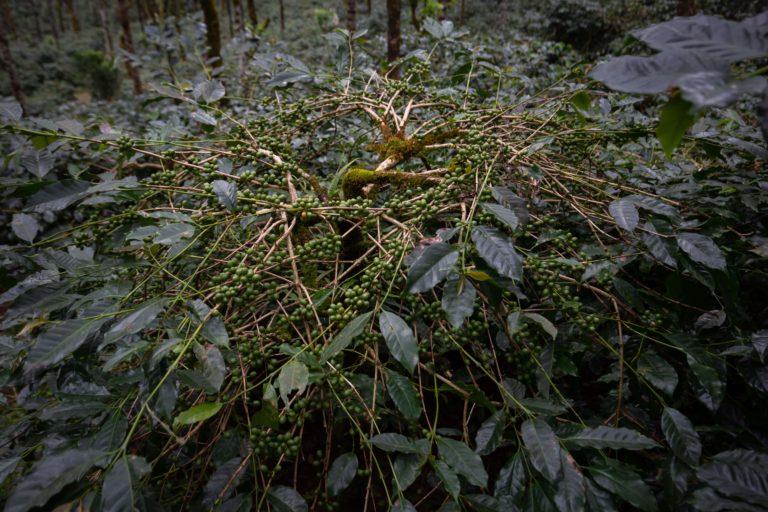
To strengthen further and to make world to aware the instinct note of Coorg Coffee and Indian Lovers in particular, the District administration is organizing a “Coorg Coffee Festival and Expo” first of its kind on 10 and 11 at Raja Seat, Madikeri
The main objectives of the festival are to bring all the coffee stakeholders under one umbrella and to promote Coorg Coffee extensively among the Coffee lovers, tourists visiting Coorg from across the country and world also.
Disteict administration stated in a press release “private entities who are involved in the Coffee Value Chain are requested to take part in the festival and exhibit their products. In this regard, the Coffee Board and the Department of Horticulture will be the facilitating entities to carry out the above programme”.
All the communications related to exhibition stall including registration and remittance of stall charges will be on the coorgcoffee-coorgcoffeefestival2022@gmail.com
Acviss Technologies develops a “no internet” blockchain-based traceability application for the Coffee Board of India.
Brand protection and consumer engagement technology company Acviss Technologies develops a “no internet” blockchain-based traceability application for the Coffee Board of India. This app is designed to protect coffee production from counterfeiting.
The Coffee Board of India has been working with marginalized tribal coffee growers to help them improve their farm productivity and quality. With the introduction of this anti-counterfeiting technology, farmers have been able to benefit from higher incomes in their farm produce.
In the last few years, the demand for differentiated coffees with traceability features has been increasing across the world and the differentiated coffees which can be traced back to their source can help obtain a premium for these coffee farmers.
Commenting on this, Vikas Jain, Founder, of Acviss Technologies, said, “It has been a pleasure creating a solution for the Coffee Board of India, we’ve not only built something innovative but we’ve also tried to make it accessible and helpful for the common man, the app we have created is very simple and does not require Wifi for farmers to scan. It’s a very easy and user-friendly app created first and foremost for the benefit of farmers”
The blockchain-based traceability application by Acviss is an anti-counterfeiting solution that helps to reorganize the unstructured supply chain, provides transparency in transactions, and protects farmers from fraud and fake GI tag products with the help of quality evaluation.
This app also helps farmers to generate stable income and protects them from any collateral damage with the help of automated payments, insurance, and financing as there is no middleman involved. For the end users, this app also helps consumers by providing authenticated certifications ensuring that the bought product is safe for consumption.
Talking about this implementation, the officials of the Coffee Board of India, said, “We have worked with Acviss to develop a blockchain solution that has been implemented in Karnataka and we have been very satisfied with the output. With this solution, the farmers have been able to gain benefits. Their incomes have gone up by about 43 per cent because of this traceability app.”
Coffee has become an increasingly common target for food fraudsters, with low-quality ground coffee beans adulterated with filler ingredients such as corn, barley, wheat, soybeans, rice, beans, acai seed, brown sugar, or starch syrup. One of the main drivers has been a reduction in coffee bean output due to poor harvests in some key producers.
With this application, coffee procured by these tribal farmers can now be traced from the grower to the consumer. Coffee parameters like moisture, weight, type and outturn captured at source farms are mentioned. Along with this, certification data is also available for each sample collected.
To build consumer confidence, this app also displays the farm locations and the farmer data. It helps in simpler transactions between farmers and the end consumer with the help of digitalization as every product packaged goes through an authentic signature. This digital signature cannot be tampered with and helps in easy tractions between the farmers, processing unit, warehouse, distributor, retail, and finally the consumer.
Coffee has become an increasingly common target for food fraudsters, with low-quality ground coffee beans adulterated with filler ingredients such as corn, barley, wheat, soybeans, rice, beans, acai seed, brown sugar, or starch syrup. One of the main drivers has been a reduction in coffee bean output due to poor harvests in some key producers.
source: http://www.bwdisrupt.businessworld.in / BW Disrupt / Home / by BW Online Bureau / December 03rd, 2022
Apart from these conflict mitigation projects, the department is releasing special packages to help farmers located in conflict areas.
Madikeri :
The pandemic situation had affected the maintenance works and sanction of projects from the forest department across Kodagu leading to a peak in the wildlife conflict. Alongside the perpetual problem of wild elephants, the tiger menace had claimed the lives of humans and an increased number of cattle. However, the department has assured to provide a permanent solution to the man-animal conflict and grand plans are in place to address the issue.
Improved conflict-mitigating projects including the deployment of static surveillance teams in heavy conflict areas are underway in the district. An annual budget between Rs 30-40 crore will likely focus on developing conflict mitigation methods to fight man-elephant conflicts.
This year, the department has received approval to install railway barricades for a 22 km stretch across Nagarahole, a 20 km stretch across Madikeri limits and a 2 km stretch across Madikeri Wildlife limits. In 2023-24, solar fences will play a crucial role in addressing the conflict and improved double tentacle solar fences will be installed across a 25 km stretch of the Nagarahole forest area and a 20 km stretch of the Madikeri forest division. In addition to this, the several dysfunctional solar fences (spread across 60 km in different areas) will witness relief and maintenance works.
Apart from these conflict mitigation projects, the department is releasing special packages to help farmers located in conflict areas.
“The farmers can install solar fences across their estates and 50% of the cost will be borne by the department. A one-kilometre solar fence will cost approximately Rs 2,30,000 and the department will release Rs 1,15,000 as a subsidy for the fence. Any farmer or grower is eligible to avail the subsidy,” confirmed BN Niranjan Murthy, Kodagu division CCF. As of this year, funds are ready to be distributed as subsidies for up to 50 to 60 km stretch of solar fence installation by the farmers themselves.
Meanwhile, to address the tiger menace across the estates of Kodagu, the department will provide a 50% subsidy for the construction of cattle sheds to eligible farmers in conflict areas.
“The construction of a cattle shed is estimated at Rs 2 lakh per unit and the department will bear 50% of this cost. The department is ready to extend subsidies to 50 farmers this year. The farmers who own less than four acres of farmland or estate and possess a BPL card are eligible for this subsidy,” confirmed Murthy.
Further, the compensation for death due to wildlife attacks has been increased from the previous Rs 7.5 lakh to the current Rs 15 lakh. Similarly, the crop compensation to all crops will be doubled shortly. Meanwhile, the department has arranged school van facilities for students located in conflict areas and currently, four vans are functioning in severe conflict areas.
“In case of additional requirements, more vans can be engaged by the department,” he confirmed.
The Indian Institution of Sciences is undertaking a scientific study on the steel rope fences to address the man-elephant conflict and the institution is involved in a few modifications to make this a foolproof initiative.
“Once the steel rope fences go through a few design changes, they can be installed instead of railway barricades as the rope fences are extensively cost-effective,” he said.
Deployment of surveillance cameras and solar street lights in conflict areas are also among the projects that have received a green signal to address the conflict in the district.
source: http://www.newindianexpress.com / The New Indian Express / Home> States> Karnataka / by Pragna GR, Express News Service / December 01st, 2022
Climate change-induced weather events are impacting Karnataka’s coffee farms, testing the resilience of farmers.
Karnataka coffee farmers keep meticulous rainfall records that are helping individual and organisational attempts at studying climate change.
Farmers are trying to adapt to changes in rainfall patterns, first investing in sprinklers and now in coffee driers.
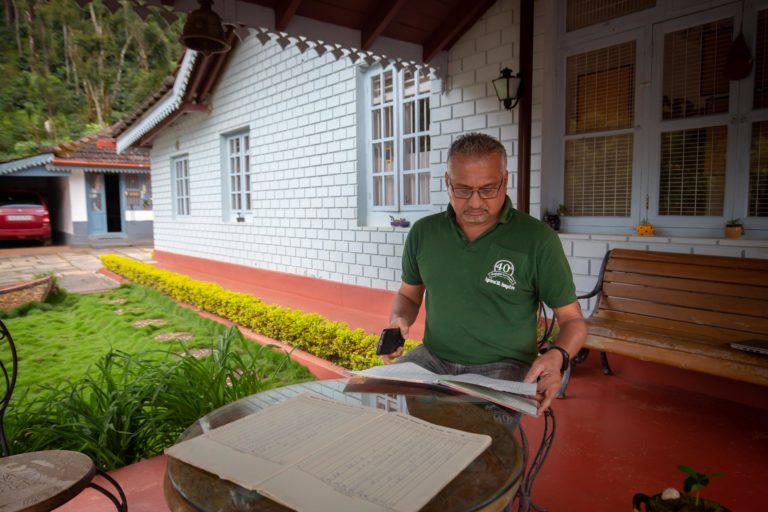
At his 38-acre coffee estate at 3,800 metres above sea level, overlooking the pristine Baba Budan giri (hill) in Chikmagalur district of Karnataka, I.S. Umeshchandra is working on creating a database of rainfall records in the region. Crowdsourced from fellow coffee farmers across the district, the exercise struck gold when a farmer shared a rainfall record from 1887.
“I was amazed to see it, though it is unverified. The verified ones date back to 1933,” he told Mongabay-India. His son Navneeth, a data analyst, is helping him crunch the numbers. Coffee farmers in Karnataka keep a record of rainfall in their estates, a practice dating back to colonial times.
A climate change report in 2014, Transitioning towards climate-resilient development in Karnataka, prepared by 26 experts, said that Karnataka would be hit harder by climate change than other states in the country. As rainfall patterns in the state change, the rainfall records of farmers are coming in handy for various individual and organisational attempts at understanding climate change, climate resilience and adaptation in Karnataka.
I.S. Umeshchandra with his rainfall records at his house. Photo by Abhishek N. Chinnappa.
In 2011, the College of Forestry in Kodagu district, India’s largest coffee-producing district, participated in an international project, Coffee Agroforestry Network (CAFNET) Project, to study the ecosystem services of agroforestry systems in the district. Rainfall patterns too were studied as a part of the project, where rainfall data of over 60 years from 116 coffee farms was sourced and analysed. The study pointed to a strong fluctuation in annual rainfall every 12 to 14 years and a reduction in the length of the rainy season by 14 days.
Umeshchandra (not associated with CAFNET) has observed some patterns from the initial analysis, though he has yet to find a strong one. “Fluctuations in annual rainfall are noticed every 10-12 years,” he shared. Records from 1887 show an average annual rainfall of 4826 mm (190 inches) in Chikmagalur, which suggests heavy rainfall is not new in this region, which receives an average annual rainfall of around 2500 mm (80-100 inches). “But heavy spells of rain for a few days as against it being spread out is making a difference,” he observed based on his experience.
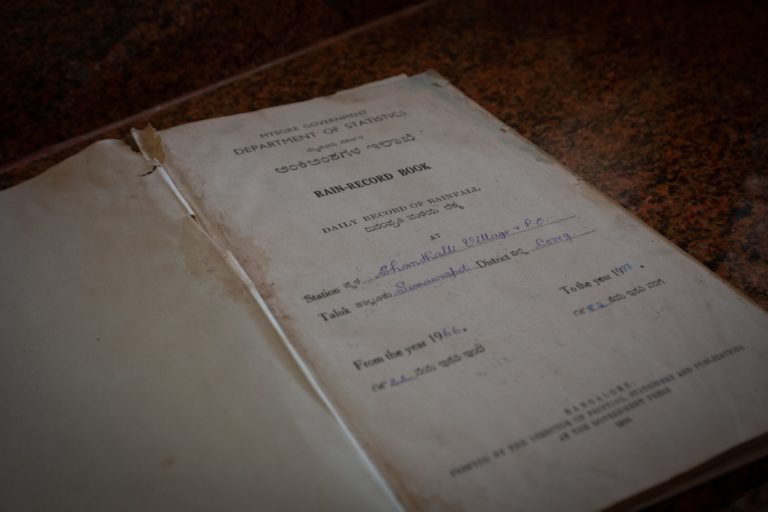
Ramachandra K.S., a coffee farmer from Shanthalli in Somwarpet taluk of Kodagu, agrees. Flipping through the pages of his handwritten rainfall records dating back to the 1960s, he says there was over 5000 mm (200 inches) of average annual rainfall in 1960-1962, which fell to around 3800 mm (150 inches) in 1970. However, most farmers agree that the rainfall pattern has become unpredictable and daunting in the last five years because unpredictable rains make planning farming events difficult. They say they are constantly stressed.
J. Srinivasan, a professor at the Divecha Centre for Climate Change at the Indian Institute of Science (IISc), told Mongabay-India that these long-term rainfall records that the coffee farmers of the Malnad region of Karnataka (including Chikmagalur and Kodagu) keep are invaluable.
However, he said that the farmers need to compare their records with local IMD (India Meteorological Department) station records to verify them. “A single rain gauge cannot give accurate results,” he said, adding that the Malnad region, which is hilly, experiences microclimates and that one farmer’s rainfall records will be different from that of their neighbour’s.
Ramachandra’s rainfall records. Photo by Abhishek N. Chinnappa.
More rains lead to landslides, infections and pests in plants
Chikmagalur has a special place in the coffee history of the country. Legend has it that a 17th-century Sufi saint Baba Budan secretly transported seven coffee cherries from Mocha in Yemen and planted them in front of his hermitage, which later came to be called Baba Budan giri (hills) in Chikmagalur, marking the origin of coffee cultivation in India.
From Umeshchandra’s estate situated on a slope, Baba Budan giri provides a breathtaking view. But these days, it fills him with dread. While erratic rainfall hasn’t affected the productivity of his estate adversely, he fears physical damage by way of landslides. More wet days and increased daily rains saturate the soil and can damage hills, leading to landslides. Studies have shown a correlation between extreme rainfall and landslide events.
At Attigundi village, about 13 km from Umeshchandra’s estate in Hosapura is his friend Kiran M.R’s 45-acre estate of Arabica coffee. He is focused on phasing out silver oak trees (Grevillea robusta) in his estate and planting more native ones. Karnataka is known for shade-grown coffee, and its agroforestry system encourages an abundance of native trees alongside the cash crop.
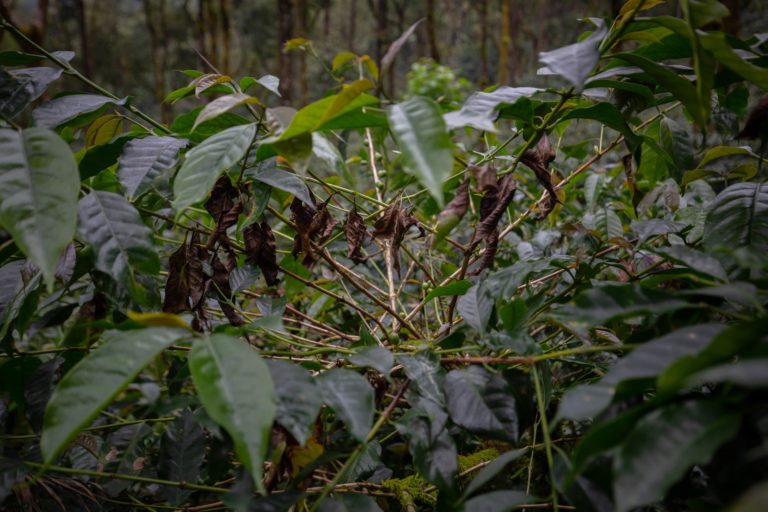
Leaf rust infestation on coffee plants. Photo by Abhishek N. Chinnappa.
Plantation economics and public policies, however, drove the farmers to opt for exotic shade trees like silver oak, which grows fast and can be easily traded as timber. Many farmers are switching back to native trees for various reasons, one of them being the leaf litter of silver oak lacks nutrients and doesn’t decompose as fast as native ones, said C.G. Kushalappa, dean of the College of Forestry. There is also the realisation that a good canopy cover provided by native trees can prevent soil damage during extreme rainfall.
“This July, I got 101.6 mm (four inches) of rain every day for 20 days. Some places nearby recorded around 150-200 mm (6 to 8 inches). This was followed by 1000-1300 mm (40-50 inches) of rain in 10 days in June. “We used to get seven to 10 days of monsoon break in June-August which is crucial for coffee. But no such break in the last three to five years,” said Kiran.
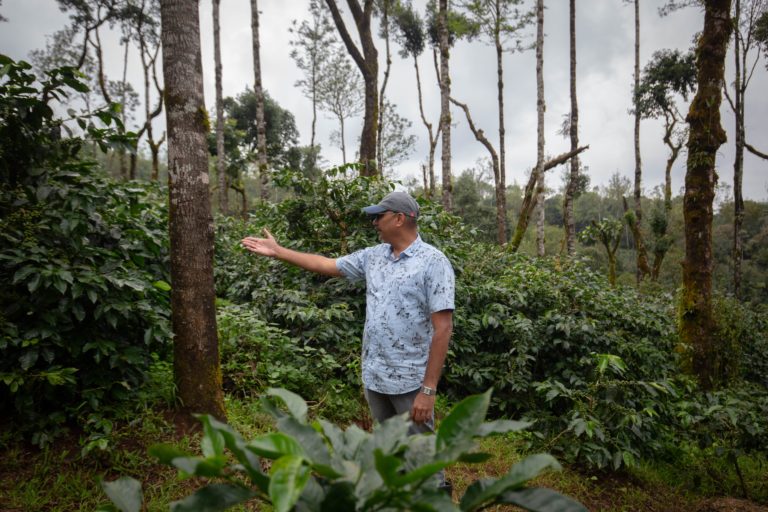
More wet days and little sunshine — a perfect setting for pests and fungal infections — is bad news for coffee. Black rot fungus (coffee thread blight) or Koleroga and coffee white stem borer (Xylotrechus quadripes), a pest, are decimating Arabica plants that were once this coffee belt’s pride. Coffee leaf rust, another fungal disease, is also high among coffee, informs Kiran. “I faced 20-30 percent loss last year,” he said with dismay. He had to shell out Rs. 5000 an acre to remove the black rot infestation at his 60-acre farm in Magundi in Chikmagalur.
Robusta, as the name suggests, is more robust and pest resistant to an extent, said J.S. Nagaraj, joint director of Central Coffee Research Institute at Balehonnur in Chikmagalur. In the last 15 years, there has been a clear shift towards Robusta in Kodagu and Chikmagalur. “While it was 50-50 earlier, it is now 80 percent Robusta in Kodagu,” said Kushalappa. Labour shortage and the high cost of cultivation of Arabica have also tipped the scale in favour of Robusta.
Coffee farmer Kiran points to the infestation. Photo by Abhishek N. Chinnappa
Farmers devise ways to adapt
Coffee farmers here are constantly trying to adapt to a changing climate. “Coffee farming depends on two important rainfall events, blossom shower and backing shower,” explained farmer Jammada Ganesh Ayyanna of Kaikeri village in Gonikoppal in Kodagu. “Blossom showers in the summer months of February to March ensure the blossoming of coffee plants. This must be backed by the backing showers within two weeks for the cherries to set,” he said. In the last three decades, the changes in shower patterns began to affect largely rain-fed agriculture, prompting farmers to invest in irrigation by way of sprinklers. “More than 90 percent of farmers rely on sprinklers now,” Ayyanna told us.
While the northeast monsoon and cyclonic events had little effect on coffee farming in these parts earlier, isolated showers during coffee-picking months (December-February) are working against the industry. Showers during picking months make the cherries drop. The dropped cherries, called “cleanings”, are often picked and sold. While cleanings filled 100 bags (one bag is 50kg) at Ramachandra’s farm last year, Kiran had to let go of the cleanings due to rains. “The cleanings were damaged; damaged cherries don’t fetch a good price,” he said. Picked cherries need at least two months to dry, said Ramachandra.
“No rains and good sunshine are ideal.” Since that hasn’t been the case in the last few years, more farmers, mostly large landholders, have begun to invest in driers.
Coffee cherries at Kiran MR’s estate. Photo by Abhishek N. Chinnappa.
“I didn’t want to worry about unexpected rains,” said Gerrard Perreira from Coove Village in Mudigere taluk in Chikmagalur, who has 200 acres of Arabica and Robusta coffee. “For the coffee to dry properly, we need uninterrupted sunshine for a minimum of five days. But that’s hardly been the case in the last few years,” he said. He bought a drier eight years ago when signs of climate change had begun to show.
It has a 4000-litre capacity that can dry 35 bags of coffee at one time at an optimal temperature of 35-40 degrees Celsius for 18-22 hours. “The drying has to be uninterrupted. Since the power supply is unreliable, we use firewood. But a power generator for backup is a must,” he shared.
There are other advantages too. Using driers is more hygienic, quicker, and cuts labour costs, said farmers. Small and medium landholders, however, can’t afford the driers that cost about Rs 12-15 lakhs and are suggesting setting up community-owned driers. Kushalappa has his suspicions since cooperatives have not worked well in the region in the past. Coffee Board is now giving subsidies for driers, informed Nagaraj. “It is not affordable for everyone. But if climate change continues to affect coffee farming, driers are the future,” he said.
source: http://www.india.mongabay.com / Mongabay / Home> Mongabay Saves Climate / by Arathi Menon / December 01st, 2022
“Utharkand, Telangana, Haryana, Himachal Pradesh have become separate states after a long fight. Why should Kodagu not get an autonomous council?,” he questioned.
Madikeri :
“I will fight for your (Kodagu) separate existence within Karnataka state but with an autonomous council,” declared former minister and economist Subramanian Swamy in Kodagu. He was addressing the gathering at the 32nd Codava National Day celebration in Madikeri on Saturday. The event was hosted by Codava National Council (CNC).
Subramanian Swamy in his speech assured CNC about the organization’s goal of achieving geo-political autonomy through a legal battle. “Great injustice has been done to you (Kodagu/Kodavas). But keep fighting,” he added. He assured to file a petition in the Supreme Court shortly to get Geo political autonomy status to Kodagu. He stated that he will seek support from his legal advisor Satya Sabarwal. “Utharkand, Telangana, Haryana, Himachal Pradesh have become separate states after a long fight. Why should Kodagu not get an autonomous council?,” he questioned. He assured that Kodagu will be an independent council by November next year.
Meanwhile, speaking with the media Swamy said, “The former minister Chidambaram has faced serious charges in many cases followed by Rahul Gandhi in the young India case. Prisons wait for them.”
He commented on the Modi regime and spoke, “I am not opposing Modi. But his policy of appeasing China is opposed by me. He should not allow the Chinese to occupy our territory. India should fight back. I also oppose some of the wrong economic policies of the present government. No one in BJP has the guts to question the wrong policies except me. Even the PM has failed to declare Ram Setu as a heritage spot despite several appeals by me.”
Virat Hindusthan Sangam national secretary Jagadish Shetty, Supreme Court advocate Satya Agarwal and CNC president NU Nachappa also spoke. Several resolutions including the demand for ST tag for the Kodavas were passed during the session.
source: http://www.newindianexpress.com / The New Indian Express / Home> States> Karnataka / by Express News Service / November 26th, 2022
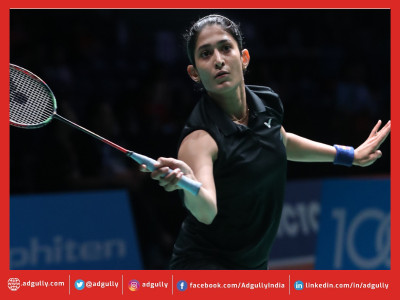
Leading sports management firm, IOS Sports & Entertainment announced the signing of Arjuna Awardee Ashwini Ponnappa, the sensational doubles and mixed doubles badminton player of India.
Ashwini Ponnappa became a household name for Indians after winning a gold and silver medal at the 2010 Commonwealth Games in the Women Doubles and Mixed Doubles category respectively and another gold at the 2018 Commonwealth Games Gold Coast in the Mixed Team Event. She also played an important role in winning a silver medal for the Mixed team at the 2022 Commonwealth Games Birmingham. Other victories of Ashwini Ponnappa include a bronze medal in women’s doubles at the Badminton World Championship in 2011 and 2018 Commonwealth at Gold Coast and a series of gold and silver medals at the South Asian Games and Asian Championships.
“As a professional badminton player, you always look forward to new and unique opportunities, challenges and goals to achieve and excel as a person and as a player in the process. I am truly honored to be able to represent my country for so many years now and I look forward to winning more medals for India at major events particularly with the Asian Games and qualifications for Paris 2024 Games coming up. That being as said, we all need support to manage our off-the-field opportunities and I am delighted & excited to be welcomed by Team IOS Sports and Entertainment. They have a proven and long-standing history of working with athletes from other major Olympic and Paralympic disciplines along with my fellow shuttlers.” said Ashwini on her signing on with IOS Sports & Entertainment.
Ashwini, who is currently World Rank 23 (in Women Doubles) has been a doubles player ever since her professional journey started. Her first victory at the national level came at the 2004 National Championship in the Sub-Junior Girls Doubles category. A year later, at the 2005 National Championship, she retained her title and in 2006, she got a taste of victory by clinching a Gold at the South Asian Games in the Women Doubles event.
“It’s very exciting to have one of the best doubles badminton players of India onboard with us. Ashiwni’s role in showcasing Indian women’s doubles badminton’s prowess in world badminton cannot be missed and we are looking forward to having Ashwini as a part of IOS and wish her all the luck.” said Neerav Tomar, Managing Director, IOS and Entertainment.
IOS Sports has so far managed and worked with more than 100 Indian sports stars, including the likes of Suresh Raina, MC Mary Kom, Saina Nehwal, Sandeep Singh, Hima Das and now they’re all set to add another name in this list as Ashwini Ponnappa.
source: http://www.adgully.com / Adgully / Home> Marketing / by Adgully Bureau / November 16th, 2022
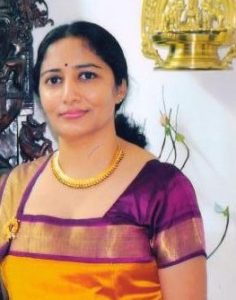
Mysuru entrepreneur Kuppanda Chayaa Nanjappa Rajappa has been appointed as the National President of Association of Business Women in Commerce and Industry. She is a first generation rural woman entrepreneur and Founder-Managing Partner of Nectar Fresh.
Nectar Fresh, backed by Khadi and Village Industry Board, has its unit in Srirangapatna, Mandya district. It offers various products like honey, jams, sauces, chia seeds and natural vinegar.
A recipient of various awards like CNBC-TV18 and Women Entrepreneur Award in 2014-2015, Chayaa was also honoured by Indian Federation of Culinary Association for breaking the monopoly of the international brands. She bagged the Business Person of the Year Award by Mysore Chamber of Commerce & Industry (MCCI) in 2019.
Nectar Fresh has been the first brand in India to be using the ‘Women Owned’ logo of ‘We Connect’. Their latest venture ‘Veeravrutham’ is the first social enterprise in ‘Aatmanirbhar Bharat’ which will support over 3,000 tribals and rural artisans locally. Tribal and rural artisans’ products will gain place not only in the Indian market but will also find place in the international market.
Born to Paruvangada Nanjappa and Poly Nanjappa of Nalkeri village in Kodagu, Chayaa is married to Kuppanda Rajappa, who was the first businessman to bring in the concept of supermarket (Nilgiris) to Mysuru. The couple has donated one acre of land for a Bharat-Israel Study Centre through Diya Minora Foundation, a sister concern of Veeravrutham Foundation. It will be a culture and technology exchange platform between India and Israel.
Chayaa is motivated by the principles of Rashtriya Swayam Sevak Sangh (RSS) and has implied the principles in her profession besides working in various fields apart from business. She is the first woman to hold a national-level position in Vishwa Hindu Parishad (VHP) and also holds a position in the State Committee of RSS’ Laghu Udyog Bharti.
She is a member of the executive committee of the R&D Institute for Food and Technology at Indian Institute of Food Processing Technology (IIFPT) and is one of them from the industry to be chosen as part of the National Honey Mission.
IIM Professors chose Nectar Fresh story as a case study for the Ivy League Competition, adding another feather to the cap of Nectar Fresh that grew up as a brand with ethics and quality than investing in marketing.
source: http://www.starofmysore.com / Star of Mysore / Home> News / June 25th, 2021
He is partnering with Tanmay Bhat and Akshay BD for a start-up in the cryptocurrency space.
Devaiah Bopanna
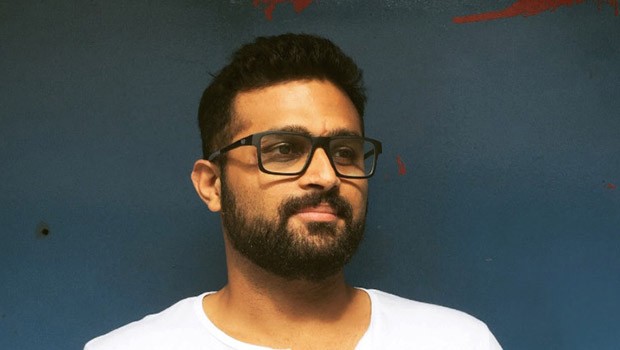
Devaiah Bopanna, Chief Creative Officer at All Things Small — known for campaigns such as Disney+Hotstar’s #SiwaySRK, and Cred’s ‘Indiranagar ka Gunda’ — has announced that he is leaving the agency to explore a new venture.
Bopanna, who has written several viral ads along with the former AIB team, is set to join hands with Tanmay Bhat and Akshay BD in a cryptocurrency start-up called SuperTeamDao.
Announcing it on LinkedIn, he said, “I got introduced into the world of crypto a few months ago by Tanmay between takes on an ad film shoot.”
“This turned into obsession over a period of time. So I couldn’t be more thrilled in joining Tanmay Bhat and Akshay BD as a founding member of SuperTeamDao, where we will be spending all our time, energy and resources in building a supercharged community that helps service crypto companies in their growth, and find interesting new ways to bring crypto into the mainstream stream,” he added.
Bopanna co-founded All Things Small along with Sidin Vadukut, Supriya Nair, Gaurav Vaz, and Sunil Doshi in 2019. He has also worked with Creativeland Asia, Lowe Lintas and Mudra Communications. He started his career in 2008 as a copywriter with Ogilvy and Mather. In 2015, he became the head writer for AIB.
Info@BestMediaInfo.com
source: http://www.bestmediainfo.com / Best Media Info / Home> Digital / by Best Media Info Bureau / Mumbai – October 05th, 2021
He appreciated the efforts of the people’s representatives in the district in the establishment of a well-equipped court building.
The newly established Kodagu District Court building in Vidyanagar
Madikeri:
It was a historic moment in Madikeri as the iconic District Court building witnessed a grandeur inauguration on Saturday. The Rs 39 crore magnificent Court building was inaugurated by Justice AS Bopanna, the Supreme Court Judge.
“The notion of democracy will be lost if people lose faith in the judiciary. Lawyers must keep this in mind and work for the betterment of society,” spoke Justice Bopanna.
“Courts are upgraded with time and this does not indicate an unstable society. People believe in the judicial system and it is the duty of every advocate to keep a stronghold on this faith of the people,” he added.
Justice AS Bopanna at the inaugural ceremony of the new Court building in Madikeri
He appreciated the efforts of the people’s representatives in the district in the establishment of a well-equipped court building.
Chief Justice of Karnataka High Court, Prasanna B Varale began his speech by singing the traditional Kodava ‘baalopaat’.
“Kodagu is the land of warriors and the district has contributed immensely to the Indian Military. The district has made a mark in every field and General Thimmayya, and FMKM Cariappa have been an asset to the nation. The court is equivalent to a temple and it is our duty to extend justice to the people in need,” he said.
HC judge Cheppudira Poonacha, SC judge Shukure, HC judge ES Indresh and district BAR association president KD Dayananda were among the veterans from the judiciary system present at the event. MLAs KG Bopaiah and Appachu Ranjan assured to extend bus services to reach the newly established court in Vidyanagar premises.
source: http://www.newindianexpress.com / The New Indian Express / Home> States> Karnataka / by Express News Service / November 12th, 2022
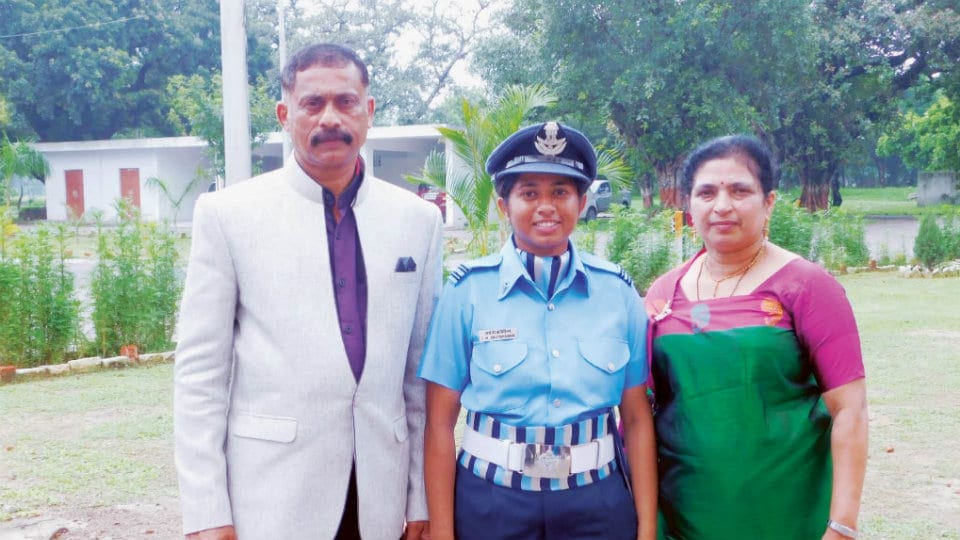
Dr. Inanda B. Kaveramma has been promoted as Flight Lieutenant in the Indian Air Force (IAF), probably becoming the only Kodava lady who is serving in the IAF as a doctor.
She had undergone the training as part of her internship in medical education and cleared the Short Service Commission exams while continuing her medical studies at Tadikal Subbaiah Medical and Dental Sciences in Shivamogga where she had secured a merit seat.
She later completed her medical training at the Command Hospital in Bengaluru. Now Kaveramma has been promoted as Flight Lieutenant. She completed her Military training MOBC (Medical Officers’ Basic Course) in Lucknow last July.
MOBC is a foundation course for Army doctors, in the course they are made to do basic drill to get their bearing correct and then taught basic fundamentals of the Army functioning, units, and how they would be required to perform their duties in peace and war.
At present, Kaveramma is serving the nation at Jodhpur Air Force Station in Rajasthan. She completed her primary education at Coorg Public School in Gonikoppal and went to Expert PU College in Mangaluru.
Kaveramma is the daughter of businessman and Star of Mysore correspondent Inanda Bopanna and Bharathi at Ponnampet in South Kodagu. She is the granddaughter of Inanda S. Cariappa and Janaki of Chikkamandur and businessman Manippanda Somaiah and Parvathi of Gonikoppal.
source:http://www.starofmysore.com / Star of Mysore / Home> News / August 02nd, 2019
WELCOME. If you like what you see "SUBSCRIBE via EMAIL" to receive FREE regular UPDATES.
Read More »