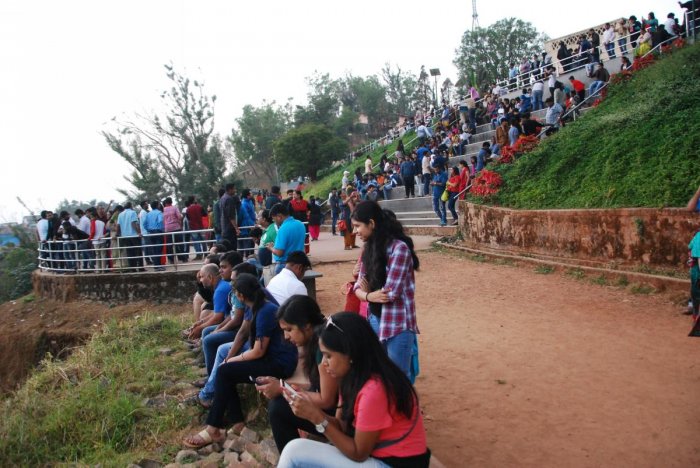
The resort and homestay owners have initiated a campaign to promote tourism in the district.
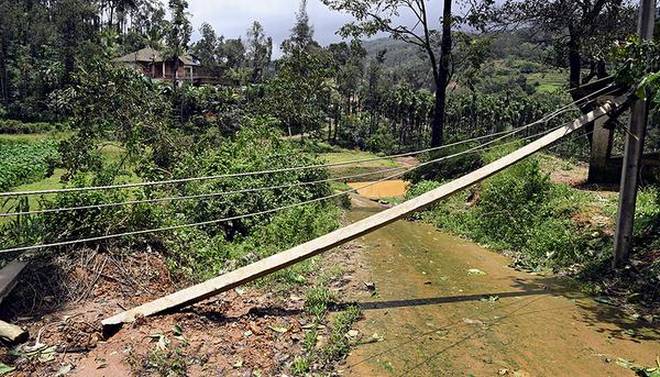
The campaign ‘Kodagu is Back’ is aimed at promoting tourism in the district which had been affected by landslides and flash floods causing extensive damage during August.
The tourism industry has sprung back to life in the face of floods affecting Kerala. However, in Kodagu, the tourism industry failed to recover. Hence, the resort and homestay owners in the district have posted two short films to highlight that Kodagu is safe and tourists can visit without any fear. The duration of the video is one-and-a-half minutes and has gone viral on social media.
The short films produced by Drishti have attempted to showcase safety in tourists spots, trekking areas, rivers and mist-filled Kodagu district. There are over 4,000 homestays in the district. After the massive floods that ravaged the district in August, a majority of the homestays have remained closed.
“Other than horticultural crops, the main source of income for the district is tourism. Though tourists are visiting the district since November first week, it has not grown as per the expectations. Hence, the short films are an effort to promote tourism in the district,” said Hotel and Resort Owners’ Association President Nagendra Prasad.
Over one lakh people in the district are dependent on the tourism sector for livelihood. After the landslides, the labourers have returned to their native places. About 80% of the business has been affected. Resort and homestay owners are attempting to sell the resorts. However, there are no buyers, he lamented.
The Karnataka State Tourism Development Corporation too joined hands with the resort owners in promoting tourism.
KSTDC Managing Director, Kumar Pushkar said, “There are two hotels run by KSTDC in the district. In the last four months, we have incurred a loss of Rs 1.50 crore.”
source: http://www.deccanherald.com / Deccan Herald / Home> States> Districts / by Adithya K A / DH News Service,Madikeri / November 30th, 2018
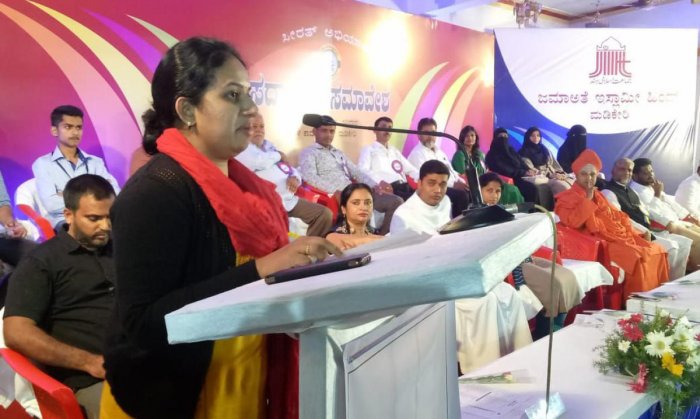
Deputy Commissioner P I Sreevidya speaks at Sadbhavana Convention organised by Jamaat-e-Islami Hind, Madikeri unit, on Saturday.
The volunteers, who took part in the rescue operations during the massive landslides and floods that ravaged Kodagu, are role models for the entire country, said Deputy Commissioner P I Sreevidya.
Speaking at the Sadbhavana Convention, organised by Jamaat-e-Islami Hind Madikeri unit on Saturday, she said volunteers not only took up rescue operations but also lent a helping hand to the district administration.
“As many as 600 victims have been provided shelter at the relief centres by the district administration. The government has been providing facilities to the victims. Members of various organisations are also extending financial assistance and providing relief materials to the victims,” added the deputy commissioner.
Kalancheri Mutt seer Shanthamallikarjuna Swami said that such conventions were essential to foster communal harmony in the society.
As many as 15 volunteers, who were part of the rescue operations, were felicitated on the occasion.
source: http://www.deccanherald.com / Deccan Herald / Home> States> Districts / by Adithya K A / DH News Service,Madikeri / November 25th, 2018
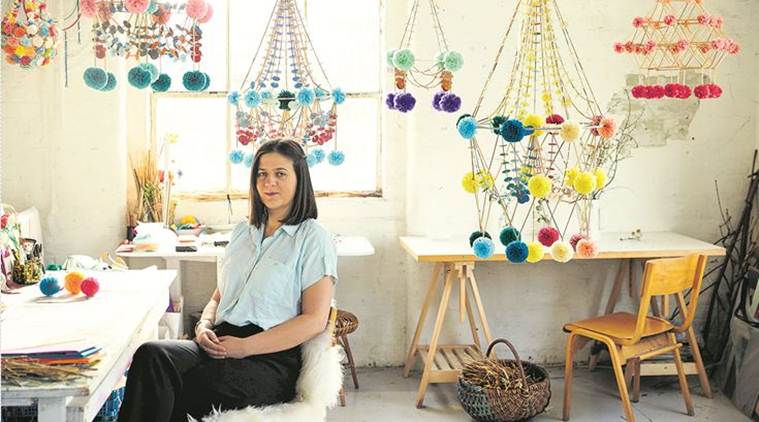
Bengaluru ByDesign promises handmade and cutting-edge innovation Karolina Merska Ola O Smit
Writer UR Anathamurthy was instrumental in Bangalore becoming Bengaluru. In November 2006, when the city symbolically made the shift, his intent, he wrote in an essay, was to give the city “the ability to belong to the world at large even as one is rooted in one’s Kannadaness”. Even as Bengaluru ByDesign takes over the city from November 23, the focus of the 10-day festival will be on transformations, from the handmade to technology and sustainable interventions.
From installations and exhibitions, to workshops and conferences, the festival at multiple venues in the city, hopes to bridge the gap between what is design and what people imagine to be design. Some of the highlights:
Choose Flight Kavya Madappa’s Bluecat Paper presents Unchained Symphony – Birds, a site-specific installation. At the grand marble stairs of UB City, abstract forms of paper birds will rise towards the high-vaulted ceiling and soaring arches of the mall, symbolic of freedom and flight. “We make handmade paper from cotton, coffee and corn husks. We have nearly a 1,000 birds for the 80 steps there,” says Madappa.
Closing the Loop
At St. Mark’s Circle, Total Environment will display its strength in sustainable practices through green installations and landscaping. Designed as a twirling ribbon, the green pods will house various stages of construction, from plumbing to electrical wiring. “As a company that provides experiences in sensitively designed structures, we hope these pods will help people see the craft involved in making a home,” says Founder-Chairman, Kamal Sagar.
Everyday Design
A pop-up called “Museum of Everything” at Kafnu, curated by Sarayu Hedge, will have everything — from origami lamps to recycled cork décor, glass jewellery to organic garments.
Total Recall
London-based designer Karolina Merska honours the traditional pajaki (pah-yonk-ee) paper chandeliers, famous for drawing inspiration from architecture, costumes and flowers. “I will visit Bengaluru’s flower markets and decorate my installation at UB City with fresh marigolds instead of paper flowers,” she says.
It’s a Wrap
Bengaluru’s Town Hall has become synonymous with protests. Festival Founder Suprita Moorthy wants to change that with a makeover that will drape handmade textiles from Aadhyam around its Tuscan columns. “With pure ikats and Banarasi brocades, we will play with colour and contrast. We hope it will direct people’s gaze to its architecture and purpose,” she says.
Rajshree Pathy,
Director of the festival
What are the changes you have seen in the design industry since the inception of the India Design Forum (IDF) in 2012?
When we started IDF in Delhi, it was something very new for the city. People were aware of art but not design and conversations on design thinking were very new. Now there are several design exhibitions, events and talks, all of which is very good for designers as it allows them to present their works outside their own studios.
How has design made a difference to your life?
Design is really a way of thinking about how to make a product or create an experience. Design is not about decoration, it’s about ease of living, minimising wastage and being sustainable and affordable, otherwise design is meaningless. For me, starting IDF has been the most fulfilling experience, as I am passionate about spreading this message and removing the idea that design is elitist or about luxury.
What are the three things to watch out for at the Bengaluru ByDesign festival?
Bengaluru ByDesign is a city-wide, all-inclusive event that makes people stop and think differently about their city and its spaces. It opens up new dialogues on preservation, conservation and celebrates the city for its architecture, craft and so much more. The Town Hall pillars dressed in fabric, the UB city mall stairway clad in beautifully cut paper collage and the workshops everywhere are amazing.
How do you think design can become mainstream?
With the growth of the automotive industry, the real-estate boom, the lifestyle industry like furniture, household products, jewellery, clothing and IT, design is already mainstream, though people are not aware of it. Designers are wanted for all the above businesses. More schools need to come up across India for our fast-growing requirements.
source: http://www.newindianexpress.com / The New Indian Express / Home> Lifestyle / by Shiny Varghese / November 21st, 2018
Aadhaar Adalat, organised by the district administration in association with e-governance, was inaugurated by Deputy Commissioner P I Sreevidya on Monday.
The adalat will be held in the district till November 24. The Aadhaar card is essential for availing government facilities.
The public can make use of the adalat for making a correction in their existing Aadhaar card as well as for registering for a new card.
source:http://www.deccanherald.com / Deccan Herald / Home> State> Districts / by Adithya K A, DH News Service, Madikeri / November 20th, 2018
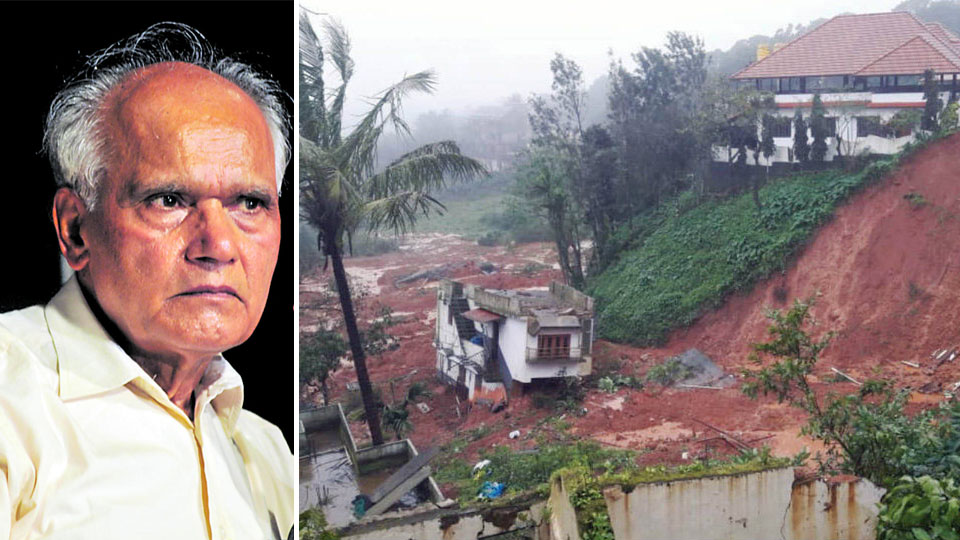
Every other day, Tamil Nadu raises Cauvery water sharing issue and regularly knocks the doors of Supreme Court demanding its share of water irrespective of rainfall and water storage levels in dams of Karnataka along the Cauvery Basin. Is it not its (Tamil Nadu) duty to come to the rescue of people of flood and landslide-ravaged Kodagu (the birth place of River Cauvery) during their time of distress?
This question of natural justice has been raised by Saraswati Samman recipient and noted Kannada Litterateur Dr. S.L. Bhyrappa. Tamil Nadu is the biggest beneficiary of River Cauvery for its drinking water, livelihood and irrigation needs and that State ensures that Karnataka releases water regularly even though there is less rainfall and the storage levels in the dams hit rock bottom.
“Tamil Nadu must come to the rescue of Kodagu residents and it will be a violation of natural justice if it does not help the affected people of Kodagu. Why is Tamil Nadu silent on this though it takes all the benefits from the river that takes birth in Kodagu,” Dr. Bhyrappa questioned. “If it is Karnataka’s ‘duty’ to grow forests and protect River Cauvery, why Tamil Nadu has the sole “right” only to use the water without doing any duties,” he questioned.
In a letter to Karnataka CM H.D. Kumaraswamy, the noted litterateur whose novels attempt to bring in a change in the society said that irrespective of the rainfall in Kodagu, Tamil Nadu waits for an opportunity to clash with Karnataka in the Courts of law on river water sharing. “While TN fights for its “right”, it seems to forget its “duty” or “obligation.” It wants water from Kodagu but is keeping quiet when the birthplace of Cauvery is suffering from natural calamity. How fair is it,” he asked.
Dr. Bhyrappa has urged the CM to present this case and assert Karnataka’s right for financial assistance from TN either before the Centre or before the Court of law or Cauvery Tribunal. “Karnataka has every right to seek financial aid from TN to rebuild the lives of affected people in Kodagu. Karnataka’s plea may not be admitted at this stage but it can definitely be included when the rights and duties of both Karnataka and Tamil Nadu are discussed in future adjudications,” he stated in his letter. [See below]
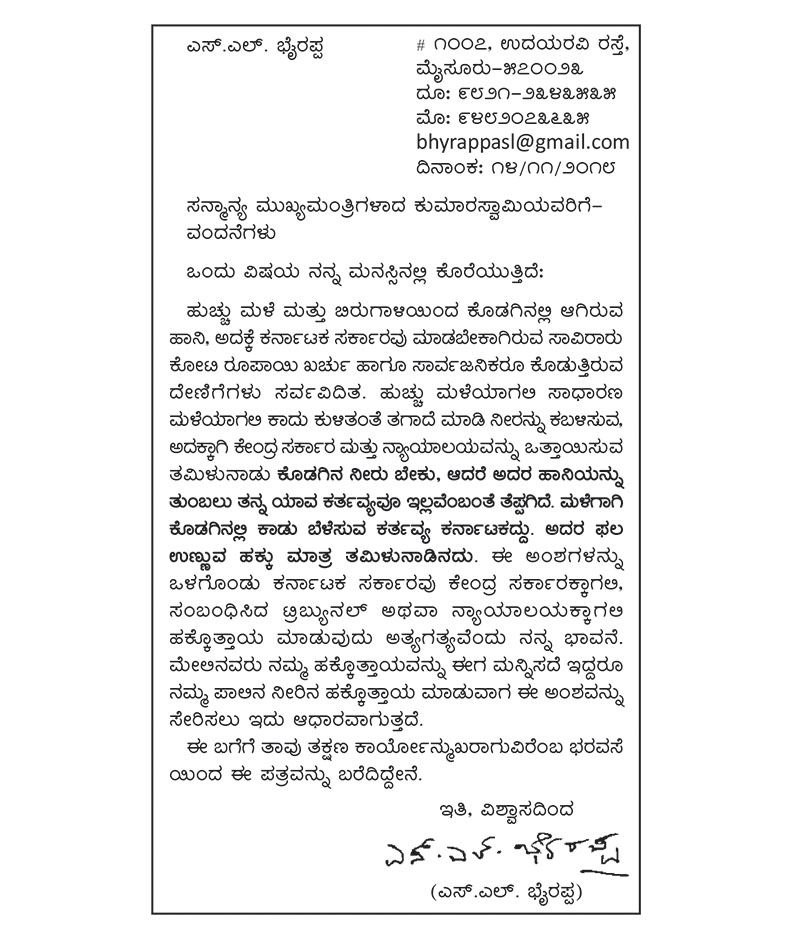
1_Page
source: http://www.starofmysore.com / Star of Mysore / Home> News / November 15th, 2018
Prathibha has found a way to have a successful business and to help people in the process.
Astaic, Calif. :
Prathibha saw people losing their homes to foreclosure. Not only were they losing their homes, they were losing their futures. Prathibha created a business to help these people.
She buys houses before the bank forecloses on them so the owners can protect their future. She creates a home for a new owner, and the neighborhood gets an upgrade. This helps everyone, including Prathibha who loves combining her passion for interior design with serving people in need.
“My education at AHSD in interior design made it easy for me to visualize, transform and remodel every room I was flipping. And my home staging education helped sell the properties faster!”
Prathibha’s Companies are http://www.iStageElegantInteriors.com and http://www.ReviveProperties.com.
She thanks AHSD and credits Academy owner Kim’s on-going mentoring for her success. For those who have similar aspirations, she believes AHSD is just the ticket. “If you are considering doing one or both these courses as I did, you will have no regrets.
Apart from the knowledge and intense training, the continuing help Kim and her team extend after the program is valuable. It is sure to put you right on the path to success!”
Doing what you love and helping others is how The Academy of Home Staging & Design defines Success. Keep up the great work Prathibha!
source: http://www.virtual-strategy.com / Virtual Strategy Magazine / Home> News> PRWeb> Business / by Kim Kapelluch, The Academy of Home Strategy & Design / November 12th, 2018
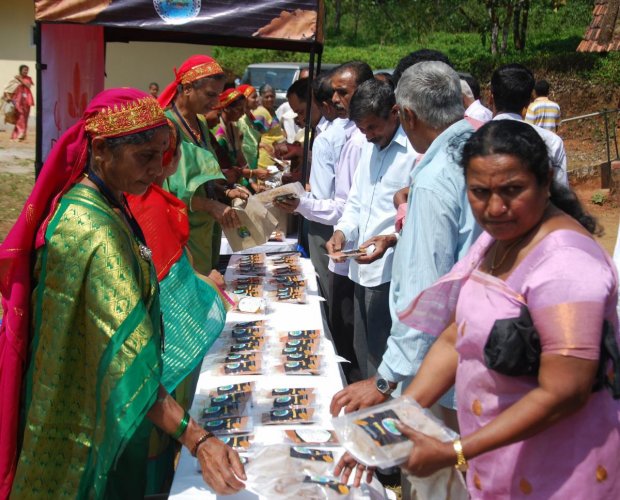
Women flood victims sell masala products under the name ‘Coorg flavours’ in Madikeri on Sunday.
“There is a need to give priority to build the lives of flood victims,” said writer Vaidehi.
She was speaking after launching various masala products under the brand name ‘Coorg Flavours’ prepared by women flood victims under a skill development project of Bharatiya Vidya Bhavan and Project Coorg at Kalooru in Madikeri taluk on Sunday.
It was a moment of pride for the flood victims, who have started rebuilding their lives by selling various products prepared by them.
MLA K G Bopaiah said, “The flood victims should lead a self-sufficient life. The quality of the products should be maintained.”
Project Coorg Convener Balaji Kashyap said that the women were imparted 21 days of training and have prepared 11 varieties of masala products.
Kalooru Kakera family has announced the donation of 20 cents of land to construct a building to train the women.
Bharatiya Vidya Bhavan Kodagu unit president K S Devaiah spoke on the occasion.
source: http://www.deccanherald.com / Deccan Herald / Home> States> Districts / by Adithya KA / DH News Service – Madikeri / November 11th, 2018
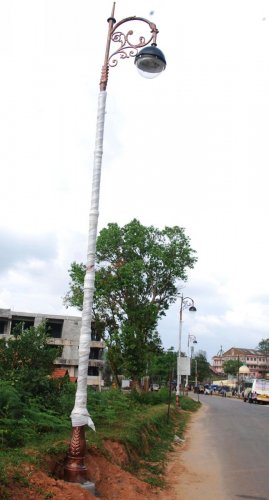
The decorative lamp posts on the road leading to Raja Seat in Madikeri.
The installation of decorative lamp posts has been completed on the road leading to Raja Seat in Madikeri. The heritage-design streetlights will light-up the streets during Deepavali.
The Urban Development Authority had taken up the work of installation of decorative lamp posts from Muthanna Circle to Raja Seat at an estimate cost of Rs 20 lakh.
The move is expected to attract more tourists.
The lamp posts, brought from Indore, are made up of cast iron with corrosion-resistant material to protect it from all kinds of corrosion. As a result, the streetlight poles will not get rusted. The poles will have 250 MHz bulbs,” said Urban Development Authority former chairman Chummi Devaiah.
The CMC had spent lakhs of rupees for installing solar lamps on the road leading to Raja Seat. However, the solar batteries were stolen by the thieves and the streetlights stopped functioning. Even the streetlight poles went missing. Now, keeping in mind the safety, decorative lamp posts are being installed.
The residents said that quality electricity poles and streetlights should be installed in different parts of the CMC jurisdiction. The solar lamps are defunct at Indira Nagar, Chamundeshwari Nagar, Gowli Beedi, Mahadevapete Road, Man’s Compound and Rani Pete Roads.
Chandan Rao, a resident of Gowlibeedi, said, “The CMC should take up the maintenance of streetlights before the onset of monsoon. All the electricity lines were damaged in the rain which lashed in August. As a result, majority of the streetlights are not functioning. The CMC should wake up and take up the restoration works.”
Indira Nagar resident Ranjitha said, “Due to the lack of streetlights on the road leading to Raja Seat and Nehru Mantapa, miscreants were creating problems for visitors during evening hours. Fearing it, many women were not taking the route for walking. The streetlights should also be installed at Nehru Mantapa.”
source: http://www.deccanherald.com / Deccan Herald / Home> State> Districts / by Adithya KA / DH News Service / Madikeri – November 04th, 2018
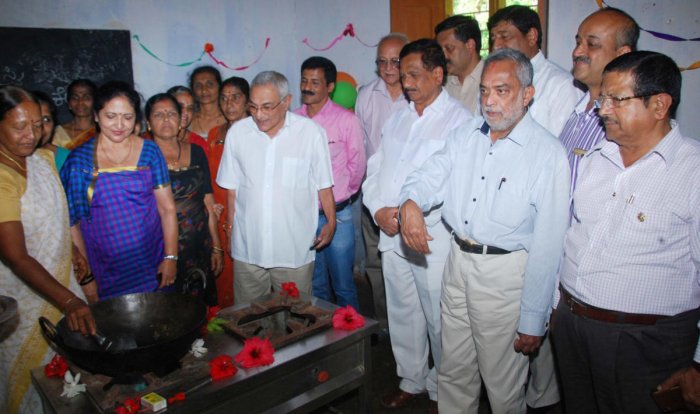
MLA K G Bopaiah, MLC Veena Acchaiah and others take part in the inaugural session of a skill development programme meant for flood-affected women from Kaluru village on Sunday.
MLA K G Bopaiah has called upon the flood victims not to lose hope but to rebuild their lives by boosting their confidence.
He was speaking after initiating a skill development and training session in sewing and food processing at the Government School at Kaluru.
The programme was organised by the Kodagu branch of the Bharatiya Vidya Bhavan and the Project Coorg as a part of the ‘Yashaswi’ project meant for the women of Kaluru, which was ravaged by natural calamity.
Bopaiah further said that assistance would be provided by the government for women from the village towards setting up a platform to market the processed food prepared by them. He also assured release of grants from the MLA fund towards construction of a community hall in Kaluru and Devasturu villages, along with providing a site, following the requests of the village residents.
MLC Veena Achaiah expressed hope that the project would help the trained women lead a self-sustainable life.
K S Devaiah, Bharatiya Vidya Bhavan Kodagu branch president, said that the food and dress items prepared by the women would be put up for sale at shops in the Kodava Samaja complex.
Project Coorg convener Balaji Kashyap said that the women from the flood-affected village would be provided training in sewing for three months, with 28 sewing machines. Also, 30 women would be provided training in food processing and the products would be released in the market with the brand name ‘Coorg Flavour’.
Kodava Samaja, Madikeri vice president M E Chinnappa and Bharatiya Vidya Bhavan member Kuppanda Premnath were present on the occasion.
A file photo of the damage caused by the floods in Kodagu. | Photo Credit: G.P. Sampath Kumar
It will expedite rehabilitation and reconstruction works in district
Chief Minister H.D. Kumaraswamy has announced the formation of the Kodagu development authority to enable speedy reconstruction of the district, parts of which were ravaged by floods and landslips this August.
He was interacting with the affected people at Gandhi Maidan in Madikeri on Wednesday. Mr. Kumaraswamy said he received memorandums from the people to constitute a separate authority and found merit in the suggestion. “An authority under the chairmanship of the Chief Minister will be constituted to expedite the relief and rehabilitation work in Kodagu,” said Mr. Kumaraswamy.
The Chief Minister also said the educational expenses of children affected will be entirely borne by the government while emphasis will also be on restoration of schools and colleges that were damaged during the natural calamity.
In addition, emphasis will be on restoration of farm land, including plantations, for which staff from other districts too will be deployed or posted to agriculture and horticulture departments. He said the State government had released ₹127 crore for the rehabilitation works in the district so far.
There were nearly 800 families who had lost their houses and the government will release ₹10,000 per month towards house rentals as a temporary measure. Each family that has been bereft of its property will receive ₹8.53 lakh as compensation and the reconstruction of houses will be taken up quickly, he added.
The objective of the interaction programme was to infuse confidence among the victims and elicit their views and expectations from the authorities. Mr. Kumaraswamy said he will visit the district again to review the rehabilitation.
source: http://www.thehindu.com / The Hindu / Home> News> States> Karnataka / by Special Correspondent / Mysuru – October 18th, 2018
WELCOME. If you like what you see "SUBSCRIBE via EMAIL" to receive FREE regular UPDATES.
Read More »