Category Archives: Business & Economy

Nepal to participate at the upcoming World Tea and Coffee Expo 2017 in Mumbai

Nepal to participate at the upcoming World Tea and Coffee Expo 2017 in Mumbai

New Delhi (KNN) :

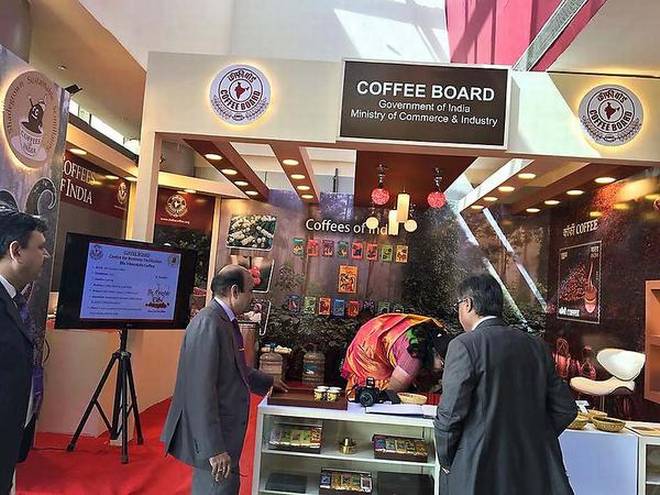
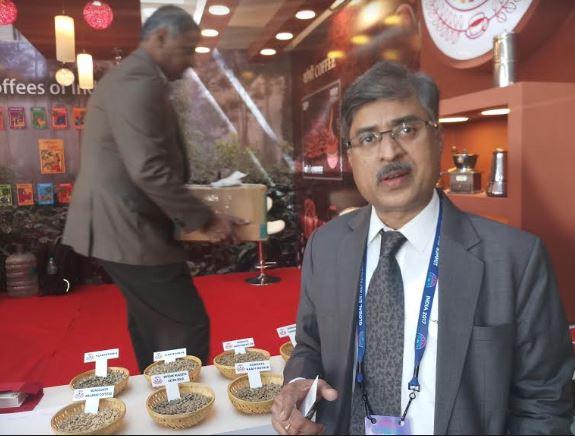
The Nepal National Tea & Coffee Development Board is looking forward to participate at the Mumbai World Tea Coffee Expo (WTCE) 2017 with the board locking up an exclusive pavilion at the 5th edition of the export scheduled for November this year.

The organizing committee in a press statement informed about the latest development.

The Nepalese Tea comprising of CTC tea (black tea) and Orthodox tea (green tea) – is among the most popular commodities in the world due to its aroma and health benefits.

Also Nepal exports more than 15,000 metric tons of tea every year to different parts of the world including India. India is the major export destination for tea from Nepal followed by Germany and Czech Republic, the release informed.

The World Tea Coffee Expo in Mumbai attracts buyers from across the country and also from different parts of the world. It also receives significant footfall from allied industries including packaging, vending solutions, equipment, machineries, flavors, retail chains, government boards, consultants and other technologies

The Expo edition for this year is scheduled from 16th till 18th of November. The previous edition of the Expo hosted around 67 companies. (KNN/ DA)

source: http://wwww.knnindia.co.in / KNN, Knowledge & News Network / Home> Global / October 24th, 2017

Karnataka needs international coffee trade fairs

PTI file photo for representation.

The Coffee Board of India, under the administrative control of the Ministry of Commerce, Government of India, has to contribute to the coffee economy, which is in crisis with three years of near-drought, untimely rains and poor crop yields in Karnataka.

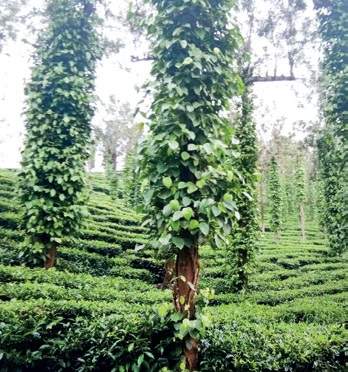
Coffee plantations also have pepper vines inter-planted among them to supplement income, which makes the crash in pepper prices since February this year, worsen the financial hardship of coffee planters.

Moreover, flaws in crop insurance and revenue protection insurance schemes have not really benefited 90% of the coffee-growers, who own plantations of 25 acres or below. The Rainfall Insurance scheme has been discontinued due to lack of adequate modalities in place. Moreover, the newly introduced Revenue Protection Insurance scheme which was initiated as a pilot project in Chikkamagaluru has not evinced much interest among the insurance companies. Therefore, the coffee plantation sector, which employs an estimated 11,00,000 skilled workers, finds that their livelihoods are at stake across the coffee districts of Kodagu, Hassan and Chikkamagaluru.

While coffee growers are confronted with high input costs in terms of labour wages and fertiliser prices, they have to endure low prices for coffee and pepper, which makes it financially unviable to manage plantations. If coffee plantations begin to suffer losses, then the coffee economy will become unsustainable and small growers will find it more remunerative to sell their plantations or convert them into holiday or health resorts — a development which has already taken shape over the last five to seven years. That will surely herald the beginning of the end of the coffee plantation sector and its related industries. Therefore, the Coffee Board needs to transform to a market support role in addition to its R&D functions.

Till the mid 1990s, the Coffee Board functioned in a regulatory role. However, the Coffee Board now needs to adapt to a free market economy since the 1991 economic liberalisation and transition to that of a facilitator. It would need to support the coffee economy through the organisation of trade fairs and help small growers and international buyers to comply with the various statutory requirements towards coffee trade and export.

The Women’s Coffee Alliance India, Bangalore, successfully conducts a vibrant Coffee Santhe or Coffee Fair in Bengaluru annually, and involves all the stakeholders of the economy. For instance, much like the Ministry of Defence organises Aero India at Bengaluru to connect foreign aeronautics majors with the domestic industry; the Ministry of Commerce can also conduct a coffee trade fair under the aegis of the Coffee Board.

The small coffee grower is unable to attend international coffee trade fairs overseas due to cost constraints of airline travel. Therefore, the Coffee Board should hold international trade fairs in Kodagu and Chikkamagaluru for buyers and sellers as a platform to interact with each other. The Coffee Board has large tracts of land with established infrastructure and research stations at Balehonnur, Chikkamagaluru and Chettalli in Kodagu, which can be utilised as centres for international coffee trade fairs and as integrated coffee parks.

Moreover, the boom in coffee tourism over the last decade has developed the hospitality and travel industry resources in these plantation districts to be able to hold the proposed trade fairs. Besides, the two international airports in the proximity are at Mattanur, Cannanore district in Kerala, which is a 90-minute drive from Kodagu and at Mangaluru, which is a two-hour drive away from Chikkamagaluru. As airline connectivity to these two coffee plantation districts, which are also internationally acclaimed biodiversity hotspots exists, these districts are ideal locations to organise trade fairs.

It will make the grower aware of the requirements of the discerning international consumer. The buyer will see for himself the journey of the Indian coffee bean from the plant to the cup. It will incentivise the grower to produce the kind of coffee that the buyer desires. Only a grower knows the trials and tribulations of coffee cultivation and only he can market his coffee with passion and obtain the best price possible for his crop.

Considering that 70% of the coffee grown in the country is exported, the small grower should market his coffee overseas. An important point to note is that Indian coffee is grown under shade, which uses ecologically sustainable methods and adoption of fair trade practices in the eco-sensitive zone of the Western Ghats, which can command premium prices in the international markets. To make Indian coffee competitive in the world market, the Coffee Board must publish a list of internationally-banned pesticides, which will also make the environment safe for plantation workers.

The outcome of such international trade fairs would lead to a demand for ‘Single Origin Estate Specific and Area Specific’ coffees, which will start to gain importance. Today, these fairs held at foreign locations are not inclusive of all stakeholders and have become the exclusive domain of a few elite coffee growers and traders. The Coffee Board should aim to democratise the sale of coffee and enable the small grower to export coffee to international markets rather than allow a select few to prosper at his expense.

(The writer is Chairman of Karnataka Planters Association, Chikkamagaluru)

source: http://www.deccanherald.com / Deccan Herald / Home> Supplements> Economy & Business / by Maneypanda Madaiah Chengappa / October 22nd, 2017

Délicieux signs up for Bahrain coffee expo

Manama :

Bahrain-based Délicieux company has signed up as a key sponsor for the second edition of the Bahrain International Chocolate and Coffee Exhibition which kicks off on December 7.

The three-day event is being held under the patronage of Bahrain Tourism and Exhibitions Authority CEO Shaikh Khalid bin Humood Al Khalifa at Bahrain International Exhibition and Convention Centre.

The sponsorship marks Délicieux’s debut appearance at the Bahrain International Chocolate and Coffee Exhibition, following the success of event’s first edition in attracting visitors as well as active companies in the field.

ShaikhaNooraKF20oct2017

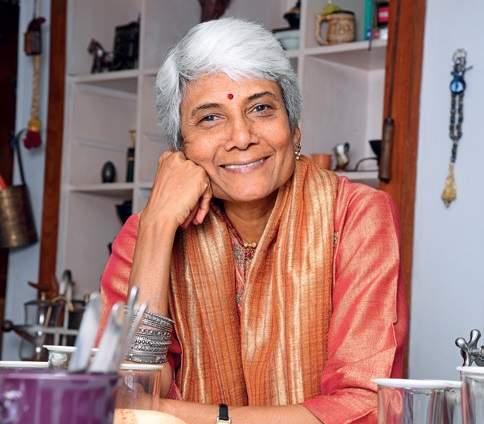
Délicieux Company CEO Shaikha Noora bint Ali Al Khalifa said: “It expands on the company’s market presence in the promising Bahraini chocolate and coffee market, whilst offering an opportune networking platform with visiting suppliers and buyers from other countries, and simultaneously providing marketing catalyst to our Bahrain-based clientele.”

Sheikha Noora said the second edition was likely to attract high footfall with an anticipated spike in demand for chocolates and coffee on display, in preparation for National Day celebrations.

“Our presence at such expos will help us further in networking with companies in the same field, enabling quality enhancement and product development to meet the dynamic needs of consumers,” she noted.

As a result of the knowledge exchange, Bahrainis have become familiar with the varieties of coffee, recognizing the differences of premium and commercial coffee, she added.

Shaikha Noora said Délicieux was a first-of-its-kind company in Bahrain to specialise in premium coffee, offering Ethiopian, Colombian and Rwandan brew.

Amid growing demand for specialty coffee in GCC, Délicieux will soon be introducing its Yemeni and Saudi Arabian coffee starting from next month. The company already offers more than 15 distinct Belgian chocolate flavours, she added.

-TradeArabia News Service
source: http://www.tradearabia.com / Trade Arabia / Home / Manama – October 15th, 2017

Lavazza launches Made-in-India premium filter coffee

Zaccareo said the company inaugurated Coffee Training Centre last year which was the first largest centre outside Italy.

Italian coffee brand Lavazza today announced the launch of its first made-in-India premium filter coffee “II Mattino Vivace”, produced at its manufacturing facility near here, a top company official said today.

The facility at Sri City in Tada began its commercial operations a few weeks ago, Fresh and Honest Cafe Ltd Managing Director Silvio Zaccareo said.

Fresh and Honest Cafe Ltd is a 100 percent subsidiary of Lavazza.

“The factory began commercial operations a few weeks ago. We are launching the Made in India product today..” he told reporters after unveiling II Mattino Vivace.

Zaccareo declined to reveal the size of investment made at the factory or the number of employees working in it.

II Mattino Vivace meaning ‘lively morning’ is made from blends of Arabica and Robusta coffees roasted for the “at home” segment.

The beans were sourced from plantations in Coorg and Chikmagalur in Karnataka. A 200 gm packet is priced at Rs 150, he said.

“Lavazza is known the world over for its expertise in art of blending for over four generations. II Mattino Vivace is a result of combining that expertise and our understanding of the unique consumer preferences in Indian market”, he said.

The domestic coffee market was around 70,000 tonne in which 80 percent comprises “at home” (residential) segment.

To a query, he said the coffee powder would be available in retail outlets across the country. “We are planning to complete first stage distribution by end of this month”.

Zaccareo said the company inaugurated Coffee Training Centre last year which was the first largest centre outside Italy.

The centre trains professionals, carries out research and explores new forms of taste. “We have trained more than 1,000 people,” he said.

source: http://www.moneycontrol.com / MoneyControl / Home> News> Business / by PTI / October 13th, 2017

Three roads from Bangaluru will take you to Kodagu, Hassan

Bengaluru :

The state government is expected to launch the work on building three roads to create alternative access from Bengaluru to Kodagu and Hassan districts, by Republic Day. The new routes –that involve widening and upgrading of the existing roads –are aimed at easing the pressure off Mysuru and Tumakuru roads in the city.

Karnataka State Highways Improvement Project (KSHIP) is developing the roads under the PPP model on hybrid annuity basis using ADB loans. The three roads are estimated to cost Rs 1,484 crore. The organisation, which is evaluating the price bids, is expected to award the projects soon.

The road construction will take about two years from the zero date. The projects entail 75% construction grant and nine years of concession period which includes two years of construction and seven years of operation and maintenance.

The project packages involve building a four-lane toll road from NICE junction to Magadi on a 36.5 km stretch. The KSHIP will also upgrade the existing two-lane highways from Magadi to NH-75 junction (15 km) near Kunigal and, from Magadi to Somwarpet (166 km) with paved shoulders, truck lay-by, bus lay-by and rest areas. The KSHIP has identified the accident-prone areas, and will correct the geometry of these roads to prevent accidents.

Public works minister HC Mahadevappa said the PPP hybrid annuity model has turned out to be huge success in Karnataka inviting praise from the World Bank. “We are committed to develop another 400-km over the next three years, which includes two-lanes from Kollegal to Hanur,” he said.

The new roads via Magadi will benefit even those visiting Kasargod district in Kerala. The government also hopes the upgraded roads will bring about prosperity in villages along the highways, and create jobs for the youth.

KSHIP chief project officer P Manivannan said his organisation has constructed more than 700-km of state highways in the last four years. “Indeed, four years back, we were developing 8 km a month, and now 33 km a month.Now, Karnataka tops the country in highway development,” he said.

The government will take a call later whether it will permit collection of a toll from users, or bear it out of its funds. The engineering design of these roads, KSHIP officials said, conforms to the latest Indian Road Congress codes and, the best industry practices.The roads improvement projects are based on traffic forecasts and review of existing road network, safety of users and future economic development.

source: http://www.economictimes.indiatimes.com / The Economic Times / ET Home> News> Economy> Infrastructure / by ET Bureau / October 13th, 2017

Punjabi dance ballad

NehaBhasinKF15oct2017

After raking in appreciation for her song Jag Ghoomeya in Sultan , Neha Bhasin returns with a Punjabi folk single called Belihaziya .

Neha wanted a single that’s completely different from her previous singles and made it edgy and modern. The video was shot in Coorg and has a burst of colours to depict the altered state of mind of the one with a broken heart.

The song marks a collaboration of Neha, composer Sameer Uddin and London Thumakda lyricist Anvita Dutt.

Says Neha, “ Belihaziya is a dance ballad with meaningful lyrics. The video is dream come true. It’s an electro-pop dance ballad. The underwater shots were tricky as it was raining heavily in Coorg and the water was blurry. But I am always up for a challenge. I’m really happy with how it’s turned it out.”

source: http://www.thehindu.com / The Hindu / Home> National> New Delhi / October 14th, 2017

India’s best coffee growers announced

The best coffee growers of the country were awarded at the India Coffee Awards ceremony organised by the Coffee Board of India on Wednesday.

The awards were divided into national and regional categories.

The best coffee growers for Arabica and Robusta types of coffee and their specialities were awarded the ‘Flavour of India Fine Cup Award for the years 2016 and 2017. The award ceremony also witnessed the recognition of small coffee growers for the first time.

The winners were selected by a national and international jury of expert cuppers or coffee tasters as part of the ‘Favour of India Fine Cup Award – Cupping Competition’.

“We faced difficulties with regard to lack of water availability but we did our best to maintain our quality by using dedicated good practices that helped us achieve a good quality yield,” said Gowri Pandyanathan, a coffee grower from Yercaud and owner of Gowri Estate who won the national award for the best robusta coffee.

“The coffee growers are facing a tough time with lack of water, change in policies and non-assured income. In spite of this, they are doing their best to continue the practice. The coffee awards are an effort to recognise the same,” said Dr M M Chengappa, chairman of Karnataka Planters Association.

source: http://www.deccanherald.com / Deccan Herald / Home> State / DH News Service / Bengaluru – October 05th, 2017

Coffee Board pegs output for 2017-18 at record 3.5 lakh tonnes

CoffeeCropsKF06oct2017

Rise in bearing area of the bean attributed to the bumper crop

Bengaluru :

India is heading for yet another record coffee crop in the year 2017-18 starting October 1 on increase in the bearing area under the bean crop. State-run Coffee Board, which released the post-blossom or the initial estimates on Tuesday, has placed the 2017-18 crop at 3.5 lakh tonnes (lt) — an increase of 12.31 per cent over 2016-17’s final output of 3.12 lt.

Rise in acreage
The crop size of arabicas, the mild and premium bean variety, is seen rising by around 8.53 per cent in 2017-18 over the previous year, while the production of robustas is seen growing by around 14 per cent.

The projected growth in 2017-18 post blossom output is mainly on account on increase in bearing area of about 13,500 hectares in the traditional growing States of Karnataka, Kerala and Tamil Nadu. Though the Coffee Board had assessed the 2017-18 post-blossom crop size during May 2017, the estimates were released on Tuesday.

Crop losses, if any, after May 2017, will be taken into account at the time of post-monsoon estimation, the Board said in a statement.

India is the fifth largest producer of coffee and Karnataka accounts for about two-thirds of the coffee produced in the country.

State-wise crop size

The post-blossom estimate for Karnataka is placed at 251,760 tonnes comprising 75,300 tonnes of arabica and 176,460 tonnes of robusta. The post-blossom forecast represents a 13.5 per cent increase over last year. All the three main growing regions of Kodagu, Chikamagalur and Hassan districts are seen registering an increase in output over last year.

In Kerala, mainly a robusta producer, the post-blossom estimates for the year 2017-18 are placed at 68,520 tonnes, an increase of 8.31 per cent over the previous year’s final estimate of 63,265 tonnes. In Tamil Nadu, the post blossom forecast for 2017-18 is placed at 19,160 tonnes, up 17.29 per cent over last year’s 16,335 tonnes.

In the non-traditional areas of Andhra Pradesh and Odisha as well as in North Eastern Region, the post-blossom forecast is placed at 10,960 tonnes as against previous final estimate of 10,655 tonnes. The higher forecast has come mainly from Andhra Pradesh due to increase in bearing area.

The Board also said that the 2016-17 crop size had shrunk by around 10.34 per cent over the previous year to 3.12 lt mainly on account of poor rains last year.

In 2015-16, India had produced a record crop of 3.48 lakh tonnes.

(This article was published on October 3, 2017)

source: http://www.thehindubusinessline.com / Business Line / Home> Economy> AgriBusiness / The Hindu Bureau / October 03rd, 2017

Subsistence coffee farmers in India unite to transform lives

Speciality coffee products, support and shared value are key to success

Ten years ago, the residents of Kabada Boddaput — in southeastern India’s remote Araku valley — were impoverished subsistence farmers, living in mud huts and getting by on the millet, yams, pumpkin and greens they grew on their one- to five-acre plots.

Cash was scarce and emergencies meant borrowing from friends and family — debts that might take years to repay. “It was a very terrible situation,” recalls Sanyasi Gullela, a farmer. “There were not enough clothes and no money for cattle.”

But life has changed dramatically for Kabada Boddaput’s tribal farmers — along with around 13,000 others in the Araku valley — since they began cultivating coffee, encouraged by the Naandi Foundation, a Hyderabad-based philanthropic organisation.

Last year, Mr Gullela earned Rs105,000 ($1,640) from coffee, which he grows on 1.3 of his three acres of land, and additional funds from the pepper vines coiling around the surrounding shade trees. In recent years, these earnings have financed four cattle for ploughing and an auto-rickshaw for his son. His neighbour has purchased a second-hand tractor.

Daily life has improved, with the newfound cash used to buy more nutritious food, such as lentils, and new clothes. Some locals have upgraded their mud homes with cement and tiles. “Nowadays, I have a lot of choices,” says G. Tirupati Rao, who grows coffee on two of his 3.5 acres. “What we want we can easily buy from the market. Earlier, we had to compromise.”

While around the world coffee has developed a reputation for bringing few tangible benefits to those toiling to grow it, the view in the Araku valley is different. The crop — grown bio-dynamically without costly fertilisers or agrochemicals — has become an unlikely stepping stone to socio-economic progress for some of India’s most neglected and marginalised peoples. “Coffee has given dignity to farmers,” says Chiranjeevi Naidu, a board member for the Small and Marginal Tribal Farmers Mutually-Aided Co-operative Society, set up in 2006 to process the coffee grown through the Naandi project.

The Araku valley has a history of coffee production dating back to the colonial era, when British planters grew thousands of acres. After independence, India’s government-run Coffee Board took over the plantations, employing local people. And the board gave coffee seeds to farmers, although few flourished in the absence of other support.

But many Araku farmers were eager to keep trying. “They said: ‘Anything that was valuable in India, the British took control of, so coffee must be valuable’,” says Manoj Kumar, Naandi’s chief executive officer.

Naandi’s corporate donors were less enthusiastic, he recalls. “I’ve never heard of anyone coming out of poverty through coffee,” one told him. But Mr Kumar — who had rather stumbled into the coffee business when he was asked in 2004 to develop “livelihood projects” to help Araku farmers — was undeterred. Naandi promised technical support with cultivation and offered to market the farmers’ produce overseas.

Since then, Naandi’s agricultural experts have taught Araku’s novice growers to produce top-quality organic coffee, some of which is being sold as “speciality” coffee to select roasters and traders from Japan, Korea, and Europe. These high-end buyers — who taste and rate each lot before purchasing — are willing to pay up to Rs700 per kg for the best of the beans. The bio-dynamic agriculture practised by the Araku farmers is labour intensive but requires no costly cash inputs. Farmers enrich the soil through mulching, using leaves, fallen fruits and other freely available organic matter. They use inexpensive, herbal soil additives to enhance soil fertility and fight pests.

They have learnt the discipline of harvesting beans only when they are bright red and fully ripe. For these efforts, co-op members last year received a guaranteed price of Rs375 per kg of top quality, fully-ripened beans.

From that, the co-op — where the beans are processed within 12 hours of being harvested — deducts Rs90 per kg for transport and processing, with Rs280 per kg profit left for the farmer.

This compares with Rs90-Rs110 per kg that Indian farmers typically receive for bulk coffee to be sold on the New York Commodity Exchange.

“If you want to do sustainable coffee at scale, it has to be speciality coffee,” says Mr Kumar. “When they buy, they pay more than anyone else will pay.”

Problems remain, especially in finding enough buyers willing to pay a premium for all the high-quality coffee the Araku farmers can produce. Last year, co-op members grew 100 tonnes of coffee, but Naandi is working with another 7,000 farmers whose saplings will mature soon, and other villages are pleading to join the initiative.

Mr Kumar believes Araku’s coffee output could easily rise to 500 tonnes or more. But the total world market for speciality coffee was just 10m tonnes in 2011 — although it is said to be growing fast — and speciality coffee buyers tend to buy in small lots from diverse regions around the world. “I don’t have enough high-quality buyers,” Mr Kumar admits.

To expand the market for its own speciality coffee, Naandi recently raised $5m from its Indian philanthropists for Araku Originals — its dedicated, for-profit, coffee marketing arm — to market its wares in Europe.

Araku Originals has opened a flagship store in Paris and is also selling its coffee though 34 other gourmet food shops and other upmarket retail outlets across France. The coffee that does not make the grade as speciality coffee is sold as organic, fair trade coffee elsewhere in Europe. “We are a benevolent link to the international market,” Mr Kumar says. “It can’t just be procured and dumped.”

Despite the challenges, Mr Kumar is convinced that coffee can be made a sustainable cash crop for farmers — but only if those involved across the industry are willing to share the profits more generously.

“You need a very clear-cut, shared-value business model with the farmer,” he adds. “Otherwise, it won’t work.”

source: http://www.ft.com / Financial Times / Home> Agricultural Production / by Amy Kazmin / September 24th, 2017

Monsoon-chasers rush to Kodagu

Tourists at Abbey Falls near T Shettigeri, with rain catching up by monsoon end, all falls in the State are putting up their best show

Madikeri :

City dwellers might hate rain with its attendant problems but when they flock to Kodagu, the rain is an added attraction. Tourist inflow has gone up in the rainy months which were once considered off-season.As many as 91,619 visitors came to Kodagu in July, a jump over the figures for 2016.

Between January and July this year, 6.9 lakh people visited Kodagu, of whom 91,619 people visited in July. This is a jump of 21% over last year, when just 75,492 tourists came. In 2015, only 74,798 tourists visited in the month of July. But even these are conservative numbers, say officials, since it only accounts for guests at registered homestays. The number could be almost double if the other homestays, not on paper, are factored in as well.

What helped probably was that the rain wasn’t as heavy as expected. The district as a whole received 51cm of rain in the month against a normal of 90cm, allowing tourists to enjoy the showers while finding time to move around as well. The tourist count estimate for this August had crossed 50,000 by the middle of the month.

While most tourists visit the staples in Kodagu -Talacauvery, Cauvery Nisargadhama in Kushalnagar, the Nalaknad palace in Kakkabe and Raja’s Seat – some also make their way to Irupu falls near Shrimangala, Mallalli falls off Somwarpet, Abbey falls near Madikeri, the golden temple at Kushalnagar, Dubare elephant camp, Ha rangi and Mandalapatti near Madikeri.

Shobha Shetty , a retired bank employee from Mangaluru, says she had a magical experience visiting Talacauvery in the morning hours. “The mist-covered slopes, the moving fog and the gathering dark in daylight made me forget everything else. This can happen only during monsoon,” she says. Around 45,616 tourists visited Talacauvery between January and May this year.

Shashi Monnappa, who runs Mythili homestay at Madikeri, said many tourists preferred to visit during monsoon and opted to go to waterfalls, for river rafting and on safari in Nagarahole.

Boosting the tourist inflow, homestays drop rates during the rainy off-season. Coravanda Madan Somanna, who runs a homestay in BB estate at Kadagadal near Madikeri, said the discounts ranged between 25% and 30% on the room tariff.

Kushalnagar assistant conservator of forests Chinnappa said an average of 3 lakh tourists visit the Dubare elephant camp every year.And around two lakh tourists visit Irupu falls in south Kodagu every year, says Kodagu DFO Jaya.

Given the surge, the tourism department has taken up some development projects. It is building a Kodava heritage centre at Madikeri at a cost of Rs 2.6 crore, a pathway for tourists at Mallalli falls at Rs 1.4 crore and providing a chain barricade at Abbey falls for Rs 86 lakh.

The district administration has sent proposals for another 12 projects which include road development in Mandalapatti, Talacauvery and Dubare; building a hanging bridge to Irupu falls and setting up a garden at the Nalaknadu palace. It has also proposed building a concrete road from Nanjarayapatna to Dubare to reach the elephant camp. These proposed projects will need nearly Rs 17 crore from the government.

source: http://www.timesofindia.indiatimes.com / News> City News> Bangalore News / TNN / September 25th, 2017