Category Archives: Business & Economy

In Seattle, time for coffee from Coorg

Americans who thrive on Starbucks will get a taste of single-origin coffee from Coorg for the first time

FULL OF FLAVOURCoffee beans at a Starbucks store / PHOTO: PTI

A small lot of speciality coffee from Karnataka’s famed Coorg region is getting ready to make its “limited edition” and exclusive debut later this year at the Starbucks Reserve Roastery & Tasting Room in Seattle, America. It is almost considered a shrine in the world of high-end coffee.

While the formal deal has been inked between Starbucks and Tata Coffee recently, here’s looking deeper into what that cuppa might hold. For starters, it’s said to be intensely aromatic, “with notes of caramel, citrus, toasted nuts and milk chocolate”.

The coffee comes, not surprisingly, from the largest Arabica plantation (394 hectares) in Coorg district, from the Nullore estate owned by Tata Coffee Limited, close to Madikeri. “When we cupped the Tata Nullore Estates coffee, we noticed it was different from other Indian coffees. The flavour of this rare coffee exemplified the types of unusual coffees we want to deliver under our Starbucks Reserve programme,” says Andrew Linnemann, vice president, global coffee quality and engagement at Starbucks Coffee Company. The Starbucks Reserve programme features the rarest and most exotic coffees — unique, small-lot coffees that the company roasts in Seattle. “Each coffee is one-of-a-kind — sourced from small coffee-growing regions in Latin America, Africa and the Asia-Pacific. All the coffees are roasted with care to bring out their peak flavour expression,” adds Linnemann.

“Nullore Estate coffee was a microlot,” points out Sanjiv Sarin, managing director and CEO, Tata Coffee Ltd. Microlots are generally considered the “cream of the crop” from an estate, and come with a unique taste and story; they are usually sold in small quantities, mostly only a few kilos! Therefore, they are pricier.

“We have been working on premium differentiated coffees for some months now and set up a process to identify potential blocks in our estates whose coffees will qualify. Nullore passed our assessment. A small batch of carefully cultivated coffee was isolated from the regular farm produce and was handpicked and sun-dried. Producing quality microlots is a meticulous and tedious process,” reiterates Sarin. The Nullore Estate coffee will be available at the Seattle tasting room later this year, and only for a limited period. The pricing has not yet been decided.

source: http://www.thehindu.com / The Hindu / Home> MetroPlus / by Bhumika K / July 26th, 2016

Cream of the cuppa: From Coorg to Seattle

Single-origin Indian coffee will be available for the first time in Starbucks, Seattle, as a limited edition Photo: PTI

Americans, who thrive on Starbucks, will get a taste of a single-origin coffee from India’s Coorg region for the first time. BHUMIKA K. gives you a peek into what the cup holds

A small lot of speciality coffee from Karnataka’s famed Coorg region is getting ready to make its limited edition and exclusive debut later this year at the Starbucks Reserve Roastery and Tasting Room in Seattle, America, considered a shrine almost in the world of high-end coffee.

It is for the first time that the leading American coffee company will offer a single-origin coffee from India in the U.S.

While the formal deal has been inked between Starbucks and Tata Coffee Ltd recently, here is looking deeper into what that cuppa might hold, right from where it was grown. For starters, it is said to be intensely fragrant and aromatic, “with notes of caramel, citrus, toasted nuts, and milk chocolate”.

Grown in two-tier shade, the Nullore Estate coffee is a microlot / Photo: Special arrangement

The coffee comes, not surprisingly, from the largest Arabica plantation (394 hectares) in Coorg district, from the Nullore estate owned by Tata Coffee Limited, close to Madikeri. These Arabicas are grown under a two-tier shade system (under local and fruit bearing trees). The shade is carefully managed, which helps the coffee bean mature slowly, absorbing the natural “organoleptic” characteristics within – which gives it the final smell and taste. Coorg is considered to have the perfect agro-climate and soil suitable for coffee cultivation.

Coorg is known for its coffee and Nullore Estate, that belongs to Tata Coffee, is one of the largest Arabica plantations in the district Photo: AFP

“When we cupped the Tata Nullore Estates coffee we noticed this coffee was different from other Indian coffees. The flavour of this rare coffee exemplified the types of unusual coffees we want to deliver under our Starbucks Reserve Programme,” says Andrew Linnemann, Vice President, global coffee quality and engagement at Starbucks Coffee Company. The Starbucks Reserve Programme is an ongoing series of the rarest and most exotic coffees — unique, small-lot coffees that the company creates, roasting them in Seattle. “Each coffee is one-of-a-kind — sourced from small coffee-growing regions in Latin America, Africa and Asia, Pacific Islands. All Starbucks Reserve coffees are roasted with care, at our Starbucks Reserve Roastery and Tasting Room in Seattle, to bring out their peak flavour expression,” adds Linnemann.

“Nullore Estate coffee was a microlot,” points out Sanjiv Sarin, Managing Director and CEO, Tata Coffee Ltd. Microlots are generally considered the “cream of the crop” from an estate, and of course come with a unique taste and a story behind it; they are usually sold in small quantities, mostly only a few kilos. Therefore, they are pricier. “We have been working on premium differentiated coffees for some months now and set up a process to identify potential blocks in our estates whose coffees will qualify. Nullore passed our assessment. A small batch of carefully-cultivated coffee was isolated from the regular farm produce, handpicked and sun dried. Producing quality microlots is a meticulous and tedious process,” reiterates Sarin.

It is technology driven too, including using light-sensitive spectrometers to ensure that the coffee beans mature slowly but uniformly. The shade also means that there is natural mulching from the leaves that fall onto the ground, which in turn helps avoid the use of strong fertilizers and pesticides. Sustainable cultivation practices and an endeavour to maintain the ecological balance were also the focus. The Nullore Estate coffee will be available at the Seattle tasting room later this year, and only for a limited period. The pricing has not yet been decided.

The first Indian coffee to be available through Starbucks was introduced in 2013, to celebrate the Tata-Starbucks first anniversary in the India market. Starbucks created a special India-sourced coffee, called ‘India Estates Blend’, as a tribute to its customers, partners, coffee producers, and roasters. But it was sourced, roasted, packaged, and sold in India. Explaining the difference between a blend and single-origin coffee, Sarin describes how a coffee blend is a combination of coffees from different origins that, when put together, create an experience or flavour profile that does not exist by itself.

“A single-origin coffee comes from one, geographic place (country, region, town, community, estate, mill or farm). This gets to a coffee’s very specific provenance. They represent a ‘taste of place’.”

source: http://www.thehindu.com / The Hindu / Home> Features> Metroplus / Bhumika K / Bengaluru – July 25th, 2016

Govt may withdraw Coffee Act, come out with new Bill

New Delhi :

The government is considering withdrawal of the Coffee Act, 1942, as it “no longer serves the purpose”, Commerce and Industry Minister Nirmala Sitharaman said in the Lok Sabha on Monday.

The Minister was replying to a supplementary during Question Hour on the role of the Coffee Board, especially with regard to small growers, and why it was headless for the past two years.

“Over the years, the role of the Coffee Board has changed and many provisions of the existing Act have become redundant, especially after abolition of the Coffee Pooling System in 1996,” she said, adding that it had been proposed to repeal the Act which was enacted more than 70 years back and enact a new Coffee Bill, 2016.

The suggestions received on the Bill were “regarding the control of the coffee industry, definition of coffee and coffee estate, cognisance of offence under the Act, etc, which are being examined,” she added.

Output decline

In reply to a question from Prathap Simha from Coorg, the Minister said domestic coffee production was likely to fall by 8 per cent in the current fiscal, due mainly to lack of timely rains.

“It has been estimated that there is a likelihood of a decline in coffee production in 2016-17 by 8 per cent compared with 2015-16 due to lack of timely rains and high temperature during the crucial flowering stage,” Sitharaman said.

On another supplementary on whether the government would mandate international coffee chains in India to buy Indian coffee, Sitharaman said the country was home to 2 per cent of the world’s coffee growing area, but produced 4 per cent of global production and had a share of 5 per cent of world coffee exports, worth over Rs. 5,000 crore a year. So, even though international coffee chains have set up shop in India, they do buy coffee locally, she said.

The main buyers of Indian coffee are Italy, Russian Federation, Germany, Belgium and Turkey, which account for over 50 per cent of coffee exports from India, she added.

Duncan tea gardens

On another supplementary by Trinamool’s Saugata Roy who wanted to know how many closed tea gardens’ belonging to the Duncan group in West Bengal had been taken over by the Centre “as promised four months ago”, Sitharaman said the government had moved to take over some tea gardens, but there was litigation by the Duncan group. The Minister said the process to identify new agencies to take over the management of these tea gardens was on, in consultation with the state government.

source: http://www.thehindubusinessline.com / Business Line / Home> Economy> AgriBusiness / The Hindu Bureau / New Delhi – July 25th, 2016

39% of India’s coffee is from Kodagu

Representative image / TOI

Madikeri :

Kodagu contributed 39% of India’s total coffee production with 1.37 metric tonnes (MTs) during 2015-16, according to post-monsoon estimates by the Coffee Board. The total area of coffee production in the district includes 76,953 hectares of robusta cultivation and 27,969 hectares of Arabica.

The estimates also revealed that coffee production in Karnataka touched 2.53 lakh MT, which is 72% of the country’s total production. Chikkmagaluru contributed 83,810 MT and Hassan 31,825 MT.

According to sources from the board, India’s coffee production during the period was 3.5 lakh MT, an increase of 7% from the previous year. Production of Arabica variety rose by 10% (9,800 MT), while the Robusta variety saw an increase of 5.76% (13,200 MT).

Contributions from other states include Kerala – 68,650 MT, Tamil Nadu – 18,125 MT, Andhra Pradesh – 9,100 MT; Odisha – 600 MT and north eastern states – 185 MT.

The total area of coffee cultivation in the country stands at 4.23 lakh hectares, of which 2.30 lakh hectares is in Karnataka.

source: http://www.timesofindia.indiatimes.com / The Times of India / News Home> City> Mysore / TNN / July 09th, 2016

Kodagu banks surpass SME target

Under the Prime Minister's Jana Dhan Yojna,  Kodagu has achieved 100% target
Under the Prime Minister’s Jana Dhan Yojna, Kodagu has achieved 100% target

Madikeri:

In the sector of small and medium bu siness enterprises, Kodagu district has surpassed its target by registering more transactions compared to previous year.

As against the target of transactions worth Rs 20,000 lakh, the banks have achieved Rs 25,655 lakh, registering a growth of 128%, explained Kodagu lead bank manager K A Devaiah. He announced this at the district-level annual review meeting attended by MP Prathap Simha and MLC Sunil Subramani here recently.

The advances given to farming and other sectors stood at Rs 3,41,948 lakh, which is 10% more compared to figures in financial year 2015. With agriculture loans receiving a priority, advances of up to Rs 2,46,211 lakh was extended, which is 30% more compared to previous year. The deposits have also increased, with the aggregate standing at Rs 5,06,625 lakh (16% more compared to 2015).

Kodagu district has 16,851 self-help groups (SHGs) with an enrolment of 98,450 women, including 12,846 SC/ STs. The savings of these SHGs stand at Rs 2,480 lakh. Under the Prime Minister’s Jana Dhan Yojna, Kodagu has achieved 100% target.

source: http://www.timesofindia.indiatimes.com / The Times of India / News Home> City> Mysore / TNN / July 07th, 2016

Brewing coffee from jackfruit seeds

Healthy:Maithraye Shenoy displaying the ‘Jaffe powder’ made of jackfruit seeds.— Photo: H.S. Manjunath

Can powdered jackfruit seed taste like light coffee without adding any other ingredient to it?

If you cannot believe it, you ought to taste the “health drink” made by Shivanna from Sakharayapatna, of Parivarthana, a non-government organisation, in Chikkamagaluru district.

“My product is very near to coffee; it can become a substitute for coffee,” said Shivanna, who was at the jackfruit mela here on Sunday. He told The Hindu that the processed seed powder was the result of his one-year research and it was free from any stimulant like caffeine.

He said that three cups of the “health drink” could be prepared from one spoon of his new product. Shivanna has sent the sample to the Central Food Technological Research Institute, Mysuru, for analysis of carbohydrate, fibre, fat and calorie contents. “You can drink this product like you drink coffee by making its decoction,” he said.

‘Jaffe powder’

Maithraye Shenoy, a homemaker from Pandeshwara in Mangaluru, has also made a “health drink” from jackfruit seed. She has named it “jaffe powder”, which can be mixed with milk. “It was the result of a two-month research. I roast the jackfruit seed before making the product,” she said.

Meanwhile, Artocarpus Foods Pvt. Ltd., at Taliparamb, near Kannur, is already marketing jack seed powder. It can be used to make chapattis, dosas, cakes, and bread. It also makes a product from the seed as masala for chicken curry, said Shree Padre, executive editor, Adike Pathrike, a farm monthly and a crusader for jackfruit and its value-added products.

source: http://www.thehindu.com / The Hindu / Home> News> Cities> Mangaluru / Raviprasad Kamila / Mangaluru – July 04th, 2016

Coffee from Coorg to find its way into Starbucks in Seattle

CoorgCoffeeKF27jun2016

Mumbai :

Coffee grown at the Tata Nullore Estates located in Coorg will now be available at Starbucks in Seattle. This is the first time Starbucks will offer a single-origin coffee from India in the US.

This is part of the multiple new initiatives decided in a meeting between the Chairman and Chief Executive Officer of Starbucks Coffee Company, Howard Schultz, and Chairman, Tata Sons Ltd, Cyrus Mistry, at the iconic Starbucks Reserve Roastery and Tasting Room in Seattle.

“For the first time, Starbucks will offer a single-origin coffee from India in the US, giving customers from outside the country a unique opportunity to experience a rare, small-lot coffee from the Tata Nullore Estates located in the beautiful Coorg coffee growing area of India. Starbucks Reserve Tata Nullore Estates will be the first coffee from India to be roasted at the Starbucks Reserve Roastery and Tasting Room and will only be available at this Seattle location later this year,” said a press statement.

Starbucks also announced plans to increase its coffee roasting capacity for supplying its stores in India and, over time, select markets around the globe. Since Tata Coffee Ltd opened its doors to a roasting and packaging plant in Kushalnagar in Coorg, Karnataka, in 2013, this facility has steadily increased its roasting capabilities. Today, it roasts the Starbucks India Estates Blend and Espresso Roast coffees and will soon expand to include both Kenyan and Sumatran coffees for Starbucks stores throughout India.

“We are proud to work with Starbucks, a company which shares our commitment to both the coffee growing regions and the coffee farmers to ensure we meet the global demand for high-quality coffee over the long-term,” said Mistry.

Starbucks also announced it will soon take flight on Vistara, India’s fastest growing full-service airline, later this year. Starbucks’ fresh brewed coffee service will be exclusively available on all Vistara flights. A joint venture between Tata Sons and Singapore Airlines, Vistara operates more than 457 flights weekly to 17 destinations across India and, in June celebrated the milestone of flying two million travellers.

Starbucks will also extend its Teavana specialty tea brand to India this December. Starbucks also plans to expand the availability of Himalayan Mineral Water, bottled by Tata Global Beverages, beyond Starbucks stores in India to Singapore later this year, as the companies explore opportunities to introduce the bottled water brand to stores across Starbucks China and the Asia-Pacific region.

Schultz and Mistry committed to come together to provide young people in India valuable skills training over the next five years through Tata STRIVE, an initiative aimed at arming youth with skills for employment, entrepreneurship and community enterprise.

source: http://www.thehindubusinessline.com / Business Line / Home> Companies / The Hindu Bureau / Mumbai – June 27th, 2016

Farming gains momentum in Kodagu as monsoon sets in

Intermittent rains and cloudy weather conditions over the last few days in Kodagu district have set the tone for the onset of monsoon, and agricultural activities have gained momentum.

The district received an average of 11.97 mm of rainfall on Monday as against 5.03 mm during the corresponding period last year.

Madikeri taluk received 22.95 mm of rainfall, while the taluk received 405.88 mm from January to May this year. Reports indicate that the rainfall has been uniform and widespread across the district. Virajpet taluk received 11.03 mm of rain on Monday, while Somwarpet received 1.93 mm. Hobli-wise rainfall statistics indicate that Madikeri kasaba received 17 mm, Napoklu 20.8 mm, Sampaji 13.4 mm, and Bhagamandala 40.6 mm of rainfall on Monday.

B.B. Pushpavathi, Municipal Commissioner, has appealed to people living in low-lying areas to shift to safer locations as there were forecasts of heavy rainfall across the district.

The inflow into Harangi reservoir was recorded at 258 cusecs as against an inflow of 119 cusecs the same day last year.

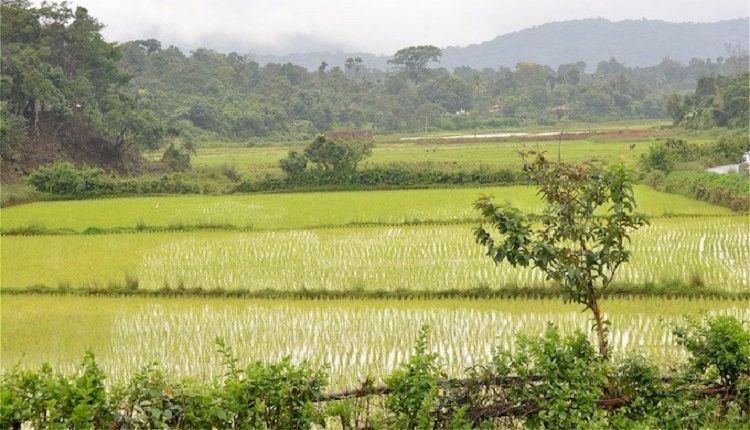
The Kodagu district information and publicity department said the conditions were right for the onset of monsoon in Kodagu and has buoyed the spirits of farmers and the agricultural community in general. Meanwhile, nearly 31,000 hectares of farmland will be brought under paddy cultivation this year. A release appealed to farmers to take precautionary measures against outbreak of various crop diseases by treating the seeds and saplings.

Maize is the second most important crop in the district and about 4,000 hectares was expected to be brought under cultivation. Fisheries will receive fresh impetus during the season and the authorities plan to distribute nearly 48 lakh fishlings during 2016-17 under pisciculture programmes.

source: http://www.thehindu.com / The Hindu / National> Karnataka / by Special Correspondent / Mysuru – June 14th, 2016

Kodavas say no to new railway line

Madikeri:

Railway minister Suresh Prabhu’s plans to get Kodagu on the rail map has run into trouble with Kodavas asking him not to extend the proposed Mysuru-Kushalnagar rail line.

The project was announced in this year’s budget. Following an RTI query by an environmentalist, railways officials have revealed that there are plans to extend the rail line to Madikeri and Makkanduru, a tiny village 3.5 km from Madikeri. Alarmed by the development, Kodavas living in Mysuru and Kodagu and environmentalists, too, have started tweeting urging him to stop the extension plan.

The online petition has got 11,976 signatures. Railway minister Suresh Prabhu has responded to the petitions and tweeted that he will go through the project in detail.

Aiyappa from Kodagu working in Vrindavan Hospital Mysuru told TOI that the railway project connecting Kushalnagar has not yet got the green signal. He fears that the line to Makkanduru village will affect Kodagu district’s natural resources.

Petitioners Sundar Muthanna, Shristi Kukreja and Fehmi Mohammad have started a campaign through www. Change.orglink. They fear that the estates and forests in Kodagu will be with the railway track. River Cauvery which is the lifeline of South India is under threat, claims the petition.

source: http://www.timesofindia.indiatimes.com / The Times of India / News Home> City> Mangalore / TNN / June 11th, 2016

‘I’m inspired by every story’

NikkiKF09jun2016

She was a corporate professional before she realised what her true calling was.
Today, she is one of the topmost golf players in the country and continues to share her knowledge with youngsters who want to become golfers like her.

Nikki Ponappa is young, energetic and talented and always has a smile on her face even after spending a really tiring day.

She recently took part in the Louis Philippe Cup as one of the women pro golfers at the Karnataka Golf Association.

She shared a few light moments with Anila Kurian, where she spoke about her life off the golf course.

Where do you drawinspiration from?
From anything under the sun! Even my dog, who is so full of love and affection, gives me inspiration. I’m inspired by every story that I am introduced to.

What kind of music do you listen to?
It depends on my mood actually. If I’m on the golf course early in the morning, I listen to a lot of trance music. In the afternoons, it moves to Beth Orton’s music. I also like listening to Major Lazer a lot.

Your favourite genre of books.
I like reading books that are thought-provoking and inspirational. I follow a lot of Dalai Lama’s teachings; ‘The Dalai Lama’s Cat’ is one of my favourites.

Which one are you reading now?
‘This Unquiet Land:Stories from India’s Fault Lines’ by Barkha Dutt.

Your favourite cuisine and dish.
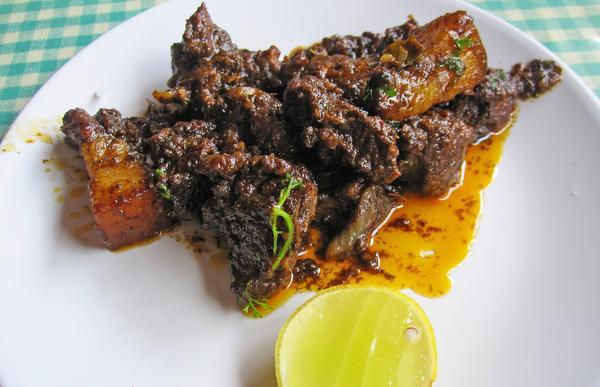
Without a doubt, it is Coorg food and it has to be ‘Pandi curry’ made by my mother. I also like a lot of fruits.

What do you do on your weekends? 
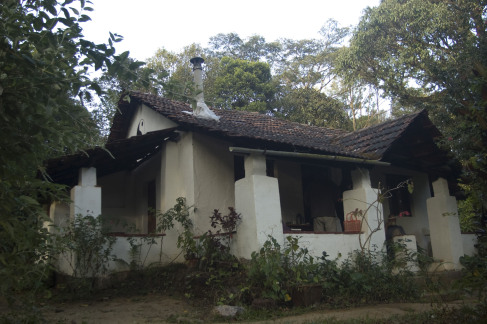
I am, by default, busy with a lot of things. Coaching students to play golf is one of them. I am also busy working with a few foundations that I am a part of and taking care of our homestay back home in Coorg. I am happy busy because I get to do everything I love doing.

Five things you love doing.
Playing golf, travelling, reading, listening to music and spending time with animals.

Your alternate career. 
I’ve tried my hand at a corporate job and that didn’t interest me. But if not golf, I would be a full-time coffee planter.

source: http://www.deccanherald.com / Deccan Herald / Home> Supplements> MetroLife / DHNS – Bengaluru , June 09th, 2016