Category Archives: Agriculture

What do tribal groups like the Soligas and Yeravas eat?

Loss of habitat and knowledge could adversely impact diets of tribal communities living in Western Ghats .
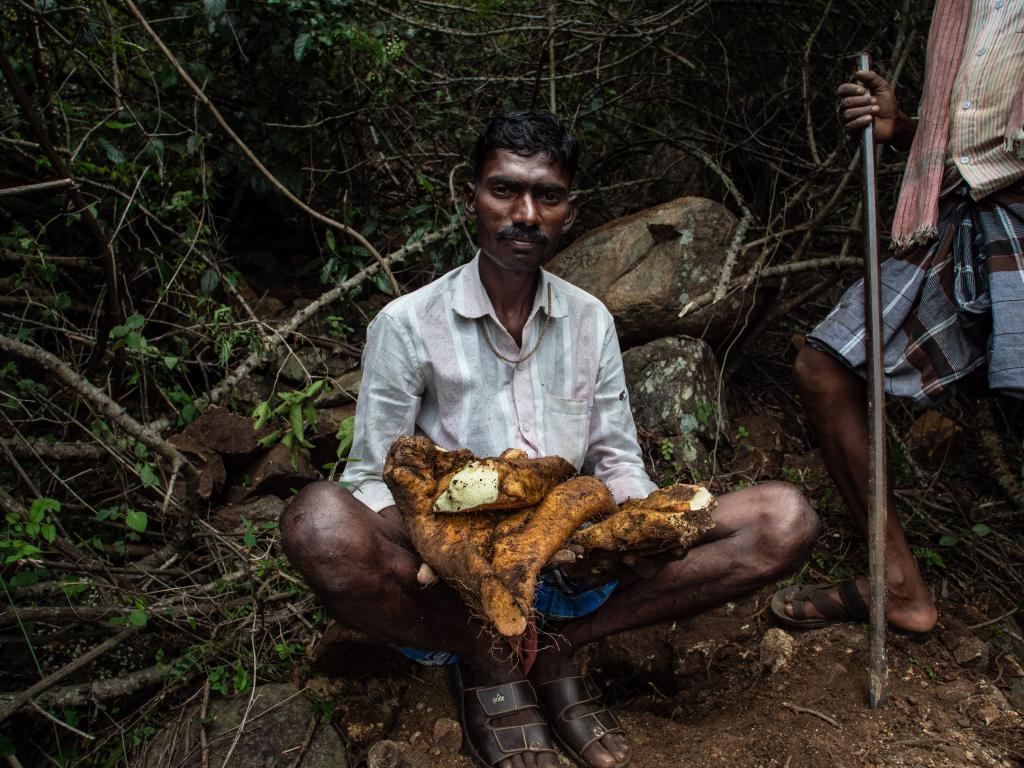
A tribal man foraging benne genasu or sweet potatoes. Photo: ATREE

During summers, members of the indigenous group Soliga form teams to collect honey. The honey bees make their hives in the cracks and crevices of rocky cliffs in the Western Ghats. Collection is not an easy task but the Soligas have centuries of experience and know exactly what to do. They hang from the cliff edges using ropes made from vines and bamboo to first smoke the bees away from the hive and then collect the combs in baskets. The work is done during the night, which makes it more difficult.

Indigenous groups Soligas and Yeravas have been living in the Cauvery Basin and the surrounding hills of peninsular India for thousands of years. A recent book has looked into the diets of these communities, giving fresh insights into the foods that these two tribes forage from the forests. 

Honey is an important part of the diet for the Soliga people, who still forage large parts of their food from the biodiversity-rich Ghats. The Western Ghats are one of the world’s biodiversity hotspots, with over 5,000 flowering plants, 139 mammals, 508 birds and 179 amphibian species. Many of these are part of the diet of the tribal communities in the region. 

Soligas, one of the oldest indigenous communities in the country, are the original inhabitants of Karnataka and live mostly in the Chamarajanagar and Mandya districts. The Yeravas, on the other hand, came to the state from Wayanad district in Kerala and settled in Kodagu district of the state. 

The recently launched Forgotten Trails: Foraging Wild Edibles, authored by Malemleima Ningombi and Harisha RP, chronicled the foods that these two tribes forage from the forests. Such foods form around 25 per cent of the Soligas diet and around 30 percent of the Yerava diet, said Harisha RP, who is a conservation biologist at Ashoka Trust for Research in Ecology and the Environment or ATREE. 
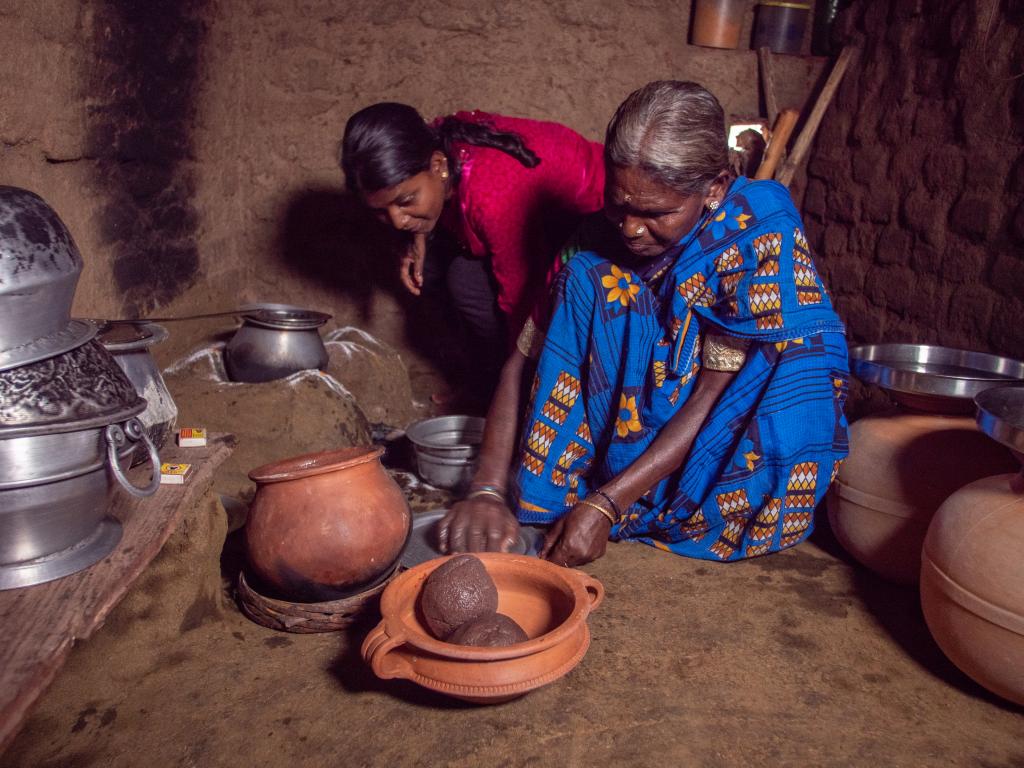
Women cook ragimudde (finger millet balls). Photo: ATREE 

There is not much difference between the diets of these two communities other than that Yeravas use more tubers than Soligas. There are some 10-12 wild food plants that are unique to each community as they live in different landscapes, he added. 

The Soligas and the Yeravas cook using the simplest of recipes — their sambar recipe is extremely similar — but the ingredients can change according to the season. The area witnesses four main seasons: Summer, monsoon, retreating monsoon and winter.  

In the summers, they relish fruits like wood apples and mangoes and greens such as mushte soppu (Holostemma annulare), kaddi soppu (Jasminum sp) or anne soppu (Celosia argentea).

Mushrooms become part of the Yerava diet during monsoons, when they emerge overnight from barren land. Doddbidru or Indian thorny bamboo, shoots up during the rainy season too. The bamboo shoot sambar is consumed with much enthusiasm by the Soligas. 

Cold and local multicoloured corn roasted over the fire used to be consumed often during retreating monsoons. However, this has become rare as communities have stopped cultivating the crop because it was frequently raided and destroyed by animals.  

In winter, when warm foods are needed, the Yeravas, who work as labourers in coffee plantations, depend on the wild berries of various nightshade plants and edible ferns that grow along the streams.

The authors highlighted that the food that Soligas and Yeravas depend on for survival is now affected by changes in land use and shifting policies. Worse, traditional knowledge is steadily being lost as young people are migrating out. This knowledge is important for foraging for the right food. 

For example, the Soligas have learned that bamboo shoots have to be uprooted and de-skinned with bare hands to ensure that they do not become poisonous. Similarly, the Yeravas know first, that all mushrooms are not edible and, second, that care has to be taken that they do not mature and get infested with insects. The skill of collecting the right ones at the right time is getting lost among the younger generation.

There have been efforts to ensure that the next generation understands the value of these plants. For instance, the Soliga community-run business ADAVI promotes the processing and value addition of some cultivated foods and nontimber forest products. The book has documented the wild plants in the area, along with recipes to prepare food from them. This, too, will help preserve and pass on traditional knowledge to the next generation.

The foraging trips help members of the tribe bond and help the next generation assimilate the skill. Foraging together, bonding, coexisting, laughing, arguing, taking risks, making do with what is found and sharing are what bring the community together, said the authors.

source: http://www.downtoearth.org.in / Down To Earth / Home> News> Food / by Vibha Varshney / January 14th, 2024
Bengaluru biologists spot new butterfly species in Coorg; first one in the Western Ghats in four decades

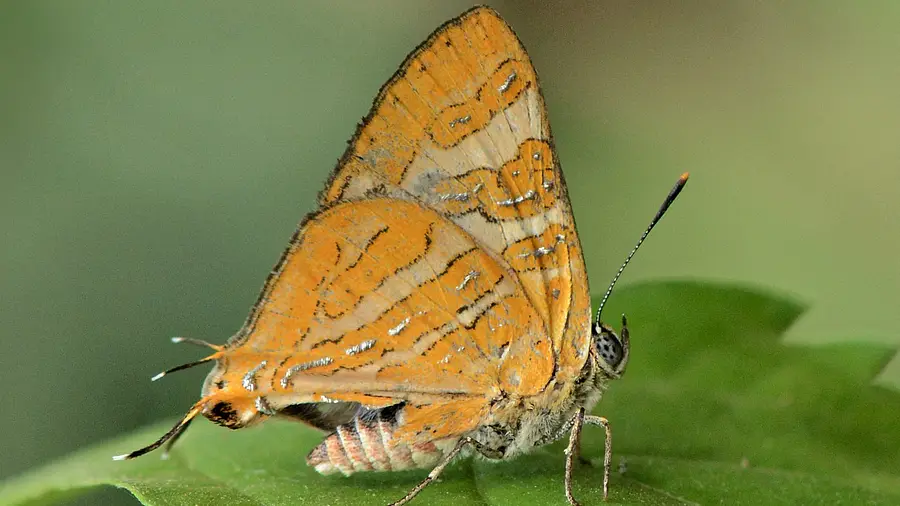
The new member in the family has been named Conjoined Silverline (Cigaritis conjuncta) based on fused spots and bands on the underside of wings, and shiny silver lines in the centre of those bands.

Bengaluru biologists spot new butterfly species in Coorg; first one in the Western Ghats in four decades
Cigaritis conjuncta, found in Honey Valley, Kodagu.Photo credit: NCBS

New Delhi:

Biologists in Bengaluru on Wednesday reported discovery of a new butterfly species in the Western Ghats, underlining the potential of one of the world’s biodiversity hotspots to spring a surprise even after decades of exploration.

The butterflies were first seen in the Iruppu Falls area of the Brahmagiri Wildlife Sanctuary way back in 2008 but was studied extensively when a large number of them were spotted in the Honey Valley two years ago. Both of the locations are in Kodagu.

Researchers at the National Centre for Biological Sciences and Indian Foundation for Butterflies spotted 30 of them within a 100 mt stretch and extensively studied five males and four females to conclude that such butterflies are distinct from other similar species.

“The stunning part of the discovery was that this species was never seen. It was neither in the museums nor in the literature. Our naturalist friends found them in a coffee plantation. This is the first new butterfly species reported from the Western Ghats in the last four decades,” Krushnamegh Kunte, associate professor at the NCBS and corresponding author of the study, told DH.

Kunte saw the species for the first time in 2008 but could not study it as he did not have a collection permit to capture the sample. For the next 13 years, the species eluded the scientists.

The new member in the family has been named Conjoined Silverline (Cigaritis conjuncta) based on fused spots and bands on the underside of wings, and shiny silver lines in the centre of those bands.

“We expect it to be more widely distributed, occurring in other forests of Kodagu and the central Western Ghats of Karnataka, possibly extending as far south in the Western Ghats as the hill ranges of Tamil Nadu (Nilgiris) and southern Kerala (up to Peppara wildlife sanctuary),” the scientists reported.

Despite barely having the size of a one-rupee coin, the species is extremely valuable to conservationists as it is endemic to mid-elevation evergreen forests of the Western Ghats mountains. The two sites where they have been located are at an elevation of 900 meters (Iruppu Falls) and 1,300 meters (Honey Valley).India houses more than 1,400 species of butterflies, but very few new ones have been discovered in the last few decades.

The new ones are active on sunny days from early in the morning to afternoon. Both sexes rest on shrubbery while some males take up vantage points nearly 3 metres off the ground.

The males bask with wings opened up halfway, and females also apparently do so, similar to other Cigaritis species. Males appear to be more active in sunny patches, and therefore more readily detected, compared with females.

“The discovery is a testament to the state’s unparalleled biodiversity, its unfolding scientific potential and the strong protection that butterflies and other wildlife enjoy in the state,” the Karnataka Forest Department, which supported the research, said in a statement.

The study appeared in Zootaxa.

source: http://www.deccanherald.com / Deccan Herald / Home> Science / by Kalyan Ray, DHNS / January 11th, 2024

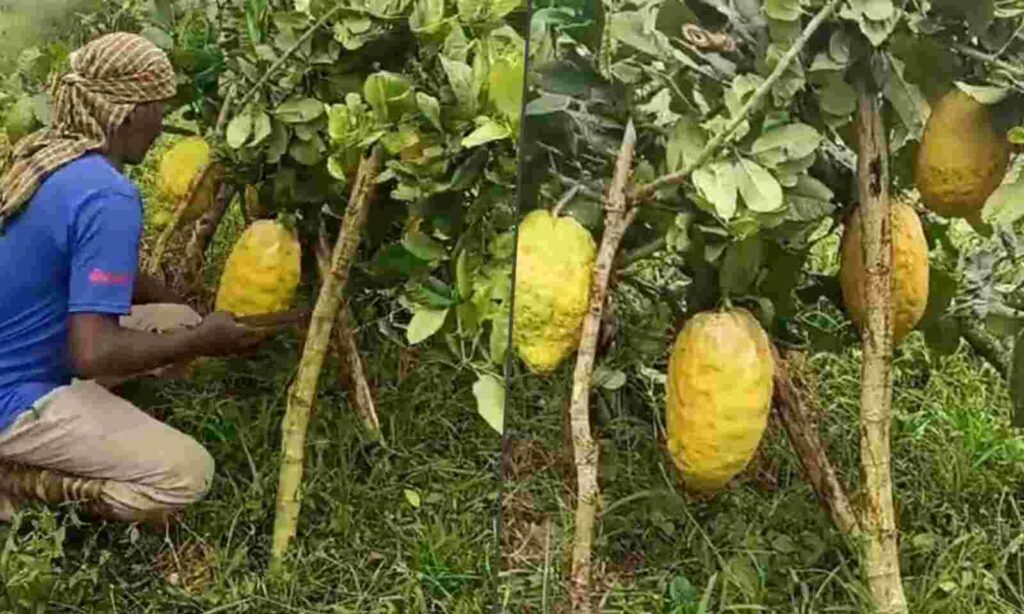
Rare variety of lemons weigh 5 kg in Kodagu

HIGHLIGHTS

A coffee plantation in Polibetta in Kodagu has become the unexpected home of a rare lemon variety, with each lemon weighing approximately 5 kg.

Madikeri:

A coffee plantation in Polibetta in Kodagu has become the unexpected home of a rare lemon variety, with each lemon weighing approximately 5 kg. Local laborers and farmers are astonished at the sight of these unusually large garden lemons.

The unique lemons have thrived in the coffee estate of Mookonda Viju Subramani, a former Zilla Panchayat member and prominent social worker. The lemon plants, have reached a height of about 6 feet and bear lemons ranging from small to an impressive 5 kg in size.

Mookonda Viju Subramani, the owner of the plantation, shared the story behind the rare lemon variety, saying, “Four years ago, I purchased citrus fruits from the Mysuru market. I planted the seeds in the backyard, and within a few days, two saplings emerged. After transplanting them to the garden using organic manure, the plants grew for three years but did not produce flowers or fruits. Consequently, I was unable to identify the plant. A few months ago, the plant blossomed with large, jasmine-like flowers, which eventually transformed into pods. Over the next few months, these pods grew into enormous lemons.”

This particular lemon variety is rarely found in Italy and other European countries. Known for its adaptability to various climates, the oval fruits contain small seeds, and their dull skin encases juicy pulp. Often used in the preparation of pickles and cold drinks, the lemons also boast several health and medicinal benefits. The unexpected growth of these rare and massive lemons has sparked excitement and curiosity among locals in Polibetta, Kodagu.

source: http://www.thehansindia.com / The Hans India / Home> News> State> Karnataka> Bengaluru / by The Hans India, Hans News Service / December 25th, 2023

Puthari Namme: Harvest Festival Celebrated In Traditional Grandeur

Youth Wing of Mysuru Kodava Samaja inaugurated

Mysore/Mysuru:

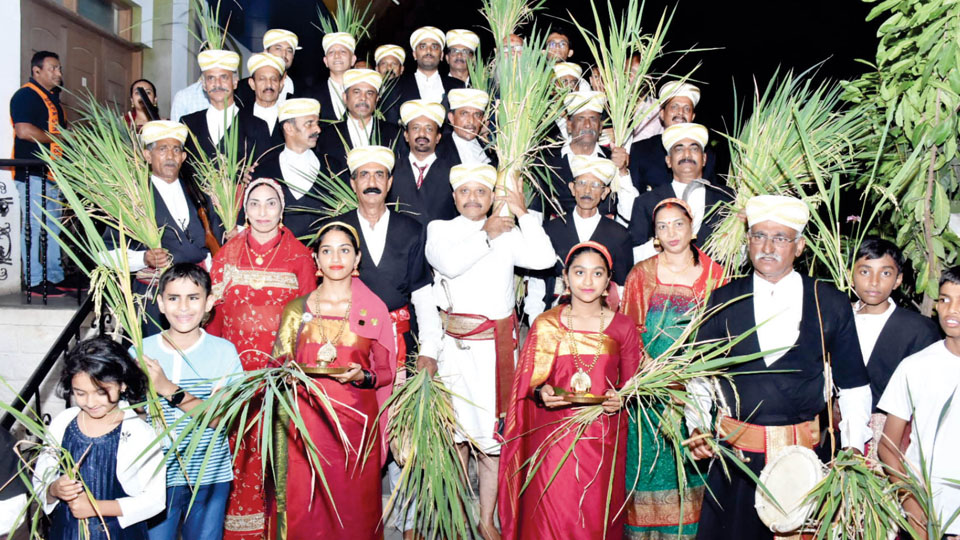
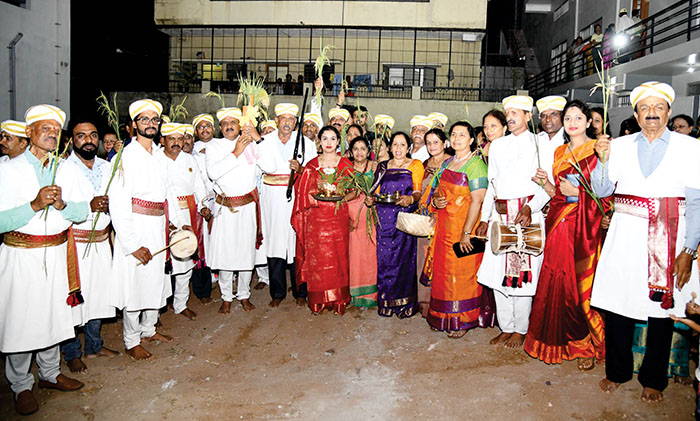
‘Puthari Namme,’ the harvest festival of Kodagu, symbolising the first harvest of the paddy crop, was celebrated in a grand and traditional manner last evening at the Kodava Samaja in Vijayanagar First Stage here.

The festivities showcased a diverse array of Kodava cultural events, eliciting enthusiastic applause from the gathered audience.

Hundreds of Kodava community members including men, women and children had gathered at the Kodava Samaja and took home the paddy crop (kadiru), chanting “Poli Poli Deva” and prayed to Lord Igguthappa and Goddess Cauvery and welcomed the Dhanya Lakshmi to their homes. 

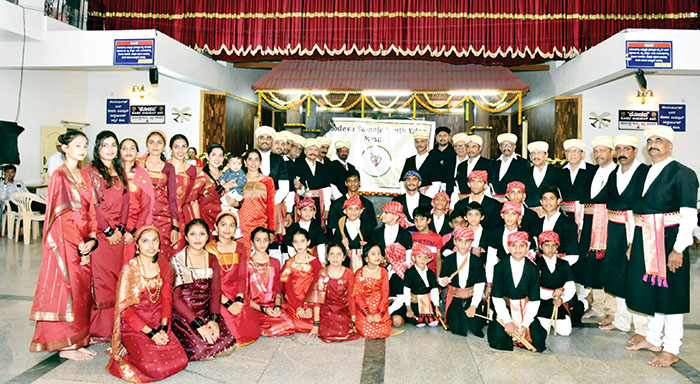
The highlight of the event was the cultural performances by young community members who have spent hours and days learning the traditional Kodava dances and songs. Their performance received loud applause from the community members and the boys and girls have been saddled with continuing the tradition of this small community that is facing the onslaught of modernisation.

The members of Kodagu Gowda Samaja in Vijayanagar Railway Layout, Mysuru, during the celebrations.

The performances featured captivating dances like ‘Ummathaat’, ‘Bolakaat’,  ‘Puthari Kolata,’ ‘Kathiyaat,’ ‘Baalopaat,’ ‘Pareyakali’ and ‘Taalipaat’.

Notably, a new Youth Wing of the Mysuru Kodava Samaja was inaugurated and Katera Vedik Uthaiah has been nominated as its President. The other  members of the team will be announced soon.

Commencing with a puja dedicated to the deities Lord Igguthappa and Goddess Cauvery, the festival progressed with a symbolic harvesting of the paddy crop (kadiru) and ceremonial firing into the air.

 Kodava men donned their traditional attire of ‘kupya-chele,’ ‘peechekathi,’ and ‘mande-tuni,’ while women adorned themselves in the customary red sarees and ‘vasthra.’

As an integral part of the festivities, special ‘tambittu’ made from fried ‘kusubalakki’ mixed with ripe banana, was distributed to all the members.

Mysuru Kodava Samaja teams that have won various prizes in hockey matches and other cultural performances at Federation of Kodava Samajas, Balugodu, were honoured.

Mysuru Kodava Samaja President Ponjanda A. Ganapathy, Vice-President Machimada P. Nanaiah, Hon. Secretary Ketolira Ravi Belliappa, Treasurer Ittira Kashiappa, Joint Secretary Ajjikuttira Diana Poovaiah, Kodava Samaja Cultural and Sports Club President Kuttimada D. Muthappa, office-bearers and committee members were present on the occasion.

A group photo of the members of the newly constituted Youth Wing of Mysuru Kodava Samaja with Samaja President Ponjanda A. Ganapathy and others.

The harvest festival was also celebrated at Kodagu Gowda Samaja in Vijayanagar Railway Layout, Mysuru.

Simultaneously, ‘Puthari Namme’ was celebrated in grandeur across Kodagu district yesterday.

The festival commenced with the ‘Nere Kattu’ performance at Kakkabbe’s Paadi Sri Igguthappa Temple at 7.30 pm. Subsequent celebrations were held across Kodagu district.

Though the festival concluded yesterday, the celebrations are set to continue for a week in rural areas of Kodagu and during this extended period, traditional ‘Puthari Kolata’ will take centre stage, accompanied by various other dance forms at the designated ‘Mandh’ in villages.

source: http://www.starofmysore.com / Star of Mysore / Home> News> Top Stories / November 28th, 2023

Kodava Muslim Community Celebrates Puttari Festival in Gonikoppa

Coorg:

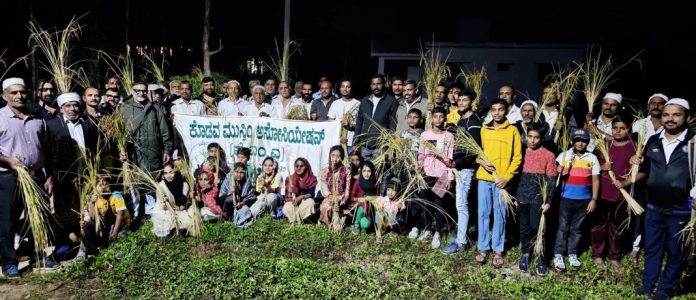
The Kodava Muslim Association (KMA) illuminated the night with joy as they celebrated the ancient custom of removing the traditional Kadiru (New Rice Crop) on the auspicious occasion of Puttari festival. The festivities took place on Monday night, drawing the spirited participation of hundreds of members from the Kodava Muslim community, marking the Harvest Festival of Kodavas.

At the striking hour of 8:30 PM, the Kadiru removal ceremony unfolded in the Jamma Gadde of the Kolumanda family in Aimangal village, Gonikoppa. Led by KMA President Duddiyanda H. and Sufi Haji, the event saw elders from Aimangala village, KMA members, and Kootambattira Hussain coming together to share in the holy Swalat. Boiled rice milk, a symbol of abundance, was distributed to all attendees, fostering a sense of unity and community spirit.

Key figures in the program included KMA Vice President Akkalatanda S. Moidu, General Secretary Italathanda Rafiq Tuchamakeri, Treasurer Harishchandra A. Hamsa, Joint Secretary Karatorera K Mustafa, Organizing Secretary Meetalathanda M. Ismail, and Senior Director Chimmichira K. Ibrahim (Ummani).

The presence of local Jamaat presidents, such as the head of Kondangeri Jamaat and K.M.A. Director Kuppandir K. Yusuf Haji, and the President of Katrakolli Jamaat, Alira M., added a distinguished touch to the celebration. Residents from various areas, including Kottamudi, Cheriyaparambu, Kunjila, Kolakeri, Kondangeri, Chamiyala, Gundikere, Nalvathoklu, Ambatti Kandangala, Katrakolli, Halligattu, and Begur, joined the festivities alongside children from Aimangal. The program, hosted by Kolumanda Rafeek, extended its warmth with a traditional Tambittu-Puttari sweet potato breakfast and dinner, showcasing the rich cultural heritage of the Kodava Muslim community. The Kadiru, symbolizing the new rice crop, was then respectfully taken to households, marking the culmination of a joyous and culturally significant event.

source: http://www.thehindustangazette.com / The Hindustan Gazette / Home> News> Latest News / by The Hindustan Gazette / November 28th, 2023

UAE Kodava Community Gathers For Puthari Festival

Virajpet MLA A.S. Ponnanna emphasises community representation in democracy

Dubai:

A Puthari get-together was organised recently in Dubai by the UAE Kodava Committee. The event not only featured cultural festivities but also offered valuable insights from Virajpet MLA Ajjikuttira S. Ponnanna who was the chief guest.

Ponnanna underscored the importance of community representation in a democratic system. “It’s crucial to have representation in democracy for our community.” Stressing the role of the ‘Connecting Kodavas’ initiative, he highlighted its relevance and the necessity for systematic participation in the democratic process.

Ponnanna, along with Palengada Amit from ‘Connecting Kodavas,’ encouraged a collective mindset towards sustaining the Kodava community, irrespective of geographical locations. They also urged attendees to support such initiatives, emphasising a systematic thought process about the community’s survival.

“Regardless of our activities and locations, our thought process should be directed                          towards sustaining our Kodava community. We should all come together and contemplate the survival of our community,”  remarked Ponnanna.

The event also featured engaging activities, including a quiz focused on Kodagu, providing a fun way for attendees to reconnect with the rich heritage and traditions of Kodava culture. Dressed in Kodava attire, participants underscored the sense of community and unity.

Beyond its celebratory nature, the Puthari get-together served as a platform to discuss pressing community issues and lay the groundwork for a brighter future. Delegates from ‘Connecting Kodavas’ also highlighted the importance of events like the upcoming Global Kodava Summit in 2023.

source: http://www.starofmysore.com / Star of Mysore / Home> News / November 27th, 2023

Hi-Tech Monitoring System For Precise Cauvery Water Data

Telemetric Water Monitoring System installed at Koppa-Kushalnagar Cauvery River Bridge

Kushalnagar:

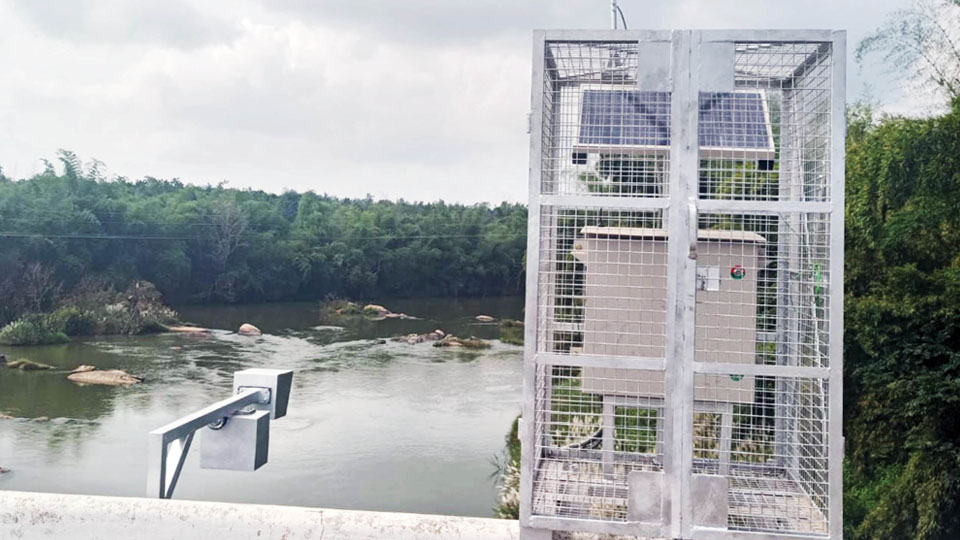
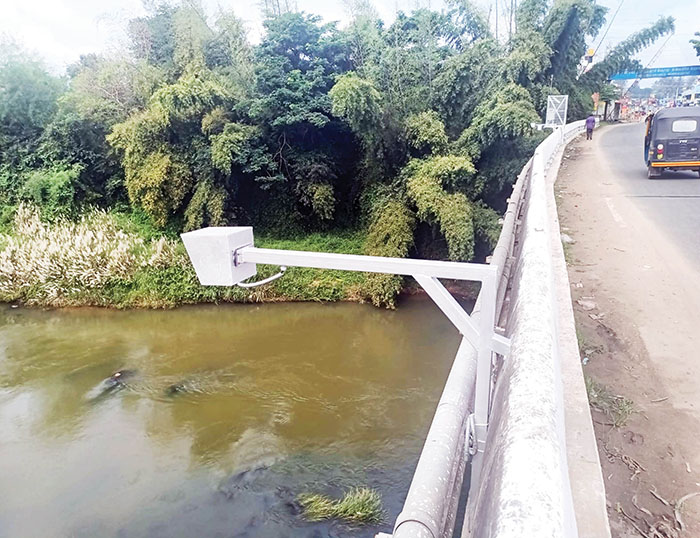
Amid the ongoing dispute between Karnataka and Tamil Nadu over the sharing of Cauvery River water, a state-of-the-art Telemetric Water Monitoring System, equipped with velocity and level sensors, has been successfully installed on a bridge across the Cauvery River at Koppa-Kushalnagar on the Kodagu-Mysuru border.

This sensor-based monitoring system offers automated and    real-time data 24×7, providing precise information regarding the river’s inflow, water level, and velocity.

The system comprises two sensors: one for monitoring the speed of the water flow (velocity sensor) and another for measuring the depth of the river water (depth sensor).

The installation has been carried out by the Water Resources Development Organisation, a Central Government agency operating under the National Hydrology Project. This organisation has an Irrigation Investigation Sub-Division Office in Mysuru that is overseeing the implementation of this sensor-based water monitoring system. Each system costs Rs. 30 lakh and is imported.

A similar system has already been deployed at Bannur, where the Cauvery River flows and approvals are pending for installing two more systems on Lakshmanatheertha River (near Hunsur) and Lokapavani River in Mandya (a tributary of Cauvery).

This state-of-the-art sensor-based system provides real-time data every 15 minutes to over 15 agencies in Karnataka and at the national level, including the India Meteorological Department, Cauvery Neeravari Nigam Limited and the Karnataka State Natural Disaster Monitoring Centre.

Additionally, the data can be utilised by regulatory authorities such as the Cauvery Water Monitoring Authority (CWMA) and the Cauvery Water Regulation Committee (CWRC) to determine the water allocation between the Southern States.

Speaking to the Star of Mysore this morning, Santhosh Kumar, Assistant Executive Engineer of the Irrigation Investigation SubDivision Office, mentioned that in the past, water flow data collection was a laborious manual process.

The system measures various parameters related to river level and flow, including water height from the stream bed (stream stage), river velocity (measured by a radar-based surface velocity sensor mounted above the river), and river depth and width. The collected data is then transmitted and made available for viewing and downloading.

This system is designed to monitor water levels in rivers, lakes and streams, predict the potential for flooding and issue alerts accordingly. It not only measures water levels but also assesses water velocity, improving the accuracy of risk predictions, Santhosh explained.

The system operates using solar energy and has been installed by Sun Technologies, Chennai, which is responsible for data transmission, system installation and maintenance for five years.

It may be recalled here that a Telemetric Water Gauge has already been installed at the Krishna Raja Sagar (KRS) Dam in Mandya district and at Harangi Dam in Kodagu to provide sensor-based real-time data on reservoir storage levels, inflow and outflow. These installations are part of an Online Monitoring System for the Cauvery Basin, utilising Telemetry-based Real-time Data Acquisition and Transmission.

source: http://www.starofmysore.com / Star of Mysore / Home> News / November 08th, 2023

Coffee Board Launches Soil Testing Centre At Gonikoppal

Mysuru:

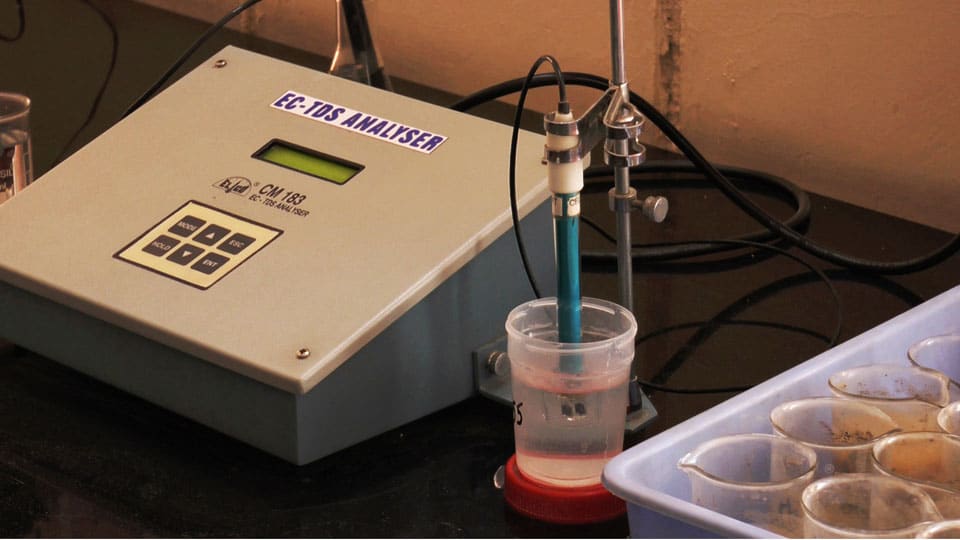
Thousands of farmers in South Kodagu now look forward to better yield as Gonikoppal gets a new digital soil testing centre. The Coffee Board launched the testing centre last week following demands of farmers and growers.

Earlier, farmers of Virajpet taluk had to travel 50 to 70 kms to give soil for testing centres at Chettalli and Koodige and both the centres are in Somwarpet Taluk. Farmers in Virajpet were deprived of a testing centre.

Coffee Board Senior Liaison Officer said it took two hours to find the potential of hydrogen (PH) value of soil and five hours to find nitrogen, phosphorus and potassium (NPK) in soil.

source: http://www.starofmysore.com / Star of Mysore / Home> News / December 28th, 2017

Possessing wildlife items with ancestral history not a crime: Karnataka MLA

Member of legislative assembly (MLA) and chief minister Siddarmaiah’s legal advisor, AS Ponnanna on Tuesday stated that possessing wildlife products with ancestral connections should not an offence.

MLA AS Ponnanna stresses importance of recognising the historical importance of heritage items. (Facebook/ AS Ponnanna)

Member of legislative assembly (MLA) and chief minister Siddarmaiah’s legal advisor, AS Ponnanna on Tuesday said that possessing wildlife products with ancestral connections should not be an offence.

Ponnanna’s statement came in reference to the stay order issued by the state high court in response to a notice served to Rajya Sabha member and actor Jaggesh by forest officials.’

Speaking to reporters in Madikeri on Tuesday, Ponnanna said that the forest ministry should instruct forest officers not to take any action against those who possess wildlife products until the high court delivers its verdict.

Ponnanna stressed the importance of recognising the cultural and historical significance of heritage items and expressed his belief that it is not appropriate to initiate legal proceedings against those who possess such items. “There is a need for forest officials to have a comprehensive understanding of the wildlife protection laws and urged the government to provide clear guidance to these officers,” he said.

The issue at hand pertains to the use of wildlife products traditionally employed by the people of Kodagu for generations. Ponnanna mentioned that he intends to meet with the chief minister and engage in discussions aimed at providing relief through the state government.

The ongoing legal actions taken by the forest department against individuals who possess wildlife products have instilled fear among hundreds of residents in Kodagu district. Given that the district is a hilly region known for its abundant wildlife and was once encouraged for hunting during the British colonial period, wildlife protection laws were only established in 1972. Prior to that, hundreds of landowners in Kodagu proudly displayed wildlife antlers and skins in their homes as a status symbol, he said.

In Kodagu, people showcased wildlife antlers and skins in their homes as a status symbol. “As I have possessed deer antlers for more than a century, I did not declare them with the forest department,” a coffee grower from Ponnampet in Kodagu told HT on condition of anonymity. He suggested that the state government should provide one more opportunity for individuals to declare their possession of wildlife products.

“The state government should act in accordance with the law. No concessions should be granted to anyone, nor should the possession of wildlife products be allowed,” wildlife expert KM Chinnappa told HT. He warned that if the government permits such practices, hunting could make a resurgence. Chinnappa emphasized the need to change our habits and strictly follow the law, which is enforced for the benefit of the people.

“We will not file suo moto cases or conduct checks in houses in Kodagu,” Madikeri DCF H Bhaskar told HT. He explained that the state government had previously given people a chance to declare their possession of wildlife products until 2003. Whether the state offers another chance for declaration or not, he added, it would be considered an offence.

source: http://www.hindustantimes.com / Hindustan Times / Home> News> Cities> Bengaluru News / by Coovrcolly Indresh, Mysuru / November 01st, 2023

Biodiversity expert calls for collating rainfall data from farmers

C.G. Kushalappa, scientist and retired dean of College of Forestry in Ponnampet. | Photo Credit: K. MURALI KUMAR

Expressing concern over the change in rainfall pattern and temperature in Kodagu, an expert well versed with the hilly district’s ecosystem has suggested that the government should ask research centres to collate rainfall data from farmers’ rain gauges to study the impact of climate change on the district’s ecosystem as well as catchment area of river Cauvery. 

“Kodagu has a practice of almost all the farmers keeping rain gauges in their estates and maintaining daily rainfall data for several decades. The government should ask reputed research centres to get such data from farmers to assess the impact of climate change,” says C.G. Kushalappa, former dean of College of Forestry, Ponnampet and an expert on Kodagu’s ecosystem. 

“The need of the hour is to study and understand the patterns related to impact of climate change on different areas of Kodagu through micro-level data,” he says. This is because the impact of climate change varies in different areas within the small district. Analysis of rainfall data from 110 farmers had showed a pattern of rainfall going below 50% of average two times once in 12 years.

source: http://www.thehindu.com / The Hindu / Home> News> India> Karnataka / by B S Satish Kumar / October 29th, 2023