Category Archives: Green Initiatives / Environment

Birds of the same feather

Kodagu, straddled on the Western Ghats, boasts of more than 300 varieties of birds. This pristine area abounds in an assortment of rare flora and fauna as well.

One of the unique selling propositions for coffee grown in these environs is that the berries develop under dappled sunlight filtered through friendly shade trees, to a medley of melodious sounds of numerous feathered bipeds.

It is claimed that these ‘happy’ berries are imbued with the finest qualities of the salubrious sylvan surroundings. Just as in a popular commercial for a Scotch that says, “as you sip their whiskey you hear hundred pipers playing,” the coffee planters in this area market their produce with the hype that the consumers could listen to chirping of birds as they savour the brew which is famously known as: the cup that cheers but not inebriates!

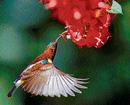
When it comes to these bright coloured feathered bipeds, there are two medical doctors in Kodagu who have evocatively captured the images of local birds in all their splendour, through different art forms.

Besides their medical profession, they are well-known ornithologists as well. The first, Dr S V Narasimhan, has brought out a bilingual (English and Kannada) book titled ‘Feathered Jewels of Coorg’ in which he has painstakingly colour-sketched 310 birds of this region.
He has meticulously described each species giving their popular English names along with their scientific Latin names. Also included are the names of each species in Kannada as well as in Kodava languages.

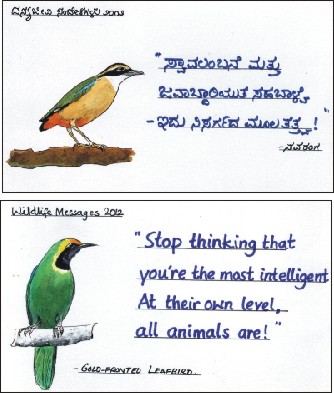
However, Narasimhan’s efforts go far beyond just documenting bird-life in Kodagu. He is actively involved in bringing about environmental awareness and wildlife conservation in a unique way. Every year, Narasimhan hand-paints thousands of postcards of birds and animals of Kodagu with specific messages composed by him pertaining to our milieu.
He then mails them free of cost to a host of recipients.

His modest request, however, is for postage stamps so that he could distribute his hand-painted postcards to even more beneficiaries to spread his message on conservation and protection of wildlife, so very crucial to our environment. Narasimhan has, as on date, hand-painted 56,590 cards in a span of 28 years! I am sure it’s a world record. I am one of the lucky beneficiaries this year.

Aim and shoot

The other doctor, Dr Bishan Monnappa, an orthopaedician, is a keen photographer. He brilliantly captures wildlife in their natural habitat through powerful cameras. His high-definition photographs of birds of various plumages are simply spectacular.

Dr S V Narasimhan and Dr Bishan Monnappa are popularly known as ‘Bird-men of Kodagu’. They are extending their healing touch beyond humans to the wellbeing of Mother Nature as well.

Now, who can resist drinking coffee that has bird songs recorded in its brew!

source: http://www.DeccanHerald.com / Home> Supplements> Spectrum / by C.P. Belliappa / November 06th, 2012
DOC CREATES AWARENESS ON WILDLIFE CARDS


Mysore, Oct.7
People who love environment, find a way to preserve it and also create awareness among the laymen on conserving it. Many take out rallies, conduct environment-related programmes, plant saplings and adopt animals. However, a family physician of Virajpet, Kodagu district, has found a unique way of bringing nature closer to mankind — he sends free hand-painted postcards containing wildlife messages to public as part of Wildlife Week.

An avid birder and nature lover, Dr. S.V. Narasimhan has been sending such postcards since 28 years. Author of ‘Feathered Jewels of Coorg,’ a fieldguide to 310 species of birds found in Kodagu, he has been spreading wildlife conservation messages through his unique hand-painted wildlife message cards.

This year, his message is ‘Life on Earth – a Large Extended Family.’ Till now, he has made 56,590 cards with 1,270 this year. About 8,340 people have received his cards all these years.

His Special Wildlife Messenger of this year is the Indian Pitta (Pitta brachyura), a medium-sized, stubby-tailed bird that is mostly seen on the floor of forests or under dense undergrowth, foraging on insects in leaf litter and often more easily detected by their calls. Indian Pittas breed mainly in the Himalayan foothills from northern Pakistan in the west and possibly up to Sikkim in the east. They also breed in the hills of central India and in the northern Western Ghats. They migrate to all parts of peninsular India and Sri Lanka in winter. Their seasonal movements are associated with the monsoon rains. For more such wildlife cards, visit http://drsvnarasimhan.blogspot.com

source: http://www.StarofMysore.com / General News / October 07th, 2012

Karnataka explores cloud seeding to increase water in Cauvery

Bangalore, OCT. 2:

The State Government is exploring cloud seeding method to increase water inflow in the Cauvery basin.

“Cloud seeding has been planned in Cauvery catchment areas – Kodagu and Hassan,” Water Resources Minister Basavaraj Bommai told reporters.

“The government has already set aside Rs 5 crore for this and will shortly call for both technical and financial bids,” he added.

The State is taking the assistance of Indian Institute of Tropical Meteorology (IITM), Pune. The institute is to offer technical assistance. Water Resources Development Organisation (WRDO) has been roped in to be the nodal agency to coordinate the cloud seeding project. Earlier in July, the State government had decided in favour of cloud seeding in the Cauvery basin, but abandoned it as the catchment area experienced good rains.

“Since the State is in a precarious position now due to the Supreme Court and the Cauvery River Authority (CRA) orders, we have revived the cloud seeding project,” Bommai said.

Water inflow into Krishnaraja Sagar (KRS) is 10,000 cusecs and outflow is around 9,000 cusecs.

Current storage level at KRS is estimated at 68 TMCft. Bommai said, “For drinking water and irrigation needs in the Cauvery basin we need around 150 TMCft.”

anil.u@thehindu.co.in

source: http://www.TheHinduBusinessLine.com / Home> Industry & Economy> Government & Policy / The Hindu’s Bureau / Bangalore, October 02nd, 2012

Government creates new buffer zones

Madikeri:

The Karnataka government has declared 562.41 sq km area in Kodagu and Mysore districts as buffer zones. This was officially announced by the forest, ecology and environment department undersecretary Umadevi through a notification dated August 14, 2012.

Kodagu wildlife deputy conservator of forests K T Hanumanthappa said that there will be no restriction on villagers who live near buffer zones. This notification is mainly to protect tigers in the tiger zone. If it is an eco-sensitive zone, some restrictions will be imposed. The buffer zone allows wild animals to move in the limits of the buffer zone, he explained.

Planters fear that the creation of buffer zones will affect coffee and pepper cultivation. Nagarahole range forest officer Mandanna said that the safari has already been stopped following the Supreme Court order.

Hunsur wildlife A C F K D Belliappa has directed residents living around buffer zone areas not to graze their cattle in the restricted area and not to collect firewood as the wildlife act applies in these areas.

The declared buffer zone areas include 24.74 sqkm in Periayapatna taluk,109.09 sqkm of Hunsur thaluk, 228.01 sqkm of H D kote taluk in Mysore district covering a total area of 361.84 sqkm in Mysore district. The buffer zone coverage in Kodagu district is 200.57 sqkm.

source: http://www.articles.timesofindia.indiatimes.com / Home> City> Mangalore> Mysore / TNN, September 27th, 2012

Impact of agro-forest management on animal diversity in Kodagu district

Bangalore:

Traditionally coffee in the Western Ghats, as in other tropical regions, is grown under the shade of non-native trees.Such plantations ensure ecological continuity, providing habitat for many species outside protected reserves.

A study by Ayyapan Narayanan of the Department of Ecology, French Institute of Pondicherry, conducted in three different habitats, evaluated the impact of agro-forest management on animal diversity in the Kodagu district of Karnataka. The study was conducted in the preserved forests, coffee plantation with native trees and coffee plantations with non-native trees. Researchers said the objective of the study was to evaluate the impact of the agrosystems in comparison to the forest on local singing animal diversity by employing a passive acoustic method. For each habitat type, four locations were sampled using automatic acoustic recorders.

The acoustic data was then analysed using two indices without using species identification. Differences among habitat types were assessed by comparing the acoustic activity level with non-parametric tests and by including acoustic dissimilarities into multivariate analyses.

source: http://www.m.timesofindia.com / City> Bangalore / by Saswati Mukherjee / September 26th, 2012

Natural cave unearthed

The forest officials have recently unearthed a natural cave inisde the thick forest, in Kodagu district.

The cave is situated near Anderson stream inside thick forest at Vatekoli, which is 15 kms from Virajpet- Makutta road. The cave is 60 metre long and two metres in height. According to forest department officials, they have heard the sound of water inside the cave. “If there is water inside the cave, then it would be giving shelter to water creatures like fish, crab and so on. Realising the decrease in oxygen inside the cave, the officials did not make an attempt to move further inside the cave.”

The bats will welcome anyone who enters the cave. Normally, snakes live in and around those areas where bats live, say officials. Kodagu Circle Chief Conservator of Forest Deekshith said that the cave must have been formed by the flow of water through limestone and similar rocks. Water seeps into the pores and cracks of rocks and soil and bubbles beneath the earth above. Such caves are called as Solution caves.

The soil in the cave is a mixture of white and grey colour and is soft. The roof of the cave is strong. “We could not see the cave fully. The cave will provide an opportunity for the geologists to make a study. I will inform the State government on the discovery of a cave. If the government sends an expert, we will get more details on the cave,” said an official. It is said that the forest guards had discovered it a year ago. However, they had not informed it to the higher authorities. After taking charge, Deekshith visited the spot. In fact, he has marked the route to the cave through GPS.

source: http://www.DeccanHerald.com / Home> District / DHNS, Madikeri, August 08th, 2012

Tata group’s drive at rainwater harvesting

Mumbai, JULY 14:
The Tata group, which has recycled 1.69 million kilo litres of water across all its entities in 2010-11, is moving to play a major role in rainwater harvesting and groundwater recharge.

While over 30 Taj hotels have zero water discharge, 14 hotels have installed rainwater harvesting techniques. The latter helps to recharge groundwater.

The group has also installed desalination plants in hotels that are close to coastal areas. These initiatives have helped the $100-billion conglomerate reduce the demand from fresh water sources.

Similarly, at Tata Coffee, rainwater harvesting and management of water bodies along the Western Ghats in Karnataka have been undertaken on a war footing.

With the majority of the coffee grown in South India, more so in Karnataka, the company noticed the rainfall pattern had been changing over the years. The planting district has seen an annual rainfall drop by one-third — from 106 inches per year to 70 inches. Kodagu region (in Karnataka) faces a drought-like problem, especially from October to April, when water requirement for coffee and paddy is critical.

Coffee growers, who had not given a thought to irrigation, have had to build water sources by digging tanks in catchment areas.

Tata Coffee, which holds 497 million gallons in its rainwater harvesting tanks, is now looking to bridge the gap between demand and storage of rainwater.

“The most important concern in the Karnataka project is the efficient use of water. Data related to the area, geography, rainfall, water runoff, soil capability, water level, water quality, and water use pattern are available with us. Based on this data, the plan is to initiate a total package of water,” said a company spokesperson.

The package will address the issue of economy of water harvesting, water management and optimum agricultural production correlated with water use.

Similarly, though many of the Taj group hotels harvest and utilise rainwater, 35 per cent of Gateway, Luxury and Vivanta Taj hotels reused treated effluent for horticulture in 2010-11. They have also recycled process water to achieve zero water discharge. This is significant, since luxury and business hotels have large water requirements for landscaping and the swimming pool. Several of the Taj hotels’ 100-odd properties have been investing in water saving methods.

amritanair.ghaswalla@thehindu.co.in

source: http://www.thehindubusinessline.com / Home> Companies / by Amrita Nair-Ghaswalla / Mumbai, July 14th, 2012

Kodagu gets world heritage tag

The nomination process which started in 2002 during the NDA government and then followed since 2004, successfully ended India’s campaign of getting natural sites included in UNESCO’s World Heritage Site list.

As far as Kodagu is concerned, a total area of 652 square kilometres, covering Pushpagiri, Bramhagiri and Talacauvery Wildlife Sanctuaries and its clusters, namely Kerti Reserve Forest and Padinalknaad Reserve Forest, have been included in the coveted World Heritage Site list. This was announced in the high-level meeting of the World Heritage Committee held in St Petersburg, Russia, on Sunday, sources told Express.

10 sites from Karnataka and 39 in total from India have been included in the list. Kodagu falls in one of the bio-diversity hot spots of the world, known for its rich flora and fauna and dense forest cover. Sources revealed that the meeting was represented by 17 countries, which strongly supported India. The Indian delegation responded to a range of questions and clarifications asked by the high-level committee before announcing the status. Conveners of Wildlife First A A Thammo Poovaiah and Praveen Bharghav told Express that it is a rare recognition and honour for the people of Kodagu and Karnataka for their efforts to conserve their heritage and tradition.

Reacting to this development, MLA M P Appachu Ranjan said that it is unfortunate that in spite of opposition from the people and state, the Government of India has forwarded the proposal to UNESCO. He added: “We will discuss with the CM and look forpossibilities of questioning this decision in the court of law.

source: http://www.newindianexpress.com / Home> States> Karnataka / by B C Dinesh / Express News Service / July 03rd, 2012

A terrace can be for garden too

Gardening enthusiasts in Mangalore connect with nature by turning their roof tops into gardens, writes Sandhya C D’Souza.

Mangalore which was once a carpet of lush green is now turning into a concrete jungle. High rise buildings and space restrictions have taken away the pretty gardens which once adorned the homes.

However, a few gardening enthusiasts in Mangalore are not deterred by this. They have displayed their creative skills and shown their concern for green by turning their terraces into beautiful gardens.

Dr Bharathi Nirmal from Ullal is probably one of the first green crusaders in the city to start off with a terrace garden. Speaking to City Herald, Dr Nirmal reveals that she started off with the concept 30 years ago.

“My terrace used to heat up and the temperature in the house used to increase. I wanted to make my terrace cool. Hence, I shifted some of my plant pots to the terrace. This made the terrace look more beautiful and hence I decided to continue with the concept,” she says.

Dr Nirmal has grown beautiful flowers on her terrace. “I have many rare varieties such as jasmines, daises, bougainvilleas, desert rose among others,” she says and adds that plants are like little children, it needs good nurturing.

Terrace garden belonging to Anupama Bhat from Manjeshwar has been declared as a demo model plot by Agricultural Technology Management Agency (ATMA).

Anupama tells that she was inspired by a documentary on terrace gardening she saw on youtube four years back. “I thought even I could do the same and then there was no looking back,” she says.

Anupama has grown almost all varieties of vegetables in her terrace kitchen garden. “I have grown almost 16 varieties of vegetables on my 1,200 square feet terrace.

I have grown cabbages, cauliflowers, carrots, beetroots, ladies finger, gherkins, radish, chilies, leafy vegetables among others,” she says. “The Kerala government is supportive towards green initiatives. Through ATMA, a Central government scheme, I have received Rs 4,000 to maintain my garden,” she adds.

Rajkumar, Officer in-Charge of Panambur Metrological Department has turned his terrace into a kitchen garden at Hosabettu. Rajkumar tells that he has not gone to the market to purchase vegetables since the past two years as he has grown almost all varieties of vegetables.

“I always wanted fresh vegetables. As they were not availbale in the market, I decided to grow my own,” he says and adds that everytime he sees the fruits borne by the plants, he gets motivated to continue with his hobby.

“The Karnataka government should support such green intiatives. There is also a need to start a seed bank, where one can buy the seeds he wants,” points out Rajkumar.

Kamala Kanapady who grew up in Coorg says, she missed nature once she moved into Mangalore. “I wanted a big garden, but space was always a constraint, so I turned my terrace into a kitchen garden,” she says. Kamala grows brinjal, tomato, bittergourd, gherkins, spinach and other leafy vegetables on her terrace in Bejai.

“In today’s compact cities, terrace garden is probably the best solution to connect with nature. It adds a touch of green to the most ignored corner of house,” says Rajendra Hegde.

Hegde who works as Project in-Charge in Vittal Mallya Scientific Reserach Foundation has conducted several workshops on terrace gardening.

“Awareness on terrace gardening is picking up in Mangalore. However, people have several apprehensions,” says Hegde. Most of the people are worried if their terrace can sustain the weight of the garden and the water content may cause leakge.

In case a person’s terrace can sustain the rains, then growing a garden may not cause the leakage, says Hegde.

If weight is the apprehension, one can grow plants in thermocol pots, plastic bins or bags, he says.

“There is no particular design for a terrace garden. It is left up to the gardeners creativity and ability. However, any garden needs good nurturing. Good compost, healthy soil and regular watering is a must,” he adds.

source: http://www.DeccanHerald.com / Home> Mangalore City Herald / by Sandhya C D’Souza / June 15th, 2012

Workshop for forest officers

200 officers participate

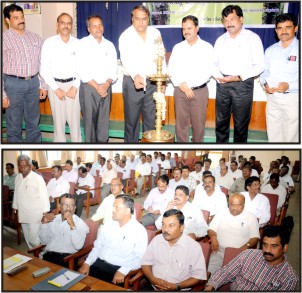
G.V. Sugoor, Additional Principal Chief Conservator of Forests (Development), inaugurating a workshop on Afforestation of agricultural land, organised by the Forest Department at the Aranya Bhavan in Ashokapuram in city this morning as (from left) CF Vijay Kumar, CCF Cariappa, CCF (Chamarajanagar) Dilip Kumar Das, CCF K.H. Nagaraj, DCF D.S. Gaonkar and ACF C.P. Durgegowda look on.
Picture shows a section of officers attending the workshop.
Mysore, May 30

A day-long workshop for Forest Officers on ‘Afforestation of agricultural land’ organised by the Forest Department began this morning at Aranya Bhavan in Ashokapuram here.

Inaugurating the workshop, Additional Principal Chief Conservator of Forests G.V. Sugoor said “The scheme started during 2011-12 is aimed to motivate farmers to plant trees in their agricultural lands.”

He further said that a minimum of 400 saplings should be planted per hectare and the department will provide the approved variety of saplings to the farmers along with Rs. 10 per sapling as an incentive.

Apart from this, the farmers will get Rs. 15 and Rs. 20 during the subsequent two years based on good maintenance of the saplings, said the Addl. PCCF adding that Mysore district has topped in performance with 49 lakh saplings planted last year.

Sugoor advised the participating officers to meet the farmers and motivate them on the novel concept. He also asked them to maintain the nursery in good condition.

Taking a strong objection to the absence of forest officers from Kodagu district, Sugoor said that they would be issued notices.

About 200 DCFs, ACFs and RFOs of Mysore, Mandya and Hassan are attending.

CCF Dilip Kumar Das and CCF K.H. Nagaraj were present

source: http://www.StarofMysore.com / General News / may 30th, 2012