Based on the recommendation of the Nomination and Remuneration Committee, the Board of Directors of Tata Coffee Limited at their meeting held today, the 24th December 2018, has appointed Mr. Chacko Purackal Thomas (who is currently the Executive Director & Deputy CEO) as ‘Managing Director & CEO designate’ with effect from 24th December 2018.
Mr. Chacko Thomas will assume charge as Managing Director & CEO of Tata Coffee Limited, effective 1st April 2019 after the retirement of Mr. Sanjiv Sarin, the current Managing Director and CEO, whose term of office would expire by 31st March 2019.
Mr. Chacko Purackal Thomas is a Bachelor of Science with specialization in Computer Science from the University of Jodhpur. He has over 26 years of rich experience and expertise in the field of Plantations, Business strategy, Sales and Marketing and overall leadership.
He has been associated with Tata Coffee Limited as the Executive Director & Deputy CEO since 4th August, 2015. Before joining Tata Coffee, he was the Managing Director of Kannan Devan Hills Plantations Company Private Limited, Munnar.
Shares of TATA COFFEE LTD. was last trading in BSE at Rs.95.45 as compared to the previous close of Rs. 94.45. The total number of shares traded during the day was 19718 in over 263 trades.
The stock hit an intraday high of Rs. 95.7 and intraday low of 94.45. The net turnover during the day was Rs. 1877889.
Attention, coffee lovers. Here’s your chance to live and work at an estate during harvest season.
Much work goes into the perfect cup of coffee, even before the myriad stages of pulping, grading, roasting, brewing et all can begin. What bothers Marc Tormo, is that most of us don’t know about any of it.
Marc is a coffee expert, roaster and brewer of repute. Originally from Barcelona, he settled in Auroville in 1996 and has since been making a living out of specialty coffee. This harvest season, Marc wants to spend an immersive weekend at a coffee estate in Coorg — with enthusiasts, aspiring entrepreneurs, or just those who love their coffee — demonstrating every step that goes into coffee-making. Aptly titled From Crop To Cup, the workshop will help participants learn what happens in every step of the process.
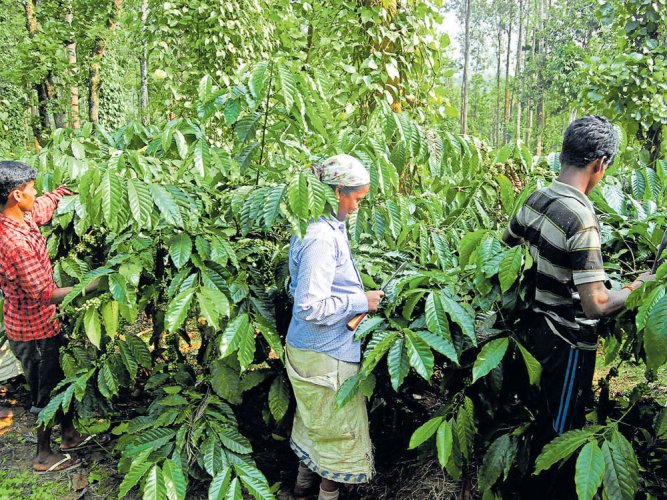
So expect to spend a day with coffee pickers, helping them in their task. Be prepared to lend a hand in the washing, drying and roasting as well. And it’s not only about cultivation: “Participants will also be introduced to international standards of cupping (coffee tasting), and taught how to assess flavour, aroma, body consistency, sweetness, bitterness and the like,” he says over a phone call. “There will also be blind tasting sessions, as well as collaborative sessions where participants will have to work with each other,” he adds. Home brewing lessons are also included.
All this will take place at the estate of Old Kent, whose owners are facilitating the workshop. Participants will be put up in English cottages in the estate.
Crop To Cup will be held at Old Kent Estates and Spa, Coorg, from December 7 to 10. The cost per head is ₹24,000. For details, call 9789896454.
The estate can be contacted through www.oldkentestates.com and reservations@oldkentestates.com
source: http://www.thehindu.com / The Hindu / Home> Life & Style> Food / by Meghan Majumder / November 30th, 2018
Spit, dung and more — these expensive coffees are not for the faint-hearted
The Indian Bean
The first sip tastes almost like a regular cup of Joe — it’s earthy, smooth but minus the usual bitterness. In fact, it tastes so unique that no one can pinpoint for sure its complex flavours. Some say it even has a hint of chocolate or fruity taste. Wonder what kind of coffee this is? Considered one of the most expensive coffees in the world, the secret ingredient behind this coffee might make you reconsider your love for the drink. This famous brew called Kopi Luwak or civet coffee is made from the faeces of civet cat and has its roots in Indonesia. Don’t be surprised, because cat poop coffee is just one of the many new trends in the coffee industry.
Civet cats consume coffee cherries for the fleshy pulp of the beans
Civet cats have a natural tendency to roam around in coffee plantations. More often than not, they pick on coffee cherries — the perfectly ripped ones of the lot. These coffee cherries are picked by civets for the fleshy pulp of the beans. During the digestion process, a unique fermentation process occurs, such that after passing through the civet’s intestines, the beans are defecated with other faecal matter. While this might just be faecal matter for some, others consider this a treasure. Rajat Badami, founder and CEO of Kingsmen Coffee says, “The sale of this coffee is primarily outside India. There is demand for this coffee in the US and many European nations.” But the process doesn’t end at collecting cat poop, argues Badami. He says, “Identifying the civet’s faeces, handpicking it and then washing, drying and pounding is a long and tedious process. Since so much effort goes into making it, we sell this coffee at $600 a pound in Western countries.”
On the other hand, Thamoo Poovaiah, managing partner of Ainmane brand of coffee, the first company in India to make Kopi Luwak prefers to keep the rates lower for Indian audiences. He says, “We have more than 235,000 acres of coffee plantations in India and we produce 40% of India’s coffee. Since civet coffee is hard to obtain naturally, we can get only five to 10 tonnes of it per annum.” Ainmane sells civet coffee for 1,060 per 100gms.
While coffee made of litter selling for a few thousands might seem like an absurd concept, there is more to it. The brainchild of Thailand’s Anantara Resort produces coffee straight from elephant dung. Known widely as Black Ivory Coffee, this unique product finds a place in the list of ‘rare and expensive coffees of the world’. A single cup of this coffee is said to cost around $50. Its producer, Black Ivory Coffee Company, maks a very limited amount on an yearly basis, given that this natural process is time-consuming. Blake Dinkin, founder of Black Ivory Coffee is wants to keep the process a secret. He believes many people have mistaken the idea to be as easy as collecting elephant dung containing coffee beans.
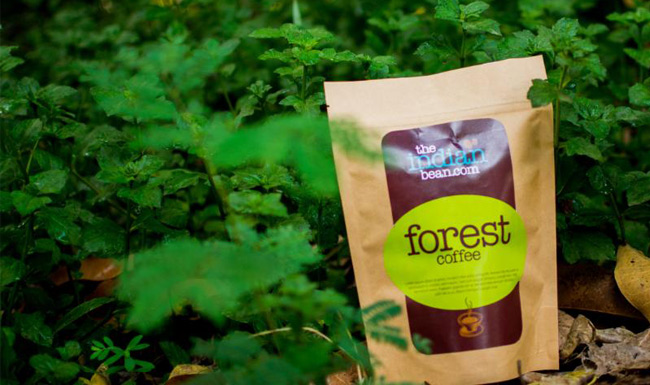
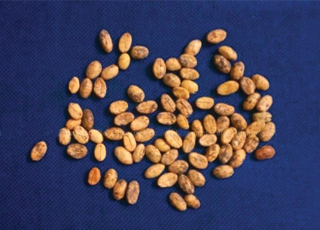
Another special coffee with animal component is the monkey parchment coffee produced near Araku Valley. The process of collecting beans is slightly different than the previous varieties. The monkeys, just like the civets, pick on the ripest coffee cherries. The difference being they eat only the flesh, but instead of swallowing the bean, they usually spit it out. The natural enzymes in their saliva give the coffee beans a tinge of acidity. Kunal Ross, founder and CEO of The Indian Bean says, “It is difficult to spot these spit beans in a forest, as compared to civet or elephant litter. A bite mark on a coffee bean is how we distinguish our beans.” This makes the discovery process longer, but once collected, the beans are washed under running water and dried to ensure the consistent roasting. The Indian Bean’s monkey parchment coffee costs around 4,000/kg. These beans are collected around October, and what makes this coffee even more exclusive is its limited number of vendors in India. Coffee lovers are slowly warming up to the idea of artisan coffees, but it would be intriguing to see what new ingredient will join the list next.
source: http://www.outlookbusiness.com / Outlook Business / Home> C’est la vie> The Good Life / by Aishwarya Parikh / July 21st, 2018
The quality of coffee that we consume daily could see a dip in purity because of the drop in production.
The Coffee Board has raised fears that the coffee supplied in the domestic market could see a rise in chicory content. Worried about this, the Board has urged the food safety department to look into the chicory content in the coffee supplied to domestic consumers.
M S Boje Gowda, chairman, Coffee Board, told DH that people should drink coffee wisely in the coming days. There has been a drop by 82,000 tonnes in coffee production this year, because of excess rains and landslides in Chikkamagaluru, Kodagu and Kerala.
Around 80% of the coffee grown is exported and there can be no compromise in the quality in the international market. So, there will be a drop in the exports.
The domestic market, on the contrary, will not see a lull because of addition of chicory. Chicory costs Rs 50 a kilo and according to Food Safety and Standards Authority of India (FSSAI), adding chicory up to 49% is permitted. But there are chances that change in its percentage will go unnoticed in many local brands. Thus, it is important that the food safety department keeps a check, Gowda said.
“We are trying to limit the chicory addition to 10%. Now, it is for FSSAI to put a limit and test the quality in the local market. We have also made a proposal to the ministry in this regard,” he added.
The Board had estimated the production to be four lakh tonnes, but it has been only around three lakh tonnes. It is now keeping a close watch on the production cycle and quality.
Rajesh, a local coffee grower from Kodagu, said that it was not just the flowers, but even the stored dried beans have been lost. This will definitely impact the market in the long run as the standing crops have also been destroyed.
An official from the food safety department said the matter will be discussed with the ministry and a call will be taken.
source: http://www.deccanherald.com / Deccan Herald / Home> State / by Bosky Khanna / DH News Service / October 21st, 2018
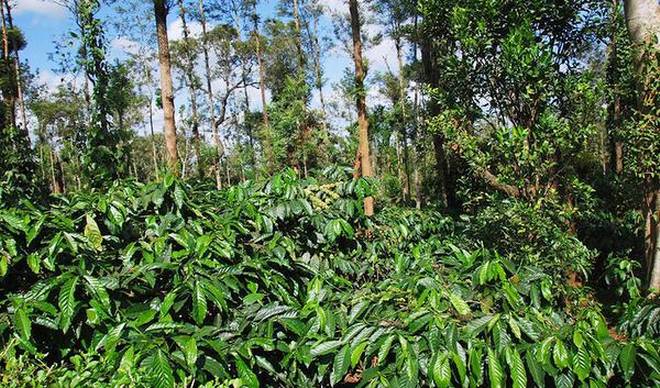
A coffee plantation in Kodagu, in the shade of silver oak trees. | Photo Credit: MAIL
Using silver oaks is detrimental for robusta
The exotic silver oak may be coffee growers’ preferred shade tree now, but research shows that it affects carbon sequestration and tree diversity in Kodagu’s agroforest systems.
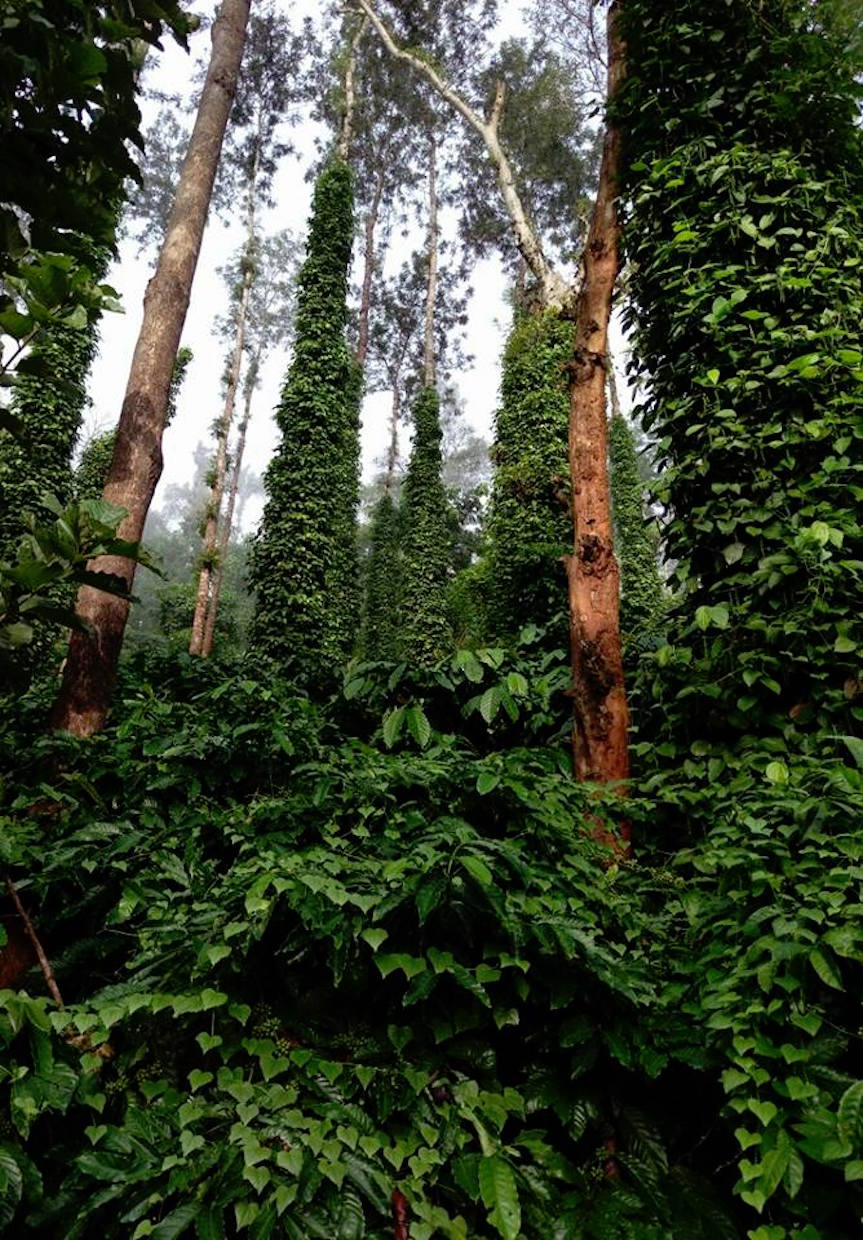
Kodagu’s coffee farms were created when farmers cleared forest undergrowth and started growing coffee under the shade of giant evergreen trees. This ‘native shade’ coffee is still prevalent in the district, but evergreen trees are quickly losing out to the fast-growing silver oak. Farmers do not need permission from forest officials to lop or cut silver oak; this also contributes to its popularity. However, old forest trees make up a huge portion of carbon stocks here, and carbon stocks matter because the higher the carbon contained in vegetation, the more it helps with mitigating climate change.
Carbon stocks
To find out if carbon stocks change when silver oak takes over, a team including scientist Manjunatha Munishamappa from Bengaluru’s Environmental Management and Policy Research Institute studied a total of 49 native and exotic agroforestry systems – where either robusta (which needs more sunlight) or arabica coffee varieties are grown – near 18 forest patches that fall under both moderate and high rainfall zones. In each plot (all spread across 22 locations along the Cauvery river in Kodagu), the researchers quantified shade tree species diversity and the amount of organic carbon sequestered in the trees by measuring wood, root, litter and soil biomass. Across all plots, the researchers identified a total of 86 native tree species; and the total carbon stocks rose with increasing tree diversity.
Native trees in coffee estates and forests displayed high and comparable carbon stocks (approximately 193 and 222 megagrams (Mg) of carbon (C) per hectare respectively) as well as tree diversity (around 45 tree species). However, the introduction of silver oak negatively impacted both carbon stock and diversity. Predictably, robusta coffee estates with silver oaks had significantly lower tree diversity (nine species) and lower carbon stocks (up to an average of 65 MgC per hectare) than all other land-use systems in both precipitation zones.
Current trends
Hence, the current trend of replacing native shade trees in coffee estates with silver oaks is detrimental for carbon storage and tree diversity, especially in robusta farms. Current policies do play a role in this change, because the exotics can be cut for timber without prior permission.
“We have submitted two reports to the Karnataka government on these findings, we hope some policy changes will be incorporated,” he said.
source: http://www.thehindu.com / The Hindu / Home> Science / by Aathira Perinchery/ October 20th, 2018
While estates in Somwarpet taluk have suffered an overall 30% crop loss, Madikeri taluk has witnessed over 33% crop loss.
File photo of a damaged coffee estate in Kodagu. (Photo | EPS)
Madikeri :
The Coffee Board has completed its survey in estates in Somwarpet and Madikeri taluks to assess the damage in the recent floods.
While estates in Somwarpet taluk have suffered an overall 30% crop loss, Madikeri taluk has witnessed over 33% crop loss. The officials confirmed that serious damages to coffee plantation have been recorded at Shantalli, Suntikoppa and Madapura areas, while Kodlipet and Shanivarsanthe have recorded minimum crop damage in Somwarpet taluk.
“We have received over 10,000 applications (all from Somwarpet taluk growers) requesting compensation. A few growers have submitted five to six applications, which include compensation requests for crop loss of orange, pepper, cardamom along with coffee,” said Coffee Board Senior liaison officer H R Muralidhar.
www.newindianexpress.com / The New Indian Express / Home> States / by Express News Service / October 09th, 2018
Mullayanagiri [mool-ya-na-gi-ree] is a mouthful not only for those people who don’t speak either of the four languages of the five Southern Indian states, but even for most Indians who are unfamiliar with the region.
At an elevation of 1,930 meters, Mullayanagiri is the highest mountain peak in the Southwestern Indian state of Karnataka, in the Chikmagalur district. The peak forms a part of the Baba Budan range of mountains, which are part of the greater Western Ghats. The names of Chikmagalur and Baba Budan will resonate with most of the Indian populace for its association with coffee and salubrious weather.
Chikamagalur, the lesser-known, quaint hill town, became the first recorded place in India to cultivate coffee when it was introduced to hillsides from Yemen around the mid to late 1600s. As the story goes, seven beans of coffee were smuggled out of Yemen’s town of Mocha by an Indian hermit named Baba Budan.
Baba Budan then planted these in the hills of Chikmagalur. No one is sure of how much and how well these foreign beans grew in the time following, but coffee cultivation was seriously undertaken in the 18th Century by British entrepreneurs who turned forests in Southern India into commercial coffee plantations.
In fact, coffee was cultivated long before tea, mainly in Northern India. This is a relatively unknown fact, as India is perceived to be a tea-drinking nation and does have excellent tea gardens in Darjeeling, Bengal and Assam.
“Coffee was an established commercial crop by the turn of the 19th Century and was exported to Europe via London,” said Anil Bhandari, president of the India Coffee Trust, a nonprofit organization that promotes coffee consumption. “By the early 1940s, Indian Arabica coffee — or Mysore coffee, as it was known then — had established itself in the European market and had a branding all of its own. However… WWII and the loss of the European market during that phase caused the unique branding of Mysore coffee to disappear from buyers’ consciousness.”
Coffee grown in the forests of India, the world’s sixth largest producer of coffee, is cultivated under thick canopies in the Western Ghats — a UNESCO World Heritage site and one of the world’s most important biodiversity hotspots.
In the 2016-17 season, India produced 5.5 million bags of coffee. A majority of the country’s coffee is grown in the three southern states of Karnataka, Tamil Nadu, and Kerala, followed by Andhra Pradesh and Telangana, which was a part of Andhra Pradesh until recently.
Nearly 65 percent of the total production comes from Karnataka, while Tamil Nadu contributes approximately 15 percent, and Kerala makes up around 20 percent. It has been estimated that there are more than 210,000 coffee producers in India, the majority of whom are smallhoder farmers with plots around two hectares.
As in most producing countries, India processes coffee by the washed (or wet) method as well as the natural (or dry) method.
India is renowned for its unique shade-grown coffee. The two commercially important species of coffee, Arabica and Robusta, are grown under heavy shade that is believed to contribute to the flavor profile of the coffee to the coffee, along with other influences such as the monsoons, spices that grow around coffee, and the various fauna that thrive alongside it.
Within this bio-diverse growing environment, the mixture of vegetation prevents soil erosion and fallen leaves decompose to become rich humus, thereby retaining the forest ecosystem. The Indian Rainforest-grown Arabica is unique in its properties and sought after for its flavor and characteristics, as these are grown at higher altitudes.
Increasingly, the industry is shifting towards sustainable farming practices, and more estates have become certified by Rainforest Alliance-UTZ and Fairtrade. Organic coffee is also of increasing interest, especially for coffee grown on tribal land, which represents about 42 percent of the coffee area in India. In these areas, coffee is managed in traditional ways, often organically.
Most of India’s coffee exports go to Europe, Japan and the Middle East, while many global consumers remain unaware of the complexities and quality that fine Indian coffee from Southern estates can offer. The name “Coffee of India” is only used as an indication of origin at the export level, when packages are shipped from India to the country of destination.
“Indian coffee, particularly the Robusta parchment and cherry, continue to see good demand from Italian buyers,” said Ramesh Rajah, the president of the Coffee Exporters Association of India. “Of concern is the falling Arabica production due to extremely low prices prevailing in the international market, as well as the recent flood damage, which is still being assessed.”
Rigid control of quality and grade designations by India Coffee Board, an agency of the Government of India, ensures the export of only the finest and the most aromatic of India’s hand-picked coffee beans.
Encouragement for the local coffee industry comes not only from the Coffee Board of India, but from nonprofit bodies such as the India Coffee Trust that are working towards fortifying and intensifying these efforts.
“The India Coffee Trust is the result of a general consensus among the stakeholders of the Indian coffee industry to create a nonprofit organization that discusses and promotes Indian coffee,” Bhandari said. “Assisting the Trust with the objective of creating a wider global outreach and visibility of India’s fine Shade Grown coffees is the Indian Coffee Collective. Together, our primary mandate is to promote India’s shade-grown coffees and it’s long standing history with the humble brown bean.”
With a goal of raising awareness around preserving and promoting the values of coffee culture in India, the India International Coffee Festival — jointly organized by the India Coffee Trust and Coffee Board of India — took place in Bengaluru in January 2018. The four-day attracted more than 5,000 local, national, and international visitors.
The next festival is scheduled for 2020. Time will tell where Indian coffee will be by then.
source: http://www.dailycoffeenews.com / Daily Coffee News (by Roast Magazine) / by Anamika Ghosh / October 02nd, 2018
Crop grown in Kodagu, C’magaluru, Bababudangiri among 5 varieties being considered for the GI tag.
Soon, coffee grown in Kodagu, Chikkamagaluru and Bababudangiri will get geographical indication (GI) tag, said Srivatsa Krishna, CEO and secretary, Coffee Board, on Monday.
Speaking to reporters on the sidelines of ‘Naya Bharat: Coffee Par Soch,’ as part of International Coffee Day, he said that the Board had applied for GI tag for coffee grown in five southern regions, based on their uniqueness. Of these five places, three are from Karnataka. The list also comprises coffee grown in Araku valley (Andhra Pradesh) and Wayanad (Kerala). The GI tag is likely to come by January 2019.
This is the first time that GI tag has been applied for coffee-growing regions. In 2008, GI tag was obtained for Monsoon Malabar coffee blend. “The idea of doing this is to recognise the coffee, promote the brand and increase local sales. Over 70% of India’s coffee is grown in Karnataka, but the market needs to be strengthened,” he said.
To increase the production of coffee, regain the market position and encourage farmers, Mahatma Gandhi National Rural Employment Act funds will be helpful, Krishna said.
“I request the Coffee Board to tie up with zilla panchayats to recoup and expand the areas. Funds for coffee planters under MGNREGA will be given, on the lines of mulberry and sericulture,” he said. Krishna said the floods in Kodagu had an impact on coffee production, but things were improving.
On the occasion, the Board announced the launch of Atal Incubation Centre at Coffee Board in Bengaluru. This centre will help startups and coffee growers to become entrepreneurs. The centre is set up under the Atal Innovation Mission (AIM) to nurture innovative startup businesses.
So far, in India, 20 centres have been established, Coffee Board is the 21st and the first such in India, said R Ramanan, mission director, AIM. This centre is being set up in partnership with Nasscom and FKCCI.
The Coffee Board also announced its partnership with Ernst and Young for ‘The Future of Coffee-Roadmap’, and with National Institute of Public Finance and Policy for a study on subsidies for Coffee Industry.
source: http://www.deccanherald.com / Deccan Herald / Home> State> Top Karnataka Stories / by Bosky Khanna, DH News Service / October 01st, 2018
Coffee lovers in the city must be a happy lot. There many options in places to have a hot cuppa and newer varieties and blends are being discovered regularly.
Metrolife spoke to owners of some of the popular cafes in the city who brew their own coffee, farm to cup style.
The Flying Squirrel
Starting off as a purely coffee making business, owners Ashish Dabreo and Tej later decided to open a cafe in Koramangala a couple of years ago. They have an estate in Coorg.
The cafe offers about eight varieties of coffee. The bean and powder are also retailed online and at the cafe.
Ashish says, “We follow the artisanal method to create our coffee. Depending on the type of coffee we are using, the process also varies according.”
One of their products, Sunkissed Coffee, is made with pulped sundried robusta bean. “There are two ways in which you can roast coffee — you either remove the skin and pulp and then dry it, or leave some of the pulp when drying. We follow the latter for Sunkissed coffee. The bean is fermented and then left to dry for 12 days. In this case, the fruitiness in the pulp gets absorbed into the bean, giving the coffee a distinct flavour.”
Each of the varieties offered here goes through various experimentations like pulping, drying, smoking and roasting before it goes on the shelf.
“Sometimes, cross plantation with citrus and vanilla gives different outputs too. And when that’s done, the storing process also needs to be monitored so that we get the consistency required,” adds Ashish.
He says that they are able to experiment with each harvest as the city is open to newer blends.
Coffee Mechanics
Ganga Prabhakar, co-founder, explains that their motto is to educate coffee lovers about the varieties they offer.
“We have three estates in Srilakshmi, Bhadrapura and Kuttinkhan, each of which give us different outputs as they are micro-farmed in different soils. With the difference in elevation at which the beans are grown, the flavour differs too. Depending on the roasting technique, the shade changes from light roasted to darker,” she explains.
The more you roast it, the more caramelised it becomes. However, if almost burnt, it becomes ashy which ruins the taste. The lightly roasted ones give a tangier taste which the brewers call ‘acidity’. “The higher you roast, the lesser the acidity. And then it can become caramelised or chocolatey — depends on what you prefer.”
Third Wave Coffee Roasters
Unlike other brewers, Third Wave Coffee Roasters don’t have their own plantation. They get samples from various farms between the months of March to May which they use to roast, cup and sample before they decide which coffee they want to buy for the year.
Co-founder Ayush Bathwal says, “Most of our coffees come from Yercaud and Kerala. We work with single origin farms so that we can maintain the authenticity of the beans available. We mix the beans only if we are experimenting with certain blends.” So how does their blending and brewing process work? “We buy close to 1,000 kg of green beans which we roast according to need. Once roasted, we store them in airtight containers. Each blend last two to four weeks.
They follow the Specialty Coffee Association of America meter. They finalise the product only if the bean scores more than 80 points.
source: http://www.deccanherald.com / Deccan Herald / Home> Metrolife> Metrolife on the Move / by Anila Kurien, DH News Service, Bengaluru / September 30th, 2018
Chef Lionel Giraud on the gourmet product which was created along with Alexis Muñoz
Chef Lionel Giraud became a Lavazza Chef Ambassador in 2016, and, since then, has taken great pleasure in exploiting all its facets. However, after two years as a Chef Ambassador, Lionel decided to infuse two most essential elements of Italian cooking — coffee and organic olive oil. Lionel Giraud chose to work alongside Alexis Muñoz, a famous olive oil producer. Alexis Muñoz rose to the challenge and created high quality oil, which is completely organic.
Lavazza’s coffee with olive oil is produced in a limited edition and sold in 25cl bottles. Excerpts from an interview:
How would you describe the aromatic notes that emerge from the combination of coffee and olive oil?
After weeks of research and testing, we finally found the perfect match: an amazing olive oil both subtle and spicy with a fruity taste, combined with a Lavazza coffee with a strong and delicate flavour.
The feedback from the restaurant’s customers is positive. They are very surprised to see how different the perception can be, depending on the way you try the oil. For instance, on a slice of toast, it is the fruity taste that stands out, while on other foods, it is the coffee note which will first be perceived.
Coffee is now used to give flavour especially to soups. Do you think that coffee oil could further improve these tastes?
Of course the addition of some qualitative fat always improves the taste and brings stronger flavours to the dish.
What have you learned from your years of experience with a clientèle with diverse profiles?
Today, customers want a light coffee with 50% Arabica and 50% Robusta. The restaurant’s customers are very keen on the Tierra coffee.
How would you assess how your customers enjoy their coffee?
Today, customers have a better knowledge of coffee, its production method and the different ways of preparing it. It is all about a product that has to be enjoyed and that arouses curiosity and discussion. As a result, it is more appreciated than it used to be.
What would be the best way to introduce someone to coffee?
I personally like to include roasted grains in my preparations. For example, I introduced my children to coffee by adding grated roasted coffee beans to a silky mashed potato. It removes the bitterness from the coffee.
source: http://www.thehindu.com / The Hindu / Home> Life & Style> Food / by Prabalika M. Borah / September 28th, 2018
WELCOME. If you like what you see "SUBSCRIBE via EMAIL" to receive FREE regular UPDATES.
Read More »