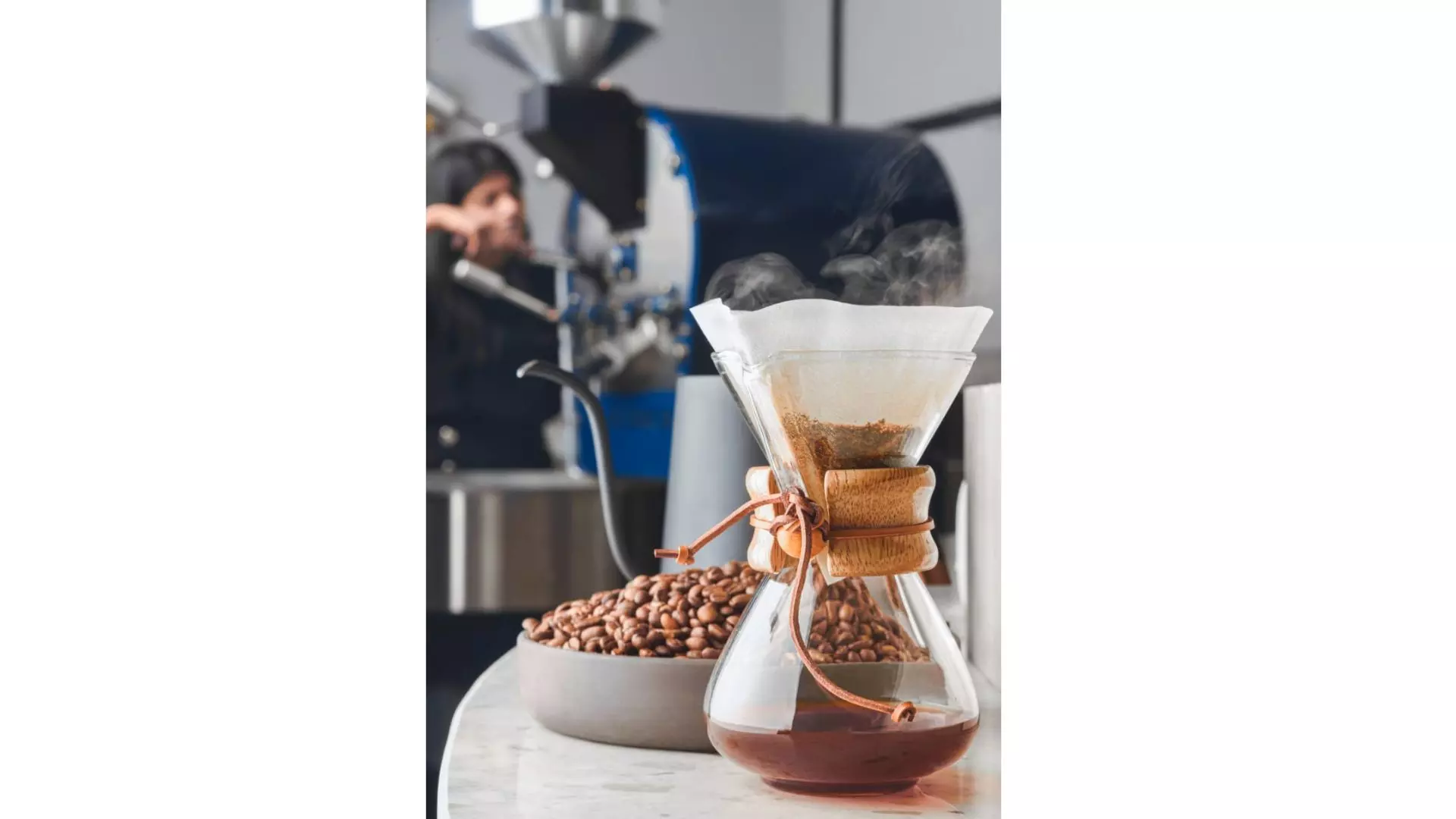
The five-day Barista training workshop, organised by the Coffee Quality Division of Coffee Board of India in collaboration with CFTRI, Mysuru, will be held from June 24 to 28 at the BioNEST Incubation Centre at CFTRI premises in city.
Training in brewing coffee, cupping, manual brewing, signature beverage, introduction to green coffee etc., will be conducted.
Those who undergo the training successfully will be provided certificates.
For details and registration, call Mob: 94821-57878 or e-mail: baristatraining.coffeeboard@gmail.com
source: http://www.starofmysore.com / Star of Mysore / Home> In Briefs / June 04th, 2024
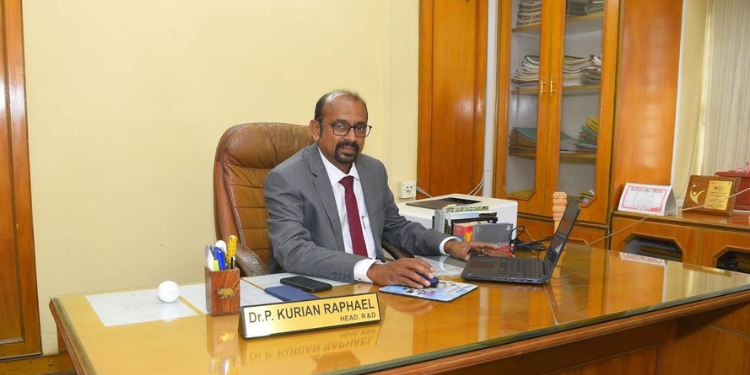
Kelachandra Coffee has announced Dr. P Kurian Raphael as the new Head of Research and Development, an experienced professional from Tata Coffee Ltd. with expertise in plantation crops, sustainable agriculture, and circular economy.
Dr. Raphael, a Zoology Ph.D. from Calicut University with a Postdoctoral fellowship from the British Natural History Museum, brings 31 years of experience in plantation crops, notably with 25 years at the Coffee Board of India. He is esteemed for his research in various Indian coffee regions, having published 37 research papers and one chapter in the Global Scientist Book, and serving as a Principal Investigator in significant projects.
At Kelachandra Coffee, Dr. Raphael’s work will cover the following key functions:
Reducing the gestation period of plants to 2-3 years from the current 5 years. This will benefit the yield and productivity of Kelachandra Coffee produce.
Overseeing improvements in the production and inducing defense mechanisms for pepper production; improving beekeeping maintenance and honey production the estates; and, overseeing the production of exotic fruits in dedicated spaces.
Strengthening sustainable and regenerative agricultural practices to uphold Kelachandra’s commitment to environmental stewardship.
Dr. Raphael’s exceptional contributions in sustainable agriculture, pest management, and innovation are globally acknowledged. His commitment to excellence and sustainability resonates with Kelachandra Coffee’s core values. At Tata Coffee, he was honored with the Annual Excellence Award in 2022 and 2023 for his work in sustainable agriculture.
In his past position at Tata Coffee, Dr. Raphael excelled in leading the Research and Development department, focusing on coffee and pepper. He gained recognition for his leadership and dedication to advancing agricultural research and sustainability.
Rana George, Managing Director at Kelachandra Coffee said, “We are thrilled to welcome Dr. P Kurian Raphael to Kelachandra Coffee. His extensive experience and innovative approach to sustainable agriculture will be invaluable as we continue to push the boundaries of coffee research and development. Dr. Raphael’s vision and leadership will undoubtedly drive our commitment to excellence and sustainability forward. It will help us put India firmly on the global coffee map.”
Dr. Raphael is eager to join the talented team at Kelachandra Coffee and to contribute to the company’s goals of achieving excellence and sustainability in coffee research and development. “I am excited to join Kelachandra Coffee and work alongside a passionate team dedicated to pioneering advancements in Indian coffee research and Ethically-sourced Sustainable Coffee (ESC). I look forward to leveraging my experience in regenerative agriculture to contribute to our shared goals of innovation and net zero coffee production.”
Dr. Raphael’s hobbies include badminton, hockey, gardening, driving, dog breeding, and adventure activities like hiking and trekking. He also adjudicates at Karpakam University Coimbatore, Mahatma Gandhi University Kerala, and Mahatma Gandhi University Kanpur.
Dr. Raphael’s office will be located at Kelachandra’s estate in Chandrapore.
source: http://www.medianews4u.com / MediaNews4U.com / Home> Marketing / by MN4U Bureau / June 06th, 2024
India’s High Range Coffee Curing is poised to become the first farm verified by the Rainforest Alliance to ship EUDR–ready coffee beans to Europe later this month.
The coffee farm partnered with the Rainforest Alliance to meet the necessary compliance requirements of the regulation.
Established in 1995, High Range Coffee Curing is located in the Periyapatna and Kushalnagar Coorg districts, among 142 hectares of tropical forests, and is known for its quality beans.
The farm supplies coffee to leading global coffee brands, roasters and traders in India, including Nestle , Unilever, E-Com Commodities, Olam, Continental Coffee, Louis Dreyfus Company , Vidya Coffee and Allanasons.
EUDR-Ready Coffee
Zaidan M Saly, director of High Range Coffee Curing stated, “Implementing EUDR [EU Deforestation Regulation] posed significant challenges for our team, but with the invaluable guidance from Rainforest Alliance representatives in our region, we overcame them and gained confidence in the process.
“Their expertise made the seemingly daunting task entirely feasible, facilitating a smooth and successful implementation, which now not only guarantees adherence to EUDR regulations but also sparked a revolution in our approach to traceability.”
Rainforest Alliance certification enables coffee and cocoa farmers to opt in for EUDR-aligned criteria.
This allows companies to source from these farms, track ingredients along their supply chains, and leverage farm data to demonstrate compliance with the regulation’s deforestation risk assessment and mitigation requirements by the deadline, at no additional cost.
‘Sustainable Practices’
Miguel Gamboa, coffee sector lead at the Rainforest Alliance stated, “The EUDR represents an important step forward to shift the global coffee sector towards more sustainable practices.
“Yet, many smallholder coffee farmers need support to align with the requirements, including traceability, deforestation risk mapping, local laws, and practical and technical guidance on key environmental practices.”
The Rainforest Alliance has urged the EU Commission not to dilute or delay the legislation or postpone its deadline in response to calls from some companies and governments.
It has also called on companies not to scale back purchases from smallholder coffee farmers, but rather support them in meeting the deadline of this legislation.
Gamboa added, “We are also piloting a deforestation risk assessment offering for companies buying non-certified coffee and cocoa, which we plan to roll out more widely later this year.
“With this offering, we aim to support more companies in their journey to compliance, but more importantly, to also reach non-certified farmers so their products can still be sold on the EU market.”
source: http://www.esmagazine.com / ESM, European Supermarket Magazine / Home> Supply Chain / by Dayeeta Das / May 06th, 2024
India is Asia’s third-largest producer and exporter of coffee. The country grows Arabica and Robusta varieties.
Photo: BloombergItaly, Russia, The UAE, Germany And Turkey Are Major Coffee Export Destinations For India.
India’s coffee exports rose by 12.22 per cent to $1.28 billion in 2023-24 on higher demand for Robusta coffee in the global markets, according to the commerce ministry data.
The country exported coffee worth $1.14 billion in 2022-23.
India is Asia’s third-largest producer and exporter of coffee. The country grows Arabica and Robusta varieties.
Arabica coffee beans have less caffeine content than the Robusta. Arabica has sweet and smoother taste, while Robusta is generally more bitter and harsher on the taste buds.
In volume terms, coffee shipments from India rose 13.35 per cent to 1,25,631 tonnes during the January-March period of 2023-24. The country had exported 1,10,830 tonnes of coffee in the same period in 2023.
Italy, Russia, the UAE, Germany and Turkey are major coffee export destinations for India.
(Only the headline and picture of this report may have been reworked by the Business Standard staff; the rest of the content is auto-generated from a syndicated feed.)
source: http://www.business-standard.com / Business Standard / Home> Industry News / by Press Trust of India, New Delhi / May 24th, 2024
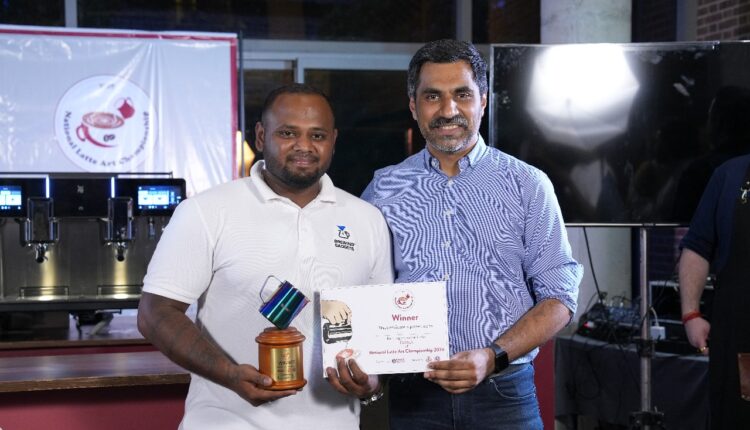
Kaapi Machines, India’s first and largest coffee equipment, training, and services company, proudly announces Teja Achar as the winner of the2nd Edition of the ‘NationalLatte Art India 2024’. This prestigious event, following the immense success of the first edition last year, this year Kaapi Machines with the Coffee Board of India, has once again showcased the exceptional talent and passion of India’s finest latte artists.
The championship journey commenced on April29,2024, with preliminaries held in Delhi, Mumbai,and Bangalore.
These events highlighted the immense talent across India, culminating in a grand finale where the finest artists competed for the top honour.
The grand finale, held in Bangalore, was a spectacular display of creativity and skill,culminatinginTeja Achar’s victory. He will now represent India at the World Latte Art Championship in Copenhagen, Denmark, this June.
Abhinav Mathur, CEO & Managing Director of Kaapi Machines, expressed his delightatthesuccessful conclusion of the championship, stating, “We are thrilled to witness the incredible talent and dedication displayed by all the participants. Teja Achar’s victory is a testament to the growing appreciation and skill level of latte art in India. At Kaapi Machines, we are committed to nurturing and promoting this art form, and we look forward to seeing Teja Achar representourcountryonthe global stage in Copenhagen.”
Kaapi Machines remains committed to fostering talent and passion within the coffee community, and this championship is a testament to that dedication. As the country’s leading coffee equipment and training provider, Kaapi Machines continues to supportandinspirecoffeeenthusiastsandprofessionals alike.
source: http://www.indiaeducationdiary.in / India Education Diary / Home> National News / by India Education Diary / May 24th, 2024
In 2007, Greenhills Estate, a coffee plantation in Kodagu, fell on hard times. Its owner, A.T. Chengapa, had taken ill two years earlier and couldn’t manage his affairs. Grappling with a financial crisis, he sold 25 acres to pay off his debts. But he still owed the banks Rs 40 lakh, Meanwhile, his plantation continued to decline.
Chengapa had two daughters. The younger one, Dalia, 35, resigned from her job at American Express and returned home to revive the family business.
“I had no clue about how to run an estate. Since Dad was ill, everything was in bad shape,” recalls Dalia. “I really didn’t know what to do. Many friends and relatives offered advice. But what we needed was practical help.”
Their heritage bungalow was in a shambles. The plantation workers had all left. The yield of coffee beans had declined drastically. And the estate had very few irrigation facilities.
Dalia approached Care T Acres, a company in Madikeri that manages sick estates. After a visit, the company agreed to take over the 75-acre estate. In 2007, a memorandum of understanding was signed.
The company developed infrastructure. It built a tank and a pumping system. It invested Rs 20 lakh, generated from the estate itself, in the first two or three years.
“The results were amazing after just one year,” recalls Dalia.
The yield of coffee beans has now risen from 250 kg to 800 kg per acre. Income from pepper climbed from Rs 2 lakh to Rs 37 lakh last year.
“Once Care T Acres intervened, all our troubles were over,” says Dalia. “It still seems like a miracle to me. We never dreamed that a sustainable income was possible from coffee and pepper. We refurbished our palatial bungalow with the money and we can now keep it as a hereditary memory.”
Chengapa passed away in 2015 but his sick coffee estate is in good health.
Kodagu is Karnataka’s smallest district but is well known for its coffee. It is recognised across the world. But many of its estates are turning sick. One reason is absentee owners. About 25 per cent of the estates are managed long-distance.
Another reason is that the planters who know how to manage estates are growing old and can no longer cope. The younger generation lacks experience and isn’t as closely linked to the estates and the coffee business as their parents were. Many have been away for their education and though they would like to retain their family estates, they don’t know how to keep them profitable. The result is that they end up selling out.
Care T Acres has revived over 20 sick estates. The company’s promoters say their mission is to provide a service. Relieved estate-owners put it differently: “It’s a Godsend.”
Once Care T Acres takes over, it shoulders all responsibilities. It undertakes cultivation, harvesting and pruning. It builds infrastructure such as tanks, buys machinery, lays pipes for irrigation, upgrades labour lines, pulping units and drying yards. It even markets coffee.
The company deducts its remuneration or share of profits, as the case might be, and transfers the rest to the estate owner. For running the business, there is a joint bank account and every transaction is transparent. The estate owner can carry out checks anytime. Detailed monthly accounts are furnished and the processes are farmer-friendly.
Polibetta Estate was in a similar condition to Greenhills. Five years ago, its 32 acres yielded just nine tonnes of coffee beans. In four years, after Care T Acres took over, production rose to around 30 tonnes. Trees were pruned and weeds cleared. The estate’s 15-year-old coffee plants were manured and irrigated and they revived.
The beginning
The idea of starting such a company struck Arun Biddappa, a Kodagu planter who traded in coffee in Bengaluru, one day while chatting with Bose Mandanna. The latter was his partner in Karnataka Coffee Brokers and a philanthropic planter. Biddappa stressed the need for a professional service to manage estates like his. Mandanna roped in N.K. Chinnappa, an experienced and skilful manager who had resigned from Tata Coffee, and the three discussed the idea.
They brought in partners like K.M. Cariappa, B. Ram Bopaiah, K.M. Appaiah, N.P. Machaya and K. Ajit Appachu. The concept crystallised into Care T Acres on 15 July 1999. Each promoter invested Rs 1 lakh and a little time and goodwill. The company was named Care T Acres — caretakers with the capacity for managing many, many acres.
Biddappa was the company’s first client. Seeing it shaping up well, he wanted to be part of it. Unfortunately, he passed away in 2006. His wife, Aruna Biddappa, who lives in Mysore, inherited his estate and Care T Acres continues to manage it. “I have two daughters who are studying. We are not in a position to run the estate. Care T Acres are doing this job very well,” she says.
Palani Estate’s story is similar. Lalitha Nanjappa, 76, has two daughters. She lost her husband in 2008 and the estate was in dire straits. The irrigation infrastructure existed only in name. The 52-acre estate yielded a paltry 200 bags of coffee beans.
In 2008 the estate was handed over to Care T Acres. A tank was dug for Rs 5 lakh. Pipelines and machinery worth Rs 10 lakh were bought. Coffee production has increased to 1,350 bags. A drying yard costing Rs 7 lakh is being built. Labour lines have been renovated. A raking-cum-spraying multipurpose machine has also been bought.
“Care T Acres is dedicated and disciplined. Its labour management is excellent. None can fool them,” says Nanjappa. “My only request to them is to continue their wonderful work.”
Blueprint
Care T Acres takes over only sick estates. Currently, the company is managing around 600 acres of coffee estates belonging to 18 planters. Estates below 30 acres aren’t taken up because they aren’t financially viable for both sides.
When the company receives a collaboration request from a coffee estate owner, it conducts a discreet inquiry. Is the owner a team player? If the answer is yes, the company visits the estate.
“We prefer not to take over estates in areas that receive very heavy rainfall like Madikeri and Bhagamandala. Achieving good production there is just a dream,” says K.M. Appaiah.
But if the planter is insistent, Care T Acres makes it clear that production won’t be much. Coffee and pepper grow well only in the traditional coffee-growing belt. These are the two main crops in which Care T Acres has expertise. The company points out that without good yield it can’t insulate the estates from financial problems and make them sustainable.
Care T Acres enters into a five-year understanding with the estate owner. It is renewable by mutual consent. “We have easy exit options too,” says Chinnappa, who is 63. “Either side can prematurely terminate the understanding by paying a particular sum.”
The company draws up a long-term plan to make the estate self-supporting, sustainable and professional. If the client’s family members take back the estate and follow the company’s plan, they will earn reasonable profits without much difficulty.
“Our first priority is to clear the estate’s bank loans. We put in our own funds to do this once a memorandum of understanding is signed. We don’t want the estate owner to take the hasty decision of selling a portion of the estate to meet the expenses of new development works. We also need to get the land documents back from the bank,” explains Chinnappa.
The Robusta variety of coffee beans is more popular here than Arabica because the latter requires more labour and is prone to stem borer menace. Rain is crucial. Since rainfall can vary, irrigation becomes all-important. Estates are vast and most don’t have complete irrigation coverage.
An old adage is popular here: “If you are lucky you will get coffee beans by the tonne. Otherwise you will get a tin.” So if there is timely rain, you will harvest coffee in tonnes. Else, you will turn bankrupt.
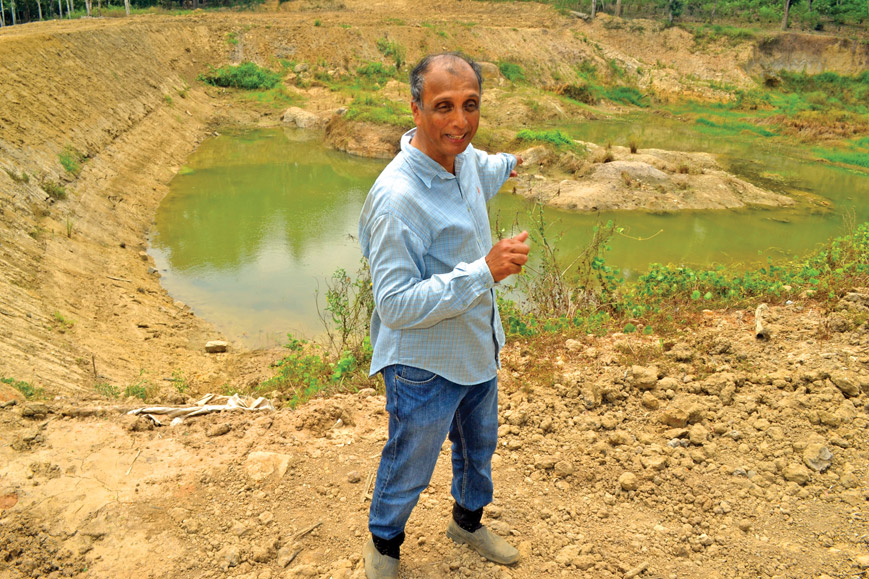
So the company’s first priority is to cover the entire estate with an irrigation network. On Paka Estate, a big abandoned tank is being desilted. On Benlomond estate, the owner, Antony Tharakan, has bought a small piece of land from a neighbour to expand his water tank, which will be done next year.
“When a coffee estate doesn’t have enough water for irrigation, we always suggest investing in tanks,” says Chinnappa.
He also stresses the importance of pruning coffee plants. “It is equal to giving them a dose of manure because you are cutting off unproductive branches. Proper pruning and timely manure in the first year makes production shoot up.”
The first three years are spent in pruning, shade regulation and developing adequate irrigation facilities. Then Care T Acres switches to upgrading processes such as renovation of labour lines, construction of a drying yard, desilting of tanks, developing a pulping unit and so on.
On estates that have been mismanaged for years, pilferage is rampant. “We do the job of policing, too, though it is unpleasant,” says Chinnappa.
Until the estate begins making profits, the company works on a fixed remuneration which depends on the estate’s area, production capacity, the development works to be done and so on.
After the estate has been restored to health and starts making a profit, Care T Acres switches to a profit-sharing mode. Seventy per cent goes to the owner of the estate and 30 per cent to the company. The turnaround usually takes about three years. “But this depends on how far conditions have deteriorated,” says Chinnappa.
Antony Tharakan’s Benlomond estate, for instance, still runs on remuneration six years after Care T Acres took it over. The coffee plants on the 160 acre estate are very old and need to be replaced by younger ones. “You are running an old-age home,” remarked the Care T Acres team after the first inspection.
Seventy-five acres have already been replanted. The company wisely replanted the rest in phases so that the family would have some income. Pepper vines have been planted as shade trees. “In another five years, this will be one of the best maintained estates in this belt,” predicts Mandanna.
The company doesn’t compromise in building infrastructure at considerable cost. It is this investment that ensures a steady rise in production in the coming years. Neither does the company borrow from banks. Instead, it ploughs back the initial profits from the estate.
“Unless this is done, the estate can’t graduate into becoming a very good income-generating proposition,” says Chinnappa. The estate is given an unbelievable facelift in a short span of time. As production goes up, post-harvest processing facilities, starting from the drying yard, have to be upgraded.
Pepper bidding
To ensure their clients get the best prices for pepper, Care T Acres has introduced a unique bidding system. Traders are asked to bid for the year’s crop contract in advance. They pay a deposit beforehand. The traders visit the estates before the bidding process and make an estimate of the prevailing crop. About 30 to 40 traders take part in the bidding process. They write their bidding amounts on slips of paper and hand them over to a Care T Acres representative.
Deliberations are conducted in front of all the traders and estate owners so that the bidding process is transparent. The highest bidder gets to harvest the pepper crop on the estate whose bid he has won. “Since there are about 10 traders competing, the proceeds are higher than what planters used to get earlier,” explains Chinnappa. Every September, the accounts get audited and the estate owner gets his or her share of the proceeds.
By then, the coffee has also been marketed. “We generally make an interim payment to the estate owner months before the coffee is sold because we can’t keep their money in a fixed deposit,” says Chinnappa.
“India’s average production of coffee is 950 kg per hectare of Robusta. Kodagu’s average is higher,” explains Mandanna. “We are happy to say that we get an average of 1,900 kg per hectare, due to the agronomic changes that we make. This is double the country’s average.”
The company’s outstanding capability is that its cost of production is very low. “All credit to Harrisons Malayalam where I worked for 15 years. I learnt to be frugal to the core when I worked there,” recalls Chinnappa.
“See, we are partners in the company and we are all individual coffee planters too,” says Ajit Appachu. “We are not able to keep cultivation expenses on our own estates as low as on estates, managed by our company.” Having a client means taking special care.
Driving force
The company is, in many ways, a one-man show. It is Chinnappa who is at the forefront of handling operations. “But I work with inputs and full backing from all my partners,” he says. “This gives me strength, especially when we face setbacks.”
He admits he is getting on in years and can’t handle the pressure as easily. Every year the company takes over one or two new estates but the older estate owners don’t want their estates back so his burden keeps increasing.
If the company spots a capable family member, it suggests the owner take back the estate once the management agreement lapses. “This way, we can help someone else. But this taking back is not happening,” says Chinnappa.
The company has been flexible and large-hearted with owners. Mandanna cites an example. Three years after they took over a coffee estate, profits had risen. The company was entitled to take a share and not just remuneration. The young lady who managed the estate was getting married and said her family required money. She asked the company to agree to taking a remuneration that year too. The company agreed though it meant forfeiting a considerable profit.
Care T Acres has also, on more than one occasion, volunteered to pay off bank debts of indebted coffee estate owners with its own funds. “We pledged our fixed deposits to the bank and took a loan. The client was asked to pay a small percentage of the interest,” says Chinnappa.
The company is now getting enquiries from distant coffee-growing areas like Chikmagalur and Sakleshpur. “This is physically and mentally a demanding job. If we take up more assignments than we can handle there will be dilution,” explains Chinnappa. It is becoming difficult for the company to recruit efficient field staff. People prefer to work as watchmen for tourist resorts mushrooming all over Kodagu, he says.
Gen next
Chinnapppa handles administration, marketing, field supervision and more. If these divisions were handled by other people, he feels, the company could double the number of clients. He is keen that younger people take over.
His only son, Cariappa, has an MBA degree from the Melbourne Business School. He is a coffee trader in Nairobi, but he has worked with his father for a few years. Chances are that he will return and join Care T Acres.
“I worked with my father for two years. I know the positive impact Care T Acres has had on Kodagu’s coffee farming community. I believe my father has the drive to continue for a number of years. In the near future, I would like to concentrate on building a successful career in coffee trading. When my father decides to step back, we will sit down and discuss the company’s future,” Cariappa said over the phone.
Mandanna is hopeful. “Unless the returns from farming are good we won’t be able to attract our youngsters back to the soil. Now prices are good. I know of many youngsters with good jobs in the city, some from the US, who have returned to farming. In the past few years, I have come across at least 24 cases in Kodagu alone. This has become a trend in Chikmagalur and Sakleshpur too,” he says.
Study tours
Using the profits of the company, the partners of Care T Acres and their families go on a coffee study tour every year. So far they have visited Vietnam, Kenya, Chikmagalur and Pattiveeranpatti in Tamil Nadu. These tours have exposed them to new technologies that can be adopted back home.
“To succeed in farming, innovation is necessary. In Kodagu, some planters have started litchi, apiary and avocado cultivation. Newer cultivation methods are being tried out,” says Mandanna.
“Our Chikmagalur study trip inspired two of my partners, K.M. Cariappa and his brother, K.M. Appaiah, to start drip irrigation. In Chikmagalur there are planters who have doubled their crop yields with this method. Dynamic farmers have started direct export of coffee to countries like South Korea. Each successful innovation can motivate our youngsters to return to farming,” he adds.
Appaiah uprooted 20 acres of his old estate and raised a new coffee plantation on it, incorporating drip irrigation and fertigation. Over the past two seasons, for the first time in Kodagu, this portion of his estate has water nine months of the year. He is also experimenting with another innovative method called agobiada, which involves bending the tip of the young coffee plant to induce multiple stems. Four stems are allowed to go up and sprout berries. Both these innovations were borrowed from Chikmagalur and have doubled the coffee crop there.
Asked to appraise Care T Acres’ work, Chinnappa’s face lights up. “We have ensured that many coffee estates were not sold. We have restored the health of sick coffee estates and helped many Kodagu families lead comfortable lives.”
source: http://www.civilsocietyonline.com / Civil Society / Home> Agriculture / by Shree Padre, Bengaluru / May 02nd, 2016 (updated May 24th, 2020)
India may be famous for its fragrant, spice-infused chai, but in Bengaluru (Bangalore) and elsewhere across South India, another hot caffeinated drink reigns supreme.
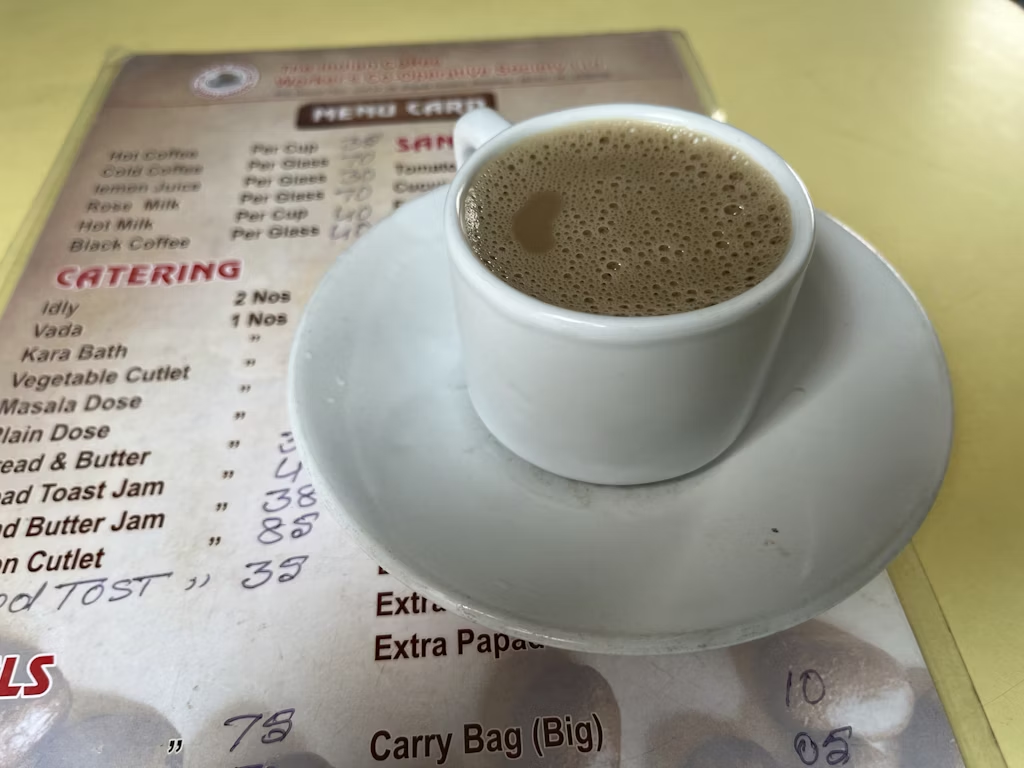
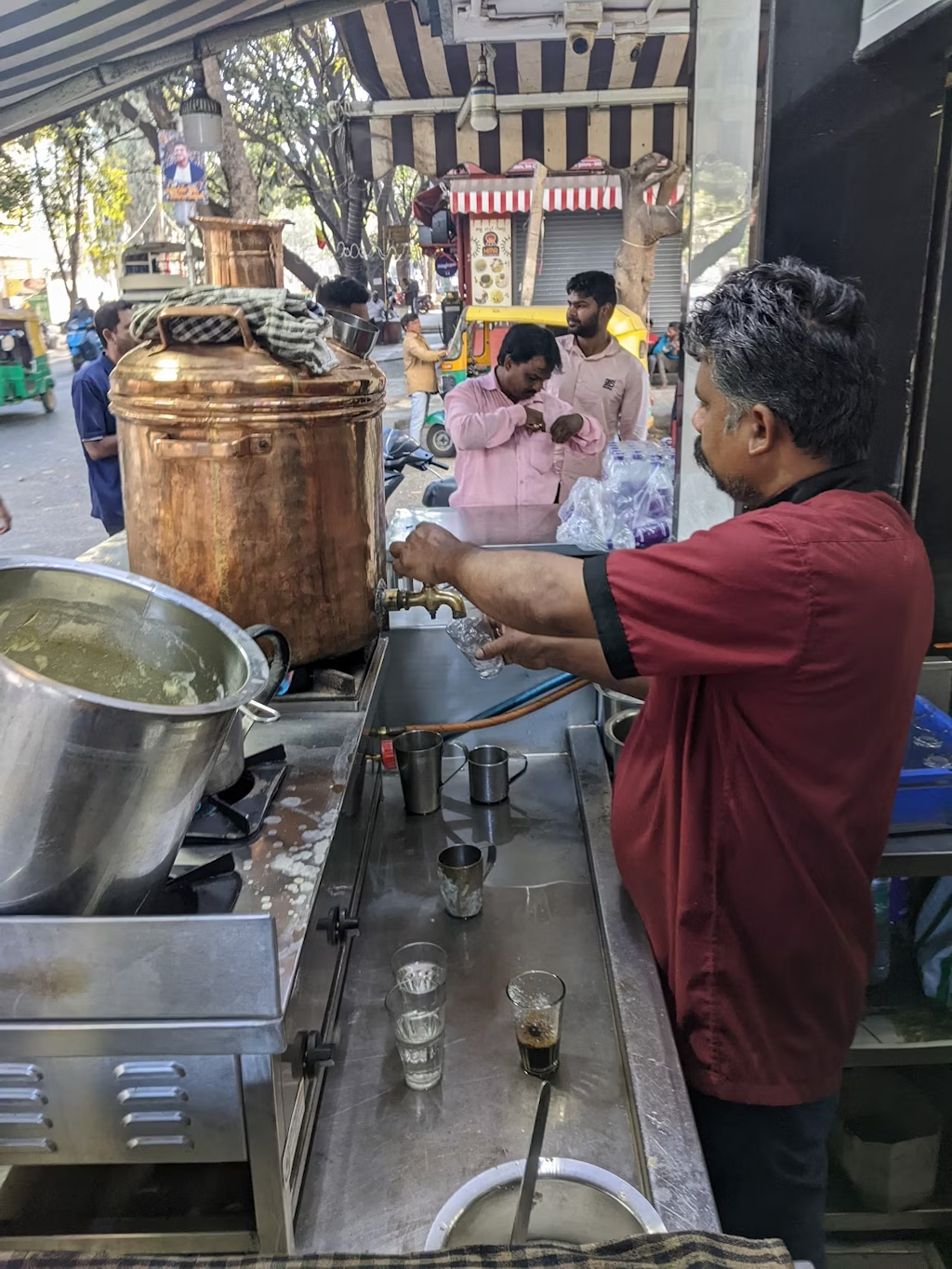
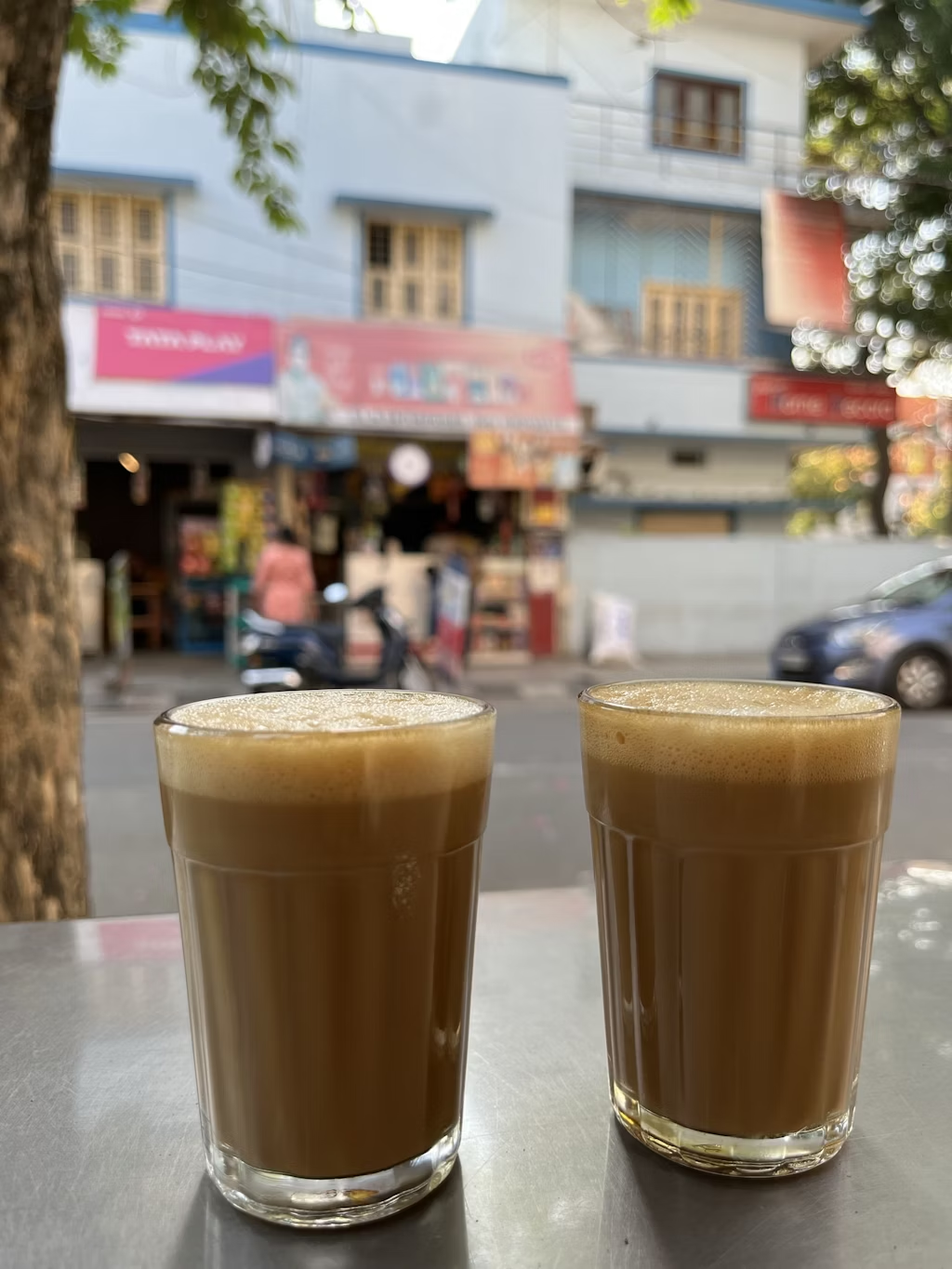
Walk past any local breakfast joint in Bengaluru and you’ll see swarms of people standing at stainless steel tables washing down fluffy idlis (South Indian spongy, round, fermented rice cake) and crispy masala dosas with piping hot cups of filter coffee, also known as filter kaapi.
The strong brew – milky, sweet, blended with chicory and often frothy – is a way of life for many Bangaloreans. Whether enjoyed at home, in vintage or contemporary coffee houses or at quick-service darshini cafes (vegetarian fast food spots), South Indian filter coffee fuels a city that’s always on the go.
“It is bold, it is intense and it is a small, short cup [of coffee],” says Suhas Dwarkanath, founder and owner of Benki Brewing Tools , a Bengaluru-based company that sells a wide variety of tools for expert home coffee brewing and also runs a coffee shop in the city.
South Indians’ love of coffee goes way back. Legend has it that Baba Budan, a 16th-century Sufi saint, brought coffee to India from Yemen on his way home from the hajj. Though it was illegal to take green coffee beans from the Arabian Peninsula, he smuggled seven of them to plant in the Chandradrona Hills, outside of Bengaluru, and so coffee cultivation in South India began.
Recent genetic studies on the origins of Indian coffee indicate there’s very little or no genetic variation, with possibly only one or two original plants, says Kurush F Dalal, an archaeologist and culinary anthropologist in Mumbai. “That suddenly puts the spotlight back on the Baba Budan story and makes a lot of people in the field wonder whether there is actually some truth in the legend.”
Thanks to Baba Budan or not, by the 20th century, coffee had become hugely popular throughout the southern states of Karnataka, Tamil Nadu, Andhra Pradesh and Kerala . Today, Karnataka produces more than 70% of India’s coffee – much of it for export – and many of its coffee cultivation areas, including Coorg and Chikmagalur, are now travel hot spots.
It’s no wonder then that Karnataka’s capital, Bengaluru, is also considered to be the coffee capital of India. Bengaluru is not only home to some of the most iconic places to get filter coffee, it’s also the birthplace of modern coffee shops like Cafe Coffee Day , the country’s largest coffee chain, and Third Wave Coffee , which is among the biggest specialty coffee chains in India.
Bengaluru became the go-to place for all things coffee in the 1940s, when the Indian government set up the Coffee Board of India’s headquarters there. Economic reforms in 1991 opened up India and slowly ushered in a new coffee era with the launch of large coffee chains and, more recently, an explosion of high-end and hip specialty coffee houses. While this may be putting pressure on filter coffee growers and roasters, filter coffee isn’t going away any time soon in South India.
“Having had the best coffees in the world, the most expensive coffees, and coffees from so many different countries, I still crave that chicory South Indian filter coffee some days because there’s so much nostalgia,” says Dwarkanath, whose company is also affiliated with the Specialty Coffee Academy of India, an education center that helps locals perfect their brewing techniques. Both companies are contemporary proof of a long tradition, and also a testament to how seriously Bengaluru takes its coffee.
Filter coffee is usually a blend of dark roasted coffee and chicory. Making it is a slow process. First, you need an Indian coffee filter that’s composed of two cylindrical metal cups on top of each other. Finely ground coffee is added to the upper cup, which has small holes on the bottom, and then lightly tamped with a plunger. Next, boiled water is poured into the cylinder. It takes 10 to 15 minutes for the brewed coffee, called a decoction, to collect in the lower cup.
Once the decoction is ready, boiled milk and sugar or jaggery are added. If you have filter coffee the traditional way, it’ll usually be served in a brass or stainless steel tumbler that sits in a shorter metal container. This tumbler/container set can also be used to cool the coffee and mix the ingredients together by pouring the liquid back and forth between the two. If you’re lucky, you might catch a skilled filter coffee maker quickly pouring the coffee from the highest heights.
It’s likely that everyone you ask in Bengaluru will suggest a different favorite filter coffee spot. The list of places to enjoy it is almost endless, from iconic haunts like Koshy’s to more modern coffee chains like Hatti Kaapi. Even Starbucks now serves filter coffee.
Brahmins’s Coffee Bar
This popular institution in Basavanagudi has been serving filter coffee since the 1960s. With standing tables only, prices are low for both coffee and a limited menu of South Indian specialties, including idli and vada (doughnut-shaped deep-fried lentils) with coconut chutney. The name of this institution has generated some controversy for its reference to one of India’s castes, but all guests are welcome.
Mavalli Tiffin Room (MTR)
MTR has been a staple of Bengaluru’s dining scene for almost a century. With numerous locations around town (and globally), filter coffee is a highlight of its menu, which includes a wide range of South Indian dishes such as dosas, rava (semolina) idli and upma (rava cooked with onions, spices, chili peppers and coconut).
Veena Stores
This charming, no-frills eatery in Malleshwaram started off as a local condiments store in 1977. You’ll probably have to wait in line to try its filter coffee and South Indian breakfast items, which come with unlimited mint coconut chutney, but it’ll be worth it.
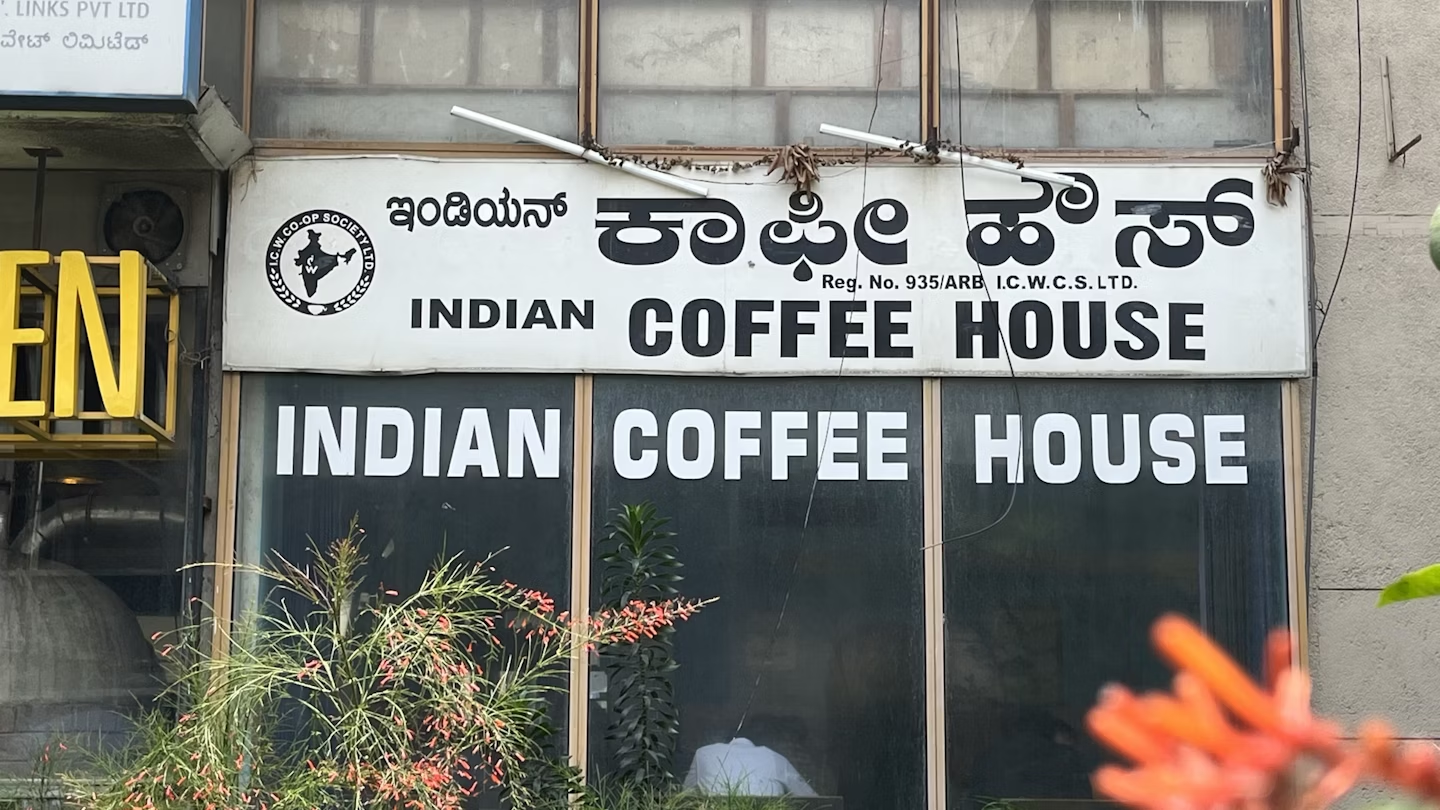
Indian Coffee House
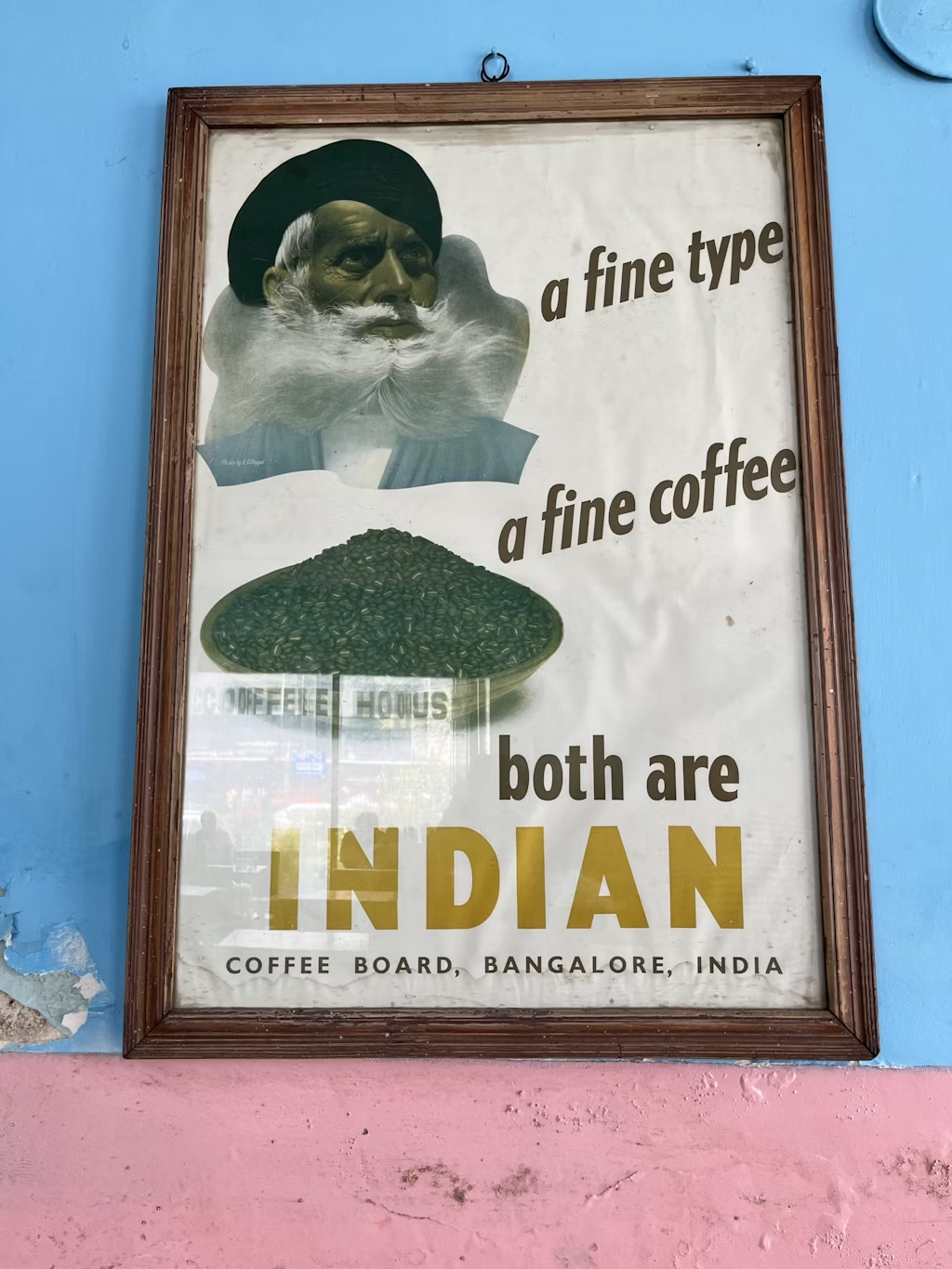
This historic spot is great for old-school charm. Opened in the 1950s, its Church Street location still maintains blue and pink walls and staff in red and white uniforms. Grab a coffee along with South Indian or other dishes, like mutton cutlets and omelets.
Rameshwaram Cafe
With three locations in Bengaluru , this newer quick-service eatery has become popular fast. The Indiranagar location, for instance, is always teeming with people eating and waiting for the cafe’s filter coffee and specialties such as ghee pudi idlis, dosas, lemon rice and more.
source: http://www.lonelyplanet.com / Lonely Planet / Home> Travel Stories / by Juhie Bhatia / May 29th, 2024
India’s High Range Coffee Curing is poised to become the first farm verified by the Rainforest Alliance to ship EUDR–ready coffee beans to Europe later this month.
The coffee farm partnered with the Rainforest Alliance to meet the necessary compliance requirements of the regulation.
Established in 1995, High Range Coffee Curing is located in the Periyapatna and Kushalnagar Coorg districts among 142 hectares of tropical forests and is known for its quality beans.
The farm supplies coffee to leading global coffee brands, roasters and traders in India, including Nestle, Unileverr, E-Com Commodities, Olam, Continental Coffee, Louis Dreyfus Company, Vidya Coffee and Allanasons.
EUDR-Ready Coffee
Zaidan M Saly, director of High Range Coffee Curing stated, “Implementing EUDR [EU Deforestation Regulation] posed significant challenges for our team, but with the invaluable guidance from Rainforest Alliance representatives in our region, we overcame them and gained confidence in the process.
“Their expertise made the seemingly daunting task entirely feasible, facilitating a smooth and successful implementation, which now not only guarantees adherence to EUDR regulations but also sparked a revolution in our approach to traceability.”
Rainforest Alliance certification enables coffee and cocoa farmers to opt in for EUDR-aligned criteria.
This allows companies to source from these farms, track ingredients along their supply chains, and leverage farm data to demonstrate compliance with the regulation’s deforestation risk assessment and mitigation requirements by the deadline, at no additional cost.
‘Sustainable Practices’
Miguel Gamboa, coffee sector lead at the Rainforest Alliance stated, “The EUDR represents an important step forward to shift the global coffee sector towards more sustainable practices.
“Yet, many smallholder coffee farmers need support to align with the requirements, including traceability, deforestation risk mapping, local laws, and practical and technical guidance on key environmental practices.”
The Rainforest Alliance has urged the EU Commission not to dilute or delay the legislation or postpone its deadline in response to calls from some companies and governments.
It has also called on companies not to scale back purchases from smallholder coffee farmers, but rather support them in meeting the deadline of this legislation.
Gamboa added, “We are also piloting a deforestation risk assessment offering for companies buying non-certified coffee and cocoa, which we plan to roll out more widely later this year.
“With this offering, we aim to support more companies in their journey to compliance, but more importantly, to also reach non-certified farmers so their products can still be sold on the EU market.”
source: http://www.esmmagazine.com / ESM- European Supermarket Magazine / Home> Supply Chain / by Dayeeta Das (headline edited) / May 06th, 2024
From family legacy to Harvard education, Mishthi Aggarwal blends tradition with innovation in specialty coffee, shaping India’s coffee future.
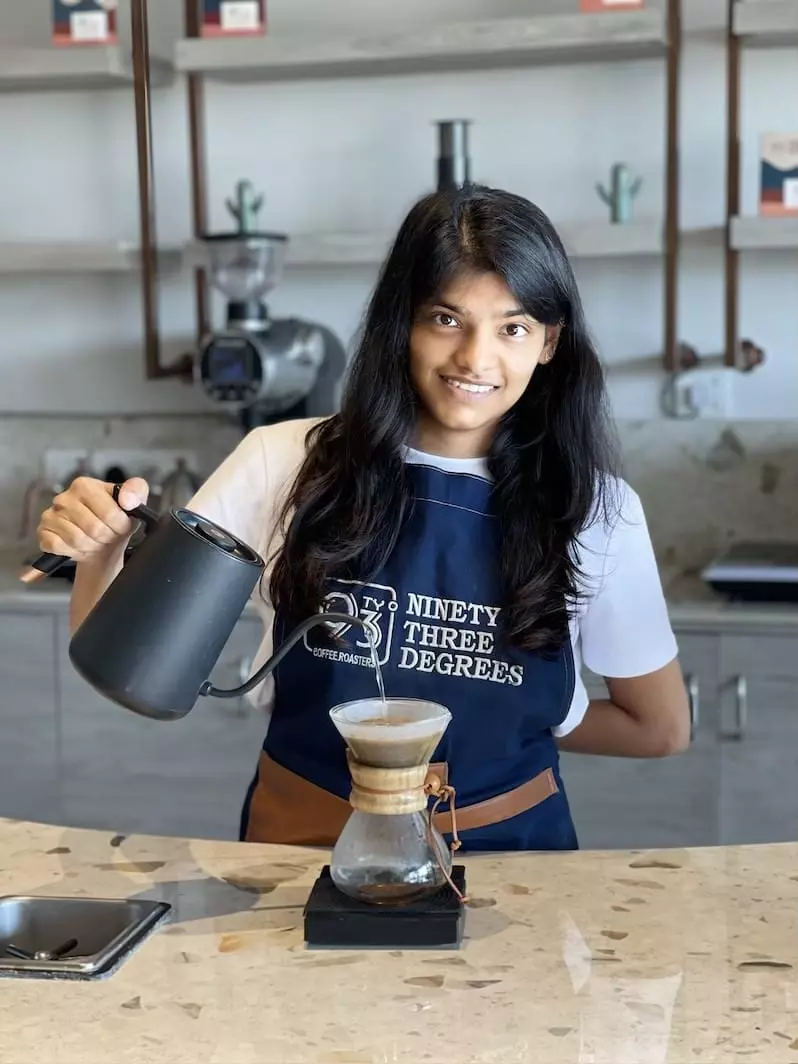
Mishthi is shaping the future of coffee, one cup at a time. (Image: DC)
Mishthi Aggarwal, the visionary behind 93˚ Coffee Roasters, is not just brewing coffee; she’s cultivating a movement. Inspired by her family’s entrepreneurial lineage and fueled by a profound passion for coffee, Mishthi is on a mission to redefine India’s coffee culture. In an exclusive interview with Deccan Chronicle, she shares insights into her journey, from the influence of her family’s legacy to her commitment to sustainability and innovation. Here’s a peek into the story behind 93˚ Coffee Roasters and how Mishthi is shaping the future of coffee, one cup at a time.
What inspired you to venture into the coffee industry, and how did your family’s entrepreneurial background influence your decision?
I am proud to belong to the 4th generation of the esteemed Bikanervala Family, so business and entrepreneurship was in my blood. Being from a joint family, I was raised in an atmosphere where business was discussed all the time. Inspired by my family’s legacy and driven by a passion for food and beverages, particularly my love for coffee is what influenced me to start 93 Degrees Coffee Roasters. I entered the coffee industry with the goal of taking Indian-grown specialty coffee to unprecedented heights.
As a certified Q grader and authorized SCA trainer, how do you ensure the quality and authenticity of your coffee blends?
As the only female specialty coffee roaster in India, certified Q grader, and authorized SCA trainer; the quality of coffee that we serve is of supreme concern to me and my team. We maintain a high standard of quality checks at all stages – right from sourcing the best quality beans directly from coffee growers, milling them and up to the final brewing stage. Our roastery is equipped with state-of-the-art machinery and tools, allowing us to have complete control on every aspect of the roasting process, thus delivering coffee that is authentically brewed and is the best in quality.
93 Degrees Coffee Roasters is committed to sustainability and transparency. Can you elaborate on your relationships with coffee growers and the measures you take to support them?
We have kept our commitment towards sustainability and transparency as the core of our business. By focusing on sustainability, we have been able to build the most amazing network with coffee growers. Our commitment to sustainability goes much beyond just sourcing the best quality beans; it means building enduring partnerships with local farmers. By engaging directly with estates, also we ensure fair trade practices and support sustainable farming methods. This collaboration has not only helped us in sourcing the best quality coffee beans but has also allowed us to give back to the society and contribute to the well-being of the coffee-growing communities.
How do you balance your academic pursuits at Harvard University with the demands of running a coffee business?
Having managed my academic pursuits at Harvard University while simultaneously leading 93 Degrees Coffee Roasters through meticulous scheduling, delegation, and strategic planning, I ensured both areas received the attention they deserved. By dedicating specific time to studying, attending classes, and overseeing business operations, I maintained a balance between academia and entrepreneurship. Delegating tasks within the company and fostering open communication with my team enabled me to remain informed about business developments while focusing on my studies. My dedication to effective prioritization, adaptability to changing circumstances, and commitment to self-care underscored my passion for both education and the coffee industry. Now that I have completed my studies, I can devote even more time and attention to my business.
What drives your passion for coffee, and how do you aim to redefine the coffee-drinking experience in India?
My love for coffee started when I traveled across the globe and got the taste of amazing coffee varieties. India, despite being a major coffee growing country does not have a great coffee culture, except maybe in South India. Since then I have been driven by a desire to contribute to the coffee industry’s evolution in the country. I want to revolutionize the coffee-drinking experience by offering a variety of specially curated coffee. We integrate traditional coffee roasting techniques with a contemporary touch. This allows us to maintain the authenticity of Indian coffee while introducing new flavor profiles.
As a fourth-generation entrepreneur, how do you draw upon your family’s legacy while carving your own path in the industry?
Growing up in a Marwari business class household and being the fourth generation of the Bikanervala Family, I have always been in the thick of business discussions. Very early on in life, I imbibed the qualities of diligence, entrepreneurship, and tradition. These influences shaped my approach to business, guiding me to blend heritage with innovation in every aspect of 93 Degrees Coffee Roasters. These values lay the foundation of my entrepreneurial journey.
How do you stay updated on global coffee trends and incorporate them into your business strategy?
It is important that we stay tuned to the latest trends in industry, and hence we actively participate in industry events. We are a member of the National Coffee Board and serve as jury members in prestigious championships. We are constantly engaging with the global coffee community through conferences and global meets. This has helped us stay ahead of times when it comes to understanding global trends and making constant efforts to stay relevant through innovations.
What’s the story behind the name 93 Degrees Coffee Roasters, and what significance does the temperature hold in your roasting process?
The name 93 Degrees Coffee Roasters signifies the standard set by the Specialty Coffee Association (SCA) for the ideal brewing temperature for cupping water. For us, it symbolizes not just a numerical value, but a commitment to excellence and specialty coffee in India. We aspire to elevate Indian coffee to meet this standard of quality and consistency, offering exceptional coffee experiences. Our aim is to establish a benchmark for other brands and companies, inspiring them to uphold similar standards of excellence in the industry. Temperature plays an important role in the roasting process. At 93˚ Coffee Roasters, we have the best top-grade technology. We are equipped with state-of-the-art machinery and tools that allows us to precisely control every aspect of the roasting process. It is very important that the temperature modulation is correct along with airflow management. We ensure that each bean is roasted to perfection, resulting in consistent specialty coffee. Also, we are one of the rare brands in the country to ensure that our coffee stays specialty by storing the green coffee in temperature and humidity controlled facilities.
Can you share some insights into your bespoke blends and innovative brews?
What inspires your creations? 93 Degrees Coffee Roasters believes in bringing to its customers the best specialty coffee always. And to stay ahead of all, we believe in constant innovation which is a result of the in-depth research and development process at 93 Degrees Coffee Roasters . We constantly explore new blends, roast profiles, and try new processing methods at the farm level to push the boundaries of traditional coffee experiences. The inspiration to offer our customers an exciting journey of discovery with every sip is what has led us to foster a culture of innovation and creativity.
How do you envision the future of India’s coffee culture, and what role does 93 Degrees Coffee Roasters play in shaping it?
I feel proud to say that the Indian customers are now more open to try specialty coffee. They want to explore and expand their drinking habit. There is a growing culture of going out for coffee and catching up with friends over coffee, and this trend is very encouraging. Here 93 Degrees Coffee Roasters has a big role to play. We offer a wide variety of specialty coffee and make it readily available to them through cafes, roasters and through strategic partnerships. Through continued innovation, sustainability, and community engagement, 93 Degrees Coffee Roasters is set to transform the future of coffee culture, one cup at a time.
source: http://www.deccanchronicle.com / Deccan Chronicle / Home> Lifestyle> Food and Recipes / by Reshmi AR / May 03rd, 2024
This spike, amidst stable Arabica pricing, signals a boon for Indian growers, leveraging robusta’s affordability.
India’s Robusta Coffee Prices Hit Record High in Century-Old Industry (Photo Source: Pexels.com)
India’s coffee industry is experiencing a remarkable upswing with robusta coffee bean prices hitting an all-time high of Rs 10,080 per 50 kg bag, a historic milestone since the establishment of coffee estates in the Western Ghats region during the 1860s by the British. This is big news for Indian coffee growers who rely on the Robusta given its low-cost inputs.
In stark contrast to the traditionally stable pricing of Arabica coffee, renowned for its velvety shot layer, Robusta prices have remained relatively low, fluctuating between Rs 2,500 to Rs 3,500 per 50 kg bag for the past 15 years.
While export quantities witnessed a marginal decline of 2.5% at 3.88 lakh tonnes compared to 3.98 lakh tonnes in 2022-23, the Indian coffee sector reaped the benefits of soaring global robusta prices, which have reached a three-decade high due to supply disruptions in major producing countries like Vietnam and Brazil.
Commenting on this, Mr. M J Dinesh, Chairman of the Coffee Board says, “The change in the global temperature has impacted the shortage of coffee from Vietnam. The instant coffee market in India will gain from this; the same is gaining popularity too. Moreover, small coffee growers and laborers will reap the profit. They may witness an upsurge in their daily wages.”
The increase in robusta prices resulted in a 20% rise in per unit realization for Indian exporters, reaching ₹2.7 lakh per tonne during the 2023-24 period, up from ₹2.26 lakh in the previous fiscal year.
source: http://www.krishijagran.com / Krishi Jagran / Home> News / by Mrini Devnani / April 16th, 2024
WELCOME. If you like what you see "SUBSCRIBE via EMAIL" to receive FREE regular UPDATES.
Read More »