Category Archives: Coffee News

Third Wave Coffee CEO to transition to board member

Image: Third Wave Coffe

Third Wave Coffee has announced Co-founder Sushant Goel will transition from his role as CEO to a member of the company’s board, with Rajat Luthra announced as his successor effective from Q1 2024-25.

“As CEO and Co-founder, I have had the privilege of leading the company through its formative years and I am incredibly proud of the journey that we have embarked on,” says Goel. “The brand is ready to embark on its next leg of growth.

“Now, as I transition to the Board, I am excited to continue contributing towards our vision and growth from a different vantage point. Rajat is a veteran in the QSR industry, and I am filled with optimism on what the future holds for Third Wave Coffee under his stewardship.”

Goel, along with Co-founders Ayush Bathwal and Anirudh Sharma, have been able to scale the company to over 100 outlets across India. As CEO, Goel was responsible for steering the company’s business strategy and forging robust investor relations.

Luthra has previously served as CEO of Kentucky Fried Chicken India and Nepal for over a decade.

In a joint statement, representatives of investor companies Westbridge Capital and Creaegis said, “We extend our heartfelt gratitude to Sushant for his instrumental role in shaping the remarkable journey of Third Wave Coffee thus far.”

“As Sushant transitions to his new role on the board, we are confident that his guidance and strategic insights will continue to steer us towards even greater success. Together, under Sushant’s continued guidance and Rajat’s leadership, we are poised to embrace new opportunities and drive the company to new heights.”

source: http://www.gcrmag.com / Global Coffee Report / Home> News / by Dominic Morell/ March 26th, 2024

Coffee may help lower risk of Parkinson’s disease: Study

 Love your morning dose of coffee? Well, it may help you avoid the risk of Parkinson’s disease, claims a study.

The study, published online in the April issue of the journal Neurology, included 1,84,024 people aged 35-70 years, who were followed up for a median duration of 13.1 years.

The findings showed that the highest coffee consumers had 37 per cent reduced risk of getting Parkinson’s disease, compared to those who do not drink.

“This study demonstrates that the neuroprotection of coffee on Parkinson’s disease is attributed to caffeine and its metabolites by detailed quantification of plasma caffeine and its metabolites years before diagnosis,” said the researchers from Utrecht University in the Netherlands.

Further, drinking caffeinated coffee lowered risk of the neurodegenerative disease by 43 per cent. The team, however, found no association with decaffeinated coffee.

“Good news for coffee lovers. Caffeinated coffee consumption over a long-term has the potential to lower the risk of Parkinson’s disease,” Dr Sudhir Kumar, a neurologist at Indraprastha Apollo Hospitals in Hyderabad, wrote on X.

“Neuroprotective effect leading to lower risk of Parkinson’s Disease was attributed to caffeine and metabolites such as theophylline and paraxanthine,” he explained.

source: http://www.daijiworld.com / Daijiworld / Home> Health / by IANS / March 25th, 2024

Robusta coffee price touches all-time high

Price of robusta coffee has dropped due to supply shortage and global factors.

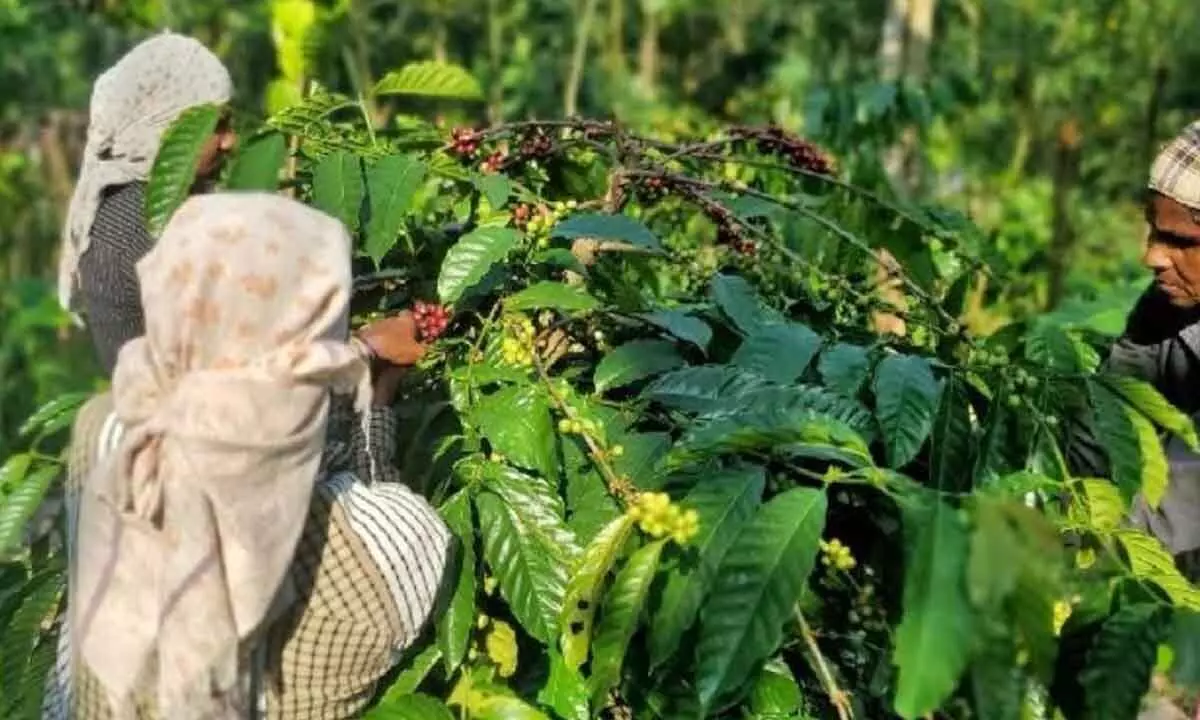
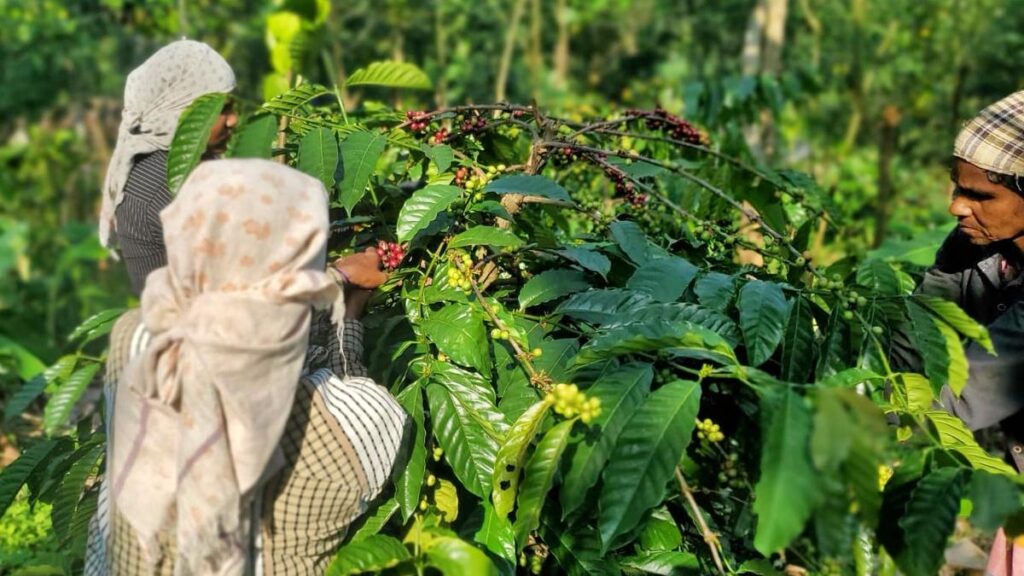
Farm workers harvesting coffee beans at a plantation in Wayanad district of Kerala. | Photo Credit: E.M. MANOJ

The robusta coffee farmers in south India are jubilant post-harvest with their produce fetching an all-time high price.

The farmgate price of raw robusta coffee berries touched a record ₹172 a kg in Wayanad market on Saturday, as against ₹115 a kg during the corresponding period last year. Meanwhile, spot price of robusta coffee beans stood at ₹315 a kg, up from ₹210 during the same period in 2023. The price was ₹80 and ₹145 a kg for raw berries and beans respectively in March 2022.

Though the harvest is almost complete, there has been a huge shortfall in the supply of coffee to the market this year, thereby contributing to the increase in coffee prices, says sources.

Multiple factors

“We expect a decline of 30% in the production of robusta this year owing to climatic vagaries, especially the scanty blossom shower in robusta growing regions last year,” sources said.

A sharp decline in production of robusta coffee — nearly 2 million bags — in Vietnam, a major Robusta coffee growing country, has also attributed to the increase in price, the sources added. Robusta coffee production in Indonesia too dipped sharply this year, the sources added.

Notably, the price of Arabica variety of coffee has dropped below the price of robusta coffee. The farmgate price of the Arabica variety coffee was ₹305 per kg on Saturday. Though the Arabica variety always fetched a premium price in the market, it is the robusta variety that is witnessing an increase due to its low availability for the first time.

Farmers suspect that the production may decline by 25% to 30% next year too owing to a dearth of backup showers in many robusta coffee growing areas in the country.

Wayanad in Kerala, which is the largest robusta coffee producing district in the country after Coorg in Karnataka, received a rainfall of 29.3 mm in the first week of January. Major parts of the district received no rain since then.

The January showers helped in the blossoming of robusta coffee plants, farmers say. But the absence of backup showers, a major factor in the formation of berries, is a concern.

According to Coffee Board of India, the total production of coffee in the country during the 2022-23 fiscal was 3,52,000 tonnes, including 2,52,000 tons of robusta coffee.

source: http://www.thehindu.com / The Hindu / Home> News> India> Kerala / by E M Manoj / March 24th, 2024

India’s Coffee Industry Brews Up Business Opportunities at Dubai Buyer-Seller Meet

In a significant development for the Indian coffee sector, the Coffee Board of India organised a buyer-seller meeting at Dubai, marking a new chapter in the industry’s global expansion.

The event, held on the sidelines of Gulfood 2024, was jointly organised by the Indian Embassy in UAE and the Coffee Board of India. Speaking on the Occasion, Indian Ambassador to the UAE, Sunjay Sudhir, highlighted Dubai’s strategic role as a global trade hub, and the upcoming Bharat Mart at Jebel Ali free zone as enablers for India’s global coffee ambitions. He also emphasized Dubai’s unique position as a logistical powerhouse, boasting a busy port and efficient airport, offering an ideal platform for Indian coffee producers to showcase their diverse blends directly to international buyers and establish lasting brands.

The meeting featured a presentation by KG Jagadeesha, CEO of the Coffee Board of India, who provided a comprehensive overview of the country’s coffee industry. He highlighted the vast coffee plantations spanning over half a million hectares, supporting millions of farming families, and the impressive production and export rates that surpass domestic consumption. Jagadeesh emphasized India’s significant contribution to the international coffee market, particularly as a leading exporter of instant coffee.

India’s coffee industry, with its balanced production of Arabica and Robusta beans, has witnessed remarkable growth since the establishment of the Coffee Board in 1950. Notably, 35% of the country’s coffee exports now comprise value-added and specialty coffees, showcasing a shift towards premium offerings. India’s coffee is unique in the sense that it is shade-grown and the Robusta variety is treated at par with Arabica in the Western market. This event not only celebrated the distinct flavors and rich heritage of Indian coffee but also marked a strategic move to leverage Dubai’s logistical strengths. 

source: http://www.newsonair.gov.in / News Services Division, All India Radio / February 22nd, 2024

Coffee as career? Centre of Excellence proposed in Bengaluru

To promote capacity building in this niche field, the Coffee Board has sent a proposal to the govt to establish a ‘Centre of Excellence for Coffee’ in Bengaluru.

Image used for representational purposes only.

Bengaluru :

With coffee doing well on global price charts, there is an increasing demand for more skilled labour. To promote capacity building in this niche field, the Coffee Board of India has sent a proposal to the government to establish a ‘Centre of Excellence for Coffee’ in Bengaluru. Currently, the board has limited seats for its programmes and aims to introduce newer short-term courses for coffee enthusiasts.

Board Chief Executive Officer and Secretary Dr KG Jagadeesha said, “We run a one-year Post Graduate Diploma in Coffee Quality Management (PGDCQM), which is highly sought after. It is run in the Coffee Quality Division in Bengaluru and students also visit the Central Coffee Research Institute (CCRI) in Chikkamagaluru for three months. Students get industry experiences such as visiting cafes, understanding roasteries and understanding the packaging and promotion. However, we can take only 15 individuals and the applications that come in are more than 500.”

The applicants are thoroughly reviewed based on sensory evaluation, interview and academic records and should have a bachelor’s degree in botany, zoology, food sciences, bioscience or agricultural sciences. The proposal submitted to the government is part of the five-year budgetary renewal during which the board lists down its vision and plans for the next term.

“The Expenditure Finance Committee (EFC) proposal entails an exclusive centre for coffee and various skilling and upskilling programmes,” Jagadeesha said.

‘Will train 5K grads to make espresso’

“Even these 15 people who pass PG Diploma are placed in multinational companies within days and some even go to the Middle East with promising career opportunities. We need more seats as the market is expanding,” Jagadeesha explained. The board is awaiting approval and has also requested for a new facility to hold classes for at least 100 select students.

It is also looking at several upskilling initiatives in the next five years and training around one lakh women from rural areas and Self-Help Groups (SHGs) to make coffees the right way.

“We are also going to train 5,000 graduates on how to make espresso coffee and help them explore the opportunities in the coffee business,” the CEO said.

There is a severe shortage of baristas in the industry. Coffee Board has also introduced a programme of training 1,000 baristas in the next three years and has already trained 150 so far, he added.

The short-term course for coffee enthusiasts, called the ‘Kaapi Shashtra’, for the year is tentatively scheduled for March 18-22 (exclusive batches) and interested individuals can keep a watch on the website. The main objective of the programme is to impart skills related to latest technologies in coffee roasting.

source: http://www.newindianexpress.com / The New Indian Express / Home> Karnataka / by Puran Choudhary / February 12th, 2024

Coffee drinking on the rise among younger generation, says Coffee Board CEO Dr KJ Jagadeesha

Jagadeesha added that there is a lot of opportunity for coffee in India, because we have a very low coffee-drinking base.

The increasing number of cafes and coffee joints show that coffee is no longer a beverage, but an experience.

Coffee opportunities in India are very high. Despite the high price, Indian coffee is most preferred globally. The increasing number of cafes and coffee joints show that coffee is no longer a beverage, but an experience. Cafes have transformed into work stations for startups and this is good for the Indian economy, said Dr KJ Jagadeesha, CEO and Secretary, Coffee Board, in a conversation with the editors and staff of The New Sunday Express. Excerpts of the interview:

Tell us about the coffee scenario and the pricing concerns ….

Coffee in India is doing well, especially over the last three years, but we are not the price setters. Reason being, India’s overall contribution is around 4%. Brazil and Vietnam contribute 60% of the global production, and they set the price. But in the last few years there is supply disruption in Brazil and there is a shortage in supply globally. So, we are happy as Indian coffee is getting a good price. India is the 7th largest in terms of production and 5th largest in exports.  

Can you please explain about exports?

Our exports are better than our production. We export, re-import and export all our coffee. Most of the instant coffee is made from coffee imported from cheaper destinations. Not a single Indian coffee bean is left unsold. There is very high demand for Indian coffee that even if we double production, traders say they will sell it. Indian coffees are expensive because they are grown under shade. Unlike in other countries like Brazil where it is open cultivation. When you grow under shade, coffee production is less by around 50%. But the quality is very good. This coffee takes longer to mature and has some unique characteristics that are not present in other coffee.

How is the coffee export business?

Around 80-90% of coffee is exported as green coffee. Green coffee can be kept for a year and usually, roasted coffee lasts only 15 days. Beyond that, the quality comes down. We export green coffee and then the seller blends it with different beans to get different notes. We export to 120 countries. Europe is our biggest market. We export about 60% of coffee grown here.

What about the rising number of private, instant and star-rated cafés and types of coffees served?

I am happy they are increasing. There is a lot of opportunity for coffee in India, because we have a very low coffee-drinking base. In other countries, people drink 8-9 kg of coffee per annum, per capita, but we are 50-100 grams. People who are getting into coffee now are the new generation who feel coffee is the most affectionate and fashionable drink. They love to drink coffee even if it’s high priced. They drink coffee for the experience. Ambience should be great and products should be innovative. They don’t like drinking the same coffee every day. Cafes now have become work spaces where people exchange ideas and conduct business. Many start-ups are running their businesses or whole companies from these cafes. This is how we expect and want the coffee industry to grow. Growers will get better prices, employment will be generated and GDP will get a boost.

How does coffee compete with tea?

Tea and coffee are complementary beverages, not competitors. Consumers typically don’t switch between them. Coffee consumption, especially among the younger generation, is on the rise. Tea remains affordable and easy to make, while making quality coffee requires skill. Many aren’t aware that if coffee is boiled above 90 degrees Celsius, it’s a waste. In future, skill-based courses will be introduced for over one lakh self-help women’s groups, and also 5,000 college graduates will be trained.

What is the situation in Karnataka?

Karnataka is a leader in Indian coffee production, accounting for around 70%, though we have 50% of the area. In the last 3-5 years, the crop has been reasonably good and prices too.

Hasn’t climate change affected coffee production?

It has, as coffee is a sensitive crop. Even if there is a 15-day delay in rainfall, during March and April, the crop gets affected to a large extent. Climate change is something that needs to be taken seriously and addressed. The Coffee Board has taken several measures to address it like bringing some climate-resilient varieties, training farmers and providing incentives.

Did drought affect coffee plantations?

Drought effect was relatively low. The reason is that even if there is a 50% reduction in rainfall, coffee will still grow. The yield might be less, but 800-900 mm of rainfall is enough for the plantation and the impact has been minimal.

Which is the best variety of coffee?

While there are many varieties, one of the best is Chandragiri. Farmers also say that it is superior compared to any other variety across the globe. The yield is good and it is resistant to most of the rust viruses. The cupping quality is very good.

What about collaborative research?

Research should not be restricted to scientists and labs. It should be a joint effort between growers and scientists. Work on this started 2-3 years ago and we have identified elite robusta plants. Growers and scientists together shortlisted around 60-70 of them and found 8-10 varieties promising. They will be released as tissue culture and MoUs are being signed.

How many varieties do we have?

Right now eight have been developed in collaboration with farmers. Otherwise coffee has many varieties. Some 28 varieties have been given to us by private firms. There are cases where a variety does well in other countries, but not in India.

Do we have more varieties when compared to other countries?

Brazil may have more varieties than us. Other than Brazil, we have more. It does not mean anything. Farmers prefer the leading variety. We have also kept some varieties for cupping. If somebody says that I want quality and I am not worried about production then we have Selection 5 and 9 varieties. These two are excellent in cupping and taste.  

What are the proposals before the Coffee Board in the coming days?

We have developed a new plan and it has been submitted to the government. It includes many things. To address labour shortage there is a plan for mechanisation. Second is quality improvement. Many say Indian coffee is excellent on the plant. But after harvesting, since it is poorly handled, quality dips. Importance is being given to harvesting and storing. Fermentation is important. It is done using different techniques to get different aromas. We are also looking at franchising India Coffee Houses to rural areas.

Are you also planning to add more coffee varieties to India Coffee Houses to compete with private players?

Coffee Board is a nodal agency to promote coffee as a sector. India Coffee Houses are not meant for competing. Given that there are a lot of nostalgic memories about them and people love to come there, we are working on expanding the menu. At the Queen’s Road Coffee House, the Board has collaborated with a social organisation that deals with specially-abled people. We complement each other.

How do people perceive the addition of chicory in coffee, considering its potential health implications?

The debate around chicory’s health impact exists. Chicory was brought in during the Second World War to meet the rising demand among soldiers when production was less. It continues to be blended even now. However, coffee has various health benefits. It’s beneficial for the heart and kidney, apart from being a refreshment. When chicory is mixed, the benefits of coffee get diluted.

How has urbanisation impacted coffee production?

Urbanisation is affecting everything, but its effect on coffee production is relatively limited due to the remote locations where coffee is typically grown.

How is the Board addressing man-elephant conflict?

It poses a significant challenge in coffee-growing regions, causing fear among residents and reluctance among labourers. The Board is actively engaging with the forest department and other authorities to address these issues.

Are there any courses being offered by the Board related to coffee for graduates?

We offer postgraduate diploma programmes and short courses focused on coffee, covering topics including cafe management and coffee trading.

What are the byproducts derived from coffee beans?

The use of coffee beans in the cosmetic industry is increasing. The leaf and pulp are used for skincare and makeup products. The leftover coffee after brewing is also used in making byproducts.

How many farmers are involved in the coffee industry, and is this number expected to increase?

There are about 4.7 lakh farmers working currently in India and it will increase in the coming years.

Are coffee plantations primarily done by small-scale farmers, or is there a monopoly in the industry?

It is a myth that coffee plantations are managed by affluent farmers. The reality is that 99% of the plantations are managed by small-scale farmers. Only around 1% of farmers are considered large growers but they occupy around 30% of the land.

What do you say about coffee tours gaining popularity?

Coffee tourism is gaining traction, providing coffee growers with an additional source of income. However, it’s crucial for both tourists and growers to responsibly manage activities to ensure minimal impact on the ecosystem as regions where coffee is grown are in Western and Eastern Ghats.

What other types of businesses can be done with coffee besides opening a coffee shop?

People can establish their own coffee brand with their estate, offer consultancy services, provide technology solutions such as market information, engage in trading and roasting and explore businesses centered around deriving coffee byproducts.

Coffee Board has also ventured online and started selling, how has that progressed?

Customers came to the Board and requested us to start e-commerce so that they could easily purchase online. Today we have entire operations in the basement which has a roastery, grinder and 24×7 packing staff. As soon as we get an order we pack it and dispatch it. The initiative is doing well.

Does the Board have enough staff or are there too many vacancies?

There are of course limitations to hiring more staff. Currently, we have a vacancy of 50 people with a total sanctioned strength of 587. We are looking to expand in the north eastern regions and we need a lot of people to convince farmers, educate them and handle estates. We are also looking at promotion both in domestic and international events to build the brand value of Indian coffee and its quality.

Can coffee be grown on terrace gardens?

Coffee plants can be grown anywhere, outdoors or inside homes, however, it will not yield commercially viable beans or fruits. Some might have berries too but when you roast it and make a cup of coffee it doesn’t taste like coffee. Coffee requires an elevation of more than 500 metres above sea level and secondly, the rainfall has to be good. It also requires optimum shade to grow.  

How successful was the coffee festival in terms of partnerships with other players?

We had more than 20-30 international brands who were present, around 200-300 Indian brands participated and around 400-500 buyer-sellers met formally. Strong relations were built that not just last for one year but go on for decades, once the buyer finds the perfect blend for himself there is no going back.

What do you want to say to youngsters who want to start a coffee business?

Coffee is a very passionate profession. I’ve seen people who make a profit not because they’re working for it but it’s about passion. They like growing coffee and living on the estate. I have seen Baristas who are passionate about making better coffee every day, they enjoy it.

source: http://www.newindianexpress.com / The New Indian Express / Home> Karnataka / by Express News Service / February 11th, 2024

Interview: Mishthi Aggarwal, Chief Executive Officer 93 Degrees Coffee Roasters

An exclusive interview with Mishthi Aggarwal, Chief Executive Officer 93 Degrees Coffee Roasters, a new age coffee brand revolutionising the coffee drinking experience of the country.

In the vibrant world of coffee, where tradition meets innovation, one name stands out as a beacon of a new age coffee revolution – Mishthi Aggarwal, the Chief Executive Officer at 93 Degrees Coffee Roasters.

With a passion for quality and a vision to redefine the coffee-drinking experience, Mishthi has steered the brand towards unparalleled heights. Her journey is not only a testament to entrepreneurial spirit but also a celebration of transforming a daily ritual into an extraordinary affair.

As we sit down with Mishthi, we delve into the inspirations, challenges, and triumphs that have shaped her and 93 Degrees Coffee Roasters into a force to be reckoned with in the coffee industry.

Can you tell us a bit about your background and what inspired you to enter the coffee industry?

Mishthi Aggarwal: I was raised in New Delhi within a close-knit joint family, proud to be the 4th generation of the esteemed Bikanervala Family. Following in the entrepreneurial footsteps of my grandfather, I draw valuable business counsel from family members.

Inspired by their legacy and driven by a passion for the food and beverages industry, I entered the coffee industry with the goal of taking Indian-grown specialty coffee to unprecedented heights. The support and mentorship from my family have been instrumental in shaping my journey.

How would you describe the unique selling points or philosophy behind 93 Degrees Coffee Roasters?

Mishthi Aggarwal: 93 Degrees Coffee Roasters is dedicated to elevating the Indian coffee experience. We collaborate closely with various establishments, including restaurants, cafés, hotels, bakeries, corporates, institutions, and travel agencies.

Being the only female specialty coffee roaster in India who is certified as a Q Grader and an authorised SCA trainer. Our philosophy revolves around quality, expertise, and inclusivity. We strive to bring a unique blend of Indian-grown specialty coffee to a diverse audience, emphasising both tradition and innovation.

As a young coffee roaster, what innovations or unique approaches do you bring to the coffee roasting process?

Mishthi Aggarwal: My commitment to innovation is reflected in being a certified Q Grader and an SCA trainer, and I continue to learn more within my domain with a humble mindset. Embracing technology and modern management practices, I integrate traditional coffee roasting techniques with a contemporary touch.

This approach allows us to maintain the authenticity of Indian coffee while introducing new flavour profiles. Our focus on sustainability and ethical sourcing is also a key aspect of our innovative approach.

How does 93 Degrees Coffee Roasters strive to enhance the overall coffee-drinking experience for consumers?

Mishthi Aggarwal: We prioritise the entire coffee-drinking experience, from sourcing premium and specialty beans to the brewing process. By collaborating with diverse partners, we aim to make specialty coffee more accessible.

Our commitment to quality, sustainability, and inclusivity ensures that consumers not only enjoy a superior cup of coffee but also contribute to the positive impact on the coffee industry by engaging in sustainability friendly practices.

What challenges have you faced as a young CEO in the coffee industry, and how have you overcome them?

Mishthi Aggarwal: As a young CEO, navigating industry dynamics and earning trust posed multitude initial challenges. Leveraging my family’s wisdom and seeking mentorship helped overcome these hurdles. Additionally, continuous learning and networking have been crucial.

Building a strong team and fostering a culture of innovation and resilience have been instrumental in overcoming challenges and driving the company forward.

How do you stay updated on the latest coffee industry trends, and how does 93 Degrees adapt to these changes?

Mishthi Aggarwal: Actively participating in industry events, such as being a member of the national coffee board and serving as a jury member in prestigious championships, keeps me well-informed. Regularly engaging with the global coffee community, attending conferences, and continuous education help us stay ahead of trends.

This proactive approach enables 93 Degrees to adapt swiftly, ensuring our offerings remain relevant and cutting-edge. Further, as an avid foodie and traveller, I frequently indulge myself in vacations surrounding multiple cups of coffee, food and other beverages.

This, I believe, has also helped me stay in touch and know more about what’s happening in different countries and cities.

Are there any upcoming products or initiatives that consumers can look forward to?

Mishthi Aggarwal: We are constantly exploring new collaborations and product innovations. Keep an eye out for exciting partnerships and limited-edition releases that showcase the diversity and richness of Indian specialty coffee. Our commitment to pushing boundaries in flavour profiles and sustainable practices will continue to drive our upcoming initiatives.

For young entrepreneurs looking to enter the coffee industry, what advice would you offer based on your own experiences?

Mishthi Aggarwal: Embrace your passion and be open to continuous learning. Seek mentorship from experienced individuals in the industry, and don’t shy away from challenges. Build a strong support network, stay true to your values, and be adaptable to change. The coffee industry is dynamic, so staying informed and fostering a spirit of innovation will be key to success.

Is there anything else you would like to share about 93 Degrees Coffee Roasters or your journey as the CEO?

Mishthi Aggarwal: Our journey is a testament to the harmonious blend of tradition and innovation. We are dedicated to creating a positive impact on the coffee industry and invite everyone to join us on this flavorful adventure. The support of our partners, customers, and the incredible team at 93 Degrees Coffee Roasters has been instrumental in our success.

What is your success tip for women entrepreneurs?

Mishthi Aggarwal: For women entrepreneurs, my tip would be to embrace your uniqueness and leverage it as a strength. Surround yourself with a supportive network, seek mentorship, and don’t be afraid to challenge the status quo.

Be resilient, stay true to your vision, and continue breaking barriers in your chosen industry. Your perspective and contributions are invaluable, and your success paves the way for others.

In the rich tapestry of the coffee industry, Mishthi Aggarwal’s narrative unfolds as a captivating saga of determination, innovation, and a commitment to excellence. As Chief Executive Officer at 93 Degrees Coffee Roasters, she has not only redefined the brand but has also left an indelible mark on the coffee culture of the country.

Mishthi’s insights during this interview have provided a glimpse into the strategic brilliance and passion that fuel the brand’s success. As we conclude our conversation, it’s evident that Mishthi’s leadership has not only shaped the trajectory of 93 Degrees Coffee Roasters but has also significantly contributed to elevating the coffee-drinking experience for connoisseurs and enthusiasts alike.

The story of Mishthi Aggarwal and 93 Degrees Coffee Roasters is undoubtedly one of inspiration, innovation, and the relentless pursuit of perfection in every cup.

source: http://www.sugermint.com / Suger Mint / Success Stories

World of Coffee 2024 to host UAE National Barista Championship, UAE National Latte Art Championship

The World of Coffee 2024, a highly anticipated event in the coffee industry, is set to organise two distinctive national championships including ‘UAE National Barista Championship’ and the ‘UAE National Latte Art Championship’ targeting industry professionals.

The third edition of the exhibition, organised by DXB Live, the integrated event management and experiential agency of Dubai World Trade Centre (DWTC), in collaboration with the Specialty Coffee Association (SCA), is scheduled to take place from 21-23 January.

The UAE National Barista Championship is a unique competition that convenes the country’s skilled coffee preparation and presentation professionals under one roof. The event will convene the best baristas in the UAE to exhibit their talents and capabilities in front of thousands of experts, specialists, and enthusiasts.

An international team of judges will evaluate the participants based on the quality of the beverage, presentation technique, creativity, and technical proficiency.

The championship aims to underscore the barista profession and elevate the level of excellence in the coffee sector by offering experts the opportunity to exhibit their skills and innovative approaches.

The event will also set the stage for the ‘World Barista Championship’, one of the most renowned international coffee competitions, in which winners of the national barista championships held across the globe will compete on a global level.

The ‘UAE National Latte Art Championship’ will exhibit the artistic and creative capabilities of baristas in the preparation of lattes. During the competition, a judging panel will evaluate entries based on visual and creative aspects, with a key focus on diversity in styles and overall taste. The championship will be conducted following the specific judging rules, regulations, and standards used in global coffee events.

Khalid Al Mulla, Chief Executive Officer of the Specialty Coffee Association – UAE Chapter, commented, “Such tournaments and competitions signify our vision to position Dubai as one of the most active regional centres for fostering innovation and excellence in the coffee sector and offering a dynamic platform for skilled individuals to exhibit their expertise in the field as well as to elevate barista techniques and skills. Aside from providing these benefits, it also gives remarkable experience to coffee lovers.”

Shouq BinRedha, Exhibition Manager of World of Coffee 2024, said, “These events will provide us with an opportunity to explore recent trends and approaches as well as barista innovations that can redefine the future of the industry both regionally and globally. In our opinion, the active participation of professionals, experts, and international companies from across the globe as well as the convergence of diverse cultures during the exhibition will play a key role in the development of this industry.

Furthermore, the UAE being home to various renowned global coffee chains and Dubai a region-wide leader in terms of bringing innovation to the industry reinforces the exhibition status in the sector.”

Besides these activities, the World of Coffee Dubai will also be hosting two other competitions, namely ‘Coffee Design Awards’ and ‘Best New Product’. These competitions aim to recognize and celebrate innovation, promote collaboration, and explore industry prospects.

The ‘Coffee Design Awards’ will showcase participants’ inspiring designs, including packaging, designing brand logos, equipment, and space decor, evaluated by an expert panel. The ‘Best New Product’ competition highlights innovative and high-value new products in the coffee industry.

Furthermore, the exhibition will feature a wide array of events and activities, including ‘Roasters Village’, ‘Cupping Room’, and ‘Brew Bar’. It will also include several panel discussions and specialised workshops focusing on sustainability, optimal resource management, and sustainable practices, signifying the global coffee community’s commitment to encouraging the responsible production of coffee.

World of Coffee Dubai will attract coffee enthusiasts, experts, and professionals, providing a dynamic platform to connect with the global coffee community, discover new products, share insights, and build connections with industry leaders. Attendees will include leading coffee experts, pioneers, café owners, and baristas.

source: www.http://wam.ae / Home> Emirates News / UAE / January 02nd, 2024

What lies ahead for Indian coffee?

The recent World Coffee Conference in Bengaluru highlighted how speciality growers and artisanal roasters are discovering the rich flavours and nuances of Indian beans.

Tribal farmers in the Araku Valley | Photo Credit: Surbhi Kaushik

There was a time when Indian coffee was dismissed as a shy bean, a filler coffee, remembers Sunalini Menon, the president of Coffeelab Limited, a Bengaluru-based coffee sensory evaluation laboratory and research organisation. Not anymore.

India’s first woman coffee taster, Sunalini has been assessing coffee for almost fifty years. “Now they are looking at India and seeing a sustainable, traceable coffee which can no longer be pushed under the table,” she says.

The success of the 5th edition of the World Coffee Conference (WCC), which was held at Bangalore Palace in September, is a testament to this mounting interest in Indian coffee. “We had purchasers from all over the world, European machine manufacturers, traders of imported coffee machines from China and Europe, coffee consultants—in other words, WCC was a coffee community haven,” recalls Dinshay Luthiya, the founder of Bai Mu Dan, Pune, who also helped design the coffee program at Veronica’s in Mumbai.

Tribal Farmers in the Araku Valley | Photo Credit: Special Arrangement

Not only did WCC prove to be a forum to network with various stakeholders in the coffee industry, but it also offered an opportunity to taste coffees that he had never heard of before, adds Dinshay, who believes that the event opened new horizons for all Indian coffee growers, roasters, and exporters.

According to Dr Mandappa I.M., Divisional Head, Coffee Quality at Coffee Board, India, which organised the WCC, the event had visitors from over 80 countries and saw 10-12,000 daily walk-ins on average. “This conference was a huge eye-opener. People are really noticing Indian coffee, which is very encouraging for the entire sector,” he says. “It is high time that India is on the coffee map.”

So, what lies ahead in the world of Indian coffee? This is what the coffee experts and aficionados across the country say.

The rise and rise of specialty coffee

For a long time, Indian coffee was largely seen as a soft commodity, a homogenised, interchangeable product. “Coffee was just purchased to be blended into instant coffee, the worst quality of coffee”, points out Manoj Kumar, the co-founder of Araku Coffee and CEO of the Naandi Foundation, which has been instrumental in enabling the tribal farmers of Andhra Pradesh’s Araku valley to grow specialty coffee.

This, in turn, led to farmers focusing more on quantity over quality, says Akshay Vaidyanathan of Kapikottai, a Chennai-based artisanal coffee roasting business. “Because of this, there is the whole assumption that Indian coffee is not nice-tasting,” he says. “That is thankfully changing.”

Coffee seeds | Photo Credit: Surbhi Kaushik

Today, according to Mandappa, there are a whole lot of Indian growers producing specialtycoffee, both for the domestic and export markets. While coffee prices are notoriously volatile and dependent on a number of variable factors, in general, specialtycoffee—a term used to describe very high-quality coffee that scores above 80 points on a 100-point scale—fetches a higher premium. “Since the growers get better returns, they are willing to put in the extra effort to process and take care of their coffees better,” he says.

Another thing that appears to be altering the coffee narrative is the changes in the demographic of producers. “It is the young people in India who are driving this trend very strongly at the moment,” believes Mandappa. Many of the people in the specialty coffee market today are often 4th and 5th generation planters returning back to their farms, having travelled and studied abroad, and are fully aware of the potential of specialty coffee. “There is a lot of innovation when it comes to post-harvest processing of coffee today.”

Komal Sable, who runs The South India Coffee Company with her husband, Akshay Dashrath, must agree. When they first started the brand five-odd years ago, hoping to put Indian specialty coffee on the global map, only 10% of their family farm in Coorg was reserved for it, with the rest of the coffee going to the commodity market. Over the years, as the demand for specialty coffee increased, the ratio kept changing; today, nearly 80% of their farm produces specialty coffee, says Sable, who believes that the market is in the growth stage.

Farmers in Araku Valley | Photo Credit: Surbhi Kaushik

Home brewing stays hot

Anush Bhargava’s interest in coffee was first piqued when videos of Dalgona coffee went viral on social media in early 2020. Till then, he had barely drunk anything but the odd Frappuccino at Starbucks. Trying to make this coffee at home shifted something in him, his curiosity deepening when he came across an article about different brewing products and coffee in August of that year. Within a year, he had all the brewing equipment one could think of, including a V60, Aeropress, Moka pot, syphon and a manual espresso machine. “That is how it began for me,” says the 33-year-old.

COVID appears to have catalysed the home brewing movement in the country, which inevitably turned the spotlight on Indian coffees. “During the pandemic, home brewers really doubled and tripled in number,” agrees Mandappa. “They are more than willing to experience newer tasting coffees.”

And despite the mushrooming of more and more coffee cafes with innovative coffee drinks being served in the recent past and also in the present, the trend isn’t going away anytime soon. “Home brewing is still doing well,” says Sunalini, who believes that while COVID certainly made home brewing an important aspect of life, especially among millennials, other factors such as quality improvement, sustainability and relationship marketing are continuing to drive this interest.

Raised bed coffee drying | Photo Credit: Courtesy Komal Sable

Marc Tormo, a coffee roaster and creative consultant from Auroville, who began roasting and selling coffee under the Marc’s Coffees label in 2008, says that effort taken by brands to educate consumers on the nuances of the product is also driving the trend. “The education part is very important,” believes Marc, pointing out that most brands always try to teach you more about the coffee they sell, whether through workshops or by the information they carry on their packaging. Building awareness, he believes, is especially important since the final step—brewing—lies with the consumer. “If you truly want to enjoy it, you require understanding and knowledge.”

Beyond Arabica

Coffee is one of the most vulnerable crops out there, with estimates that nearly 50% of coffee species could go extinct in the next 25 years. Not surprisingly, therefore, a lot of current coffee research is focused on developing more climate-resilient species and varieties. “At the WCC, we had a dedicated workshop where we cupped 12 different climate-resilient species,” says Mandappa, who believes that India is “up there” when it comes to research on this.

While India has always been known for producing the best Robusta, a hardier and more resilient species of coffee than Arabica, in the world, there is research being done on other species as well, say many industry players.

Coffee being harvested | Photo Credit: Courtesy Komal Sable

Komal, for instance, says that they grow a species called Excelsa on the farm, in addition to Robusta and Arabica. This coffee species, she says, is a tree, not a plant and was usually seen planted around the border of estates. We noticed that the Excelsa tree gives an average yield each year with minimal intervention,” says Komal, who is also researching other native species of coffee such as Coffea Bengalensis, Coffea Travencorensis, and Coffea Wightiana.

What is also helping the coffee narrative go beyond Arabica is advancements in processing techniques. “Robusta has always had many positive points, but processing it has traditionally been harder,” agrees Sunalini, who is an unequivocal champion of this less-popular species. With more advanced processes—says new fermentation techniques—this is changing, something Komal agrees with, too. “One of our Robustas is doing very well in the Netherlands market and is produced using a very interesting process—an 84-hour ferment with a yeast culture,” she says, adding that there is a growing market for what is referred to as “fine robusta”. “Processing makes a big difference to the cup quality, and there is a lot of innovation being done in this space.”

Coffee harvesting | Photo Credit: Courtesy Komal Sable

Entering the 4th wave

There are two things that Anush thinks of a lot when picking up his coffee: sustainability and traceability. ‘I am part of a Discord group where a lot of coffee aficionados meet and talk about these things,” he says, confirming something that many people in the business claim: Indian coffee is now stepping into its 4th wave.

While the definition of what the fourth wave entails varies depending on who you ask, it is essentially about going beyond merely creating a high-quality product, also focusing on the consumer’s desire to better understand coffee’s supply chain and its social and environmental impact.

“In a world where young people are thinking that food comes from an app, it is important for them to be engaged with these things,” believes Manoj, who firmly believes that coffee’s quality and ability to be sustainable depends on how diverse a farm is. According to him, monoculture cropping will not withstand climate crisis, something coffee is expected to be especially susceptible to. “Indian coffee is blessed to have the option of being shade-grown,” he says. Therefore, creating a biodiverse ecosystem where coffee is grown under various fruit trees, silver oak or Ficus, and alongside spices like pepper does wonders for coffee quality. “If you look at the coffee estates within India, wherever there is biodiversity, the quality is at another level,” he says.

Coffee being raked | Photo Credit: Courtesy Komal Sable

In his opinion, the coffee revolution needs to be led by single-origin traceable coffee, which is directly sourced from farms by coffee entrepreneurs willing to offer better prices based on quality. “This way, the farmers will transform themselves,” he says. Take, for instance, the case of Buridi Sundaramma, who hails from the Gondivalasa village in the Araku Valley Mandal. She says that since she started cultivating the organic, terroir-mapped coffee that Araku Coffee is best known for, her income has increased substantially. Thanks to this, all her three children are extremely well-educated, and she has also managed to invest in cattle and gold. She says, “This all because of coffee.”

source: http://www.thehindu.com / The Hindu / Home> Food / by Preeti Zacharaiah / November 03rd, 2023

India: the tea-loving country with a taste for coffee

It’s the crack of dawn, and the tranquil lanes of Bangalore are gearing up for the incoming hustle and bustle. Along with the rays of sun that seep through the canopy of trees, the whiff of freshly brewed filter coffee, commonly referred to as filter kaapi, infiltrating the air marks the beginning of the day. 

While studying in Bangalore, filter kaapi became my sole source of caffeine owing to its potency and affordability. A trip to the coveted neighbourhood Darshini, an eatery serving all-day breakfast and other South Indian vegetarian delicacies, easily fell into my morning regime. I was one of the thousand patrons visiting this institution regularly for golden dosas, crispy vadas, fluffy idlis and, of course, the pièce de résistance, a strong cup of coffee served in a dabara set (brass tea cup and tumbler).

Filter kaapi is made through quite a different process from Western filter coffee. Image: Kaapi Melbourne

How did the tea-loving nation inculcate coffee into their daily life? 

The answer dates to the 16th century when Baba Budan, an Indian Sufi saint, chanced upon these aromatic beans in Yemen during his pilgrimage to Mecca. The Arabs safeguarded these beans to maintain a monopoly of the growth and export and sold them only in their roasted form, disabling buyers from growing coffee on their home grounds. The Sufi saint is claimed to have smuggled seven coffee seeds to India, with his beard as the vessel. He then planted them in the Chandragiri hills of the Western Ghats, where coffee plantations flourished.

For nearly two centuries, the consumption of bean juice was limited to the surrounding area of the hills. It wasn’t until the 1830s, when the British arrived on the fertile soil of Coorg in South India that coffee became cultivated on a larger scale. Apart from the still-standing architecture, the British also left behind the knowledge of coffee farming, which evolved as it seeped through generations. In 1854, an Englishman named John Fowler developed the first coffee plantation in Coorg. Since then, almost every Kodava (locals of Coorg) household started growing their own Arabicas and Robustas, perfecting them over the years. 

According to legend, coffee beans in India were first planted in the Chandragiri hills of the Western Ghats. Image: Fidha Fathima

Amongst the belts of Western Ghats, parts of Karnataka, Tamil Nadu, Kerala, and Eastern Ghats of Andhra Pradesh and Odisha, the fertile soil and shade-filled surrounding is perfect for growing coffee beans. As a result, coffee consumption in South India grew exponentially, and India became one of the leading producers of coffee. For many decades and even today, the familiar sounds in South Indian kitchens are the morning whistles of the pressure cooker accompanied by a faint trickling of the coffee in the brewer. 

How is it different from the Western filter coffee? 

While the idea behind filtering coffee is the same as the Western filter coffee, the difference in the process is worlds apart. A special cylindrical steel apparatus with two components is used to make the coffee; the first component has a perforated bottom and a plunging disc to press the coffee down, allowing it to drip-feed, and the second collects the coffee decoction. The mighty decoction is topped with boiling-hot milk and frothed manually, often theatrically with long high pours between two cups. A copious amount of sugar is added, creating a potent cup of delectable coffee that will jolt a lightning-quick wave of caffeine in your nervous system and is probably capable of waking up a sedimentary rock. 

The difference lies not just in its process, but in the beans used, which are usually medium to dark roast. Most coffee roasters package a blend of coffee and chicory; this practice started in France to stretch limited supplies and was adopted globally. Over time, this resulted in the birth of Scottish ‘Camp Coffee,’ a syrup made of coffee and chicory essence infused with sugar. The infusion was a timesaver for the Scottish regiment in the British Army; who has the time to brew coffee when you have a nation to demolish? The consumption of Camp Coffee extended to the British and Indian soldiers, who slowly acquired a taste for coffee made from syrup. Today, as we have elevated our coffee game, the blend continues to stay and is quite popular owing to the added flavour and benefits of chicory. 

Image: Kaapi Melbourne

What are the different variations of kaapi, and how can I have it in New Zealand? 

Akin to our food, coffee took many forms and shapes as it crossed state and regional borders. Coffee connoisseurs also sought different ratios of coffee chicory blend, 80:20 being the most popular. Coorg is famous for Bella Kaapi, black coffee made with jaggery to combat the bitterness, and Sukku Kaapi in Kerala and Tamil Nadu is black coffee with palm sugar, dried ginger and ground coriander, a common remedy for cold and cough. Tamil Nadu is also home to Kumbakonam degree coffee, made with fresh milk straight out of the cow. Under the South Indian filter coffee umbrella, the variance lies in the coffee chicory ratio, type of beans used, additional ingredients and the brewing process. 

As a filter coffee fanatic, the hunt to find one in New Zealand was eminent, and many Sundays were spent scouring the best South Indian filter coffee. Like stale eggs in a pot of water, my search brought a handful of eateries to the surface. However, it did have a silver lining. Along with filter coffee, the search brought to light authentic dosa, idli, vada, and kesari bath (a sweet dish made of semolina) accompanied by bowls of coconut chutney and sambar. Here’s where you can sink your teeth into them:

Saffron and Maya’s South Indian Bistro: Both well-known institutions in the South Indian circle, and the queues outside the venue on Saturdays and Sundays are a testament to that. On weekends, they serve a South Indian-style breakfast buffet, both delicious and a bargain. A small cup of filter coffee is offered at the end to finish the meal.

RRK’s Madras Café: A new kid on the colourful block of Sandringham that is quickly turning out to be one of the top-notch South Indian restaurants in Auckland. The unassuming eatery specialises in food from Tamil Nadu; their Chicken Kothu Parotta, chicken and flaky paratha chopped up into pieces with a coveted blend of spices, is worth braving the heat, and their filter coffee is highly recommended.

Sahana South Indian Restaurant: Another hit amongst the circle, the eatery serves homely South Indian fare all day long. The weekend vegetarian buffet features a diverse range of breakfast and lunch items with new weekly off-menu specials. Pro tip: Call ahead and make a reservation for flawless service.

Other mention-worthy eateries to get your caffeine fix are Saravanaa Bhavan and Satya Chai Lounge in Auckland, South Indian Bala’s Kitchen in Hamilton, and Dosa Etc in Dunedin.

For those who wish to master this at home, Malgudi Days in Australia holds an inventory of coffee beans sourced all the way from South India, the filter coffee-making apparatus and even the dabara sets for you to have that wholesome experience of savouring a cup of filter coffee. Click here to check out their brewing guide.

– Asia Media Centre

source: http://www.asiamediacentre.org.nz / Asia Media Centre, Asia New Zealand Foundation / Home> Features / by Anusha Kulal / November 01st, 2023