5 varieties of Indian Coffee get GI Certification, a recognition that helps growers to get the maximum price for their premium coffee.
The Department for Promotion of Industry and Internal Trade, Ministry of Commerce and Industry, Government of India has recently awarded Geographical Indication (GI) to five varieties of Indian coffee. They are:
Coorg Arabica coffee is grown specifically in the region of Kodagu district in Karnataka.
Wayanaad Robusta coffee is grown specifically in the region of Wayanad district which is situated on the eastern portion of Kerala.
Chikmagalur Arabica coffee is grown specifically in the region of Chikmagalur district and it is situated in the Deccan plateau, belongs to the Malnad region of Karnataka.
Araku Valley Arabica coffee can be described as coffee from the hilly tracks of Visakhapatnam district of Andhra Pradesh and Odisha region at an elevation of 900-1100 Mt MSL. The coffee produce of Araku, by the tribals, follows an organic approach in which they emphasise management practices involving substantial use of organic manures, green manuring and organic pest management practices.
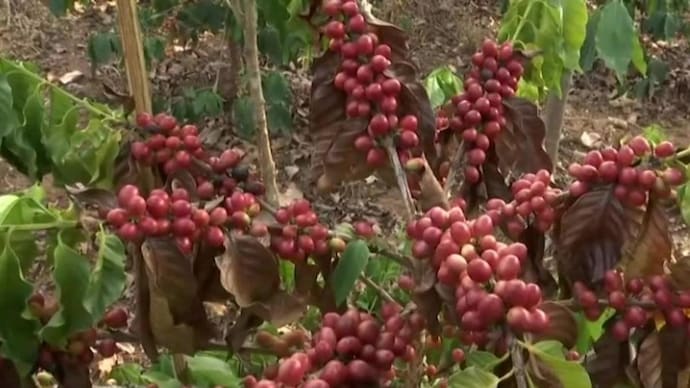
Bababudangiris Arabica coffee is grown specifically in the birthplace of coffee in India and the region is situated in the central portion of Chikmagalur district. Selectively hand-picked and processed by natural fermentation, the cup exhibits full body, acidity, mild flavour and striking aroma with a note of chocolate. This coffee is also called high grown coffee which slowly ripens in the mild climate and thereby the bean acquires a special taste and aroma.
The Monsooned Malabar Robusta Coffee, a unique specialty coffee from India, was given GI certification earlier.
In India, coffee is cultivated in about 4.54 lakh hectares by 3.66 lakh coffee farmers of which 98% are small farmers. Coffee cultivation is mainly done in the Southern States of India:
Karnataka – 54%
Kerala – 19%
Tamil Nadu – 8%
Coffee is also grown in non-traditional areas like Andhra Pradesh and Odisha (17.2%) and North East States (1.8%).
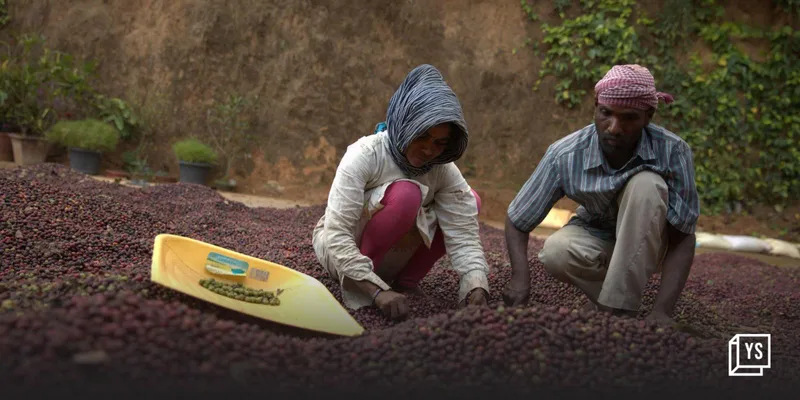
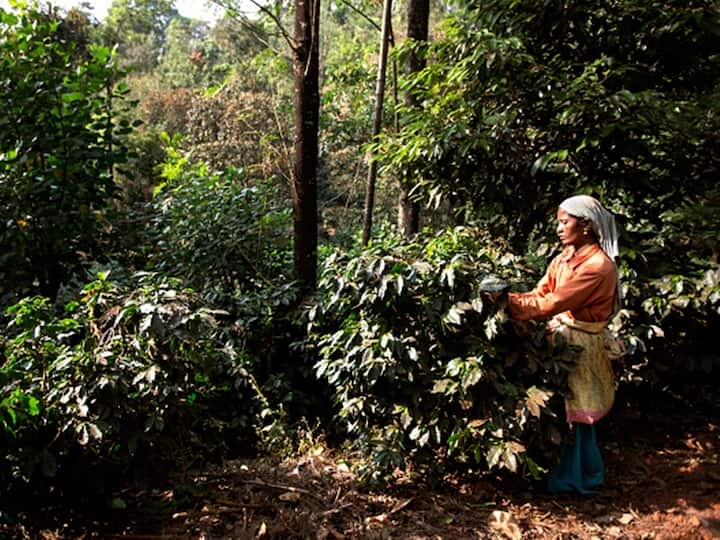
India is the only country in the world where the entire coffee cultivation is grown under shade, hand-picked and sun dried. India produces some of the best coffee in the world, grown by tribal farmers in the Western and Eastern Ghats,which are the two major bio-diversity hotspots in the world. Indian coffeeis highly valued in the world market and sold as premium coffee in Europe.
The recognition and protection that comes with GI certification will allow the coffee producers of India to invest in maintaining the specific qualities of the coffee grown in that particular region. It will also enhance the visibility of Indian coffee in the world and allow growers to get maximum price for their premium coffee.
source: http://www.indiaeducationdiary.com / India Education Diary.com / Home> National News / May 17th, 2023
Bengaluru-based omnichannel coffee startup HumbleBean Coffee has launched a Coffee Academy in Coorg to educate people about the ‘complexity and diversity of a humble bean like coffee’.
Bimal might seem like a regular barista. But he’s not content to simply brew and serve cups of coffee. He wants every customer to know what they are going to sip.
“I make sure they know their cup of coffee. I ask about the kind of taste they are looking for, and how strong they want their coffee. Most of the time, they go ahead with what I recommend even if they have something else in mind,” he says.
After losing his job at a high-end restaurant during the pandemic, Bimal joined HumbleBean Coffee as a barista. With no prior expertise in the sector, he was enrolled in a specialised course at HumbleBean. The course helped him understand the beverage better—starting from its plantation to the multiple brewing methods.
HumbleBean Coffee runs a small brew bar tucked away under the lush green cover of Bengaluru’s Lavelle Road. On a regular day, you might find Bimal sniffing and tasting a sample from every cup he brews.
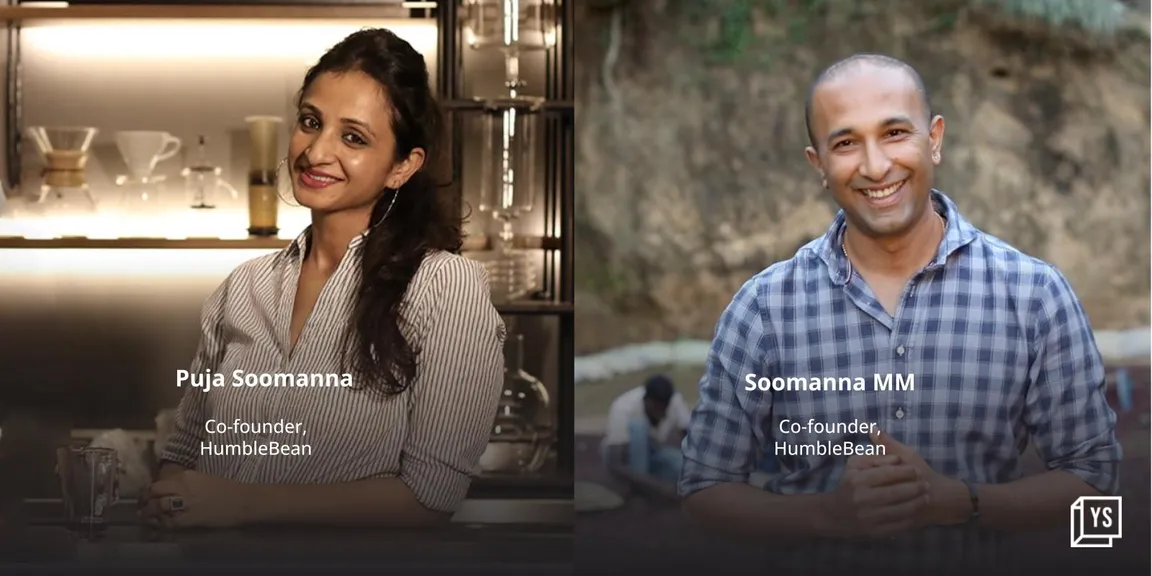
HumbleBean Coffeeis the brainchild of Soomanna Mandepanda and Puja Soomanna. Since 2017, the couple has been on a mission to make coffee consumption a more enjoyable and mindful experience. Their idea is to educate more people about the complexity and diversity “of a humble bean like coffee”.
In 2021, they launched the HumbleBean Coffee Academy in Coorg to spread coffee literacy among the masses. The academy offers short-term courses for coffee enthusiasts, home brewers, students pursuing hotel management, and coffee entrepreneurs.
The team of 22 people, including the co-founders, brew bar staff, and coffee academy experts, is based in Coorg and Bengaluru. At present, HumbleBean has only one coffee brew bar in Bengaluru and an online B2C channel that sells coffee beans of different types and roasts. A new coffee concept store is underway in Indiranagar which would replace the manual brew bar in a few weeks’ time.
As per filings with the Registrar of Companies, HumbleBean made a revenue of approximately Rs 1.1 crore in FY21.
In July 2022, the coffee startup raised an angel round of Rs 4.5 crore from undisclosed investors.
Today, as Soomanna, Co-founder of HumbleBean, prepares his favourite pour-over, he recalls the days when he felt the need to clean up the coffee ecosystem.
_______
“I wanted to get into the coffee ecosystem to build an Indian coffee company of global standards. I also wanted to orient farmers towards quality and help them to stay invested in agriculture,” he says.
HumbleBean Academy, Coorg
________
Spreading coffee literacy
The main objective behind the coffee academy was to ensure everyone in the coffee ecosystem was well informed about the beverage.
The team began by addressing the absence of a feedback system for farmers who grow coffee. A feedback mechanism was essential to bring changes in their farming practices and improve the quality of the produce.
“More than 85% of coffee farmers in India, mostly small and medium farmers, have never tasted their own coffee. They are unaware of how their coffee is appreciated around the world,” Soomanna says.
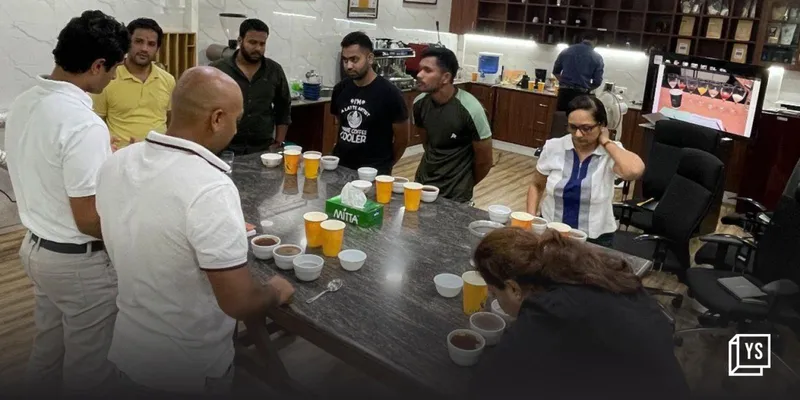
The coffee academy receives free coffee samples from more than 100 farmers across the country. The team prepares extensive reports on the sample quality and offers suggestions to farmers. The farmers bring in suggested changes in farming techniques and send new samples to the academy for further assessment.
“We test the samples again and buy their lot if the quality matches our parameters. Most of the time, we ask the farmers to quote a price instead of us fixing the price,” says Puja, Co-founder of HumbleBean, who looks after the B2C and hospitality side of HumbleBean.
The academy offers courses that focus on the art of brewing, food pairing with coffee, and more. These courses can be as short as one day or three days (for beverage enthusiasts) or as long as three months (for students in hotel management colleges). They are priced between Rs 10,000 and Rs 35,000.
HumbleBean has collaborated with a hotel management college in India to offer these courses for a semester.
Puja believes there is a need to train baristas in the early years of hotel management.
“Being a barista is more than serving a cup of coffee, especially today when manual brewing is finally getting recognised. That’s why we deliberately choose people who do not have any knowledge of coffee and are more receptive to knowledge,” she says.
Puja looks after the barista training course with Gaurav Ganapathi. A certified Q grader (a type of coffee evaluator), Gaurav leads the Coffee Academy in Coorg. He has been in the coffee industry since 2014 and previously worked with Tata Starbucks.
_________
“Coffee is one of the most sustainable industries in the world; there is almost no carbon emission in the production process. The coffee academy is helping everyone in the ecosystem understand coffee as a plant better—its diversity in terms of species and types, different brewing techniques, and more,” Gaurav says.
Pastry chef Sana Kabra, who joined the HumbleBean team in March 2022, works closely with Puja and Gaurav and leads the food pairing courses at HumbleBean.
“Food pairing is an important part of the coffee experience. What kind of pastry would go best with a pour-over, what should be the level of the roast or grind of your coffee to make it go well with a croissant…these things require mindful consumption and a lot of trial and error,” Sana says.
Overcoming the pandemic
Like any other brick-and-mortar business, HumbleBean was hit hard by the pandemic. Their first manual brew bar in Residency Road, Bengaluru, launched in 2019, was shut down due to operational difficulties.
Around the same time, the brand collaborated with a high-end retail outfit GoNative to set up its model brew bar on Lavelle Road.
The HumbleBean team took the pandemic as an opportunity to study and gather data about customer perception of manually brewed coffees, and coffees served from small and medium farms, and studied the unit economics of a coffee brand. They also worked on creating a range of coffee beverages and the delivery mechanism.
“During this lean time, we also consolidated our backend work, the academy, small and medium farm outreach, plantation management, flavour science with regards to food pairing along with coffee. We built a solid core team of subject matter specialists in plantation management, roasting, and flavour science. Most of them are third-generation small farmers who have spent time in large coffee companies,” Soomanna says.
Brewing a bright future
According to a report published by Research and Markets, Indian retail coffee is largely dominated by the southern region and is projected to reach over $253.8 million by 2025, growing at a Compound Annual Growth Rate (CAGR) of 21.04% from 2017 to 2025.
HumbleBean aims to tap this growing market while competing with major global brands like Starbucks, Barista, Tim Hortons, and Indian brands like Blue Tokai, Third Wave Coffee Roasters, Araku etc.
“We know about the competitive landscape but we also know that everyone who walks into our cafe either knows their coffee very well or is passionate to learn more about coffee. We are banking primarily on word of mouth over other marketing strategies,” Soomanna says.
HumbleBean plans to launch its concept store in Indiranagar, Bengaluru. It would also serve as the second location for the coffee academy and as the second manual brew bar.
The startup also has plans to expand to other countries in the Asia-Pacific region.
“The final goal remains the same: establish HumbleBean as an Indian global brand that is sustainable, grounded, and invested in the place of production,” Soomanna says.
(The copy was updated to correct a typo in the name of the co-founder)
source: http://www.yourstory.com / YourStory.com / Home> Startups / by Pooja Rajkumar / September 20th, 2022
India has long been a tea drinking nation but it also has deep roots as one of the world’s major coffee producers. Tata Starbucks CEO Sushant Dash speaks to 5THWAVE about flying the flag for coffee in India and how the country’s younger consumers are leading a new wave of café culture.
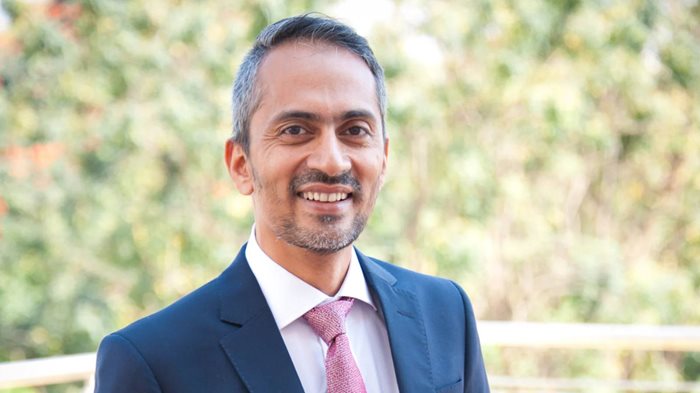
With more than two decades’ beverage industry experience under his belt, Tata Starbucks CEO Sushant Dash is now focused on harnessing India’s huge potential as a coffee drinking nation. That’s no mean feat in a country where tea has long been the beverage of choice, but it is a challenge he is relishing – and his efforts are yielding significant results.
Following the disruption of the pandemic, Tata Starbucks is tapping into new opportunities in the vast Indian market and now operates more than 320 stores in 37 cities across the country, having achieved record 72% revenue growth in 2022.
First joining Tata Global Beverages in 2000, Dash held senior management roles across the conglomerate’s international beverage divisions and was later part of the core team that launched Starbucks in India in 2012.
After being appointed CEO of Tata Starbucks in 2021, Dash is now focused on catalysing further growth for Starbucks in India’s fast-developing branded coffee shop market.
However, as Dash notes, that growth has been delivered through a long-term strategic focus, with most consumers historically unfamiliar with out-of-home coffee consumption.
“India is a tea market,” he says of the countryʼs 1.4 billion citizens.
“If I look at in-home consumption 90% penetration is for tea; coffee is around 11-12% in terms of overall penetration.”
However, Dash notes the country’s coffee producing southern states as outliers, where traditional filter coffee consumption is far more widespread.
Times are changing, however, as consumers across India develop a taste for premium coffee and café experiences. Both in-home and out-of-home coffee consumption have steadily grown across India over the last decade, with Starbucks playing a key role in the ascent of café culture. Today, Dash pegs India’s coffee shop market growth at 9-10% CAGR.
“Gen Z and Millennials constitute 50%-plus of our population, and that is contributing to the growth of coffee consumption”
The new coffee crop
It may come as a surprise that India is the world’s seventh largest coffee producer, yielding around 329,000 metric tonnes in 2022, with the southern states of Karnataka, Kerala and Tamil Nadu accounting for over 90% of national production.
Tata Coffee is the undeniable giant of India’s coffee industry, managing 19 coffee plantations across 8,000 hectares and making it the ideal partner for Starbucks to vertically integrate coffee resources and expertise through its joint venture.
Reflecting on a decade of growth for Tata Starbucks in India, Dash says there has been a seismic shift in coffee consumption, notably led by the country’s younger, increasingly well-travelled and digitally connected consumers.
“Gen Z and Millennials constitute 50%-plus of our population, and that is contributing to the growth of coffee consumption,” he says.
Dash is now building on the foundations laid by his team more than a decade ago. After establishing the Starbucks brand in major cities across the country, his current focus is now to grow the brand in smaller urban centres as coffee culture catches on.
“The first eight-to-nine years were about understanding what makes the business successful in India, how to replicate what Starbucks is known for in terms of its coffee expertise and overall experience,” he says.
After honing Starbucks’ approach in India, which has evolved to include a range of store formats, including larger showcase outlets alongside smaller convenience formats, including drive-thru, Dash says his priority is to scale this approach across the country.
“Priority one has been about expansion, but expansion in a mindful manner. We will continue to give the core of what the brand stands for in terms of the Starbucks experience in terms of coffee expertise,” he says.
“We serve nearly 400,000 consumers a week, which is a phenomenal number and just shows us the brand love we have.”
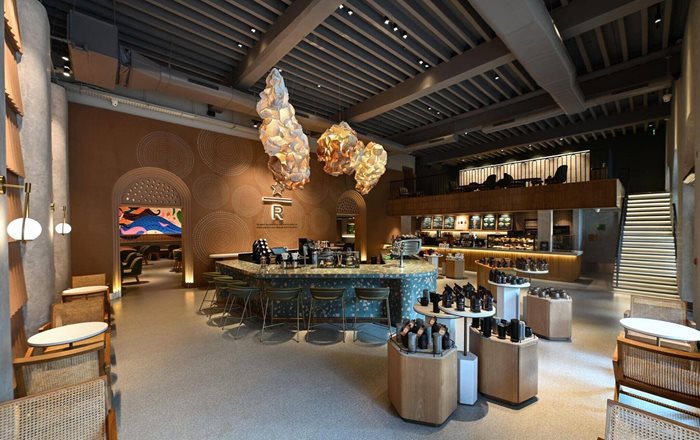
Interior of the Starbucks Reserve store in Mumbai | Photo credit: Tata Starbucks
Paying homage to India’s rich and diverse culinary traditions has also been a key part of tailoring Starbucks’ international offer to the market. Its food menu has been inspired by Indian favourites, enabling customers to enjoy a kakori kebab wrap or masala chicken croissant with a traditional masala chai or Indian filter coffee.
Unique to the Indian market, Tata Starbucks’ ‘Picco’ beverage size is a nod to small ‘kulhad’ terracotta tea and coffee cups used throughout India and caters to a widespread preference for smaller beverage volumes.
Indicating Starbucks is gaining widespread appeal in India, Dash points to recent successes opening stores away from India’s vast metropolises in the country’s smaller towns and cities, such as Jalandhar, Anand, Nagpur and Calicut.
“We are getting the same love and affection and numbers in those cities as in the bigger cities, which just goes to show that people are looking for coffee experiences out-of-home.
“In terms of our 12-month financial year we opened around 58 stores this year and 12 new cities and will continue to run at that rate or maybe slightly higher,” he says.
Convenience in the cup
Opening smaller, nimbler store formats has been another key driver of Tata Starbucks’ rapid growth over the last year, enabling the coffee chain to expand efficiently and open stores appropriate to their location.
The first drive-thru location opened on the Chandigarh-Ambala highway in mid-2020, but Dash highlights delivery as one of the chain’s most promising convenience channels in the post-pandemic trading environment.
“Today, delivery is around 11% of turnover,” he says. “Pre-Covid the figure was around 4%, so it has grown significantly. Even as the pandemic recedes and people have returned to stores, we still see delivery retaining that contribution and I think that is a trend that is here to stay.”
Mobile ordering and pay were also introduced by Starbucks during the pandemic, and although making up a relatively small proportion of sales today, will remain long-term fixtures of the Starbucks experience in India, Dash adds.
“Priority one has been about expansion, but expansion in a mindful manner”
Next stop, specialty
Convenience is yielding positive returns for Tata Starbucks, but Dash maintains that a diverse eco-system of market-appropriate store formats will be key to the brand’s success.
“We will not over-index one format, we will open stores appropriate for the market,” he says.
Adding to that diversity, in October 2020 Tata Starbucks marked its 10th anniversary by opening India’s first Reserve outlet in Fort, Mumbai.
Offering a range of small-batch single origin coffees served by Starbucks’ master ‘black apron’ baristas, Dash says the store will cater to Indian consumers who have followed Starbucks’ journey in the country from the beginning and have developed a taste for more sophisticated varieties.
“We wanted to give that elevated experience to consumers who have been here with us for the last 10 years,” he says.
“There is definitely a market for specialty coffee as the market matures. In terms of the evolution of people’s understanding of coffee, what they want from coffee is also increasing.”
With India producing its own crop of successful coffee businesses alongside a growing international segment, Starbucks’ role in introducing elevated coffee shop experiences to consumers is evident and demonstrated by the growing popularity of café culture across the country.
The Coorg-based coffee brand is all set to hit the shelves and offer 100 per cent natural coffee to aficionados
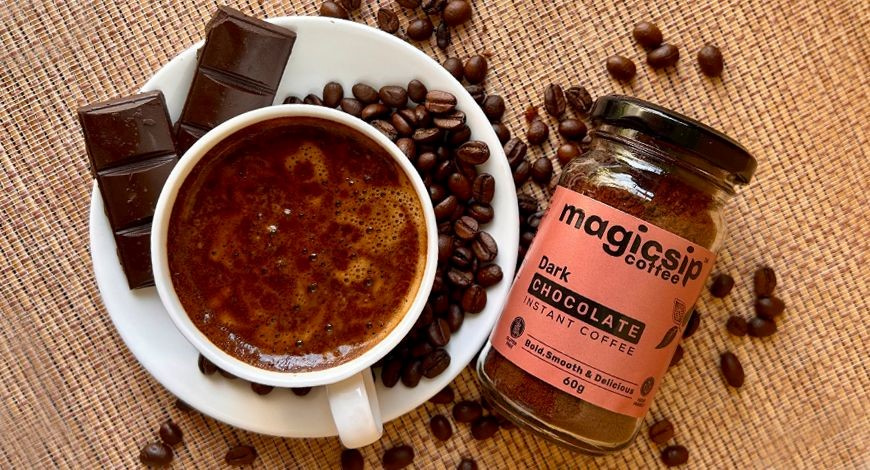
Magicsip’s gourmet coffee offerings and sustainability commitments set it apart from the competition
Magicsip, the homegrown coffee brand, is pleased to announce the launch of its direct-to-consumer (D2C) coffee business on the 1st of March 2023, offering a range of 100 per cent natural coffee range to enthusiasts. The launch of this brand is an exciting opportunity for coffee lovers to enjoy a cup of high-quality, flavourful coffee at affordable prices.
Magicsip was founded by two childhood friends who grew up amidst the enriching aroma of coffee in the charming plantations of Coorg. Their quest for genuine coffee prompted them to create a brand that was free of any harmful chemicals. Although they successfully achieved the authentic taste they desired, their thirst for knowledge and growth drove them to explore naturally curated blends.
The brand’s vision and mission are dedicated to making 100 per cent natural coffee accessible and affordable to everyone, directly sourced from their Coorg estates, and making a positive impact on the world with one cup of magical coffee at a time, with a passion for excellent coffee and a commitment to sustainability.
“We have seen a drastic change in the way people look at their daily products post-COVID. There has been a huge shift in the need for 100 per cent natural foods. This is where we are looking to make a huge difference as our coffee is sourced from our plantations, and all processes are handled by us until the last mile delivery to the consumers. Ahead of our D2C launch, we promise to deliver premium quality coffee directly from our estates in Coorg that is rich in flavour and can be consumed anywhere, anytime. We have also entered the gourmet coffee market with 7 new products including French vanilla, nutty hazelnut, and many others.” said Mr D. H. Soofi, the Director of the firm.
The launch of Magicsip’s D2C coffee brand marks the beginning of a new chapter for the brand, with plans for future expansion, including entering the Coffee-dip bag market and in expanding their Modern Trade market by Q2 2023, he added.
At Magicsip, we’re on a mission to make 100 per cent natural coffee accessible and affordable for everyone. Our coffee is directly sourced from the picturesque estates of Coorg, where the perfect blend of climate and altitude creates a truly unique and delicious flavour profile.
With a passion for excellent coffee and a commitment to sustainability, we’re dedicated to making a positive impact on the world, one cup of magical coffee at a time. Our instant coffee is available online and at select stores across Karnataka.
Visit our website,www.magicsip.co, to experience the true magic of coffee and join us in our quest for a better world, sip by sip.
source: http://www.businessworld.in / BW Business World / Home / March 30th, 2023
If you’re a coffee lover who craves nothing but the best, then you’ll want to check out TripOnn Premium Coffee. This luxurious Indian coffee brand was founded and conceptualized by the visionary Dr Nrupathy Manay back in 2004, and it has been delighting coffee connoisseurs ever since.
What sets TripOnn Premium Coffee apart from other brands is its commitment to using only the finest, most premium Robusta and Arabica beans in its products. Plus, their coffee is organic and naturally grown, making it the perfect choice for health-conscious individuals.
But it’s not just the quality of the beans that make TripOnn Premium Coffee so special – it’s also the unique, sweet, and robust flavours that they offer sourced from Multiple premium coffee estates from the highest peaks of Coorg. Whether you prefer classic Vanilla, Hazelnut, Almond, Coco Orange, Caramel, or Cardamom, there’s a flavour for everyone.
Leading the charge at TripOnn Premium Coffee are Trishma Singh, the COO and Hiten Singh, the Head of Marketing Communications.
TripOnn Premium Coffee is making waves in the global market and will soon raise investment from global investors to compete with the best coffee brands worldwide.
However, we are yet to get the actual figures for Investment and the names of investors, which Ms Trishma Singh said will be disclosed soon.
And if that wasn’t impressive enough, TripOnn Premium Coffee is also the proud owner of ‘Knight 11 The Strikers,’ a well-respected cricket team at the domestic level. So if you want to sip on the best coffee while watching your favourite sport, TripOnn Premium Coffee has got you covered.
source: http://www.ahmedabadmirror.com / Ahmedabad Mirror / Home> Others> Special / February 28th, 2023
Naxal-hit Bastar region in Chhattisgarh is set to become a hub of coffee production as coffee cultivation has increased in the region.
Four varieties of Coffee Arabica and one variety of Coffee Robusta were planted on 20 acres on an experimental basis in 2017-18. (Photo: Twitter/ANI)
Naxal-hit Bastar region in Chhattisgarh is set to become a hub of coffee production as coffee cultivation has increased in the region.
Dr K P Singh, a horticulture scientist, said four varieties of Coffee Arabica and one variety of Coffee Robusta were planted on 20 acres on an experimental basis in 2017-18.
“The first harvesting was done in 2020-21. When we sent the samples to the Coffee Board of India, our coffee got a rating of 6-6.4, which is a good rating. After that, it was cultivated on 100 acres in 2021-22. Farmers are reaping the benefits of coffee production in the region,” said Singh.
The coffee produced in Bastar got a rating between 6 and 6.4 from the Coffee Board of India. (Photo: Twitter/ANI)
Collector of Bastar Chandan Kumar said the coffee produced here will give a new identity to Bastar.
“It has always been a challenge for us to connect people to the mainstream by ensuring employment so that they can move towards prosperity. Today, the work on coffee plantation is underway on 350 hectares of land in Bastar,” said Kumar.
A ‘Bastar Cafe’ has also been established here to connect people with the taste and aroma of the coffee produced here. “People are liking it and definitely, its demand will increase in the coming days,” said the collector.
A ‘Bastar Cafe’ has also been established to connect people with the taste and aroma of the coffee produced here. (Photo: Twitter/ANI)
India is among the top 10 coffee-producing countries. Indian coffee is considered one of the best coffees in the world due to its high quality and gets a high premium in the international markets.
India produces two types of coffee–Arabica and Robusta. Arabica has a higher market value than Robusta coffee due to its mild aromatic flavor. Robusta coffee is mainly used in making various blends due to its strong flavor.
Coffee is largely produced in the southern part of India. Karnataka is the largest producer, accounting for about 70% of the total coffee production in India, followed by Kerala, Tamil Nadu, Andhra Pradesh and Odisha.
source: http://www.indiatoday.in / India Today / Home> News> India / by India Today Web Desk / New Delhi – February 16th, 2023
The National Barista Championship 2023 (The 21st Edition), hosted by the Coffee Board of India, Speciality Coffee Association of India, and United Coffee Association of India, is being organised from February 14th to 19th at Orion mall, Bangalore. With over 60 stalls offering more than 100 different types of coffee, the audience will be experiencing the largest collection of coffee ever under one banner. This year NBC is powered by Kaapi Solutions as the platinum sponsors along with Nescafe and SCAI (speciality coffee association of India) as the Gold sponsors) as the Gold sponsors for the event.
This year we have around 60 Baristas who would be battling it out for the Title of Champion. Making it the biggest tournament in Asia.
NBC is a prestigious annual event in the coffee industry where baristas from various regions of India come together to showcase their brewing skills and compete for the title of the National Barista Champion. All the best cafe brands such as Blue Tokai, Thirdwave, Lavazza along with many other speciality coffee brands all over India will participate in this unique event.
This year’s National Barista Championship is set to be the most competitive yet, as baristas push the boundaries of what is possible with coffee. A very strong committee has been set up where the volunteers under the guidance of Purnesh DM (President of the Speciality coffee association of India), Vikram Khurana (President United coffee association of India) and Srikanth Rao (Vice President United coffee association of India) who shares the same passion for coffee and have worked tirelessly to put this event together.
The event provides a unique opportunity for attendees to network with industry leaders, learn about the latest trends and techniques in coffee preparation, and sample some of the finest coffee blends from around the world.
“We are thrilled to host the National Barista Championship in Bangalore,” said Dr K G Jagadeesha, IAS, Secretary of the Coffee Board. “This city has a rich history and culture of coffee-making, and it’s an honor to bring the best baristas from top cafe brands, and specialty coffee brands from all over India to compete here. Last year’s event, held at Orion Mall in Rajajinagar, was a huge success with over 10,000 visitors, a multitude of coffee, 40+ stalls, and lively music. We look forward to welcoming both the competitors and the public to this exciting event.”
The competition, which will be held over 6 days – 14th to the 19th of Feb. This includes the preliminaries which will happen on the 14th -15th and the 16th post which 18th will be the semi-finals and it concludes on the 19th with the finals. The second day will feature the final round, where the baristas will be judged on their latte art and signature drinks. The winner of this highly regarded competition will then go on to represent India at the World Barista Championship 2023 to held in Athens, Greece.
The National Barista Championship is an annual event that brings together baristas from various regions of India to showcase their brewing skills and compete for the title of National Barista Champion. This coffee festival is a congregation of music, entertainment, a wide array of stalls and a whole lot of coffee and with some great jury to help make it a seamless judging process. NBC 2022 Had Ms Seonhee Yoon from Korea fly down to judge these world class brewers.
This story has been provided by NewsVoir. ANI will not be responsible in any way for the content of this article. (ANI/NewsVoir)
source: http://www.business-standard.com / Business Standard / Home / by ANI Press Release / February 15th, 2023
Coffee cultivation is mushrooming in Assam following the growth of cafes, government-backed guilds and organic farmers in the northeast.
A woman picking coffee cherries on a plantation. About 4,700 acres are used for coffee farming in the Northeast. ( Image Source : Getty Images )
Guwahati:
Assam, famous for its tea worldwide, is also making efforts to carve its name in the coffee map of India. With the growth of cafes, government-backed guilds and organic farmers in the Northeast, coffee cultivation is mushrooming in Assam.
Navin Kumar Bahl Ryntathiang, Joint Director, Coffee Board (northeastern region), said they have put a lot of emphasis towards making coffee cultivation a major farm produce in the region.
“We have a total planted area of 4,600–4,700 hectares of coffee cultivation. From all seven states combined, the average production has been around 150 MT. Coffee is a biennial crop that is grown on an alternative schedule. If it has a high count for the current year, it can have a low count the next year,” Ryntathiang told ABP Live.
About 4,700 acres are used for coffee farming in the Northeast. According to data, coffee is cultivated on 479 hectares in Arunachal Pradesh, 429 hectares in Assam, 1,100 hectares in Meghalaya, 1,300 hectares in Mizoram, 932 hectares in Nagaland and 264 hectares in Tripura.
Arabica and Robusta are the two main types of coffee grown. Robusta is cultivated in lower altitudes (500–1000 meters above sea level) while Arabica is grown in altitudes 1000–1500 meters above sea level.
While there are only two-three regions where coffee is grown in Assam, it is majorly cultivated in Haflong in Dima Hasao district. Mostly Arabica coffee is grown in Haflong.
Robusta coffee is mostly cultivated in Assam districts of Karbi Anglong, Chirang, Bijni besides others. A coffee research center is also located in Karbi Anglong.
Both the Arabica and Robusta types are produced in Assam and Meghalaya.
Arabica is mainly cultivated in Mizoram and Nagaland’s steep terrain. Robusta coffee is mainly found in Arunachal Pradesh’s Dirang area in the West Kameng district.
“Main farming areas are in Meghalaya and Mizoram. When it comes to producing coffee, Assam leads the way, followed by Arunachal Pradesh and Meghalaya” Ryntathiang said.
source: http://www.news.abplive.com / abp Live / Home> News> India / by Pallav Bora / February 04th, 2023
The first day of the exhibition hosted a wide range of visitors and featured various activities and events, expecting over 1,500 international and regional companies and brands to participate in the event.
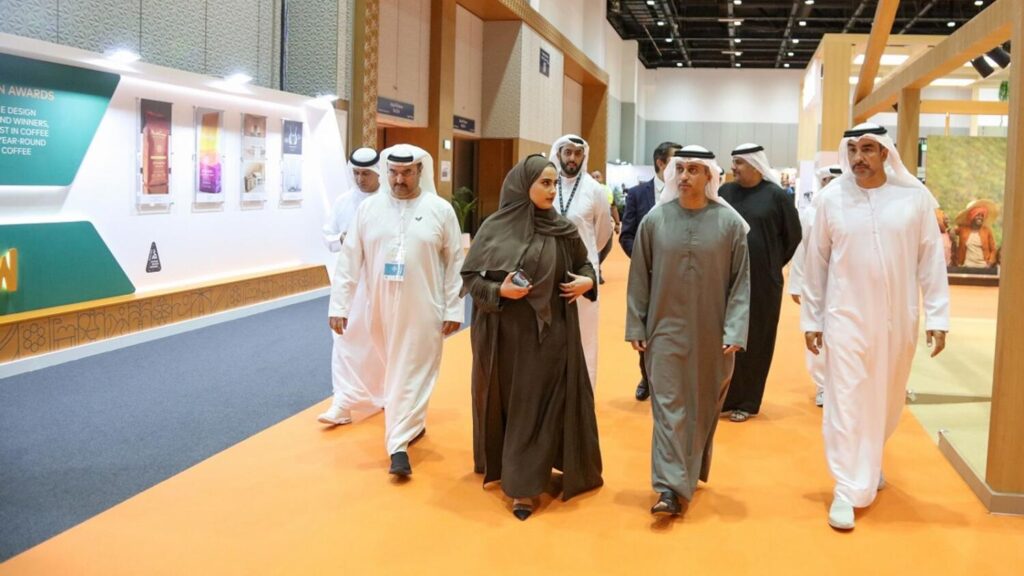
Ahmad Belhoul Al Falasi, UAE Minister of Education, toured the exhibition and was briefed on the most notable products that participating local, regional, and global companies had on display. — Supplied photos
Al Falasi toured the exhibition and was briefed on the most notable products that participating local, regional, and global companies had on display. He met several exhibitors and commended the immense turnout at second edition of the exhibition.
The three-day event is being organised by DXB Live, the integrated event management and experiential agency of Dubai World Trade Centre, in cooperation with the Specialty Coffee Association.
The first day of the exhibition hosted a wide range of visitors and featured various activities and events, expecting over 1,500 international and regional companies and brands to participate in the event.
Furthermore, the pioneering event serves as an ideal platform to congregate the leaders of the coffee industry, coffee connoisseurs and professionals from across the globe to explore newer avenues for development and various activities pertaining to the sector.
The second edition of World of Coffee Dubai 2023 is of high significance to the coffee sector
Khalid Al Hammadi, senior vice-president of DXB Live, said the second edition of World of Coffee Dubai 2023 is of high significance to the coffee sector given the increased level of global interest for participating in its numerous activities.
“This year, the exhibition has been successful in bringing together numerous industry leaders and professionals from global, regional, and local levels under one roof, further offering significant opportunities to strengthen networks, forge alliances, and discuss future prospects,” he said.
“We look forward to showcasing the pioneering position of the coffee sector in the UAE and creating a significant impact on visitors from across the globe regarding the coffee culture in Dubai and the customs and traditions associated with it. Additionally, we hope that all attendees will have an exceptional and exciting experiences at the exhibition’s activities, events, and competitions this year,” he said.
Khalid Al Mulla, chief executive officer of the SCA UAE Chapter, said this global exhibition plays a vital role in providing an ideal platform to congregate prominent specialists and pioneers of the global and regional coffee sector, and reflects Dubai’s commitment to strengthen commercial, economic and tourism sectors in the nation.
“The immense turnout of thousands of experts and specialists from across the globe in this exhibition and the business events hosted by the Emirate reflects the confidence of the international community and its recognition of the crucial role that Dubai plays in fostering commercial traffic at regional and global levels,” he said.
Yannis Apostolopoulos, chief executive officer of the Specialty Coffee Association, said: “We are pleased to work with DXB Live to host this international event, which focuses on the global coffee industry. The exhibition’s opening day was packed with seminars and lectures, and we further express our gratitude to the judges and volunteers whose efforts made this exhibition possible.”
The exhibition is open from Wednesday and Thursday, January 11 and 12, 2023, from 9:00 am to 6:00 pm, and Friday, January 13, from 9:00 am to 4:00 pm
Warwick Gird, general manager of Marketing Spinneys Dubai, said: “Our collaboration with ‘World Of Coffee Dubai 2023’ aligns with our desire to help promote the expansion and prosperity of the coffee trade. It is also in line with our vision to support new local businesses and local brands in the sector by providing a chance for the winner of the ‘Best New Product’ competition to participate in our local business incubator programme. This collaboration represents a significant step given the pioneering role of the exhibition in promoting the coffee community’s growth and profitability at local, regional, and international levels.”
‘UAE National Barista Championship’ competition
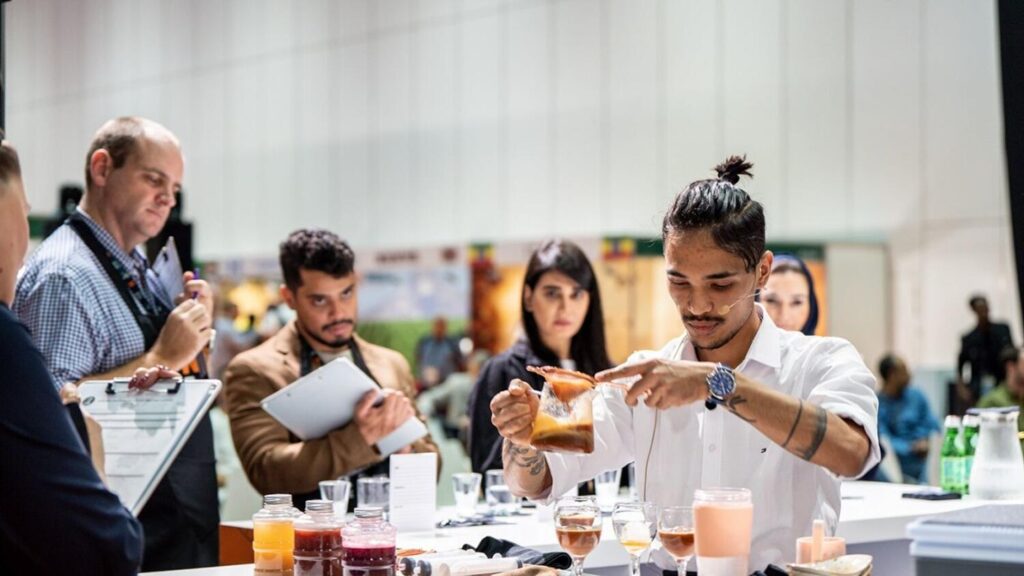
Several activities and events were held on the first day of the exhibition, the most significant being the ‘UAE National Barista Championship,’ in which prominent and accomplished baristas from across the nation compete to qualify for the ‘International Barista Championship’. An international jury evaluated the entries based on the quality of the beverages, presentation, creativity, technical competence, and cleanliness.
The national championship aims to promote excellence in the coffee industry, highlight the barista profession, and give baristas a platform to demonstrate their skills and innovative abilities in the field of coffee preparation. An international jury evaluates their entries based on the quality of their drinks, presentation, creativity, technical competence and cleanliness. The national championship aims to allow baristas to showcase their skills and creativity in the field of coffee making, as well as shed light on the barista profession and support excellence in the coffee industry, which consists of Benedictus Mbongiseni, La Maison Gateau Café, Pradip Basnet, Stomping Grounds; Nooran Albannay, Coffee Architecture; Sonam Sherpa, PDL Coffee & Co.; Mariam Eren Pinza, Cosmic Garden Coffee Roastery; Hibatul Wafi, Encounter Coffee Roastery; Drew Joshua Dennehy, Three Coffee; Lian Kriszle Sanglitan, Café 2.0; Aldy Nugroho, The Espresso Lab; Abdulla Almheiri, Coarse Coffee; And Kemal Risyad, Archers Café.
Dazzling offers and a tour of international coffee varieties
The exhibition offers a variety of unique experiences, as visitors flocked to the ‘Roosters Village’ pavilion to meet professionals from the coffee industry, learn about their methods of coffee preparation, and sample coffee variants prepared with unique and distinctive methods from around the world.
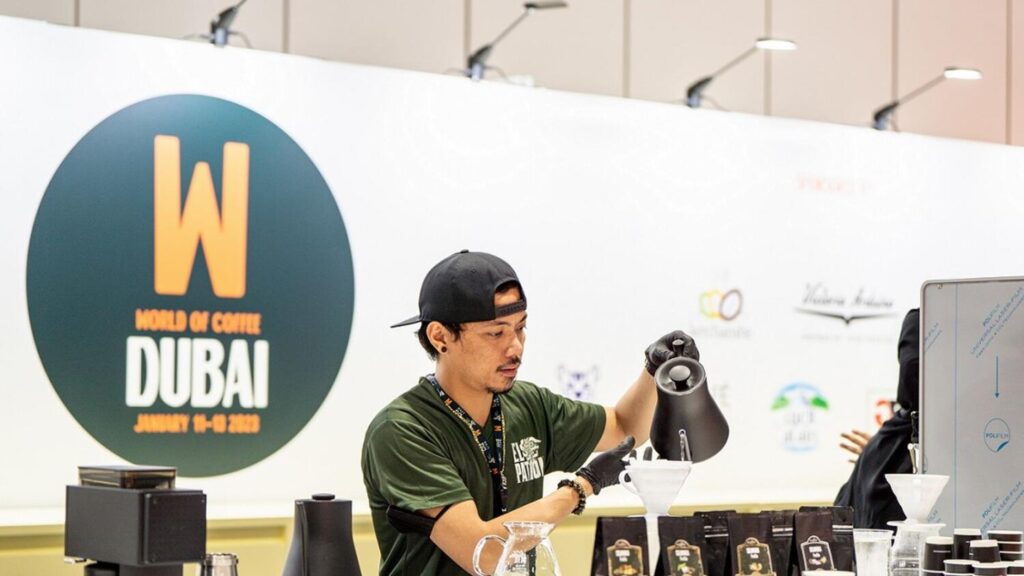
The ‘Pro Bar’ also witnessed an impressive footfall for its unique experiences, in which 12 participating companies and brands got a three-hour period to display their coffee variants. The companies participating in the ‘Pro Bar’ included ‘Guatemalan Coffees’, ‘The Eco Machine’, ‘Corabot Coffee’, ‘Kirchanchi, El Patrón’, ‘Tess Super General Trading, Roasters’, ‘IST’, ‘Things Café’, ‘Coffee Trading’, ‘Coffee Planet’, and ‘Pani Coffee’.
Wide choice of coffee gourmets
During the first day of the exhibition, the ‘Cabin Room’ booth hosted four exhibitors: Earth Roastery, Skuvsna NV, the Alliances for Action initiative from the International Trade Centre, and the Golden Cup Championship winners from Fairtrade Coffee. Each of them highlighted a particular variety of coffee beans and the unique roasting techniques used to prepare them and provided gourmet visitors and coffee enthusiasts with the opportunity to taste, assess, and compare them.
The exhibition is open from Wednesday and Thursday, January 11 and 12, 2023, from 9:00 am to 6:00 pm, and Friday, January 13, from 9:00 am to 4:00 pm.
source: http://www.khaleejtimes.com / Khaleej Times / Home> Business / by Staff Reporter / January 11th, 2023
While the classic menu, existing staff members and the old charm of the Coffee Board cafe will untouched, a fast food menu has been introduced to attract the younger generation.
The ICH, set up in 1972, has been a favourite coffee joint for journalists, government officials and also the general public who visited the High Court, Vidhana Soudha and other government and private offices nearby. | Photo Credit: MURALI KUMAR K
Coffee Board of India has renovated and renewed its cafe, India Coffee House (ICH), located at its premises in Bengaluru. It has also added a ‘sitting on the veranda and sipping a cuppa’ kind of experience to it.
While your favourite dosa, idli and vade, sandwich, cutlet, bread toast and coffee, existing staff members and the old charm of the Coffee Board cafe will remain, an additional fast food menu has been introduced, in association with social enterprise Mitti Cafe, to attract the younger generation.
The ICH, set up in 1972, has been a favourite coffee joint for journalists, government officials and also the general public who visited the High Court, Vidhana Soudha and other government and private offices nearby.
Coffee Board CEO and Secretary K.G. Jagadeesha said, “Even after the renovation, the classic, existing menu will remain untouched while a new menu has been introduced in collaboration Mitti Cafe to get more youngsters to the cafe.’‘
Rajesh Agrawal, Additional Secretary, Department of Commerce, Ministry of Commerce & Industry said, “The idea is not to get into the market and compete with Cafe Coffee Day, Starbucks and other cafes. This cafe will only be a catalyst for coffee in the country.’‘
Redoing other ICHs
Responding to a query on when the other ICHs in the country would be renovated, Mr. Agrawal added, “Let us see how India Coffee House is doing, before we start renovating other ICHs in the country. All these are historical coffee houses and they come with a unique legacy, we can touch them only with a lot of sensitivity, fully respecting the sentiments of the staff and customers.’‘
The India Coffee House (ICH) chain was started by the Coffee Cess Committee of the Coffee Board and the first outlet was opened in Churchgate, Bombay during 1936. During the 1940s, there were nearly 50 Coffee Houses all over British India which has currently reduced to 11 — one in Bengaluru, five in Delhi, four in Kolkata and one in Tirumala.
source: http://www.thehindu.com / The Hindu / Home> News> Cities / by The Hindu Bureau / January 09th, 2022
WELCOME. If you like what you see "SUBSCRIBE via EMAIL" to receive FREE regular UPDATES.
Read More »