Category Archives: Coffee News

Californians to take their coffee with a cancer warning

A Los Angeles judge has determined that coffee companies must carry an ominous cancer warning label because of a chemical produced in the roasting process.

Superior Court Judge Elihu Berle said Wednesday that Starbucks and other companies failed to show that benefits from drinking coffee outweighed any risks. He ruled in an earlier phase of trial that companies hadn’t shown the threat from the chemical was insignificant.

The Council for Education and Research on Toxics, a nonprofit group, sued Starbucks and 90 other companies under a state law that requires warnings on a wide range of chemicals that can cause cancer. One is acrylamide, a carcinogen present in coffee.

“Defendants failed to satisfy their burden of proving … that consumption of coffee confers a benefit to human health,” Berle wrote in his proposed ruling.

The coffee industry had claimed the chemical was present at harmless levels and should be exempt from the law because it results naturally from the cooking process that makes beans flavorful. It also argued coffee was good for the body.

The ruling came despite eased concerns in recent years about the possible dangers of coffee, with some studies finding health benefits. In 2016, the International Agency for Research on Cancer — the cancer agency of the World Health Organization — moved coffee off its “possible carcinogen” list.

The lawsuit was brought under the Safe Drinking Water and Toxic Enforcement Act, passed by voters in 1986. It allows private citizens, advocacy groups and attorneys to sue on behalf of the state and collect a portion of civil penalties.

The law has been credited with reducing chemicals that cause cancer and birth defects, such as lead in hair dyes, mercury in nasal sprays and arsenic in bottled water. But it’s also been widely criticized for abuses by lawyers shaking down businesses for quick settlements.

“Coffee has been shown, over and over again, to be a healthy beverage,” said William Murray, president and CEO of the National Coffee Association, in reaction to the decision. He argued the lawsuit “does nothing to improve public health.”

The lawsuit has been brewing for eight years and is still not over. A third phase of trial will determine civil penalties of up to $2,500 per person exposed each day over eight years, an astronomical figure in a state of 40 million that appears unlikely to be imposed.

Attorney Raphael Metzger, who brought the lawsuit and drinks a few cups of coffee daily, wants the industry to remove the chemical from its process. Coffee companies have said that’s not feasible.

“Getting it out is better for public health than leaving it in and warning people,” he said.

Metzger’s client brought a similar case later taken up by the state attorney general that resulted in potato-chip makers agreeing in 2008 to pay $3 million and remove acrylamide from their products.

The chip-makers opted to do that rather than post cancer warnings like those that are found, and largely ignored, throughout California.

Parking garages have signs warning of chemical dangers that can cause cancer, birth defects and other reproductive harm. They note carbon monoxide and gas and diesel exhaust is present and that people should not to linger longer than necessary.

Many coffee companies have already posted warnings saying acrylamide is found in coffee. However, many are posted in places not easily visible like below counters where cream and sugar are available.

The judge has given the defense a couple weeks to file objections to the proposed ruling before he makes it final. California judges can reverse their tentative rulings, but rarely do.

About a dozen of the defendants in the case have previously settled and agreed to post warnings, Metzger said. With some defendants dismissed or affiliated with larger companies about 50 defendants remain.

Among the latest to settle was 7-Eleven, which agreed to pay $900,000. BP West Coast Products, which operates gas station convenience stores, agreed to pay $675,000.

Even at Starbucks shops where the labels are posted, many coffee drinkers are unaware of them.

Afternoon coffee drinkers at one shop in Los Angeles said they might look into the warning or give drinking coffee a second thought, but the cup of joe was likely to win out.

“I just don’t think it would stop me,” said Jen Bitterman, a digital marketing technologist. “I love the taste, I love the ritual, I love the high, the energy, and I think I’m addicted to it.”

Darlington Ibekwe, a lawyer in Los Angeles, said a cancer warning would be annoying but wouldn’t stop him from treating himself to three lattes a week.

“It’s like cigarettes. Like, damn, now I’ve got to see this?” he said. “Dude, I’m enjoying my coffee.”

———

Associated Press writer Amanda Lee Myers in Los Angeles and AP Chief Medical Writer Marilynn Marchione in Milwaukee contributed to this story.

source: http://www.abcnews.go.com / abc News / Home / by Brian Melley, Associated Press / Los Angeles – March 29th, 2018

How a young retail designer woke up and smelled the coffee

He is offering unique artisanal coffee blends, hitherto meant only for exports, for lovers of the brew in India. This is Bharat Singhal’s #PassionToPaycheck story.

‘If somebody offers you an amazing opportunity but you are not sure you can do it, say yes – then learn how to do it later!’
Bharat01KF30mar2018

The irrepressible Richard Branson’s philosophy has helped Bharat Singhal coast through his entrepreneurial journey as he made the switch from being a retail designer to starting his own speciality coffee brand, – Bili hu.

That initial, heady aroma

Coming from a business family, Bharat says being an entrepreneur was a natural inclination. “But at school, I was considered a quiet boy who was creative. Being constantly told that I could be a good designer, I decided to enrol in a design school and make a career of it.”

It was in 2011, while completing a hypothetical project on retail strategy and design solution for the Coffee Board of India to promote Indian-grown coffees, that he was struck by the variety and richness of premium coffee grown in India. “I learnt that most of the premium coffee is exported and no effort was made to introduce it in the domestic market.” Intrigued, he began to deep dive into a sector he knew little about. The research further intensified his interest in coffee, so much that soon after his graduation he enrolled in a short course offered by the Coffee Board of India. The course gave a hands-on training on the journey of coffee from a bean to a cup, including processes such as roasting, brewing and tasting.

However, Bharat went back to a career as an environmental designer, working on designing retail stores, pubs, POS (point of sale) displays, exhibitions, events and even end-to-end branding strategies for brands.

He says, “Retail design is a mix of business strategy and interior design. Though it’s an emerging profession, there are limitations in providing a platform to innovate, most often because of the restrictive mindset of customers and budgets. Even today, interiors are still more about décor than design. I couldn’t find avenues to innovate, put my ideas into action, and somewhere work satisfaction began to deteriorate. ”

Pursuing his passion

Designing a number of pubs and breweries in the NCR region, he continued to expand his interest in coffee, visiting coffee estates in Chikmagalur in Karnataka to increase his understanding of the subject. The on-ground experience and market analysis proved that he had a new business idea where he could put his designing abilities to innovate. But his family was cautious. His entrepreneur dad wasn’t really keen on his switching careers, while his mom believed in his instincts but advised him to go ahead only if he was sure.
Bharat02KF30mar2018

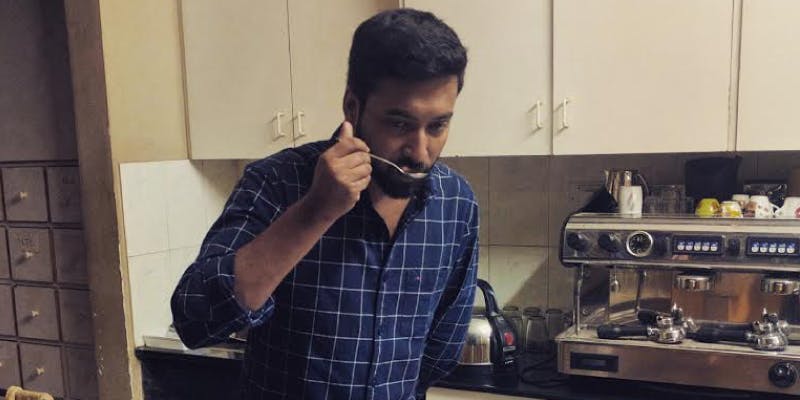
But Bharat now was more or less sure where his passion lay. He took a trip to Bengaluru to create new blends. Not only did everyone back home in Delhi enjoy the cuppa, but a friend even bought a batch.

“Next thing I knew, I had quit and was planning how to roll out Bili hu full-time,” he says.

The legendary white bloom as identity
Bili hu, as its website rightly describes, was thus “born out of a passion for good coffees and their unavailability in the domestic market”. Bili Hu translates as white flower in Kannada, indicative of the gorgeous coffee bloom. Bharat says he chose the kannada name because in India, coffee was first grown in Karnataka and is still the heartland of good coffee beans. “Also, a good name can be a superb conversation starter, and something like this would start conversations of coffee coming from a plant with white flowers and red cherries.”

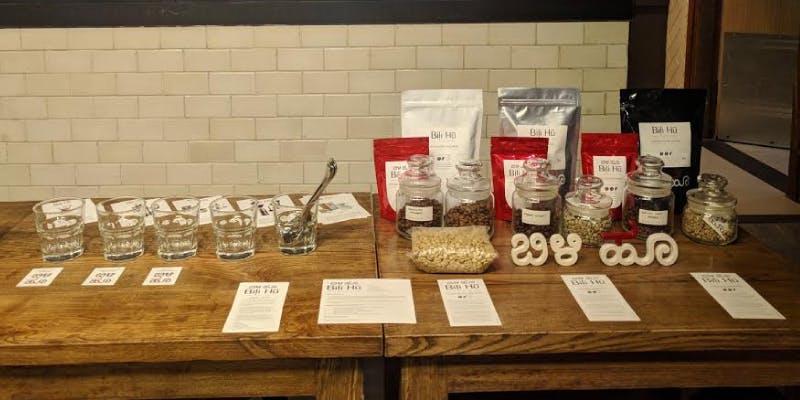
Bili hu offers coffee lovers in India an alternative to widely-available commercialised coffee blends. From an exclusive coffee blend from the Biligiri rangana hills in Karnataka, which imparts a toffee and sweet lemon aftertaste, to a single estate coffee from Chikmagalur’s Manjarabad that has a sweet and fruity aftertaste with a hint of chocolate, each variety is unique and speaks volumes about the estates they originate from. “The coffee blends that we offer have been created in close collaboration with some of the best curers, roasters and coffee estate owners across India.”

Exotic names
The brand’s most popular blend is the Mysore Nugget, available for both commercial and retail consumption. But Bharat’s favourite is the deliciously named Monsooned Malabar. “It’s a truly Indian coffee with a post-harvest process unique to India. It is a coffee that I really like to talk about everywhere I go.”
Bharat03KF30mar2018

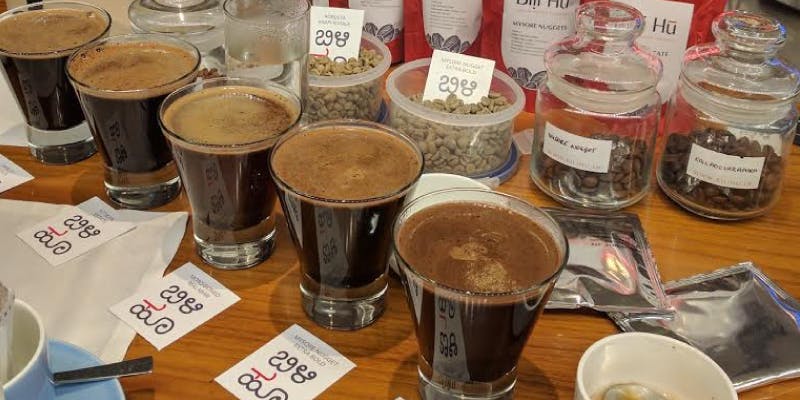
Warming to his pet subject, he says, “Monsooned Malabar, when roasted, contains some of the most unique notes ever tasted in coffees. Hence, it doesn’t come as a surprise that it’s also one of the most popular coffees to be exported to Europe. At Bili Hu, we roast these coffees to a very light colour to bring out the right nuances that we wish to highlight – earthy, grassy, wet wood aroma, with a mellow taste on the palate. It’s best had black and when brewed in a pour over, results in a beautiful golden brew. The Monsooned Malabar is a seasonal coffee, meaning it would taste different when procured in July than, say, February. “But we wish to honour its limited stocks and changing taste profile over the year, instead of opting to altering the blend and roast profiling, to keep the coffee’s taste consistent through the year. This way we ensure that our customers get to taste the beauty of coffee that changes though the year.”

And, to ensure he continues to make the artisanal blends that are hitting the right notes, he partners with popular large estate houses as well as unbranded smaller estates. He says, “The speciality coffee blends are typically not traceable to one estate, they mostly come because of curing. Unless an estate is processing them in-house in a certain specialised manner.”

Fine-tuning his entrepreneurial skills
Reflecting on his journey as an entrepreneur, Bharat says, “I evolved at every step of my business. I learnt a lot on the job. Even though we are a business family, I didn’t have anyone in the F&B sector, nor did I know someone who could guide me along. So, it was a lot of self-learning.” The 27-year-old candidly admits to a number of mistakes, from sending out wrong orders to improper packaging, even ending up replacing orders for free. “Today, I am much more equipped. The deliveries are seamless. I have figured out areas where I can cut down unnecessary cost. I have my growth roadmap charted.”

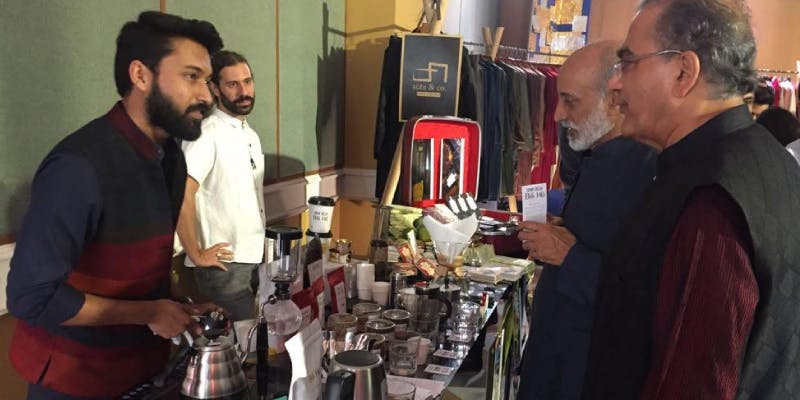
Today, Bili Hu caters to customers both in B2B and B2C spaces, but it is the B2B space that is of greater interest to Bharat. “I’m keen on collaborating with fine dining or speciality restaurants and leading hotel chains to offer unique coffee experiences. Since I create my own blends, I can offer two different and unique blends for two restaurants in the same vicinity. The idea is to remain exclusive and make customers hunt for that cup of coffee they had at a particular restaurant.”

Far more than a cuppa
Bharat’s coffees are not limited to being used as beverages; his blends can even be used for desserts by bakers, chocolatiers as well as chefs in upscale restaurants. And, with a number of young entrepreneurs owning and managing new and popular hotel chains and gourmet restaurants, he feels it becomes possible for smaller players like Bili Hu to collaborate and drive mutual growth. “It helps that I belong to the same generation as them, but the real reason why it becomes easier to do business is because they understand how artisanal brands function in comparison to commercial brands.”
Bharat04KF30mar2018

Today, Bili hu has been able to make headway across India, from loyal coffee lovers in Bengaluru to a city like Kolkata that runs on chai. “From homes to restaurants to being served at residences of ambassadors, we have been able to reach out to a massive coffee-loving audience in India.”

Bili hu doesn’t have big expansion plans on its cards yet. The reason is simple, as Bharat explains, “We’re still establishing ourselves. We are negotiating shelf space, trying to find a mention on the menu at gourmet restaurants, and getting coffee lovers to fall in love with our blends. Once we build a stronger sustainable network, we plan to grow strength to strength and become a brand to reckon with. We are much more than just a cup of coffee.”

source: http://www.yourstory.com / YourStory.com / Home> Signature Startups> Brand Spotlight / by Sindhu MV / March 27th, 2018
Alliance for Coffee Excellence elects new board members

ACEkf28mar2018

The Alliance For Coffee Excellence (ACE) announced on 27 March the election of four new board members: Keita Matsumoto, Cory Bush, Yuko Itoi and Aleco Chigounis.

This election, voted in by ACE’s members, country partners and head judges, brings the number of formal board members to eleven.

Keita Matsumoto, the Deputy General Manager Sales Dept. of Wataru & Co., Ltd is based in Japan. He has over 18 years of coffee experience in both the marketplace and at origin and has served on multiple Cup of Excellence juries. Wataru is one of the largest buyers of Cup of Excellence coffees at the auction.

Cory Bush will join the board from Antwerp, Belguim where he is the incoming Managing Director of a European specialty coffee importer. His experience includes work with Technoserve in East Africa and as Senior Trader for Falcon Coffee in the United Kingdom.

Yuko Itoi is the owner of Times Club, a small influential coffee roaster in Japan. She will receive a golden spoon award at the upcoming SCA conference in Seattle having served on 45 Cup of Excellence international juries and has purchased more than 100 Cup of Excellence lots including multiple first place winners.

Aleco Chigounis is Co-Founder and President of Red Fox Coffee Merchants in Berkeley, CA. USA & Red Fox Sourcing Company in Lima, Peru. Aleco has extensive experience developing coffee quality & supply chains for a diverse set of companies including The Neumann Kaffe Gruppe’s San Jose office and Stumptown. He has served on close to a dozen COE juries.

“This is such a crucial time for ACE and the Cup of Excellence,” said Will Young, ACE’s Board Chairman, in a statement.” We need to make the right choices and engage our members more than ever as we strengthen the program and shape it for the future. This is the board that can succeed at doing just that.”

The new members join the present board made up of Chairman Will Young, from Australia, Past- Chairman Geoff Watts from the USA, Yun Son Lee from Korea, Joe Hsu from Taiwan, Tim Taylor from the USA, Augustin Manirakiza from Burundi and Noelia Villalobos from Costa Rica.

The Alliance for Coffee Excellence is a non-profit global membership organisation dedicated to advancing excellence in coffee. Cup of Excellence gives out prestigious awards in coffee, helping lift the prices through an online auction system following the competition.

source: http://www.gcrmag.com / Global Coffee Report / March 26th, 2018

Mother Mirra to sell coffee locally

Mother Mirra Group of Companies, which has coffee plantations in Karnataka, has entered the domestic filter coffee market with Mirras Coffee.

Sundar Subramaniam, executive director of the group, said Mirras Coffee, which comes in two blends, had commissioned a factory at Coorg.

The plant can produce 350 to 400 kg of coffee powder an hour. “We are looking at 3.5% to 4% market share in the filter coffee segment in a year,” he said. The firm has 350 dealers in TN and Puducherry. “The market is always on the rise for filter coffee,” he added.

source: http://www.thehindu.com / The Hindu / Home> Business> India / by Special Correspondent / Coimbatore – March 2u7th, 2018

25-year-old wakes up and smells the coffee; builds single origin coffee brand Cauvery Peak

With coffee consumption on the rise globally, fifth-generation entrepreneur Vishnu Rajes wants to take single origin coffee from his estate in Yercaud to homes across India with ecommerce.

At a glance:

Founded: 2017

Founders: Vijayan and Vishnu Rajes

Type of Business: Ecommerce for coffee single origin

Funding: Self funded.

Based in: Yercaud

Sector: Digital Commerce

What happens when you have a 150-year-old legacy of growing coffee? You use it to build an ecommerce business of selling coffee across the world. The GlenFell Estate Classic Arabica Coffee, of Cauvery Peak, is rated five stars on Amazon. Peruse the Cauvery Peak website, and you will find premium coffees that are gourmet standard. If you are used to coffee with chicory, Cauvery Peak isn’t for you.

But fifth-generation entrepreneur Vishnu Rajes realised that things – and the taste for coffee – were changing in India. Vishnu had been groomed to take over his family business, MSP Plantations, in Yercaud, Tamil Nadu, and continue trading coffee. But his stint abroad, at Washington College in the US, made this 25-year-old realise that the power to build a brand – and not trading – was the need of the hour.

Founders of Cauvery Peak

He came back and began creating coffees at his plantation. Not long after, in mid-2017, he floated his website Cauvery Peak.

The key, though, was in the creation of the coffee.

“I realised that the market out there for connoisseurs of coffee was very large globally. Even in India, premium coffees have not been marketed very well,” says Vishnu, Co-founder of Cauvery Peak. He began sorting coffee based on their nose and palette. “The opportunity to create a brand was too large to ignore because we were supplying coffee beans to traders who were selling it to coffee companies,” he says.

However, Vishnu needed investment and told his father, Vijayan Rajes, who was keen on the idea and became the investor and co-founder. He seed funded Vishnu with Rs 50 lakh for the business.

The origins of the business
Although the family has been in the business for 75 years, after taking it off British hands, the current strain of coffee has connections to the American continent. To improve the coffee strain Vishnu’s grandfather travelled the world for a plant whose beans could add a bold flavour.

The coffee strain at the Yercaud estate is of Costa Rican origin. The story goes that Vishnu Rajes’ grandfather went to the estate of Judy Garland, the famous American actress of the forties, who advised him to procure the plant strain from Costa Rica. Ever since then, the company has been supplying coffee beans to local traders based on this plant strain from Costa Rica.

But under Cauvery Peak, the taste caters to the palate and its three varieties of coffee vary in taste and nose. Cauvery Peak serves the modern customer who is global and shops digital.

“The single estate coffee beans are planted, picked, processed, roasted, packed, and dispatched from the estate directly to you in order to ensure freshness, consistency, traceability, and quality,” Vishnu says. He adds that being online allows him to reach a wider audience. The variety’s sold on the website include single origin coffees like Shevroys Estate single origin. This coffee produces a sharp flavour profile for discerning coffee enthusiasts who love a fine aroma, crisp acidic flavour, medium body and a distinct citrus aftertaste in the cup. The Cauvery Peak Estate single origin has a sweetly round aroma, richly low-key acidity, full body. Hints of fresh- cut cedar, lemon and chocolate in the aroma. In the cup, mid toned with distinct, clean fruit leaning toward chocolate.

Then the Glenfell estate is planted with both Arabica and Robusta varieties and inter-planted with cloves, nutmeg and pepper vines.

The competition and opportunity
Vishnu is building the reach slowly. He has opened three retail outlets in Yercaud and is also supplying his coffee to six hotels across the country. Currently the brand is only nine months old and Vishnu is not worried about sales as yet. He is taking the brand to forums like the Coffee Board of India and to conferences on coffee.

Over the last year, several coffee retailing companies have been born. Startups that offer purchase of coffee online include Flying Squirrel, from Coorg and Chikmagalur region; and Blue Tokai, from Delhi. These brands bring single origin coffees to the table.

Research and Markets, in its India Packaged Coffee & Cafe Chain Market Overview, said that the packaged coffee market is expected to grow between 10-15 percent CAGR over the next five years. The report added that coffee as a segment has steadily gained share of total consumer spending on beverages over the last many years. The growth of cafe chains over the last decade has also boosted the visibility and per capita consumption of coffee among Indian consumers. Cafe Coffee Day, Barista and Tata Starbucks are some of the leading players in the cafe market.

Coffee consumption is higher in the southern part of the country. However, it is expected to increase in other regions during the forecast period. The production of Robusta coffee is much higher than Arabica in India, which is anticipated to increase in the future years. According to Franchise India, the coffee and tea industry has taken a big leap from Rs 25,166 crore in 2013 to almost Rs 41,800 crore in 2017. In less than five years, the industry has grown three-fold, bringing out a lot of business opportunities in the tea and coffee sectors. It is being predicted that the total number of organised cafe chains will increase from the 3,500 at present to almost 6,200 by 2020. These figures are a clear indication of the success brewing for interested investors.

But, for Vishnu Rajes, the journey of coffee has just begun. The reason they call their brand Cauvery Peak is because they could see the river Cauvery from the mountain top of their estate. This legacy brand has successfully gone from local to pan-Indian; and Vishnu now has plans to take it global.

Website
https://www.cauverypeakestate.com/index.php

source: http://www.yourstory.com / YourStory.com / Home> Start Ups / by Vishal Krishna / posted March 06th, 2018

Brewing higher profits and saving birds on the farm

A velvet-fronted-Nuthatch in a plantation.

Arabica coffee helps both farmers and wild birds in the Ghats.

Coffee lovers may be discerning about their sweet arabica brews and the bolder robusta ones, but both types help maintain the diversity of wild birds in the Western Ghats. One, a little more than the other.

Arabica grows under the deep shade of native trees, with benefits for both farmers and birds. The surprise is that Robusta, also grown under native shade, is not far behind in the Ghats, unlike in other parts of the world.

These insights from a group of researchers were published in the journal Scientific Reports.

Native trees are cut down to grow robusta, in order to give it more sunlight, earning this coffee the tag of being inhospitable to wildlife. In Vietnam, for instance, full-sun coffee growth occurred at the expense of native trees. India too has leaned towards robusta: between 1950 and 2015, planted area under robusta grew by 840% while arabica grew by 327%.

Scientists from the Wildlife Conservation Society (WCS-India) and USA’s Princeton University compared bird diversity in 61 arabica and robusta estates across Chikkamagaluru, Hassan and Kodagu districts in Karnataka.

Some surprises

What they found is that the plantations supported 79 species of forest-dependent birds in all, but arabica estates hosted twice the number of endemic birds than robusta. They also supported more birds that depend on forests, and eat fruits, insects and other food. Interviews with 344 coffee-growers showed that arabica was more profitable, with returns of around ₹1 lakh per hectare.

Yet, surprisingly, robusta plantations also hosted high bird diversity. “To our surprise, robusta agroforests had much higher diversity of birds that are specifically adapted to the habitat than we expected,” says scientist Krithi Karanth of WCS-India, who led the study.

Since robusta farmers in the Western Ghats retain native trees, they have been able to preserve the complex canopy structure, setting them apart from others worldwide, says Ms. Karanth.

“Though the current selling rate for robusta is only around ₹3,000 for a 50-kg-bag, it is easier to grow,” explains Suresh M. D., who owns a one-acre coffee plantation of both coffee types.

source: http://www.thehindu.com / The Hindu / Home> Sci-Tech> Environment / by Aathira Perinchery / Kochi – February 16th, 2018

Indian Coffee Farmers May Have Found A Way To Make Efficient Growing More Sustainable

Coffee berries that contain the life-giving bean (seed) inside / Foto 5533 - Shutterstock
Coffee berries that contain the life-giving bean (seed) inside / Foto 5533 – Shutterstock

Any truly environmentally conscious coffee drinker has fretted over the massive commercial agriculture systems required for each lovely cup to appear in their waiting hands. The land-use impacts are especially hard to swallow because the bean-producing shrub grows best in tropical ecosystems – beautiful regions home to some of nature’s most fascinating creatures.

Most well-meaning connoisseurs thus exclusively consume coffee produced by the arabica variety, a shade-tolerant species that happily grow within an existing forest environment, over the other main variety, robusta, the cultivation of which usually involves clearing native trees and understory plants in order to give the coffee bushes the bright Sun and open space they desire. Given that arabica beans can be farmed using sustainable methods and they taste better than robusta, one would think that the case is closed. Unfortunately for wildlife, however, robusta dominates the worldwide coffee market because it is both cheaper and easier to grow.

According to research led by the Wildlife Conservation Society, the rising demand for coffee since 1990 has led to a 150 percent increase in coffee farmlands in India. The majority of these new farms are located within the Western Ghats (one of the Earth’s top eight biodiversity hotspots), and the growers are overwhelmingly choosing robusta.

The team’s paper, published in Scientific Reports, set out to determine how the area’s tropical forests are responding by surveying the bird species present at 344 family-owned coffee plantations. Because birds are known to be a reliable indicator of overall ecosystem vitality, the researchers expected to find that arabica farms host far more birds and a richer variety of species.

Surprisingly, they found instead that robusta plantations are actually home to a higher density of forest-specialist flocking birds, including many fruit-eating species that plants and trees rely on to disperse their seeds. The distribution of threatened species also appeared equal between the two farm types.

The threatened Alexandrine parakeet was found on both types of coffee farm. Photo credit Manish Kumar

On the other hand, arabica farms did have greater numbers and varieties of forest-dwelling individual birds that are only found in the Western Ghats area. Several of these species are known to be the first to disappear when a habitat is modified, suggesting that although robusta farms are not necessarily as bad as we thought, arabica growing conditions remain more favorable.

A shaded arabica farm in Costa Rica. Erkki & Hanna/Shutterstock

Few previous studies have directly compared the ecosystem impacts of arabica vs robusta, but just glancing at photographs of each type of farm leads one to believe that there’s no way that the average robusta growing operation has anything to do with the word “sustainable”.

A robusta farm in Brazil. Paulo Vilela/Shutterstock

So, what are the Indian farmers doing differently than the rest of the world?

The authors observed that though most farmers in Western Ghats used conventional (non-organic) fertilizer, only 19 percent of robusta growers also used pesticides compared with 75 percent of arabica farmers – likely due to the fact that the robusta variety is naturally hardier against attack from insects and mold.

In addition, these robusta growers kept way more native trees than growers in other areas.

“In fact, the surveyed robusta agroforests possessed canopy and forest cover three times higher than shade-grown coffee farms in Indonesia,” the authors wrote.

They conclude that the results are not just good news for the birds. Several types of once-lowbrow robusta now fetch market prices that are close to those of arabica, and the farms studied suggest that competitive crop yields are possible without relying on intensive farming methods. Adding this together means that the Western Ghats farming model could provide a sweet spot for the coffee industry: Efficient, profitable, and sustainable.

source: http://www.iflscience.com / IFL Science / by Aliyeh Kovner / February 19th, 2018

India International Coffee Festival 2018 concludes on a high note

CoffeeFestivalKF28feb2018

The theme for the event was ‘Express Yourself with Coffee’.

It highlighted the merits of coffee tourism for the coffee industry and the small farmers associated with it.

The India Coffee Trust and Coffee Board of India jointly hosted the 7th edition of India International Coffee Festival 2018 in Bengaluru for the first time. Hosted from 16- 19 January at The Lalit Ashok, the four day event included workshops, fireside chats, keynote address by various speakers representing different industry sectors and a coffee exhibition.

The event was attended by trade visitors like roasters, retailer’s distributors, café owners, policy makers, industry captains, exporters,manufacturers and host of other luminaries associated with the coffee industry.

It was inaugurated by Krishna Byre Gowda, Minister for Agriculture, Government of Karnataka, along with Sudhir Sitapati, Executive Director – Refreshments, Hindustan Unilever Limited, Anil Kumar Bhandari, President, India Coffee Trust. Jose Dauster Sette, Executive Director, International Coffee Organisation, Srivatsa Krishna, IAS, Chief Executive Officer and Secretary, Coffee Board of India, Sunalini Menon, CEO, Coffee Lab Limited Trustee, India Coffee Trust.

The theme for the event focused on the lines of ‘Express Yourself with Coffee’. It highlighted coffee tourism as not just benefiting the coffee industry and the small farmers associated with it, but also to bring in the much needed growth to the tourism in the state.

Anil Kumar Bhandari said, “With this 7th edition of IICF, we are optimistic about the great ideas shared by industry experts and eminent speakers. Some exciting initiatives were also discussed during the event and we will take them up to make World Coffee Congress in 2020, a grand success.”

Srivatsa Krishna said, “Bangalore being the coffee capital of India, we are seeing this as a preparatory event leading us to the World Coffee Congress in 2020. For coffee tourism, we are also in talks with few startups for creating coffee trails which will soon be in process.”

source: http://www.voyagersworld.in / Voyager’s World / Home / by Irene Susan Eapen / February 12th, 2018

Wayanad coffee may grab a robusta spot in global market

Kochi :

The Kerala government’s decision to brand and market Wayanad coffee in the recent state budget, close on the heels of Coffee Board’s decision to apply for its geographical indication (GI), could make it the singular robusta variety from India to attract attention.

Wayanad in north Kerala grows around 50,000 to 60,000 tonnes of robusta coffee annually, making it the prominent region in the country cultivating the variety.

Most of the locations in Karnataka, the largest producer of the beverage in the country, grow both arabica and robusta beans. Just over a month ago, the Coffee Board had applied for GI status for Baba Budan Giri, Araku Valley, Coorg and Chikmagalur coffee along with with Wayanad coffee. While the first two are exclusively arabica, the latter two have both arabica and robusta.

“We are sure of receiving the GI tag for Wayanad coffee as we can easily authenticate the scientific and historic evidence for the coffee as required under GI documentation,’’ said K Basavaraj, head, quality division, Coffee Board.

Brahmagiri Development Society, a cooperative of 13,000 farmers, in Wayanad, which came into limelight with the production of various meat under the brand Malabar Meat, is gearing up to play a stellar role in the branding of Wayanad coffee too. With the Kerala government’s encouragement, it has drawn up a plan to construct IRs 60-crore instant coffee factory.

Instant coffee can be sold for Rs.3000 - 7000 per kg bringing more revenue to the growers
Instant coffee can be sold for Rs.3000 – 7000 per kg bringing more revenue to the growers

Instant coffee can be sold for Rs 3,000-7,000 per kg bringing more revenue to the growers. Besides the special aroma of Wayanad coffee, its growth in semi-forest area helps in environment protection. So, we can also factor in carbon neutrality of the region for branding,’’ said P Krishnaprasad, chairman of the society.

source: http://www.economictimes.indiatimes.com / The Economic Times / Home> ET Home> Markets> Commodities> News / by ET Bureau / February 08th, 2018

7th India International Coffee Festival 2018 reflects on experiential tourism in Karnataka

7th edition of India International Coffee Festival 2018 hosted at The Lalit Ashok, Bengaluru saw a host of activities including the coffee workshops, exhibition, keynote sessions, Fireside chat with Shri Priyank Kharge, Hon’ble Minister for IT, BT and Tourism, Government of Karnataka, Coffee Quiz Competition for Coffee enthusiasts ending the day with Café Awards ceremony.

IndiaCoffeeExbn31jan2018

The day started with workshops on ‘Role of sustainability in Post-Harvest Processing Equipment to secure the right quality, type and quantity of coffee.’ The session was led by Carlos Brando and Joao Alberto Peres Brando from Pea Marketing Ltd.

Shri Priyank Kharge, Hon’ble Minister for IT, BT and Tourism, Government of Karnatakagraced the occasion and attended a fireside chat session along with Mr. Anil Kumar Bhandari, President, India Coffee Trust where he emphasized on experiential tourism.“Today people want to experience and learn from their outings, hence experiential tourism is leading to a lot of buzz around homestays. We have offline and online strategies in place and are ready to build infrastructure and jointly manage it with associations. We have opened up 11 new eco-trails that will benefit the homestays and provide exhilarating experience to travelers,” said Shri Priyank Kharge while addressing the gathering.

He further said that, “I am privileged to have a unique opportunity to bring together information technology and biotech to further tourism in the state. I urge the startup fraternity and innovators to come forward with solutions that will help us build a sustainable tourism ecosystem in Karnataka.”

Commenting on this occasion, Anil Kumar Bhandari, President, India Coffee Trust said,“This year the festival focused on skill-building workshops, showcase of products and services, key sessions by delegates on Global Coffee Outlook and Future of Indian Coffee Sector.”

“The Indian coffee sector is growing at a rapid pace. And to sustain this growth, the dependence on government subsidies needs to come to an end,” said Shri Srivatsa Krishna, IAS, Chief Executive Officer and Secretary, Coffee Board of India.

Also, addressing a keynote session here, Jose Dauster Sette, Executive Director, International Coffee Organization said, “India is the sixth place in internal coffee consumption. In future by 2050, the production of world coffee might further decrease due to factors such as climate change that facilitates spread of pests and diseases. Both Arabica and Robusta are also negatively affected by the climate change.”

source: http://www.everythingexperiential.in / Everything Experiential – Business World / Home / by EE News Desk / January 24th, 2018