International Coffee Day was celebrated in Kodagu by giving piping hot coffee to tourists at Dubare elephant camp.
Representatives of 77 nations are members of the International Coffee Association and the Coffee Day is celebrated worldwide to promote coffee sales on par with prouction.
Woman folk took the lead in coffee awareness programme. Kodagu deputy commissioner R V D’souza inaugurated the coffee show. He said Kodagu produces the best quality coffee while stressing the need for better marketing.
Madikeri DFO Edukondalu opined that such awareness campaigns will help increase coffee consumption.
Senior scientist from Appangala Research Station Dr. Ankegowda said coffee is a healthy drink and many researches have proved it.
Convener of the women team of coffee awareness campaign Chitra Subbaiah announced that more and more awareness campaigns will be conducted in coming days. She appealed to the tourism department to provide Kodagu coffee to tourists who visit the district.
Several coffee products were exhibited during the coffee festival. In Madikeri also several organizations served coffee to tourists at Raja Seat.
source: http://www.timesofindia.indiatimes.com / The Times of India / News Home> City News> Mysore / TNN / October 03rd, 2016
Coffee Board of India will mark ‘International Coffee Day’ on October 1 by organising CAFFEST in partnership with coffee growers, industry stakeholders and consumers.
The International Coffee Organisation (ICO) declared October 1 as ‘International Coffee Day’ in 2015. “This year we will be celebrating the second International Coffee Day at the Coffee Board headquarters in Bengaluru,” said the Coffee Board’s Finance Director.
The day presenets an opportunity to promote and celebrate coffee as a beverage, with events organised across the world.
As part of CAFFEST, the Coffee Board is planning to provide a platform to showcase the best Indian coffees wherein young coffee entrepreneurs and Self Help Groups (SHGs) will showcase their products. A brewing demonstration will also be organised for the benefit of the pubic to educate them on the positive aspects of coffee drinking.
On the occasion, a street play and a skit on the theme coffee will be enacted by the well-known TV/stage artist from Prathibha Art Foundation, Bengaluru, in two sessions – at 11 am and 4 pm. A poster designing competition on the theme of coffee will also be organised.
source: http://www.thehindubusinessline.com / Business Line / Home> Economy> Agri Business / by Anil Urs / Bengaluru – September 28th, 2016
Price which had plummetted to Rs.100 a kg now goes up to Rs.130
The prices of coffee have picked up in the retail market after remaining at a low for the past two years. The prices in the retail market ranged from Rs.124 to Rs.130 a kg on Friday.
The prices of coffee had reached the bottom level of below Rs.100 during the last harvesting season. There are signs of a further increase in prices owing to the high demand in the international market. A senior official of the Coffee Board told The Hindu on Friday that the prices in the retail markets were decided by the prices in the international markets of London and New York. The prices were on an upward trend, mainly during September, to reach the present level.
Brazil the competitor
The Arabica and Robusta varieties were mainly cultivated in the State and the main competitor for Arabica is Brazil, its largest producer. Vietnam is the largest producer of Robusta coffee and the present demand in the international market is owing to a production fall in Brazil. The prices of the Robusta variety were correspondingly on the rise owing to an increase in demand in the world coffee blending sector.
According to the research wing of the Coffee Board, there may not be a serious slump in coffee production in the State owing to erratic rains. The official estimate is about a 10 to 12 per cent of production drop owing to the shortfall in the rains.
India accounts for the second largest production of coffee after Brazil. Of the 3,42,000 ha of land under cultivation, the average was 2,62,000 tonnes, as per the Food and Agriculture Organisation’s 2012 estimate.
Topper is Karnataka
Of the total production, Karnataka accounts for 71 per cent followed by Kerala (21 per cent) and Tamil Nadu five per cent.
Unlike other cash crops, small-scale landholders account for the majority of coffee production. However, the rise in the prices in the middle of the beans-growing season is unlikely to help the farmers.
The prices were on a downward trend for the past four years. A local businessmen at Kattappana, the main market for hill produce, said the prices were unlikely to fall, as they were on a steady rise. In the last harvest season, many farmers had abandoned crops, as the cost of labour was higher than that the price of coffee in the retail markets.
source: http://www.thehindu.com / The Hindu / Home> National> Karnataka / Idukki – September 25th, 2016
Timothy and Sharon, along with their son | Martin Louis
If you were an entrepreneur, you would know the kind of ground work that has to take place before kick-starting your business.
Timothy Immanuel and his wife Sharon Dominica, who hope to start a coffee shop soon, understood the importance of research and decided to tweak this tedious process to make it more fun.
They decided to travel across the country to explore various kinds of coffee, their origins and methods of preparation, covering states like UP, Delhi, Haryana, Rajasthan, Gujarat, Maharashtra, Goa, Karnataka, Kerela and Tamil Nadu.
“We love long drives, and thought that this was an opportunity for one memorable drive. We have driven to different parts of UP, Jaipur and even Nepal earlier. But this would be much longer and had to be planned carefully,” says Sharon.
Although coffee is harder to grow, as compared to tea, India is the second largest coffee producer in the world and is home to a large number of plantations.
Timothy explains, “There are two main types of coffee beans – arabica and robusta, and we grow both in India. The Indian robusta bean is one of the best in the world. We learnt about all the various stages of coffee-making, in order to make sure the customer in our cafe gets the perfect cup.”
Timothy who studied hotel management and worked as an Associate Team Leader, Food and Beverage, at a five star hotel Bangalore, moved on to do his MBA, then worked as a HR consultant, while Sharon is an Occupational Therapist by profession. T
he whole idea of a coffee shop sprung up because in Noida, where they were based, there were hardly any places for people to hang out, relax, and spend time with friends and family. They thought this would be the perfect opportunity to make that happen. They started attending tea appreciation workshops and a coffee training by the coffee board of India in Bangalore.
Some of their discoveries include realising that all tea comes from one type of plant, realising that most of India drinks the lowest grades of coffee and tea, that good tea has an amazing smell of its own, and that coffee doesn’t necessarily need to be bitter. Timothy and Sharon also enjoyed sharing their experiences and getting feedback on their facebook page drive across india for coffee
The coffee shop will be located at Noida. “We want to call it The Haven, as we hope that it will be a refuge for people in our community.
In our coffee shop, we want people to experience really high quality, and specialty coffee and tea at reasonable prices. We want to give the average Indian an opportunity to go on a journey in tea and coffee, experience different types, and find out what they like. We also want to teach people more about coffee and tea.
When asked why they would go through such lengths to start a coffee shop, Sharon explains, “We want to give the best quality to our customers. The more thoroughly we’re informed, the more chances there are of succeeding.”
Reach out: http://bit.ly/2bKZaXm
source: http://www.newindianexpress.com / The New Indian Express / Home> Education> Edex / by Blessy Mathew Prasad / August 22nd, 2016
Americans who thrive on Starbucks will get a taste of single-origin coffee from Coorg for the first time
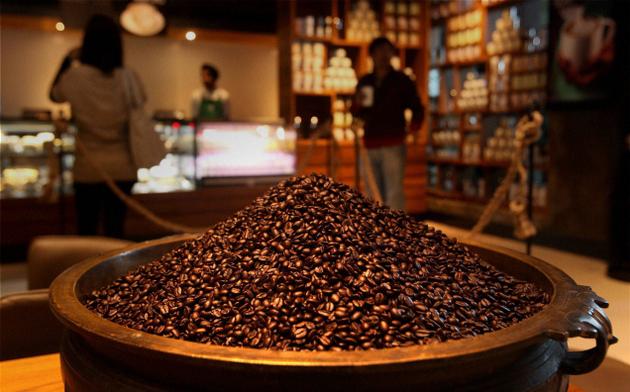
FULL OF FLAVOURCoffee beans at a Starbucks store / PHOTO: PTI
A small lot of speciality coffee from Karnataka’s famed Coorg region is getting ready to make its “limited edition” and exclusive debut later this year at the Starbucks Reserve Roastery & Tasting Room in Seattle, America. It is almost considered a shrine in the world of high-end coffee.
While the formal deal has been inked between Starbucks and Tata Coffee recently, here’s looking deeper into what that cuppa might hold. For starters, it’s said to be intensely aromatic, “with notes of caramel, citrus, toasted nuts and milk chocolate”.
The coffee comes, not surprisingly, from the largest Arabica plantation (394 hectares) in Coorg district, from the Nullore estate owned by Tata Coffee Limited, close to Madikeri. “When we cupped the Tata Nullore Estates coffee, we noticed it was different from other Indian coffees. The flavour of this rare coffee exemplified the types of unusual coffees we want to deliver under our Starbucks Reserve programme,” says Andrew Linnemann, vice president, global coffee quality and engagement at Starbucks Coffee Company. The Starbucks Reserve programme features the rarest and most exotic coffees — unique, small-lot coffees that the company roasts in Seattle. “Each coffee is one-of-a-kind — sourced from small coffee-growing regions in Latin America, Africa and the Asia-Pacific. All the coffees are roasted with care to bring out their peak flavour expression,” adds Linnemann.
“Nullore Estate coffee was a microlot,” points out Sanjiv Sarin, managing director and CEO, Tata Coffee Ltd. Microlots are generally considered the “cream of the crop” from an estate, and come with a unique taste and story; they are usually sold in small quantities, mostly only a few kilos! Therefore, they are pricier.
“We have been working on premium differentiated coffees for some months now and set up a process to identify potential blocks in our estates whose coffees will qualify. Nullore passed our assessment. A small batch of carefully cultivated coffee was isolated from the regular farm produce and was handpicked and sun-dried. Producing quality microlots is a meticulous and tedious process,” reiterates Sarin. The Nullore Estate coffee will be available at the Seattle tasting room later this year, and only for a limited period. The pricing has not yet been decided.
source: http://www.thehindu.com / The Hindu / Home> MetroPlus / by Bhumika K / July 26th, 2016
Single-origin Indian coffee will be available for the first time in Starbucks, Seattle, as a limited edition Photo: PTI
Americans, who thrive on Starbucks, will get a taste of a single-origin coffee from India’s Coorg region for the first time. BHUMIKA K. gives you a peek into what the cup holds
A small lot of speciality coffee from Karnataka’s famed Coorg region is getting ready to make its limited edition and exclusive debut later this year at the Starbucks Reserve Roastery and Tasting Room in Seattle, America, considered a shrine almost in the world of high-end coffee.
It is for the first time that the leading American coffee company will offer a single-origin coffee from India in the U.S.
While the formal deal has been inked between Starbucks and Tata Coffee Ltd recently, here is looking deeper into what that cuppa might hold, right from where it was grown. For starters, it is said to be intensely fragrant and aromatic, “with notes of caramel, citrus, toasted nuts, and milk chocolate”.
Grown in two-tier shade, the Nullore Estate coffee is a microlot / Photo: Special arrangement
The coffee comes, not surprisingly, from the largest Arabica plantation (394 hectares) in Coorg district, from the Nullore estate owned by Tata Coffee Limited, close to Madikeri. These Arabicas are grown under a two-tier shade system (under local and fruit bearing trees). The shade is carefully managed, which helps the coffee bean mature slowly, absorbing the natural “organoleptic” characteristics within – which gives it the final smell and taste. Coorg is considered to have the perfect agro-climate and soil suitable for coffee cultivation.
Coorg is known for its coffee and Nullore Estate, that belongs to Tata Coffee, is one of the largest Arabica plantations in the district Photo: AFP
“When we cupped the Tata Nullore Estates coffee we noticed this coffee was different from other Indian coffees. The flavour of this rare coffee exemplified the types of unusual coffees we want to deliver under our Starbucks Reserve Programme,” says Andrew Linnemann, Vice President, global coffee quality and engagement at Starbucks Coffee Company. The Starbucks Reserve Programme is an ongoing series of the rarest and most exotic coffees — unique, small-lot coffees that the company creates, roasting them in Seattle. “Each coffee is one-of-a-kind — sourced from small coffee-growing regions in Latin America, Africa and Asia, Pacific Islands. All Starbucks Reserve coffees are roasted with care, at our Starbucks Reserve Roastery and Tasting Room in Seattle, to bring out their peak flavour expression,” adds Linnemann.
“Nullore Estate coffee was a microlot,” points out Sanjiv Sarin, Managing Director and CEO, Tata Coffee Ltd. Microlots are generally considered the “cream of the crop” from an estate, and of course come with a unique taste and a story behind it; they are usually sold in small quantities, mostly only a few kilos. Therefore, they are pricier. “We have been working on premium differentiated coffees for some months now and set up a process to identify potential blocks in our estates whose coffees will qualify. Nullore passed our assessment. A small batch of carefully-cultivated coffee was isolated from the regular farm produce, handpicked and sun dried. Producing quality microlots is a meticulous and tedious process,” reiterates Sarin.
It is technology driven too, including using light-sensitive spectrometers to ensure that the coffee beans mature slowly but uniformly. The shade also means that there is natural mulching from the leaves that fall onto the ground, which in turn helps avoid the use of strong fertilizers and pesticides. Sustainable cultivation practices and an endeavour to maintain the ecological balance were also the focus. The Nullore Estate coffee will be available at the Seattle tasting room later this year, and only for a limited period. The pricing has not yet been decided.
The first Indian coffee to be available through Starbucks was introduced in 2013, to celebrate the Tata-Starbucks first anniversary in the India market. Starbucks created a special India-sourced coffee, called ‘India Estates Blend’, as a tribute to its customers, partners, coffee producers, and roasters. But it was sourced, roasted, packaged, and sold in India. Explaining the difference between a blend and single-origin coffee, Sarin describes how a coffee blend is a combination of coffees from different origins that, when put together, create an experience or flavour profile that does not exist by itself.
“A single-origin coffee comes from one, geographic place (country, region, town, community, estate, mill or farm). This gets to a coffee’s very specific provenance. They represent a ‘taste of place’.”
source: http://www.thehindu.com / The Hindu / Home> Features> Metroplus / Bhumika K / Bengaluru – July 25th, 2016
The government is considering withdrawal of the Coffee Act, 1942, as it “no longer serves the purpose”, Commerce and Industry Minister Nirmala Sitharaman said in the Lok Sabha on Monday.
The Minister was replying to a supplementary during Question Hour on the role of the Coffee Board, especially with regard to small growers, and why it was headless for the past two years.
“Over the years, the role of the Coffee Board has changed and many provisions of the existing Act have become redundant, especially after abolition of the Coffee Pooling System in 1996,” she said, adding that it had been proposed to repeal the Act which was enacted more than 70 years back and enact a new Coffee Bill, 2016.
The suggestions received on the Bill were “regarding the control of the coffee industry, definition of coffee and coffee estate, cognisance of offence under the Act, etc, which are being examined,” she added.
Output decline
In reply to a question from Prathap Simha from Coorg, the Minister said domestic coffee production was likely to fall by 8 per cent in the current fiscal, due mainly to lack of timely rains.
“It has been estimated that there is a likelihood of a decline in coffee production in 2016-17 by 8 per cent compared with 2015-16 due to lack of timely rains and high temperature during the crucial flowering stage,” Sitharaman said.
On another supplementary on whether the government would mandate international coffee chains in India to buy Indian coffee, Sitharaman said the country was home to 2 per cent of the world’s coffee growing area, but produced 4 per cent of global production and had a share of 5 per cent of world coffee exports, worth over Rs. 5,000 crore a year. So, even though international coffee chains have set up shop in India, they do buy coffee locally, she said.
The main buyers of Indian coffee are Italy, Russian Federation, Germany, Belgium and Turkey, which account for over 50 per cent of coffee exports from India, she added.
Duncan tea gardens
On another supplementary by Trinamool’s Saugata Roy who wanted to know how many closed tea gardens’ belonging to the Duncan group in West Bengal had been taken over by the Centre “as promised four months ago”, Sitharaman said the government had moved to take over some tea gardens, but there was litigation by the Duncan group. The Minister said the process to identify new agencies to take over the management of these tea gardens was on, in consultation with the state government.
source: http://www.thehindubusinessline.com / Business Line / Home> Economy> AgriBusiness / The Hindu Bureau / New Delhi – July 25th, 2016
A coffee plantation in the range of 50, 000 hectares of land by 2030 is being envisaged by a collaboration of the department of Land Resources and the Coffee Board of India.
This was revealed by a secretary to the Government of Nagaland, Y Kikheto Sema, during a joint meeting of the department’s officials with the officials of the Coffee Board of India, under the Union Ministry of Commerce & Industry. The central team was led by Joint Secretary AP Anantha Kumar. The meeting was conducted at the Land Resources directorate in Kohima town Wednesday.
Joint Secretary Kumar said during the meeting that support would be given to the state government in its undertaking production for coffee. While assuring all possible support to the state government in its ‘massive coffee plantation drive,’ he however asked the Land Resource department to make proposals toward setting up an office of the board in Kohima. Likewise, he suggested that the state seek enhancement of coffee seed allocation.
Also, according to Kikheto Sema, the department and other line departments would be undertaking a massive ‘coffee plantation drive’ in every district of Nagaland as the state has been declared geographically and topographically suitable for coffee by the coffee board.
The officials has requested the board’s officials to enhance the allocation of coffee seeds for the state and also to provide technical support and training of trainers and officials, who in turn would be able to train villagers in ‘achieving the target.’
Saying that the department had been encouraging local farmers to give up ‘jhum’ cultivation to engage in coffee plantation, Sema said that the slash-and-burn cultivation method does not offer ‘much dividend.’ However, coffee plantation, he said, will help in uplifting the rural economy besides improving the living standard of the rural people.
Further, maintaining that there was no scope in large and medium scale industries in the state, Sema expressed optimism in agro-based industries. The Land Resources department is undertaking only a few commercial crops such as coffee and rubber but they are crops feasible for the state, he said.
The official also said that the church being the ‘main institution’ in Nagaland, the department was contemplating involving the church in coffee plantation by providing them technical support.
Sema opined that the Coffee Board and any investors willing to come to the state should not have the ‘excuse’ of law and order situations as the state, he claimed, was ‘very peaceful.’
source: http://www.easternmirrornagaland.com / Eastern Mirror / Home> News> Nagaland> State> Current Article / by Eastern Mirror Correspondent / July 21st, 2016
India’s coffee production is expected to drop by 8.05 per cent during 2016-17 compared to a record production of 3.48 lakh tonnes in 2015-16 owing to high temperature during summer months.
For the year 2016-17, the Coffee Board placed the post-blossom crop forecast at 3.20 lakh tonnes, comprising one lakh tonnes of Arabica and 2.20 lakh tonnes of Robusta, an overall decline of 28,000 tonnes (-8.05%) over the previous year.
The drop is mainly in Karnataka (22,175 tonnes) followed by Kerala (6,730 tonnes). The causes could be the delayed blossom and showers coupled with high temperatures especially in major coffee growing areas of Karnataka and Kerala.
In most of the coffee areas of Karnataka, estates with irrigation facilities have irrigated their Robusta plantations for one round of blossom during February-March and with one round of backing irrigation. However, due to absence of subsequent natural showers, even the irrigated estates have suffered some setback due to prevailing high temperatures, according to Coffee Board officials.
Scattered, uneven blossom
Coffee growing regions of Karnataka received the first spell of summer showers only in April and these showers were scanty and isolated. These showers did not cause any blossom in Arabica estates but resulted in scattered, uneven blossom in un-irrigated Robusta fields, which constitute about 40 per cent of the Robusta area in Karnataka.
Officials said this resulted in pinking and scorching of buds in Robusta. The growers were unable to take up supplementary irrigations to top up the scanty showers due to drying up of water resources.
The post-blossom estimate of Arabica for 2016-17 has shown a decrease of -3.38% (3,500 tonnes) over the corresponding figure of 2015-16, while the Robusta estimate has shown a decrease of -10.02 per cent (24,500 tonnes) over the last year’s figure (2015-16).
source: http://www.thehindu.com / The Hindu / Home> National> Karnataka / Nagesh Prabhu / Bengaluru – July 19th, 2016
Coffee plants have been found to grow well in Hasanur and Thalavadi belt and in some locations on Kadambur hills in the district.
The plants raised in some of the hamlets are productive and bearing good beans. But, there is no plantation as such on the hills. An experimentation made earlier on a leased land on Sathy hills has not succeeded.
Cultivation of coffee as commercial crop will be quite remunerative, but there is limited scope for large-scale cultivation. Coffee is, by and large, being cultivated in the backyards for self-consumption, Head of MYRADA Krishi Vigyan Kendra Alagesan said.
The Sathy hills have the ideal altitude of 1,000 to 1,500 metres for growing coffee. But, rainfall is not sufficient. Against the annual rainfall requirement is 1600 to 2,500 mm, the realisation is much lesser. The annual rainfall is only around 700 mm in the district, though it is considerably higher on the hilly parts. Yet, the rainfall is far from sufficient for coffee cultivation, farmers on the hills say. Nevertheless, a few farmers in Malliammman Durgam hamlet on the Kadambur hills have plans to get beyond backyard cultivation. They now look for the right support system, Ramasamy, a progressive farmer in Kadambur area said.
source: http://www.thehindu.com / The Hindu / Home> National> Tamil Nadu / by Special Correspondent / Erode – July 13th, 2016
WELCOME. If you like what you see "SUBSCRIBE via EMAIL" to receive FREE regular UPDATES.
Read More »