Category Archives: Coffee News

Coffee board to promote coffee-tourism under Incredible India campaign

The sixth edition of India international coffee festival 2016, programmed for three days, concluded this Saturday.

 More than 60 companies are exhibited at the Coffee Expo, drawing visitors from across the globe (Photo: Pixabay)
More than 60 companies are exhibited at the Coffee Expo, drawing visitors from across the globe (Photo: Pixabay)

Mumbai:

In order to boost tourism industry with the coffee sector, the central government has allowed the coffee board of India to promote coffee-tourism under flagship of Incredible India programme.

The coffee board chairman Leela Nair said that, following the Karnataka module of Coffee tourism, Ministry of tourism from the current financial year has allowed board to promote tourism with coffee industry. However, due to the delay in request from our side, government couldn’t fund us but has asked to kick-start it under incredible India programme, she added.

In this regard, the Ministry of Commerce and Industry, Chief Secretary, Rita Teaotia, who was the guest speaker, said “When you talk about coffee tourism, you provide great experience for the tourists which is also environmentally beautiful”.

Teaotia added that this would also boost the start-up in the country to partner with the existing plantations and take an advantage of this open market. She urged the young entrepreneurs of India to see coffee as the emerging markets for start-up, which has enormous opportunities.

Further speaking on the coffee tourism, President of India coffee trust, Anil Kumar Bhandari pointed out that more than international tourists, there has been steep increase in the domestic tourists from last five years.

Quoting about the start-up opportunities in coffee sector, Chief Secretary Rita Teaoita said, “If you look at the coffee industry which has number of small plantation sectors could be turned has an opportunity because you make niche product, niche branding and target and a niche market.”

Secondly, India being traditionally south states coffee-drinking area has started looking into the branding and also spreading it into the north India market the Barista and Starbucks, with this chain, somebody with well-placed product can also turned into great opportunity for start-ups, Teaoita mentioned.

“Third is, we do have specific coffee varieties coming in from different region and branding and marketing of those could turn great opportunities for the start-ups to spread”, she added.

The sixth edition of India international coffee festival 2016 that was programmed for three days, concluded on Saturday with guest speaker Ministry of Commerce and Industry, Chief Secretary, Rita Teaotia’s address on start up India campaign in coffee industry.

The festival comprises of an International Conference Exhibition for all things coffee, skill-building workshops, product launches, coffee quiz, coffee awards, and a host of other exciting activities.

The festival also served as a platform for many coffee growers, roasters, retailers, equipment suppliers, researchers and entrepreneurs. This year the festival saw as many as 500 delegates for the conference and skill building workshops.

More than 60 companies are exhibited at the Coffee Expo, drawing visitors from across the globe.

Leading brands like Hindustan UniLever, Tata Coffee, Nestle, Leo Coffee, Buhler, Kaapi Machines MK Associates, Swiss Pack, Bunn-O-Matic, Diedrich, CMA, Probat, YARA India, Rabo Bank, Eltex marketing Services, Controlmatic, etc., are exhibiting at the event.

Start-ups have completely transformed the way India consumes their Coffee be it Coffee delivery or E-commerce or Cafés or Roast & Ground Coffee sellers. IICF also played a large focus on these Start-ups.

source: http://www.deccanchronicle.com / Deccan Chronicle / Home> Business, In other news / by Vaibhav G. Bhansode, Deccan Chronicle / January 24th, 2016

Words of wisdom

The quintessential Indian grandmother tells consumers what they ought to drink and why in late entrant Tata Coffee Grand’s launch campaign

TataGrandCoffeeKF18jan2016

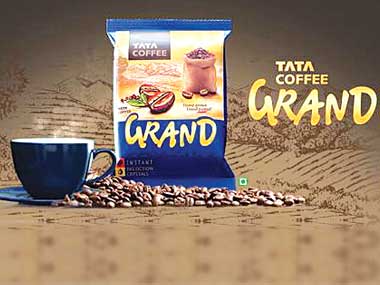
Tata Global Beverages recently entered the instant coffee market with the launch of Tata Coffee Grand. The company has backed up the launch with a high decibel multi-media campaign. The protagonist is an Indian grandmother dressed in traditional south Indian attire. However, she appears in the garb of a hip-hop artiste, complete with contemporary accessories and sunglasses. The spirited granny takes on a bunch of youngsters as she raps about ‘coffee, the way it should be’.

With the new product, Tata Coffee is eyeing the Rs 1,300 crore instant coffee market in India dominated by Hindustan Unilever’s Bru and Nestle’s Nescafe. “Strategically we have strong competition,” says Sushant Dash, regional president, India, Tata Global Beverages. “There are players that have been entrenched in the market for long. To compete against them, it was not good enough for us to be a me-too brand. To make an impact, we had to break the category norms through our product offering, packaging and communication.”

The brief to the creative agency, Mullen Lintas, was to come up with a differentiated brand and communication strategy, encompassing the product’s packaging, imagery etc. So instead of the regular browns and greens Tata Coffee Grand stands out in its blue packaging. Similarly, the television commercial (TVC) highlights the spirited and quirky side of an older generation, rather than talking directly to a younger audience.

Dash says, “Being a late entrant in the market, we needed to talk about the product, highlight the strong heritage and plantation expertise that we offer and others do not. And as we spoke to young people, we could not sound boring. At the same time, we needed an authoritative figure to talk about our product. Who better than a granny to do all this.”

He adds that the one person who enjoys maximum credibility in a family or the society at large is the grandmother. She comes with a lot of experience and wisdom. At the same time she can be wicked in her own way. She is highly opinionated and can become animated if she does not agree with someone else’s point of view. Young at heart, the granny represents wit and humour in equal measure. And, if required, she can be up to any challenge.

The company launched the Tata Grand Coffee with a 360 degree virtual reality tour where drinkers could experience the entire product journey. Also, instead of launching the brand through traditional channels, the company introduced the product online as part of an exclusive tie-up with Amazon. “In the next six to seven months our sole purpose will be to create awareness and motivate people to re-evaluate what they are drinking,” says Dash. While picking the granny as a central character, the decision swung in favour of a South Indian character because South is the coffee heartland of India. The creative heads threw in rap to add that extra ‘swagger’ to the granny’s character.

“The brief to us was simple,” says Shriram Iyer, national creative director, Mullen Lintas, “to create disruptive and differentiated communication, just like the product. Coffee, being a staple beverage in the South of India with Tamil Nadu being the unofficial expert of the beverage, we have taken the highest authority of coffee from Tamil Nadu as the ambassador for the brand.”

What makes Tata Coffee Grand a disruptive product? The company sources the coffee beans from its own plantations and the coffee has decoction crystals in it. “In terms of the execution, the key challenge for us was getting the casting of the granny right: We needed someone who, while retaining her authoritative stance, could also add oodles of ‘coolness’ to the film,” says Iyer.

Industry estimates put the budget for the campaign at Rs 20 crore. Digital media will be an integral part of the campaign. The company is using digital media to create intrigue around the protagonist. It has planned a few short films exclusively for the digital media where the granny will be seen walking into real situations unannounced and slapping people around her if she is not happy with their choice of drink. Dash likens these films to topical advertisements by Amul, which are an entertaining take on contemporary issues. Similarly, the Tata Coffee granny’s take on real-life situations will be worldly-wise.

Brand: Tata Coffee Grand
Budget: Rs 20 crore
Agency: Mullen Lintas

source: http://www.business-standard.com / Business Standard / Home> Management> Features> Advertising / Sangeeta Tanwar / January 11th, 2016

Enhancing Coffee Productivity and Small Farm Profitability

by Dr Amrit Patel

Favourable climatic factors along with a fairly dry spell of 70 to 90 days make Kerala an ideal place to grow coffee. About 76,000 holdings of average size of 1.1 hectare symbolise Kerala a small-holder coffee state but provides livelihood to one lakh families.

Since 1976, Kerala Forest Development Corporation has been managing all coffee estates. In 1990-91, Kerala had 84,016 hectare with coffee production of 21,884 tonne accounting for 31.06% and 12.89% share respectively in India. After two decades, during 2011-12, the area declined significantly to 20.53%, whereas the production substantially increased 21.65% of that in India.

Thus, yield which was very low at 260.47 kg/ha in 1990-91 as compared to 627.42 kg/ha of national average increased substantially to 809.52 kg/ha as compared to national average of 763.73 kg/ha in 2011-12. However, productivity of the coffee in terms of bearing area in Kerala (705 kg/ha) is lower than the national average [826 kg/ha].

Kerala accounts for 20.70% of total coffee area in India. Robusta variety having average lifespan of 60-80 years and requiring least pesticides covers 95% of planted area. For 2014-15, final estimates of total production of coffee in Kerala indicate 67,700 tonne [Arabica 2055 tonne and Robusta 65,465 tonne]. Robusta and Arabica account for 96.70% and 3.30% coffee production respectively in Kerala as against 70.03% and 29.97% respectively in India. Robusta fetches lower prices in domestic and international markets and its brewing value is comparatively lower than Arabica. Though irrigation can increase yield of Robusta by 60% to 70% small coffee growers do not provide irrigation due to high costs of sprinkler/drip irrigation system.

Planters prefer multi-cropping pattern [coffee, tea and spices] to optimally utilise resources and insulate plantation from vagaries of nature and market. A special feature of coffee plantation in Kerala is that coffee plants are grown under the shade of tall shady trees. Conducive climate, hills, greenery, flora and fauna enhance Malabar region’s attraction for tourists. Monsooned coffee is a special delicacy of the region. A less known fact about Malabar coffee is that it was discovered by accident. Wayanad region covers more than 33% of district’s coffee area and coffee is grown as a single crop as also with pepper. About 90% holdings in Wayanad region are below two hectare and are mainly owner-operated with least engagement of casual wage labour.

Marketing
With the economic liberalisation in 1991, the role of the Coffee Board has been diluted and the coffee pooling system was abrogated. In 1993, the Internal Sales Quota entitled coffee growers to sell 30% of their produce in the country. Subsequently, the amended Free Sales Quota in 1994 permitted growers to sell between 70% and 100% of their coffee either domestically or internationally. And finally, amendment in 1996 allowed them the freedom to sell their produce wherever they wished. This led to the emergence of intermediaries in the trade and in absence of regulated and development authority to coordinate and provide directions for coffee marketing, the middlemen collect coffee directly from farmers at reduced price and sell to wholesalers/exporters at high price. To tide over financial difficulties, farmers are often tempted to sell coffee in advance of the harvesting season which fetches low prices.

After the withdrawal of the Coffee Board, the vacuum created has been to some extent replaced by private sector initiatives like Indian Coffee Trade Association which began auctioning on a periodic basis. There are also efforts towards online trading which is being conducted through portal commodityindia.com. However, fact is that less than 10% of coffee is sold through auctions as most small growers prefer to sell unprocessed crop directly to exporters or roasters through agents.

With the rising coffee consumers in Kerala the demand for domestic consumption is expected to rise. In this context, when international coffee chains are already planning their aggressive strategic entry in Kerala, domestic coffee chains are also expanding their businesses to capitalise the market opportunities. The latest entrants include Hilite Group of Kozhikode, Beans and Flavours, a small coffee blender from Idukki district, and Tonico. The Hilite Group is reportedly planning to establish a chain of 100 coffee shops. The domestic coffee chains have the potential to succeed and produce some global brands on account of factors like ambience, product quality and services.

However, in the coffee value chain farmers capture not more than 20% of the end value. Other intermediaries and traders (local and international) and roasters gain substantially. It is estimated that roasters alone retain about 30% of the value. Brands also play an important role in the value chain. Since it is a buyers’ market, buyers collectively put in serious efforts to reduce the value for the primary producers. Mechanisms like certification are aimed at allowing fair margins at the producer level but in reality they become counterproductive.

Government’s Support
Government has initiated measures to help farmers raise coffee productivity, quality and small farms’ viability that include, among others, [i] restructuring bank loans and providing interest relief to coffee growers (a subsidy of 5% to small growers and 3% to large growers on working capital) [ii] rainfall insurance as a risk management support for coffee growers in collaboration with Agricultural Insurance Corporation [iii] in June 2010, the coffee debt relief package was implemented for the debt ridden small coffee growers with a total financial implication of Rs 241.33 crore [iv] Since April, 2003, Government of India has set up a Price Stabilization Fund aimed at providing financial relief to the growers when the prices of the commodities covered fall below a specified level [v] Investment in coffee gardens are subsidised ranging from 20% to 40% depending on the size of the holdings [vi] Coffee Board facilitates support for establishment of processing units, formation of growers’ collectives, among others.

Need for Focussed Attention

Action Research:
here is immediate need to mount Action Research Project to study comprehensively and understand following facts and suggest changes in policy and programme in consultation and dialogue with farmers.

[A] The reasons for coffee growers’ inability to [i] replant Arabica coffee being superior in many respects to Robusta [ii] irrigate Robusta coffee to increase yield by 60% to 70% when subsidy and bank credit is available to augment water resources [iii] upgrade quality of coffee when the Coffee Board provides support for establishing processing units, formation of growers’ collectives, etc. [iv] adopt scientific plant protection measures to control stem borer infestation [v] access services of technical staff for adopting scientific practices evolved by the regional research station to increase productivity, quality and profitability of coffee.

[B] Slow growth and development of coffee economy and impact on coffee growers’ financial status despite significant support is extended by the government and the Coffee Board in various forms.

[C] Farmers not benefitting despite the fact that the prices progressively increasing during 2004-05 to 2011-12 [i] in the international markets from 69.72 US cent/lb to 202.16 for coffee and for future trading in New York at 90.38 to 244.26 for Arabica and 34.09 to 97.25 for Robusta and [ii] in auction markets in India from Rs 72.16/kg to Rs 240.61 for Arabica and Rs 34.94 to Rs 113.99.

Enabling Measures:
Following enabling measures are necessary for enhancing coffee productivity, quality, and financial viability of small farms
.Product diversification, mechanisation of specific farm operations, professional management and technical inputs, post-harvest processing, supplementary income earning opportunities to enable small growers to remain in production chain with cost- competitiveness.
.Enhancing domestic consumption to help in price stability.
.Labour and social security reforms to enhance productivity and cost-competitiveness
.To crystallise in unambiguous terms the role of the government, International Coffee Organisation, Coffee Board, trade exchanges and traders to ensure reasonable returns to small growers and their effective participation in the markets.
.Vertical integration of small producers on lines of Amul Dairy and Gujarat Milk Marketing Federation in Gujarat to enhance value for the primary producers.
.Optimum utilisation of services currently offered by the Coffee Board viz. research, extension, development, quality ‘upgradation,’ economic & market intelligence, internal & external promotion of coffee marketing and labour welfare to create visible impact on coffee farmers’ economy.
.Efficient use of subsidy schemes for replantation, water augmentation, quality ‘upgradation’ and farm mechanisation should motivate/encourage growers to replant coffee with Arabica variety, provide irrigation to Robusta coffee, reduce labour-cost and improve productivity and quality of coffee.
.Creating awareness among farmers and facilitating them to access information through media and ICT about the online trading platforms and futures markets that should help them to take informed decision for their benefits.

(The author is former deputy general manager, Bank of Baroda, Gujarat. He can be contacted at dramritpatel@yahoo.com)

source: http://www.fnbnews.com / Food & Beverage News / Home> Top News / by Dr. Amrit Patel / January 16th, 2016
Museum’s brew of history and mystery

Could this be the great-grandfather of Dunedin’s coffee culture?

Fished out of a landfill and rescued by Gasworks Museum volunteers, the La Pavoni Italian espresso machine may be the first imported into Dunedin.

It was understood the machine was used in George St’s Little Hut coffee bar, one of Dunedin’s first cafes, Gasworks Museum Trust board member Ann Barsby said yesterday.

It had been rescued and transferred to the museum ‘‘several years ago” but was only recently put on display. She hoped the machine could be restored, though ‘‘several” thousands of dollars could be needed.

‘‘I’m told by the Gasworks volunteers the boiler is what needs repairing, which is a complicated and expensive job.”The trust did not have the funds to carry out those repairs, though they did have the time and expertise, she said.

Mrs Barsby said she hoped the public – and perhaps Dunedin’s coffee companies – could be coaxed into contributing.

‘‘It would be splendid because it would be great if we could produce coffee using the original authentic machine.”

Mrs Barsby was interested to hear from anyone who had information on the machine’s provenance, or who was willing to contribute to fixing it.

– craig.borley@odt.co.nz
source: http://www.odt.co.nz / Otago Daily Times / Home> News> Dunedin / by Craig Borley / Friday – January 08th, 2016

Hollande to witness coffee making in State’s tableau

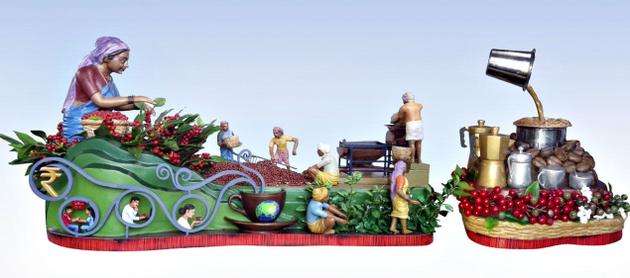
A miniature of the State’s tableau on the theme ‘Kodagu: the coffee heaven of Karnataka’ for the Republic Day parade. The French President, Francois Hollande, will be the chief guest at this year’s parade.

The French President will be the chief guest at this year’s R-Day parade

French President Francois Hollande, who will be the chief guest at the Republic Day parade in New Delhi, will witness the various stages of coffee making in Karnataka’s tableau.

The State’s tableau this year is on the theme: Kodagu: the coffee heaven of Karnataka. It will depict various stages in the making of coffee, starting from women plucking the beans to processing them and the processed powder being finally turned into the aromatic brew. The tableau depicts Kodava women, wearing their distinctive dress, performing their traditional dance.

Folklorist H.L. Nage Gowda’s book Bettadinda Battalige (From the hills to the cup), on the coffee’s origin, is the basis for the tableau.

Shashidhara Adapa, who designed the tableau, said the work on it has commenced both in Bengaluru and New Delhi. Two sets of artists are working on creating sculptures and fabricating the tableau. “Steam emanating from a cup of coffee will be visible to the audience,” he said. The signature music will be by Praveen D. Rao.

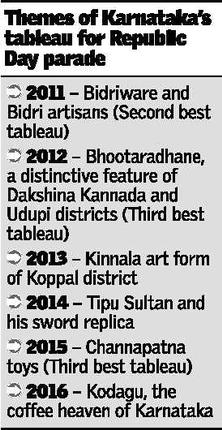
It is for the sixth consecutive time that Karnataka is participating in the parade. Back in 2005, its tableau on the theme of Gomateshwara had bagged the first prize. In the subsequent years, the State showcased Mysuru Dasara, followed by Hoysala and Pattadkal architecture.

themesKF10jan2016

According to N. Vishu Kumar, Director of the Department of Information, the selection process is rigorous. “Only the best are chosen,” he said. Getting an opportunity to represent the State at the parade is an achievement in itself, he added.

source: http://www.thehindu.com / The Hindu / Home> Cities> Bengaluru / Muralidhara Khajane / Bengaluru – January 09th, 2016

Coffee Board Confers Export Awards

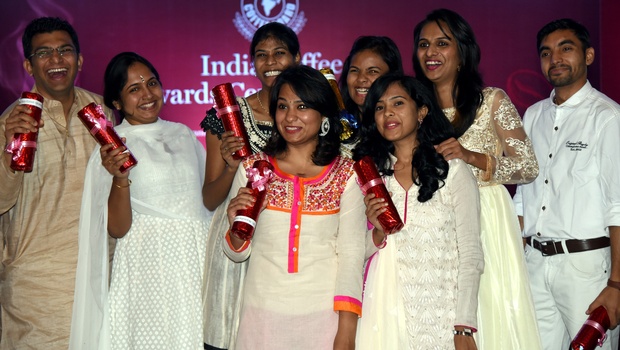
Students of PG Diploma in Coffee Quality Management during the India Coffee Awards Ceremony in Bengaluru on Thursday | NAGARAJA GADEKAL

Bengaluru :

The Coffee Board on Thursday conferred the Best Coffee Exporters’ Awards to the best exporters of green coffee, specialty coffee, instant coffee and roasted coffee.

Coffee Board chairperson Leena Nair said the since 1999-2000, the board has been presenting the awards to motivate, encourage and maximise export performances, especially to key destinations.

Indian coffee exports have been good over the past few years, touching three lakh metric tonnes annually. Of the 538 exporters, 128, who actively exported coffee during 2013-14, were judged by a jury for the awards.

Chief Secretary Arvind Jadhav, who was the chief guest during the ceremony, said the coffee sector needs to be given a boost to drive the economy of the state in a major way. “Coffee cultivation in the state is threatened by climate change, but proper research should be put in to mitigate the effect and produce top-end coffee,” he added.

India exported 2.99 lakh metric tonnes of coffee during 2013-14 with export earnings of $776 million (Rs 4,594 crore), covering more than 100 countries. Italy, Germany, Russia, Belgium, Turkey and Spain are the top six countries importing Indian coffee.

source: http://www.newindianexpress.com / The New Indian Express / Home> States> Karnataka / by Express News Service / January 08th, 2016

‘Indian coffee doing well internationally’

Coffee production in the country this year could reach close to three lakh metric tonnes. Production in Karnataka, the country’s largest coffee producer, would also be better compared to the last few years, said former Coffee Board Chairman Javed Akhtar.

Speaking at the India Coffee Awards Ceremony, organised by Coffee Board on Thursday, he said that the scheme to expand Indian coffee internationally was extremely successful and Indian exporters are hugely respected. The export of this bean has also registered a marked increase, consistently touching three metric tonnes annually in the last few years, he added. Coffee Board Chairman Leena Nair said that 128 entities were actively exporting coffee in 2013-2014 to more than 100 countries with earnings close to Rs. 4,594 crore.

Andhra Pradesh is also gearing up to become a serious coffee producing State, another former Chairman G.V. Krishna Rau pointed out.

source: http://www.thehindu.com / The Hindu / Home> News> Cities> Bengaluru / Staff Reporter / Bengaluru – January 08th, 2016

Raina launches sugar free cakes at Blends & Brews Coffee Shoppe

Dubai :

A new range of sugar-free cakes of Blends & Brews Coffee Shoppe was launched by renowned Indian cricketer Suresh Raina, at the outlet in Thumbay Hospital – Dubai on Thursday December 31.

He also met and interacted with visitors at the outlet, and obliged their requests for selfies and autographs.

SureshRainaKF05jan2016

“We are happy to announce that our range of sugar-free cakes will now be available across all Blends & Brews outlets. We welcome people who prefer sugar-free delicacies to try out the newest of our high quality products for our valued customers,” said Farhad C, Director of the Hospitality Division of Thumbay Group.

SureshRaina02KF05jan2016

Blends & Brews is a UAE-born chain of coffee shops owned by Thumbay Group, with outlets across various locations in the country, and in Hyderabad – India. It offers a delicious range of coffees and local savories, as well as sugar-free beverages, cakes and cookies. As part of the strategic plan of Thumbay Group, an addition of 100 Blends & Brews outlets within the UAE is aimed in the next 6-7 years. The Group also plans to extend franchise offers to partners in other countries including MENA region and India.

Blends & Brews Coffee Shoppe’s beverages have won many awards in various national and international competitions.

Some of the awards include the ‘Best Signature Drink of the Year-2006’ award at the 1st UAE Barista Championship held at Dubai Trade Center in association with DSS Summer Fiesta & ILLY Caffé, the ‘Platinum Award’ at the Indian BARISTA Championship for the year 2007 organized by the Specialty Coffee Association of India & the Coffee Board of India.

Blends & Brews Coffee Shoppe was a finalist at the World Barista Championship in Tokyo, Japan in July 2007.

source: http://www.daijiworld.com / DaijiWorld.com / Home> Gulf / Media Release / Dubai, Thursday – December 31st, 2015

Green Coffee Benefits: Just Another Healthy Reason to Drink Up

greencoffee01dec312015

Whether sipped early morning to get you out of bed or downing a cup with a late-night dessert, you’ll have to agree that there isn’t a more universally loved hot beverage than coffee. Taste is a personal thing, so it’s never right or wrong. But the perfect cup is all about choosing the right beans. I found an exciting new variety that you might have not discovered yet.

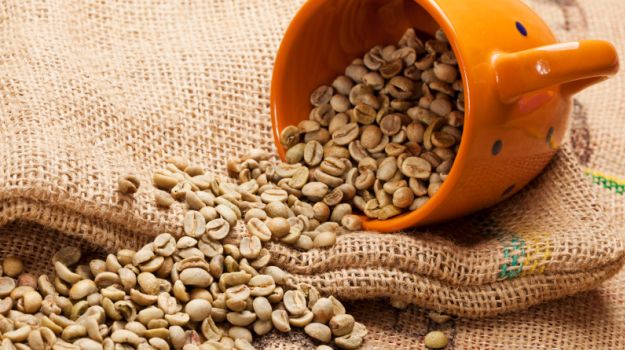
The coffee bean has an adventurous life. They are actually seeds enclosed in a red berry. These are extracted and roasted that lends the incredible taste and aroma. When left in their raw form, they are used to produce green coffee. These seeds are not roasted; instead they’re soaked and then concentrated in an extract. “As natural is the flavour of the season, green coffee gets its share of limelight but in some cases roasting brings out certain oils within the bean, which enhances the nutrient profile. In its pure form, green coffee has a low caffeine content which makes it healthier,” says Mr. Radhakrishnan, Coffee planter and Coffee powder manufacturer, Aromas of Coorg, Bangalore. It’s true. This masterpiece in your mug can do more than making an optimist out of you.

greencoffee02dec312015

Why green is good

Green bean coffee extract became popular in 2012 after it was mentioned in the Dr. Oz show as a ‘magic weight- loss cure’. When roasted, coffee beans undergo numerous chemical changes. Their antioxidant levels increase, but the powers of a natural substance called chlorogenic acid decrease. This chemical is known to affect post-meal blood sugar levels, boost your metabolism, curb carb absorption and block fat accumulation – all of which aid weight loss. The chlorogenic acid content is higher when coffee beans are in their pure, natural form.

For some, drinking brewed green coffee may not be pleasant as it is slightly bitter than your regular, roasted coffee and therefore the extract is often used to make supplements. While pills and powders have never convinced me, the jury is still out.

“Green coffee might have a hand in slowing the rate of glucose release in our blood. If they are consumed before your meal, the chlorogenic acid reacts with the food and controls the amount of glucose we synthesize. This way it builds your metabolism that can lead to weight loss when coupled with a balanced diet and adequate physical activity. Everything is best when taken in its fresh and whole form as the synergy between various compounds present in the food makes it the most effective,” says Dr. Rupali Datta, Chief Clinical Dietician at Fortis-Escorts Hospital in New Delhi.

Don’t confine yourself to the hot fix. “Apart from the fact that there are claims that green coffee helps in weight loss, the simple fresh flavour of the brew can itself be quite refreshing. A good way to enjoy the young flavour of the green bean extract is to make a version of a virgin mojito out of it. Crushed ice, juice from half a lime, sprigs of fresh mint, cane or palm sugar, and some of the green coffee extract – all roughly muddled together can be an excellent day time drink,” suggests food writer and enthusiast, Priyadarshini Nandy.

She adds, “And for gym rats, a fresh smoothie to start your day is always a good idea. To make it vegan use something like almond milk, add brewed green coffee, a banana, some dates, maybe even a bit unsweetened cocoa powder, a few ice cubes and blend it on high speed. It can give your system a happy boost of energy after a workout.”

source: http://www.food.ndtv.com / NDTV Food / Home> Opinion / by Sivaganga Vasudeva, NDTV / December 30th, 2015

Tata Global launches instant coffee brand to compete with Nescafe, Bru

Tata Coffee Grand was jointly developed by Tata Global Beverages and group firm Tata Coffee , which manufactures the product, TGBL said.

Mumbai :

India’s second largest tea maker Tata Global Beverages has forayed into instant coffee business in the country by launching Tata Coffee Grand, which will compete with Nestle’s Nescafe and Hindustan Unilever’s Bru.

The instant coffee brand was jointly developed by Tata Global Beverages (TGBL) and group firm Tata Coffee, which manufactures the product, TGBL said on Monday.

The coffee beans will be primarily sourced from Tata Coffee’s plantations in South India, popular for producing Arabica and Robusta blends.

At present, the maker of Tata Tea and Tetley brands earns over 70% of its sales from tea brands while coffee business accounts for 20% through brands like Eight o’clock and Grand outside India.

source: http://www.retail.economictimes.indiatimes.com / ETRetail.com / Home> Food & Entertainment / ET Bureau / November 30th, 2015