Category Archives: Coffee News

How coffee agroforests can play a role in ecological restoration

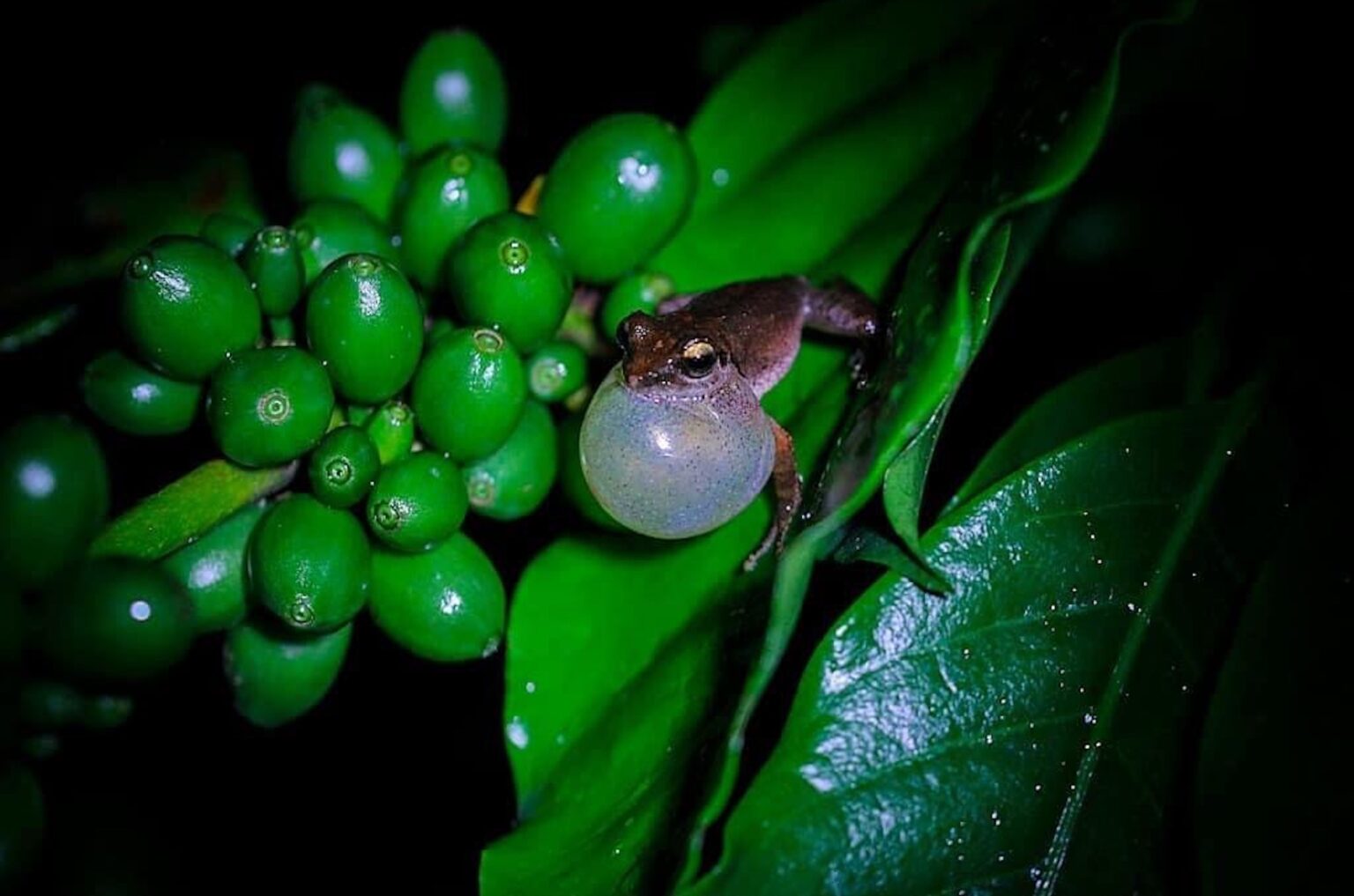
A recent study by the Nature Conservation Foundation, in collaboration with owners and managers of agroforests in Hassan and Chikkamagaluru districts, demonstrates the potential of coffee agrosystems as refuge for biodiversity.

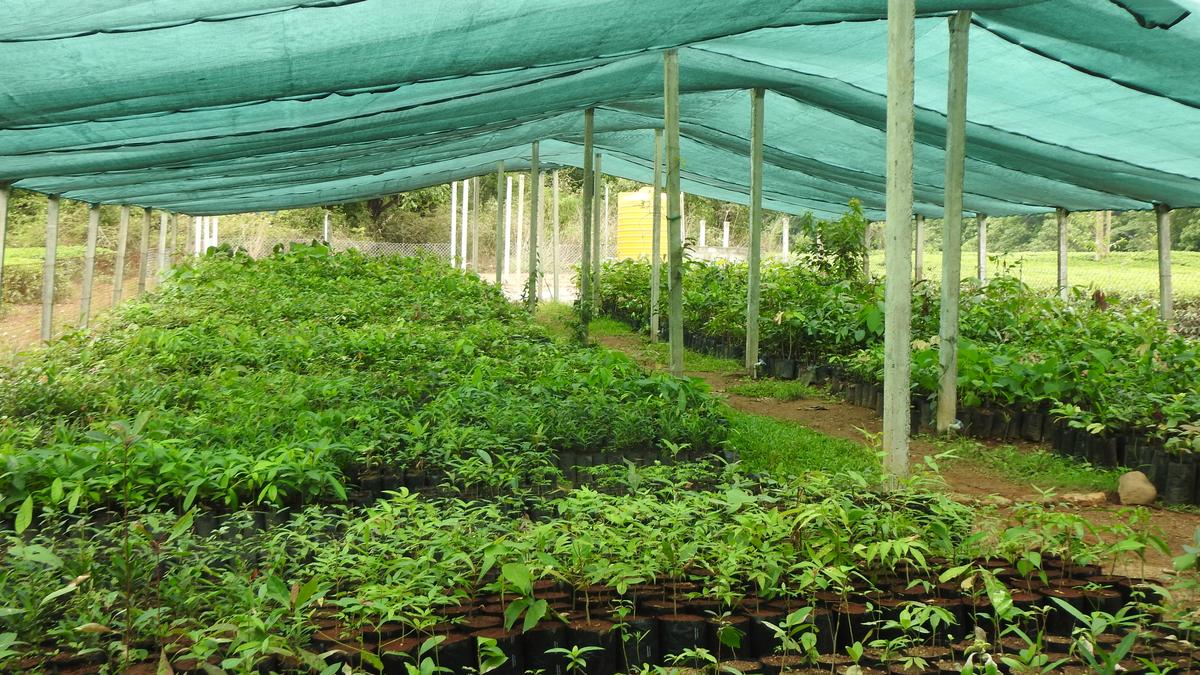
A restoration nursery in the Western Ghats, India. | Photo Credit: Vijay Kumar

In 2019, when the Narmada Estate, a coffee plantation in Karnataka’s Chikkamagaluru district, decided to go organic, it began diversifying the coffee-cropping system to reduce pests. “The reason something becomes a pest is because you have too much of the same thing,” explains Sohan Shetty, the estate’s general manager. “So, we needed to plant as many trees as possible.”

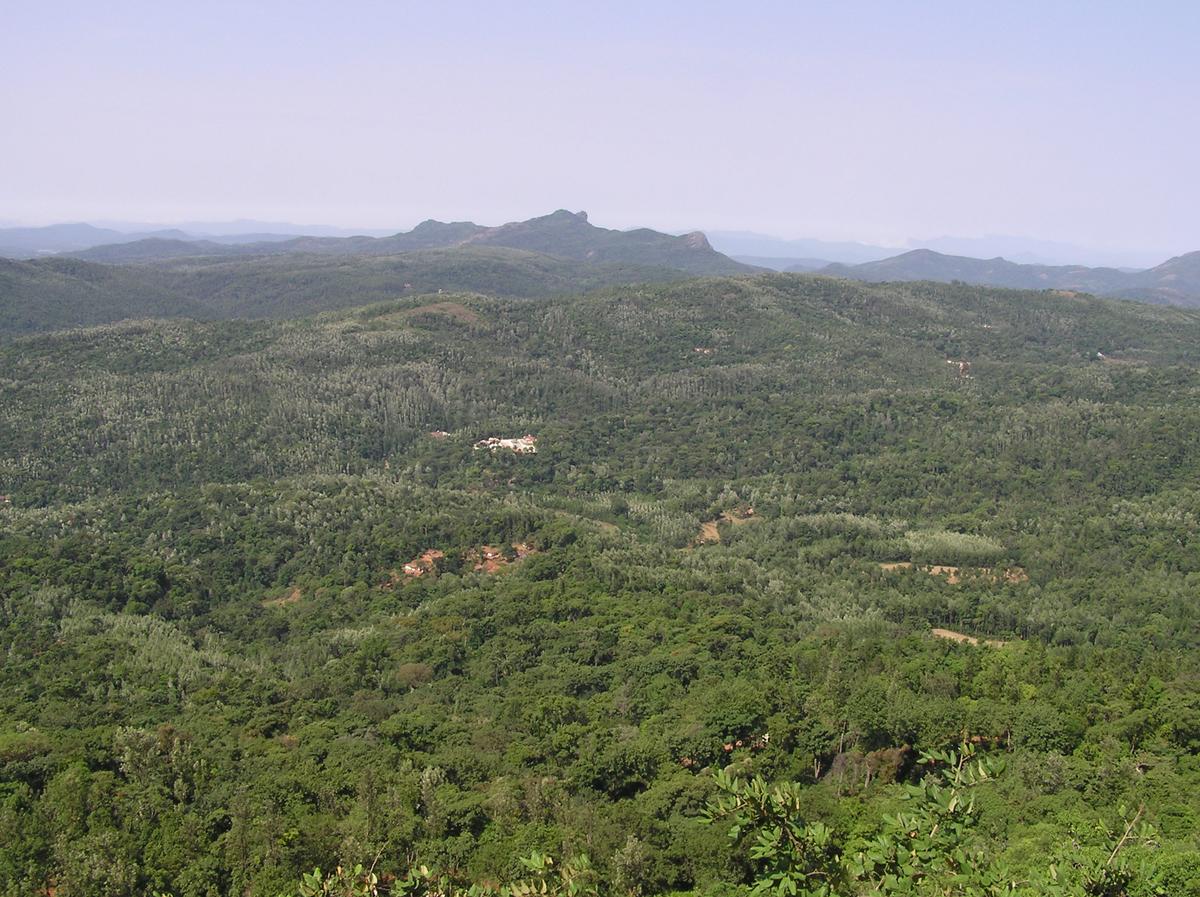
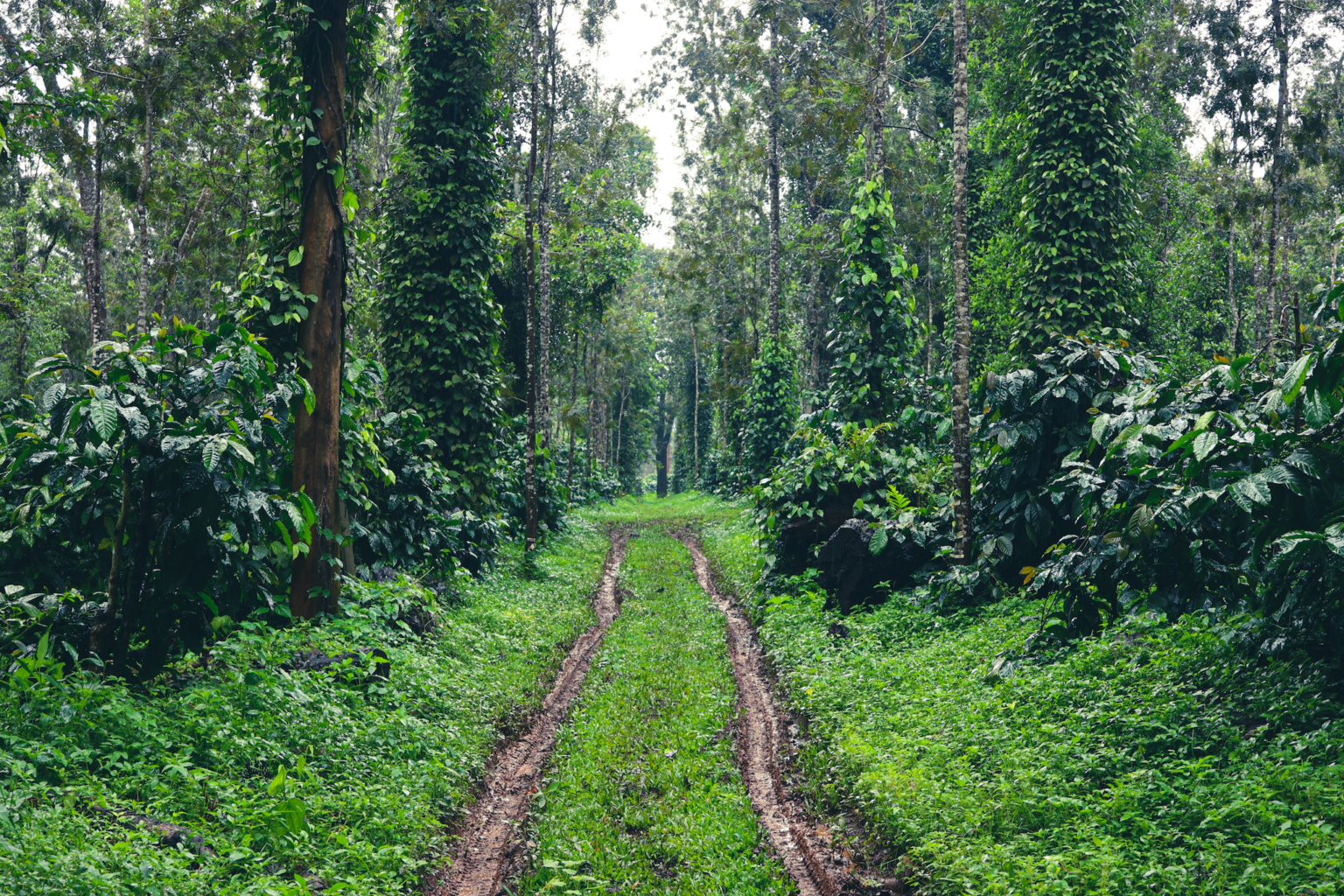
Shade coffee agroforests and pockets of remnant natural forest form a dense and continuous tree canopy in the Chikmagalur region of the Western Ghats, India. | Photo Credit: Anand Osuri

To find suitable plants to grow alongside organic coffee, he began scouting for the best-priced plant sources, including the Karnataka Forest Department’s nurseries and seed suppliers in Chikkaballapur. During his search, Shetty discovered that the Nature Conservation Foundation (NCF) had been actively restoring rainforests in Valparai, Tamil Nadu, for years, and so he reached out to them. “They were amazed at the scale with which I was thinking of starting nurseries and asked me what species I was working on.” So he shared with them the list of trees and seeds available with both the Forest Department and the seed supplier. “The botanist looked at it and said, a week later, that only three of these species are native to the Western Ghats,” he says. “That shook me. I realised that we are just planting trees for the sake of planting trees, but we are completely messing up the ecosystem.”

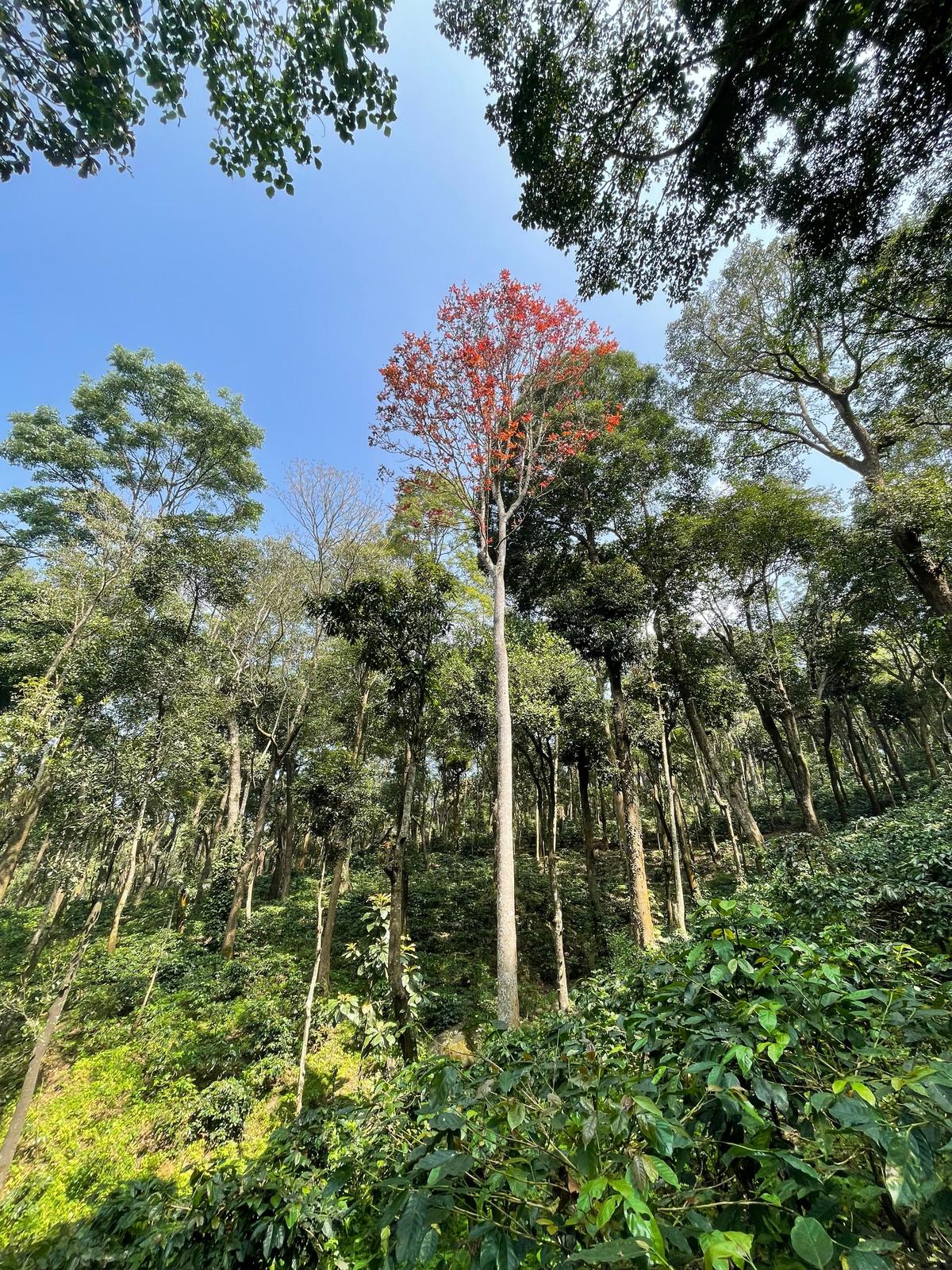
Shade trees in coffee agroforests can comprise a variety of species that are native to forests of the region. The species with fresh red leaves at the center of the image is Canarium strictum, which produces fleshy fruits that attract birds and a resin that is culturally and economically important. | Photo Credit: Vijay Karthick

In search of a better solution, he soon found himself visiting a nursery run by NCF on land allocated by the Kadamane Estates Company in Sakleshpur taluk, Hassan district, which had been set up in 2022. “It was quite impressive, 5000-odd plants of different varieties,” remembers Shetty, who, on seeing this, thought it would be a good idea to further collaborate with NCF. “By that time, I had set up a nursery with 1.2 lakh bags, which could accommodate that many saplings,” he says. “So, I told them that I was happy to grow plants for you. That is how the whole partnership began,” recalls Shetty, who, along with other owners and managers of agroforests in Hassan and Chikkamagaluru districts, was part of a study spearheaded by conservation scientists from the NCF titled Shade coffee agroforests as native plant sources for restoration.

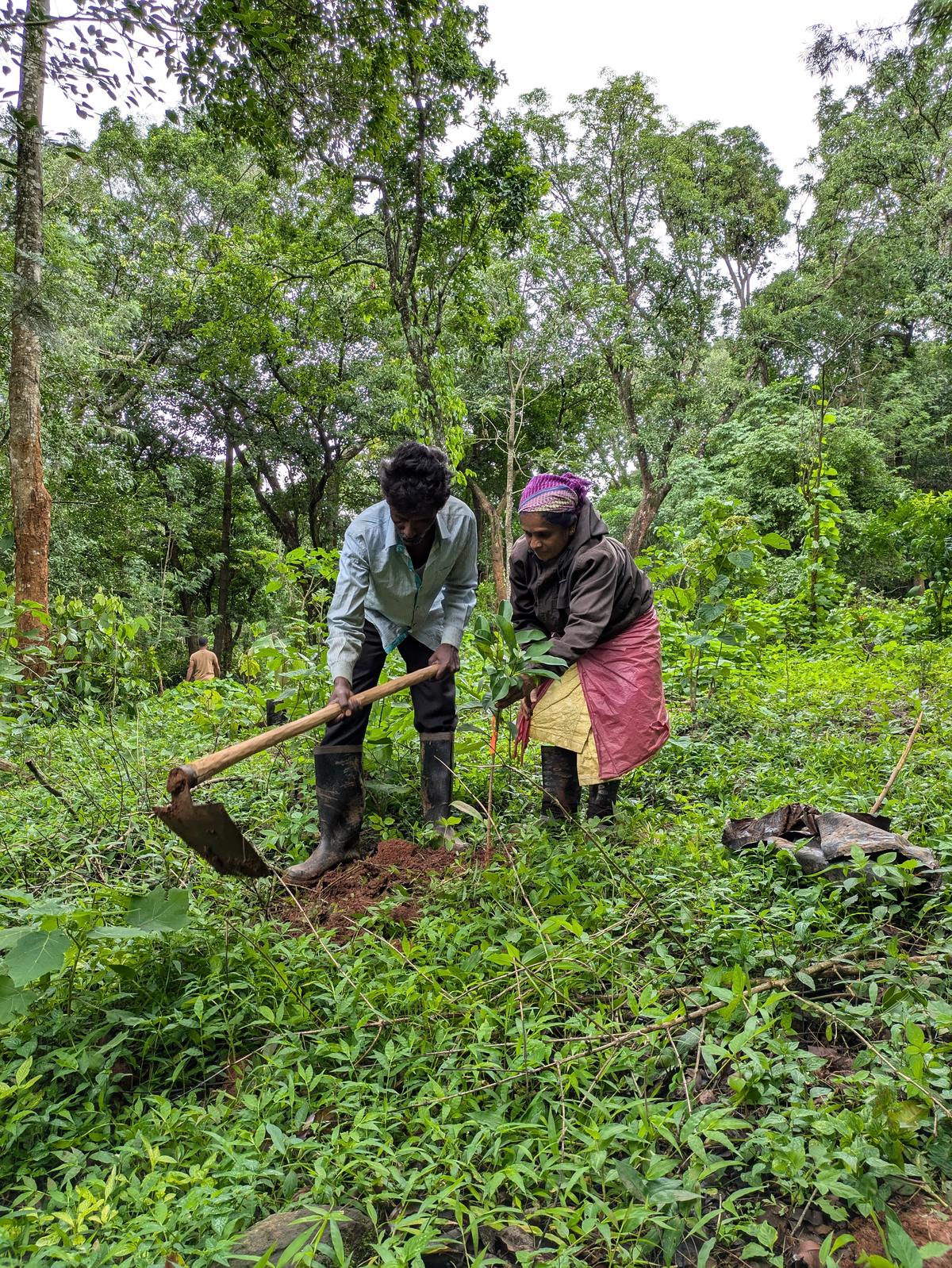
Planting trees as part of ecological restoration in a degraded forest in the Western Ghats, India. | Photo Credit: Vijay Kumar

Seed Harvesting

According to Anand Osuri, a scientist with NCF and the paper’s lead author, the study, which has just been published in the Journal of Applied Ecology, really took off in 2023. A year earlier, Vedika Dutta, also a co-author, had come to Osuri as a master’s student, wanting to study birds in coffee agroforests, with a focus on frugivorous or fruit-eating birds. “In the course of her work, we spent time in coffee estates, watching birds and the trees in which they foraged in these coffee plantations,” he says, adding that they were struck by the large numbers and wide variety of native tree seeds and seedlings on the coffee estate floor. “These seeds and seedlings were not just of the trees fruiting overhead, but also other species carried in from further afar by seed-dispersing birds and mammals.”

Around the same time, NCF was also thinking about a forest restoration project in the coffee-growing landscape of the hilly Malnad region by partnering with local residents and landowners. According to him, these landowners had different motivations to restore forests, ranging from an interest in conservation to entering carbon and biodiversity markets or attracting birds to their homestays. “There are a number of opportunities where interested landowners are keen to restore forests in areas where coffee is not being cultivated,” says Osuri, who has been participating in efforts to restore forests for nearly a decade and believes that the availability of diverse native plants, sourced locally and ethically, is critical to do so. “So, there was this restoration project that we were trying to develop, for which we needed to develop native plant nurseries, and the bird work was also going on.”

As part of the restoration project, researchers from NCF needed to collect seeds and seedlings that could be raised in nurseries. But “we didn’t want to be collecting lots of seeds from the forests themselves because that reduces the seed availability there, impacting the resources of animals, birds and insects,” says Osuri. “And so, we put both these pieces together to see if we could do more to harness the potential of coffee farms as a source of seeds for restoration.”

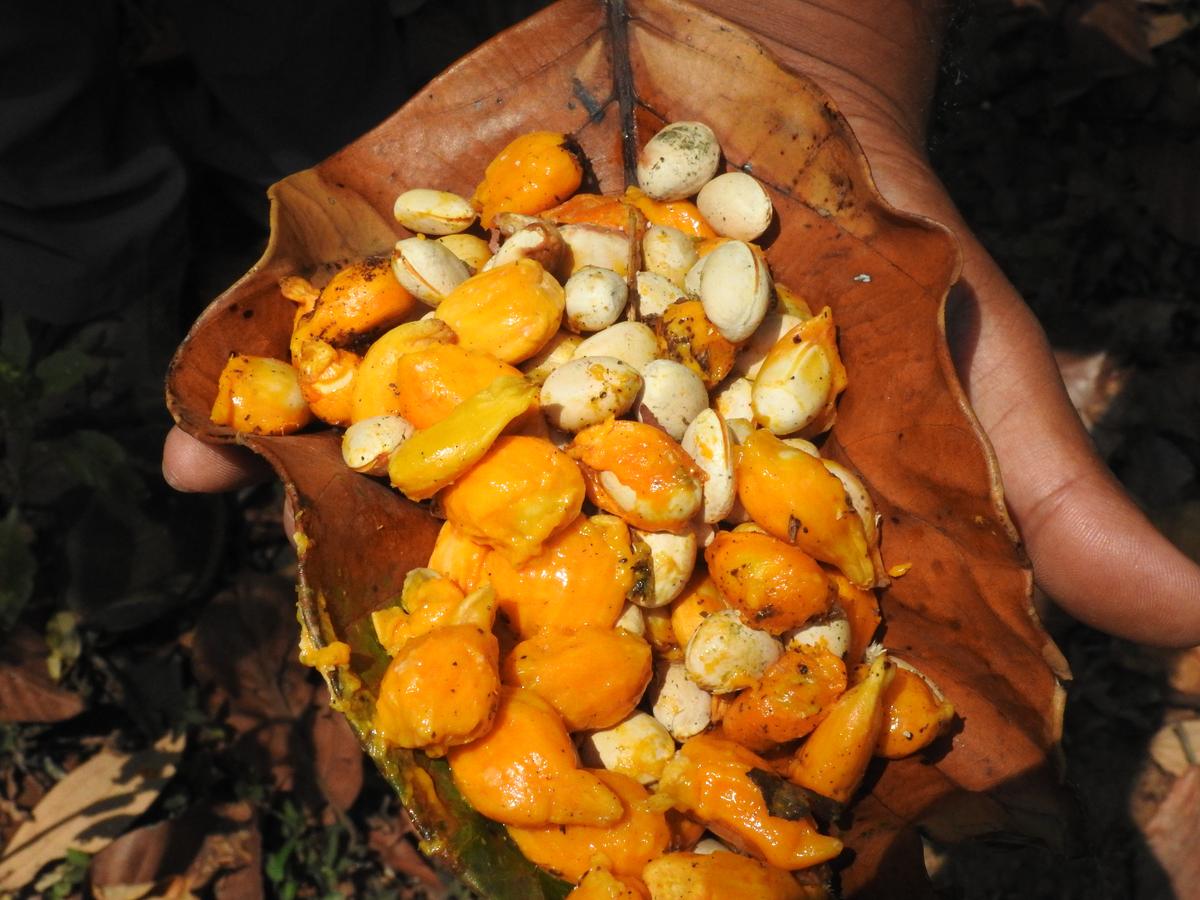
Seeds of Artocarpus hirsutus – a species that is endemic to the Western Ghats (found nowhere else on Earth) – during rescue from a coffee agroforest to a restoration nursery. | Photo Credit: Vedika Dutta

Why coffee

Coffee in India is largely shade-grown, making coffee plantations a potential “refuge for biodiversity,” says Osuri. “For a substantial set of native species important for restoration, we often find adults of those trees in the coffee estates.” However, most seeds that fall and germinate in coffee estates are weeded out because of the possibility of them competing with the coffee bushes for light and other resources, representing a loss for biodiversity conservation. “So, we thought we should make a more systematic effort to rescue their seeds and seedlings before they get weeded out

As part of the study, the team documented the diversity of native tree species found within the coffee estates, recording over 90 native tree species relevant for forest restoration in the region. Clarifying that the word “native”, in this instance, refers to “that particular eco-region of the Western Ghats, the wet evergreen rainforests” and not just plants “native to India,” he says that they were particularly interested in documenting species not only those native to the Western Ghats but also endemic to the region, those “found nowhere else on earth and some of which are classified by the IUCN as being threatened.”

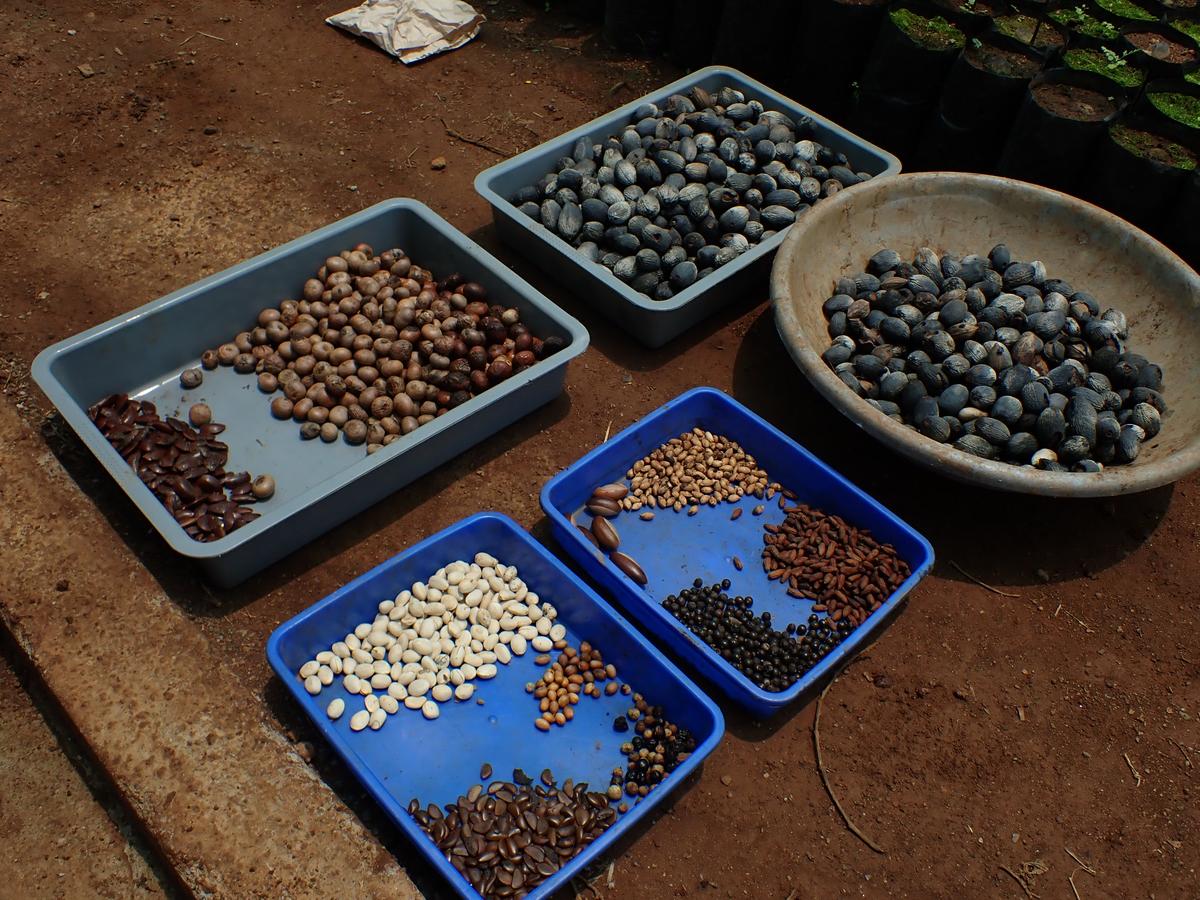
Seeds of multiple native tree species rescued from coffee agroforests prior to sowing at a restoration nursery. | Photo Credit: Vijay Kumar

The NCF team also connected with farmers who were “willing to give us permission to visit their farms, collect seeds, and also, in the monsoon season, collect small seedlings which were growing along the roadside.” Between 2023 and 2024, around 18,000 seeds and seedlings of 56 native tree species were rescued and are currently being raised in the two restoration nurseries established through collaborations between NCF and agroforest owners. “We are trying to encourage and enable people to take up such projects to plant the right native species in the right places.”

Currently, the restoration project is in a pilot stage with the NCF team focusing on two collaborative initiatives: expanding the network of seed source coffee farms and developing more native plant nurseries. “The idea we are proposing is that we should not just view coffee agroforests as refuges for biodiversity, but also acknowledge their potential to contribute to conservation in the wider landscape by being a source of native plants for restoration.”

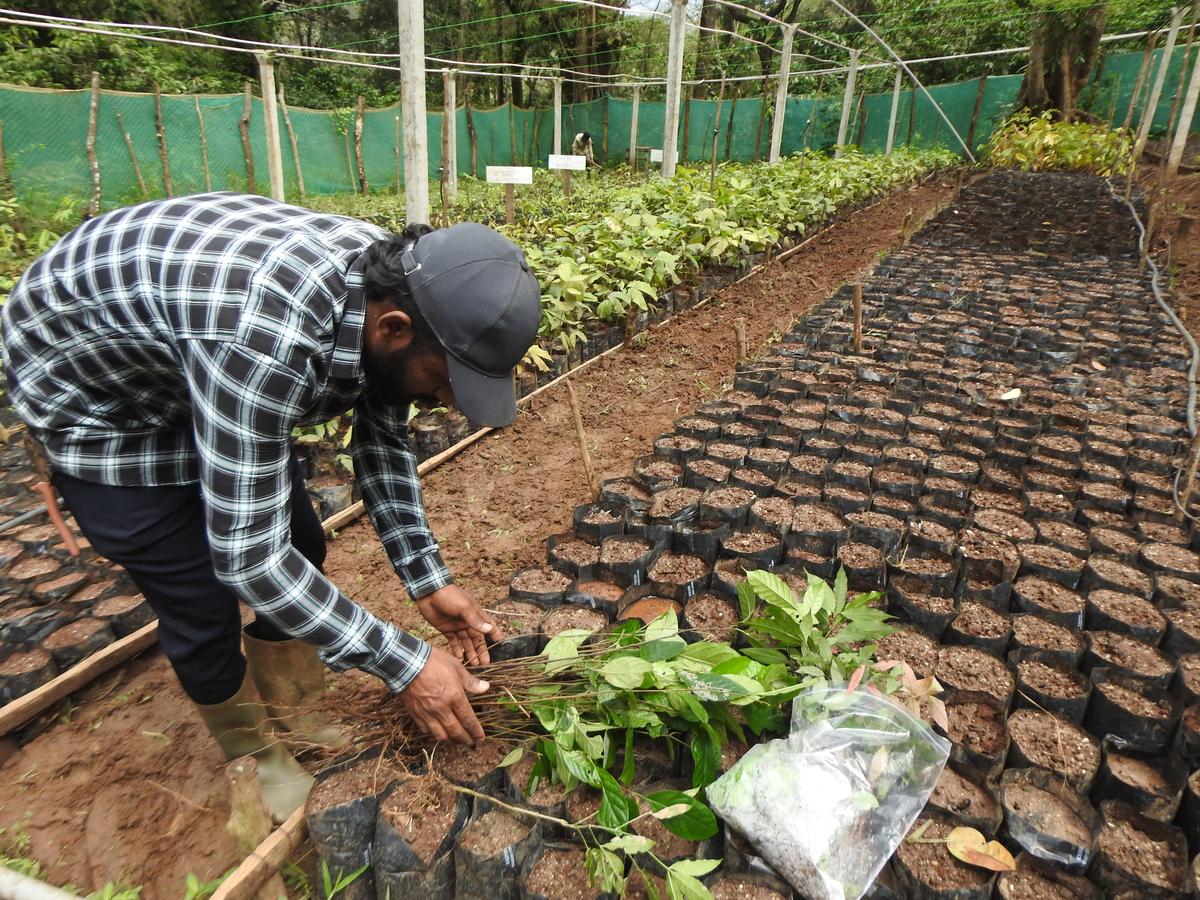
Seedlings of multiple native tree species rescued from coffee agroforests prior to replanting at a restoration nursery. | Photo Credit: Vijay Kumar

Future potential

In Osuri’s opinion, more collaborations and experimentation are now needed. “A few more things will need to be worked out before one can talk about substantially scaling up, since, at the moment, one of the limiting factors is nursery resources,” he says. One potential partner, who can play a key role in expansion, he believes, is the Karnataka Forest Department. “We plan to discuss our findings with department officers to see if there is a workable model for this,” he says. “If we can develop models for connecting seed sources in coffee farms with nurseries of the forest department, then the scale and potential really go up because the department already has an excellent network of nurseries.”

Osuri also hopes to strengthen and scale up their efforts in the Malenadu region, since nearly 70% of India’s coffee production comes from the Malenadu region, mainly from the Baba Budan Hills in Chikkamagaluru to Kodagu in the south. ”This is also an important region for biodiversity conservation and restoration,” he says. His long-term goal is to continue to explore opportunities and collaborate with coffee farmers and landowners for restoration, experiment with different approaches to restoration, and contribute in any other way he can to biodiversity in the region, he says.“And we would love to connect and exchange learnings with others interested in exploring similar models in different landscapes.”

source: http://www.thehindu.com / The Hindu / Home> News> Cities> Bengaluru / by Preeti Zachariah / May 05th, 2025

Badra Coffee wins Flavour of India Fine Cup Award

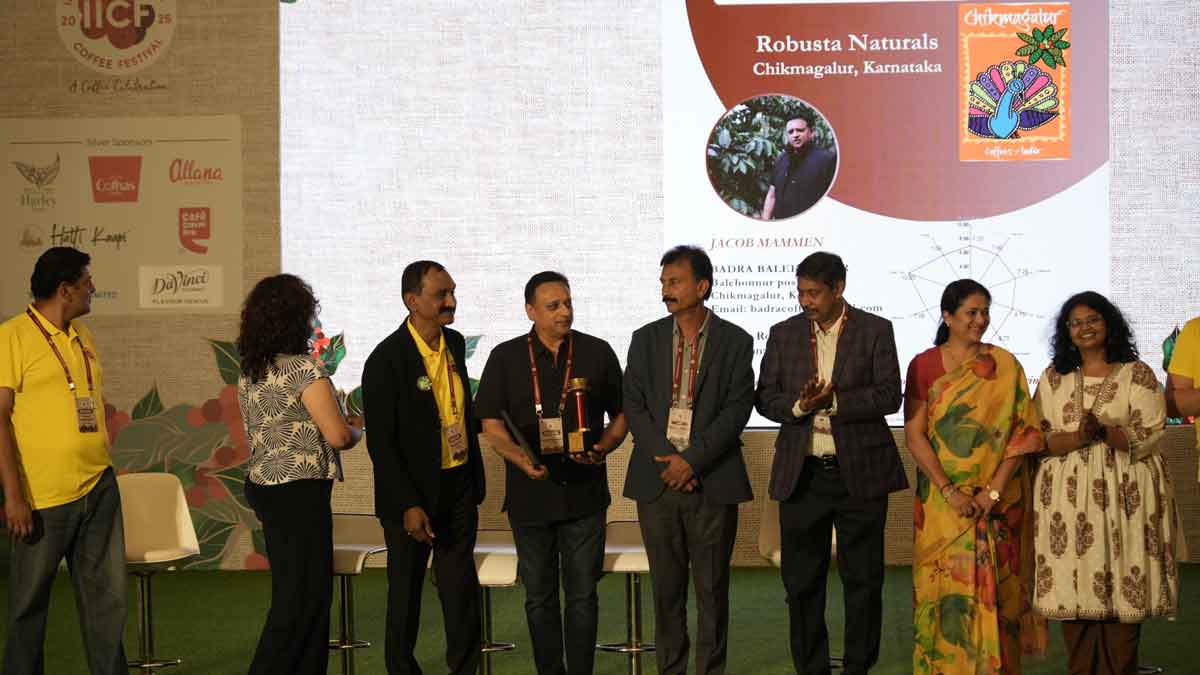
The award categories saw participation from different planters from all over the country. Badra Coffee also secured a second place in the ‘Robusta Washed’ category.

pix

Bengaluru-headquartered Badra Coffee has won the Flavour of India Fine Cup Award for Best Robusta Naturals from the Coffee Board of India. There were seven categories in Flavour of India and the company won the award in the Robusta Naturals category. The company also secured second place in the Robusta Washed category. 

The award categories saw participation from different planters from all over the country who had submitted their coffee samples. These samples were tasted by Q graders and coffee professionals. The award was received by Jacob Mammen, managing director of Badra Estates.

Badra Coffee mainly sells to niche coffee roasters in Japan, South Korea, Thailand, Malaysia, Germany, Italy, the UK, Norway, Greece and the US and has launched four blends for the retail market. Three of them, Temple Mountain (Arabica), Misty Heights (single estate) and Kaapi Nirvana (filter), are pure coffees, while Dakshin Fusion is a filter coffee with chicory.

Badra Coffee has estates in Chikkamagaluru Karnataka. Mammen’s great-grandfather bought the estate from Brooke Bond Ltd. Three generations of the family have run Badra Estates and Industries Ltd, which was formed in 1943.  

Mammen, a true believer in developing speciality coffee, has worked with reputable international buyers to improve the quality of Badra Coffee. “We call it relationship coffees,” he had told THE WEEK. “We interact with our buyers to understand their requirements of different flavour profiles, and then work on developing coffees that specifically suit them,” Mammen added. 

Special attention is also given to manufacturing, which involves washed, semi-washed, and unwashed processes. The company has done different trials in fermentation and has been working with a German buyer who collaborates with the German government. 

During the harvest, scientists from Germany visit the farm. They collect samples after many trials. The samples are then taken to their labs in Berlin where they isolate the beneficial microbes prevalent on different estates. These microbes are then used to tweak fermentation and produce a basket of flavours.

source: http://www.theweek.in / The Week / Home> Magazine> News> Business / by Abhinav Singh / April 28th, 2025

India’s Nothing Before Coffee raises $2.3m to fuel outlet growth

The affordable coffee chain is seeking to reach more than 150 outlets across India’s Tier 2 and 3 cities by the end of 2026

Left to right: Nothing Before Coffee co-founders; Shubham Bhandari, Akshay Kedia, Anand Jain and Ankesh Jain | Photo credit: Nothing Before Coffee 

India’s Nothing Before Coffee (NBC) is gearing up for a fresh expansion drive after securing $2.3m in a pre-series A funding round led by Mumbai-based Prath Ventures. The round also saw participation from SYL Investments, Warmup Ventures & Mars Shot Ventures. 

In a press release, NBC said it would continue to target growth in India’s ‘largely untapped’ Tier 2 and 3 cities, where it says major coffee chains have yet to venture. The affordable coffee chain, which has previously sold promotional beverages for ₹99 ($1.18), reiterated its goal to resonate with younger Indian consumers and said it could reach 150 stores in India by the end of 2026. 

NBC also said the funding would be used to strengthen its digital platforms, which include an in-house app, invest in its supply chain and roll out new store formats, such as kiosks and smaller cafés.

“This funding milestone is a strong validation of our vision and operating model. At Nothing Before Coffee, we’ve built a brand that combines affordability, quality, and deep cultural resonance – especially in India’s Tier 2 and Tier 3 markets. With strong unit economics and consistent consumer love, we are now well-positioned to scale rapidly,” said Ankesh Jain, Co-founder, Nothing Before Coffee.

Founded in Jaipur in 2017, Nothing Before Coffee operates more than 85 stores across 35 cities in India, alongside a single site in Portugal, which opened in April 2024. The value-focused coffee chain sources coffee from Chikmagalur and Coorg in India’s southern Karnataka state and roasts in-house to supply its store portfolio and direct-to-consumer channel. 

The coffee chain has previously stated it was seeking $4m to reach 400 sites in India by 2026 and facilitate planned expansion in Europe and the Middle East.

“As a fund, we’ve long believed in the growing demand for coffee and vibrant café experiences across India – not just in metros, but well beyond Tier-1 cities. In all our research, NBC consistently stood out for the vibrance in their cafés, the affordability of their pricing, and the quality of their offerings,” added Piyush Goenka, founder of Prath Ventures.

India’s burgeoning domestic coffee shop market has courted millions of dollar’s of investment over the last 18 months as operators rush to be the first to open stores in the country’s untapped urban areas.

Specialty coffee groups Blue Tokai Coffee Roasters and Subko Coffee Roasters have raised $35m and $10m respectively to scale their operations, while affordable operator abCoffee and specialty coffee start-up First Coffee raised $3.4m and $1.2m to accelerate the roll-out of their on-the-go focused store networks. 

In December 2024, Bangalore-based Fast Coffee raised $1m in a funding round led by venture capital firm Bloom International Ventures to fund plans to reach 10 stores by the end of 2025.

source: http://www.worldcoffeeportal.com / World Coffee Portal / Home> Industry Reports> India> Weekly Coffee Dose / April 17th, 2025

Meet Black Baza, winner of the Speciality Coffee Association Sustainability Award

Arshiya Bose, the founder of this Bengaluru-based “activist company”, traces its genesis, journey and what this award could mean for the smallholder coffee farmers in the country.

Coffee being dried in a remote hamlet | Photo Credit: Special Arrangement

Arshiya Bose feels that a conversation she had in Coorg, back in 2011, when she was pursuing her PhD at Cambridge, was a “pivotal moment” in her journey towards creating Black Baza Coffee. During her fieldwork to understand the impact of global sustainability certifications on farmers, she met the mother of a local grower from India’s coffee cup. “She asked me if I was going to do anything useful after my PhD,” recalls Arshiya, who soon recognised that while it was wonderful to be so deeply immersed in an academic project, “it can be selfish if that was where it stayed.”

This comment made her realise that much could be done to make coffee cultivation more sustainable — something that is increasingly becoming an important aspect of the industry’s long-term viability, considering both the environmental impact of conventional coffee farming and the fact that the bean is particularly vulnerable to climate change. In 2014, after completing her PhD, she returned to India, going on to start Black Baza two years later, naming the brand after a small, migratory raptor with “its own kind of cult following amongst birders, because it displays such interesting behaviours”.

The beginnings were small: 100 kilograms of coffee bought from four different farms. “Now, of course, that number has grown multifold, and we now work with around 650 farms (mainly in Palani, Wayanad and BR Hills),” says Arshiya of the Bengaluru-headquartered “activist company,” which has just won the Speciality Coffee Association (SCA) 2025 Sustainability Awards in the ‘For Profit’ category. This annual award, by the world’s largest global coffee trade association, recognises “excellence in product innovation, design, and sustainability across the industry” with the winners (Fairtrade International won the ‘Nonprofit’ category) being formally recognised for their achievement at Speciality Coffee Expo in Houston in April.

A selection of Black Baza’s coffees | Photo Credit: Special Arrangement

Standards for sustainability

Admittedly, the word ’sustainable’ is a multifaceted, somewhat indefinable concept, with every organisation, brand, company, Government or country understanding the much-used term differently. “Therefore, we had to almost set our own standards for how we wanted to do things,” says Arshiya.

Black Baza only works with smallholder farmers who have already been growing organic coffee and are committed to maintaining and improving the native forest cover on their farms. “The average landholding on where we work is half-to-one-acre parcels of land in very remote parts of the country, with many belonging to tribal communities… people who’ve been historically marginalised and are vulnerable,” says Arshiya, who has a background in community-led conservation. She adds that Black Baza also helps farmers with the post-harvest process, working very closely on building capacity to produce better quality, speciality coffee, both arabica and robusta.

A coffee training programme being conducted | Photo Credit: Special Arrangement

According to her, considerable care was taken to bring in a system of fair, transparent pricing, placing a premium on the coffee’s quality and the farming practices followed, including the attention paid to preserving the local biodiversity. Making coffee farms friendly to local flora and fauna, she says, is an especially crucial mandate of Black Baza since most coffee-growing areas are in places that are also rich in biodiversity. “That is true across South and Central America, parts of Kenya, Uganda, Indonesia, Malaysia, Thailand, Laos, Vietnam, and the Indian Western Ghats too,” she says.

Keeping with this focus on biodiversity, the names of all of Black Baza’s coffees, which are sold in compostable and degradable packaging, are inspired by various indicator species: organisms whose presence or absence offer insights into overall ecosystem health. Think potter wasps, lion-tailed macaques, otters, Indian moon moths, or the Malabar whistling thrush, “species symbolic of the kind of farming practices we like,” she says.

One of Black Baza’s partners with her produce | Photo Credit: Special Arrangement

The coffee conundrum

The popular belief is that coffee came to India in the 17th Century surreptitiously, smuggled from Yemen by the Sufi saint Baba Budan. “It is a sweet story, but that is not really how coffee became a full-fledged plantation industry. It was a colonial project,” says Arshiya, who, as part of her PhD work, spent a lot of her time in the British Library looking at archives to understand how coffee spread in India. “We know that it was the British East India Company that set up an experimental plot in Thalassery, Kerala, and expanded coffee across India from there.”

This expansion, however, came at a considerable ecological cost, with the British clearing vast hills to grow this coffee, later replanting the land with exotic species like silver oak, once they realised that coffee grew better in shade. “And when they left, they handed over their plantations to their favourite people. And that is where this land inequality came about,” she says. While coffee continues to be grown in large plantations, many coffee farmers cultivate coffee on very small tracts of land, making them especially vulnerable to the vagaries of Nature, including climate change, since coffee is especially susceptible to rising temperatures and rainfall pattern fluctuations. “Smallholder farmers are always more vulnerable in the face of any kind of natural disaster, and that is true of coffee as well,” she says.

Arshiya Bose | Photo Credit: Special Arrangement

Working with more farmers, therefore, is high on the list of Black Baza’s priorities, and Arshiya hopes that the recent SCA recognition can help them achieve this goal. “One of the ways we think of doing this is to develop a green coffee programme, and I think something like SCA enables us to now try to look for partners overseas,” she says, adding that getting into coffee exports would allow them to work with even more farmers. “We have also started expanding beyond coffee into other products that our farmers grow, including cardamom and pepper, and hope to open a couple of cafés soon, as well.”

To know more, log into https://blackbazacoffee.com/

source: http://www.thehindu.com / The Hindu / Home> News> Cities> Bengaluru / by Preeti Zachariah / April 16th, 2025

Going beyond the bean with the founder of an innovative Canadian coffee company

Forest Bean

For many of us, coffee is the fuel behind our mornings, meetings, or late-night study sessions. But behind every cup is a harsh reality: coffee farming is often unsustainable. It’s estimated that, for every cup we sip, about one square inch of rainforest is destroyed .

So, what’s a coffee lover to do?

The good news is there are coffee brands out there that are pioneering sustainability — Canadian brands like Forest Bean .

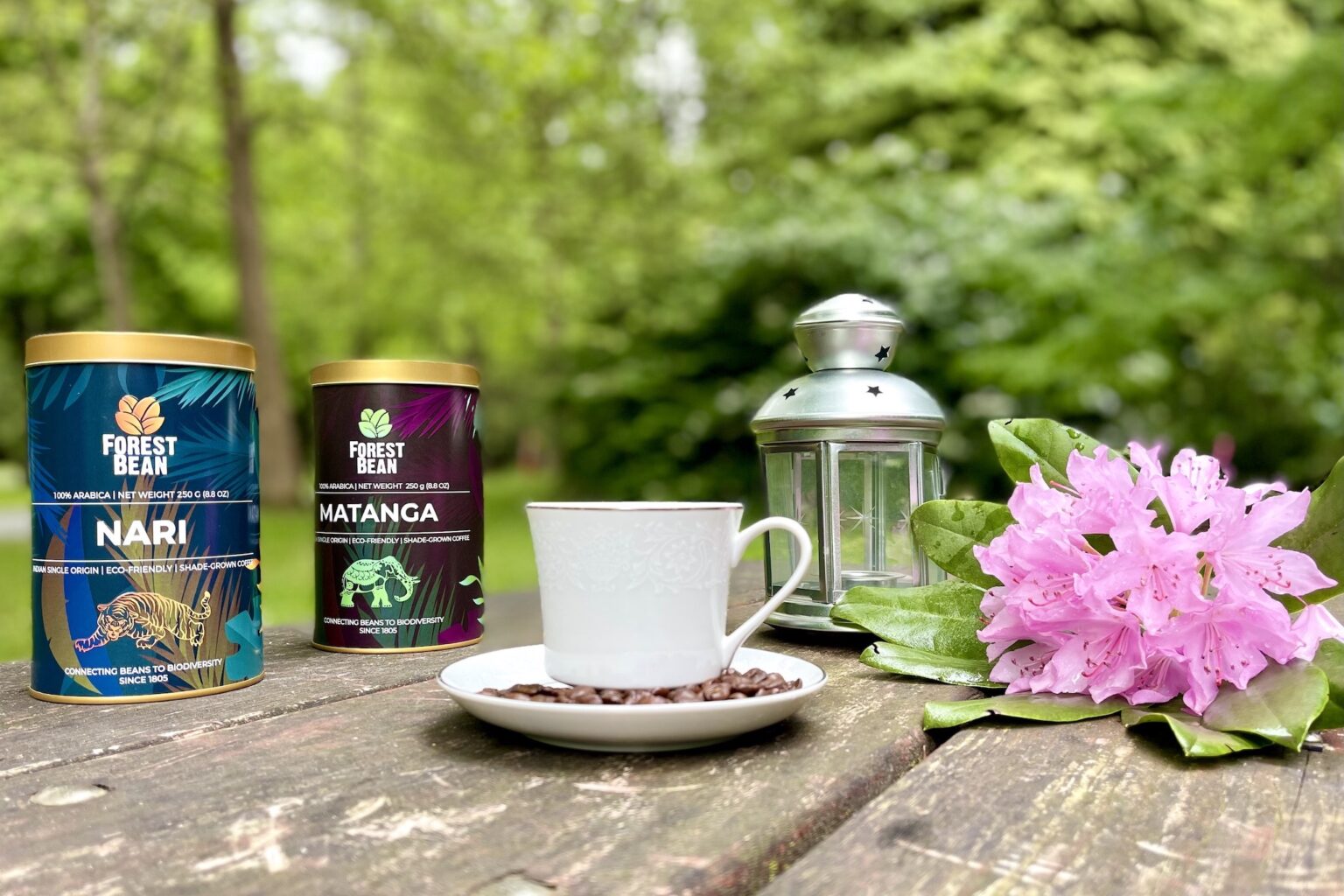
Forest Bean offers true forest-grown coffee, cultivated at high elevations and nurtured by biodiversity. Crafted purposefully, it’s perfect for coffee fans, roasters, and cafes seeking naturally grown, premium-quality beans. Ethically sourced from micro-lot farms in India, locally roasted Forest Bean inspires a deeper connection to nature and craft.

We spoke to Dr. Pete Poovanna , founder and executive director of Forest Bean Coffee, to find out what makes their beans stand out from the crowd.

Rooted in India, Roasted in Canada

Forest Bean

Forest Bean’s farms are located on the hilly forested heartland of the Indian Western Ghats, a UNESCO World Heritage site.

The company was founded by Dr. Poovanna after he moved to Vancouver in 2013 for PhD in sustainable energy engineering, and was struck by Canada’s coffee culture and how our love for it was affecting the environment.

Born and raised in Coorg located in the heart of the Western Ghats himself, he was influenced by his parents’ land management as sixth-generation coffee farmers, and his community’s spiritually-rooted practices called “sacred grove farming.”

source: youtube.com

Determined to make a difference, he launched Forest Bean Inc. to bring sustainably grown Indian coffee to coffee connoisseurs around the world.

The farm

Forest Bean

At Forest Bean’s farms, coffee beans are grown naturally under two-tiered shade on micro-lots with the utmost emphasis on sustainability.

“Sacred grove farming utilizes traditional agroforestry methods, meaning our coffee plants thrive under natural forest shade alongside native flora and fauna,” Dr. Poovanna explains.

We believe protecting the farm by not felling trees or harming wildlife, the reigning deity will protect us in return, and the farmers will prosper. This approach enriches soil naturally, conserves water, and protects the rainforest ecosystem.”

Forest Bean

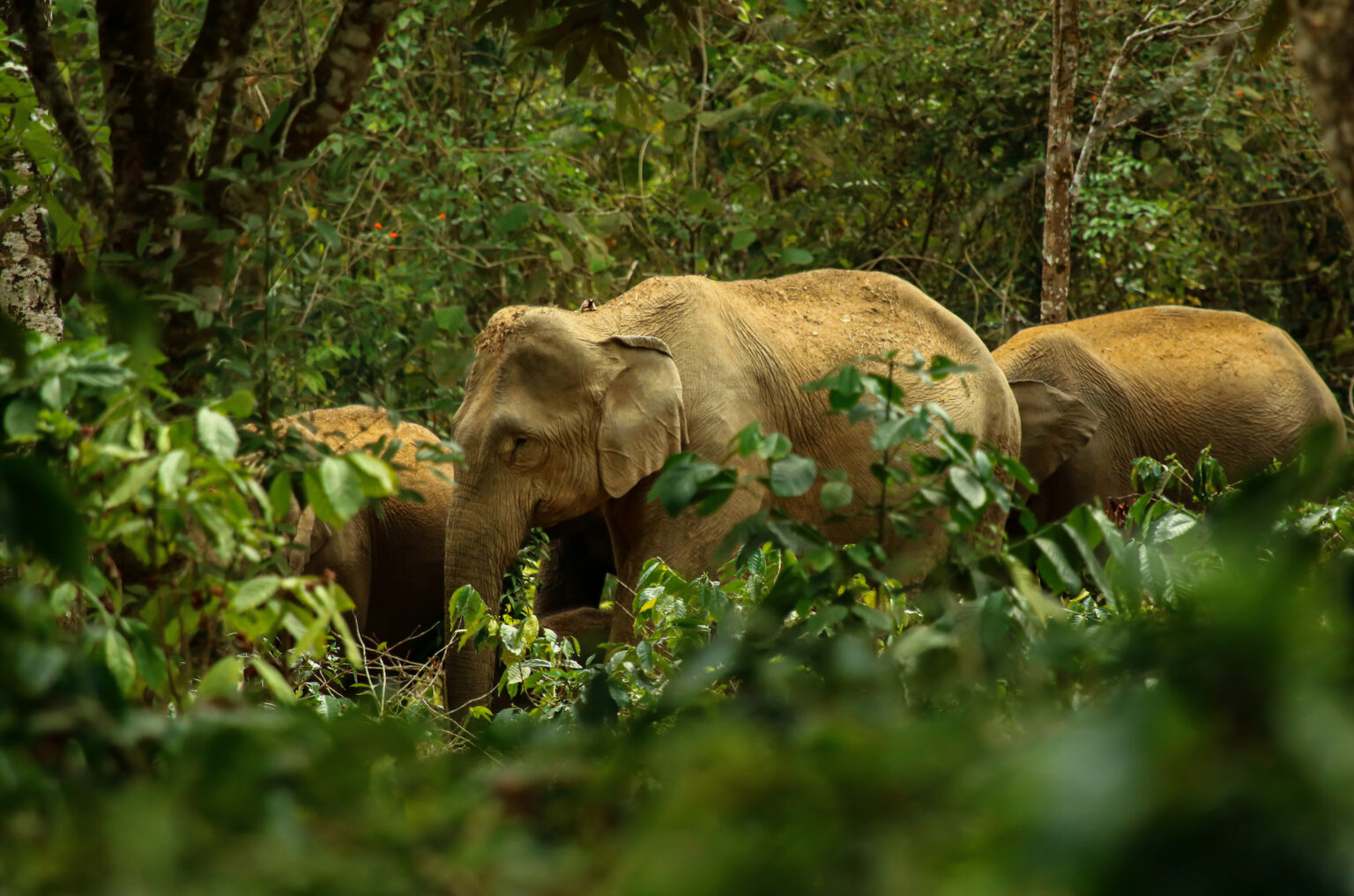
The farms produce some of the highest quality coffee while providing a natural habitat for a multitude of animals — birds, bugs, wild cats, apes, elephants, and more thrive alongside coffee plants.

Amid widespread greenwashing, Dr. Poovanna emphasizes that true sustainability in coffee production needs to address the entire lifecycle, farming practices included. He explains that only focusing on clean packaging or green transportation ignores the industry’s larger environmental impacts like deforestation and carbon loss during cultivation — something he says actually undermines genuine sustainability efforts. 

Time-honoured traditions

Forest Bean

The Forest Bean coffee farmers, who belong to the ancient Kodava and Adivasi communities, employ traditional farming practices. Each bean is handpicked.

“Indian farming traditions are rooted in generations of Indigenous knowledge that prioritize sustainable coexistence with nature. By supporting and collaborating with Indigenous farmers, Forest Bean preserves these time-tested agricultural practices, ensuring cultural sustainability and economic empowerment.”

Forest Bean

The presence of Totem Figurines on our farms shows the deep cultural significance of the coffee forest and surrounding wilderness. Totem Figurines have been scattered throughout the farm for centuries.

Roasted locally in Vancouver

Forest Bean

Forest Bean coffee beans are roasted right here in Vancouver. Due to its unique growing methods, it offers distinct, vibrant flavours. Expect balanced acidity, smooth sweetness, nuanced notes of chocolate, nuts, berries, spices, and a uniquely rich, aromatic complexity.

“Our Bababudangiri single-origin Arabica, washed-process micro-lot, is very popular for its exceptional smoothness and balanced acidity; it’s called Medium Roast NARI , which means Tiger. Our Coorg micro-lot, Italian Espresso roast is also a favourite, known for its bright notes and rich complexity. It’s called  MATANGA , meaning Elephant.”

Forest Bean

With every sip, you’re not just enjoying world-class coffee — you’re supporting a movement that values forests, farmers, and the future.

Head over to theforestbean.com to purchase it for yourself or make wholesale enquiries.

source: http://www.dailyhive.com / DH, Daily Hive / Home> DH Food & Drink> Food> Entrepreneurs> Sponsored> Coffee & Tea / by Katy Brennan / April 15th, 2025

Meet the women fuelling India’s coffee market growth

Sunalini Menon started working for the Coffee Board of India in 1971. Image Coffeelab

Global Coffee Report meets some of the women who’ve helped pave the way for the rapid expansion of India’s coffee industry.

On 1 January 2025, the Centre for Monitoring Indian Economy reported Indian coffee exports had exceeded US$1 billion for the first time, with its value increasing by 29 per cent between April and November in the 2024 fiscal year. This news was a major milestone in the growth of the country’s coffee export industry, which has accelerated over the past five years due to increasing global demand.

As India’s exports expand, so too does its domestic coffee industry. While traditionally a nation of tea drinkers, the almost 1.5 billion people that call it home are increasingly switching leaves for beans. The Coffee Board of India estimated that in 2023 domestic consumption reached 91,000 tonnes of green bean equivalent, up from 84,000 tonnes in 2012.

Now the world’s seventh largest coffee producer – and fifth largest Robusta producer – India is one of the major players. Yet, when Sunalini Menon, Founder of Coffeelab and Member of the Board of Directors of the Specialty Coffee Association, started working at the Coffee Board of India in 1971 the industry was unrecognisable.

“When I was growing up, coffee was only brewed at home and only consumed by the elderly. It was very expensive compared to tea, so that’s what most people drank. On every corner there would be a man selling tea and that’s what you’d have unless it was a special occasion,” Menon says.

“Any coffee that was consumed then was grown in India because the duty was so high that importing coffee for consumption wasn’t a workable position or a requirement at that point in time.”

In 2025, Indian coffee exports exceeded US$1 billion for the first time. Image: Kelachandra Coffee

Women in the field

The British East India Company introduced large-scale coffee cultivation to India in the 18th century and since its early origins women have played a role in farming the precious beans. While women have continued to prop up the country’s coffee farming workforce (a 2015 study by the Indian Statistical Institute estimated 34 per cent of workers in the coffee curing and manufacturing sector of India are women), Menon was India and Asia’s first female coffee taster when she assumed the role in the early 1970s.

“At the time, the profession was a completely male pasture. I originally wanted to become a dietician and had a scholarship to study in New York, but as I was waiting for my visa to be approved I applied for a job as a coffee taster at the Coffee Board of India,” she says.

“Part of the hiring process was a taste test which I did very well in, but when it came to the interview they said that despite my abilities they couldn’t hire me because I was a woman. They thought they would spend the time and money training me only for it to be wasted if I then decided to have a family.”

Menon stood her ground and complained that the job advertisement should have specified if it was a male-only role. Thankfully, the Chairman was forward thinking and gave her the opportunity to train as a coffee taster.

Her first few years in the role were tough, with most of her male colleagues ignoring her and not taking notice of her requests.

“I used to cry every day until finally my boss gave me some advice. He told me I had to first acquire my knowledge, have patience, and then my knowledge would become power,” she says.

“These are words I always pass on to young women today. Learn your subject, be very sure of what you are talking about, and then you’ll be firm in what you do. I think that was a turning point in my life, and that’s how I began my journey at the Coffee Board.”

Women have played a role in India’s coffee farming industry since its early origins. Image: Kelachandra Coffee.

Improving cup quality

Over her 50-year career, Menon has witnessed the revolution of the country’s coffee industry. She says the single biggest contributor to its success has been the focus on quality.

“In the 1970s, the Coffee Board took care of marketing Indian coffee and part of my role was assessing quality. This was because the smallholder farmers didn’t understand the market and were unsure of how to sell their coffees, nor understood the international coffee market, especially the pricing for their coffees and hence the government stepped in,” she says.

“I would receive coffee from the farmers and the payment would be decided by the quality of the beans, so they were incentivised to improve the quality of their crop. The farmers didn’t like the setup at first, but when the markets were liberalised in 1996 it meant they had learned what the markets would expect – they saw the value in cupping as a marketing tool.”

Even after the liberalisation of the Indian coffee market, Menon continued to help the farmers asses the quality of their coffee.

“Many of the farmers I worked with came to me and said, ‘How can you leave us? We don’t know much about quality, how to sell, or how to process. You can’t leave us in the lurch’. I thought I’d help them for a couple of weeks, but the months started passing by,” she says.

“It was a great journey because the farmers really started to understand how they could improve quality and get more money for their coffee.”

While in many producing countries Arabica has traditionally been processed more carefully than Robusta to produce a premium product, Menon says that wasn’t the case with the farmers she worked with, nor the other coffee farmers in India.

“We never treated Robusta differently to Arabica. We replicated the processing methods, so we were preparing and offering washed Robustas to the international market too. At the time, farmers asked if they were wasting their time, money, and water, but I assured them it was worth it. That process has created some of the finest coffees in the world market – one that India is now famous for,” she says.

“Through all these years of hard work, today I can hold my head up and say Indian coffee is of a very high quality. What’s more, there are now a lot more women in the industry. I teach a Master’s course in Coffee  Science and Economics at the University of Udine in Italy, under the Ernesto Illy Foundation, and I have students from all over the world. I feel very proud because I see so many of my young women doing so well here in India.”

Left to right: Neleema Rana George, Ryana Kuruvilla, and Rishina Kuruvilla. Image: Kelachandra Coffee.

The female factor

Women’s growing role in the coffee sector is reflected in the number of women who work at Kelachandra Coffee, one of the country’s oldest and largest privately owned coffee plantations. According to Ryana Kuruvilla, Head of People and Culture at Kelachandra Coffee, 55 per cent of its workforce are female.

“Overall, more than half of our workforce are women. That includes our office staff, and the farmers who work on the 6300 acres of coffee estates we manage in Karnataka and Kerala,” says Kuruvilla.

“In India, all coffee is hand-picked, and women have traditionally made up the majority of the pickers. During the harvest season, we have hundreds of families who come to live on the estate and my job is to look after the employees and make their lives easier while they are staying and working with us.”

Kuruvilla is one of a number of women in leadership positions at Kelachandra. The family business, which dates back to 1786 and ventured into coffee in 1995, is invested in the role women play in the growth of India’s coffee industry.

“There is a small but experienced group of women who are changing the Indian coffee industry for the better,” says Neleema Rana George, Head of Coffee Works and Technology at Kelachandra.

“People like Namrata Asthana, Co-Founder of Blue Tokai, and Arshiya Bose, Founder of Black Baza Coffee, are introducing specialty coffee to Indian consumers. Furthermore, Sunalini Menon consults on our farms, sharing her knowledge with our estate managers to ensure the taste and quality of our coffee is the best it can be.”

George believes women are increasingly influencing the industry because of shifting values and the generational nature of coffee businesses in India.

“Coffee is very much a family business, so children often learn a lot about it from a young age. Especially on the estates, it’s a very organic industry for women to get into because they are knowledgeable about the processes and have grown up surrounded by it,” she says.

“In other areas of the supply chain, café groups such as Blue Tokai and Black Baza Coffee Co, are creating a real coffee culture in India. Over the past five years, domestic coffee consumption has increased by around 30 per cent and I think that’s largely due to third-wave coffee shops introducing quality coffee and different flavours.”

Responding to this growing interest in specialty coffee, George says many second- and third-generation farmers have focused their production on specialty-grade crops.

“The increased interest in drinking specialty coffee in India is driving the quality of the coffee grown here,” she says.

“However, when we attend international expos, we often find people assume India only produces commodity coffee. They often haven’t experienced Indian specialty and when we introduce it to them they’re surprised and impressed by it.”

Drive for sustainability

As well as empowering its workforce, Kelachandra Coffee is dedicated to the continued improvement of Indian coffee and believes creating a sustainable future for the industry is paramount to its success.

Rishina Kuruvilla, Head of Sustainability at the company, says India’s tradition of shade growing coffee means it is somewhat shielded from some of the extreme weather events that can decimate coffee yield in other producing countries such as Brazil and Vietnam. However, sustainability is still a major focus for the company.

“We strive to use as few pesticides and chemicals as possible in the coffee production process, so we compost where we can to ensure nutrients go back into the soil. We are also very stringent about our chemical use to protect the natural landscape surrounding the coffee plantations,” she says.

“We also do a lot of intercropping, so our coffee trees are planted alongside citrus and jack fruits. As well as increasing biodiversity, this process improves the flavour of the coffee as the other fruits add unique flavours to the beans as they grow.”

With extreme weather causing production issues in many other countries, Kuruvilla believes India can step in to fill the gap as global demand for coffee continues to rise.

“In India, we have a lot of our natural advantages against these weather issues. Everything is done by hand here, so we’re not using machines to strip the land. Every aspect of our coffee processing method is taken with care to ensure we don’t harm the land so that people can continue to farm coffee this way for generations to come,” she says.

“Last year, India produced 350,000 tonnes of coffee and an increasing number of people are getting into the industry so that’s expected to increase. We’re ready to step up and introduce even more people to the joys of quality Indian coffee.” 

This article was first published in the March/April 2025 edition of Global Coffee Report. Read more HERE.

source: http://www.cgrmag.com / Global Coffee Report / Home> Features> India / by Kathryn Lewis / April 19th, 2025

India International Coffee Festival 2025 brews up buzz in Bengaluru

The festival celebrated India’s growing coffee culture and featured a vibrant mix of food stalls, lifestyle brands, and live music, creating a lively atmosphere for attendees.

The India International Coffee Festival (IICF) 2025 was held from April 25- 27 at Marakata, Chamara Vajra, on Jayamahal Main Road, Bengaluru. Organised by the Specialty Coffee Association of India (SCAI) with support from the Coffee Board of India, the event brought together some of the country’s finest brewers, baristas, and coffee enthusiasts.

Following its successful 2024 editions in Delhi, Mumbai, and Bengaluru, the festival offered three days of competitions, discussions, entertainment, and interactive experiences. Highlights included the semi-finals and finals of the National Barista Championship (NBC), National Latte Art Championship, National Brewers Cup (NBrC), and the grand finale of the National Filter Coffee Championship.

DM Purnesh, President, Specialty Coffee Association of India (SCAI) said, “IICF has always been an inspiration for coffee lovers, industry experts, and brands. As we return with the much-anticipated semi-finals and finals, we’re proud to once again spotlight and celebrate the country’s finest coffee talent. With seasoned baristas, industry pioneers, and even discerning coffee critics in attendance, IICF 2025 promises to be an unmissable event for anyone passionate about the art of coffee.”

The festival celebrated India’s growing coffee culture and featured a vibrant mix of food stalls, lifestyle brands, and live music, creating a lively atmosphere for attendees. Experts, top growers, roasters, and equipment makers participated, sharing insights into brewing trends and innovations.

Sreeram G, Director, Marketing, Specialty Coffee Association of India (SCAI) said, “The India International Coffee Festival is not just about competition; it’s about connection. This festival serves as a dynamic platform for networking, innovation, and celebrating coffee as a lifestyle. It brings together coffee professionals, aficionados, and industry leaders to exchange ideas, explore emerging trends, and experience the rich intersection of coffee, cuisine, and craftsmanship.”

source: http://www.bwhotelier.com / BW Hotelier / Home> F&B / by BW Online Bureau / April 08th, 2025

New ₹1,000-crore coffee project approved for ASR district

The new coffee project has been planned with a budget of over ₹1,000 crore, considering the success of the earlier ₹526 crore coffee development project launched in 2015, which is scheduled to end in 2024–25.

The project will involve not only cultivating coffee but also planting silver oak trees across 75,000 acres to provide shade for the coffee plants.— Internet

Visakhapatnam :

AP government has approved a new coffee development project under which coffee plantations will be raised over one lakh acres in the Alluri Sitharama Raju (ASR) district.

The new project is aimed at socio-economic uplift of tee tribal communities. According to Coffee Board of India additional director G. Appala Naidu, the project will help approximately 150,000 tribal farmers grow coffee over the next seven years.

The project will involve not only cultivating coffee but also planting silver oak trees across 75,000 acres to provide shade for the coffee plants.

The new coffee project has been planned with a budget of over ₹1,000 crore, considering the success of the earlier ₹526 crore coffee development project launched in 2015, which is scheduled to end in 2024–25.

“Raising over ₹1,000 crore for the new project poses challenges. We are making adjustments to raise the necessary resources,” ITDA project officer Abhishek Goud told Deccan Chronicle in an interview.

Since its introduction in 1989, coffee cultivation has been transforming tribal areas, helping curb deforestation and practises like shifting cultivation. Over the years, the combined efforts of state and central governments have resulted in coffee plantations coming up over 242,021 acres, benefiting 236,618 tribal farmers. With ancestral farmers cultivating coffee over approximately 30,000 acres, the tribal region boasts of having 272,000 acres under coffee cultivation.

Each acre generates an annual income of ₹50,000 to ₹60,000, making coffee farming a lucrative and sustainable livelihood option. Moreover, the organic nature of the coffee produced in the region has sparked both domestic and international demand, boosting the region’s economy.

During the recent Collectors’ Conference in Amaravati, ASR district collector A.S. Dinesh Kumar presented detailed insights into this initiative. Chief Minister N. Chandrababu Naidu, present at the conference, approved the coffee area expansion plan. A detailed project report (DPR) is currently under preparation to ensure a smooth rollout of the programme.

With this expansion, the state government aims to solidify the tribal region’s reputation as a hub for producing high-quality organic coffee. Tribal farmers have welcomed the new project, expressing optimism about the continued government support.

source: http://www.deccanchronicle.com / Deccan Chronicle / Home> Southern States> Andhra Pradesh / by Aruna / April 05th, 2025

Coffee Board launches GI-tagged, single-serve drip bags

We are planning to sell coffee online to popularise and promote GI-tagged coffee and make them accessible to consumers across the country, says Coffee Board Secretary and CEO K.G. Jagadeesha.

The GI-tagged coffee drip bags are designed for simplicity and effortless brewing, says the Coffee Board. | Photo Credit: special arrangement

The Coffee Board on Friday (March 29, 2025) introduced premium GI-tagged single-serve coffee drip bags to strengthen the domestic consumption of pure coffee in the country.

These GI-tagged coffee drip bags are designed for simplicity and effortless brewing and require just hot water and no equipment, said Coffee Board Secretary and CEO K.G. Jagadeesha at a media conference. “Only boiled water and a mug are required to brew a quality cup of pure black coffee,” he said.

Each drip coffee pouch contains five GI-tagged Arabica coffee varieties: Coorg Arabica, Chikmagalur Arabica, Bababudangiri Arabica, Araku Valley Arabica and the Monsooned Malabar Arabica coffee.

According to Mr. Jagadeesha, the drip bags being marketed under the India Coffee brand will be made available across all e-commerce platforms. “We are planning to sell coffee online to popularise and promote GI-tagged coffee and make them accessible to consumers across the country,’‘ he added.

Coffee Board also simultaneously launched Indian speciality coffee like GI-tagged Monsooned Malabar Arabica Coffee and Mysore Nuggets Extra Bold Arabica Coffee. Monsoon Malabar, he said, is the only monsoon coffee (where harvested coffee seeds are exposed to the monsoon rain and winds) in the world, Mr. Jagasheesha added.

Coffee culture

Coffee Board chairman M.J. Dinesh said the Board has been taking initiatives such as Kaapi Shastra, Barista Skills training, and participation in domestic exhibitions to promote coffee culture and thereby drive pure coffee consumption.

“Coffee farmers and entrepreneurs are getting training from the conception stage to the product stage. Even private coffee players can benefit from this training and start focusing on promoting GI-tagged pure coffees of India,’‘ said Coffee Board officials.

Under Atal Innovation Vision, the Coffee Board has been offering training to various coffee farmers and coffee entrepreneurs. Some 68 coffee startups, including over 20 start-ups in Karnataka, have come up under this scheme.

As per CRISIL estimates, India’s current coffee consumption is estimated at 95,000 tonnes.

source: http://www.thehindu.com / The Hindu / Home> News> Cities > Bengaluru / by The Hindu Bureau / March 29th, 2025

India’s coffee production next year will be higher than last two years’: Coffee Board

Bengaluru’s coffee production outlook, global prices, and the importance of value addition in the industry discussed by Coffee Board officials.

Coffee Board Secretary and CEO KG Jagadeesha said nature played a critical role in coffee farming and if plantations get 6-7 months without a dry spell, next year’s yield would be substantially higher than the last two years. | Photo Credit: Special Arrangement

Bengaluru India’s coffee production for the crop year ending in March 2025 is likely to be 3.52 lakh metric tonnes, while the yield for next year is expected to be much higher than last two years’ yield as most plantations have already received adequate blossom showers helping a healthy berry setting, said Coffee Board CEO and Secretary, K.G Jagadeesha.

However, he said, nature played a critical role in coffee farming and if plantations get 6-7 months without a dry spell, next year’s yield would be substantially higher than the last two years.

He further said the board was currently in the process of wrapping up harvest (which just concluded) volumes data for the current year and preparing a production outlook for next year based on post blossom-shower assessment conducted on plantations across the country.

Global coffee prices to remain high for a year: ICO

Quoting International Coffee Organisation (ICO), Mr. Jagadeesha said, global coffee prices were likely to remain high for one more year as most major producing countries were facing drastic climatic changes.

“The current coffee prices may hold for one more year with marginal growth, however may not double or treble as they did a couple of years ago for arabica and robusta, respectively. I just attended the ICO meeting and this is the sense I am getting regarding prices,” he said.

Globally, coffee prices remained too low for 10 years, before they started climbing last two years ago.

India should focus on premiumisation in coffee

Highlighting the importance of value addition in coffee, Mr. Jagadeesha said, some 70% of Indian coffee were exported as green beans which meant the country has been losing out on premiums.

“We are producing the best quality coffee in the world and selling it as green beans in the global markets and someone else is blending, value adding and forking out premiums. This situation has to change by increasing our focus on value addition to fetch premium prices in the global markets. Some of our growers have already started focusing on value add and premiumisation, but the trend has to become industry-wide,’‘ he insisted.

According to Mr. Jagdeesha, post covid, there is a spurt in coffee consumption globally and this trend has been quite evident in India as well.

Coffee Board Chairman M.J. Dinesh said additional strengthening of the domestic market was required to protect coffee growers in the wake of any international price fluctuations.

“A robust domestic market will provide a shield to the coffee growers against the volatile international coffee prices. It will also encourage entrepreneurship and boost employment opportunities and bring in overall improvement in the coffee value chain. Such a scenario will act as a buffer for Indian coffee,” he added.

source: http://www.thehindu.com / The Hindu / Home> Business / by MIni Tejaswi / March 29th, 2025