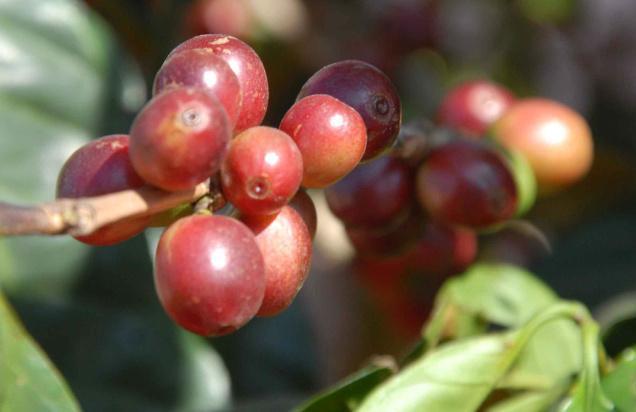
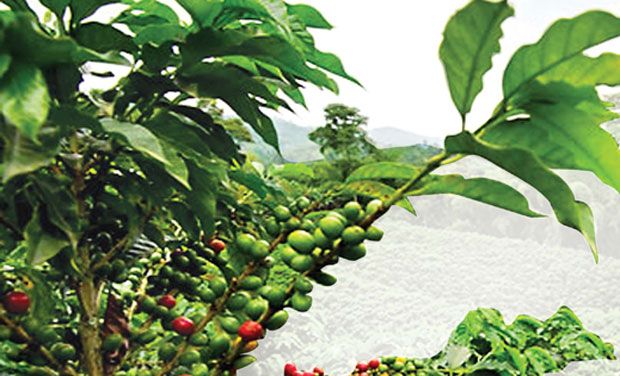
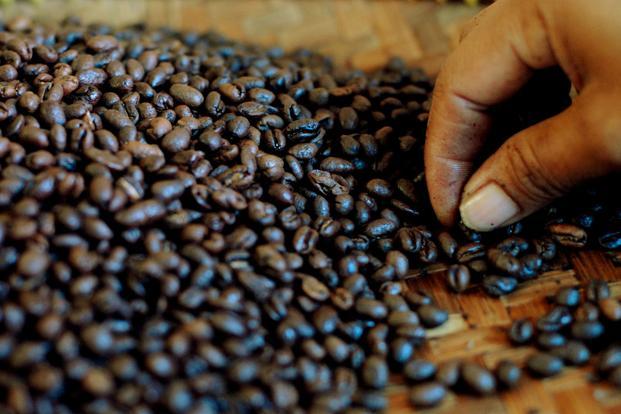
The Nagaland state department of Land Resources has agreed to go ahead with the cultivation of coffee in Nagaland, with the Coffee Board of India assuring assistance to farmers in plantation and marketing.
Initially, it will cover Kohima District (Kohima village, Rusoma and Sechu Zubza). To make headway, the department in association with Coffee Board of India organized one-day training on “Cultivation of Coffee” here today at Ura Academy.
Dr. Menuosietuo Tseikha, DPO, DoLR said many villages in Nagaland possess ideal climatic conditions to cultivate coffee. He said the purpose of the programme was to train farmers on how to cultivate coffee in good way and get high yield.
The training was an opportunity for the farmers to know the systematic plantation of coffee from researchers.
Partha Pratim Choudhury, senior liaison officer, Coffee Board of India informed that in India, coffee can trace its origin to the planting of seven seeds of Mocha in 1600 CE by Baba Budan in Karnataka. In Nagaland, coffee was first planted in Kohima village.
He stated that Nagaland’s climate is suitable for growing coffee; a reason for the Coffee Board of India’s focus to invest in the state, particularly Kohima district. He assured to promote farmers with every amenity available under the board and also assured them to take care of marketing. He also invited farmers to the research farm, adding that the whole expenditure will be borne by the Board.
Renben Jami, Joint Director & Supervisory Officer, Kohima district, DoLR said Nagaland can become a producer state. The favorable climate can help achieve this end and thereby remove the state’s tag of only being a consumer. With this, he encouraged the trainees to take up anything which will bring about economic changes in society. “We do not want to take up anything which will not bring about economic changes. The standard of living is to be improved, there has to be some economic activities…,” Jami said.
After a gap of 20 years, he informed that the department has agreed to go ahead with the cultivation of coffee in the State and encouraged farmers to make Kohima district a coffee district.
source: http://www.morungexpress.com / The Morung Express / Home> Local / by The Morung Express Correspondent / Kohima- November 11th, 2014
Coffee planters have pegged coffee bean production at three lakh tonnes for 2014-15 (post-blossom estimates) against the Coffee Board’s projections of 3,44,750 tonnes.
The reason for stagnation in bean production is attributed to rampant pest attacks from white stem borers (WSB) across Arabica growing regions in Karnataka, which accounts for 70 per cent of the country’s output. To avoid the spread of borers, many planters have resorted to uprooting plants infected by WSB in estates.
There has been severe WSB attacks in Arabica plantations in Kodagu, Chikkamagalur and Hassan districts, according to Karnataka Planters Association (KPA) Chairman D. Govindappa Jayaram.
The Board estimated domestic Robusta production at 1,05,500 tonnes and Arabica at 2,39,250 tonnes. While the KPA said the Board’s estimates for Robusta production would be reached, it would not in the case of Arabica production. Arabica production would reach only 60,000 tonnes for the year. Hudhud cyclone has caused severe damage to Arabica plantations in Andhra Pradesh, the KAP said.
The Board estimation for Karnataka is 2,48,300 tonnes with 80,700 tonnes of Arabica and 1,67,600 tonnes of Robusta.
Coffee planters deliberated on various issues confronting the industry during the 56th AGM of the KPA here. Home Minister K J George said a meeting between growers and Chief Minister Siddaramaiah would be convened to address the grievances of the industry.
BJP MP Shobha Karandlaje, said no pesticides have been found to tackle WSB in the country. “Now, WSB infected plants are being removed or burnt to prevent spread of the disease,” she said.
The severe incidence WSB is due to the continuous dry weather from October 2013 to April 2014 and high temperature during summer months had ruined Arabica prospects, planters said.
The Coffee Board has set a target to achieve four lakh tonnes of bean production in the country through area expansion and productivity enhancement in the next 5-10 years, a growth of over 30 per cent over the current production level.
In 2013-14, production stood at 304,500 tonnes.
source: http://www.thehindu.com / The Hindu / Home> News> Cities> Bengaluru / by Nagesh Prabhu / Bengaluru – November 14th, 2014
The Best App In Asia category of the digital winners 2014, Raghu Kanchustambham, explains about his application in Hyderabad on Wednesday. Photo: G. Ramakrishna / The Hindu
The app helps coffee growers to get instant returns for their produce. Livelihood 360 is also capable of estimating quantity of the produce in the fields and sell the crop at fair price.
The coffee farmers of Araku valley these days get instant returns for their produce. Gone are the days when they had to wait for nearly a month till the buyers completed the weighing process of the produce and release money through co-operative society. Thanks to a mobile application developed by Hyderabad-based entrepreneur, Raghu Kanchustambham, there is no waiting period.
The app dubbed as ‘Livelihood 360 (L360)’ was adjudged the Best App of Asia in the Telenor Digital Winners Conference, a global competition held in Oslo, Norway this month. The award came with a cash prize of Rs. 9,79,000, which will be utilised by the developer to further “scale up” the concept.
It all started when Mr. Raghu, who has a start-up ‘Concept Wave’, met the officials of Naandi Foundation, which was already working with the coffee farmers of Araku valley. “The basic premise was to utilise technology and reach to those people not having access to technology and internet. I visited Araku valley and spent time with them and learnt a lot about their lifestyle and livelihood,” he said.
Mr. Raghu said the previous system of remittance to coffee growers in Araku was taking about a month. The coffee growers would take their produce to a prescribed ‘adda’ where the truck drivers would collect and transport coffee beans to another location for weighing and valuing. “We gave the truck drivers an application that would quantify the yield and also determine the quality instantly. The drivers will immediately remit the amount on the spot to farmers,” he explained.
Livelihood 360 is also capable of estimating quantity of the produce in the fields and sell the crop at fair price. “We have already adopted this application among 12,000 coffee farmers in 650 villages of Araku. Between 40 and 50 truck drivers from Araku were given training on using the application on a feature phone and not a smart phone,” he explained.
source: http://www.thehindu.com / The Hindu / Home> News> Cities> Hyderabad / by M. Sai Gopal / Hyderabad – November 12th, 2014
Tata Starbucks Ltd, the 50:50 joint venture of US beverage chain Stabucks with Tata Global Beverages, plans to source more coffee from Tata Group company Tata Coffee, company officials said in a statement on Tuesday.
To mark the company’s second anniversary in India, Tata Starbucks launched a locally sourced, roasted and packaged arabica blend, ‘Starbucks India Estates Blend’, in select Starbucks stores in Asia as well as online in the United States.
“We will see such initiatives only growing in the future, displaying the strong unity between Starbucks and Tata Coffee. It is a reflection of the shared commitment between Starbucks and Tata Coffee to develop and promote Indian-grown arabica coffees,” Avani Davda, chief executive officer, Tata Starbucks Limited said in a statement.
The arabica beans from Tata Coffee have been selected by Starbucks coffee experts from Tata Coffee’s estates across Coorg and Chikmagalur, the birth place of coffee in India. The blend has been named to represent the origin of the coffee and the packaging has been carefully created to reflect traditional Indian designs, the company said.
“This commitment to highlighting India’s rich coffee heritage, builds on the strong growth of 59 Starbucks stores across six cities and more than 1,000 passionate partners (employees) in India,” John Culver, group president, Starbucks China and Asia Pacific, Channel Development and Emerging Brands, said.
Starbucks entered the Indian market in October 2012 and currently operates 59 stores in India across Mumbai, Delhi NCR, Pune, Bangalore, Chennai and Hyderabad.
source: http://www.deccanherald.com / Deccan Herald / Home> Business / DHNS – Bangalore, November 04th, 2014
Coffee consumption has been increasing by 2.8 per cent since the last five years, as against 2.4 per cent in the previous five-year period
Chennai:
For purists, kaapi frothy boiled milk mixed with decoction – is the quintessential hallmark of tradition and this steaming aromatic beverage is the first energy drink that sets the day in motion. For coffee lovers, there’s nothing like coffee that satiates the palate when sipped after tiffin or taken to destress.The saga of coffee consumption continues to increase in the southern states, particularly Tamil Nadu. Coffee consumption in the country has grown to about 90 grams per capita per year from 60-70 grams about 12 years ago.
Annually, coffee consumption has been increasing by 2.8 per cent since the last five years, as against 2.4 per cent in the previous five-year period. However, the average consumption is 4-5 kg per capita, per annum in most developed countries. Finland, for instance, has the highest per capita consumption of 12 kg per annum.Compared to some of the developed countries, coffee consumption in India has been low as the predominant consumers are from the south.
Tea is drunk in the northern parts of the country. On an average, 3.04 lakh MT of coffee is produced in south India, with Karnataka contributing to the bulk of coffee production (2.11 lakh MT). About 70 per cent of the domestic production is exported. Aiming to bring more acreage and consumers under coffee, the Coffee Board of India has identified new areas in West Bengal and Himachal Pradesh for coffee plantations in the coming years. In the traditional areas of Karnataka, Kerala, Tamil Nadu and Andhra Pradesh, the board is focusing on increasing productivity through replanting of old trees.
The increasing popularity of coffee chains like Cafe Coffee Day, Barista Lavazza and Costa Coffee, in particular, among the younger generation, has made coffee drinking more fashionable, although value-added products and instant coffee is on the rise with other categories of consumers.
India is the seventh largest coffee producer in India and the third largest in Asia and during 2013-14 fiscal, the country’s coffee exports stood at 3,13,025 metric tonnes, generating a revenue of US $ 793.22 million. Indian coffee is exported to over 45 countries and about 50 per cent of the exports in 2013-14 was to Europe. Italy is the largest market importing over 25 per cent from India, followed by Germany, Belgium, Turkey and the Russian Federations. So, the next time you try cappuccino or latte, think of Indian coffee beans.
source: http://www.deccanchronicle.com / Deccan Chronicle / Home> Nation> Current Affairs / DC Correspondent / October 26th, 2014
The South Dakota Agricultural Heritage Museum presents Coffee 101–The History and Impact of Coffee on Our World with Kurt Osborne of Koolbeans Coffee at 7 p.m. Oct.
Image: KELO AM/Mark Brown
Brookings ,S.D. (KELO AM)
The South Dakota Agricultural Heritage Museum presents Coffee 101–The History and Impact of Coffee on Our World with Kurt Osborne of Koolbeans Coffee at 7 p.m. Oct. 9.
Osborne, who is from Brookings, will discuss and offer samples of coffee varieties from around the world, along with specialty foods that will excite any coffee lover. The free program is open to the public.Koolbeans specializes in custom roasting small batches of coffee. This homegrown South Dakota business was started in 2012 by Osborne and Joy Nelson of Watertown, his business partner.Osborne, who works full time for Lutheran Planned Giving, was interested in coffee as a hobby for a number of years.
“I started goofing around with coffee by using a hot air popcorn popper,” he said. Osborne developed a curiosity about the characteristics of certain beans and their roasting levels. He began to collect and use a variety of brewing apparatuses and incorporated coffee into some cooking.Osborne appreciates “the pure enjoyment of making a cup of coffee for yourself, family and friends.
“Koolbeans purchases green coffee beans from 12 countries of origin and custom roasts these to customer preferences in small batches. They also offer chocolate-covered espresso beans, which are popular in gift baskets, as wedding favors and special occasion treats.Koolbeans has enjoyed steady growth due to strong customer loyalty and word-of-mouth recommendation. They offer the option of a unique roast customized with a customer’s logo. Their products are also popular as fundraisers for organizations such as high school choirs and church youth groups. Koolbeans contributes a minimum of 10 percent of their profits to charitable causes.Koolbeans items will be available for sale at the museum’s gift shop.
For more information, contact the museum at 605-688-6226.About the South Dakota Agricultural Heritage MuseumFounded in 1884, the South Dakota Agricultural Heritage Museum is dedicated to the preserving the history of agriculture and the heritage of rural life in South Dakota. It is located on South Dakota State University campus at 925 11st Street, Brookings, S.D. The museum is open Monday through Saturday from 10 a.m. to 5 p.m. and Sunday from 1 to 5 p.m. For more information, call 605-688-6226 or visit www.agmuseum.com.
source: http://www.kelo.com / Kelo / Home / by Mark Brown / October 01st, 2014
Himachal Pradesh government is exploring the possibility of popularizing coffee cultivation in the state. Kangra district already is known for tea cultivation and now the state is planning to have coffee farming to boost the local economy as already a plan is afoot to increase the area under tea plantation.
Tea industry of Himachal Pradesh is 161 years old. While there were around 500 tea growers in Kangra district with average land holding of 25 hectares in 1947, now there are 5,800 tea growers with average land holdings of 10-15 kanals. Of this, only 15-20 planters fall in the category of big growers. Currently, 2,300 hectare area is under tea cultivation. After tea, now coffee is likely to be the new source of income for farmers of the state.
A senior government official said that a Coffee Board team has already surveyed prospective areas. “There is a potential for coffee cultivation in Kangra, Mandi, Una and Bilaspur districts. During 2014-15, coffee demonstration trials will be carried out in these districts under the technical guidance of Coffee Board,” he said.
Agriculture, being the mainstay of people of Himachal Pradesh, has an important role in the economy of farmers. Efforts are afoot to make the hill state self-sufficient in agriculture production and also to improve the economy of farmers, he added.
Agriculture and allied sectors accounts for 30% of the gross state domestic product. It provides direct employment to about 71% of the main working population. Rs 384 crore is being spent on agriculture sector this financial year, sources said.
Of the total geographical area of 55.67 lakh hectares, the area of operational holding is about 9.68 lakh hectares and is operated by 9.33 lakh farmers. The average holding size comes to 1.04 hectares. Distribution of land holdings according to 2005-06 agriculture census shows that 87.03% of the total holdings are of small and marginal farmers. About 12.54% of holdings are owned by semi-medium/medium farmers and only 0.43% by large farmers.
The diverse agro-climatic conditions of the state provide ample opportunities for crop diversification with high value crops. The state has great potential for producing off-season vegetables and has already gained reputation for cultivation of off-season vegetables and production of quality vegetable seeds, they added.
source: http://www.timesofindia.indiatimes.com / The Times of India / Home> City> Chandigarh / TNN / October 20th, 2014
Most people who think of crops think of corn, beans and wheat, but coffee is also one to consider.
For many of us, it’s the fuel that gets us out of bed and through the day. But as a new exhibit at a Florida museum shows, coffee has fueled history.
From straight black to cream and sugar, there are plenty of ways to have your coffee, and people have been doing brewing it for centuries. “There’s a whole history of it being a very influential aspect of the world,” said Matthew Woodside, chief curator of the South Florida Museum.
As Woodside tells it, the story of coffee is a long one and has a far reaching in scope. “It gave rise to the exploration and the colonization of all parts of the world, and even today, it’s second only to oil in its impact on the global economy,” he said.
Coffee has a rich history still celebrated with the coffee-making process in Ethiopia. “Its very ceremonial, very spiritual. It’s a little different than the way we go about it of putting some grounds in Mr. Coffee,” said Woodside.
Bruce Blowers visited the exhibit to see reminders of the 37 years he spent in Papua New Guinea, where java beans drive the highlands economy. “They saw that it was a viable crop, and so it just spread all around the islands,” said Blowers.
No matter how you drink it, the next you pour a cup of coffee, remember the whole world is in your cup.
Even though this exhibit is in Florida, Washington State actually has the most Starbucks stores per capita.
Watch this report on the Rural Evening News Thursday at 7:30 p.m. ET
Prices steam up on fears over the LatAm country’s crop; planters here expand acreage
Chennai :
Your favourite cup of filter coffee or latte or cappuccino is set to get costlier as domestic bean prices have surged to record highs. This follows a rally in the global market on the back of the Brazilian crop running into problems due to dry weather.
Corporates owning coffee estates such as Tata Coffee and Amalgamated Bean Coffee Trading Company – which runs Café Coffee Day – could gain as a result. Nestle and Hindustan Unilever, which source coffee, could be shelling out more for their products.
Record prices
Currently, farm gate prices of Arabica parchment are quoting at a record of over ₹12,000 for a 50-kg bag, while robusta parchment is ruling near ₹8,000.
Robusta cherry is being quoted around ₹3,750 per 50-kg bag. Robusta cherry accounts for over 40 per cent of coffee exports totalling three lakh tonnes in the last couple of years.
Brazilian output
“We are looking at a scenario which we last saw in 1977 when a disastrous frost affected the crop in Brazil. Dry weather earlier this year affected coffee production in Brazil. The crop this year has been estimated at 40.1 million bags (60 kg each). Now, Met forecasts of the crop’s blossom shower being delayed have fired up the market,” said Anil K Bhandari, a planter and former president of United Planters’ Association of Southern India.
Rains are crucial during September-October for the Brazilian coffee crop. But forecasts say that no showers are likely till the end of the month. This means, the already stressed coffee plants could be weakened further and production could be hit next year too, said Bhandari.
Coffee trade across the globe now fears that next year’s crop could be lower than 40 million bags. This has resulted in prices surging to near 30-month high of $2.20 a pound. On Thursday, coffee on ICE US for delivery in December ruled at $2.175 a pound.
“Domestic prices are high in line with global prices. Availability is low since we are at the fag end of the season,” said Ramesh Rajah, President of Coffee Exporters’ Association.
“But, there are no buyers in view of the high prices,” said Bose Mandanna, a grower from Kodagu and former Vice-Chairman of the Coffee Board.
“Since the market is volatile, buyers are staying away. They don’t want to take risk. Once the market stabilises, they will return. Also, coffee prices cannot continue rising and lose consumers,” said Bhandari.
Few deals have been signed for the new crop, said Rajah. “Not much business has been done for the new crop in view of the problems we faced with the crop last year,” he said.
Domestic crop situation
Last year, the Coffee Board had initially projected production of 3.47 lakh tonnes but finally, it turned out to be 3.04 lakh tonnes as the crop was affected by unseasonal rains.
“Indian Arabica is expensive in the global market as also the Robusta. But when Brazil is short, there will be demand for the Indian produce,” said Rajah.
“Coffee export value can increase this year in view of the high prices,” said Bhandari, adding that the key was the new crop that is shaping up well.
“Arabica has suffered loss due to the borer menace but Robusta has shaped up well,” said Bhandari.
“Harvest has begun in Tamil Nadu and in Karnataka, it will start next month,” said Mandanna. “The crop is much better than last year. Robusta will be 10-15 per cent higher, while Arabica has been affected by the white stem borer,” he said.
Rajah said coffee production this year will be in line with the Board’s projection. According to the Coffee Board’s post-blossom estimates, production this year could be a record 3.44 lakh tonnes with Robusta making up 2.39 lakh tonnes and Arabica the rest.
Area expands
Higher prices this year and forecast of the rally continuing next year have resulted in growers expanding the area under coffee.
According to sources, nurseries have run out of coffee plants in view of demand.
“Coffee is being planted on large plantations where the borer menace has resulted in lot of vacant space being available. Some growers are shifting to coffee from crops such as cardamom,” said Mandanna.
Sources said coffee plantations in Karnataka are now extending to plains such as Piriyapatna in Mysore.
“We will have to see how far it can be sustained. Such a development took place in 1977 also,” said Bhandari. “The problem is coffee will take time to give returns. People should be able to sustain till then,” he said.
source: http://www.thehindubusinessline.com / Business Line / Home> Agri-Biz / MR Subramani / Chennai – October 09th, 2014
International coffee prices rose sharply this week, as fears resurfaced that Brazil’s crop could get adversely affected by a drought
A thin harvest may be bad news for Brazil but is good news for growers in other countries. Indian coffee producers are seeing firm crop trends in 2014-15. Photo: Bloomberg
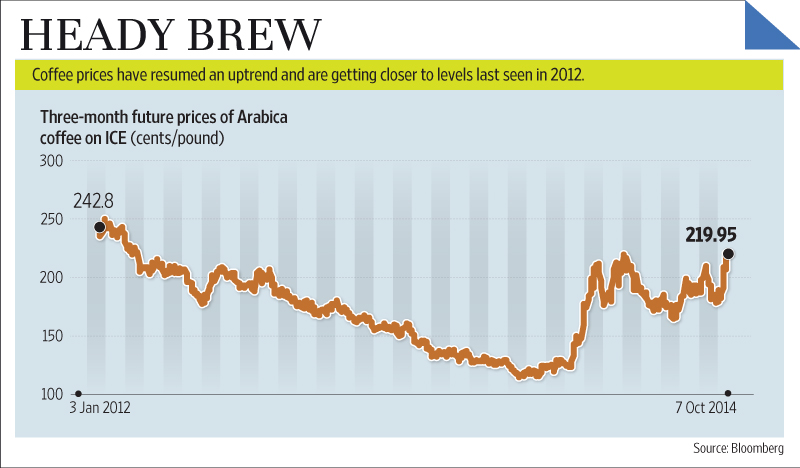
International coffee prices rose sharply this week, as fears resurfaced that Brazil’s crop could get adversely affected by a drought. This comes just a fortnight after Brazil’s agricultural organization Conab released its September estimate, which had assuaged market fears and even saw prices drop.
But on Monday, the three-month forward Arabica coffee contract rose by 9.2% intra-day, according to The Wall Street Journal, and closed the day with a gain of 6.9%. This marked a two-and-a-half-year high for this contract. On Tuesday, its level was unchanged. If the news on the weather from Brazil continues to support higher prices, then this uptrend could be sustained. But recent months have seen volatile price movements; so, there is risk of a reversal, too.
The International Coffee Organization’s price data show the prices of all grades of Arabica coffee have moved up, in sync with Brazil. Though Brazil’s effect is felt more by the Arabica variety, even the lower Robusta grade has perked up in October. It has recovered losses sustained in September.
A thin harvest may be bad news for Brazil but is good news for growers in other countries. Indian coffee producers are seeing firm crop trends in 2014-15. The country’s coffee crop is estimated to increase by 13.2% to 344,750 tonnes. The Arabica crop is expected to increase by 3.2%, while Robusta, which is the main local crop, is expected to rise by 18.3%.
Thus, one can expect the plantation business of growers such as Tata Coffee Ltd and CCL Products India Ltd to post good results. But this uptrend poses a challenge for coffee marketers such as Nestlé India Ltd and Hindustan Unilever Ltd (HUL). Rising input costs will force them to hike prices, which can hurt volume growth.
source: http://www.livemint.com / Live Mint / Home> Money / by Ravi Ananthanarayanan / Tuesday – October 07th, 2014
WELCOME. If you like what you see "SUBSCRIBE via EMAIL" to receive FREE regular UPDATES.
Read More »