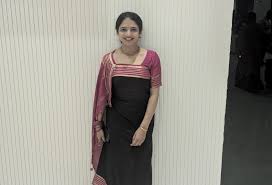
CLN has been patiently tracking the progress of Apparanda Neer Somakka with pride – a quiet and humble girl who pursued her goals with determined alacrity. Every Kodava youngster should read the contents of this interview; parents and mentors should take note too. It is the single-minded pursuit of her academic goals to get her PhD at a relatively young age, so that she can now focus on what she wants to achieve in her career, that is commendable! She presently works as Research Associate at Institute for Social and Economic Change which is an All-India Institute for Interdisciplinary Research and Training in Social Sciences.
We are really proud of her and the good news is that there are more youngsters who have achieved similar academic distinction to shine in their future careers. The interview and answers given by this young lady clearly demonstrates a maturity well beyond her years! There is a certain sense of goodness, in an old-fashioned manner that permeates through her thought process. An embodiment of good values of education – hard work, acknowledgement of mentorship, alignment with community values, with the clarity of end goal.
Despite the somewhat longer than usual length of the message, READERS ARE REQUESTED TO SHARE THIS INTERVIEW AMONGST ALL IN THEIR NETWORK – ESPECIALLY SENIOR STUDENTS IN SCHOOLS & COLLEGES AND PARENTS. There is a strong message for Kodava women to pursue their interests even while residing on their plantations. Agri based small businesses are a distinct value-adding opportunity that would complement their family income, financial literacy and improve their economic empowerment/stature.
CLN: You were obviously a serious and committed student in your earlier years at KCES Kakkabe and Sri Rama Trust English Medium School, Napoklu. Tell us a bit about these years at school and your thought process in choosing Agricultural Economics as your field of Study for Graduation. Also the choice of your locations for higher studies.
NS: During my school years at KCES Kakkabe and Sri Rama Trust English Medium School, Napoklu, I was fortunate to have the guidance of supportive teachers who played a significant role in shaping my path. My Kannada teacher, Chermandanda Shobitha Ma’am, stands out for her constant encouragement and belief in my abilities. Her support during those formative years instilled in me the confidence to explore different subjects, and this has had a lasting impact on my academic choices.
Growing up in a region where agriculture was central to daily life, I became naturally curious about how farming practices influence rural livelihoods. This curiosity led me to choose Horticulture as my focus during my undergraduate studies. We had around 70 subjects, but I was particularly drawn to social sciences because of their dynamic and evolving nature.
After completing my undergraduate degree, I took the Indian Council of Agricultural Research (ICAR) exam, securing an All India Rank of 192, which allowed me to select a good institution for my Master’s. I pursued my M.Sc. (Agricultural Economics) at Dr. Rajendra Prasad Central Agricultural University in Pusa, Bihar, a place with a strong agricultural foundation. Later, for my PhD, I again appeared for the ICAR SRF exam and secured an All India Rank of 54, which led me to Sher-e-Kashmir University of Agricultural Sciences and Technology, Jammu. Both institutions provided a mix of theoretical and practical learning, allowing me to focus on issues critical to rural development.
Looking back, it’s clear that the support of my teachers, and the environment I grew up in, played a major role in shaping my career and interests.
CLN: Again your choice of studying at Jammu is more than just brave. You had a very clear objective in your mind which seems to have been fulfilled with flying colours. Share your experiences of studying at what appears to us, as a fairly remote place – so far away from home.
NS: Choosing to study in Jammu for my PhD was indeed a significant decision, but it was driven by a clear purpose. For me, Sher-e-Kashmir University of Agricultural Sciences and Technology (SKUAST), Jammu, represented more than just an institution—it was an opportunity to immerse myself in the unique agricultural challenges of a region with diverse topography, climate, and socio-economic conditions. While Jammu might seem remote and far away from home, the decision was motivated by the desire to engage with agricultural issues in regions like Jammu and Kashmir, which have immense untapped potential. The challenges here—ranging from the impact of mountainous terrain on agriculture to the socio-political complexities—offered fertile ground for research, especially in the field of Agricultural Economics. My doctoral research on the Deendayal Antyodaya Yojana-National Rural Livelihoods Mission (DAY- NRLM) and its impact on women’s livelihoods in Jammu and Kashmir allowed me to contribute meaningfully to the region’s rural economy.
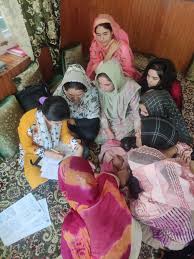
Neer during her research at Baramulla, Kashmir.
The journey wasn’t without its difficulties. Adapting to the distinct cultural and geographical differences compared to my hometown was initially challenging. However, it was these differences that provided a fresh perspective and enriched my learning experience.
I was exposed to real-world issues like inadequate market linkages, reliance on traditional farming methods, and post-harvest losses—all areas that need targeted economic interventions.
Moreover, studying in Jammu brought me closer to understanding the resilience of the local farming communities. Despite the challenges posed by remoteness, political instability, and climatic vulnerabilities, these communities have developed ways to adapt and sustain themselves. This first-hand experience reinforced the importance of policies that cater to the unique needs of such regions. The supportive faculty at SKUAST Jammu, my mentor Prof. Sudhakar Dwivedi, and access to excellent research facilities made my time here both productive and fulfilling. The focus on holistic agricultural development in the region aligned perfectly with my career goals, and my research has been recognized as impactful, which is incredibly rewarding.
In retrospect, studying in Jammu was far from a compromise; it was a conscious choice that broadened my horizons and allowed me to make a meaningful contribution to a region often considered remote but filled with potential.
CLN: What were the highlights of your Undergraduate, Post Graduate and Doctoral studies?
NS: During my undergraduate studies in BSc Horticulture, I was exposed to a wide array of subjects that expanded my understanding of agricultural practices, crop production, and sustainable farming. It wasn’t just the academic learning that shaped me; the numerous field visits, village stays, and even an all-India study tour gave me hands-on experience and a taste for travel. These opportunities allowed me to interact with farmers, understand their challenges first-hand, and witness how agricultural practices vary across regions. These experiences deepened my interest in agriculture and rural development, and sparked my passion for finding ways to improve the livelihoods of farming communities.
For my postgraduate studies, I pursued an MSc in Agricultural Economics at Dr. Rajendra Prasad Central Agricultural University in Pusa, Bihar. Moving away from home for the first time, this phase taught me resilience and adaptability. Living in Bihar was an unique experience—far from familiar surroundings, I was exposed to new cultures, perspectives, and agricultural challenges. The coursework, coupled with practical exposure, helped me build a strong foundation in agricultural economics, with a focus on real-world applications. My Master’s thesis on black pepper production gave me an opportunity to explore the economics of specific crops, further strengthening my research skills and passion for agricultural development. My doctoral studies at Sher-e-Kashmir University of Agricultural Sciences and Technology, Jammu, were both challenging and rewarding. Focusing on the impact of Deendayal Antyodaya Yojana-National Rural Livelihoods Mission on women’s livelihoods in Jammu and Kashmir, my PhD research allowed me to delve deeper into the socioeconomic aspects of rural development. This was a period of intense learning, where I had to balance fieldwork, data analysis, and academic writing. The challenge of conducting research in a region with diverse social and economic conditions helped me grow both academically and personally. Despite the hurdles, the sense of accomplishment was immense, and it solidified my commitment to contributing to the field of agricultural economics.
CLN: Each phase of my education—undergraduate, postgraduate, and doctoral—has added a different dimension to my understanding of agriculture, rural livelihoods, and economic development, shaping me into the person I am today.
Your choice of thesis for the PhD programme is very interesting – Impact of Deendayal – Antyodaya Yojana – National rural livelihood mission on Women’s livelihood of Jammu & Kashmir. Please describe briefly the findings of your study.
NS: I have always been deeply interested in gender studies, particularly in how rural women navigate and overcome challenges in their daily lives. This personal passion led me to choose the topic of my PhD thesis: “Impact of Deendayal Antyodaya Yojana-National Rural Livelihoods Mission (NRLM) on Women’s Livelihoods in Jammu and Kashmir. “
My study focused on understanding how this government program influenced the lives of women, particularly in terms of financial inclusion and economic empowerment. I surveyed 420 women from both Jammu and Kashmir, some of whom were part of the NRLM and others who were not, to compare the outcomes.
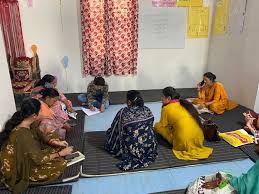
Neer during her research at Udhampur, Jammu.
The results were telling. Women who were part of NRLM, especially through Self-Help Groups (SHGs), showed much better financial inclusion compared to those who were not involved. Many of the women in these groups had better access to loans and used them primarily for agricultural purposes, which is central to the livelihoods in the region. In fact, agriculture remained a dominant theme, showing just how crucial it is for these communities. One of the key findings was that the women who participated in NRLM programs experienced a noticeable improvement in their economic empowerment. They were more likely to feel secure in their livelihoods and had greater decision-making power in their households. On the other hand, women who were not part of the program were much more vulnerable, struggling with access to credit and lower levels of empowerment.
One woman from Kashmir told me, “Before joining the SHG, I never thought I could contribute financially to my family. Now, I have my own income, and my opinions matter at home.” This quote stayed with me, as it exemplified the transformative power of these programs. While the NRLM isn’t a perfect solution, it has certainly provided a lifeline for many rural women, giving them the tools and confidence to build better futures for themselves and their families.
The Sustainable Livelihood Initiative (SLI) is a holistic model of aimed at empowering women at the Bottom of the Pyramid in the un-banked and under-banked segment of the population. This includes providing vocational training, financial literacy insurance and access to credit facilities.
CLN: Did your studies cover these aspects and do you see yourself being involved in the future in this key area of development for this country?
NS: Yes, my studies did touch upon several aspects similar to the Sustainable Livelihood Initiative (SLI), particularly in terms of financial inclusion, access to credit, and economic empowerment for women. Through the NRLM, women were provided with access to credit facilities, which played a crucial role in improving their livelihoods. The focus on financial literacy and vocational training, although not explicitly part of my research, aligns closely with the needs I observed during my fieldwork. Many of the women lacked basic financial knowledge, which limited their ability to effectively utilize loans or save for the future. I strongly believe that initiatives like the SLI, which address these gaps in financial literacy and provide vocational training, are key to empowering women, especially in rural and under-banked areas. Moving forward, I see myself being actively involved in this area, as it holds immense potential for fostering inclusive development in India. Programs that target the bottom of the pyramid are critical for sustainable growth, and I am keen to contribute to initiatives that focus on women’s empowerment, financial inclusion, and rural development.
CLN: What are your other areas of interest in terms of sports, hobbies and related activities?
NS: Outside of my academic and professional pursuits, I have a range of interests that keep me balanced and grounded. I enjoy reading both fiction and non-fiction, and you can often find me curled up with a good book. Cooking is another passion of mine, something I inherited from my paternal side, and I find great joy in experimenting with different recipes and flavours in the kitchen. Painting offers me a creative outlet, allowing me to express myself through colours and brushstrokes. I also have a love for travel and trekking, which allows me to explore new places and connect with nature. These hobbies not only relax me but also offer a sense of fulfillment and inspiration in my daily life.
CLN: Your words of encouragement for youngsters – especially girl students and young women of Kodagu.
NS: To the young students and women of Kodagu, I want to encourage you to embrace your full potential and pursue your dreams with confidence. Education is a powerful tool, so stay dedicated and curious, exploring various fields and subjects that ignite your passion.
Overcome challenges with resilience and view obstacles as opportunities for growth. Support and uplift each other, as collaboration can lead to collective success. Set ambitious goals, balance your efforts with self-care, and celebrate your unique heritage. Seek mentorship and believe in your abilities, knowing that you have the power to shape a bright and impactful future. Your determination and hard work will pave the way for your success and contribute positively to your community.
CLN: Support and understanding from the family, Okka (is it relevant?) and others in the community.
NS: I owe a great deal of gratitude to my family and community for their unwavering support throughout my journey. My parents have always encouraged me, no matter how unconventional or adventurous my choices were. I truly believe I am nothing without them; they’ve stood by me through every high and low, always providing strength and reassurance.
My extended family has also been a constant source of pride and encouragement, celebrating even my smallest accomplishments with joy. I’m incredibly fortunate to have my Okka standing by me, offering support and motivation at every step.
I can’t forget to mention my friends, who are more like family to me. They’ve walked alongside me, ensuring I’m okay, cheering me on, and being a huge part of my growth.
Special thanks go to Apparanda Sagar Ganapathy, whose constant support has been invaluable throughout my academic journey, and to like-minded individuals whose help was pivotal during crucial moments in my studies.
I’m also deeply grateful to the Coorg Education Fund, whose generous support allowed me to pursue my education without financial stress. Their assistance ensured I could focus fully on my studies, and for that, I will always be thankful.
CLN: Some comments on the recent articles on there History of Education in Kodagu published in CLN. What can be improved – in a broad sense, about education facilities, curriculum, medium of instruction and guidance in Kodagu?
- For example – is there a need for more English medium schools and colleges?
- There is an urgent need of private institutions for Higher Learning?
- More effective role and support from Organisations like Coorg Education Fund.
NS: The recent articles on the history of education in Kodagu published in CLN shed light on the progress made over the years, but they also highlight areas that need improvement.
One major aspect is the need for more English medium schools and colleges, as proficiency in English can open doors to better opportunities in higher education and employment.
There’s also an urgent need for more private institutions for higher learning to fill the gap in specialized courses and advanced education options, which are currently limited. Furthermore, the Coorg Education Fund, which has played a commendable role in supporting students, could expand its impact by identifying exceptional students at an earlier stage and providing consistent mentorship and guidance throughout their academic journey. Such initiatives would ensure that deserving students not only access education but also receive the support needed to excel and complete their studies successfully. Addressing these broad issues would significantly enhance educational outcomes in Kodagu.
CLN: Have you visited your schools and spoken to children about your experience – your interaction would be a source of tremendous motivation to children studying in Kodagu.
NS: I haven’t had the chance to visit my schools and speak to the children yet, as I started my job immediately after completing my PhD. However, I am very much looking forward to the opportunity to do so as soon as possible. I believe that sharing my journey—from my early days at school in Kodagu to my academic and professional achievements—can offer valuable insights and encouragement to the students. By connecting with them and sharing the challenges and triumphs of my path, I hope to inspire them to pursue their own dreams with confidence and determination. I’m excited about the possibility of giving back to the community that played such a formative role in my life and supporting the next generation of students in their educational endeavour’s.
source: http://www.clnews.in / Coffeeland News / Home> Articles / by CLN newsdesk / September 29th, 2024

