Scientists have discovered and described three new centipede species in the genus Rhysida from Southern India.
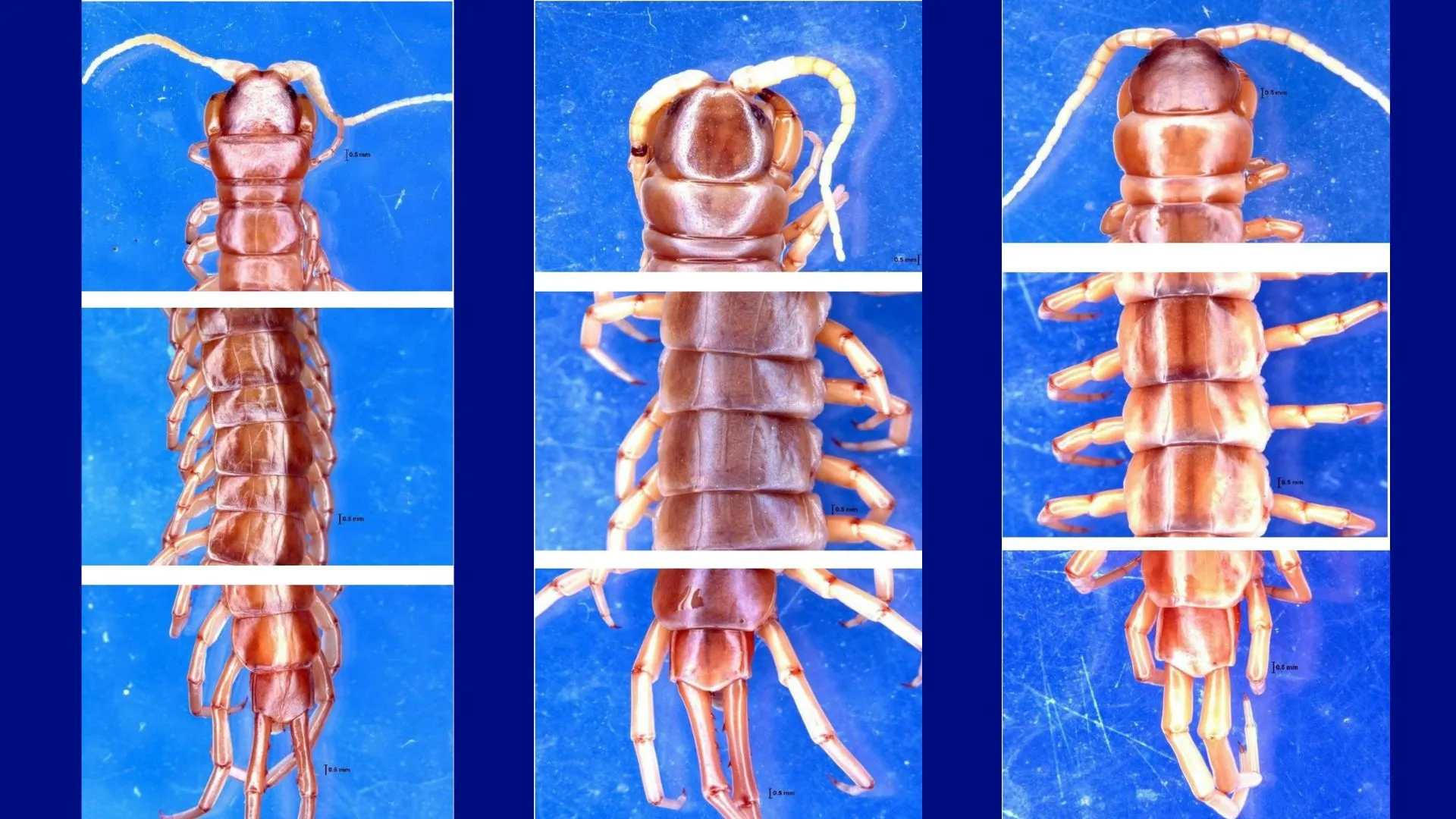
Rhysida quadrispinosa (L), Rhysida neyyarensis (C), Rhysida coorgensis (R) Credit: Authors, https://doi.org/10.1007/s42690-026-02054-4
Scientists have discovered and described three new centipede species in the genus Rhysida from Southern India, bringing the country’s total to 23. Led by researchers from the Western Ghat Regional Centre of the Zoological Survey of India in Kozhikode and Malabar Christian College, the find highlights the extraordinary, yet undiscovered biodiversity of the region.
Researchers uncovered the specimens through morphological examination of unidentified centipede specimens housed in the National Zoological Collection at the Zoological Survey of India. They used microscopes and digital cameras to analyse fine anatomical structures, such as tarsal spurs, coxopleural spines, body segments, and antennal counts, and compared them with established taxonomic records in global databases like ChiloBase 2.0.
The newly discovered species are named after their unique physical traits or geographical origins. The first species, Rhysida quadrispinosa, gets its name from the Latin-derived term quadrispinosa, highlighting its unique biological feature: the presence of four ventrolateral spines on its ultimate leg prefemur. The second species, Rhysida coorgensis, is named after Coorg in Karnataka, where researchers first collected the specimen. Similarly, researchers named the third species, Rhysida neyyarensis, after the Neyyar Wildlife Sanctuary in Kerala, where they discovered it.
Each species possesses distinctive physical characteristics that separate it from other known centipedes. Rhysida quadrispinosa features 18 antennal articles, unique body segment margination starting from tergites 7–11, and a distinct arrangement of spines on its ultimate legs. Rhysida coorgensis stands out due to specific paramedian suture starting points on its back plates and unique coxopleural spine configurations, closely resembling R. ikhalama but differing in internal structural details. Meanwhile, Rhysida neyyarensis is distinguished by its specific pattern of tarsal and tibial spurs, possessing two tarsal spurs on legs 1 through 19, alongside its own distinct spinal formula on the ultimate legs.
The discovery underscores the vital ecological importance of the Western Ghats, a globally recognised biodiversity hotspot teeming with unique and vulnerable ecosystems. By uncovering these three distinct macroarthropod predators, the research deepens our understanding of invertebrate evolution, soil ecology, and regional endemism, emphasising the urgent need for continued conservation efforts in South India’s vanishing natural habitats.

