Coffee sector seeks govt support for re-plantation

City: Chennai

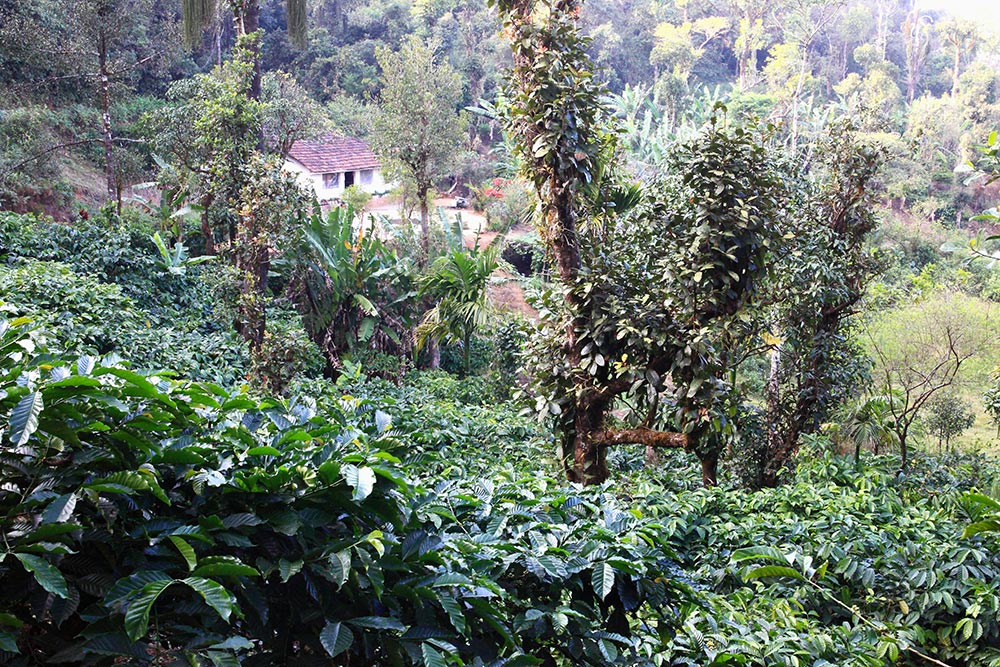
With a large majority of coffee plantations having turned old and unproductive, coffee sector is seeking a Colombian-model re-plantation support from the government.

Abysmally low yield, lower price realisation and high levels of debt have been restraining the sector from taking up re-plantation on its own.

Re-plantation is long overdue for 65-70 per cent of India’s coffee farms. About 65 per cent of plants are more than 40 years old and for those varieties, the maximum yielding age of the plants is 35-40 years. Some of the better-yielding newer varieties have a shorter life of around 25 years and a good number of these newer varieties are also due for re-plantation, said AL RN Nagappan, coffee committee chairman of UPASI.

By retaining the older plants, both production and yield has been coming down. Coffee production, especially arabica production has been falling year-after-year in the past five years. From 120,000 tonnes, it has dropped below 90,000 tonnes.

The yield too is abysmally low. “We cannot even compare our yield with that of Brazil or Colombia. If an acre of coffee plantation provides 1.5 tonnes of coffee in Brazil, it would hardly produce 300 kg in India,’ said Nagappan. Inability to mechanise the plantations due to the hilly and rocky terrain also has been affecting the yield. According to Ramesh Rajah, president of the Coffee Exporters Association, coffee growers in the India are not in a position to take up the task of such large-scale re-plantation as most of the growers are incurring losses due to lesser price realisation and higher input cost.

“If the input cost on an acre is around Rs 70,000, the income would be around Rs 40,000 to Rs 45,000. The grower is incurring a loss of around Rs 30,000 on an acre of coffee plantation,” said Boje Gowda, chairman, Coffee Board of India.

The growers have been relying on the pepper vines to make up for the losses. “But the pepper prices too are down this year,’ added Nagappan.

According Gowda, almost 80 per cent of the growers have defaulted on their loans and the non-performing assets of the coffee plantation have become a burden for the banks.

In such a scenario, the sector is looking forward for support from the part of the central and state governments. “The government should take a leaf out of the re-plantation scheme being provided for growers in Columbia. The government has been providing financial support for the past few years and now the country has been able to enhance its production significantly,” said Rajah.

Since 2009, Colombia has been replanting around 85,000 hectares of coffee plantations every year. The government has been providing subsidy for the every replanted coffee.

“We have been requesting both central and state government to provide subsidies on the inputs like fertilizer electricity and machines,’ said Gowda.

As the grower has to forego the income during re-plantation, he also wants financial support during that critical period. “We are also expecting an interest waiver for the loans so that the growers can pay back at least the principal,” said Nagappan.

source: http://www.mydigitalfc.com / mydigitalfc.com / Home> Miscellany / by Sangeetha G

Move To Include Kodava As Third Language In State, CBSE Syllabus

Karnataka Textbook Society writes to DDPIs to furnish details about number of students available to study Kodava language
KodavaLanguageKF28jun2018

Bengaluru:

The Karnataka Textbook Society that comes under Department of Public Instructions, Government of Karnataka, has written to Deputy Directors of Public Instructions (DDPIs) on the inclusion of Kodava language from First Standard to 10th Standard as a third language in the State Syllabus and Central Board of Secondary Education (CBSE).

The Society is responsible for printing and distribution of textbooks based on the State syllabi for lakhs of children of Classes 1 to 10 in Government, Aided and Unaided Schools of Karnataka.

The letter (copy of which is available with Star of Mysore) was initially sent from the office of Principal Secretary (Primary and Secondary Education) on 13.06.2016 and 10.04.2018 asking the DDPIs and Deputy Director (Administration), Department of Public Instructions, to furnish details about the number of students who will be available to study Kodava language if it is introduced as the third language.

Though the letter was sent in 2016 and another reminder sent in April this year, no action has been taken either by Deputy Director (Administration), Department of Public Instructions, or by DDPIs across the State. Taking objection to this, the Patya Pustaka Sangha has again (04.05.2018) written to the DDPIs and DD Administration to furnish the details. The latest letter has been sent by Narasimaiah, Managing Director.

‘Move beneficial for language’

Though language scholars say that the move to include Kodava language as a third language will ultimately benefit the language and culture of Kodagu, having Kodava language as a medium of instruction is financially unviable.

According to research scholars, who have conducted extensive research in Kodagu, its language and culture, a majority of Kodavas consider Kodava as a language of culture rather than education. They feel that Kodava language is not adequate enough to be a medium of education even at the primary level.

Many Kodavas prefer English as the medium of education and those who can afford it send their children to English medium schools. Even people with a positive attitude towards Kodava language also do not advocate for Kodava medium as they feel that it will not be economically viable. Financial resources, textbooks, availability of the teachers, etc., are the major problems, they say.

However, linguists are of the opinion that learning through a language other than the mother tongue creates interpretative thinking while education through the mother tongue develops creative thinking. Mother tongue also helps preservation of minority language and culture. As such, education through Kodava medium at least in primary education will benefit the language and culture, say linguists.

source: http://www.starofmysore.com / Star of Mysore / Home> News / June 28th, 2018

Ashwini Ponnappa lives the football World Cup dream

The badminton ace had a whale of a time watching the FIFA World Cup in Russia.

Indian badminton ace Ashwini Ponnappa had an exhilarating time in living the football dream by catching the FIFA World Cup from close quarters in Russia.

Soaking in the football frenzy Ashwini said the experience was unforgettable. “I had a fantastic experience. I have never felt the kind of atmosphere and buzz that I felt at the World Cup anywhere else. Of course the Olympics and the multi-sport events have an amazing vibe, but that I can say as being a player and getting to live at the village. In Russia, being a spectator, the vibe at the host cities was just electric,” she said.

The Indian player said fellow fans made the experience more special.

“A sport like football is definitely made up by the fans. Everyone who were there were for football alone. It was amazing to see people from different parts of the world come in numbers to cheer either for their home countries or the countries they support along with also representing there own countries which haven’t qualified.

It was like a gigantic sports carnival. Everywhere we went we’d see fans chanting and singing. I had goosebumps every time we came a cross huge gatherings of fans chanting and singing in unison. It was electric!” she explained.

The fanfare also presented Ashwini an opportunity for a learning.

“There was so much to learn watching these players. It is amazing to see how they deal with pressure. It is not easy when you have an entire nation depending on you to do well for them (fans,country). Star players have more pressure cause they are expected to perform their best in every match from the everyone. To watch a player like Ronaldo stepping up and playing the way he did against Spain was just amazing.”

Simply ‘Inspiring’

The trip was also inspirational to the badminton star. “Thanks to being there and the football craze, I’ve also been reading a lot of stories of different players and it’s just been very very inspiring. How you’ve got to believe in yourself when no one else does.

How determination and belief can work miracles. I loved reading Romelu Lukaku’s story which was sent by a friend. I had tears reading it. Or that of Aron Gunnarsson. I definitely want Iceland to do well after reading his story (laughs). It takes years and years of hard work and sheer determination to get to where they are like any other sport.

I think one of the nicest things about football is that it is easily accessible to everyone from all walks of life. It gives hope to so so many people, it gives people confidence and brings countries up when their players do well,” the 28-year-old player added.

Memorable Moment

Ashwini said the stand out moment was watching Cristiano Ronaldo and Lionel Messi ply their trade and watching the Spain vs Portugal match.

“The best part apart from just being present at the World Cup was getting to watch Ronaldo and Messi play live. The kind of expectations they have from their fans is crazy. It was more like they are expected to win and perform as a one man army. Watching Spain vs Portugal was definitely a highlight for me. Ronaldo played well and led the team like a boss and delivered despite the crazy pressure,” she said.

“Watching Argentina vs Croatia was sad. I did expect to watch incredible Messi work his magic as did the large number of Argentina fans. It isn’t possible if the team on the whole isn’t feeling confident and aren’t into the game. With all that’s going on with their team, I hope it gets better and they get the win and performance they need.

Ashwini said visiting the fan fests were also a highlight.

“They are just amazing. Especially if you do have a ticket for a match and want to still get a feeling of being apart of it. It was well organised with a great vibe. The entire event from the minute you get there to going into the stadium is organised perfectly for the fans to have the best experience possible while they are there. I am lucky to have had the opportunity to experience the World Cup and watch the stars play,” she concluded.

source: http://www.sportstaralive.com / Sportstar Alive / Home> Badminton / by Hari Kishore M / Chennai – June 25th, 2018

Karnataka: Now, permission from Forest Department necessary to enter Mandalpatti

The pleasures of visiting these popular spots were taken away due to the aggressive nature of locals who charged up to Rs. 1500 to ferry tourists to Mandalpatti.

Madikeri :

In order to curb exploitation of tourists by locals who were charging exorbitant charges to ferry them to Mandalpatti, the State Government has now made it mandatory for tourists to obtain permission from the forest department for entry to the Pushpagiri belt of Mandalpatti.

The pleasures of visiting these popular spots were taken away due to the aggressive nature of locals who charged up to Rs. 1500 to ferry tourists to Mandalpatti. While bus routes were drawn to this spot, it was not seen as a convenient option by many tourists who paid over Rs 1,500/- per jeep to reach Mandalpatti from nearly 14 kms away.

Be it one passenger or eight passengers, the charges per jeep remained the same.

This overcharging by locals had been brought to the notice of DC Sreevidya P I, who has laid down strict rules to control the menace.

A meeting was recently held by Sreevidya along with SP Rajendra Prasad who concluded that permissions need to be sought to enter the Pushpagiri belt of Mandalpatti. The DC has also ordered that the jeeps ferrying tourists will be brought under the scanner and Galibeedu village panchayat has been asked to install CCTV cameras at the premises.

No public or private vehicles will be allowed beyond the gates installed by the forest department at Mandalpatti; pedestrians and tourists could trek to the spot (after receiving permission) from the gate instead of travelling in vehicles.

The district administration has also drawn a maximum ferry charge of Rs 300/- per jeep and anyone demanding more money would not be allowed to function in the area.

The forest department is ordered to make sure that no plastic, liquour or other items are carried to the spot by the tourists. Offenders of these rules will be penalized by the Police Department’s Road Transport Authority.

source: http://www.newindianexpress.com / The New Indian Express / Home> States> Karnataka / by Express News Service / June 05th, 2018

Demand for crabs, bamboo shoots rises in Madikeri

Crabs kept for sale beside a road in Madikeri.

It is the time of the year when people in Madikeri throng to purchase crabs and bamboo shoots.

Crabs, bamboo shoots and “Marakesu” have already entered markets in the district.

People consider crab as good for generating heat in the body which helps in braving the chill during monsoon.

The crab sellers collect 30kg to 40kg of crabs from H D Kote, Bheemanahalli and come to Madikeri to sell them. A bundle of crab (12 crabs) are priced at Rs 300. Crab fetches Rs 250 per kg.

In the past, crabs were available in plenty in paddy fields and water bodies. Now in spite of an increase in demand, there are a few people who sell it.

The availability of crabs has also declined, said crab seller Kumar.

Even the tourists who come here during weekends purchase bamboo shoots while returning home. The bamboo shoot is sold for Rs 40 to Rs 50 for half a kg.

The demand for “Marakesu” leaves also increases during the monsoon. The leaves are used for the preparation of “pathrode” and “bajji.”

The monsoon delicacies are served not only at home but at homestays and resorts as well.

There is a good demand for crab curry, crab fry, bamboo shoot pickle and bamboo shoot dry curry, said homestay owner Suyog.

source: http://www.deccanherald.com / Deccan Herald / Home> State> District / by DH News Service , Madikeri / June 24th, 2018

Sreeraksha Poornesh on running a century-old coffee plantation, the rise of speciality roasters

Sreeraksha Poornesh loves the product of his plantations over all other coffees from around the world. But this is neither boast nor an arrogant statement in the wake of serious success. It is simply his truth, born out of the sheer love for farming and the coffee at Baarbara Estate. “At the end of the day, I’m a farmer and my heart and soul always say that my coffee is the best.”

The 30-year-old is a fourth-generation coffee grower of the illustrious MG Plantations of Chikmagalur, owned and run by the Indavara family for over 120 years. Baarbara Estate gets its name from the Anglo-Indian lady who sold the plantation to Poornesh’s great-grandfather eons ago. And Poornesh attributes his success, first and foremost, to its location. “I’m very lucky to have been handed down an estate on Baba Budan Giri,” he says.

For those who don’t know, the mountain is named after the 17th-century Sufi saint Baba Budan, who is said to have introduced coffee to India when he brought seven beans from Mocha, Yemen, to the country and planted them across the range. In January, the Coffee Board of India submitted an application for the Geographical Indication (GI) tagging of Babu Budan Giri arabica. The GI tag is meant to protect the heritage and quality status of a particular product; according to the World Intellectual Property Organization, it’s a “sign used on products that have a specific geographical origin and possess qualities or a reputation that are due to that origin.”

Sreeraksha01KF25jun2018

However, that isn’t enough to stay relevant, and Poornesh, armed with an MBA from Alliance Business School in Bengaluru, has introduced several new measures to keep up the business. Apart from getting high cup scores every year, he is now inviting roasters to the plantation to process the beans as they like and take them back to their establishments. In light of the changing coffee scene in India and the wave of speciality roasters cropping up across the country, this move is bold and certain to pay off.

“A cup is a team show,” says Poornesh. “As farmers, we do 60 percent of the work to ensure that the coffee you drink is amazing. The process starts with us and ends with roasters.”

Last season, the first roaster Poornesh brought over was Mithilesh Vazalwar, India’s first AeroPress champion and one of the country’s only 25 coffee Q-graders. Their mutual interest in the best-quality beans and obsession with everything coffee lead to a high-grade product that discerning customers can’t wait to get their hands on.

“A certain trend has been set by traditional roasters in India over centuries,” says Poornesh. “I realised that so much of the beans wasn’t processed and handled well. Now, we’ve taken things to a decent level and most third-wave roasters in India get our beans.”

Sreeraksha Poornesh
Sreeraksha Poornesh

Remarkably, having grown up with coffee, Poornesh wasn’t interested in joining the family business. After his MBA, he spent a couple of years working in Bengaluru before returning to Chikmagalur five years ago. He then began to study coffee in-depth, participating in workshops by the likes of Sunalini Menon (Asia’s first female coffee taster and expert) and attending lectures for coffee entrepreneurs at the Indian Institute of Plantation Management. He also did Kaapi Shastra, a coffee training programme by the Coffee Board of India.

“My goal is to dilute everything we grow into speciality coffee,” says Poornesh. Baarbara produces single-origin arabica at present. But he has no plans of expanding internationally, he adds. He has his sights firmly set on the Indian scene. “There’s a lot of potential here, a lot to do. I entered the business at just the right time.”

The brand Baarbara Berry’s status as one of India’s top-ranking coffees is also owed to Poornesh’s driven spirit. In the face of many challenges, including stiff competition, he is focused on getting higher cup scores every year. “You can’t be lax,” he says. “It’s not like you achieve a certain level and then let go. The crop is different every year, and it’s imperative that our cup quality is on the mark. Every year, in the beginning of the season, roasters test the quality, so consistency is very important.”

Now that Baarbara Berry has reached a certain level, Poornesh believes that the farmer-roaster interaction should progress too. Because harvesting and processing are intricate processes and significantly impact brew quality – flavour, texture, acidity, body – roasters can choose their methods for the kind of coffees they want.

Baarbara Berry offers green coffee as well as a range of roasted and ground beans. Owing to high elevation, around 5,000 feet, the ethically sourced and handpicked beans produce rich, full-bodied brews with balanced flavours and finish. MG Plantations is Rainforest Alliance Certified and UTZ Certified, for sustainable farming and better opportunities for farmers.

source: http://www.firstpost.com / FirstPost. / Home> Latest News> Living News> Living / by Tania Bhattacharya / June 25th, 2018

Shwetha Chengappa Romantic Song

ShwethaKF24jun2018

Swetha Changappa is a Kannada television actress who has acted in numerous tele-serials and films.She debuted her acting career through Sumathi, a serial directed via S. Narayan, aired on Udaya TV all through 2003-2005.

Her fame most of the tv audience of Karnataka reached heights thru her role in Kannada soap Kadambari which changed into produced with the aid of Balaji Telefilms and aired on Udaya TV in 2006.

She acted in lead roles for Sukanya and Arundhathi that have been aired on ETV Kannada (now Colors Kannada )which finally have become bigger hits in 2008 and 2010 respectively.

She additionally hosted TV show Yaariguntu Yaarigilla on Zee Kannada which changed into themed on celebration of spirit of womanhood. She additionally hosted Kuniyonu Baara on Zee Kannada, which changed into a dance show for kids.

Shwetha has also acted in Kannada films, Thangigagi with Darshan Thoogudeep and Varsha with Vishnuvardhan.

source: http://www.theprimetimes.in / Prime Time Media / Home> Hit Video / by Ananthu / June 22nd 2018

K M Cariappa – Father of Indian Army

CariappaKF24jun2018

Chennai:

Whoever goes through the military history of India, will never forget Field Marshal K M Cariappa.

Only two officers of the Indian Army have got the rank of a Field Marshal: one of them being Cariappa and the other being Field Marshal Sam Manekshaw.

But that isn’t the only thing that won him recognition – his achievements are no less worthy. While the alumni of Officers Training Academy unveil the statue of the noted Army officer who held five-star rank, News Today journeyed through his life and achievements.

His distinguished military career spanned almost three decades. He was the first Indian military officer to attend the Staff College, Quetta, the first Indian to command a battalion, and was also one of the first two Indians selected to undergo training at the Imperial Defence College, Camberley, UK.

Field Marshal Cariappa made his voice clear when Skeen Committee was set up in 1939 to examine the options of Indianisation of Indian Army’s ranks.

As Cariappa was one of the senior most Indian officers with about 19 years of service, the committee held several discussions with him. He expressed his displeasure at the treatment of Indian officers in the Army.

He decried the discrimination shown towards Indian officers in terms of appointments, promotions, benefits and allowances British officers were entitled to.

He is known for ‘Operation Kipper’, ‘Operation Easy’ and ‘Operation Bision’ done to capture Naushera, Jhangar, Poonch, Zoji la, Dras and Kargil areas in Kashmir during 1947 and 1948.

The operations aimed to drive out Pakistanis from Kashmir, but they were stopped by the intervention of the United States. While Army headquarters asked not to launch any operations, Cariappa protested against it and launched several strikes in the Ladakh region allowing India to assert control over the region.

Cariappa took over the reins of the Indian Army 15 January 1949, that was marked as official Army Day and celebrated annually.

As chief of the Army, Cariappa was instrumental in the formation of the Territorial Army in 1949. He extended support to the National Cadet Corps (NCC) during its formative years. These two complimentary branches of the Army later proved to be very helpful in the wars India fought in later years.

He also adopted the Indian National Army slogan ‘Jai Hind’: it became a phrase for the personnel to greet each other in the Army.

He turned down the proposal to reserve vacancies in the Army for Scheduled Castes and Scheduled Tribes as had been done in other government services. He stated that the proposal would degrade the Army’s standards and increase the risk of it being defeated if right talent was not recognised.

Cariappa took part in the reorganisation of the armed forces in many foreign countries. He was awarded the Legion of Merit in the degree of Chief Commander by American President Harry S. Truman.

As a mark of recognition for the commendable service rendered by him to the nation, the Government of India conferred the rank of Field Marshal on Cariappa 28 April 1986, at a special investiture ceremony at Rashtrapati Bhavan.

source: http://www.newstoday.net / News Today / Home> Chennai / by S. Vishnu Sharmaa / June 23rd, 2018

Muddulakshmi completes 100 episodes

Popular serial Muddulakshmi has successfully completed 100 episodes.

The serial which has was started airing from January marked the debut of Actress Anu Poovamma in small screen.

The serial is currently being aired from Monday to Saturday at 7:30pm.

To mark the occasion, a special cake was by the serial team members.

The serial conveys the message of character and values of a person more important than skin color. Lead actress Ashwini suffers humiliation because of her skin colour. Despite all adversities, she fights against social stigmas. She was brought up by her step mother without showing any affection.

On the other hand, Dhruva who is a heart surgeon shows inclination to marry Ashwini. Dhruva’s role is being played by Charith.

Anu has plays the role of aspiring model Aishwarya. Another vital character Adi’s carries a twist from the 100th episode.

Actors Mico Shivu, Vanishree and N T Ramaswamy are seen in pivotal roles.

source: http://www.timesofindia.indiatimes.com / The Times of India / Home> News> TV> News> Kannada / June 14th, 2018

This Entrepreneur Risked His Father-in-Law’s Life Savings on His Business. Here’s What Happened

With hard work, it took only 18 months to get the money back.

CREDIT: Courtesy company

Imagine you’ve just had twins. You need to support your family and work. You’re exhausted constantly. (And from experience, I can tell you baby exhaustion really does feel somewhere between death and stupid.) What do you do to keep going?

If you’re Neel Premkumar, you start concocting coffee shots in your kitchen, playing around with organic coffee beans and cold brewing. While the mad scientist behavior might have been born out of necessity (what innovation isn’t?), in a few months, Premkumar had found the ingredient and technique combination that worked. In fact, his creation worked so well, business bells started blaring in his brain.

The only problem? No money. (Cue the sad violins here.)

An option from inside the family
Fortunately for Premkumar, his father-in-law, Venkat Nemani, had some money–his life savings of $50,000. If Nemani would agree to give that and everything worked out, he wouldn’t lose anything and could even gain. But if things didn’t work out …

It was a huge risk. But Nemani had faith. The money–all of it–went to Premkumar. And what’s more, Nemani didn’t even haggle over details the way other investors or bankers would have.

“I never formally outlined a plan to pay him back,” Premkumar says, “past my good word that he’d be repaid!”

Premkumar recognized the trust. And, in return, he committed to the business full throttle.

“Failure was just not an option,” he says. “I named my company Dyla, which is a combination of my twin girls’ names. When I started, I thought to myself, ‘If I name this startup after my kids, there is no way I could let it fail.’ I think that as an entrepreneur, you just have to have a singular focus on success. What you’re trying to accomplish is hard enough in taking on industry giants. Self-belief is paramount to success.”

And so Forto was born. Premkumar started selling his coffee online, answering every customer email himself. He managed to find a base with the U.S. military, where the need for focus and energy is extraordinarily high.

“When Forto was selling well in every U.S. base, I realized this was going to be a big business,” Premkumar notes. “I also saw signs of big changes in both the energy drink and retail coffee markets, with buying patterns shifting and a new generation of consumers demanding great coffee, in a convenient format that saves them time. That is where Forto fits in and why it has such a loyal audience.”

Neel Premkumar's twin daughters who inspired the Forto coffee shot.CREDIT: Courtesy company
Neel Premkumar’s twin daughters who inspired the Forto coffee shot.CREDIT: Courtesy company

From family loan to national brand
Even though having the money come from his father-in-law added personal stress, Premkumar’s initial product success and market observation told him that asking for the loan had been the right choice. And, by staying laser focused, he managed to pay the $50,000 back in just 18 months.

Forto has skyrocketed, earning 400 percent year-over-year growth. It was named the Inc. 500’s No 1 fastest-growing beverage brand in America for 2017. And while the shots are available in more than 50,000 retail stores, the company announced today that the product will also be on the regular coffee shelves at 3,700 Walmart locations. It’s a massive win for Premkumar, as the entire point of the business has been to help customers boost their energy in a more convenient and inexpensive way.

Should you take the same risk to innovate?
Premkumar says he has zero regrets about the experience. But he points out that much of what made Forto work was just being in the right place at the right time. He came up with the shots right when people were changing the rituals they had around coffee, putting him in the ideal position to meet an emerging demand. And he and his team were serious about examining early adopters to understand why and when they downed the coffee. That allowed Premkumar to find and connect with more individuals for whom Forto was a great fit. Lastly, he didn’t hire and scale until that consumer understanding–and the product message built on it–was solid.

“Everyone’s tolerance for risk is different,” Premkumar says. “For me, bringing Forto’s two-ounce coffee shots to market was worth the risk, because I thought it provided a necessary solution to an everyday problem–a convenient coffee energy boost. I think fundamentally an entrepreneur’s job is about risk mitigation. A startup begins with maximum risk, but every step you take building the company reduces your risk ever so slightly. I was never worried about the competition, more about my own ability to figure out how to meet the consumer need and communicate that correctly to them before the money would run out!”

As for specific money tips, Premkumar says you should borrow only from people you trust. Ideally, those people should be OK with losing the loan. You also shouldn’t aim too high. Raising too much money can be a huge temptation to overspend, waste money, and hire more than or before you need to.

“If you do raise your first round from family or friends,” Premkumar advises, “make sure they have nerves of steel like my father-in-law did. They might need it!”

source: http://www.inc.com / Inc. / Home / by Wanda Thibodeux, copywriter, TakingDictation.com / June 19th, 2018