Indian rally champions Dean Mascarenhas and co-driver Gagan Karumbaiah of TSI Racing return to the World Rally Championship this weekend for their second WRC3 outing of the season, taking on Rally del Paraguay in a Ford Fiesta Rally3 prepared and serviced by PH Sport.
Mangaluru’s Dean partnered with Kodagu co-driver Gagan to make their WRC debut at Rally Islas Canarias this April, where they finished seventh in class.
The 2025 Indian National Rally champions gained further experience in the FIA European Rally Championship, finishing 12th in the Rally3 class at the demanding Rally di Roma Capitale in July. This WRC round in Paraguay will be their first on Gravel in the Ford Fiesta Rally3.
The rally covers 357.64km of timed competition across 22 special stages on soft red-clay gravel.
Mohan Nagarajan, MD of Sidvin Energy Engineering, which backs TSI Racing, said the European experience had strengthened the programme. “The ERC round and the training in Europe were extremely useful. The experience has helped Dean, Gagan and the entire team to better prepare for the WRC3 challenge.”
“Our journey so far has been very positive, with a lot of learning and valuable experience. We’re excited for our first gravel rally of the season. There is still a lot for us to learn from every rally,” said Dean after Thursday’s shakedown.
Founded in 2007 and backed by Sidvin Energy Engineering, TSI Racing was the first Indian team to enter the WRC in 2008 and has since provided an international platform for Indian drivers, including Gaurav Gill and Naren Kumar. Nearly two decades later, the team’s commitment to taking Indian rallying to the global stage continues with Mascarenhas and Karumbaiah.
–IANS
source: http://www.fmbharat.com / FM Bharat / Home> English / by IANS / August 08th, 2026
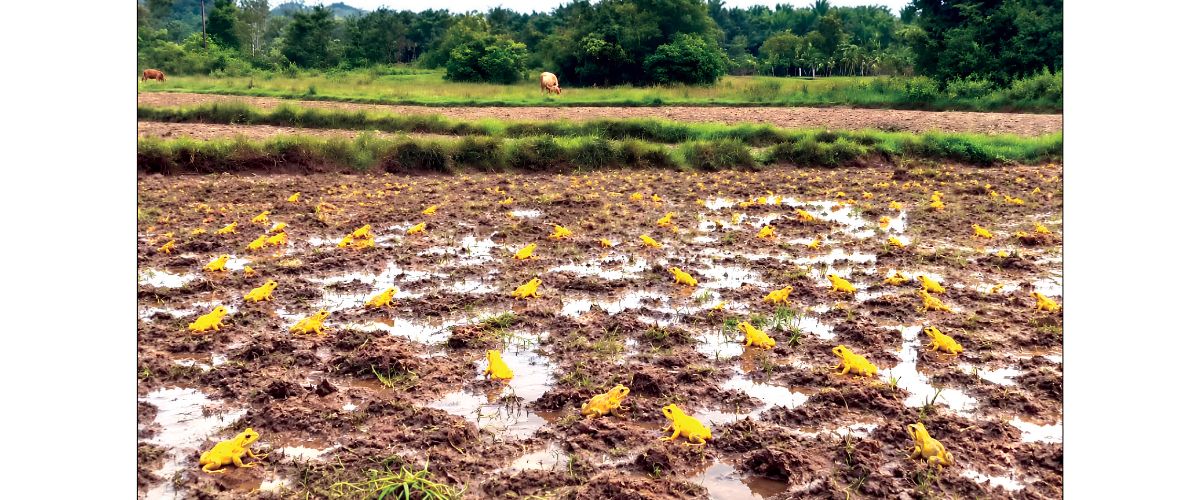
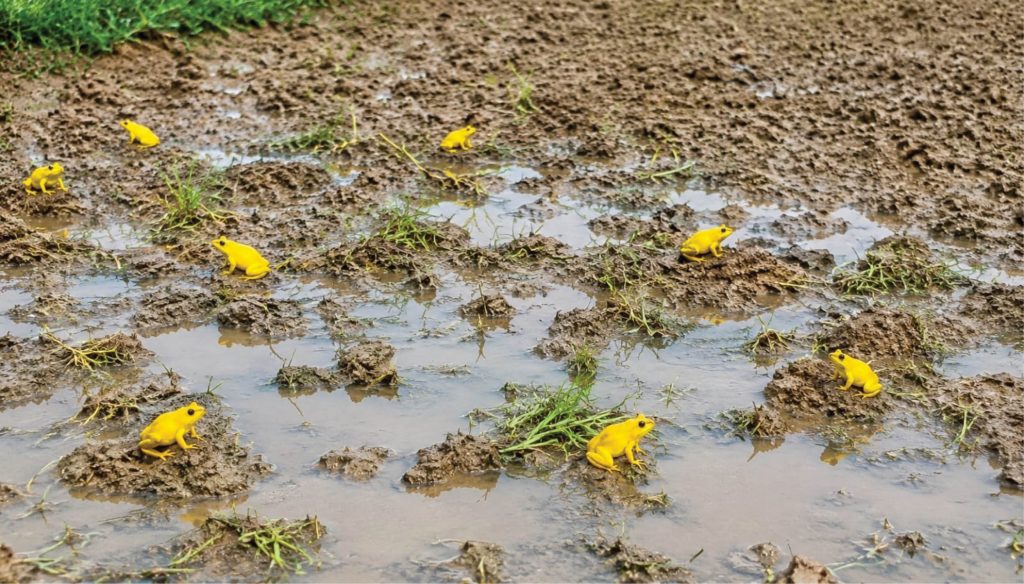
Farmers in B. Shettigeri village of Ponnampet taluk in Kodagu are witnessing an unusual natural spectacle, with hundreds of bright yellow bullfrogs appearing in paddy fields over the past week, leaving residents both fascinated and curious.
The unusual congregation has drawn the attention of residents, many of whom say they have never witnessed such a large number of brightly coloured bullfrogs in the area before.
They are believed to be Indian Bullfrog (Hoplobatrachus tigerinus), one of the largest frog species found in India. Native to South and Southeast Asia, the semi-aquatic species is known for its robust build and undergoes a striking colour change during breeding season.
Male Indian bullfrogs turn bright yellow and develop distinctive blue vocal sacs on either side of the throat during the monsoon to attract females. This vibrant breeding colour is visible only for a few weeks each year.
K.P. Girish, a farmer from B. Shettigeri, said that the frogs have been appearing in large numbers in paddy fields where sowing is yet to begin.
“We have been seeing these yellow frogs for the last eight days. More than 200 of them are hopping around the fields. This is the first time we have witnessed so many bullfrogs together. It looks beautiful, but at the same time it is a little frightening because we have never seen anything like this before,” he said.
source: http://www.starofmysore.com / Star of Mysore / Home> News / July 07th, 2026
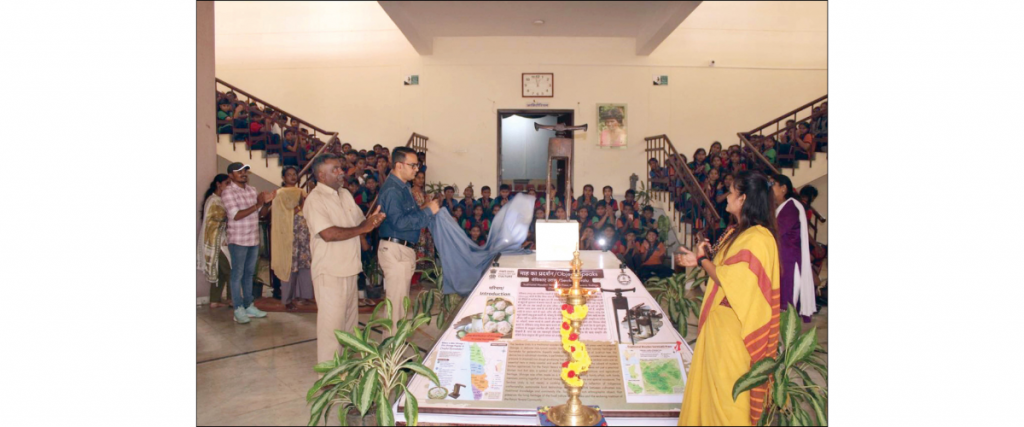
The August edition of the ‘Object Speaks’ series exhibition was inaugurated at the Zonal Anthropological Museum of the Anthropological Survey of India (AnSI), Southern Regional Centre, Mysuru, by the students and teachers of STG Public School, Mandya.
Dr. Mithun Sikdar, Head of Office, Anthropological Survey of India, Southern Regional Centre, Mysuru, encouraged the students to appreciate India’s rich cultural diversity through museum collections and indigenous traditions.
The highlight of this month’s exhibition is the ‘Sevikae Uralu’, a traditional wooden hand-operated vermicelli press used by the Panjiri Yerava community of Kodagu District.
Crafted from durable jackfruit wood, the ethnographic object reflects the ingenuity of indigenous technology and the community’s close association with food, family and tradition.
More than a kitchen implement, the ‘Sevikae Uralu’ symbolises collective labour, sustainable craftsmanship and the preservation of cultural identity across generations.
The exhibition traces the journey of Karnataka’s traditional handmade rice vermicelli (shavige or ottu shavige), prepared using the ‘Sevikae Uralu’.
It explains how steamed rice dough is transformed into delicate strands of vermicelli and highlights the historical significance of this culinary tradition, which has been cherished across coastal and southern Karnataka for centuries.
The display also explores the oral traditions of the Panjiri Yerava community, where the ‘Sevikae Uralu’ occupies a significant place in ancestral stories, agricultural life and community memory.
Through informative panels and engaging narratives, visitors can learn about the cultural heritage of the Panjiri Yeravas, their traditional lifestyle, indigenous knowledge systems and the enduring legacy of Karnataka’s food culture.
The exhibition illustrates how a simple household object can tell stories of history, identity, innovation and living heritage.
Curated by Dr. Banita Behera, the exhibition will remain open at the Zonal Anthropological Museum till Aug.31. Students, researchers and the general public can visit the exhibition and explore the story behind one of Kodagu’s traditional culinary implements.
source: http://www.starofmysore.com / Star of Mysore / Home> News / by Star of Mysore / August 08th, 2026
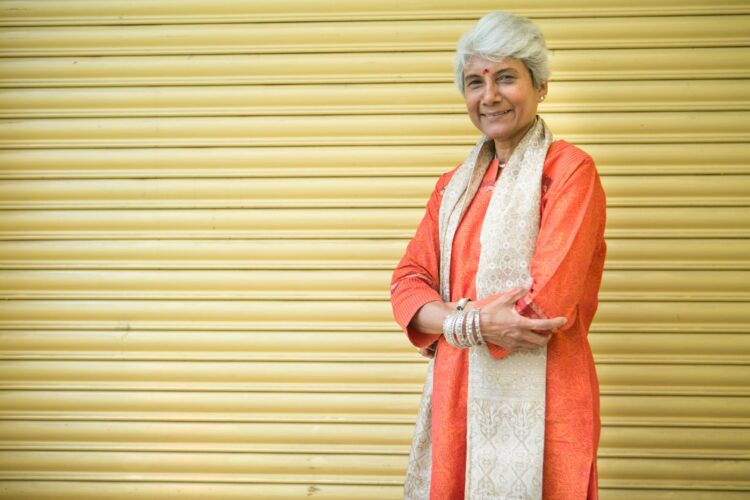
Molecular biologist Sujata Goel on the importance of “weeds”, modern approaches in science communication & India’s organic farming policies.
Nearly 30 years ago, molecular biologists Sujata Goel and her partner Anurag left Delhi to build a life closer to nature in Karnataka’s Kodagu district. Over the years, they began working closely with local farmers to understand how agroecological plantations could be developed at scale, combining their expertise in academic biology with generations of local ecological knowledge to co-create natural solutions for coffee and spice plantations. Communication techniques that closed language and knowledge gaps were essential in this confluence of modern scientific understanding with centuries-old local wisdom.
The couple has been actively researching natural alternatives to chemical pesticides, starting with a makeshift laboratory on a wooden table on their 25-acre ecologically sustaining plantation to test how certain plant species that are considered “weeds” have properties to turn away pests and provide other benefits to cultivated plants. Since then, Sujata has taken their research to public platforms and official channels to advocate for bans on use of agri chemicals in Coorg’s coffee and spice plantations. Coorg is home to Talakaveri, the source of River Kaveri — the lifeline of multiple South Indian states. The chemicals sold to and used by planters, seep into the soil and contaminate this vital waterbody.
Today, Sujata works with a small team of farmers, naturalists and conservationists to bring awareness about the lethal impacts of weedicides that has gradually crept into the agricultural practices in and around plantations in this area.
She has also taken these ideas to the international stage through the Organic Farming Association of India, serving as its president and helping organise a global symposium in 2017. In the conversation with Down To Earth, she discusses the methods and importance of such dialogue, the evolving approaches of communicating science with local communities and what she has learnt about organic farming in India as a practitioner.
Preetha Banerjee: How has science communication changed over the years and what channels and techniques do you use to raise awareness among local farmers? What has been the impact of the Internet?
Sujata Goel: Most people across villages including farmers use the internet comprehensively. Several village Panchayats, Planters and Farmers have created Whatsapp groups to exchange and share information regarding everything related to cultivation, from weather forecasts to agricultural practices, government schemes and subsidies available, and other related matters. We are using such platforms in collaborations with scientists to spread awareness about the carcinogenic and lethal effects of many of the agrichemicals which are rampantly being used in the fields now. It is important to remember that these lands constitute a catchment area being the primary recipients of the South-west monsoons, providing water for much of peninsular India. Spraying pesticides and weedicides around paddy fields have contaminated wetlands, which is extremely dangerous since these wetlands are the life source of all flowing water. These wetlands are also precious because they recharge ground water and must be protected from such thoughtless destruction at all costs.
PB: Over three decades of working with farmers, how have you seen science communication evolve?
SG: Whatsapp groups and Instagram seem to be the most accessible to farmers. Since multiple language use is now possible, these are popular, especially in rural areas. Several workshops are also held remotely, and farmers are able to attend them from their own places of residence and work. This helps cut costs of holding such study programs and enables organisations such as Organic Farming Association of India (OFAI) to invite scientists to such platforms without disrupting their work schedules.
PB: Modern agricultural science promotes a negative association with “weeds”. Is there another way to look at weeds? What have you learnt from traditional wisdom and your own research?
SG: Words like “pest” and “weed” have evolved through western agricultural practices. They tend to designate some species desirable and others not. Many native plants which we call weeds were consumed as food not long ago and continue to do so. Many species which we eliminate under the garb of “weeds” play an essential role not only in the overall ecosystem, but also in producing our own food. They not only create habitats for local biodiversity but also offer pollinators necessary grounds for foraging and survival. Rethinking our language biases would enable us to look more holistically at the philosophy behind our practices.
This brings us to the issue of weedicides, which have slowly infiltrated Kodagu’s coffee plantations in the past ten years. We now notice deformities and dead bodies of animals in the once-lively streams that are the arteries of this landscape. The poisoning of freshwater species is just an indicator of the impact these chemicals have on human health.
This year, in February 2026, the multinational company, Bayers, announced that it will pay $7.25 billion to settle thousands of US lawsuits alleging that its Roundup weedkiller has caused a vast number of individual cases of cancer. That these family of carcinogenic agri-chemicals were lethal to all life forms was substantiated by rigorous scientific research decades ago and has been available in the public domain, and yet their marketing continues unabated. Are these the substances which international companies promote and enforce on the planet and escape all forms of control? Who becomes accountable for such acts of deliberate genocide?
PB: Why is it important to think about biodiversity as an entire ecosystem rather than as individual species? What does this mean for agricultural productivity?
SG: Sustenance of the ecology of a farm depends upon the richness of its biological diversity. Plants and insects, fungi and soil microorganisms have all co-evolved for millions of years. Good farming practices aim to understand the importance of biodiversity and try to mimic nature by providing niches for diverse plants, animals, insects, bacteria and fungi. The ‘ecosystem services’ provided by this biodiversity are invaluable, not just for farmers, but for all of life surrounding us. These range from encouraging populations of pollinators, soil recharge and nutrient cycling, disease regulation, water harnessing, and carbon sequestration among others.
On organic farms such as ours that have no trace of chemicals around, parasitic and predatory insects colonise native plant species and play significant roles in maintaining disease-free crops. Integration of fallow areas, leaving riparian stretches rich with local weeds, and generous mulching has allowed a rich buildup of biodiversity in the fields. As a result, we now have excellent populations of spiders, wasps, dragonflies, frogs, lizards, snakes and a wide range of birds, all of which contribute towards building up of a diverse and healthy agri-ecosystem.
Birds are amazing for their ability feed on insects and caterpillars; spiders are indiscriminate trappers of a whole range of insects. Wasps lay their eggs on larvae, which hatch and being carnivorous, start feeding on the grubs which would otherwise damage the crops. Bats, frogs, skinks, lizards, shrews, mantids, are insect feeders and form an intricate link in the food web of the forest ecosystem.
Beneficial microorganisms contribute to a rise in detritus activity of the soil, increased nitrogen fixation, and increase in nutrient cycles. Areas where grasslands are encouraged become sponges for harnessing rainwater to replenish water tables and aquifers. It is these who are the true regenerators of our soils and agri-ecosystems.
PB: How has India’s approach to organic farming changed over the past three decades?
SG: Across our agricultural landscapes, farmers are beginning to feel the “bite” of 60 years of aftermath of the green revolution. Widespread losses due to climate extremes being experienced in different parts of the world now are adding to the need to desperately regenerate degraded lands. This is possible only through farming practices which totally exclude use of agri-chemicals, and at the same time, enabling viable practices to revive our soils.
There is no half measure. The governing bodies of our country must make up their minds that when they announce policies and projects to support organic farming, whether that is their true intent and how such projects can be implemented in light of subsidies and other supportive mechanisms offered for purchases of the very agri-chemicals which are responsible for the damage. Through field-based education and changes in policies to ensure that farmers are economically protected, it is possible to scale up on organic practices to feed our populations. This has been amply demonstrated by the truly progressive farmers across the world.
source: http://www.downtoearth.org.in / Down To Earth / Home> Environment / by Preetha Banerjee / August 22nd, 2026
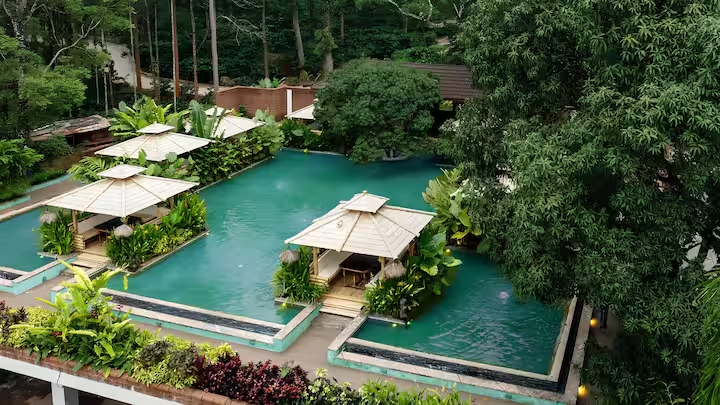
Set across 76 acres of lush Coorg forest, The Leela Coorg Forest Sanctuary brings together secluded luxury villas, immersive nature trails, local cuisine and expansive wellness experiences. From private pools and heritage coffee rituals to birdwatching and the Aujasya spa, this is Coorg designed for slowing down in style.
At the Leela Coorg Forest Sanctuary, bamboo-canopied architecture and laterite stone come together to embellish the 71 secluded luxury villas, each of which offer a distinct experience
Nestled in a 76-acre estate in the heart of Coorg, The Leela Coorg Forest Sanctuary marks a new foray for one of India’s finest hospitality brands. From verdant landscapes and nature trails, local flavours, curated wellness programs and astounding birdlife, Leela’s first wellness-anchored forest sanctuary allows you to truly immerse yourself in the best of Coorg.
Secluded luxury villas
Bamboo-canopied architecture and laterite stone come together to embellish the 71 secluded luxury villas, each of which offer a distinct experience. The Presidential Villa is an abode in itself with easy access to the in-resort helipad. It combines four villas with a drawing room that will transport you to a colonial-era, planters club replete with leather sofas and dark wood.
The large private kitchen at the villa can be manned by one of Leela’s chefs or your own personal Chef. The accommodation also includes a large private pool with a poolside bar and a dedicated gym. Villa options include the massive 3,200 sq. ft.
The Forestlight Villa includes a stunning outdoor lounge, and a temperature-controlled pool with twin massage beds on the deck. There’s also the Mistwood Villa which features two large indoor spaces, a private pool with a deck and a jacuzzi.
For your taste buds
Zen, Leela’s signature Pan Asian restaurant, plays out in a new setting. Located over a shimmering water body, this outdoor paradise offers a choice of private gazebos that overlook acres of green landscapes. The menu includes Zen’s signature sushi rolls and dim sums with a cocktail program that incorporates local ingredients. Some of these ingredients also play out in the cocktail program at The Cellar, the resort’s cosy bar that’s tucked away under the all-day diner. Do check out the bar’s signature cocktail, the Kachampuli Highball with a tangy Coorg slant.
The Presidential Villa at the Leela Coorg Forest Sanctuary is an abode in itself with easy access to the in-resort helipad
Luma, the all-day diner, offers some of the best views of the private lake within the resort. Ask for the chef’s specially curated local menu where emblematic dishes like the pandi (pork) curry and ingredients like bamboo shoot are usually in the mix. I’d also recommend a signature heritage coffee curation experience at 92 degrees, the resort’s dedicated coffee lounge that allows you to get up close with Coorg’s coffee heritage. You will be tempted to take advantage of the resort’s elaborate in-room dining menu that blends the best of Asian, European and Indian flavours.
Rejuvenate, relax in luxury
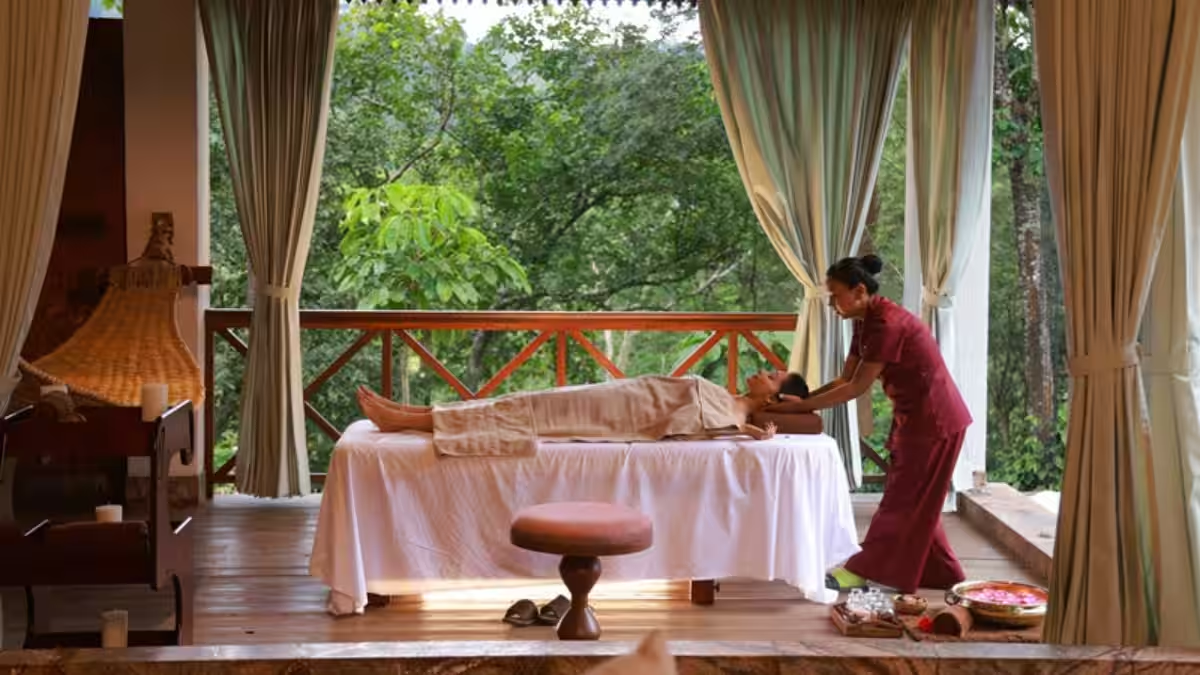
The 27,000 sq. ft. Aujasya by The Leela Spa is one of the biggest in any luxury resort in India. With 25 treatment rooms spread over multiple levels, it’s easy to find your zen space. The spa offers a hammam and treatments from across the world. You can also opt for the in-villa spa experience. The large Vinyasa deck on the edge of the lake offers yoga and pranayama sessions. There are a host of activities, including kayaking on the private lake, that truly let you unwind.
The 27,000 sq. ft. Aujasya by The Leela Spa is one of the biggest in any luxury resort in India
Trails, at your doorstep
The best trails begin at your doorstep. Sign up for one of the nature walks that are worth waking up early for. The resort is a hub for Coorg’s fabled birdlife. It’s not unusual to spot at least 25 species of birds during the space of a 90-minute walk through the resort. Look out for woodpeckers and hornbills as well as the Giant Malabar Squirrel (one of the world’s largest squirrels) as it leaps from one tree to the next. Coorg’s popular attractions like Talacauvery (where the Cauvery river originates) and Abbey Falls are easily accessible from the resort. Do make time to visit Namdroling Nyinmape, a Tibetan monastery in Bylakuppe (45 minutes from the resort) that is home of one India’s largest Tibetan communities.
Plan your stay
The resort is about six hours from the Bengaluru International Airport. The Kannur International Airport is three hours away. You could combine your trip to the resort with a pit-stop in Mysore (three hours away). The in-resort helipad also allows you to arrive on a chartered helicopter service.
Flaunt insider tip
If you’re planning a romantic break, do book the Forestlight Villa with an intimate bedroom, a large outdoor lounge and outdoor showers.
source: http://www.firstpost.com / First Post / Home> First Post Flaunt> Travel / by Ashwin Rajagopalan / August 26th, 2026
From the misty slopes of Kodagu to the boutique cafés of Melbourne, India’s specialty coffee is preparing to make another leap across continents. Biota Coorg Farmer Producer Company Ltd, a collective of 122 small and medium coffee growers in Karnataka’s famed coffee belt, is setting its sights on the Australian market in a bold move to expand its export footprint, boost value addition, and deepen its identity as a producer of traceable, sustainable, and high-quality beans.
Australia, with its sophisticated café culture, artisanal roasters, and rising consumer awareness of origin-based coffees, represents fertile ground for Biota’s next phase of international growth. The collective, headquartered in India’s largest coffee-producing district, has built a model that is part agricultural co-op, part ethical brand-builder. It assists its grower-members in post-harvest processing, collective marketing, and navigating international trade—functions that are traditionally out of reach for smallholder farmers operating independently. The result is a more stable income, higher returns per bean, and a stronger voice in the global value chain.
Biota’s ambition to enter the Australian market aligns with a broader shift in Indian coffee exports, which rose 19 per cent year-on-year in Q1 FY25, signaling sustained global demand for premium Indian arabicas and robustas. The group already sells to several countries including the United States, Canada, Germany, France, and Portugal, and exported around 80 tonnes last year, with a goal of surpassing 100 tonnes in the current fiscal. But beyond volume, Biota’s deeper play lies in branding and sustainability—two pillars increasingly shaping the premium coffee market worldwide.
Sustainability is not just a marketing veneer for Biota—it is embedded in its production ethos. Half of its member farms are already Rainforest Alliance certified, and the remainder are undergoing certification. The group has also positioned itself to comply with the upcoming European Union Deforestation Regulation, which will require rigorous traceability of agricultural imports into the EU. This compliance-readiness not only secures existing export channels but builds a strong foundation for expansion into regulation-conscious markets like Australia.
The push into Australia also reflects Biota’s evolution from being a commodity supplier to a brand-builder. With the global coffee industry undergoing a structural shift—from commodity to craft, from anonymity to traceability—Biota is working to develop its own identity that reflects the terroir of Kodagu, its ecological richness, and the collective power of its farmer members. Kodagu’s biodiversity, rainfall, and shaded agroforestry systems give its coffees a unique profile that resonates with discerning global consumers seeking both quality and ethical production.
Australia’s coffee culture, which prizes direct sourcing, sustainable partnerships, and taste-driven narratives, could prove a natural next step for Biota. The group is seeking to hold virtual cupping sessions with Australian roasters, and is actively pursuing connections with distributors, retailers, and promotional platforms in the region. The potential payoff is more than market access—it’s the chance to embed a South Indian cooperative directly into the fabric of a global specialty coffee community.
Biota’s strategy mirrors the broader ambition of India’s agricultural collectives: to shift from being price takers to value creators, from invisible nodes in a global chain to recognised origin brands. With a focus on certification, traceability, and producer empowerment, the Kodagu-based FPC offers a blueprint for how Indian agri-cooperatives can rewrite their roles in global trade—not by scaling up indiscriminately, but by scaling smart, sustainable, and strategic.
As India’s coffee exports find new momentum and global buyers seek transparent, climate-friendly sourcing, Biota’s bid to enter Australia is not just a market expansion—it’s a recalibration of how Indian coffee tells its story to the world.
source: http://www.biotacoorg.com/ Biota Coorg / Home> Value Chain> News / by Agro Spectrum / July 11th, 2025
Sunalini Menon started working for the Coffee Board of India in 1971. Image CoffeeLab
The Specialty Coffee Association (SCA) has announced the candidates for its latest SCA Board of Directors Elections.
Following nominations and then interviews with the SCA Nominations Committee, Ahmed Bin Sulayem, Executive Chairman and CEO of DMCC; Sunalini N. Menon, President of Coffeelab Limited; and Karsten Ranitzsch, Global Head of Coffee at Nestle Nespresso S.A have been shortlisted.
From 1 to 30 September, a Nominations by Petition period will commence. Applicants not selected through the nominations and interview process who collect at least 100 signatures from SCA professional members or the primary contact of a company member can be added to the final ballot by petition.
The final ballot will be announced on 13 October. SCA members will be invited to vote for the new director from 1 to 30 November, with the result of the election to be announced on 15 December.
The SCA Board of Directors consists of 15 volunteer members, supported by CEO Yannis Apostolopouloss and the SCA staff. According to the organisation, the board supports the work of the SCA and provides mission-based leadership and strategic governance.
The SCA is the world’s largest coffee trade association. It was established in 2017 with the merger of the Specialty Coffee Association of America and the Specialty Coffee Association of Europe.
source : http://www.gcmag.com / Global Coffee Report / Home> News / by Kathryn Lewis / August 28th, 2026
While the main event spans 42 km, the 21 km race offered Bhavani a strategic platform to venture into long-distance racing and ski-marathon formats.
Madikeri :
In a notable achievement for Indian winter sports, Thekkada Bhavani from Kodagu has secured a silver medal at the Merino Muster cross-country skiing event held at Snow Farm in New Zealand.
Competing in the Women’s 30s age category for the 21 km race on August 22, Bhavani completed the course in 1:34:38, making her the first Indian woman to both participate in and win a medal at an official Worldloppet Skiing Federation event.
The Merino Muster stands as one of New Zealand’s premier long-distance cross-country skiing competitions and serves as a key leg on the international Worldloppet circuit.
While the main event spans 42 km, the 21 km race offered Bhavani a strategic platform to venture into long-distance racing and ski-marathon formats.
Bhavani’s remarkable finish in New Zealand is another addition to her recent international successes.
During the 2025-26 winter season, Bhavani earned distinction as the first Indian woman to win an International Skiing and Snowboard Federation (FIS) medal.
She also holds the honour of being the first Indian cross-country skier to qualify and race in the FIS Cross-Country Ski World Cup, expanding her competitive range from sprint and distance races into long-distance endurance circuits.
Bhavani is currently undergoing an extended international training program at Snow Farm. Her preparation and international exposure have been made possible through financial and logistical backing from the Reliance Foundation and the Government of Karnataka, which contributed Rs 10 lakh through its Department of Youth Empowerment and Sports to support her training.
Reflecting on her achievement, Bhavani noted that competing in her first Worldloppet race served as an important test of her endurance training.
She expressed that earning a category win in the 21 km event provides substantial confidence as she prepares for the upcoming international season.
source: http://www.newindianexpress.com / The New Indian Express / Home / by Express News Service / August 25th, 2026
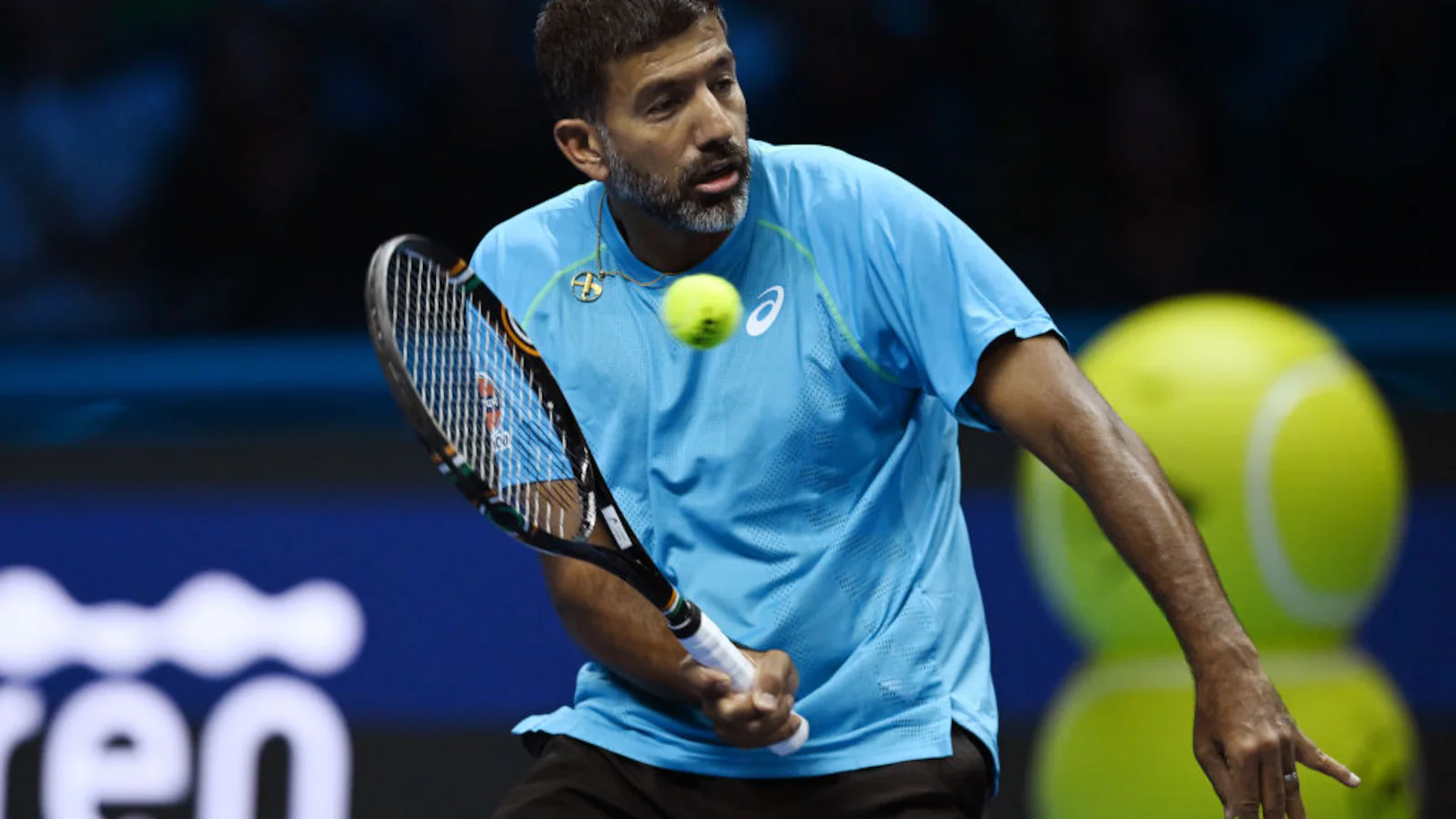
Rohan Bopanna slammed the country’s trimmed squad for the upcoming Asian Games 2026 after 5 players were removed by the Sports Ministry from the list of 12 submitted by All India Tennis Association (AITA).
File photo of Rohan Bopanna / @ Getty Images
Legendary Indian tennis player Rohan Bopanna slammed the country’s trimmed squad for the upcoming Asian Games 2026 after 5 players were removed by the Sports Ministry from the list of 12 submitted by All India Tennis Association (AITA). In a post shared on Linkedin, Bopanna said that athletes should be given the chance to prove themselves on the court and their chances should not be determined on paper. “I’m a proud Indian. And today, I want to speak up for these tennis players who deserve better. They didn’t ask for mercy. They asked for a chance,” Bopanna said in the post.
The Sports Ministry removed the names of Manas Dhamne, Vaishnavi Adkar, Sahaja Yamalapalli, Vaidehee Chaudhari and Prarthana Thombare from the list submitted by the AITA.”The move reduced India’s women’s singles options, including the exclusion of Sahaja Yamalapalli, currently the country’s highest-ranked women’s singles player.”
Bopanna pointed out that the five players already proved themselves on the court thanks to their performances.
“Dhamne. Adkar. Yamalapalli. Vaidehee. Thombare. Five players — including India’s No. 1 and No. 2 in women’s singles, who earned their rankings the hard way. No shortcuts. No favors. They competed internationally, qualified and proved where they stand.”
The final squad featured 7 players – Sumit Nagal and Dhakshineswar Suresh in men’s singles, Yuki Bhambri, N Sriram Balaji and Anirudh Chandrasekhar in men’s doubles, while Ankita Raina and Ruturaj Bhosale were the two women who found a place.
“If outcomes are already decided, why have qualifications at all? Why rankings?” Bopanna said.
“This isn’t just a call about five athletes. It’s a message to every parent, every sponsor who backed them before the country did, who bet on merit and results, not on being pre-approved,” he added. “Telling these players they’re ‘not medal prospects’ tells every one of those parents and sponsors: your judgment doesn’t matter here.”
Bopanna further said that the authorities need to look beyond just medal potential on the paper.
“Let them walk onto the court. Let their years of work count for something. Let sport decide. Not a spreadsheet.”
source: http://www.sports.ndtv.com / NDTV /Home> Sports> Tennis>News / by NDTV Sports Desk / August 25th, 2026
Acclaimed Bharatanatyam artiste from Kodagu, Mukkatira Shilpa Nanjappa, has been selected for the prestigious Ustad Bismillah Khan Yuva Puraskar for 2024 by the Sangeet Natak Akademi (SNA) under the category ‘Overall Contribution and Scholarship in the Performing Arts.’
The award is India’s highest honour for performing artistes under the age of 40. Shilpa is the first person from Kodagu and the first Kodavathi to receive the coveted recognition.
Candidates are nominated by eminent artistes and previous SNA awardees and are evaluated on the strength of their body of work and contributions to the performing arts.
In the ‘Overall Contribution and Scholarship’ category, artistes are expected to demonstrate not only excellence in performance but also significant contributions through research, teaching, curation and allied activities.
In Shilpa’s case, the award recognises more than a decade of work in documenting, preserving and promoting Kodava culture and heritage through academic research, alongside a distinguished performing career spanning nearly three decades.
She was awarded the prestigious two-year Fellowship for Cultural Resources and Training (CCRT) for 2019-2021. Her topic was ‘Adaptation of Kodava language/literary compositions into the classical format and Bharatanatyam’.
Shilpa Nanjappa is the daughter of Allaranda Uthappa and Kaveriamma couple. She is married to Mukkatira Pavan Nanjappa.
Stamp of approval for Kodava culture
Born in Bengaluru and at present settled in Kodagu after her marriage, Shilpa Nanjappa is also an ‘A’ grade artiste of Doordarshan. Speaking to Star of Mysore, Shilpa said that being nominated itself was a significant honour because nominations come from senior members of the fraternity.
“When members of the dance community hold me in such high regard, that recognition alone feels significant. For the first time in my life, an award is not about me; it is about the work, the community and a stamp of approval for Kodava culture and heritage,” she said.
“I have dedicated more than a decade to propagating and preserving this tradition. I hope this recognition helps the Kodava language reach places it has never reached before. This award is a huge acknowledgement for micro-culture representation in larger cultural spaces and is integral to the survival of micro-cultures,” she said.
source: http://www.starofmysore.com / Star of Mysore / Home> News / June 16th, 2026
WELCOME. If you like what you see "SUBSCRIBE via EMAIL" to receive FREE regular UPDATES.
Read More »