Gulshan Devaiah aces the Punjabi dialect in Kuldip Patwal biopic

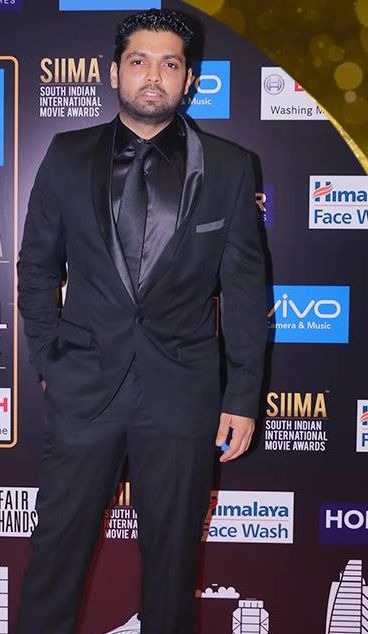
The actor will be seen playing the role of Kuldip’s lawyer Parduman Shahpuri in the film.

Gulshan Devaiah in a still from the film.

Mumbai:

Known for his effective portrayal of unconventional roles in several films including ‘Hunterrr,’ ‘Hate Story,’ ‘Shaitaan’ and ‘Goliyon Ki Rasleela: Ram Leela,’ Gulshan Devaiah is set to spring a huge surprise on the audience and his fans with his forthcoming movie, ‘Kuldip Patwal: I Didn’t Do It!’ in which he plays a lawyer.

The actor known for taking the road less traveled will be seen playing the role of Kuldip’s lawyer Parduman Shahpuri in the interestingly titled film. He’s given the case of the alleged assassin – Kuldip Patwal – by the State Government to defend him in court. He goes all out to defend him but playing it fair along the way.

Gulshan’s character of a lawyer has a wealthy Punjabi background owing to inheritance. And because he’s privileged, he thinks he shouldn’t charge his mostly under-privileged clients. He’s self-assured to the point of being arrogant; direct and wears his heart on his sleeve.

He’s a peoples lawyer – he questions the service charge at restaurants;​ politicians’ motives for coming to power.​ His upturned moustache is his pride and utters lines like – ‘God couldn’t be everywhere, so He sends me there’ and ‘Mera naam Parduman Shahpuri avayein hi nahin hai’

​Remy Kohli, says – ‘Mr Gulshan Devaiah worked quite a bit on the Punjabi character​ – Parduman Shahpuri – as he hails form Bangalore. His minimalist expressions go really well with the loud lines he has to speak. In fact none of the characters in the film are crude burlesque.’

source: http://www.deccanchronicle.com / Deccan Chronicle / Home> Entertainment> Bollywood / Deccan Chronicle / June 16th, 2017

Coffee growers present wish list to Union Minister

Union Minister of State for Commerce and Industry Nirmala Sitharaman inaugurating a public meeting at Mudigere in Chikkamagaluru district on Thursday.

Demands include support to coffee cultivation and checking elephant menace

Union Minister of State for Commerce and Industry Nirmala Sitharaman interacted with coffee growers at Mudigere on Thursday. The growers placed a number of demands before her, including finding a permanent solution to the elephant menace.

Representatives of Karnataka Growers’ Federation, Black Gold League and other organisations participated in the interaction.

B.L. Shankar, coffee planter and former MP, said the production of Arabica coffee had been declining every year. He wanted the government to take steps to support Arabica cultivation.

“Coffee cultivation has been hit by many problems; there is also shortage of workers,” he said.

Lok Sabha member Shobha Karandlaje stressed the need for research to address the stem borer attack, which had been causing huge losses to the growers.

C.T. Ravi, Chikkamagaluru MLA, wanted an ESI hospital in Chikkamagaluru, as there were a large number of workers in the plantations. Black Gold League president Kenjige Keshava appealed to the Minister to set up a spices park in Chikkamagaluru.

Interest waiver

Representatives of Karnataka Growers’ Federation sought waiver of interest on coffee loans and also five instalments to repay the dues.

B.S. Jairam, chairman of the federation, told The Hindu: “We submitted a memorandum listing all our demands. We have sought waiver of interest and bringing down interest on loans. We have also urged the government to take measures to check elephant menace in Hassan, Chikkamagaluru and Kodagu districts.”

Ms. Sitharaman said the government would take steps to increase coffee production and expand its market overseas.

“Growers in Andhra Pradesh, who began coffee cultivation only a few years ago, have succeeded in marketing it in America. If they could do, why can’t the growers in Hassan, Kodagu and Chikkamagaluru do?” she asked. The government was committed to encouraging coffee growers. After many years, and for the first time, a coffee planter had been appointed chairman of the Coffee Board. This showed the government’s commitment to supporting coffee cultivation, she added.

Coffee Board chairman M.S. Boje Gowda was present during the interaction.

source: http://www.thehindu.com / The Hindu / Home> News> States / by Special Correspondent / Chikkamagaluru – June 16th, 2017

Need to have a system in place to get singles champions, says Rohan Bopanna

French Open return champion Rohan Bopanna, who won the mixed doubles title with Canadian partner Gabriela Dabrowski, said on Thursday that to create champions in singles, the country needs to build a system in place at the grassroot level.

Bengaluru : French Open Mixed Doubles Winner Rohan Bopanna poses with a cake at a felicitation ceremony at Karnataka State Lawn Tennis Association (KSLTA) in Bengaluru on Saturday. PTI Photo by Shailendra Bhojak   (PTI6_10_2017_000123B)
Bengaluru : French Open Mixed Doubles Winner Rohan Bopanna poses with a cake at a felicitation ceremony at Karnataka State Lawn Tennis Association (KSLTA) in Bengaluru on Saturday. PTI Photo by Shailendra Bhojak (PTI6_10_2017_000123B)

French Open return champion Rohan Bopanna, who won the mixed doubles title with Canadian partner Gabriela Dabrowski, said on Thursday that to create champions in singles, the country needs to build a system in place at the grassroot level.

In an interview to PTI, Bopanna said that players need support from junior level to create champions. He said, “Never give up on your dreams. That is something which stands out (in this win).” “To get singles champions we need to have a system in place at the grassroots level. We have a very limited support from the Federation (AITA), or Corporates. We need that system to compete with European standards. We still have a long way to go,” he said.

“It’s not about complaining. We should look at it in a positive way. Everyone from outside plays a part, whether it is Federation, parents, coaches. These guys need support from junior level and that is when you create champions.”

This is Bopanna’s first Grand Slam in 14 years. Bopanna gave credit to his team behind his success. “Age is only a number. You can’t set a timeline (for achievements). As long as you believe in yourself and keep working hard, nothing can stop you. I worked towards my goal, every single day and I am feeling grateful that my team also put in efforts. Although tennis is an individual sport, everyone has contributed in it,” he said.

The 37-year-old, who has an academy in Bangalore, said, “I am also bringing a couple of coaches to my academy in Bangalore from outside. They will be here for a year and help these kids. I tell the players if they go outside, go for a year not for a month or so.

“In a month it does not really help improve much. That’s why I am bringing these coaches, let’s hope the kids make good use of this opportunity, coming this month,” he said.

source: http://www.indianexpress.com / The Indian Express / Home> Sports> Tennis / by Express Web Desk / June 14th, 2017

AITA wants Arjuna for Rohan Bopanna

Bopanna on Thursday won his maiden Grand Slam title by winning the mixed doubled trophy at the French Open with Canada’s Gabriela Dabrowski.

Rohan Bopanna won his first ever Major title with Gabriela Dabrowski, who became the first Canadian woman to win a Grand Slam trophy.(Photo: AP)

New Delhi:

Acknowledging the Grand Slam feat of Rohan Bopanna, the All India Tennis Association (AITA) has decided to send his name to the government for this year’s Arjuna award.

Bopanna on Thursday won his maiden Grand Slam title by winning the mixed doubled trophy at the French Open with Canada’s Gabriela Dabrowski.

“We will recommend Rohan’s name for Arjuna today. We have recommended his name several times in the past but the previous committees did not give him the award. Now he deserves this honour. He should be given the award this time,” AITA Secretary General Hironmoy Chatterjee said.

“We have also recommended the name of Rushmi Chakaravarthy for the Arjuna,” he added. When reminded that the deadline to send application has already expired, Chatterjee said, “We will still try to do it today. It can be done.”

In a release, the AITA said: “This is a well-deserved victory. We wish him more success in the years to come. His victory will be a morale booster for young tennis players.

source: http://www.deccanchronicle.com / Deccan Chronicle / Home> Sports, Tennis / PTI / June 10th, 2017

Living in a Rainforest on the Western Ghats

The Travancore wolf snake sprawled near the bathroom mirror of the author’s room / Photo by Medha Saxena
The Travancore wolf snake sprawled near the bathroom mirror of the author’s room /
Photo by Medha Saxena

Homestays in Coorg offer visitors a glimpse of a unique eco-system. Coorg or Kodagu is part of the Western Ghats that have been declared a world heritage site. It has many plantations that host hundreds of threatened species

It had beautiful dark coffee-brown scales with yellowish stripes and a sinuous slender body stretching no more than two feet.

The languid Tranvancore Wolf snake lay sprawled on the bathroom mirror. It had sneaked in to avoid the gentle night precipitation and was basking in the steam left behind by the hot water running earlier. It was hard to miss once the solar light was flicked on.

Gradually, it coiled back and slithered to a safer, darker corner behind the mirror. I was not sure at the time if it was venomous since it resembles the common Krait and is often targeted for the same reason. Suffice to say that I lay awake for most part of the night, wondering whether my nocturnal guest would like to take a peek at the room as well.

This was my penultimate night at the Rainforest Ecolodge on Mojo Plantation nestled at 1100-m altitude in Kodagu, Karnataka. The monsoon in a rainforest comes with its own delights and surprises. Leeches are a case in point. They crave to attach themselves to any warm body passing by to satisfy their desire for blood. But their presence also indicates a fertile soil and ecosystem. They are both the predator and the prey.

Beautiful butterflies found in plenty during monsoon in the rain forests of the Western Ghats /   Photo by Medha Saxena
Beautiful butterflies found in plenty during monsoon in the rain forests of the Western Ghats / Photo by Medha Saxena

Then there are the frogs, toads, spiders, wasps, dragon flies, lizards, snakes and birds. Their tribe multiplies and diversifies with every shower of water it seems. And the heavens provide them plenty of those here. But they only proliferate in undisturbed habitats. Each one of the creatures that call the rainforest home have adapted themselves to it over the millennia.

Each adaptation and evolution is a fascinating revelation. Weaver ants are a marvellous example. Thousands of them coordinate with each other to stitch together nests out of leaves much bigger than themselves.

Trees themselves appear like curated art installations climbing vertically and horizontally. They are draped with vines, creepers, fungi, moss, lichen, orchids and a variety of other epiphytes that resemble emeralds and jewels on a bride. They glisten and shine best on bright wet mornings.

Twinkling fireflies circle the trunks during nightfall. The valley was covered with a million of these mating fireflies a month or so earlier in a perfect ‘symphony in light’ as the student-interns Meghna and Lily, working at the plantation recounted.

Being in a rainforest during monsoon is also a musical extravaganza. Its inhabitants are engaged in a synchronised performance at all hours of the day. Louder than revellers in a marriage procession the frogs and cicadas often accompany the sound of rain, streams and wind. The cacophony is coupled with serenity in equal measure. If you listen hard enough everything in the forest sings. But how many of us really listen?

Geography and Bio-Diversity

Kodagu is part of the wide-ranging Western Ghats, older than Himalayas, spanning from Gujarat to Kerala for 1600 kms. It directly intercepts the Indian monsoon winds. One of the eight ‘hottest hotspots’ of biodiversity, it has 325 globally threatened species (flora, fauna, bird, amphibian, reptile and fish) and many that are unique to this area.

The lush green forests also help with carbon sequestration and reduction of global warming /   Photo by Medha Saxena
The lush green forests also help with carbon sequestration and reduction of global warming / Photo by Medha Saxena

This mosaic of natural beauty was inscribed as a world heritage site in 2012 meant to be protected by the Western Ghats Natural Heritage Management Committee (WGNHMC) and receive international support.

The tag was achieved after much opposition by states that feared that development will be impeded. Critics said that an informed consent was not obtained from the gram sabhas and Forest Rights Act 2006 was not implemented properly during drafting of the proposal for grant of heritage status. It could also violate the historic customary rights of the adivasis.

The forests of Western Ghats, however, aid economy and transportation by keeping the ports and creeks along western coast silt-free. The forests and mangroves also help with carbon sequestration and reduction of global warming.

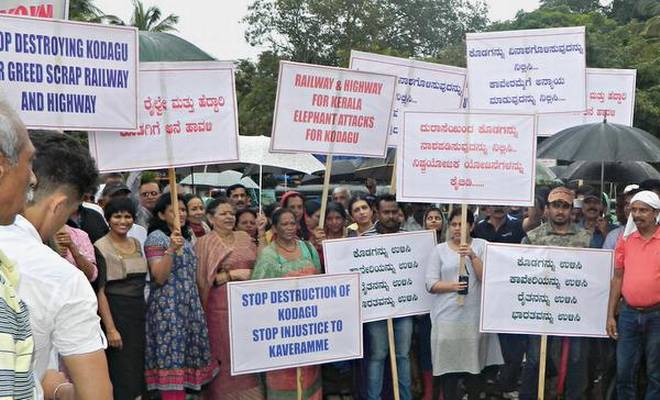
Other critics say that the declaration has no effect on damaging developmental activities. As recently as June 2, 2017, there were protests in Madikeri over destruction of wildlife habitat, Cauvery river catchment area and forest land for the construction of railways, highways and power lines. As more of the landscape is disturbed there is more human-elephant conflict. Illegal construction, mining and corruption have caused water scarcity during summer months in an area that is generally overfed by rains.

The ensuing struggles repeatedly point us back towards essential questions of what is development. Who is it meant for? Who do the forests belong to? And how are decisions to be taken in the interest of all parties concerned?

Organic Farming

In ancient times the exotic products of the Kodagu region were traded along the Silk Route and on oceanic routes via the Arabian Sea. Cardamom and black pepper were indigenous to this region. Rice was the main crop. Coffee was brought from Yemen to Chikmagalur in India by Baba Budanin in 1670.

Legend has it that the Coorg Rajas may have given land to Moplahs near Nalkanad who introduced coffee seeds to the area. In the mid-1850s many European coffee plantations sprung up followed by private Indian ones. When the British left, they sold their lands to the local population. There are strong remnants of British culture here, like the North Coorg Planters Club dating back to 1883.

A walk through the greens gives an idea of the rich biodiversity of the region /  Photo by Medha Saxena
A walk through the greens gives an idea of the rich biodiversity of the region / Photo by Medha Saxena

Now a good chunk of the land is covered in coffee, tea, rubber and palm oil plantations. Commercial chemical-based farming and unsustainable agriculture have eroded this landscape. Smaller landholders and farmers still find it difficult to turn a good crop and farmer suicides affect the Western Ghats as well. There has been an attempt to set up farmer-owned companies by Agriculture and Organic Farming Group India. Hundreds of homestays have also come up in Coorg in the past few years to complement agricultural income.

Sujata and Anurag Goel, owners of Mojo Plantation, have successfully experimented with organic farming doing multiple cropping with cardamom, black pepper, coffee and vanilla under the shade of the rainforest. Spice trees, fruits and vegetables are also grown in open areas.

A molecular biologist, Sujata Goel explained that fungi secrete enzymes to release nutrients from decaying wood and dead organisms. Shivani, the manager, described on a tour of the plantation that fungal mycelium act as telecommunication networks for the trees to convey threats. They are also used as biological pest control. Similarly, termites redistribute soil and recycle nitrogen. Even weeds have an important role to play as temporary hideouts for insects.

Plants themselves synthesise compounds (terpenes, tannins, phenolics) to repel insects and convey distress signals to other plants and predators. Chemical pesticides kill the natural defence mechanisms of plants..

The Wise, Old Relic

Meghna and Lily recount a magnolia tree that they variously describe as a ‘tree of life’, ‘tree mother’, ‘earth mother’, ‘magical beautiful wise old relic’ that has twists, turns and huge branches that one can climb and roots that open up into giant cave systems and tunnels underneath – in the middle of a coffee plantation.

It was ‘a metaphor for India’ for them, probably signifying layers of wisdom, age and continuity in a land of general mayhem. Neither trees nor our bodies survive in exclusion to their environment. The commune with nature is complete. If you listen carefully, everything in the forest sings.

The author teaches in Delhi University

source: http://www.nationalheraldindia.com / National Herald / Home / by Medha Saxena / June 10th, 2017

JD(U) leaders offer bagina to river Cauvery

The JD(U) leaders offered baagina to river Cauvery at Triveni Sangama in Bhagamandala on Sunday.

JD(U) state president M P Nadagouda, women’s wing president Manjula Umesh, Kodagu district unit president Sunil Kumar, Mandya district unit president Basave Gowda also offered special prayers at Bhagandeshwara Temple.

Speaking to reporters, Nadagouda said the state government and opposition parties have failed to fulfill the demands of the people. There is a need for alternative forces in the state. In this background, efforts are being made to strengthen JD(U). With the both Centre and state governments mud-slinging against each other with regard to waiver of loans, the farmers are in distress.

Manjula Umesh said that farmers are backbone of the country. Having unable to repay the loans, the farmers are committing suicide.

source: http://www.deccanherald.com / Deccan Herald / Home> District / DHNS / Madikeri – June 12th, 2017

‘Challenge was to find right partner’

Good times : CM awards Rs 10 lakh to Bopanna

honoured: Chief Minister Siddaramaiah (left) felicitates Rohan Bopanna in Bengaluru on Tuesday. dh photo
t partner this season, especially in the men’s doubles. Fortunately, I have played alongside good partners so far and managed to win tournaments. I started with Jeevan Nedunchezhiyan to win the Chennai Open and then reached the semifinals with Martin Matkowski at the Dubai Open. In April, I won the Monte Carlo Masters with Pablo Cuevas. Now I am continuing with Cuevas. It’s ideal to have one fixed partner. I have managed to adapt well with different partners and that is the main reason behind my good run this season,” Bopanna told DH on Tuesday.

The state government felicitated Bopanna for his maiden Grand Slam here on Tuesday and announced a prize money of Rs 10 lakh.

“I thank the support and encouragement from the government. The response post my win at the French Open has been overwhelming. I received congratulatory calls from our Davis Cup captain Mahesh (Bhupathi), Sania (Mirza) and many other athletes of the country and I am humbled by their support,” he expressed. It’s been a year since he started the Rohan Bopanna Tennis Academy and the Indian ace has chalked out big plans for the coming years.

“We have around 65 players at the academy and we will be bringing two foreign coaches very soon. One of the coaches will be from Serbia and both of them will stay in Bengaluru to train the kids. This is just a start and we are hoping to build on this and offer training facilities of international standards,” he explained.

The Kodava is confident of repeating his French Open performance at the Wimbledon with Dabrowski. “She is an aggressive player and that works in the doubles format. We started off with the US Open and her style worked well in the Australian Open as well. Our camaraderie was good going into French Open,” he noted.

source: http://www.deccanherald.com / Deccan Herald / Home> Sports / DH News Service / Bengaluru – June 14th, 2017

Life after Jwala: ‘Open-minded’ Ashwini Ponnappa reaping the benefits of experimentation

The 27-year-old says she has left the decision making about her partners to the coach and that has helped her performance in doubles and mixed

Photo: Red Bull
Photo: Red Bull

2016 was a milestone year for Ashwini Ponnappa. But it wasn’t memorable.

After recovering from a bout of dengue, she went to the Rio Olympics with longtime doubles partner Jwala Gutta hoping to better their performance from London 2012. Unfortunately, they ended up losing all their matches in the group stage. It was the last time India’s most successful doubles pairing played together.

A partnership lasted for nearly seven years and saw them win a bronze medal at the 2011 World Championship, a gold and a silver medal in the 2010 and 2014 Commonwealth Games respectively.

Ponnappa, in her own words, is a fiercely loyal person who did not like changing partners. She had struggled to find her mojo when Gutta had taken a break after the 2012 London Olympics and played with Pradnya Gadre for a while.

Now, physically and mentally, she was facing a challenge. Fast forward to June 2017, physically and mentally, she is at a good space.

“Life has changed a lot,” says a relaxed Ponnappa, in an interaction with Scroll.in at the Red Bull office in Mumbai. Her words carry an air of unmistakable satisfaction – the tone of an athlete who has endured a tough time and managed to break out of it. There is no hint of exaggeration and she speaks uninterrupted for a good few minutes, articulating the ups and downs of the past few months.

Photo courtesy: Red Bull
s, “Now the coaches decide and if there is a need to switch partners, we switch. It’s about how we are playing together, how the partnership is developing and if there is scope to develop. Now I am open to a lot of things that in the past I was closed to. I am open to suggestions that have helped me grow even more than I have grown in the last couple of years.”

“I have accepted that if things don’t work out in a particular partnership, it’s time to change. I am open to a lot of things now, not really narrow-minded in my approach towards the game,” she adds.

While Ponnappa’s current doubles partner, N Sikki Reddy, has been a constant, she has played with three different mixed doubles partners – K Nandagopal, B Sumeeth Reddy and Satwiksairaj.

Her partnership with Sikki has been constantly improving. The pair started playing in November last year and began 2017, ranked 110th in the world. Halfway through the season, the duo had breached the top 30 and are currently ranked 28th. A title has proved elusive, but they came close at Syed Modi GPG with a runner-up performance. Ponnappa’s excitement about her new partnership is evident.

“From having a set combination with Jwala, where I understood exactly what my role was, to playing with Sikki where I was not exactly sure about where I move, what I need to do, [it was a bit difficult initially],” says Ponnappa. “Sikki is an excellent mover. I came to realise she is essentially a back-court player too, like me. And both of us being good at the back helps us rotate, we can move in, we can mix it up. That’s helped a lot. We are finding out areas which are our strong points. With every tournament we are getting more confident with the rotation. That’s been important for me, it tells me we are in the right direction.”

Ponnappa, over the years, had developed the reputation of being the quieter one with Gutta known to be more vocal. Even their on-court chemistry gave the impression that Gutta was the dominant half of the pair, and Ponnappa was, for want of a better word, a follower. Mention that to her and she chuckles and says ‘Jwala used to listen to me as well!’ with a sheepish smile. But now, Ponnappa is the senior-most doubles player in the country and that comes with the responsibility of being a mentor – a role she is enjoying. And without any senior-junior segregation.

“It’s just a lot of fun,” she says. “I just like figuring out things – like how to play an opponent, watch videos. That helps me guide my partners. It doesn’t mean I am the senior partner and I should be the only one making calls. If they tell me, ‘Ashwini, you could move to the net here’, I am all ears. There is no such thing as I am the senior partner and the other is a junior partner. Once we are on court, we are one unit. My experience does help a bit, I can help them relax and calm their nerves in certain situations.”

While women’s doubles was always Ponnappa’s focus, she has found a new-found vigour to succeed in mixed doubles. While she has played mixed doubles often, she admits, until now, she never gave it her complete attention. If it was 100% focus on women’s doubles and about half of that for mixed earlier, now both are equal in her eyes.

She says venturing into mixed doubles seriously has added new facets to her game. Her agility has increased, she moves with ease and is starting to hold her own at the net as well.

So how difficult was it for her to adopt to this new system?

“It wasn’t easy,” she says. “That three-month break [after Olympics] was important, because physically I was not fit at all. I had dengue just before Olympics and that shattered my body. Even when I started training again, my body was not responding. In my head I knew I had no injury but my body did not listen. I kept asking ‘Why am I struggling to play? Why am I struggling to smash?’”

What followed was introspection as Ponnappa spent time on regaining, and more-importantly, redefining her physical fitness along with opening her mind to learning new things about her game. After a tough period in Indian doubles badminton, Ponnappa is excited about finding out where this new phase is headed.

“With this sort of mindset, I am enjoying doubles, enjoying mixed doubles, enjoying playing with Sikki, enjoying the rotation, enjoying the communication, enjoying moving to the net. It’s just been a whole lot of fun. There is never an end to learning, never an end to growing, if you are really excited about the game.”

We welcome your comments at letters@scroll.in.

source: http://www.thefield.scroll.in / Scroll.in / Home> The Field> Badminton / by Vinayak Mohanarangan / June 14th, 2017

Vijay Goel meets Rohan Bopanna, discusses ‘promotion of tennis’

Ace Indian tennis player Rohan Bopanna, who recently became the fourth Indian to win a grand slam after clinching the mixed doubles title at the French Open, on Wednesday, met Union Minister of Sports Vijay Goel to discuss the promotion of tennis among youth in the country.

Bopanna, playing alongside Canada’s Gabriela Dabrowski, clinched his maiden Grand Slam title at the Roland Garros last Thursday.

The seventh-seeded Indo-Canadian pair staged a comeback after losing the opening set and defeated Lena Groenefeld and Farah 6-2, 2-6, 12-10 in a summit clash that lasted for one hour and six minutes at Court Philippe Chatrier.

The Sports Minister shared the pictures of him meeting the 37-year-old tennis star on his official Twitter handle.

?Delighted to meet #FrenchOpen Mixed Doubles ’17 winner @rohanbopanna; discussed promotion of #tennis among #youth. Keep inspiring all Rohan!? wrote Goel.

Speaking to reporters after the meet, Goel said, ?I discussed about the promotion of tennis with Bopanna. He told me about his academy and I am happy that already there are around 70 students there? The government always encourages such private academies.?

?I wish he open his academies in the other parts of the country as well,? he added.

Meanwhile, Bopanna thanked Goel for taking out his time and said, ?It was really nice that he took out some time to meet me?I am really happy that he is encouraging sports a lot.?

?I think this is what is required in India for every aspect in our field, no matter what sport it is,? he added.

Bopanna became only the fourth Indian to win a Grand Slam title after Leander Paes, Mahesh Bhupathi and Sania Mirza.

The All India Tennis Association has also declared that they will recommend the tennis player from Bangalore for this year?s Arjuna Award.

Speaking about the same, Bopanna told ANI, ?We will know in a few months if I receive the award or not, if I do, I would be very grateful and very honoured.?

(This article has not been edited by DNA’s editorial team and is auto-generated from an agency feed.)

source: http://www.dnaindia.com / DNA / Home> India> News> Sports News / ANI / Wednesday – June 14th, 2017

Rohan Bopanna wins French Open mixed doubles title to clinch maiden Grand Slam

Rohan Bopanna clinched his maiden Grand Slam title when he won the French Open mixed doubles final with Canada’s Gabriela Dabrowski in Paris on Thursday.

Canada's Gabriela Dabrowski and India's Rohan Bopanna hold aloft the trophy after winning the French Open mixed doubles title in Paris on Thursday. The pair defeated Germany’s Anna-Lena Groenefeld and Colombian Robert Farah 2-6, 6-2 (12-10). (AP)
Canada’s Gabriela Dabrowski and India’s Rohan Bopanna hold aloft the trophy after winning the French Open mixed doubles title in Paris on Thursday. The pair defeated Germany’s Anna-Lena Groenefeld and Colombian Robert Farah 2-6, 6-2 (12-10). (AP)

Indian tennis ace Rohan Bopanna and Canadian partner Gabriela Dabrowski produced a fighting performance to beat their German-Colombian opponents Anna-Lena Groenefeld and Robert Farah in the final to clinch their maiden French Open mixed doubles title in Paris on Thursday.

Seeded seventh, Bopanna and Dabrowski took an hour and six minutes to win, saving two match points, as they overcame the unseeded Groenefeld and Farah 2-6, 6-2, 12-10 on Philippe-Chatrier Court.

Bopanna has become only the fourth Indian to win a Grand Slam crown, after Leander Paes, Mahesh Bhupathi and Sania Mirza. Indians have accounted for 20 Grand Slam mixed doubles titles. Two of those victories belong solely to India with Sania Mirza partnering Mahesh Bhupathi.

Bopanna entered the final of a Grand Slam tournament after a gap of seven years. He had also qualified for a Major final in 2010 when he and Pakistan partner Aisam-ul-haq Qureshi entered the title clash of the US Open.

The 16th seeds had then lost to American twins Bob and Mike Bryan in the final.

Bopanna is the also the fourth Indian to win a mixed doubles crown at the world’s premier clay court tournament. Bhupathi won India’s first Grand Slam title in 1997 when he partnered Japan’s Rika Hiraki to claim the French Open.

Bhupathi again won in 2012, this time with compatriot Sania Mirza.

Paes too had savoured glory on the red clay when he won in 2016 with Martina Hingis.

Bopanna and Dabrowski did not start well, losing the first set 2-6. The seventh seeds gave away as many as four breakpoint chances and Groenefeld and Farah converted two to take the lead in the match.

However, the Indian-Canadian combine fought back well to clinch the second set with the same scoreline.

Though they were broken once, Bopanna and Dabrowski converted three of the five breakpoint opportunities they got to push the match into a match tie-break (earlier known as Super Tie-Break).

The German-Colombian pair led throughout the tie-break, and held two match points at 9-7. However, Bopanna and Dabrowski somehow managed to save both.

Bopanna and Dabrowski had their first chance when they took the lead at 10-9. They lost the opportunity as scores were levelled at 10-all but the pair grabbed the next two points to seal victory at Roland Garros.

source: http://www.hindustantimes.com / Hindustan Times / Home> Tennis / HT Correspondent, Hindustan Times / June 08th, 2017