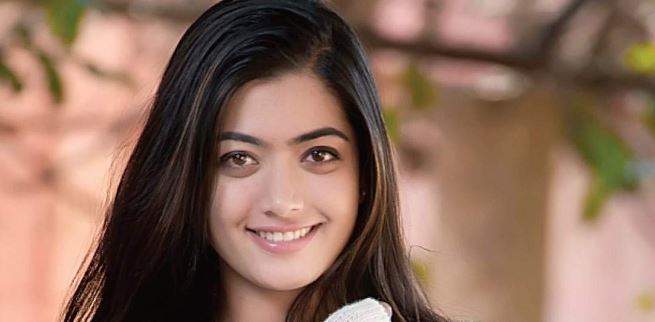
Leelavathi, lone Kannadiga shines bright in U-18 Asian cup Bronze medal winning hockey team

Madikeri:

Kodagu is known to produce world class sportspersons in the field of hockey, tennis, badminton and athletics over the years and teenager Leelavathi is the latest addition.

LeelavathiKF11jan2017

Leelavthi, daughter of Mallamada Jaya and Vani couple, is the resident of Bekkesodlur village in South Kodagu.

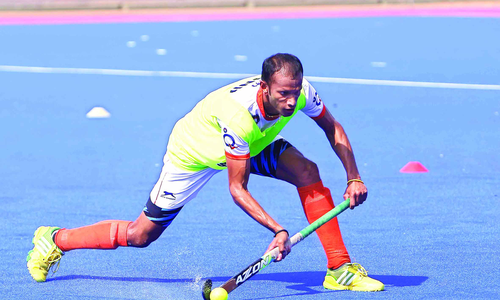
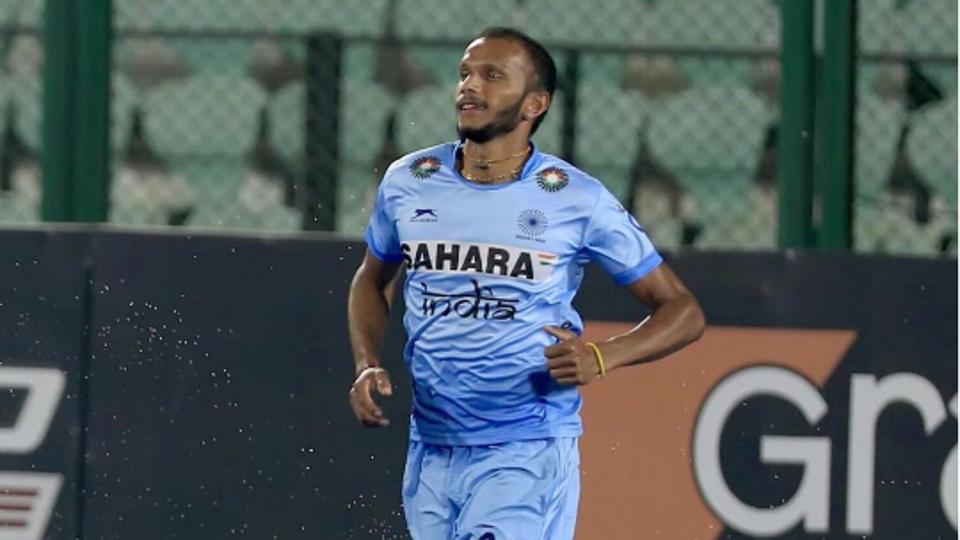
In the Under -18 age group Leelavathi was the lone player representing the state in Indian team that won the Bronze medal in the just concluded Asia cup. Eight nations took part in the U-18 tournament including China, Japan, Thailand, Korea, Singapore, Malaysia and Chinese Taipei.

Leelavthi , First degree student at Field Marshal Carippa (FMC) college is undergoing training at Sports Authority of India (SAI), centre in Madikeri. Leelavthi scored the first goal in the tournament opener which the team won by 4-0. She also played a major role in India’s bronze medal victory against South Korea.

Leelavathi aspires to represent the senior Indian team in future and owes her success to the contribution from family members, trainers at School and SAI centre.

source: http://www.newskarnataka.com / News Karnataka / Home> News> Cities / December 26th, 2016

Revering nature & culture

Harvest festival

HarvestfestivalKF11jan2017

Puttari Polud (also called Huttari), the rice harvest festival of Kodagu, is perhaps the grandest and most elaborate festival in the Kodava calendar. The word putt-ari means new rice and the festival is celebrated on the full moon day during the Kodava month of birchyaar. One day before the Puttari feast, the Kaladcha festival is observed in the Padi Igguthappa Temple. Igguthappa is the god of the rice crop, harvest and rains.

Preparations for Kaladcha and Puttari are commenced around 15 days in advance. The Pardanda family of Padi village, who are the deva thakka (temple caretakers), the parupatyagara (temple officials) families and other prominent families of Padi, Nelji and Perur villages are summoned in writing. On a particular day, they bring rice, coconut, jaggery, banana and areca nut to the shrine. Astrologers from Ammangeri village determine the date of Puttari feast. They arrive at the temple and convey the exact time for Puttari ceremonies, as determined by the stars.

Traditional fervour
In the afternoon, astrologers, priests, caretaker families, musicians and other devotees go up Malma hill (Igguthappa Betta which is a few kilometres away from the temple), and announce the auspicious time at a shrine in the midst of a sacred grove. Then they will go to the Pardanda Ainmane in Padi and announce it again.

At Malma, the temple caretaker announces the deva kattu (religious restrictions) to be observed by the people of the neighbourhood for the next 14 days. Accordingly eating meat, consuming alcohol, physically or verbally hurting animals or humans, pulling out plants and cutting trees are forbidden in the period. Marriages and funeral ceremonies are not to be conducted during the period. No special puja, except Satyanarayana Puja, is performed in the temple during the period.

Afterwards the astrologers, caretakers and others go to the Makki Sarthavu Temple in Bethu village near Napoklu and announce the date and time again. The astrologers continue conveying the auspicious time to various families of the region. At each house, they are given thambutt powder, rice, jaggery, banana, salt and pepper, sufficient for a meal. Thambutt powder, prepared from boiled rice which is fried until it is golden brown, is used with mashed bananas and finally seasoned with sesame seeds and grated coconut to prepare the thambutt sweet dish. Kodava people gather in their ancestral house, called the ainmane, to celebrate the festival.

On Kaladcha day, the deva thakka goes to Malma again and announces that the deva kattu need not be followed thereafter. This is called kattu muripo, or removing the restrictions. During Kaladcha, the temple deities are embellished with ornaments, and chendas (a percussion instrument) are played. Yetherata is also performed on the occasion. Decorated oxen are made to dance with bags (often rice bags) on their backs.

Puttari Polud is first observed in the Padi Igguthappa Temple and the village of Padi. Hence, the first day is called the Padi polud (Padi celebration) or deva polud (divine celebration). The following day, the festival is celebrated in the rest of Kodagu and it is known as naad polud (public celebration).

While the rituals at the temple are presided over by the archak (priest), the deva thakka performs the rituals. On both days, the first evening near the temple and the second at ancestral houses, the nere kattuvo (tying of certain leaves) and the kad edpo (cutting of paddy sheaves) rituals are performed. At the temple, these two ceremonies are followed by prasada (devotional meal).

After dusk, a designated male family member ties together certain leaves around bits of the inoli creeper with pieces of achchi fibre into bundles. Each of these bundles, called a nere, is placed in a basket. Then an unmarried young lady from the family carries a small lit lamp upon a plate. She leads the family members to go down to the fields.

A designated man ties a nere from the basket to the base of a sheaf of paddy and pours milk from a kutti (bamboo container) onto it. He cuts that sheaf (kad) with a sickle while the other family members cry out ‘Poly, Poly Deva!’ (Let us prosper, let us prosper, O God!). A gun is then fired into the air. Five, seven, nine or 11 sheaves of paddy are cut and given to the assembled family members. They carry these sheaves to the prayer place in the house.

The nere bundles are then tied in various places around the house and the farm. Later, the thambutt sweet dish is consumed by the family. Firecrackers are burst in the night.

On the day after naad puttari, the mane paado (house-singing) ceremony happens. Four folk singers of the village carry small hourglass drums, each called a dudi, and go from residence to residence. While all four strike the drums with cane sticks in rhythm, two of them take turns to sing verses praising the members of the family. A few days later, the villagers gather at the village greens (mand). The village musicians blow their horns and beat their large drums. The men dance in circles beating small rattan cane sticks called kola as they skip around in rhythm with the music. This is called the kolata or the stick-dance.

Festival of arms
There are two other major Kodava festivals — Kail Polud and Kaveri Sankramana. Kail Polud is the festival of arms for the Kodava martial community, now observed on September third every year. Before this festival, naati (rice seedlings) grown in a small area is transplanted across ploughed and puddled fields.

The Kodavas worship traditional farmhouse weapons such as war knives and long guns. They are cleaned and decorated with flowers and vermillion in the puja corner on the Kail Polud day. Sports such as shot-put and shooting at coconuts are arranged that afternoon. In the ancient times, this polud (celebration) marked the commencement of the hunting season, during the Kodava month of Chingyaar, when the Simha Rashi (Leo zodiac sign) is in prominence. While in the past people kept arms to use in wars, now they are kept as cultural symbols, to guard the crops and to ward away wild creatures.
Kaveri Sankramana is a festival dedicated to the river goddess Kaveri, the patron of the Kodavas. It happens on the first day of thulyaar, when the sun seems to enter the Libra zodiac sign. Ritual water is obtained from Talakaveri, the source of the river, and distributed among the natives of Kodagu.

A kalasha is worshipped in the houses and a vegetarian meal comprising dosa and pumpkin curry is prepared on that day. In the following month, pinda (ritual rice balls) is offered to or uttara kriya (last rites) is performed for deceased family members upon the banks of River Kaveri at Bhagamandala.

source: http://www.deccanherald.com / Deccan Herald / Home> Supplements> Spectrum / by Mookanda Kushalappa / December 06th, 2016

Cartoonist Ponnappa is ‘ Coorg Person Of The Year – 2016 ’

Nala Ponnappa
Nala Ponnappa

Mysuru:

Renowned cartoonist Nala Ponnappa, known for his offbeat tongue-in-cheek humour, is the ‘Coorg Person of the Year-2016’.

Nadikerianda Subbayya Ponnappa, whose cartoons appear in The Times of India, Bengaluru edition, was selected ‘Coorg Person of the Year’ in a poll conducted by www.coorgtourisminfo.com, Kodagu’s first news portal, promoted by senior journalist P.T. Bopanna.

Ponnappa’s first cartoons appeared in Chicago in 1972 where he was studying for a Master’s degree in Architecture. He began cartooning as a hobby by contributing his cartoons to college magazines.

The cartoons of the Coorg-born Pune-based cartoonist also appears in The Sunday Mid-Day, The Economic and Political Weekly and The Economic Times. His works have also appeared in the International Business Times.

Born in 1948, his early education was in Mangalore and Pune. He graduated in Architecture from the Madras University with a first class. He had an eleven-year stint from 1970 to 1981 as an architect in Chennai, Delhi and Lagos, before he turned into a cartoonist. He settled down in Bengaluru in 1982 and began his career as a freelance cartoonist.

His works have also been published in the Penguin Book of Indian Cartoonists and The Third World Book of Cartoonists from Germany.

He was awarded the First prize by the epd-Entwicklungspolitik publication, in a competition held at Frankfurt to commemorate the 50th year of India’s Independence.

Ponnappa was a member on the world jury of an international cartoon competition on Humankind and Energy held in Hanover, Germany in September 2000. At a competition held in Germany, one of Ponnappa’s cartoons, which depicted the German language being deeply influenced by the English language, was selected to be put up as a poster by the German Cartoonist Association.

He has also won prizes of excellence at cartooning competitions held in Korea and Romania. He was the only Indian to be invited to attend the Kyoto International Cartoonist Conference in 2002 where he was also presented the jury award for his cartoon on ‘Remembering 9/11’.

Among the many awards he has received is also the State Rajyotsava Award in 2007.

He has also written plays and acted on stage. His hobbies include drawing, music, photography and travelling. Ponnappa splits his time between Pune, where he works and resides, and his hometown Coorg.

Ponnappa is the grandson of Nadikerianda Chinnappa, the compiler of the Pattole Palome, a book on Kodava culture, folksongs and traditions.

Among the others who were nominated for this year’s ‘Coorg Person of the Year’ include 77-year-old Boverianda C. Uthaiah compiler of the Kodava-Kodava-Kannada-English dictionary which is due for release shortly.

Last year, the ‘Coorg Person of the Year’ title was given to athlete M.R. Poovamma.

source: http://www.starofmysore.com / Star of Mysore / Home> General News / December 31st, 2016

Selected for National Floorball competition

Mysuru :

Karnataka Pre-University Board had organised a State Level Floorball Competition on Dec.18 at Gonikoppa, Kodagu District in which five students from Seshadripuram Independent Pre University College had represented Mysuru District and the team has won the first place.

pruthvikf06jan2017

M. Pruthvi of second PU (commerce) has been selected to the National Level Floorball Competition.

source: http://www.starofmysore.com / Star of Mysore / Home> Sports News / December 31st, 2016

My dream is to win a Grand Slam: Rohan Bopanna

Tennis: Bopanna is hoping for a successful 2017 season with new partner

Rohan Bopanna partnered a number of different players in 2016 like Florin Mergea, Denis Istomin, Jean-Julien Rojer, Nicolas Mahut, Leander Paes (in Davis Cup and Olympics), Frederik Nielsen, Jeevan Nedunchezhiyan, Daniel Nestor, and Treat Huey.

Though he ended the year on a positive note by reaching the Semi-finals of the Paris Masters, Bopanna commences the 2017 season at the Chennai Open partnering Jeevan and then joins forces with Pablo Cuevas of Uruguay for the season.

Admitting that the change of partners hampered his 2016 campaign, Bopanna is hoping to change things around in the new campaign. “After Wimbledon, he (Florin) was playing with Horea Tecau and I was consistently looking for a partner for different tournaments. It’s not easy to play with different partners and that was the main reason (for bad results),” Bopanna said.

“It’s a dream to win a Grand Slam, hopefully it (new partnership) will make a difference. I have always liked the way he plays the game. I have played numerous times against him. He is a solid player who serves and stays at the back, just like Florin. He has won one Grand Slam before. He has experience of playing at high level, so it’s a good chance for me to do well,” added Bopanna.

“This (partnership with Cuevas) also gives me a chance to play on the deuce court having played on the ad-court for some time with Florin,” said Bopanna who is presently ranked number 28 in the World Doubles Rankings.

source: http://www.tennisworldusa.org / Tennis World Magazine / Home> News / by Akshay Kohli / January 04th, 2017

Kadamba Rangaavali : Mithuna plays a matrimonial tune for evening of one’s life…

A scene from the play 'Mithuna', the Kannada version of Kodava play 'Baduk,' staged by Rangabhoomi Prathishtana, Kodagu, as part of 'Kadamba Rangaavali' at Kalamandira last evening. Seen are Anitha Cariappa as Thangachi & Addanda Cariappa as Changappajja.
A scene from the play ‘Mithuna’, the Kannada version of Kodava play ‘Baduk,’ staged by Rangabhoomi Prathishtana, Kodagu, as part of ‘Kadamba Rangaavali’ at Kalamandira last evening. Seen are Anitha Cariappa as Thangachi & Addanda Cariappa as Changappajja.

Mysuru :

The jam-packed audience at Kalamandira here last evening was sent down the memory lane of marital bliss during the staging of the play ‘Mithuna’, the Kannada version of Kodava play ‘Baduk’ by Rangabhoomi Prathishtana, Kodagu, as part of ‘Kadamba Rangaavali’ organised by Kadamba Ranga Vedike.

The play was literally a song of matrimony tune for the evening of one’s life and was excellently portrayed by Addanda Cariappa as Changappajja and Anitha Cariappa as Thangachi, both as an octogenarian couple with a long 62 years of married life.

The actors effectively conveyed the bond of matrimony after passing through various ups and downs.

The couple relentlessly waiting for the arrival of their son Major General Ganesh and Kakamada Ajith essaying the role of Chubra who frequently gets scolded by Chengappajja has added a twist to the play.

The elderly couple in every dialogue has asked all married couple to sink their trivial differences and not to recall bad memories so as to lead a pleasant life. The couple’s silly arguments followed by a compromise with each showering love and compassion on the other was well appreciated by the audience.

Once in Kodagu a torrential rain accompanied by gale brings down fully-grown trees and Chengappajja on seeing that gets upset very badly and passes away. Thangachi tries to come out of grief and continues her journey of life, thus bringing the end of the play.

Kadamba Rangaavali will feature staging of the play ‘Berilladavaru’ today at 7 pm at Kalamandira and ‘Seetha Charitha’ tomorrow at 7 pm at Vanaranga.

source: http://www.starofmysore.com / Star of Mysore / Home> General News / January 03rd, 2017