Coffee revolution brewing in Himachal

Shimla:

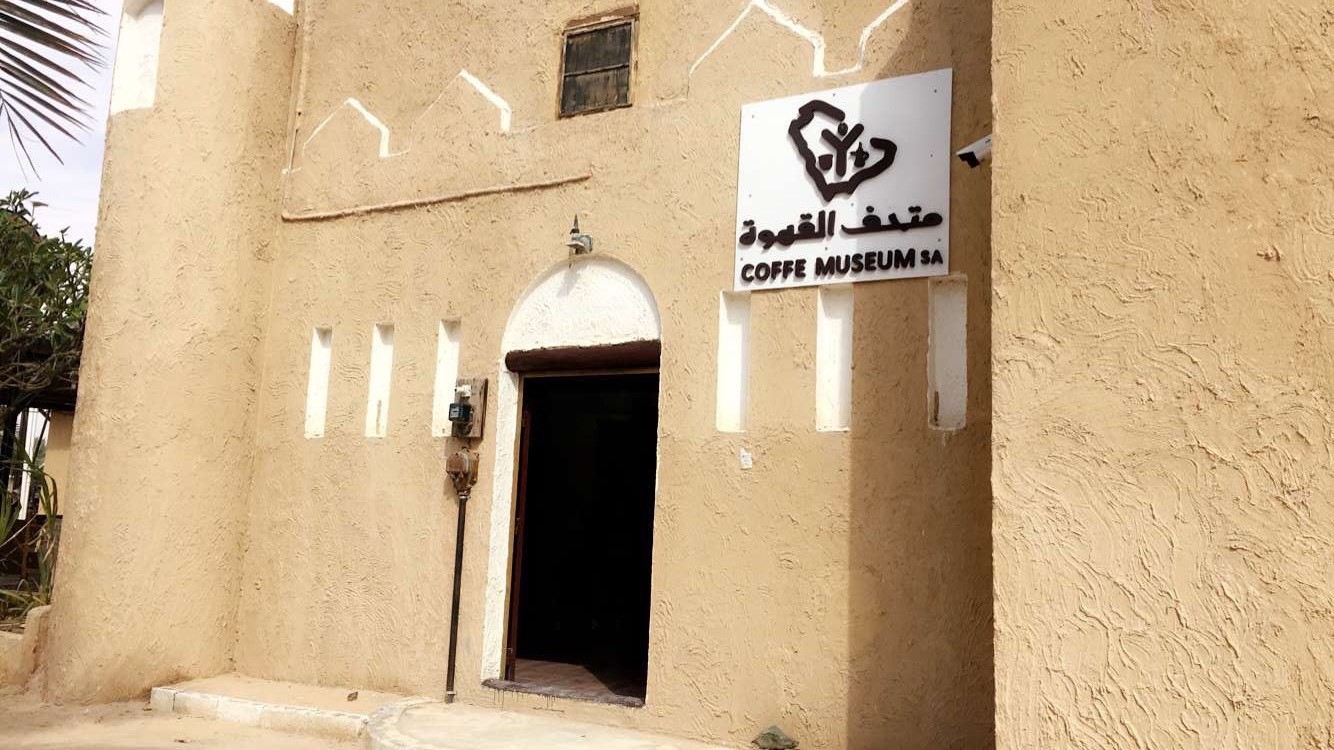
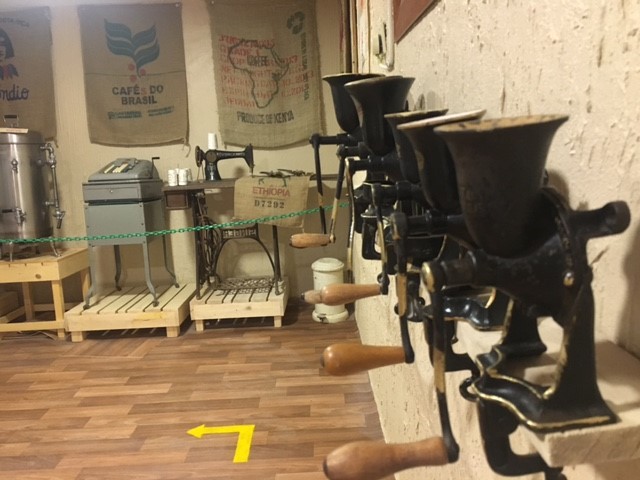
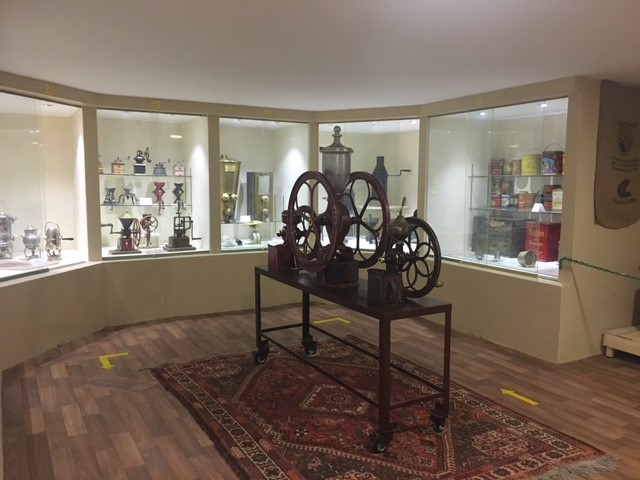
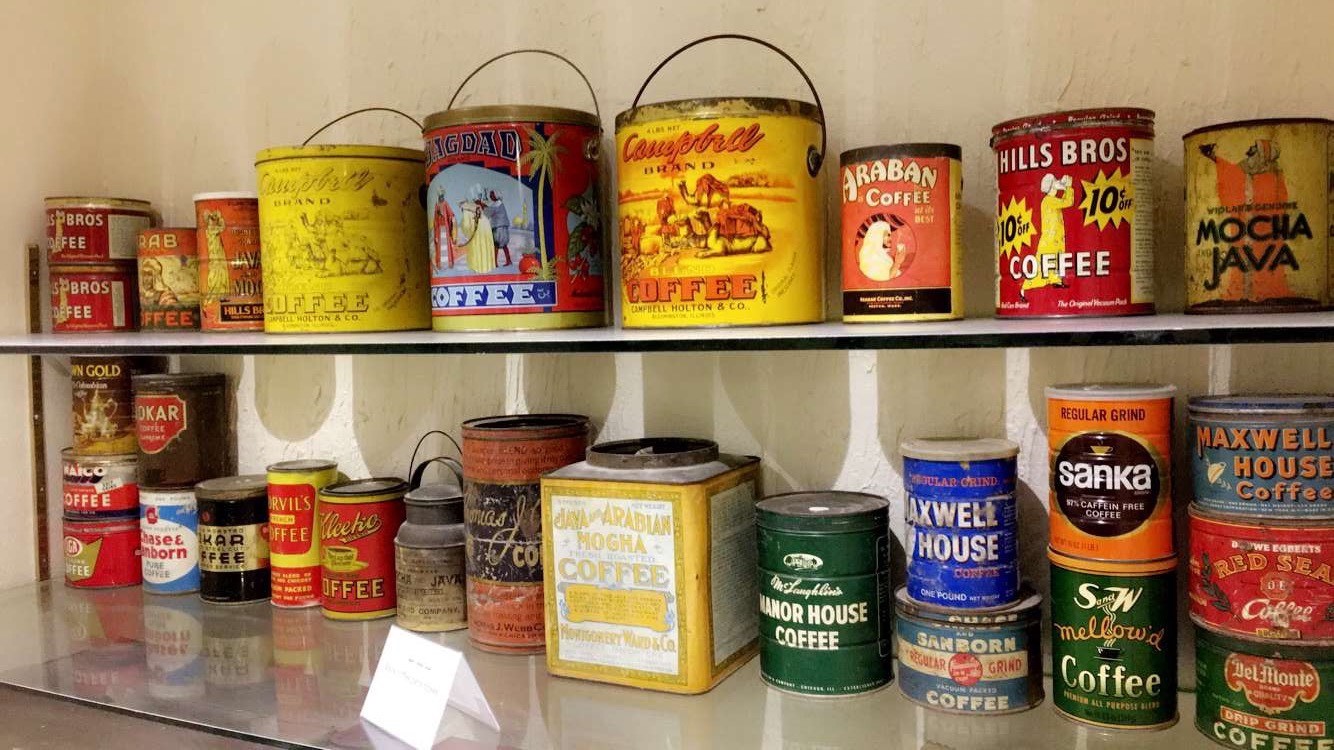
Over three centuries after coffee plantation was first reported in Chikmaglur district of Karnataka, Himachal Pradesh is pushing for commercial cultivation of coffee in the hill state. There is a proposal to start plantation in Bilaspur, Hamirpur, Una, Kangra, Solan and Sirmaur districts of the state with the help of Coffee Board of India.

At present, the state produces only 5-7 quintal of coffee, mainly as the result the initiative by some progressive farmers.

Coffee board member Dr Vikram Sharma of Bilaspur, who is credited with bringing coffee plantation to the state in 1999 after a visit to Chikmagalur, said the topography of lower Himachal resembles that of Chikmagalur and varieties like Chandragiri and selection-nine are best suited for the state. “Chandragiri is temperature tolerant and it would have enhanced flavour due to variation in temperature compared to the rest of India where coffee is grown,” he said.

Talking about his efforts, Sharma, said, “I had grown coffee in my waste land in 2002, so can be done in lower Himachal areas. A proposal has been submitted to the Union ministry of commerce and industries to provide the seeds to farmers in these districts.”

He said the coffee board’s survey of Bilaspur, Hamirpur, Una and Kangra districts found the state suitable for coffee cultivation. In Dramman area of Kangra, a teacher has a flourishing coffee plantation, he pointed out.

According to Sharma, interested farmers would get seeds from the coffee board soon.

Apple is the main commercial crop in upper Himachal, but Sharma says coffee has the potential to become the commercial crop of lower Himachal. With great demand for green coffee bean extracts due to its anti-obesity properties, it can prove to be a money-earner for those going in for the bean’s organic plantation.

source: http://www.timesofindia.indiatimes.com / The Times of India / News> City News> Chandigarh News / by Ananad Bodh / TNN / January 03rd, 2017

In the hills of Coorg, a martial tribe celebrates an annual festival with worship of guns

Kodava elders hope the festival of Kailpodh will encourage the community’s youth to enter international sporting events

Image credit:  Shawn Sebastian and Tejaswi Dantuluri
Image credit: Shawn Sebastian and Tejaswi Dantuluri

Deep in the sanctum of his 150-year-old ancestral home, Lokesh Achappa is surrounded by weapons. Dressed in a Kupya, the traditional Coorgi outfit of knee-length black overcoat, a gold and maroon sash with an ornate, carved silver dagger tucked in its folds, Achappa prays to an array of weapons: an antique double-barrel, a .22 mm rifle, traditional daggers and swords, all garlanded with flowers and smeared with sandalwood paste.

Once the ritual is complete, he steps out of the house, and a series of thundering gun shots reverberate across the valley.

Coorg, a district in Karnataka famous for its coffee, is home to the Kodavas, a martial hill tribe with a population of less than six lakh. Historically, the community has shared a deep connection with its weapons. Valiant guerrilla fighters and agriculturists, the Kodavas once defended territories with locally made bow-and-arrows. With the advent of firearms, guns became central to Kondava life. Weapons appear frequently in important social customs: births and deaths in the Kodava tribe are announced with gunfire, every newborn touches a bow and arrow, as initiation into the tribe. At the annual harvest festival of Puttari, one of the most important events on the Kodavas festival calendar, everyone in the valley opens fire.

Weapons are also celebrated at Kailpodh, the annual Kodavas (or Coorgi) festival in the first week of September which marks the end of hardships for the agrarian community – once the paddy has been transplanted. During the festival, Kodavas clean and worship weapons to express their gratitude for the protection they have offered.

“The period is a time for jubilation when distant families get together,” local resident Ashik Appanna explained.

Image credit:  Shawn Sebastian and Tejaswi Dantuluri
Image credit: Shawn Sebastian and Tejaswi Dantuluri

With the tightening of gun regulation laws, the ban on hunting, and due to large-scale migration of younger generation Coorgis, many have predicted that the Kodava weapon culture will disappear altogether. Elders of the Kodava community are hoping that festivals like Kailpodh will encourage young Kodavas to return to their traditional shooting skills.

Gun Rights and Regulations
In 1861, the British administrators granted Kodavas an exemption from the Arms Act, for their support to the East India Company in administrative and military affairs.

“Gun ownership is a birthright for us,” said Appanna Bacharinanyanda, an 80-year-old retired lecturer who exhibits antique Kodava weapons and utensils in his front yard every Kailpodh.

Bacharinanyanda says the Kodavas never “misuse” guns. He expresses a deep apprehension over the government’s attempts at over-regulating weapons: “These days authorities have started demanding bribes to grant us the exemption certificate, which is completely unacceptable.”

With the Wildlife Protection Act of 1971, hunting has been prohibited in India. The legislation came as a big blow to the Kodavas, for whom hunting was an integral part of life and survival.

Naveen Bidappa, a young Kodava lawyer, pointed to a photograph in his house of a man named Tiger Thimmaiah. In the picture, Thimmaiah stood next to a tiger he had killed and then tied to a tree.

“He shot 12 tigers, hence the name,” smiled Bidappa.

Since tigers posed the biggest menace for livestock, tiger hunters were once highly venerated figures in the Kodavas society.

“Narimangala (tiger-marriage) was a big tradition in the olden days,” he said. “The tiger hunter was married to the tiger he killed, and villagers would offer them gifts and cash as a mark of respect.”

Changing relevance of gun culture
In early September, scores of Kodava youth assembled at a school ground at the Coorgi village of Chettali. Each carried a gun.

Bidappa, a 70-year-old elder from the community, walked into the ground filled with curious onlookers, and shot a coconut hung several yards away to inaugurate the annual shooting competition that coincides with Kailpodh. He hit the bulls-eye with a single shot.

“Shooting skills are in our blood,” he said, shrugging at the crowd’s deafening cheers.

Over the last few years, shooting competitions that were once limited to households have turned into larger events, with an increasing number of shooting enthusiasts showing up from all over Coorg.

“Our aim is to prepare and pass down shooting skills to the younger generation,” Bidappa said.

Over the next five years, local shooting competition organisers plan to develop a shooting range in the village to groom young shooters, and train them for national shooting competitions.

“Festivals such as Kailpodh have found a new meaning in changing circumstances,” he said.

A Kodava shooting competition. Credit: Shawn Sebastian and Tejasvi Dantuluri

Fifteen-year-old Lakshan Ayyappa is a widely recognised face at Kodavas shooting competitions. He is the great-grandson of Tiger Thimmaiah, but has also established himself as an ace shooter in his own right – he has won more local competition prizes than he can remember.

“My target is to make it for 2020 Tokyo Olympics,” he said. Ayyappa first learnt to shoot at the age of five. He was taught by his mother.

“Whenever I see a new gun, I discuss it with my dad,” he said. “I know everything about its make, calibre, range, the cartridges used. I feel by the time we are born, we are already half trained.”

Like in Punjab, it is usual for Kodava households to send a member of their family to join the military. Many attribute this to early affinity Kodava youngsters develop with weapons.

Credit: Shawn Sebastian and Tejasvi Dantuluri

Shooting is not a male sport in the Kodavas tribe. Kodava women traditionally kept guns to protect their families when the men left for hunting and battle. Everyone from septuagenarian grandmothers to 16-year-old girls participate in local shooting competitions.

Credit: Shawn Sebastian and Tejasvi Dantuluri

Shooting is not a male sport in the Kodavas tribe. Kodava women traditionally kept guns to protect their families when the men left for hunting and battle. Everyone from septuagenarian grandmothers to 16-year-old girls participate in local shooting competitions.

Credit: Shawn Sebastian and Tejasvi Dantuluri

Several modern-day sports like shooting and archery have been born of indigenous communities across the world. In India, the attempts at unearthing such indigenous talents have been poor.

A few notable exceptions are people like Laxmirani Manji, from the Santhal tribe in Jharkhand who represented India in archery at the 2016 Rio Olymipcs, and Limba Ram of Ahari tribe in Rajasthan, an Arjuna awardee archer who represented India at three Olympics. If they are given enough support and attention, many modern-day Tiger Thimmaiahs might emerge from Coorg.

We welcome your comments at letters@scroll.in.

source: http://www.scroll.in / Scroll.in / Home> Magazine> After the News / Point & Shoot

‘It is only a question of how quickly we understand each other’

Looking ahead: Ashwini Ponnappa and N. Sikki Reddy are looking to take it match by match as they chart their course in the big league in the doubles.

Ashwini Ponnappa and N. Sikki Reddy, who will play for Bengaluru Blasters, look to the ongoing Premier Badminton League (though they feature only in the mixed doubles event as there is no women’s doubles) as a huge learning curve.

Their first target will be to break into the elite group in women’s doubles after finishing runner-up in the recent Welsh International Challenge and picking up a bronze at the Irish Grand Prix.

Ashwini says they will take it match by match as they chart their course in the big league.

“PBL is a major platform with so many Olympians. Anyone can pick up a few new things to improve their game,” says Ashwini.

“Personally, I am very keen to focus on fitness and be more consistent,” she said.

“It is only a question of how quickly we understand each other in the next few tournaments. It will be a different experience for me compared to the partnership with the more experienced Jwala,” said the 27-year-old Ashwini.

“It’s been only a month since we began training together and I am happy at the way Sikki has been responding, especially in mastering how to rotate in simulated match situations. We have a very good doubles coach (Tan Kim Her),” says Ashwini.

“I always believe that everything happens for a reason. So also my split with Jwala, and it is time now to look ahead. I am confident Sikki and will be a formidable force in women’s doubles,” she said.

On her part, Sikki, fresh from the Brazilian and Russian Grand Prix titles and finishing runner-up in the Scottish Grand Prix partnering Pranaav Chopra in mixed doubles, is excited about playing with Ashwini.

“Unlike many seniors, she is a very sweet person always pushing me to be better. The best part is she tries to make me feel comfortable.

“Breaking into the top-15 in mixed doubles in such a short span is a huge morale-booster. These are the kind of results which can change your perception and confidence level,” said Sikki, who shot into the limelight after losing to Saina Nehwal in the 2008 Pune Commonwealth Youth Games final.

A serious knee injury, however, forced her to focus only on doubles.

“I don’t want to talk big, but yes there was some pressure initially as I stepped into the shoes of the formidable Jwala. She is a fabulous player and, like me, a left-hander,” Sikki said.

source: http://www.thehindu.com / The Hindu / Home> Sport> Premier Badminton League – Other Sports / by V.V. Subrahmanyam / Hyderabad – January 02nd, 2017

COAS Rechristened Army Parade Ground as ‘Cariappa Parade Ground’

Gen Dalbir Singh, Chief of the Army Staff, dedicated a statue of Field Marshal K M Cariappa at the Army Parade Ground, Delhi Cantonment and rechristened the parade ground as “Cariappa Parade Ground” .

It is customary in the Indian Army that parade grounds are named after eminent military personalities and war heroes.

Army Parade Ground at Delhi Cantonment has been rechristened as Cariappa Parade Ground in the memory of Field Marshal KM Cariappa, the first Commander-in-Chief of the Indian Army.

The Parade Ground in Delhi Cantonment is one of the largest and most prominent parade grounds of the country.

source: http://www.defenceaviationpost.com / Defence Aviation Post / Home> News Updates / December 31st, 2016

Cartoonist Ponnappa is ‘Coorg Person of the Year’

Renowned cartoonist Nala Ponnappa, known for his off-beat tongue-in-cheek humour, is the Coorg Person of the Year 2016.

Ponnappa was selected for the honour in a poll conducted by www.coorgtourisminfo.com, Kodagu’s first news portal, promoted by senior journalist P T Bopanna.

Ponnappa’s first cartoons appeared in Chicago in 1972 where he was studying for a Master’s degree in Architecture. He began cartooning as a hobby by contributing his cartoons to college magazines.

The cartoons of the Coorg-born Pune-based cartoonist, also appears in The Sunday Mid-Day, The Economic and Political Weekly and the Economic Times. His works have also appeared in the International Business Times.

Born in 1948, his early education was in Mangaluru and Pune. He graduated in architecture from the Madras University with a first class. He had an 11-year stint from 1970 to 1981 as an architect in Chennai, Delhi, and Lagos, before he turned into a cartoonist. He settled down in Bengaluru in 1982 and began his career as a freelance cartoonist.

His works have also been published in the Penguin Book of Indian Cartoonists and The Third World Book of Cartoonists from Germany. He was awarded the first prize by the epd- Entwicklungspolitik publication, in a competition held at Frankfurt to commemorate the 50th year of India’s Independence.

Ponnappa was a member on the world jury of an international cartoon competition on Humankind and Energy held in Hanover, Germany, in September 2000.

At a competition held in Germany, one of Ponnappa’s cartoons, which depicted the German language being deeply influenced by the English language, was selected to be put up as a poster by the German Cartoonist Association.

He has also won prizes of excellence at cartooning competitions held in Korea and Romania. He was the only Indian to be invited to attend the Kyoto International Cartoonist Conference in 2002, where he was also presented the jury award for his cartoon on ‘Remembering 9/11’.

Among the many awards he has received is also the Karnataka State Rajyotsava Award in 2007.

In the past, the winners of the ‘Coorg Person of the Year’ title include, Dr Kaveri Nambisan, novelist (2005), Dr Boverianda Nanjamma Chinnappa, researcher and writer (2006), Moodera Jagadeesh, scientist (2007), Air Marshal K C Cariappa, environmentalist (2008), cricketer Robin Uthappa (2009), tennis player Rohan Bopanna (2010), retired Tamil Nadu IAS officer P M Belliappa (2011), technology innovator Vineet Devaiah (2012), birdman Dr S V Narasimhan (2013), squash champion Joshna Chinappa (2014), and athlete M R Poovamma (2015).

source: http://www.deccanherald.com / Deccan Herald / Home> District / DHNS-Madikeri, December 31st, 2016

Rohan Bopanna: Best in business

At No 28, Rohan Bopanna is the highest ranked Indian doubles player.

bopannakf31dec2016

Name: Rohan Bopanna

Age: 36

Country: India

World Ranking (doubles): 28

Record in Chennai Open: 2002: Round of 16 ( partnered Carlos Cuadrado); 2006: Finals ( with Prakash Amritraj); 2009: Round of 16 ( Flavio Cipolia); 2010: Quarterfinals ( Mahesh Bhupathi); 2011: Quarterfinals (Aisam-Ul-Haq Qureshi); 2012: Semifinals ( Bhupathi); 2013: Quarterfinals (Rajeev Ram); 2014: Quarterfinals ( Qureshi);

Form Book:
Rohan Bopanna began the year 2016 by reaching the final of Sydney International ATP 250 tournament with Florin Mergea and followed it up with another entry to the final at the Madrid Masters with the same partner. He reached the quarterfinal of Rio Olympics in the mixed doubles event with Sania Mirza and also has three semifinal appearance in ATP tour events including one in the Masters.

At No 28, Rohan Bopanna is the highest ranked Indian doubles player. He will partner local lad Jeevan Nedunchezhiyan in the doubles in what will be his ninth appearance in the ATP tournament. The duo played the Chengdu Open in September and had reached the quarterfinals.

source: http://www.sportstarlive.com / SportStar / Home> Chennai Open / December 31st, 2016

Vaira in Madikeri, Navarasan hero again

At the announcement of ‘Vaira’ Kannada film Navarasan director and actor of Rakshasi (Pisasi remake) said he is looking for a hero to his Dharmasri Manjunath production. Now that place is occupied by him.The shoot of ‘Vaira’ is taking place in and around Madikeri. The producer ‘Rathavara’ Manjunath has invested on this film with Geetha Entertainment.

Navarasan has penned story, screenplay, dialogue besides acting and directing the film. Priyanka Ballal is female lead. Sharat, Ajay, Tabla Nani, Bharat Singh, Harry, Krishna Sri, Master Sujith are in the cast.

‘Vaira’ is a crime thriller with horror, comedy, crime, thrill, love, revenge, friendship, glamour and action. It has Nithin cinematography, Ravi Basroor music, Ultimate Shivu Stunts, Ravi Poojari art.

source: http://www.indiaglitz.com / IndiaGlitz / Home / December 29th, 2016

Indian Oil beat Bharat Petroleum to win 5th Beighton Cup crown

Indian Oil looked the better team in the initial stages, earning two quick penalty corners before Gurjinder took the lead off one. S.V. Sunil was in the thick of things by creating good moves.

Kolkata :

Indian Oil won their fifth All India Beighton Cup title by edging past Bharat Petroleum Corporation Limited (BPCL) 5-3 in the final at the SAI training centre here on Tuesday.

India defender Gurjinder Singh scored a first half brace with S.K. Uthappa with the veteran duo of captain Deepak Thakur and Prabhjot Singh also finding the net.

Indian Oil led by three unanswered goals at halftime. Bharat Petroleum, led by Sukhwinder Singh, tried to stage a comeback in the early stages of the second half through Amir Khan and Varun Kumar who sounded the boards after a flurry of penalty corners. But Deepak and Prabhjyot sealed the deal by scoring two more goals with Harmanpreet Singh getting on the scoresheet for the runners-up with a late consolation goal.

Indian Oil looked the better team in the initial stages, earning two quick penalty corners before Gurjinder took the lead off one. S.V. Sunil was in the thick of things by creating good moves. Prabhjyot made a solo run, almost doubling the lead, before Uthappa pulled the trigger to make it 2-0 from a V.R. Raghunath pass.

Gurjinder doubled his tally from another penalty corner as Indian Oil made the most of their opportunities while Bharat Petroleum failed to do so. The eventual winners also saw their goalkeeper Devesh Chauhan on top of his game pulling off a string of good saves. After the breather, Amir scored a field goal to make it 3-1 with Varun finally converting a penalty corner for Bharat Petroleum.

Deepak and Prabhjyot though dashed any hopes of a fightback by netting goals in quick succession. Harmanpreet finished off the goal glut with a consolation strike in the dying minutes of the match. “We wanted them to press the panic button first,” Deepak, who was part of all five Indian Oil wins in the oldest domestic tournament, told reporters later.

“They were younger and faster than us. We had quite a few veterans in the side so we could not match up to their pace. We played the Asian style of hockey while they stuck to the European style which the national team also plays. I am happy as captain that we prevailed eventually,” he added.

Indian Oil’s Kothajit Singh was adjudged the man of the tournament. “I take inspiration from Mary Kom (boxer),” the Manipuri said. “She and Sarita Devi (boxer) have inspired me a lot,” added the 24-year old India international.

source: http://www.india.com / India.com / Home> Business / by Indo-Asian News Service / December 27th, 2016

Best of 2016: Climate change measured in coffee rain

As Karnataka roils over the Kaveri water dispute, the underlying cause is lowered climate resilience of the agro-forestry ecosystem in Kodagu’s coffee plantations

Coffee farmer B. B. Thammaiah’s rainfall record (Photo by S. Gopikrishna Warrier)

Coffee planters in the hill district of Kodagu in Karnataka are meticulous in keeping rainfall records in their estates. For some, the data goes back for decades. Their numbers tell the story of changing rainfall patterns, an indicator of climate change. The changing patterns also have an impact on the way they grow coffee, which has an effect on climate resilience in the hills and the plains.

Due to the presence of this decentralised network of rainfall measuring stations, it is easier to obtain a nuanced picture of the precipitation trends for Kodagu, earlier known as Coorg, than in other parts of India. The average annual rainfall varies from above 5,000 mm in the western edge of the district to 1,200 mm in the east.

This data was used as part of the baseline survey by an international collaborative project to study the unique coffee agro-forestry system of Kodagu district. The College of Forestry at Ponnampet in Kodagu, as a participant in the Coffee Agro-forestry Network (CAFNET) project, has analysed the rainfall data of over 60 years from 116 coffee farms.

“Keeping meticulous rainfall data is part of the culture we inherited from the British,” said C.G. Kushalappa, university head for forestry and environment sciences at the College of Forestry.

The CAFNET report noted that the length of the rainy season had decreased by 14 days over the past 35 years. It also noticed a strong fluctuation in annual rainfall with an apparent cycle of 12 to 14 years.

Low rainfall in coffee land

Whether it is due to being the lowest point in this cycle or an El Nino changing rainfall patterns, 2015 and 2016 have been years of low rainfall in Kodagu. This is the second year of deficit rainfall in Kodagu. During 2015, it was deficient by 19%. As a result, the storage in the Krishna Raja Sagara dam reservoir, built across the Kaveri River immediately downstream of Kodagu district, has a 31% deficit this year.

On the ground measurements by coffee grower K.K. Naren in Kunda village near Ponnampet confirms this. “Our normal rainfall is 90 to 100 inches (2,200 to 2,500 mm). This year we have got 38 inches, whereas by this time we should have received 70% of the year’s rain.”

A farm worker measures rainfall in K. K. Naren’s coffee farm. (Photo by K. K. Naren)

Coffee planters are confused by the erratic rainfall of recent years. “Rain and weather patterns have become increasingly unpredictable in recent years,” said M.B. Ganapathy, head of plantations for Tata Coffee. “Even though the quantum does not seem to have changed, the rainfall is not well distributed any longer. There are long dry periods followed by heavy rain and high-velocity winds. This has made farm management difficult for us.”

Blossom showers affected

According to coffee farmer B.B. Thammaiah of Kolagadalu village, the erratic rainfall has meant that blossom showers, which usually take place between February and April, are missing in some years. This has an impact on coffee production, since this helps coffee flowers to blossom, ensuring good yields later in the year.

There is an ecological impact of this, according to Kushalappa. When the blossom showers became erratic, coffee farmers started irrigating during these months. For traditional coffee cultivation, it was a combination of mixed-shade trees plus blossom showers that gave a good yield. When the blossom showers were replaced by irrigation, the shade from the trees did not matter. The farmers’ dependence on the native trees decreased, resulting in their proclivity for letting the native trees die. These trees are being replaced by silver oak.

See: Bringing coffee back into the shade

There is also an issue of ownership that is leading to the clearing of forests. Thammaiah’s farm is in Kolagadalu village, not far from the western crest of the plateau deep in a forested valley. His farm receives more than 5,000 mm of rainfall every year. While in the valley floor he continues to grow rice as his forefathers did, he cultivates coffee in the shade of the forest trees. Though the forest may not be as thick as it was during his grandfather’s time, he plans to conserve it.

The landscape of Thammaiah’s farm is typical of what the people of Kodagu inherited. While historically joint families cultivated the rice paddies where they owned the land, they used the forest for collecting mulch and firewood and grazing cattle. The families do not have property rights over the trees, which belong to the government.

Economics of silver oak

Silver oak, on the other hand, can be planted, cut and sold. M.C. Cushalappa, a coffee farmer from Siddhapura, said that silver oak yields a two-fold benefit to coffee farmers. One, it can supplement the family’s income in times of need. Two, its straight trunk can be used as a support for pepper vines, which bring more additional income. With no ownership and no economic stake on the native trees, farmers do not have an incentive to keep them alive.

Cushalappa’s family has paid the price of the native trees to the government and obtained ownership over them. “This encourages me to maintain the native tree species in my farm, unlike most of the other farmers in Kodagu.”

The coffee agro-forestry system of Kodagu is of immense importance ecologically; not only does it provide climate resilience to the hill communities but provides water to millions downstream through the Kaveri. The current acrimony over the waters of the Kaveri between Karnataka and Tamil Nadu have led to violent protests.

There is a problem though. Unlike in other parts of the country where the forests are fully under the control of the forest department, in Kodagu they are under the combined control of the department and thousands of coffee farmers. It means that it is difficult to give them a protected status. It is not as if the forest department it always the best protector; but uniformity in control has the potential to improve conservation practices.

Geographical location of coffee farms where rainfall data has been collected for 70 years and a map of rainfall distribution generated with these data points as an exmple for the year 2002. ( Image by College of Forestry, Ponnampet)

“The majority of forests in Kodagu are not notified and hence for their upkeep thousands of coffee farmers have to be incentivised,” a forest department official said, speaking on condition of anonymity. “About 90% of the catchment of the Kaveri river before the Krishna Raja Sagara reservoir is in Kodagu. There is need for a mindset change so that the farmers conserve the native trees and biodiversity.”

Through the CAFNET study, the ecosystem services could be quantified. “We looked at the role of native trees and silver oak to study their hydrological impact. Our team studied how much of the rain was intercepted, how much came through the stem, how much got run off, and how much got recharged,” noted Kushalappa.

The magic of native trees

The study found that increasing the proportion of exotic species such as silver oak in the shade cover composition had little impact on rainfall interception since trees intercept less (1% to 6%) than coffee plants (9% to 22%). Although there are lower quantities of water from native tree plots going to rivers than from the exotic tree plots, the higher contribution of evaporated and transpired water from native trees have a positive impact on the microclimate. Further, large canopy and deep-rooted systems of the native species help in the percolation of water to deeper aquifers, mainly during the monsoon.

Thus, native trees held the rainwater as it fell torrentially, and released it gradually into the rivers. At the same time they created a climate-resilient environment in the farms.

The mixed agro-forestry systems also helped in sequestering carbon. The CAFNET studies showed that Arabica coffee grown under the shade of mixed species sequestered more than the reference forests. Arabica coffee grown under silver oak sequesters marginally less than Robusta grown under native trees. Robusta grown under silver oak sequesters substantially less than the other combinations.

The missing blossom showers could be adding to the reasons for coffee farmers opening their canopies. On the flip side, the farmers’ actions could result in more carbon in the atmosphere, making rainfall more erratic in Kodagu.

source: http://www.indiaclimatedialogue.net / India Climate Dialogue / Home> Impacts / by S. Gopikrishna Warrier / December 27th, 2016

KOA honour for Chikkarangappa, Jyothi; awards function on Monday

Sprinter HM Jyothi and golfer S Chikkarangappa are in the list of 16 sportspersons who will receive the Karnataka Olympic Association (KOA) awards this year.

Other notable winners include young table tennis star Archana Kamath, swimmer Damini K Gowda, top-ranked girls’ badminton player Shikha Gautam and Indian hockey team midfielder SK Uthappa.

Press photographer G Mohan and sports promoter Vinaya Hegde will also receive the honour while in the veteran category, B J Kariappa will be the recipient, KOA President K Govindaraj told a press conference.

Sharana Gouda Beleri (wrestling) will receive the award in the coach’s category.

The awards will be presented on Monday by Chief Minister Siddaramaiah in a ceremony to be held at Yavanika, State Youth Centre.

The list of awardees:

HM Jyothi (Athletics), Shikha Gautam (Badminton), HM Bhandavya (Basketball), Sandesh M Uppar (Cycling), Chikkarangappa (Golf), SK Uthappa (Hockey), Mallaprabha Jadhav (Judo), Usha Rani (Kabaddi), Mayur Bhanu (Shooting), Damini K Gowda (Swimming), Anitha R (Taekwondo), Archana Kamath (Table Tennis), Dhruthi Venugopal (Tennis), Vinayak Rokade (Volleyball), Naveen Chandra (Weightlifting), BJ Kariappa (Veteran hockey player), Sharana Gouda Beleri (Wrestling coach), G Mohan (Press photographer), Vinaya Hegde (Sports promoter).

source: http://www.deccanherald.com / Deccan Herald / Home> Sports / Bengaluru – DHNS, December 25th, 2016