An Ex-Serviceman’s journey to Kodagu

Exservicemen01KF16jan2017

Land of Generals and War Widows

by Mandetira N. Subramani, President, VeKare Ex-Servicemen Trust, Mysore
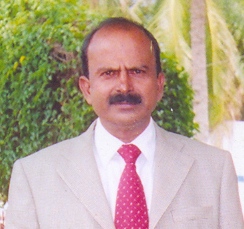
M N Subramani
M N Subramani

Most of the Ex-Servicemen of yore, who joined the British Indian Armed Forces during early 1940s, and participated in World War-II, are no more. However, there are still numerous widows of World War-II veterans, around 70 odd years of age, living in Mysore and Kodagu region, who narrate their helplessness and pathetic stories.

It was customary for men of yesteryears to marry a life partner who is younger to them by 10 to 15 years. It is quite but natural that most of such wives become widows and may live for 10 to 15 years, or even longer, after the demise of their husbands. Trends have changed. The present day men don’t mind marrying a life partner elder to him by 3-5 years and the educated ladies consider it as out of fashion and a mismatch to marry men who are 3 or 4 years elder to them.

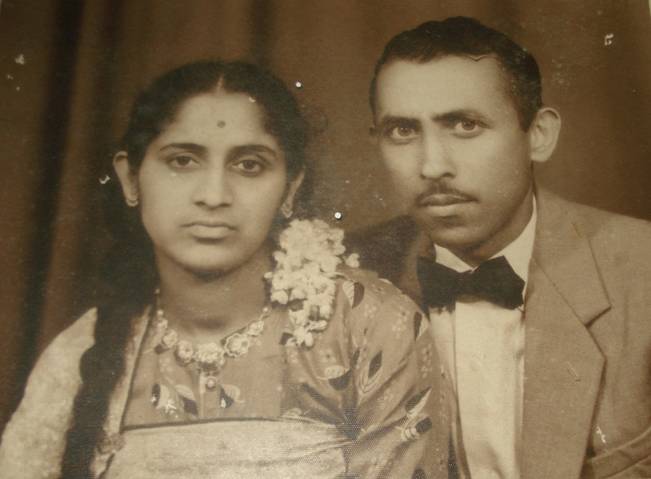
Reverting to the subject of helplessness of widows of World War-II veterans, a gentleman barged into my office a few days ago with a complaint that his 76-year-old mother, living in a remote village called Kiggal, near Murnad, Kodagu (erstwhile Coorg), is not being granted defence family pension even after a lapse of 12 years after the demise of his father, due to some vague reasons projected by the Army’s EME Record Office, Secunderabad. The hapless widow happened to be one Mrs. Kaveriamma, widow of a World War-II veteran, Naib Subedar Ballachanda Nanjappa Ayyappa.
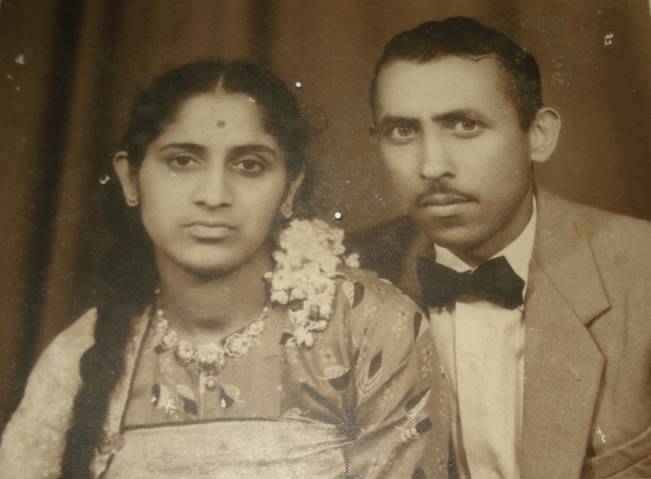
Mrs. Kaveriamma & late Nb Sub B.N. Ayyappa.

I being not only an Ex-Serviceman myself but also a son of a World War-II veteran who served in the Corps of EME and died unsung and unheard 22 years ago, decided to help the Late Nb Sub Ballachanda N. Ayyappa’s widow Kaveriamma with whatever little bit of knowledge and expertise I had gained during the course of taking up the cause of Ex-Servicemen and widows of Ex-Servicemen since the past 22 years after I quit the Armed Forces.

I believe in “seeing is believing.” Hence, I told late Naib Sub B.N. Ayyappa’s son, Ganapathy, that I wished to see his mother Kaveriamma personally, without doubting his (Ganapathy’s) version of the pathetic story of his mother. Without a second thought, Ganapathy informed me that his 76-year-old mother has been suffering from all sorts of old age ailments and that if I wished to see her, I would have to visit his ancestral Ballachanda House in Kiggal village in Coorg, which is well over 150 kms from Mysore. He also suggested that I could accompany him the following day itself to his village to see his mother. Though there was a clash of opinions between my mind and heart regarding his suggestion, I decided to listen to my heart, which is always weaker than the mind. The widow’s old age and ill health became a priority over my next day’s assignments and engagements all of which I had to abort.

It was indeed a huge expedition on the next day. It took almost nearly three-and-a-half- hours to reach the 100-year-old ancestral house of late Nb Sub Ayyappa in his village, which resembled a bit of British architecture. However, it took me waiting for nearly two hours to get the audience of the grand-old-lady, as she took time to wake up from her sleep, get ready and come out of her bedroom with the support of her son.
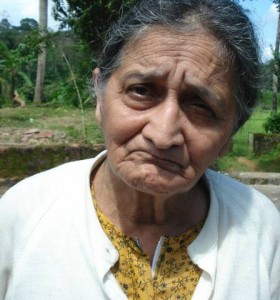
B.A. Kaveriamma, widow of late Nb Sub B.N. Ayyappa.

During the waiting period, in Kaveriamma’s house, I had to perforce spend my time speaking to an 87-year-grand-old gentleman, who was resting in his easy chair. I was amused when he kept showing extra attention and courtesies to me than what I really deserved. This grand-old-gentleman, however, kept firing some uncomfortable questions to me such as, when did I join the Armed Force? When did I quit? Why did I quit? What was the last rank held by me? What I have been doing after quitting the forces etc… etc… as if I were put in a witness box for some crime committed by joining the Armed Forces! If someone around my age had asked me those questions, I would have blown my trumpet about my life in the Armed Forces, my last rank held as equivalent to one of those one star or two stars rank etc. But, I held back, because, in my subconscious mind I saw something very special in him that made me to tell him only the truth, including the last rank held by me, that is, Sergeant in the Indian Air Force.

While answering all the questions fired at me by this grand-old-gentleman, I was also looking at the walls of the huge verandah to deter him from firing anymore questions. However, I found some old photographs of late Naib Sub Ayyappa’s father, who was a Sub-Inspector of Police during the British regime, hung on the wall. Among the numerable old photographs on the walls, I also noticed a certificate framed and hung in a remote corner, which I could not read because of the size of the certificate, and my failing eye sight. I was compelled to remove the framed certificate and read it just out of curiosity. To my surprise, it was a citation of a gallantry award, that is, “Mention in Dispatches” awarded to Flight Gunner Sgt. Ballachanda N. Medappa.
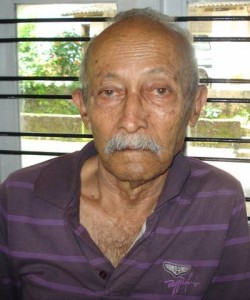
Ex-Warrant Officer B.N. Medappa, M-In-D

I became very curious and asked Ganapathy as to who this Flight Gunner was ? Ganapathy pointed out at the grand-old- gentleman who was sitting on the same easy chair busy reading a Kannada daily Mysooru Mitra and said, “he is my father Nb Sub Ayyappa’s younger brother Ex-Warrant Officer of the Indian Air Force.” I realised that he is really an ‘Ex-Air Warrior,’ a term commonly referred to all Ex-Air Force personnel of late. I too sometimes proudly call myself as an Ex-Air Warrior to my advantage but it proved to be otherwise all the time with my retired rank ‘Ex-Sergeant.’

In the meantime, the widow of Nb Sub Ayyappa managed to come up to the verandah with the support of her son. As per the customs of the Coorgs’, I touched her feet to seek her blessings, and took a few photographs of her from my worn camera. After speaking to her for a few minutes I casually told her that I would try to resolve her defence family pension issue, at which she nodded her head casually, without any anxiety or hope of receiving it in the near future. I understood that she was fed up of trying for her defence family pension for the past 12 years.

On our way back to Mysore from Coorg after having met the widow, my thoughts were more on the unassuming Ex-Air Warrior I met that day than the problem of the widow of World War- II veteran Ayyappa. I tried to make a guess as to how many such great war heroes were still living or dead, unheard and unsung, among the tiny Kodava Community besides the number of General Officers this tiny Coorg District has produced till date. I even started calling up all my fauji friends, as if there was an impending war.

All armed forces veterans who served three decades ago know that there was a separate Coorg regiment, which largely included people from non-Kodava backgrounds while the Kodavas themselves served in different other regiments; this is in keeping with the Army’s non-bias policy. Field Marshal Kodandera Cariappa of the Rajput regiment and General Kodandera Thimayya of the Kumaon regiment are the most distinguished Army men among the Kodavas. Other illustrious Kodavas from all ranks lead from the front in their own way, not only during wars but also in war-like situations and counter insurgencies.

Lt. Gen. Apparanda Aiyappa is best remembered for his contributions towards the Corps of Signals and towards Bharat Electronics Limited. There were several war heroes as well such as Nadikerianda Bheemaiah, a JCO who was the first among Coorgs to be awarded the Vir Chakra for conspicuous bravery in J&K Operations during 1947, and Air Marshal Cheppudira D. Subia, a daring fighter pilot, was awarded the Vir Chakra during 1950 for his courageous and relentless attacks on the enemy targets which has largely contributed to the successful capture of Garais in Jammu & Kashmir.

Squadron Leader Ajjamada B. Devayya (known as the ‘wings of fire’), a fighter pilot of rare acumen, was awarded the Maha Vir Chakra after the 1965 Indo-Pak War, posthumously. Lt. Col. Ganapathi Puttichanda Somaiah (then known as the ‘Major who kept his cool’) was awarded the Maha Vir Chakra for his conspicuous bravery of fighting against the militants under odd condition while deployed in Sri Lanka as part of Indian Peace Keeping Force.

Lt. Col. Anjaparavanda Ganapathy was decorated with Vir Chakra for his valour during the 1965 war. Maj. Gen. Kuppanda Nanjappa and Colonel Mandettira Ravi were decorated with Vir Chakra for their valiant display of courage and gallantry in the face of the enemy on land during the 1971 Indo-Pak war. Sqn. Ldr. Mandepanda Ganapathy was awarded Vir Chakra for shooting down one of the first Pakistani Sabre Jets, which intruded into Indian air space during the 1971 war.

Wg. Cdr. Ballachanda Karumbaya is another war hero to be decorated with the Vir Chakra for displaying his gallantry in the air during the 1971 war. The youngest among the above said war heroes is the then Capt. Baleyanda M. Cariappa to be decorated with Vir Chakra on 21st June 1999 for displaying repeated acts of valour, bold leadership, unparalleled courage, leading from the front and devotion beyond the call of duty in the face of the enemy.

Kodagu being one of the smallest districts across India, today boasts of the highest density of devoted, daring, dedicated, disciplined and duty-bound gentlemen soldier officers, with many adorning the highest echelons of the defence services in India.

At any given point of time, till 1980, the number of persons serving the forces far exceeded the proportion of any other set of people from any other region in India. The contribution of Coorg to the cause of the nation has been phenomenal and Armed Forces Martyrs from Kodagu District are innumerable.

The appended list of Army General Officers the tiny District of Kodagu [population 5 lakh and population of Kodavas is about 1.3 lakh] has produced over the last 65 years is testimony to the fact that the District is a cradle of mighty Generals:

1. Field Marshal Kodandera M. Cariappa, OBE; 2. General Kodandera S. Thimayya, DSO; 3. Lt. Gen. (Retd.) Apparanda C. Aiyappa PVSM, MBE; 4. Lt. Gen. (Retd.) Biddanda C. Nanda PVSM, AVSM, ADG; 5. Lt. Gen. (Retd.) Codanda N. Somanna PVSM; 6. Lt. Gen. (Retd.) Bittianda K. Bopanna PVSM, AVSM, VSM; 7. Lt. Gen. (Retd.) Ballachanda K. Chengappa; 8. Maj. Gen. (Retd.) Guddanda C. Somanna; 9. Maj. Gen. (Retd.) Kongetira M. Chengappa; 10. Maj. Gen. (Retd) Kotera C. Bheemaiah; 11. Maj. Gen. (Retd.) Codanda K. Karumbaya SM; 12. Maj. Gen. (Retd.) Cheppudira I. Jay Appachu AVSM; 13. Maj. Gen. (Retd.) Somaiyanda K. Kariappa AVSM, YSM; 14. Maj. Gen. (Retd.) Madaiyanda M. Belliappa AVSM, VSM; 15. Maj. Gen. (Retd.) Bovverianda M. Aiyanna; 16. Maj. Gen. (Retd.) Bachamanda A. Cariappa; 17. Maj. Gen. (Retd.) Moovera C. Nanjappa AVSM, VSM; 18. Maj. Gen. (Retd.) Kuppanda P. Nanjappa AVSM, VrC; 19. Maj. Gen. (Retd.) Kelapanda B. Swaraj; 20. Maj. Gen. Kodandera Arjun Muthanna; 21. Maj. Gen. Paruvangada M. Cariappa VSM.

Courtesy: Star of Mysore

source: http://www.exservicemen.in / Ex-servicemen India / Home> India> News> Views, Articles / by M N Subramani / October 19th, 2012
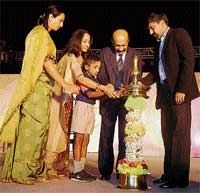
Rotary Club Madikeri Hills bags Rotary trophy

Mangaluru:

Rotary Club of Madikeri Hills represented by Dr Prashanth, and Gopalkrishna, clinched the 11th annual Rotary quiz trophy securing 190 points. Rotary Club of Mangaluru Metro team represented by Dr Ranjan and Sumith Rao secured 160 points and were declared runners up.

Rotary Club of Mangaluru Central as a part of Rotary Movement Awareness Campaign conducted their inter club Rotary quiz contest on Friday on Rotary related affairs.

Mysuru city-based eminent businessman and Rotary past district governor Dr G K Balakrishna was the chief guest. He lauded the valuable contributions of Dr Devadas Rai, the quiz master and the organizer to the Rotary Movement and the annual quiz. He later awarded the Rotary trophy, certificates and a cash prize of Rs 2,000 to the winners and Rs 1,000 to the runners up and congratulated the respective teams on their achievements.

Eleven teams from Mangaluru, Bykampady Surathkal, Bajpe, Deralakatte, Madikeri, Kushalnagar, Mysuru took part in this contest.

Dr Rai, the quiz master officiated the closely contested quiz. Vikram Datta, assistant governor zone-3, guest of honour, released the weekly club news bulletin. Anil Gonsalves, club president, presided over the function. Raymond D’Cunha, secretary, presented the monthly report. Prakash Chandra proposed vote of thanks.

source: http://www.timesofindia.indiatimes.com / The Times of India / News> City News> Mangalore News / TNN / January 15th, 2017

‘Instill spirit of Vishwamanava in children’

VishwakarmaKF16jan2017

”There is a need to instill the spirit of vishwa manava in children,” said MLC M C Nanaiah.

Speaking at the annual day of Karumbaiah Academy for Learning and Sports, he said that, of the 600 crore population in the world, 100 crore suffer from hunger. India’s population is 110 crore. Of which 30 crore people struggle to make their ends meet. Educational institutions should try to bring those kids who have been denied of opportunities to the mainstream of the society.”

“We should provide suitable platform to bring out the hidden talents in children. The talent in the child is a lesson. Education helps in bringing the talent out. Society provides opportunity for children who have been denied of the opportunities,” he added.

Owing to political interference, several persons have been denied of opportunities. Some educational institutions have made their ground a commercial complex, which will deny sports facilities to the students, he lamented.

The greenery in Kodagu should be preserved. The 30 acre land of KALS should be used for raising plants and trees, he suggested. KALS Chief Ashwini Nachappa said “State government had sanctioned Rs 2 crore for laying astro turf in Kodagu through Ashwini Foundation. The work will commence at the earliest.”

KALS Managing Trustee Datta Karumbaiah presided. Principal Gowramma proposed a vote of thanks. The stage programme was followed by cultural programmes by the students. Students presented Suggi kunitha, Nandi dhwaja, Kolata, Yakshagana. All the 410 students took part in the cultural programme and came to the stage at once which gave the feeling of ‘Kinnara loka.’

The dance ballet of Lord Krishna, environment destruction attracted the attention of all. Danseus Maya Rao of Bangalore also gave a performance for an hour on the occasion.

source: http://www.deccanherald.com / Deccan Herald / Home> District / DHNS / Gonikoppa- January 10th, 2010

Leelavathi, lone Kannadiga shines bright in U-18 Asian cup Bronze medal winning hockey team

Madikeri:

Kodagu is known to produce world class sportspersons in the field of hockey, tennis, badminton and athletics over the years and teenager Leelavathi is the latest addition.

LeelavathiKF11jan2017

Leelavthi, daughter of Mallamada Jaya and Vani couple, is the resident of Bekkesodlur village in South Kodagu.

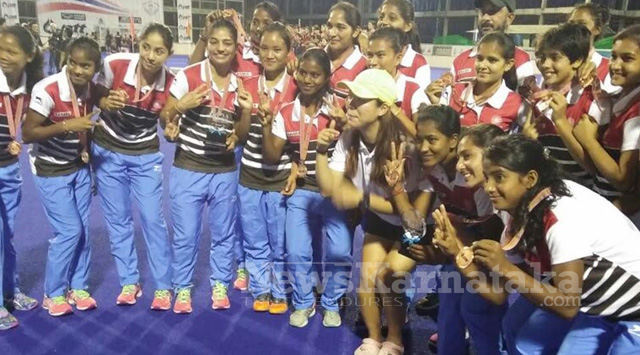
In the Under -18 age group Leelavathi was the lone player representing the state in Indian team that won the Bronze medal in the just concluded Asia cup. Eight nations took part in the U-18 tournament including China, Japan, Thailand, Korea, Singapore, Malaysia and Chinese Taipei.

Leelavthi , First degree student at Field Marshal Carippa (FMC) college is undergoing training at Sports Authority of India (SAI), centre in Madikeri. Leelavthi scored the first goal in the tournament opener which the team won by 4-0. She also played a major role in India’s bronze medal victory against South Korea.

Leelavathi aspires to represent the senior Indian team in future and owes her success to the contribution from family members, trainers at School and SAI centre.

source: http://www.newskarnataka.com / News Karnataka / Home> News> Cities / December 26th, 2016

Revering nature & culture

Harvest festival

HarvestfestivalKF11jan2017

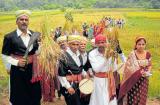
Puttari Polud (also called Huttari), the rice harvest festival of Kodagu, is perhaps the grandest and most elaborate festival in the Kodava calendar. The word putt-ari means new rice and the festival is celebrated on the full moon day during the Kodava month of birchyaar. One day before the Puttari feast, the Kaladcha festival is observed in the Padi Igguthappa Temple. Igguthappa is the god of the rice crop, harvest and rains.

Preparations for Kaladcha and Puttari are commenced around 15 days in advance. The Pardanda family of Padi village, who are the deva thakka (temple caretakers), the parupatyagara (temple officials) families and other prominent families of Padi, Nelji and Perur villages are summoned in writing. On a particular day, they bring rice, coconut, jaggery, banana and areca nut to the shrine. Astrologers from Ammangeri village determine the date of Puttari feast. They arrive at the temple and convey the exact time for Puttari ceremonies, as determined by the stars.

Traditional fervour
In the afternoon, astrologers, priests, caretaker families, musicians and other devotees go up Malma hill (Igguthappa Betta which is a few kilometres away from the temple), and announce the auspicious time at a shrine in the midst of a sacred grove. Then they will go to the Pardanda Ainmane in Padi and announce it again.

At Malma, the temple caretaker announces the deva kattu (religious restrictions) to be observed by the people of the neighbourhood for the next 14 days. Accordingly eating meat, consuming alcohol, physically or verbally hurting animals or humans, pulling out plants and cutting trees are forbidden in the period. Marriages and funeral ceremonies are not to be conducted during the period. No special puja, except Satyanarayana Puja, is performed in the temple during the period.

Afterwards the astrologers, caretakers and others go to the Makki Sarthavu Temple in Bethu village near Napoklu and announce the date and time again. The astrologers continue conveying the auspicious time to various families of the region. At each house, they are given thambutt powder, rice, jaggery, banana, salt and pepper, sufficient for a meal. Thambutt powder, prepared from boiled rice which is fried until it is golden brown, is used with mashed bananas and finally seasoned with sesame seeds and grated coconut to prepare the thambutt sweet dish. Kodava people gather in their ancestral house, called the ainmane, to celebrate the festival.

On Kaladcha day, the deva thakka goes to Malma again and announces that the deva kattu need not be followed thereafter. This is called kattu muripo, or removing the restrictions. During Kaladcha, the temple deities are embellished with ornaments, and chendas (a percussion instrument) are played. Yetherata is also performed on the occasion. Decorated oxen are made to dance with bags (often rice bags) on their backs.

Puttari Polud is first observed in the Padi Igguthappa Temple and the village of Padi. Hence, the first day is called the Padi polud (Padi celebration) or deva polud (divine celebration). The following day, the festival is celebrated in the rest of Kodagu and it is known as naad polud (public celebration).

While the rituals at the temple are presided over by the archak (priest), the deva thakka performs the rituals. On both days, the first evening near the temple and the second at ancestral houses, the nere kattuvo (tying of certain leaves) and the kad edpo (cutting of paddy sheaves) rituals are performed. At the temple, these two ceremonies are followed by prasada (devotional meal).

After dusk, a designated male family member ties together certain leaves around bits of the inoli creeper with pieces of achchi fibre into bundles. Each of these bundles, called a nere, is placed in a basket. Then an unmarried young lady from the family carries a small lit lamp upon a plate. She leads the family members to go down to the fields.

A designated man ties a nere from the basket to the base of a sheaf of paddy and pours milk from a kutti (bamboo container) onto it. He cuts that sheaf (kad) with a sickle while the other family members cry out ‘Poly, Poly Deva!’ (Let us prosper, let us prosper, O God!). A gun is then fired into the air. Five, seven, nine or 11 sheaves of paddy are cut and given to the assembled family members. They carry these sheaves to the prayer place in the house.

The nere bundles are then tied in various places around the house and the farm. Later, the thambutt sweet dish is consumed by the family. Firecrackers are burst in the night.

On the day after naad puttari, the mane paado (house-singing) ceremony happens. Four folk singers of the village carry small hourglass drums, each called a dudi, and go from residence to residence. While all four strike the drums with cane sticks in rhythm, two of them take turns to sing verses praising the members of the family. A few days later, the villagers gather at the village greens (mand). The village musicians blow their horns and beat their large drums. The men dance in circles beating small rattan cane sticks called kola as they skip around in rhythm with the music. This is called the kolata or the stick-dance.

Festival of arms
There are two other major Kodava festivals — Kail Polud and Kaveri Sankramana. Kail Polud is the festival of arms for the Kodava martial community, now observed on September third every year. Before this festival, naati (rice seedlings) grown in a small area is transplanted across ploughed and puddled fields.

The Kodavas worship traditional farmhouse weapons such as war knives and long guns. They are cleaned and decorated with flowers and vermillion in the puja corner on the Kail Polud day. Sports such as shot-put and shooting at coconuts are arranged that afternoon. In the ancient times, this polud (celebration) marked the commencement of the hunting season, during the Kodava month of Chingyaar, when the Simha Rashi (Leo zodiac sign) is in prominence. While in the past people kept arms to use in wars, now they are kept as cultural symbols, to guard the crops and to ward away wild creatures.
Kaveri Sankramana is a festival dedicated to the river goddess Kaveri, the patron of the Kodavas. It happens on the first day of thulyaar, when the sun seems to enter the Libra zodiac sign. Ritual water is obtained from Talakaveri, the source of the river, and distributed among the natives of Kodagu.

A kalasha is worshipped in the houses and a vegetarian meal comprising dosa and pumpkin curry is prepared on that day. In the following month, pinda (ritual rice balls) is offered to or uttara kriya (last rites) is performed for deceased family members upon the banks of River Kaveri at Bhagamandala.

source: http://www.deccanherald.com / Deccan Herald / Home> Supplements> Spectrum / by Mookanda Kushalappa / December 06th, 2016