‘Nagarahavu’ APP comes

NagarahavuKF05aug2016

The grooming for ‘Nagarahavu’ Kannada cinema by PEN Movies Jayanthilal Gada and Sajid Quereshi is going up strongly. It is in this film dialogue king Saikumar is playing a pivotal role. The advertisements released recently on birthday of Saikumar revealed his presence in bilingual ‘Nagarahavu’.

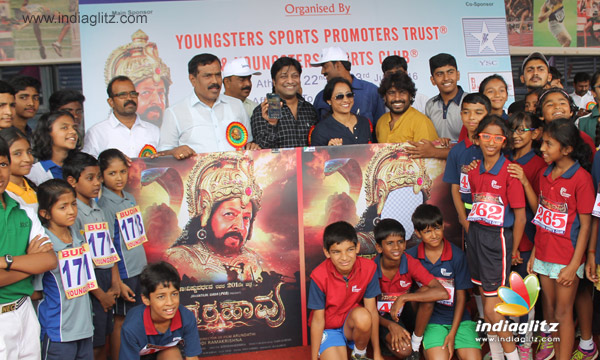
The team of Sajid Quereshi in Bengaluru developed ‘APP’ for Nagarahavu that is one and half months away from release. At the 9th State Level School Olympics 2016, the Nagarahavu APP was released in the presence of yesteryears top athlete Ashwini Nachappa by producer of ‘Nagarahavu’ Sajid Quereshi.

The state level student Olympics event also held prizes distribution. Ashwini Nachappa and Sajid Quereshi were honoured at this event.

Now ‘Nagarahavu’ posters, trailer and other updates are available on APP on your mobile phones. The audio of ‘Nagarahavu’ is releasing on 14th of August while the film is set for release on September 16 – 2 days before Dr Vishnuvardhana birth anniversary on September 18.

source: http://www.indiaglitz.com / IndiaGlitz / Home / Thursday – August 04th, 2016

Army chief in Madikeri tomorrow

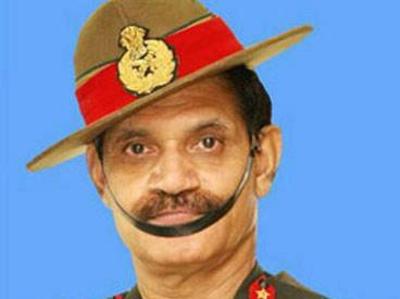
Lieutenant General Dalbir Singh Suhag.

Madikeri:

Indian Chief of Army Staff General Dalbir Singh will arrive in Madikeri on Friday. On Saturday, he will inaugurate an ex-servicemen rally in the town, said Lt Col Aiyappa. The rally is organized seeking the government’s intervention for better facilities for ex-servicemen.

The rally is being organised by Madras Engineers Group. The rally is expected to benefit nearly 4,763 ex- servicemen in Kodagu district and will give them an opportunity to air their grievances to senior army officers. War widows will be honoured on the occasion.

The rally will pay homage to Field Marshal KM Cariappa at the Cariappa Memorial Park at Madikeri. The progress on developing Sunnyside, the residence of General KS Thimmaiah, into a museum, will also be undertaken. Registration for various camps like medical check up, pension adalat, Aadhaar registration will begin at 9 am on Saturday.

source: http://www.timesofindia.indiatimes.com / The Times of India / News Home> City> Mysore / TNN / August 04th, 2016

CEO tells officials to take up housing works under MNREGA

Zilla Panchayat Chief Executive Officer Charulatha Somal on Friday directed officers to expedite works under Mahatma Gandhi National Rural Employment Guarantee Act (MGNREGA), housing and Swachh Bharat mission.

Presiding over the progress review meet held at the zilla panchayat office here, she said that construction of 487 individual toilets in Kodagu district should be completed by the end of August.

This includes 225 toilets in Chennaiahana Kote, Maldare, Nalkeri, Nittur and Siddapura of Virajpet taluk and 262 toilets in Alur Siddapur, Bessur, Byadagotta, Dundalli, Ganaguru, Gudde Hosur, Hebbale, Kodlipet, Nanjarayapattana and Nelya Hudikeri of Somwarpet taluk. Job cards had been issued to 65,052 families in the district under the job guarnatee scheme.

The CEO said that as many as 1,546 projects had been under the NREGA, and asked the officials to make use of NREGA scheme to take up housing works. She said that construction of cattle and sheep sheds, agriculture ponds, digging of open wells, road and drain works could also be taken under NREGA. “Saplings should be planted in all gram panchayats depending on the space available. Technical expertise of horticulture officers should be made use of to grow horticultural crops,” she added.

Zilla Panchayat Deputy Secretary Vishwanath Poojary, Planning Director Siddalinga Murthy, Executive Officers Phadnekar (Virajpet Taluk Panchayat, Jeevan Kumar (Madikeri) and Suneel Kumar (Somwarpet), consultant to Swachh Bharat Mission Pemmaiah and other officers attended the meeting.

source: http://www.deccanherald.com / Deccan Herald / Home> District / DHNS – Madikeri, July 24th, 2016

Coorg: An Experience Unlike Any

CoorgKF29jul2016

Bengaluru :

Work and family pressure, over population, fatigue and to top it off, the ever increasing pollution – air, water, sound – you name it. This is the average life of a Bangalorean who, like thousands of their peers could not resist the pull of the cut–throat business and money of the corporate industry and not to forget the pub culture.

With the influx of so much poison, contaminating our bodily fluids, there are moments when one looks for a way out, even if only for a short while. Imagine chill mornings, under heavy blankets, waking up to the sounds of birds chirping rather than the blaring horns of the city. Imagine long walks through green and luscious estates with the ever present aroma of coffee. Imagine drinking the best brewed coffee while watching raindrops hit the ground, the smell of the mud the very scent of the earth itself. Welcome to Coorg!

Situated at some 250km to the east of Bengaluru, the hill-station district of Coorg or Kodagu is one of the most beautiful places of Karnataka. It holds a certain charm and mystique unlike any other place. In particular – Madikeri, the chief township of the district.

Monsoon is the best time to visit Coorg. The heavy rainfall somehow makes the place ever more beautiful. Some of the most popular tourist attractions in Kodagu include Talakaveri, Bhagamandala, Nisargadhama, Abbey Falls, Dubare, Nagarahole National Park, Iruppu Falls, and the Tibetan Buddhist Golden Temple.

Particularly in Madikeri, the Raja’s seat is the most prominent tourist spot, with an extraordinary view of the sunrise and the sunset. A big, open-air garden, overlooking the green hills and valleys of Coorg, the Raja’s seat is believed to have been recreational spot for Kodava kings, who, along with their consorts spent their sunsets enjoying the scenic change of the colours of the sky.

Apart from these, there are loads of trekking spots and coffee estates which are refreshments to both the mind and the soul. And one should not forget to buy his coffee and home-made chocolates which are a specialty of the place.

Plan fast, drive safe and have an extraordinary experience!!

source: http://www.siliconindia.com / Silicon India / Home> Silicon India News> Life / by SiliconIndia / Friday – July 29th, 2016

In Seattle, time for coffee from Coorg

Americans who thrive on Starbucks will get a taste of single-origin coffee from Coorg for the first time

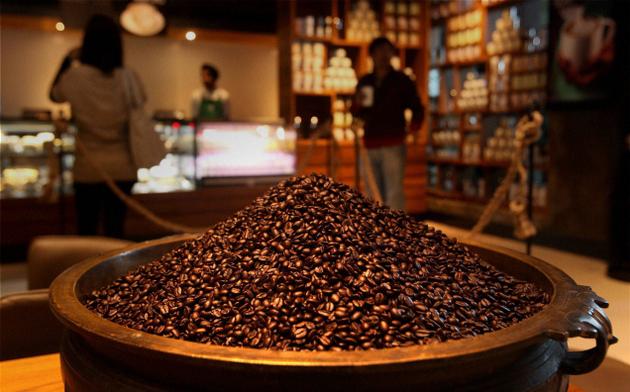
FULL OF FLAVOURCoffee beans at a Starbucks store / PHOTO: PTI

A small lot of speciality coffee from Karnataka’s famed Coorg region is getting ready to make its “limited edition” and exclusive debut later this year at the Starbucks Reserve Roastery & Tasting Room in Seattle, America. It is almost considered a shrine in the world of high-end coffee.

While the formal deal has been inked between Starbucks and Tata Coffee recently, here’s looking deeper into what that cuppa might hold. For starters, it’s said to be intensely aromatic, “with notes of caramel, citrus, toasted nuts and milk chocolate”.

The coffee comes, not surprisingly, from the largest Arabica plantation (394 hectares) in Coorg district, from the Nullore estate owned by Tata Coffee Limited, close to Madikeri. “When we cupped the Tata Nullore Estates coffee, we noticed it was different from other Indian coffees. The flavour of this rare coffee exemplified the types of unusual coffees we want to deliver under our Starbucks Reserve programme,” says Andrew Linnemann, vice president, global coffee quality and engagement at Starbucks Coffee Company. The Starbucks Reserve programme features the rarest and most exotic coffees — unique, small-lot coffees that the company roasts in Seattle. “Each coffee is one-of-a-kind — sourced from small coffee-growing regions in Latin America, Africa and the Asia-Pacific. All the coffees are roasted with care to bring out their peak flavour expression,” adds Linnemann.

“Nullore Estate coffee was a microlot,” points out Sanjiv Sarin, managing director and CEO, Tata Coffee Ltd. Microlots are generally considered the “cream of the crop” from an estate, and come with a unique taste and story; they are usually sold in small quantities, mostly only a few kilos! Therefore, they are pricier.

“We have been working on premium differentiated coffees for some months now and set up a process to identify potential blocks in our estates whose coffees will qualify. Nullore passed our assessment. A small batch of carefully cultivated coffee was isolated from the regular farm produce and was handpicked and sun-dried. Producing quality microlots is a meticulous and tedious process,” reiterates Sarin. The Nullore Estate coffee will be available at the Seattle tasting room later this year, and only for a limited period. The pricing has not yet been decided.

source: http://www.thehindu.com / The Hindu / Home> MetroPlus / by Bhumika K / July 26th, 2016

Book Talk : A. Kiran Subbaiah

City’s Multifaceted Sculptor
SculptorBF26jul2016

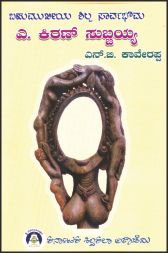
Title : Bahumukhiya Shilpi Sarvabhouma A. Kiran Subbaiah

Author : N.B. Kaverappa

Pages : 100 (including 20 pages of pictures)

Price : Rs. 100

Publisher : Ila Mudrana, Bengaluru

by Dr. Prakash Padakannaya

Recently I attended a book release function at Kalamandira where a Kannada book entitled ‘Bahumukheeya Shilpa Sarvabhowma A. Kiran Subbaiah’ was introduced and officially released in the presence of several artists, Academy officials, and art lovers of Mysuru. The book was authored and designed by N.B. Kaverappa, a well-known artist and founder of Bharani Art Gallery in the city. Karnataka Shilpakala Academy, Bengaluru, celebrating its 20th anniversary, is the publisher of this unique book.

I am not an expert on sculpture art but I was curious about the book and also the sculptor as I had heard many remarkable things about Kiran Subbaiah’s work from the author. After the function, I bought a copy of the book availing 50% discount offered on the book releasing day.

The book, though runs into only 71 pages, is very well designed with attractive cover page and several illustrative quality pictures without which the descriptions would have been incomplete. The editorial comments by L. Shivalingappa and preface by the author provide the necessary background for the book. The author, who knew A. Kiran Subbaiah personally for the past three decades, has been very successful in presenting the life and work of this extraordinarily talented sculptor and his magnificent sculpture in a lucid yet scholarly way.

The book has been divided into two parts. The first part, ‘inside the sculptor’s life’ deals with the life sketch of Mr. Kiran Subbaiah while the second part, ‘inner turmoil beneath the external looks of sculptures’ describes major works of the sculptor with illustrations. The first part narrates the innate aptitude that Mr. Subbaiha had from childhood for sculpturing; and his extraordinary and eventful yet dedicated saga of what he has accomplished in the field so far.

His passion for sculpturing was ignited when he visited Beluru-Halebidu temples during his college days. His prodigious skill was exemplified by the fact that he could master the entire syllabus of five year diploma course in sculpture at Chamarajendra Technical Institute, Mysuru, in just one year. It is irony that such a prodigy was forced to leave the Institute after three years of basic training (he was not allowed to go for advanced course by his supervisor though the same teacher in later years pleaded him to apply for the lecturer’s vacancy, which Mr. Subbaiah turned down). Such incidents also testify how creativity and dedication triumph over all odds.

Mr. Subbaiah’s perseverance and diligent experimentation in sculpturing with all kinds of stones made him probably one of the greatest contemporary sculptors of our land. Hailing from Kodagu, today he owns a museum of sculpture ‘Shilpanikethan’ in Mysuru, which houses hundreds of wonderful stone sculptures carved by him.

The author makes a sincere attempt at highlighting the sculptures sculpted by Mr. Subbaiah, in terms of both breadth and depth of sculptor’s creativity, in the second part of the book.

The illustrations of his work presented in the book demonstrate that Mr. Subbaiah is as proficient with traditional style as with contemporary and modern style. Normally a sculpture has only a front view. But Mr. Subbaiha has mastered the art of carving multifaceted or many-sided sculptures using a single stone (the same piece may depict one image when seen from front and a different image when seen from sides or back). It is like four different sculptors carving four different sculptures on four sides of a stone! This is an astounding feat by any standard!

Mr. Kaverappa describes the way Mr. Subbaiah goes about creating these multisided sculptures. It seems when Mr. Subbaiah has a piece of stone in front of him ideas keep running and he visualises them in his mind first. Then he makes a rough sketch directly on the stone and begins carving. When he has multiple ideas and icons in his mind’s eye, he first whittles all of them coarsely on the stone. Then, he starts the fine work simultaneously on all of them till they attain their proper shapes. Again, at the end he would start fine finishing work concentrating on one of them at a time.

The book also gives an account of a master piece in making, the most wonderful work of art by Mr. Subbaiah, the stone sculpture of ‘Lord Adishesha’ displaying 135 hoods with a special pedestal. When completed, this pedestal will also depict 45 snake Gods with different poses carved on it. Presently, Adishesha deity at Pashupathinatha temple in Nepal holds the world record with 108 hoods. Adishesha that Mr. Subbaiah is making with 135 hoods a height of 4 feet and 3 inches without the base (5 feet and 1.5 inches with the base) shall get that name and fame. Shree Yanthra, Om Yanthra, and Gayathri Manthra have been engraved on the back side of this unique statue. This statue carving took three years till now. It seems another 6-8 months’ hard work is required to finish the intricate carving of the main statue and the pedestal. According to Mr. Subbaiah, once he starts this arduous task, he has to devout at least 8-10 hours per day for this work for several months!

The author of the book has sprinkled some of his own observations on the work of Mr. Subbaiah throughout the book. One of them is related to the artists who have influenced Mr. Subbaiah. Kaverappa has mentioned the influence of Henry Moore, one of the greatest modern sculptors of 20th century, in Mr. Subbaiah’s creations. He has also rightly observed that five-sided sculptures (five in one) are not viable as a visual treat as it actually disturbs the composition of the sculpture as a whole. One cannot miss ubiquitous presence of ‘shringar rasa’ (flavour of erotic/ romantic love) in most of the contemporary sculptures of Mr. Subbaiah.

Editor of the book, L. Shivalingappa, in his foreword comments that depiction of shringar rasa theme in Mr. Subbaiah’s sculptures is a lot more powerful than words can explain. Mr. Subbaiah himself acknowledges that ‘…the female nude form…from time immemorial… has caught the fancy, imagination, liking and admiration of a vast majority of mankind, artists, sculptors and writers’ (page 19). Mr. Subbaiah is no exception!

The book gives us a list of multisided sculptures done by the sculptor since the year 2008, list of recognitions conferred, and a list of glossary along with the direct contact address of the sculptor at the end for the benefit of readers and art lovers. Some of the colour reproductions of original work are also excellent.

When I finished reading the book, I felt that there is a genius sculptor, probably one of the best in the country, living amongst us in ‘namma Mysuru’ without getting due recognition (may be it does not matter to Mr. Subbaiah). I do hope that this book will help people of Karnataka to know and feel proud of the genius sculptor in Appaneravanda Kiran Subbaiah. Both Karnataka Shilpakala Academy and N.B. Kaverappa should be commended for their great service to the art and culture of Karnataka by introducing this master sculptor and his works to the public. It is a must read book to all those interested in sculpture art.

About the author of the book

Author of this book, Nellamakkada B. Kaverappa (in pic.) is an eminent senior artist of Kodagu living in Mysuru. He is well-known as the founder of Bharani Art Gallery, the first private art gallery in the city that he established in 1994 with a noble purpose of promoting visual art. Artists who like to exhibit their work are given the gallery for free of rent and also an independent guest room to stay (also free) for the duration of the expo. Artists from neighbouring States as well as other countries such as Australia and Finland have exhibited their paintings in Bharani Art Gallery.

Mr. Kaverappa has immense interest and actively involved in creative visual art (multihued) and literature. As an artist, he has been part of many Karnataka Kala Melas. He exhibited his ‘Creation’ series of oil paintings at Ahmedabad, Gujarat and ‘Dance of Kodavas’ at India International Centre, New Delhi. He has been honoured by Karnataka Kodava Sahitya Academy (in art field), Kodava Samaja Bangalore and Kodava Samaja, Mysuru. His oil portrait of legendary ‘Haradas Appacha Kavi’ is the most authentic one and is displayed at Kodava Samaja Bangalore as a gift. He is also a frequent writer in Kannada and Kodava periodicals. He has translated two books for Karnataka Lalithakala Academy.

source: http://www.starofmysore.com / Star of Mysore / Home> Feature Articles / July 20th, 2016
Pioneering steps

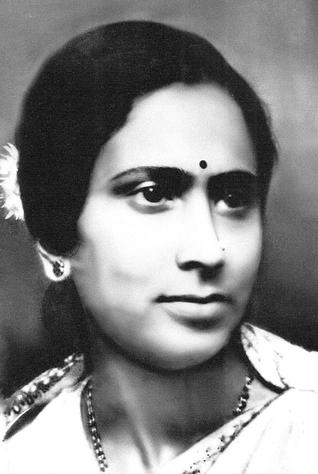
Perceptive vision Kodagina Gouramma

Kodagina Gowramma was a significant writer with a modern and progressive vision. As we remember this writer on her 100th birth anniversary, it is with pride that we recall her efforts to forge a meaningful artistic destiny for herself

It is hard to believe that one hundred years have passed since the birth of Kodagina Gowramma, that is Ms. B.T.G. Krishna (1912-1939). The remarkable woman, who was all of 27, when she passed away, grappled with the issues of modernity that are relevant even today. She could empathise with the angst of the individual, while probing deeply into the socio-political aetiology of the same. She represents the positive effects of the much denigrated western education system. The fact that she lived in Coorg which was relatively free from the shackles of Indian orthodoxy must have abetted her intellectual development and social attitudes. Her ideology was truly feminist, at a time when feminism was in its infancy even in the West.

Gowramma, has two collections of short stories to her credit, “Kambani” (Tears) and “Chiguru” (Blossoms), both of which were published posthumously. The response of her contemporary writers and literary critics was appropriately laden with emotion and appreciation, even though she did not get the critical and analytical tributes that were rightfully due to her. This fact is exemplified in the elegiac poem composed by Bendre, one of the foremost poets of Kannada. A pen portrait by Da. Baa. Kulkarni, who had fraternal feelings for Gowramma, was more about her persona than her work. Gowramma refers to such writings as “hollow compassion”. Gowramma was truly a product of the turbulent times that she lived in. She studied in a convent, played tennis and indulged in swimming even after her wedding, learnt Hindi in a remote town, corresponded with the important writers of her times, women as well as men, and she was deeply influenced by the independence movement. She went to the extent of inviting Mahatma Gandhi to her place and donated all her ornaments. Actually, she was much more emancipated than most of the characters that inhabit her stories. This, however, did not transform her into a firebrand revolutionary, out of tune with the ground realities of her times.

Her oeuvre is more concerned with the unsaid and unattainable, rather than idealistic portrayals. Hers was a nascent universe that contained the seeds of change, which later sprouted in the novels of Triveni, decades later. Most of her stories deal with the problems faced by young women on the verge of marriage or in the immediate aftermath of that event which is often cataclysmic for many of them. Any act of rebellion or protest results in tragic consequences.

However, the author succeeds in puncturing the male ego and creating a sense of guilt. Her stories transgress the boundaries of caste and religion and cast aspersions on the fundamentalist agenda as early as the first few decades of the previous century. The story “Aparaadhi Yaaru” (Who is the criminal) which delineates the angst of a young woman ostracised by the orthodox Hindu society and saved by a Muslim girl and her family, concludes with a newspaper report: “The fact that a Hindu woman has embraced Islam, has caused lots of anguish to the Hindus of the town. A meeting of the prominent Hindus of the town, presided over by Mr. Nagesha Rao, has resolved to take care, that such an event does not recur .” The ultimate irony is that it was this Nagesha Rao, who seduced Parvathi the protagonist of the story and drove her to the brink of suicide before she was saved.

Stories such as “Vaaniya Samasye”, “Aahuthi”, “Manuvina Raani” et al, focus on similar problems and try to offer solutions that are modern and progressive. The author is aware of the fact that some of them may be impractical for her own times, and does not shy away from portraying the aredevilry of her characters.

Gowramma displays excellent control over the modes of narration. She adopts many techniques such as narrating a story through letters, non-linear structuring of events, a balanced outlook which does not indulge in brash criticism of men and a keen interest in facets of life other than the plight of women. Her style is neither verbose nor unduly sentimental. She does not indulge in overt philosophising even though her stories are illuminated by a progressive social vision. Kannada writer Vaidehi, takes cognition of Gowramma’s balanced worldview and the multiple ways in which her artistic vision combines with emotional and the intellectual, in a perceptive preface that she has written for the volume of Gowramma’s stories in Mareyalagada Kathegalu series..

These stories are more enduring than the fiction of some of her senior, male contemporaries. Her world is peopled by young adolescent girls who are enraptured in their dreams as manifest in their innocent prattle which is often shattered by harsh realities. Gowramma is relevant by the intrinsic merits of her stories rather than their historical significance. Of course, the latter is undisputed. A competent translation of these stories into English and other Indian languages would be a fitting tribute to this great writer who transcended the constraints of her context and forged a meaningful artistic destiny for herself.

source: http://www.thehindu.com / The Hindu / Home> Books / by H.S.Raghavendra Rao / March 01st, 2012

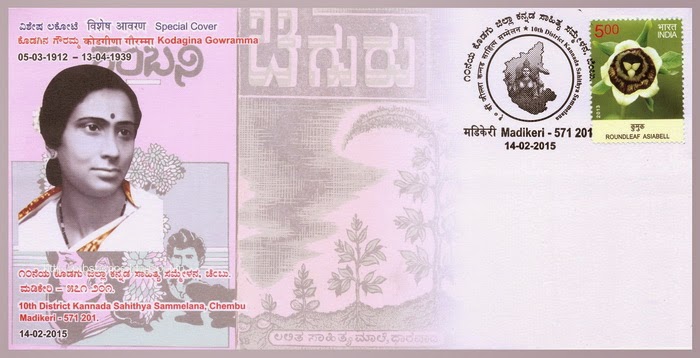
Kodagina Gowramma

A special cover was released on Kodagina Gowramma on 14th February 2015 at the 10th District Kannada Sahithya Sammelana at Chembu, Madikeri.

Born on 5th March 1912, was a social worker and disciple of Mahatma Gandhi.

PhilatelyKodaginaGowrammaKF26jul2016

Cover Code: KTK/27/2015
Courtesy: Suresh Rao, Bengaluru.

source: http://www.mbstamps.blogspot.in / MB’s Stamps of India / March 21st, 2015

The roots of Kannada in Kodagu…

KannadaKodaguKF26jul2016

The coffee land is all set to witness the 80th Kannada literary meet scheduled to begin on January 7, after a long gap of 32 years. Earlier, Madikeri has witnessed two literary meets – the 18th literary meet in 1932 under the leadership of D V Gundappa and the 54th literary meet in 1982 under the leadership of Dr Shambha Joshi.

Interestingly, despite being one of the smallest districts in Karnataka, it has a wide variety of culture as well as languages that include Kodava, Arebashe Gowda and Malayalam, yet the region has managed to retain the flavour of State language.

If one goes down the pages of history, the little district with unique weather and culture has contributed immensely for the development of Kannada language. The Ganga – Kongwala – Hoysala and Haleri dynasties, perhaps laid the strong foundation for Kannada through inscriptions way back in the 9th century. In the 10th century, Nagaverma had created ‘Chandombudi’ and ‘Punyashrava,’ according to the reference available at ‘Kodagu Sahithya – Sanskrithi Darshana,’ published by Kodagu District Kannada Sahithya Parishat.

During the Chengalva dynasty, the third Mangarasa had published ‘Jayanrupa Kavya’ and ‘Samyukta Kaumudi’ (1508), while his cousin Nanjunda had written ‘Kumara Ramana Kathe.’

There are documents to prove that the first epic ‘Rama Vijaya Kavya’ was written by Devappa, a Jain poet in 1540. Similarly, Dodda Veera Rajendra, who ruled Kodagu between 1789 and 1809, has the credit of documenting history titled ‘Rajendra Name’ in Kannada. The II Linga Rajendra, who ruled Kodagu between 1810 and 1820 had written a book pertaining to land in Kodagu entitled ‘Lingarajana Shisthu.’

The 19th century

The leading name of 19th century pertaining to literature is that of Panje Mangesh Rao, who served as a teacher in Kodagu in 1920s. He had penned poems pertaining to Hutthari festivities among other literary works. In fact, he was the president of All India Kannada literary meet held in Raichur in 1934.

Haradasa Appacchha Kavi, popularly known as the Adi Kavi of Kodagu had penned many plays including ‘Savithri,’ ‘Yayathi,’ ‘Kaveri’ and ‘Subramanya’ in Kodava language. The same were translated to Kannada language by Dr I M Muttanna, who also hailed from Kodagu.

Kodagina Gowramma

The first woman story writer in Kannada literary field, Gowramma, hailed from Kodagu and she is known as ‘Kodagina Gowramma.’ Born in Madikeri in 1912, she did her early schooling in Madikeri and married to B T Gopalakrishna in 1928.

From 1931, she wrote a number of articles and stories in the name of ‘Mrs G T G Krishna’. Most of her stories were based on the theme of women’s problems. However, she passed away in 1940 when she was just 28 years old. When Mahathma Gandiji arrived at Kodagu, she had invited Gandhiji to her home and she had donated her jewellery for the cause of freedom.

Bharathisutha

A teacher by profession, ‘Bharathisutha’ was the pen name of S R Narayana Rao. Based on the life story of Kodagu ruler Siribai Dodda Veerappa, he had written ‘Huliya Haalina Mevu,’ which was later made into a film by the same name.

His other stories too have been made into films and they include ‘Girikanye,’ ‘Edakallu Guddada Mele’ and ‘Bayalu Daari’ among others. His work on ‘Solle Haraduva Rogagalu’ (Diseases transmitted by mosquitoes) and ‘Giliyu Panjaradolilla’ (The parrot is not in the cage) earned him Central government award and Karnataka Sahithya Academy award respectively.

Kittel’s footsteps

Rev Fr Ferdinand Kittel, who contributed immensely to the field of Kannada literature has left indelible marks in Kodagu, prominent among them include the Kannada – English dictionary.

A German missionary, who served in Kodagu church (presently knownn as Shanthi church) between 1871 and 1876, was the first parish priest of the church. Rev Kittel started learning Kannada after going around the coffee land, says the present parish priest of the church.

DH News Service

source: http://www.deccanherald.com / Deccan Herald / Home> District / by Srikanth Kallammanavar / Madikeri – DHNS, January 05th, 2014

Cream of the cuppa: From Coorg to Seattle

Single-origin Indian coffee will be available for the first time in Starbucks, Seattle, as a limited edition Photo: PTI

Americans, who thrive on Starbucks, will get a taste of a single-origin coffee from India’s Coorg region for the first time. BHUMIKA K. gives you a peek into what the cup holds

A small lot of speciality coffee from Karnataka’s famed Coorg region is getting ready to make its limited edition and exclusive debut later this year at the Starbucks Reserve Roastery and Tasting Room in Seattle, America, considered a shrine almost in the world of high-end coffee.

It is for the first time that the leading American coffee company will offer a single-origin coffee from India in the U.S.

While the formal deal has been inked between Starbucks and Tata Coffee Ltd recently, here is looking deeper into what that cuppa might hold, right from where it was grown. For starters, it is said to be intensely fragrant and aromatic, “with notes of caramel, citrus, toasted nuts, and milk chocolate”.

Grown in two-tier shade, the Nullore Estate coffee is a microlot / Photo: Special arrangement

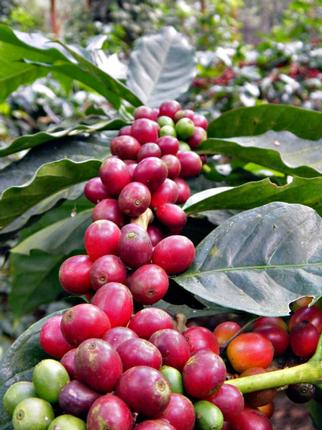
The coffee comes, not surprisingly, from the largest Arabica plantation (394 hectares) in Coorg district, from the Nullore estate owned by Tata Coffee Limited, close to Madikeri. These Arabicas are grown under a two-tier shade system (under local and fruit bearing trees). The shade is carefully managed, which helps the coffee bean mature slowly, absorbing the natural “organoleptic” characteristics within – which gives it the final smell and taste. Coorg is considered to have the perfect agro-climate and soil suitable for coffee cultivation.

Coorg is known for its coffee and Nullore Estate, that belongs to Tata Coffee, is one of the largest Arabica plantations in the district Photo: AFP

“When we cupped the Tata Nullore Estates coffee we noticed this coffee was different from other Indian coffees. The flavour of this rare coffee exemplified the types of unusual coffees we want to deliver under our Starbucks Reserve Programme,” says Andrew Linnemann, Vice President, global coffee quality and engagement at Starbucks Coffee Company. The Starbucks Reserve Programme is an ongoing series of the rarest and most exotic coffees — unique, small-lot coffees that the company creates, roasting them in Seattle. “Each coffee is one-of-a-kind — sourced from small coffee-growing regions in Latin America, Africa and Asia, Pacific Islands. All Starbucks Reserve coffees are roasted with care, at our Starbucks Reserve Roastery and Tasting Room in Seattle, to bring out their peak flavour expression,” adds Linnemann.

“Nullore Estate coffee was a microlot,” points out Sanjiv Sarin, Managing Director and CEO, Tata Coffee Ltd. Microlots are generally considered the “cream of the crop” from an estate, and of course come with a unique taste and a story behind it; they are usually sold in small quantities, mostly only a few kilos. Therefore, they are pricier. “We have been working on premium differentiated coffees for some months now and set up a process to identify potential blocks in our estates whose coffees will qualify. Nullore passed our assessment. A small batch of carefully-cultivated coffee was isolated from the regular farm produce, handpicked and sun dried. Producing quality microlots is a meticulous and tedious process,” reiterates Sarin.

It is technology driven too, including using light-sensitive spectrometers to ensure that the coffee beans mature slowly but uniformly. The shade also means that there is natural mulching from the leaves that fall onto the ground, which in turn helps avoid the use of strong fertilizers and pesticides. Sustainable cultivation practices and an endeavour to maintain the ecological balance were also the focus. The Nullore Estate coffee will be available at the Seattle tasting room later this year, and only for a limited period. The pricing has not yet been decided.

The first Indian coffee to be available through Starbucks was introduced in 2013, to celebrate the Tata-Starbucks first anniversary in the India market. Starbucks created a special India-sourced coffee, called ‘India Estates Blend’, as a tribute to its customers, partners, coffee producers, and roasters. But it was sourced, roasted, packaged, and sold in India. Explaining the difference between a blend and single-origin coffee, Sarin describes how a coffee blend is a combination of coffees from different origins that, when put together, create an experience or flavour profile that does not exist by itself.

“A single-origin coffee comes from one, geographic place (country, region, town, community, estate, mill or farm). This gets to a coffee’s very specific provenance. They represent a ‘taste of place’.”

source: http://www.thehindu.com / The Hindu / Home> Features> Metroplus / Bhumika K / Bengaluru – July 25th, 2016