Now, Solar power to pump water for wild animals at Nagarahole

Nagarahole first in the State to implement the project on experimental basis

PCCF B.J. Hosmath to inaugurate the project tomorrow

PumpWaterKF10may2016

Mysuru :

With water bodies drying up due to lack of rains in almost all forests in the State and also because of scorching heat, the Forest Department has now turned towards solar energy to pump water to water bodies on an experimental basis at Nagarahole Reserve Forest, the first in the State to do so.

The project of pumping water to water bodies by utilising solar power will be inaugurated on Sunday (May 8) by Principal Chief Conservator of Forests (PCCF) B.J. Hosmath.

The Tiger Tank at Antharasanthe Zone in Nagarahole Reserve Forest, which used to cater to the needs of the wild animals, got dried up about three months ago and the animals were forced to go in search of water.

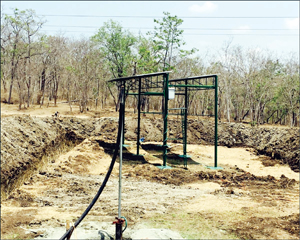
RFO Mahesh, who observed the animals moving in search of water, began to fill the water bodies using tankers, but it was not enough to cater to their needs. Hence, a borewell was sunk about 100 mts away from the Tiger Tank and a submersible pump was installed to pump water to the tank. Now, to supply power to the water pump, solar panels with 5100 watts capacity have been installed about 20 ft. above the ground and solar energy is being tapped to supply power to the pump.

A pipe is placed to pump water from the borewell to the tank, which is about 100 mts. away, and three litres of water is being pumped per second into the tank. The water pump will pump water for 6 to 8 hours a day with a total of 60,000 to 80,000 litres being pumped into the tank every day.

The solar panel is installed at a cost of Rs. 9 lakh and the cost was borne by wildlife enthusiast Tiger Ramesh, who had earlier donated CCTV Cameras to Bandipur and Nagarahole.

The Tiger Tank was drying up fast and we used to fill water to the tank using water tankers since three months. For the first time in the State, solar energy is being utilised in the forest to pump water to fulfill the water needs of wild animals. If this experiment succeeds, the same will be implemented in other places where there is scarcity of water.

— RFO Mahesh, Antharasanthe Zone

source: http://www.starofmysore.com / Star of Mysore / Home> General News / by M.T.Yogesh Kumar / May 07th, 2016

Develop Bhagamandala, Talacauvery, say locals

Local leader K J Bharat has urged the state government to develop Bhagamandala and Talacauvery in the taluk.

Addressing mediapersons, he said the government has neglected Talacauvery, the origin place of River Cauvery. Development works have been initiated here, he charged.

He claimed that soil has been dumped into paddy fields near Chamundi Bane of Bhagandeshwara Temple in Bhagamandala.

The soil, dumped on a large proportion and on a 100 metre wide and 10 foot tall area, will result in storm water flowing towards the temple and Bhagamandala, creating artificial floods. People cannot use the boats as the mud is dumped in front of the building where the boats are placed. Though a memorandum has been submitted to the local gram panchayat, no measures have been taken yet, Bharat charged.

He said Bhagandeshwara temple was renovated ten years ago. The kitchen and the room of the priest leak in rainy season. The tender process to carry out repair of the temple roof has stopped abruptly. There is no proper door for the temple. Though there is a fund of Rs 2 crore in the temple account, the officials are taking up repair work, he charged.

‘No safety measures’

Bharat said thousands of devotees and pilgrims visit Talacauvery and Bhagamandala every year. But their protection is not taken care of.

The bridge at Chedukaru in Tavoor village has collapsed. The bridge is only 10 years old and the narrow bridge constructed during the British period is still strong and vehicles move on that bridge.

The contractor who has constructed the Tavoor bridge should be blacklisted, he urged and warned of staging a rasta roko protest, if the demand is not fulfilled.

Local residents K S Prabhakar, K C Parashuram, Manoj Kumar, Yoganand and Poonaccha among those who were present in the press conference.

source: http://www.deccanherald.com / Deccan Herald / Home> District / DHNS – Madikeri, May 06th, 2016

Mysuru-Kodagu MP calls on Railway Minister submits memorandum to expedite Mysuru-Kushalnagar Railway line works

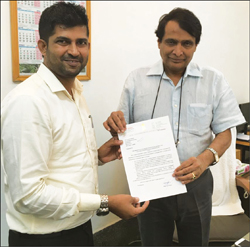
Mysuru-Kodagu MP Pratap Simha is seen submitting a memorandum to Railway Minister Suresh Prabhu at his office in New Delhi yesterday.

Mysuru :

Mysuru-Kodagu MP Pratap Simha called on Union Railway Minister Suresh Prabhu at his office in New Delhi yesterday and submitted a memorandum with a request to speed up the works related to laying of Railway track between Mysuru-Kushalnagar, which has already been approved by the Railway Ministry in this year’s Railway Budget.

Pratap Simha also requested the Minister to introduce an additional train from Bengaluru to Mysuru between 4.30 pm and 5.30 pm to ease the congestion in Chamundi Express, which is used by majority of the passengers on daily basis.

Besides, he sought establishment of a new Railway Station at Metagalli for the benefit of general public.

source: http://www.starofmysore.com / Star of Mysore / Home> General News / Thursday – May 05th, 2016

An aromatic trip down the coffee lane!

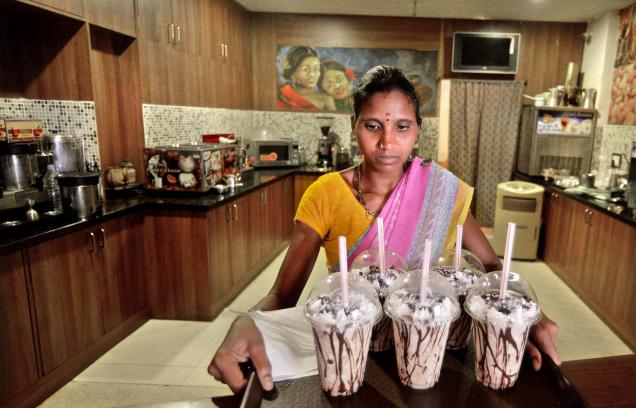
Rich brew:A tribal woman serving cold coffee at the Coffee Museum at Araku in the Agency area of Visakhapatnam district. Photo: K.R. Deepak

Flavours from all over the world tingle taste buds at museum in Araku

Wish to relish freshly brewed Araku Coffee where it is grown? The Coffee Museum at Araku is the place to be. It’s no surprise that coffee connoisseurs drive down all the way from Vizag city, 120 km away, just to relish its rich taste!

Come ‘Aashadam’ (the month when traditionally newly married bride and her mother-in-law are not allowed to stay under the same roof) young couples come in droves to the museum to spend the day exchanging sweet nothings.

The museum had been catering to discerning palates for over six decades now, say its organisers. The buzz around ‘Araku Coffee’ has been growing after it bagged awards at international competitions during the last few years. Araku Coffee once again grabbed headlines when it tickled the taste buds of Prime Minister Narendra Modi during the International Fleet Review (IFR) in Visakhapatnam.

Located right behind the Tribal Museum here, the Coffee Museum provides a wide array of coffee flavours from different parts of the globe. At first glance, visitors and tourists may dismiss it as just another museum to promote coffee consumption. They are sure to be bowled over by the rich aroma, the taste of a wide range of freshly brewed coffee varieties.

The coffee-based confectionaries are sure to leave a lingering taste of coffee in one’s mouth.

One can visualise the journey of coffee down the ages through the dioramas, photographs, and charts from ancient literature as they relish the piping hot coffee along with coffee-based snacks. Video and audio presentations on the subject add pep to the scenario.

Coffee chocolates in different flavours, concept-based chocolates with a mix of various spices, chocolate truffles, chocolate-covered coffee beans, liquid coffee-filling chocolates and baked coffee snacks can be had in the concept-based ‘Gourmet Coffee House’ section.

“We use high-quality local ingredients with international formula,” says A.S. Prakasa Rao, one of the organisers of the museum.

History of coffee

Can you hazard a guess as to who discovered coffee? You might not have, perhaps, imagined even in your wildest of dreams that coffee beans were first discovered (eaten) by goats in Ethiopia in the 7th Century AD.

A shepherd became curious on seeing his goats becoming hyperactive after eating the berries of wild plants on the hill slopes. At first he thought that they must have gone crazy. But, after observing them over a period of time, he realised there was something in the wild berries, which was giving them the kick. He carried some of the berries to the monastery and shared them with the monks. That’s how goats first discovered coffee in Ethiopia! Arab traders from Yemen carried the seeds home and were the first to cultivate the plants. The Arabs had closely guarded the secret and allowed only the roasted beans to be exported.

“Instant coffee was first introduced for Army jawans in 1901. Blended coffee (coffee/chicory mix) was introduced in 1958 only in India and France, while at other places of the world only pure coffee is used,” says Mr. Rao.

“An Indian Muslim managed to smuggle some coffee seeds and planted them at Chikmagalur in Karnataka. The Maharaja of Jeypore in Odisha was the first to introduce coffee at Araku during the 1890s. However, commercial cultivation at Araku in a big way started only during 1970s by the ITDA, Coffee Board, and AP Forest Development Corporation Limited mainly to wean away tribals from ‘podu’ (shifting) cultivation,” says Mr. Rao, who has an in-depth knowledge of various aspects of the subject.

Heritage status

The Coffee Museum at Araku is claimed to be India’s first thematic coffee museum. The museum should have acquired heritage status by now as it is being run for over six decades.

source: http://www.thehindu.com / The Hindu / Home> News> Cities> Visakhapatnam / by B. Madhu Gopal / Araku(Visakhapatnam District) – May 04th, 2016

For the love of coffee

Is the modern day coffee cultivation threatening our biodiversity? Read on to find out how you can responsibly source your favourite morning cuppa

It’s the quintessential breakfast drink, the morning elixir, the ambassador for good days and the one drink with absolute power to wake you up. Yes, our morning cuppa coffee is what we all look forward to wake us up from a slumber hangover.

But, what if we didn’t have coffee anymore? Or, if the modern day production of coffee is impacting forests and wildlife, in turn, affecting our consumption? Alarming isn’t it?

ArshiyaBoseKODAGU03may2016

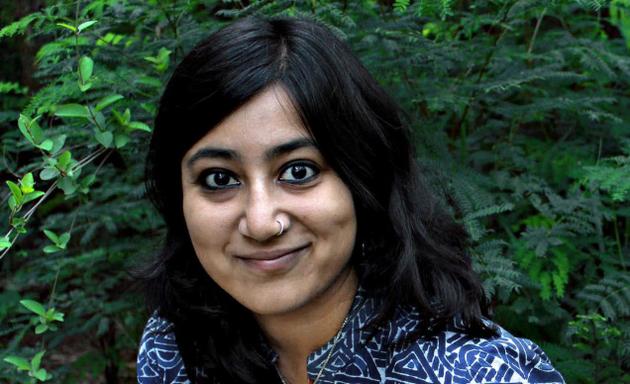
Arshiya Bose has set out on a quest to responsibly source coffee without making an imprint on our environment. She started Black Baza Coffee in an attempt to save biodiversity. Technically, coffee is grown under a marquee of trees.

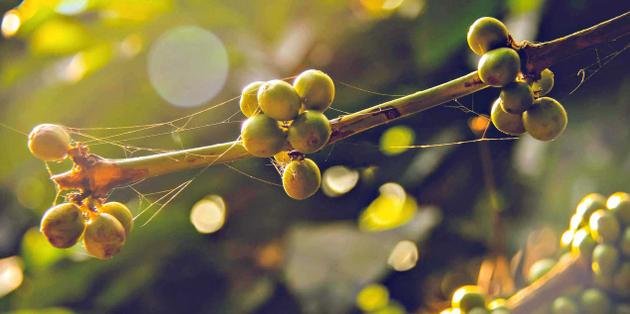
But, because of deforestation, coffee is now grown under direct sunlight, giving way to monoculture which affects our biodiversity levels drastically. “After my Ph. D., I started spending time at coffee landscapes in India, mostly Coorg,” says Arshiya, a wildlife scientist.

“We found that compared to other parts of the world where forests had been clear-felled to grow coffee, India had retained forest trees and planted coffee underneath the shade of these trees. This meant that coffee farms in India have supported all kinds of beautiful biodiversity for decades. The challenge arises because, since the 1970s onwards, many farms have been removing shade trees in the hope of better coffee yields. The trade-off here is that the yields of coffee are actually higher when coffee is grown under direct sun (which is why in high coffee producing nations like Brazil, Vietnam etc., there are no shade trees). This was the problem we were trying to address. How can we make it economically viable for farmers to grow a more ecologically-friendly coffee?”

The first step involves identifying farms in places like Kodagu and B.R. hills, based on factors like potential of the farm to support biodiversity and willingness to participate in conservation projects. A conservation agreement is then drawn up with the farms that include maintaining 100 trees per acre, protection of water sources, restricting the usage of chemical pesticides and maintaining 60-80 per cent shade cover which means no cutting of tree branches.

“In 2009 I met a young scientist – Claude Garcia, a French, who spoke fairly good Tamil,” recalls Arshiya. “He told me: ‘if we can’t achieve biodiversity-friendly farming with coffee we probably can’t achieve with any other farming system either’. That sentence stuck on as I believe that coffee is the perfect crop to experiment with. Coffee gets the attention of people and then becomes a way to engage someone who previously never cared about conservation. I always say: we want to bring conservation to everybody’s breakfast table.”

Black Baza Coffee is already available at natural and health food stores, where they partner with like-minded cafes and institution who would want to serve great coffee with a story.

The bean cause -  Working together for that perfect cuppa
The bean cause – Working together for that perfect cuppa

Aesthetic packaging and cheeky questions on their cover makes Black Baza Coffee a unique product. “What does moth-friendly coffee taste like?” “What does Otter-friendly coffee taste like?” – are some of the questions you get to see on their packages. “All of our coffee varieties are a tribute to the charismatic plant and wildlife species that share the Western Ghats landscape with coffee,” says Arshiya, “For example, the Otter coffee comes from two riverside farms in Kodagu where we are protecting the Cauvery River from effluents and degradation of riverside vegetation. The Luna Moth is a magnificent indicator of ecological health as well. So while we could test our coffees in the lab for chemical residues etc. (which we do), we also go out to the farm and count Luna moths or Ficus trees or Otters because these species tell us the whole ecological picture – lab tests don’t tell us whether farms are biodiversity-friendly or not.”

Black Baza Coffee now works with 30 farmers and there are over three lakh small-medium growers in India. While Arshiya isn’t sure about the future of the model in India, she is positive and fiercely relentless about being a major coffee player that makes biodiversity-friendly coffee a household staple instead of an exception.

source: http://www.thehindu.com / The Hindu / Home> MetroPlus / by Rehna Abdul Kareem / May 03rd, 2016

M A Ganapathy takes charge as U’khand DGP

GanapathyKF02may2016

Senior IPS officer M A Ganapathy, who hails from Karnataka, has taken over as the new Director General of Police in Uttarakhand.

The 53-year-old officer, who is from Kodagu, succeeded B S Sidhu who retired on Saturday.

The raging forest fire in Uttarakhand forests will be one of the first tests for the officer to ensure better coordination between several agencies in the state under President’s Rule to douse it.

The 1986-batch officer of the Uttarakhand cadre was on central deputation for the past six years and was holding portfolios like Internal Security and Left Wing Extremism in the Ministry of Home Affairs (MHA).

He also served as spokesperson of MHA.

Ganapathy was relieved from central deputation on April 13.

After his post-graduation from Jawaharlal Nehru University (JNU), he had joined the IPS in 1986 in Uttar Pradesh.

After the bifurcation of UP, he was shifted to Uttarakhand cadre. During his 30 years of service, Ganapathy has served as Superintendent of Police at Moradabad City, Sonebhadra and Hardoi and as Senior Superintendent of Police at Nainital, Meerut and Kanpur.

He also served in the CBI from 1999 as Superintendent of Police and promoted as Deputy Inspector General (Anti-Corruption).

source: http://www.deccanherald.com / Deccan Herald / Home> National / DHNS – New Delhi – May 02nd, 2016

M A Ganapathy to be new DGP of Uttarakhand

Dehradun :

A 1986 batch IPS officer M A Ganapathy has been named the ninth Director General of Police (DGP) of Uttarakhand. The present DGP B S Sidhu is set to retire on April 30. Ganapathy would take charge from May 1.

Confirming the fact, Principal Secretary Home Umakant Panwar said, Ganapathy would take charge from May 1.”

When contacted Ganapathy told TOI that is was a big responsibility being given to him. “At the moment I can say that I will work in the interest of people and try to provide a people friendly atmosphere,” said the senior police officer.

Ganapathy, who was on deputation duty, was relieved of his duties in the ministry of home affairs on April 13 and his services “”placed at the disposal of his parent cadre viz. Government of Uttarakhand,” according to a circular issued on April 13 and posted on the website of the ministry of home affairs.

After the 2010 Maha Kumbh, he shifted to Delhi on Central deputation. Prior to being relieved by the ministry, Ganapathy was serving the post of Joint Secretary in the MHA.

Sidhu is the eighth DGP of Uttarakhand, since its creation on November, 2000.

A 1965 batch IPS Ashok Kumar Saran was the first DGP of the state and his successor was Prem Dutt Raturi, who took over charge on April 30, 2002 and was on the post till June 15, 2004.

A 1973 batch IPS officer Kanchan Choudhary Bhattacharya, who was the first woman DGP of the country, held the position from June 15, 2004 to October 31, 2007.

Subhash Joshi was the state’s fourth DGP who held the post from October 31, 2007 to July 15, 2010.

A 1976 batch IPS Jyoti Swaroop Pandey was the fifth DGP from July 28, 2010 to April 12, 2012.

The sixth DGP was Vijay Raghav Pant who held the position from April 13, 2012 to September 30, 2012.

Satyavrat Bansal was the seventh DGP from September 30, 2012 to September 30, 2013.

source: http://www.timesofindia.indiatimes.com / The Times of India / News Home> City> Dehradun / by Kautilya Singh / TNN / April 28th, 2016

Harish elected Kodagu ZP prez, Lokeshwari vice-president

B A Harish and Lokeshwari Gopal were unanimously elected as the new president and vice- president of Kodagu Zilla Panchayat, here on Friday.

Mysuru Regional Commissioner A M Kunjappa conducted the election at Old Ford Hall.
The Zilla Panchayat president’s post was reserved for the candidate belonging to Scheduled Caste.

Harish was elected to the post as he was the only candidate to file the nomination
paper.

Similarly, the nomination filed by Lokeshwari Gopal, was the only one, for the post of the vice president reserved for General category (Wo-man).

Harish and Lokeshwari will be in office will April 28, 2021.

Model district plan

Harish said he will make efforts towards making Kodagu a model district and sought the cooperation of all Zilla Panchayat members in this connection.

MLA MP Appacchu Ranjan, Zilla Panchayat Chief Executive Officer Charulata Somal and the Zilla Panchayat members greeted Harish and Lokeshwari.

source: http://www.deccanherald.com / Deccan Herald / Home> District / DHNS – Madikeri, April 30th, 2016

Bangalore Based Startup – Aromas of Coorg, Brewing Business with Coffee

When Friedrich Durrenmatt once said “It is surely easier to confess a murder over a cup of coffee than in front of a jury.” he quite simply put across the magic of a good cup of brewing coffee!

AromasofCoorgKODAGU29apr2016

Fresh, strong, steaming hot and hassle-free service are some of the words which come to your mind when you think of coffee and vending serivces, and these very words are the part of Aromas of Coorg’s philosophy.

In conversation with Abhilasha Dafria for YourStory, A.Chithra Uthappa, co-founder of Aromas of Coorg, tells us how they, at AOC, are full of fresh ideas, believe strongly in quality and customer satisfaction and have the best designed products for their customers so that they get the maximum value for their money.

Afterall, science may never come up with a better office communication system than the coffee break!

Hi Chitra, tell us about yourself and an introduction to Aromas of Coorg

Aromas of Coorg has been in business of Beverage solutions since 2009 & coffee cultivation for more than 3 decades. Our passion is to provide the most technology driven, innovative beverage solutions to both businesses and consumers.

I, A.Chithra Uthappa, am the founder & Managing Director of Aromas of Coorg and I’m an MBA from MIT MAHE University, Manipal and B.B.M From Mysore University. I have worked with large corporates like Kotak Mahindra Bank, Aditya Birla Minacs and iSeva/e4e. All my corporate roles have been with fast growing sunrise industries and have played significant roles in building the businesses and growing the companies to the next level. In my last assignment with the start-up open2save, I was a key team member and was instrumental in setting up new business channels ground-up.

Radhakrishnan M, my co-founder & Head of Operations is a seasoned professional with over a decade’s experience in large corporate before he set-up his own company, Aromas of Coorg. He has worked with large corporate like Dell, Infosys, Manpower Inc. etc and has extensive experience in building and managing businesses including sales, building teams and organizations. He is an MBA from Loyola College, Chennai and B.Sc. from Madras University.

So what triggered this idea?

There are four important factors that made our idea into a company, ie, My husband’s passion and support for my entrepreneurship, my son, our roots from Coorg and the corporate exposure.

First and foremost, to become an entrepreneur was always the dream of my husband and me … this is what we wanted to be. I was on sabbatical for my child and during the break; I conceived the business idea too! We decided that this would be the right opportunity to start something on our own sitting at home. This is where it all started.
We are basically from Coorg and we have been into coffee cultivation for more than three decades. This was the primary driver why we chose to build something unique in this space and we thought out of the box. Having worked with corporate for more than a decade we understand this world well and we were able to quickly identify the opportunity.

Thus the birth of “Aromas of Coorg”, as we wanted our company to bear the name “Coorg” in some part and also wanted a name where our targeted customers can easily relate to it. Quite naturally the first thing that attracts anybody to any form of food is the “Aroma”. That is how we finalized on the name “Aromas of Coorg” and this also marked our entry into the beverage solutions for corporate, institutions, etc.

Since when are you operational? How big is your team? Are you looking at hiring?

We are fully operational since August 2009. We are currently a 40 member team. Yes, definitely, we are looking to strengthen our sales force and simultaneously our operational support staff will have to go hand in hand with every new client that gets added.

What is your clientele like?

We service range of clients like large corporate across multiple cities to a one location company as well. We have a well spread out client base across industries and geographies.

Where are you based and where are your clients from?

We are based in Bangalore and are currently supporting clients in Bangalore, Mysore, Tumkur, Nelamangala, Hosur and Chennai. However, we are not present in retail segment at this point of time.

Where do you have your manufacturing units? Which cities do you provide the home-delivery services?

Our manufacturing unit is also in Bangalore; currently we provide home delivery service only within Bangalore city limits.

How does the supply chain work?

We are currently able to manage the supply chain internally, our raw materials are procured from different locations and the respective vendors manage the supply chain of the respective products. All these products come to our processing units in Bangalore from where the supply of finished products to the respective clients is managed by full time employees of AOC. Machines are manufactured under our complete supervision.

Did you fund-raise to start up? If not, are you looking at getting funded now?

We used our personal money and angel money. We are looking to get funding for our future expansions.

How does the revenue module work?

We work both on variable and a fixed pricing model where clients can pay based on usage or based on usage+ a fixed monthly costs. The pricing model is designed with the motive of win-win for us and clients.

So what were the challenges you faced while starting up? Tell me about your initial hurdles.

First and foremost challenge was how to differentiate ourselves from the others; there were several big brands and more than enough small vendors. We really had to come up with a differentiator from the existing. This is the stage were we re-invented our traditional filter coffee. The wave of western form of coffee was so popular that everybody is racing towards the Cappuccino, Espresso, latte, etc.

Timing was tough; given it was the time of deep recession, all around you there were companies going under losses, almost all the corporate were planning for major cost cutting, and so on. It was also very difficult for us to penetrate the companies with our new concept and service offerings.

Of course our innovative thinking helped us make good inroads. We took this to our advantage and came up with our very own filter coffee which is truly Indian, especially south Indian, and presented to the corporate the first of its kind fully-automated Vending machines which serves authentic filter Coffee and freshly brewed Tea. In our very first Demo we knew that we hit the nail on the head with our concept.

Are there other players in the market doing similar things? What are your key differentiators?

Yes there are several big names in the market providing beverage service, Coffee day, Fresh & Honest, Tata Cafe, Hindustan lever, etc. Our USP is our focus on technology, our zeal to innovate and our relentless passion for quality. Our Vending machine is the first its kind which is fully automated to serve freshly brewed authentic filter Coffee & freshly brewed Tea on a single press of the button. We are the first company in India to build coffee vending machine with both HOT & COLD option in the same machine. We are looking at adding more features around quality assurance here.

Our Coffee is a blend of six varieties of finest coffees beans hand picked from our own cultivation and we apply expert science, combined with traditional artistry, in order to maximize the flavor attributes of each roast. Our coffee roasting process is tuned to develop coffee flavors to the fullest for flavor profile, aroma and overall character in the cup. These factors make us the pioneers and front runners in providing the most hygienic and finest Coffee but at the same time affordable vending service provider in the market today.

Can you share with us some interesting trends about the market that you are trying to capture?

The market is looking for continuous innovation and personalization as much as possible.

An interesting trend is enhanced customer awareness and focus on health drinks like badam milk, green tea, milk shakes, horlicks etc. In some clients these new drinks are consumed lot more than traditional tea and coffee.

What are the challenges of scale in this business and how do you prepare to cope with them?

The biggest challenge in scaling is to maintain the same levels of service and quality. This is B2B2C market and end consumers decide what they finally like to drink. Having a continuous feedback loop and connection with end consumers is another critical aspect of this business.

Where and how do you see yourself going ‘bout this?

We aim to build our company to PAN India multi format Beverage Company. To serve 1 lacs cups a day is our immediate 12 months target.

For more information, please visit their website: http://aromasofcoorg.com/

– Abhilasha Dafria

source: http://www.yourstory.com / Your Story.com / Home> Entrepreneur / Team YS / by Abhilasha Dafria / December 30th, 2011
Gulshan Devaiah to play director in next

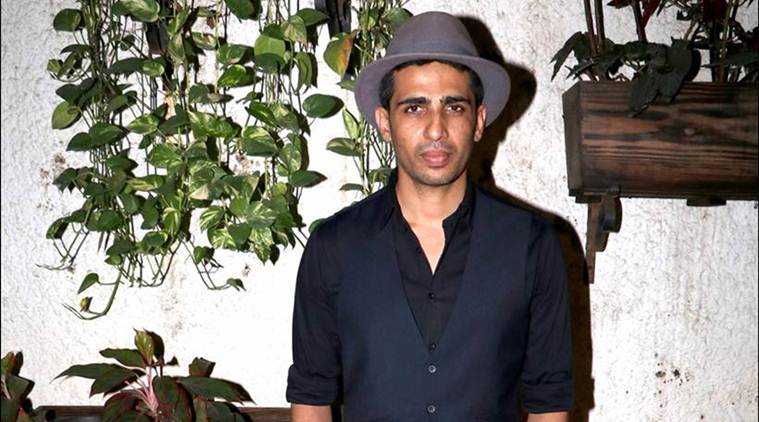
Gulshan Devaiah has been roped in as the lead for a new film titled “Pichchar”.

Pichchar, Gulshan Devaiah, Pichchar cast, Pichchar Gulshan Devaiah, Pichchar Gulshan Devaiah news, Gulshan Devaiah movies, Gulshan Devaiah upcoming movie, Gulshan Devaiah news, Entertainment news Gulshan Devaiah has been roped in as the lead for a new film titled “Pichchar”. He will be seen playing the role of a struggling director in the movie.

Gulshan Devaiah has been roped in as the lead for a new film titled “Pichchar”. He will be seen playing the role of a struggling director in the movie.

The actor wants to explore new realms of the creative world with the film, saying that the “story will appeal to both young and old” audience.

Gulshan, who is known for playing intense roles in films like “Shaitan” and “Hate Story”, is glad that his “young nieces and nephews” will finally be able to see him on the screen.

“Pichchar”, to be helmed by debutant Rohit Pathak, will narrate a heart-warming story of a struggling filmmaker, who forms an unlikely connection with a young boy. It will highlight how they become relevant in each others lives.

“It’s a sweet story about following your dreams and beating the odds. I play a very simple , small town guy with big dreams and immense potential, but is slowly but steadily being broken down by the ways of the entertainment industry.

“It’s a nice deviation from the kind of films and roles I’ve done so far. It’s a story that will appeal to both young and old, finally my young nieces and nephews can watch their ‘chachu’ on screen,” Gulshan said in a statement.

Gulshan is also remembered for his role as a sex addict in “Hunterrr”. He will next be seen in musical romantic thriller “Cabaret”, which is produced by Pooja Bhatt.

source: http://www.indianexpress.com / The Indian Express / Home> Entertainment> Bollywood / by IANS / Mumbai – April 28th, 2016