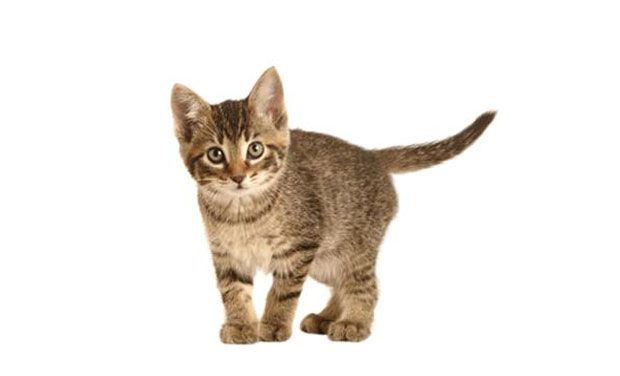
Cat lovers in New York city will soon have the perfect place to grab their coffee, as pet food maker Purina is opening a pop-up cat cafe at 168 Bowery on Thursday, and billing it as America’s first feline coffee shop.
Cat cafes are big in Japan where feline fanatics often have barriers to pet ownership because of building rules or just the small space where they live.
So instead of owning a feline of their own, animal lovers often go to cat cafes to sip their favorite beverage while rubbing paws with cats.
Purina’s cat cafe is set to open on Thursday and run through Sunday, the New York Post reported.wandering freely around the store.
The store will be stocked with cats, all available for adoption through the North Shore Animal League.
The company said it’ll also staff the store with cat experts to answer questions about feline health needs.
source: http://www.deccanchronicle.com / Deccan Chronicle / Home> Lifestyle? Pets-Environment / ANI / April 23rd, 2014
Senior scientist and expert on apple cultivation from Himachal Pradesh Dr Chiranjit Parmar expressed confidence that in Karnataka, especially Kodagu, apple cultivation will be successful as the weather here is suitable.
Parmar, who was on a State tour, told reporters here on Monday that efforts are on to grow apples in Tumkur, Bangalore, Uppinanagady in Dakshina Kannada and Somwarpet in Kodagu.
He said Karnataka is better than Himachal Pradesh for apples as the growers here will get the yield twice a year compared to the northern state where it is once a year due to snow.
“Since three years, efforts are on to grow apples in Karnataka and it has been successful as the weather is conducive,” he said.
Parmar tasted the apples grown in Sulimlathe of Abbukatte in Somwarpet in the district.
Apple growers of Kodagu C R Shivakumar and Krishna Shetty of Uppinangady accompanied Parmar during his tour.
source: http://www.newindianexpress.com / The New Indian Express / Home> States> Karnataka / by Express News Service – Madikeri / April 22nd, 2014
Governor-General William Bentinck’s trip to Bangalore, Mysore and Ooty in 1834 when he coordinated the attack on the ‘problematic’ raja of Coorg, Chikka Veerarajendra is well-documented in the book titled ‘Ootacamund-A History’, written by Sir Frederick Price in 1908.
Chikka Veerarajendra and the East India Company were at loggerheads since 1830.
Governor General William Bentinck who was more interested in reforming India than in annexing new territories, had to deal with the Raja of Coorg who had dared the British by keeping in custody one of their emissaries, Kullapalli Karunakaran Menon.
A long sojourn
Lord William Bentinck set out from Calcutta on 3 February 1834, on board the Curacoa to Madras.
He wanted a first-hand assessment of the situation in Coorg and for this purpose, the commander-in-chief Sir Robert O’Callaghan was in attendance.
The Governor General also had to deal with administrative issues concerning Mysore. The reason for him to visit Ooty for an extended stay was to improve his rather poor health.
Bentinck reached Madras on 15 February 1834 and set out for Bangalore via Vellore.
In Bangalore ,strategies on Coorg were finalised in consultations with Sir Robert O’Callaghan.
Lord Bentinck halted in Mysore and was put up at the precursor to Rajendra Vilas Palace atop Chamundi Hill, which was originally built by Robert H Cole, the earlier British resident at Mysore.
Bentinck set out for Ooty via Gundlepet, and it was while they were travelling on 15 March 1834, that war was declared on Coorg.
Lord Bentinck’s entourage reached Ooty on 22 March. At Ooty, the only suitable accommodation for the staff of the Governor-General and that of the Commander-in-Chief was “Sir William Rambold’s Large House”, which was a grand hotel built in 1832 by an influential British entrepreneur named William Rambold.
However, Rambold soon ran into financial difficulties. The hotel was rented frequently by senior officers of the East India Company.
It was in 1842 that Rambold’s Large House became the Ootacamund Club, or the Ooty Club.
During Lord Bentinck’s sojourn in Ooty, Lord Babington Macaulay arrived at the hill station on 25 June, 1834.
The Governor-General and Macaulay met each other for the first time at Rambold’s Large House.
Macaulay chose a small cottage nearby where he lived for several months to write the Indian Penal Code.
Governor-General Bentinck stayed in Ooty till end of September 1834.
On his return journey, he again passed through Mysore and reached Bangalore on 9 October.
He sailed aboard the Curacao on 26 October from Madras and reached Calcutta on 14 November 1834.
Wild rumours
There are also records of Lord Dalhousie’s sojourn in Ooty from 7 March 1855 to 29 October 1855.
Dalhousie’s visit was primarily for health reasons. However, he was not too comfortable in Ooty and soon shifted to Kotagiri.
During Dalhousie’s stay in Nilgiris, one of his ADCs took permission to visit Coorg, where his brother was a coffee planter.
It was in 1852, that Dalhousie reluctantly gave permission to the Raja of Coorg to travel to England along with his daughter Gowramma.
The Aide-de-camp (ADC), on his return, narrated an amusing incident to his boss. Coorg being a rather remote province, news from the outside world took time to percolate.
Very often, wild rumours floated amongst the small but growing community of British planters. One such rumour was that the British and their allies had lost the Crimean War and that Queen Victoria and her family had fled to India!
However, Dalhousie who had a temporary telegraph line installed at Nilgiris had already received the news that the British and their allies had taken Sevastopol from the Russians.
On his journey back to Calcutta, Dalhousie stopped in Bangalore during early November 1855, and was the guest of Sir Mark Cubbon. Dalhousie narrated the Coorg rumour to the British officers and after inspecting the troops, he formally announced the fall of Sevastopol.
source: http://www.deccanherald.com / Deccan Herald / Home> Supplements> Spectrum / by CP Belliappa / April 2014 (28th)
The 18th edition of Kodava Hockey Namme-2014, hosted by the Thathanda family, was inaugurated at Virajpet PU College on Sunday.
Kodava Hockey Academy president and Kodava Hockey Namme founder P Kuttappa inaugurated the event by hitting a silver ball with a silver hockey stick in the presence of thousands of hockey lovers even as it drizzled. Major General A K Singh, in-charge of Karnataka and Kerala Sub Area, Karnataka Madhyama Academy president M A Ponnappa, Kodava Folklore expert Prof I K Biddappa, Thathanda family president T Shambhu Nanaiah were present.
They were brought to the stage by Kodava Valaga and traditional Dudi Kot Paat.
An exhibition match was held between SAI women’s team, Kodagu, and SAI women’s team Mysore.
Ummathat, Bolakot and other traditional Kodava dances were performed.
As many as 234 teams are playing the Kodava Hockey Namme which will go on for the next 29 days.
The winners will get `1 lakh and trophies and runners-up will get `50,000 and trophies.
source: http://www.newindianexpress.com / The New Indian Express / Home> States> Karnataka / by Express News Service – Madikeri / April 21st, 2014
A file photo of Ashwath (left) with his coach Irfan Sait at KSCA annual award ceremony. Mysore :
“He was a coach’s delight, we miss a lot at the nets and at the Academy” was the words said by Irfan Sait, Director, Karnataka Institute of Cricket (KIOC) remembering Ashwath Aiyappa, who passed away recently trying to save his elder brother Dr. Akhil Kuttappa at Chiklihole in Kodagu on Apr. 17.
Four days after the incident, Ashwath’s coach Irfan Sait was in KIOC Mysore Centre. When spoke about Ashwath’s personality, Irfan Sait said Ashwath was an intricate cricketer and a student of the game.
Speaking about their last meeting, Irfan Sait said that Ashwath spent nearly three hours with him discussing about the match that was to be played on Friday and Saturday. Ashwath, who represented Swasthik Union in Bangalore League, was to play against Bangalore Occasionals.
“We discussed the team composition, match strategies, ground conditions and others. Later, he informed me that he would be leaving to his native to cast his vote and also assured he will return to play the match on Friday. Unfortunately, he is no more. We will definitely miss him in our Academy,” said Irfan Sait.
A book penned by Ashwath based on struggling cricketers was to be released today (Apr. 21) as per the initial plan. But, he was advised to release the book after May 10 because of the ongoing General Election and IPL. In fact, his book had impressed Rahul Dravid and Brijesh Patel. Rahul Dravid had also offered to write the Foreword for the book.
Irfan, who did not wish to name the book, said that he would be visiting Ashwath’s parents in Kodagu to offer his condolences and to discuss on the release of the book.
“Come what may, the book will be released,” said the coach.
Ashwath was so passionate that he used to coach the Under-10 cricketers at the Academy in Bangalore. “Ashwath identified talents at a very young age and groom them into good cricketers. Players like Yeshwanth, Chinmayi, Swaroop and others have been playing extremely well at the junior level,” added Irfan.
source: http://www.starofmysore.com / Star of Mysore / Home> Sports News / April 21st, 2014
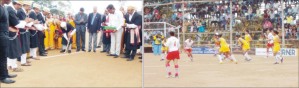
Women’s match ends in a draw, Kodagu XI defeats Virajpet XI Kodava Hockey Academy President Pandanda Kuttappa is seen hitting a silver hockey ball with silver hockey stick to mark the inauguration of Thathanda Hockey Namme-2014 at Virajpet in Kodagu yesterday. ( Picture right ) shows women in action.
Virajpet :
The exhibition hockey match organised as part of the inauguration of Thathanda Hockey Namme-2014 between SAI Mysore and SAI Kodagu women’s teams ended in a draw with both teams scoring two goals each.
In the other match played between Virajpet XI and Kodagu XI, Kodagu XI team defeated their opponents convincingly by 4-2 goals. The specialty of the tournament is that the organisers have introduced the new rules and regulations which the Hockey India will be introducing from Sept. 2014. Accordingly, Own Goal and Golden Goal have been removed.
source: http://www.starofmysore.com / Star of Mysore / Home> Sports News / April 21st, 2014
Nidhi Subbaiah may have moved to Bollywood but she is still known here as the Pancharangi girl.
The bubbly character she played in Pancharangi follows her wherever she goes. Nidhi shares that as an actress, she has never really planned her career.
Whatever has happened and is happening is all by chance, she quips.
“People ask me what my next project is and I say I don’t know. They’re awestruck and wonder why this answer but that’s true. I don’t plan anything and simply take things as they come,” says Nidhi.
A Mysorean, Nidhi lives and works in Mumbai.
She shares that she is now more than comfortable with the City and slipped into the ethos and the culture pretty well.
She made her acting debut with Abhimaani in Kannada and later did Anna Bond.
And before she knew it, she was hand-picked to play the lead in Ajab Gazabb Love.
“I was shooting for Anna Bond in Spain when I got a call from a friend in Mumbai who said that I had been chosen for Ajab Gazabb Love and that I had to give my dates immediately. It was a mixed feeling of excitement and anxiety. But that film gave me a good break,” she recalls.
Nidhi thinks that her strength lies in her ability to easily adapt to situations and roles.
“I want to dip my fingers into as many varied roles as I can which is what I have done in all the projects that I’ve worked in so far. In Vara, I played a quiet character. It was the opposite in ‘Krishnan Marriage Story’ and I played a extrovert in Pancharangi. Thankfully, I have been remembered for most of them,” she notes.
Work has always come to Nidhi. She recollects that she has never been in a situation where she has had to go looking for projects.
“I’ve never been pushy to bag as many projects as I can. And I have no regrets for the many projects that may not have come my way. I don’t take myself too seriously. I take things as they come,” reasons Nidhi.
Nidhi has been listening to a few scripts in Kannada and she says that she is likely to approve at least two or three projects.
source: http://www.deccanherald.com / Deccan Herald / Home> Supplements> Metrolife / DHNS – by Nina C. George / April 21st, 2014
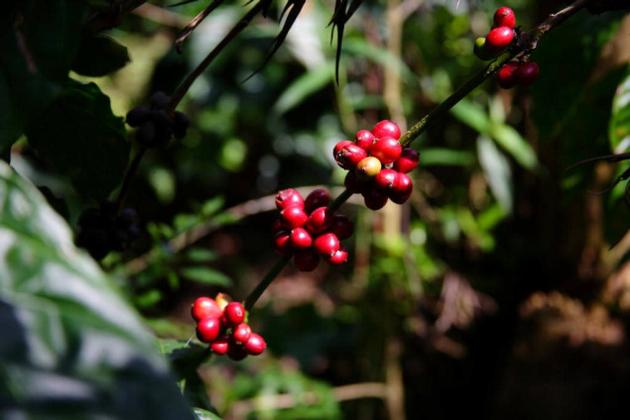
Coorg is all about coffee./ by Special Arrangement / The Hindu
Celebrating the bliss of Coorg with all its splendour
Kodaimelanadu or Kodagu or Coorg: the name itself conjures up images of verdure — gushing cascades, babbling brooks, green hills, gorgeous dales, gurgling rivers all together flaunting the munificence of Mother Nature. Oh! Add some coffee plantations. A compulsive coffee drinker like me cannot find a better place than Coorg for a sip of delight. After an hour’s drive from Mysore, our chauffer announces that we are entering Coorg.
The scenery is mesmerising. The winding roads take you through a maze of greenery. At every labyrinth, you meet a collage of colours which explode into shades of green, brown and yellow. The roads seem to have no particular destination. They just lead you from one part of paradise to another. As we squint though the green fabric, we pass plantations of coffee, cardamom and pepper which merge with forests, foliage and fauna. There are no villages, no people, no shops, and no cars. We deliberately slow down to take in the moment. It is an ode to nature. No wonder it has been attributed the sobriquet ‘Scotland of the East’.
Coorg is all about coffee with a fair amount of cardamom and pepper thrown in. As we drive in, the sylvan surroundings hit us. Our destination is Siddapur. After following the Orange County signage the car finally enters the resort. After a short break, we decide to take a tour of this secluded paradise. The whole district seems a tree shadowed coffee estate, dotted with a few market places with speedy bars, pork shops and elegant vegetable displays.
As we travel, we learn more about coffee: its history, its getting smuggled into India and the difference between arabica and robusta. There is an overwhelming feeling of seclusion. From a distance you can spot a coffee pod, but it is difficult to spot your immediate neighbour. All this time, I am in a clicking frenzy to capture the intricacies of nature.
Coorg is a paradise for bird-watchers and accounts for nearly 25 per cent of the avian population of the State. Our guide announces the names of each and every bird. At times he replies to their calls in a simulated tone. After spending a few hours, trying to know the avian diversity of Coorg, we head towards the splendid Abbey Falls. Tucked away between private coffee and spice estates, Abbey Falls offers a splendid backdrop for a weekend picnic. As one makes one’s way past stocky coffee bushes and tall trees entwined with pepper vines, the falls make a sudden and dramatic appearance as they cascade down into limpid pools to join the river Kaveri. A combination of unprecedented rain the previous night and the steep path make the trek difficult. An army of clouds envelopes the hill, a sight worth beholding.
I try out some Kodava food on my way back to the resort. The central dish of Kodava cuisine is meat, with a fine underpinning of rice. I taste the irresistible pandi curry, a subtle pork dish, cooked well by adding a local fruit, Kanchampali. This mouth-watering dish represents the specialness of Kadava dishes and is hard to find outside Coorg. The dry spices are roasted before grinding them, giving a toasty flavour to the thick curry. I return to my luxurious cottage after having a refreshing tour of the place. It is dark now, and the sky is clear. I step out of my room and walk towards the woods, on a stretch of road with no artificial light. The moon shines brightly and the trees are laden with millions of fireflies; the woods seem decked up for some fat Indian wedding.
This is my first trip to the Western Ghats, and I very enthusiastic to discover them. Next day, at six in the morning, I spring from my bed to go deeper into the mist laden, verdant hills. Murthy, our guide ushers us through a forest which abuts the resort. It is Dubare Reserve which encompasses an area of 50,000 acres — the home of the pachyderms. Majestic rosewood, teak and other hardwood tree species stand around us like sentinels. Giant parasitic vines (that uncannily resemble monstrous creatures) are swathed around large banyan and other trees in a macabre bond. The forest keeps getting thicker and more enchanting. Walking fearlessly in the forest, brushing against the small vines and lopping branches out of the way, eyes constantly hovering to spot any wild animal, marking the footmarks of the elephants — turns out to be the most enchanting leg of the trip. The coracle drifts on the green waters, gauging the moods of the river and the pristine surroundings. / by Special Arrangement / The Hindu
We walk down to the Kaveri, the river flowing unmindful of the inter-State row over her waters. We take our seats on a coracle, to drift on the green waters, gauging the moods of the river and the pristine surroundings. “Sir, apart from this beauty, Coorg is gifted with a very rich history,” says our guide, adding, “The British gifted coffee to Coorg. The first estate was established way back in the 1850s by an Englishman John Frawler. Along with coffee, pepper abounds here, growing as a vine allowed to climb the shade trees. Coorg pepper is considered to be the best in the world, sir.”
He then tells us about the invincible Kodava people. “Coorgis are said to be descendents of the Greeks. Neither Tipu Sultan, nor the British could conquer this land.”
Coorg has a long history of battles. The Madikeri Fort is a living testimony to that. Built first as a mud fort by Mudduraja in the last quarter of the 17th century, it was later rebuilt in granite by Tipu Sultan who named the site Jaffarabad. In the North-east corner at the entrance are two life size masonry elephants, while a church stands in the south-east corner. The fort offers panoramic views of the city from its walls. The centuries-old Madikeri Fort with its stone ramparts also houses a prison. Among the other architectural treasures that Coorg boasts is the Omkareshwara temple built by king Lingaraja in 1820, in a mosque-like style, with an impressive central dome and four minarets, which are surrounded by Basavas, or sacred bulls. On the top of the dome sits a gilded ball with a weathercock.
Another splendid place to see is the Raja’s seat. It is a small pavilion with a garden surrounding it, offering a view of the green valley below. As the legend goes, the kings of Coorg spent their evenings here along with their consorts. The spectacular view from here of the melting sun, parrot-green fields and the far stretching mountains will take one’s breath away. We return to the Orange County Resort, a little break from this oasis of tranquillity. The last Kodava dinner by the lake under the bright sky is waiting for us: a luxurious setting created by candles, stars and sounds of silence. The next day I insert a packet of aroma rich Coorg Coffee in my luggage. As for the greenery, it is etched in my thoughts, to recollect in the days to come.
source: http://www.thehindu.com / The Hindu / Home> Features> MetroPlus> Travel / by Aakash Mehrotra / Delhi – April 20th, 2014
Chinappa dominated the second game before Grinham fought back in the third. (TOI Photo) Richmond :
Joshna Chinappa of India ended a career-long losing run to Australia’s former world champion Rachael Grinham when she upset the top seed in straight games to win the inaugural $10,000 Richmond Open.
World No.21 Chinappa beat her 16th-ranked opponent 11-9, 11-5, 11-8 for the first time in six meetings to bag her ninth Women’s Squash Association (WSA) tour title at the Country Club of Virginia on Saturday.
With the victory, Chinappa also avenged her defeat of the Texas Open last week when she lost to the 37-year-old Australian in just 24 minutes.
For Grinham, it was the 65th final appearance since making her first tour final back in March 1998 while it was the 16th final for the Indian.
Tournament spokesman Kristen Lange narrated the final. “Starting the first game, Grinham came out swinging, firing her way to a 6-2 lead – however Chinappa surged back through consistent play to level the game off at 6-6,” Lange said.
“From here it was a battle to 11, with the lead oscillating between the two players until a couple unfortunate mistakes gave Chinappa the first game,” he said.
Chinappa dominated the second game before Grinham fought back in the third.
“The start of the third game was once again all Chinappa as she quickly sailed to an 8-2 lead. Never one to be counted out Grinham fought her way back to 8-8, however it was a case of too little too late as Grinham made three critical errors to give Joshana her first win over the courageous Australian,” Lange added.
source: http://www.timesofindia.indiatimes.com / The Times of India / Home> Sports> More Sports / PTI / April 20th, 2014
The glorious credentials of Kodagu, one of the smallest districts in the State, appears to be on the wane, and the land of Kodavas is literally fighting to maintain its existence in many ways.
Kodagu was a Part ‘C’ State, one of the 10 such regions carved out after the country got Independence, before its merger with the then Mysore in 1956. The others were Ajmer, Cooch Behar, Bhopal, Bilaspur, Delhi, Himachal Pradesh, Kutch, Manipur and Tripura.
Different scenario
As a State, Kodagu had proved that smaller States could ensure all-round development. The current scenario is different. People cry foul over the “imperviousness” of the elected representatives and the powers that be in terms of attention to the district’s development.
Rapid urbanisation, cash crops being affected by diseases, fluctuating prices of the crops, poor road and power infrastructure, lack of clarity on land tenures, and destruction of forests on the pretext of development haunt the people. Drinking water and regular power supply, telecommunication network and transportation facilities, educational institutions, anganwadi centres and hospitals in villages are still a far cry. Monsoon brings its own misery to the district. None is sure whether or not the next Member of Parliament representing Kodagu (which is part of the Mysore Lok Sabha constituency) would be available to sort out the district’s problems. “Look at the state of roads from Hunsur to Gonicoppa,” said P.T. Bopanna, veteran journalist who has focussed on the issue of lack of development in the district on his web portals.
Politicians cannot remain oblivious to the problems Kodagu is facing, K.G. Ajith, a resident of Madikeri, said. They ought to pay attention and be held accountable, he said.
In 1952, elections were held for the 24 seats of the Coorg legislative body amid stiff opposition to the merger plans. The Congress won 15 seats and Independents (opposing merger) won nine seats. C.M. Poonacha of the Congress became the Chief Minister and K. Mallappa was the Home Minister. Under various circumstances Coorg was merged with the then Mysore in 1956.
Merger
The merger followed the recommendations of the States Reorganisation Commission led by Fazal Ali. All through the Poonacha regime, the relationship between the government and the people was exemplary and cordial, according to C.M. Ramachandra, the former Chief of Bureau of The Hindu in Bangalore.
In 2008, the Delimitation Commission merged parts of the Somwarpet Assembly constituency with Madikeri and Virajpet constituencies, reducing the number of Assembly segments in the district to two. The reason attributed was low population figures.
After being with the Mangalore Lok Sabha constituency, Kodagu was included in the Mysore Lok Sabha constituency.
The Codava National Council led by N.U. Nachappa, which launched a struggle some 22 years ago, has diluted its demand for a statehood to Kodagu. The council now seeks an autonomous status for Kodagu within Karnataka. “The CNC will restore the glory of Kodagu,” Mr. Nachappa said.
source: http://www.thehindu.com / The Hindu / Home> News> National> Karnataka / by J. Jeevan Chinnappa / Bangalore – April 20th, 2014
WELCOME. If you like what you see "SUBSCRIBE via EMAIL" to receive FREE regular UPDATES.
Read More »